Tag: Historic Architecture

  •  Local author to appear at bookstore for book signing of new “Lost East Chicago and Indiana Harbor” history book

     Local author to appear at bookstore for book signing of new “Lost East Chicago and Indiana Harbor” history book

    Award-winning author and journalist Joseph S. Pete will appear at a Northwest Indiana bookstore to sign copies of his new history book, “Lost East Chicago and Indiana Harbor.”

    Pete, a Lisagor Award-winning reporter and columnist, will do a book signing from 11:30 a.m. to 3 p.m. Saturday, July 20 at Miles Books at 2819 Jewett Avenue in Highland.

    He will sign copies of his latest history book about East Chicago and copies of his other books “Lost Hammond, Indiana,” “Secret Northwest Indiana” and “100 Things to Do in Gary and Northwest Indiana Before You Die.” Pete also will sign copies of University of Arizona Professor and East Chicago native Gloria McMillan’s “Children of Steel” anthology about life in steel mill towns, which he contributed a short story to.

    “Lost East Chicago and Indiana Harbor” chronicles the Indiana steel town on the shore of Lake Michigan in north Lake County just outside of Chicago that was a melting pot, drawing immigrants from all over the world to work at its bustling steel mills. As the population boomed in the early 20th century, East Chicago was home to more than 100 nationalities who came for the opportunities in a highly industrialized city that earned nicknames like “The Workshop of America,” the “Arsenal of America” and the “Industrial Capital of the World” while forging the steel that built up 20th-century America.

    Home to one of the most storied basketball rivalries in the state, East Chicago was also known as “The City of Champions” as it produced several high school football and basketball championship teams, including the only two back-to-back undefeated basketball teams in state history and the only two athletes to compete in both the Final Four and World Series. East Chicago gave the world many greats like the NBA’s all-time winningest coach Gregg Popovich, the Milwaukee Bucks star and later corporate magnate Junior Bridgeman, the baseball speedster Kenny Lofton, the actress Betsy Palmer, the boxing legend Angel “El Diablo” Manfredy and the Academy Award-winning screenwriter Steve Tesich, who penned the classic sports film “Breaking Away.”

    Pete’s new book is based in large part on interviews, including with Bridgeman, the state champion who went on to lead the Louisville Cardinals to the Final Four, get his number retired by and Bucks, and build a business empire that made him one of the wealthiest former athletes of all time.

    “Lost East Chicago and Indiana Harbor” takes a fond look back at bygone landmarks like Washington and Roosevelt High Schools, Inland Steel Christmas parties, the Washington Park Zoo, Taco Joe’s, the Mademoiselle Shoppe, movie palaces like the Voge and the gym where Michael Jordan played his first Bulls game. It recounts planned worker communities like Sunnyside and Marktown, the English village designed by noted architect Howard Van Doren Shaw where people park on the sidewalks and walk in the street and that’s featured in Ripley’s Believe It or Not and enshrined on the National Register of Historic Places.

    Pete, who has covered East Chicago for a decade for The Times of Northwest Indiana, relates stories about the Katherine Home, St. Joseph’s Carmelite Home, Big House, bolita, the Wickey Mansion, the Tod Opera House, the Patrick machine and the Crazy Indiana Style Artists graffiti crew, which hung out with the acclaimed artist Keith Haring, appeared on network television, and went on to exhibit their artwork internationally. His book also explores industrial pollution, political corruption, and unsolved mysteries like the deaths of Jay Given and Henry Lopez and the disappearance of the soccer great William “Wee Willie” McLean.

    “Lost East Chicago and Indiana Harbor” looks back at fondly remembered East Chicago intuitions like Albert’s, Dominic’s, Puntillo’s, Shrimp Harbor, Los Burritos, and El Patio Restaurant, as well as curiosities like the East Chicago Hermit and a mummy a local funeral home used to let kids see for a nickel. It also examines the city’s impact, such as producing Indiana’s first Latino elected official, the Hoosier State’s first and longest-running Mexican Independence parade, and the Midwest’s longest-running Mexican American–owned business, as well as the steel that helped shape America and countless other products.

    Pete is an Indiana University graduate, a combat veteran and a board member of the Indiana Society of Professional Journalists and the Chicago Headline Club. He is a playwright and literary writer whose work has appeared in more than 100 literary journals, earning Pushcart Prize and Best of the Net nominations. He’s received many journalism awards, including from the Inland Press Association, the Hoosier State Press Association, the Chicago Journalists Association, Columbia University and the National Association of Real Estate Editors as well as local honors from the Indiana Small Business Development Center and the Duneland Chamber of Commerce.

    For more information or an interview, contact Joseph S. Pete at 219.841.1030 or jpete@alumni.iu.edu.

  • Three Charming Villages on the shores of Lake Chapala

    Three Charming Villages on the shores of Lake Chapala

    Born in the United Kingdom, Tony Burton, a Cambridge University-educated geographer with a teaching certificate from University of London, first traveled to Mexico after spending three years as a VSO [Voluntary Service Overseas] volunteer teaching geography, and writing a local geography text, on the Caribbean island of St. Kitts. From there his travels took him to Mérida in summer 1977, where he spent several weeks backpacking around southern and central Mexico, returning two years later to teach at Greengates School in Mexico City.

    Over the next seven years, Tony traveled extensively throughout Mexico, visiting every state at least once, and organizing numerous four-day earth science fieldwork courses for his students. He co-led the school’s extensive aid efforts following the massive 1985 earthquake.

    From Mexico City, he moved to Guadalajara, where he continued to organize short, residential fieldwork courses for a number of different schools and colleges and began organizing and leading specialist eco-tours for adult groups to destinations such as Paricutín Volcano, the monarch butterfly sanctuaries, and Copper Canyon.

    An award winning author, he’s written numerous books about Mexico including his latest Lake Chapala: A Postcard History (Sombrero Publishing). It’s part of a series he’s written on this region which is located about an hour south of Guadalajara. The 417-square-mile lake, Mexico’s largest, located in the states of Jalisco and Michoacán is situated at an elevation of  5,000ft in the middle of the Volcanic Axis of Mexico and is known for its wonderful climate, laid-back ambience, and is a popular destination for both travelers and ex-pats looking for a charming, low-key place to relocate. The three main towns along the lake are Chapala, Ajijic and Jocotepec. In an intriguing aside, Tony met his wife Gwen Chan Burton when she was working as at the director of the pioneering Lakeside School for the Deaf in Jocotepec. Gwen writes about the school and all that it has accomplished in her book, New Worlds for the Deaf, also published by Sombrero Books.

    Tony’s other books about this region include Western Mexico A Traveler’s Treasury, illustrated by Mark Eager, now in its fourth edition; Mexican Kaleidoscope: Myths, Mysteries and Mystique, illustrated by Enrique Veláquez, and Foreign Footprints in Ajijic: Decades of Change in a Mexican Village. I’ll be covering them in upcoming posts.

    Because I’m always interested in foodways, Tony was kind enough to share a copy of an undated Spanish language project put together by students from the Instituto Politécnico Nacional School of Tourism titled “Gastronomy of Jalisco.”  It includes numerous recipes from the region including one for the famous Caldo Michi of Chapala (the recipe is below).

    I had the chance to ask Tony, who currently is the editor of MexConnect, Mexico’s leading independent on-line magazine, about Lake Chapala: A Postcard History as well as the time he spent in this beautiful region of Mexico.


    How did you first become familiar with Lake Chapala?

    I first visited Lake Chapala in early 1980, on my way back to Mexico City from the Copper Canyon and Baja California Sur. Little did I imagine then that it would be where I would later fall in love, get married, and have two children!

    What inspired you to write Lake Chapala: A Postcard History?

    There is no single overwhelming inspiration. I realized, while living at Lake Chapala and writing my first books about Mexico, that a lot of what had been previously written was superficial and left many unanswered questions. In the hopes of finding answers, I decided to trawl through all the published works (any language) I could find, which resulted in Lake Chapala Through the Ages (2008), my attempt to document and provide context to the accounts of the area written between 1530 and 1910.

    My next two books about Lake Chapala—If Walls Could Talk: Chapala’s Historic Buildings and Their Former Occupants, and Foreign Footprints in Ajijic: Decades of a Change in a Mexican Village—focused on the twentieth century history of the two main centers for the very numerous foreign community now living on ‘Lakeside.’ Part of my motivation was to dispel some of the myths that endlessly recirculate about the local history, as well as to bring back to life some of the many extraordinary pioneering individuals indirectly responsible for the area becoming such an important destination for visitors.

    Lake Chapala: APostcard History is my attempt to widen the discussion and summarize the twentieth century history of the entire lake area. Its reliance on vintage postcards makes this a very visual story, one which I hope will appeal to a wide readership, including armchair travelers.


    What were some of the challenges you encountered in writing this book? Was it difficulty finding the numerous postcards you included? And doing the extensive research that went into the book? Are there any intriguing stories about hunting down certain postcards and any “aha” moments of discovery when writing your book?

    The main challenge was in deciding how best to structure the material. Because of the originality of what I’m doing, it is impractical to follow the advice that writers should start with a detailed plan and then write to that plan! In my case, after collecting the information and ideas that exist, the challenge is to select what can be teased and massaged into a coherent and interesting narrative.

    Because the postcard book is the product of decades of research, I had ample time to build my personal collection of vintage postcards, through gifts, auctions and online purchases.

    There were many significant “aha” moments in the process: some concerned the photographers and publishers responsible for the postcards and some the precise buildings or events depicted. While I’m saving some of these “aha” moments–because they are central to a future book–one was when it suddenly dawned on me that wealthy businessman Dwight Furness was the photographer of an entire series of cards (Figs 6.3, 6.4, 6.5, etc.) that relate to my next response.


    If you could go back in time to visit one of the resorts that is no longer there that you featured in your book, is there one that stands out and why is that?

    Ooohhh; I’d love to go back to about 1908 and stay at the Ribera Castellanos resort (Chapter 6) during its heyday. While staying there, perhaps I could interview owner Dwight Furness, his wife and a few guests? Apart from a few ruined walls, Furness’ postcards of the resort are pretty much the only remaining evidence of the hotel. And perhaps one night I could invite local resident and prolific professional photographer Winfield Scott and his wife to dinner to hear their stories?

    How long did it take to write Lake Chapala?

    The writing took less than a year; but only because of the many prior years of research.

    Since I often talk about food and travel, are there any culinary specialties in the Lake Chapala region?

    Long standing culinary specialties of the area include (a) Lake Chapala whitefish (b) charales (c) caldo michi. And, when it comes to drinks, there is a very specific link to postcards. The wife of photographer José Edmundo Sánchez, who sold postcards ( Figs 7.5, 7.6 and 7.7) in the 1920s from his lakefront bar in Chapala, is credited with inventing sangrita, still marketed today as a very popular chaser or co-sip for tequila. (Chapter 7, page 74).

    Is there anything else you’d like readers to know about your book?

    I hope readers find the book as fun and interesting to read as it was to write!

    MICHI BROTH

    Ingredients:

    • 2 tablespoons corn oil
    • ¾ kg of tomato seeded and in pieces
    • ¼ onion in pieces
    • ½ kg carrot, peeled and cut into diagonal slices
    • ½ kg of sliced ​​zucchini
    • 4 or 6 chiles güeros
    • 100 gr. chopped coriander
    • 2 sprigs of fresh oregano
    • Salt to taste
    • 2 ½ liters of water
    • 1kg well washed catfish, yellow carp or red snapper

    PREPARATION: Heat the oil and stew the vegetables in it, add water and salt to taste, let it simmer over low heat until the vegetables are well cooked, then add the fish and leave it for a few minutes more until it is soft.

    Sangrita

    I had the opportunity to stay at Tres Rios Nature Park, a 326-acre eco-resort north of Playa del Carmen and was first introduced to sangrita during my stay. I took several cooking lessons and learned to make a dish with crickets, but that is a different story. Chef Oscar also talked to us about the history of sangrita. The Spanish name is the less-than-appetizing “little blood” but hey, when you’re learning to grill crickets, you can deal with a name like that. The drink, as Tony writes in his postcards book, originated in Chapala in the 1920s.

    Here is the excerpt:

    ”In the same year the Railroad Station opened, Guillermo de Alba had become a partner in Pavilion Monterrey, a lakefront bar in a prime location, only meters from the beach, between the Hotel Arzapalo and Casa Braniff,” he writes. “The co-owner of the bar was José Edmundo Sánchez. Regulars at the bar included American poet Witter Bynner, who first visited Chapala in 1923 in the company of D H Lawrence and his wife, Frieda. Bynner subsequently bought a house near the church. When de Alba left Chapala for Mexico City in 1926, Sánchez and his wife—María Guadalupe Nuño, credited with inventing sangrita as a chaser for tequila—ran the bar on their own. After her husband died in 1933, María continued to manage the bar, which then became known as the Cantina de la Viuda Sánchez (Widow Sánchez’s bar).”

    Sangrita is typically used as accompaniment to tequila, highlighting its crisp acidity and helping to cleanse the palate between each peppery sip. According to Chef Oscar, the red-colored drink serves to compliment the flavor of 100% agave tequila. The two drinks, each poured into separate shot glasses, are alternately sipped, never chased and never mixed together.

    Here is Chef Oscar’s recipe and below is one from Cholula hot sauce which originated in Chapala. Tony has a great story about that as well. More in my next post on his books.

    For one liter of Sangrita:

    • 400 ml. orange juice
    • 400 ml. tomato juice
    • 50 ml. lemon juice
    • 30 ml. Grenadine syrup
    • 20 ml. Worcestershire sauce
    • Maggi and Tabasco hot sauce (mixed up) to taste
    • Salt and pepper to taste

    Mix together all the ingredients and serve cold. Suggested duration of chilling : 3 to 4 days.

    Cholula’s Sangrita

    • 1/4 cup (2 ounces) fresh orange juice
    • 1/4 cup (2 ounces) fresh grapefruit juice
    • 2 tablespoons fresh lime juice
    • 20 pomegranate seeds
    • 3 fresh sprigs of cilantro or to taste
    • 1/2 stalk celery
    • 3 teaspoons smoked coarse sea salt or sal de gusano, divided
    • 1 tablespoon Cholula® Original Hot Sauce

    Place all ingredients except salt in blender container, with about 1 cup ice cubes. Puree until smooth.Strain twice though a fine mesh sieve, discarding any solids.

    Rim shot glasses with sea salt. Serve sangrita cold in rimmed shot glasses alongside your favorite tequila.

  • If Walls Could Talk: Lake Chapala’s historic buildings and their former occupants

    If Walls Could Talk: Lake Chapala’s historic buildings and their former occupants

    Now one of the most popular retirement area for Americans and Canadians, the Lake Chapala Region, nestled in a valley almost a mile high in Mexico’s Volcanic Axis,  has long been a draw for ex-pats and vacationers, lured by its almost perfect climate and beauty.

    In his book If Walls Could Talk: Chapala’s historic buildings and their former occupants about Mexico‘s earliest international tourist destination (also available in Spanish), award-winning author Tony Burton shares his knowledge and interest in a region where he has spent more than two decades. Burton, a Fellow of the Royal Geographical Society who was born and educated in the United Kingdom, first visited Mexico in 1977. That visit was obviously a big success as he returned and for almost 18 years lived and worked full-time in Mexico as a writer, educator and ecotourism specialist.

    He met his wife, Gwen Chan Burton who was a teacher of the deaf and then director at the Lakeside School for the Deaf in Jocotepec, one of the three main towns lining the shores of Lake Chapala. Though they now reside on Vancouver Island, British Columbia, the Burtons continue to revisit Mexico regularly and he is currently editor-in-chief of MexConnect, Mexico’s top English-language online magazine.

    The other two towns, each with its own distinctive vibe, are Ajijic and Chapala, native villages resettled by the Spanish Conquistadors in the 1500s. “This book looks at how Chapala, a small nondescript fishing village in Jalisco, suddenly shot to international prominence at the end of the nineteenth century as one of North America’s earliest tourist resorts,” writes Burton. “Within twenty years, Chapala, tucked up against the hills embracing the northern shore of Mexico’s largest natural lake, was attracting the cream of Mexican and foreign society. Thus began Lake Chapala’s astonishing transformation into the vibrant international community it is now, so beloved of authors, artists and retirees.”

    The book, organized as a walking tour, covers not only existing buildings but also pinpoints the spots where significant early buildings no longer stand but their histories still weave a story of the town. It’s only a partial guide, explains Burton, noting that an inventory prepared by the National Institute of Anthropology and History identified more than eighty such buildings in Chapala including many not easily visible from the road but hidden behind high walls and better viewed from the lake.

    Among the famous people who lived in Chapala at some point in their careers was author D.H. Lawrence, probably best remembered for his risqué (at the time) novel, Lady Chatterley’s Lover.

    In 1923, Lawrence and his wife, Frieda, rented Casa de las Cuentas (House of Rosary Beads), a house that dates back to the 1800s. At the time, a one-story abode with a half-moon entrance and heavy wooden gates, it was located at 307 Calle Zaragoza, a street formerly known as Calle de la Pesquería (“Fishing street”) so named as it was where the local fishermen repaired their nets and hung them out to dry. It was while living on Calle Zaragoza that Lawrence wrote the first draft of The Plumed Serpent, published in 1926. The novel is described asthe story of a European woman’s self-annihilating plunge into the intrigues, passions, and pagan rituals of Mexico.”

    Over the decades, after the Lawrences moved out, subsequent changes were made to Casa de las Cuentas including  the addition of a swimming pool in the mid-1950s when artist Roy MacNicol and his wife, Mary, owned the home.

    While Lawrence’s writings were considered by some as scandalous, MacNicol’s life had its scandals as well. Burton describes him as “colorful” in that he was married multiple times and was involved in many escapades as well as lawsuits.

    Mary, embracing the local culinary traditions including the use of flowers in cooking, authored Flower Cookery: The Art of Cooking With Flowers.

    It wasn’t the work of a dilettante as reviews of her book such as this one on Amazon shows.

    “Flower Cookery is recipes, but far more than recipes,” writes one reviewer. “The book is organized by the popular name of the flower in question. Each section is introduced with quotations from literature, philosophy, and poetry that feature the blossom. This is followed by the recipes, interwoven with mythology, stories, and aphorisms about the flower, the plant from which it grows, its symbolism, and the culture or society in which humans discovered the value of the plant or blossom. The recipes include original favorites as well as recipes collected from historical sources and contemporary sources around the world. Here is just the tiniest sampling of the riches in the book.”

    Burton shares her Christmas Cheer recipe from when she lived at Casa de las Cuentas.

    Christmas Cheer

    10-12 squash blossoms with stems removed

    2 eggs, beaten

    2 to 3 tablespoons water

    Flour, enough to thicken mixture about one tablespoon

    Salt and pepper

    1 cup neutral oil such as grapeseed, canola, or safflower

    Wash and dry squash blossoms on paper towels, making sure to remove all the water. Mix remaining ingredients except oil to make a smooth batter. Place oil in a large, heavy skillet to 350-375°F. Dip blossoms in batter and fry in oil until golden brown. Drain on paper towels. Serve hot.

    As for the house, it was renovated again in the early 1980s and is now Quinta Quetzalcoatl, a lovely boutique hotel.

    If Walls Could Talk is one of four books that Burton has written on the Lake Chapala region. The other three are Foreign Footprints in Ajijic: decades of change in a Mexican Village; Lake Chapala Through the Ages: an anthology of travelers’ tales  (2008), and the recent Lake Chapala: A Postcard history. All are available as print and ebooks on Amazon.

    The above maps, both copyrighted, show Chapala 1915 [lower map] and 1951 [upper map].

    In all, he’s planning on adding several more to what he currently calls the Lake Chapala Quartet, these focusing on the writers and artists associated with the area.  I asked him  to describe the region so readers who have never been there can get an idea of what it is like, but it turns out the Burton is NOT a traveler who meticulously plots every moment of a trip before he arrives. Instead, he tells me that part of the fun when traveling is to not know in advance what places are like and instead to see and experience them for yourself.

    “That said,” he continues, “the various villages and towns on the shores of Lake Chapala are all quite different in character. The town of Chapala, specifically, is a pretty large and bustling town. It is growing quite rapidly and has added several small high end boutique hotels in recent years, as well as some fine dining options to complement the more traditional shoreline ‘fish’ restaurants. The many old–100 years plus–buildings in Chapala give the town a historic ‘air’ where it is relatively easy to conjure up images of what it was like decades ago. By comparison, Ajijic, now the center of the foreign community on Lake Chapala, has virtually no old buildings and more of a village and artsy feel to it, though it also has very high quality accommodations and more fine restaurants than you can count.”

    Other structures still standing include the Villa Tlalocan, completed in 1896 and described by a contemporary journalist as “the largest, costliest and most complete in Chapala… a happy minglement of the Swiss chalet, the Southern verandahed house of a prosperous planter and withal having an Italian suggestion. It is tastefully planned and is set amid grounds cultivated and adorned with flowers so easily grown in this paradisiacal climate where Frost touches not with his withering finger…”

    Also still part of the landscape is Villa Niza. One of many buildings designed by Guillermo de Alba, the house, according to Burton, was built in 1919 and looks more American than European in style. Located at Hidalgo 250, it takes advantage of its setting on Lake Chapala and has a mirador (look out) atop the central tower of the structure, which affords sweeping panoramic views over the gardens and lake. De Alba’s strong geometric design boasts only minimal exterior ornamentation.

    Burton, who specializes in non-fiction about Mexico, related to geography, history, travel, economics, ecology and natural history, has written several fascinating books about the history of the Lake Chapala region.

    In If Walls Could Talk, Burton invites you to walk with him through time as you explore the city.

  • Haunted Lighthouses: Scary Tales of the Great Lakes
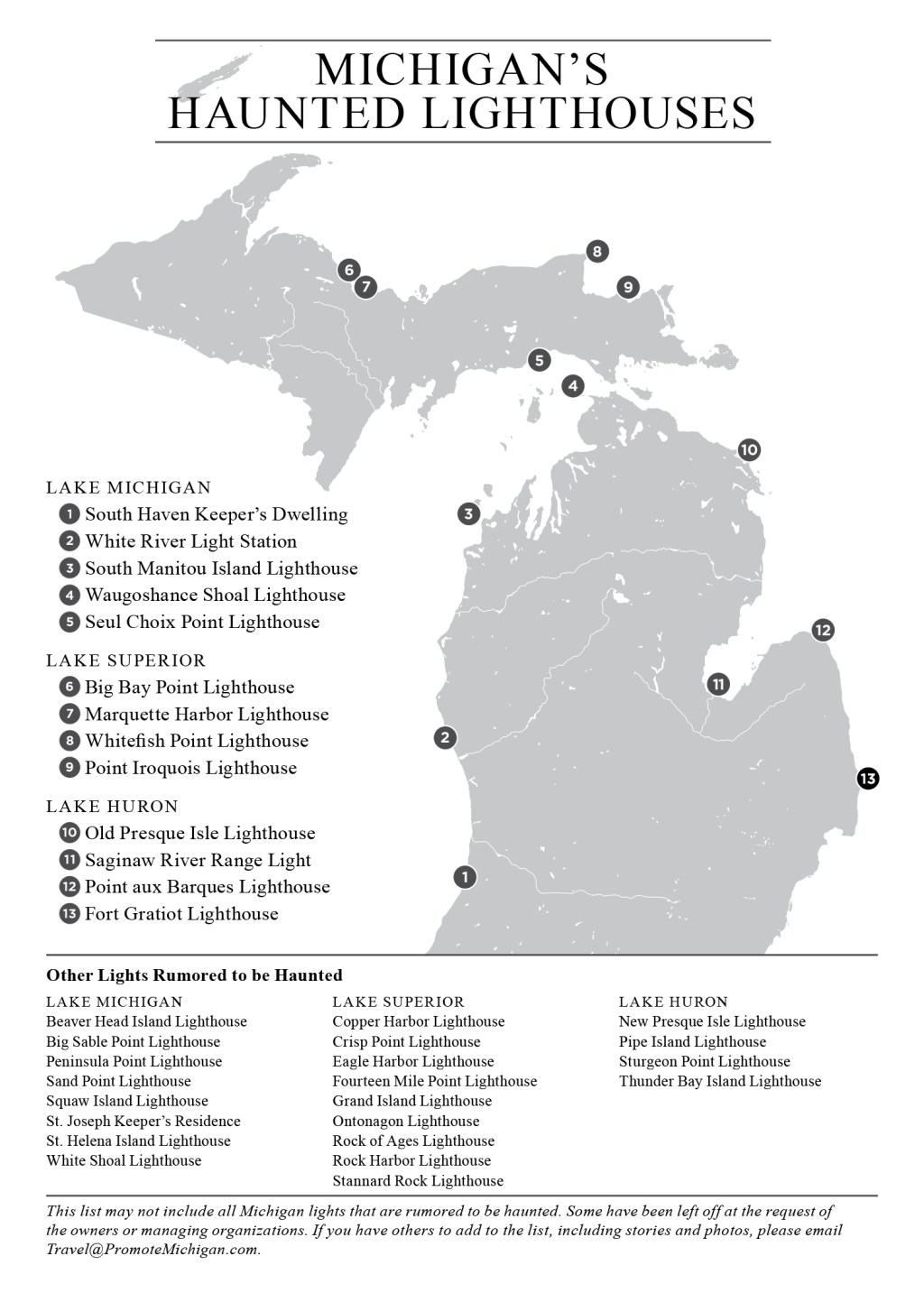
    Haunted Lighthouses: Scary Tales of the Great Lakes

    Michigan is home to more lighthouses than any other state and about 40 of those are rumored to be haunted by the spirits of former keepers, mariners and others with ties to these historic beacons.

    Inside the pages of Michigan’s Haunted Lighthouses, long-time researcher, writer and promoter of all things Michigan, Dianna Stampfler, shares stories of those who dedicated their lives — and afterlives — to protecting the Great Lakes’ shoreline. Her second book, Death & Lighthouse on the Great Lakes, Stampfler delves into the historic true crime cold case files that have baffled lighthouse lovers for as many as two centuries.

    Throughout the fall season, Stampfler will be speaking at libraries around the state, sharing her lively and upbeat presentation about these lights. Copies of her books will be available for purchase and signing at every program.

    Sun, Oct 9, 2022
    2:00 PM – 3:30 PM
    Michigan’s Haunted Lighthouses
    Elk Rapids District Library, Elk Rapids, MI
    Tue, Oct 11, 2022
    6:30 PM – 8:00 PM
    Michigan’s Haunted Lighthouses
    Rauchholz Memorial Library, Hemlock, MI
    Wed, Oct 12, 2022
    7:00 PM – 8:30 PM
    Michigan’s Haunted Lighthouses
    Northville District Library, Northville, MI
    Wed, Oct 19, 2022
    6:00 PM – 7:30 PM
    Michigan’s Haunted Lighthouses
    Reese Unity District Library, Reese, MI
    Thu, Oct 20, 2022
    7:00 PM – 8:30 PM
    Michigan’s Haunted Lighthouses
    Otsego District Library, Otsego, MI
    Sun, Oct 23, 2022
    3:00 PM – 4:30 PM
    Michigan’s Haunted Lighthouses
    Sanilac County Historic Village & Museum, Port Sanilac, MI
    Wed, Nov 2, 2022
    6:00 PM – 7:30 PM
    Death & Lighthouses on the Great Lakes
    St. Clair County Library – Main Branch, Port Huron, MI

    For the complete schedule of upcoming events (including other topics beyond lighthouses), visit the Promote Michigan Speaker’s Bureau online.

    About Michigan’s Haunted Lighthouses

    Michigan has more lighthouses than any other state, with more than 120 dotting its expansive Great Lakes shoreline. Many of these lighthouses lay claim to haunted happenings. Former keepers like the cigar-smoking Captain Townshend at Seul Choix Point and prankster John Herman at Waugoshance Shoal near Mackinaw City maintain their watch long after death ended their duties. At White River Light Station in Whitehall, Sarah Robinson still keeps a clean and tidy house, and a mysterious young girl at the Marquette Harbor Lighthouse seeks out other children and female companions. Countless spirits remain between Whitefish Point and Point Iroquois in an area well known for its many tragic shipwrecks.

    About Death & Lighthouses on the Great Lakes

    Losing one’s life while tending to a Great Lakes lighthouse — or any navigational beacon anywhere in the world for that matter — sadly wasn’t such an unusual occurrence. The likelihood of drowning while at sea or becoming injured while on the job ultimately leading to death were somewhat common back in the late nineteenth and early twentieth century.

    Death by murder, suicide or other unnatural and tragic causes, while rare, are not unheard of. In fact, more than dozen lighthouse keepers around the Great Lakes met their maker at the hands of others – by fire, poisoning, bludgeoning and other unknown means. A handful of these keepers, either because of depression or sheer loneliness, took their own lives. A few we may never know the true story, as the deaths now 100 or more years ago, weren’t subjected to the forensic scrutiny that such crimes are given today.

    In the pages of Death & Lighthouses of the Great Lakes: A History of Misfortune & Murder, you’ll find an amalgamation of true crime details, media coverage and historical research which brings the stories to life…despite the deaths of those featured.

    Stampfler has been professionally writing and broadcasting since high school. She holds a bachelor’s degree in English with emphasis in Community Journalism and Communications with emphasis in radio broadcasting from Western Michigan University. She is a member of the Midwest Travel Journalists Association, Historical Society of Michigan, Great Lakes Lighthouse Keepers Association, Great Lakes Maritime Museum, Association for Great Lake Maritime History, Great Lakes Shipwreck Historical Society, Michigan Maritime Museum, Friends of Pilot & Plum Island Lighthouse, National Museum of the Great Lakes and West Michigan Tourist Association.

  • Pullman: The Man, the Company, the Historic Park by Kenneth Schoon
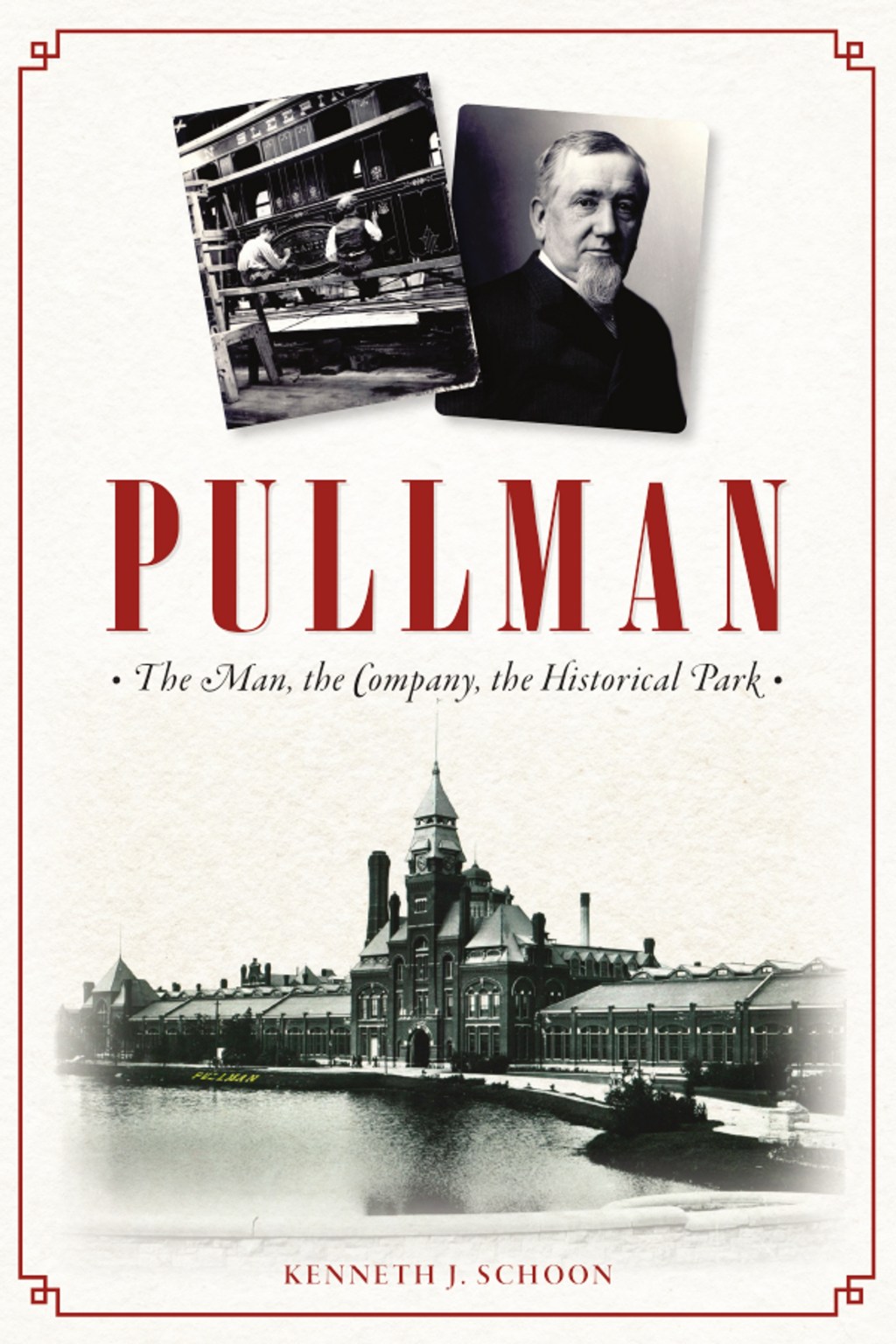
    Pullman: The Man, the Company, the Historic Park by Kenneth Schoon

                   Kenneth Schoon, professor emeritus at Indiana University Northwest, has immersed himself in the history of the Greater Chicago/Northwest Indiana area for decades, writing books starting from the area’s earliest beginnings such as “Calumet Beginnings: Ancient Shorelines and Settlements at the South End of Lake Michigan” and “Swedish Settlements on the South Shore of Lake Michigan.”

                   In his latest book, “Pullman: The Man, the Company, the Historical Park” (History Press 2021; $21.99), he showcases what once was among  the ultimate company town and is now a Chicago neighborhood. George Pullman, whose last name became synonymous with plush railroad sleeper cars, believed that happy workers were productive workers and so developed his town along the western shore of Lake Calumet in the late 1800s.

                   I thought I knew company towns having grown up in East Chicago, Indiana my friends whose parents worked at Inland Steel lived in Sunnyside in Indiana  Harbor. On the East Chicago side there was Marktown built in 1917 by Clayton Mark, for those employed at the company he owned, Mark Manufacturing.

                   But they’re different Schoon tells me. Both Marktown and Sunnyside were residential neighborhoods. But Pullman was an actual town with its own schools, library, churches, Masonic Hall, businesses, and even a band. Garbage and maintenance was paid for by the company.

    In 2015, then President Barack Obama proclaimed Chicago’s Pullman District as a National Monument, encompassing many of its surviving buildings such as the former Pullman Palace Car Works, the Greenstone Church, formerly the Greenstone United Methodist Church, the A. Philip Randolph Pullman Porter Museum, workers’ homes, the Pullman Administration Clock Tower Building, Arcade Park, and the Florence Hotel, named after Pullman’s oldest daughter.

                   Though I vaguely knew about the town of Pullman, it had never been on my radar as a place to visit even though it was less than eleven miles from where I lived.

                   “The same with me,” says Schoon who remembered going to the Florence Hotel, one of the fanciest structures in town, to eat when young never to return until hired by the Historic Pullman Foundation to write about the history of the town for their brochure.

                   Today we talk about experiences, but that’s what Pullman was all about back then. His sleeper cars were luxurious, but the brand also meant great service. After the Civil War, he hired recently emancipated African American men, to work as porters becoming the largest employer of Blacks in the U.S. Their jobs were to attend to passengers needs by serving food and drink, shining shoes, tidying up the train, making sure the temperature was just right and that lighting fixtures worked.  Black women were hired as maids to take care of women guests on the most expensive cars—babysitting children, helping with their baths, giving manicures, and fixing their hair.

                   Pullman was no dinky little town. The Arcade Theatre could accommodate 1000 people and Schoon says it was, for a time, the finest theater west of the Hudson River.

                   With the advent of automobiles and highways, the need for sleeper cars lessened. But luckily many of Pullman’s historic buildings remain including the Florence Hotel which is currently closed for renovations but expected to open within a few years.

                   “The old stable is now a store,” says Schoon. “The old fire station is still there and of the 600 residential buildings all but three are still standing.”

                   In an interesting tidbit, Schoon notes that Pullman was originally dry because George Pullman was a Prohibitionist. Luckily for those who  wanted to imbibe, Kensington, the town next door had 23 taverns at the time.

                   Kenneth Schoon will be signing copies of his book during the Labor Day Weekend at the Grand Opening of Pullman National Monument Visitor Center and Pullman State Historic Site Factory. For more information about times and other events, visit www.pullmanil.org