Category: Author event

  • Night of Miracles by Elizabeth Berg

    Night of Miracles by Elizabeth Berg

                It’s a dark world at times and New York Times bestselling author Elizabeth Berg feels compelled to make it just a little nicer through her novels. In her latest, Night of Miracles (Random House 2018; $26) she takes us back toMason, Missouri, an imaginary town where kindness reigns and there are happy endings.

    Author Elizabeth Berg

                “I just needed to create a perfect place in my books since I couldn’t find one on planet Earth or at least a place where,though people have issues, they are nice to each other and treat each other with kindness,” says Berg whose voice on the phone when I call sounds as cheery as her popular books.  Night of Miracles is both a stand-alone novel as well as a sequel to her previous novel The Story of Arthur Truluv.

                “When I finished that book, I liked being in Mason so much that I felt the need to go back there,” says Berg, who is driven by her imagination to write stories and whose plots often derive from just one brief vision or illusory thought. The character of Arthur developed because  of an image she had of an old man sitting on a lawn chair in a cemetery eating lunch by the grave of his wife.

                “I wanted to know who this man was and what his life was like,” says Berg. “I felt he had something to teach me and I was right.”

                Then it was Lucille’s turn to inspire. A cantankerous character who played a prominent role in The Story of Arthur Truluv, she returns again in Night of Miracles  following a glimpse Berg had showing Lucille washing dishes while looking out her kitchen window and seeing stars.Interestingly, Lucille is a stellar baker and while Berg says she doesn’t live up to that standard she does make a mean pie using a crust recipe she garnered a long time ago listening to “The Phil Donahue Show.” As for Mason, she’s returned to it once more, she’s just finishing her third book in the series,  The Confession Club.  Berg thinks of her writing as inspirational.

                “One of the things that I hope formy reader is that if your definition of what a miracle is can expand into ordinary life, you’ll see miracles everywhere,” she says. “When I see a cardinal, I gasp in wonder. It’s not that I want people to turn away from the problems of the world as we have a lot of work to do, but I want them to see a good side of life as well.”

                Pausing, she then continues with a slight laugh, saying “call me the schmaltz queen, but these times, for me, call for something like that.”

    Ifyougo:

    What: Elizabeth Berg will be doing several reading and signings in the Chicago area:

    Thursday, November 29th at 12:00 noon, University Club luncheon, 76 E. Monroe,Chicago, IL . Cost is $25. Call The Book Stall to make a reservation. 847-446-8880.

    Thursday, November 29th at 6:30 p.m.,  Book Stall, 811 Elm Street, Winnetka, IL. 847-446-8880.

    Monday, December 3rd at 7 p.m.,  Frankfort Public Library, 21119 S. Pfeiffer Rd., Frankfort, IL. 815-534-6173.

    Wednesday, December 5 at 7 p.m., Women And Children First, 5233 N. Clark St., Chicago, IL. 773-769-9299

  • Art Deco Chicago: Designing Modern America
    Art Deco Chicago: Designing Modern America


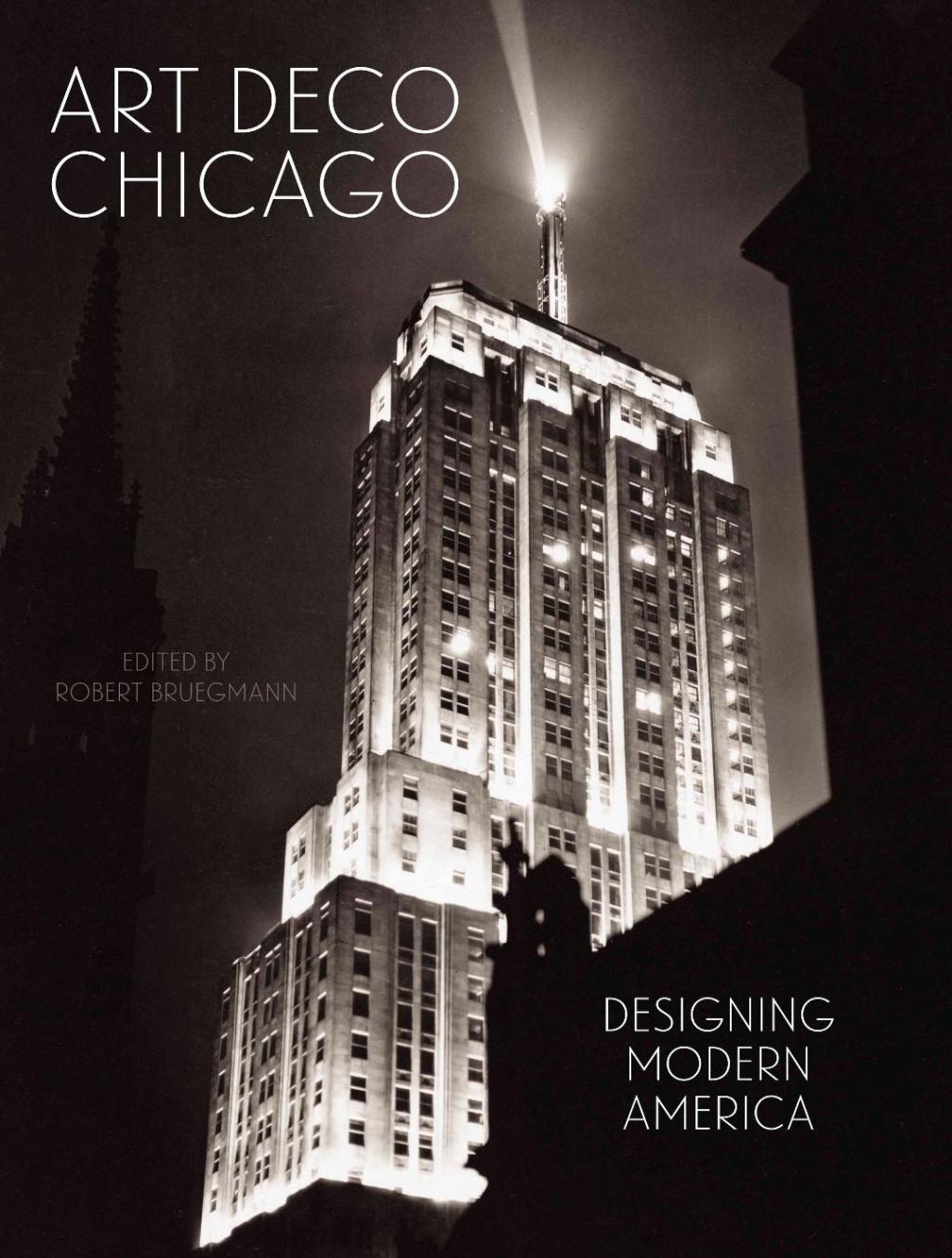
    sleek and glorious as any Art Deco masterpiece whether it be the grand Palmolive Building built in 1922 or the much lowlier but still spectacular Bell telephone Model 302 designed not by a noted artist or architect but instead by George Lum, a Bell Labs engineer in 1937,  Art Deco Chicago: Designing Modern America (Yale Press 2018; $47.75 on Amazon) showcases 101 key works coupled with more than 300 photos as well as critical essays and extensive research. Altogether, they comprise a wonderful, extensively curated and chronologically organized tome about the many facets–architecture, advertising, household objects, clothing, and food design–of a style that has fascinated so many of us for more than a century.

    Robert Bruegmann, a distinguished professor emeritus of architecture, art history, and urban planning at the University of Illinois at Chicago, was first asked to write the introduction to the book

    thought I’d knock it out in a week,” says Bruegmann, a historian of architecture, landscape and the built environment.

    That was back in 2011 and Bruegmann, author of several other books including The Architects and the City: Holabird & Roche of Chicago, 1880-1918 (Chicago Architecture and Urbanism), quickly realized that it would take much more than that. He ended up editing and shaping this complex book, a task which included overseeing 40 writers and researchers, helping to find and collect photos and defining Art Deco and its impact on the city through design. He would spend the next five years, working 50 to 60 hours a week to do so.

    One of the first questions we asked is how do we define Art Deco recalls Bruegmann.

    “Should it be narrowly like the French-inspired luxury goods, which is the narrowest to the big tent which we ended up doing,” he says noting that many products (think as blasé as refrigerators, bicycles, radios and mixmasters) created in Chicago by companies like Motorola, Sunbeam and Schwinn, changed the world in a way that other forms of Art Deco didn’t.

    It many come as a surprise that the term Art Deco wasn’t invented until the 1960s and came about because of its association with the Decorative Arts Fair Exposition of 1925 in Paris. But in Chicago, Art Deco, even before it was so named, was often about both beauty and usefulness.

    “If I had to pick a single object to suggest what we tried to do in Art Deco Chicago, I would probably choose the Craftsman brand portable air compressor sold by Sears starting in 1939,” says Bruegmann about the cast iron aluminum machine which used, as described in the book, “a series of cooling fins that functioned as a heat sink while adding a streamlined visual flair to the product…This product alluded to themes of speed, transportation, and movement while remaining stationary.”

    “It was related to the avant garde work of the Bauhaus who thought they were going to save the world through their designs,” says Bruegmann. “But they were too expensive. But Sears on the other hand made things affordable.”

    Indeed, Bruegmann says that companies like Sears and Montgomery Ward did change the world.

    “Up until the Sears catalogue, a lot of clothes outside of big cities, were handmade,” says Bruegmann. “Because Sears sold so many outfits through their catalogue, they could afford to send their designers to Paris to study the latest design and then come back and change them so they were less expensive, creating one of the most important social and political movements by making  designs for the masses. For a $1.99 a woman working in a packing plant or a farmer’s wife could wear a knockoff of a Paris dress.

    Art Deco Chicago serves as the companion publication to the exhibition “Modern by Design: Chicago Streamlines America” organized by the Chicago History Museum, which runs October 27, 2018–December 2, 2019. Proceeds from sales of and donations to Art Deco Chicago, which explores and celebrates Chicago’s pivotal role in the development of modern American design, will be used to support ongoing public education, research, and preservation advocacy of this critical period of modern American design.

    Ifyougo:

    What: Newberry Library presents Meet the Author: Robert Bruegmann, Art Deco Chicago

    When: Thursday, November 29 from  to 7:30 p.m.

    Where: Newberry Library, 60 West Walton Street, Chicago, IL

    Cost: Free and open to the public

    FYI: 312-943-9090; newberry.org

    8/18/06 University Scholar- Robert Bruegmann
  • The Library Book by Susan Orlean

    The Library Book by Susan Orlean

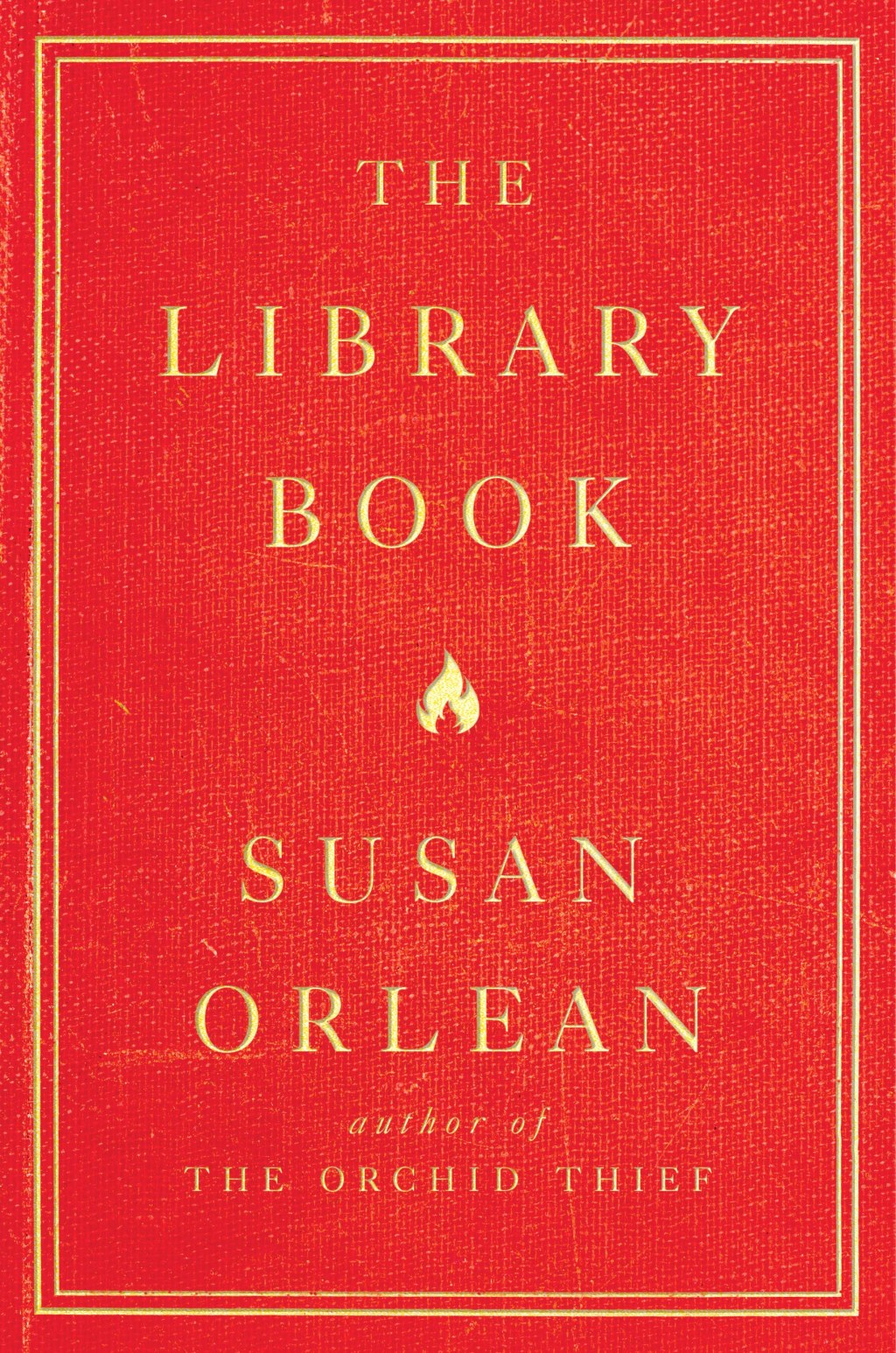
    Susan Orlean’s newest book, The Library Book (Simon & Schuster, $28), is about a fire and a library but like all things this New York Times bestselling author writes (The Orchid Thief, Rin Tin Tin), it’s so much more. A lover of libraries since she was very young, Orlean had been toying with the idea of writing about the subject when her son, then six-years-old, announced that his class assignment was to write about a city employee and instead of the typical fireman or policeman interview, he wanted to write about a librarian.Susan Orlean_credit Noah FecksSusan Orlean_credit Noah Fecks         Then, after moving to Los Angeles, Orlean was at the Los Angeles Central Public Library when the librarian opened a book, took a sniff and announced that you could still smell the smoke. Orlean asked if that was from a time when smoking was allowed. The answer was no, instead the aroma dated back to April 29, 1986 when an inferno blazed for seven hours, reaching 2500 degrees. It took half of the Los Angeles’s firefighting resources to extinguish the blaze and by then flames and water had destroyed 400,000 books and damaged another 700,000.
    “It was the combination of all of these that gave me the final push; it was as if I was being nudged, repeatedly, to look at libraries and find a narrative about them to write,” says Orlean, a staff writer at The New Yorker and author of seven books. “Learning about the fire was definitely the final nudge that made me sure this was the story I wanted to tell.”

    But how to tell the story? For Orlean, who is obsessive about details and research—it took her almost as long to write the book as it did to rebuild the library—she had to figure out her focus.

    “That’s exactly what the challenge was–it was a topic that was both broad and deep, with so much history and so many ways I could pursue it,” she says. “I finally decided to treat it as a browse through a library, with stops in different ‘departments’ of the story, such as the history, the fire, the present day, my own library memories. By visualizing the story that way I was able to move through the topic and engage as many aspects of it as I could.”

    Her attention to details, both past and present is amazing and intriguing. We learn that Mary Foy, only 18, became the head of LAPL and also, because the fire was set by an arsonist, she delves into previous book burnings such as when in 213 B.C. Chinese emperor Qin Shi Huang ordered any history book he didn’t agree with be destroyed. The act, says Orlean, resulted in over four hundred scholars being buried alive.

    In keeping with her compulsive exploration, Orlean even tried burning a book herself, just to see what happens and how it is done.

    Asked to name her favorite library, Orlean mentions the Bertram Woods branch library in Shaker Heights, Ohio.

    “That’s where I fell in love with libraries and became a passionate reader,” she says. “Of course, I’ll always feel a special attachment to the L.A. Public Library, because of the book, and it’s a great library to be in love with.”

    Orlean also hopes people appreciate the gifts library give us.

    “I want people to think about the nature of memory, both individual memory and common memory,” she says. “Our individual memories are as rich as a library, full of volumes of information and vignettes and fantasies. And our common memory is our libraries, where all the stories of our culture reside. I love reminding people of the value of both.”

    Ifyougo:

    What: Susan Orlean discusses her new book followed by a book signing.

    When: November 13th at 6 pm

    Where: Cindy Pritzker Auditorium, Harold Washington Library Center, Chicago Public Library, 400 S. State Street, Chicago IL

    Cost: Free

    FYI: (312) 747-4300; chipublib.org


  • Highland

    Highland

    A Greek immigrant with a love of books and a degree in engineering, Jim Roumbos decided to open Miles Books in downtown Highland in 1986. Since then big chain stores like Borders went bankrupt and closed their doors, but Roumbos remains open.

    “My dad, who at the time, couldn’t speak English and worked 70 hours in the mill, used to take me to the library so I could check out books,” says Roumbos who grew up in Gary but has called Highland his home for the last 40 years. “Being in the book business, I love talking to people and finding out their interests and hearing their stories.”

    Over the years, he’s heard a lot of tales of Highland and so several years ago, he approached Dan Helpingstine, a frequent customer, about writing a book about the history of the town.

    “Dan has written a number of books and we’ve had book signings for him here,” says Roumbos. “So I said hey, Dan, you should write about Highland. I have lots of people asking for books about the town.”

    In turn, Helpingstine, author of such non-fiction books as South Side Hitmen: The Story of the 1977 Chicago White Sox, Chicago White Sox: 1959 and Beyond and The Cubs and the White Sox: A Baseball Rivalry, 1900 to the Present, suggested Roumbos write the book. Finally, they decided to co-author Highland (Arcadia Publishing $21.99) which was published last December.

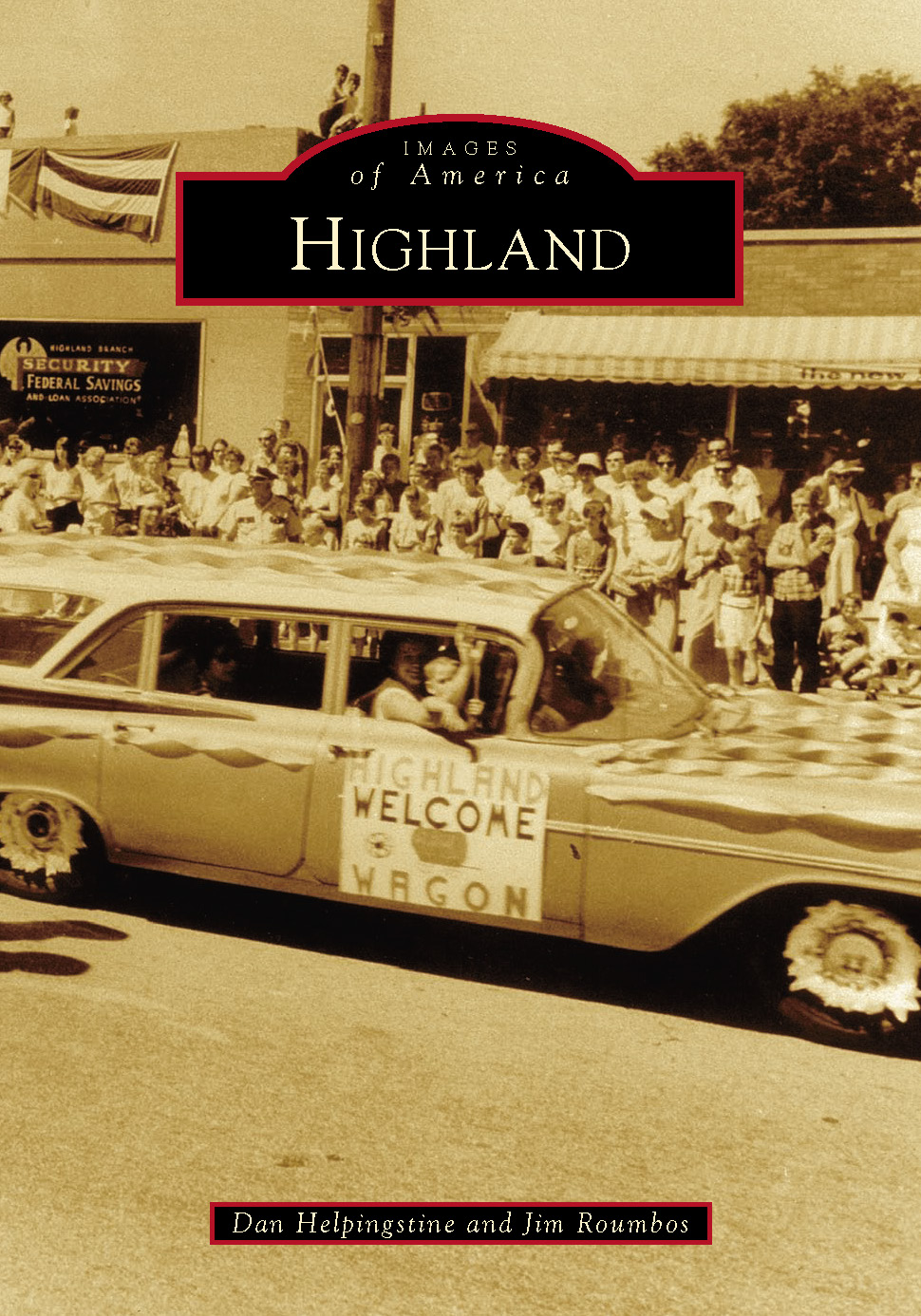
    Part of publisher’s Images of America series, the book chronicles Highland’s history through images and captions.

    “Dan did the majority of the text and I did text and caption editing as well as the full editing and technical work for the photos,” says Roumbos.

    The majority of the 181 photographs in the books were from the archives of the Highland Historical Society and the rest provided by individuals.

    While many writers often fail in their attempts to find a publisher, that wasn’t the case with Highland.

    “Because Dan had written other books for Arcadia and they knew his work, all we did was fill out the application and within 30 minutes had the okay to go ahead,” says Roumbos.

    The process slowed considerably and it took them about four years to complete the book. But their shared background, was an immense help. Like Roumbos, Helpingstine grew up in another city—Hammond—but has lived in Highland for three decades.

    “The book starts off in the late 1800s and we did a chronological pictorial, with captions, ending up with a chapter on memories throughout the years,” says Roumbos. “The last photo in the book shows the fireworks at Main Square Park for New Year’s Day at midnight. The photograph itself is from the early 1960s.  The book embodies what Highland is, why people want to come to Highland and how welcoming it is. New residents come and they assimilate and Highland stays the same—a place offering a great town experience, one that is safe, friendly, charming with an emphasis on the arts.  The police and fire department are wonderful and the elected officials are motivated to make Highland better but still keep it as a place that people love and want to maintain.”

    When asked if he could choose a favorite photo and text, Roumbos pauses to think about it and then says it’s the photo of President Calvin Coolidge speaking in Wicker Park.

    “It was a big deal,” says Roumbos. “We had another president who spoke at Wicker Park and that was Barack Obama. That says something about Highland.”

    Roumbos, a story teller at heart, likes to emphasize how independent bookstores reflect the values of the town.  He’s always one to share a cup of coffee and talk about whatever subject a person is interested in. And this summer, he was able to add one more tale to his repertoire.

    “About two years ago a young Purdue student came into the store, she was studying to become a civil engineer and she met a guy here and they started dating and they’d often meet here on Friday nights,” he says.  “Last December, he comes up to me and says he’s going to propose to her and I say that’s wonderful, when, and he said in about ten minutes when she comes to the store. Last summer they walked in, she was wearing her wedding dress they’d just gotten married in Lansing and were stopping by between the wedding and the reception to say hi.”

    Ifyougo:

    What: Book signing with Jim Roumbos and Dan Helpingstine authors of Highland.

    When: Saturday, November 10, 11:30 a.m. to 2:30 p.m.

    Where: 2819 Jewett Ave., Highland, IN

    FYI: 219-828-8700; facebook.com/milesstore


  • Swedish Settlements on the South Shore
    Swedish Settlements on the South Shore

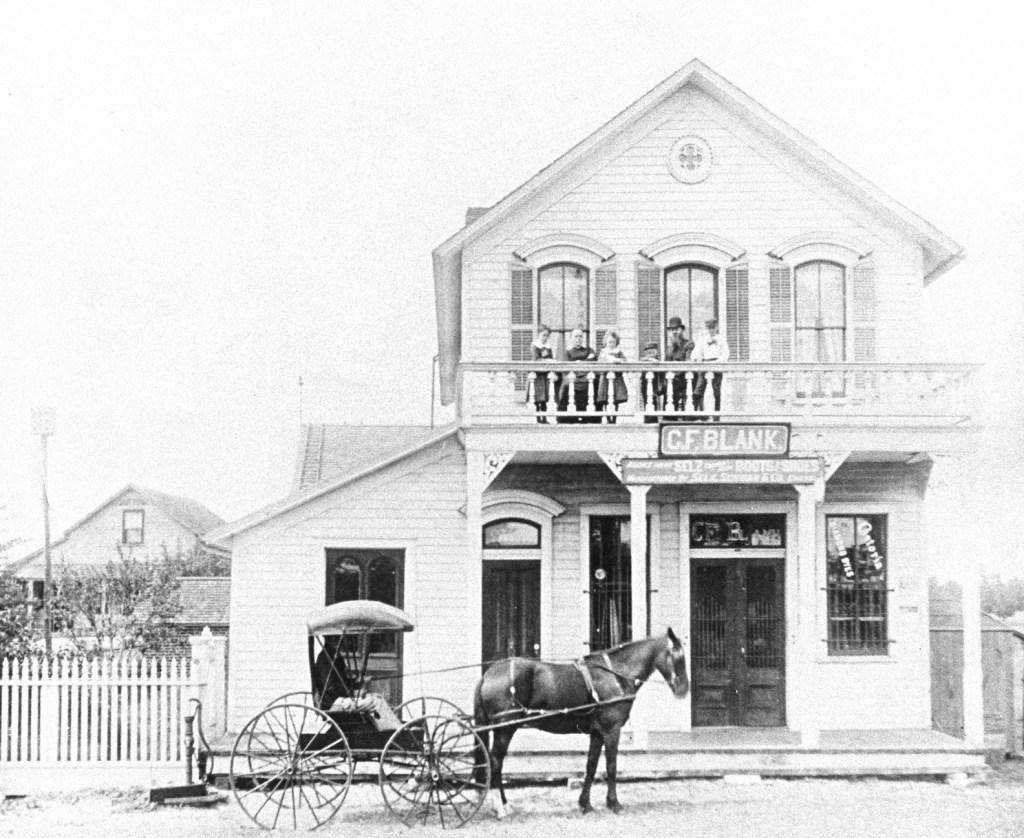
    Northwest Indiana is famously known as a melting pot, a coming together of a vibrant amalgam of people from many countries and different cultures, making the area rich in diversity. But what may be surprising to those of us who grew up in the Region, the first non-English speaking people to move into the Indiana Dunes region and establish settlements were not from Eastern Europe, Germany or Mexico but were instead Swedish immigrants.Beam Street with a cow

    “Many came first to Chicago which at one time had more Swedes than any city on earth except Stockholm,” says noted historian Ken Schoon, author of the recently released Swedish Settlements on the South Shore (Donning Company Publishers $30), noting that the legacy of these early Swedish immigrants can still be found throughout the Region even today.

    “Swedes established more than a dozen local churches, most of which are still active today,” he says “They built homes out of logs, lumber, and bricks, cleared and farmed the land, worked for the railroads and the brick factories, and established businesses, some of which are still in business today.  Several of the early Swedes served in the Union army in the Civil War.  Nearly all got American citizenship, and some were elected to political office.”

    Swedish settlements included neighborhoods in Hobart, Baillytown, Portage Township, Porter, Chesterton, and LaPorte as well as Swedetown in Michigan City. According to Schoon, Miller Beach, where Swedish families like those of my sister-in-law span five decades, was described in 1900 by Lake County historian Timothy Ball as mainly Swedish Lutheran.

    Bethel Swedish Lutheran Church, 1907 low res

    Other tie-ins with the Region’s Swedish past comprise Chellberg Farm, a historic farmstead, now part of Indiana Dunes National Lakeshore.

    “The Chellbergs were one of hundreds of Swedish families that immigrated to the ‘south shore’ area of Northwest Indiana,” says Schoon.  “They were the first non-English speaking immigrants to arrive in numbers large enough and lived close enough together to call the areas settlements.”

    Close by to Chellberg Farm and further back in time, Joseph Bailly, a French fur trader who founded a trading post which is also now within the Indiana Dunes National Lakeshore. According to Schoon, Bailly’s son-in-law Joel Wicker hired recently-arrived Swedes to cut down trees and prepare them for the railroads to be used as rail ties and as fuel for the steam engines.

    “Logs were also needed to build and heat their homes and for cooking,” says Schoon.  “When enough trees were cut down, Wicker then sold the land to his Swedish employees who then cleared the land for farming.  Other Swedes found employment as farm laborers, and working for sand and ice mining companies, and as blacksmiths and carpenters.  As the immigrants had more money, many purchased their own farms or started businesses in town.  The first licensed embalmer in Indiana was carpenter John Lundberg, a Chesterton Swede.”

    Chellberg Farm (1)
    Chellberg Farm Today Photo courtesy of the Indiana Dunes National Lakeshore 

    Many of the churches founded by Swedish immigrants still exist and for almost 70 years or so continued to offer Swedish-language services. Now services are in English and their congregations encompass more than those of Swedish ancestry.

    “Bethany Lutheran Church in LaPorte is the oldest Swedish-founded church in Indiana,” says Schoon.  “Until it closed last December, the Evangelical Covenant Church in Portage was the oldest Covenant Church in the state.  The Michigan Avenue Methodist Church in Hobart still uses its original 1889 white frame building and Michigan Avenue used to be called Swede Avenue.”

    Other churches are Bethany Lutheran and Grace Baptist  in LaPorte, Zion Lutheran in Michigan City, Bethlehem in Chesterton, Augsburg (Baillytown/Porter), Hope (Crisman/Portage), Bethel (Miller), and Augustana (HobartNordikids circle dance lowres

    Though Swedes, whose last names are similar to common  “American names” such as Anderson and Carlson, quickly assimilated into American culture, descendants of Swedes still learn Swedish songs and dances and celebrate the traditions of their forbears says Schoon and we also have assimilated into their traditional ways.

    “Even non-Swedes know about Vikings and may eat Swedish meatballs,” he says, noting that in 1952, 100 years after its founding, Chesterton still had more than 23 Swedish-owned businesses. “Smörgåsbord has become an American word—though to Swedes it has slightly different meaning.  Swedes and their descendants helped build the Calumet Area.”

    Swedes celebrate July 4th but also honor their own customs as well including Midsummer, the first day of summer and the longest day of the year, a holiday featuring a Maypole, singing, dancing, eating and drinking.

    “At least in Sweden,” says Schoon about the drinking part,  “but not at the Chellberg Farm where Midsummer is celebrated.”Vikings in the Hallway (1)

    But it isn’t all just history for Swedes and those of Swedish ancestry along the South Shore. The newest lodge in the Scandinavian Vasa Order of America was started in 2006 and sponsors “Nordikids” a very active organization for children and youth that teaches primarily Swedish songs, dances, and customs.  The group performs every year at many venues including Chicago’s “Christmas Around the World.

    Ken Schoon, the author, is not descended from Swedes, but he is married to the granddaughter of Swedish immigrants. His earlier works include Calumet Beginnings, Dreams of Duneland, and Shifting Sands, all published by Indiana University Press, and City Trees published by Stackpole Books.

    Ifyougo:

    Ken Schoon book presentations and book signings.

    Sunday, November 11@ 3pm.   Calumet City Historical Society, 760 Wentworth Ave, Calumet City, IL.  708-832-9390; calumetcityhistoricalsociety.org

    Wednesday, November 14@ 6:30pm.  Augsburg Church, Augsburg Evangelical Lutheran Church, 100 N Mineral Springs Rd, Porter, IN. 219-926-1658; augsburglutheran.org

    Sunday, November 25 @ 10:30.  Westminster Presbyterian Church, 8955 Columbia Ave, Munster, IN. 219-838-3131; wpcmunster.org

    Saturday, December 8 @ 9:30.  Brunch including Swedish pancakes and lingonberry syrup  and book signing, Dunes Learning Center, 700 Howe Rd, Porter, IN.  219-395-9555; duneslearningcenter.org


  • Good and Mad: The Revolutionary Power of Women’s Anger
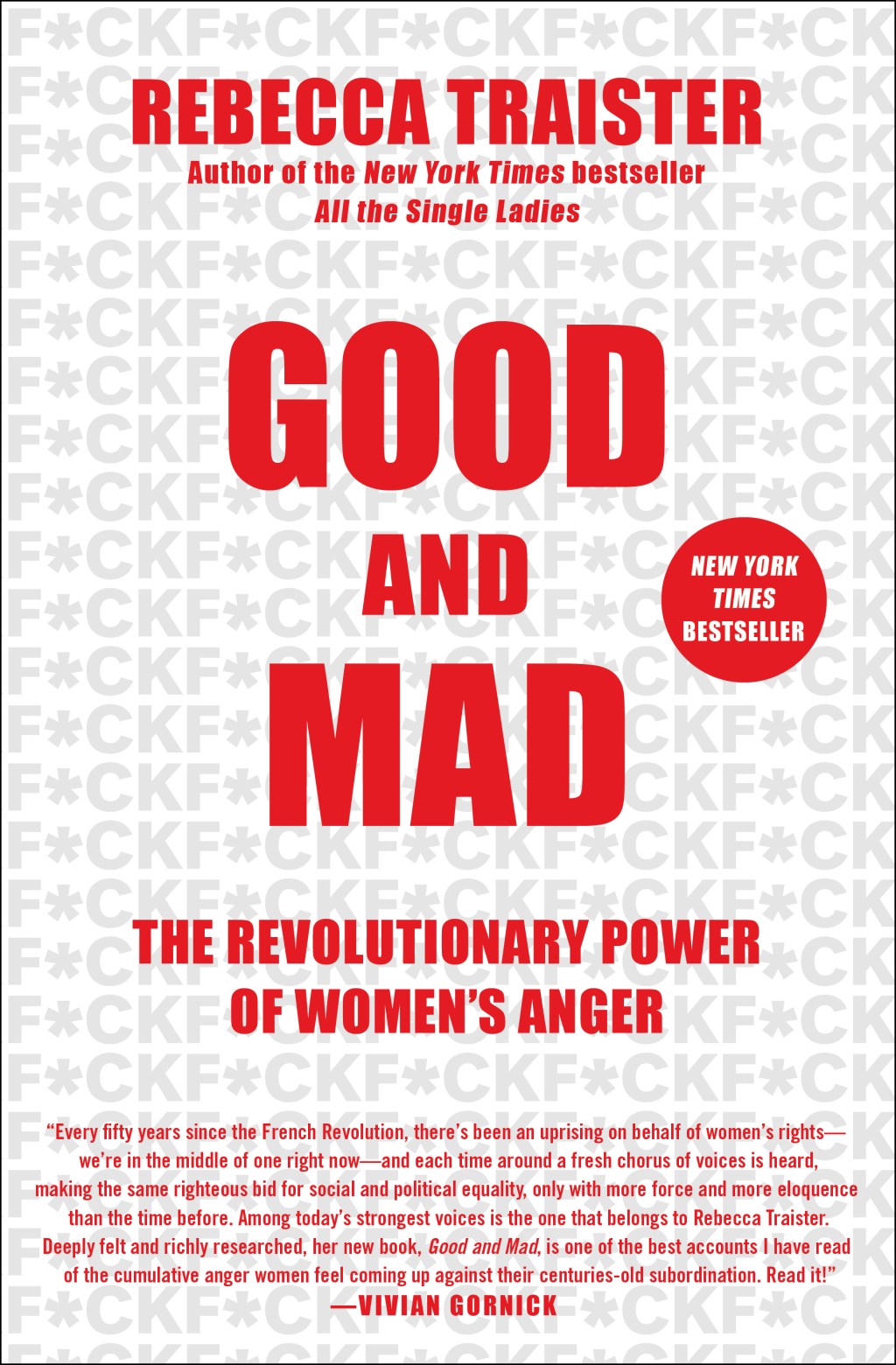
    Good and Mad: The Revolutionary Power of Women’s Anger

    Women’s anger is complicated, dating back to the days before they were allowed to vote and when all but a few careers were available to them. Even in the last generation or so, women have fought against discrimination in pay, employment—consider that former Supreme Court Justice Sandra Day O’Connor could at first only get a job as a deputy county attorney even though she graduated from the prestigious Stanford University and what they wore (up until the 1970s even pantsuits were considered inappropriate in the workplace) among many other things. On a personal level, when my father returned from serving overseas during World War II, at least one of the men on the East Chicago Public Library board demanded that my mother resign because she was taking a job away from a man. Fortunately, other board members disagreed and she worked there until she was in her 70s, retiring after 50 years. Other women weren’t as lucky—many were asked to leave or fired so that men could be re-employed.Rebecca Traister_credit_Victoria Stevens

    For New York Times bestselling author Rebecca Traister, a National Magazine Award winner for her coverage of the Harvey Weinstein scandals, writer at large for New York Magazine and contributing writer for Elle, the long-simmering anger women have felt is now brimming over. This is shown by the ever growing #MeToo movement and also what she sees as women’s reaction to Donald Trump and his policies that hurt women. In her newest book, Good and Mad: The Revolutionary Power of Women’s Anger (Simon & Schuster 2018; $27) Traister wants to let women know their anger is potent.

    “It’s consequential, it’s meaningful, valid and rational,” says Traister who discusses how women’s anger is often held against them and used to invalidate their feelings. “I think those are things that women are told are not true about their anger all the time. This book sort of serves as a guide and a reminder–to let women know that their anger is powerful, that it has historical precedence.”

    Indeed, Traister argues that anger, when used to make changes, is a potent force.

    “It’s the bottling up of anger, rather than the anger itself, that raises our blood pressure and makes us grind our teeth,” she says.

    Though her book was written before the recent confirmation of Supreme Court Justice Brett Kavanaugh, Traister says the  reaction to how the women who came forward were treated will also reverberate into the future—just as they did 26 years ago after the Anita Hill and Clarence Thomas confirmation hearings.

    “#MeToo was an examination of how often sexualized harm was actually a tool of inequality within workplaces and within power structures where women faced all kinds of economic, professional, public forms of discrimination,” she says noting the harm being done wasn’t just sexual—it was also economic and professional. “What was being exposed were fundamental inequalities.

    Ifyougo:

    What: Chicago Humanities Festival, in conversation with Dr. Brittney Cooper

    When: Sunday, October 28 at 3:30 p.m.

    Where: Pick-Staiger Concert Hall, Northwestern University, 50 Arts Circle Dr., Evanston, IL

    FYI: (847) 467-4000; chicagohumanities.org/events/207-rebecca-traister-good-and-mad


  • Who Murdered the Supreme Court Candidate: Mental State, a mystery novel by Law Professor M. Todd Henderson

    Who Murdered the Supreme Court Candidate: Mental State, a mystery novel by Law Professor M. Todd Henderson

    The murder of a good friend and fellow law professor inspired M. Todd Henderson to write Mental State (Down and Out Books 2018; $17.95), his first mystery novel.

    “He was a professor at Florida State University and had just dropped of his kids and was pulling out of the driveway when he was shot,” says Henderson who teaches at the University of Chicago’s law school. It turns out the friend, Dan Martel, was murdered by two hitmen hired by his ex-wife’s family to gain full custody of their children. Henderson considers himself a storyteller and using those skills he channeled his feelings into an immensely readable mystery involving the deadly political machinations put in place to hide the past of a sexual predator in order to secure a place on the  Supreme Court. It’s an interesting premise and certainly timely though this book was written well before the Brett Kavanaugh nomination and besides, Henderson’s judge is liberal.

    “My interest in law at a policy level is about power and what people are willing to do to achieve their ends,” says Henderson.

    photo-m-todd-henderson-1000x1400px-300dpi (1)

    In Mental State, Professor Alex Johnson, a professor at a renowned law school on Chicago’s southside (think University of Chicago) is murdered before he can reveal that the man being considered for the Supreme Court sexually abused him when they were both young. The death is first thought to be a suicide but FBI agent Royce Johnson, the victim’s brother, doesn’t believe his self-centered, narcissistic sibling would do such a thing. Once Royce proves it was murder, the next frame-up goes into place (the bad guys are good at backup plans) pinpointing the murder on one of the professor’s law students. But Johnson’s inability to quit trying to solve the crime soon puts himself on the wrong side of the law,  his comrades at the FBI and an array of federal officials determined to make sure the president’s pick for the highest court in the land goes through without a hitch. If that means a few murders and ruined lives to achieve this, well, it’s for the greater good.

    Ifyougo:

    What: M. Todd Henderson discusses “Mental State.” He will be joined in conversation by Jeff Ruby. A Q&A and signing will follow the discussion.

    When: Thursday, October 18, 2018 – 6:00pm – 7:00pm

    Where: 57th Street Books, 1301 E 57th St., Chicago, IL

    Cost: Free

    FYI: (773) 752-4381; events@semcoop.com

  • Muse of Nightmares: Second in the Epic Fantasy Series Strange the Dreamer
    Muse of Nightmares: Second in the Epic Fantasy Series Strange the Dreamer

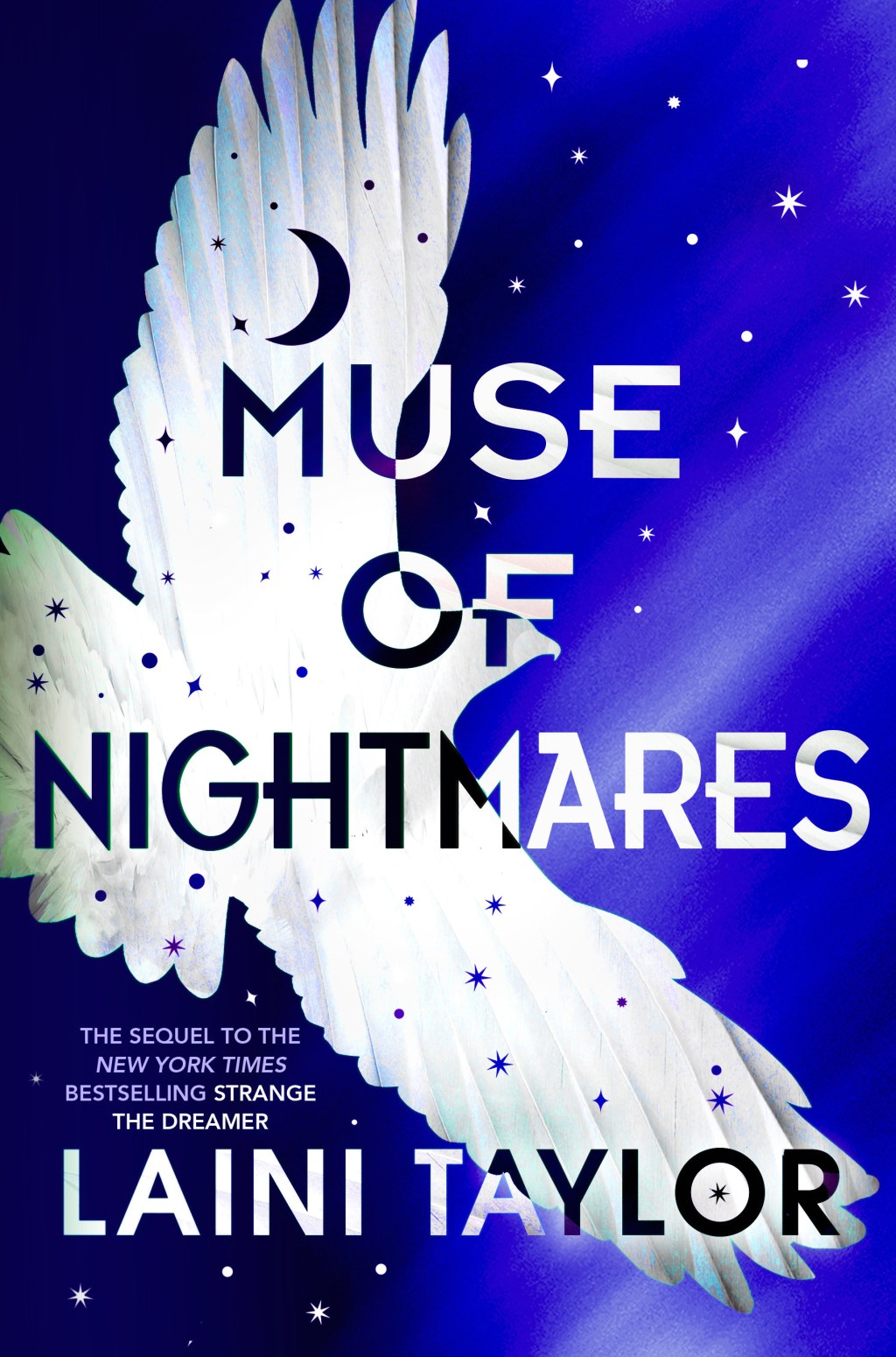
    Strange the Dreamer, the epic fantasy series written by Laini Taylor, began as a dream. Now Taylor, a National Book Award finalist, has just released Muse of Nightmares  (Little, Brown 2018; $19.99), the second book in the series.Laini Taylor_Author Photo_AliSmith credit

    “The story has been in my mind for 20 years or more,” says Taylor, whose author photo shows her with a shock of long seriously pink hair.  “I think I dreamed Sairi, the character that came to me, who lived high above the city and I thought of her as the Muse of Nightmares. I started writing about her for my first book but then that became Lazio’s book.  But this is about Sairi, the way trauma changes us and if it is possible for a person to overcome this. Sarai doesn’t know what she’s capable of and she feels helpless, but is she?”

    The journey of Sairi and Lazio is one of intrigue and mysteries (what was done with thousands of children born in the citadel nursery? where did the gods come from, and why? and  how do they defeat a new foe?) and it’s interesting to note that as we follow Taylor’s story-telling, we often are only a few steps behind her as the story plot evolves. That’s because as much as she wants to shape her story, it often, as she builds her characters and scenes in her mind, takes on a will of its own.

    Taylor says she always hopes to get to the ending she has in mind.

    “But it doesn’t always work that way,” she says.

    Immersed and—dare we say—co-dependent–with her characters, Taylor is sad when they make a bad choice though she can understand why they did so.

    “It just give me so much empathy for them,” Taylor says.  “I ask what causes people to do that. When my characters don’t survive, I really wish I could save them, but I can’t.”

    But though she doesn’t often know how her books will end or save a character, she did know that she wanted to eschew the typical epic ending of a massive battle between good and evil and instead resolve it by asking and answering a powerful question “must heroes always slay monsters or is it possible to save them?”

    Ifyougo:

    What:

    When: Thursday, October 11 at 7 p.m.

    Where: Anderson’s Bookshop, 123 West Jefferson Avenue Naperville, IL

    Cost: Free and open to the public. To join the signing line, please purchase the author’s latest book, Muse of Nightmares, from Anderson’s Bookshop. To purchase please stop into or call Anderson’s Bookshop Naperville (630) 355-2665.

    FYI: (630) 355-2665; andersonsbookshop.com

  • Chefs, Drugs and Rock & Roll: How Food Lovers, Free Spirits, Misfits and Wanderers Created a New Profession

    Chefs, Drugs and Rock & Roll: How Food Lovers, Free Spirits, Misfits and Wanderers Created a New Profession

    Author Photo. Andrew Friedman. Photo Credit Evan SungAndrew Friedman calls himself a chef writer because, as much as he loves food, he’s passionate about the stories chefs have to tell.

    “My point of view is writing not so much about the food but about the chefs, that’s why I say I’m a chefie not a foodie,” he says. “I think too many well-known chefs are almost portrayed as cartoon characters and in a broad stroke. I wanted to spend time with them and really get to know their stories, who they really are and their impact on how we eat now. Like Wolfgang Puck. He’s a tremendous cook but people call him the first celebrity chef. He’s so much more than that.”

    To accomplish this, Friedman interviewed over 200 chefs and food writers and others who were leading the food revolution against processed and packaged foods.

    “I’m such a geek I would spend three hours with someone just to get a nugget or two,” he says.

    The results? An accumulation of tens of thousands of transcript pages and his latest book,  Chefs, Drugs and Rock & Roll: How Food Lovers, Free Spirits, Misfits and Wanderers Created a New Profession (Ecco 2018; $27.99), where he recounts how dedicated and imaginative men and women in the 1970s and the 1980s, who were willing to challenge the rules, revolutionized America’s food scene.

    Now chefs are like rock stars, often known just by one name, commanding their own empires of cookbooks, TV shows, restaurants, cookware and food products. But Friedman points out that up until 1976, the United States Department of Labor categorized cooks as domestics. It took lobbying by the American Culinary Federation, at the urging of Louis Szarthmary, the late Hungarian American chef who owned The Bakery in Chicago and wrote The Chef’s Secret Cookbook, a New York Times bestseller, to change the classification into a profession.

    “I wanted to show how this became a viable profession,” he says. “I was talking to Jody Buvette, owner of Buvette in New York and she remembers sitting her father down and  saying ‘I have two bad things to tell you. I’m gay and I want to be a cook.’ It was like telling your upper middle-class parents that you wanted to be a coal miner.”

    Friedman, whose knowledge about restaurants, culinarians and food seems delightfully endless, chose three cities to focus on—San Francisco, Los Angeles and New York. What does he think of Chicago’s food scene?

    “It’s great,” he says. “I love dining in Chicago and you have some brilliant chefs but I think much of the beginnings started in those three cities.”

    Besides, he has those piles of transcripts. There’s surely more than a few Chicago stories in all those pages.  In the meantime, Friedman gives us a wonderfully written read about a defining time—one that in some ways separates frozen TV dinners and what many restaurants are serving today.

    Ifyougo:

    What:  5 course 80s-era dinner inspired by Chefs, Drugs and Rock & Roll with wines selected by Sommelier Rachael Lowe and conversation at Spiaggia Restaurant

    When: Tues. October 2, 7 pm

    Where: Spiaggia Restaurant, 980 North Michigan Ave., Chicago, IL

    Cost: $150 per person

    FYI: 312-280-2750; spiaggiarestaurant.com


    What: Talk with Andrew Friedman about Chefs, Drugs and Rock & Roll

    When: Wed, October 3, 6:30 to 8:30 pm

    Where: Read It & Eat, 2142 North Halsted St., Chicago, IL

    Cost: Purchase a ticket and book combo for $36.45 or 2 tickets and a book combo for $46.45

    FYI: 773-661-6158; readitandeatstore.com


  • Hope Never Dies: A Obama-Biden Mystery

    Hope Never Dies: A Obama-Biden Mystery

    Watching news clips of Barack Obama windsurfing off of Richard Branson’s private island, kayaking with Justin Trudeau and BASE jumping in Hong Kong with Bradley Cooper while he’s grouting tile in his master bathroom and playing darts on a board his daughter gave him years ago, Joe Biden, feeling left-out (he doesn’t even have Secret Service protection anymore), grumpily wonders why the 44th president hasn’t called him in the months since Donald Trump took office.  Biden’s grousing changes quickly when Obama appears in the woods behind his house late one night, coolly smoking a cigarette and delivering the terrible news that Finn Donnelly, the Amtrak conductor that Biden befriended as he traveled back and forth between Delaware to Washington D.C. has been murdered. On his body, Barack says, was a printout map of Biden’s home. Is someone targeting the vice-president?Shaffer, Andrew_Courtesy Andrew Shaffer

    And so the bromance rekindles as the ex-president and ex-vice are back working as a team as they race to solve the crime in Andrew Shaffer’s Hope Never Dies (Quirk Books 2018; $14.99). The title is a parody of the James Bond movie “Tomorrow Never Dies”  and the dime store detective novel-like-cover  depicts Obama, the wind whipping his red tie behind him, standing in the passenger seat of a Thunderbird convertible pointing the way as a determined Biden drives but the story itself isn’t farce. Shaffer, who is a New York Times best seller author, says that though the action is over-the-top at times—Obama roughing up a biker; Biden head-butting a villain and getting thrown off a fast moving train to name a few—he resisted getting too campy.

    “The book is more than a one-note joke,” says Shaffer.

    Growing up in Iowa, Shaffer enrolled in the University of Iowa’s noted creative writing program.

    “They teach serious fiction there and you’re reading a lot of serious authors like Phillip Roth,” he says.  “So I’m writing like I’m in my 60s, divorced and living in the suburbs. I was only 21 and I thought what am I doing? I wanted to write the type of fiction I like to read such as authors like Elmore Leonard, Donald Westlake and Lawrence Block.”

    Shaffer had been thinking about writing a mystery with Joe Biden as the main character for years.

    “I thought about maybe making it a cozy type of mystery,” he says. “But I got the idea for this when they’d been out of office for a week or so. I wrote a note to my agent asking how about a Biden-Obama mystery and she said really? I said yes.”

    Inspired by the 1980s buddy cop movies he liked such as “Tango & Cash,” Shaffer says that the mystery isn’t just about Biden’s love of ice cream but instead covers serious topics such as the opioid epidemic. Since the book’s recent release on July 18, it’s been selected as an Amazon Best Book of the Month: Thrillers July 2018 and an Official Summer Read of Publishers Weekly.  He is already working on the next book in the series, Hope Rides Again.

    “It’s a legacy in ways,” Shaffer says about the series. “”It’s for people, no matter what part of the political spectrum they’re on, need some kind of hope.”

    Ifyougo:

    What: Book signing with Andrew Shaffer.

    When: Sunday, August 19 at 2:00 p.m.

    Where: Anderson’s Bookshop, 123 W. Jefferson Ave., Naperville, IL.

    FYI: (630) 355-2665; andersonsbookshop.com