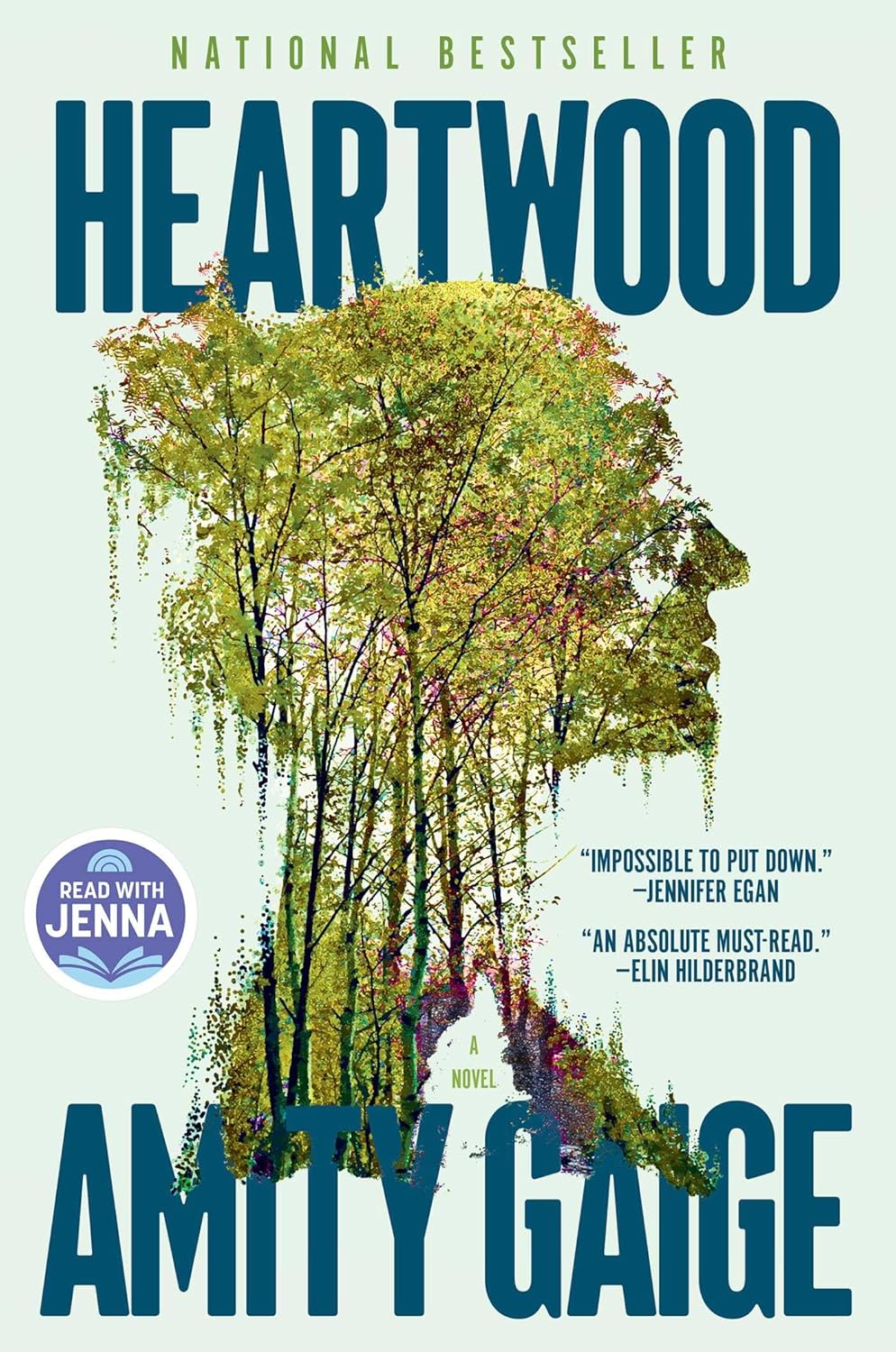
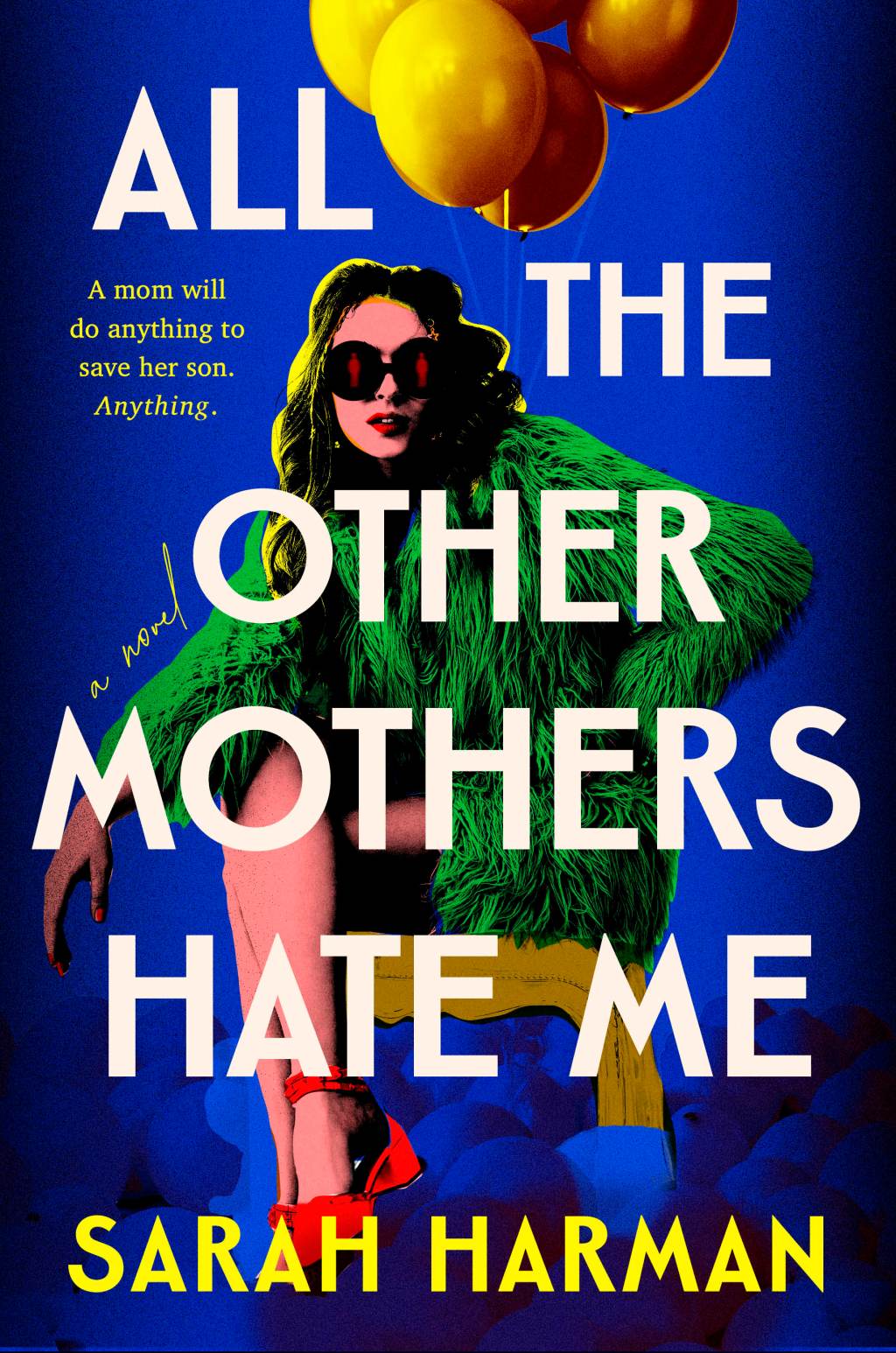
Tag: Mystery-Thriller

  • All the Other Mothers Hate Me

    All the Other Mothers Hate Me

    Florence Grimes is a mess. Once part of a popular girl rock band, after a brief interlude with the manager who is really in love with another of the women in the group, she’s cast out and left with a baby to raise courtesy of the man who fired her. Sure, he pays for their son to go to a posh private school, and she adores her child, but her royalty checks are dwindling and let’s face it—she shouldn’t be spending what little money she has left on fancy nail art and other unnecessary items.

    But then Flo isn’t someone who knows how to manage her life, She just doesn’t fit in with the other mothers, but then she doesn’t try that hard—her clothing and attitude impairing her ability to be accepted.

    Finally, there’s hope. She gets a call about meeting an old colleague and she dreams of returning to the stage, but, as always with Flo, bad stuff happens and this time it’s really bad. Her son’s class bully mysteriously vanishes on a field trip, and Florence’s quirky, misunderstood 10-year-old son becomes a suspect.

    “To save her son, Florence has to figure out what actually happened to the missing boy,” says Sarah Harman, author of All the Other Mother’s Hate Me (G. P. Putnam’ & Sons 2025). “But the more she uncovers, the more she realizes her son might not be as innocent as she’d like to believe,”

    Books about missing children and women on the rocks aren’t typically funny but Harman, who describes the subject as a “fine line to walk” uses humor in recounting Flo and her attempts not only to resuscitate her career—and her life—but find out what really happened. And Flo, despite all her faults and mishaps, is someone to root for.

    “Personally, as a parent, I have zero interest in fiction about bad things happening to children,” says Harman. “There’s enough of that in the real world; I do not want to consume that darkness in my limited free time. So, it was important to me to telegraph to the reader from the outset, that while this is a twisty mystery about a missing boy, this is not a book where children are going to suffer.”

    Harman was never in a girl band (that’s what they called them back then) but she was inspired to write the novel by thinking back to the early aughts and the way that female celebrities were treated by the media and society in general. She references Britney Spears as one example.

    “Or remember how the paparazzi took a horrible upskirt photo of Anne Hathaway and then Matt Lauer asked her on national television ‘what lesson she learned from the experience?’” she says. “That was in 2012. It really wasn’t very long ago. When I was writing Florence, I was thinking about how coming of age creatively in that sort of environment might shape a person’s worldview —and the rest of her life.”

    The book, which came out in March of this year, is so compelling that even before publication, foreign rights to it were sold at auction in 14 markets  and the TV rights bought by FX and The Bear creator Chris Storer, Not bad at all for any novel, but this is Harman’s first which makes it even more impressive.

    Like Flo, Harman is an American living in the West End of London, and she notes that navigating the class system is much different than here. But there are some things that are common worldwide and one of them, she says, the redemptive power of female friendship.

    “When we meet Florence, all the other mothers hate her—and for a good reason,” she says. “She’s kind of awful. Over the course of the novel, as Florence forges an unlikely alliance with another mom, Jenny, she discovers that she actually is capable of caring about something other than herself. It’s only by learning to be a friend that Florence is able to move on from her past and forgive herself for her failures. Ultimately, my hope is that this book makes readers feel it’s never too late for a comeback.”

    This article originally appeared in the Northwest Indiana Times.

  • Letters from the Dead: A Q & A with Isabella Valeri
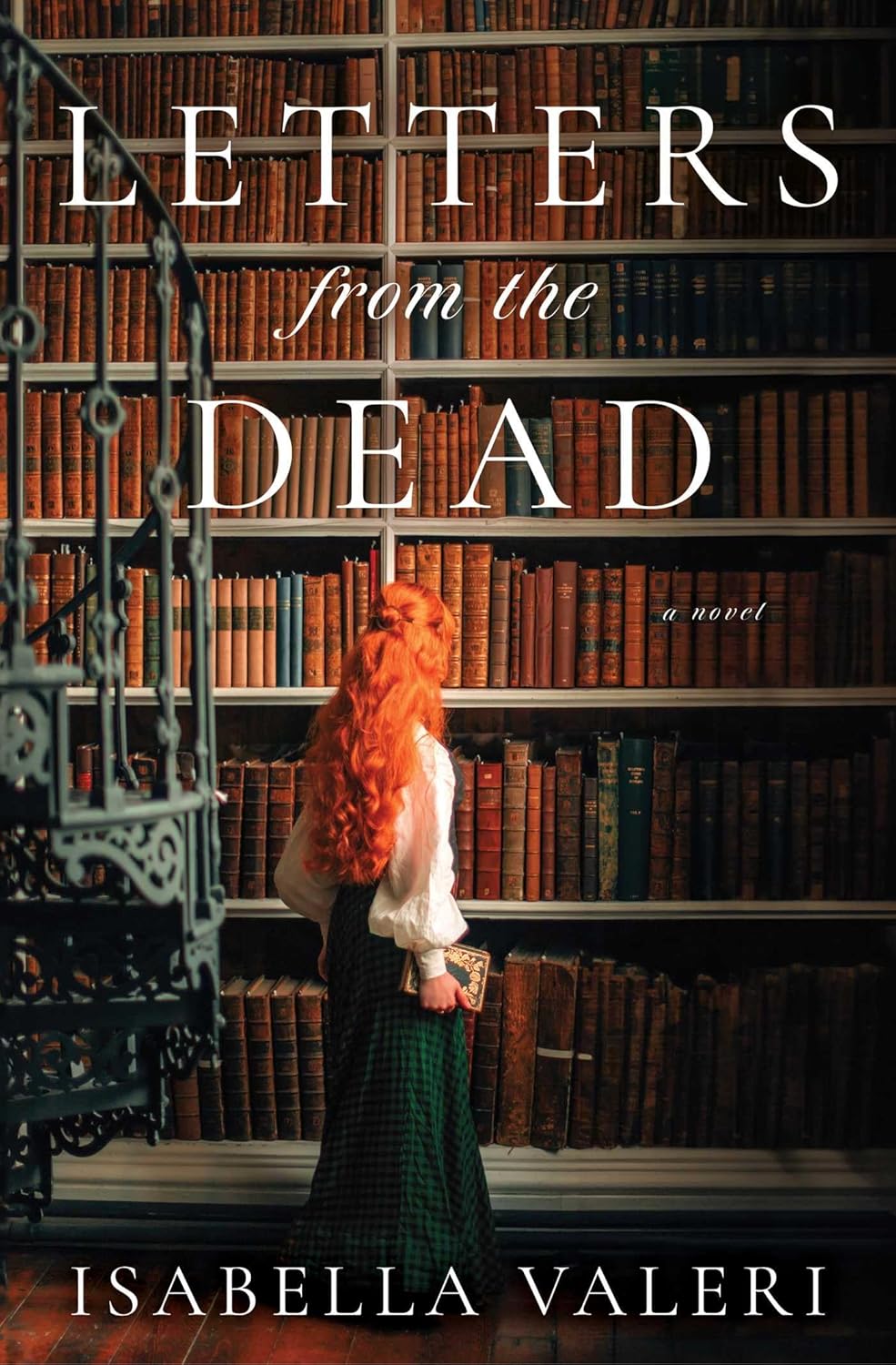
    Letters from the Dead: A Q & A with Isabella Valeri

    Mesmerizing, atmospheric, Gothic, and lyrical, Isabella Valeri’s first novel in a trilogy, took me into an opaque and lawless world of ancestral and deadly family dynasties beholden to no nation and no one but themselves. Valeri, who writes and lives under an assumed name and in an undisclosed Alpine location, is described as an avid markswoman, skier, equestrian, and pilot. I had the chance to interview her as she was writing the upcoming sequel, The Prodigal Daughter due out July 7, 2026.

    Q.  What inspired you to write Letters from the Dead (Atria/Emily Bestler Books/Simon & Schuster)and explore the world of old European dynasties and how much impact they have on the world?

    A. I had rather an unusual childhood and when I was quite young I read The Fate of Empires and Search for Survival a work written by the British military officer Sir John Glubb. Glubb describes a set of phases that empires go through during their rise and decline.

    A dramatic painting depicting chaos and destruction, with a massive statue of a figure holding an object amidst stormy skies and tumultuous waters, symbolizing the fall of an empire.

    I was also fascinated by the “Course of Empire” series of paintings by Thomas Cole, and I remember being saddened by the fifth and last in the series “Desolation” that Cole himself describes thus: “The gorgeous pageant has passed – the roar of battle has ceased – the multitude has sunk in the dust – the empire is extinct.”

    A serene landscape featuring a ruined column in the foreground, with remnants of classical architecture and a body of water reflecting the sky, evoking themes of desolation and the passage of time.

    But dynasties, particularly the hereditary variety, I realised, can outlast empires. The Yamato Imperial House of Japan endured for more than 2,500 years. This made me wonder what sort of properties permitted dynasties to endure for so long.

    When I began to write Letters from the Dead, it seemed the perfect theme for my young anti-heroine to explore: the way that dynasties subsume their members, and inevitably corrupt them so that the dynasty itself can survive. How does one fight such an entity, particularly as the youngest and the only girl of a generation?

    I won’t spoil it, but I hope that the Letters from the Dead series answers that question.

    A faded, aged piece of paper with text that appears to be an excerpt from a fictional story. The content describes a scene where the narrator feels alone on a jet, has a fleeting interaction with a figure named Karl, and expresses distress over a separation from their grandfather. The text captures a tense, emotional moment.

    Q.  Did any real-life families or historical events influence the creation of the protagonist’s family and their legacy? Or is some or all of it based upon your own experiences?

    A. Certainly the House of Hapsburg and its fate after the First World War provided some inspiration. Their influence was of such concern that the “Hapsburg Law” of 1919 stripped the family of power, seized all its property, and banished its memebers from Austria unless they renounced all their titles and claims.

    Some refused and went into exile. In fact, the Imperial family was later deported from Switzerland when the authorities discovered that Charles I was, for the second time, trying to mount a coup, restore the monarchy to power, and install himself on the Hungarian throne.

    A historic family portrait featuring a father in military uniform, a mother in dark Victorian clothing, and three children, all dressed in white garments. The family is posed in a studio setting with floral decorations in the background.
    The Russian Imperial Romanov family in early years. Wikimedia Commons.

    The fate of the House of Habsburg-Lorraine (and the murder of the Russian Imperial Romanov family at the hands of the Bolsheviks a year earlier) certainly provided an incentive for dynastic families to adopt rather a lower profile. Concepts like exile and secret power structures and the clandestine machinations they wield are certainly rich ground for an author to mine, and so themes like secret societies, banking secrecy, and the goings on in shadowy halls of power play central roles in Letters from the Dead and the rest of the series.

    Q. The Alpine estate feels almost like a character itself. How did you create such a vivid and atmospheric setting? And did the remote estate mpact the people who live there?

    A. I worked very hard to imbue my prose with that feeling I’m very glad to know that this comes through in the book. In a way, the dynasty that my anti-heroine is born into is a living, breathing thing. It has wants, needs, and desires. What are the dynasty’s ancestral lands and the “family seat,” the centre of the family’s power, but the physical manifestations of the dynasty itself?

    A woman stands in a lush, grassy field, her hair gently blowing in the wind, capturing a serene moment in nature.
    Photo courtesy of Isabella Valeri.

    Certainly my anti-heroine, who knows nothing of the outside world for the first twelve years of her life, finds herself born as part of that ecosystem. There’s always a hint of the supernatural in my books and the suggestion that the family’s ancestors do their best to wield their influence from beyond the grave.

    This concept was a fairly central tenant of belief in Ancient Rome and the title Letters from the Dead certainly alludes to the influence of “those who have gone before.” The estate is their only connection with the living so it does take on life of its own now and again, and for good or for ill, has a seductive influence over everyone who walks on those lands.

    A serene Alpine landscape featuring green pastures, rolling hills, and majestic snow-capped mountains, with two cows grazing peacefully in the foreground.
    Photo courtesy of Switzerland Tourism

    Of course, it helps that the Alpine foothills and the High Alps, where large portions of my books are set, are breathtakingly beautiful. My writing retreat is far up in the mountains and the descriptions of the hills, valleys, fogs, mists, and clouds on the estate were some of the first passages I wrote while looking down from there.

    Q. I loved how you meshed the intellectual with a high-paced thriller.Was that difficult to do?

    A. It was, in fact, very, very difficult. Early on I was repeatedly warned that it was nearly impossible to publish longer books. I am beyond grateful that Emily Bestler, my publisher, proved that untrue.

    I think and hope that longer form fiction is making a comeback and that even younger readers have tired of the quick dopamine fix of social media. I set out to write the books I wanted to read and almost all my favourites are longer works shot through with texture and detail and with very intellectual themes. Donna Tartt’s The Secret History, perhaps my very favourite novel and a huge inspiration for me, is nearly 200,000 words.

    Hilary Mantel’s Wolf Hall, an absolutely beautiful book, is longer than that. A.S. Byatt’s wonderful Possession is also nearly 200,000 words.

    Ancient Greek pottery depicting a mythological scene with several figures, including women and men in elaborate clothing, engaged in dialogue and holding various objects.
    Wikimedia Commons

    I think it’s hard to fully appreciate The Secret History unless you understand quite a bit about Dionysus and the Eleusinian Mysteries. But Tartt gives that to her readers in rather a clever way by bringing them along for her main character’s lessons where those concepts are discussed.

    There are so many deeper themes in Letters from the Dead that I also felt as if I needed to show my readers how my anti-heroine uncovers them, and how, at a young age, she develops the skills and tools she needs to embrace her destiny.

    Moreover, I cannot abide the tendency of female characters to devolve into “Mary Sue”s, young women who apparently sprung from the womb as already accomplished international jewel thieves with incredible gymnastic abilities and an innate immunity to cyanide (that conveniently saves their life in the middle of Act II).

    To me it was very important to let my readers learn how my anti-heroine acquires what she needs to follow her character arc, and maybe even to learn along with her.

    You can’t fight an old world dynasty, after all, unless you understand something about trusts and estates law. I’m still not sure that I struck the right balance between the intellectual concepts in the book and the pace of the story, but I’m told that all authors fret about such things even well after publication.

    Q. Without spoilers, what was the most difficult plot twist or revelation to write?

    A. The dynasty my anti-heroine is born into obviously uses violence, even murder, to its own ends. But, such a structure would not survive long if such acts were perpetrated in the open.

    So, much of the violence in Letters from the Dead occurs “off-camera” so to speak, hidden in the shadows, hinted at in ways that cause my anti-heroine to speculate, even if she cannot be sure what is and isn’t true. There is one plot twist, however, that sparks a terrible act of violence that has horrible and long-lasting consequences and one that I knew that, as an author, I could not shy away from.

    That was a very difficult scene to write because elements of it were deeply personal to me. I also knew that this scene would be critical not just to Letters from the Dead, but the whole series and therefore it had to hit a certain tone perfectly.

    I revisited and revised the scene maybe a dozen times which was deeply traumatic and prose quickly became so visceral that even to this day the scene upsets me. But, I really felt that I had to inflict that pain on myself and to really pour that agony into the passage or I would always feel like I had cheated my readers somehow.

    Q. Did you always know how the story would end, or did it evolve as you wrote?

    A. I started off as a “pantser,” a writer who writes by the seat of her pants, but a very unusual thing happened to me that turned me into a devoted “plotter,” committed to mapping out the entire work in advance.

    Movie poster for the film 'Alien,' featuring a large alien egg emitting a green light with the tagline 'In space, no one can hear you scream.'

    I was amazingly lucky to be hosted by director David Leitch and his wife and producer Kelly McCormick at the famous Shepperton Studios in Surrey, England. One of my favourite movies of all time, Alien, was filmed there.

    A group of eight characters dressed in tactical gear, standing together against a plain white backdrop, posing with various weapons and equipment.

    They were astoundingly gracious with me even though they were busy filming Hobbs & Shaw at the time and I got a complete tour of the shoot. What really stuck with me was the “war room” where they had just taken over a whole conference room and laid out the entire film on every surface with photos, magazine cutouts for costume concepts, and detailed dioramas of sets.

    Poster for the movie 'Hobbs & Shaw', featuring the main characters portrayed by Dwayne Johnson and Jason Statham, with action elements and a dramatic design.

    You could sit in a swivel chair in the middle and spin around and see the entire concept of film unfold. I was so taken by that idea that the moment I got home I turned one of the conference rooms in my own offices into the “war room” for Letters from the Dead.

    Before I was done I had covered the walls with detailed scene-level timelines of every book in the series complete with full-colour pictures of the characters, settings, key events. Some of the timelines four feet tall and twenty feet long. So, yes. All the way at the end of the timeline for the last book the last scenes in the series are depicted (and readers will finally learn her name).

    Q. Your life sounds almost as mysterious-and maybe as fraught with danger– as the lives of those in the book. Do you have any comments about that?

    A. I have a friend who likes to speculate that I’m a “retired Bond girl” and that my writing retreat in the Alps is a “Bond villian’s lair” obviously references to the old James Bond movies. I always jest back with her and say: “Who’s retired?” Certainly, I’ve had an unusual life, but I don’t want that to distract from my books and I think there is something at least mildly distasteful about the post-modern urge to make “the messenger,” so to speak, so much of the “story.”

    Jack Carr has a wonderful discussion about such things in the preface of his debut novel The Terminal List. Of the book’s main character he writes: “I am not James Reece. He is more skilled, witty and intelligent than I could ever hope to be. Though I am not James Reece, I understand him.”

    Similarly, I am not my anti-heroine. But I certainly understand her. Of course, Jack Carr has a good reason to write that disclaimer: he was a Navy SEAL and many of his missions were classified. There is an element of “write what you know” in my novels, as there must be. Thankfully, however, my life is quite a bit less exciting than Jack Carr’s.

    Q. Letters from the Dead is the first in a series. Can you give us any hints about what’s to come in The Prodigal Daughter?

    A. Gillian Flynn, the author of Gone Girl, wrote some comments about female main characters that always resonated with me to the effect that many of them are boring. Of course, her own female characters can be downright evil and I think that’s a refreshing change from books with those happy endings where the female protagonist ends up with the man of her dreams just as he inherits the winery in France and they live together happily ever after (and in such cases the author has clearly not realised how much work a vineyard is).

    It is one reason that I write anti-heroines instead of female protagonists. One of the major themes in the Letters from the Dead series is the conflict between freedom and duty or loyalty.

    The Prodigal Daughter is about a return from exile, discovering the dark plans the dynasty she was born into has in store for my anti-heroine, and the trials she must, at the greatest personal cost, go through first to understand what her destiny is, and eventually realise it. In Letters from the Dead her grandfather tells her: “My dear, sometimes the patriarch must embrace total amorality, even immorality, in order to grant to his family the luxury of morality.”

    In The Prodigal Daughter she must come to terms with the true implications of that advice, and what it will take to either accept or reject it.

    Q. Besides a great read, what else would you like readers to take away from your book?

    A. Another major theme in Letters from the Dead is secrecy and hidden worlds. I hope that my readers will be inspired by the book to look into the shadows they are normally discouraged from investigating. Letters from the Dead is also a coming of age story focused on the youngest sibling and the only girl of her generation and the non-traditional things she becomes interested in that shape her destiny in unexpected ways.

    I would love someday to hear that the novel inspired a young woman to investigate forbidden mysteries and undertake strange and unusual pursuits that opened up new worlds for her (though hopefully not by angering a powerful and potentially murderous dynasty along the way).

  • Gothictown

    Gothictown

    In 1832, at the height of the Georgia gold rush, gold had been discovered on the banks of the Etowah River on land owned by Alfred Minette. As men flocked to work in the mine and others to supply their needs, a small town arose and Minette named it after his firstborn, a beautiful but frail girl named Juliana who had died years ago in South Carolina.

    But now the Civil War was waging and while the men and boys of Juliana were off fighting, Minette forced their wives and children to work in the mines.

    Union General Philip Sheridan and his troops were laying waste to all he passed through on his march to the sea and Juliana lay in his path. Destroying the town meant destroying the wealth that helped fuel the Confederate war effort and so three of the town elders, including Minette, formed a plan to save it.

    And it worked. Sheridan did stop in Juliana and he and his men decimated the town’s food and livestock supplies but they didn’t discover the mine, nor the women and children trapped in the bottom of the mine when the town’s elders had the entrance dynamited with explosives. Sheridan and his troops tarried and by the time the mine was unsealed, all those insides were dead. When the surviving men returned home from the war, they were told their families had been sent away and they could now work in the lumber mill Minette was building, accept it as God’s will that their families were gone, and start anew.

    It was a small sacrifice for the good of all, Minette argued, and that his daughter, Julianna, was pleased with their offering.

    More than 160 years later, Billie Hope receives an offer. A former restaurateur, Billie lives in a cramped apartment with her husband and daughter in New York City when she receives an offer to purchase a dream home in historic Juliana for just $100. The offer describes the town as idyllic, and the accompanying photo shows a quaint town square straight out of a storybook as does the link to the professionally done town website. Billie sees it as part of a trend to lure people to help grow stagnant towns with new citizens. Feeling at a dead end in her life and lured by the thought of a pretty house in a lovely small town, she replies.

    It’s an offer too good to be true, but desperation often clouds people’s judgment, so it is with Billie and her family who make the move to Juliana.

    “A small town,” she thinks. “Our own house. A perfect childhood for Mere and…another restaurant for me.”

    Of course, it doesn’t work out that way.

    Bestselling author Emily Carpenter, whose other suspense novels include Burying the Honeysuckle Girls and The Weight of Lies, weaves a frightening and compelling tale as we follow Billie and her family move from elation at what they see as a chance for a new and better life and the dawning realization that they may have embarked upon a dangerous and frightening adventure.

  • Trust Issues: A Mystery That Asks Who You Going to Trust?

    Trust Issues: A Mystery That Asks Who You Going to Trust?

    “a tense, well-plotted mystery with enough twists and turns to keep the reader engaged . . .”

    “Something strange happened when Hazel and Kagan showed up. Ava had begun hearing her father’s voice so clearly that it sounds like he’s crawled inside her head. This isn’t the first time in her life she’s been haunted by his negative commentary. It followed her on the bus when she first escaped and lingered for a few weeks after she settled into life with Sam again. When she was in prison she’d hear her father’s voice late into the night, chastising her for thinking she could outrun her destiny and for being stupid enough to get caught.”

    Spoiled and entitled, Hazel Bailey and her brother Kagan Bailey have gone through the millions their mother, Janice, gave them after the death of their abusive father and, resentful that she won’t give them more, have cut off all contact with her. Still, despite their treatment of her, they’re outraged when they learn of their mother’s death and that Perry, their smarmy stepfather has inherited all of Janice’s considerable fortune,

    When they learn that Janice was murdered, they’re sure that Perry is the culprit despite his unassailable alibi—he was on a plane at the time of her death. And so, the two, who don’t typically get along, team up together to discover all they can about Perry to prove he’s somehow responsible for her death. Surprisingly, Perry has no internet presence, except for a hazy half photo at a charity event he attended with Janice.

    Though the siblings are self-centered, combative, and often compete for the same romantic interest, they also are resourceful and before long discover that Perry is a conman who seduces rich, older women who then disappear or die. Taking it one step further, they trace his daughter, Ava, who long ago separated herself from her father and ask her to join them in their search and revenge mission.

    Like Kagan and Hazel, the seductive Ava has her own baggage. Trained from an early age by her father to con people, she’s spent time in prison and has been offered a straight-and-narrow lifestyle. But the idea of helping them regain their fortune and punish her father who murdered her mother and uncle is impossible to resist. And besides, as the siblings neglect to keep in mind, when you’re trained to be a conman or woman, old habits die hard— particularly when there’s a fortune to be had.

    As the three chase Perry down the Eastern seaboard, coming up with an elaborate plan to fleece Perry out of the money he conned their mother out of and to keep him from marrying—and killing another wealthy woman—they fail to keep in mind that Perry mayhave a fatal plan to stop them as well.

    Elizabeth Keenan and Greg Wands, authors of Trust Issues (Dutton 2025), have previously written three novels under the pen name E.G. Scott including The Woman Inside and The Rule of Three. Besides their books, which have been translated into a dozen languages, they created and co-host the podcast “Imposter House with Liz & Greg,” where they chat with authors and artists about creativity, self-doubt, and about featuring imposter characters in their stories.

    In Trust Issues, they’ve written a tense, well-plotted mystery with enough twists and turns to keep the reader engaged as well as hopeful that Perry finally is outsmarted and has to pay for his sins.

    This article originally appeared in the New York Journal of Books.

  • “City Under One Roof” by Iris Yamashita
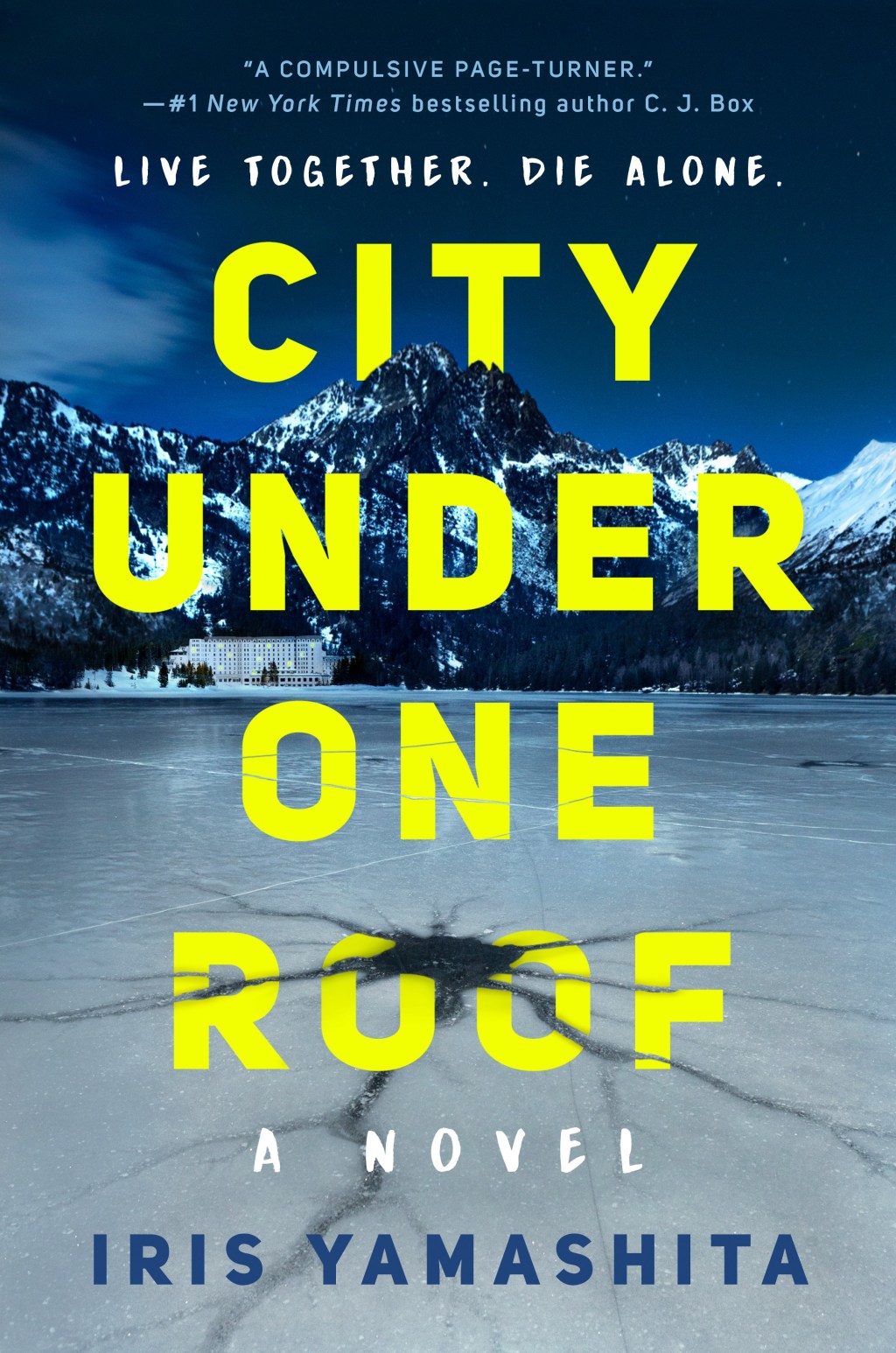
    “City Under One Roof” by Iris Yamashita

    Point Mettier, Alaska is no one’s idea of paradise. Its inhabitants—all 205 of them—live in the same high-rise apartment building and the only access to town is by a tunnel or the sea.

    But Point Mettier is perfect for many of those who live there. It’s a chance to invent new names, identities, and lives. For some, it’s a safe harbor such as an escape from an abusive spouse. For others, the reasons for disappearing into the void of a place like Point Mettier are darker. And so when a severed hand and foot wash up on shore and Cara Kennedy, a police detective arrives from Anchorage, she finds the inhabitants to be aloof and evasive. Everyone, it seems, has something to hide.

    “City Under One Roof” (Berkley) is the first novel written by Iris Yamashita, a screenwriter nominated for an Academy Award for the movie “Letters from Iwo Jima.” The inspiration, she says, comes from a documentary about Whittier, Alaska she watched more than 20 years ago. At the time, Whittier only was accessible by boat or through a 2.5-mile long tunnel.

    “Jumping off point for me was the tunnel,” says Yamashita, who has been working in Hollywood for 15 years developing material for both film and streaming, “I had the feeling I was going down into the rabbit hole like Alice in Wonderland. Cara is like Alice, she too fell down the rabbit hole.”

    Listen now and subscribe: Apple Podcasts | Google Podcasts | Spotify | YouTube | RSS Feed | Omny Studio

    And there Cara meets a wide range of quirky characters including Lonnie, who has a moose she has rescued as a pet, and Amy, a teenager who delivers the Asian food her mother makes to the building’s residents.

    Cara has her own burdens, her family died in a tragic, terrifying way. And working with local policeman, Joe Barkowski, stirs feelings she has thought were gone forever.

    But even as their feelings for each other grow, the two have to contend with another crisis. A storm closes the tunnel and the residents of Point Mettier—and Cara—are trapped. But though help from the mainland is days away, mayhem is close by when a gang from further north arrives to terrorize the community and that’s when everyone’s secrets start to come out.

    Yamashita has always loved writing and for a while, it was a hobby. She has a degree in mechanical engineering and says her “Asian parents always told her ‘you can’t make a living as a writer.’”

    “And so I worked at my day job until I had a contract in my hand and then I quit,” she says. “Now I’m working on my next book.”

    This story originally appeared in the Northwest Indiana Times.

  • Disturbing the Bones

    Disturbing the Bones

    It’s an archaeological dig so finding human remains shouldn’t be a surprise, but Dr. Molly Moore immediately recognizes that the skeleton they’ve unearthed is much more recent than what you’d find on a site dating back 12,000 years. Indeed, the body is that of a young Black reporter who disappeared just decades ago when covering the racial unrest in Cairo, Illinois.

    The loss of his mother has left a large void in the life of Chicago Police Detective Randal Jenkins, and he travels back to Cairo, where he lived as a young boy, to learn more about the case. But it soon becomes clear that this is more than just the murder of an investigative reporter during a tumultuous time. Moore finds herself pressured by her long-time mentor and supporter, retired military general and contractor William Alexander to complete the dig and minimize her discovery. As Moore and Jenkins, each with their own family issues to deal with, work at discovering answers they realize that the General is trying to disrupt the process of a disarmament agreement being developed at a global peace summit taking place in Chicago. The stakes are so high that not only are their lives in jeopardy, but the world may be hurling towards a nuclear disaster.

    Disturbing the Bones (Melville House 2024) is the first joint effort by director and screenwriter Andrew Davis, a native of Chicago’s southside and Jeff Biggers, an American Book Award-winning historian, journalist, playwright, and monologist.

    In writing the book, Biggers, whose work has appeared in American and foreign newspapers and magazines as well as numerous anthologies, relied upon his knowledge of archaeology, the environment, culture, and history as well as his abilities as a researcher. He is the author of such books as Reckoning at Eagle Creek: The Secret Legacy of Coal in the Heartland and The United States of Appalachia: How Southern Mountaineers Brought Independence, Culture, and Enlightenment to America.

    “I’ve been around a lot of archaeological digs,” he said in a joint conversation with Davis and this writer.

    It’s also a timely story in that there’s a presidential election going on as Jenkins and Moore race to solve the mystery.

    “It’s the only novel with a woman running for the presidency but in the book she’s from Chicago,” says Davis, noting that, as in the book, he sees this election as a turning point in our history. “The story is a blending of art and action, and it asks provocative questions which I think any good book should do.”

    Any enjoyable book should, as it tells a story, also open another world for us. The authors do that here as we learn about archaeology, what happens on a dig, and the social upheaval the country went through during the Civil Rights movement. It also explores the psychology of Jenkins and Moore whose personal lives affect their profession and the decisions they make.

    This was the first collaboration between Biggers and Davis, but it won’t be their last. The two are also working on a screenplay for the book. Davis has an extensive background in this area, having worked on a myriad of films such as “Holes”, “Under Siege”, “Code of Silence”, “A Perfect Murder”, and “The Guardian.” Known for directing intellectual thrillers, his film “The Fugitive,” was nominated for seven Academy Awards including Best Picture.

    Biggers, who served as the Climate Narrative Playwright-in-Residence at Indiana University Northwest several times and lived in Miller Beach during his time there, enjoyed the collaborative process.

    “I’ve written a lot of books on my own,” he says, “but this was, in ways, the best of both worlds as we went back and forth and exchanged ideas and shared thoughts.”

  • Camino Ghosts by John Grisham

    Camino Ghosts by John Grisham

    “what could be better than a cursed island, some supernatural happenings, and the righting of centuries of social wrongs?”

    “It was a ship from Virginia, called Venus and it had around 400 slaves on board, packed like sardines,” bookstore owner Bruce Cable tells Mercer Mann, a writer who is looking for a new book subject. “Well, it left Africa with 400 but not all made it. Many died at sea. The conditions on board were unimaginable, to say the least. Venus finally went down about a mile to sea near Cumberland Island. Since the slaves were chained and shackled, almost all of them drowned. A few clung to the wreckage and washed ashore in the storm on Dark Island, as it became known. Or  Dark Isle. It was unnamed in 1760. They were taken in by runaways from Georgia, and together they built a little community. Two hundred years went by, everybody died or moved away and now it is deserted.”

    One of the many facets of John Grisham’s enthralling fiction is his ability to take complex social issues and weave them into the fabric of his novels so that they make for a compelling read.

    In Camino Ghosts, the third book in the Camino series, he does it again with his compelling story of Lovely Jackson, an 80-year-old Black woman who is determined to save Dark Isle, the now deserted island once settled by both shipwrecked Africans kidnapped into slavery and escaped slaves. Lovely is the last of those who settled on the island, and she stopped living there when she was 15, only returning to tend to the cemetery where her ancestors are buried.

    For years no one wanted the island, an inaccessible and unfriendly barrier island of impenetrable jungle, poisonous snakes, and prowling panthers. But Hurricane Leo has changed the island’s topography and rabid land developers with politicians in their pocket see Dark Isle as the place to build a sprawling casino and resort complex.

    But Lovely is determined, believing she is the sole owner of Dark Isle and the protector of her ancestors’ history and graves. She also happens to be the only one who can lift the curse of her great, great, great grandmother, Nalla, a woman who was kidnapped from her village in Africa, taken away from her husband and only child, chained in the hold of a ship as it crossed the Atlantic, and raped repeatedly by the crew members. No white man who has stepped on the island has survived.

    Camino Ghosts is the third in the series about bookstore owner Bruce Cable, who likes fine wine, good food, pretty women (he and his wife, an importer of French antiques, have an open marriage), and books. But he is more than a bon vivant and purveyor of tomes, he likes to intervene in the island’s business to produce the best outcomes and is extremely supportive of his writers. Good at pulling strings, he is the force uniting the factions fighting the development and is also helping his former lover, Mercer Mann, a bestselling author with writer’s block, find her next subject. And what could be better than a cursed island, some supernatural happenings, and the righting of centuries of social wrongs?

    This article originally appeared in the New York Journal of Books and the Northwest Indiana Times.