Category: History

  • A Blissful Feast: Celebrations of Family, Food, and History
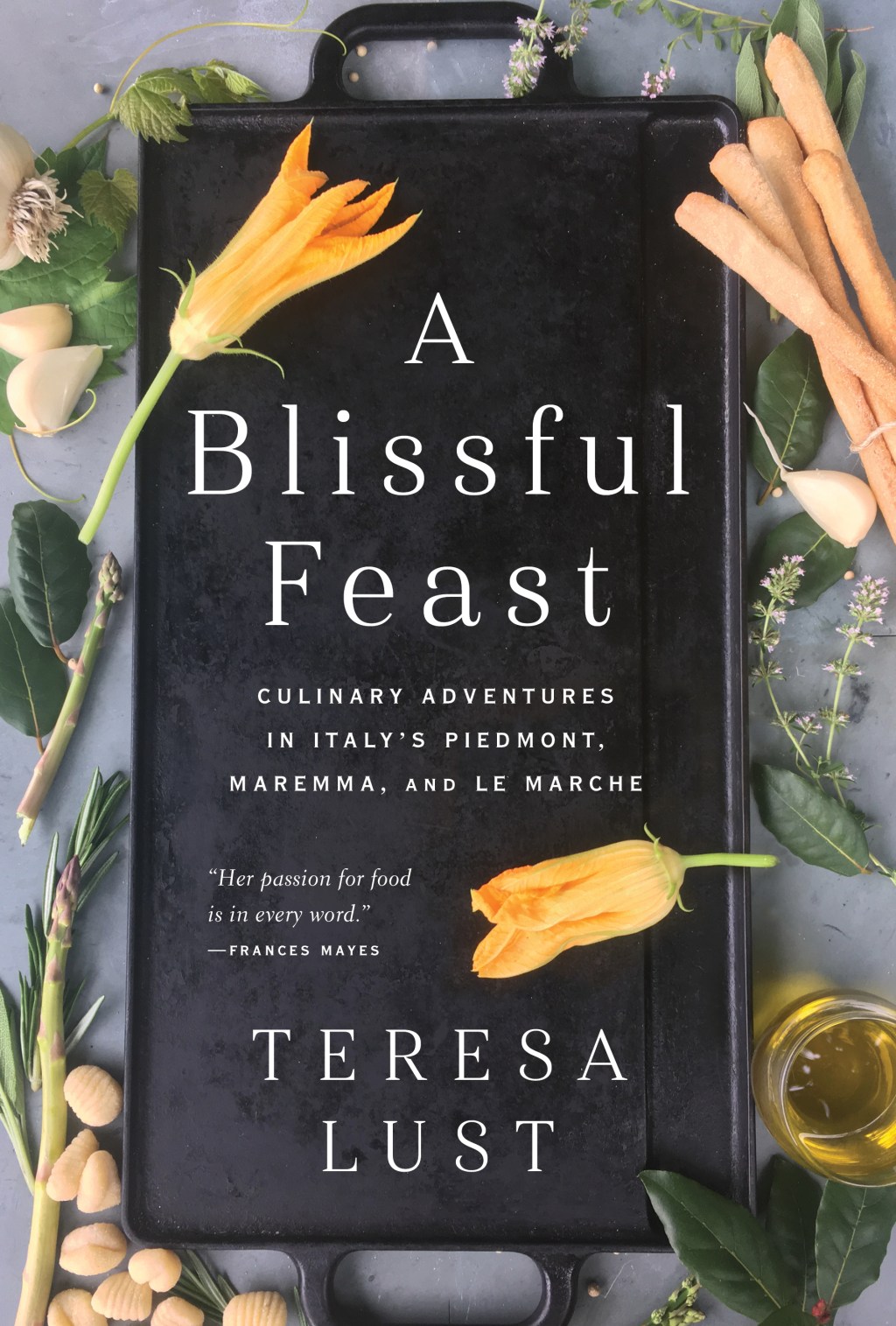
    A Blissful Feast: Celebrations of Family, Food, and History

    “In our culture we have lost our connection to cooking,” says Teresa Lust, author of  A Blissful Feast, Culinary Adventures in Italy’s Piedmont, Maremma, and Le Marche ( Pegasus Books 2020; $19.19 Amazon hardcover price), The Readable Feast’s 2020 winner for Best Food Memoir.

    Teresa Lust

    Lust, who teaches Italian at Dartmouth University in New Hampshire and also cooking classes, grew up in an Italian-American family, learning to cook from her mother and grandmother whose recipes were written by hand on little notecards. Wanting to discover and delve into Italian cuisine because of its meaning to her, she learned to speak Italian and traveled through the country of her ancestors.

    “I wanted to see and feel the connections to the traditions and geography of the regions,” says Lust, whose previous book,  Pass the Polenta: and Other Writings from the Kitchen, was praised by Frances Mayes, author of Under the Tuscan Sun and Julia Child.

    Going deep, she visits relatives and meets the people of the regions’ small towns, going into their kitchens to watch as they prepare food. It’s a constant learning process about the intricacies not only of the broad regional cookery of Italy that many of us are familiar with—that of Florence, Naples, or Sicily but of such places as Maremma, an area in western central Italy bordering the Tyrrhenian Sea and Le Marche, a region sandwiched between the Adriatic Sea and the Apennine Mountains.

    “Italian food is very regional, and even in the regions its broken down by cities, and then gets smaller and smaller until each dish is an expression of oneself and it can be an affront and violation if others add ingredients or make changes,” she says. “There’s an integrity to the dish.”

    It’s not the way we think of food here. Indeed, to me a recipe is to be altered by ingredients I have on hand so the idea of not changing is a thoughtful concept, one that I will think about. But then again, I’m not making family recipes dating back centuries and besides, old habits die hard. 

    In Camerano, a town in Le Marche, an 80-year-old woman shows Lust how to hand-roll pasta with a three-foot rolling pin. In Manciano, she masters making Schiacciata  All’Uva, a grape flatbread with honey and rosemary that back home in New Hampshire takes her two days to complete.

    But, Lust says, you only spend a few minutes in active work as if it were as easy as popping a frozen dinner into a microwave.

    Intrigued by the food philosophy of the people she cooks with, she goes beyond recipe and its ingredients to their history and what they represent.

    Acquacotta—such a beautiful word and beautiful dish–but then you find  out what it really means–cooked water and that it was born out of poverty made by people who had nothing,” Lust tells me when we chat on the phone.

    In her description, acquacotta is a rustic soup that nourished generations of the area’s shepherds and cowhands. It’s her way of adding poetry to food and to people who take such pride in what they cook.

    Lust includes recipes in her book, but this is not a glossy cookbook, but rather a lovely and thoughtful journey of rediscovering roots and meaning.

    The two of us discuss growing up with ethnic relatives and how important the culture of the table was for us when young.  It does seem to be something that is missing from our daily lives and Lust is hoping to reconnect people to food and help them see the importance of  taking the time to bring friends and family to the table to enjoy a meal.

    In the cooking classes she teaches she demonstrates how to make Italian food  and encourages participants to talk to her in Italian. She feels that she is helping forge an important connection that way.

    “I have people contact me through the website who said they tried the gnocchi and though they never thought they could make it, they found it was easy for them,” she says with a touch of pride.

    For more, visit www.teresalust.com

  • The Children’s Blizzard: A Historic Novel of the Nebraska Prairie
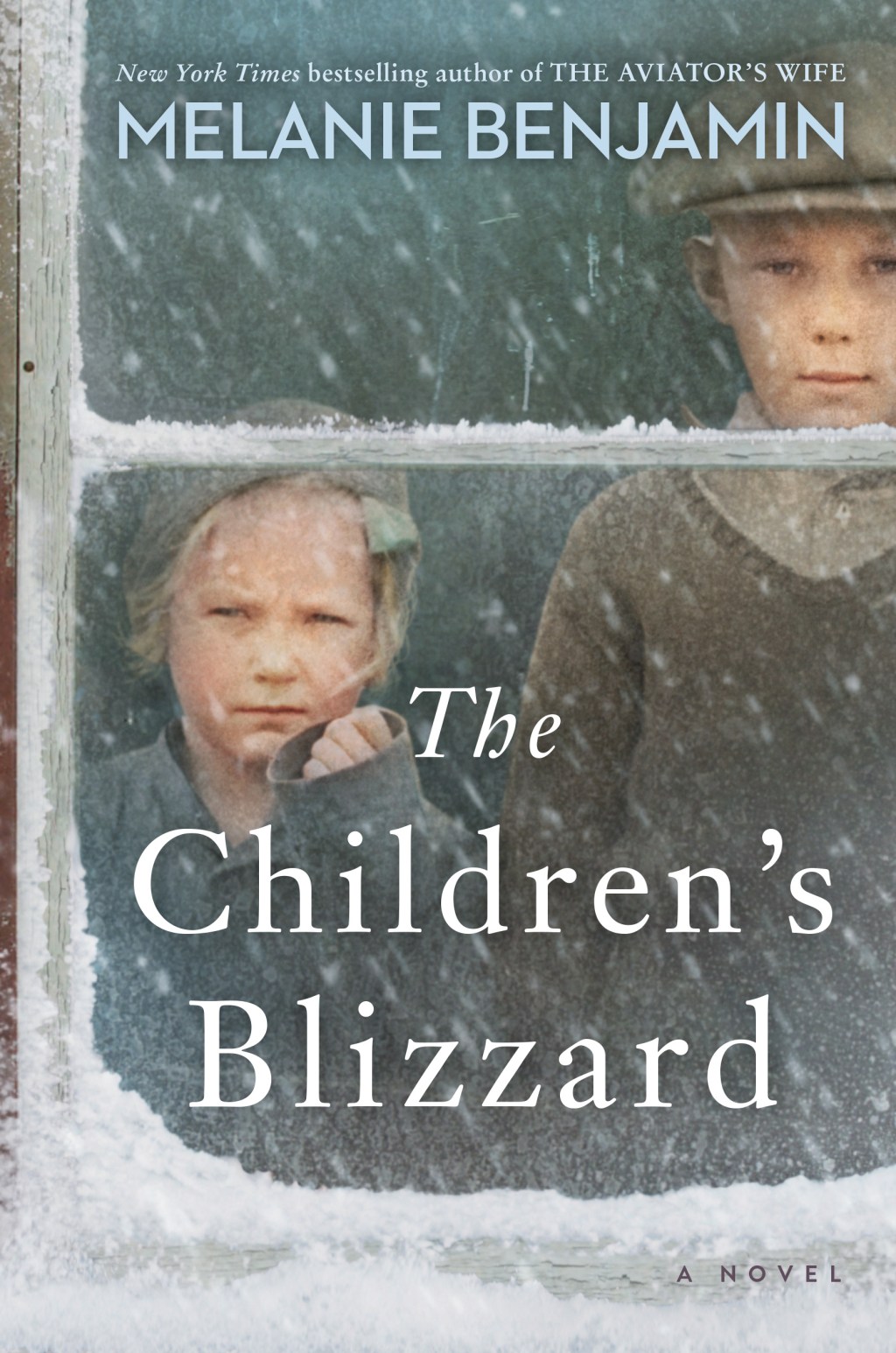
    The Children’s Blizzard: A Historic Novel of the Nebraska Prairie

    Melanie Benjamin

    The week before, they’d been isolated when a snowstorm and cold temperatures forced everyone to stay inside. But that morning Gerta, the young teacher who boarded at the Pedersen’s house, and her student Annette, a waif who had been dropped off at the home by her mother who hadn’t even hugged her goodbye, ran across the Nebraska prairie to the schoolhouse enjoying the sunny warm weather.

    It was like being free again, but it was only January, and the school children let out for recess because of the wonderful weather were suddenly confronted by a black wall of clouds that blocked the sun. Running back to the schoolhouse, they discovered there was little wood left to keep the big stove burning, and they all shivered as the temperature plummeted — oh, why had they only worn their shawls and not their heavy coats and boots? The sounds of the howling wind rushed through the schoolhouse, and through the windows they saw almost nothing but the occasional bright sparks of lightning, because the snow formed a curtain so thick it blocked everything else out.

    In history books, this sudden and deadly snowstorm would be known as “The Children’s Blizzard” because, of the 250 to 500 known fatalities, many were children trying to find their way home.

    Melanie Benjamin, New York Times bestselling author of “The Aviator’s Wife,” “The Girls in the Picture” and “The Swans of Fifth Avenue,” has taken the incident and turned it into the page-turning novel “The Children’s Blizzard: A Novel” (Delacorte, $28).

    It’s an obscure but fascinating aspect of America’s frontier history, but Benjamin, a voracious reader of history already, was somewhat familiar with the disaster when she and her editor decided that might be her next book. Benjamin, who grew up in Indianapolis with aspirations to become a New York actress, lived in Chicago until moving to Williamsburg, Virginia a few months ago. She began writing historical novels in 2010, and, amazingly, this is her seventh. She must, it seems after spending an hour chatting with her on the phone, write as fast as she talks.

    The gist of our conversation: she’s a history junkie; she investigates a subject relentlessly, but if she can’t conjure up characters that really come to life, she’ll move on to the next project, as she doesn’t want to write a book that doesn’t seem real. That means she’s written entire novels and then just abandoned them. Even when she loves the personalities she creates, once she’s done with her novel, there are no second glances as she moves on to the next book. Oh, and though she’s a history buff and dwells in different pasts when writing, she doesn’t live in a stately old mansion, just a historic town.

    Luckily, she discovered many captivating characters for “The Children’s Blizzard” and, though I know we’re talking Nebraska here, an equally compelling landscape and period of time.

    Hard working immigrants, mainly Norwegians, Swedes and Germans were lured to Nebraska by dreams of lush crop producing farmland. It was easy as just packing up your belongings, the advertisements read, as coming by wagon or boarding a train to take advantage of the wonderful opportunities.

    Only Nebraska really wasn’t all that. Don’t think “Little House in the Prairie” because it was so much more harsh, unyielding, and frustrating. There were blizzards, droughts where the soil cracked and the crops withered, prairie fires and vast hordes of insects devouring everything in their paths. We’re not talking fun here, not at all.

    “Nebraska wasn’t a state at the time, it was a territory,” says Benjamin. “They were trying to get enough people to settle there because that’s one of the ways you became a state.”

    Benjamin found that the story ignited her entire imagination, forming a connection to generations of her family.

    “There was a personal epic quality to it, my mother’s family immigrated from Germany to an Illinois farm,” said Benjamin. “So the story was kind of in my DNA.”

    Benjamin describes her imagination as her biggest strength, which is why she can put herself into the lives of people she’s created and who live in a time long before she was born.

    “I was a serious child,” she said. “I was always imagining people’s lives and what they were like. Most authors are observers, we’re on the outside looking at the party, not at the party.”

    This review was previously published in the Northwest Indiana Times.

  • THE 17TH ANNUAL BEST BOOK AWARDS ANNOUNCE 2020 AWARD RECIPIENTS

    Mainstream & Independent Titles Score Top Honors in the 17th Annual Best Book Awards

     HarperCollins, Penguin/Random House, John Wiley and Sons, Routledge/Taylor and Francis, Forge, Sterling Publishing, Hay House, Sounds True, Llewellyn Worldwide, NYU Press, Oxford University Press, John Hopkins University Press, The White House Historical Association and hundreds of Independent Houses contribute to this year’s Outstanding Competition!

    Highlights Include the Following Winning Titles: (Full Results are Available Here.)

    Click on category headings to be taken directly to full book descriptions! Winners and Finalists are featured at the top of each page! 

    Animals/Pets: General
    The Balanced Pet Sitter: What You Wish you Knew Before Starting Your Pet Care Business by Renée Stilson
    Equilibre Press, LLC

    Animals/Pets: Narrative Non-Fiction
    The Chimpanzee Chronicles: Stories of Heartbreak and Hope from Behind the Bars by Debra Rosenman
    Wild Soul Press

    Anthologies: Non-Fiction
    This Moment Bold Voices from WriteGirl by Keren Taylor
    WriteGirl Publications

    Art
    C. Curry Bohm: Brown County and Beyond edited by Daniel Kraft & Jim Ross
    Indiana University Press

    Autobiography/Memoir
    Through My Eyes: CSI Memoirs That Haunt the Soul by Tamara Mickelson
    Self-Published

    Best Cover Design: Fiction
    The Last Lumenian by S.G. Blaise
    The Last Lumenian

    Best Cover Design: Non-Fiction
    When God Says NO – Revealing the YES When Adversity and Pain Are Present by Judith Briles
    Mile High Press

    Best Interior Design
    Beautiful Living: Cooking the Cal-a-Vie Health Spa Way by Terri Havens
    Cal-a-Vie Health Spa

    Best New Fiction
    In An Instant by Suzanne Redfearn
    Lake Union

    Best New Non-Fiction
    The Book of Help: A Memoir of Remedies by Megan Griswold
    Rodale Books/Penguin Random House

    Biography
    T.R.M. Howard: Doctor, Entrepreneur, Civil Rights Pioneer by David T. Beito and Linda Royster Beito
    Independent Institute

    Business: Careers
    TIP: A Simple Strategy to Inspire High Performance and Lasting Success by Dave Gordon
    John Wiley and Sons

    Business: Communications/Public Relations
    The Apology Impulse: How the Business World Ruined Sorry and Why We Can’t Stop Saying It by Cary Cooper & Sean O’Meara
    Kogan Page

    Business: Entrepreneurship & Small Business
    Burdens of a Dream: 33 Actionable Nuggets of Wisdom for the Creative Entrepreneur by Craig M. Chavis Jr.
    Author Academy Elite

    Business: General
    The Simplicity Principle: Six Steps Towards Clarity in a Complex World by Julia Hobsbawm
    Kogan Page

    Business: Management & Leadership
    The Future Leader: 9 Skills and Mindsets to Succeed in the Next Decade by Jacob Morgan
    Wiley

    Business: Marketing & Advertising
    The End of Marketing: Humanizing Your Brand in the Age of Social Media and AI by Carlos Gil
    Kogan Page

    Business: Motivational
    Unlock!: 7 Steps to Transform Your Career and Realize Your Leadership Potential by Abhijeet Khadikar
    Vicara Books

    Business: Personal Finance/Investing
    Enhancing Retirement Success Rates in the United States: Leveraging Reverse Mortgages, Delaying Social Security, and Exploring Continuous Work by Chia-Li Chien, PhD, CFP®, PMP®
    Palgrave Pivot

    Business: Real Estate
    Market Forces: Strategic Trends Impacting Senior Living Providers by Jill J. Johnson
    Johnson Consulting Services

    Business: Reference
    The Non-Obvious Guide to Virtual Meetings and Remote Work (Non-Obvious Guides) by Rohit Bhargava
    IdeaPress Publishing

    Business: Sales
    The Visual Sale: How to Use Video to Explode Sales, Drive Marketing, and Grow Your Business in a Virtual World by Marcus Sheridan
    IdeaPress Publishing

    Business: Technology
    Amazon Management System: The Ultimate Digital Business Engine That Creates Extraordinary Value for Both Customers and Shareholders by Ram Charan and Julia Yang
    IdeaPress Publishing

    Business: Writing/Publishing
    Great Stories Don’t Write Themselves: Criteria-Driven Strategies for More Effective Fiction by Larry Brooks
    Writer’s Digest Books (a division of Penguin Random House)

    Children’s Educational
    Galileo! Galileo! by Holly Trechter and Jane Donovan
    Sky Candle Press

    Children’s Fiction
    Nutmeg Street: Egyptian Secrets by Sherrill Joseph
    Acorn Publishing

    Children’s Mind/Body/Spirit
    The Tooth Fairy’s Tummy Ache by Lori Orlinsky
    Mascot Books

    Children’s Non-Fiction
    President’s Play! illustrated by John Hutton, text by Jonathan Pliska
    The White House Historical Association

    Children’s Novelty & Gift Book
    Bubble Kisses by Vanessa Williams, illustrated by Tara Nicole Whitaker
    Sterling Publishing

    Children’s Picture Book: Hardcover Fiction
    Bubble Kisses by Vanessa Williams, illustrated by Tara Nicole Whitaker
    Sterling Publishing

    Children’s Picture Book: Hardcover Non-Fiction
    A-B-Skis: An Alphabet Book About the Magical World of Skiing by Libby Ludlow, illustrated by Nathan Y. Jarvis
    Libby Ludlow LLC

    Children’s Picture Book: Softcover Fiction
    Frankie the Ferret by Kimberley Paterson
    FriesenPress

    Children’s Picture Book: Softcover Non-Fiction
    Fridays With Ms. Mélange: Haiti by Jenny Delacruz
    Cobbs Creek Publishing

    Children’s Religious
    That Grand Christmas Day! by Jill Roman Lord, illustrated by Alessia Trunfio
    Worthy Kids

    College Guides
    Diversity At College: Real Stories of Students Conquering Bias and Making Higher Education More Inclusive by James Stellar, Chrisel Martinez, Branden Eggan, Chloe Skye Weiser, Benny Poy, Rachel Eagar, Marc Cohen, and Agata Buras
    IdeaPress Publishing

    Cookbooks: General
    Recipes from the President’s Ranch: Food People Like to Eat by Matthew Wendel
    The White House Historical Association

    Cookbooks: International
    Cooking with Marika: Clean Cuisine from an Estonian Farm by Marika Blossfeldt
    Delicious Nutrition

    Cookbooks: Regional
    The Perfect Persimmon: History, Recipes, and More by Michelle Medlock Adams
    Red Lightning Books

    Current Events
    In All Fairness: Equality, Liberty, and the Quest for Human Dignity, edited by Robert M. Whaples, Michael C. Munger and Christopher J. Coyne
    Independent Institute

    Education/Academic
    The EQ Intervention: Shaping a Self-Aware Generation Through Social and Emotional Learning by Adam L. Saenz, PhD
    Greenleaf Book Group

    Fiction: African-American
    Once in a Blood Moon by Dorothea Hubble Bonneau
    Acorn Publishing

    Fiction: Anthologies
    Terror at 5280′ edited by Josh Schlossberg
    Denver Horror Collective

    Fiction: Cross-Genre
    Mourning Dove by Claire Fullerton
    Firefly Southern Fiction

    Fiction: Fantasy
    The Hollow Gods (The Chaos Cycle Series, ) by A.J. Vrana
    The Parliament House Press

    Fiction: General
    Bread Bags & Bullies: Surviving the ’80’s by Steven Manchester
    Luna Bella Press

    Fiction: Historical
    The Takeaway Men by Meryl Ain
    SparkPress

    Fiction: Horror
    The Vanishing by Arjay Lewis
    Mindbender Press

    Fiction: Inspirational
    The Menu by Steven Manchester
    Luna Bella Press

    Fiction: LGBTQ
    Even Weirder Than Before by Susie Taylor
    Breakwater Books

    Fiction: Literary
    How Fires End by Marco Rafalà
    Little A

    Fiction: Multicultural
    Subduction by Kristen Millares Young
    Red Hen Press

    Fiction: Mystery/Suspense
    Strong From The Heart by Jon Land
    Forge

    Fiction: New Age
    Catalyst by Tracy Richardson
    Brown Books Publishing

    Fiction: Novelette
    When Angels Paint: A Milford-Haven Holiday Novelette by Mara Purl
    Bellekeep Books

    Fiction: Novella
    When the Heart Listens: A Milford-Haven Novella by Mara Purl
    Bellekeep Books

    Fiction: Religious
    The Longest Day by Terry Toler
    BeHoldings Publishing

    Fiction: Romance
    What the Heart Wants by Audrey Carlan
    HQN

    Fiction: Science Fiction
    Killing Adam by Earik Beann
    Profoundly One Publishing

    Fiction: Short Story
    Oranges by Gary Eldon Peter
    New Rivers Press

    Fiction: Thriller/Adventure
    The President’s Dossier by James A. Scott
    Oceanview Publishing

    Fiction: Visionary
    Journey of a JuBu by Blaine Langberg
    Critical Eye

    Fiction: Western
    Moccasin Track by Reid Lance Rosenthal
    Rockin’ SR Publishing

    Fiction: Women’s Fiction
    Appearances by Sondra Helene
    She Writes Press

    Fiction: Young Adult
    The Return of the Dragon Queen by Farah Oomerbhoy
    Wise Ink Creative Publishing

    Health: Addiction & Recovery
    Stepping Stones: A Memoir of Addiction, Loss, and Transformation by Marilea C. Rabasa
    She Writes Press

    Health: Aging/50+
    EIGHTSOMETHINGS: A Practical Guide to Letting Go, Aging Well, and Finding Unexpected Happiness by Katharine Esty, PhD
    Skyhorse Publishing

    Health: Alternative Medicine
    Have a Peak at This: Synergize Your Body’s Clock Towards a Highly Productive You by Said Hasyim
    Self-Published

    Health: Cancer
    All Of Us Warriors: Cancer Stories of Survival and Loss by Rebecca Whitehead Munn
    She Writes Press

    Health: Death & Dying
    Aftermath: Picking Up the Pieces After a Suicide by Gary Roe
    Healing Resources Publishing

    Health: Diet & Exercise
    Whole Person Integrative Eating: A Breakthrough Dietary Lifestyle to Treat Root Causes of Overeating, Overweight and Obesity by Deborah Kesten, MPH and Larry Scherwitz, PhD
    White River Press

    Health: General
    True Wellness for Your Gut: Combine the best of Western and Eastern medicine for optimal digestive and metabolic health by Catherine Kurosu, MD, L.Ac. and Aihan Kuhn, CMD, OBT
    YMAA Publication Center

    Health: Medical Reference
    The Ultimate College Student Health Handbook: Your Guide for Everything from Hangovers to Homesickness by Jill Grimes, MD
    Skyhorse Publishing

    Health: Psychology/Mental Health
    The Big Bliss Blueprint: 100 Little Thoughts to Build Positive Life Changes by Shell Phelps
    Positive Streak Publishing, LLC

    Health: Women’s Health
    The Book of Help: A Memoir of Remedies by Megan Griswold
    Rodale Books/Penguin Random House

    History: General
    Gun Control in Nazi-Occupied France: Tyranny and Resistance by Stephen P. Halbrook
    Independent Institute

    History: Military
    40 Thieves on Saipan The Elite Marine Scout-Snipers in One of WWII’s Bloodiest Battles by Joseph Tachovsky with Cynthia Kraack
    Regnery History

    History: United States
    Liberty in Peril: Democracy and Power in American History by Randall G. Holcombe
    Independent Institute

    Home & Garden
    My Creative Space: How to Design Your Home to Stimulate Ideas and Spark Innovation by Donald M. Rattner
    Skyhorse Publishing

    Humor
    Struggle Bus: The Van. The Myth. The Legend. by Josh Wood
    Lucid Books

    Law
    Banned: Immigration Enforcement in the Time of Trump by Shoba Sivaprasad Wadhia
    NYU Press

    LGBTQ: Non-Fiction
    Our Gay History in 50 States by Zaylore Stout
    Wise Ink Creative Publishing

    Multicultural Non-Fiction
    Overcoming Ordinary Obstacles: Boldly Claiming the Facets of an Extraordinary Life by Nesha Pai
    SPARK Publications

    Narrative: Non-Fiction
    Sola: One Woman’s Journey Alone Across South America by Amy Field
    WanderWomyn Publishing

    New Age: Non-Fiction
    Embodying Soul: A Return to Wholeness by Keri Mangis
    Curiosa Publishing, LLC

    Novelty & Gift Book
    The Official White House Christmas Ornament: Collected Stories of a Holiday Tradition by Marcia Anderson and Kristen Hunter Mason
    The White House Historical Association

    Parenting & Family
    Why Will No One Play with Me? The Play Better Plan to Help Children of All Ages Make Friends and Thrive by Caroline Maguire, PCC, M.Ed. with Teresa Barker
    Grand Central Publishing

    Performing Arts: Film, Theater, Dance, Music
    THAT GUY: a stage play by Peter Anthony Fields
    Amazon

    Photography
    Beautiful Living: Cooking the Cal-a-Vie Health Spa Way by Terri Havens
    Cal-a-Vie Health Spa

    Poetry
    Five Oceans in a Teaspoon, poems by Dennis J. Bernstein, visuals by Warren Lehrer
    Paper Crown Press

    Religion: Christian Inspirational
    Extraordinary Hospitality for Ordinary Christians: A Radical Approach to Preparing Your Heart & Home for Gospel-Centered Community by Victoria Duerstock
    Good Books

    Religion: Christianity
    Come Fill This Place: A Journey of Prayer by Stacy Dietz
    KP Publishing Company

    Religion: Eastern
    Secrets of Divine Love: A Spiritual Journey into the Heart of Islam by A. Helwa
    Naulit Publishing House

    Religion: General
    Esoterism as Principle and as Way: A New Translation with Selected Letters by Frithjof Schuon
    World Wisdom

    Science
    Bliss Brain: The Neuroscience of Rewiring Your Brain for Resilience, Creativity and Joy by Dawson Church
    Hay House

    Self-Help: General
    Start Finishing: How to Go from Idea to Done by Charlie Gilkey
    Sounds True

    Self-Help: Motivational
    Edge: Turning Adversity into Advantage by Laura Huang
    Portfolio

    Self-Help: Relationships
    The Remarriage Manual: How to Make Everything Work Better the Second Time Around by Terry Gaspard
    Sounds True

    Social Change
    I Am Not Your Enemy: Stories to Transform a Divided World by Michael T. McRay
    Herald Press

    Spirituality: General
    The Universe Is Talking to You: Tap Into Signs and Synchronicity to Reveal Magical Moments Every Day by Tammy Mastroberte
    Llewellyn Worldwide

    Spirituality: Inspirational
    Spark Change: 108 Provocative Questions for Spiritual Evolution by Jennie Lee
    Sounds True

    Sports
    The Martial Arts of Vietnam: An Overview of History and Styles by Augustus John Roe
    YMAA Publication Center

    Travel: Guides & Essays
    Exploring Wine Regions — Bordeaux France: Discover Wine, Food, Castles, and The French Way of Life by Michael C. Higgins, PhD
    International Exploration Society

    True Crime: Non-Fiction
    Beast of New Castle by Larry Sells & Margie Porter
    WildBlue Press

    Women’s Issues
    Muslim Women Are Everything: Stereotype-Shattering Stories of Courage, Inspiration, and Adventure by Seema Yasmin, illustrated by Fahmida Azim
    Harper Design, an Imprint of HarperCollins Publishers

    Young Adult: Non-Fiction
    My Life, My Way: How To Make Exceptional Decisions About College, Career, and Life by Elyse Hudacsko
    Self-Published

  • “The Belle of Bedford Avenue: The Sensational Brooks-Burns Murder in Turn-of-the-Century New York”
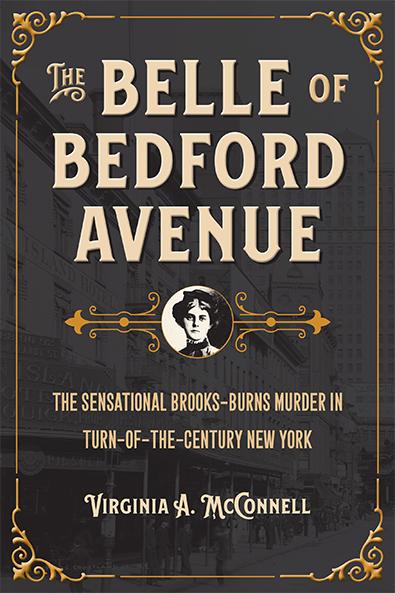
    “The Belle of Bedford Avenue: The Sensational Brooks-Burns Murder in Turn-of-the-Century New York”

    Virginia McConnell

                A rich young woman running wild, her boyfriend left for dead in a low-rent hotel room and lurid headlines such as “Brooklyn is a Modern Sodom”  might seem like a contemporary made-for-television movie. But it’s all straight out of history in Virginia McConnell’s latest historic true crime book, “The Belle of Bedford Avenue: The Sensational Brooks-Burns Murder in Turn-of-the-Century New York” (Kent State University Press).

                The year was 1902 when Florence Burns, who craved excitement frequented dance halls, drank in roadhouses, and even smoked in public—a truly decadent act, discarded the standards of her well-to-do family to hang with the  Bedford Avenue Gang.

                Society was changing with the advent of public transportation in big cities like New York and young women like Florence didn’t have to wait to be introduced by a chaperone to “suitable” young men. Instead she chose gang member Walter Brooks who was found with a bullet in his head and died the next day.

                Ironically, though Florence loved the freedoms of the new century, she escaped punishment for Walter’s death because of old norms of an “Unwritten Law” that was frequently used to justify murder. That, says McConnell, kicked in when Walter refused to marry Florence after they’d had sexual relations—hence it was, though unspoken, retribution for his dishonoring her. Taking this into consideration, the prosecutor didn’t even bring charges against her.

                If only Florence had learned from this brush with the law but alas, she didn’t. And reading about her exploits is a fascinating true crime story as well as insight into a world so much different than ours.

    McConnell, a college English instructor at Walla Walla Community College-Clarkston Campus in Washington, is the author of other historic true crime books including “The Adventuress: Murder, Blackmail, and Confidence Games in the Gilded Age” which was a 2011 Gold Medal-Independent Publisher Book Award/True Crime Category.

                Drawing upon scandalous but long forgotten crimes, McConnell says that at first she didn’t think there would be enough material to write “The Belle of Bedford Avenue.

    She had to go beyond what she could find in the New York Times to ferret out more about the case, reading through lots more newspapers, many that were only available on microfilm through Interlibrary Loan.

    “But when I dug into it, there were a lot of interesting items – such as, the hotel’s being at Ground Zero and the teenagers hanging out at Coney Island and then I found the reference to her subsequent incarcerations,” she says, adding that she had to order the microfilm of one of the trial transcripts from the John Jay College, because the topic was so racy that the newspapers wouldn’t print it.

    “There were times when I’ve expended a lot of energy on a case that interested me, only to have to abandon it because it simply didn’t have enough material for an entire book,” says McConnell, describing herself as lucky to have connected with the grand-nephews of Belle’s first husband, who had a lot of information on their great-uncle Tad. 

    It was also lucky for those of us who like a well-written, intriguing true crime story.

  • President Obama’s Annual List of Favorites

    “As 2020 comes to a close, I wanted to share my annual lists of favorites,” Barack Obama, the 42nd President of the United States, tweeted to his 127.5 million followers. “I’ll start by sharing my favorite books this year, deliberately omitting what I think is a pretty good book – A Promised Land – by a certain 44th president. I hope you enjoy reading these as much as I did.”

    Somehow, the President forgot to include adding one of my books to his list again. Well, there’s always next year.

    Jack by Marilynne Robinson

    Caste by Isabel Wilkerson

    Luster by Raven Leilani

    Sharks in the time of Saviors by Kawai Strong Washburn
    Twilight of Democracy by Anne Applebaum

    Homeland Elegies by Ayad Akhtar
    The Undocumented Americans by Karla Cornejo Villavicencio
    Long Bright River by Liz Moore
    Memorial Drive Natasha Trethewey
    Deacon King Kong by James McBride
    Missionaries by Phil Klay
    The Vanishing Half by Britt Bennett
    The Ministry for the Future by Kim Stanley Robinson
    The Glass House by Emily St. John Mandel
  • Lincoln Roadtrip: Following the backroads to find Abraham Lincoln
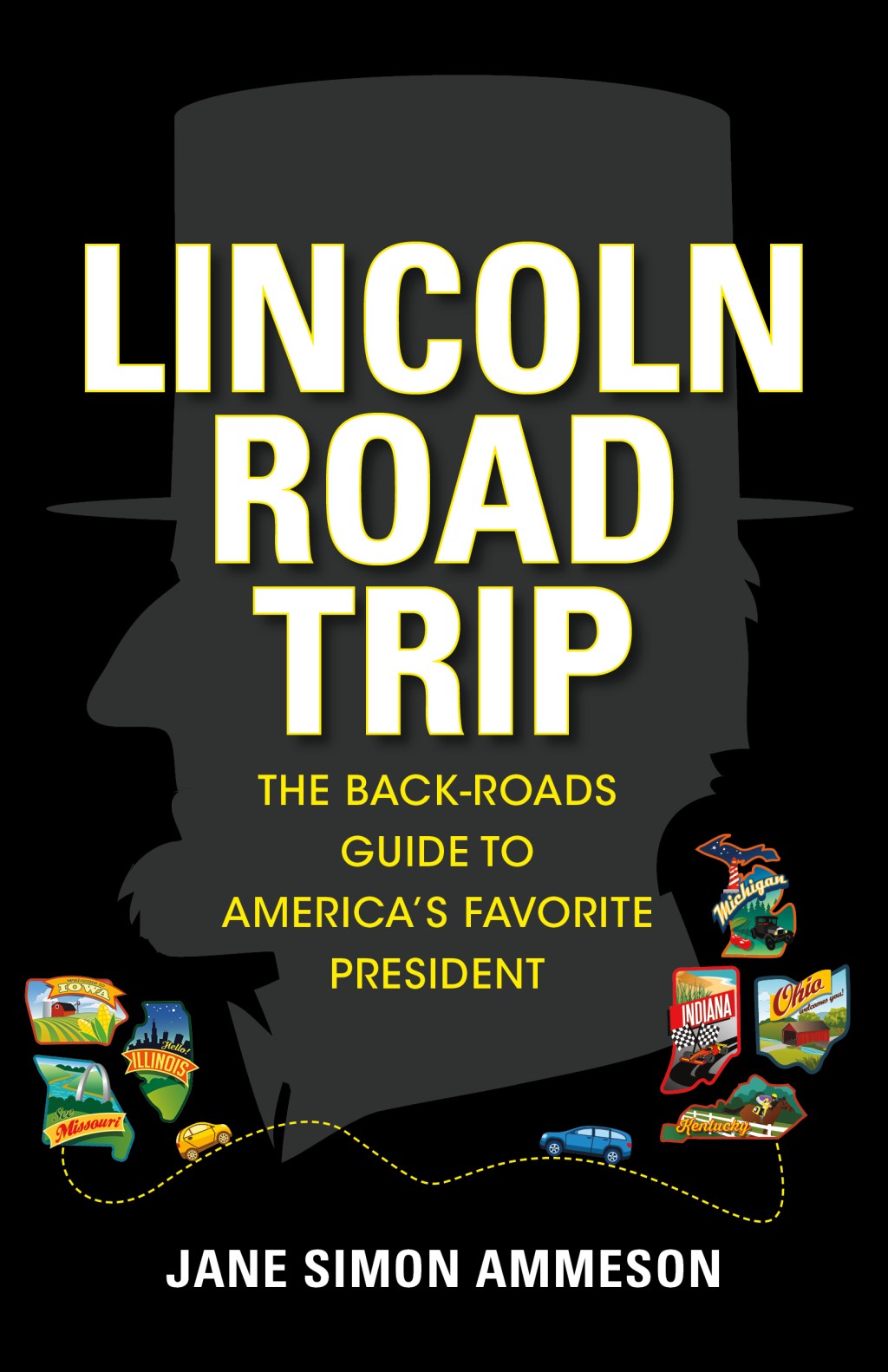
    Lincoln Roadtrip: Following the backroads to find Abraham Lincoln


    I am proud to announce that my book, Lincoln Roadtrip: The Backroads Guide to America’s Favorite President, published by Indiana University Press, is a winner in the 2019-20 Lowell Thomas Travel Journalism Competition, taking the bronze in the Travel Book category. The annual competition is sponsored by the Society of American Travel Writers Foundation.

    The Old Talbott Inn in Bardstown, Kentucky looks much like it did in Lincoln’s day.

    Winners of the awards, the most prestigious in the field of travel journalism, were announced October 16, 2020, at the annual conference of SATW, the premier professional organization of travel journalists and communicators. This year’s gathering was a virtual event.

    Buxton Inn in Granville, Ohio

    The competition drew 1,299 entries and was judged by faculty at the University of Missouri School of Journalism. This year, the SATW Foundation presented 99 awards in 26 categories and more than $21,000 in prize money to journalists. The awards are named for Lowell Thomas, acclaimed broadcast journalist, prolific author and world explorer during five decades in journalism.

    Lincoln Boyhood National Memorial replica of the Lincoln Homestead when the Lincoln family lived here in the early 1800s.

    In honoring my work, the judges said: The concept of this book is straightforward, “historical travel” with a focus on perhaps the most beloved President in the history of the United States of America. But a straightforward concept does not automatically signify a simple task. Author Ammeson completed massive research about Lincoln’s life before his ascension to fame. The photographs enhance the words nicely. Another attractive enhancement: offering current-day sites unrelated to Lincoln that provide entertainment along the route of the dedicated Lincoln traveler.”

    The Home of Colonel Jones who knew that young Lincoln would accomplish much in this world.

    I wanted to create a fun and entertaining travel book, one that includes the stories behind the quintessential Lincoln sites, while also taking readers off the beaten path to fascinating and lesser-known historical places. Visit the Log Inn in Warrenton, Indiana (now the oldest restaurant in the state), where Lincoln dined in 1844 while waiting for a stagecoach, stop by the old mill in Jasper, Indiana where Lincoln and his father took their grain to be milled (and learn of the salacious rumor about Lincoln’s birth–one of many) and spend the night at the Golden Lamb in Lebanon, Ohio, a gorgeous inn now over 200 years old.

    The Golden Lamb, Lebanon, Ohio

    Connect to places in Lincoln’s life that helped define the man he became, like the home of merchant Colonel Jones, who allowed a young Abe to read all his books, or Ashland, where Mary Todd Lincoln announced at age eight that she was going to marry a president someday and later, Lincoln most likely dined. Along with both famous and overlooked places with Lincoln connections, I also suggest nearby attractions to round out the trip, like Holiday World, a family-owned amusement park that goes well with a trip to the Lincoln Boyhood National Memorial and Lincoln State Park.

    The Kintner House, a bed and breakfast in charming Corydon, Indiana. Lincoln never stopped here but his brother Josiah who settled nearby did when it was a tavern and inn. Confederate General John Hunt Morgan took over the inn for a short period of time after crossing the Ohio River with his soldiers in what was the only Civil War battle fought in Indiana.

    Featuring new and exciting Lincoln tales from Springfield, Illinois; the Old Talbott Tavern in Bardstown, Kentucky; the Buxton Inn, Granville, Ohio; Alton, Illinois; and many more, I wrote Lincoln Road Trip  hoping that it will be a fun adventure through America’s heartland, one that will bring Lincoln’s incredible story to life.

    Ashland, the home of Henry Clay in Lexington, Kentucky.

    For more information about the awards, including a full list of winners and judges’ comments, and SATW, visit www.satwf.com and www.satw.org

    Graue Mill, a stop on the Underground Railroad. Lincoln stopped by here to meet with the owner on his way to nearby Chicago.

    To order a copy of Lincoln Road Trips, click here.

  • “Central Indiana Interurban” chronicles the state’s electric trains

    There was a time when electric railroads, called interurbans, crisscrossed the state, connecting the small villages and large cities of Indiana.

    “I was about 10 when my mother first started letting me take the interurban on my own,” recalls Lorraine Simon, who was born in East Chicago in 1911. “My mother would put me on the train and I’d go to Chicago and get off and walk to where my grandmother worked sewing linings into hats for a millinery company.”

    Interurban in Valparaiso. Photo from the Steve Shook Collection

    Also, according to Simon, the interurban she rode, known as the South Shore, also served food — for awhile. “But that didn’t last long,” she says.

    Interior of the Muncie Meteor, Courtesy of Internet Archive Book Images.

    With names like the Marion Flyer and the Muncie Meteor, the electric-powered interurban railway was the first true mass transit in Indiana in the 20th century. Coined interurban by Anderson, Ind., businessman and politician Charles Henry in the early 1900s, the name meant between towns or urban areas.

    Photo courtesy of the Shore Line Interurban Historical Society.

    “Before the interurban, public transportation in central Indiana relied upon mules or horses to pull crudely fashioned passenger wagons,” says Robert Reed, author of “Central Indiana Interurban” (Arcadia, 2004, $19.95). The interiors of these passenger wagons were piled high with straw for warmth in the winter and candles were used after sunset to light the interior. It was, as can be imagined, less than an optimal way to travel.

    “The genius at work was the idea of using electrical power, on the pavement beneath the tracks or on overhead lines, to power existing traction cars,” writes Reed in his book.

    Muncie Meteor. Courtesy of the Internet Archive Book Images.

    Though the book’s title would seem to indicate a focus on the interurbans in Central Indiana, Reed points out that it encompasses many of the interurban lines that ran through Northwest Indiana.

    “Indianapolis may have had the busiest interurban terminal in the world early in the 20th century but Chicago laid claim to the busiest corner in the world at State and Madison streets,” he writes. “Clearly interurban and cars were jammed in with all other traffic. The Chicago and Indiana Air Line Railway was established in 1901 at a cost of $250,000. Through reorganizations and acquisitions it grew from just over three miles of coverage in the beginning to nearly 70 miles of routes as the Chicago, Lake Shore and South Bend Railway, a decade and a half later. Eventually, encircled by its transportation lines were East Chicago, Indiana Harbor, Gary, Michigan City and Hammond.”

    Photo courtesy of the Steve Shook Collection.

    The Gary and Interurban Railroad provided 50-minute service between Gary and Hammond, according to Reed, and 60-minute service between Gary and Indiana Harbor. “In the years before the 1920s,” writes Reed, “one of their major routes began at Hammond and continued on to Indiana Harbor, Gary, East Gary, Garyton, Woodville Junction, Chesterton, Sheridan Beach, Valparaiso, Westville and LaPorte. Variations of the Gary and Interurban Railroad routes commenced at Valparaiso, Chesterton and LaPorte. Typically more than 20 different interurban cars from that line arrived and departed from Gary each day.”

    From the Steve Shook Collection.

    To highlight the popularity of the interurban throughout the state, Reed mentions how in 1908 the French Lick and West Baden Railroad Company connecting the West Baden Springs Hotel and the French Lick Resort & Springs, about a one mile route, carried 260,000 passengers.

    From the Steve Shook Collection.

    The book, filled with black-and-white photos from the interurban era as well as timetables and postcards from the routes, came about after Reed, a former magazine editor, wrote a book called “Greetings from Indiana” which showed the state’s history through early postcards. As Reed collected the postcards, he noticed that many were of the towns on the interurban route. “

    From the Steve Shook Collection.

    It made sense that people riding the interurban would send postcards of their stops and that these postcards were often of the interurban terminals,” says Reed who specializes in writing about antiques and collectibles. “I really became fascinated with interurbans because they were so much a part of Indiana.”

    Laying tracks for the interurban was an expensive proposition. “It eventually got to where it was about $144,000 a mile,” Reed says. “And they reached a point where it was too expensive to expand.” Besides, by then Henry Ford had introduced his Model T and people were starting to drive more and more. “A lot of old timers say that if the interurban had survived until after World War II, they would be popular today,” Reed says. The one interurban to survive, the South Shore Railroad, did so because Samuel Insull, the utility magnate whose holdings included Commonwealth Edison and the Northern Indiana Public Service Company, also owned the South Shore.

    Tracks in downtown Gary, Indiana. Photo courtesy of the Steve Shook Collection.

    In other words, he helped usher the South Shore into the era of public subsidies for passenger transport. That is considered to be the reason why the electric train, which still travels from Chicago to South Bend and back on a regular schedule, is the only interurban that successfully made the transition to a commuter railroad.

    Central Indiana Interurbans by Robert Reed.

    All the others are now just vestiges of history — abandoned track lines here and there, faded black-and-white or sepia-colored postcards, a few timetables and even fewer fragile memories.

    Beverly Shores Depot. Courtesy of Steve Shook Collection.
    Beverly Shores, Indiana today. Jane Simon Ammeson.
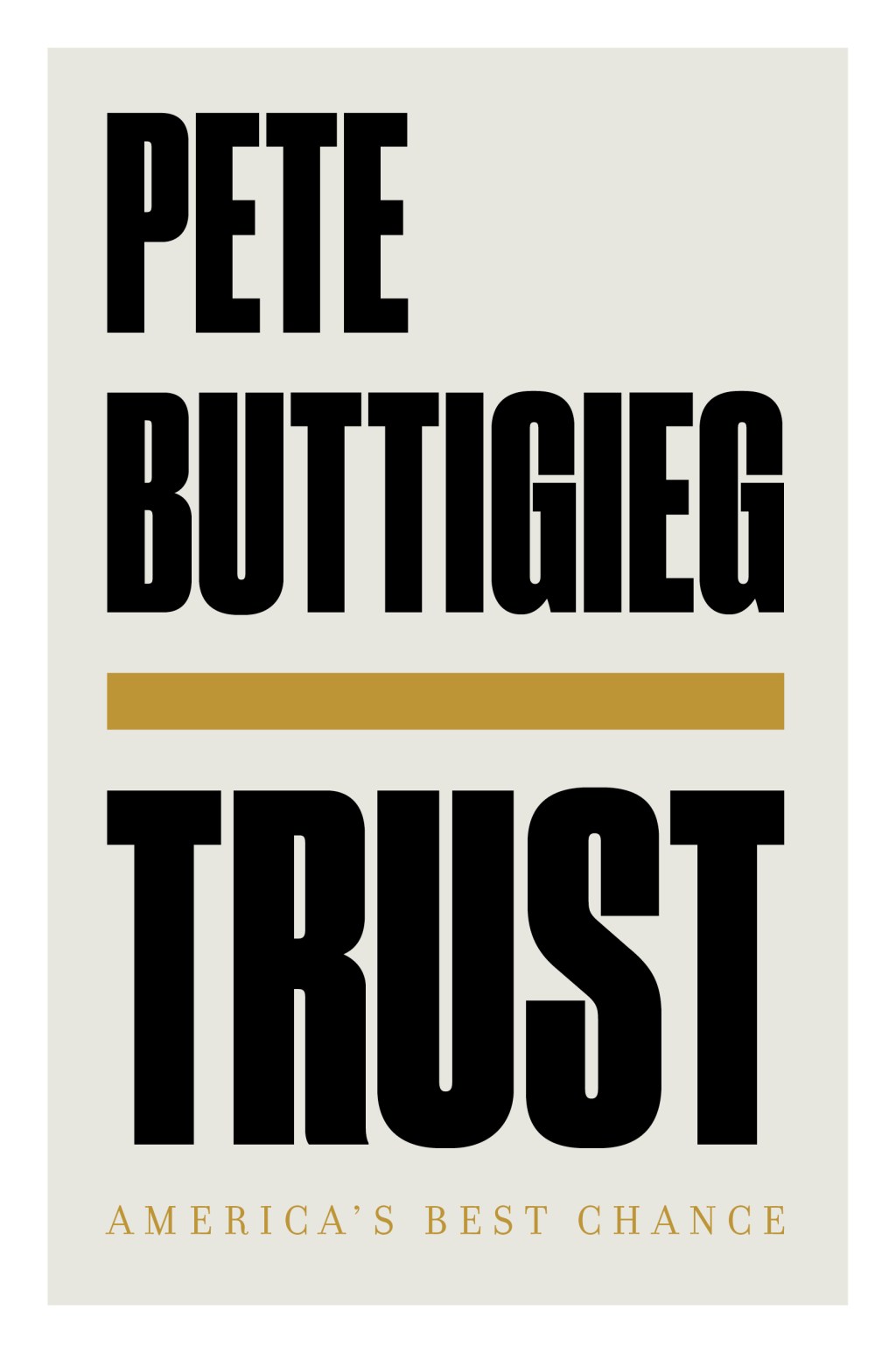
  • Trust: America’s Best Chance

    Trust: America’s Best Chance

    Pete Buttigieg

    If you’re wondering what Mayor Pete, aka Pete Buttigieg the former two term mayor of South Bend, Indiana has been doing since he dropped his bid for the 2020 Democratic presidential nomination in May, the answer is a lot. Since then, Buttigieg has accepted a position as a Faculty Fellow for the University of Notre Dame’s Institute for Advanced Studies (NDIAS) and launched “Win the Era,” a political action committee aimed at electing a new generation of leaders who bring new ideas and generational vision to down-ballot races.

    “We are calling out to a new generation,” he says.

    Buttigieg, who graduated magna cum laude from Harvard and then studied politics, philosophy, and economics at Oxford as a Rhodes Scholar, has also written his second book, the just released “Trust: America’s Best Chance “(Liveright 2020; $23.95).

    “I believe our country faces a three-fold crisis in trust,” says Buttigieg, listing those as the lack of trust in America’s institutions and in each other as well as trust in America around the world. His belief in the need for a global renewal in trust ties in with his work at NDAIS. Besides teaching an interdisciplinary undergraduate course on the importance of trust as understood through different fields, he is working on two research projects–exploring how to restore trust in political institutions and another focusing on the forces distinctively shaping the 2020s.

    The book is another way of starting a conversation about trust and how we can, as he says, “move on from this pandemic, to deliver racial and economic justice, and how trust can be earned and how it can  restore America’s leadership role in this world.”

    Buttigieg believes that America offers a type of leadership that the world needs.

    “Not just any kind of American leadership,” he says. “But America at its best.”

    This previous was published in The Times of Northwest Indiana.

  • Indiana Landmarks Rescued and Restored

    Indiana Landmarks Rescued and Restored

    The Restored Fowler Theatre


    Once a glorious example of Streamline-Moderne architecture and one of only five theaters in the U.S. to premiere “Gone with the Wind,” in 2001 the future of the 81-year-old Fowler Theatre was bleak. No longer open, its owner planned to sell anything architecturally significant including the original marquee.  To prevent this, the non-profit Preservation Guild was formed to save the theater, purchasing the theater for $30,000 and obtained a $2000 grant and a $60,000 line of credit from Indiana Historic Landmarks Foundation.

    The Fowler Theatre before restoration.

    Today, the Fowler Theatre is a marvel, one of many buildings throughout the state that dedicated citizens and the Foundation have worked together in order to preserve Indiana’s heritage and also benefit communities. In the case of the Fowler Theatre, it was a way to keep low cost entertainment available and to help revitalize the downtown.

    Vurpillatt’s Opera House in Winamac Restored

    The theatre is one of 50 success stories highlighted in the recently released Indiana “Landmarks Rescued & Restored,” a lovely coffee table book with before and after photos showcasing what historic preservation can accomplish.

    Vurpillatt’s Opera House in Winamac

    “I want the book to be an acknowledgement of the wonderful people and partnerships that have made Landmarks as effective as it is,” says Indiana Landmarks’ President, Marsh Davis who wrote the forward to the book. “When we take the approach of working together, then we become part of the solution.”

    DeRhodes House West Washington Historic District South Bend Restored

    One of Landmarks most well-known projects was the restoration of two grand early 20th century resorts, French Lick Springs and West Baden Springs in Orange County. Returning them to their glory has made the entire area boom economically by bringing in an influx of tourism, creating local jobs and improving property values and instilling a sense of pride and vitality.

    DeRhodes House West Washington Historic District South Bend

    Landmarks, largest statewide preservation group in the country, saves, restores, and protects places of architectural and historical significance, including barns, historic neighborhoods such as Lockerbie Square in Indianapolis, churches and other sacred places, schools, bridges and even the Michigan City Lighthouse Catwalk.

    Old Republic in New Carlisle Restored

    Rescued and Restored also highlights other successes in Northern Indiana including partnership with the National Trust for Historic Preservation and the National Park Service in the restoration of the House of Tomorrow in the Indiana Dunes National Park, considered one of the most innovative and influential houses in modern architectural design.

    Old Republic Before Restoration

    The book, edited by Tina Connor, who worked at Landmarks for 42 years, retiring from her position as the non-profit’s executive vice president in 2018, 144 pages with more than 200 color photos. Hon. Randall T. Shepard, honorary chairman and long-time director of Indiana Landmarks, wrote the book’s foreward.

    Statewide, Marsh says that he feels privileged knowing that Landmarks worked with the Lyles Station Historic Preservation Corporation to save Lyles Station Community School. Now a museum and the last surviving building of what was a successful African-American farming community founded by former slaves in 1849.

    “These places are all about the people who made them,” says Davis, “and the people who worked at saving them.”

    For more information, visit indianalandmarks.org

    As published in The Times of Northwest Indiana

  • The Splendid and the Vile. A Saga of Churchill, Family, and Defiance During the Blitz

    The Splendid and the Vile. A Saga of Churchill, Family, and Defiance During the Blitz

              When New York Times bestselling author Erik Larson (Devil in the White City; Dead Wake: The Last Crossing of the Lusitania) moved to New York five years ago, he had what he describes as a revelation. He had watched, horrified, as 911 unfolded on CNN.

    Author Erik Larson

              “But I wondered what was it like for people living in New York to have their city invaded and all the fear they must have felt,” he says. “Then I started thinking about the bombing of London by the Germans during World War II. It was 57 nights of consecutive bombings. 911 shook us all but how did Londoners cope, knowing that every night their city would be bombed—that every night, hundreds of German bombers were flying over with high-explosive bombs?”

              At first Larson thought he’d tell his story about an ordinary family living in London at the time.

              “Then I thought why not a quintessential London family—the Churchills,” he says. “So much as been written about him, but this gave me the lens through which to tell the story.”

              The result is The Splendid and the Vile. A Saga of Churchill, Family, and Defiance During the Blitz (Crown Publishing), Larson’s saga about how Churchill, as prime minister, kept the country strong and together through his wit, his ability to speak to everyday people and by his own determination during the time of the Blitz from May of 1940 through May of 1941.

              ” I think the things that surprised me the most was the fact that Churchill was a lot of fun,” says Larson.  “Even though his staff was really overworked, even though they knew Churchill was inconsiderate, but he worked just as hard or harder than anyone. They loved working with him, he was able to do that.”

              He also had some intriguing habits—his drinking and his long soaks in the bathtub, smoking cigars and having his secretary take dictation, getting out, naked and wet to answer the phone and then getting back into the tub.

              Churchill was also fearless and without vanity says Larson.

              It drove the Nazis crazy.

              Joseph Goebbels, the Reich Minister of Propaganda, cursed him, writing in his diary, “When will that creature Churchill finally surrender? England cannot hold out forever!”

              His speeches were so effective with the British that Goebbels was alarmed when he learned that Germans were listening to them as well and ordered them to stop, saying it was treachery.

              “Churchill would visit a city that had been bombed, and people would flock to him,” says Larson. “I have no question that these visits were absolutely important to helping Britain get through this period. He was often filmed doing so for newsreels, and it was reported by newspapers and radio. This was leadership by demonstration, by showing the world that he cared, and he was fearless.”