Category: True Crime

  • “The Belle of Bedford Avenue: The Sensational Brooks-Burns Murder in Turn-of-the-Century New York”
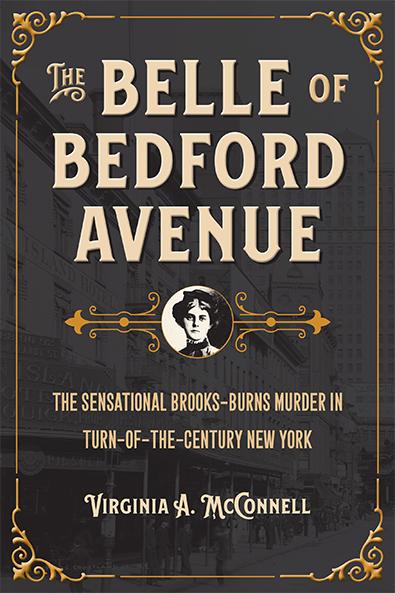
    “The Belle of Bedford Avenue: The Sensational Brooks-Burns Murder in Turn-of-the-Century New York”

    Virginia McConnell

                A rich young woman running wild, her boyfriend left for dead in a low-rent hotel room and lurid headlines such as “Brooklyn is a Modern Sodom”  might seem like a contemporary made-for-television movie. But it’s all straight out of history in Virginia McConnell’s latest historic true crime book, “The Belle of Bedford Avenue: The Sensational Brooks-Burns Murder in Turn-of-the-Century New York” (Kent State University Press).

                The year was 1902 when Florence Burns, who craved excitement frequented dance halls, drank in roadhouses, and even smoked in public—a truly decadent act, discarded the standards of her well-to-do family to hang with the  Bedford Avenue Gang.

                Society was changing with the advent of public transportation in big cities like New York and young women like Florence didn’t have to wait to be introduced by a chaperone to “suitable” young men. Instead she chose gang member Walter Brooks who was found with a bullet in his head and died the next day.

                Ironically, though Florence loved the freedoms of the new century, she escaped punishment for Walter’s death because of old norms of an “Unwritten Law” that was frequently used to justify murder. That, says McConnell, kicked in when Walter refused to marry Florence after they’d had sexual relations—hence it was, though unspoken, retribution for his dishonoring her. Taking this into consideration, the prosecutor didn’t even bring charges against her.

                If only Florence had learned from this brush with the law but alas, she didn’t. And reading about her exploits is a fascinating true crime story as well as insight into a world so much different than ours.

    McConnell, a college English instructor at Walla Walla Community College-Clarkston Campus in Washington, is the author of other historic true crime books including “The Adventuress: Murder, Blackmail, and Confidence Games in the Gilded Age” which was a 2011 Gold Medal-Independent Publisher Book Award/True Crime Category.

                Drawing upon scandalous but long forgotten crimes, McConnell says that at first she didn’t think there would be enough material to write “The Belle of Bedford Avenue.

    She had to go beyond what she could find in the New York Times to ferret out more about the case, reading through lots more newspapers, many that were only available on microfilm through Interlibrary Loan.

    “But when I dug into it, there were a lot of interesting items – such as, the hotel’s being at Ground Zero and the teenagers hanging out at Coney Island and then I found the reference to her subsequent incarcerations,” she says, adding that she had to order the microfilm of one of the trial transcripts from the John Jay College, because the topic was so racy that the newspapers wouldn’t print it.

    “There were times when I’ve expended a lot of energy on a case that interested me, only to have to abandon it because it simply didn’t have enough material for an entire book,” says McConnell, describing herself as lucky to have connected with the grand-nephews of Belle’s first husband, who had a lot of information on their great-uncle Tad. 

    It was also lucky for those of us who like a well-written, intriguing true crime story.

  • Blood Runs Green: The Murder That Transfixed Gilded Age Chicago
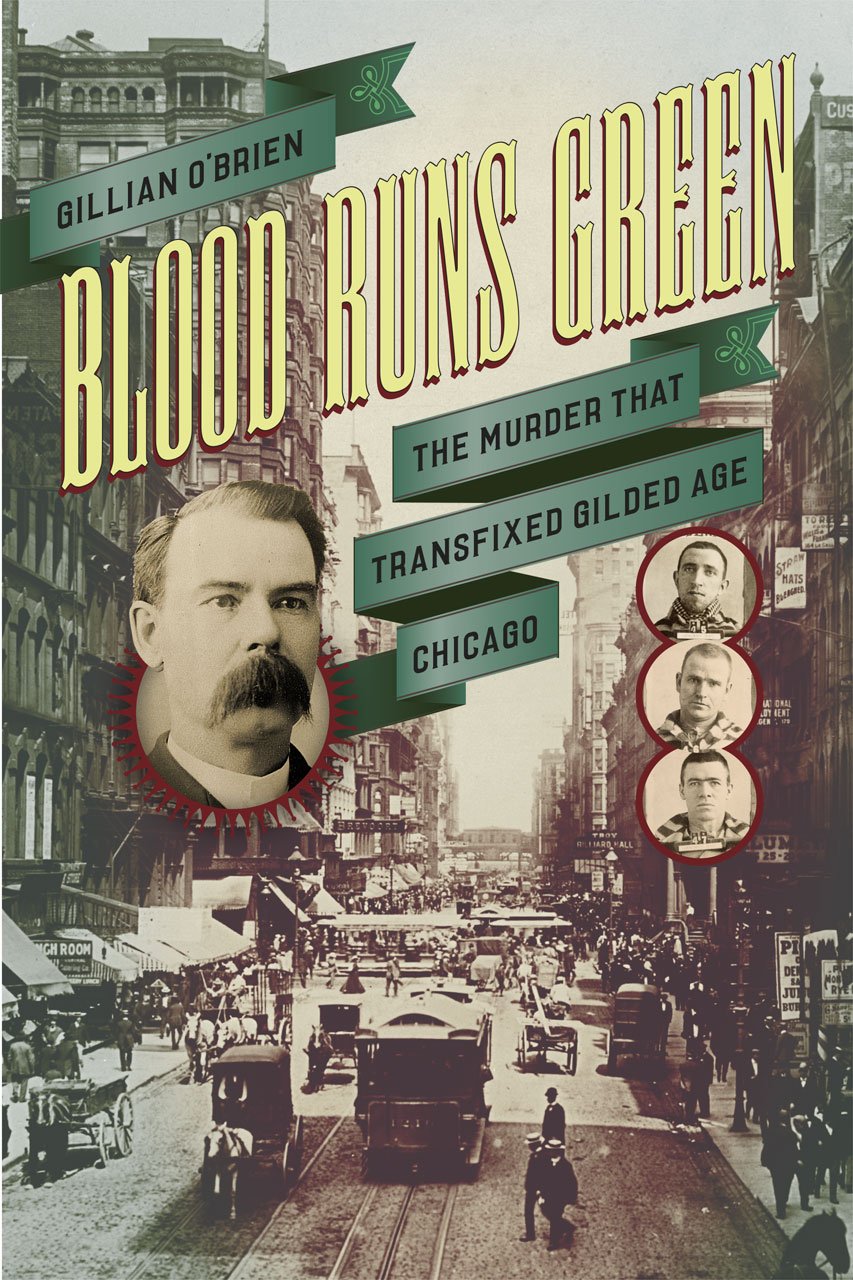
    Blood Runs Green: The Murder That Transfixed Gilded Age Chicago


    Almost 12,000 people streamed into the First Cavalry Armory on Michigan Avenue in Chicago on May 25, 1889 to view the coffin of Dr. P.H. Cronin, an Irish physician and political activist who had been savagely murdered.

    “It was one of the first ‘sensational’ murders covered by the Chicago press and far beyond,” says Gillian O’Brien, author of Blood Runs Green: The Murder That Transfixed Gilded Age Chicago(University of Chicago Press, 2015; $17). “It wasn’t just the newspapers that were fascinated – there were Dime Novels written about the crime, waxwork reproductions were made of the body, the suspects and the horse that took the doctor to the scene of his murder was put on show at a Dime Museum. The house where he was killed was opened to the public for a fee.”

    Blood Runs Green

    For O’Brien, a historian and Reader in Modern Irish History at Liverpool John Moores University, it wasn’t just the luridness of the crime that caught her interest but that Cronin, involved in a secret Irish American republican society, was murdered because he fell out with the leadership of the organization called Clan na Gael. She first learned about the murder while researching at the Newberry Library in Chicago and after running across numerous references to the investigation and trial she searched for a book about Cronin but learned that little had been written since shortly after the trial.

    “The repercussions of the murder on the Irish in Chicago and the Irish in America more broadly were very significant,” she says explaining her reason for undertaking extensive research to and writing the book. “There was a backlash against the Irish with many arguing that a hyphenated identity was problematic. There was a feeling that the Irish could never be truly American because of their residual loyalty to Ireland. The fact that an Irish political murder took place on American soil was also a cause for great concern. It was the combination of the sensational crime and the impact of it on Irish America and on Irish republicanism that made it a very compelling story for me.”