Category: mystery

  • WIN! By Harlan Coben

    WIN! By Harlan Coben

              He’s incredibly handsome, impeccably dressed, totally urbane, interested only in no-strings relationships, and so amazingly rich that it’s hard to remember when anyone in his family has ever worked besides, that is, practicing their golf swings. Of course, Windsor “Win” Horne Lockwood III is totally obnoxious or would be if he didn’t recognize and make fun of all those traits. He knows he was born into money not for any reason but the wining of the genetic lottery. Ditto for the looks. He doesn’t have to wear—gasp—hoodies but can instead with all that dough attire himself in sartorial splendor. As for the relationships or lack of them, well, Win has issues that started in childhood so you can’t really blame him for that.

    CANNES, FRANCE – APRIL 7: Writer Harlan Coben is photographed for Self Assignment, on April, 2018 in Cannes, France. (Photo by Olivier Vigerie/Contour by Getty Images). (EDITOR’S NOTE: Photo has been digitally retouched).

              What he’s never had before is a mystery novel all about him. But now he does in “Win.” written by Harlan Coben, the bestselling author who has 75 million books in print in 45 languages as well as multiple number of Netflix series including “The Stranger” and “The Woods” with two more The Innocent” and “Gone for Good” out soon.

              Up until now, Win has been a sidekick to Coben’s main character, Myron Bolitar, a sports agent who moonlights—often unintentionally—as a private detective.  Coben never intended to make Win the main character in a novel but that changed.

              “I came up with a story idea involving stolen paintings, a kidnapped heiress, and a wealthy family with buried secrets – and then I thought, ‘Wow, this should be Win’s family and his story to tell’,” says Coben.  “Win is, I hope you agree when you read the book, always a surprise.  He thrives on the unexpected.”

              The kidnapped heiress is Win’s cousin Patricia, who was  abducted by her father’s murderers and held prisoner until she managed to escape. She now is devoted to helping women who are being victimized by men. The stolen paintings include a Vermeer that was taken when Patricia was kidnapped. That painting along with another appear to have been stolen by a former 1960s radical turned recluse who was murdered in his apartment after successfully hiding from authorities for more than a half century.

              But keep in mind, that this is a Coben novel, so nothing is ever as it seems. The plots are devious, and the twists and turns are many. As Win goes on the hunt for the painting he has to deal with other difficulties that arise as well. His proclivity for vigilante justice (he knows, he tell us in one of the many asides he makes to readers, that we may not approve) has led to retaliation by the man’s murderous brothers who almost manage to kill him. The hunt for the Vermeer gets him involved with a treacherous mobster who is determined to find the last remaining radical of the group of six who he believes was responsible for his niece’s death.

              “Win has been Myron’s dangerous, perhaps even sociopathic, sidekick and undoubtedly the most popular character I’ve ever written,” says Coben.  “That said, you don’t have to read a single Myron book to read “Win.”  This is the start of a new series with a whole new hero.”  

              Coben decided to write a novel when he was working in Spain as a tour guide. Did he get the job because he’s fluent in Spanish?. Not exactly. 

              “My grandfather owned the travel agency,” says Coben. “While I was there, I decided to try to write a novel about the experience.  So I did.  And the novel was pretty terrible as most first novels tend to be – pompous, self-absorbed – but then I got the writing bug and started to write what I love – the novel of immersion, the one that you get so caught up in you can’t sleep or put the book down.”

    The above review also appeared in the The Times of Northwest Indiana.

  • John Grisham Returns to Mississippi in “A Time for Mercy”

    John Grisham Returns to Mississippi in “A Time for Mercy”

                “A Time for Mercy” takes us back to Clanton, Mississippi where Jake Brigance, the hero of John Grisham’s first novel, “A Time to Kill,” practices law. Though more than three decades have passed since Grisham introduced us to Brigance it’s been only five years Clanton-time and the attorney is facing hard times. And so, among the last thing he wants to do is take on a deeply unpopular case involving the death of a local deputy by a 16-year-old boy.

    John Grisham

                But Brigance doesn’t have a choice, he’s been appointed by the judge to represent Drew Gamble who killed his mother’s abusive boyfriend after watching him almost kill her. Despite the circumstances, this is Clanton, Mississippi and the killing of a lawman, no matter how heinous his actions, brings about a cry for revenge. The town wants Drew Gamble to die in the gas chamber no matter that the murder victim deserved it or that the defendant is a sweet and timid kid who was trying to protect his mother and sister. It also was a time when kids could be sentenced to death.

                When Grisham wrote his first novel, he was somewhat like Jake—living in a small town, struggling as a lawyer, and hoping for a breakout case that would make his reputation.

                So what’s it like being back in Clanton, I asked.

    “A big part of me never leaves Clanton,” he said. “That’s where I’m from, my little corner of the world. I know it well because I grew up there and practiced law there.  I know its history, people, culture, religion, food, routines, conflicts, past.  It is always exciting to find a story that will work in Clanton.”

                While we might be surprised at what Jake has been up to in those five years, surprises aren’t the way Grisham puts pen to paper. Characters don’t take on a life of their own as he writes, he alone is in charge of their destiny.

                “I plot the stories mentally for a long time, then outline them extensively before I write a word, so the surprises are rare,” said Grisham who has had 28 consecutive number one fiction best sellers several of which have been made into movies and adding to that sweet pot, he’s sold over 300 million books.  “Clanton has changed very little from 1985–the trial of Carl Lee Hailey in ‘A Time to Kill’ and ‘Sycamore Row’” set in 1987, and now “A Time For Mercy” in 1990.   Big changes are just around the corner with the digital age but looking back 1990 seems rather nostalgic.”

    Now that we’ve come to expect all of Grisham’s books to be best sellers, it’s interesting to learn that “A Time to Kill” didn’t do well at all when it was released. Of the 5000 hardcover copies published, Grisham is quoted as saying they couldn’t give them away. That is until his next book, “The Firm” was published and then made into a film with rising star Tom Cruise.

                As with many of his intricately plotted, Grisham often is inspired by real life cases and so it is with this book which already is the number one novel on the Amazon Charts Most Sold Fiction list.

    “About ten years ago I heard a noted lawyer talk about one of his most difficult criminal cases,” Grisham said. “His client was a 16 year old boy who’d pulled the trigger. The kid had been severely traumatized with a chaotic life.  His prosecution of his case was complicated and created many vexing issues.””

    Complicated story themes are like a type of catnip for Grisham, who somehow juggles thorny, thought-provoking issues and successfully weaves them into the narrative without slowing down the action.

    “It’s often difficult but also intriguing,” he said about achieving that fine line. “A heavy issue can weigh down a thriller when the pages are supposed to turn.  Too heavy on the politics and some readers are alienated.  Success is determined by careful preparation, a chapter by chapter outline that often takes longer than writing the book.”

    When I asked, as my final question, is there’s anything else he’d like readers to know, Grisham replied, “I never miss an opportunity to thank the many people who have enjoyed my books over the years and kept me in business. I’m still having fun. I hope you are too. I’ll keep writing if you keep reading.

     I think he can count on that.

    Note: It was just announced that It was just announced that Matthew McConaughey who attorney Jake Brigance in Joel Schumacher’s A Time to Kill, a film based on John Grisham’s novel of the same will be reprising his role in HBO’s A Time for Mercy.\

    Note this article appeared previously in the Northwest Indiana Times.

  • WIN! By Harlan Coben

    WIN! By Harlan Coben

    He’s incredibly handsome, impeccably dressed, totally urbane, interested only in no-strings relationships, and so amazingly rich that it’s hard to remember when anyone in his family has ever worked besides, that is, practicing their golf swings. Of course, Windsor “Win” Horne Lockwood III is totally obnoxious or would be if he didn’t recognize and make fun of all those traits. He knows he was born into money not for any reason but the wining of the genetic lottery. Ditto for the looks. He doesn’t have to wear—gasp—hoodies but can instead with all that dough attire himself in sartorial splendor. As for the relationships or lack of them, well, Win has issues that started in childhood so you can’t really blame him for that.

    CANNES, FRANCE – APRIL 7: Writer Harlan Coben is photographed for Self Assignment, on April, 2018 in Cannes, France. (Photo by Olivier Vigerie/Contour by Getty Images). (EDITOR’S NOTE: Photo has been digitally retouched).

              What he’s never had before is a mystery novel all about him. But now he does in “Win” (Grand Central 2021; $18.98 Amazon price) written by Harlan Coben, the bestselling author who has 75 million books in print in 45 languages as well as multiple number of Netflix series including “The Stranger” and “The Woods” with two more “The Innocent” and “Gone for Good” out soon.

              Up until now, Win has been a sidekick to Coben’s main character, Myron Bolitar, a sports agent who moonlights—often unintentionally—as a private detective.  Coben never intended to make Win the main character in a novel but that changed.

              “I came up with a story idea involving stolen paintings, a kidnapped heiress, and a wealthy family with buried secrets – and then I thought, ‘Wow, this should be Win’s family and his story to tell’,” says Coben.  “Win is, I hope you agree when you read the book, always a surprise.  He thrives on the unexpected.”

              The kidnapped heiress is Win’s cousin Patricia, who was  abducted by her father’s murderers and held prisoner until she managed to escape. She now is devoted to helping women who are being victimized by men. The stolen paintings include a Vermeer that was taken when Patricia was kidnapped. That painting along with another appear to have been stolen by a former 1960s radical turned recluse who was murdered in his apartment after successfully hiding from authorities for more than a half century.

              But keep in mind, that this is a Coben novel, so nothing is ever as it seems. The plots are devious, and the twists and turns are many. As Win goes on the hunt for the painting he has to deal with other difficulties that arise as well. His proclivity for vigilante justice (he knows, he tell us in one of the many asides he makes to readers, that we may not approve) has led to retaliation by the man’s murderous brothers who almost manage to kill him. The hunt for the Vermeer gets him involved with a treacherous mobster who is determined to find the last remaining radical of the group of six who he believes was responsible for his niece’s death.

              “Win has been Myron’s dangerous, perhaps even sociopathic, sidekick and undoubtedly the most popular character I’ve ever written,” says Coben.  “That said, you don’t have to read a single Myron book to read “Win.”  This is the start of a new series with a whole new hero.”  

              Coben decided to write a novel when he was working in Spain as a tour guide. Did he get the job because he’s fluent in Spanish? Not exactly.  

              “My grandfather owned the travel agency,” says Coben. “While I was there, I decided to try to write a novel about the experience.  So I did.  And the novel was pretty terrible as most first novels tend to be – pompous, self-absorbed – but then I got the writing bug and started to write what I love – the novel of immersion, the one that you get so caught up in you can’t sleep or put the book down.”

              With “Win” he has certainly done just that.  

    What: Harlan Coben, New York Times bestselling author, discusses his new book “Win” with moderator and author Shari Lapena.

    When: Thursday, March 25 at 7 p.m.

    FYI: Hosted by the Book Stall in Chicago, the event is free and open to the public. To register, visit the events page on the store’s website, www.thebookstall.com

  • Hotel’s Secret History Leads to Danger in the Swiss Alps
    Hotel’s Secret History Leads to Danger in the Swiss Alps

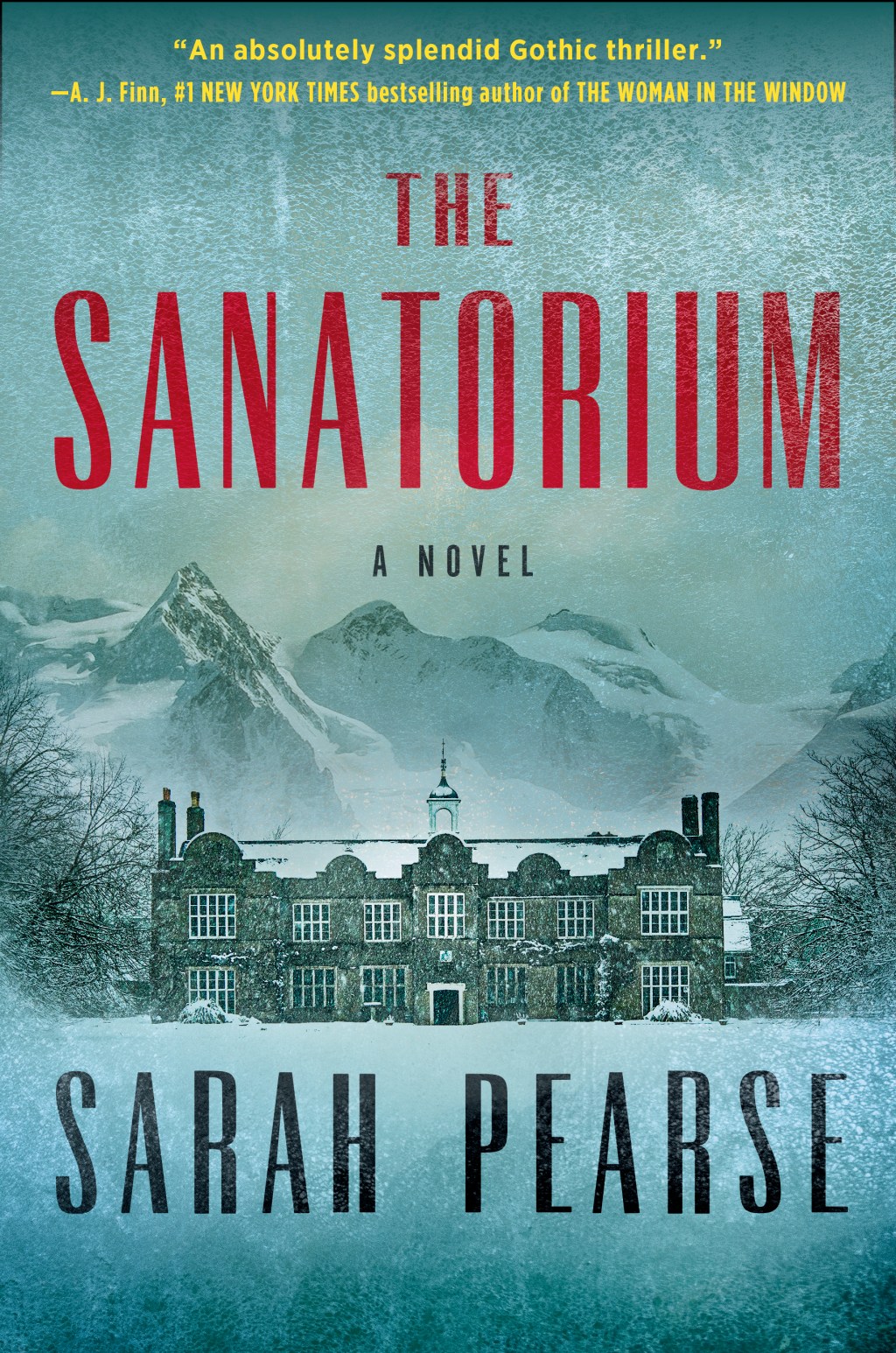
    Once a sanatorium for patients with tuberculosis, Le Sommet is now a posh hotel in the Swiss Alps with soaring glass windows, minimalist interior and relics of its past, when patients were sent most likely to die. Beautiful, it’s also isolated — miles away from the nearest town and accessible only by helicopter or a winding mountain road.

    Sarah Pearse. Photo credit Rosie Parsons Photography.

    It’s not exactly the perfect place for Elin Warren to reconnect with her brother, Isaac, and his fiancé, Laure. Elin is dealing with a multitude of stresses. She is on leave from her job as a police detective, her boyfriend Will who is accompanying her is pressuring for a commitment, the human resources director wants a commitment from her to return to work, and, worst of all, she believes Isaac may have killed her young brother years ago in one of his murderous rages.

    “The Sanatorium” is Sarah Pearse’s first novel and it’s a whopper — though a slight warning: reading it while the snow is falling outside your window just adds to the mounting dread. As avalanches and snowstorms make it impossible for help to arrive at Le Sommet, Elin races to solve the crime as one by one people, including her former best friend and Isaac’s fiancée are being brutally dispatched wearing treatment masks from when the place was a sanitarium. It calls for all of Elin’s strength, as she remains unsure and unsettled about her past and her future.

    The secrets at Le Sommet are complex and many. Elin wonders who she can trust among the secret rooms high up in the building, almost face-to-face with the mountain walls inside a deep tunnel where Elin discovers a body and is almost locked underground with the corpse. And there is her own relationship with Will, whom she loves but feels she is losing because of her own uncertainties. Will she be able, she wonders, to overcome her overwhelming doubts about herself and move forward, or will she become the next victim of a vicious killer?

    Pearse, who describes herself as an avid reader, moved to Switzerland in her early 20s and fell in love with the charming Swiss Alpine town of Crans Montana and the mountains around it both of which became the setting for her novel.

    “I’m always struck by the drama of the mountains,” she said in a Zoom call from her home in South Devon where she lives with her husband and two daughters.

    That interest — as well as reading about the sanatoriums that existed before effective treaments tuberculosis existed, and it was thought that the clean, crisp mountain air, would help — form the plot of her novel.

    “I read books about that time and there were photos of half-naked kids in the snow because they thought that would help heal their lungs,” Pearse said. “I also wanted to write a book about family dynamics.”

    Reese Witherspoon, who selected “The Sanatorium” as a Reese’s Book Club Pick describes it as “An eerie, atmospheric novel that had me completely on the edge of my seat.”

    This review previously ran in the Northwest Indiana Times: BOOKS: Former Alpine sanatorium provides setting for ‘eerie, atmospheric novel’ | Books & Literature | nwitimes.com

  • Moonflower Murders

    Moonflower Murders

              Even paradise can get dull for some.

    Though Susan Ryeland thought she was ready to retire and leave London to live on a small Greek island and run the Polydorus Hotel with Andreas, her longtime boyfriend, she begins to wonder if it was such a smart move after all. The hotel, though charming, is a little ramshackle and Susan finds her days are filled with trying to make complaining guests happy, ensure the internet is working and the linens are getting changed, among  a long list of other chores. It certainly is less than the paradise she imagined.

              Ryeland is in this restless state when the Trehernes, an English couple who own the posh Branlow Hall, an inn on the Sussex coast, check into the Polydorus. They’ve traveled all this way to ask for Ryeland’s help. Eight years earlier, their daughter Cecily was married at Branlow Hall, the charming inn they own on the Suffolk coast. On that same day, a guest at the hall named Frank Parrish was murdered and their Romanian handyman confessed to his death and is now in prison for the crime. But Cecily, after reading “Magpie Murders,” a mystery novel written by Alan Conway before his death, became convinced she knew who had really murdered the man. Indeed, Conway knew Parrish and had even based one of his other novels on the murder. Cecily.

               The Trehernes believe that Ryeland, because she was Conway’s long-time publisher before his  murder (there are a lot of murders and a lot of twist and turns to keep track of so be prepared) and helped  who killed him would be the perfect person to find Cecily who has disappeared.

              They offer her 10,000 pounds stay at their posh inn, interview their employees who worked there when Parrish was murdered, and reread the novel Conway wrote about his death in hopes she’ll pinpoint whatever it was that made Cecily so sure the handyman wasn’t the killer.

              And here it gets even more complex. “Magpie Murders” was not only the name of Conway’s book but is also the title of the real novel written by New York Times bestselling author Anthony Horowitz. In his latest, “Moonflower Murders,” he continues the saga of Ryeland, sending her once again on a mission to unravel a mystery.

              10,000 pounds and the chance to get away from the drudgery of the Polydorus are enough of an incentive for Ryeland who also loves a good mystery.

              “What you have in “Magpie Murders” and “Moonflower Murders” is a book insides a book,” says Horowitz who was asked to write a sequel immediately after Magpie came out and is also working on the television script for Magpie. “In both the books you have novelist Alan Conway hiding the solution of a modern mystery in his novel set in the 1950s. Susan, Conway’s editor, has to find the solution using clues from his novels.”

              Yes, it is that complicated but both mysteries—which are both stand-alone novels—are fascinating reads.

    Horowitz, the author of more than 40 books including two Sherlock Holmes novels commissioned by the Conan Doyle estate and the bestselling Alex Rider series for young adults which has sold more than 19 million copies worldwide,” says that “Moonflower Murders” is like getting two books in one.

              Horowitz doesn’t have any virtual book events coming up, but you can watch an interview with him about “Moonflower Murders” on You Tube at: https://www.youtube.com/watch?v=thH4vrG7tWI

    This story appeared in the Northwest Times of Indiana.

  • Amateur detective hopes to make a difference
    Amateur detective hopes to make a difference

    Lisa Gardner

    No one believed Frankie Elkin when she said Lana Whitehorse was at the bottom of the lake, and for a moment, as Frankie swam through the cloudy waters, oxygen almost gone and unable see the truck Lana had been driving on the night she disappeared, she wondered if maybe they’d been right.

    But no, there were the remains of Lana, her truck upside down in the muck, her blonde hair floating in the water.

    Now that Frankie has found Lana, a deed she did without expectation of pay, she returns to the internet looking for another missing person. She has no training, no detective license and no connection to the person she is looking for. She doesn’t even have a home or friends. Her next choice is Angelique Lovelie Badeau, a Haitian teenager who lived with brother and aunt in Mattapan, a crime-ridden neighborhood in Boston.

    One day, Angelique, a sweet girl and good student, didn’t come home. Later her school bag and cell phone were found hidden in the bushes outside of her school. Her family hopes she’ll be home soon but that was almost a year ago.

    Frankie hopes if she locates Angelique the ending will turn out differently than it has with the other 16 people she has found — all of whom were dead.

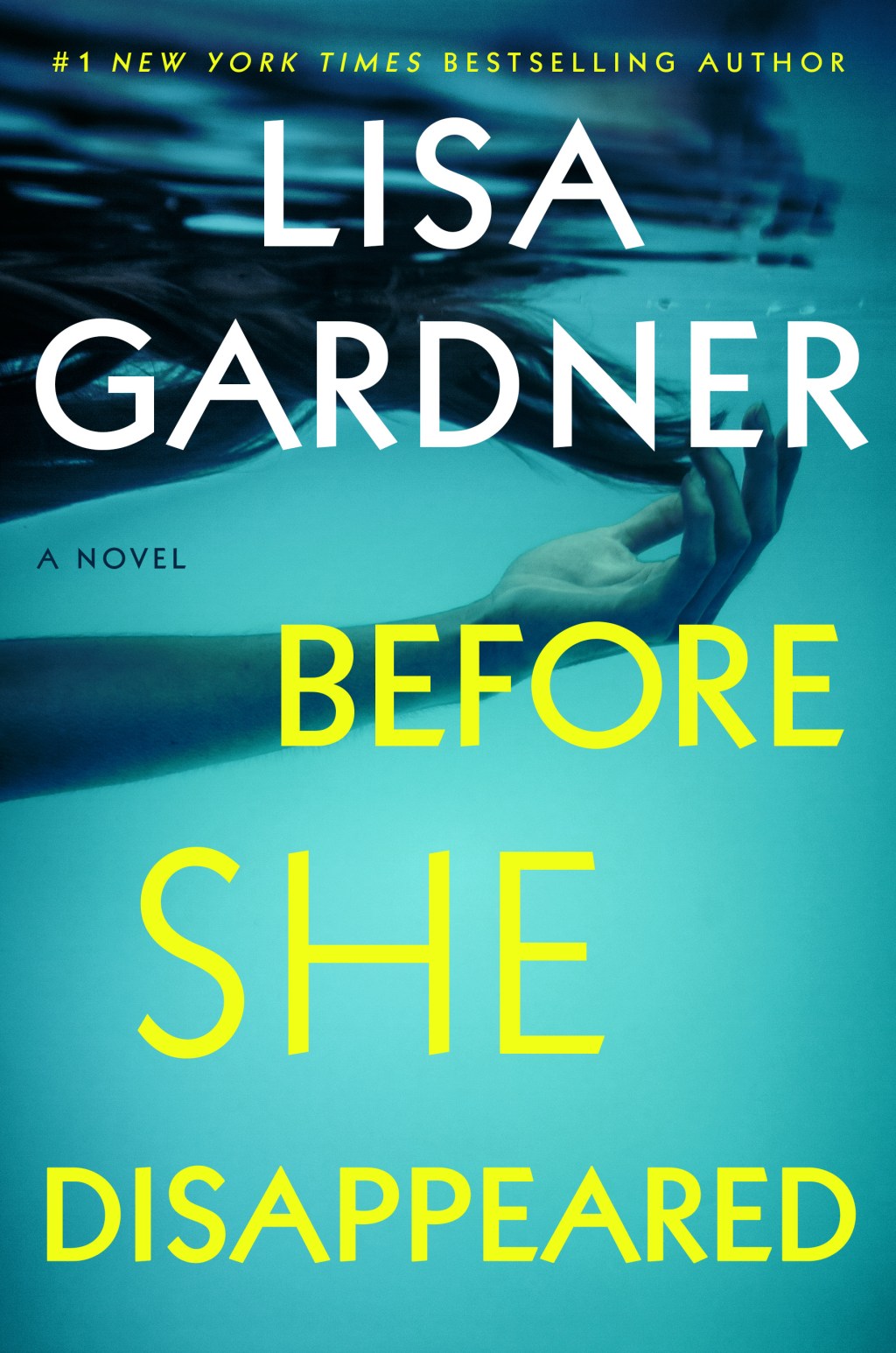
    “There are people out there like Frankie who spend their time looking for missing people,” said Lisa Gardner, author of “Before She Disappeared” (Dutton 2021; $27). “There are dog handlers who volunteer to have their dogs search for missing people for free, pilots who fly their planes over areas where someone has gone missing, and those who use their computer and social media skills to help — all for free.”

    Gardner, a New York Times best selling crime novelist, goes deep on the web when looking for true crime plots on which to base her mysteries.

    “I like to think of it as research, not procrastination,” said Gardner, who has written more than 30 novels, four of which have been made into movies.

    This time, instead of choosing a criminal case to turn into fiction, Gardner’s inspiration came about after reading about Lissa Yellowbird-Chase, who grew frustrated by the number of women going missing on tribal lands and the lack of resources, or even interest, in finding them. Yellowbird-Chase founded the citizen-led Sahnish Scouts, which is dedicated to finding justice for missing people and their families.

    “The idea that one person, without any special training or background, can make such a difference amazed me,” she said. “And it’s what brings recovering alcoholic Frankie Elkin to Mattapan, where a Haitian girl went missing 11 months ago. I had no idea the surveillance that goes on in a big city, so 11 months later I realized what this is was almost a closed room case: How does anyone disappear in a city?”

    Gardner said she is not a plotter, instead she introduces her characters and then as she writes their personalities take over to tell the story. It was trying to determine what made Frankie tick that got her out of bed each morning to start the day’s writing.

    “Before She Disappeared” is Gardner’s first standalone novel in more than 20 years.

    “But I’ve failed at writing standalone,” she said, “because I’m already writing the next book about Frankie.”

  • ‘True crime’ inspires fiction thriller

    “I’m destined to disappear,” Rachael Bard tells the listeners of her true crime podcasts.

    Eliza Jane Brazier

    For Sera Fleece, whose life is tumbling down around her as she dwells upon each of her many perceived failures and seldom leaves her home, her time is totally focused on every episode — each one dedicated to a missing or murdered woman. She thinks in terms of the episodes and absorbs the details Rachel reveals about her personal life. Sera knows she lives on Fountain Creek Ranch in the yellow house somewhat distant from her parents’ home and the barns, stables and quarters for the campers who fill the ranch in the summer.

    And then, one day it happens. There are no more podcasts and no more social media posts. Rachel has disappeared.

    “I know, the first 48 hours are crucial,” Sera tells herself. (After all, she doesn’t talk to anyone else — not her ex-husband who still cares, or her parents, or even the clerks she interacts with when she finally is able to get herself out of the house to buy tea.) “And every hour you don’t update, I think, ‘Something is wrong.’ I think, ‘The case is going cold.’”

    So begins “If I Disappear” (Berkley Hardcover 2021) by Eliza Jane Brazier, which follows Sera as she drives to northern California in search of Fountain Creek Ranch.

    “I will use the things you told me,” she says to Rachel, promising to find her.

    But it doesn’t look promising. Somehow she missed the turn for the ranch, and stopping in the little town where Rachel went to school and where her best friend disappeared when they were high school students, she finds that no one will even mention its existence.

    Turning back, she finds the ranch’s entrance, noticeable because what is supposed to be a tourist attraction has signs reading “No Trespassing” and “Beware of Dog” posted on the drive.

    “The setting came from a job I took in northern California that got weird at an isolated dude ranch. I won’t go into details, but the truth is very nearly stranger than fiction,” Brazier said when I ask about the eerie setting she created. “The emotion came from finding myself single again after my husband died. And the hook came from my love of true crime.”

    Like Sera, Brazier says she was looking for answers but in a different way than most.

    “After my husband died, I found that the grieving process really replicated true crime podcasts: you are searching for answers,” she said. “I found a lot of comfort in them and still do to this day. For me it’s about facing your fears, making order out of chaos and also about control. In true crime, you know the bad thing is coming. It can be a way to address trauma and feel less alone in it.”

    Playing detective, Sera is hired by the Bards to work with the horses, a job that allows her to search for clues to Rachel’s disappearance. Her searching arouses suspicions but startlingly, she realizes that no one seems concerned about Rachel’s disappearance besides Sera. Rachel, she learns, has disappeared before and will do so again. At the ranch, Sera finds meaning not only in her investigation but in working with the horses and her developing romance with the ranch manager.

    Yet that doesn’t stop her search for Rachel, or the overwhelming feelings that there are many dangerous unknowns surrounding her. Was Rachel involved with the ranch manager and what happened to his wife? Did she really go back to Texas like he says. Is it possible he’s a murderer?

    Brazier, a screenwriter and journalist who lives in Los Angeles, is currently developing “If I Disappear” for television and writing another mystery.

    “It’s a brutally funny thriller about very bad rich people,” she said.

    Online events

    This story previously appeared in the Northwest Indiana Times:

    https://www.nwitimes.com/entertainment/books-and-literature/books-true-crime-inspires-fiction-thriller/article_acce7dc7-16c5-5e85-8824-7862f579cf62.html

  • “The Belle of Bedford Avenue: The Sensational Brooks-Burns Murder in Turn-of-the-Century New York”
    “The Belle of Bedford Avenue: The Sensational Brooks-Burns Murder in Turn-of-the-Century New York”

    Virginia McConnell

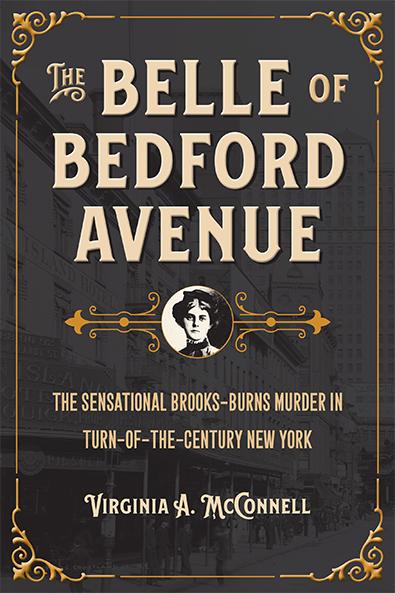
                A rich young woman running wild, her boyfriend left for dead in a low-rent hotel room and lurid headlines such as “Brooklyn is a Modern Sodom”  might seem like a contemporary made-for-television movie. But it’s all straight out of history in Virginia McConnell’s latest historic true crime book, “The Belle of Bedford Avenue: The Sensational Brooks-Burns Murder in Turn-of-the-Century New York” (Kent State University Press).

                The year was 1902 when Florence Burns, who craved excitement frequented dance halls, drank in roadhouses, and even smoked in public—a truly decadent act, discarded the standards of her well-to-do family to hang with the  Bedford Avenue Gang.

                Society was changing with the advent of public transportation in big cities like New York and young women like Florence didn’t have to wait to be introduced by a chaperone to “suitable” young men. Instead she chose gang member Walter Brooks who was found with a bullet in his head and died the next day.

                Ironically, though Florence loved the freedoms of the new century, she escaped punishment for Walter’s death because of old norms of an “Unwritten Law” that was frequently used to justify murder. That, says McConnell, kicked in when Walter refused to marry Florence after they’d had sexual relations—hence it was, though unspoken, retribution for his dishonoring her. Taking this into consideration, the prosecutor didn’t even bring charges against her.

                If only Florence had learned from this brush with the law but alas, she didn’t. And reading about her exploits is a fascinating true crime story as well as insight into a world so much different than ours.

    McConnell, a college English instructor at Walla Walla Community College-Clarkston Campus in Washington, is the author of other historic true crime books including “The Adventuress: Murder, Blackmail, and Confidence Games in the Gilded Age” which was a 2011 Gold Medal-Independent Publisher Book Award/True Crime Category.

                Drawing upon scandalous but long forgotten crimes, McConnell says that at first she didn’t think there would be enough material to write “The Belle of Bedford Avenue.

    She had to go beyond what she could find in the New York Times to ferret out more about the case, reading through lots more newspapers, many that were only available on microfilm through Interlibrary Loan.

    “But when I dug into it, there were a lot of interesting items – such as, the hotel’s being at Ground Zero and the teenagers hanging out at Coney Island and then I found the reference to her subsequent incarcerations,” she says, adding that she had to order the microfilm of one of the trial transcripts from the John Jay College, because the topic was so racy that the newspapers wouldn’t print it.

    “There were times when I’ve expended a lot of energy on a case that interested me, only to have to abandon it because it simply didn’t have enough material for an entire book,” says McConnell, describing herself as lucky to have connected with the grand-nephews of Belle’s first husband, who had a lot of information on their great-uncle Tad. 

    It was also lucky for those of us who like a well-written, intriguing true crime story.

  • One by One: Ruth Ware’s Locked Door Mystery

    One by One: Ruth Ware’s Locked Door Mystery

            It sounds idyllic–a lovely ski chalet with stunning views of the French Alps, a highly rated chef preparing all the meals, a full-service housekeeper, heated swimming pool, and a week away from the London office. Sure, it’s a corporate retreat for the eight employees of Snoop and that means tedious brainstorming sessions and a rather bitter debate about the future of the company but then there’s bonding on the ski slopes and sitting in front of a cozy fire after a delicious dinner.

    Ruth Ware.

     Snoop, a trendy start up that anonymously connects someone for brief periods of time to their favorite celebrities by being able to tune into what music they’re listening to at the time, is all about cool. So really what’s there not to like even after an avalanche closes off any chance of leaving the chalet until the roads are cleared.

            After all, there’s the wine, food, and luxurious lodging, even if its starting to get a little cold since the electricity has been cut off.  But there’s worse to come, this being a Ruth Ware novel after all. One by One Gallery/Scout Press 2020; $16.14 Amazon price), combines the classic locked door mysteries made famous by Agatha Christie and the latest in social media and our willingness to turn over large amounts of information to our apps and how we use them to snoop on others, a subject Ware finds fascinating and what led to her creation of Snoop and the people who work there.

    “All those people snooping their neighbor’s houses via property websites, or exploring strange neighborhoods with Google Earth, or using social media to stalk exes,” says Ware, author of bestsellers such as The Woman in Cabin 10 and The Lying Game.  “An app that lets you snoop on the listening habits of its users, both random stranger and celebrities—the quid pro quo being that in order to snoop on others, you must make your own listening public too. Snoop promises “voyeurism for your ears” which seemed to tick all the boxes.”

    But Snoop isn’t harmless voyeurism. It leads to death.

            The first to go missing is Eva who may be laying under a ton of  huge boulders dislodged by the force of the sweeping snow. But even before the avalanche, there was a growing divisiveness, It seems each Snooper (as the Snoop workers call themselves) has a secret or two they don’t want revealed and close proximity is making it difficult keep them hidden. Adding to the tension, the missing Eva, one of the partners, was in favor of selling Snoop and scooping up her part of the millions being offered.  Topher, the other partner, wants to keep control and take the company public. The stock divisions owned by the remaining Snoopers are equally divided between those favoring either Eva or Topher. So the focus then is on Liz, a quiet woman who sees herself as weak and demeans herself for letting others take advantage of her. During the early days of the start-up she was paid in shares instead of cash and now has the controlling vote.

            As the deaths pile up, we find out more about the people who work for Snoop through the voices of both Erin, the housekeeper, and Liz.

    “Crime and psychology are inseparable really,” says Ware, explaining the motivations behind her characters’ actions. “Readers have to understand why someone would do something as extreme as killing another person, something that’s totally foreign to most of us, no matter what the stakes. For the novel to work, we readers have to be persuaded that that’s plausible, and in their character, without that aspect sticking out like a sore thumb from page one.”

            For more about Ruth Ware and future virtual author vents, visit www.ruthware.com 

  • Kate Collins Latest Mystery Series

    Kate Collins Latest Mystery Series

                Kate Collins, best-selling author of the popular Flower Shop mysteries, is—excuse our pun–branching out with her Goddess of Greene St., a series of cozy mysteries centered around single mom Athena Spencer who after divorcing returns home to work in her family’s garden center.

    Kate Collins (Linda Tsoutsouris)

                It was a big change not only for Athena but also for her creator, Valparaiso resident Linda Tsoutsouris who has written 23 Flower Shop novels under the pen name of Kate Collins. Three of those books including “Mum’s the Word” were made into Hallmark Movies & Mysteries starring Brooke Shields in the role of Abby Knight, Tsoutsouris’s flower shop owning sleuth along with actors Brennan Elliott, Beau Bridges and Kate Drummond.

    Former attorney-turned-small-town-florist, Abby Knight, has a nose for sleuthing, quickly embroiled in a murder investigation, grateful for the help when she teams with retired private eye, Marco Salvare, who now owns a local bar and grill. Photo: Brennan Elliott, Brooke Shields Credit: Copyright 2015 Crown Media United States, LLC/Photographer: Christos Kalohoridis

                “It was hard to leave the flower shop, Abby, her boyfriend Marco and everyone—they were like family,” says Tsoutsouris whose two Goddess mysteries are “Statue of Limitations” and “A Big Fat Greek Murder,”

                “But now I’m feeling more comfortable and I really like Athena,” she says.

                As she did with her other series, Tsoutsouris has created a cast of quirky, fascinating characters including Athena’s mother, Hera who is, as one would expect of the matriarch of a large Greek family, a fantastic cook. There’s also Maia, the goddess of the field in Greek mythology, is a vegetarian in the series and Delphi, a take on the oracles of Delphi who foretold the future.

                “In my book, she’s always reading tea leaves,” says Tsoutsouris.

                The Flower Shop series takes place in the town of New Chapel, a stand-in for Valparaiso.

                “Goddess of Green St. is a mix of Saugatuck, the Lake Michigan town in southwest Michigan and Key West,” says Tsoutsouris who lives part time in Key West, Florida. “I like to give people a point of reference.”

    A Flower Shop Novella

                Before she became a writer, Tsoutsouris, who holds a master’s degree from Purdue University, worked as an elementary school teacher. After taking time off to care for her young son and daughter. Tsoutsouris became somewhat restless despite learning to macrame and so signed up for a correspondence course on how to write children’s books. She took it, wrote one, got it published and went on to write another 20. Her next shot at publication wasn’t quite so successful. Tsoutsouris wrote a romance novel she describes as horrible. The publisher agreed, rejecting her book. Always full of energy, Tsoutsouris immediately began attending as many conferences on the subject as possible and broke into that market as well.

                Now with five of her books having made it on to the New York Times Best-sellers’ list, Tsoutsouris is working on the Goddess of Greene St. series and keeps in touch with Abby and New Chapel by writing Flower Shop novellas such as the just released “A Frond in Need.”

                Asked where she gets her ideas as plots for so many mystery novels, Tsoutsouris that almost anything is a creative spark. 

                “If I see a garden pond,” she says, “I ask myself what if a body turns up in the pond?”

    For more information, visit katecollins.com