Category: #books

  • Smile Beach Murder

    Smile Beach Murder

    When Callie Padget is laid off from her reporting job, she returns to her hometown of Cattail Island and lands a gig at the local bookstore—the same one where she found comfort after her mother died.

    In fact, the anniversary of her mother’s infamous death is approaching. Years ago, Teri Padget tumbled from the top of the lighthouse. As islanders are once again gossiping about the tragedy, devastating news strikes: the lighthouse has claimed another victim. Eva Meeks, of Meeks Hardware.

    The police are calling it suicide, but Callie does not believe Eva jumped any more than she believes her mother did—especially because Callie knows that before her death, Eva had dug up a long-forgotten treasure hunt that could have put a target on Eva’s back. 

    In Callie’s search for answers, she enlists the help of some beloved books and several new friends, including the handsome local martial art’s instructor, Toby Dodge. But when another death rocks Cattail Island, Callie must face her fears alone. As she earns enemies in pursuit of the truth, Callie knows she will either uncover the killer or become a victim herself.

    SMILE BEACH MURDER is an all-new mystery series featuring Callie Padget, a former reporter turned bookshop clerk in the Outer Banks, who is pulled into a deadly web of secrets when a mysterious fall at a lighthouse echoes a tragedy from her past. When the police rule the fall a suicide, Callie has doubts. As she earns enemies in pursuit of the truth, Callie knows she will either uncover the killer or become a victim herself.

    ABOUT THE AUTHOR

    Before authoring the Outer Banks Bookshop mystery series, Alicia Bessette worked as a reporter in her home state of Massachusetts, where her writing won a first-place award from the New England Newspaper & Press Association. A pianist, published poet, and enthusiastic birdwatcher, she now loves living in coastal North Carolina with her husband, novelist Matthew Quick.

    Bessette has lived in the Outer Banks for years, adding authenticity to her depiction of island life, characters, and gorgeous setting. Jamie Brenner, bestselling author of The Forever Summer, praises:  “What could be better than a beach-read mystery? Lay out a towel, pour yourself some lemonade, and escape in this Outer Banks whodunnit with charm to spare.”

  • Mirrorland

    Mirrorland

    Twin sisters, once extremely close when growing up in an eccentric household with a demeaning and scolding mother, alcoholic grandfather, and absent father, are now separated by thousands of miles and endless anger.

    Cat lives in Los Angeles in an apartment overlooking the water. But it’s not hers, and she’ll have to move soon when the owner returns. A lifestyle writer, her finances are precarious, and she’s unsure of what she’ll do next when she gets a call from Edinburgh, Scotland. El, her twin, has failed to return from a solo sailing trip. 

    El is much more stable—at least on the surface. An artist, she’s married to Ross and living in the grand but uber Gothic home where the twins grew up—a place they called Mirrorland. It’s all dark passageways, closed off dusty rooms, hidden cupboards, nooks, and cobweb filled crannies. Here the two invented an alternate universe of hovering evil, wicked clowns, a ghoulish Tooth Fairy, and blood thirsty pirates all populating their elaborate stories that had them plotting their survival in a hostile and shadowy world. Not for them were the typical indulgences of young girls such as soccer or hosting tea parties with their favorite stuffed animals. It was not in any way an idyllic childhood.

    Carole Johnstone 2020 – © Julie Broadfoot – http://www.juliebee.co.uk

    In Carole Johnstone‘s Mirrorland house of mirrors book, it’s been almost 20 years since Cat was last home, but much is the same. Memories tug at her as she wanders through the darkened rooms of her old home, and she at times feels catapulted back into feelings of being haunted and hunted. But there are new problems to face as well. As the days go by and neither El nor her boat are found, the police give her up as lost at sea. But Cat believes she is still alive and continuing one of the many games they played when young. How else to explain the clues she keeps finding, ones that would only mean something to the two of them?

    Cat is an unreliable narrator—she drinks way too much, and she keeps slipping into the past, but whether that past is what really happened long ago, one of the many convoluted stories the sisters made up in Mirrorland, her own perceptions of what was happening around her back then, or a combination of all three, it’s hard to tell.

    Also in the house, El’s husband Ross waits for news as well. Here, too, are complications. We learn quickly that Cat was—and still is—in love with Ross, but how she lost him to her sister takes longer to unfold. She receives emails—from El, she is sure—that lead her to places where she discovers torn pages from El’s diary. Someone else is leaving warning notes, telling Cat she’s in danger and insinuating that Ross is not to be trusted—that he harmed El and possibly killed her. That warning though may have come too late because Cat and Ross have rekindled their old romance.

    It’s easy to enter Cat’s world, to feel the burden of being watched by unseen eyes and experience her fear as she struggles to determine whether El’s really dead, and who, if anyone, she can trust. And, of course, as readers we wonder if we can trust her.

    This review originally appeared in The New York Journal of Books.

    About the Author

    Carole Johnstone’s award-winning short fiction has appeared in annual “Best of” anthologies in the United States and United Kingdom. She lives with her husband in an old farmhouse outside Glasgow, Scotland, though her heart belongs to the sea and the wild islands of the Hebrides. She is also the author of The Blackhouse.

  • St. Louis Jewish Book Festival

    St. Louis Jewish Book Festival

    This November, the St. Louis County Library and the St. Louis Jewish Book Festival are hosting  SLCL Authors @ the J – a joint event series for readers throughout the St. Louis metro area. Additional information about St. Louis County Library’s author series is available online. Unless otherwise noted, all events are free and open to the public. All events are held at the J’s Staenberg Family Complex (2 Millstone Campus Drive).

    The St. Louis Jewish Book Festival is an annual celebration of authors, books, and ideas during early November, with additional author events year-round. The range of author topics is vast: business, cooking, economics, family, fiction, history, music, religion, sports, and more.

    Now in its 44th year, the Festival is nationally recognized for both its excellence and its size – it is one of the largest in the country with more than 10,000 audience members annually. People from all backgrounds and religions come to Festival events to hear premier speakers, share their thoughts, and ask questions.

    Bookend Event: Saturday, November 5

    7:30pm: Phil Rosenthal, Somebody Feed Phil the Book

    Keynote Author: Sunday, November 6

    7pm: Ambassador Marie Yovanovitch, Lessons from the Edge

    Monday, November 7

    1pm: Historical Fiction Panel: Lisa Barr & Rachel Barenbaum

    7pm: Charles Bosworth & Joel Schwartz, Bone Deep: Untangling the Betsy Faria Murder Case

    Tuesday, November 8

    10:30am: Julian E. Zelizer, Abraham Joshua Heschel

    1pm: Jen Maxfield, More After the Break

    7pm: Cookbook Panel: Cathy Barrow & Molly Yeh

    Wednesday, November 9

    10:30am: Romance Fiction Panel: Amanda Elliot & Lynda Cohen Loigman

    7pm: Kristallnacht Program: Scott Lenga, The Watchmakers

    Thursday, November 10

    10:30am: Wellness Panel: Rina Raphael & Jason Levin

    1pm: Gregory Zuckerman, A Shot to Save the World

    7pm: Women’s Night with Julia Haart, Brazen (Boutique Bazaar opens at 5pm)

    Friday, November 11

    10:30am: Andy Dunn, Burn Rate

    1pm: Barry Nalebuff, Split the Pie

    Saturday, November 12

    7pm: Paul Ford, Lord Knows, at Least I was There, Working with Stephen Sondheim

    Sunday, November 13

    1pm: Rabbi Benjamin Spratt, Awakenings

    7pm: Sports Night: Dan Grunfeld & Barry Weinberg

    Bookend Event: Wednesday, November 16

    7pm: Missouri’s Own Authors


    SLCL Authors @ The J

    St. Louis County Library and the St. Louis Jewish Book Festival are pleased to announce SLCL Authors @ the J – a joint event series for readers throughout the St. Louis metro area. Additional information about St. Louis County Library’s author series is available online. Unless otherwise noted, all events are free and open to the public. All events are held at the J’s Staenberg Family Complex (2 Millstone Campus Drive).

    The St. Louis Jewish Book Festival thanks the Novel Neighbor for providing books by our presenting authors. The festival receives a percentage of sales for every book sold. Please support the St. Louis Jewish Book Festival and the Novel Neighbor by purchasing your books at the festival.

    How to Purchase Books at the St. Louis Jewish Book Festival

    1. In-person during the St. Louis Jewish Book Festival. Call 314-442-3299 for more info.
    2. In-person or online at the Novel Neighbor.
  • An Honest Living

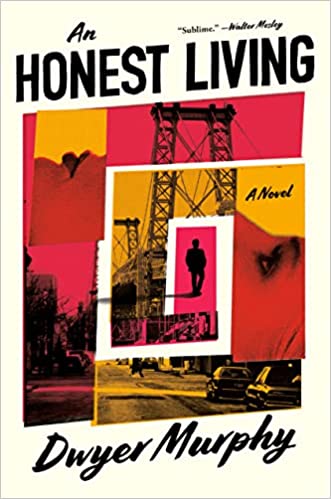
    An Honest Living

    “Noir land is always smoke and mirrors, and for those who like entering that world, be assured that Murphy is already at work on his next book.”

    Anchored in life by little except a few friends, a love of books and cinema, and his nascent law practice—a downward slope from his previous position with a prestigious law firm—we never learn the name of the narrator in An Honest Living, Dwyer Murphy’s first novel. Even his clients seem unsure of who he is, and when one gives him a going away present with his name misspelled, our narrator can only ruefully observe “they were only off by a few letters.”

    A guy like this makes a perfect patsy and that’s what happens when Anna Reddick hires him to determine if her husband is selling off her valuable collection of rare books. It seems easy enough. Staging a meeting with Reddick’s husband at the Poquelin Society which he describes as “a scholarly society dedicated to the art, science and preservation of the book, whatever that meant,” he quickly scores the proof he needs.

    Case solved. Ha! As it could be that easy in a neo-noir novel set in a time and place where everyone seems to have a secret to hide and nothing is as it seems. And that applies also to the people the detective meets. It turns out the woman who hired our detective is not Anna Reddick.

    Now, one of the noir fundamentals dictates that there’s a femme fatale, the kind of dame a hero shouldn’t fall for, but of course, always does. And that dame is the real Anna Reddick, a successful author and heir to old New York money. She hires and beguiles our detective to investigate the disappearance of her husband. Marital strife, a possible suicide or maybe murder, theft, and mystery—why wouldn’t you fall for a woman like that?

    There are layers to this droll, atmospheric novel including the inside jokes the author wants us to get. If you’re wondering about the Poquelin Society, don’t bother trying to join. It doesn’t appear to exist, at least according to a Google search. But there was a French playwright and actor named Jean-Baptiste Poquelin, though he was better known by his stage name, Molière.

    But the biggest of the wink and nods is for movie buffs familiar with the 1974 Jack Nicholson and Faye Dunaway movie Chinatown, directed by Roman Polansky. The plot of An Honest Man is an homage to this great noir classic and the book echoes many of its plot components. The book’s title derives from a conversation Nicholson had in the barbershop scene Chinatown.

    But Chinatown is all Los Angeles in 1937 and the story revolves around water rights, incest, and murder. An Honest Living is New York through and through from the scenes that our detective spies from the G Train and the window of his brownstone or the streets he walks littered with trash and 24-hour diners. It’s Manhattan before the financial meltdown—urban, somewhat gritty, and unhomogenized.

    Murphy has taken that time period and our knowledge of the looming crisis and created a compelling mystery set in a world of jaded hopes and ambiguous relationships. There’s the overwhelming sense that the other shoe will drop and when it does, it will come down heavy on our somewhat hapless narrator.

    Noir land is always smoke and mirrors, and for those who like entering that world, be assured that Murphy is already at work on his next book.

    This review previously appeared in the New York Journal of Books.

    Published by Viking Books, it is also available in audiobook and Kindle formats.

  • Jobs For Girls With Artistic Flair

    Jobs For Girls With Artistic Flair

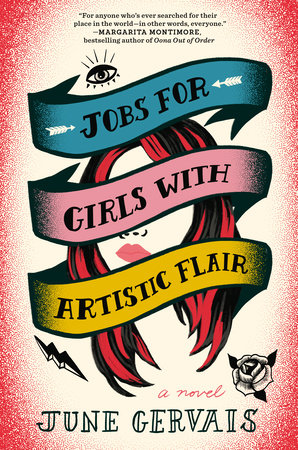
    June Gervais, author of Jobs For Girls With Artistic Flair (Pamela Dorman Books 2022 available in hardcover, Kindle edition and on Audible), talks about her highly praised first novel.

    What inspired you to write about an aspiring tattoo artist? Why did you decide to set it in the 1980s?

     My fascination with tattoos was sparked in childhood, and the tattoo shop setting felt ripe for stories.But when I started the book that became Jobs for Girls with Artistic Flair, I actually didn’t plan to write about an aspiring apprentice in the 1980s. I imagined Gina Mulley as a single mother, an established tattooer in her thirties, circa Y2K, when tattooing really began to catch fire in mainstream culture. I was 19 when I started writing this book, and I thought it would carry more weight if it included a character who was further into adulthood.

     As I dug deeper into the story, however, a mentor encouraged me to write a chapter set in Gina’s youth. The resulting scene had such energy, and was so off-the-wall, that I wanted to see what happened next. The fact that Gina’s teens and early twenties would have lined up with the 1980s turned out to be a stroke of luck, because although I didn’t know it yet, tattooing at that time had a much different vibe. It was riskier, more secretive; in other words, it attracted the kind of misfits who make for good characters.

     What kind of research did you do to learn about the tattoo industry?

    Besides scouring books and documentaries, I interviewed and shadowed ten different tattoo artists, and every one of them taught me something unique and valuable. A few of Gina’s life experiences—like buying her first tattoo machines from an acquaintance who was headed to jail—are drawn from the life of a real-life artist, Lynn TerHaar, the first woman to open a tattoo shop in our county. Many of the fun details about old-school tattooing were furnished by Marvin Moskowitz, a third-generation tattooer whose family had a well-known shop on the Bowery before tattooing was outlawed in New York City. I spent time with Michelle Myles of Daredevil Tattoo, who is not only a veteran artist but a scholar of the art form, and runs a museum within her shop.

    I often met these people through moments of synchronicity that left me feeling awed and grateful. One of the most moving was stumbling on the artist who tattooed my mother in the 1980s. She turned out to be a well-known tattooer named Marguerite, one of the first women ever to tattoo on Long Island. I’d had no idea.

     At times, Gina struggles to adapt when confronted with change—or lack thereof—in both in her professional and personal spheres. Often, it seems like all the odds are stacked against her. Why was it important to you to show Gina faced with such adversity?

     I want stories to be honest about the perils of uphill climbs. If you desperately want to learn a craft, but no one’s paying you to do it—and you’re already weighed down with responsibilities—and you’re short on money, time, or a supportive community—what do you do? Well—you scrape together everything you can and plow ahead; but there’s no guarantee that your labor will ever bear fruit. You can have all the self-discipline and passion in the world, work late into the night or wake before sunrise, but sometimes you’re still thrown back to square one, by events completely out of your control. So you make Plan B and Plan K and Plan Q. You dig deep and find new reasons to keep going, and you find traveling companions, if you can.

     I have felt all of this keenly in my quest to write while still caring for loved ones, paying the bills, and clumsily trying to be a decent citizen of the world. All my urgency and frustration—and all the breakthroughs and moments of growth and beauty—ended up in Gina’s story.

     What’s your connection to, or history with, tattoos?

    I was six years old the first time I walked into a tattoo shop; my mom was getting tattooed, and she took me along. This was in the late 1980s, roughly the same time when my book is set—well before tattoos became mainstream, especially for women—and I was too young to know that the experience I was having was highly unusual. I also had no idea that culture-at-large often viewed tattoos as trashy or dangerous. Mom also studied karate, so I spent a lot of time at her dojo, where many people were tattooed. Because of her, I associated tattoos with love and beauty and strength.

    Throughout my childhood, I used to sit beside my mom tracing the lines of her tattoo with my finger. That butterfly on her wrist is probably the most influential piece of art in my life. When I got my first tattoo on my eighteenth birthday, she came with me.

    The book deals with dual themes of work and finding a vocation. Gina and Rick (a fellow tattoo artist) are both extremely passionate about their work while Gina’s brother Dominic fell into tattooing because he was good at it. And Anna is stuck in a dead-end job but trying to discover her calling. Can you discuss how these themes affect Gina and the other characters?

     Gina has grown up in an insular, go-it-alone family where her mother and brother work to pay the bills, period; she hasn’t been exposed to people who are striving for some common good while also supporting their families. Both Rick and Anna, on the other hand, have been raised in environments where contributing to a larger community is highly valued. Rick mentions at one point that his parents are in helping professions, and even as a tattoo artist, he wants to do whatever good he can. Clues from Anna’s life point to a faith background that emphasized service. These two people really introduce Gina to the idea of vocation. 

     This is eye-opening for Gina, but complicates her relationship with her brother Dominic. At one point, she wanted nothing more than to follow in Dominic’s footsteps. Now she is baffled and angry when he won’t use his position as a business owner to speak out against injustice in their town—which is something I think a lot of Gen Z readers will relate to. What Gina eventually comes to understand is that for Dominic, work holds a sense of purpose, too; that purpose is just confined to his immediate family and friends. But it’s one more rift that makes Gina question whether she still belongs at this tattoo shop she always considered home.

    Tattoo tastes and trends have changed a lot since the 80s. What kind of designs do you think Gina would be creating today?

     Luckily for Gina, the kind of botanical designs she created for Anna have grown in popularity the past few years. So have the dotwork and stippling you see in the book’s illustrations. But in order to make a living, most tattoo artists need to do a good deal of whatever’s popular in addition to what interests them, and demand is sometimes driven by what’s trending on Pinterest or Instagram—I saw a very funny clip on Inked Magazine’s YouTube channel where artists were bemoaning how many lions and pocketwatches they’ve done lately. Gina would also probably be getting a lot of requests for lettering, tiny minimalist tattoos, watercolor tattoos, and mandala-style ornamental work, and I’m sure she’d be getting inquiries about hand-poked tattoos… But I imagine Gina getting most excited about a client who gave her the license to create a large-scale piece just for them, something imaginative and new.

     The book certainly has a feminist bent, and touches on social justice—was this choice intentional or did these elements arise organically as you wrote? How does Gina think through what we owe ourselves and each other?

    I think writers always circle back around to their obsessions, and from the time I was little, I’ve had this built-in obsession—in any given situation—about 1) whether things are being done fairly, 2) whether everybody is okay, and in response to all that, 3) whether I am doing enough. Sometimes I manage to channel this into effective action; sometimes it just manifests as grief and anxiety. And I think the same could be said for Gina in this book. There is no single character in Jobs for Girls who is straightforwardly, autobiographically me; but Gina gets angry about racist real estate practices because I’m angry about racist real estate practices. Anna is haunted by the specter of war because I am, too. Rick’s preoccupation with the question “De qué sirve?”, regarding his work—essentially, “what good does it do?”—is very much my own.

    I love that you also asked about what we owe ourselves. In 1986 Marie Shear wrote, “Feminism is the radical notion that women are people.” And amidst all Gina’s conversations with Rick, in which her eyes are opening to other people’s experiences of injustice, she’s also having another awakening: Maybe my wellbeing and my thoughts matter, too.

     If you went to Gina’s shop, what kind of tattoo would you get?

    I love this question! I think I’d want an oil lamp—or maybe a desk lamp?—tattooed somewhere near my foot.

    The lamp thing alludes to two quotes that were deeply meaningful to me as I persevered with this novel. One is from E.L.  Doctorow: “Writing a novel is like driving a car at night. You can see only as far as your headlights, but you can make the whole trip that way.” The other is an ancient line of sacred poetry: “Your word is a lamp to my feet and a light to my path.” These two quotes meant so much to me that for years, I told myself: If I ever get this published, I’m going to get a tattoo of a lamp somewhere near my foot. Because the thing about the headlights is true, but I don’t really want a headlight tattoo. Although it might have a cool biomechanical steampunk vibe.  

     The concept of identity—whether familial, sexual, or community—plays a significant role in the novel. What do you hope readers will take away from the read?

     Towards the end of the book, Gina thinks through all the specific nicknames she’s been given by every important person in her life, and the identities attached to those names. None of these encompasses the entirety of who she is. By the end of the book, she’s selected another name, and she’s lettered it into a drawing of what she hopes to do with her life.

    Writer Eunice Brown, the founder of Dear Grown-Ass Women, has said, “You don’t have to like me. But I sure as hell do.” By the end of Jobs for Girls with Artistic Flair, I think Gina Mulley has become a person she sure-as-hell likes, and she may not know what’s ahead of her, but she knows for sure that she wants to bring her whole self to it. I hope readers finish the last page feeling a little like that: more alive, a little more awake. I hope they feel electrified by a similar sense that the moment they’re living in is fertile and fleeting, and their wholeness matters. And so does everyone else’s.

    ABOUT THE AUTHOR

    June Gervais grew up on the south shore of Long Island and is a graduate of the Bennington Writing Seminars. Her many jobs have included shelving library books and taking classified ads, grassroots activism and graphic design, art direction, and teaching. Jobs for Girls with Artistic Flair is her debut novel.

  • Girl in Ice

    Girl in Ice

    A gifted linguistic professor who is fascinated by such extinct languages as Old Norse and Old Danish, Val Chesterfield is so frightened of the world that she has immured herself at the university where she teaches and treats her overwhelming anxiety with pills and bottles of Amaretto and merlot.

    Beyond that, she’s mourning the loss of her marriage and the death and possible suicide of Andy, her twin brother who died of exposure on Taaramiut Island off Greenland’s northwest coast.  

    And so, when an email from Wyatt Speeks who is overseeing the scientific lab on Taaramiut, pops up in her inbox, Val’s first thought is to hit delete. But despite her own initial forebodings, she opens it instead.

    So begins Girl in Ice (Simon & Schuster), the a fascinating thriller by Erica Ferencik who also authored Into the Jungle and The River at Night.

    Wyatt is asking her to listen to the attached vocalizations of a girl they extracted from the ice and who has, amazingly and impossibly, thawed out alive. Playing the sounds over and over again, Chesterfield is intrigued. The girl is not speaking any of the Greenlandic dialects spoken in the frigid part of the world where Wyatt is located. Indeed, despite Val’s vast repertoire and knowledge, she cannot recognize the language at all.

    Wyatt wants Val to fly out and study the girl’s language. But that entails she leave her office, her shelves of books, and her everyday routines. When Val visits her elderly father, a noted climate scientist who has always been disdainful of her, he dismisses that the girl could have been thawed out alive and that his daughter has the spunk to travel so far away.

    “You’ve never been out of Massachusetts,” he tells Val. But he also wants her to go, to find out the truth about Andy’s death and delivers an ultimatum. If she doesn’t journey to Greenland, then he doesn’t want to ever see her again.

    The winds blow over 50 miles an hour on Taaramiut across a landscape barren of anything but snow, glaciers, water pocked with ice floes, deep seemingly bottomless crevasses, and herds of caribou.  No native people live this far north so where did the girl come from and how long was she encased in ice?

    Totally isolated, the small community consists only of Wyatt and his assistant Jeanne, Val and a young couple who have won a coveted spot to dive in the frigid waters for specimens. And, of course, the girl who once was frozen and is now strangely alive.

    But it’s not just the isolation, the young girl who speaks a strange language, and being where her brother died outside, alone in the bitter cold, that is unnerving. Wyatt seems to have other hidden agendas and Jeanne may be too good with knives—and she has so many. Even the couple become uneasy, urging Val to just play along until the plane arrives to take them home.

    With the disappearance of her anti-anxiety medication, Val is unable to sleep and maybe unable to reliably process what is happening around her. She takes risky chances and she also has become maternally attached to the young girl as she learns the meaning of her words. What is part of Val’s uneven emotional state and what is real become less defined. She believes Wyatt’s stated quest–to learn how to prevent a cataclysmic climate change, one where sudden outbursts of frozen winds are freezing people to death almost instantaneously around the world–parallel Andy’s own dedicated studies.

    But Val also senses a scary undercurrent and the more she learns, the more she wonders if Andy really committed suicide by wandering off into the cold or whether someone locked him outside. To add to her distress, the young girl is ill and is trying to tell Val in her own language what she needs to survive.

    What can she do to save her? And what can she do to save herself?

    This review originally appeared in The New York Journal of Books.

    Girl in Ice is also available as a Kindle, Audio CD, Audible and in paperback.

    About the Author

    Erica Ferencik is the award-winning author of the acclaimed thrillers The River at NightInto the Jungle, and Girl in Ice, which The New York Times Book Review declared “hauntingly beautiful.” Find out more on her website EricaFerencik.com and follow her on Twitter @EricaFerencik.

  • AIA Guide to Chicago, Fourth Edition

    AIA Guide to Chicago, Fourth Edition

     AIA Chicago, the second largest chapter of the American Institute of Architects and the collective voice of 4,000 licensed architects, emerging professionals, architecture students, and allied professionals, today announced the publication of the new, updated definitive guide to  the city’s architecture, the AIA Guide to Chicago, Fourth Edition.

    AIA Guide to Chicago 4th Edition High-res cover image.jpg

    Chicago’s architecture attracts visitors from around the globe. The fourth edition of the AIA Guide to Chicago is the best portable resource for exploring this most breathtaking and dynamic of cityscapes and neighborhoods. The editors offer entries on new destinations like the Riverwalk and The 606, chronicling the city’s construction boom since the previous guide was published in 2014, as well as updated descriptions of refreshed landmarks. Thirty-four maps and more than 500 photos make it easy to find each of the almost 2,000 featured sites.

    A special insert, new to this edition, showcases the variety of Chicago architecture with over 80 full-color images. A comprehensive index organizes entries by name and architect.

    Sumptuously detailed and user friendly, the AIA Guide to Chicago encourages travelers and residents alike to explore the many diverse neighborhoods of one of the world’s great architectural cities.

    “AIA Chicago has refreshed the ultimate handbook of Chicago architecture with new buildings and old buildings redesigned for new uses,” said AIA Chicago’s Executive Director Jen Masengarb. “We’ve added overlooked iconic designs from Chicago’s architecturally and culturally distinct neighborhoods—many designed by female architects and architects of color.”

    In addition to prominent buildings known to millions because of their perches in the downtown skyline or their places along the river—Studio Gang’s St. Regis Chicago, SOM’s Willis Tower, Edward Durell Stone’s Aon Center, Adler & Sullivan’s Auditorium Building, Goettsch Partners’ 150 North Riverside, Graham, Anderson, Probst & White’s The Old Post Office converted to offices by Gensler—this new edition includes striking architectural designs from the past and present waiting to be discovered.

    Imaginative Rehabs for Reuse:

    The heroic rehab of historic Beaux-Arts hospital that once served Chicago immigrants and was scheduled for demolition but now reinvented with offices, a food hall and two hotels (Old Cook County Hospital, 1835 W. Harrison St., Paul Gerhardt, 1914; SOM and KOO conversion, 2020)

    ·An exuberant Roaring Twenties firehouse (image© Eric Allix Rogers) stacked with terra-cotta ornament now converted into an arts center fostering appreciation of Chicago filmmaking (Chicago Filmmakers—Ridge Firehouse; Engine Co. 59, Truck 47—5720 N. Ridge Avenue; Argyle E. Robinson, 1928; Bureau of Architecture & Design, 2017 conversion)

    An extraordinary arts center in a former bank designed by urban planner, artist and activist Theaster Gates who created performance spaces and galleries—including a stunning double-height room lined with bookshelves that house the Johnson Publishing Company archives-—in a deliberate state of semi-restoration, revealing layers of the building’s history (Stony Island Arts Bank—Stony Island Trust & Savings Bank—6760 S. Stony Island Ave., William Gibbons Uffendell, 1923; Fitzgerald Assocs. Architects, conversion, 2015)

    Rediscovered Designs and Architects:

    Eleven condos developed, built and designed by Chicago legend Gertrude Lempp Kerbis who designed the Rotunda Building at O’Hare which housed her Seven Continents restaurant (Greenhouse Condominiums, 2131 N. Clark St.; Gertrude Lempp Kerbis, 1976)

    An international style flat roof, light brick home designed by John Moutoussamy (image © Eric Allix Rogers) a student of Mies and the first Black architect to become partner in a large Chicago firm, who also designed 820 S. Michigan Ave., the offices of the publisher of Ebony and Jet Magazine (John Moutoussamy House, 361 E. 89th Pl., John Moutoussamy, 1954)

    A sleek rectilinear church of light brick and stone designed by Nelson Harris, a founding member of the National Organization of Minority Architects, featuring a three-story bell tower clad in smooth stone panels and topped with stained glass and crenellations (Berean Baptist Church, 5147 S. Dearborn St., Harris & Isensee, 1962)

    Civic Spaces and Public Art:

    A yellow brick sidewalk and mosaic tile mural by Hector Duarte commemorates L. Frank Baum’s writing of The Wonderful Wizard of Oz when he lived here in 1900 (There’s No Place Like Home, Southeast corner of Humboldt Blvd. and Wabansia St., Hector Duarte, Artists, 2020)

    A striking, new pedestrian bridge over Lake Shore Drive at 35th Street joined others in moving toward rectifying the disinvestment and scarcity of access to the lake on Chicago’s South Side (35th St. Pedestrian Bridge, 35th Str. Over S. Lake Shore Dr., EXP, 2016)

    Carson Pirie Scott (Sullivan, 1898)

    The reimagined Garfield Blvd. CTA Stations including a restoration and creative reuse of the 1892 building originally built to bring passengers to the World’s Columbian Exposition, and a renovation of its 2001 replacement station to include vibrant artwork by Nick Cave and Bob Faust in a variety of media and surfaces. (CTA—Garfield Blvd. Station, 320 E. Garfield Blvd., 2019 renovation, exp; Original station house, restoration, Antunovich Assocs.)

    1635 W Washington Bv (1891), one of very few survivors in this area of a stately past.

    Art Deco outside the Loop:

    An exuberant Art Deco factory in the West Loop that produced sausages, smoked and boiled meats (Richter’s Food Products, 1034 W. Randolph St., H. Peter Henschien, 1933)

    An Art Deco apartment hotel on the Near West Side (image© Eric Allix Rogers) designed by Benjamin Albert Comm in 1930 was gut rehabbed into affordable, sustainable units (Harvest Commons Apartments, 1519 W. Warren Blvd., Benjamin Albert Comm, 1930; Rehab, Landon Bone Baker Architects, 2013)

    The Art Deco exterior dating from a 1928 remodeling of an Austin bank building is slated to have its celery, mustard and off-white terra cotta facades restored as part of a redevelopment project included in Chicago’s Invest South/West initiative (Laramie State Bank Building, 4200 West Chicago Ave., Meyer & Cook, 1928 remodeling of 1909 building).

    “Working on the fourth edition of this indispensable handbook has been a special delight as we continue to deepen the book’s tradition of including an expansive canon of work,” said editor of the AIA Guide to Chicago, Laurie Petersen. “The opportunity to have a section of color photos allowed us to increase the book’s educational value even further by grouping them to illustrate building styles and types.”

    A new 32-page section of color photos directs readers to entries across the city that have capsule descriptions of particular styles, materials or building types. Styles are organized chronologically, from 1870s Italianate through 1990s Postmodernism. Interspersed are two double-page spreads: Unexpected Delights, including a water pumping station and a storage facility, and Quintessential Chicago Housing Types, including the Chicago bungalow.

    Even at 648 pages, the AIA Guide to Chicago is illustrative rather than encyclopedic, presenting a representative selection of buildings in addition to the essential landmarks. The neighborhoods chosen display a range of types, styles and eras. The criteria for selecting buildings, landscape and park features, bridges, public art and cemetery monuments included not only the quality of their design but also the degree to which they either exemplified a style, trend or functional type or stood out as unusual. Other important factors included visibility, historical significance, and the “what the heck is that” curiosity factor. A team of advisers helped evaluate the various buildings selected for inclusion in this edition: Geoffrey Baer; Lee Bey; Lisa DiChiera; T. Gunny Harboe, FAIA; Blair Kamin; and Mary Woolever.

    Praise for the Third Edition

    “A many-voiced celebration of the rich flavors of Chicago architecture, the delights on the side streets as well as the landmarks that make the history books.”–Chicago Sun-Times

    “If you’ve ever needed a good excuse to take a walk around a Chicago neighborhood or study a particularly noteworthy building, this should provide the perfect push out the door.”–Chicago Tribune

    About the AIA Guide to Chicago 4th Edition

    Author:American Institute of Architects Chicago, Edited by Laurie McGovern Petersen. Paper – $42.95; 978-0-252-08673-1; eBook – $14.95. 648 pages. Illustrations: 82 color photographs, 498 black & white photographs, 1 chart, 1 table.

    About AIA Chicago

    The American Institute of Architects Chicago (AIA Chicago) serves nearly 4,000 licensed architects, emerging professionals, architecture students, and allied professional members in Chicago and is the second largest AIA chapter in the country. AIA Chicago’s mission builds on the city’s architectural legacy by advocating for the profession, sharing knowledge among members, and partnering with communities. It fosters a culture of design excellence for equitable, sustainable places and spaces.

    AIA Chicago offers lectures and continuing education courses; specialized, issue-specific Knowledge Communities; advocacy for architects; and help for consumers looking for an architect.

    AIA Chicago is the local Chicago chapter of The American Institute of Architects. Based in Washington, D.C., the AIA has been the leading professional membership association for licensed architects, emerging professionals, and allied partners since 1857. Learn more by visiting www.aiachicago.org.

  • The Marsh Queen

    The Marsh Queen

    Far from the marshland where her family grew up and that claimed her father’s life, Loni Mae Murrow has found a quiet niche where she creates intricate life-like drawings of birds for the Smithsonian. It’s a rare talent and a job that Murrow, who started drawing at an early age, loves. But there are undercurrents in her job and life starting with a new administrator talking of budget cuts and disdaining Murrow’s need to return home to deal with her aging mother. Making it all more complicated is that she also is confronted with her brother and his controlling, avaricious wife both of whom seem more intent on cashing in on what little money there is in their mother’s portfolio than in helping her. Murrow has just a short time to take care of family business and to sort out messy family entanglements. If she doesn’t return in time, she’ll no longer have a job.

    But the pull of her mother’s needs, a compelling job offer from a good friend, veiled hints at mysteries unsolved along with her realization that her father’s death may be less straightforward than it seemed at the time jarringly jeopardize the peace and tranquility that Murrow has achieved. She finds herself deeper and deeper into the place of her youth and the marshes, both of which she thought—hopefully–she had left behind for good.

    Author Virginia Hartman convincing portrays the beauty of the marshes, creating an atmosphere of serene beauty but also one full of surprises and ultimately danger in The Marsh Queen (Simon & Schuster). She also conveys how easily Murrow falls into the patterns of her father who knew the waterways so well he could navigate the countless channels and inlets without a map. Hartman’s love of this landscape, full of unexpected wonders, is inherent in her writing.

    Individual Portrait

    “Early morning steam rises from the water,” Hartman writes about one of Murrow’s forays into the marshland. “I paddle to a different part of the swamp today, where the Cypress trees grow, as my dad used to say, ‘keepin’ their feet in the water.’ The canopy is high, like a cathedral, and I glide through the landscape of light and shadow. Ferns cascade from the trunks and pink lichen like measle spots and the Cypress knees stick up from beneath the surface like the hats of submerged gnomes.”

    This enchantment of the waterways with all its many unexpected scenes of flora and fauna is something Murrow finds she shares with Adlai, the seemingly gruff proprietor of the canoe shop where she rents her canoe and paddles when she goes in search of such birds to draw as the purple gallinule. Her mother had married down so to speak when she chose Murrow’s father. It is a choice that Murrow ultimately must make as well—to leave a dream job of working at one of the most prestigious museums in the country and life in a bustling cosmopolitan city to return to the backwaters of home.

    But first she must follow, however unwillingly, all the clues that keep presenting themselves regarding the past. It’s a matter of connecting the dots to find out what really did happen to here father all those years ago. And if she doesn’t accomplish that soon enough, then there’s more at risk for Murrow than just losing her job. It may mean losing her life.

    The Marsh Queen is also available in hardcover, on Kindle, Audible and as an Audio CD.

    This review originally appeared in New York Journal of Books.

    About the Author

    Virginia Hartman has an MFA in creative writing from American University and is on the faculty at George Washington University. Her stories have been shortlisted for the New Letters Awards and the Dana Awards. The Marsh Queen is her first novel.

    Virginia Hartman Events

    At the Writer’s Center in Bethesda, Maryland, Virginia teaches Advanced Fiction Workshop (six weeks). For more information, please contact the Writer’s Center at 301-654-8664, www.writer.org.

    • SUNDAY, OCTOBER 23
    • THE BOOK GALLERY 12 noon
    • 7 N. Loudoun Street Winchester, VA 22601
    • FRIDAY, NOVEMBER 4
    • PALM BEACH BOOK STORE 6pm
    • 215 Royal Poinciana Way, Palm Beach, FL 33480
    • WEDNESDAY, NOVEMBER 9
    • BOOKSTORE ONE 2pm
    • 17 S Pineapple Ave, Sarasota, FL 34236
    • THURSDAY, NOVEMBER 10
    • MIDTOWN READER 7pm
    • 1123 Thomasville Rd, Tallahassee, FL, 32303
    • SATURDAY NOVEMBER 12
    • THE BOOKMARK 6pm
    • 220 First St, Neptune Beach, FL 32266
  • Kentucky Trinity: Burgoo, Barbecue and Bourbon

    Kentucky Trinity: Burgoo, Barbecue and Bourbon

    Burgoo, barbecue and bourbon, historically acknowledged as the trinity of good taste in Kentucky, have traditional roots going back to the days of Daniel Boone. Albert W.A. Schmid, a chef and food historian, delves deep into the cultural heritage of these foods in his book, Burgoo, Barbecue, and Bourbon: A Kentucky Culinary Trinity (University Press of Kentucky 2021).

    Known as “the gumbo of the Bluegrass,” burgoo is a meat stew consisting of a variety of meats that were often smoked as that’s one of the ways they preserved food back then. The list of ingredients included at least one “bird of the air” and at least one “beast of the field.” The latter could include squirrel, ground hog, lamb, pork jowl, and rabbit. Added to that were whatever vegetables (think corn, tomatoes, turnips, potatoes, carrots, onions, okra, and lima beans) were either in season or still stored and edible in the larder. Sometimes oysters, oatmeal and/or pearl barley were thrown in as well. Schmid also includes, among his many burgoo recipes, one that feeds 10,000 which calls for a ton and a half of beef (I’m not including it but if you’re expecting a huge crowd over email me and I’ll send it) and another that makes 1200 gallons.

    “Often you’ll find this dish paired with one of the Commonwealth’s other favorite exports, bourbon, and the state’s distinctive barbecue,” writes Schmid, who immersed himself in archives of early cookbooks.

    He takes us back to the days of Daniel Boone, uncovering forgotten recipes of regional dishes and such lost recipes as Mush Biscuits and Half Moon Fried Pies. There are numerous recipes for burgoo starting from early pioneer days, each unique depending on the region, food tastes, and what ingredients were easily sourced. Burgoo was an early community dish with people coming together to prepare it in vast amounts for celebrations.

    Women would gather for peeling parties which meant endlessly peeling and dicing vegetables while men would stir the ingredients as they simmered in the huge pots throughout the night, most likely with sips of bourbon to keep them enthused about the task. Whether women got to sip bourbon too, we can only hope so. But in an age where water wasn’t safe to drink and even children were given wine, cider, small beer, and the dregs of their parents sweetened spirits to drink, I’m guessing so.

    The Mysterious Name of Burgoo

    As for the name burgoo, well, no one, not even Schmid is sure where it comes from.

    “It may have described an oatmeal porridge that was served to English sailors in the mid-1700s, or it may have come from the small town of Bergoo, West Virginia,” Schmid hypothesized. The word might also be a slur of bird stew or perhaps bulger; it could also be a mispronunciation of barbecue, ragout, or an amalgam of the lot. If the oatmeal story is true, burgoo continued as a military staple as it became a hearty stew for soldiers who could travel light and hunt and gather ingredients ‘from wild things in the woods’ once they stopped moving for the day—so they did not have to move the supplies from one location to another.”

    Of course, a hearty burgoo demands a great bourbon drink and Schmid offers quite a few of those as well. One name I’m particularly taken with is called Kentucky Fog, presumably because over-consumption left one in a fog. Other great names for bourbon drinks mentioned in the book are Moon Glow, Bourbaree, and the Hot Tom and Jerry.

    The following recipes are from Burgoo, Barbecue, and Bourbon.

    Kentucky Fog

    12 servings

    • 1 quart Kentucky bourbon
    • 1 quart strong coffee
    • 1 quart vanilla ice cream

    Combine the ingredients in a punch bowl and serve.

    Moon Glow

    • Crushed ice
    • 1½ ounces bourbon
    • 2 ounces cranberry juice
    • 2 ounces orange juice
    • 2 teaspoons maraschino cherry juice

    Pack a tall glass with crushed ice. Add the cranberry juice and the orange juice. Add the maraschino cherry juice. Then add the bourbon. Stir well with a bar spoon and garnish with 2 maraschino cherries and a straw.

    Burgoo

    This recipe is used at Keeneland, the famous racetrack in Lexington, Kentucky and dates back to 1939.

    • Oil
    • 3 pounds stew meat
    • 1 teaspoon ground thyme
    • 1 teaspoon sage
    • 1 teaspoon oregano
    • 1 teaspoon garlic, minced
    • 1 cup celery, diced
    • 1 cup carrot, diced
    • 1 cup onion, diced
    • 12-ounce can diced tomatoes in juice
    • 2 16-ounce cans mixed vegetables
    • 7-ounce can tomato purée
    • 2 pounds fresh okra, sliced
    • 1 tablespoon beef base
    • 1 teaspoon Worcestershire sauce
    • 1 cup sherry
    • 3 pounds potatoes, peeled and diced
    • Cornstarch

    Heat the oil in a large Dutch oven. Brown the stew meat with the herbs and garlic. Add the remaining ingredients, except the cornstarch, and cover with water. Bring to a boil, reduce heat, and simmer for at least 3 hours. Adjust seasonings to taste and thicken with cornstarch.

    Spoonbread with Bourbon

    • 6 servings
    • 2 cups water, boiling
    • 1 cup cornmeal
    • ½ teaspoon salt
    • 2 teaspoons sugar
    • 3 egg yolks, beaten
    • 3 egg whites, stiffly beaten
    • 1 cup buttermilk
    • 4 tablespoons butter
    • ½ teaspoon baking soda
    • 2 tablespoons lard
    • 1 tablespoon bourbon

    Preheat oven to 325 degrees F.

    Boil the water; add the lard and butter; to this mixture add

    the cornmeal, egg yolks, and baking soda. Stir in the buttermilk and stiffly beaten egg whites. Add the bourbon and pour into a buttered casserole dish. Bake for 35 minutes.

    Original Kentucky Whiskey Cake

    15–20 servings

    • 5 cups flour, sifted
    • 1 pound sugar
    • 1 cup brown sugar
    • ¾ pound butter
    • 6 eggs, separated and beaten
    • 1 pint Kentucky bourbon
    • 1 pound candied cherries, cut in pieces
    • 2 teaspoons nutmeg
    • 1 teaspoon baking powder
    • 1 pound shelled pecans
    • ½ pound golden raisins, halved, or ½ pound dates, chopped

    Soak cherries and raisins in bourbon overnight.

    Preheat oven to 250–275 degrees F.

    Cream the butter and sugars until fluffy. Add the egg yolks and beat well. To the butter and egg mixture, add the soaked fruit and the remaining liquid alternately with the flour. Reserve a small amount of flour for the nuts. Add the nutmeg and baking powder. Fold in the beaten egg whites. Add the lightly floured pecans last. Bake in a large, greased tube pan that has been lined with 3 layers of greased brown paper. Bake for 3–4 hours. Watch baking time carefully.

    Store any leftovers in an airtight container in the refrigerator.

    Richard Hougen was the manager of the Boone Tavern Hotel of Hotel and Restaurant of Berea College and the author of several cookbooks, including Look No Further: A Cookbook of Favorite Recipes from Boone Tavern Hotel (Berea College, Kentucky), Hougen includes the recipe for Boone Tavern Cornsticks. He notes at the bottom of the recipe, adapted here, how important it is to “heat well-greased cornstick pan to smoking hot on top of the stove before pouring in your batter.

    Boone Tavern Hotel Cornsticks

    • 2 cups white cornmeal
    • ½ cup flour
    • 2 eggs, well beaten
    • 1 teaspoon baking powder
    • ½ teaspoon baking soda
    • 2 cups buttermilk
    • ½ teaspoon salt
    • 4 tablespoons lard, melted

    Preheat oven to 450–500 degrees F.

    Sift the flour, cornmeal, salt, and baking powder together.

    Mix the baking soda with the buttermilk, and then add to the dry ingredients; beat well. Add the eggs and beat. Add the lard. Mix well. Pour the batter into very hot well-greased cornstick pans on

    top of stove, filling the pans to level.

    Place pans on the lower shelf of the oven and bake for 8 minutes. Move the pans to the upper shelf and bake for an additional 5–10 minutes.

  • Haunted Lighthouses: Scary Tales of the Great Lakes

    Haunted Lighthouses: Scary Tales of the Great Lakes

    Michigan is home to more lighthouses than any other state and about 40 of those are rumored to be haunted by the spirits of former keepers, mariners and others with ties to these historic beacons.

    Inside the pages of Michigan’s Haunted Lighthouses, long-time researcher, writer and promoter of all things Michigan, Dianna Stampfler, shares stories of those who dedicated their lives — and afterlives — to protecting the Great Lakes’ shoreline. Her second book, Death & Lighthouse on the Great Lakes, Stampfler delves into the historic true crime cold case files that have baffled lighthouse lovers for as many as two centuries.

    Throughout the fall season, Stampfler will be speaking at libraries around the state, sharing her lively and upbeat presentation about these lights. Copies of her books will be available for purchase and signing at every program.

    Sun, Oct 9, 2022
    2:00 PM – 3:30 PM
    Michigan’s Haunted Lighthouses
    Elk Rapids District Library, Elk Rapids, MI
    Tue, Oct 11, 2022
    6:30 PM – 8:00 PM
    Michigan’s Haunted Lighthouses
    Rauchholz Memorial Library, Hemlock, MI
    Wed, Oct 12, 2022
    7:00 PM – 8:30 PM
    Michigan’s Haunted Lighthouses
    Northville District Library, Northville, MI
    Wed, Oct 19, 2022
    6:00 PM – 7:30 PM
    Michigan’s Haunted Lighthouses
    Reese Unity District Library, Reese, MI
    Thu, Oct 20, 2022
    7:00 PM – 8:30 PM
    Michigan’s Haunted Lighthouses
    Otsego District Library, Otsego, MI
    Sun, Oct 23, 2022
    3:00 PM – 4:30 PM
    Michigan’s Haunted Lighthouses
    Sanilac County Historic Village & Museum, Port Sanilac, MI
    Wed, Nov 2, 2022
    6:00 PM – 7:30 PM
    Death & Lighthouses on the Great Lakes
    St. Clair County Library – Main Branch, Port Huron, MI

    For the complete schedule of upcoming events (including other topics beyond lighthouses), visit the Promote Michigan Speaker’s Bureau online.

    About Michigan’s Haunted Lighthouses

    Michigan has more lighthouses than any other state, with more than 120 dotting its expansive Great Lakes shoreline. Many of these lighthouses lay claim to haunted happenings. Former keepers like the cigar-smoking Captain Townshend at Seul Choix Point and prankster John Herman at Waugoshance Shoal near Mackinaw City maintain their watch long after death ended their duties. At White River Light Station in Whitehall, Sarah Robinson still keeps a clean and tidy house, and a mysterious young girl at the Marquette Harbor Lighthouse seeks out other children and female companions. Countless spirits remain between Whitefish Point and Point Iroquois in an area well known for its many tragic shipwrecks.

    About Death & Lighthouses on the Great Lakes

    Losing one’s life while tending to a Great Lakes lighthouse — or any navigational beacon anywhere in the world for that matter — sadly wasn’t such an unusual occurrence. The likelihood of drowning while at sea or becoming injured while on the job ultimately leading to death were somewhat common back in the late nineteenth and early twentieth century.

    Death by murder, suicide or other unnatural and tragic causes, while rare, are not unheard of. In fact, more than dozen lighthouse keepers around the Great Lakes met their maker at the hands of others – by fire, poisoning, bludgeoning and other unknown means. A handful of these keepers, either because of depression or sheer loneliness, took their own lives. A few we may never know the true story, as the deaths now 100 or more years ago, weren’t subjected to the forensic scrutiny that such crimes are given today.

    In the pages of Death & Lighthouses of the Great Lakes: A History of Misfortune & Murder, you’ll find an amalgamation of true crime details, media coverage and historical research which brings the stories to life…despite the deaths of those featured.

    Stampfler has been professionally writing and broadcasting since high school. She holds a bachelor’s degree in English with emphasis in Community Journalism and Communications with emphasis in radio broadcasting from Western Michigan University. She is a member of the Midwest Travel Journalists Association, Historical Society of Michigan, Great Lakes Lighthouse Keepers Association, Great Lakes Maritime Museum, Association for Great Lake Maritime History, Great Lakes Shipwreck Historical Society, Michigan Maritime Museum, Friends of Pilot & Plum Island Lighthouse, National Museum of the Great Lakes and West Michigan Tourist Association.