Tag: Abraham Lincoln

  • Author Erik Larson offers compelling acount of the start of the Civil War
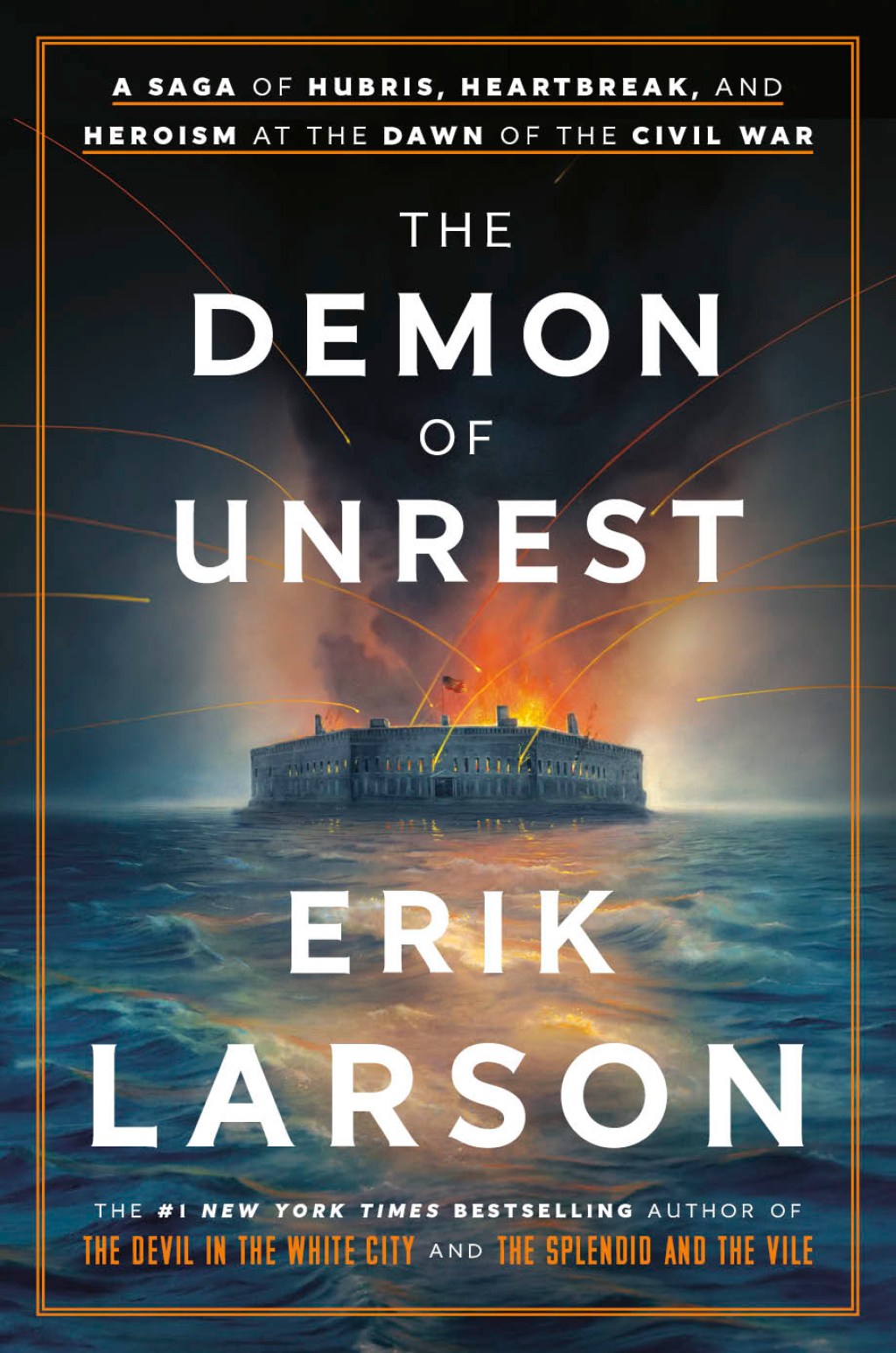
    Author Erik Larson offers compelling acount of the start of the Civil War

    Only a master storyteller like Erik Larson could turn the five tumultuous months leading up to the Civil War into “The Demon of Unrest: A Saga of Hubris, Heartbreak, and Heroes at the Dawn of the Civil War” (Crown), a compelling, page-turning read, chock full of anecdotes, psychological profiles and obscure but compelling tidbits of history all set against a relentless march towards a conflict that would kill over 620,000 soldiers and devastate a nation.

    Larson, the author of six New York Times bestsellers whose previous works include “The Devil in the White City: Murder, Magic, and Madness at the Fair That Changed America,” about a mass murderer and the 1893 Chicago’s World Fair, writes in a novelistic style that makes history come alive. He does so through his ability to weave together the familiar facts of history with information that can only be gleaned through relentless and extensive research.

    Yes, most of us know that the Civil War began with the firing on Fort Sumter, which was located in Charleston Harbor and under the command of U.S. Army Major Robert Anderson. But did you know that Anderson had owned enslaved people and was a defender of slavery? That Lincoln often misspelled Sumter as Sumpter? Or, more importantly, South Carolina did not have to succeed because of Lincoln’s election, as he had no intention of outlawing slavery in the Southern states?

    “When I started out doing this, one concern I had was that the Civil War has not exactly been underwritten,” Larson told me during a phone conversation earlier this week, noting that a quick Google indicated around 65,000. “I had vowed over the years never ever to write about the Civil War.”

    That changed when, as he was looking for the topic of his next book and watching the events of the Jan. 6, 2021 assault on the U.S. Capitol, he began to consider the deep divide and unrest of our own times.

    Faced with what he describes as an intimidating world of previous scholarship, Larson says “What I really wanted to do was to provide a rich sense, on an intimate level, of what the forces were and the motivations for the start of the Civil War.”

    The magic of his writing is that he accomplishes this by immersing the reader in details, descriptions, and personalities mostly unknown to many of us, including “eight typical characters” such as Charleston society doyenne Mary Boykin Chestnut, who kept a detailed diary, and James Henry Hammond, a Charleston planter who was a leader of the secessionist movement and who later became a U.S. senator despite public knowledge of his sexual relationships with four nieces ages 13 to 19.

    He also includes information about resolving issues regarding dueling, from “The Code of Honor or Rules for the Government Principals and Seconds in Dueling” and instructions for the “proper” way of whipping slaves as well as the going prices for selling human beings.

    The Southern mindset among the owners of enslaved people of the time is best summed up in a letter written to President James Buchanan, president before Lincoln, by Arthur Peronneau Hayne, a U.S. senator from Charleston. In it, he writes that without slavery “our every comfort would be taken from us. Our wives, our children, made unhappy — education, the light of knowledge — all lost and our people ruined forever. “

    “White southerners had persuaded themselves that slavery was a good thing for all concerned, especially for the enslaved blacks,” said Larson. He also notes that many of these same men were devoted readers of writers like Sir Walter Scott, author of “Ivanhoe,” and believed fervently in honor and the code of chivalry.

    As outrageous and hypocritical as that seems today, Larson says when writing about a different era it’s important to consider the point of view of those times to accurately reflect how events unfolded.

    “It gives a better sense of what the forces were that did lead to states like South Carolina succeeding from the Union and the Civil War,” he said, noting that understanding is not condoning, but historic context provides a lesson for the present and future as we struggle with political division today.

    This article previously appeared in the Northwest Indiana Times.

  • Lincoln Roadtrip: Following the backroads to find Abraham Lincoln
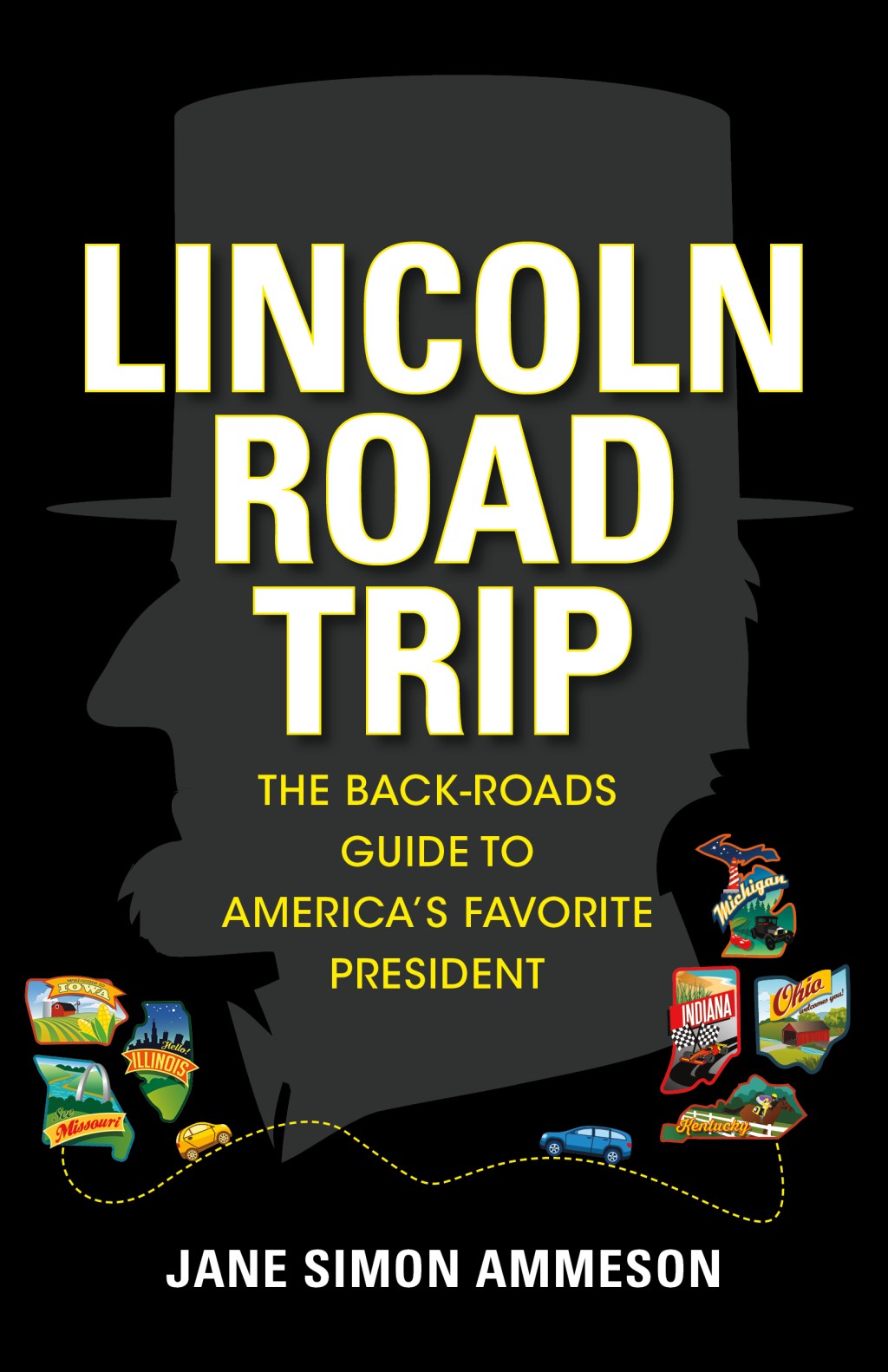
    Lincoln Roadtrip: Following the backroads to find Abraham Lincoln


    I am proud to announce that my book, Lincoln Roadtrip: The Backroads Guide to America’s Favorite President, published by Indiana University Press, is a winner in the 2019-20 Lowell Thomas Travel Journalism Competition, taking the bronze in the Travel Book category. The annual competition is sponsored by the Society of American Travel Writers Foundation.

    The Old Talbott Inn in Bardstown, Kentucky looks much like it did in Lincoln’s day.

    Winners of the awards, the most prestigious in the field of travel journalism, were announced October 16, 2020, at the annual conference of SATW, the premier professional organization of travel journalists and communicators. This year’s gathering was a virtual event.

    Buxton Inn in Granville, Ohio

    The competition drew 1,299 entries and was judged by faculty at the University of Missouri School of Journalism. This year, the SATW Foundation presented 99 awards in 26 categories and more than $21,000 in prize money to journalists. The awards are named for Lowell Thomas, acclaimed broadcast journalist, prolific author and world explorer during five decades in journalism.

    Lincoln Boyhood National Memorial replica of the Lincoln Homestead when the Lincoln family lived here in the early 1800s.

    In honoring my work, the judges said: The concept of this book is straightforward, “historical travel” with a focus on perhaps the most beloved President in the history of the United States of America. But a straightforward concept does not automatically signify a simple task. Author Ammeson completed massive research about Lincoln’s life before his ascension to fame. The photographs enhance the words nicely. Another attractive enhancement: offering current-day sites unrelated to Lincoln that provide entertainment along the route of the dedicated Lincoln traveler.”

    The Home of Colonel Jones who knew that young Lincoln would accomplish much in this world.

    I wanted to create a fun and entertaining travel book, one that includes the stories behind the quintessential Lincoln sites, while also taking readers off the beaten path to fascinating and lesser-known historical places. Visit the Log Inn in Warrenton, Indiana (now the oldest restaurant in the state), where Lincoln dined in 1844 while waiting for a stagecoach, stop by the old mill in Jasper, Indiana where Lincoln and his father took their grain to be milled (and learn of the salacious rumor about Lincoln’s birth–one of many) and spend the night at the Golden Lamb in Lebanon, Ohio, a gorgeous inn now over 200 years old.

    The Golden Lamb, Lebanon, Ohio

    Connect to places in Lincoln’s life that helped define the man he became, like the home of merchant Colonel Jones, who allowed a young Abe to read all his books, or Ashland, where Mary Todd Lincoln announced at age eight that she was going to marry a president someday and later, Lincoln most likely dined. Along with both famous and overlooked places with Lincoln connections, I also suggest nearby attractions to round out the trip, like Holiday World, a family-owned amusement park that goes well with a trip to the Lincoln Boyhood National Memorial and Lincoln State Park.

    The Kintner House, a bed and breakfast in charming Corydon, Indiana. Lincoln never stopped here but his brother Josiah who settled nearby did when it was a tavern and inn. Confederate General John Hunt Morgan took over the inn for a short period of time after crossing the Ohio River with his soldiers in what was the only Civil War battle fought in Indiana.

    Featuring new and exciting Lincoln tales from Springfield, Illinois; the Old Talbott Tavern in Bardstown, Kentucky; the Buxton Inn, Granville, Ohio; Alton, Illinois; and many more, I wrote Lincoln Road Trip  hoping that it will be a fun adventure through America’s heartland, one that will bring Lincoln’s incredible story to life.

    Ashland, the home of Henry Clay in Lexington, Kentucky.

    For more information about the awards, including a full list of winners and judges’ comments, and SATW, visit www.satwf.com and www.satw.org

    Graue Mill, a stop on the Underground Railroad. Lincoln stopped by here to meet with the owner on his way to nearby Chicago.

    To order a copy of Lincoln Road Trips, click here.

  • Courting Mr. Lincoln

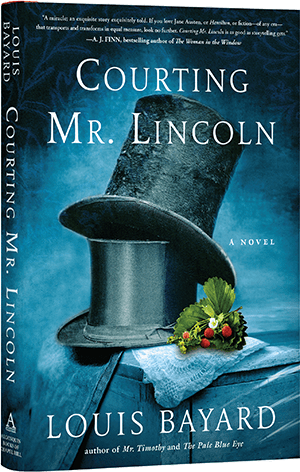
    Courting Mr. Lincoln

    Bestselling novelist Louis Bayard, author of the literary historical novel Courting Mr. Lincoln, has written about a fascinating story about the relationships between the future President and the two people who knew him best: his handsome and charming confidant (and roommate) Joshua Speed , the rich scion of the a wealthy hemp growing family in Louisville and sassy Lexington belle Mary Todd.

    Bayard, who will be appearing at the Book Stall, book is reviewed by staffer Kara Gagliardi’s in the bookstore’s May newsletter:

    “Louis Bayard’s new novel transports us by wagon to the soul of our country and lays bare the man who would become our 16th president. It is, in fact, the personal history behind our country’s history. The story starts small. In 1839, Mary Todd arrives in Springfield looking for a husband. Her mother is deceased, her father is remarried. She relies on the kindness (and lodging) of her older sister to launch her into society. She is an intellectual with a sharp wit, pleasing-albeit a little too round-an excellent dancer and dinner companion, a lover of politics. She is running out of time.

    “Abe Lincoln, on the other hand, is the definition of rough. Tall and gangly, he doesn’t know how to open doors for women, approach a carriage, make small talk, or accept invitations. In other words, society overwhelms him. He knows heartache from the loss of his mother and stepmother, and compares the work his father inflicted upon him to slavery. He’s also a damn good lawyer with a gift for oratory.

    “Central to the book is the character of Joshua Speed, who enables the courtship between Lincoln and Mary Todd and feels betrayed by it. Speed owns the dry goods store in town and rents a room to Lincoln above it. Good-looking and a bit of a womanizer, he takes it upon himself to teach Lincoln how to dress, behave, and move in polite circles. The two become inseparable. When he learns that Lincoln has met with Mary Todd in secret, he feels an emptiness that he cannot identify. Who is he without his best friend? Where does he belong if not by Lincoln’s side? This book portrays a match of dependency and tenderness, intellect and laughter.  It will also make you remember when you left your peers for a person you set your future upon. The stakes are high. Love wins.”

    Bayard, the author of Roosevelt’s Beast, Lucky Strikes, The Pale Blue Eye and The Black Tower, was described by the New York Times, as an author who “reinvigorates historical fiction,” rendering the past “as if he’d witnessed it firsthand.”

    Follow him at louisbayard.com

    ifyougo:

    What: Louis Bayard book signings

    When & Where:

    The Book Stall
    811 Elm St, Winnetka, IL at 1 p.m
    847-446-8880; thebookstall.com

    Unabridged Books

    3251 N. Broadway, Chicago, IL at 7 p.m.

    773-883-9119; unabridgedbookstore.com