Category: Thriller

  • Whose Life Am I Living: Author Explores Cutting Edge Technology in New Thriller

    Whose Life Am I Living: Author Explores Cutting Edge Technology in New Thriller

    Imagine walking through a door and into another life. That’s what happens to striving Chicago artist Kelly Holter on her 29th birthday. Suddenly she’s back in her hometown in Michigan, married to a man she barely knew in high school.

    She’s completely disoriented, because suddenly she has memories from both of her lives, and she needs to make sense of why this switch happened and whether it can be reversed.

    A speculative thriller exploring cutting-edge technology, “The Other Me” is the debut novel of Sarah Zachrich Jeng, a web developer originally from Michigan who now lives in Florida. The following is a Q&A with Jeng and Times correspondent Jane Ammeson.

    Can you tell our readers where the idea for your book came from?

    The idea came to me while I was thinking about wish fulfillment and the classic “guy meets girl, guy loses girl, guy moves mountains to get girl” narrative. These kinds of stories are often told from the man’s point of view, framed as romantic and wholly positive. I wanted to look at it through a slightly darker lens and from the woman’s perspective, so I used a sci-fi trope that completely takes away Kelly’s choice in the matter. Whatever happened to make her fall in love with Eric, her husband, it has already happened in this new life she finds herself living.

    What kind of research did you do for this book?

    I researched the art world and women artists through both the 20th and 21st centuries to get an idea of what qualifications and training they would need and what a woman artist just starting her career would be up against. Kelly is not from a privileged background, so I had to give her a scholarship to art school, which in real life probably wouldn’t come close to paying her way through. However, I wanted there to be some tension between her drive to create and the necessity of making a living, so I took a bit of creative license.

    I have some experience of startup culture, but things are always changing, so I read up on that. Much of what made it into the book is exaggerated, but some, unfortunately, is not. I also did research on the capabilities of artificial intelligence, as well as some armchair physics. The tech depicted in the book isn’t possible (at least not that we know of!) but I wanted to have enough background knowledge to let readers suspend disbelief. I was less interested in completely accurate science than exploring themes of identity, fate, and choice, and I hope any physicists or AI experts among my readers will forgive me!

    It must have been complex trying to keep straight what happened, what didn’t happen, the new life, the old life — how did you do that?

    Spreadsheets, lists, and an ugly hand-drawn diagram or two. I had timelines written out, as well as lists of small changes in Kelly’s life and the ripple effects they might cause. I really didn’t know what I was getting into when I started, and it’ll probably be a while before I write a book like this again! (Famous last words.)

  • Psychological thriller brings chills to the movie set

    Psychological thriller brings chills to the movie set

                Melissa Larsen and I are in total agreement. If a handsome movie director asks you to star in a reality-style movie set on an isolated island with just a crew and cast of five after an odd and awkward one-on-one screen test, there’s only one thing to do.  Just say no.

                Larsen is the author of “Shutter,” a psychological thriller whose central character is Betty Roux, a lost young beauty who has cast her previous life behind following her father’s suicide. She’s severed relationships with her boyfriend and mother, moved to New York with vague ambitions but no experience, of becoming an actress. Now she’s sleeping on the couch of her high school friend, someone she hasn’t seen in years. But in serendipitous connection, her friend’s husband works with Antony Marino whose first—and so far only—film has won accolades. Betty loves the movie, has watched it incessantly and soon finds herself auditioning for the starring role. That she gets it is a surprise as she has no acting experience at all.

                Of course, she doesn’t say no.

                “I don’t think I would have either at that age,” says Larsen.

                If this were a romance novel, then the entrance of Marino, would lead to the inevitable happy ending. But Larsen’s tale is much darker than that. If Betty wasn’t in such a funk of grief, she might see the warning signs which are more like flashing neon lights. The job entails filming on a remote island off the coast of Maine with a cast and crew consistently of a total of five.

    Really, what could possibly go wrong? Well, as it turns out, just about everything.

                “Somebody asked me what advice I would give Betty and I said I’d tell her to run,” says Larsen, who previously held high level, high stress jobs working for a talent agency in Los Angeles and then for a New York publisher. But she had started writing a novel in college and wanted to try writing again. “Shutter” is her first novel, and it has already garnered praise with the New York Times Book Review calling it a “chilling debut novel” and making Pop Sugar’s list of most anticipated novels.

                Developing the plot for “Shutter” was like a very fluid brain storm says Larsen detailing her creative process.

                “I’m a very image-based writer, and the first thing I saw was Betty covered in blood asking me for help,” she says recounting how she plotted the book. “So I decided to start writing with that in mind. It was like I was seeing a billboard in the distance,  and I kept walking towards it.”

  • How to Kill Your Best Friend by Lexie Elliott

    How to Kill Your Best Friend by Lexie Elliott

    A funeral at a posh island resort isn’t supposed to be fun, but in Lexie Elliott’s new mystery, How to Kill Your Best Friend, it’s more than sad, it’s deadly. And complicated.

             Georgie, Bronwyn, and Lissa are close friends having swam competitively together in college. But there long have been undercurrents in the relationships particularly after Bronwyn had an affair with Lissa’s first husband now deceased.

    “Lissa, the strongest swimmer of them all, has somehow drowned off the coast of the fabulous island resort she owned with her husband,” says Elliott, who tells the story through the eyes of Georgie and Bronwyn. The two are among a group of mourners—all with interconnecting ties going back to college. But beyond the grieving are questions—and soon violence. Georgie is attacked and both she and Bron begin receiving threatening messages. Plus, there are so many secrets including whether the posh resort is going bankrupt. But even more so, are questions about what really happened. After all, why would Lissa swim in an area known for its deadly currants and is she really dead? And why did Georgie believe that the only way to stop Lissa from murdering again was to figure out the best way to kill her.

    A sudden storm hits the island, cutting them off from the mainland and leaving the friends to figure out whether Lissa is really dead or not and who can they trust as the winds crash through windows and turn glass and roofing into weapons while the rains pelt down. 

    Like the characters in her book, Elliott says her life has always been steeped in chlorine.

    “I swam competitively through my school years and represented Oxford University in both swimming and water polo,” she says. “I first dabbled in open water swimming whilst at Oxford and won the Scottish Open Water Championships in the year 2000. Post university, I switched across to triathlons, but after I had my first child, I dipped my toe back into the open water swimming scene and ultimately swam solo across the English Channel in 2007. It took me twelve and a half hours and it was very cold and very far; whilst I’m delighted to have done it, I have no intention of ever doing it again.”

    Elliott may be the last person one would expect to be writing mystery-thrillers. She holds a doctorate in theoretical physics from Oxford and had worked as an investment banker with her husband and two children in London. But when she was downsized during the Global Financial Crisis, she decided to pursue writing—a long time dream. This is her third novel and though now she’s back at work, she is already finishing up the next. She can’t divulge the plot except to say it involves Oxford and the French Alps.

  • The Other Passenger: A Mystery-Thriller by Louise Candlish

    The Other Passenger: A Mystery-Thriller by Louise Candlish

    After a spectacular burnout that caused him to lose his high-paying job, Jamie Buckby has found work as a coffee shop barista, a job that pays much less than his previous career.

    But money really isn’t an issue for him. He lives with his girlfriend, a wealthy, successful businesswoman, in her wonderful historic home in a tony London neighborhood. The two have had a long and compatible relationship, but in keeping with the saying there’s no fool like an old fool, Jamie risks it all when he falls for the beautiful, manipulative and much younger Melia.

    This being a mystery by bestselling British novelist Louise Candlish, there are plenty of other complications as well in “The Other Passenger.” We watch the story unfold through the eyes of Jamie, who commutes to work by riverboat with his neighbor Kit, who is married to Melia.

    Kit and Melia are living well beyond their means, wracking up credit card debts and obviously envious of Jamie’s lifestyle. Then, one day, Kit doesn’t turn up at the boat, and when Jamie arrives at his stop, the police are there waiting for him. Kit’s been reported missing, and another passenger saw Jamie arguing with him on the boat just before he disappeared.

    But it’s way too time consuming and difficult for Melia to wait and work hard to achieve her dreams. It’s much better to convince Jamie with promises of money and a life together to help her get rid of her husband. Jamie is foolish enough to believe that’s what Melia really wants. With the police closing in, he soon realizes that Melia has outwitted him and has much different plans in mind.

    “There were several inspirations, and that’s how my books are usually conceived — I’ll find a way to marry multiple obsessions,” Candlish said. “I wanted to do a commuter mystery, I wanted to create a ‘Double Indemnity‘ for the 2020s, I was eager to explore the generational warfare between Gen X and millennials. Finally, I felt the need to write a love letter to London life around the River Thames, to capture its dangerous allure.”

  • The Photographer

    The Photographer

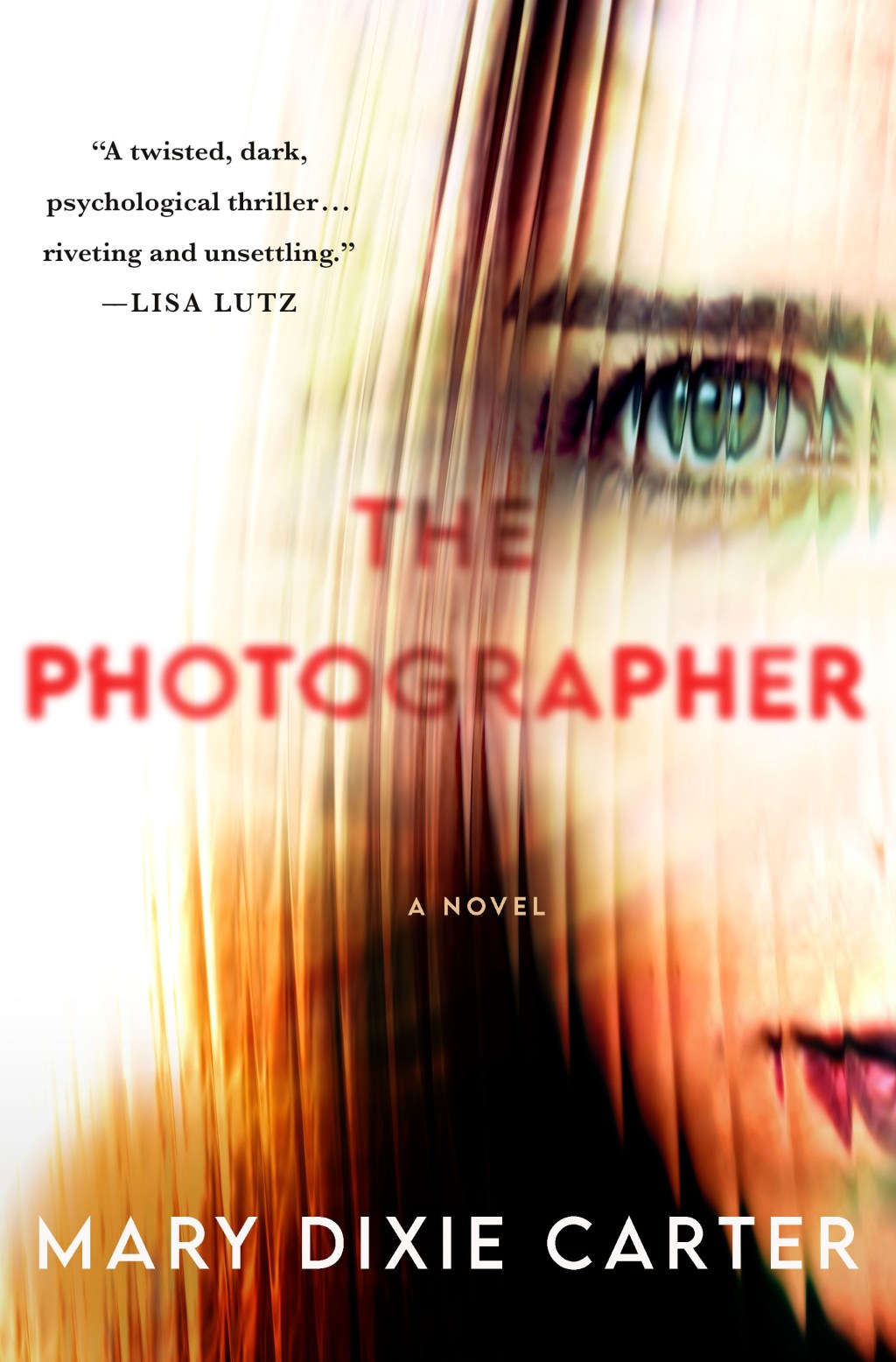
    If Delta Dawn, an elite New York society photographer, doesn’t see beauty she creates it as well as her own version of reality. A whiz with photo editing tools, she can create the scenes she wants to convey.  A scowling child. No problem, she can turn that into an adoring smile. A cold and aloof family. There are ways to manipulate the bodies in the pictures she takes to bring them closer together, soften their stiffness, and turn them into a lovely and loving family to be envied.

    Mary Dixie Carter by Beowulf Sheehan

              But that envy overtakes Dawn in The Photographer, Mary Dixie Carter’s mystery-thriller when she is hired to do a photo shoot of successful architects Amelia and Fritz Straub and their 11-year-old daughter, Natalie. A catty observer, Dawn quickly sums up situations—and others—quickly. Amelia, she  quickly notes when they first meet, despite being striking with a magnetic personality isn’t  as pretty as she is.  Her breasts aren’t as large, nor is her waist as small, and she’s at least ten years older. Dawn immediately prices Amelia’s Montcler coat as costing more than $2000. Then there’s Amelia’s handsome husband with his amazing green eyes. And let’s not forget their wonderful house.

              Seduced by what she sees, Dawn immediately sets about immersing herself into their life, volunteering to babysit. She soon has access to the house—drinking their wine, bathing in their tub, becoming good friends with Amelia and sending out seductive vibes to Fritz.

              “Several years back, I hired a photographer to take pictures of my two children,” Carter wrote in answer to questions I emailed to her. “The pictures came back, and they were beautiful, but my children’s eyes in the photos were cobalt blue, not their actual color. ‘I want my children’s eyes to be their real color,’ I said. She responded: ‘There is no real color.’ That sentence stuck with me. I started to think about the psychology behind that idea: There’s no real color, there’s no real anything. Delta Dawn doesn’t feel restricted to the reality of the situation. She alters an image to make it what she needs it to be.”

              This is the first book for Carter, who graduated from Harvard with honors and previously worked as an actress.  Though she says she’s not a good photographer, she took classes in both photography and photo editing while writing the book.

              “I learned enough so that I understand some of the basic concepts,” she says. “I did a good deal of research on photo editing and the various ways in which one can alter pictures of people.”

              When it came to her characters, Carter let them evolve as she wrote including Dawn.

              “I didn’t want her to edit herself,” she says. I wanted her to go as far as possible.”

  • Good Neighbors

    Good Neighbors

    There goes the neighborhood.

    Set in a town on Long Island not unlike the one where she grew up. Sarah Langan’s  Good Neighbors, an Amazon Best of February Pick, is formatted like a sociological study exploring a crime that happened in the past.

    “My roots are in horror and I thought about making this a slasher book,” says Langan, who projects normalcy despite having written award winning horror novels.  “But that seemed too simplistic for a book about our culture and themes like mob mentality.”

    Photo credit David Zaugh.

    But the foreboding of horror books is prevalent here as we watch the neighbors on Maple Street turn on the Wildes, the newest family on the block.

    It all begins with the falling out between two moms—beautiful, compliant and overwhelmed Gertie Wilde, an abused child grown into a beauty queen who is married to a once-almost famous rock and roller named Arlo. Their two kids have issues too. Julia’s vocabulary is profane but even more oddly, their son seems to believe he’s a robot. That’s quite a contrast with Rhea, an ultra-successful academic who seems to have the perfect everything—job, husband, and family that seems typical of all the families in the neighborhood.

    The Wildes want to fit in but if there’s an unwritten rule book about how to act and what to say, they don’t have a copy and their differences set them apart from everyone else. But beyond that, climate change is wreaking havoc adding its own sinister atmosphere to Maple Street when a huge toxic sinkhole opens up in the neighborhood’s  green space. But this is no ordinary gap in the ground.  Instead it’s an ever growing  malevolent force taking over the neighborhood. Evil, it first sucks up a family dog and then Rhea’s daughter who gets too close.

    “Most horror writers are gentle people who are outraged at how people are treated and what is going on in the world,” says Langan.

    For Langan, that outrage in Good Neighbors focuses on climate change and the toxicity of neighborhoods that occurs when people treat those who are different unkindly.

  • The Hunting Wives: The Ultimate in Girl’s Night Out
    The Hunting Wives: The Ultimate in Girl’s Night Out

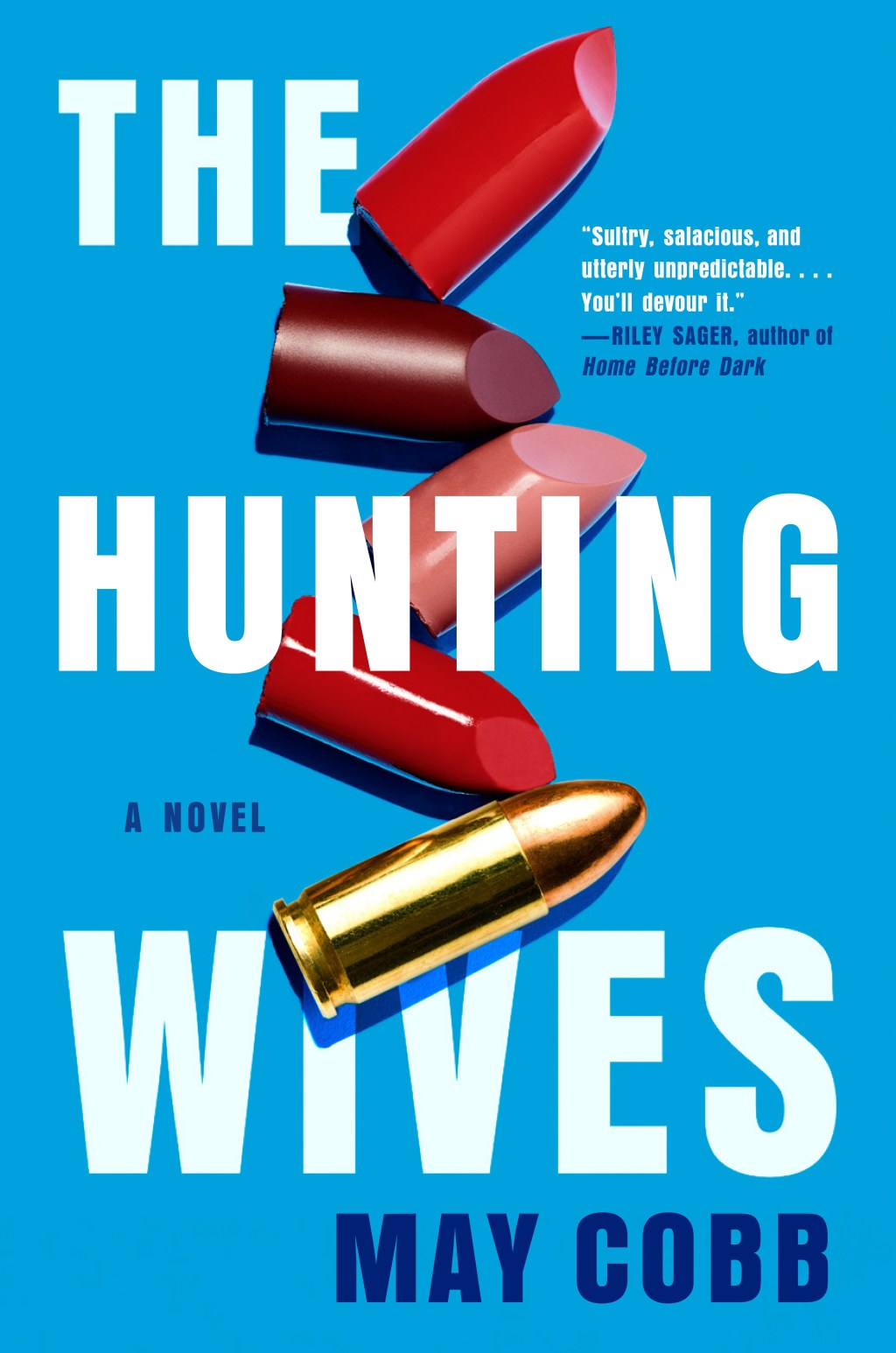
                Southern belles behaving badly is the premise of The Hunting Wives, May Cobb’s new mystery-thriller about an elite circle of wealthy women in a small Texas town. Every clique has its queen bee and in this privileged hunt club it’s the oil-rich, manipulative, and magnetic Margot Banks who leads the group who are doing much more than just shooting skeet. The club’s other activities include downing pitchers of mojitos and martinis, barhopping, and indulging in serious flirtations. The defining membership rule drills down to the basic what happens amongst club members stays within the club. After all, they’re all happily married—wink, wink.

    May Cobb

                Sophie O’Neill, a life-style journalist from Evanston, Illinois, is struggling to adjust to small town life and being a full-time mother when she’s invited to go skeet shooting and then to join the club. At home, she has an adorable young son and an equally adorable—and adoring– husband, but she’s restless and looking for something though she doesn’t know what. It doesn’t take long before she’s adopted the club’s values including Margot’s penchant for handsome, hunky, and much younger men.

                Soon, she’s lying to her husband and coming home way too late. But that’s not the worst of her problems. When a young woman is found dead on the grounds of Margo’s large lakeside second home where the club members meet, Sophie becomes the number one suspect.

                “There women are very complicated and messy,” says Cobb in what is a major understatement.

    Cobb, who lives in Austin, Texas, returned to her home state after graduating with an MA in Literature from San Francisco State University and working in Hollywood for Rob Shelton, a writer and director known for such movies as Bull Durham, Bad Boys II, Tin Cup, and Cobb. She says the inspiration for this novel came about when driving the back roads of Texas and listening to her mother tell a story about her high school days when some rich boys invited her to their hunting club.

    “They sat on their cars and shot little rabbits and I thought this could go so wrong,” says Cobb. Sophie and Cobb have other similar characteristics besides both being young mothers.

    “There’s a fair amount of Sophie in me, the restless part,” she says. “I don’t know if that’s the writer in me but there’s a part of me that wants to move places and do things.”

    But Cobb, realizing that her days of going out to bars and listening to music were over at least for the time being, didn’t join a hunt club but instead started writing. It was a good choice as the book has already received great reviews.

    “I really did have a blast writing the book,” she says. “I wanted to write a story about obsession and how a person’s life goes off the rails.”

    Cobb, who thrived on mysteries like Nancy Drew and the Hardy Boys when growing up, didn’t plot the book but instead let it evolve as she wrote. Sometimes she was surprised by the twists and turns of her story line and what her characters did.

    “Stephen King says that he doesn’t plot as he believes the story is already out there and we just have to tell it,” she says. “I really tried to get into Sophie’s head and feel her boredom and that’s what drove her to make the decisions.”

    Whenever Sophie is faced with making a decision, she opts for the bad. She’s oblivious, at least at first, to all the conniving and lying going on around her until finally realizing, as her marriage breaks down and more people associated with the club are found dead, that she’s being set up to take the fall for the real murderer.

  • Hour of the Witch

    Hour of the Witch

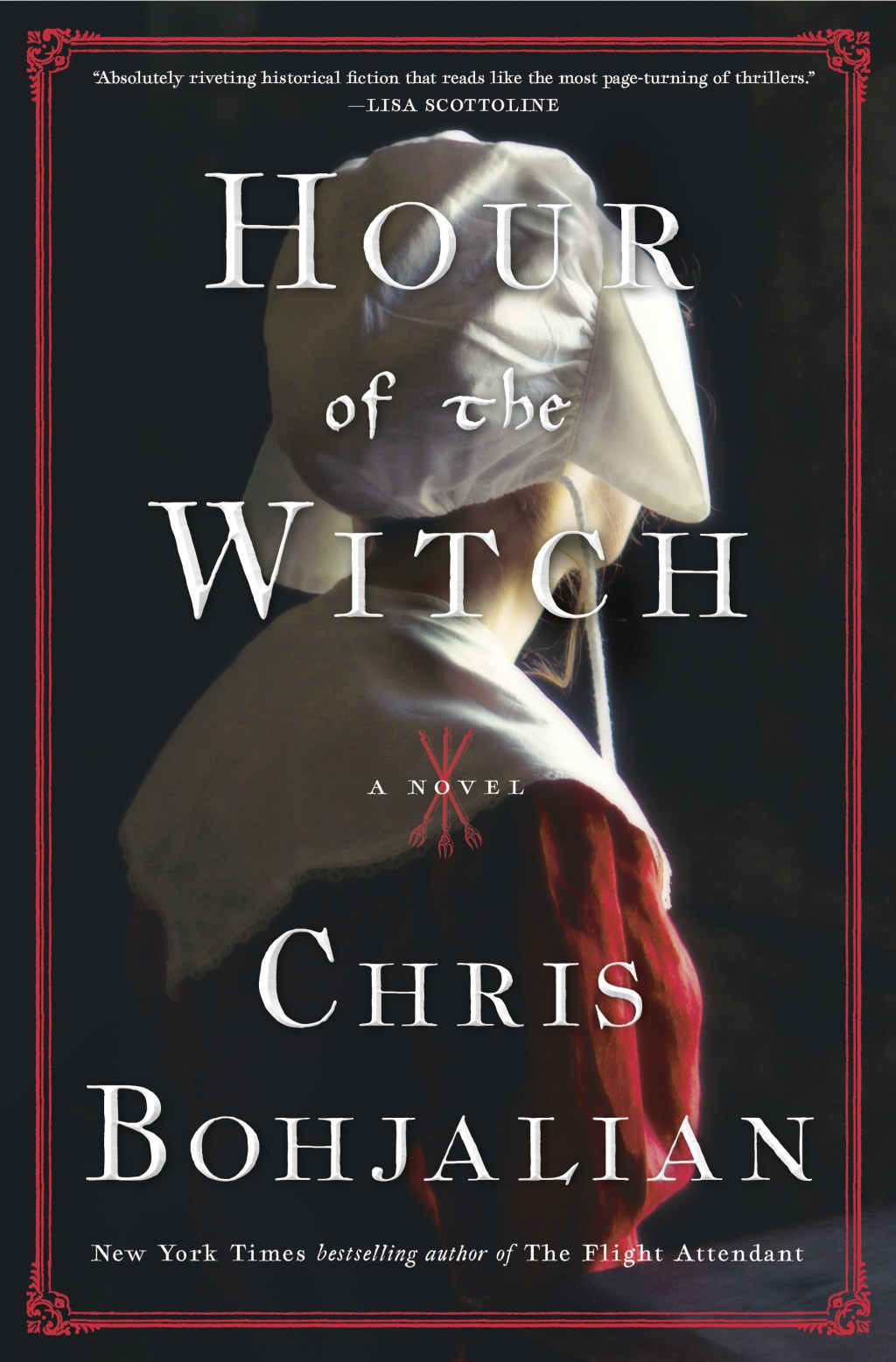
    Bewitchingly beautiful with delft blue eyes, porcelain skin and blonde hair, Mary Deerfield has a handsome, wealthy husband, a lovely house, and bruises on her face that she tries to hide under her linen cap. Thomas, her husband, is almost twice her age and given to drunken rages, particularly as time goes on and Mary does not become pregnant.

    Mary’s parents are respected and well-to-do but can’t protect their daughter. There are no organizations to help battered women, no social workers or psychologists to dispense advice, nor can Mary just leave her home, move to another city and get a job. After all, this is Boston in 1662, and women have few, if any, rights. Ironically, Massachusetts, one of the most liberal states in the 21st century, was back then the kind of place where they burned women as witches.

    Hour of the Witch,Chris Bohjalian’s well-researched and chilling new novel, takes us into a past where, just by trying to exercise her independence and desire to lead her own life, a woman could be castigated as a witch.

    “When we think of New England’s history of hanging people for witchcraft, we beeline straight to Salem in 1692,” said Bohjalian, a New York Times bestselling author of 22 books whose works have been translated into 35 languages and three times made into movies. “But in 1656, the governor of Massachusetts had his own sister-in-law hanged as a witch. And the first real witch hunt was Hartford in 1662 — three full decades before Salem. One thing many of the women executed as witches had in common was that they were smart, opinionated, and viewed as outsiders; sometimes, they saw through the patriarchal hypocrisy that marked a lot of New England Puritanism.”

    Mary puts up with a lot; after all, she has little choice. But when Thomas drives a three-tined fork into her hand, she’s had it and files for divorce. Bohjalian said he was looking for a way into writing a suspense novel about the 17th century and found it when he came across the records of a woman named Nanny Naylor in the 1600s who successfully sued for divorce and won.

    “I was off and running,” he said.

    Bohjalian enjoyed studying Puritan theology at Amherst College, where he graduated Phi Beta Kappa and summa cum laude.

    “Puritans lived with anxiety and dread — just like me,” he said. “Of course, for them, Satan was as real as your neighbor and they fretted constantly over whether they were saved or damned. My anxieties were more of the 1980s ‘Breakfast Club’ sort.

    “I think ‘Hour of the Witch’ is very timely for a novel set in 1662,” he said. “And that was by design. When a magistrate on Boston’s all-male Court of Assistants calls my heroine, Mary Deerfield, ‘a nasty woman,’ I knew the reference would not be lost on my readers. Now, I never want to write polemics, but yes, there is a political undercurrent to the novel that will resonate.”

    Bohjalian said it wasn’t difficult getting into the Puritan mindset.

    “If you’re the sort of person who always questions your motives and has a healthy dollop of self-loathing, it’s actually rather easy,” he said.

    What, of all the research he did, surprised him the most?

    “The fact the Puritans didn’t use forks and drank beer like they were at fraternity parties in 1978,” said Bohjalian. “Their table manners must have been atrocious.”

    This review previously ran in the Times of Northwest Indiana.

  • WIN! By Harlan Coben

    WIN! By Harlan Coben

              He’s incredibly handsome, impeccably dressed, totally urbane, interested only in no-strings relationships, and so amazingly rich that it’s hard to remember when anyone in his family has ever worked besides, that is, practicing their golf swings. Of course, Windsor “Win” Horne Lockwood III is totally obnoxious or would be if he didn’t recognize and make fun of all those traits. He knows he was born into money not for any reason but the wining of the genetic lottery. Ditto for the looks. He doesn’t have to wear—gasp—hoodies but can instead with all that dough attire himself in sartorial splendor. As for the relationships or lack of them, well, Win has issues that started in childhood so you can’t really blame him for that.

    CANNES, FRANCE – APRIL 7: Writer Harlan Coben is photographed for Self Assignment, on April, 2018 in Cannes, France. (Photo by Olivier Vigerie/Contour by Getty Images). (EDITOR’S NOTE: Photo has been digitally retouched).

              What he’s never had before is a mystery novel all about him. But now he does in “Win.” written by Harlan Coben, the bestselling author who has 75 million books in print in 45 languages as well as multiple number of Netflix series including “The Stranger” and “The Woods” with two more The Innocent” and “Gone for Good” out soon.

              Up until now, Win has been a sidekick to Coben’s main character, Myron Bolitar, a sports agent who moonlights—often unintentionally—as a private detective.  Coben never intended to make Win the main character in a novel but that changed.

              “I came up with a story idea involving stolen paintings, a kidnapped heiress, and a wealthy family with buried secrets – and then I thought, ‘Wow, this should be Win’s family and his story to tell’,” says Coben.  “Win is, I hope you agree when you read the book, always a surprise.  He thrives on the unexpected.”

              The kidnapped heiress is Win’s cousin Patricia, who was  abducted by her father’s murderers and held prisoner until she managed to escape. She now is devoted to helping women who are being victimized by men. The stolen paintings include a Vermeer that was taken when Patricia was kidnapped. That painting along with another appear to have been stolen by a former 1960s radical turned recluse who was murdered in his apartment after successfully hiding from authorities for more than a half century.

              But keep in mind, that this is a Coben novel, so nothing is ever as it seems. The plots are devious, and the twists and turns are many. As Win goes on the hunt for the painting he has to deal with other difficulties that arise as well. His proclivity for vigilante justice (he knows, he tell us in one of the many asides he makes to readers, that we may not approve) has led to retaliation by the man’s murderous brothers who almost manage to kill him. The hunt for the Vermeer gets him involved with a treacherous mobster who is determined to find the last remaining radical of the group of six who he believes was responsible for his niece’s death.

              “Win has been Myron’s dangerous, perhaps even sociopathic, sidekick and undoubtedly the most popular character I’ve ever written,” says Coben.  “That said, you don’t have to read a single Myron book to read “Win.”  This is the start of a new series with a whole new hero.”  

              Coben decided to write a novel when he was working in Spain as a tour guide. Did he get the job because he’s fluent in Spanish?. Not exactly. 

              “My grandfather owned the travel agency,” says Coben. “While I was there, I decided to try to write a novel about the experience.  So I did.  And the novel was pretty terrible as most first novels tend to be – pompous, self-absorbed – but then I got the writing bug and started to write what I love – the novel of immersion, the one that you get so caught up in you can’t sleep or put the book down.”

    The above review also appeared in the The Times of Northwest Indiana.

  • Hotel’s Secret History Leads to Danger in the Swiss Alps

    Hotel’s Secret History Leads to Danger in the Swiss Alps

    Once a sanatorium for patients with tuberculosis, Le Sommet is now a posh hotel in the Swiss Alps with soaring glass windows, minimalist interior and relics of its past, when patients were sent most likely to die. Beautiful, it’s also isolated — miles away from the nearest town and accessible only by helicopter or a winding mountain road.

    Sarah Pearse. Photo credit Rosie Parsons Photography.

    It’s not exactly the perfect place for Elin Warren to reconnect with her brother, Isaac, and his fiancé, Laure. Elin is dealing with a multitude of stresses. She is on leave from her job as a police detective, her boyfriend Will who is accompanying her is pressuring for a commitment, the human resources director wants a commitment from her to return to work, and, worst of all, she believes Isaac may have killed her young brother years ago in one of his murderous rages.

    “The Sanatorium” is Sarah Pearse’s first novel and it’s a whopper — though a slight warning: reading it while the snow is falling outside your window just adds to the mounting dread. As avalanches and snowstorms make it impossible for help to arrive at Le Sommet, Elin races to solve the crime as one by one people, including her former best friend and Isaac’s fiancée are being brutally dispatched wearing treatment masks from when the place was a sanitarium. It calls for all of Elin’s strength, as she remains unsure and unsettled about her past and her future.

    The secrets at Le Sommet are complex and many. Elin wonders who she can trust among the secret rooms high up in the building, almost face-to-face with the mountain walls inside a deep tunnel where Elin discovers a body and is almost locked underground with the corpse. And there is her own relationship with Will, whom she loves but feels she is losing because of her own uncertainties. Will she be able, she wonders, to overcome her overwhelming doubts about herself and move forward, or will she become the next victim of a vicious killer?

    Pearse, who describes herself as an avid reader, moved to Switzerland in her early 20s and fell in love with the charming Swiss Alpine town of Crans Montana and the mountains around it both of which became the setting for her novel.

    “I’m always struck by the drama of the mountains,” she said in a Zoom call from her home in South Devon where she lives with her husband and two daughters.

    That interest — as well as reading about the sanatoriums that existed before effective treaments tuberculosis existed, and it was thought that the clean, crisp mountain air, would help — form the plot of her novel.

    “I read books about that time and there were photos of half-naked kids in the snow because they thought that would help heal their lungs,” Pearse said. “I also wanted to write a book about family dynamics.”

    Reese Witherspoon, who selected “The Sanatorium” as a Reese’s Book Club Pick describes it as “An eerie, atmospheric novel that had me completely on the edge of my seat.”

    This review previously ran in the Northwest Indiana Times: BOOKS: Former Alpine sanatorium provides setting for ‘eerie, atmospheric novel’ | Books & Literature | nwitimes.com