Category: mystery

  • The Lost Night by Andrea Bartz

    The Lost Night by Andrea Bartz

                  In Andrea Bartz’s mystery novel, The Lost Night, Lindsay Bach believes she remembers the night her once-best friend Edie committed suicide. It’s seared into her brain. Or so she thinks. Over dinner, a long ago friend who has just moved back to New York suggests that she wasn’t with the group like she believes. Could that be true? Getting a friend to hack into her old email account, Bach backtracks a decade ago to when she and her group of friends were post graduates starting jobs, consuming too much alcohol, partying too hard and falling in love—often.

    (Photo by Kate Lord)

                  With each new revelation about that time and her part in the days leading up to Edie’s death, Bach has to employ the skills she uses to fact check magazine articles for her job to do the same in her life. The questions are many, but the most important ones are did the captivating and beautiful Edie really commit suicide or was she murdered? And did Bach have something to do with her death that she can no longer remember.

                  Bartz, who earned her master’s degree at Northwestern University and the author of Stuff Hipsters Hate, her blog turned book, says she wanted to write a book like those she likes to read—tomes by female mystery writers like Tana French, Gillian Flynn and Jessica Knoll. For inspiration, she turned to a time in her life—New York City in 2009. Like her favorite writers, the novel struck a note and even before the book was published at the end of February, it had already been optioned by Cartel Entertainment as a limited series with actress Mila Kunis’ Orchard Farm set to produce.

                  “It was a crazy time and we were partying while the world was burning,” she says of her time as a 23-year-old.   “I thought of this time and how bizarre it all was and then interlaid it with a mysterious death. It opens up a certain subculture that I hope is interesting to readers, it certainly was introspective for me.”

                  The novel, atmospheric, intense and intriguing, reflects an interest in psychology and memory that has always interested Bartz—and Bach, the character Bartz describes as being most like her. In an early chapter, Bartz tells a lover how drunk blackouts mean that the incidents that occurred never were recorded in our memories. They don’t exist and yet they happened.

                  “We’ve all had those incidents where someone will describe an event and say you were there and you don’t remember it,” says Bartz, noting there’s something both creepy and disorienting about how there’s no hard and fast truth just different memories

                  So, it is with Bach, who is shaken out of her of complacent lifestyle by having to grapple with the truth—as elusive as it is.        

    Ifyougo:

    What: Author Andrea Bartz will be answering questions about her new novel The Lost Night, and magician Jeanette Andrews will be wowing the audience with a short performance.

    When: Wednesday, March 13 at 7-9 pm

    Where: The Book Cellar, 4736-38 N Lincoln Ave, Chicago, IL

    Cost: Free

    FYI: (773) 293-2665; words@bookcellarinc.com

  • A Vanishing Man: Charles Finch’s Latest Victorian Mystery
    A Vanishing Man: Charles Finch’s Latest Victorian Mystery

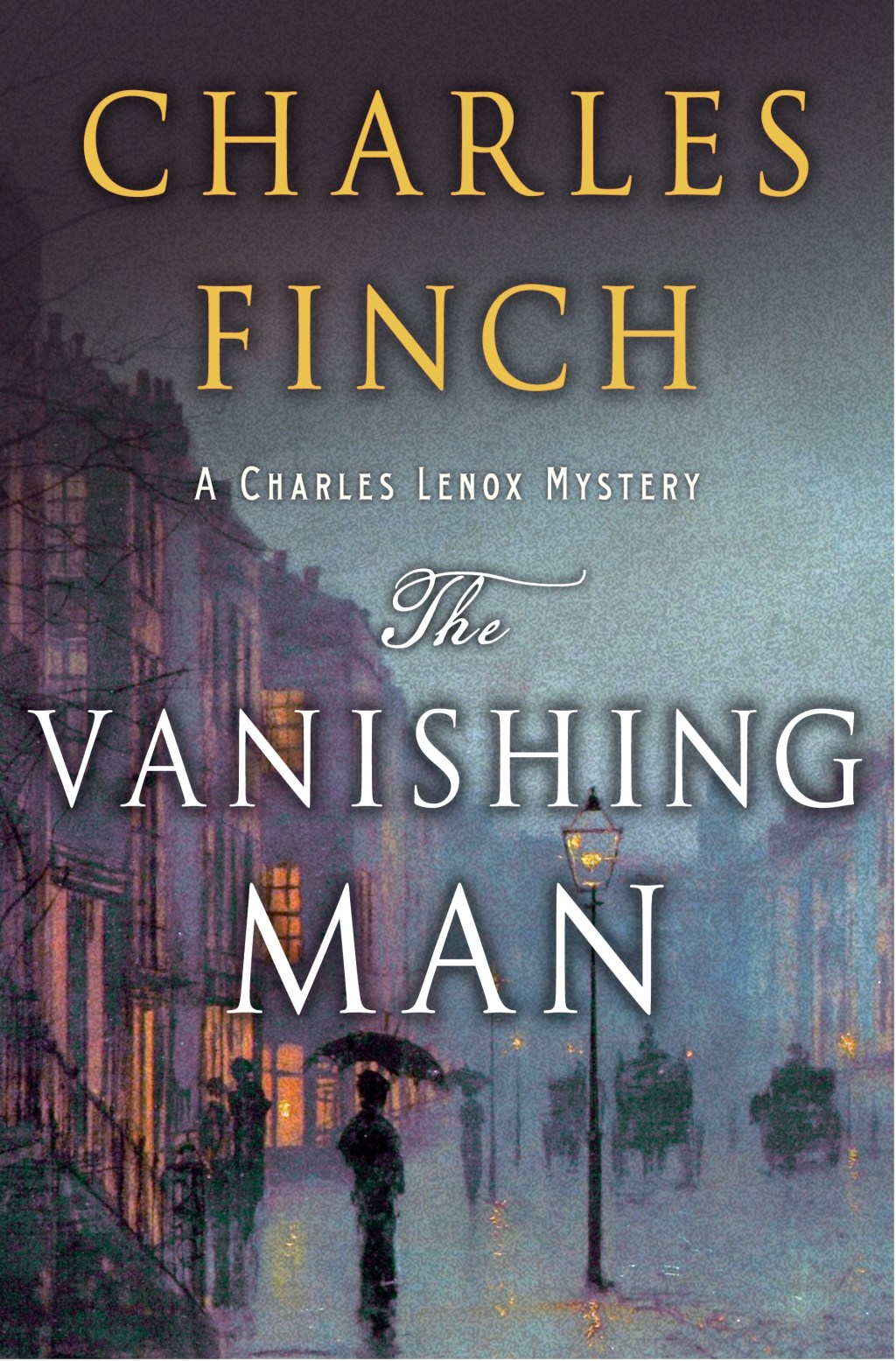
                  Charles Lenox is a well-educated, well-connected young man, but even he, when called to the Duke of Dorset’s home after a painting is found to have been stolen, knows his place. After all, even among the aristocracy, a Duke is way above Lenox, particularly now that he has taken to detecting (after all, what well-bred man works?). But status doesn’t deter Lenox from carrying out his investigation—even when it involves standing up to the Duke and pursuing the revelation of a long-held family secret that leads to murder.Finch, Charles_CREDIT Timothy Greenfield-Sanders

                  Lenox is the hero of a series of Victorian era mysteries involving Charles Lenox written by bestselling author Charles Finch who though he calls Chicago his home, seems mainly to live in London during the mid-to-late 1800s. His newest Lenox novel, The Vanishing Man (Minotaur 2019; $26.99) is the second in his three-series prequel showing the detective when he was young and just starting off. The prequels take place before the 11 other Lenox mysteries Finch has written.

                  Interestingly, Finch has been writing his novels for so long, he says he’s never had a real job. He also has a philosophy of writing that goes against what’s commonly recommended.

                  “I think you should write what you love,” he says. “Not what you know or see. And I love that period of history.”

                  He must as he spends a lot of time in a different country and different century. Though Finch says he’s a hypochondriac and would be afraid to really be a part of a time when even a simple infection could kill–penicillin after all is still over half a century from being discovered.

                  “But I would love to walk down the streets and get a feeling for what it was like at that time,” he says. “I’d like to really immerse myself.”

                  Instead Finch delves deep into research and history.

                  “This book was especially difficult to peel myself away from,” he says.

                   He’s also an avid reader of Victorian novels (Finch lists Anthony Trollope, Sherlock Holmes and George Elliott as among his favorites), Finch lived in England for almost four years so though he can’t go back to Victorian times, he at least is very familiar with the country. He says he chose his latest plot because he wanted to wade into Shakespeare and examine some of the mysteries and myths surrounding the great playwright.

                  “Writing about Shakespeare gave me a chance to look into every old apocryphal story about him and his times, and in the end– without giving too much away–I discovered one of the most plausible—and unproven–theories about his life,” he says. “It’s one which is directly connected to the crime Lenox is solving in 1851.”

  • Who Murdered the Supreme Court Candidate: Mental State, a mystery novel by Law Professor M. Todd Henderson

    Who Murdered the Supreme Court Candidate: Mental State, a mystery novel by Law Professor M. Todd Henderson

    The murder of a good friend and fellow law professor inspired M. Todd Henderson to write Mental State (Down and Out Books 2018; $17.95), his first mystery novel.

    “He was a professor at Florida State University and had just dropped of his kids and was pulling out of the driveway when he was shot,” says Henderson who teaches at the University of Chicago’s law school. It turns out the friend, Dan Martel, was murdered by two hitmen hired by his ex-wife’s family to gain full custody of their children. Henderson considers himself a storyteller and using those skills he channeled his feelings into an immensely readable mystery involving the deadly political machinations put in place to hide the past of a sexual predator in order to secure a place on the  Supreme Court. It’s an interesting premise and certainly timely though this book was written well before the Brett Kavanaugh nomination and besides, Henderson’s judge is liberal.

    “My interest in law at a policy level is about power and what people are willing to do to achieve their ends,” says Henderson.

    photo-m-todd-henderson-1000x1400px-300dpi (1)

    In Mental State, Professor Alex Johnson, a professor at a renowned law school on Chicago’s southside (think University of Chicago) is murdered before he can reveal that the man being considered for the Supreme Court sexually abused him when they were both young. The death is first thought to be a suicide but FBI agent Royce Johnson, the victim’s brother, doesn’t believe his self-centered, narcissistic sibling would do such a thing. Once Royce proves it was murder, the next frame-up goes into place (the bad guys are good at backup plans) pinpointing the murder on one of the professor’s law students. But Johnson’s inability to quit trying to solve the crime soon puts himself on the wrong side of the law,  his comrades at the FBI and an array of federal officials determined to make sure the president’s pick for the highest court in the land goes through without a hitch. If that means a few murders and ruined lives to achieve this, well, it’s for the greater good.

    Ifyougo:

    What: M. Todd Henderson discusses “Mental State.” He will be joined in conversation by Jeff Ruby. A Q&A and signing will follow the discussion.

    When: Thursday, October 18, 2018 – 6:00pm – 7:00pm

    Where: 57th Street Books, 1301 E 57th St., Chicago, IL

    Cost: Free

    FYI: (773) 752-4381; events@semcoop.com

  • Hope Never Dies: A Obama-Biden Mystery

    Hope Never Dies: A Obama-Biden Mystery

    Watching news clips of Barack Obama windsurfing off of Richard Branson’s private island, kayaking with Justin Trudeau and BASE jumping in Hong Kong with Bradley Cooper while he’s grouting tile in his master bathroom and playing darts on a board his daughter gave him years ago, Joe Biden, feeling left-out (he doesn’t even have Secret Service protection anymore), grumpily wonders why the 44th president hasn’t called him in the months since Donald Trump took office.  Biden’s grousing changes quickly when Obama appears in the woods behind his house late one night, coolly smoking a cigarette and delivering the terrible news that Finn Donnelly, the Amtrak conductor that Biden befriended as he traveled back and forth between Delaware to Washington D.C. has been murdered. On his body, Barack says, was a printout map of Biden’s home. Is someone targeting the vice-president?Shaffer, Andrew_Courtesy Andrew Shaffer

    And so the bromance rekindles as the ex-president and ex-vice are back working as a team as they race to solve the crime in Andrew Shaffer’s Hope Never Dies (Quirk Books 2018; $14.99). The title is a parody of the James Bond movie “Tomorrow Never Dies”  and the dime store detective novel-like-cover  depicts Obama, the wind whipping his red tie behind him, standing in the passenger seat of a Thunderbird convertible pointing the way as a determined Biden drives but the story itself isn’t farce. Shaffer, who is a New York Times best seller author, says that though the action is over-the-top at times—Obama roughing up a biker; Biden head-butting a villain and getting thrown off a fast moving train to name a few—he resisted getting too campy.

    “The book is more than a one-note joke,” says Shaffer.

    Growing up in Iowa, Shaffer enrolled in the University of Iowa’s noted creative writing program.

    “They teach serious fiction there and you’re reading a lot of serious authors like Phillip Roth,” he says.  “So I’m writing like I’m in my 60s, divorced and living in the suburbs. I was only 21 and I thought what am I doing? I wanted to write the type of fiction I like to read such as authors like Elmore Leonard, Donald Westlake and Lawrence Block.”

    Shaffer had been thinking about writing a mystery with Joe Biden as the main character for years.

    “I thought about maybe making it a cozy type of mystery,” he says. “But I got the idea for this when they’d been out of office for a week or so. I wrote a note to my agent asking how about a Biden-Obama mystery and she said really? I said yes.”

    Inspired by the 1980s buddy cop movies he liked such as “Tango & Cash,” Shaffer says that the mystery isn’t just about Biden’s love of ice cream but instead covers serious topics such as the opioid epidemic. Since the book’s recent release on July 18, it’s been selected as an Amazon Best Book of the Month: Thrillers July 2018 and an Official Summer Read of Publishers Weekly.  He is already working on the next book in the series, Hope Rides Again.

    “It’s a legacy in ways,” Shaffer says about the series. “”It’s for people, no matter what part of the political spectrum they’re on, need some kind of hope.”

    Ifyougo:

    What: Book signing with Andrew Shaffer.

    When: Sunday, August 19 at 2:00 p.m.

    Where: Anderson’s Bookshop, 123 W. Jefferson Ave., Naperville, IL.

    FYI: (630) 355-2665; andersonsbookshop.com


  • The Death of Mrs. Westaway: A New Psychological Thriller by Ruth Ware

    The Death of Mrs. Westaway: A New Psychological Thriller by Ruth Ware

    Tarot cards, a threatening stranger and a mysterious will propel Hal, a young vulnerable orphan to spend her remaining cash for a railway ticket to the funeral of a woman who solicitors believe is her grandmother. Hal, who makes her precarious living reading Tarot cards, a skill she learned from her mother who was killed in a hit-and-run a few years earlier, thinks she knows better. But still, when she receives a letter indicating she is an heir to the moneyed estate, she decides to see if the same skills she uses to tell fortunes can help obtain part of her “inheritance.”

    Atmospheric and compelling, The Death of Mrs. Westaway (Gallery/Scout Press $26.99; 2018), is the fourth novel of English author Ruth Ware, author of the best- selling The Woman in Cabin 10 and The Lying Game.

    Ware, who is on a book tour throughout the  United States, took time out to answer the following questions.Author Photo - Ruth Ware c Gemma Day

    What inspired you to write The Death of Mrs. Westaway?

    I can’t put my finger on one single inspiration, but probably the key thing that defines the book for me is Hal. Having written three books about women who stumble into events more or less through no fault of their own, I wanted to write a very different kind of main character this time round – one who brings the events of the novel down upon themselves. Hal sets out to commit a crime – and in doing so sets of a nightmarish set of dominoes. That was a very conscious choice on my part!

    Were you familiar with Tarot cards before you wrote this book or did you have to learn about them? And why did you decide to make them part of the story? In that vein, have you always had an interest in fortune telling?

    I’m super skeptical and don’t really believe in any kind of supernatural forces so I had never had my cards read, though of course I was familiar with some of the images on tarot cards and found them very beautiful and inspiring as visual images. I had to research the meanings from scratch as I knew nothing about fortune telling, or the different kinds of tarot spreads. I really enjoyed the research though and found myself quite swept up in the different meanings. I suppose I made them part of the story because I wanted Hal to be someone who was practiced in reading people and telling them what they wanted to hear. So I tried to give her a job that fitted with that and was in some way a preparation. Making her a cynical tarot reader – one who doesn’t believe in the power of the cards but uses her skills to deceive – seemed fitting.

    Your books create such a sense of foreboding–do you ever get caught up in that and experience those feelings?

    Of course! Writing is like reading – you get just as caught up in the atmosphere you’re creating. But I find it’s quite hard to scare myself when I’m writing, because I know when the jump scares are going to come. I get immersed in the atmosphere, but the sense of terror I get sometimes reading other writers’ work just isn’t there, because I’m in control.

    Do you plot your novels and your characters or do they evolve?

    A mix of the two – I usually have a skeleton structure in my head, and I think about the characters for a long time before I start writing, so they are usually quite evolved by the time I put pen to paper. But I write very little down – they exist mainly in my head so they tend to be quite fluid and evolve as things develop on the page.

    What writers have influenced you?

    For this book, particularly Daphne du Maurier. I love her work.

    What’s next for you? 

    Another book of course! I’m writing it now, but it’s too early to tell you what it’s about…

    Ifyougo:

    What: Ruth Ware

    When: Monday, June 4th at 7 p.m.

    Where: Anderson’s Bookshop, 26 S La Grange Rd., La Grange, IL

    FYI: This event is free and open to the public. To join the signing line, please purchase the author’s latest book, The Death of Mrs. Westaway, from Anderson’s Bookshop. To purchase please stop into or call Anderson’s Bookshop La Grange (708) 582-6353.


  • Michael Koryta in Chicago to Talk About His New Book

    Michael Koryta in Chicago to Talk About His New Book

    Michael Koryta, the New York Times-bestselling author of 12 suspense novels of including Those Who Wish Me Dead and Rise the Dark talks with writer Jane Simon Ammeson about his just released “How It Happened” (Little Brown 2018; $27).Michael Koryta

    “How It Happened” starts off with the so chilling confession and then suddenly we’re wondering okay, was it true? Is your book based on one specific case or did statistics from Project Innocence help shape the story for you or what shaped the story in your mind?

    The confession in the book was inspired by a false confession that was given during the investigation of the disappearance and murder of Jill Behrman, who was a 19-year-old Indiana University freshman when she vanished on a bike ride on a beautiful spring morning in a small college town. Her bike was found near my childhood home, and I was 17 when that happened, and then I was 19 when I began to write some police beat articles about the case for the local newspaper. There was a search going on at that time based on a confession. Those memories are profound and tragic to me.

    “How It Happened” is complex just like all your novels, do you plot everything in advance or does it more just flow? 

    I don’t know how to outline, but I do know how to rewrite! I do many, many drafts.

    And do you ever find yourself caught up in the feel of it all so that you’re where your characters are and experiencing what they’re experiencing rather than sitting at a desk writing about it? And do your characters take on a life of their own or are you in control of them?

    If you don’t feel caught up in it, then it won’t be any good. If the desk doesn’t vanish, and if you don’t disappear into the story to join your characters, then how will the reader be able to have that experience? I don’t want to have any control over my characters so much as I want them to explain the story to me, and for them to surprise me. That’s the joy of it.

    You’re books are so atmospheric, your characters haunted in many ways and there’s often a combination of the natural—caves, mountains, rivers, now Maine and the ghostly or the unknown. I’m familiar with Bloomington as that’s where I went to Indiana University and I love French Lick/West Baden, those marvelously restored early 20th century resorts in Southern Indiana. All this makes me  curious about how you look at these places and what makes them so haunting as if they’re characters themselves? And how/why did you choose Maine for this book?

    I respond to places that have a combination of visual and emotional impact. Sometimes, that might be in an eerie or creepy way — the surreal experience of walking into another time in the West Baden Springs Hotel, or riding a boat on an underground river. In other cases, it is found in the collision of beauty and danger. This would be the Maine coast to me. I love a place that can be astonishingly beautiful in one moment, and turn threatening in the next. It allows me to bring the setting to life like a character.

    Did you ever find  a book written by your female relative who was a published author back in the 1800s? What was her name?

    I still haven’t been able to track one down, sadly. Jane Parker was her name. She wrote novels in the late 1800s, and was apparently well-regarded in her era, which is even more special because she was a woman writing in an age when not many women had the chance, let alone earned that critical respect. I am afraid none of her books have survived, but I will remain on the hunt!   

    Will we ever get another novel set in French Lick and West Baden like “So Cold the River?

    I think you will! I finally got the film rights back on SO COLD THE RIVER after it went stagnant with the studio that optioned it originally, and I am exploring ways to get that done with an independent filmmaker, and as I work on that, I keep thinking of new ideas in that area, and with those characters. I am very drawn to that area, and to the stories that abound there. I am feeling the call down there again, louder and louder.

    Ifyougo:

    What: Michael Koryta book signing

    When: Tuesday, May 22 at 7 p.m.

    Where: Anderson’s Bookshop Naperville, 123 W Jefferson Ave., Naperville, IL

    Cost: This event is free and open to the public.

    FYI: To join the signing line, please purchase the author’s latest book, How It Happened, from Anderson’s Bookshop. To purchase please stop into or call Anderson’s Bookshop Naperville (630) 355-2665 or order online at andersonsbookshop.com/event/michael-koryta-0


  • The Girl Who Takes an Eye for an Eye

    The Girl Who Takes an Eye for an Eye

    Lisbeth Salander, computer hacker extraordinaire, social misfit and martial arts expert, is back in The Girl Who Takes an Eye for an Eye.  The fifth in the Stieg Larsson’s Millennium series, Salander sentenced to prison for several months after she protects an autistic child in her typical law-breaking but righteous way. But even prison bars can’t stop Salander from assisting muckraking journalist Mikael Blomkvist as he investigates The Registry, a secret group of doctors conducting illegal experiments on twins.  It’s all personal for Salander, who has an evil twin named Camilla.

    The investigation is also a chance for Salander to learn more about her abusive past. But there are, as always, barriers in the way. A prison gang leader has put a hit order on her, the Russian mafia and religious fundamentalists are after her and Camilla  is back and more treacherous.

    Fans of The Girl with the Dragon Tattoo, the first novel in the Millennium series started by Stieg Larsson and, after his death continued by David Lagercrantz, will be happy that Salander and Blomkvist have teamed up again in this thriller set in Sweden.

    For Lagercrantz, a well-established journalist and novelist, the chance to take over the Millennium series was an exciting opportunity. It was also rather daunting as Larsson’s Millennium trilogy sold more than 80 million copies worldwide.

    “If I have a gift it is probably to have the ability to write in many ways,” says Lagercrantz. “My sister who is an actor sometimes calls me an actor-writer, I go in to roles. My journalism past helped me a lot. I always say if you want to write good journalism use literary techniques, and if you want to write good fiction use journalistic research. Of course, it helped me to understand the life of Michael Blomkvist. In my heart, I am always a reporter.”

    To successfully channel the characters Larsson created, Lagercrantz read the original three books over and over and thought about the characters’ universe day and night.

    “My key to writing the book was passion,” he says. “It was the thrill of my life.”

    That passion showed. The Girl in the Spider Web, his first book for the series, was a best seller.

    Beyond giving his readers an enjoyable story, Lagercrantz wants to help people become more tolerant and understanding than we currently are.

    “It is so sad to see the society getting more and more divided,” he says. “Hate is obviously growing, thanks to terrible leaders, and if I can bring just some of us a little tiny bit closer I would be so happy.”


  • Are You Sleeping by Kathleen Barber

    Kathleen Barber’s thriller Are You Sleeping? (Gallery Books 2017; $26) tells the story of  Josie Buhrman who thought she had put the trauma of her early life behind her, when a hit investigative podcast about her father’s murder brings the past back, compelling her return to the small Illinois town of Elm Park where she grew up.

    “The main storyline of Are You Sleeping was inspired by true crime podcasts like ‘Serial,’ says Barber, a graduate from the University of Illinois and Northwestern University School of Law who previously practiced bankruptcy law at large firms in Chicago and New York

    .  “I was utterly captivated with the first season of ‘Serial’ when I listened to it in the fall of 2014– so much so that I spent a lot of time reading about the podcast online and visiting forums where the underlying case was discussed. At one point, I caught myself doing an online image search for some of the people involved in the case, and I realized that I had perhaps crossed a line from interested to inappropriately obsessed. It was then that I started thinking about how the popularity of the podcast must feel to the people on the other side of the case–the people who I was image-searching for, the people who were interviewed for the podcast, and, most of all, the family of the victim. That was what I was thinking about when I started writing Are You Sleeping–what it’s like to be on the other side of a case that’s moved into the realm of pop culture.”

    Barber, who was born and raised in Galesburg, Illinois, says that she wants to tell stories about women from the Midwest and used her hometown as the setting for her book.

    “When I was writing Are You Sleeping, I could envision the characters walking down certain real-life streets in Galesburg and drinking in existing bars,” says Barber. “Since so much of the rest of the book is created from whole cloth, setting the book in a familiar location really helped me ground the story in reality.”

    If you go:

    What: Talk and book signing

    When: Thursday, August 10 at 6:30 p.m.

    Where: City Lit Books, 2523 N. Kedzie Blvd., Chicago, IL

    Cost: Free

    FYI: (773) 235-2523; citylitbooks.com

  • Hauntings of the Underground Railroad: Ghosts of the Midwest

    Before the Civil War, a network of secret routes and safe houses crisscrossed the Midwest to help African Americans travel north to escape slavery. Although many slaves were able to escape to the safety of Canada, others met untimely deaths on the treacherous journey—and some of these unfortunates still linger, unable to rest in peace.

    The author in front of an Underground Railroad stop said to be haunted.

    In Hauntings of the Underground Railroad: Ghosts of the Midwest, Jane Simon Ammeson investigates unforgettable and chilling tales of these restless ghosts that still walk the night. This unique collection includes true and gruesome stories, like the story of a lost toddler who wanders the woods near the Story Inn, eternally searching for the mother torn from him by slave hunters, or the tale of the Hannah House, where an overturned oil lamp sparked a fire that trapped slaves hiding in the basement and burned them alive. Brave visitors who visit the house, which is now a bed and breakfast, claim they can still hear voices moaning and crying from the basement.

    Ammeson also includes incredible true stories of daring escapes and close calls on the Underground Railroad. A fascinating and spine-tingling glimpse into our past, Hauntings of the Underground Railroad will keep you up all night.

  • Journalist Fiona Barton keeps suspense going with ‘The Child’

    As a journalist, Fiona Barton investigated crimes, attended trials and then wrote and filed her stories. But as the author of the just-released “The Child” and her best-selling novel, “The Widow,” both psychological thrillers, Barton had to switch gears.

    “It sounds ridiculous, but I had to stop being a reporter in order to write a novel,” Barton says. “I knew how to write — I’d been doing it for a living for more than 30 years, but what I was writing came from other people. Journalism is listening, probing, testing other people’s words and telling a story concisely and often under 500 words,” she says.

    “Writing ‘The Widow’ meant unlearning a lot of things. It was incredibly hard at first and I got to 10,000 words and thought I had nothing left to say, but there was a moment where I gave myself permission to fully invent. It was a real crunching of gears but wonderfully liberating to be free to create my own world in both books.”

    Barton’s done it again with “The Child,” which brings back Kate Waters, the newspaper journalist who first appeared in “The Widow.” Wanting to impress her boss, Kate follows up on the discovery of a small skeleton in a recently demolished building. Barton says that the inspiration for the story came from exactly the same place that Kate finds it in the book.“As a journalist, I’m always looking for stories,” she says. “I tore interesting items out of newspapers and magazines — my hairdresser hated me — and shoved them in my handbag for later. They were often just a few lines in a story but it was the unanswered questions that drew me in. One of the scraps of paper lurking in the bottom of my bag many years ago was about the discovery of a baby’s remains. Like Kate, I wanted to know who the infant was? Who had secretly buried it? And who else knew?”