Category: Book signings

  • Brett Paesel’s Everything is Just Fine: Life for a Beverly Hills Soccer Team
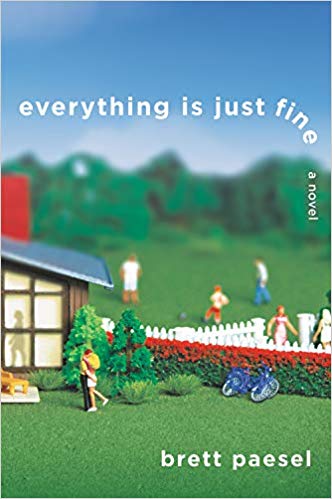
    Brett Paesel’s Everything is Just Fine: Life for a Beverly Hills Soccer Team

    Everything is Just Fine, a social satire about families on a Beverly Hills soccer team for 10-year-old boys told partially in e-mails, explores the secrets and failings of the parents as they connect with each other throughout the season’s wins and losses.

    Written by Brett Paesel, who also authored the bestselling Mommies Who Drink: Sex, Drugs, and Other Distant Memories of an Ordinary Mom, the book could have been full of stock characters. We have the divorcee who drinks too much and spends way too much time flirting with other women’s husbands, the vaguely zoned-out housewife who keeps telling herself she is really, really grateful for what she has until she lands in bed with the sexy Latin soccer star who is helping coach the team and Coach Randy, who after losing his job, hides out at the library so his wife doesn’t know he’s unemployed.

    But Paesel goes beyond the stereotypes and we come to know and care about these people as we follow what they’re dealing with in their lives.

    “Because of an over-parenting snafu–I wanted to get my son on his friend’s team–I ended up in the Beverly Hills soccer league,” says Paesel about what inspired her to write her book. “My neighborhood league would have been much more modest. Suddenly, I was in a world that was rarified. The fields are lovely and have shade, parents lived in McMansions and some of them even owned restaurants. My son’s team played Beckham’s kid’s team. Paparazzi regularly staked out the games. Will Farrell was a coach at one point. My son wasn’t a gifted player and he landed on a team that really didn’t have a super-strong athlete, but the coach was hugely enthusiastic, and they became the little team that could. The coach sent long e-mails giving shout-outs to each player. I remember he called my son a Lion which he wasn’t – he was deathly afraid of the ball. I started out wondering what was going on with the coach because he was so zealous and seemed to have lots of time to craft these e-mails.”

    At first Paesel thought she was writing a short story parody of the email chain she was reading but soon started feeling compassion for her characters.

    “I wanted to know them better,” says Paesel who is also an actress and producer. “They are all very flawed people, but I was moved by their intense desire to connect – even when they fell disastrously short.”

    Though she initially based most of her characters on people she knew, Paesel says they quickly became their own people and so now, when she sees them in her mind, she no longer sees the real people they were based on.

    Does she worry that someone will know themselves when reading her book?

    “People never recognize themselves in my writing for some reason,” says Paesel. “I found this to be true in my memoir writing as well.”

                  Besides a good read and a lot of laughs, Paesel hopes that people put her book down feeling a sense of belonging to this great human drama we get to live through.

    “The characters in my book get too caught up in things that are simply unimportant and won’t get them the happiness that they are desperately seeking,” she says. “At the heart of my book is an exhortation to keep paying attention to what’s really important. Which is always – very simply – love.”

    Ifyougo:

    What: Brett Paesel has several book events in Chicago.

    Monday, April 15 at 8 pm. Brett Paesel at Louder Than A Mom, 3855 N, Lincoln Ave., Chicago, IL. louderthanamom@gmail.com; louderthanamom.com

    Wednesday, April 17 at 6 pm. Brett Paesel at The Annoyance Theatre & Bar, 851 W. Belmont, Chicago, IL. 773-697-9693; theannoyance.com

    Thursday, April 18 7 pm. The Book Cellar, 4736-38 N Lincoln Ave Chicago, IL. 773-293-2665; bookcellarinc.com

  • Abby Wambach Shows Women How to Change the Game in Wolfpack

    Abby Wambach Shows Women How to Change the Game in Wolfpack

    Abby Wambach, the two-time Olympic gold medalist, FIFA World Cup champion and international soccer’s all-time leading scorer, is taking on a new game, that of empowering women—asking them not only to be thankful for what they have but also to demand what they deserve. And that’s the premise of her new book, Wolfpack: How to Come Together, Unleash Our Power, and Change the Game (Celadon 2019; $15.82 Amazon price).

    To create a winning championship team, Wambach, who was co-captain, helped forage the 2015 Women’s World Cup Champion Team into a wolfpack of winners. Now she’d like women to ignore the old rules that help keep them down and instead change the game.

    Believing that there has never been a more important moment for women, she talks about the “Power of the Wolf” and the “Strength of the Pack,” and her book is rousing call to women outside of the sports world but employing the techniques she used to create a championship team.

    “We are the wolf,” she said in her keynote address to the Class of 2018 at Barnard’s 126th Commencement on Wednesday, May 16, 2018 at Radio City Music Hall and her book reflects that stirring speech. Her concepts of “Power of their Wolf” and the “Strength of their Pack” is her way to be a catalyst for overcoming the obstacles that women face. As an example, she talks about the pay gap where women in the U.S. still earn only 80 cents on the dollar compared to men and black women make only 63 cents, while Latinas make 54 cents.

    “What we need to talk about more is the aggregate and compounding effects of the pay gap on women’s lives,” she says.  “Over time, the pay gap means women are able to invest less and save less so they have to work longer. When we talk about what the pay gap costs us, let’s be clear. It costs us our very lives. That’s why if we keep playing by the old rules, we will never change game.”

    Wambach offers some rules to overcome being Little Red Riding Hood and instead become “the wolf.”

    · Make failure your fuel: Transform failure to wisdom and power.

    · Lead from the bench: Lead from wherever you are.

    · Champion each other: Claim each woman’s victory as your own.

    · Demand the effing ball: Don’t ask permission: take what you’ve earned.

    Ifyougo:

    What: Celebrate the release of Abby Wambach’s book Wolfpack

    When: Thursday, April 11 at 7 pm

    Where: Community Christian Church, 1635 Emerson Lane, Naperville

    Cost: Tickets cost $29.97 (with service fee) and include a pre-signed copy of the new book and admission for one person. You will receive your book when you arrive at the event. wolfpackandersons.brownpapertickets.com

    FYI: For more information, call Anderson’s Bookshops, 630-355-2665

  • An American Agent: A Maisie Dobbs Novel
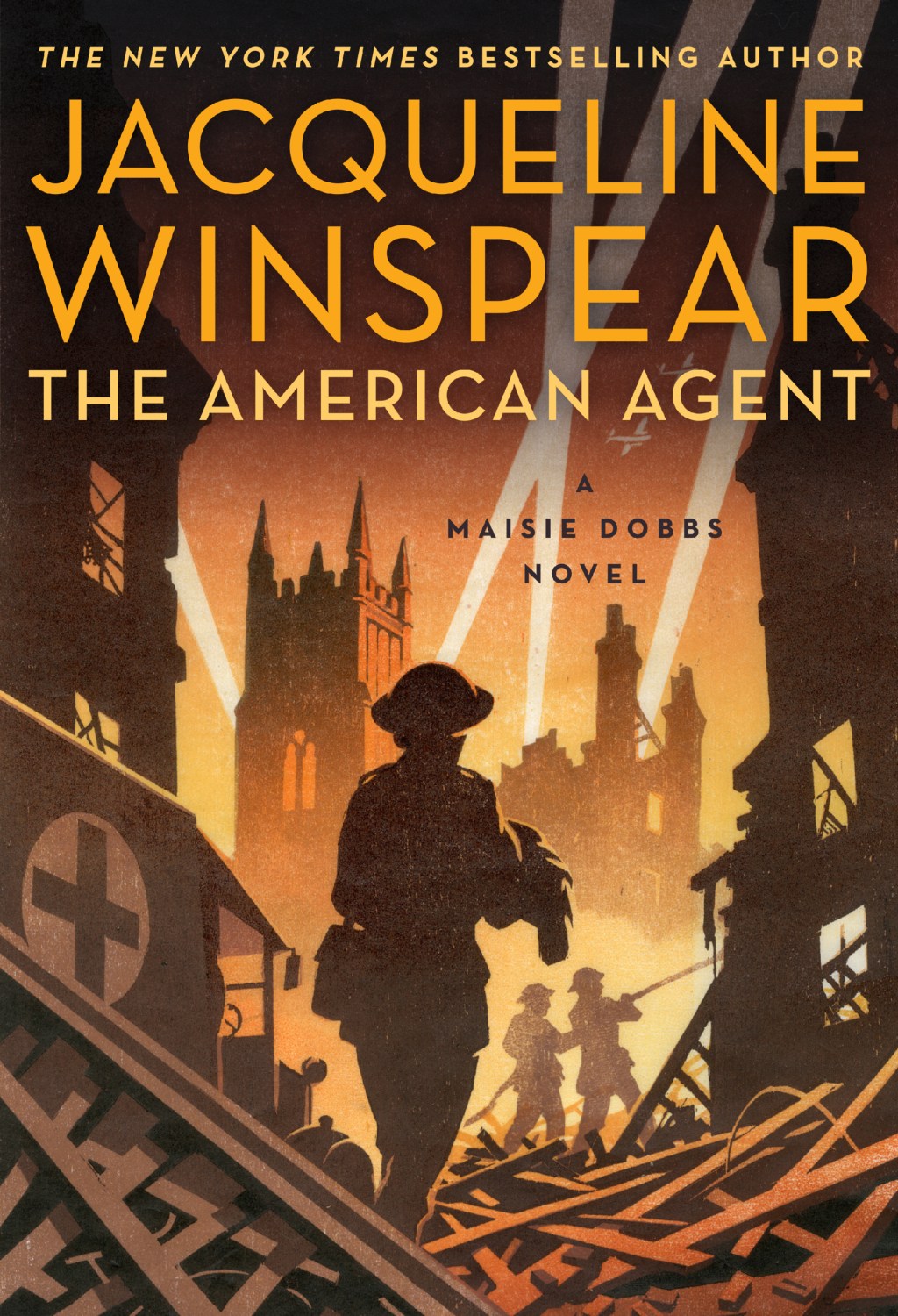
    An American Agent: A Maisie Dobbs Novel

    Jacqueline Winspear, author of The American Agent, the 15th book in her Maisie Dobbs’ series, transports us to early September 1940, as Adolf Hitler unleashed his Blitzkrieg or lighting attack on London and other United Kingdom cities, an intensive attack already used successfully in Spain, the Netherlands, Poland, Belgium and France to enable an invasion to take place.  Day after day, night after night for months on end, hundreds of German bombers would fly across the Channel to wreak havoc.  Maisie and her friend, Priscilla are volunteer ambulance drivers, and on one run they are accompanied by an American war correspondent, Catherine Saxon.

    Following her late-night broadcast to the US, where she describes her experience of seeing the death and destruction that the bombings have wrought on the city, Saxon is found dead in her rooms. Maisie Dobbs is brought in to conduct an undercover investigation – her presence requested by a man from the US Department of Justice, Mark Scott, who had previously saved her life in Munich, in 1938.  The story is peppered with excerpts from real broadcasts and reporting at the time.

               On a multi-city tour, Winspear will be in Chicago for a book signing on April 4. Speaking to Jane Ammeson, she talks about An American Agent and how her own past was an impetus for her series.

    For readers who have never met Maisie, can you give us a brief summary?

    Readers first met Maisie Dobbs in the first novel in the series – entitled Maisie Dobbs.  From a working class background, Maisie is a young woman of intellect and a keen intuitive ability, which is recognized by a friend of her employer. Dr. Maurice Blanche – a psychologist and Doctor of Forensic Medicine who consults with the police –oversees her education and entry to university, which is sponsored by her employer – but WW1 intervenes, and Maisie volunteers for nursing service, and is later wounded at a Casualty Clearing Station in France – an experience that defines her.  Later, having recovered, she becomes Blanche’s assistant, and in the first novel in the series we see her striking out on her own upon his retirement – she is a “psychologist and investigator.” Maisie is very much a woman of her day – so many young women had to be incredibly self-sufficient as the men they might have married had been lost to war. I have written extensively on this subject as it’s always interested me.

    I am impressed by your vast knowledge and ability to bring us into this time period. I know your grandfather was severely injured in the Battle of the Somme and your family talked about the war. How did those experiences translate into you writing books and immersing yourself in this time period?

    Family stories always have an immediacy that reading books and immersing oneself in research sometimes lacks. My grandfather was very much of his generation of men who saw the most terrible death in the trenches of WW1 France and Belgium – he never talked about it, with the exception of a couple of stories shared with my father. But I could see the wounds – his poor shrapnel-filled legs (he was still removing shrapnel splinters when he died at age77), and I could hear the wheezing of his gas-damaged lungs. And I knew he had suffered shell-shock.  Added to this were my mother’s stories of the Second World War – her experiences of being evacuated, of having to return to London, then of being bombed out time and again. And yes, of seeing death on the streets following a bombing.  The experience of listening to family stories – even from a very young age – inspired my curiosity, which later became an adult inquiry, so you could say I’ve been researching my subject since childhood.

    This is your 15th book in the series.  How do you go about developing your stories? Are they mapped out or do you take an incident and place Maisie in there and let it all happen?

    I think creating a story is like lighting fire. First of all, you lay down the paper and kindling, then you need a match for the flame, and you follow that with your fuel.  Often the kindling for a story is laid down years before I begin to write – because I have been waiting for the spark to light the fire and then the fuel to build the flame.  For example, I had known the true story that inspired “Elegy for Eddie” since I was a teen – of a young girl not 16 years old, a cleaner in the local brewery stables who had given birth to a baby boy while at work, and while stopping him from crying had starved his brain of oxygen. That young boy – thereafter considered “slow” – was born and grew up around horses and had a gift.  As he grew up, he could settle the most uppity horse, simply by laying a hand upon the animal – that’s how he earned a living at a time when horses were vital for commerce and transportation.  As a boy, my father knew this young man, and he told me of his later “suspicious” demise.  After I began writing the series, I knew “Eddie” would form the basis of a story – the kindling, if you will.  Then I learned more about the pre-war machinations of various powerful men close to Churchill, and the secrecy surrounding their work, whether it was in creating soft propaganda or developing fighter aircraft.  That’s when I asked the question – what if an innocent, a young man of limited intellectual ability but deep empathy stumbled across crucial classified information? Then what might happen? The flame caught and I had a fire.  But when I begin writing any story, I only know the main landing points along the way, I do not know all the details – they come as the story is written. I like to have the basic map, but I also like to “dance with the moment” and be able to respond to new ideas or information as they emerge.

    Are there times you’re back in the England between the wars versus 2019?

    To some extent I have to be in the years I’m writing about – I cannot be distracted by today while I’m writing.  When I’m at work, I am completely with my characters – I walk their streets, I can see what they are wearing, what they buy, what they eat, and I can hear their use of language, which is different from today.

    For more information visit jacquelinewinspear.com

    Ifyougo:

    What: Jacqueline Winspear book signing

    When: April 4 at 7 pm

    Where: Anderson’s Bookshop, 123 W Jefferson Ave, Naperville, IL

    Cost: Free

    FYI: 630-355-2665; andersonsbookshop.com

  • 50 Ways to Love Wine More: Adventures in Wine Appreciation!

    50 Ways to Love Wine More: Adventures in Wine Appreciation!

    Jim Laughren wants to keep it real when talking about wine. No pretentions, no superciliousness.

    It’s about what you like, not what the big time wine critics say you should like says Laughren, author of 50 Ways to Love Wine More: Adventures in Wine Appreciation! (Crosstown Publishing 2018; $26.95), an NYC Big Book Award winner and finalist in the American Book Fest Best Book Awards.

    “I wrote the book with the intention of starting a conversation about wine,” says Laughren, a Certified Wine Educator and former president of a wine import and distribution company. ““I wanted my book to be for people who really like wine but are put off by wine snobs. All of my writing and teaching is about letting people know that what other people think doesn’t matter, that there are no secrets to wine though many wine critics would have you believe otherwise and that only they hold the secrets. Historically, there’s never been a wine or gate keeper.”

    Indeed, says Laughren, wine was, for centuries both seasonal and also for everyone.

    “In Rome, they even gave their slaves wine though it was the dregs, of course,” he says. “Wine’s greatest gift is to give pleasure and we’re all entitled to that.”

    Determining your own palate means trusting your own preferences. And though wine can be complex, it becomes easier to appreciate when a person understands how memory and emotion are inextricably tied to taste and are determining factors in all of our personal wine journeys.

    “At the top of the nasal passage is the olfactory epithelium that connects directly to the area of the brain where memories are stored,” explains Laughren. “You know how some wines have tastes of tobacco. If as a child you had a kindly grandfather who smoked a pipe, contrasted with a child whose parents chain smokers and a house that reeked of cigarettes, those memories would impact how the two would feel about the taste or aromas of tobacco in wine.”

    Laughren, founder of WineHead Consulting, encourages people to explore new wines while still enjoying your favorites.

    “There are 10,000 different grape varietals,” he says. “Look at Italy, there are probably 800 varieties in that country alone.”

                         Like most of us, Laughren drank some funky wines in college.

                         “Most wines made in the 1970s were very sweet,” he says. “Group think changes. Now those in the know pooh-pooh sweet table wines as the drinks of the unwashed masses. But if that’s what you like, don’t spend too much time thinking about it, just enjoy them. Instead think about exposing yourself to other wines and widening your experience.”

              Ifyougo:

              What: Reading, signing, and wine tasting with renowned wine expert Jim Laughren who be discussing his new book, 50 Ways to Love Wine More.

              Where: The Book Cellar, 4736-38 N Lincoln Ave., Chicago, IL

              When: Friday, March 29 at 7 p.m.

              Cost: Free

              FYI: Please call (773) 293-2665 to confirm

  • Food of the Italian South by Katie Parla

    Food of the Italian South by Katie Parla


    U Pan Cuott. Photo credit Ed Anderson.

    It’s personal for Katie Parla, award winning cookbook author, travel guide and food blogger who now has turned her passion for all things Italian to the off-the-beaten paths of Southern Italy, with its small villages, endless coastline, vast pastures and rolling hills.
    “Three of my grandmother’s four grandparents are from Spinoso, deep in a remote center of Basilicata,” says Parla, the author of the just released Food of the Italian South: Recipes for Classic, Disappearing Lost Dishes (Clarkson Potter 2019; $30).

    Katie Parla in Southern Italy. Photo credit Ed Anderson.


    Parla is a journalist but she’s also a culinary sleuth, eager to learn all about foodways as well as to chronicle and save dishes that are quickly disappearing from modern Italian tables. She’s lived in Rome since graduating with a degree from Yale in art history and her first cookbook was the IACP award winning Tasting Rome. She’s also so immersed herself in Italian cuisine that after moving to Rome, she earned a master’s degree in Italian Gastronomic Culture from the Università degli Studi di Roma “Tor Vergata”, a sommelier certificate from the Federazione Italiana Sommelier Albergatori Ristoratori, and an archeological speleology certification from the city of Rome.


    Matera. Photo credit Ed Anderson.


    In tiny Spinoso, Parla and her mother checked into one of the few available rooms for rent and went to office of vital statistics to find out more about family history.
    “We made the mistake of getting there before lunch,” she says. “You could tell they really want to go home and eat. They told us there were only four or five last names in the village and since ours wasn’t one of them, then we couldn’t be there.”


    Caiazzo. Photo credit Ed Anderson.


    But Parla found that sharing wine with the officers soon produced friendlier results (“wine and food always does that in Italy,” she says) and after leafing through dusty, oversized ledgers written in fading, neat cursive they were able to locate the tiny house where her grandfather had lived as well as other extensive family history.
    “Thank goodness for Napoleon, who was really into record keeping, no matter his other faults” says Parla.

    Katie Parla. Photo credit Ed Anderson.


    Many of her ancestors were sheepherders, tending sheep, staying with a flock for a week in exchange for a loaf of bread. This poverty was one reason so many Southern Italians left for America. But it also is the basis for their pasta and bread heavy cuisine says Parla.
    To capture the flavors of this pastoral area, Parla visited restaurants and kitchens, asking questions and writing down recipes which had evolved over the centuries from oral traditions.
    Describing Rome, Venice and Florence as “insanely packed,” Parla believes that those looking for a less traveled road will love Southern Italy, an ultra-authentic region to the extent that in Cilento, for example, there are more cars than people on the road.


    Spezzatino all Uva . Photo credit Ed Anderson.


    “There’s all this amazing food,” she says. “But also, there’s all this unspoiled beauty such as the interior of Basilicata. And the emptiness, because so many people are gone, creates this sense of haunted mystery. It’s so special, I want people to understand the food and to visit if they can.”
    For more information, visit katieparla.com


    ’U Pan’ Cuott’
    Baked Bread and Provolone Casserole

    Serves 4 to 6
    1 pound day-old durum wheat bread (I like Matera-style; see page 198), torn into bite-size pieces
    3 cups cherry tomatoes, halved
    7 ounces provolone cheese, cut into 1-inch cubes
    1 teaspoon peperoni cruschi powder or sweet paprika
    2 garlic cloves, smashed
    1 teaspoon dried oregano
    ½ teaspoon peperoncino or red pepper flakes
    ¼ cup plus 2 tablespoons extra-virgin olive oil
    Sea salt

    Overview:
    In Bernalda, a town in Basilicata best known as the ancestral village of Francis Ford Coppola, there are many ancient bread traditions. The town isn’t far from the durum wheat fields of the Murgia plateau and the famous bread towns Matera and Altamura. One of the town’s classic dishes is ’u pan’ cuott’ (Bernaldese dialect for pane cotto, “cooked bread”). Families would bake stale slices of Bernalda’s enormous 3-kilogram loaves with whatever food scraps they could find, resulting in a savory, delicious bread casserole bound by gooey bits of melted provolone. Use the crustiest durum bread you can find or bake.
    Method:
    Preheat the oven to 475°F with a rack in the center position.
    Place the bread in a colander, rinse with warm water, and set aside to soften. The bread should be moistened but not sopping wet.
    In a large bowl, combine the tomatoes, provolone, peperoni cruschi, garlic, oregano, peperoncino, and ¼ cup of the olive oil. Season with salt.
    When the bread crusts have softened, squeeze out any excess liquid and add the bread to the bowl with the tomato mixture. Stir to combine.
    Grease a baking dish with 1 tablespoon of the olive oil, pour in the tomato mixture, and drizzle the remaining 1 tablespoon olive oil on top. Bake until the top is heavily browned, and the provolone has melted, about 20 minutes. Serve warm.
    Spezzatino all’Uva
    Pork Cooked with Grapes

    Serves 6 to 8
    2 tablespoons extra-virgin olive oil
    2 pounds boneless pork shoulder, salted and cut into 2-inch cubes
    1 garlic clove, smashed
    1 cup dry red wine (I like Aglianico del Vulture)
    2 bay leaves
    4 cups pork stock or water
    1 bunch of red grapes (I like Tintilia grapes), halved and seeded

    Overview:
    The foothills east of the Apennines in Molise grow Tintilia, an indigenous red grape known for its low yield and pleasant notes of red fruit and spices. Each year, the majority of the harvested grapes are pressed to make wine, with the remainder reserved for jams and even savory dishes like this pork and grape stew, which is only made at harvest time. The slight sweetness of the grapes mingles beautifully with the savory pork and herbaceous notes of the bay leaves. Salt the pork 24 hours in advance.
    Method:
    Heat the olive oil in a large skillet over medium heat. When the oil begins to shimmer, add the pork, working in batches as needed, and cook, turning, until it is browned on all sides, 7 to 8 minutes. Remove the pork and set aside on a plate.
    Reduce the heat to low. Add the garlic and cook until just golden, about 5 minutes. Add the wine, increase the heat to medium, and scrape up any browned bits from the bottom of the pan. When the alcohol aroma dissipates and the liquid has nearly evaporated, about 2 minutes, add the bay leaves.
    Return the pork to the pan. Add enough stock so the meat is mostly submerged and season with salt. Cook, stirring occasionally, for 1½ hours more, until the pork is fork-tender. Add the grapes at the 1 ¼ hour mark and continue cooking until they are tender. If the sauce becomes too dry, add a bit more stock (you may not need all the stock). Serve immediately. 
    Ifyougo:
    What: Katie Parla has three events in Chicago
    When & Where: March 19 from 6:30 to 9pm. Katie will be celebrating the release of her cookbook with her friends at Monteverde, 1020 West Madison Street, Chicago, IL. The cost of the dinner is $150 including food, wine pairings, tax, gratuity and copy of the book. (312) 888-3041.
    When & Where: March 20 from 6 to 9pm. Katie will be hosting an aperitivo and signing at Lost Lake’s Stranger in Paradise, 3154 W Diversey Ave., Chicago, IL. No booking necessary, just come on down. Books will be sold on site by Book Cellar. (773) 293-6048.
    Menu of five cocktails from the book, $12.
    Three small plates (two pastas from Pastificio di Martino and olive oil poached tuna, endive and olives) from Chef Fred Noinaj, $12-15.
    When & Where: March 21 from 6 to 7:30pm. Katie will host an aperitivo and sign books, which will be available for purchase at Bonci Wicker Park, 1566 N Damen Ave., Chicago, IL. (872) 829-3144.

  • The Lost Night by Andrea Bartz

    The Lost Night by Andrea Bartz

                  In Andrea Bartz’s mystery novel, The Lost Night, Lindsay Bach believes she remembers the night her once-best friend Edie committed suicide. It’s seared into her brain. Or so she thinks. Over dinner, a long ago friend who has just moved back to New York suggests that she wasn’t with the group like she believes. Could that be true? Getting a friend to hack into her old email account, Bach backtracks a decade ago to when she and her group of friends were post graduates starting jobs, consuming too much alcohol, partying too hard and falling in love—often.

    (Photo by Kate Lord)

                  With each new revelation about that time and her part in the days leading up to Edie’s death, Bach has to employ the skills she uses to fact check magazine articles for her job to do the same in her life. The questions are many, but the most important ones are did the captivating and beautiful Edie really commit suicide or was she murdered? And did Bach have something to do with her death that she can no longer remember.

                  Bartz, who earned her master’s degree at Northwestern University and the author of Stuff Hipsters Hate, her blog turned book, says she wanted to write a book like those she likes to read—tomes by female mystery writers like Tana French, Gillian Flynn and Jessica Knoll. For inspiration, she turned to a time in her life—New York City in 2009. Like her favorite writers, the novel struck a note and even before the book was published at the end of February, it had already been optioned by Cartel Entertainment as a limited series with actress Mila Kunis’ Orchard Farm set to produce.

                  “It was a crazy time and we were partying while the world was burning,” she says of her time as a 23-year-old.   “I thought of this time and how bizarre it all was and then interlaid it with a mysterious death. It opens up a certain subculture that I hope is interesting to readers, it certainly was introspective for me.”

                  The novel, atmospheric, intense and intriguing, reflects an interest in psychology and memory that has always interested Bartz—and Bach, the character Bartz describes as being most like her. In an early chapter, Bartz tells a lover how drunk blackouts mean that the incidents that occurred never were recorded in our memories. They don’t exist and yet they happened.

                  “We’ve all had those incidents where someone will describe an event and say you were there and you don’t remember it,” says Bartz, noting there’s something both creepy and disorienting about how there’s no hard and fast truth just different memories

                  So, it is with Bach, who is shaken out of her of complacent lifestyle by having to grapple with the truth—as elusive as it is.        

    Ifyougo:

    What: Author Andrea Bartz will be answering questions about her new novel The Lost Night, and magician Jeanette Andrews will be wowing the audience with a short performance.

    When: Wednesday, March 13 at 7-9 pm

    Where: The Book Cellar, 4736-38 N Lincoln Ave, Chicago, IL

    Cost: Free

    FYI: (773) 293-2665; words@bookcellarinc.com

  • Ben Hecht: Fighting Words, Moving Pictures

    Ben Hecht: Fighting Words, Moving Pictures

                  When we think of Ben Hecht—and really, how many of us do? it’s because the college drop-out, turned Chicago Daily News reporter and then screenwriter personifies the early part of the 19th century. He was a war and crime journalist who went beyond writing and instead helped solve murder cases, along with the help of fellow newsman, Charlie MacArthur of the Chicago Examiner.  

    Adina Hoffman

                  Indeed many people, including author Adina Hoffman know and love Hecht’s movies including such classics as Scarface, Twentieth Century, The Front Page and Notorious without even knowing his name.

                  “I worked as a film critic throughout the 90s, and it was only when I started to really involve myself in film history that I read Hecht’s memoir, A Child of the Century,” says Hoffman, author of the just released Ben Hecht: Fighting Words, Moving Pictures (Yale University Press 2018; Amazon price $17.61), noting there is so much of Hecht’s DNA in the movies made during the Golden Age of Hollywood.

                  But as Hoffman read more and more about Hecht, she realized there was more to him than a Jazz Age writer who overindulged in a variety of vices.

    “I realized that his screenwriting was in some ways just the start of it,” says Hoffman, whose biography of Taha Muhammad Ali, My Happiness was named one of the best twenty books of 2009 by the Barnes & Noble Review and won the UK’s 2010 Jewish Quarterly-Wingate Prize.  “Maybe for him, it was the least of it. Hecht had multiple occupations—really preoccupations—and threw himself with gusto into being a journalist, novelist, playwright, a film director, producer, a memoirist, and Jewish activist, someone passionately engaged with the future of Palestine/Israel. I was fascinated by that multiplicity of his, by all the hats he managed to wear at once and with such incredible panache—even genius.”

                  Hoffman also deeply identified with Hecht’s desire to be involved in a serious if playful way with several realms at once and his having multiple job descriptions much as she does.

    “At the same time, there are certain things that set Hecht apart from me in a very basic way: his political positions in terms of Israel/Palestine are approximately the opposite of my own, and I thought it would be an interesting challenge to write about someone with whom I strongly disagree on this front,” she says.

                  Though she’s spent much of her adult life living in Jerusalem, Hoffman did the majority of her research at The Newberry in Chicago which holds Hecht’s papers.

                  “He seems to have been friend or colleague or rhetorical sparring partner to or with almost anybody who was anybody in twentieth century culture,” says Hoffman.  “I’d find myself in the course of a day reading these incredibly lively, funny letters and telegrams to and from everyone from David O. Selznick to Carl Sandburg, Menachem Begin, Katharine Hepburn, George Grosz, Sherwood Anderson, the gangster Mickey Cohen, Groucho Marx, and on and on. There are also marvelous photographs, drafts of his work, scrapbooks, objects—passports, pipes, letter openers, and even his first Oscar.”

                  Hoffman says one of the purposes of her book is for Hecht to be much better remembered than he is today.

    “He was someone who played a central role in creating American popular culture as we know it, but he’s been almost completely forgotten,” she says. “I think people around Chicago and in the Midwest know more about him than most others. I got an awful lot of blank or confused looks when people would ask me what I was working on and I’d say a book about Ben Hecht. The full range of his accomplishment or accomplishments is something I’d like people to realize—and also the complex way that his Jewishness figured into the rest of it. Hecht claimed he ‘became a Jew in 1939’—which is to say, he became a Jew because of the Holocaust—but I totally disagree. Being Jewish was always a part of him, as was being American. And there was absolutely no contradiction in his being both things at once and in the most vital way.”

    Ifyougo:

    What: Author talk and book signing

    When: Tuesday, February 19 at 6 pm

    Where: Ruggles Hall, The Newberry, 60 West Walton St., Chicago, IL

    Cost: Free and open to the public. Registration required.

    FYI: (312) 943-9090; newberry.org

  • Let’s Play Two: The Life and Times of Ernie Banks
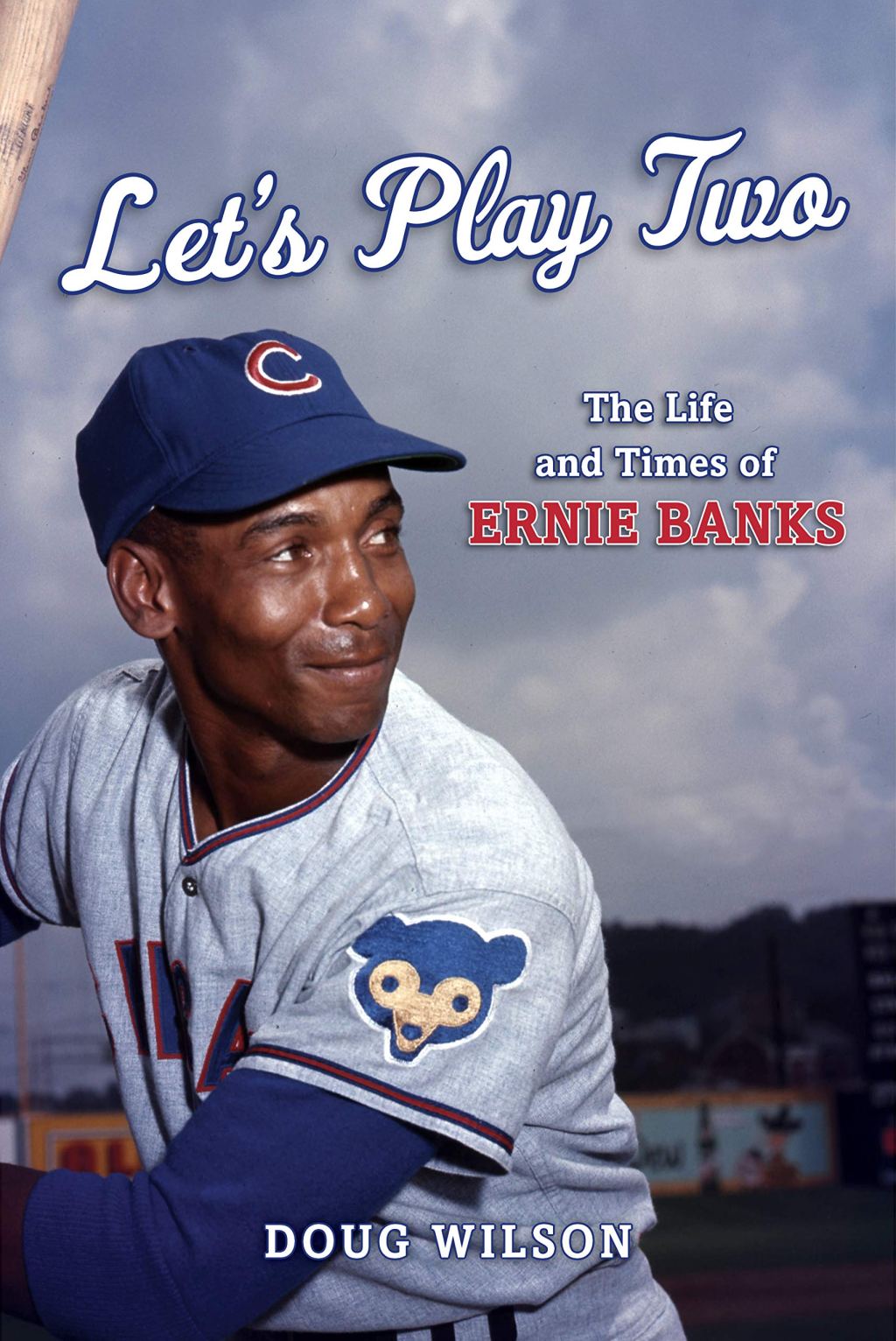
    Let’s Play Two: The Life and Times of Ernie Banks

                  A college baseball player whose batting average was lower than his grade point average, Columbus, Indiana ophthalmologist Doug Wilson turned his passion for the sport to writing about the iconic players he admired in his youth.

                  His latest, Let’s Play Two: The Life and Times of Ernie Banks (Rowman & Littlefield Publishers 2019; Amazon price $23.95), tells the story of the first African American to play for the Chicago Cubs. Recruited from the Kansas City Monarchs and raised in a segregated community in Texas, Banks was always positive and had a good word to say about everything. These characteristics often led to people underestimating the man who would become known as “Mr. Cub.”

                  “People couldn’t see beyond his optimistic outlook and took him to be naïve and have a simplistic outlook on life,” says Wilson. “But Banks was a very deep thinker, he’s someone who overcame a lot of obstacles but never said anything bad about people. If reporters asked him about someone who had said something negative about him, Banks would change things around so that he deflected the question without being rude.”

                  But in the end, it was Banks good natured spirits that won the day says Wilson, recounting the rocky relationship between Leo Durocher and Banks.

                  “You couldn’t have come up with two different kind of guys,” says Wilson. “Durocher, well…the title of his book Nice Guys Finish Last says it all and Banks was the ultimate nice guy. Durocher hated Banks’s guts and tried everything he could to run him out of town but there was no way PK Wrigley was going to let that happened. And all the time Durocher was trying to get rid of him, Banks just smiled. When Durocher would talk to reporters about how Banks was ruining the Cubs, they’d run to him and ask him about that, and Banks would just say “Leo Durocher is the best manager ever. He always took the high road.”

                  Wilson whose previous books include Fred Hutchinson and the 1964 Cincinnati Reds, The Bird: The Life and Legacy of Mark Fidrych which was selected by the Library of Michigan as a Michigan Notable book for 2014, Brooks: The Biography of Brooks Robinson (2014) and Pudge: The Biography of Carlton Fisk, not only read every interview he could find with Banks dating back to 1950 as well as endless newspaper accounts and books, says he also was able to located several friends from Banks’s youth including those who knew him when was seven years old and another who played bay with him in high school.

                  “I also found three guys who played with Ernie in the Negro League when he was with the Kansas City Monarchs,” says Wilson. “They said he was shy around people. But his persona changed after he became comfortable in Chicago.”

                  By interviewing friends from his boyhood, Wilson says it helped him see how overwhelming it must have been to be confined to segregated schools and neighborhoods and the challenges that Banks faced in becoming a player at a time when African Americans were just beginning to be allowed to play in the major league. Amazingly, Banks would be honored with the Presidential Medal of Freedom and a place in the Hall of Fame and he would always remain optimistic.

                  “Years later, Leo Durocher had a change of heart, perhaps surgically induced, in 1983 a very contrite 78-year-old Leo, recovering from a recent open heart procedure, perhaps seeing his own mortality at last, spoke at a Cubs reunion and tearfully apologized to the team in general and Ernie Banks specifically for how he had behaved,” writes Wilson.

                  In other words, says Wilson, “Ernie won.”

                  Ifyougo:

                  What: Doug Wilson has several book events in the Chicagoland area.

                  When & Where: Saturday, February 16 at 2 pm at Anderson’s Bookshop, 5112 Main St, Downers Grove, IL. This event is free and open to the public. To join the signing line, please purchase the author’s latest book, Let’s Play Two, from Anderson’s Bookshop. Call Anderson’s Bookshop Downers Grove (630) 963-2665.

                  When & Where: Saturday, March 2 at 6 pm at the Book Cellar, 4736-38 N Lincoln Ave Chicago, IL. Free.  (773) 293-2665.

                  For more information, visit dougwilsonbaseball.blogspot.com/

  • Book Signings: Lost Restaurants of Chicago by Greg Borzo

    Book Signings: Lost Restaurants of Chicago by Greg Borzo

    For those of us who grew up in and around Chicago, there are names of long gone restaurants that still tug at our heart, evoking memories of foods no longer served, surroundings replaced and aromas we many never smell again.

    Hoe Sai Gai

              For me, that’s the allure of Greg Borzo’s latest book, Lost Restaurants of Chicago with foreword by Dough Sohn, the owner of the now closed Hot Doug’s.

              Borzo, a Chicagoan historian who has written several books about the city’s bicycling, transportation and history including its fountains frequently gives tours and talks for organizations such as Forgotten Chicago, the Chicago History Museum and Chicago Cycling Club. The idea for his latest came about when he and his friends were chatting about the good times they’d had at restaurants over the years and how many were gone. His book goes further back though, starting over a century-and-a-half ago.

    Jacques

              “My list of restaurants to research from at least a hundred people,” he says, noting that he still gets some complaints about places he left out but then with seven out of eight restaurants closing within a few years of opening, the number of those gone are overwhelming.

              I ask Borzo what some of his favorite are “lost” restaurants. Some he had dined at, like The Great Gritzbe’s Flying Food Show, a Richard Melman restaurant that opened in 1974.

    Maxim’s

              “It had a dessert bar and you could get as many desserts as you wanted, like a salad bar,” he recalls about the restaurant that closed in 1883. “There’s also Trader Vic’s which was in the Palmer House. Its décor was completely over the top.”

              When Trader Vic’s, a Tiki bar extraordinaire first opened in 1957, bringing it up to its Polynesian zenith cost $500,000 which included a décor boasting huge Eastern Island carved wooden heads, totem poles, canoes and massive Maori beams. It was part of the Tiki rage that swept the U.S. and Trader Vic’s had its competitors include Don the Beachcomber which featured 85 types of run and 65 different cocktails.

              There are also places he wishes he ate at but didn’t such as Maxim’s de Paris, which was opened from 1963 to 1982.

              “It was a replica of the Maxim’s in Paris,” says Borzo. “I went to it when it later when the building was an event space.”

              Which is another phenomena of Chicago restaurants.

              “Many single locations have been many different restaurants,” says Borzo.

    Indeed, Bistro 110 at 110 East Pearson used to be the Blackhawk, then became Bar Toma Restaurant which is now closed.

    “This book is a history book too,” says Borzo. “It reflects the character of the city through the food and showing the different income levels. Some people were going to diners, others to the Pump Room.”

    The girl on the trapeze at Flo’s Restaurant and Cocktail Parlous

    Borzo and I both share a laugh about the now closed Flo’s Restaurant and Cocktail Parlor which was located at 17 West Randolph, near what is now Macy’s flagship store. I used to see it as a kid when my parents took me shopping in the Loop. It was notable because a woman in a form fitting Playboy-bunny like costume and spiked heels climbed out on a swing on the second floor balcony to advertise the place.         

    Greg Borzo

              “I’ve eaten at a lot of the places I write about,” says Borzo. “And those that were already closed I tried to find people who had eaten there, researched old newspaper stories and searched through vintage photos.”

    Ifyougo:

    What: Greg Borzo talk and book signing

    When, Where and Contact Information:

    Thursday, January 24 at 5 p.m.  

    Cindy Pritzker Auditorium, Harold Washington Library, 400 S. State St., 6-7 p.m. A free raffle will give away more than $1,000 of gifts: trips, tours, food, books and more.

    (312) 747-4300; slpl.bibliocommons.com/events

    Saturday, February 9 at 5 p.m.

    The Book Cellar, 4736-38 N Lincoln Ave., Chicago, IL

    (773) 293-2665; bookcellarinc.com

  • Brad Meltzer Book Signing: The First Conspiracy
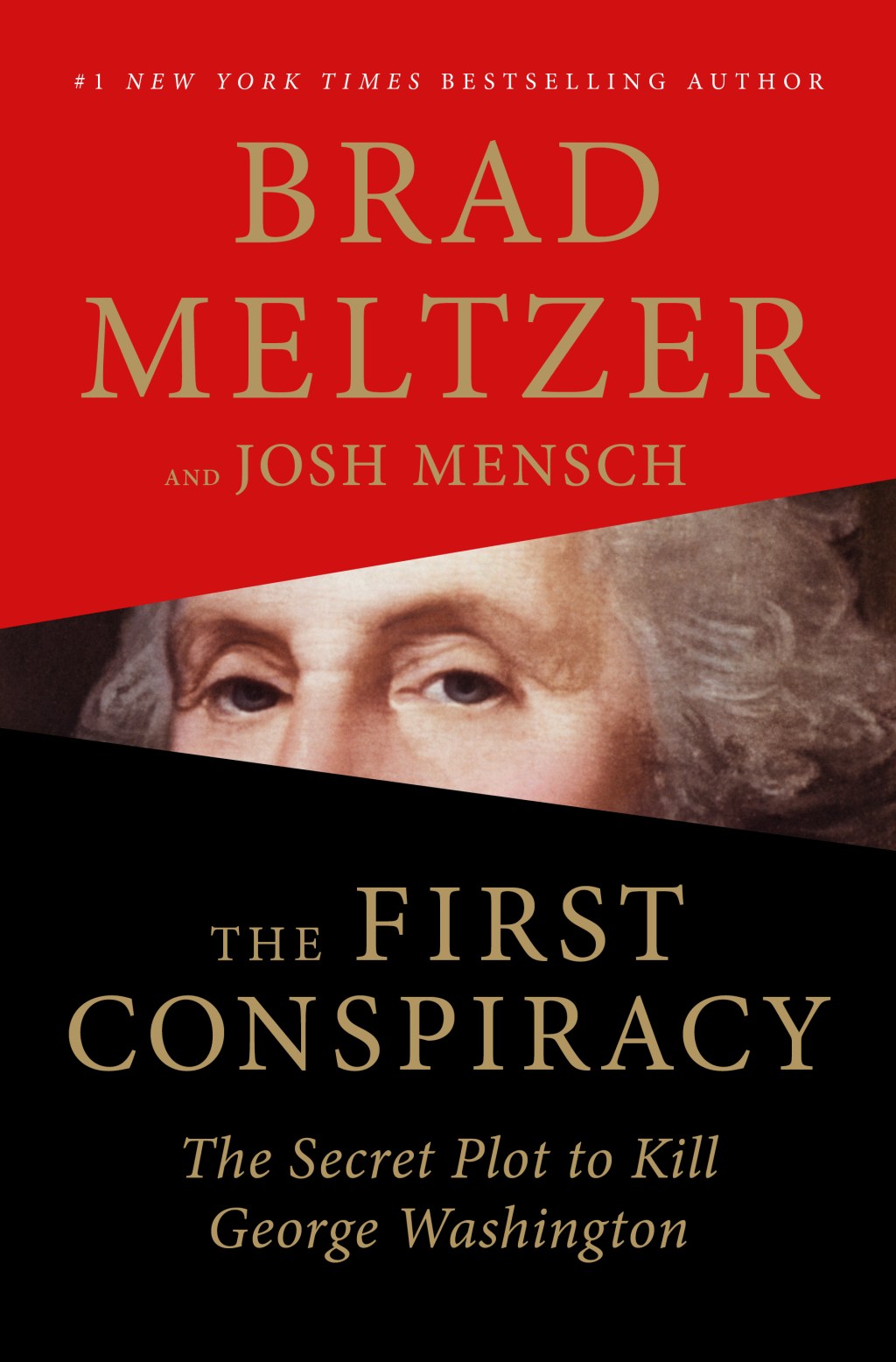
    Brad Meltzer Book Signing: The First Conspiracy

                  It wasn’t easy being George. He lost his father at age 11 and then his mentor and half-brother just seven years later. He was a veteran of the French and Indian War when in his 20’s and then returned home to tend to his estates. But he was a man of duty who put honor first and when the British butchered Colonists who complained about the high tax rate, he showed up at the Continental Congress, the only man wearing his military uniform. Tall and handsome, his posture erect, it was almost immediately decided that he would lead the newly formed Continental Army.

    Barbara Bush Houston Literacy Foundation Gala Writer’s Luncheon at the home of Terri and Jon Havens

                  Though army might be too kind of a word. The troops were masses of men from the colonies—ill-fed, raggedy, without training or even much in the way of weapons (unless you count pitchforks) and given to gambling, cussing, enjoying paid encounters and fighting amongst each other. Not exactly an army to give the well trained, well-armed and smartly uniformed British much pause.

                  Add to that, the former Colonel Washington didn’t have the knowledge or the experience of a general and since there was no You Tube at the time, he would have to learn on the job and by reading the several books he bought on the subject. But probably most problematic, several of his very own Life Guards, hand-selected men who were to personally protect Washington were actively betraying him as part of a conspiracy to preserve British rule.

                  This is the conundrum New York Times best-selling author Brad Meltzer presents us in the opening chapters of his first non-fiction book, The First Conspiracy: The Secret Plot Against George Washington with Josh Mensch.

                  “It’s one of my favorite details,” says Meltzer, who is so enthusiastic about the story says the same phrase more than once about other incidents as well. “Washington wanted the best of the best for his personal bodyguards, called lifeguards and they turned on him. That just totally hit me, this is the best of the best and they turned on him! You can’t write a book like this if you don’t ask yourself what would have happened if they got him.”

                  Fortunately, we don’t need to ask. Washington is more than the man on our dollar bills, wearer of a white powdered wig, said to be heck on cherry trees and wore wooden teeth—the latter turns out not to be true.

                  When two of his men were fighting, Washington rode right into the fray, jumped off his horse and seized each by the neck to break it up.

                  “At the Battle of Brooklyn, he gets his butt kicks, and he could have said let’s just go out in a blaze of glory, but he didn’t,” says Meltzer. “Instead, he commanders all the boats and gets his troops across the East River. The British are coming fast but, in that moment, he won’t get on a boat until all his men are onboard. He’s the last one on. He’s risked his life for them and that’s when the troops really all came together.”

                  He launched this secret society of spies that led to the modern CIA.

    That’s why Meltzer says some stories that are just so good they need to be told the way they are.

                  Anyone who has ever read one or more of Meltzer’s books (The Inner Circle, The Escape Artist) or watched his TV series Brad Meltzer’s Decoded and Brad Meltzer’s Lost History, needn’t worry that this will a long slog into boring history. The story of spy craft, war and the treachery surrounding the Washington reads as quickly as any of his novels or shows.

                  “It was an untold story,” he says. “I discovered it the way you usually discover important things, in a footnote.”

                  That footnote led to ten years of research which Meltzer says he couldn’t have done without the help of writer and documentary producer Josh Mensch.

                  Besides a great read of an almost lost part of America’s history, Meltzer says he hopes readers see this not just as a famous story but a call to the greatness Washington showed.

                  “We’re all capable of humility, heroism and generosity,” he says. “We have to stop creating this environment where everyone who disagrees with us is shallow or stupid, we have to work together and to do that we have to start with ourselves, the only way to change the world is to first change ourselves.”

    Ifyougo

    What: Brad Meltzer with Josh Mensch talk, audience Q & A and book signing

    When: Saturday, January 22 at 1 p.m.

    Where: Community Christian Church, 1635 Emerson Lane, Naperville, IL

    Cost: Ticket for one adult, $34.00 ($36.18 w/service fee). This ticket admits one person and includes one copy of the book. Ticket for two adults              $44.00 ($46.53 w/service fee). This ticket package admits two people and includes one copy of the new book. Ticket price also includes a photo with author. Kids under 13 are free. To order: brownpapertickets.com/event/3914505

    FYI: The presentation is hosted by Anderson’s Bookshops. For more information, 630-355-2665.