Category: Baseball

  • Charlie Hustle: The Rise and Fall of Pete Rose, and the Last Glory Days of Baseball
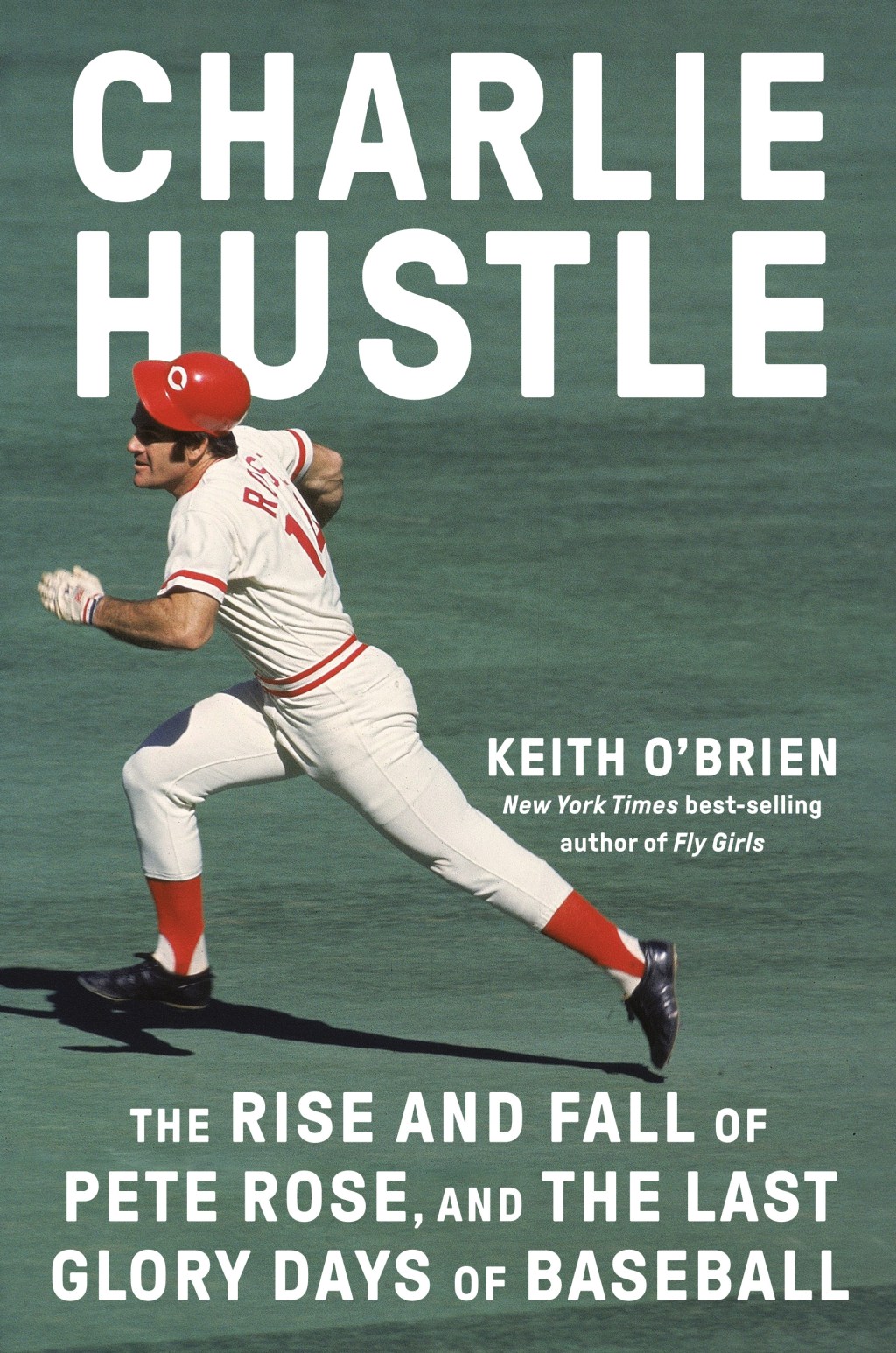
    Charlie Hustle: The Rise and Fall of Pete Rose, and the Last Glory Days of Baseball

    It’s an epic story. A young man with talent, maybe not as much as some but what he lacks in physical and athletic prowess he makes up with moxie and determination. And like most epics, there’s a rise to the heights and then a fall from grace.

    It could be a movie. Maybe it will be. But Keith O’Brien, an award-winning journalist has done a deep dive into the life of Pete Rose, winner of three World Series rings, including 27 hours of in-person and phone interviews with the baseball legend, has written “Charlie Hustle: The Rise and Fall of Pete Rose, and the Last Glory Days of Baseball.” It’s the type of story that even those who aren’t baseball fanatics (that would include me) would find as compelling as any work of fiction.

    Rose played Major League Baseball from 1963 to 1984 and then managed the Cincinnati Reds where he’d spent the majority of his career from 1984 to 1989. And what a career it was. His records still holding to this day include most career hits (4,256), most career games played (3,562), and most career at-bats (14,053). But it all came crashing down when it was discovered that Rose was betting on games including his own team.

    I caught up with author O’Brien during a book signing in Carmel, Indiana to another in Louisville. Closer to home he’ll be at The Book Stall in Winnetka on April 10.

    Like Rose, O’Brien grew up on the west side of Cincinnati, played ball as a kid, and had a love of baseball growing up.

    “My grandfather lived in Merrillville, and we’d visit him in the summer,” he says, noting that he considered the White Sox as his second team because they’d go to the games at Comiskey Field.”

    O’Brien thinks that might have helped get the interviews—Rose had never before agreed to talk to an author for a book unless he had editorial control over what was written.

    But it wasn’t their common roots weren’t what compelled O’Brien to write about Charlie Hustle, Rose’s nickname.

    “I felt that in the last 35 years that he’s been banned from baseball, making mistake after mistake off the field we have forgotten why we ever cared about him in the first place and so I wanted to go back and tell that whole story,” he says. “I told Pete back in 2021 when I originally reached out to him this felt to me like the time for reckoning with his past. To use the old sports cliche we’re all day-to-day but when you’re in your 80s like Pete Rose that notion is decidedly more present.”

    Ultimately Rose ghosted O’Brien.

    “It’s a guess as to why he stopped calling, my only thought is I was pushing it.” says O’Brien. “I wanted to talk about everything, the good times and the bad times—baseball, the off-field decisions, and the gambling. I think maybe in the end I might have just pushed Pete too far or as far as he was willing to go.”

    During his career, there had been rumors about Rose’s gambling though it hadn’t leaked out to the general public.

    O’Brien’s research and conversations with people who were on the scene when Rose was first called into the offices of Major League Baseball for a secret meeting in February 1989 indicate it could have gone a lot differently.

    “If Pete had been honest and told them the truth that yes he had bet on baseball and that yes he bet on the Reds and that yes he had a gambling problem, baseball would have done everything it could to save him,” says O’Brien. “I’m not suggesting he would have gotten off or wouldn’t have been punished. He would have but I don’t believe that it would have been the sort of punishment that he is still wrestling with 35 years later.”

  • Let’s Play Two: The Life and Times of Ernie Banks
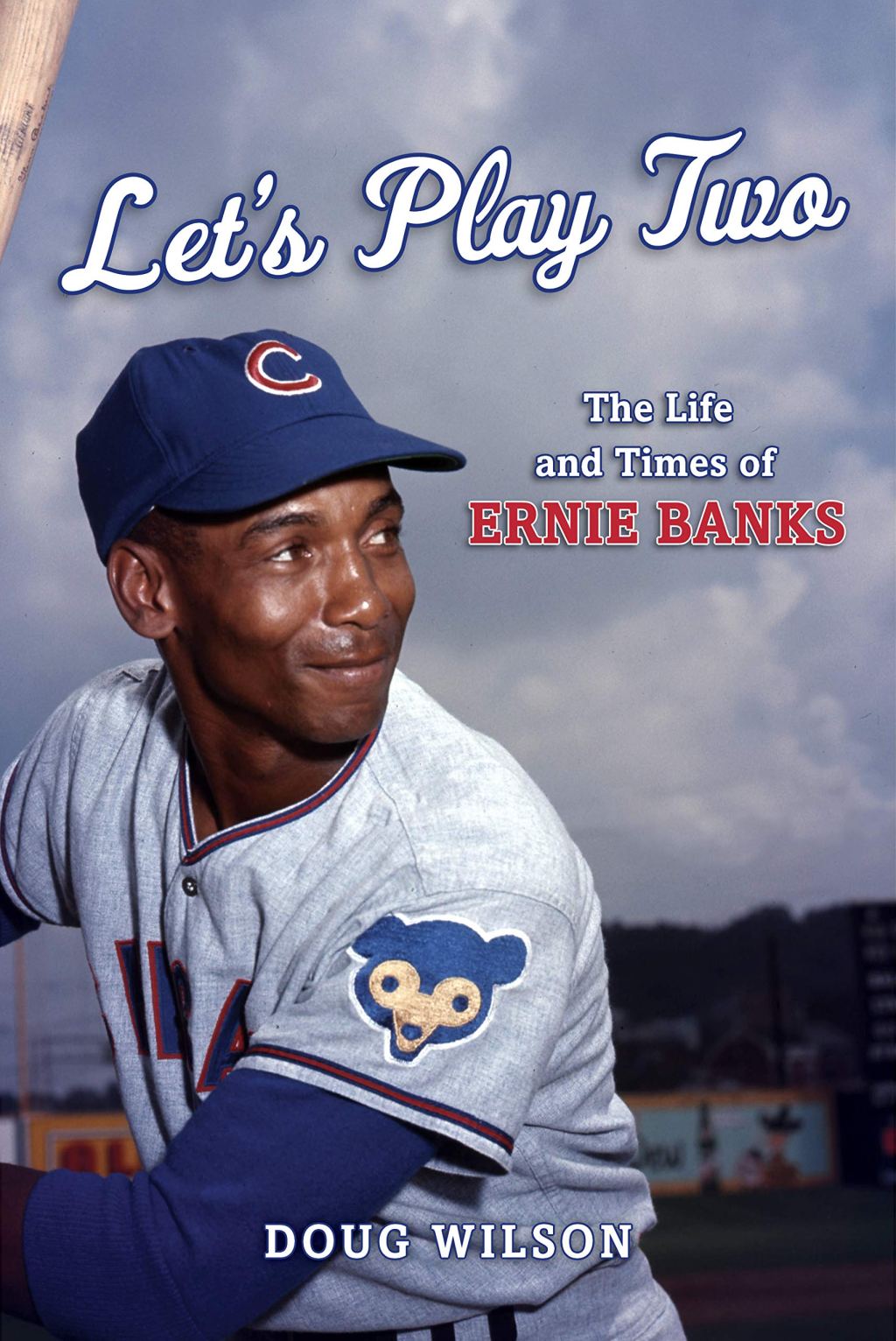
    Let’s Play Two: The Life and Times of Ernie Banks

                  A college baseball player whose batting average was lower than his grade point average, Columbus, Indiana ophthalmologist Doug Wilson turned his passion for the sport to writing about the iconic players he admired in his youth.

                  His latest, Let’s Play Two: The Life and Times of Ernie Banks (Rowman & Littlefield Publishers 2019; Amazon price $23.95), tells the story of the first African American to play for the Chicago Cubs. Recruited from the Kansas City Monarchs and raised in a segregated community in Texas, Banks was always positive and had a good word to say about everything. These characteristics often led to people underestimating the man who would become known as “Mr. Cub.”

                  “People couldn’t see beyond his optimistic outlook and took him to be naïve and have a simplistic outlook on life,” says Wilson. “But Banks was a very deep thinker, he’s someone who overcame a lot of obstacles but never said anything bad about people. If reporters asked him about someone who had said something negative about him, Banks would change things around so that he deflected the question without being rude.”

                  But in the end, it was Banks good natured spirits that won the day says Wilson, recounting the rocky relationship between Leo Durocher and Banks.

                  “You couldn’t have come up with two different kind of guys,” says Wilson. “Durocher, well…the title of his book Nice Guys Finish Last says it all and Banks was the ultimate nice guy. Durocher hated Banks’s guts and tried everything he could to run him out of town but there was no way PK Wrigley was going to let that happened. And all the time Durocher was trying to get rid of him, Banks just smiled. When Durocher would talk to reporters about how Banks was ruining the Cubs, they’d run to him and ask him about that, and Banks would just say “Leo Durocher is the best manager ever. He always took the high road.”

                  Wilson whose previous books include Fred Hutchinson and the 1964 Cincinnati Reds, The Bird: The Life and Legacy of Mark Fidrych which was selected by the Library of Michigan as a Michigan Notable book for 2014, Brooks: The Biography of Brooks Robinson (2014) and Pudge: The Biography of Carlton Fisk, not only read every interview he could find with Banks dating back to 1950 as well as endless newspaper accounts and books, says he also was able to located several friends from Banks’s youth including those who knew him when was seven years old and another who played bay with him in high school.

                  “I also found three guys who played with Ernie in the Negro League when he was with the Kansas City Monarchs,” says Wilson. “They said he was shy around people. But his persona changed after he became comfortable in Chicago.”

                  By interviewing friends from his boyhood, Wilson says it helped him see how overwhelming it must have been to be confined to segregated schools and neighborhoods and the challenges that Banks faced in becoming a player at a time when African Americans were just beginning to be allowed to play in the major league. Amazingly, Banks would be honored with the Presidential Medal of Freedom and a place in the Hall of Fame and he would always remain optimistic.

                  “Years later, Leo Durocher had a change of heart, perhaps surgically induced, in 1983 a very contrite 78-year-old Leo, recovering from a recent open heart procedure, perhaps seeing his own mortality at last, spoke at a Cubs reunion and tearfully apologized to the team in general and Ernie Banks specifically for how he had behaved,” writes Wilson.

                  In other words, says Wilson, “Ernie won.”

                  Ifyougo:

                  What: Doug Wilson has several book events in the Chicagoland area.

                  When & Where: Saturday, February 16 at 2 pm at Anderson’s Bookshop, 5112 Main St, Downers Grove, IL. This event is free and open to the public. To join the signing line, please purchase the author’s latest book, Let’s Play Two, from Anderson’s Bookshop. Call Anderson’s Bookshop Downers Grove (630) 963-2665.

                  When & Where: Saturday, March 2 at 6 pm at the Book Cellar, 4736-38 N Lincoln Ave Chicago, IL. Free.  (773) 293-2665.

                  For more information, visit dougwilsonbaseball.blogspot.com/

  • The Joe Maddon Story: “Try Not to Suck”

    The Joe Maddon Story: “Try Not to Suck”

    In a Zen-like move that baffled many in the sports world, Joe Maddon, then the new manager of the Chicago Cubs, enacted a “less is more” philosophy by almost completely eliminating  batting practice. What went against a long time baseball tradition as well as causing intense angst among the Cub fans and head scratching from pundits, now is credited with being one of factors helping the wonderful losers win their first World Series in 108 years.

    “For over a century of baseball, the belief was if you’re struggling then the answer was to work harder,” says Jesse Rogers, who with Bill Chastain, authored Try Not to Suck: The Exceptional, Extraordinary Baseball Life of Joe Maddon (Triumph Books, March 2018) with a foreword by Ben Zobrist.

    Maddon’s beginnings in baseball weren’t promising. A Minor League catcher for Los Angeles, after four seasons, with only 180 times at bat and three home runs, he hadn’t advanced further than Class A. Obviously it was time for a change and so he segued into management, working in a variety of positions for the Angels including minor league manager, scout and roving minor league hitting instructor, bench coach and interim manager.

    “His 31 years in Anaheim were an apprenticeship,” says Rogers, a television, internet and radio reporter for ESPN since 2009 who was  an insider covering the Cubs in 2016 (Chastain, who covers the Tampa Bay Rays for MLB.com and knew Maddon from his days there). “He saw a lot of things there that he thought should be done differently, but he couldn’t challenge it. But he was able to take what he learned to Tampa Bay where he could put some of that in place. He very much believes in less. If you’re struggling, don’t work more instead cut back. ”

    One of the positives from that strategy is players retain more energy as the long season progresses—an advantage over other teams who hew to conventional wisdom.

    “Joe’s surprised that more people aren’t doing this after seeing how successful he’s been,” says Rogers.

    But though he upended some traditions, Maddon has his superstitions just like most of those in the business.

    When rain called a temporary halt during Game 7 of the Series  with Chicago and Cleveland tied at 7-7, Maddon headed to his office and, spotting his bag, recalled thinking “it was time for my dad.” Grabbing his dad’s hat which he kept in the bag, he stuffed it down the back of his pants.

    “I said to myself ‘Let’s go’,” he is quoted saying in the book. “I took him back there with me and during the course of the next inning I kept touching it back there.”

    The title of Chastain and Rogers’s book s from one of Maddon’s oft-quoted maxims. Others include “don’t let the pressure exceed the pressure” or “do simple better.”

    “Probably my favorite one in general is ‘Embrace the target,’” says Rogers. “Joe says he’s really a big believer of running towards the fire as opposed to running away. I think that’s a good lesson for all of us.”