Tag: book signing

  • WIN! By Harlan Coben

    WIN! By Harlan Coben

    He’s incredibly handsome, impeccably dressed, totally urbane, interested only in no-strings relationships, and so amazingly rich that it’s hard to remember when anyone in his family has ever worked besides, that is, practicing their golf swings. Of course, Windsor “Win” Horne Lockwood III is totally obnoxious or would be if he didn’t recognize and make fun of all those traits. He knows he was born into money not for any reason but the wining of the genetic lottery. Ditto for the looks. He doesn’t have to wear—gasp—hoodies but can instead with all that dough attire himself in sartorial splendor. As for the relationships or lack of them, well, Win has issues that started in childhood so you can’t really blame him for that.

    CANNES, FRANCE – APRIL 7: Writer Harlan Coben is photographed for Self Assignment, on April, 2018 in Cannes, France. (Photo by Olivier Vigerie/Contour by Getty Images). (EDITOR’S NOTE: Photo has been digitally retouched).

              What he’s never had before is a mystery novel all about him. But now he does in “Win” (Grand Central 2021; $18.98 Amazon price) written by Harlan Coben, the bestselling author who has 75 million books in print in 45 languages as well as multiple number of Netflix series including “The Stranger” and “The Woods” with two more “The Innocent” and “Gone for Good” out soon.

              Up until now, Win has been a sidekick to Coben’s main character, Myron Bolitar, a sports agent who moonlights—often unintentionally—as a private detective.  Coben never intended to make Win the main character in a novel but that changed.

              “I came up with a story idea involving stolen paintings, a kidnapped heiress, and a wealthy family with buried secrets – and then I thought, ‘Wow, this should be Win’s family and his story to tell’,” says Coben.  “Win is, I hope you agree when you read the book, always a surprise.  He thrives on the unexpected.”

              The kidnapped heiress is Win’s cousin Patricia, who was  abducted by her father’s murderers and held prisoner until she managed to escape. She now is devoted to helping women who are being victimized by men. The stolen paintings include a Vermeer that was taken when Patricia was kidnapped. That painting along with another appear to have been stolen by a former 1960s radical turned recluse who was murdered in his apartment after successfully hiding from authorities for more than a half century.

              But keep in mind, that this is a Coben novel, so nothing is ever as it seems. The plots are devious, and the twists and turns are many. As Win goes on the hunt for the painting he has to deal with other difficulties that arise as well. His proclivity for vigilante justice (he knows, he tell us in one of the many asides he makes to readers, that we may not approve) has led to retaliation by the man’s murderous brothers who almost manage to kill him. The hunt for the Vermeer gets him involved with a treacherous mobster who is determined to find the last remaining radical of the group of six who he believes was responsible for his niece’s death.

              “Win has been Myron’s dangerous, perhaps even sociopathic, sidekick and undoubtedly the most popular character I’ve ever written,” says Coben.  “That said, you don’t have to read a single Myron book to read “Win.”  This is the start of a new series with a whole new hero.”  

              Coben decided to write a novel when he was working in Spain as a tour guide. Did he get the job because he’s fluent in Spanish? Not exactly.  

              “My grandfather owned the travel agency,” says Coben. “While I was there, I decided to try to write a novel about the experience.  So I did.  And the novel was pretty terrible as most first novels tend to be – pompous, self-absorbed – but then I got the writing bug and started to write what I love – the novel of immersion, the one that you get so caught up in you can’t sleep or put the book down.”

              With “Win” he has certainly done just that.  

    What: Harlan Coben, New York Times bestselling author, discusses his new book “Win” with moderator and author Shari Lapena.

    When: Thursday, March 25 at 7 p.m.

    FYI: Hosted by the Book Stall in Chicago, the event is free and open to the public. To register, visit the events page on the store’s website, www.thebookstall.com

  • Food of the Italian South by Katie Parla

    Food of the Italian South by Katie Parla


    U Pan Cuott. Photo credit Ed Anderson.

    It’s personal for Katie Parla, award winning cookbook author, travel guide and food blogger who now has turned her passion for all things Italian to the off-the-beaten paths of Southern Italy, with its small villages, endless coastline, vast pastures and rolling hills.
    “Three of my grandmother’s four grandparents are from Spinoso, deep in a remote center of Basilicata,” says Parla, the author of the just released Food of the Italian South: Recipes for Classic, Disappearing Lost Dishes (Clarkson Potter 2019; $30).

    Katie Parla in Southern Italy. Photo credit Ed Anderson.


    Parla is a journalist but she’s also a culinary sleuth, eager to learn all about foodways as well as to chronicle and save dishes that are quickly disappearing from modern Italian tables. She’s lived in Rome since graduating with a degree from Yale in art history and her first cookbook was the IACP award winning Tasting Rome. She’s also so immersed herself in Italian cuisine that after moving to Rome, she earned a master’s degree in Italian Gastronomic Culture from the Università degli Studi di Roma “Tor Vergata”, a sommelier certificate from the Federazione Italiana Sommelier Albergatori Ristoratori, and an archeological speleology certification from the city of Rome.


    Matera. Photo credit Ed Anderson.


    In tiny Spinoso, Parla and her mother checked into one of the few available rooms for rent and went to office of vital statistics to find out more about family history.
    “We made the mistake of getting there before lunch,” she says. “You could tell they really want to go home and eat. They told us there were only four or five last names in the village and since ours wasn’t one of them, then we couldn’t be there.”


    Caiazzo. Photo credit Ed Anderson.


    But Parla found that sharing wine with the officers soon produced friendlier results (“wine and food always does that in Italy,” she says) and after leafing through dusty, oversized ledgers written in fading, neat cursive they were able to locate the tiny house where her grandfather had lived as well as other extensive family history.
    “Thank goodness for Napoleon, who was really into record keeping, no matter his other faults” says Parla.

    Katie Parla. Photo credit Ed Anderson.


    Many of her ancestors were sheepherders, tending sheep, staying with a flock for a week in exchange for a loaf of bread. This poverty was one reason so many Southern Italians left for America. But it also is the basis for their pasta and bread heavy cuisine says Parla.
    To capture the flavors of this pastoral area, Parla visited restaurants and kitchens, asking questions and writing down recipes which had evolved over the centuries from oral traditions.
    Describing Rome, Venice and Florence as “insanely packed,” Parla believes that those looking for a less traveled road will love Southern Italy, an ultra-authentic region to the extent that in Cilento, for example, there are more cars than people on the road.


    Spezzatino all Uva . Photo credit Ed Anderson.


    “There’s all this amazing food,” she says. “But also, there’s all this unspoiled beauty such as the interior of Basilicata. And the emptiness, because so many people are gone, creates this sense of haunted mystery. It’s so special, I want people to understand the food and to visit if they can.”
    For more information, visit katieparla.com


    ’U Pan’ Cuott’
    Baked Bread and Provolone Casserole

    Serves 4 to 6
    1 pound day-old durum wheat bread (I like Matera-style; see page 198), torn into bite-size pieces
    3 cups cherry tomatoes, halved
    7 ounces provolone cheese, cut into 1-inch cubes
    1 teaspoon peperoni cruschi powder or sweet paprika
    2 garlic cloves, smashed
    1 teaspoon dried oregano
    ½ teaspoon peperoncino or red pepper flakes
    ¼ cup plus 2 tablespoons extra-virgin olive oil
    Sea salt

    Overview:
    In Bernalda, a town in Basilicata best known as the ancestral village of Francis Ford Coppola, there are many ancient bread traditions. The town isn’t far from the durum wheat fields of the Murgia plateau and the famous bread towns Matera and Altamura. One of the town’s classic dishes is ’u pan’ cuott’ (Bernaldese dialect for pane cotto, “cooked bread”). Families would bake stale slices of Bernalda’s enormous 3-kilogram loaves with whatever food scraps they could find, resulting in a savory, delicious bread casserole bound by gooey bits of melted provolone. Use the crustiest durum bread you can find or bake.
    Method:
    Preheat the oven to 475°F with a rack in the center position.
    Place the bread in a colander, rinse with warm water, and set aside to soften. The bread should be moistened but not sopping wet.
    In a large bowl, combine the tomatoes, provolone, peperoni cruschi, garlic, oregano, peperoncino, and ¼ cup of the olive oil. Season with salt.
    When the bread crusts have softened, squeeze out any excess liquid and add the bread to the bowl with the tomato mixture. Stir to combine.
    Grease a baking dish with 1 tablespoon of the olive oil, pour in the tomato mixture, and drizzle the remaining 1 tablespoon olive oil on top. Bake until the top is heavily browned, and the provolone has melted, about 20 minutes. Serve warm.
    Spezzatino all’Uva
    Pork Cooked with Grapes

    Serves 6 to 8
    2 tablespoons extra-virgin olive oil
    2 pounds boneless pork shoulder, salted and cut into 2-inch cubes
    1 garlic clove, smashed
    1 cup dry red wine (I like Aglianico del Vulture)
    2 bay leaves
    4 cups pork stock or water
    1 bunch of red grapes (I like Tintilia grapes), halved and seeded

    Overview:
    The foothills east of the Apennines in Molise grow Tintilia, an indigenous red grape known for its low yield and pleasant notes of red fruit and spices. Each year, the majority of the harvested grapes are pressed to make wine, with the remainder reserved for jams and even savory dishes like this pork and grape stew, which is only made at harvest time. The slight sweetness of the grapes mingles beautifully with the savory pork and herbaceous notes of the bay leaves. Salt the pork 24 hours in advance.
    Method:
    Heat the olive oil in a large skillet over medium heat. When the oil begins to shimmer, add the pork, working in batches as needed, and cook, turning, until it is browned on all sides, 7 to 8 minutes. Remove the pork and set aside on a plate.
    Reduce the heat to low. Add the garlic and cook until just golden, about 5 minutes. Add the wine, increase the heat to medium, and scrape up any browned bits from the bottom of the pan. When the alcohol aroma dissipates and the liquid has nearly evaporated, about 2 minutes, add the bay leaves.
    Return the pork to the pan. Add enough stock so the meat is mostly submerged and season with salt. Cook, stirring occasionally, for 1½ hours more, until the pork is fork-tender. Add the grapes at the 1 ¼ hour mark and continue cooking until they are tender. If the sauce becomes too dry, add a bit more stock (you may not need all the stock). Serve immediately. 
    Ifyougo:
    What: Katie Parla has three events in Chicago
    When & Where: March 19 from 6:30 to 9pm. Katie will be celebrating the release of her cookbook with her friends at Monteverde, 1020 West Madison Street, Chicago, IL. The cost of the dinner is $150 including food, wine pairings, tax, gratuity and copy of the book. (312) 888-3041.
    When & Where: March 20 from 6 to 9pm. Katie will be hosting an aperitivo and signing at Lost Lake’s Stranger in Paradise, 3154 W Diversey Ave., Chicago, IL. No booking necessary, just come on down. Books will be sold on site by Book Cellar. (773) 293-6048.
    Menu of five cocktails from the book, $12.
    Three small plates (two pastas from Pastificio di Martino and olive oil poached tuna, endive and olives) from Chef Fred Noinaj, $12-15.
    When & Where: March 21 from 6 to 7:30pm. Katie will host an aperitivo and sign books, which will be available for purchase at Bonci Wicker Park, 1566 N Damen Ave., Chicago, IL. (872) 829-3144.

  • The Lost Night by Andrea Bartz

    The Lost Night by Andrea Bartz

                  In Andrea Bartz’s mystery novel, The Lost Night, Lindsay Bach believes she remembers the night her once-best friend Edie committed suicide. It’s seared into her brain. Or so she thinks. Over dinner, a long ago friend who has just moved back to New York suggests that she wasn’t with the group like she believes. Could that be true? Getting a friend to hack into her old email account, Bach backtracks a decade ago to when she and her group of friends were post graduates starting jobs, consuming too much alcohol, partying too hard and falling in love—often.

    (Photo by Kate Lord)

                  With each new revelation about that time and her part in the days leading up to Edie’s death, Bach has to employ the skills she uses to fact check magazine articles for her job to do the same in her life. The questions are many, but the most important ones are did the captivating and beautiful Edie really commit suicide or was she murdered? And did Bach have something to do with her death that she can no longer remember.

                  Bartz, who earned her master’s degree at Northwestern University and the author of Stuff Hipsters Hate, her blog turned book, says she wanted to write a book like those she likes to read—tomes by female mystery writers like Tana French, Gillian Flynn and Jessica Knoll. For inspiration, she turned to a time in her life—New York City in 2009. Like her favorite writers, the novel struck a note and even before the book was published at the end of February, it had already been optioned by Cartel Entertainment as a limited series with actress Mila Kunis’ Orchard Farm set to produce.

                  “It was a crazy time and we were partying while the world was burning,” she says of her time as a 23-year-old.   “I thought of this time and how bizarre it all was and then interlaid it with a mysterious death. It opens up a certain subculture that I hope is interesting to readers, it certainly was introspective for me.”

                  The novel, atmospheric, intense and intriguing, reflects an interest in psychology and memory that has always interested Bartz—and Bach, the character Bartz describes as being most like her. In an early chapter, Bartz tells a lover how drunk blackouts mean that the incidents that occurred never were recorded in our memories. They don’t exist and yet they happened.

                  “We’ve all had those incidents where someone will describe an event and say you were there and you don’t remember it,” says Bartz, noting there’s something both creepy and disorienting about how there’s no hard and fast truth just different memories

                  So, it is with Bach, who is shaken out of her of complacent lifestyle by having to grapple with the truth—as elusive as it is.        

    Ifyougo:

    What: Author Andrea Bartz will be answering questions about her new novel The Lost Night, and magician Jeanette Andrews will be wowing the audience with a short performance.

    When: Wednesday, March 13 at 7-9 pm

    Where: The Book Cellar, 4736-38 N Lincoln Ave, Chicago, IL

    Cost: Free

    FYI: (773) 293-2665; words@bookcellarinc.com

  • Brad Meltzer Book Signing: The First Conspiracy
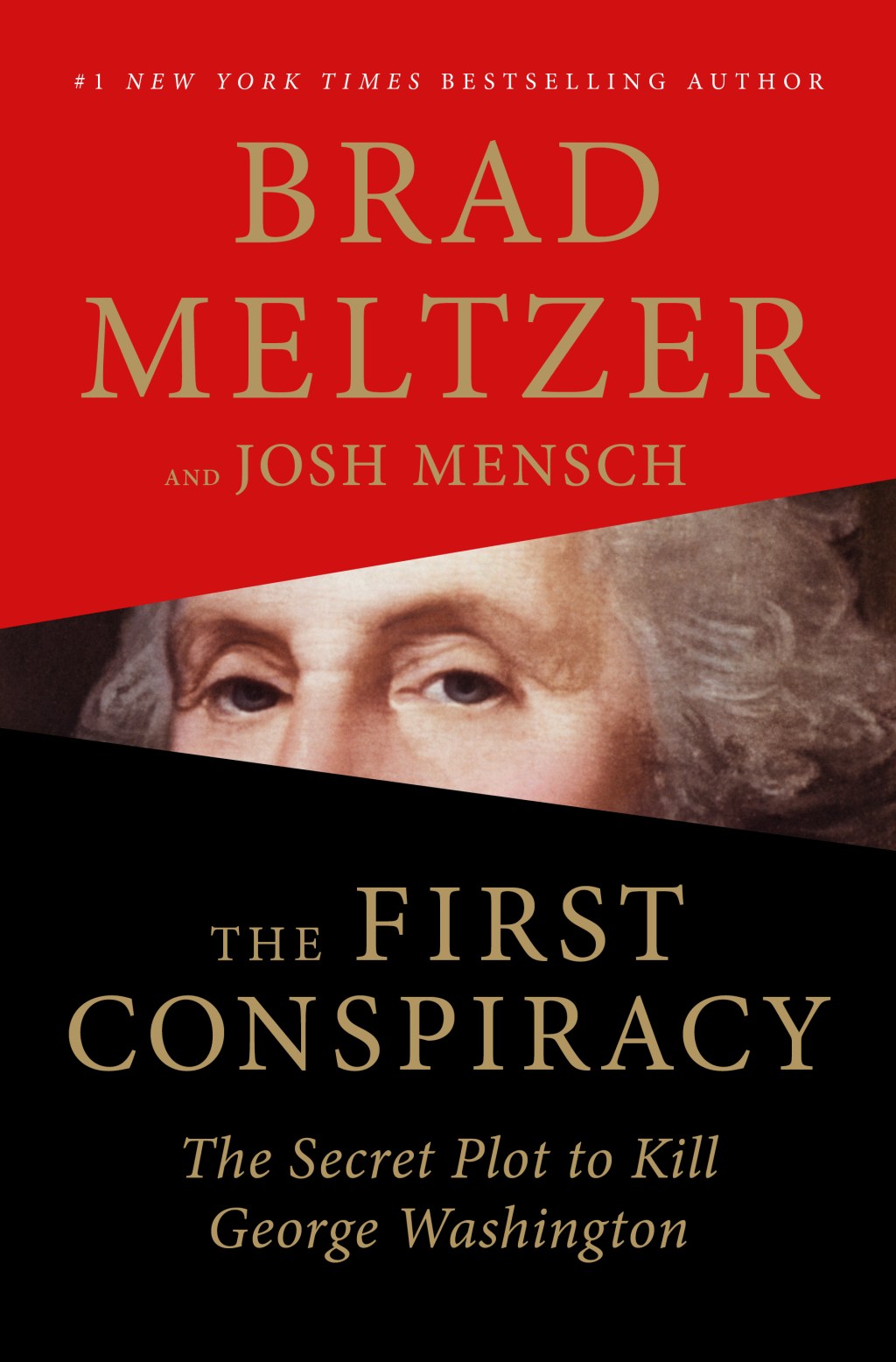
    Brad Meltzer Book Signing: The First Conspiracy

                  It wasn’t easy being George. He lost his father at age 11 and then his mentor and half-brother just seven years later. He was a veteran of the French and Indian War when in his 20’s and then returned home to tend to his estates. But he was a man of duty who put honor first and when the British butchered Colonists who complained about the high tax rate, he showed up at the Continental Congress, the only man wearing his military uniform. Tall and handsome, his posture erect, it was almost immediately decided that he would lead the newly formed Continental Army.

    Barbara Bush Houston Literacy Foundation Gala Writer’s Luncheon at the home of Terri and Jon Havens

                  Though army might be too kind of a word. The troops were masses of men from the colonies—ill-fed, raggedy, without training or even much in the way of weapons (unless you count pitchforks) and given to gambling, cussing, enjoying paid encounters and fighting amongst each other. Not exactly an army to give the well trained, well-armed and smartly uniformed British much pause.

                  Add to that, the former Colonel Washington didn’t have the knowledge or the experience of a general and since there was no You Tube at the time, he would have to learn on the job and by reading the several books he bought on the subject. But probably most problematic, several of his very own Life Guards, hand-selected men who were to personally protect Washington were actively betraying him as part of a conspiracy to preserve British rule.

                  This is the conundrum New York Times best-selling author Brad Meltzer presents us in the opening chapters of his first non-fiction book, The First Conspiracy: The Secret Plot Against George Washington with Josh Mensch.

                  “It’s one of my favorite details,” says Meltzer, who is so enthusiastic about the story says the same phrase more than once about other incidents as well. “Washington wanted the best of the best for his personal bodyguards, called lifeguards and they turned on him. That just totally hit me, this is the best of the best and they turned on him! You can’t write a book like this if you don’t ask yourself what would have happened if they got him.”

                  Fortunately, we don’t need to ask. Washington is more than the man on our dollar bills, wearer of a white powdered wig, said to be heck on cherry trees and wore wooden teeth—the latter turns out not to be true.

                  When two of his men were fighting, Washington rode right into the fray, jumped off his horse and seized each by the neck to break it up.

                  “At the Battle of Brooklyn, he gets his butt kicks, and he could have said let’s just go out in a blaze of glory, but he didn’t,” says Meltzer. “Instead, he commanders all the boats and gets his troops across the East River. The British are coming fast but, in that moment, he won’t get on a boat until all his men are onboard. He’s the last one on. He’s risked his life for them and that’s when the troops really all came together.”

                  He launched this secret society of spies that led to the modern CIA.

    That’s why Meltzer says some stories that are just so good they need to be told the way they are.

                  Anyone who has ever read one or more of Meltzer’s books (The Inner Circle, The Escape Artist) or watched his TV series Brad Meltzer’s Decoded and Brad Meltzer’s Lost History, needn’t worry that this will a long slog into boring history. The story of spy craft, war and the treachery surrounding the Washington reads as quickly as any of his novels or shows.

                  “It was an untold story,” he says. “I discovered it the way you usually discover important things, in a footnote.”

                  That footnote led to ten years of research which Meltzer says he couldn’t have done without the help of writer and documentary producer Josh Mensch.

                  Besides a great read of an almost lost part of America’s history, Meltzer says he hopes readers see this not just as a famous story but a call to the greatness Washington showed.

                  “We’re all capable of humility, heroism and generosity,” he says. “We have to stop creating this environment where everyone who disagrees with us is shallow or stupid, we have to work together and to do that we have to start with ourselves, the only way to change the world is to first change ourselves.”

    Ifyougo

    What: Brad Meltzer with Josh Mensch talk, audience Q & A and book signing

    When: Saturday, January 22 at 1 p.m.

    Where: Community Christian Church, 1635 Emerson Lane, Naperville, IL

    Cost: Ticket for one adult, $34.00 ($36.18 w/service fee). This ticket admits one person and includes one copy of the book. Ticket for two adults              $44.00 ($46.53 w/service fee). This ticket package admits two people and includes one copy of the new book. Ticket price also includes a photo with author. Kids under 13 are free. To order: brownpapertickets.com/event/3914505

    FYI: The presentation is hosted by Anderson’s Bookshops. For more information, 630-355-2665.

  • Seduction, Sex, Lies and Stardom in Howard Hughes’s Hollywood

    Seduction, Sex, Lies and Stardom in Howard Hughes’s Hollywood

    When it comes to the #MeToo movement, Karina Longworth, author of the just released Seduction, Sex, Lies and Stardom in Howard Hughes’s Hollywood, is surprised. But not in the way you might expect.

    “I’m more surprised that people seem to think everything has changed with a snap of a finger,” says Longworth. “Centuries of institutionalized sexism can’t be fixed that cleanly or easily. Especially in Hollywood—although you don’t have to look further than our national daily political drama to see that toxic and dehumanizing ideas about women are still the rule more than the exception.”

    To tell the stories of Hollywood and its famed casting couch, Longworth chose oil magnate, inventor and movie producer Howard Hughes as a way to link the exploitation of women then and now by providing a group portrait of ten actresses who were romantically and/or professionally involved with Howard Hughes, from the late 1920s through the end of the 1950s.

     “Howard Hughes is remembered as one of the great playboys of the 20th century, and when this is discussed, a seemingly endless list of actresses is breathlessly unfurled,” says Longworth. “Reading such lists, I became interested in exploring the very full lives and careers each actress had, and what role being one of Howard Hughes’s girls played in their stardom. I decided to use Hughes as a kind of Trojan Horse through which I could tell the stories of ten actresses, both still famous and forgotten, whose lives and careers were impacted by his interest in them.

    Her research was extensive and turned up some interesting documents including a memo Howard Hughes once drafted about actress Jane Russell’s breasts, a subject he was fanatic about, so much so that he designed a bra to showcase them.

                  Longworth, the creator and author of You Must Remember This podcasts about the scandalous secret history of 20th-century Hollywood which has hundreds of thousands of listeners, is also the author of books about George Lucas, Al Pacino, and Meryl Streep. She’ll be in Chicago on Monday, January 14 for a book signing as well as the screening of Outrage, a 1950 movie directed by the sultry actress Ida Lupino about a woman whose life is almost destroyed by rape.

                  “Outrage deals with a uniquely female situation in a uniquely empathetic way,” writes Longworth about the movie. “After such a violation, it asks, how could a woman learn how to be around men again, to trust them, to let them touch her?”

                  Another goal in writing her book was to create an interest in the actresses on the list of Hughes’s conquests the author of books about George Lucas, Al Pacino, and Meryl Streep the author of books about George Lucas, Al Pacino, and Meryl Streep, many of whom are forgotten.

                  “I hope readers are moved to watch the movies starring some great actresses, fine stars and fascinating women,” she says. “If they seek out Ida Lupino’s directorial efforts, lesser known Hepburn films like Christopher Strong or Morning Glory, or the movies of Jean Peters and Terry Moore, I’ll have done my job.”

    Ifyougo

    What: Karina Longworth will join the Chicago Filmmakers for a special screening of the 1950 film Outrage as well as a talk and book signing.

    When: Monday, January 14 from 7 to 10 p.m.

    Where: Chicago Filmmakers, 5720 N Ridge Ave., Chicago, IL

    Cost: The ticket only option to the screening is pay what you can though a donation is encouraged. For a book and ticket, the cost $37.22 w/service fee. To order, brownpapertickets.com/event/3914967

    FYI: Women & Children First is putting on the event. For more information, 773-769-9299; wcfbooks@gmail.com or womenandchildrenfirst

  • BOOK REVIEW, SIGNING: New author Ma Ling hones ‘Apocalypse Office’ genre in dark comic novel

    BOOK REVIEW, SIGNING: New author Ma Ling hones ‘Apocalypse Office’ genre in dark comic novel

    Candace Chen’s life is so much about chaos and loss that she finds solace and satisfaction in her job coordinating the sourcing of materials and production of Bibles. It’s a job that entails such minutiae as making sure there’s a supplier for the crushed gems which decorate a specific best-selling Bible even though many of the Asian countries supplying the materials have had to close because the crushed stones cause lung disease.

                  But Candace, a millennial who immigrated from China when very young, works through such hurdles with aplomb, simply moving on, over and around any impediment. That’s one reason why she is chosen to stay at the company’s New York office as all the other workers flee, are dying or being turned in zombies by a virulent and unstoppable fungal infection called Shen Fever.

                  Candace’s story—from her early losses to her unplanned but not unwanted pregnancy in a Manhattan that is rapidly falling apart is told in Severance, the first novel by Ling Ma.  

                  Ma, who teaches creative writing at the University of Chicago, writes with a dry wit and keen sense of observation, shaping Severance into a darkly comic novel in a genre that might be best called Apocalypse Office and is unlike any other urban disaster books—or movies—I’ve ever come across. Ma, who has an MFA from Cornell University, was inspired in part by watching movies like those by George Romero, who was known for his satirical but grisly horror films such as “Night of the Living Dead” as well as TV series about Millennials like “Sex in the City.” But even more so her book was honed by working in an office and dealing with office politics which she describes as horrifying.

    “The company I worked for was downsizing, and I started writing this book in the last few months of getting laid off—a kind of fun, apocalyptic short story,” she says about the novel’s origination. “I wanted to be destructive in some ways, and fiction can realize a lot of fantasies. I was kind of angry, but I also felt extremely liberated and extremely gleeful at the same time; it was a strange combination of glee and anger at once.”

    Taking her severance and unemployment compensation, she continued to work on the story—as a sort of therapy. It was also an escape, just like Candace is first able to escape from New York and then from the cultist gang of survivors, freeing herself and going into the unknown.

    Ifyougo:

    What: Talk and signing

    When: January 17 @ 6pm

    Where: Seminary Co-op Bookstore, 5751 S Woodlawn Ave, Chicago, IL

    FYI: (773) 752-4381; semcoop.com

  • The page-turning book about how Rocky Wirtz turned the Blackhawks into winners

    The page-turning book about how Rocky Wirtz turned the Blackhawks into winners

    I’ve only been to a few hockey games — always under duress — but that didn’t keep me from reading “The Breakaway: The Inside Story of the Wirtz Family Business and the Chicago Blackhawks,” well into the night.

    Typically I don’t expect sports books to be page-turners, but Bryan Smith, a two-time winner and six-time finalist for the National City and Regional Magazine Association’s Writer of the Year award, never intended “The Breakaway” to only chronicle the rise of the Blackhawks from a team that couldn’t even fill one-sixth of the United Center, to a three-time Stanley Cup winner under the leadership of Rocky Wirtz.

    “I’m not a sportswriter, never was,” says Smith who chatted on the phone between book events — he was on his third in two days.

    “What really attracted me to the story was the almost-Shakespearean family dynamics of three generations. It started with Arthur Wirtz, founder of the family fortune, and then follows his son, Bill,who was famously or I should say notoriously famous for his management of the team and refusal to allow the games to be broadcast on television — to his oldest son, Rocky, who led the team to what Forbes magazine described as ‘the greatest turnaround in sports business history.’”

    Arthur Wirtz, the son of a Chicago cop, had the foresight to scoop up real estate during the Depression, buying buildings such as the Bismarck Hotel and the Chicago Stadium (where the Blackhawks, a team founded in the1920s, played) as well as other arenas and halls in Chicago and around the country.

    He next had to figure out how to fill his arenas. One of his creative ideas was forming the Hollywood Ice Revue to showcase Sonja Henie, a Norwegian figure skater who won three gold medals in three consecutive Olympic games.

    The shows were a success, Smith says, citing as an example one night in 1940 when a Henie performance in New York City raked in $80,000.

    Besides real estate and entertainment, Arthur Wirtz moved in to other areas, and currently the privately held Wirtz business portfolio consists of liquor distribution, insurance, banking, real estate, some smaller things and, of course, the Blackhawks.

    Why Bill Wirtz, who took over the business after his father’s death, didn’t try to take the Blackhawks to a higher level is difficult to understand, Smith says. Arthur’s first-born son had a pugnacious style in general and in particular even toward his own family, so that Arthur disinvited Rocky and his children from Thanksgiving and Christmas dinners and once came to blows with him.

    When Rocky took over after Bill’s death, like their father, the rest of the family weren’t interested in seeing the Blackhawks change direction and were instead content to let the team, which was losing $30 million a year, continue on in the same manner.

    “The team was hurting other parts of the Wirtz business,” Smith says.

    “It was a no-brainer, but in the last years of Bill’s life, it was an issue of stubbornness; he dug in, and it really alienated the fans. It was like he was sticking a fork in their eyes. It’s amazing that (Rocky) was able to turn it around and even more so, when you remember that it was 2007 when Rocky took over the team; at the time, the whole nation’s economy was cratering.”

    Smith says that Rocky doesn’t take the credit for the team’s success.

    “He credits John McDonough,” says Smith about the Blackhawk’s president and CEO, who Wirtz hired away from his position as president of the Chicago Cubs in 2007.

    Family feuds and dysfunction can run deep, and Rocky Wirtz is estranged from many family members, even though the Blackhawks are now revered by fans and not draining funds from other family businesses. Wirtz, it seems, lost his family while trying to save them.

    If you go

    What: Reading and book signing with Bryan Smith

    When: 7 p.m. Dec. 14

    Where: The Book Cellar, 4736-38 N. Lincoln Ave Chicago

    Cost: Free

    FYI: (773) 293-2665; bookcellarinc.com

  • Who Murdered the Supreme Court Candidate: Mental State, a mystery novel by Law Professor M. Todd Henderson

    Who Murdered the Supreme Court Candidate: Mental State, a mystery novel by Law Professor M. Todd Henderson

    The murder of a good friend and fellow law professor inspired M. Todd Henderson to write Mental State (Down and Out Books 2018; $17.95), his first mystery novel.

    “He was a professor at Florida State University and had just dropped of his kids and was pulling out of the driveway when he was shot,” says Henderson who teaches at the University of Chicago’s law school. It turns out the friend, Dan Martel, was murdered by two hitmen hired by his ex-wife’s family to gain full custody of their children. Henderson considers himself a storyteller and using those skills he channeled his feelings into an immensely readable mystery involving the deadly political machinations put in place to hide the past of a sexual predator in order to secure a place on the  Supreme Court. It’s an interesting premise and certainly timely though this book was written well before the Brett Kavanaugh nomination and besides, Henderson’s judge is liberal.

    “My interest in law at a policy level is about power and what people are willing to do to achieve their ends,” says Henderson.

    photo-m-todd-henderson-1000x1400px-300dpi (1)

    In Mental State, Professor Alex Johnson, a professor at a renowned law school on Chicago’s southside (think University of Chicago) is murdered before he can reveal that the man being considered for the Supreme Court sexually abused him when they were both young. The death is first thought to be a suicide but FBI agent Royce Johnson, the victim’s brother, doesn’t believe his self-centered, narcissistic sibling would do such a thing. Once Royce proves it was murder, the next frame-up goes into place (the bad guys are good at backup plans) pinpointing the murder on one of the professor’s law students. But Johnson’s inability to quit trying to solve the crime soon puts himself on the wrong side of the law,  his comrades at the FBI and an array of federal officials determined to make sure the president’s pick for the highest court in the land goes through without a hitch. If that means a few murders and ruined lives to achieve this, well, it’s for the greater good.

    Ifyougo:

    What: M. Todd Henderson discusses “Mental State.” He will be joined in conversation by Jeff Ruby. A Q&A and signing will follow the discussion.

    When: Thursday, October 18, 2018 – 6:00pm – 7:00pm

    Where: 57th Street Books, 1301 E 57th St., Chicago, IL

    Cost: Free

    FYI: (773) 752-4381; events@semcoop.com

  • Not for Long: The Life and Career of the NFL Athlete
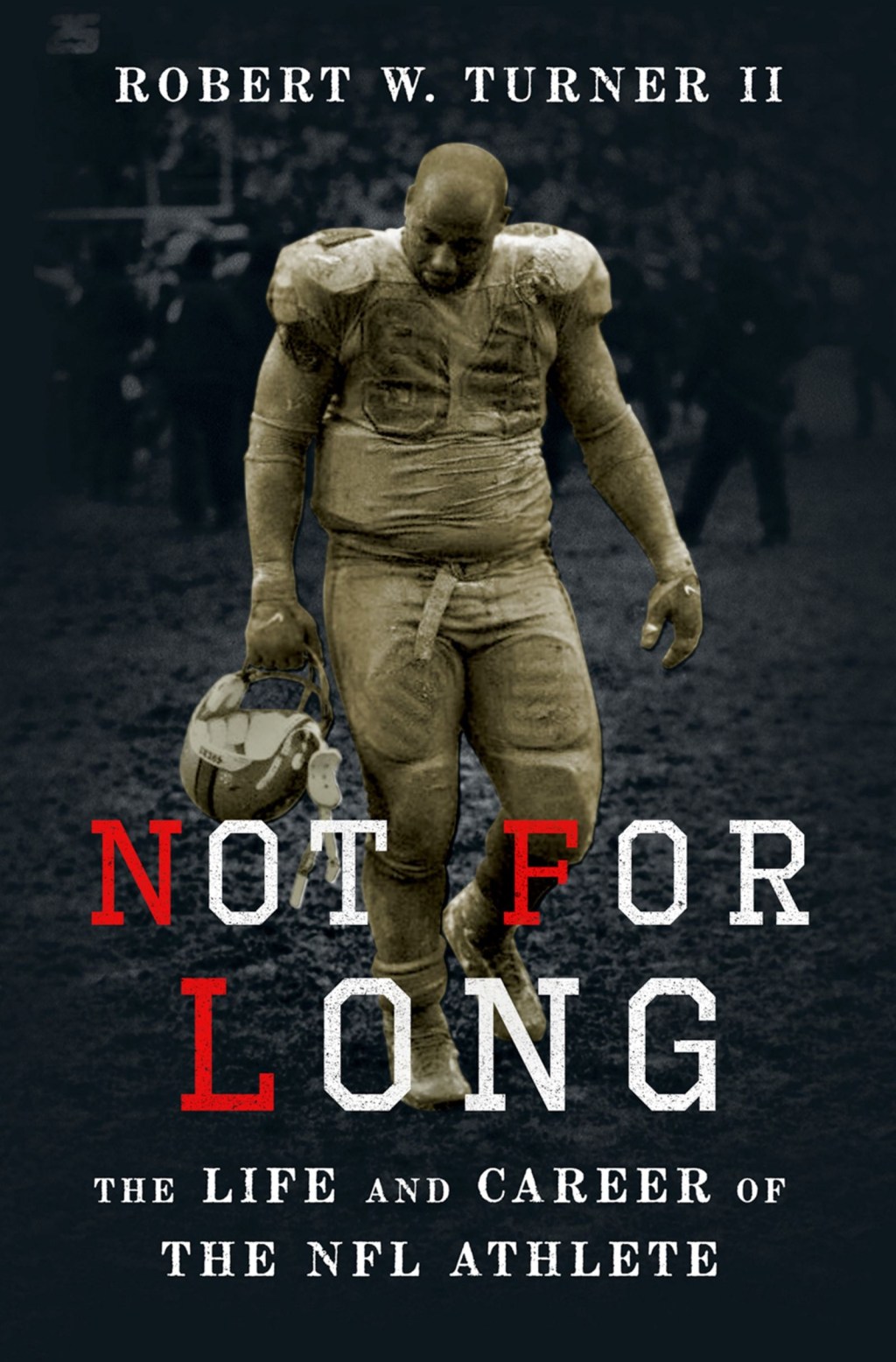
    Not for Long: The Life and Career of the NFL Athlete

    Robert Turner II was the first member of his family to go to college, attending James Madison University on an athletic scholarship.  But he did so because of his love of football and a desire to play at a professional level.

    “I majored in communications because that’s what the other players did,” says Turner who played football professionally in the now nonoperational United States Football League, the Canadian Football League, and briefly in the National Football League until his career abruptly ended.

    Consider Turner one of the lucky ones. He went on to earn a Ph.D. in sociology at the Graduate Center, City University of New York and is an assistant professor in the Department of Clinical Research and Leadership at The George Washington University School of Medicine & Health Science and also holds a position as a Research Scientist in the Center for Biobehavioral Health Disparities Research at Duke University.

    One of his areas of interest is what happens to athletes when their playing days are done and, after amassing more 140 interviews with current and former NFL players and extensively researching the subject, he’s written OLYMPUS DIGITAL CAMERA(Oxford University Press 2018; $24.95). It’s a look at what is the most popular professional sports league in the U.S., one where some athletes at the height of their physical prowess can boast stratospheric salaries in the multimillions  but then, often in just a few years, are no longer working.

    “The stories of many of these players is heartbreaking,” says Turner. “I love these men and they’ve gone through a lot of pain and sorrow and it hurts to hear that but what kept me going was the awesome gift of being able to tell their stories.”

    Turner describes his book as being about what happens upstream, the path that players take from high school and sometimes ever earlier through college and into professional sports. As for what happens after that, Turner says that society turns a deaf ear to their lives after college and the pros.

    “People say well, they got their college education, they got all that money,” says Turner, who serves on the board of directors for the Boys and Girls Club of Greater Washington, D.C.

    But many players don’t make millions.  Without guaranteed contracts, the majority of players are forced out of the league after a few seasons with few health and retirement benefits.

    Statistics show that more than three-quarters of retirees experience bankruptcy or financial ruin, two-thirds live with chronic pain, and many find themselves on the wrong side of the law. Turner believes that’s no accident. The powerful the labor agreements between the NFL and players doesn’t provide much in the way of job security. And because players dedicated to their game and dream of becoming a professional have little time to prepare for what to do when their time on the field is over and have little in the way of marketable skills.

    “It doesn’t just start at the NFL,” he says. “Universities and colleges should make sure all these players have the resources they need. Many of these kids come from environments where they haven’t learned many basics in terms of finances, planning ahead and all the other tools they need to be successful after sports. The League generates $15 billion a year and yet players are treated like disposable commodities. We need to help them learn how to transition effectively.”

    Turner is currently a technical advisor and consultant and is making an on-screen appearance in Student Athlete, a documentary which looks at “the exploitative world of high-revenue college sports” and features four current and former college athletes, including Kentucky basketball player Nick Richards. Co-produced by NBA star LeBron James, Student Athlete debuts October 2 at 10 p.m. on HBO.

    “The documentary is an important story about this subject,” he says. “We need to take care of all the players not just the 300 Hall of Famers.”

    Ifyougo:

    What: Robert W. Turner II discusses Not for Long: The Life and Career of the NFL Athlete. a Q&A and signing will follow the discussion.

    When: Oct. 14TH from 3-4 p.m.

    Where: The Seminary Co-Op Bookstore, 5751 S Woodlawn Ave., Chicago, Il

    Cost: Free

    FYI: 773-684-1300; semcoop.com


  • Author Peter Cozzens Discusses The Earth Is Weeping: The Epic Story of the Indian Wars for the American West

    For most cozzens_jacketof us who learned about the Wild West from movies, novels and TV shows both old and new, we’ve seen the concept of Native Americans go from persecutors to persecuted. But neither reality is true says Peter Cozzens, author of 16 books on the American Civil War and the Indian Wars that followed. Indeed, many senior army officers were sympathetic to the Indians and advocates of their rights says Cozzens in his latest book, “The Earth is Weeping: The Epic Story of the Indian Wars for the American West” (Knopf 2016; $35).

    “Another myth is that the government was exterminationist—cultural extermination, yes, but the government never contemplated the physical eradication of the Indians in the west,” says Cozzens who will be signing copies of his book on both Saturday and Monday in Chicago. “The War Department and the Bureau of Indian Affairs were constantly at odds over Indian policy with the military often more humane and restrained in their treatment.”

    The third myth, according to Cozzens, is that the Indians stood united in opposition to white encroachment on their lands. Instead, in ways that helped doom their way of live, tribes continued to fight amongst each other at the same time they tried to stave off the encroachment of their lands.”

    Cozzens, who retired from the American Foreign Service, is an avid researcher into the history of a time in our country so few of us really understand. It’s a very complicated period where many fascinating characters stand out including President Ulysses Grant, George Custer, Crazy Horse, Sitting Bull, Geronimo, Red Cloud and General William Tecumseh Sherman. He soughtcozzens_author-photo out many Indian sources, weaving their information with American history in order to balance each one.

    Spending so much time immersed in this time and place, Cozzens says that when he went to tribal lands in the West, places that haven’t changed much over the last century, he can feel what it must have been like for both the Indians and the military all those years ago.
    Ifyougo:

    What: Peter Cozzens book signings and talks at two Chicago venues.

    When & Where: Saturday, October 29 at Noon. Abraham Lincoln Book Shop, 824 W. Superior St., Suite 100, Chicago, IL and Monday, October 31 at 6pm at the Chicago Public Library, Harold Washington Library Center, Cindy Pritzker Auditorium (lower level), 400 South State St., Chicago, IL

    Cost: Free