Category: Uncategorized

  • Hope Rides Again: An Obama Biden Murder

    Hope Rides Again: An Obama Biden Murder

                  Barack Obama and Joe Biden return to solving crimes in Hope Rides Again: An Obama Biden Mystery, the second in the series written by Andrew Shaffer and starring the former president and vice president.

                  “It’s a totally separate mystery from the first book,” says Shaffer while sitting at a table where a long line had formed waiting for him to autograph copies of his novel at a two-day book fair in Lexington, Kentucky. “The first was set in Wilmington, Delaware and this one is set in Chicago on Obama’s turf and takes place in the spring around St. Patrick’s Day which is certainly a holiday they take seriously there.”

                  Indeed, Shaffer, who at one time lived in Chicago, says he revisited old haunts and new places for background as the two BFFs hunt for Obama’s Blackberry and the murderer of the their who originally stole it.

                  Though the premise of the two joining together as detectives is somewhat zany, Shaffer describes his book as dealing with serious topics as well.

    “But I try to do it in a lighthearted way,” he says. Also, fun are the covers for both books including the first in the series, Hope Never Dies. Harkening back to the vivid colors of 1960s, the first shows Biden driving a convertible while Obama stands in the front seat pointing out the way as they chase their quarry. In the latest, Obama leans down from a swaying rope ladder tethered to a helicopter, his arm outstretched to help Biden up.

    One person who thinks the mysteries are fun is the former vice president. When Biden was campaigning in Kentucky (Shaffer and his wife, a romance writer, live in Louisville), he was contacted by the campaign who set up a meeting.

                  “I didn’t know whether he liked the book or not or what he was going to say,” says Shaffer adding that the Biden hadn’t read either book but signed his copies. “It was really kind of different to have a character in your book sign your book. I found out later that people have been bringing my books to his campaign stops and asking him to sign them, so he was probably thinking who’s the guy who wrote this?”

                  It’s tricky writing about people we know publicly but not in person says Shaffer.

                  “I think in ways I know them too well because I know their history and what I think they would do and say, because I’ve written about them and I’ve seen and read about them for eight years,” he says. “When I heard Biden speak in Kentucky, I was like my Biden wouldn’t say that.”

                  Shaffer’s book might have garnered a few votes for the vice president.

                  “I met one person who said I can’t wait to vote for them again because now they’re detectives,” he says.

    Ifyougo:

    What: Andrew Shaffer book signing

    When: Tuesday, July 9 at 6 p.m.

    Where: The Seminary Co-op Bookstore, 5751 S Woodlawn Avenue, Chicago, IL

    Cost: Free but RSVP is suggested

    FYI: 773.752.4381; semcoop.com

    What: Andrew Shaffer book signing

    When: Wednesday, July 10 at 7 p.m.

    Where: Anderson’s Bookshop, 123 W Jefferson Ave., Naperville, IL

    Cost: This event is free and open to the public. To join the signing line, please purchase the author’s latest book, Hope Rides Again, from Anderson’s Bookshop. To purchase, stop in or call Anderson’s Bookshop Naperville.

    FYI: 630-355-2665; andersonsbookshop.com

  • The Body in the Castle Well

    The Body in the Castle Well

                  After reading Martin Walker’s The Body in the Castle Well, the 14th book in the series about Chief of Police Bruno Courrèges, I Googled real estate listings in the Périgord, known for its castles, caves, gastronomy and lush landscape of rolling hills, woods and vineyards. From Walker’s description, this region in southwestern France seems like an ideal place to live even if you have to deal with the type such skullduggery as truffle fraud, archaeological vandalism, arson, drugs and even terrorists Bruno encounters on a regular basis.

                  “There’ so much inspiration and history here,” says Walker who, with his wife, splits his time between Washington D.C. and Le Bugue, a small village in the Périgord where they own a home. The home came about, says Walker who talks like he writes, with many wonderful asides, when he was waiting in the Oval Office and received a phone call from his wife.

                  “She said I don’t care what you’re doing, get on the next plane and come here, I just found our house,” he says, noting he explained to her he was meeting with the president so it might have to wait just a while. Besides that, he didn’t even know they were buying a house.

                  Of course, they did and now live in an old farmhouse dating back to 1698 with several newer outbuildings, if you consider the 1700s new and in France they do.

                  Of course, there are always obstacles even in paradise.

                  “One of the challenges for anyone writing crime stories is finding places for bodies,” says Walker, who speaks French, Russian, English, Arabic, German and a just enough of other languages to get himself in trouble. “I drive around with an eagle eye looking for the perfect spot for a body. I was in Limeuil, a lovely village, and there it was, the castle well.”

                  So that’s where the body of Claudia, a young art student ends up, in what first looks like an accident and turns out to be much more ominous.

                  “She’s studying with Pierre de Bourdeille, one of the greatest art experts in the world, a hero of the French Resistance,” says Walker. “She told Bruno a little of her concerns about the attributions de Bourdeille made about his paintings which drove up prices and then she turns up dead.”

                  Another suspect is a falconer (so we get to learn about the ancient art of hunting with falcons) who met Claudia the day after her got out of prison. As compelling as the mystery is, so is Bruno’s life. He’s a gourmet chef, has his own blog and a cookbook, written by Walker’s wife, which is a best seller in Germany where it’s sold 100,000 copies. But unless you read the language, don’t bother as it’s not published in English though Walker encourages people to call his publisher and demand that it be.

                  The Bruno books are quite a segue for the Oxford educated Walker who served as bureau chief in Moscow and the U.S. and as European Editor for The Guardian, a British daily newspaper and wrote lengthy tomes (ponderous and boring he says, though noting they won awards) like The Iraq War and The Makers of the American Century

    “The 15th is already done,” he says. “And I’m thinking of the next. They’re fun to write.”

    Asked what his favorite is, he replies, “my favorite is always the latest or the one I’m working on right now.”

    Ifyougo:

    What: Martin Walker: The Body in the Castle Well

    When: Tuesday, June

    Where: The Book Stall, 811 Elm St., Winnetka, IL

    Cost: Free and open to the public, but The Book Stall asks that you buy your books from them if you intend on entering the book-signing queue.

    FYI: 847-446-8880; thebookstall.com

  • Truth Worth Telling: A Reporter’s Search for Meaning in the Stories of Our Times

    Truth Worth Telling: A Reporter’s Search for Meaning in the Stories of Our Times

    Scott Pelley sitting on a rock by a river holding a camera

                  While other boys his age were reading Hardy Boy mysteries and articles about baseball, Scott Pelley was riding his bike down to the public library in Lubbock, Texas and checking out books on faraway places.

                  “I kept a stack by my bed and when I finished those, I’d return them and get more,” says Pelley, author of the recently released memoir Truth Worth Telling: A Reporter’s Search for Meaning in the Stories of Our Times Hanover Square Press 2019; $17.70)

                  Pelley, a definite glass half full kind of guy, is thankful he’s been able to make his living for the last four decades covering stories around the globe.

                  I ask if more than 40 years of travel has worn him out. But no, Pelley, an award-winning 60 Minutes correspondent, is always ready for the next assignment.

                  “I’m 61 and by God, I still enjoy getting on a plane,” says Pelley though he does admit he gets a little tired of going to the same place over and over. “But I never tire of going someplace new, whether it’s nice or not.”

                  So where hasn’t Pelley been that he’d like to see.

                  “Anyplace that doesn’t have a pin stuck in it on my world map,” he says. “I’ve been to both the Artic and Antarctica numerous times, but I’ve never made it to poles though I’ve been just a few miles away, so I’d like to get there. And I’ve never been to Portugal and I’ve heard it’s very pretty.”

                  Portugal? From a man who is a multimillion mile flyer and has covered stories in the remote jungles of Mexico, reported on the genocides in Darfur, was onsite when the planes hit the World Trade Center and watched first responders’ stream into the building, many to never come out, hoping to find survivors, He also was on the ground during the Persian Gulf crisis of 1990 and the 1991 invasion of Iraq (indeed, he’s seems to have visited Iraq as many times as most people go to the grocery store) and joined, with his team, the U.S. Special Forces in Afghanistan. Getting to Portugal, it would seem, would be a piece of cake.

                  But then Pelley may be too busy. He’s won 37 Emmys—of course, he says it’s due to the many wonderful and capable people who back him up and make him look good—and despite his passion for action, likes to ponder as well.

                  “I called my first chapter ‘Gallantry,’” he says about his book. “I was in Paris several years ago shortly after  ISIS’s terrorist attack and I watched people holding a memorial on the cobblestone streets with candles in their hands and it struck me that I had seen that same look before, at the World Trade Center and in Oklahoma City after the bombing of the Murrah Federal Building. It’s a look I’d seen it again and again throughout my entire career, people wondering what the meaning of life is. I got to thinking, don’t ask the meaning of life. Life is asking: ‘What’s the meaning of you?’ And that’s what I went looking for in my book, people who have discovered how to get meaning, people who are heroes.”

                  Maybe, in a way, Pelley is a hero as well. He reveals in his book how he lost his long time job as CBS Evening News anchor after complaining too vociferously about the way men and, especially women were treated at the network. He took his complaints all the way up to CBS Corporate Chairman Les Moonves, who spent over an hour listening to Pelley’s concerns. Obviously, hoping to forestall any more action on Pelley’s part, his contract wasn’t renewed despite his show’s high ratings. Ironically, Moonves would be fired in turn, because of sexual harassment allegations.

                  Losing his job is okay now, says Pelley because he’s grateful for the direction CBS is taking, how they cleaned house and are acting with integrity.

                  Yes, definitely half-full.

                  “I think a sense of optimism is important for a reporter,” he says. “That and empathy. If you have that empathy for that person you have emotional stake in their lives.”

    Ifyougo:

    What: Join in a conversation, Q&A, and book signing with Scott Pelley

    When: Monday, June 3 at 7 p.m.

    Where: Community Christian Church, 1635 Emerson Lane, Naperville, IL

    Cost:  Ticket for one person costs $37.74 w/service fee and includes one copy of the Pelley’s new book; the ticket package admits two and costs $42.99 w/service fee and includes on copy of the book. Tickets can be purchased online at brownpapertickets.com/event/4243153 and entitles the holder to

    meet and get a photograph with the author and a personalized signature.

    FYI: The event is hosted by Anderson’s Bookshops in Naperville, 630-355-2665; andersonsbookshop.com

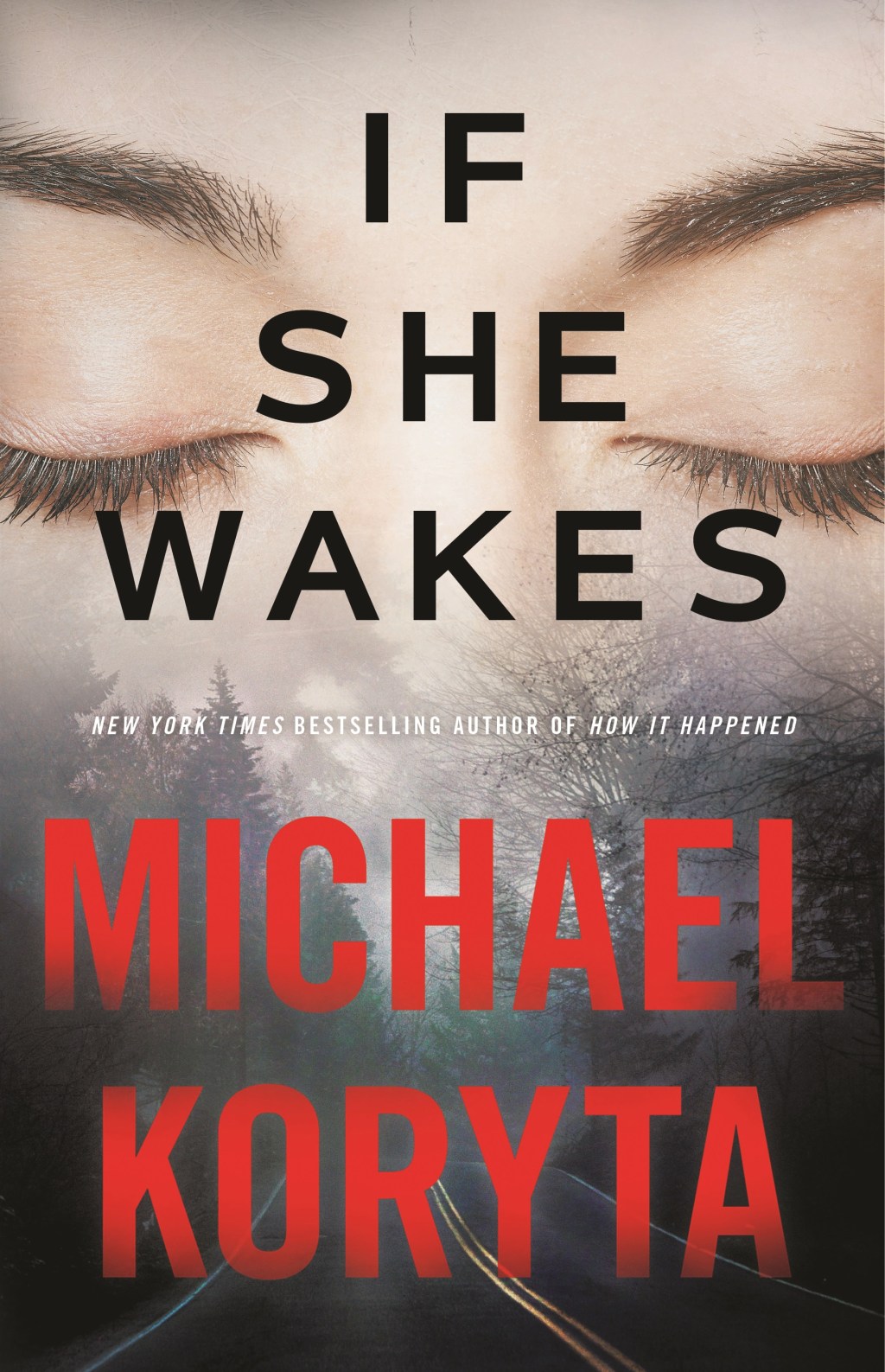
  • If She Wakes by Michael Koryta

    If She Wakes by Michael Koryta

                  There was a real sense of relief for Michael Koryta fans when the bestselling author finally killed off the evil Blackwell brothers several novels ago and so it’s with dread to see the son of one of the brothers appears in his latest mystery thriller, If She Wakes. Still a teen but already a perfect sociopath, Dax Blackwell is hunting down a missing cell phone and trying to eliminate anyone who stands in his way. That includes Tara Beckley, who was almost murdered by another competitor for the phone and now is a prisoner of locked-in syndrome, confined to a hospital bed, totally alert but unable to communicate in anyway. If Tara wakes, she can reveal the secrets of the phone. Those trying to protect her without fully understanding what is going on are former race and stunt car driver Abby Kaplan who is now working as an insurance investigator and Tara’s sister Shannon, an attorney who is sure her sister can understand what’s going on while others are urging that life support be turned off.

                  Michael Koryta took time to chat with Jane Ammeson about his latest book.

                  JA: How would you summarize If She Wakes for readers?

                  MK: A hit man, a disgraced stunt driver, and an alert woman who is believed to be in a coma — and there’s a dog! What more do you want?

                  JA: Do the Blackwells scare you as much as they do me?

    MK: I know what it says about me that I’d begun to miss the Blackwells after writing about them first in Those Who Wish Me Dead and then again when I was working on the script for that film. It was while working on the script that I began to think about just how oddly family-oriented they are for sociopaths. They care about nothing but one another. The family bond is very deep. This came back to mind a few times, and I wondered what it would be like to be the son of the LeBron James of contract killers. What would that kid turn out like? What if he took on the family business? I decided to try Dax for a chapter and see if I found him interesting. Once he arrived on scene, he wasn’t leaving.

                  JA: How did you get up to speed (sorry about the pun) about the type of driving Abby is capable of?

                  MK:  A combination of reading, research, and having a lot of experience being a very bad driver. I totaled my mother’s car on a double-S curve within a few weeks of getting my license, while testing my Abby-style reflexes. While I advocated that it was really the car’s fault, and never would have happened in a vehicle with more horsepower and better handling, no one seemed interested in supporting me in that.

                  JA: How did you come up the idea of If She Wakes? And do you plot out everything meticulously or does the story just flow once you start writing it?

                  MK:  I can’t plot to save my life. It’s all rewriting for me, getting a draft down and then seeing the book and going back and revising, revising, revising until it begins to take coherent shape. As for the idea, I really don’t understand enough at the start of a book to claim that I ever had the full concept. But the starting point came from reading a book about locked-in syndrome called Into the Gray Zone by Dr. Adrian Owen, and in particular reading about testing that was done using a Hitchcock film and an MRI.

                  JA: I read that you spend your time between Bloomington, Indiana and Maine—is each place a different kind of incentive for writing? Where to set your stories?

                  MK: I seem drawn to writing about places farther away from my hometown in Bloomington, for whatever reasons. The closest I’ve come was West Baden, in So Cold the River. And, of course, the caves in Lost Words. Maine has definitely become a place that I enjoy writing about, much as Montana did. I suspect a difference is that no matter how much time I spend in Maine, I’ll always have the perspective of being an outsider, or “from away” as they say up there. I like stories where characters are outsiders, and I love stories where the natural world can push back on a character’s goals, so Maine is a very comfortable fit.

    Ifyougo:

    What: Michael Koryta talk and book signing

    Where: Anderson’s Bookshop, 123 West Jefferson Avenue, Naperville, IL

    When: May 29 @ 7:00 pm – 9:00 pm

    Anderson’s Bookstore, 123 West Jefferson Avenue,  

    Naperville, IL

    FYI: 630-355-2665; andersonsbookshop.com

  • Wine Country Table

    Wine Country Table

    Taking us on a road trip that meanders from northern to southern California, James Beard award winner Janet Fletcher shows us how diverse the state’s growers and growing regions are in her latest book, The Wine Country Table: With Recipes that Celebrate California’s Sustainable Harvest. Accompanied by lush photographs by Robert Holmes and Sara Remington, the book was commissioned by the Wine Institute — a California wine advocacy group that received a grant to promote California’s specialty crops.

                  “What really came home to me was that there are so many different climates here in California,” says Fletcher who not only visited a plethora of wineries but also cherry orchards and avocado farms. She also learned about the sustainable practices that growers are incorporating in a state previously hit with a long-running drought.

                  Her recipes include suggested pairings with different wines and shows you how to recreate this type of casual but delicious dining at home.

    Golden Beet, Pomegranate, and Feta Salad

    SERVES 4

    WINE SUGGESTION: California Gewurztraminer or Pinot Gris/Grigio

    4 golden beets, about 1 1⁄2 pounds (750 g) total, greens removed

    2 tablespoons white wine vinegar 6 fresh thyme sprigs

    3 allspice berries

    1 whole clove

    1 clove garlic, halved

    DRESSING:

    11⁄2 tablespoons white wine vinegar

    1 tablespoon finely minced shallot

    3 tablespoons extra virgin olive oil Kosher or sea salt

    1⁄4 head radicchio, 3 ounces, thinly sliced 1⁄2 cup chopped toasted walnuts

    12 fresh mint leaves, torn into smaller pieces

    2 to 3 ounces Greek or French feta

    1⁄3 cup pomegranate arils (seeds)

    Preheat the oven to 375°F.

    Put the beets in a small baking dish and add water to a depth of 1∕4 inch. Add the vinegar, thyme, allspice, clove, and garlic. Cover and bake until the beets are tender when pierced, about 1 hour, depending on size. Remove from the oven and peel when cool enough to handle. Let cool completely, then slice thinly   with a sharp knife.

    Make the dressing: In a small bowl, combine the wine vinegar and shallot. Whisk in the olive oil. Season with salt and let stand for 15 minutes to allow the shallot flavor to mellow.

    In a bowl, toss the beets and radicchio gently with enough of the dressing to coat lightly; you may not need it all. Taste for salt and vinegar and adjust as needed. Add the walnuts and half the mint leaves and toss gently. Transfer to a wide serving platter. Crumble the feta on top, then scatter the pomegranate arils and remaining mint leaves overall. Serve immediately.

    Little Gem Lettuces with Olive Oil–Poached Tuna

    This dish requires a lot of olive oil for poaching, but you won’t waste a drop. Use some of the flavorful poaching oil in the salad dressing; strain and refrigerate the remainder for cooking greens or for dressing future salads. The strained oil will keep for a month.

    WINE SUGGESTION: California rose or Sauvignon Blanc

    1 albacore tuna steak, about 10 ounces) and 3⁄4 to 1 inch thick

    3⁄4 teaspoon ground fennel seed

    3⁄4 teaspoon kosher or sea salt

    1 large fresh thyme sprig

    1 bay leaf

    1 clove garlic, halved

    6 black peppercorns

    1 3⁄4 to 2 cups extra virgin olive oil

    DRESSING:

    6 tablespoons extra virgin olive oil (from the tuna baking dish)

    3 tablespoons red wine vinegar

    1 tablespoon salt-packed capers, rinsed and finely minced 1 teaspoon dried oregano

    1 small clove garlic, finely minced

    Kosher or sea salt and freshly ground black pepper

    11⁄2 cups cooked chickpeas (drain and rinse if canned)

    1⁄2 pound Little Gem lettuce or romaine hearts 1⁄4 pound radicchio

    1⁄2 red onion, shaved or very thinly sliced

    3⁄4 cup halved cherry tomatoes

    1⁄4 cup chopped fresh flat-leaf parsley

    Preheat the oven to 200°F. Remove the tuna from the refrigerator 30 minutes before baking.

    Season the tuna on both sides with the fennel seed and salt. Put the tuna in a deep ovenproof baking dish just large enough to hold it. Add the thyme, bay leaf, garlic, and peppercorns. Pour in enough olive oil just to cover the tuna.

    Bake until a few white dots (coagulated protein) appear on the surface of the fish and the flesh just begins to flake when probed with a fork, 30 to 40 minutes. The tuna should still be slightly rosy inside. Remove from the oven and let cool to room temperature in the oil.

    Make the dressing: In a bowl, whisk together the olive oil, vinegar, capers, oregano, garlic, and salt and pepper to taste. Add the chickpeas and let them marinate for 30 minutes.

    With a slotted spatula, lift the tuna out of the olive oil and onto a plate.

    Put the lettuce in a large salad bowl. Tear the larger outer leaves in half, if desired, but leave the pretty inner leaves whole. Tear the radicchio into bite-size pieces and add to the bowl along with the onion, tomatoes, and parsley.

    Using a slotted spoon, add the chickpeas, then add enough of the dressing from the chickpea bowl to coat the salad lightly. By hand, flake the tuna into the bowl. Toss, taste for salt and vinegar, and serve.

    Seared Duck Breasts with Port and Cherry Sauce

    SERVES 4

    Cooking duck breasts slowly, skin side down, helps eliminate almost every speck of fat. After about 20 minutes, the skin will be crisp and the flesh as rosy and tender as a fine steak. Serve with wild rice.

    Duck breasts vary tremendously in size; scale up the spice rub if the breasts you buy are considerably larger.

    WINE SUGGESTION: California Cabernet Sauvignon or Merlot

    SEASONING RUB:

    8 juniper berries

    2 teaspoons minced fresh thyme 2 teaspoons kosher or sea salt

    1 teaspoon black peppercorns

    4 boneless duck breasts, about 1⁄2 pound each

    SAUCE:

    1 cup Zinfandel Port or ruby port

    1 shallot, minced

    3 fresh thyme sprigs

    1 strip orange zest, removed with a vegetable peeler 1 tablespoon balsamic vinegar

    24 cherries, pitted and halved

    1⁄2 cup strong chicken broth, reduced from 1 cup 

    1⁄2 teaspoon sugar

    Kosher or sea salt and freshly ground black pepper 1 tablespoon unsalted butter

    Make the seasoning rub: Put the juniper berries, thyme, salt, and peppercorns in a mortar or spice grinder and grind to a powder.

    Slash the skin of each breast in a crosshatch pattern, stopping short of the flesh. (The slashes help render the fat.) Sprinkle the seasoning rub evenly onto both sides of each breast. Put the breasts on a flat rack and set the rack inside a tray. Refrigerate uncovered for 24 to 36 hours. Bring to room temperature before cooking.

    Choose a heavy frying pan large enough to accommodate all the duck breasts comfortably. (If necessary, to avoid crowding, use two frying pans.) Put the breasts, skin side down, in the unheated frying pan and set over medium- low heat. Cook until the skin is well browned and crisp, about 15 minutes, frequently pouring off the fat until the skin no longer renders much. (Reserve the fat for frying potatoes, if you like.)

    Turn the duck breasts and continue cooking flesh side down, turning the breasts with tongs to sear all the exposed flesh, until the internal temperature registers 125°F on an instant-read thermometer, about

    3 minutes longer. Transfer the breasts to a cutting board and let rest for 5 minutes before slicing.

    While the duck cooks, make the sauce: In a small sauce- pan, combine the port, shallot, thyme, orange zest, vinegar, and half of the cherries. Bring to a simmer over medium heat and simmer until reduced to 3∕4 cup. Add the broth and sugar and simmer until the liquid has again reduced to 3∕4 cup Remove from the heat and, with tongs, lift out the thyme sprigs and orange zest and discard.

    Puree the sauce in a blender. Set a very fine-mesh sieve over the saucepan and pass the sauce through the sieve, pressing on the solids with a rubber spatula. Return to medium heat, season with salt and pepper, and simmer until reduced to 1∕2 cup. Stir in the remaining cherries and remove from the heat. Add the butter and swirl the saucepan until the butter melts.

    Slice the duck on the diagonal. Spoon some of the sauce on each of four dinner plates, dividing it evenly. Top with the sliced duck. Serve immediately.

    The above recipes are Wine Country Table: With Recipes that Celebrate California’s Sustainable Harvest by Janet Fletcher in cooperation with the Wine Institute, Rizzoli, 2019.

    Jane Ammeson can be contacted via email at janeammeson@gmail.com or by writing to Focus, The Herald Palladium, P.O. Box 128, St. Joseph, MI 49085.

  • Courting Mr. Lincoln

    Courting Mr. Lincoln

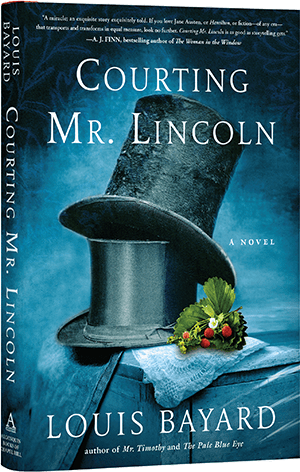
    Bestselling novelist Louis Bayard, author of the literary historical novel Courting Mr. Lincoln, has written about a fascinating story about the relationships between the future President and the two people who knew him best: his handsome and charming confidant (and roommate) Joshua Speed , the rich scion of the a wealthy hemp growing family in Louisville and sassy Lexington belle Mary Todd.

    Bayard, who will be appearing at the Book Stall, book is reviewed by staffer Kara Gagliardi’s in the bookstore’s May newsletter:

    “Louis Bayard’s new novel transports us by wagon to the soul of our country and lays bare the man who would become our 16th president. It is, in fact, the personal history behind our country’s history. The story starts small. In 1839, Mary Todd arrives in Springfield looking for a husband. Her mother is deceased, her father is remarried. She relies on the kindness (and lodging) of her older sister to launch her into society. She is an intellectual with a sharp wit, pleasing-albeit a little too round-an excellent dancer and dinner companion, a lover of politics. She is running out of time.

    “Abe Lincoln, on the other hand, is the definition of rough. Tall and gangly, he doesn’t know how to open doors for women, approach a carriage, make small talk, or accept invitations. In other words, society overwhelms him. He knows heartache from the loss of his mother and stepmother, and compares the work his father inflicted upon him to slavery. He’s also a damn good lawyer with a gift for oratory.

    “Central to the book is the character of Joshua Speed, who enables the courtship between Lincoln and Mary Todd and feels betrayed by it. Speed owns the dry goods store in town and rents a room to Lincoln above it. Good-looking and a bit of a womanizer, he takes it upon himself to teach Lincoln how to dress, behave, and move in polite circles. The two become inseparable. When he learns that Lincoln has met with Mary Todd in secret, he feels an emptiness that he cannot identify. Who is he without his best friend? Where does he belong if not by Lincoln’s side? This book portrays a match of dependency and tenderness, intellect and laughter.  It will also make you remember when you left your peers for a person you set your future upon. The stakes are high. Love wins.”

    Bayard, the author of Roosevelt’s Beast, Lucky Strikes, The Pale Blue Eye and The Black Tower, was described by the New York Times, as an author who “reinvigorates historical fiction,” rendering the past “as if he’d witnessed it firsthand.”

    Follow him at louisbayard.com

    ifyougo:

    What: Louis Bayard book signings

    When & Where:

    The Book Stall
    811 Elm St, Winnetka, IL at 1 p.m
    847-446-8880; thebookstall.com

    Unabridged Books

    3251 N. Broadway, Chicago, IL at 7 p.m.

    773-883-9119; unabridgedbookstore.com

  • William Shakespeare’s Much Ado About Mean Girls

    William Shakespeare’s Much Ado About Mean Girls

                  Take two cultural icons—William Shakespeare, the English poet, playwright and actor who is considered one of the best writers in the English language and the movie Mean Girls which was released 15 years ago and stars Tina Fey, one of my favorite comedians and you have tales of passion, toxic envy, back-stabbing (both literal and figurative) and intense power struggles (for kingdoms or, in the case of Mean Girls, to belong to the most popular high school clique.

                Now, Ian Doescher, a best selling author has combined the two in the recently introduced Pop Shakespeare series from Quirk Books, starting with two books, William Shakespeare’s Much Ado About Mean Girls and William Shakespeare’s Get Thee Back to the Future. Both cost $12.99 each.

                Doescher, who earned a B.A. in Music from Yale University, a Master of Divinity from Yale Divinity School, and a Ph.D. in Ethics from Union Theological Seminary, has taken the Bard’s comedic play Much Ado About Nothing (nothing signifying a great deal of fuss over something of little importance) and Mean Girls which tells the story of Cady Heron, a home-schooled child of anthropologists raised in Africa who enrolls in an American high school.

                Written in iambic pentameter, the style of poetry favored by Shakespeare, the books are in a play format. If you’re like me and forgot exactly what iambic pentameter is, Doescher explains that it’s a line of poetry with a very specific syllabic patter.

                “The iamb has two syllables and pentameter mean they are five iambs in a line,” he says. “That means that iambic pentameter is a line of ten syllables.”

                Think da-Dum, da-Dum, da-Dum, da-Dum, da-Dum, da-Dum, he says. Or to make it easier, sing the line from Simon and Garfunkel’s song that goes “I’d rather be a hammer than a nail.”

                At first reading the books can be daunting but it only takes a short time to get in the rhyme of the poetry and recognize scenarios and phrases from both Shakespeare and Mean Girls and enjoy the humor.

                A natural to write these books which also includes William Shakespeare’s Star Wars, Doescher describes himself as having been the high school nerd who memorized Shakespeare’s most famous soliloquys and then felt compelled to repeat them for friends, family and even to perform them while standing on his desk in English class. We have to agree with him about the nerd thing, particularly after he says that he’s been practicing speaking in iambic pentameter since high school.

    Ifyougo

    What: Ian Doescher talk and book signing.

    When: Friday, April 26 from 6 to 7 pm

    Where: Anderson’s Bookshop, 123 W Jefferson Ave, Naperville, IL

    Cost: Free and open to the public.

    FYI: To join the signing line, please purchase one of the author’s latest books, William Shakespeare’s Much Ado About Mean Girls and William Shakespeare’s Get Thee Back to the Future, from Anderson’s Bookshop. To purchase please stop into or call Anderson’s Bookshop Naperville (630) 355-2665 or order online at andersonsbookshop.com

  • Save Me the Plums: Ruth Reichl’s Memoir
    Save Me the Plums: Ruth Reichl’s Memoir

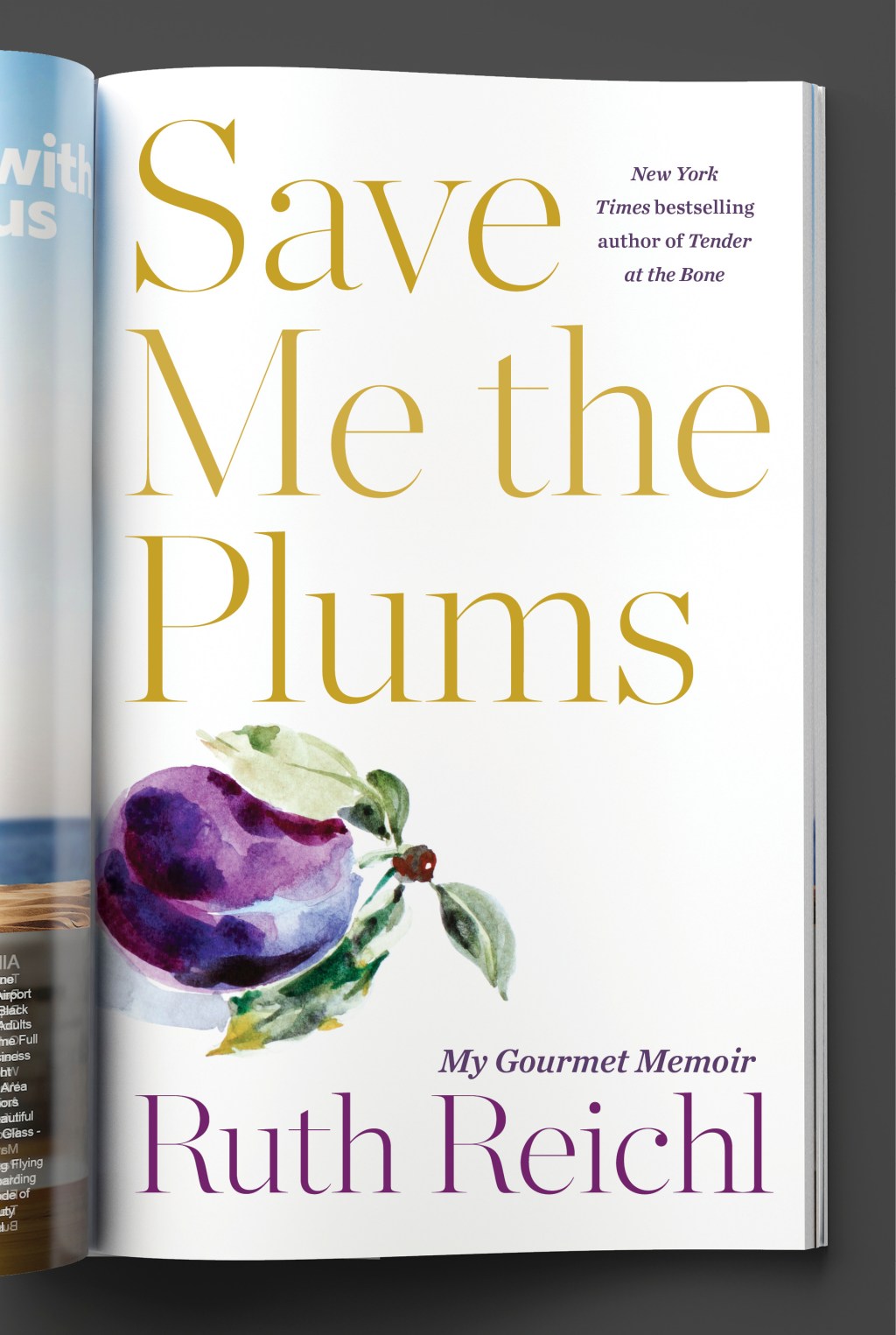
                A decade ago, out of all the food magazines published, the most famous was Gourmet, which offered a sophisticated look at culinary trends and cookery. And Ruth Reichl, who formerly had been the food critic for the New York Times, a job that entailed wearing disguises because her photo was plastered on a large number of kitchen walls in the city’s restaurants, was the editor-in-chief of the magazine. It’s a story she recounts in her latest book, Save Me the Plumst (Random House; 2019 $27). You don’t need to be a serious foodie to enjoy her take on what she calls “the golden age of magazines.”

                Reichl didn’t want the job and though she had collected Gourmet magazines starting when she was eight, she saw it as old fashioned and stuffy and at first said no. But the publisher wanted to take the magazine in a different direction and saw Reichl as the person to be able to make that happened. So, she signed on to a job that included a limousine service, first class airfare and a lavish expense account. The selling point after turning it down the first time was that she would be home in the evenings with her son, not critiquing restaurants.

                “I never wanted to become that person,” says Reichl about the luxuries and perks. She recalls flying coach and seeing two of her colleagues boarding the same flight as they were going to the same place and they looked at her in wonderment as they headed to the first class section. She took the bus until a limo driver shamed her into using his service on a regular basis.

                 Despite being the food editor and restaurant critic at the Los Angeles Times, the experience of being Gourmet’s editor-in-chief made Reichl quickly learned how much she didn’t know. She recalls freaking her first day when the staff started talking about TOCs and she had to desperately call a friend and ask what that meant as she didn’t want to look ignorant in front of her employees.

                “Table of Contents,” she was told. How simple but it shows the type of learning curve Reichl was encountering in her new career.

                Being Reichl, multiple James Beard-winning and bestselling author, she also includes a few recipes in her book.

                “All of my books have recipes, so I had to have some,” she says. That includes the turkey chili she and her staff used when the gathered in the Gourmet test kitchen on 9/11 and cooked for the first responders.

     “I still love cooking and get an enormous amount of pleasure from it,” she says. “And I like to cook for other people. Every morning I ask my husband what he would like to eat.”

    Indeed, for Reichl, food is such a sensory experience that she often likes to eat alone so she can savor every mouthful, letting it take her back to the source of what she’s consuming.

                From the magazine folded and everyone went home, Reichl knew she’d write a book about her time at Gourmet and kept copious notes and saved emails. “But then my editor had to torture me into actually writing it.”

                She wants readers to come along for the ride when reading her book.

                “I want them to get the sense of what it was like,” says Reichl. “I want them to enjoy themselves as much as I did.”

    Ifyougo:

    What: Ruth Reichl in-conversation with Louisa Chu, a Chicago based food writer.

    When: Wednesday, April 24 at 6 pm

    Where: 210 Design House, 210 West Illinois, Chicago, IL

    Cost: The cost of on ticket is $56 ($58.95 w/service fee) and includes a copy of the book, wine, and tastes made from Ruth’s book My Kitchen Year. 2 tickets include one book, wine and tastes for $80 ($83.79 w/service fee). To purchase, visit brownpapertickets.com/event/4102551

    FYI: The event is sponsored by the Book Cellar. For more information, (773) 293-2665.

  • Abby Wambach Shows Women How to Change the Game in Wolfpack

    Abby Wambach Shows Women How to Change the Game in Wolfpack

    Abby Wambach, the two-time Olympic gold medalist, FIFA World Cup champion and international soccer’s all-time leading scorer, is taking on a new game, that of empowering women—asking them not only to be thankful for what they have but also to demand what they deserve. And that’s the premise of her new book, Wolfpack: How to Come Together, Unleash Our Power, and Change the Game (Celadon 2019; $15.82 Amazon price).

    To create a winning championship team, Wambach, who was co-captain, helped forage the 2015 Women’s World Cup Champion Team into a wolfpack of winners. Now she’d like women to ignore the old rules that help keep them down and instead change the game.

    Believing that there has never been a more important moment for women, she talks about the “Power of the Wolf” and the “Strength of the Pack,” and her book is rousing call to women outside of the sports world but employing the techniques she used to create a championship team.

    “We are the wolf,” she said in her keynote address to the Class of 2018 at Barnard’s 126th Commencement on Wednesday, May 16, 2018 at Radio City Music Hall and her book reflects that stirring speech. Her concepts of “Power of their Wolf” and the “Strength of their Pack” is her way to be a catalyst for overcoming the obstacles that women face. As an example, she talks about the pay gap where women in the U.S. still earn only 80 cents on the dollar compared to men and black women make only 63 cents, while Latinas make 54 cents.

    “What we need to talk about more is the aggregate and compounding effects of the pay gap on women’s lives,” she says.  “Over time, the pay gap means women are able to invest less and save less so they have to work longer. When we talk about what the pay gap costs us, let’s be clear. It costs us our very lives. That’s why if we keep playing by the old rules, we will never change game.”

    Wambach offers some rules to overcome being Little Red Riding Hood and instead become “the wolf.”

    · Make failure your fuel: Transform failure to wisdom and power.

    · Lead from the bench: Lead from wherever you are.

    · Champion each other: Claim each woman’s victory as your own.

    · Demand the effing ball: Don’t ask permission: take what you’ve earned.

    Ifyougo:

    What: Celebrate the release of Abby Wambach’s book Wolfpack

    When: Thursday, April 11 at 7 pm

    Where: Community Christian Church, 1635 Emerson Lane, Naperville

    Cost: Tickets cost $29.97 (with service fee) and include a pre-signed copy of the new book and admission for one person. You will receive your book when you arrive at the event. wolfpackandersons.brownpapertickets.com

    FYI: For more information, call Anderson’s Bookshops, 630-355-2665

  • Maybe You Should Talk to Someone: A Therapist, Her Therapist, and Our Lives Revealed

    Maybe You Should Talk to Someone: A Therapist, Her Therapist, and Our Lives Revealed

    Totally unexpectedly, Lori Gottlieb’s long term boyfriend, the man she thought she’d marry, made a succinct and ultimately devastating statement, saying he didn’t “want to live with a kid in the house for the next ten years” and then he was gone.

    Lori Gottlieb

    Suddenly, Gottlieb, a psychotherapist who writes the weekly “Dear Therapist” advice column for The Atlantic, had to deal with her own issues as well as those of her clients, a process she chronicles in her very engaging Maybe You Should Talk to Someone: A Therapist, Her Therapist, and Our Lives Revealed (Houghton Mifflin Harcourt 2019; $28).

    The clients include John, a married man with two children and a very successful career as a television producer who pays Gottlieb in cash because he doesn’t want his wife to know he’s in therapy.

    “You’ll be like my mistress,” he tells her at the end of their first therapy session. “Or, actually, more like my hooker. No offense, but you’re not the kind of woman I’d choose as a mistress . . . if you know what I mean.”

    Another patient, newly married, had achieved tenure at her university and after years of hard work, was eager to become a parent.

    “She was accomplished, generous, and adored by colleagues, friends, and family. She was the kind of person who enjoyed running marathons and climbing mountains and baking silly cakes for her nephew,” writes Gottlieb. 

    The client, Julie, overcomes cancer once and then six years later receives the news it has reoccurred, and she has a year or so to live.

    “One of the themes of the book is that our stories form the core of our lives and give them deeper meaning,” says Gottlieb, whose book was recently optioned for television by Eva Longoria for 20th TV. “Sharing these stories is essentially about one person saying to another: This is who I am? Can you understand me?”

    But even for therapists, it’s scary to reveal ourselves to others and that’s what Gottlieb, who speaks about relationships, parenting, and hot-button mental health topics on such shows as The Today Show, Good Morning America, CBS This Morning, Dr. Phil, CNN, and NPR, discovered when she found a professional to talk to about her fractured relationship. Despite her understanding that’s it’s important to be truthful, she, like all of us, edit the truth.

    “Clients make a choice about what to leave in, what to leave out as well as how to frame the situation in the way they want me to hear it,” says Gottlieb who found herself doing just the same. “One of the things with my therapist that I did that my clients do to me, is I wanted him to like me, I want him to like me better than others in the waiting room. That’s why we don’t always tell our therapists our secrets. We don’t realize the ways we get in out way in the therapy room is the way we get in the way in our own lives.”

    Gottlieb describes people as emotionally hiding out.

    “People carry out their pain, they think they can compartmentalize,” she says. “I see so much loneliness in the people who come to see me, people are really stressed out.”

    Texting and social media sometimes stop us from being together and communicating. That’s why therapy can help people change largely because as they grow in connection with others in a way often lost in our fast-paced, technology-driven culture.

    But change is scary, both for Gottlieb in her personal therapy sessions that she chronicles and for her clients who we follow as they come to grips with their issues in her office.

    “I thought it was important to put myself out there with this book,” says Gottlieb, noting that the book was very difficult to write. “Therapists are real people and we have our own struggles. We’re all members of the human race.”

     Ifyougo:

    What: Author Lori Gottlieb and Amy Dickinson, who writes the syndicated advice column, Ask Amy, discuss Maybe You Should Talk to Someone

    When: Monday, April 8 from 6-7:15pm 

    Where: Harold Washington Library Center, 400 S. State St., Chicago IL

    Cost: Free

    FYI: (312) 747-4300; chipublib.bibliocommons.com

    Gottlieb will also be interviewed by Dr. Alexandra Solomon of Northwestern University and author of Loving Bravely on Tuesday, April 9 at 7pm at New Trier High School, Cornog, 7 Happ Road, Winnetka, IL. Cost: Free. Sponsored by The Book Stall. 847-446-8880; thebookstall.com