Category: Thriller

  • The Girl Who Died Twice

    The Girl Who Died Twice

              Never one to hide her feelings, Lisbeth Salander is angry and back for vengeance in the sixth novel of the series that started with The Girl with the Dragon Tattoo. 

              Abused by both her mobster father as well as the psychiatrist treating her, Lisbeth is an avenging angel of sorts—determined to punish evil and the powerful people who prey on others. Her doppelganger is her own twin sister Camilla.

    © 2019 Fotograf Anna-Lena Ahlström

              “The sisters chose different sides,” says author David Lagercrantz, discussing the plot of The Girl Who Lived Twice in a phone call from Stockholm, Sweden where he lives. “Camilla chose the strength—her father and Lisbeth chose taking care of the weak—protecting her mother from her father’s violence. The sisters are bitter enemies, and this is their final battle.”

              Though social skills aren’t one of Salander’s strong suits—she likely falls on the autism spectrum, she does have the ability to hack through the fire walls of almost any computer system.  Add to that her martial arts abilities and photographic memory and she makes a worthy adversary of her equally brilliant but pathological sister.

              Lagercrantz, who is embarking on a two month worldwide tour, took over writing the Salander series after the death of Steig Larsson, author of the original three novels.

              “I was scared to death to death when they asked me to do this,” says Lagercrantz, noting he was smuggled into a side door of the publishing house to avoid speculation he was being selected to write the best selling thrillers. “It was a suicidal mission in many ways to agree to do it because people loved his books so much. But it’s been fantastic.”

              Like Larsson, Lagercrantz’s Salander novels are complex, leading Salander and Mikael Blomkvist, the crusading journalist who befriended her, into a dark world of scheming crooks, billionaires and corrupt politicians. The latter includes the Minister of Defense, the only survivor of a Mount Everest climbing expedition who may be involved in the murder of a homeless Nepalese Sherpa.

              Lagercrantz says The Girl Who Lived Twice will be his final book in the series.

              “They’d like me to write ten or more, but I want to move on to my own fiction,” he says. “It was a bittersweet decision.”

              In an intriguing aside, Lagercrantz lives in the same neighborhood as the fictional Blomkvist and Salander.

              “When I’m walking, I sometime wonder if I’ll run into them,” he says.

              What would he say if he did?

              “That would be interesting, wouldn’t it?” he says.

  • What Rose Forgot: Nevada Barr’s Latest Mystery
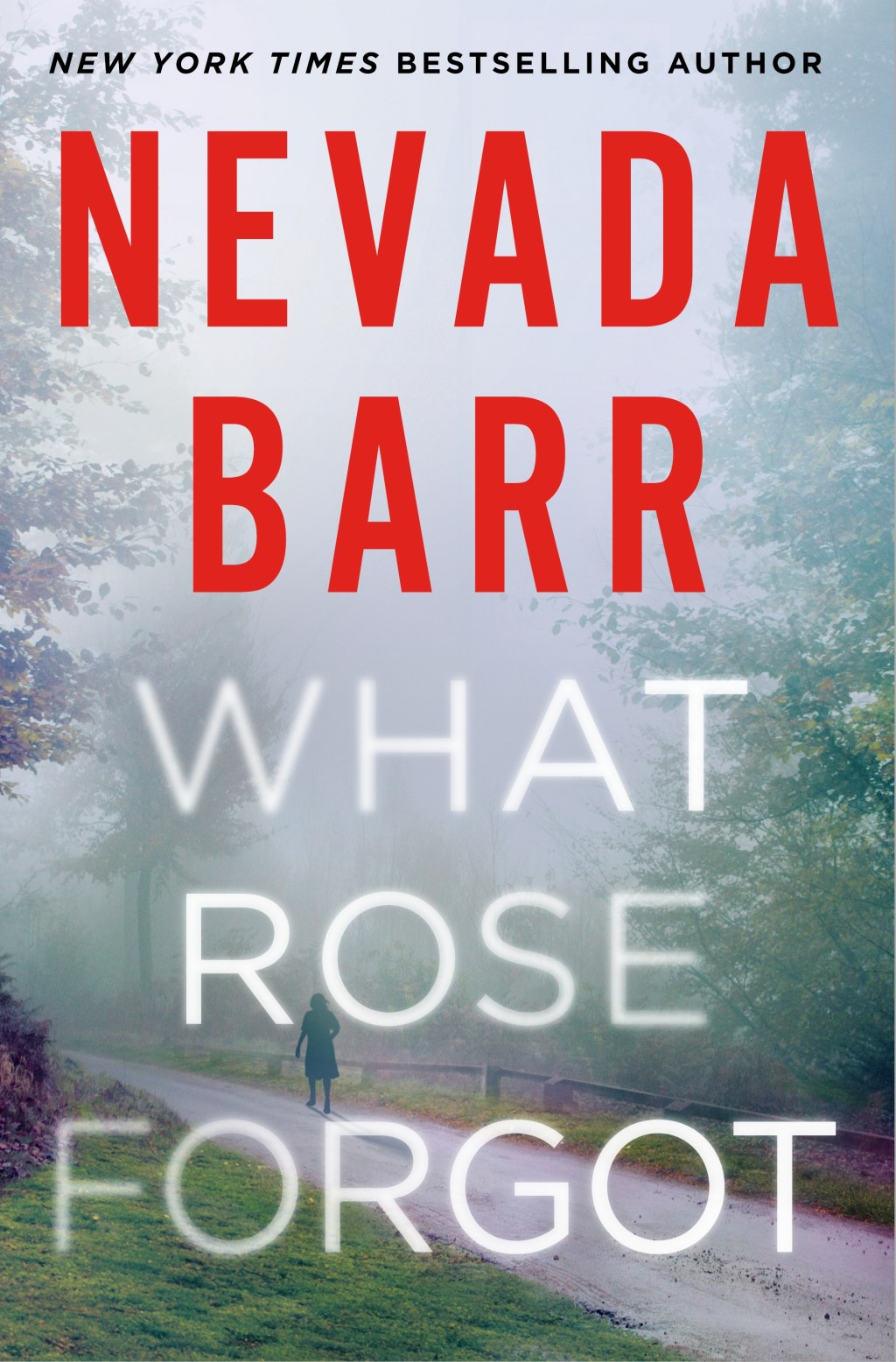
    What Rose Forgot: Nevada Barr’s Latest Mystery


    Waking up in a hospital, her brain foggy, Rose Dennis finds herself in a nightmare situation. She’s been committed to an Alzheimer’s Unit in a nursing home and has no memory of how she how she ended up there. But one thing Rose does know. Overhearing one of the administrators says that she’s “not making it through the week,” she realizes her only chance of staying alive is to escape from the nursing home.

    Best selling author Nevada Barr, known for her award winning series about National Park Ranger Anna Pigeon, has created What Rose Forgot, a fascinating stand alone thriller in which we watch Rose try to outwit whoever is trying to kill her.

    She starts by not taking her medications and by outwitting the nursing home aides, is able to escape. But that’s just the beginning. She needs to convince people she isn’t demented. But it’s her relatives who had the legal papers drawn up and authorities side with the nursing home. At times, even Rose isn’t sure she’s completely sane–that is until a person intent on killing her arrives.

    Fortunately her sister Marion, a reclusive computer hacker as well as Rose’s thirteen-year old granddaughter Mel, and Mel’s friend Royal are on her side. Gathering her strength and her wits, Rose begins to fight back, intent on finding out who is after her. She’s going to have to be quick though and find out who wants her dead before they succeed.

  • A Better Man

    A Better Man

              Louise Penny’s latest mystery, A Better Man, finds Chief Inspector Armand Gamache, who previously had been demoted, back on the job at the Sûreté du Québec. But his first day isn’t going well at all.  As flood waters threaten to engulf the province where he lives and works and bridges are being shut down, he is approached by a grief-stricken father looking for his missing daughter. It is not a case Gamache should take on during this emergency, but he feels a sense of obligation and he agrees.  

              It’s a tough juggling act, made more so because of the fury of social media criticizing the decisions he’s made both past and present and the ever increasing dangers as the water rises. rise When thinks about calling off the search for the missing girl to focus on the crisis on hand, he finds he can’t. After all, he has a daughter too.

              This is the 15th book in the Gamache series and Penny, who lives in a small village outside of Montreal, says she created Gamache as her main character because she wanted to write about someone she could be married to.

              It’s a decision that made even more sense after the death of her husband several years ago. It was writing that helped her ease back into the world, returning to Gamache and the fictional Canadian village of Three Pines. Ironically, it was her husband, a pediatric hematologist, who helped her enter that world. A former journalist and then anchor for the Canadian Broadcasting Corporation, she struggled with an addiction to alcohol before joining AA and never having a drink again. Shortly after that she met her husband and he encouraged her to quit her job and try writing, saying he would support her while she did so.

              At first Penny struggled writing what she calls “the great historical novel.”

              “Then I looked at my bedside table, which was very well represented with crime novels,” she recalls. “Seeing those I had one of those moments where I thought, oh, maybe that’s what I should be writing.”       

    It was the right choice. Penny’s Gamache novels are often on the New York Times Best-Seller list and she’s earned numerous accolades including being a seven time winner of the Agatha. In 2017 received the Order of Canada for her contributions to Canadian culture.

  • I Know What I Saw: Modern-Day Encounters with Monsters of New Urban Legend and Ancient Lore
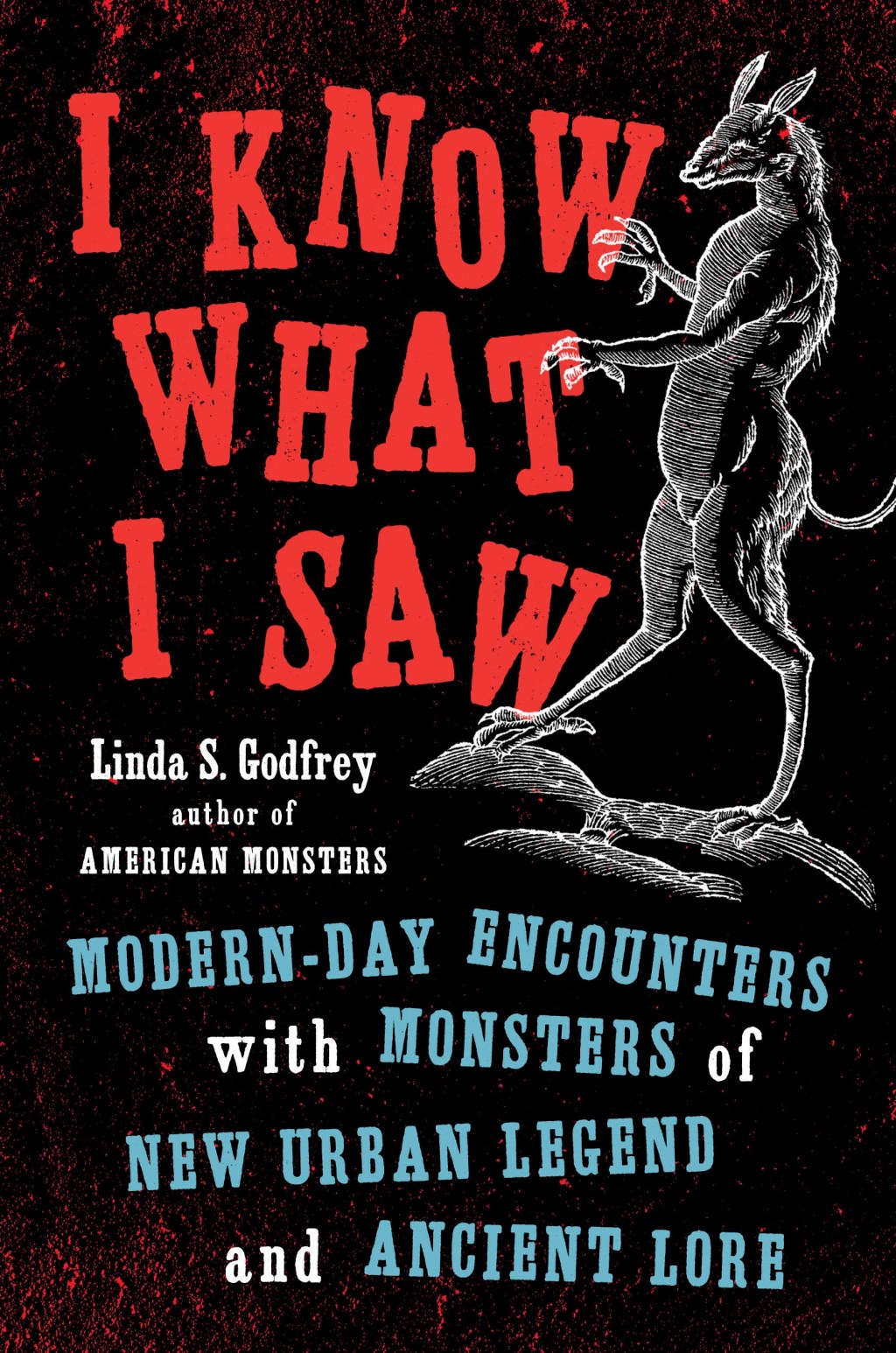
    I Know What I Saw: Modern-Day Encounters with Monsters of New Urban Legend and Ancient Lore

           Linda Godfrey’s blog identifies her as an author and investigator of strange creatures and now in I Know What I Saw: Modern-Day Encounters with Monsters of New Urban Legend and Ancient Lore, her 18th book on such sightings as the Wernersville Dog Woman, Killer Clowns, The Red-Eyed Monster of Rusk County, Wisconsin, The Hillsboro Hairless Thing and the Goat Man of Roswell, New Mexico.

    Linda Godfrey

          Godfrey, a journalist, never intended to become an expert on urban legends, ghostly tales and creatures half human and half animal or whatever—there are so many different things that she categorizes them in her book with chapter titles like “Haunts of the Werewolf,” “Phantom Quadrupeds,” “Other Nonconformist Canines”  and “I Saw Bigfoot.” 

          It all began in 1991 when Godfrey, a local interest reporter at The Week, a weekly county newspaper in Delavan, Wisconsin, was listening to similar stories told by sober locals about the frequent sightings of what they described as a large wolf walking—and sometimes running on its hind legs, devouring large amounts of road kill on Bray Road.

          “I was trying to keep an open mind,” says Godfrey, who was seriously skeptical.

          But when she kept hearing the same story—or relatively the same story—repeatedly from everyday type of reliable people, she began to reconsider, wondering what they really were seeing. Could it be a wolf that could, like trained dogs, walk up right like humans? Her first book, Beast of Bray Road, Godfrey shared results from her investigation and gained her national attention.

          “It’s easier to record encounters than understand them,” says Godfrey who has become more open to believing that there are other-worldly things as well as real. “There’s a good chance that what we call monsters are actually unknown and unidentified natural creatures that have learned to be very elusive. After all, the people who report monsters come from all demographics. They are police officers, businesspeople, teachers, housewives, doctors—they’re from all walks of life. Sometimes they are too traumatized to talk about it or report it.”

          Many of Godfrey’s stories reflect her geographic location—she still lives in Wisconsin. But she travels all over the country to follow up on sightings. They not only cross state lines but also timelines—many of the creatures she hears about today have their beginnings in legends hundreds of years ago.

          If you have a sighting you’d like to report, she’d like you to email her at lindagodfrey99@gmail.com says Godfrey, noting as a journalist, she’d like both facts as well as the feelings and emotions engendered by encounter.

          “Provide as much information as possible including date, time of day, weather, lighting conditions,” she says, citing a long list of what she’d like to know. These include physical characteristics as well as any thoughts or emotions that occurred when a person made a sighting, how they felt afterward, whether they observed the creature leave the scene, any interactions with the creature, whether, after the sighting, the person returned to check for evidence such as footprints or hair and such.  And for those who can draw, a sketch would be great. Those reporting sightings should know that Godfrey keeps all the information she gathers confidential unless she has permission to reveal it.

          “For those who do go looking for these creatures or who have encounters, Godfrey is both reassuring and cautioning.

          “We need to take care,” she says. “As we would of any wild thing.”

    Ifyougo:

    What: Reading, Q&A and signing with Linda Godfrey

    When: Thursday, July 25 at 7:00 PM

    Where: The Book Cellar, 4736-38 N Lincoln Ave Chicago, IL

    Fyi: (773) 293-2665; bookcellarinc.com

  • The Mykonos Mob

    The Mykonos Mob

                  In The Mykonos Mob, the tenth book of the Greece-based mystery-thriller series written by New York Times bestselling author Jeffrey Siger, Chief Inspector Andreas Kaldis finds himself face-to-face with the nation’s top crime bosses, all of whom are as perplexed as he is about who’s responsible for the murder of a corrupt former police colonel who ran the island’s protection rackets. In the meantime, Kaldis’ s wife, Lila, is trying to find an identity for herself beyond wife and mother and teams up with an ex-pat with a shady side. The two decide to mentor exploited young island girls, a charitable act that unknowingly negatively intersects with her husband’s investigation.

                  Siger, who left a lucrative career as a partner in a Wall Street law firm to write mysteries, says that Greece provides an inexhaustible source of material for the two central elements of his series–the serious, modern-day issues his characters need to confront and overcome, and a perspective on those issues found in the ancient past.

    “There is no place on earth more closely linked to the ancient world than Greece,” he says. “It is the birthplace of the gods, the cradle of European civilization, the bridge between East and West. Spartan courage, Athenian democracy, Olympic achievement, Trojan intrigue—all sprung from this wondrous land.”

    It’s also a place he knows very well.

    “Each year I live on Mykonos longer than any other place on earth, and have for about a dozen years,” says Siger, noting that he first visited the island 35 years ago at a friend’s suggestion who thought he’d love Greece. “She was right. From the moment I stepped onto the tarmac at the Mykonos airport, I felt as if I were home. That very first day I happened to pass by a jewelry shop on my way into town from my hotel, though I forget how the proprietor lured me inside. Unbeknownst to me, I’d stumbled upon the most loved man on Mykonos.  A consummate gentleman and fervent booster of the island, he had an extraordinary circle of local, national and international friends, all of whom made a point of regularly stopping by to say hello to him.”

    Becoming an insider almost immediately has helped him craft stories about the workings of the islands both from a political and social viewpoint.

    “My ideas come from the strangest sources, often unexpected,” says Siger. “More bizarre than where they come from is how often my fictional plots have an unnerving tendency to come true. For example, my second novel in the series, Assassins of Athens featured a character in the mold of Greece’s current Prime Minister Alexis Tsipras years before his rise to power; my third book, Prey on Patmos, anticipated by seven years the current turmoil involving Mt. Athos, the Russian government, and the Patriarch in Constantinople, and many of the details surrounding the fictional assassination serving as the backstory latest book, were just reported by the Greek press as key details of an actual assassination that occurred long after The Mykonos Mob was written.”

    For more about Jeff Siger and his books, visit jeffreysiger.com/

  • The Border: A Novel (Power of the Dog)

    The Border: A Novel (Power of the Dog)

              “I’ve long and often said that the ‘Mexican Drug Problem’ is really the American drug problem,” says Don Winslow who recently completed The Border, the third book in his Cartel Trilogy.

              While Winslow is writing fiction, his New York Times bestselling books are all too real.

              “We’re the consumers and the ones funding the cartels and fueling this violence because of our demand for drugs,” says Winslow. “And then we have the nerve to point to Mexico and talk about Mexico corruption. What about our corruption?  If there’s anyone who should be building a wall, it’s Mexico to protect themselves from our demand.”

              Winslow’s fast action paced books, written in a style he describes as “close third person,” are good reads on several levels, including the enjoyment of a well-researched thriller about Drug Enforcement Agency undercover operative Art Keller and his long struggle in a harrowing world amidst Mexican cartel power struggles, traffickers, drug mules, teenage hitmen, families seeking asylum to escape the drug wars, narcos, cops and political corruption on both sides of the border as well as attorneys and journalists.

              The other level is the indictment of what he views as a failed policy by the U.S. to stem the tide of drugs.

    “We’ve had a War on Drugs for almost 50 years and last year more people died of drug overdoses than ever before,” says Winslow. “We’ve already had this lab experiment and it was called Prohibition. As long as you have people wanting drugs, you’ll have people selling drugs. The way to end the violence and crime that goes along with drug use is to legalize drugs and treat them as the social health problem they are.”

    Whether you agree with Winslow, whose books have been acquired by FX Networks for television, his writing is compelling as he takes us into a world he has inhabited since his first book, The Power of the Dog, was published. He intended to end the series with The Cartel, his second book about Keller, which he sold to Fox for a seven-figure amount.

    “I swore that was my last book—I was done,” he says. “But the difficulty was that the story wasn’t. The violence in Mexico is increasing, the heroin epidemic in the U.S. is killing more people and the immigration issue—there was more to discuss. Like in my first two books, I had more to say through the medium of crime fiction.”

    Winslow says the escalating violence in Mexico is amazing. In 1998, the big news was the murder of 19 people in a Mexican village that was drug related.

    “By the time I was working on The Cartel, that kind of incident wouldn’t even be in the papers, it’s such a low body count,” says Winslow, noting that the difficulties in writing his earlier books was finding people involved in the drug trade who were willing to talk. “By the time I got done writing The Cartel, people who had been hiding their crimes were celebrating them.”

    But Winslow says he’s seeing a definite groundswell of change.

    “Cities are doing some really interesting and forward thinking about it,” he says. “We have a 2.2 million prison population behind bars and 20% of that is drugs; we have 181,000 in Federal prison and around 90,000 of those are drug related. We are the market for drugs. We’re 5% of the world’s population and we use 80% of the opioids. We need to be doing something different.”

    Though he says he’s done with the Cartel Trilogy, Winslow acknowledges it was weird when he sent off his final manuscript.

    “That was 20 years of my life, a total of one-third of my life,” he says.

    Visit Don Winslow.com

  • A Vanishing Man: Charles Finch’s Latest Victorian Mystery
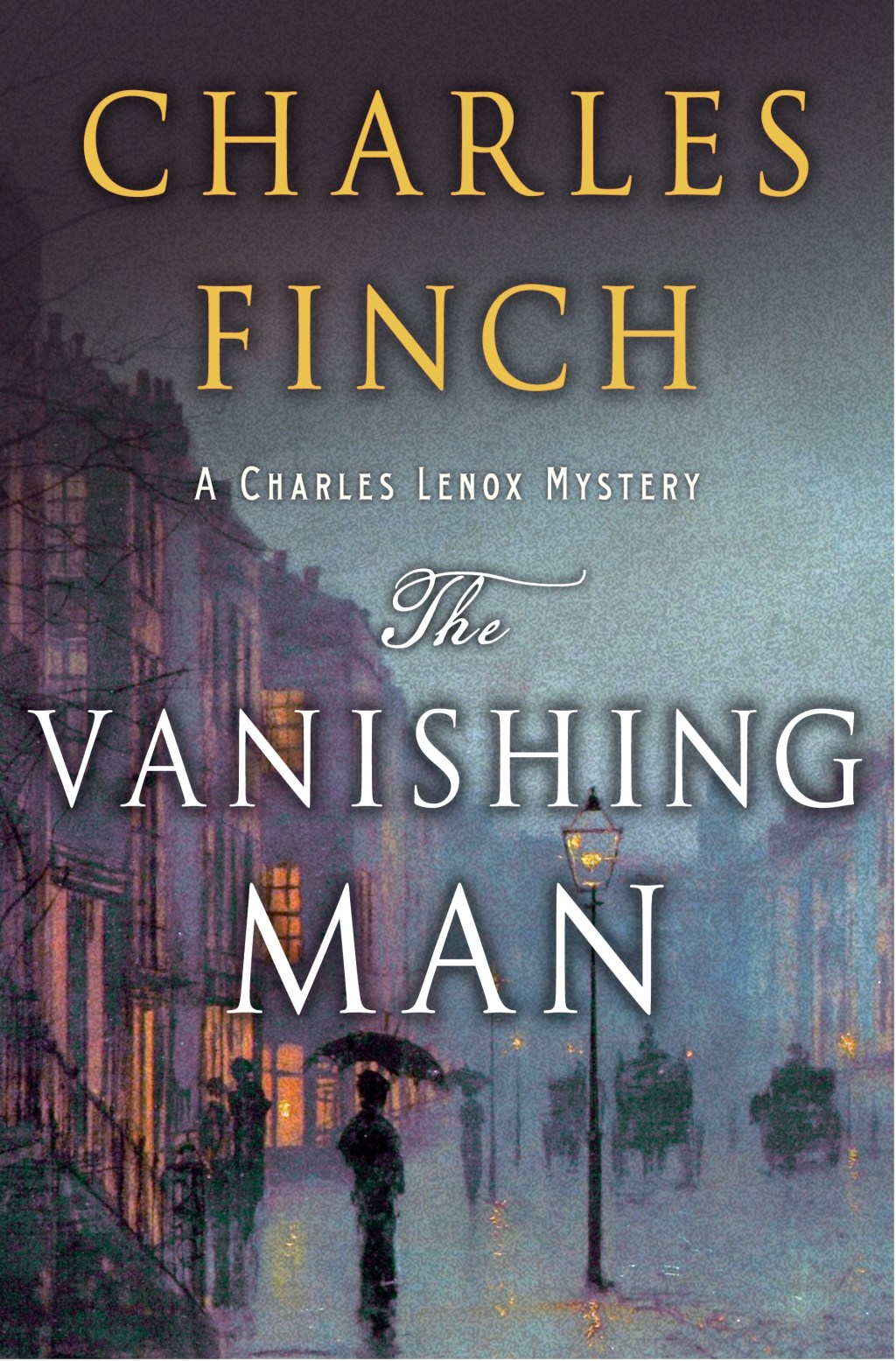
    A Vanishing Man: Charles Finch’s Latest Victorian Mystery

                  Charles Lenox is a well-educated, well-connected young man, but even he, when called to the Duke of Dorset’s home after a painting is found to have been stolen, knows his place. After all, even among the aristocracy, a Duke is way above Lenox, particularly now that he has taken to detecting (after all, what well-bred man works?). But status doesn’t deter Lenox from carrying out his investigation—even when it involves standing up to the Duke and pursuing the revelation of a long-held family secret that leads to murder.Finch, Charles_CREDIT Timothy Greenfield-Sanders

                  Lenox is the hero of a series of Victorian era mysteries involving Charles Lenox written by bestselling author Charles Finch who though he calls Chicago his home, seems mainly to live in London during the mid-to-late 1800s. His newest Lenox novel, The Vanishing Man (Minotaur 2019; $26.99) is the second in his three-series prequel showing the detective when he was young and just starting off. The prequels take place before the 11 other Lenox mysteries Finch has written.

                  Interestingly, Finch has been writing his novels for so long, he says he’s never had a real job. He also has a philosophy of writing that goes against what’s commonly recommended.

                  “I think you should write what you love,” he says. “Not what you know or see. And I love that period of history.”

                  He must as he spends a lot of time in a different country and different century. Though Finch says he’s a hypochondriac and would be afraid to really be a part of a time when even a simple infection could kill–penicillin after all is still over half a century from being discovered.

                  “But I would love to walk down the streets and get a feeling for what it was like at that time,” he says. “I’d like to really immerse myself.”

                  Instead Finch delves deep into research and history.

                  “This book was especially difficult to peel myself away from,” he says.

                   He’s also an avid reader of Victorian novels (Finch lists Anthony Trollope, Sherlock Holmes and George Elliott as among his favorites), Finch lived in England for almost four years so though he can’t go back to Victorian times, he at least is very familiar with the country. He says he chose his latest plot because he wanted to wade into Shakespeare and examine some of the mysteries and myths surrounding the great playwright.

                  “Writing about Shakespeare gave me a chance to look into every old apocryphal story about him and his times, and in the end– without giving too much away–I discovered one of the most plausible—and unproven–theories about his life,” he says. “It’s one which is directly connected to the crime Lenox is solving in 1851.”

  • Who Murdered the Supreme Court Candidate: Mental State, a mystery novel by Law Professor M. Todd Henderson

    Who Murdered the Supreme Court Candidate: Mental State, a mystery novel by Law Professor M. Todd Henderson

    The murder of a good friend and fellow law professor inspired M. Todd Henderson to write Mental State (Down and Out Books 2018; $17.95), his first mystery novel.

    “He was a professor at Florida State University and had just dropped of his kids and was pulling out of the driveway when he was shot,” says Henderson who teaches at the University of Chicago’s law school. It turns out the friend, Dan Martel, was murdered by two hitmen hired by his ex-wife’s family to gain full custody of their children. Henderson considers himself a storyteller and using those skills he channeled his feelings into an immensely readable mystery involving the deadly political machinations put in place to hide the past of a sexual predator in order to secure a place on the  Supreme Court. It’s an interesting premise and certainly timely though this book was written well before the Brett Kavanaugh nomination and besides, Henderson’s judge is liberal.

    “My interest in law at a policy level is about power and what people are willing to do to achieve their ends,” says Henderson.

    photo-m-todd-henderson-1000x1400px-300dpi (1)

    In Mental State, Professor Alex Johnson, a professor at a renowned law school on Chicago’s southside (think University of Chicago) is murdered before he can reveal that the man being considered for the Supreme Court sexually abused him when they were both young. The death is first thought to be a suicide but FBI agent Royce Johnson, the victim’s brother, doesn’t believe his self-centered, narcissistic sibling would do such a thing. Once Royce proves it was murder, the next frame-up goes into place (the bad guys are good at backup plans) pinpointing the murder on one of the professor’s law students. But Johnson’s inability to quit trying to solve the crime soon puts himself on the wrong side of the law,  his comrades at the FBI and an array of federal officials determined to make sure the president’s pick for the highest court in the land goes through without a hitch. If that means a few murders and ruined lives to achieve this, well, it’s for the greater good.

    Ifyougo:

    What: M. Todd Henderson discusses “Mental State.” He will be joined in conversation by Jeff Ruby. A Q&A and signing will follow the discussion.

    When: Thursday, October 18, 2018 – 6:00pm – 7:00pm

    Where: 57th Street Books, 1301 E 57th St., Chicago, IL

    Cost: Free

    FYI: (773) 752-4381; events@semcoop.com

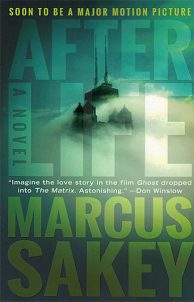
  • Marcus Sakey “Afterlife”

    Marcus Sakey “Afterlife”

    In his dream, Marcus Sakey found himself walking the streets of Chicago, everything is much the same but also different—in the way that dreams often are.marcus

    “At first, I think that everyone is gone but then realize it’s me that’s gone–not anyone else– and that I was dead,” says Sakey, who seconds after this realization woke up in his own bed, next to his wife. But the import of the dream remained.

    “In the dream, I wasn’t scared but when I woke up, it seemed like a nightmare when I imagined being in those same circumstances of wandering around, being dead and not being able to speak to her,” says Sakey, whose bestselling Brilliance, the first in a trilogy, has sold over a million copies.

    This dream became what Sakey calls a “seed crystal,” the catalyst to write Afterlife (Thomas & Mercer 2017; $24.95) a supernatural thriller featuring Brody and Claire McCoy, FBI colleagues and lovers. Killed in the line of duty, both are reunited in an after world where they must battle an ancient satanic entity.

    It was a story Sakey felt compelled to write but one that was frightening as well.

    “This one scared me from the very beginning and it scared me every time I sat at the keyboard,” he says. “I never looked up and saw ghosts. Like any of my books, when I’m writing I’m working on it all the time not just when I’m at the keyboard. When I’m having dinner with my wife or playing with my daughter on the swing, I’m thinking about the characters and what they are doing. I was also afraid I might not be able to pull it off.”

    Fascinated by mythology since he was very young and striving to bring an almost mythical quality to his book, Sakey rewrote the first 100 pages nine times, each revision adding new layers, clarifications and bringing the characters into sharper focus.

    “It was my ninth book and by far the hardest I’ve written,” he says.

    But the rewards of all that hard work have been great. Imagine Entertainment, an American film and television production company founded by Ron Howard and Brian Grazer, won an auction for the screen rights to Afterlife.  Grazer and Howard are producing the movie with Sakey writing the screenplay.

    “To be perfectly honest, none of this has sunk in,” says Sakey when asked how he feels about all this heady success. “My job up until now has been to hang out with my daughter in the morning and then go into the basement and make stuff up.”

  • The Death of Mrs. Westaway: A New Psychological Thriller by Ruth Ware

    The Death of Mrs. Westaway: A New Psychological Thriller by Ruth Ware

    Tarot cards, a threatening stranger and a mysterious will propel Hal, a young vulnerable orphan to spend her remaining cash for a railway ticket to the funeral of a woman who solicitors believe is her grandmother. Hal, who makes her precarious living reading Tarot cards, a skill she learned from her mother who was killed in a hit-and-run a few years earlier, thinks she knows better. But still, when she receives a letter indicating she is an heir to the moneyed estate, she decides to see if the same skills she uses to tell fortunes can help obtain part of her “inheritance.”

    Atmospheric and compelling, The Death of Mrs. Westaway (Gallery/Scout Press $26.99; 2018), is the fourth novel of English author Ruth Ware, author of the best- selling The Woman in Cabin 10 and The Lying Game.

    Ware, who is on a book tour throughout the  United States, took time out to answer the following questions.Author Photo - Ruth Ware c Gemma Day

    What inspired you to write The Death of Mrs. Westaway?

    I can’t put my finger on one single inspiration, but probably the key thing that defines the book for me is Hal. Having written three books about women who stumble into events more or less through no fault of their own, I wanted to write a very different kind of main character this time round – one who brings the events of the novel down upon themselves. Hal sets out to commit a crime – and in doing so sets of a nightmarish set of dominoes. That was a very conscious choice on my part!

    Were you familiar with Tarot cards before you wrote this book or did you have to learn about them? And why did you decide to make them part of the story? In that vein, have you always had an interest in fortune telling?

    I’m super skeptical and don’t really believe in any kind of supernatural forces so I had never had my cards read, though of course I was familiar with some of the images on tarot cards and found them very beautiful and inspiring as visual images. I had to research the meanings from scratch as I knew nothing about fortune telling, or the different kinds of tarot spreads. I really enjoyed the research though and found myself quite swept up in the different meanings. I suppose I made them part of the story because I wanted Hal to be someone who was practiced in reading people and telling them what they wanted to hear. So I tried to give her a job that fitted with that and was in some way a preparation. Making her a cynical tarot reader – one who doesn’t believe in the power of the cards but uses her skills to deceive – seemed fitting.

    Your books create such a sense of foreboding–do you ever get caught up in that and experience those feelings?

    Of course! Writing is like reading – you get just as caught up in the atmosphere you’re creating. But I find it’s quite hard to scare myself when I’m writing, because I know when the jump scares are going to come. I get immersed in the atmosphere, but the sense of terror I get sometimes reading other writers’ work just isn’t there, because I’m in control.

    Do you plot your novels and your characters or do they evolve?

    A mix of the two – I usually have a skeleton structure in my head, and I think about the characters for a long time before I start writing, so they are usually quite evolved by the time I put pen to paper. But I write very little down – they exist mainly in my head so they tend to be quite fluid and evolve as things develop on the page.

    What writers have influenced you?

    For this book, particularly Daphne du Maurier. I love her work.

    What’s next for you? 

    Another book of course! I’m writing it now, but it’s too early to tell you what it’s about…

    Ifyougo:

    What: Ruth Ware

    When: Monday, June 4th at 7 p.m.

    Where: Anderson’s Bookshop, 26 S La Grange Rd., La Grange, IL

    FYI: This event is free and open to the public. To join the signing line, please purchase the author’s latest book, The Death of Mrs. Westaway, from Anderson’s Bookshop. To purchase please stop into or call Anderson’s Bookshop La Grange (708) 582-6353.