The week before, they’d been isolated when a snowstorm and cold temperatures forced everyone to stay inside. But that morning Gerta, the young teacher who boarded at the Pedersen’s house, and her student Annette, a waif who had been dropped off at the home by her mother who hadn’t even hugged her goodbye, ran across the Nebraska prairie to the schoolhouse enjoying the sunny warm weather.
It was like being free again, but it was only January, and the school children let out for recess because of the wonderful weather were suddenly confronted by a black wall of clouds that blocked the sun. Running back to the schoolhouse, they discovered there was little wood left to keep the big stove burning, and they all shivered as the temperature plummeted — oh, why had they only worn their shawls and not their heavy coats and boots? The sounds of the howling wind rushed through the schoolhouse, and through the windows they saw almost nothing but the occasional bright sparks of lightning, because the snow formed a curtain so thick it blocked everything else out.
In history books, this sudden and deadly snowstorm would be known as “The Children’s Blizzard” because, of the 250 to 500 known fatalities, many were children trying to find their way home.
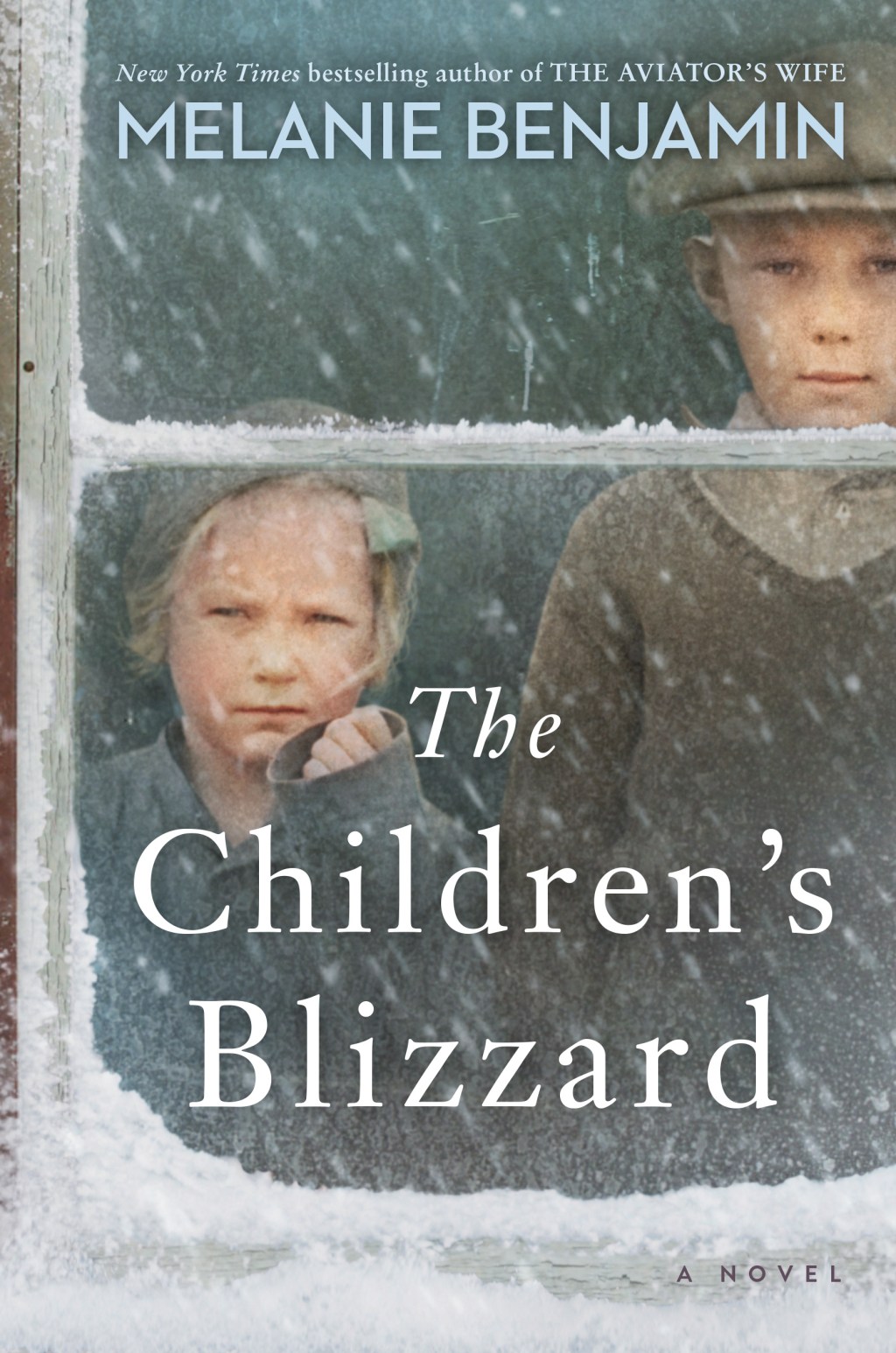
Melanie Benjamin, New York Times bestselling author of “The Aviator’s Wife,” “The Girls in the Picture” and “The Swans of Fifth Avenue,” has taken the incident and turned it into the page-turning novel “The Children’s Blizzard: A Novel” (Delacorte, $28).
It’s an obscure but fascinating aspect of America’s frontier history, but Benjamin, a voracious reader of history already, was somewhat familiar with the disaster when she and her editor decided that might be her next book. Benjamin, who grew up in Indianapolis with aspirations to become a New York actress, lived in Chicago until moving to Williamsburg, Virginia a few months ago. She began writing historical novels in 2010, and, amazingly, this is her seventh. She must, it seems after spending an hour chatting with her on the phone, write as fast as she talks.
The gist of our conversation: she’s a history junkie; she investigates a subject relentlessly, but if she can’t conjure up characters that really come to life, she’ll move on to the next project, as she doesn’t want to write a book that doesn’t seem real. That means she’s written entire novels and then just abandoned them. Even when she loves the personalities she creates, once she’s done with her novel, there are no second glances as she moves on to the next book. Oh, and though she’s a history buff and dwells in different pasts when writing, she doesn’t live in a stately old mansion, just a historic town.
Luckily, she discovered many captivating characters for “The Children’s Blizzard” and, though I know we’re talking Nebraska here, an equally compelling landscape and period of time.
Hard working immigrants, mainly Norwegians, Swedes and Germans were lured to Nebraska by dreams of lush crop producing farmland. It was easy as just packing up your belongings, the advertisements read, as coming by wagon or boarding a train to take advantage of the wonderful opportunities.
Only Nebraska really wasn’t all that. Don’t think “Little House in the Prairie” because it was so much more harsh, unyielding, and frustrating. There were blizzards, droughts where the soil cracked and the crops withered, prairie fires and vast hordes of insects devouring everything in their paths. We’re not talking fun here, not at all.
“Nebraska wasn’t a state at the time, it was a territory,” says Benjamin. “They were trying to get enough people to settle there because that’s one of the ways you became a state.”
Benjamin found that the story ignited her entire imagination, forming a connection to generations of her family.
“There was a personal epic quality to it, my mother’s family immigrated from Germany to an Illinois farm,” said Benjamin. “So the story was kind of in my DNA.”
Benjamin describes her imagination as her biggest strength, which is why she can put herself into the lives of people she’s created and who live in a time long before she was born.
“I was a serious child,” she said. “I was always imagining people’s lives and what they were like. Most authors are observers, we’re on the outside looking at the party, not at the party.”
Though Susan Ryeland thought she was ready to retire and leave London to live on a small Greek island and run the Polydorus Hotel with Andreas, her longtime boyfriend, she begins to wonder if it was such a smart move after all. The hotel, though charming, is a little ramshackle and Susan finds her days are filled with trying to make complaining guests happy, ensure the internet is working and the linens are getting changed, among a long list of other chores. It certainly is less than the paradise she imagined.
Ryeland is in this restless state when the Trehernes, an English couple who own the posh Branlow Hall, an inn on the Sussex coast, check into the Polydorus. They’ve traveled all this way to ask for Ryeland’s help. Eight years earlier, their daughter Cecily was married at Branlow Hall, the charming inn they own on the Suffolk coast. On that same day, a guest at the hall named Frank Parrish was murdered and their Romanian handyman confessed to his death and is now in prison for the crime. But Cecily, after reading “Magpie Murders,” a mystery novel written by Alan Conway before his death, became convinced she knew who had really murdered the man. Indeed, Conway knew Parrish and had even based one of his other novels on the murder. Cecily.
The Trehernes believe that Ryeland, because she was Conway’s long-time publisher before his murder (there are a lot of murders and a lot of twist and turns to keep track of so be prepared) and helped who killed him would be the perfect person to find Cecily who has disappeared.
They offer her 10,000 pounds stay at their posh inn, interview their employees who worked there when Parrish was murdered, and reread the novel Conway wrote about his death in hopes she’ll pinpoint whatever it was that made Cecily so sure the handyman wasn’t the killer.
And here it gets even more complex. “Magpie Murders” was not only the name of Conway’s book but is also the title of the real novel written by New York Times bestselling author Anthony Horowitz. In his latest, “Moonflower Murders,” he continues the saga of Ryeland, sending her once again on a mission to unravel a mystery.
10,000 pounds and the chance to get away from the drudgery of the Polydorus are enough of an incentive for Ryeland who also loves a good mystery.
“What you have in “Magpie Murders” and “Moonflower Murders” is a book insides a book,” says Horowitz who was asked to write a sequel immediately after Magpie came out and is also working on the television script for Magpie. “In both the books you have novelist Alan Conway hiding the solution of a modern mystery in his novel set in the 1950s. Susan, Conway’s editor, has to find the solution using clues from his novels.”
Yes, it is that complicated but both mysteries—which are both stand-alone novels—are fascinating reads.
Horowitz, the author of more than 40 books including two Sherlock Holmes novels commissioned by the Conan Doyle estate and the bestselling Alex Rider series for young adults which has sold more than 19 million copies worldwide,” says that “Moonflower Murders” is like getting two books in one.
Horowitz doesn’t have any virtual book events coming up, but you can watch an interview with him about “Moonflower Murders” on You Tube at: https://www.youtube.com/watch?v=thH4vrG7tWI
This story appeared in the Northwest Times of Indiana.
Mainstream & Independent Titles Score Top Honorsin the 17th Annual Best Book Awards
HarperCollins, Penguin/Random House, John Wiley and Sons, Routledge/Taylor and Francis, Forge, Sterling Publishing, Hay House, Sounds True, Llewellyn Worldwide, NYU Press, Oxford University Press, John Hopkins University Press, The White House Historical Association and hundreds of Independent Houses contribute to this year’s Outstanding Competition!
Best New Non-Fiction The Book of Help: A Memoir of Remedies by Megan Griswold Rodale Books/Penguin Random House
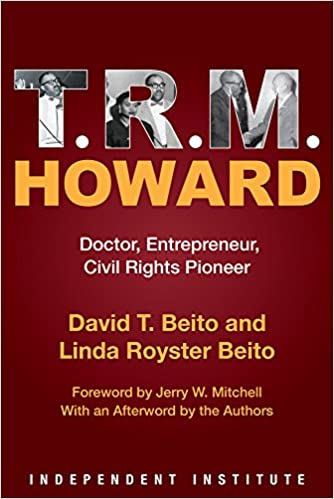
Biography T.R.M. Howard: Doctor, Entrepreneur, Civil Rights Pioneer by David T. Beito and Linda Royster Beito Independent Institute
Business: Careers TIP: A Simple Strategy to Inspire High Performance and Lasting Success by Dave Gordon John Wiley and Sons
Business: Communications/Public Relations The Apology Impulse: How the Business World Ruined Sorry and Why We Can’t Stop Saying It by Cary Cooper & Sean O’Meara Kogan Page
Business: Marketing & Advertising The End of Marketing: Humanizing Your Brand in the Age of Social Media and AI by Carlos Gil Kogan Page
Business: Motivational Unlock!: 7 Steps to Transform Your Career and Realize Your Leadership Potential by Abhijeet Khadikar Vicara Books
Business: Personal Finance/Investing Enhancing Retirement Success Rates in the United States: Leveraging Reverse Mortgages, Delaying Social Security, and Exploring Continuous Work by Chia-Li Chien, PhD, CFP®, PMP® Palgrave Pivot
Business: Real Estate Market Forces: Strategic Trends Impacting Senior Living Providers by Jill J. Johnson Johnson Consulting Services
Business: Reference The Non-Obvious Guide to Virtual Meetings and Remote Work (Non-Obvious Guides) by Rohit Bhargava IdeaPress Publishing
Business: Sales The Visual Sale: How to Use Video to Explode Sales, Drive Marketing, and Grow Your Business in a Virtual World by Marcus Sheridan IdeaPress Publishing
Business: Technology Amazon Management System: The Ultimate Digital Business Engine That Creates Extraordinary Value for Both Customers and Shareholders by Ram Charan and Julia Yang IdeaPress Publishing
Business: Writing/Publishing Great Stories Don’t Write Themselves: Criteria-Driven Strategies for More Effective Fiction by Larry Brooks Writer’s Digest Books (a division of Penguin Random House)
Children’s Educational Galileo! Galileo! by Holly Trechter and Jane Donovan Sky Candle Press
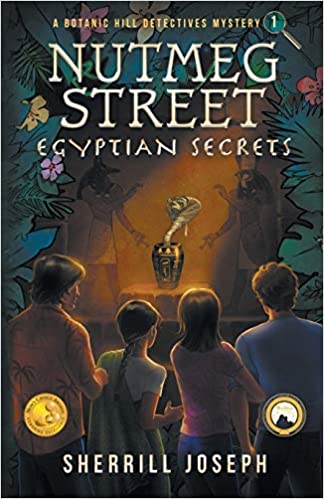
Children’s Fiction Nutmeg Street: Egyptian Secrets by Sherrill Joseph Acorn Publishing
Children’s Religious That Grand Christmas Day! by Jill Roman Lord, illustrated by Alessia Trunfio Worthy Kids
College Guides Diversity At College: Real Stories of Students Conquering Bias and Making Higher Education More Inclusive by James Stellar, Chrisel Martinez, Branden Eggan, Chloe Skye Weiser, Benny Poy, Rachel Eagar, Marc Cohen, and Agata Buras IdeaPress Publishing
Cookbooks: General Recipes from the President’s Ranch: Food People Like to Eat by Matthew Wendel The White House Historical Association
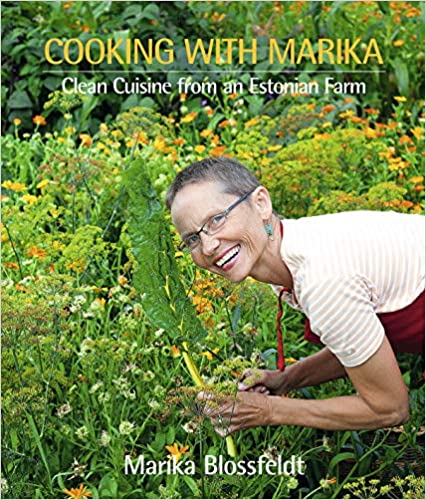
Cookbooks: International Cooking with Marika: Clean Cuisine from an Estonian Farm by Marika Blossfeldt Delicious Nutrition
Cookbooks: Regional The Perfect Persimmon: History, Recipes, and More by Michelle Medlock Adams Red Lightning Books
Current Events In All Fairness: Equality, Liberty, and the Quest for Human Dignity, edited by Robert M. Whaples, Michael C. Munger and Christopher J. Coyne Independent Institute
Education/Academic The EQ Intervention: Shaping a Self-Aware Generation Through Social and Emotional Learning by Adam L. Saenz, PhD Greenleaf Book Group
Fiction: Young Adult The Return of the Dragon Queen by Farah Oomerbhoy Wise Ink Creative Publishing
Health: Addiction & Recovery Stepping Stones: A Memoir of Addiction, Loss, and Transformation by Marilea C. Rabasa She Writes Press
Health: Aging/50+ EIGHTSOMETHINGS: A Practical Guide to Letting Go, Aging Well, and Finding Unexpected Happiness by Katharine Esty, PhD Skyhorse Publishing
Health: Alternative Medicine Have a Peak at This: Synergize Your Body’s Clock Towards a Highly Productive You by Said Hasyim Self-Published
Health: Cancer All Of Us Warriors: Cancer Stories of Survival and Loss by Rebecca Whitehead Munn She Writes Press
Health: Death & Dying Aftermath: Picking Up the Pieces After a Suicide by Gary Roe Healing Resources Publishing
Health: Diet & Exercise Whole Person Integrative Eating: A Breakthrough Dietary Lifestyle to Treat Root Causes of Overeating, Overweight and Obesity by Deborah Kesten, MPH and Larry Scherwitz, PhD White River Press
Health: General True Wellness for Your Gut: Combine the best of Western and Eastern medicine for optimal digestive and metabolic health by Catherine Kurosu, MD, L.Ac. and Aihan Kuhn, CMD, OBT YMAA Publication Center
Health: Medical Reference The Ultimate College Student Health Handbook: Your Guide for Everything from Hangovers to Homesickness by Jill Grimes, MD Skyhorse Publishing
Health: Psychology/Mental Health The Big Bliss Blueprint: 100 Little Thoughts to Build Positive Life Changes by Shell Phelps Positive Streak Publishing, LLC
Health: Women’s Health The Book of Help: A Memoir of Remedies by Megan Griswold Rodale Books/Penguin Random House
History: General Gun Control in Nazi-Occupied France: Tyranny and Resistance by Stephen P. Halbrook Independent Institute
History: Military 40 Thieves on Saipan The Elite Marine Scout-Snipers in One of WWII’s Bloodiest Battles by Joseph Tachovsky with Cynthia Kraack Regnery History
History: United States Liberty in Peril: Democracy and Power in American History by Randall G. Holcombe Independent Institute
Home & Garden My Creative Space: How to Design Your Home to Stimulate Ideas and Spark Innovation by Donald M. Rattner Skyhorse Publishing
Humor Struggle Bus: The Van. The Myth. The Legend. by Josh Wood Lucid Books
Law Banned: Immigration Enforcement in the Time of Trump by Shoba Sivaprasad Wadhia NYU Press
LGBTQ: Non-Fiction Our Gay History in 50 States by Zaylore Stout Wise Ink Creative Publishing
Multicultural Non-Fiction Overcoming Ordinary Obstacles: Boldly Claiming the Facets of an Extraordinary Life by Nesha Pai SPARK Publications
Narrative: Non-Fiction Sola: One Woman’s Journey Alone Across South America by Amy Field WanderWomyn Publishing
New Age: Non-Fiction Embodying Soul: A Return to Wholeness by Keri Mangis Curiosa Publishing, LLC
Novelty & Gift Book The Official White House Christmas Ornament: Collected Stories of a Holiday Tradition by Marcia Anderson and Kristen Hunter Mason The White House Historical Association
Parenting & Family Why Will No One Play with Me? The Play Better Plan to Help Children of All Ages Make Friends and Thrive by Caroline Maguire, PCC, M.Ed. with Teresa Barker Grand Central Publishing
Photography Beautiful Living: Cooking the Cal-a-Vie Health Spa Way by Terri Havens Cal-a-Vie Health Spa
Poetry Five Oceans in a Teaspoon, poems by Dennis J. Bernstein, visuals by Warren Lehrer Paper Crown Press
Religion: Christian Inspirational Extraordinary Hospitality for Ordinary Christians: A Radical Approach to Preparing Your Heart & Home for Gospel-Centered Community by Victoria Duerstock Good Books
Religion: Christianity Come Fill This Place: A Journey of Prayer by Stacy Dietz KP Publishing Company
Religion: Eastern Secrets of Divine Love: A Spiritual Journey into the Heart of Islam by A. Helwa Naulit Publishing House
Religion: General Esoterism as Principle and as Way: A New Translation with Selected Letters by Frithjof Schuon World Wisdom
Science Bliss Brain: The Neuroscience of Rewiring Your Brain for Resilience, Creativity and Joy by Dawson Church Hay House
Self-Help: General Start Finishing: How to Go from Idea to Done by Charlie Gilkey Sounds True
Self-Help: Relationships The Remarriage Manual: How to Make Everything Work Better the Second Time Around by Terry Gaspard Sounds True
Social Change I Am Not Your Enemy: Stories to Transform a Divided World by Michael T. McRay Herald Press
Spirituality: General The Universe Is Talking to You: Tap Into Signs and Synchronicity to Reveal Magical Moments Every Day by Tammy Mastroberte Llewellyn Worldwide
Spirituality: Inspirational Spark Change: 108 Provocative Questions for Spiritual Evolution by Jennie Lee Sounds True
Sports The Martial Arts of Vietnam: An Overview of History and Styles by Augustus John Roe YMAA Publication Center
Travel: Guides & Essays Exploring Wine Regions — Bordeaux France: Discover Wine, Food, Castles, and The French Way of Life by Michael C. Higgins, PhD International Exploration Society
Women’s Issues Muslim Women Are Everything: Stereotype-Shattering Stories of Courage, Inspiration, and Adventure by Seema Yasmin, illustrated by Fahmida Azim Harper Design, an Imprint of HarperCollins Publishers
Young Adult: Non-Fiction My Life, My Way: How To Make Exceptional Decisions About College, Career, and Life by Elyse Hudacsko Self-Published
“As 2020 comes to a close, I wanted to share my annual lists of favorites,” Barack Obama, the 42nd President of the United States, tweeted to his 127.5 million followers. “I’ll start by sharing my favorite books this year, deliberately omitting what I think is a pretty good book – A Promised Land – by a certain 44th president. I hope you enjoy reading these as much as I did.”
Somehow, the President forgot to include adding one of my books to his list again. Well, there’s always next year.
Scarlet Clark, the lead character in Layne Fargo’s newest psychological thriller, “They Never Learn,” is not your typical English professor. While she takes her studies and students seriously, for 16 years she’s also been on a mission, to eliminate men at Gorman University she considers to be bad guys. By planning carefully and keeping the murder rate down to one a year, she’s managed to avoid discovery.
That is until her last killing — the poisoning of a star football player accused of rape — doesn’t go so well. She posted a suicide note on the guy’s Instagram account, but it turns out you can’t kill a star athlete without some ramifications.
Suddenly, the other suicide notes written by Scarlet are under review and her current project — dispatching a lewd department head who also is her competitor for a fellowship she desperately wants (not all of Scarlet’s killings are devoid of self interest). Trying to forestall discovery, Scarlet insinuates herself into the police investigation while under pressure to get away with this next kill.
But it’s even more complex than this. After all, it is a Fargo book, and the Chicago author who wrote the well-received “Temper” likes the complexities and power struggles inherent in relationships.
In this case, adding to the drama is the transformation of Carly Schiller, a freshman who has escaped an abusive home life and now immerses herself in studies as a way of avoiding life. But when Allison, her self-assured roommate, is sexually assaulted at a party, Carly dreams of revenge.
Fargo, vice president of the Chicagoland chapter of Sisters in Crime and the cocreator of the podcast Unlikeable Female Characters, has a little bad girl in her too.
“I love the sinister title of ‘They Never Learn,’” she said, adding that this, her second thriller, has everything she loves in a book — sexy women, Shakespeare references and the stabbing of men who “deserve” it.
Fargo was enraged at what she saw as the injustice of the appointment of a man accused of rape into a high position.
“I channeled that all-consuming anger into a story where men like that are stripped of their power, where they get exactly what they deserve,” she said.
This are article also ran in the Books section of the Northwest Indiana Times.
Scarlet Clark, the lead character in Layne Fargo’s newest psychological thriller, They Never Learn, is not your typical English professor. While she takes her studies and students seriously, for 16 years she’s also been on a mission, to eliminate men at Gorman University she considers to be bad guys. By planning carefully and keeping the murder rate down to one a year, she’s managed to avoid discovery. That is until her last killing—the poisoning of a star football player accused of rape—doesn’t go so well.
She’d posted a suicide note on the guy’s Instagram account, but it turns out you can’t kill a star athlete without some ramifications. Suddenly, the other suicide notes written by Scarlet are under review and her current project—dispatching a lewd department head who also (not all of Scarlet’s killings are devoid of self-interest) is her competitor for a fellowship she desperately wants.
Trying to forestall discovery, Scarlet insinuates herself with the police investigation while under pressure to get away with soon with this next kill.
But it’s even more complex than this, after all it is a Fargo book and the Chicago author who wrote the well-received Temper, likes the complexities and power struggles inherent in relationships.
In this case, adding to the drama is the transformation of Carly Schiller, a freshman who has escaped an abusive home life and now immerses herself in studies as a way of avoiding life. But when Allison, her self-assured roommate, is sexually assaulted at a party, Carly dreams of revenge.
“I love the sinister title of They Never Learn,” she says, adding that this, her second thriller, has everything she loves in a book—sexy women, Shakespeare references and stabbing men who deserve it.
She was enraged at what she saw as the injustice of the appointment of a man accused of rape into a high position.
“I channeled that all-consuming anger into a story where men like that are stripped of their power, where they get exactly what they deserve,” she says.
It’s a timely topic and Fargo is excited that PatMa Productions optioned the TV rights for her book, and she’ll be writing the pilot.
That’s a form of sweet revenge.
Layne Fargo Virtual Book Events
When: Thursday, October 22; 6 to 7:30 p.m. CT
What: Layne Fargo in conversation with Allison Dickson, author of The Other Mrs. Miller, to celebrate the release of her new novel, They Never Learn.
This event is hosted by Gramercy Books in Columbus, Ohio, and will be livestreamed on their Facebook page, with participants able to ask questions of both authors in the latter portion of the program.
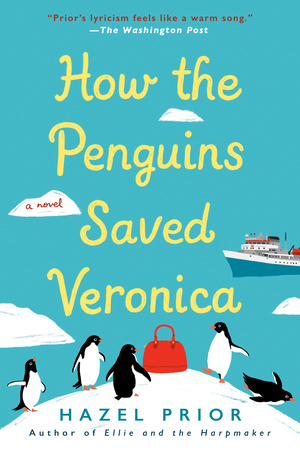
A quirky adventure following an unusual heroine, “How the Penguins Saved Veronica” tells the story of wealthy 85-year-old Veronica McCreedy, who lives alone in a Scottish mansion. Feisty, stubborn and at times whimsical, McCreedy decided to use her large inheritance in funding a group of scientists who study penguins in Antarctica.
But all that money comes with one condition — she wants to meet the penguins.
“The main inspiration of my book was a friend of mine who’s obsessed with penguins,” author Hazel Prior said. “When her husband died, she found an extraordinary strategy of coping with her grief: she decided to travel round the world visiting penguins, her aim to get photos of every penguin species in its native habitat. She’s had such fun with her mission. I’ve always felt that the natural world can bring us healing in many ways, but I decided a story about healing through penguins would be extra-special.”
Prior said she decided to make Veronica older because she’s been incredibly inspired by people she knows who have started learning new things, from harp-playing to sky-diving, in their 80s and 90s.
“I love their ‘it’s-never-too-late’ attitude,” she said. “And they have experienced so many changes in their lives. Having an octogenarian as my main character gave me the chance to delve back into wartime history, which is another interest of mine.”
It’s also important for other reasons.
“Our society leads us to believe that it’s better in every way to be young,” Prior said. “It would have us think that at 30 the best part of your life is over, at 40 nobody notices you anymore and from 50 onwards you may as well not exist — particularly if you’re a woman. This is so wrong. I admire people who are hungry for life, who go out and seek new experiences regardless of their age. For example, a friend of mine started learning the harp at the age of 90. And my neighbor’s father took up skydiving in his 80s. These are extreme examples, but we never stop dreaming, learning or having new adventures. Every year that passes adds to our rich bank of experiences. The logical conclusion is that the older you are, the more interesting you are — so wouldn’t an octogenarian be the perfect heroine?”
Speaking of harps, when Prior was a student in Scotland, she found an old broken Celtic harp in a cupboard and decided to learn how to play it, which wasn’t quite as easy as it sounded.
“But the harp has always been a source of magic and wonder for me,” she says. “It’s an instrument with a sound that’s just so evocative and moving. The Celtic harp was the inspiration for my debut novel, ‘Ellie And the Harp Maker.’”
Asked if she has any special take-aways for readers, Prior answered that she would like to highlight the importance of caring for this planet that we share with so much amazing wildlife. Adélie penguins are just one of the many species threatened by climate change.
“But overall, ‘How the Penguins Saved Veronica’ is a fun book,” she said. “Penguins are not only sweet and charming; they also set us a wonderful example of determination, gusto and cheerfulness in the face of hard conditions — a lesson that’s very relevant in our current times. If I could sum up the message of the book in one word, that word would be ‘hope.’”
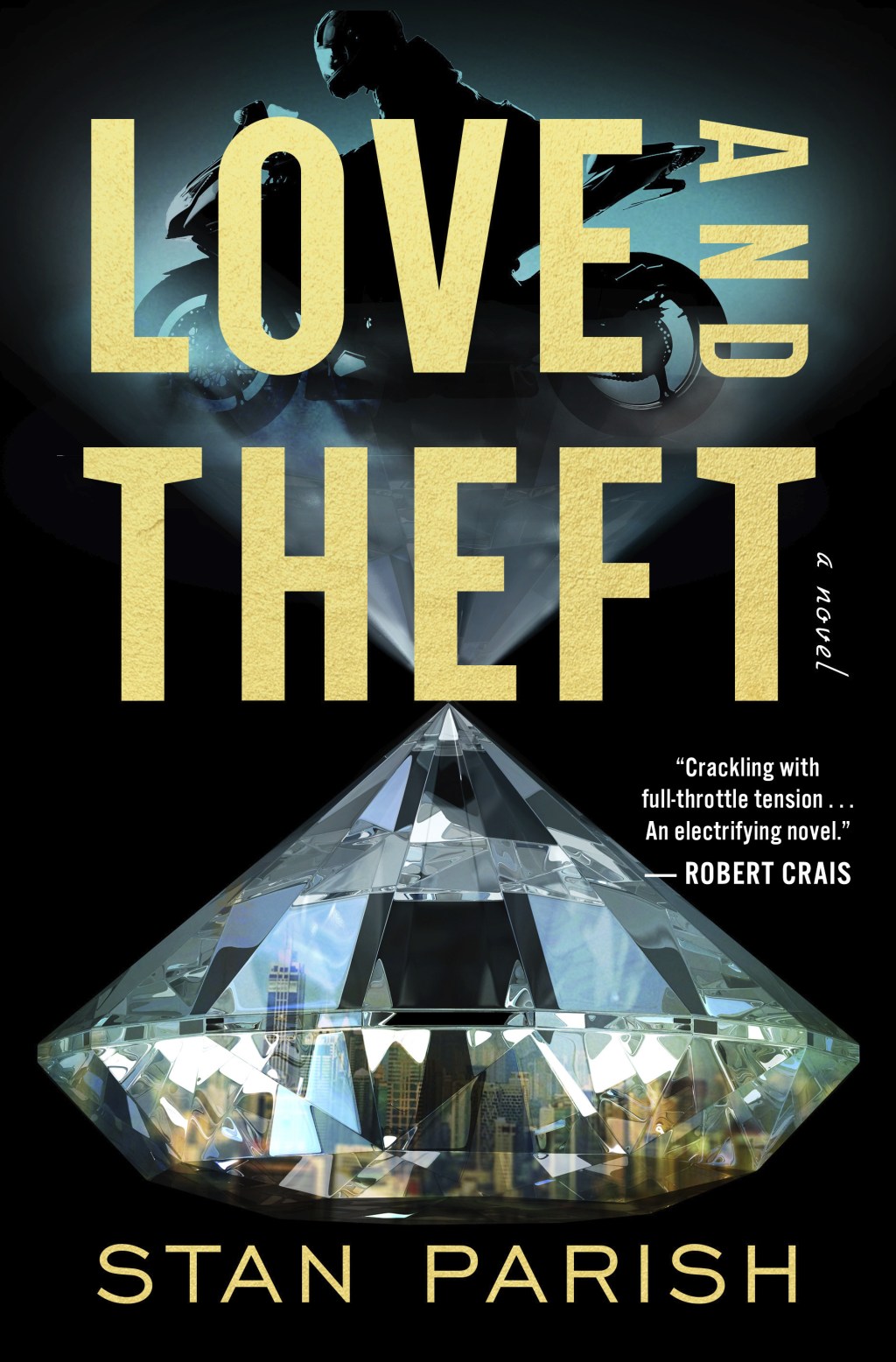
Starting fast—a motorcycle convoy roars through the lobby of the Wynn Las Vegas, staying only long enough to scoop up millions of dollars’ worth of stones from a classy jewelry store before riding away—Stan Parish’s latest novel “Love and Theft” (Doubleday 2020; $19.49 Amazon price) never slows down.
Told from multiple points of view, we follow the police as they work to solve the crime as well as the thieves planning their next one last heist and not getting busted. We move with the action from Vegas to Jersey and then to the luxe vacation destination of Tulum, Mexico. Along the way there are weird stops such as one at the home of a doctor who injects willing subjects with a hallucinatory drug that helps them calm down while he and his wife, wearing wired masks, communicate their insights while taking notes.
It’s all breathless but at the same time human. Neither cops nor bad guys are cartoon characters here. Parish makes them real while juggling the fast-paced plot.
His interest in mystery-thrillers began when he was around 10 or 11 and pulled a copy of “Dog Soldiers” from his dad’s bookshelf. Parish was ordered to put it back, his father telling him it was full of sex, drugs and violence. Of course, the book only stayed on the shelf until his parents went to bed.
Inspiration also comes from stories he hears from what he reads and hanging out.
“In April 2007, two stolen Audi A8s smashed through the glass façade of the Wafi Mall in Dubai,” says Parish. “In a marble rotunda, the white car rammed the secure entrance of Graff Jewelers, while the black car spit out men in masks with automatic weapons.”
It was the work of a successful gang called the Pink Panthers and became the basis for the opening sequence of “Love and Theft.” But the book is also fueled by what he calls being a diviner though instead of finding water he has “a sixth sense for strange subcultures, suspicious characters, and after-after parties.”
A few years ago, in Marbella, Spain he was invited to a party at the home of several young bullfighters and during the evening “divined” that some of their income derived from storing drugs for a local cartel. That experience too became a plot point in the novel.
The former editor-in-chief of The Future of Everything at The Wall Street Journal whose writings have appeared in the New York Times, Esquire and GQ, Parish earned a brown belt in Brazilian Jiu Jitsu and moved to Los Angeles from New York a few years ago. But now he’s living in Europe, waiting for the pandemic to end. He’s dedicated to his craft. Planning on finishing his thriller in Malaga, Spain, he accidentally left his computer, notes and outline behind at JFK International Airport in New York City and while calling lost and found everyday hoping it would turn up, tapped out sections his novel on his cell phone his while riding in cabs late at night. His life, in other words, seems to track his fast-paced novel.
In the 300-room Sagar Mahal, the Ocean Palace built by her great-times-four grandfather on the Arabian Sea, 13-year-old Trisha Raje is coached by her father not to be overwhelmed by the sorrow she sees at a school for the blind but instead find a solution, so she doesn’t feel badly.
And so, she does. Before long, Trisha has created a global charity that performs eye surgeries on the needy and then becomes San Francisco’s premier neurosurgeon, a woman with immense skill but so lacking in social graces that many in her family are not talking to her, as she once inadvertently jeopardized her older brother’s fast-track political career.
But that isn’t Trisha’s only difficulty in Sonali Dev’s newest book, “Pride, Prejudice and Other Flavors,” an Indian take on Jane Austen’s classic, “Pride and Prejudice.”
Dev switches up the focus between Trisha and DJ Caine, a rising-star chef whose cancer-stricken sister is a patient of Trisha’s. Trisha is a descendent of Indian Royalty, while Caine, a Rwandan/Anglo-Indian, belongs to a much lower social class — the classic Austen-style mismatch.
To paraphrase Austen, Dev writes, “It is a truth universally acknowledged that only in an overachieving Indian-American family can a genius daughter be considered a black sheep,” and the book reflects classic Austen, with its subtle ironic humor and the structured setting required in any well-to-do aristocratic English or Indian milieu.
Trisha has broken the three ironclad rules of her family: Never trust an outsider, never do anything to jeopardize your brother’s political aspirations and never, ever, defy your family.
Trisha must cope with falling in love with Caine, saving his sister and ensuring that she will not somehow disgrace her family again.
Dev, who is married with two teenagers and lives in Naperville, says she’s been entranced with Jane Austen’s book since watching the Indian TV adaptation of “Pride and Prejudice,” called “Trishna,” in the 1980s when she was a middle-schooler.
“I went straight to the library and checked out “Pride and Prejudice” and read it over and over,” she says.
As for writing, Dev says she wrote before she could even read, making up stories and characters, noting she wrote and acted in her first play when she was 8. “Writing has always been with me,” she says.
She grew up in Mumbai though the family traveled a lot as her father was in the military.
“I was always the new kid on the block with a book,” she says.
She continues to read and write at an amazing speed.
“I am in fact waiting to get the edits back for my new book,” she says, noting that writing is an escape, a way of putting yourself in the shoes of someone not like you.
Sandy Stern is a fragile 85 after surviving several devastating bouts of cancer, dealing with several other ailments and the deaths of his two wives. But when his longtime friend Kiril Pafko asks Stern, a noted defense lawyer to represent him on charges of inside trading and murder. Stern though doubtful as to whether he has the physical strength and mental acuity to do so. But Stern owes Pafko, a brilliant medical doctor, a Nobel Prize-winning scientist and one of the creators of g-Livia, touted as an amazing breakthrough in cancer treatment. Stern knows the latter firsthand as Pafko successfully treated him with g-Livia putting his aggressive cancer into remission.
But Stern was one of the lucky ones. g-Livia also can have deadly side effects, a fact that Pafko is said to have tried to hide by altering test data. He also sold off great amounts of stock in his company that is making the drug, hence the insider trading charge.
And so begins the opening of The Last Trial (Grand Central Publishing), Scott Turow’s latest courtroom thriller. Turow, who is retiring from his legal practice next month, has worked as a lawyer in Chicago for decades. He also is the bestselling author of Presumed Innocent, The Burden of Proof, Innocent and other novels, several of which have been made into movies and in all have sold more than 40 million copies. Turow, who isn’t afraid to throw his characters into dark places where all appears lost, is also credited with inventing the modern legal thriller and it’s easy to see why when reading this absorbing story which delves into drug research, development, testing and FDA approval of pharmaceutical drugs. Though none of these subjects sound fascinating, Turow, who did what he calls a “daunting amount of research,” writes about it in such a way that the process becomes a page turner.
“It also obviously has a weird relevance about rushing pharmaceuticals to market like we are today,” he says, referring to the vaccines said to be on the horizon to treat COVID-19. This being a Turow novel, there are twists and turns, ups and downs and surprises. Even when you think you’re keeping up with the plot twists, he usually manages to stay a step or more ahead. And yet in the end, it all makes sense.
“If you want to get philosophical about it, some of twists and turns stems from graduate school,” says Turow who received an Edith Mirrielees Fellowship to Stanford University’s Creative Writing Center where he attended for two years before entering Harvard Law School where he graduated cum laude. “I’ve always been aware of the artifice of the novel where there is, to some extent game playing with the reader—cat and mouse—which I enjoy doing. I also enjoy reading those stories too.”
Though Turow is retiring he’ll still do a lot of pro bono work, always a passion for him. And he is currently working on another novel. This one is centered around Pinky, Sandy Stern’s granddaughter and paralegal, a bright but erratic young woman who is working at solving the hit and run accident that severely injured Stern several months earlier. Was it an attempt to kill him? Unfortunately, Pinky also has penchant for indulging in illegal drugs. A definite break-out personality, Turow says he’s committed himself to Pinky as his major character but he worries about recreating her inner voice. But it’s a problem he will solve.
“I looked at Pinky from the outside in this book,” he says. “I’ll find my way inside in the next.”


























 Shelf Life