Tag: Chicago

  • Muse of Nightmares: Second in the Epic Fantasy Series Strange the Dreamer
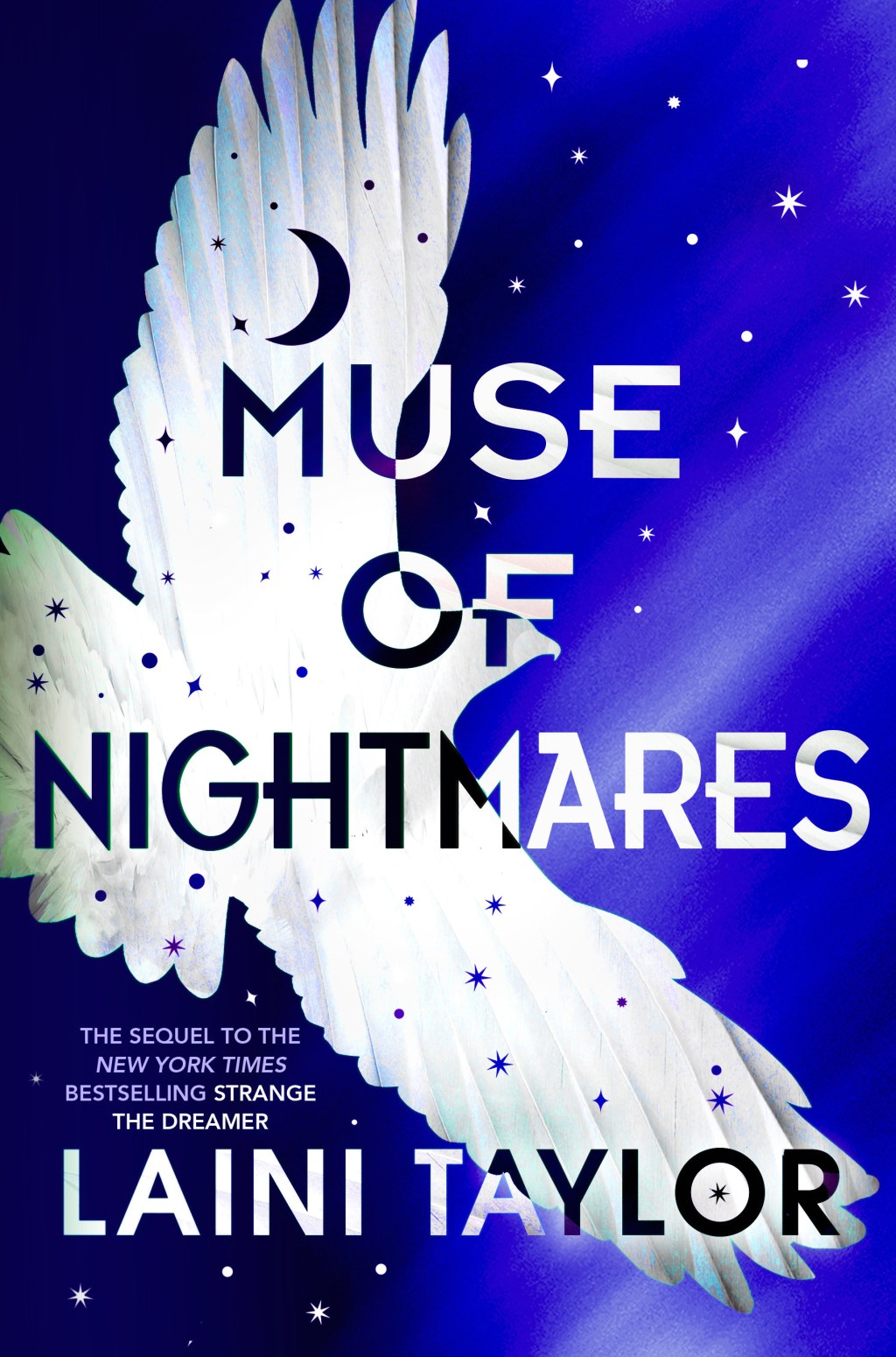
    Muse of Nightmares: Second in the Epic Fantasy Series Strange the Dreamer

    Strange the Dreamer, the epic fantasy series written by Laini Taylor, began as a dream. Now Taylor, a National Book Award finalist, has just released Muse of Nightmares  (Little, Brown 2018; $19.99), the second book in the series.Laini Taylor_Author Photo_AliSmith credit

    “The story has been in my mind for 20 years or more,” says Taylor, whose author photo shows her with a shock of long seriously pink hair.  “I think I dreamed Sairi, the character that came to me, who lived high above the city and I thought of her as the Muse of Nightmares. I started writing about her for my first book but then that became Lazio’s book.  But this is about Sairi, the way trauma changes us and if it is possible for a person to overcome this. Sarai doesn’t know what she’s capable of and she feels helpless, but is she?”

    The journey of Sairi and Lazio is one of intrigue and mysteries (what was done with thousands of children born in the citadel nursery? where did the gods come from, and why? and  how do they defeat a new foe?) and it’s interesting to note that as we follow Taylor’s story-telling, we often are only a few steps behind her as the story plot evolves. That’s because as much as she wants to shape her story, it often, as she builds her characters and scenes in her mind, takes on a will of its own.

    Taylor says she always hopes to get to the ending she has in mind.

    “But it doesn’t always work that way,” she says.

    Immersed and—dare we say—co-dependent–with her characters, Taylor is sad when they make a bad choice though she can understand why they did so.

    “It just give me so much empathy for them,” Taylor says.  “I ask what causes people to do that. When my characters don’t survive, I really wish I could save them, but I can’t.”

    But though she doesn’t often know how her books will end or save a character, she did know that she wanted to eschew the typical epic ending of a massive battle between good and evil and instead resolve it by asking and answering a powerful question “must heroes always slay monsters or is it possible to save them?”

    Ifyougo:

    What:

    When: Thursday, October 11 at 7 p.m.

    Where: Anderson’s Bookshop, 123 West Jefferson Avenue Naperville, IL

    Cost: Free and open to the public. To join the signing line, please purchase the author’s latest book, Muse of Nightmares, from Anderson’s Bookshop. To purchase please stop into or call Anderson’s Bookshop Naperville (630) 355-2665.

    FYI: (630) 355-2665; andersonsbookshop.com

  • Not for Long: The Life and Career of the NFL Athlete
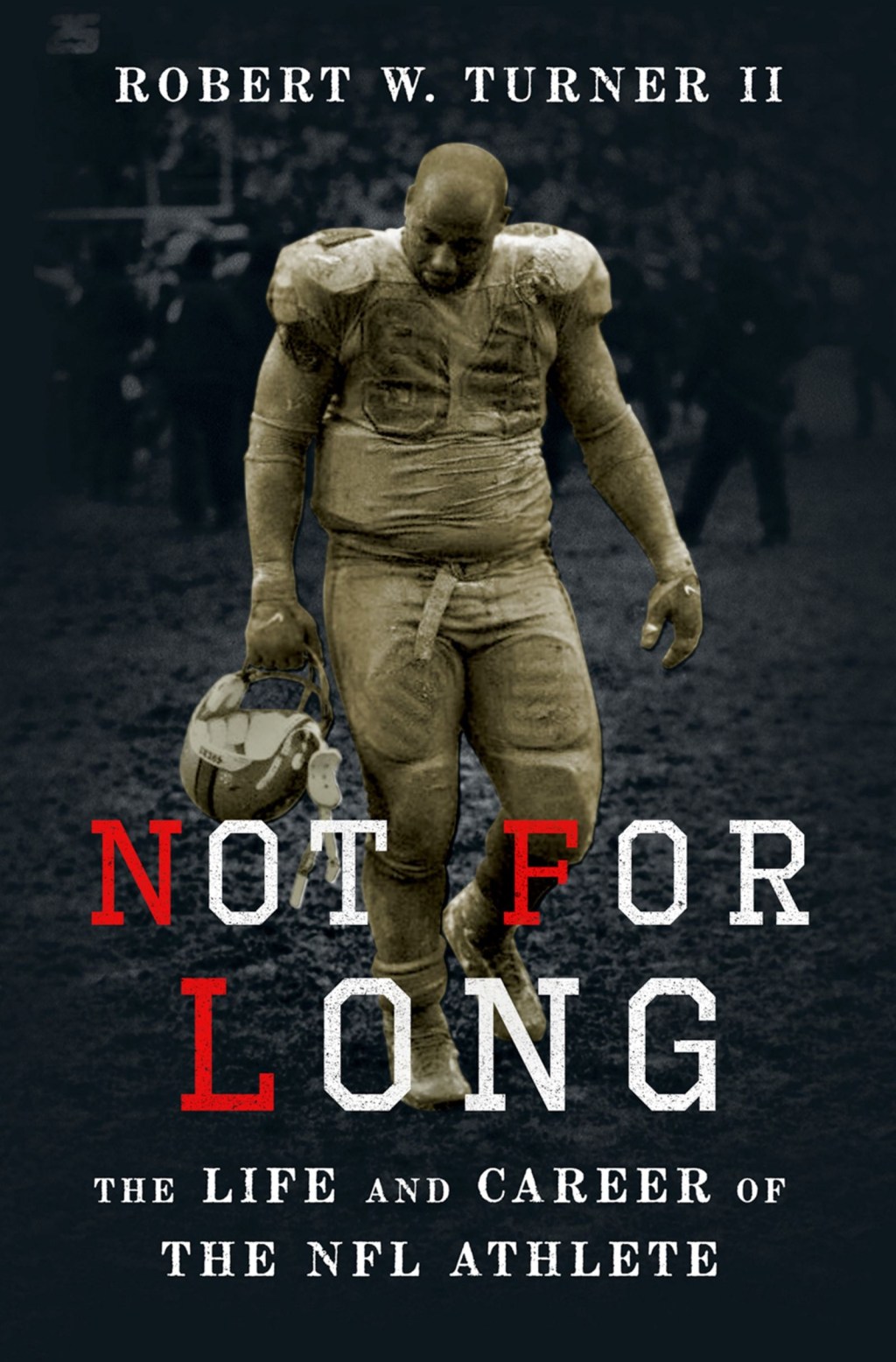
    Not for Long: The Life and Career of the NFL Athlete

    Robert Turner II was the first member of his family to go to college, attending James Madison University on an athletic scholarship.  But he did so because of his love of football and a desire to play at a professional level.

    “I majored in communications because that’s what the other players did,” says Turner who played football professionally in the now nonoperational United States Football League, the Canadian Football League, and briefly in the National Football League until his career abruptly ended.

    Consider Turner one of the lucky ones. He went on to earn a Ph.D. in sociology at the Graduate Center, City University of New York and is an assistant professor in the Department of Clinical Research and Leadership at The George Washington University School of Medicine & Health Science and also holds a position as a Research Scientist in the Center for Biobehavioral Health Disparities Research at Duke University.

    One of his areas of interest is what happens to athletes when their playing days are done and, after amassing more 140 interviews with current and former NFL players and extensively researching the subject, he’s written OLYMPUS DIGITAL CAMERA(Oxford University Press 2018; $24.95). It’s a look at what is the most popular professional sports league in the U.S., one where some athletes at the height of their physical prowess can boast stratospheric salaries in the multimillions  but then, often in just a few years, are no longer working.

    “The stories of many of these players is heartbreaking,” says Turner. “I love these men and they’ve gone through a lot of pain and sorrow and it hurts to hear that but what kept me going was the awesome gift of being able to tell their stories.”

    Turner describes his book as being about what happens upstream, the path that players take from high school and sometimes ever earlier through college and into professional sports. As for what happens after that, Turner says that society turns a deaf ear to their lives after college and the pros.

    “People say well, they got their college education, they got all that money,” says Turner, who serves on the board of directors for the Boys and Girls Club of Greater Washington, D.C.

    But many players don’t make millions.  Without guaranteed contracts, the majority of players are forced out of the league after a few seasons with few health and retirement benefits.

    Statistics show that more than three-quarters of retirees experience bankruptcy or financial ruin, two-thirds live with chronic pain, and many find themselves on the wrong side of the law. Turner believes that’s no accident. The powerful the labor agreements between the NFL and players doesn’t provide much in the way of job security. And because players dedicated to their game and dream of becoming a professional have little time to prepare for what to do when their time on the field is over and have little in the way of marketable skills.

    “It doesn’t just start at the NFL,” he says. “Universities and colleges should make sure all these players have the resources they need. Many of these kids come from environments where they haven’t learned many basics in terms of finances, planning ahead and all the other tools they need to be successful after sports. The League generates $15 billion a year and yet players are treated like disposable commodities. We need to help them learn how to transition effectively.”

    Turner is currently a technical advisor and consultant and is making an on-screen appearance in Student Athlete, a documentary which looks at “the exploitative world of high-revenue college sports” and features four current and former college athletes, including Kentucky basketball player Nick Richards. Co-produced by NBA star LeBron James, Student Athlete debuts October 2 at 10 p.m. on HBO.

    “The documentary is an important story about this subject,” he says. “We need to take care of all the players not just the 300 Hall of Famers.”

    Ifyougo:

    What: Robert W. Turner II discusses Not for Long: The Life and Career of the NFL Athlete. a Q&A and signing will follow the discussion.

    When: Oct. 14TH from 3-4 p.m.

    Where: The Seminary Co-Op Bookstore, 5751 S Woodlawn Ave., Chicago, Il

    Cost: Free

    FYI: 773-684-1300; semcoop.com


  • Chefs, Drugs and Rock & Roll: How Food Lovers, Free Spirits, Misfits and Wanderers Created a New Profession

    Chefs, Drugs and Rock & Roll: How Food Lovers, Free Spirits, Misfits and Wanderers Created a New Profession

    Author Photo. Andrew Friedman. Photo Credit Evan SungAndrew Friedman calls himself a chef writer because, as much as he loves food, he’s passionate about the stories chefs have to tell.

    “My point of view is writing not so much about the food but about the chefs, that’s why I say I’m a chefie not a foodie,” he says. “I think too many well-known chefs are almost portrayed as cartoon characters and in a broad stroke. I wanted to spend time with them and really get to know their stories, who they really are and their impact on how we eat now. Like Wolfgang Puck. He’s a tremendous cook but people call him the first celebrity chef. He’s so much more than that.”

    To accomplish this, Friedman interviewed over 200 chefs and food writers and others who were leading the food revolution against processed and packaged foods.

    “I’m such a geek I would spend three hours with someone just to get a nugget or two,” he says.

    The results? An accumulation of tens of thousands of transcript pages and his latest book,  Chefs, Drugs and Rock & Roll: How Food Lovers, Free Spirits, Misfits and Wanderers Created a New Profession (Ecco 2018; $27.99), where he recounts how dedicated and imaginative men and women in the 1970s and the 1980s, who were willing to challenge the rules, revolutionized America’s food scene.

    Now chefs are like rock stars, often known just by one name, commanding their own empires of cookbooks, TV shows, restaurants, cookware and food products. But Friedman points out that up until 1976, the United States Department of Labor categorized cooks as domestics. It took lobbying by the American Culinary Federation, at the urging of Louis Szarthmary, the late Hungarian American chef who owned The Bakery in Chicago and wrote The Chef’s Secret Cookbook, a New York Times bestseller, to change the classification into a profession.

    “I wanted to show how this became a viable profession,” he says. “I was talking to Jody Buvette, owner of Buvette in New York and she remembers sitting her father down and  saying ‘I have two bad things to tell you. I’m gay and I want to be a cook.’ It was like telling your upper middle-class parents that you wanted to be a coal miner.”

    Friedman, whose knowledge about restaurants, culinarians and food seems delightfully endless, chose three cities to focus on—San Francisco, Los Angeles and New York. What does he think of Chicago’s food scene?

    “It’s great,” he says. “I love dining in Chicago and you have some brilliant chefs but I think much of the beginnings started in those three cities.”

    Besides, he has those piles of transcripts. There’s surely more than a few Chicago stories in all those pages.  In the meantime, Friedman gives us a wonderfully written read about a defining time—one that in some ways separates frozen TV dinners and what many restaurants are serving today.

    Ifyougo:

    What:  5 course 80s-era dinner inspired by Chefs, Drugs and Rock & Roll with wines selected by Sommelier Rachael Lowe and conversation at Spiaggia Restaurant

    When: Tues. October 2, 7 pm

    Where: Spiaggia Restaurant, 980 North Michigan Ave., Chicago, IL

    Cost: $150 per person

    FYI: 312-280-2750; spiaggiarestaurant.com


    What: Talk with Andrew Friedman about Chefs, Drugs and Rock & Roll

    When: Wed, October 3, 6:30 to 8:30 pm

    Where: Read It & Eat, 2142 North Halsted St., Chicago, IL

    Cost: Purchase a ticket and book combo for $36.45 or 2 tickets and a book combo for $46.45

    FYI: 773-661-6158; readitandeatstore.com


  • Al Capone: His Life, Legacy, and Legend
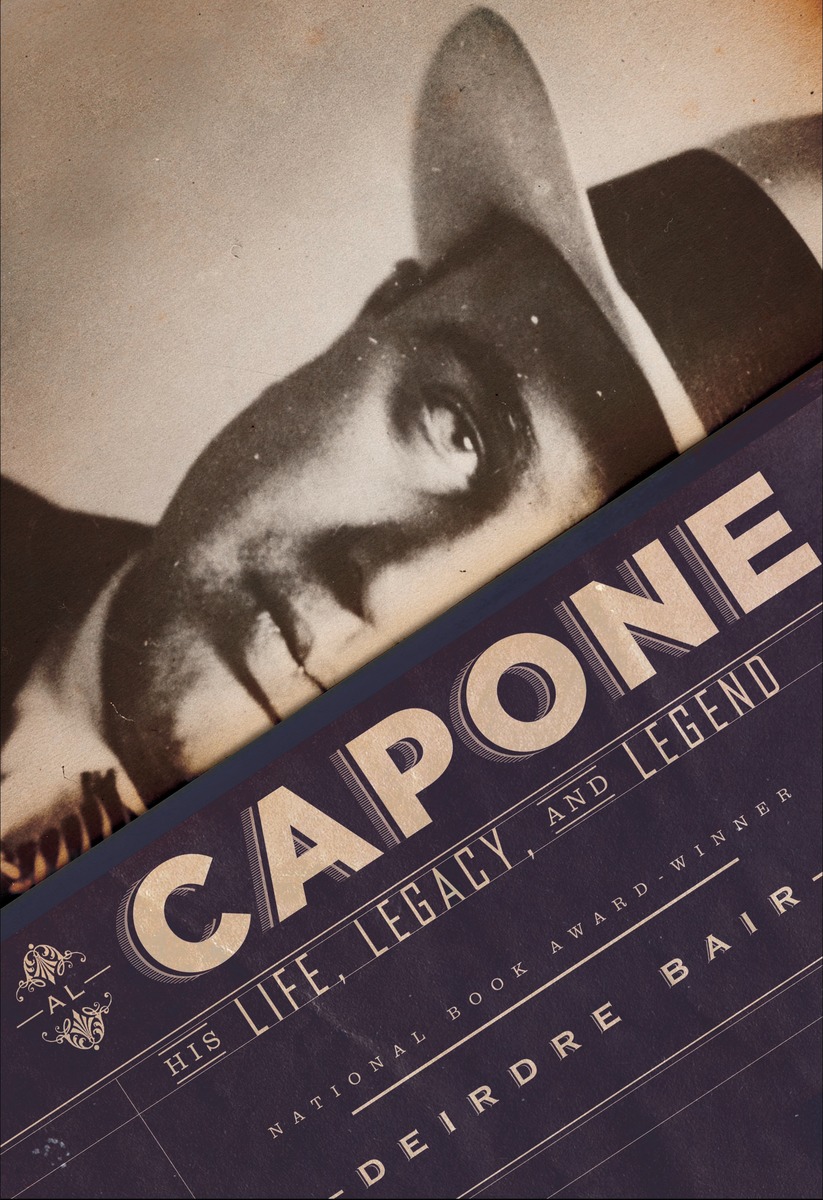
    Al Capone: His Life, Legacy, and Legend

    Deirdre Bair wasn’t that familiar with Al Capone. Beyond the St. Valentine’s Day Massacre, she’d been more focused on literary biographies, racking up numerous awards including the National Book Award. But when she was contacted by a friend who had a friend who knew someone (yes, it went like that) who wanted help in solving some family mysteries about Al Capone she was intrigued.

    “I asked what does he want, a private investigator or a ghost writer?”

    The man was a relative of the infamous gangster and after they talked, Bair received phone calls from other Capone relatives.

    “They called me and said we’re getting old, we want our story to be told,” recalls Bair.

    And so began years of interviews, extensive research and writing as Blair learned from Capone’s surviving family members about the Capone they knew—a devoted father, a loved husband, a kindly caretaker of his relatives.

    “There are so many legends about him,” says Blair, noting more than 100 books have been written about Capone. Her book, “Al Capone: His Life, Legacy, and Legend” (Nan A. Talese 2016; $30) is the first to have the cooperation of his family who provided her with exclusive access to personal testimony and archival documents.

    Of course there’s the Jazz Age, bootlegging Capone. But in his brief arc of fame and success—Bair points out that he took control of his gang at 25 and by 31 was ill, broke and in prison, he became a role model for, of all things, business management.

    “The Harvard Business School did a case study of how he ran his business,” says Bair. “Today the Bulgarian Mafia say they study Capone. So many people tell me a generation or two later, he could have been a CEO.”

    His family saw him as loving. His wife May, says Bair, said she knew every bad thing he’d done (and we know he did a whole lot of bad stuff) but she still loved him. His son remembered him as a great dad.

    “Every day was a revelation,” says Bair. “But I don’t think anyone will ever have the final answer as to who he really was. He’s a riddle, a conundrum and an enigma.”


  • If These Walls Could Talk: Chicago Blackhawks: Stories from the Chicago Blackhawks Ice, Locker Room, and Press Box

    If These Walls Could Talk: Chicago Blackhawks: Stories from the Chicago Blackhawks Ice, Locker Room, and Press Box

    Walls Blackhawks COVER (1)“It was like chronicling the Dark Ages of hockey,” says Mark Lazerus, a fan of the Chicago Blackhawks since the early 2000s when the only way players could get people to attend games was to hand out free tickets at bus stations among other places.

    “Back then, with 23 on the team, 20 would be out getting drunk the night before a game,” recalls Lazerus, a sportswriter who lives in Highland, Indiana. “I knew they were young and crazy but that was really something.”

    Growing up on Long Island, New York, Lazerus has long been a serious hockey aficionado, rooting for the Long Island Islanders since he was young. A graduate of Northwestern University, he continued his passion for hockey by avidly following the Blackhawks. But even such a seasoned and dedicated fan was amazed by the big change in the team and their fortunes.

    “The players are all very different now,” says Lazerus, author of If These Walls Could Talk: Chicago Blackhawks: Stories from the Chicago Blackhawks Ice, Locker Room, and Press Box (Triumph Books 2017; $16.95). “I was surprised by the complete turnaround. These guys are now finely tuned machines.”

    Going behind the scenes including on the team plane, players’ homes and, of course, in lots of bars, Lazerus interviewed present and former team members collecting stories which he shares in his book. These include reminiscences of how Blackhawk players celebrated after winning their first Stanley Cup victory in almost a half century, dialogues with such greats as Adam Burish, Patrick Sharp and Jonathan Toews and stories on sharing the bench with Head Coach Joel Quenneville. The book’s forward is written by Hockey Hall of Famer Denis Savard who played for the Blackhawks.

    “It was fun watching the city fall in love with the Blackhawks,” says Lazerus. “And for me, writing the book was great. It let me talk to people about hockey and that’s all hockey fans like me want to talk about.”


  • Chicago’s Fabulous Fountains by Greg Borzo with photos by Julia Thiel

    Hiding in plain sight, Chicago’s many fountains are gems of art, history, politics and culture, their stories often overlooked.

    Sure we all know Buckingham Fountain and the Crown Fountain in Millennial Park. But what about the Nelson Algren Fountain at Division Street and Ashland and Milwaukee avenues which was opposed by the Polish community and many residents near the Polonia Triangle because he wrote about life there with a brutal honesty? Or the Drexel Boulevard Fountain, originally named the Thomas Dorsey Fountain, after the South Side musician considered to be the father of gospel music which is bookend by the newly restored Drexel Fountain?

    I thought not. But then neither did I until I chatted with Greg Borzo about his newest book, Chicago’s Fabulous Fountains (Southern Illinois University Press 2017; $39.95) with photos by Julia Thiel.

    A news officer covering science at the University of Chicago, Borzo also volunteers to give tours of the “L” and often was asked about the fountains they passed on the route.

    “I realized that people knew about the Chicago Fire and World’s Columbian Exposition which was held in Chicago in 1893 but they didn’t know anything about Chicago’s fountains,” says Borzo.

    And so, because Borzo likes to chronicle the city’s intriguing icons and is the author of The Chicago “L,” and Chicago Cable Cars, he began extensively researching Chicago’s fountains, past and present. In the process he inspired his friends, who he dubbed “fountain finders,” to join in the search.

    “They got a fountain buzz going and they’d say there’s one at such and such” says Borzo. “As I found out about fountains, I began to realize it’s about the artists, the ethnic groups, the politics—it’s so much more than just a pretty fountain.”

    Immersed in fountain lore, Borzo connects the historic dots—or should we say splashes of water.

    “People are very interested in the 1893 Fair and what I found is there are four fountains directly related to the fair—which were built for the fair or part of the fair,” he says. “The Rosenberg Fountain on Michigan Avenue and 11th Street was built in time for the Fair but was built near the Illinois Central Station that used to stand at 11th and Roosevelt for people getting off the train could get a drink.”

    The fountain was a gift to the city by Joseph Rosenberg, a former paperboy who used to get thirsty while his rou

    te. To prevent that happening to others, the fountain had metal drinking cans attached by a chain–doesn’t sound very sanitary, does it?

    The Women’s Christian Temperance Union was also worried about thirsty people and wanted to provide water instead of stopping at a bar for a whiskey.

    “Fountain Girl was located at the fair and people could take one of the tin cups chained to the fountain to get a drink,” says Borzo. “After the Fair, they moved Fountain Girl to the Women’s Christian Temperance Union skyscraper in the downtown and when that got torn down the fountain was moved again to Lincoln Park. The city didn’t ban shared drinking cups until 1911. The Illinois Humane Society had about 60 fountains with shared cups, two still at Chicago and Michigan. Now they’re cute fountains but instead of the cups they have troughs for water for carriage horses.”

    Which brings up another point. While I always assumed that once it was built, a fountain stayed in one place. But that’s not necessarily so. According to Borzo, fountains were moved quite frequently.


    Researching the 125 existing outdoor fountains in the city wasn’t easy.

    “There’s no record of many of them,” he says, noting there are records of “lost” fountains that no longer exist. Others are slipping away.

    “Laredo Taft, great sculpture artist, made two of the greatest fountains—the Neo-classical bronze Fountain of the Great Lakes right next to the Art Institute which shows five maidens each holding a shell with the water pouring from one shell to the next—it’s elegant, beautiful and large,” says Borzo. “He had another one that was a failure called the Fountain of Time. It’s made out of


    Does he have a favorite fountain?

    thin concrete and is wearing away and there’s no way to prevent that.”

    “My favorite is the one I’m spending time with at the moment,” he says but then relents. “There are six fountains at the base at the AON Center. The nice thing is you don’t haveto pay admission and at night they’re lit. It’s fountain heaven.”

    Ifyougo

    What: Greg Borzo book signing

    When & Where: Wednesday, June 14 at 6pm; Harold Washington Library, 400 S. State Street, Chicago IL. 312-747-4300

  • Fabio Viviani: Fabio’s 30-Minute Italian

    “Good cooking and a lot of flavor don’t have to take a lot of time,” says Fabio Viviani, chef, restauranteur and TV personality, explaining why he wrote Fabio’s 30-Minute Italian (St. Martin’s 2017; $27.99), his beautifully photographed cookbook filled with wonderfully accessible recipes. “The whole premise is easy.”

    Viviani, who grew up in Florence, Italy, started working in a bakery when he was 11 not so much from a love of food but because he needed to work to help out his family. But labor developed into a passion. Now 28 years later, he’s amassed a food empire with two California vineyards, several cookbooks, stints on several Top Chef show (he won Fan Favorite on Season Five), restaurants including two in Chicago—Siena Tavern and Prime & Provisions and his Mercado concept, described as a “rustic-yet refined eatery destination by celebrity chef Fabio Viviani” with locations that include Chicago, Tempe, Arizona and Benton Harbor, Michigan.

    He also currently has a weekly web series, “Fabio’s Kitchen” and is doing “Dinner is Served,” an online video series

    With such a busy schedule, I wonder if he ever gets tired of cooking.

    “I like it,” he says, “sometimes I don’t. It’s like a marriage, you yell at each other and then you go back to it.”

    Asked what recipes he might recommend for those who haven’t cooked Italian before, Viviani recommends the chapters on pasta and salads because they have, for the most part particularly if you don’t make your pasta from scratch, “have less ingredients and take less time.”

    Noting that his Italian heritage taught him less is more, Viviani says “you don’t have to overdo it to put really good food on the table.”

    Ifyougo:

    What: Fabio will be doing a presentation, cooking demo, Q&A, & cookbook signing.

    When: Tuesday, May 16 at

    Where: Snaidero Showroom, 222 W Merchandise Mart Plaza, Chicago, IL

  • King Solomon’s Table: A Culinary Exploration of Jewish Cooking from Around the World

    For her new book King Solomon’s Table: A Culinary Exploration of Jewish Cooking from Around the World (Alfred A. Knopf 2017; $35), Joan Nathan, the multiple James Beard award winner, followed in the footsteps of Jewish traders as they circumvented the globe centuries and even millenniums ago. As they traveled, they brought the food cultures from the lands they’d visited before and adapted new ones but keeping close to their dietary laws, traditions and homelands.

    Nathan, who has written almost a dozen cookbooks, recounts the culinary history and geography of these early travelers in her sumptuous new book featuring over 170 recipes.

    It begins at the Paradesi Synagogue in Kochi, Kerala where Nathan spies an inscription indicating Jewish traders might have crossed the Indian Ocean from Judea to India during the reign of King Solomon. Already a world traveler, Nathan next made her way to Chendamangalam, a hamlet 20 miles north of Kochi surrounded by a lush landscape of mango, coconut and cinnamon trees and pepper and cardamom vines.

    “As I walked toward the bank of the nearby Periyar River, which flows into the Arabian Sea, I imagined ancient Hebrew adventurers and traders arriving on the shores and marveling at the lushness of the terrain,” writes Nathan in the introduction of her book.

    And so we too are seduced by her journey into exotic lands, looking at how foods and ingredients have crisscrossed the globe originating far from where we first might have thought.

    We chat about Malai, a Romanian cornmeal ricotta breakfast pudding that she features in her book and I tell her how I learned to make a polenta-like dish from my Romanian grandmother.

    “Oh mamaliga,” she says, like everyone knows about mamaliga.  But then what would you expect from a woman whose book contains five recipes for haroset, a thick sauce or paste typically made of chopped fruits and nuts. It, like so many recipes, has morphed, bouncing back and forth between countries and continents, each time being tweaked just a little and Nathan includes a version from Brazil, Persia, Ferrara and, of all places, Maine.

    Asked what recipes she’d recommend for those just starting using her cookbook, Nathan suggests Yemenite Chicken Soup with Dill, Cilantro and Parsley (“a really old recipe,” she says noting that historic records dating back to 12th century the healing power of chicken broth). She also suggests Malai, the Romania dish and Roman Ricotta Cheese Crostata with Cherries or Chocolate, a cheesecake recipe dating back to Imperial Rome in the 1st century. She also included a recipe from her friend, her friend Injy Farat-Lew, an Egyptian-Jew who grew up in Cairo and Paris, for a flourless chocolate cake and one for hard boiled eggs traditionally served ruing Passover on the Seder plate but can be used as a side for any meal.

    “This recipe for long-cooked eggs with spinach came from the island of Corfu, Greece to Ancona, Italy, a seaport on the Adriatic coast,” writes Nathan, who first taste the dish in Rome, in the introduction to this recipe which also exemplifies the convoluted origins of food.

    As she traveled (Nathan says her quest took her to approximately 30 countries over a six-year time span), the scope of her book changed. But it was all part of her culinary journey and one she continues to take.

    Ifyougo:

    What: Joan Nathan has two book signings

    When & Where: Monday, May 1 at 6:00 pm, Bookends & Beginnings, 1712 Sherman Avenue, Alley #, Evanston, IL. 224-999-7722.

    Tuesday, May 2 at 11:30 am-2pm, Standard Club Chicago luncheon, 320 S. Plymouth Ct, Chicago IL.

    2:00pm.


  • Matt Moore’s Secrets to Good BBQ

    When it comes to barbecue, geography is everything.

    That according to Matt Moore, author of the recently released “The South’s Best Butts: Pitmaster Secrets for Southern Barbecue Perfection.” He explains how barbecue differs in the 12 southern states he calls the Barbecue Belt. And just to end the suspense, Indiana is definitely not one of them.

    “In Northern Alabama, they combine vinegar and mayonnaise along with other variations to make a chalky white-style sauce,” says Moore, whose idea of a great day is turning up the volume on his favorite Grateful Dead songs, icing a case of beer, firing up the grill, inviting a bunch of friends and making some really good barbecue. “In Tennessee and Kansas City barbecue sauces are tomato-based, sweetened with molasses, and in Northeastern Kentucky it’s very dark, almost black. The reason why there’s a mustard-based sauce in South Carolina is because of all the Germans who settled there.”

    Calling barbecue a second way of life down where he lives, Moore’s newest book takes us on a tour of some special pitmasters and their restaurants, sharing their stories and their recipes.

    “I was seeking out not only great barbecue but also the best people,” Moore says. “I wanted to showcase the diversity and the ethnicity of this culinary tradition, which started more than a hundred years ago.”

    Barbecue is complicated and beyond what to use to sauce the meat, there’s also the question of whether to go wet or dry. Charles Vergos’ Rendezvous restaurant in Memphis, Tennessee, is where dry rubs — a mixture of spices and seasonings without any liquid — became famous. But that’s not all.

    “Fuel is flavor,” says Moore, noting there are very involved discussions about what type of fuel is best to use.

    And, of course, there’s what Moore calls, “All the Trimmings” in his chapter on side dishes.

    Helen Turner, owner and pitmaster of Helen’s Barbeque in Brownsville, Tennessee, tops a lot of her sandwiches, including her smoked bologna and pulled pork with her special cole slaw.

    At Bogart’s Smokehouse in St. Louis, Missouri, located on the Mississippi River, intriguing sides include their Fire and Ice Pickles, Deviled Egg Potato Salad and BBQ Pork Skins.

    At Heirloom Market BBQ in Atlanta, Georgia, there are Kimchi Pickles and Candied Bacon at Burn Co Barbecue in Tulsa, Oklahoma. B.R Anderson, owner and pitmaster of B-Daddy’s BBQ, who says that barbecue saved his life, serves B-Daddy’s Jalapeno Creamed Corn at his Helotes, Texas, restaurant. For desserts there’s Caramel Apple Blondie Pie with Apple Cider Caramel Sauce, Flourless Peanut Butter Chocolate Chip Cookies and Strawberry-Lemon Buttermilk Icebox Pie with Gingersnap Crust.

    “I wanted a cookbook that people can really cook out of,” Moore says. And indeed, this handsome book with lots of gorgeous-make-you-hungry photos has plenty of easy recipes as well as tips for making barbecue.

    If you go

    What: Matt Moore will be in Chicago for a talk and book-signing.

    When & Where:

    6:45-8:30 p.m. April 26 at Read It & Eat, 2142 N. Halsted St., Chicago

    (773) 661-6158

  • My Cubs: A Love Story by Scott Simon

    Change is an important part of life says Scott Simon, now a devoted husband and father who at one time was
     happy being single and childless.

    But for Simon, the award winning host of NPR’s Weekend Edition Saturday, there’s one change that’s just not going to happen. Enamored (or should we say obsessed) with the Chicago Cubs is a never ending constant.

    “I can’t imagine not being a Cubs fan,” says Simon who grew up in Chicago and attended games with his father.  “I’ll be a Cubs fan until the hereafter. I’m convinced the Almighty God would say to me in heaven, I gave you a big test–like the trials of Abraham and that was the Cubs.”

    After 108 years in the proverbial desert, Simon has written about this passion in his recently released (The Blue Rider Press, 2017; $23).

    It didn’t occur to me that I’d ever write this book,” says Simon who like many of us thought our Cubbies would always find a way to snatch defeat from the jaws of victory.

    But their enduring losses weren’t because of a goat says Simon.

    Sure, Cubs authorities kicked Billy Sianis and the baby goat he nursed back to health out of the box office seats that had cost him $7.20 during the 1945 World Series against Detroit. There was talk that the goat, named Murphy, smelled like a…well…goat. But the cops and the ushers had always accepted free drinks at the Sianis’s tavern which he’d renamed—in honor of his goat–the Billy Goat Tavern. Sianis was angry and for years told reporters he sent a telegram to Phil Wrigley reading “Who stinks now?” at the end of each season when the Cubs failed to make the Series.

    But the real reason they didn’t play in the World Series for another 71 years has to do with racism.

    “Historically, though it eventually got hung on the Sianis family but no one at the time thought that,” says Simon who when he was writing his book Jackie Robinson and the Integration of Baseball learned that the Boston Red Sox had a chance to sign the Hall of Famer three months before the Brooklyn Dodgers added him to their roster in 1947. “Ernie Banks and Gene Baker didn’t come to the Cubs as their first black players until 1953. They could have signed some great players before that but they didn’t. So it wasn’t the Curse of the Billy Goat but the curse of not signing African Americans until later that made the Cubs lose.”

    Simon isn’t sure if the Cubs will repeat their victory.

    “I think the hardest thing to do is repeat a professional championship, everyone thinks they figured out how to beat you,” he says. “But the core of this team is signed and is very good. But, as anyone will tell you, only so much of what gets you to the World Series you realize there are so many unforeseen things that can happen like injuries is talent.”

    Even if they don’t win—ever again—Simon won’t waiver in his devotion to his team.
    “I would have continued to be a Cubs fan even if they never won,” he says. “And I will always be a Cubs fan not matter what.”

    Ifyougo:

    What: Scott Simon has several book signings in the Chicago area.

    When & Where:

    April 11 at 6 p.m.

    The Seminary Co-op Bookstore

    5751 S. Woodlawn Avenue, Chicago, IL

    April 12 at 3:45 p.m.

    Chicago Council on Global Affairs, Conference Center

    130 East Randolph Street, First Floor,

    Chicago, IL

    April 12 at 7 p.m.

    Anderson’s Bookshop Naperville

    123 W. Jefferson Ave., Naperville, IL

    April 13 at 7 p.m.

    Barnes and Noble

    55 Old Orchard Center, Skokie, IL