Tag: Chicago

  • You Are Awesome: How to Navigate Change, Wrestle with Failure, and Live an Intentional Life
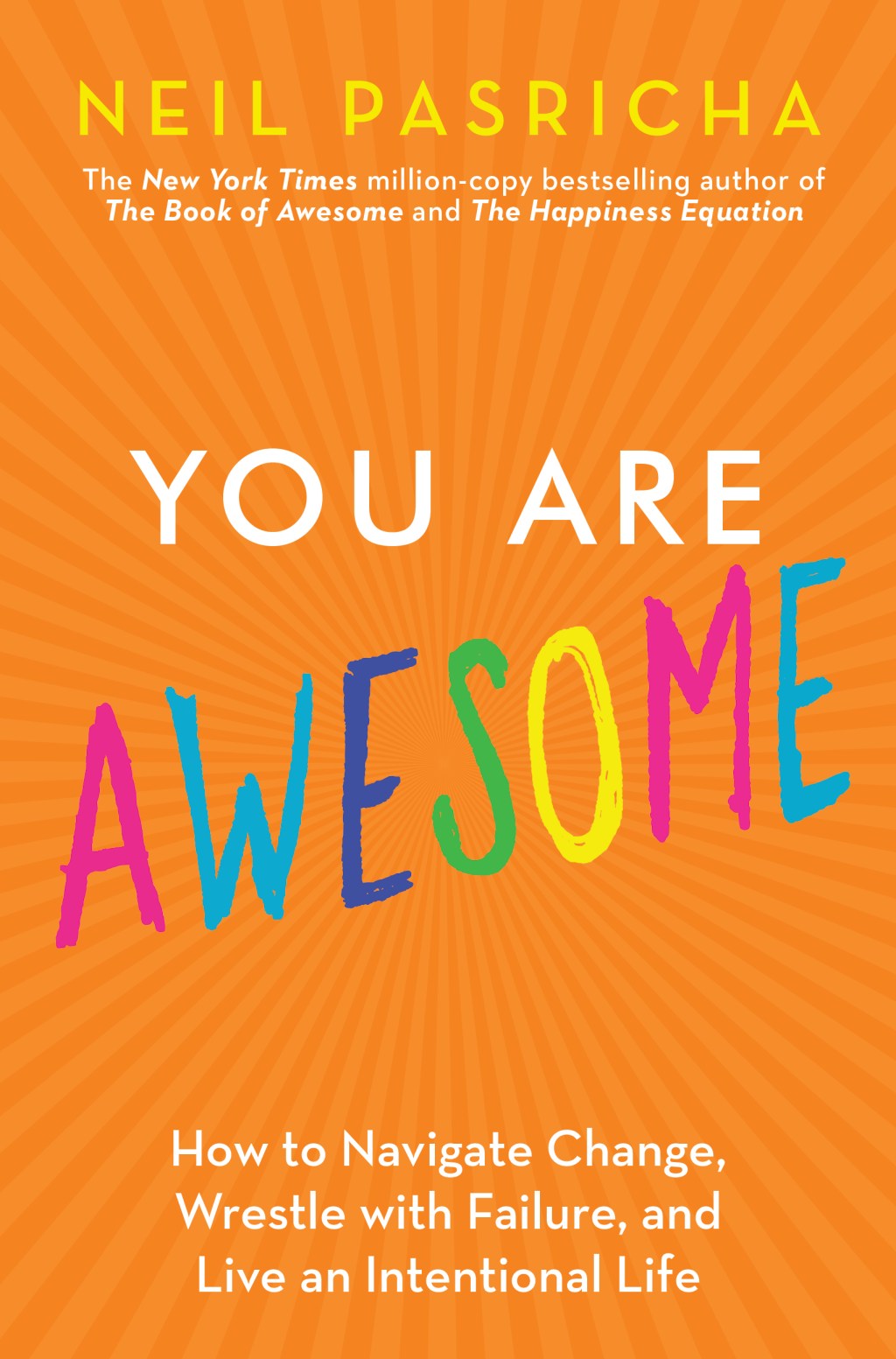
    You Are Awesome: How to Navigate Change, Wrestle with Failure, and Live an Intentional Life

    Taking complex psychological concepts and turning them into easily understood bites of practical and usable techniques is one of the strengths of Neil Pasricha, The New York Times million-copy bestselling author. In his latest book, You Are Awesome: How to Navigate Change, Wrestle with Failure, and Live an Intentional Life (part of his Book of Awesome Series), Pasricha shows use a path forward and a way to achieve resiliency—the ability to accept and learn from failure.

    “Some people think my concepts are simple,” says Pasricha. “That’s fine. They are. I take big concepts and hundreds of scientific studies and my work is to distill, distill, distill until it is in its simplest and most actionable form. Each of my recent books takes years of reading hundreds of books and research studies, about three-to-six months to write, and about ten deep edits back and forth over about two years.”

    Because his concepts are so simple, Pasricha says some people might initially reject them but he developed them as a way to work through his own double whammy Within a short period of time his wife left him as well.

    “The reason I began writing my blog, 1000 Awesome Things, and my first book, The Book of Awesome, is because I felt terrible,” he says about those times. “I define resilience as the ability to see that thin sliver of light right between the door and the frame right after you hear the latch click.”

    Though he seems amazingly upbeat, Pasricha doesn’t see himself as an optimist, just a person who is resilient enough to face life’s crisis. It’s a lesson, he says, that may seem obvious, but we often overlook.    In psychological terms some of his techniques would be called cognitive reframing, the ability to view and experience events, ideas, concepts and emotion to find more positive alternatives. Or as Pasricha puts it in his book, “Don’t magnify. Don’t Biggify. Don’t amplify.” By building resiliency and the ability to overcome, it breaks a vicious cycle that holds us back.

    Any last words of advice I ask him.

     “Life is short,” says Pasricha. “Time is short. And the master attention manipulators of cell phones, news media, and big tech have deep claws. If you managed to momentarily break free and read my book, or listen to my podcast, or read any book for that matter, then you broke out of the matrix. Congrats.”

    ifyougo:

    When: Wednesday, November 13, 2019 at 7:00 PM 

    Where: Anderson’s Bookshop La Grange, 26 S. La Grange Rd, La Grange, IL

     Cost: This event is free and open to the public. To join the signing line, please purchase the author’s latest book, You are Awesome, from Anderson’s Bookshop. To purchase please stop into or call Anderson’s Bookshop La Grange (708) 582-6353.

    FYI: andersonsbookshop.com

  • Night Moves

    Night Moves

                  “I didn’t decide to write this book, it was already written,” says Jessica Hopper, a Chicago based music critic with a career encompassing over the last two decades, a time when she not only wrote for New York Magazine, Rolling Stone, Buzz Feed and Bookforum, was an editor at Pitchfork and Rookie and editorial director at MTV News and still managed to keep extensive notes about those times.

                  “I was a very prodigious chronicler of my life,” says Hopper, who started writing when she was 15 and is the author of the recently released Night Moves, a book that curates scenes from her career as a writer in the music business.

                  Though she didn’t have formal training at that time, her parents were both journalists and Hopper says her impetus was that you learn by doing.

                  “If you wanted to be something, you just did it,” she says. “I didn’t know anything about music but what I liked and didn’t like. I wanted to be real. If it didn’t go to the heart, that wasn’t what I wanted for my writing. I work really hard and I’ve always worked really hard, that’s how I work, I keep my head down and just keep writing.”

                  Describing Night Moves as being shots of memories and feeling, Hopper drew from diaries and remembrances of those times as well as her published works.

                  “Some of the pieces in my book are ephemeral,” she says, adding that when she started reviewing her past journaling and published pieces there were parts that she didn’t remember at all. “There are definitely things that I was surprised to re-encounter in my young life.”

                  For as long as she’s been in the business, Hopper says she doesn’t think of the big picture when she’s doing something.

                  “I just do my best and put it out there.”

                  Ifyougo:

                  What: Jessica Hopper has several Chicago book events.

                  When & Where:

                  Thursday, May 9 at 7 p.m., Wilmette Public Library, 1242 Wilmette Ave., Wilmette, IL. Sponsored by The Book Stall, 847-446-8880; thebookstall.com

                 Friday, May 10 at 7 p.m. Author Conversation with singer-songwriter and social activist Ani DiFranco & Jessica Hopper. Wilson Abbey, 935 W. Wilson Ave., Chicago, IL. Sponsored by Women & Children First, 773-769-9299; womenandchildrenfirst.com

  • Seduction, Sex, Lies and Stardom in Howard Hughes’s Hollywood

    Seduction, Sex, Lies and Stardom in Howard Hughes’s Hollywood

    When it comes to the #MeToo movement, Karina Longworth, author of the just released Seduction, Sex, Lies and Stardom in Howard Hughes’s Hollywood, is surprised. But not in the way you might expect.

    “I’m more surprised that people seem to think everything has changed with a snap of a finger,” says Longworth. “Centuries of institutionalized sexism can’t be fixed that cleanly or easily. Especially in Hollywood—although you don’t have to look further than our national daily political drama to see that toxic and dehumanizing ideas about women are still the rule more than the exception.”

    To tell the stories of Hollywood and its famed casting couch, Longworth chose oil magnate, inventor and movie producer Howard Hughes as a way to link the exploitation of women then and now by providing a group portrait of ten actresses who were romantically and/or professionally involved with Howard Hughes, from the late 1920s through the end of the 1950s.

     “Howard Hughes is remembered as one of the great playboys of the 20th century, and when this is discussed, a seemingly endless list of actresses is breathlessly unfurled,” says Longworth. “Reading such lists, I became interested in exploring the very full lives and careers each actress had, and what role being one of Howard Hughes’s girls played in their stardom. I decided to use Hughes as a kind of Trojan Horse through which I could tell the stories of ten actresses, both still famous and forgotten, whose lives and careers were impacted by his interest in them.

    Her research was extensive and turned up some interesting documents including a memo Howard Hughes once drafted about actress Jane Russell’s breasts, a subject he was fanatic about, so much so that he designed a bra to showcase them.

                  Longworth, the creator and author of You Must Remember This podcasts about the scandalous secret history of 20th-century Hollywood which has hundreds of thousands of listeners, is also the author of books about George Lucas, Al Pacino, and Meryl Streep. She’ll be in Chicago on Monday, January 14 for a book signing as well as the screening of Outrage, a 1950 movie directed by the sultry actress Ida Lupino about a woman whose life is almost destroyed by rape.

                  “Outrage deals with a uniquely female situation in a uniquely empathetic way,” writes Longworth about the movie. “After such a violation, it asks, how could a woman learn how to be around men again, to trust them, to let them touch her?”

                  Another goal in writing her book was to create an interest in the actresses on the list of Hughes’s conquests the author of books about George Lucas, Al Pacino, and Meryl Streep the author of books about George Lucas, Al Pacino, and Meryl Streep, many of whom are forgotten.

                  “I hope readers are moved to watch the movies starring some great actresses, fine stars and fascinating women,” she says. “If they seek out Ida Lupino’s directorial efforts, lesser known Hepburn films like Christopher Strong or Morning Glory, or the movies of Jean Peters and Terry Moore, I’ll have done my job.”

    Ifyougo

    What: Karina Longworth will join the Chicago Filmmakers for a special screening of the 1950 film Outrage as well as a talk and book signing.

    When: Monday, January 14 from 7 to 10 p.m.

    Where: Chicago Filmmakers, 5720 N Ridge Ave., Chicago, IL

    Cost: The ticket only option to the screening is pay what you can though a donation is encouraged. For a book and ticket, the cost $37.22 w/service fee. To order, brownpapertickets.com/event/3914967

    FYI: Women & Children First is putting on the event. For more information, 773-769-9299; wcfbooks@gmail.com or womenandchildrenfirst

  • Brian Gruley’s Bleak Harbor

    Brian Gruley’s Bleak Harbor

                Life is indeed bleak for many of the town’s residents in Bryan Gruley’s newest mystery, Bleak Harbor (Thomas & Mercer 2018; $24.95). Carey Peters’ autistic son is missing, lured away by the offer of a milkshake and his mother and stepfather need to come up with $5.145 million to get him back.  Carey, frantic about her son, also has other secrets. After receiving a promotion to executive assistant, finance, at Pressman Logistics in Chicago, she ends up in bed with her boss, Randall Pressman, after the two share a celebratory dinner. It gets even more complicated. She turns down future intimate opportunities with Randall– she is married, after all. When Randall retaliates by harassing her at work, Carey steals incriminating documents proving his involvement in illegal activities and blackmails him for their return. 

                But that’s just part of the many ominous doings in Bleak Harbor. Pete, Carey’s husband, runs a medical marijuana dispensary and was buying cheap supplies from a Detroit drug ring. Besides her blackmail scheme, Carey’s mother, the malevolent family matriarch, Serenity Meredith Maas Bleak, has her own hidden past. Yes, Carey is related to the founder of the town which Gruley based upon a darker version of Saugatuck, a lovely waterfront destination in southwest Michigan.

                Gruley, who shared in the Pulitzer Prize awarded to the Wall Street Journal in 2002 for its coverage of the 9/11 terrorist attacks and is now a staff reporter for Bloomberg News and Bloomberg Businessweek, draws upon his investigative journalism for ideas.

                “As a journalist, I’ve written stories from a lot of small towns,” says Gruley. “What I often discovered was that, whatever the larger theme of the story I was writing, be it an antitrust investigation or telecom deregulation, the real story was rooted in small ‘p’ politics—vendettas, rivalries, and grudges between the locals.”

                Gruley took a liking to Saugatuck as a model for Bleak Harbor while reporting a story there for The Wall Street Journal some years ago. Part of the interest is because of the lost village of Singapore, a boom town near Saugatuck during the rebuilding of Chicago after the Great Fire.

    “I learned about Singapore when I was reporting that WSJ story, and it fascinated me. A timber town buried in the dunes—what’s not cool about that,” says Gruley. “As for Pete and Carey, I started from a premise that they each had secrets they were hiding from each other and that those secrets might have put their son in danger. I had no idea at the start what those particular problems might be, but they came to me as I wrote. In Pete’s case, his struggles with the legal marijuana business stemmed in part from my reporting on a medical marijuana entrepreneur for a Bloomberg Businessweek story.”

    Gruley added mystery writing to his resume with his Starvation Lake trilogy (also based in Michigan). His first, Starvation Lake won the Strand Magazine Critics Award and was an Edgar Award nominee and his second, The Hanging Tree not only was the No. 1 IndieNext Pick for August 2010, a Michigan Notable Book for 2011 and a Kirkus Reviews Best Mystery of 2010 but has also optioned for a movie by writer-director John Gray. Even before its December 2018 release, Bleak Harbor became a bestseller through the Amazon First Reads program.

    Gruley, who lives in Chicago, says Bleak Harbor isn’t quite as nice as the Saugatuck he and his wife enjoy visiting.

    “But that’s OK, because I’m writing about dark deeds and dark people, and I think the title should indicate that,” he says.” I don’t think of myself as a dark person–except, perhaps, when the Red Wings aren’t playing well. But I do gravitate to the sad, the brooding, the melancholy, the menacing, in the stuff I read, watch, and listen to: for instance, Lehane’s Mystic River, the film “Manchester on the Sea,” the twisted lyrics of Richard Thompson. I love the Star Wars movies, but my favorite is probably the darkest, “The Empire Strikes Back.”

    Given that penchant and the doings in Bleak Harbor, Gruley says the name Happy Harbor just wouldn’t have worked.

    Ifyougo:

    What: Bryan Gruley book events

    When & Where:

    Book Signing & Meet and Greet

    January 8 @ 7:00 pm – 9:00 pm

    Cook Memorial Library

    Cook Memorial Library

    413 N. Milwaukee Ave.

    Libertyville, IL

    (847) 362-2330; cooklib.org

    Authors on Tap

    In conversation with Jonathan Eig

    Wednesday, January 16 @ 7 pm

    The Beer Shop

    1026 North Blvd

    Oak Park, IL

    (847) 946-4164; beershophq.com

    Conversation with Gregg Hurwitz

    Friday, February 1 @ 7:00 pm

    Volumes Bookcafe

    1474 N. Milwaukee Ave.

    Chicago, IL

    (773) 697-8066; volumesbooks.com

  • Art Deco Chicago: Designing Modern America
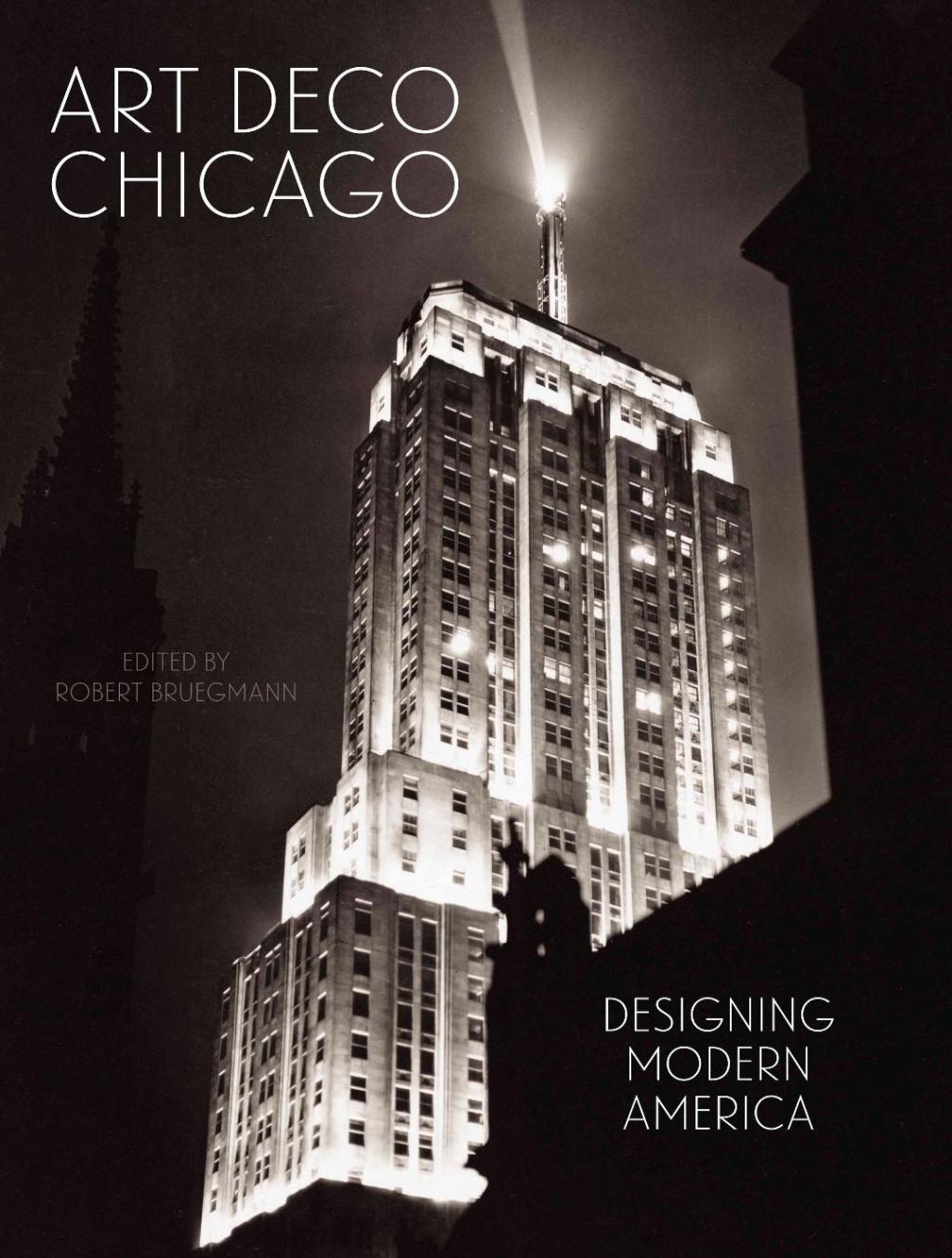
    Art Deco Chicago: Designing Modern America


    sleek and glorious as any Art Deco masterpiece whether it be the grand Palmolive Building built in 1922 or the much lowlier but still spectacular Bell telephone Model 302 designed not by a noted artist or architect but instead by George Lum, a Bell Labs engineer in 1937,  Art Deco Chicago: Designing Modern America (Yale Press 2018; $47.75 on Amazon) showcases 101 key works coupled with more than 300 photos as well as critical essays and extensive research. Altogether, they comprise a wonderful, extensively curated and chronologically organized tome about the many facets–architecture, advertising, household objects, clothing, and food design–of a style that has fascinated so many of us for more than a century.

    Robert Bruegmann, a distinguished professor emeritus of architecture, art history, and urban planning at the University of Illinois at Chicago, was first asked to write the introduction to the book

    thought I’d knock it out in a week,” says Bruegmann, a historian of architecture, landscape and the built environment.

    That was back in 2011 and Bruegmann, author of several other books including The Architects and the City: Holabird & Roche of Chicago, 1880-1918 (Chicago Architecture and Urbanism), quickly realized that it would take much more than that. He ended up editing and shaping this complex book, a task which included overseeing 40 writers and researchers, helping to find and collect photos and defining Art Deco and its impact on the city through design. He would spend the next five years, working 50 to 60 hours a week to do so.

    One of the first questions we asked is how do we define Art Deco recalls Bruegmann.

    “Should it be narrowly like the French-inspired luxury goods, which is the narrowest to the big tent which we ended up doing,” he says noting that many products (think as blasé as refrigerators, bicycles, radios and mixmasters) created in Chicago by companies like Motorola, Sunbeam and Schwinn, changed the world in a way that other forms of Art Deco didn’t.

    It many come as a surprise that the term Art Deco wasn’t invented until the 1960s and came about because of its association with the Decorative Arts Fair Exposition of 1925 in Paris. But in Chicago, Art Deco, even before it was so named, was often about both beauty and usefulness.

    “If I had to pick a single object to suggest what we tried to do in Art Deco Chicago, I would probably choose the Craftsman brand portable air compressor sold by Sears starting in 1939,” says Bruegmann about the cast iron aluminum machine which used, as described in the book, “a series of cooling fins that functioned as a heat sink while adding a streamlined visual flair to the product…This product alluded to themes of speed, transportation, and movement while remaining stationary.”

    “It was related to the avant garde work of the Bauhaus who thought they were going to save the world through their designs,” says Bruegmann. “But they were too expensive. But Sears on the other hand made things affordable.”

    Indeed, Bruegmann says that companies like Sears and Montgomery Ward did change the world.

    “Up until the Sears catalogue, a lot of clothes outside of big cities, were handmade,” says Bruegmann. “Because Sears sold so many outfits through their catalogue, they could afford to send their designers to Paris to study the latest design and then come back and change them so they were less expensive, creating one of the most important social and political movements by making  designs for the masses. For a $1.99 a woman working in a packing plant or a farmer’s wife could wear a knockoff of a Paris dress.

    Art Deco Chicago serves as the companion publication to the exhibition “Modern by Design: Chicago Streamlines America” organized by the Chicago History Museum, which runs October 27, 2018–December 2, 2019. Proceeds from sales of and donations to Art Deco Chicago, which explores and celebrates Chicago’s pivotal role in the development of modern American design, will be used to support ongoing public education, research, and preservation advocacy of this critical period of modern American design.

    Ifyougo:

    What: Newberry Library presents Meet the Author: Robert Bruegmann, Art Deco Chicago

    When: Thursday, November 29 from  to 7:30 p.m.

    Where: Newberry Library, 60 West Walton Street, Chicago, IL

    Cost: Free and open to the public

    FYI: 312-943-9090; newberry.org

    8/18/06 University Scholar- Robert Bruegmann
  • Swedish Settlements on the South Shore
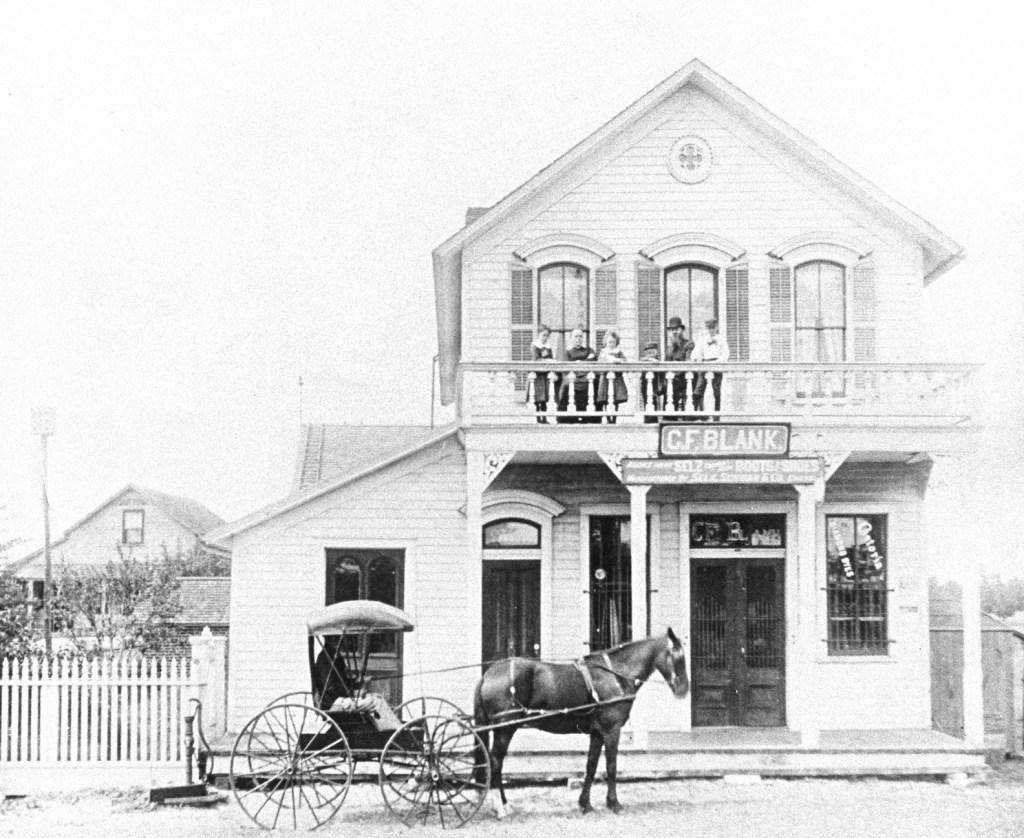
    Swedish Settlements on the South Shore

    Northwest Indiana is famously known as a melting pot, a coming together of a vibrant amalgam of people from many countries and different cultures, making the area rich in diversity. But what may be surprising to those of us who grew up in the Region, the first non-English speaking people to move into the Indiana Dunes region and establish settlements were not from Eastern Europe, Germany or Mexico but were instead Swedish immigrants.Beam Street with a cow

    “Many came first to Chicago which at one time had more Swedes than any city on earth except Stockholm,” says noted historian Ken Schoon, author of the recently released Swedish Settlements on the South Shore (Donning Company Publishers $30), noting that the legacy of these early Swedish immigrants can still be found throughout the Region even today.

    “Swedes established more than a dozen local churches, most of which are still active today,” he says “They built homes out of logs, lumber, and bricks, cleared and farmed the land, worked for the railroads and the brick factories, and established businesses, some of which are still in business today.  Several of the early Swedes served in the Union army in the Civil War.  Nearly all got American citizenship, and some were elected to political office.”

    Swedish settlements included neighborhoods in Hobart, Baillytown, Portage Township, Porter, Chesterton, and LaPorte as well as Swedetown in Michigan City. According to Schoon, Miller Beach, where Swedish families like those of my sister-in-law span five decades, was described in 1900 by Lake County historian Timothy Ball as mainly Swedish Lutheran.

    Bethel Swedish Lutheran Church, 1907 low res

    Other tie-ins with the Region’s Swedish past comprise Chellberg Farm, a historic farmstead, now part of Indiana Dunes National Lakeshore.

    “The Chellbergs were one of hundreds of Swedish families that immigrated to the ‘south shore’ area of Northwest Indiana,” says Schoon.  “They were the first non-English speaking immigrants to arrive in numbers large enough and lived close enough together to call the areas settlements.”

    Close by to Chellberg Farm and further back in time, Joseph Bailly, a French fur trader who founded a trading post which is also now within the Indiana Dunes National Lakeshore. According to Schoon, Bailly’s son-in-law Joel Wicker hired recently-arrived Swedes to cut down trees and prepare them for the railroads to be used as rail ties and as fuel for the steam engines.

    “Logs were also needed to build and heat their homes and for cooking,” says Schoon.  “When enough trees were cut down, Wicker then sold the land to his Swedish employees who then cleared the land for farming.  Other Swedes found employment as farm laborers, and working for sand and ice mining companies, and as blacksmiths and carpenters.  As the immigrants had more money, many purchased their own farms or started businesses in town.  The first licensed embalmer in Indiana was carpenter John Lundberg, a Chesterton Swede.”

    Chellberg Farm (1)
    Chellberg Farm Today Photo courtesy of the Indiana Dunes National Lakeshore 

    Many of the churches founded by Swedish immigrants still exist and for almost 70 years or so continued to offer Swedish-language services. Now services are in English and their congregations encompass more than those of Swedish ancestry.

    “Bethany Lutheran Church in LaPorte is the oldest Swedish-founded church in Indiana,” says Schoon.  “Until it closed last December, the Evangelical Covenant Church in Portage was the oldest Covenant Church in the state.  The Michigan Avenue Methodist Church in Hobart still uses its original 1889 white frame building and Michigan Avenue used to be called Swede Avenue.”

    Other churches are Bethany Lutheran and Grace Baptist  in LaPorte, Zion Lutheran in Michigan City, Bethlehem in Chesterton, Augsburg (Baillytown/Porter), Hope (Crisman/Portage), Bethel (Miller), and Augustana (HobartNordikids circle dance lowres

    Though Swedes, whose last names are similar to common  “American names” such as Anderson and Carlson, quickly assimilated into American culture, descendants of Swedes still learn Swedish songs and dances and celebrate the traditions of their forbears says Schoon and we also have assimilated into their traditional ways.

    “Even non-Swedes know about Vikings and may eat Swedish meatballs,” he says, noting that in 1952, 100 years after its founding, Chesterton still had more than 23 Swedish-owned businesses. “Smörgåsbord has become an American word—though to Swedes it has slightly different meaning.  Swedes and their descendants helped build the Calumet Area.”

    Swedes celebrate July 4th but also honor their own customs as well including Midsummer, the first day of summer and the longest day of the year, a holiday featuring a Maypole, singing, dancing, eating and drinking.

    “At least in Sweden,” says Schoon about the drinking part,  “but not at the Chellberg Farm where Midsummer is celebrated.”Vikings in the Hallway (1)

    But it isn’t all just history for Swedes and those of Swedish ancestry along the South Shore. The newest lodge in the Scandinavian Vasa Order of America was started in 2006 and sponsors “Nordikids” a very active organization for children and youth that teaches primarily Swedish songs, dances, and customs.  The group performs every year at many venues including Chicago’s “Christmas Around the World.

    Ken Schoon, the author, is not descended from Swedes, but he is married to the granddaughter of Swedish immigrants. His earlier works include Calumet Beginnings, Dreams of Duneland, and Shifting Sands, all published by Indiana University Press, and City Trees published by Stackpole Books.

    Ifyougo:

    Ken Schoon book presentations and book signings.

    Sunday, November 11@ 3pm.   Calumet City Historical Society, 760 Wentworth Ave, Calumet City, IL.  708-832-9390; calumetcityhistoricalsociety.org

    Wednesday, November 14@ 6:30pm.  Augsburg Church, Augsburg Evangelical Lutheran Church, 100 N Mineral Springs Rd, Porter, IN. 219-926-1658; augsburglutheran.org

    Sunday, November 25 @ 10:30.  Westminster Presbyterian Church, 8955 Columbia Ave, Munster, IN. 219-838-3131; wpcmunster.org

    Saturday, December 8 @ 9:30.  Brunch including Swedish pancakes and lingonberry syrup  and book signing, Dunes Learning Center, 700 Howe Rd, Porter, IN.  219-395-9555; duneslearningcenter.org


  • Pure: Inside the Evangelical Movement that Shamed a Generation of Young Women and How I Broke Free

    Pure: Inside the Evangelical Movement that Shamed a Generation of Young Women and How I Broke Free

    Inside the purity culture, girls and women are not only responsible for their own sexual thoughts and actions but also those of the boys and men around them says Linda Kay Klein, author of Pure: Inside the Evangelical Movement that Shamed a Generation of Young Women and How I Broke Free (Touchstone 2018 $26).

    Linda Kay Klein Author Photo by Jami Saunders Photography            “Because women are seen as the keepers of sexual purity which is a necessary part of their living out their faith, when men or boys have lustful thoughts about them, then it’s about what they were wearing, were they flirting,” says Klein, who grew up in the evangelical movement in the 1990s before breaking free. “It creates a tremendous amount of anxiety because your purity is assessed by others around you. It makes you worry about when you’re going to fall off the cliff and no longer be considered pure and no longer part of the community.”

    But if being non-sexual before marriage is of utmost importance, afterwards the onus is on the woman to be extremely sexual, able to meet all their husband’s needs lest he cheat—which of course would be her  fault.

    “Zero to 100 is extremely difficult,” says Klein, noting it’s better to ease into sexual experience. “I interviewed women who didn’t know what sex was and suddenly they’re expected to be a sexual satisfier.”

    As far as sexual abuse, well, if girls and women were just pure, that sort of thing wouldn’t happen.

    Klein was in her 20s when she left the evangelical church. The impetus was in part when she learned her pastor had been convicted of child enticement with intent to have sexual contact with a 12-year-old girl who was under his pastoral care. She was a senior in high school and as awful as it was to learn that, it was even more devastating when she discovered the pastor had been let go from two other evangelical institutions after he confessed to committing the same acts.  But her evangelical upbringing still bound her.

    “I thought I would be free,” says Klein who during her teenage years was so obsessed with staying pure that she took pregnancy tests even though she was a virgin and resisted asking for help when dealing with what would later be diagnoses with Crohn’s Disease because she wanted to prove she was a woman of the spirit and not of the flesh. “But I wasn’t able to escape them, they were me.”

    At least at first.

    Writing her book, which took 12 years, was cathartic for Klein who interviewed many evangelical women and likening the fear and angst they experienced as similar to Post-Traumatic Stress Disorder.

    Noting there’s a dominant gender teaching in the evangelical church—as well as many other churches, Klein says that patriarchy hurts both men and women except those at the top of the hierarchy.  There is also something else off putting about the purity culture and that is the profit motive in the development of products.

    “The people on the ground are believers,” she says.

    Others make money off of purity rings which can range in price from around $10 to $600 or more, abstinence education, Christian purity parties, father-daughter purity balls and clothing including t-shirts reading “Modest is Hottest.”

    “Over the course of time I did a lot of healing through my research for the book,” says Klein, who. “There have been phases in this journey. I’ve been angry, but keeping my focus on healing, knowing I’m not alone—I think there’s something powerful that happens.”

    Ifyougo:

    What: Author Conversation: Linda Kay Klein & Deborah Jian Lee

    When: November 7 at 7 p.m.

    Where: Women & Children First, 5233 N. Clark St., Chicago, IL

    Cost: Free

    FYI: 773.769.9299; womenandchildrenfirst.com


  • Good and Mad: The Revolutionary Power of Women’s Anger
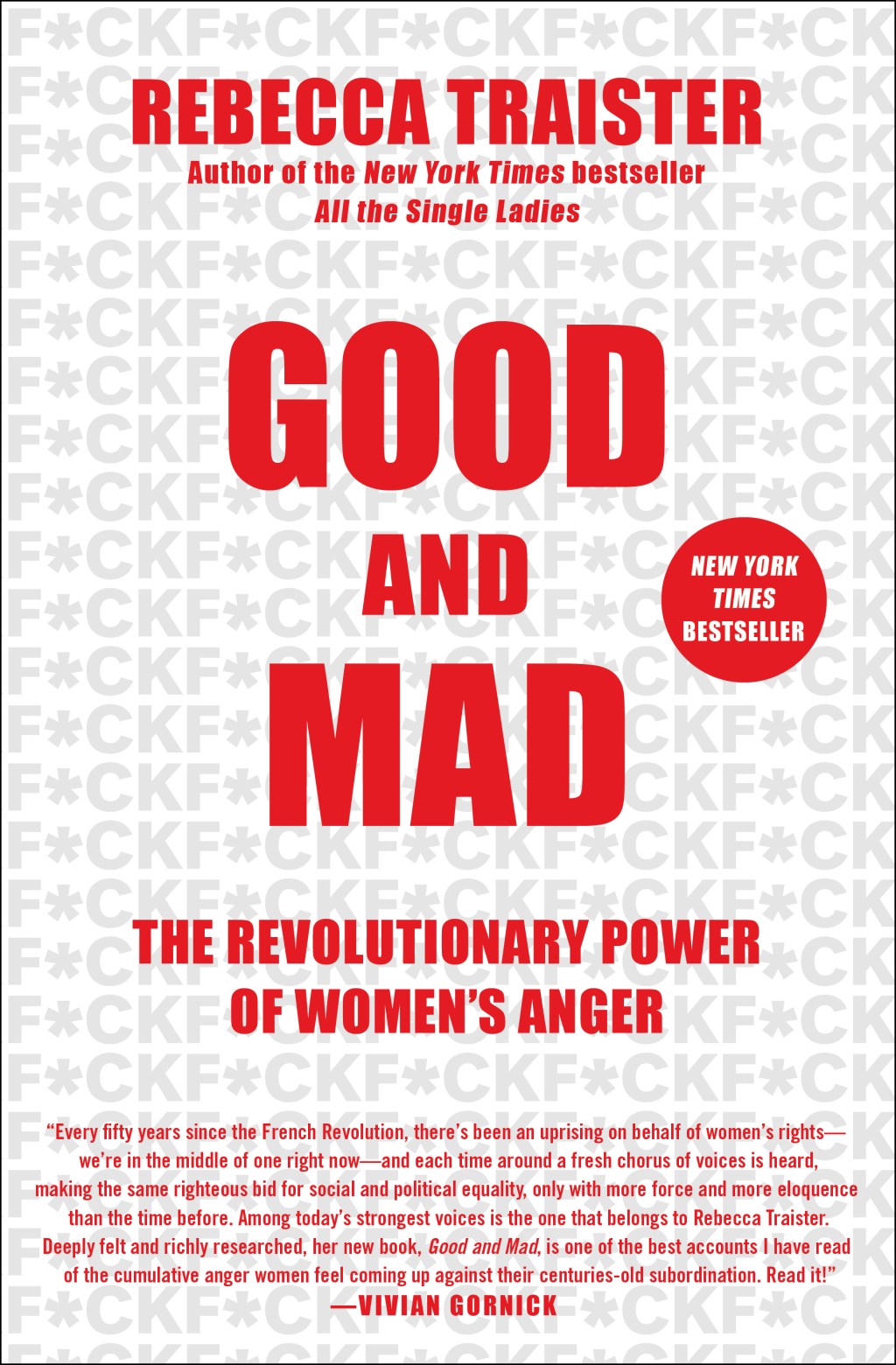
    Good and Mad: The Revolutionary Power of Women’s Anger

    Women’s anger is complicated, dating back to the days before they were allowed to vote and when all but a few careers were available to them. Even in the last generation or so, women have fought against discrimination in pay, employment—consider that former Supreme Court Justice Sandra Day O’Connor could at first only get a job as a deputy county attorney even though she graduated from the prestigious Stanford University and what they wore (up until the 1970s even pantsuits were considered inappropriate in the workplace) among many other things. On a personal level, when my father returned from serving overseas during World War II, at least one of the men on the East Chicago Public Library board demanded that my mother resign because she was taking a job away from a man. Fortunately, other board members disagreed and she worked there until she was in her 70s, retiring after 50 years. Other women weren’t as lucky—many were asked to leave or fired so that men could be re-employed.Rebecca Traister_credit_Victoria Stevens

    For New York Times bestselling author Rebecca Traister, a National Magazine Award winner for her coverage of the Harvey Weinstein scandals, writer at large for New York Magazine and contributing writer for Elle, the long-simmering anger women have felt is now brimming over. This is shown by the ever growing #MeToo movement and also what she sees as women’s reaction to Donald Trump and his policies that hurt women. In her newest book, Good and Mad: The Revolutionary Power of Women’s Anger (Simon & Schuster 2018; $27) Traister wants to let women know their anger is potent.

    “It’s consequential, it’s meaningful, valid and rational,” says Traister who discusses how women’s anger is often held against them and used to invalidate their feelings. “I think those are things that women are told are not true about their anger all the time. This book sort of serves as a guide and a reminder–to let women know that their anger is powerful, that it has historical precedence.”

    Indeed, Traister argues that anger, when used to make changes, is a potent force.

    “It’s the bottling up of anger, rather than the anger itself, that raises our blood pressure and makes us grind our teeth,” she says.

    Though her book was written before the recent confirmation of Supreme Court Justice Brett Kavanaugh, Traister says the  reaction to how the women who came forward were treated will also reverberate into the future—just as they did 26 years ago after the Anita Hill and Clarence Thomas confirmation hearings.

    “#MeToo was an examination of how often sexualized harm was actually a tool of inequality within workplaces and within power structures where women faced all kinds of economic, professional, public forms of discrimination,” she says noting the harm being done wasn’t just sexual—it was also economic and professional. “What was being exposed were fundamental inequalities.

    Ifyougo:

    What: Chicago Humanities Festival, in conversation with Dr. Brittney Cooper

    When: Sunday, October 28 at 3:30 p.m.

    Where: Pick-Staiger Concert Hall, Northwestern University, 50 Arts Circle Dr., Evanston, IL

    FYI: (847) 467-4000; chicagohumanities.org/events/207-rebecca-traister-good-and-mad


  • Who Murdered the Supreme Court Candidate: Mental State, a mystery novel by Law Professor M. Todd Henderson

    Who Murdered the Supreme Court Candidate: Mental State, a mystery novel by Law Professor M. Todd Henderson

    The murder of a good friend and fellow law professor inspired M. Todd Henderson to write Mental State (Down and Out Books 2018; $17.95), his first mystery novel.

    “He was a professor at Florida State University and had just dropped of his kids and was pulling out of the driveway when he was shot,” says Henderson who teaches at the University of Chicago’s law school. It turns out the friend, Dan Martel, was murdered by two hitmen hired by his ex-wife’s family to gain full custody of their children. Henderson considers himself a storyteller and using those skills he channeled his feelings into an immensely readable mystery involving the deadly political machinations put in place to hide the past of a sexual predator in order to secure a place on the  Supreme Court. It’s an interesting premise and certainly timely though this book was written well before the Brett Kavanaugh nomination and besides, Henderson’s judge is liberal.

    “My interest in law at a policy level is about power and what people are willing to do to achieve their ends,” says Henderson.

    photo-m-todd-henderson-1000x1400px-300dpi (1)

    In Mental State, Professor Alex Johnson, a professor at a renowned law school on Chicago’s southside (think University of Chicago) is murdered before he can reveal that the man being considered for the Supreme Court sexually abused him when they were both young. The death is first thought to be a suicide but FBI agent Royce Johnson, the victim’s brother, doesn’t believe his self-centered, narcissistic sibling would do such a thing. Once Royce proves it was murder, the next frame-up goes into place (the bad guys are good at backup plans) pinpointing the murder on one of the professor’s law students. But Johnson’s inability to quit trying to solve the crime soon puts himself on the wrong side of the law,  his comrades at the FBI and an array of federal officials determined to make sure the president’s pick for the highest court in the land goes through without a hitch. If that means a few murders and ruined lives to achieve this, well, it’s for the greater good.

    Ifyougo:

    What: M. Todd Henderson discusses “Mental State.” He will be joined in conversation by Jeff Ruby. A Q&A and signing will follow the discussion.

    When: Thursday, October 18, 2018 – 6:00pm – 7:00pm

    Where: 57th Street Books, 1301 E 57th St., Chicago, IL

    Cost: Free

    FYI: (773) 752-4381; events@semcoop.com

  • Muse of Nightmares: Second in the Epic Fantasy Series Strange the Dreamer

    Muse of Nightmares: Second in the Epic Fantasy Series Strange the Dreamer

    Strange the Dreamer, the epic fantasy series written by Laini Taylor, began as a dream. Now Taylor, a National Book Award finalist, has just released Muse of Nightmares  (Little, Brown 2018; $19.99), the second book in the series.Laini Taylor_Author Photo_AliSmith credit

    “The story has been in my mind for 20 years or more,” says Taylor, whose author photo shows her with a shock of long seriously pink hair.  “I think I dreamed Sairi, the character that came to me, who lived high above the city and I thought of her as the Muse of Nightmares. I started writing about her for my first book but then that became Lazio’s book.  But this is about Sairi, the way trauma changes us and if it is possible for a person to overcome this. Sarai doesn’t know what she’s capable of and she feels helpless, but is she?”

    The journey of Sairi and Lazio is one of intrigue and mysteries (what was done with thousands of children born in the citadel nursery? where did the gods come from, and why? and  how do they defeat a new foe?) and it’s interesting to note that as we follow Taylor’s story-telling, we often are only a few steps behind her as the story plot evolves. That’s because as much as she wants to shape her story, it often, as she builds her characters and scenes in her mind, takes on a will of its own.

    Taylor says she always hopes to get to the ending she has in mind.

    “But it doesn’t always work that way,” she says.

    Immersed and—dare we say—co-dependent–with her characters, Taylor is sad when they make a bad choice though she can understand why they did so.

    “It just give me so much empathy for them,” Taylor says.  “I ask what causes people to do that. When my characters don’t survive, I really wish I could save them, but I can’t.”

    But though she doesn’t often know how her books will end or save a character, she did know that she wanted to eschew the typical epic ending of a massive battle between good and evil and instead resolve it by asking and answering a powerful question “must heroes always slay monsters or is it possible to save them?”

    Ifyougo:

    What:

    When: Thursday, October 11 at 7 p.m.

    Where: Anderson’s Bookshop, 123 West Jefferson Avenue Naperville, IL

    Cost: Free and open to the public. To join the signing line, please purchase the author’s latest book, Muse of Nightmares, from Anderson’s Bookshop. To purchase please stop into or call Anderson’s Bookshop Naperville (630) 355-2665.

    FYI: (630) 355-2665; andersonsbookshop.com