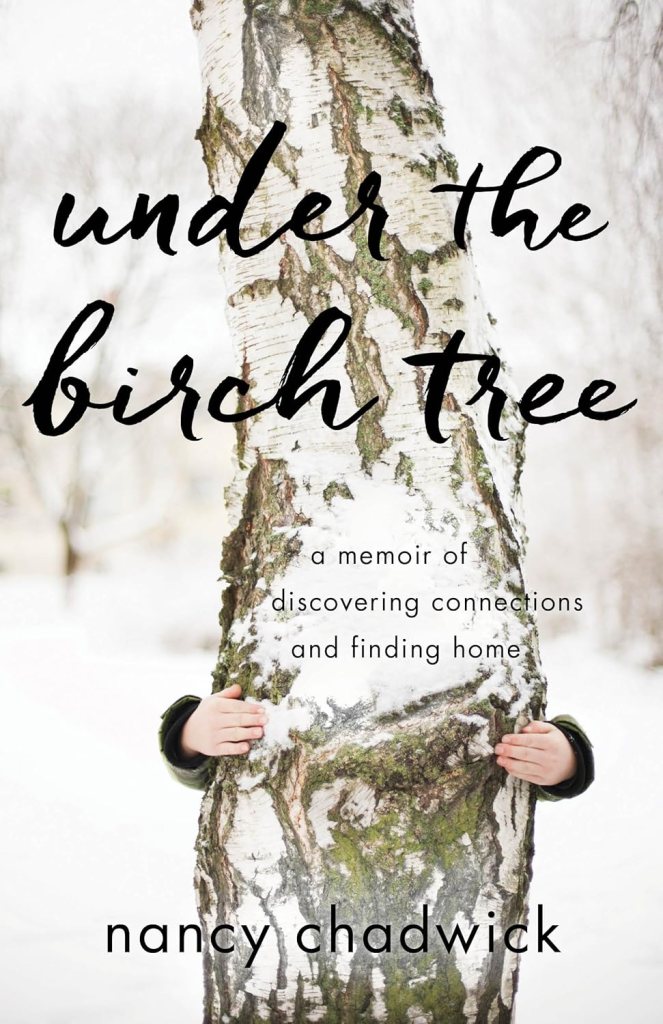
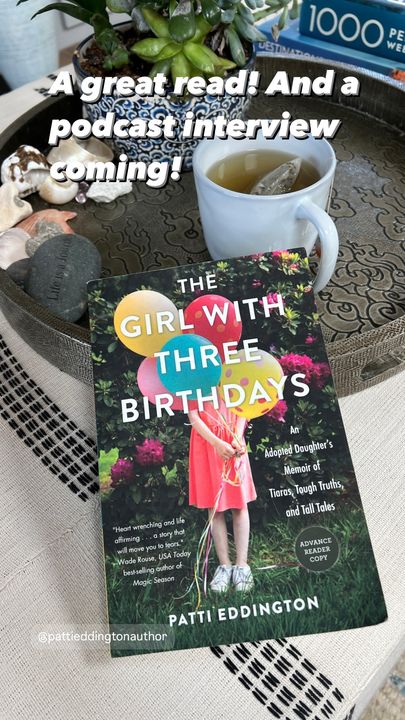
The Book Stall (811 Elm Street in Winnetka) will be welcoming authors Nancy Chadwick, Michelle Cox and Patti Eddington on Thursday, July 11that 6:30 PM. In a discussion moderated by Michelle Cox, each author will talk about her writing process, and the origins of her book. Our guest authors work with similar themes, and they will be exploring these connections in their new works of historical fiction, connections with the natural world, and memoir. Whether you are a fan of writing by and about women or a writer looking for guidance on completing and publishing a book, this is the program for you! We’ll leave plenty of time for audience Q&A.
This event is free with registration! Visit their website or CLICK HERE.
Nancy Chadwickis the author of Under the Birch Tree: A Memoir of Discovering Connections and Finding Home. Her essays have appeared in The Magic of Memoir: Inspiration for the Writing Journey, Adelaide Literary Magazine, and Turning Points – The Art of Friction, as well as in blogs by Off Campus Writers’ Workshop, the Chicago Writers Association Write City, and Brevity. Her debut novel, The Wisdom of The Willow, has been included in the “Most Anticipated Books of 2024” by the Chicago Review of Books. She finds writing inspiration from her many meanderings through any forest.
Michelle Coxis the award-winning author of the Henrietta and Inspector Howard series, a mystery/romance saga set in 1930s Chicago. She also pens the wildly popular, “Novel Notes of Local Lore,” a weekly blog chronicling the lives of Chicago’s forgotten residents. Her debut novel, The Fallen Woman’s Daughter, is her first foray into women’s historical fiction and is based on a story she heard working in a nursing home. She has spent years crafting it into a novel and is delighted to finally share it with the world.
Patti Eddingtonis a newspaper and magazine journalist whose favorite job ever was interviewing the famous authors who came through town on book tours. She never dreamed of writing about her life because she was too busy helping build her husband’s veterinary practice, caring for her animal obsessed daughter—whose favorite childhood toy was an inflatable tick—and learning to tap dance. Then fate, (and a DNA test) led her to a story she felt compelled to tell. Today, the mid-century modern design enthusiast and former dance teacher enjoys being dragged on walks by her ridiculous three-legged dog, David, and watching egrets and bald eagles from her deck on a beautiful bayou in Spring Lake, Michigan.
The Book Stall is an independent bookstore and cultural institution on Chicago’s North Shore. We are known for our great selection of books, cards, and gifts, as well as our long-running author event series. Learn more at www.thebookstall.com.
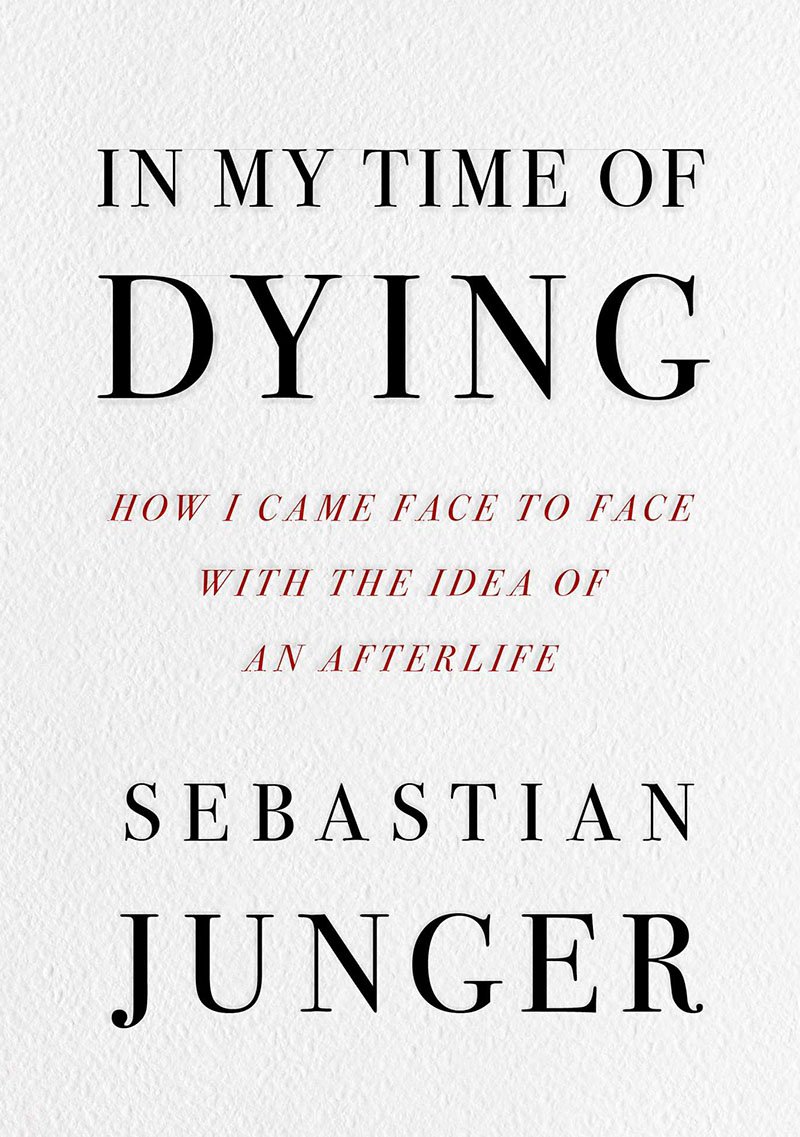
The Book Stall(811 Elm Street in Winnetka) is thrilled to host New York Times bestselling author Sebastian Jungerat the store on Wednesday, June 19 at 6:30 pm for a discussion featuring his new book,In My Time of Dying: How I Came Face to Face with the Idea of an Afterlife.Part medical drama, part searing autobiography, and part rational inquiry into the ultimate unknowable mystery, a near-fatal health emergency led to this powerful reflection on death and what might follow by the bestselling author of Tribe and The Perfect Storm.
This is a ticketed program. The ticket price of $30.51 includes a copy of the book, and options include a ticket that admits two people (with one book) or one person with one book. Sebastian Junger will be signing his work following the talk! To purchase tickets, please visit The Book Stall’s website or CLICK HERE.
More About the Book: As an award-winning war reporter, Sebastian Junger traveled to many front lines and frequently put his life at risk. And yet the closest he ever came to death was the summer of 2020 while spending a quiet afternoon at the New England home he shared with his wife and two young children. Crippled by abdominal pain, Junger was rushed to the hospital by ambulance. Once there, he began slipping away. As blackness encroached, he was visited by his dead father, inviting Junger to join him. “It’s okay,” his father said. “There’s nothing to be scared of. I’ll take care of you.” That was the last thing Junger remembered until he came to the next day when he was told he had suffered a ruptured aneurysm that he should not have survived.
This experience spurred Junger, a confirmed atheist, raised by his physicist father to respect the empirical, to undertake a scientific, philosophical, and deeply personal examination of mortality and what happens after we die. How do we begin to process the brutal fact that any of us might perish unexpectedly on what begins as an ordinary day? How do we grapple with phenomena that science may be unable to explain? And what happens to a person, emotionally and spiritually, when forced to reckon with such existential questions?
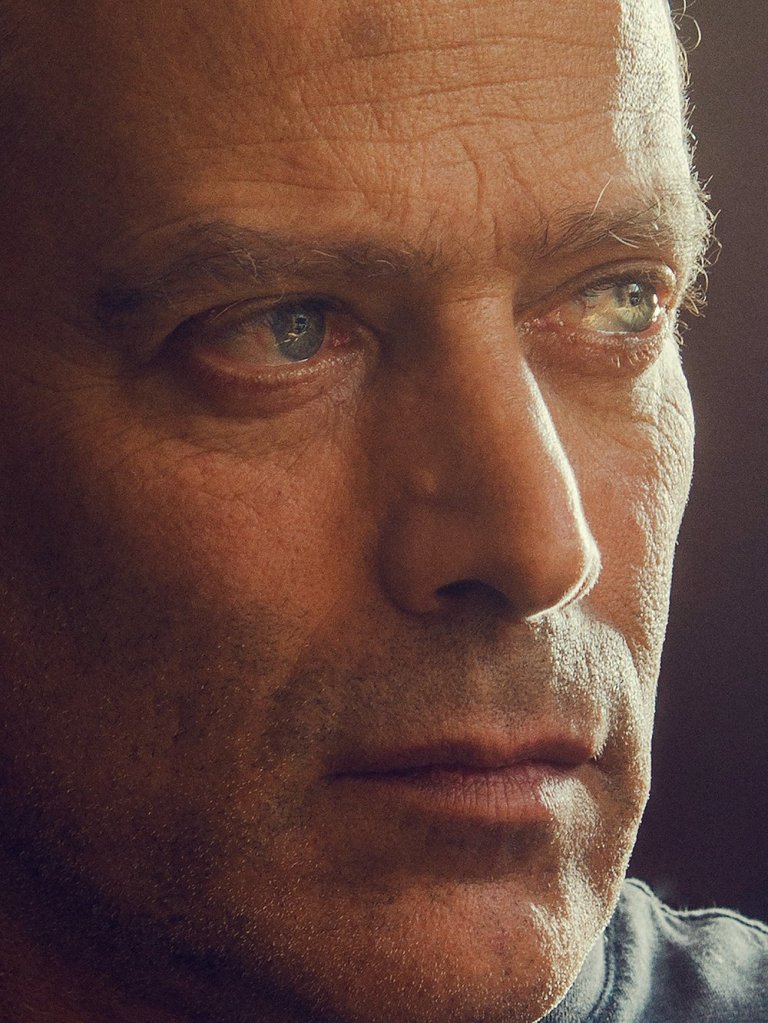
Sebastian Junger author photo by Christopher Anderson
Bestselling author James Pattersonsays,“Let me start this way: I believe that Sebastian Junger is one of the finest writers of our generation. In My Time of Dying is a stunning book about life, about death, about the afterlife…Junger has clearly obsessed about his subject. The result is a powerful book that comes as close as anything I’ve read in explaining what it means to be human.”
More About the Author: Sebastian Junger is the New York Times bestselling author of Tribe, War, Freedom, A Death in Belmont, Fire, and The Perfect Storm, and co-director of the documentary film Restrepo, which was nominated for an Academy Award. He is also the winner of a Peabody Award and the National Magazine Award for Reporting.
The Book Stallis hosting linguist, local NPR host, and veteran English professor Anne Curzanon Wednesday, June 12 at 6:30 pm for a discussion featuring her new book, Says Who?: A Kinder, Funner Usage Guide for Everyone Who Cares about Words (PenguinRandom House). With lively humor and humanity, Says Who? reveals how our choices about language usage can be a powerful force for equity and personal expression. For proud grammar sticklers and self-conscious writers alike, Ms. Curzan makes nerding out about language fun. She will be happy to sign her work.
This event is free with registration. To register, please visit their website or CLICK HERE.
More About the Book: Our use of language naturally evolves. It is a living, breathing thing that is a reflection of us, so we shouldn’t let our language peeves raise our blood pressure too high. Says Who? offers clear, nuanced guidance that goes beyond “right” and “wrong” to empower us to make informed language choices. Never snooty, scoldy (yes, that’s a “real” word!), or boring, this book pulls back the curtain to reveal where the grammar rules we learned in school actually come from and to unmask the forces that drive dictionary editors to label certain words as slang or unacceptable.
Anne Curzan gives readers the guidance they need to adeptly manage formal and informal writing and speaking. Curzan gently explains, without judgment, how to connect local guidance with a bigger map for how to think about usage questions. Applying entertaining examples from literature, newspapers, television, and more, Curzan welcomes usage novices and encourages the language police to lower their pens, showing us how we can care about language precision, clarity, and inclusion all at the same time.
Ben Zimmer, language columnist for The Wall Street Journal, says, “A delightful exploration of the quirks and controversies in the English language . . . Whether you embrace your inner ‘grammando’ or inner ‘wordie,’ Says Who? is sure to satisfy anyone curious about language’s ever-shifting landscape.”
More About the Author: Anne Curzan is the Geneva Smitherman Collegiate Professor of English, Linguistics, and Education and an Arthur F. Thurnau Professor at the University of Michigan, where she also currently serves as the dean of the College of Literature, Science, and the Arts.
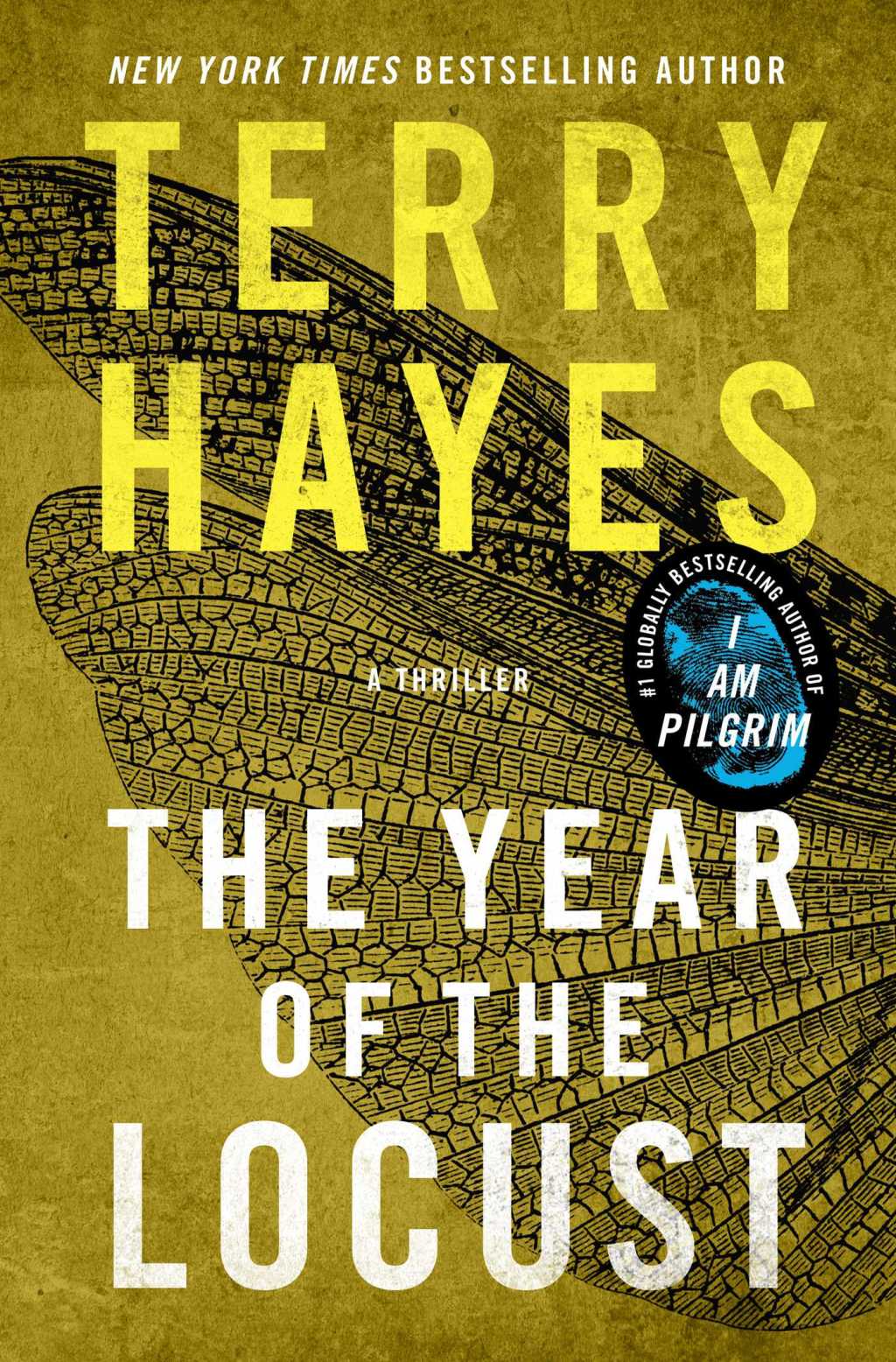
When my friend David Brown asked me to read “The Year of the Locust” and give him my opinion, I was less than excited. Written by Terry Hayes, a former journalist, and Emmy-nominated screenwriter who wrote the screenplays for, amongst others, Mad Max 2 – Road Warrior, Dead Calm, Mad Max Beyond Thunderdome, Payback, From Hell, andVertical Limit, it definitely didn’t sound like my kind of book. I hadn’t seen any of the movies he’s written nor read his previous bestselling novel, “I Am Pilgrim,” published ten years ago to rave reviews.
But friendship is friendship and if David, a book publicist that I’ve known for years, wanted my input, I’d give it a go. Downloading the book on my Kindle, I sat down with a cup of coffee and started reading.
Two hours later my coffee was cold, but I was too entranced by Hayes’s book to make another cup as I followed CIA agent Ridley Kane, a Denied Access Area spy for the CIA meaning he can go wherever and do whatever needs to be done.
Kane is sent to the baddest of the badlands, the remote and geographically hostile 1600-mile border where Pakistan, Iran, and Afghanistan meet. Known as one of the most dangerous spots in the world, it’s a lawless place, the perfect place for robbers, murderers, and terrorists to hide in its many caves.
Kane’s job is to extricate an informant who has information about an upcoming Armageddon-like terrorist attack. He’s too late. The informant has been captured by The New Islamic Army of the Pure, and his family—a wife and two daughters staked out and left to die in the terrorist’s camp.
If Kane followed protocol, he would fade back into the desert but he can’t leave the mother and daughters to die and shoots their captors, setting them free. A noble act but one that makes it personal with Abu Muslim al-Tundra, known as the locust and formerly a chief with al-Qaeda and ISIS and an extremely deadly adversary. It’s al-Tundra’s brother that Kane has killed.
“The Year of the Locust” took Hayes ten years to write and it was when he was stuck in Portugal because of the COVID quarantine, away from his wife and three children, that he finally finished the 250,000 word novel.
“I couldn’t go anywhere for two years,” he says.
But Kane definitely goes places and among the many fascinating aspects of his book are his descriptions of locations I didn’t know existed.
I mean who knew about Baku, which is where one of the climactic scenes from the book occurs? A city on the Caspian Sea in what is now Azerbaijan, the Rothschilds, and the Nobels (of the Swedish family, founders of the Nobel prize) established a thriving oil industry there in the 1870s, building mansions as they sucked the oil out of the ground.
So why did it take ten years to write this novel which was due out in 2017?
“I don’t care how long it takes, or how hard it is, I just want it to be good,” says Hayes, who threw out the entire first manuscript for “The Year of the Locust” and began again.
Hayes says he always wanted to be the J.R.R. Tolkien of the spy genre and Locust has some aspects of Tolkien in its storyline. I found the spy technology of what the CIA can accomplish fascinating but was able to segue easily when it became more science fiction-like with its time-bending take. There is also a bit of romance between Kane and his wife Rebecca, a feisty emergency room doctor and the mother of his children.
Loquacious and full of anecdotes, my conversation with Hayes lasted for three hours and ended only because I had another appointment. We chatted about his life in Hollywood when a movie writer (he spent a long time talking to a couple who looked familiar and only later learned they were Ringo Starr and his wife, actress Barbara Bach), his children (“I wish I could get them to listen to me”), and his wife (“she’s rolling her eyes now at what I just said”).
Once called Coatlan after the earthenware vessels that were coiled like a serpent and used for storing pulque, a white wine made from the Mexcal tree and used as an offering to a stone idol, Cuiseon was a small village on The Nine Rivers which flowed into Lake Chapala.
This and other food traditions, according to The Geographic Account of Poncitlán and Cuiseo del Río dated March 9, 1586, showed their typical fare as venison, fish, and rabbit, a thin kind of porridge to drink hot with powdered chile that was broken up and sprinkled on top, and Izquitl—corn toasted on a comal and seasoned with salt. The villagers harvested chia, huauhtli, and cocotl, the latter a mustard-like seed that is ground up and mixed with corn and water to drink both before and after eating.
As it relates to the foods we eat today, we still consume corn and fish and season with salt and powdered chiles. We’re less likely to dine on venison or rabbit while cocotl is so obscure that even a Google search doesn’t come up with a hit. But both chia and huauhtli, a species of amaranth, an ancient grain, are recognized as beneficial to our health. And so, the foods of this village still play a part in our lives.
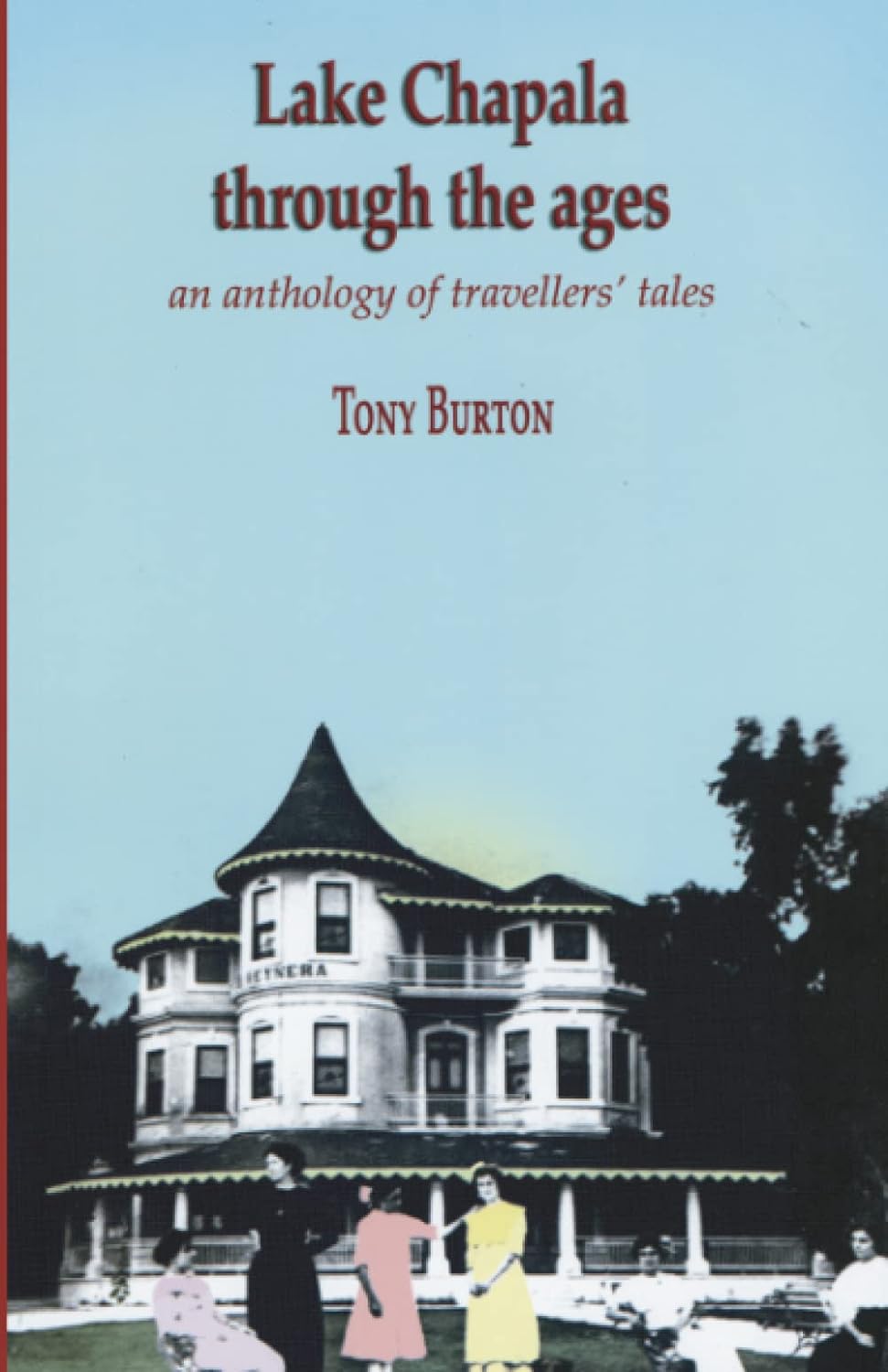
Reading through a unique collection of extracts from more than fifty original sources, many never previously available in English, Burton’s book, “Lake Chapala Through the Ages; an anthology of travelers’ tales,” is a fascinating look at the region's formative years from the arrival of conquistadors in the early 1500s to the start of the Mexican Revolution in 1910, as told through the eyes of an assortment of travelers-- poets, friars, exiles, government officials, geographers, historians, explorers, and scientists.
What they saw in their journeys is fascinating, as are the people who traveled and then shared their observations.
"My inspiration was really curiosity about the documentary basis for things I’d heard about the history of the area, some of which struck me as highly imaginative," says Burton. "I began working on the book way before the development of online search engines or digitized books, so it took me almost a decade to track down originals of the 50+ published works, excerpts from which appear in the final book. It would have been impossible without the support of an excellent inter-library loan system, personal visits to libraries in the USA and England, and the generous contributions of a small army of people I thank in the book’s acknowledgments.
"I still remember the shivers that ran down my spine when I first handled the leather-bound Belgian journal from the 1830s containing an article about Lake Chapala by Henri Galeotti. I knew that article existed because some parts had been translated into Spanish and published in Mexico. The challenge of finding the original proved to be well worth the effort—in my opinion, Galeotti’s masterful, illustrated, systematic, scientific coverage of the area's geology and natural history has no equal."
Barrister and seasoned traveler William Henry Bullock Hall (1837–1904), who was born in Essex, England, and educated at Balliol College, Oxford visited Mexico taking a route that began in Veracruz and took in Mexico City, Tepic, San Blas, Guadalajara, Querétaro and Tampico."
Looking for boiling water while staying at the hacienda of Buena Vista, he made the following observation:
“In one of the recesses of the building, I discovered, over her earthenware pots, the old woman, upon whom you are sure to stumble, sooner or later, in Mexican houses, if you only persevere. As good luck would have it, this old crone was in the act of trying to blow into a sufficient glow to boil a jug of water, the bits of charcoal which, laid in a square receptacle sunk in the face of a solid brick counter, do the duty of a fire all over Mexico. From this old lady I obtained not only boiling water, but a couple of poached eggs, so that I fared sumptuously.”
English women often were intrepid travelers, journeying to places remote and probably most uncomfortable. How joyous to meet Rose Georgina Kingsley (1845–1925), the oldest child of the Rev. Charles Kingsley, a celebrated English clergyman and novelist, who contributed the prologue to her book” South by west or winter in the Rocky Mountains and spring in Mexico,” published in 1874 and digitized by Harvard University in 2006.
Rose crossed the Atlantic to Colorado Springs in November 1871 to join her brother, Maurice, who was assistant treasurer of the company developing Colorado Springs writes Burton, noting that, even by 1872, there were fewer than 800 residents, so both Kingsleys were pioneer settlers. Her writings and sketches were published by General William Jackson Palmer, the founder of Colorado Springs, a railway entrepreneur and owner of the newspaper Out West.
When Palmer decided that same year to examine possible routes for a railway linking Texas to Manzanillo, Rose accepted the invitation to join him along with his wife, Queen, and General William Rosencrans on a trip that took them first to Manzanillo and then inland to Colima, Guadalajara,Guanajuato, Querétaro, and Mexico City. Her descriptions of the sights and interactions along the way are fascinating.
“At San Pedro [Tlaquepaque] we stopped and got three men as escort, and at 9.30 came to San Antonio, a hacienda where we changed mules, and had breakfast in a hut by the roadside,” she writes. “The women in the hut, which was only made of sticks and thatch, gave us eggs, frijoles, tortillas, and carne seca, in chilli Colorado sauce, which for hotness almost beat the mole de guajalote at Atenquique. But besides these native viands we got capital chocolate, made from some cakes we had brought with us. So, on the whole, we fared well.”
They arrived at La Barca, on the Rio Lerma, on market day and ate a very good meal in a dirty fonda (restaurant) where the walls were covered with broken bits of pottery in decorative patterns. There they learned they had barely missed being robbed the night before—all of which Rose, in her writings at least, takes in stride.
Burton, the editor-in-chief of MexConnect, Mexico’s top English-language online magazine, spans time and place to take us into one of his favorite regions of Mexico where he lived for over a decade, bringing the past alive and introducing us to an interesting cast of characters.
“Secrets, lies, and a murderous conspiracy . . . churn at the heart of Harlan Coben’s blistering new novel.”
Harlan Coben may be a New York Times bestselling author, his award-winning books translated into 46 different languages and many such as Fool Me Once, The Stranger, and Gone for Good, made into such Netflix series but even now, he doesn’t call it in when it comes to suspense novels. Think Twice is an absorbing, intricately plotted thriller about a man who is presumed dead and then suddenly wanted for murder. It’s the 12 th mystery featuring Myron Bolitar, the sardonic and witty sports agent who time and time again somehow finds himself in the middle of a crime.
How can a man who is already dead be wanted for murder?
Myron is on the phone with his 80-year-old father who is talking about how he and Myron’s mother have discovered the wonders of gummies laced with marijuana when two FBI agents arrive in his office with new information regarding the murders of Cecilia Callister, a 1990s semi-supermodel and her 30-year-old son Clay. At the time, it was assumed the two were murdered by Callister’s fourth husband after she agreed to testify against him on fraud charges after discovering he was having an affair.
New evidence indicates that Greg Downing might be involved in the deaths. But Downing is dead.
Or is he?
Coben is a master of twists and turns, and Myron lives in a world where nothing is as it appears. And that includes Windsor Horne Lockwood III, known as Win, his best friend who often helps him solve crimes. A prep school trust funder with a pedigree stretching back generations, Win might be mistaken for a man who lives for nothing more than fine meals, sexual dalliances, and golfing (his handicap is a three) all part of the privileges extreme wealth confers upon him.
But, despite his efforts to show just such a persona, Win is more than that. A sixth-degree black belt holder in Tae Kwon Do—the highest ranking in the United States—he dispenses his own brand of justice on miscreants the law has been unable to touch. He’s completely loyal to Myron despite their background and social status differences. And, it turns out, he had been romantically involved with the murdered woman.
A complicated case, it quickly turns deadly.
“Myron was tied to a chair in the center of the room,” writes Coben in a descriptive scene that takes place after Myro n is knocked cold.
“His left shoe and sock were off.
“Next to his barefoot was a set of pruning shears. There was also a protective sheet under the foot.
“Oh this wasn’t good.
“There were four men. One was Sal. Two were the men who jumped in from the sides. And there was a new one. Clearly the leader, who stood in front of him.
“Saw the pin drop to your friend,” the leader said. “Sal stuck your phone in the back of a truck heading west. Your friend is probably tracking you to the California border by now.”
“The leader’s appearance screamed old-school bad guy. He had the greasy two-day growth on his face. His hair was slicked back, and his shirt was unbuttoned. He had gold chains snared in his chest hairs and a toothpick clenched in his teeth.
“I guess you were some hot shot basketball player back in the day,” the leader said. “But I never heard of you.”
“Wow, Myron said. “Now you’ve hurt my feelings.”
Three years ago, sports agent Myron Bolitar gave a eulogy at the funeral of his client, renowned basketball coach Greg Downing. Myron and Greg had history: initially as deeply personal rivals, and later as unexpected business associates. Myron made peace and moved on—until now, when two federal agents walked into his office, demanding to know where Greg Downing is.
According to the agents, Greg is still alive—and has been placed at the scene of a double homicide, making him their main suspect. Shocked, Myron needs answers. Myron and Win, longtime friends and colleagues, set out to find the truth, but the more they homicide, making him their main suspect. Shocked, Myron needs answers.
Myron and Win, longtime friends and colleagues, set out to find the truth, but the more they discover about Greg, the more dangerous their world becomes. Secrets, lies, and a murderous conspiracy that stretches back into the past churn at the heart of Harlan Coben’s blistering new novel.
About the Author
With over 80 million books in print worldwide, Harlan Coben is the #1 New York Times author of thirty five novels including WIN, THE BOY FROM THE WOODS, RUN AWAY, FOOL ME ONCE, TELL NO ONE and the renowned Myron Bolitar series. His books are published in 46 languages around the globe.
Harlan is the creator and executive producer of several Netflix television dramas including STAY CLOSE, THE STRANGER, SAFE, THE FIVE, THE INNOCENT and THE WOODS. He is also the creator and executive producer of the Prime Video series Harlan Coben’s SHELTER, based on his young adult books featuring Mickey Bolitar. Harlan was the showrunner and executive producer for two French TV mini-series, UNE CHANCE DE TROP (NO SECOND CHANCE) and JUST UN REGARD (JUST ONE LOOK). KEINE ZWEIT CHANCE, also based on Harlan’s novel, aired in Germany on Sat1.
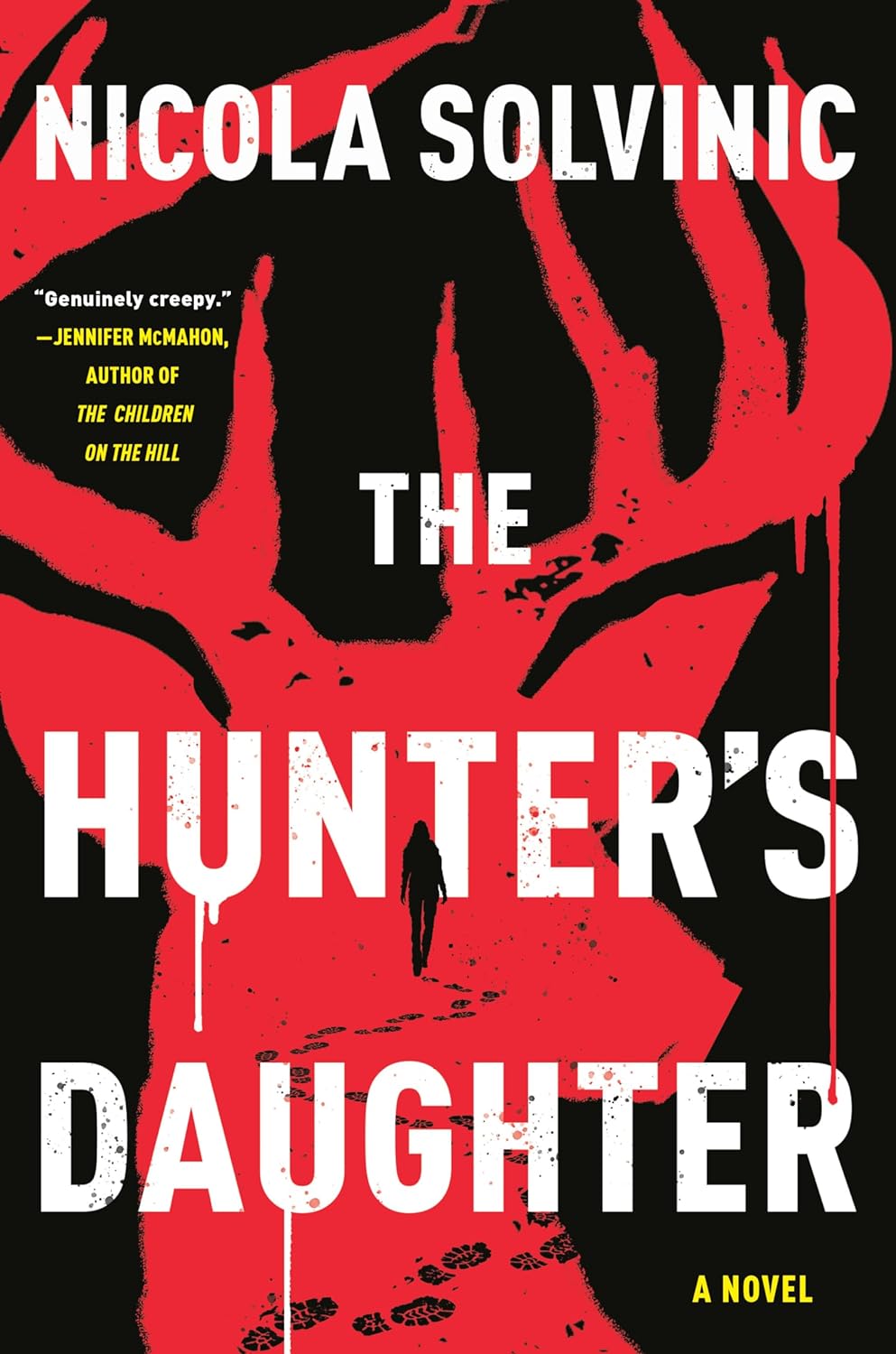
“And I didn’t ask any questions,” the narrator of Nicola Solvinic’s debut mystery-thriller The Hunter’s Daughter (Berkley ), says in her first-person account of what it’s like having been raised by a serial killer. “I truly didn’t want to know the answers. When the rifle went off, did I kill my dad? Or Agent Parkes? Did I miss them both, and did they fight it out? Did Dad get arrested, or did he kill Agent Parkes and run.”
These obviously are not the typical questions most children have regarding interactions with their fathers. But police officer Anna Koray is the daughter of a notorious serial killer, a fact she keeps hidden with the use of a different name, a move far from home, and estrangement from her mother who did little to protect her.
It works for a while until a traumatic incident triggers long-repressed memories and Anna’s past, sealed off by her therapist in a controversial and experimental hypnosis treatment, begins to emerge. Her father, known as the Forest Strangler, murdered more than a dozen women, their bodies decorated and left as sacrifices to the god of the forest. But he also taught Anna to love the woods, to be one with the forest and nature. The dark dense woods with rustling trees that line the perimeter of her yard call out to her, beckoning her forward. In many ways, it’s where she feels most at home—the feel of dirt between her toes, the smell of the rotting leaves. But as much as it entices her, that forest also harbors secrets and possibly malignant forces that may harm or even destroy her.
There are many questions confronting Anna as she deals with her surfacing memories. Can she trust her lover who may be hiding his own addictions? Is her father, who is supposedly dead, really alive? And is Anna herself a killer—someone who has her father’s propensity as well as his genetics to do evil? She has killed, supposedly in self-defense. But is that true? Or does she enjoy killing just as he did? And will she do it again?
When her psychiatrist, the woman who hypnotized her into forgetting her past, is found murdered, Anna has to wonder if she played a part in the death. After all, she had broken into her office to steal her file folder before the police, who are closing in, can locate it and discover her true identity. Did she do more than take the file? Did she destroy the woman who can reveal her past?
Desperate to keep people from realizing that she is the daughter of the Forest Strangler, Anna also has to try to determine that even though she became a police officer to help others, she may be as evil as her dad.
A tense psychological thriller, terse plotting, and Anna’s own uncertainty about who she is, what acts she’s committed, and whether she can trust her own thoughts, feelings, and actions, keeps this book a page-turner.
About the Author
Nicola Solvinic has a master’s degree in criminology and has worked in and around criminal justice for more than a decade at local, state, and federal levels. She lives in the Midwest with her husband and cats, where she is surrounded by a secret garden full of beehives.
“Moxie Castlin was easy to underestimate, but only on first impression. He was overweight by the equivalent of a small child, didn’t use one word in public when five others were loitering nearby with nothing better to do, and had a taste for the reminiscent of the markings of poisonous insects or the nightmares of LSD survivors. He subsisted largely on fried food, coffee, and the Maine soda that had given him a nickname, now long since passed into common usage: since he had been christened Oleg. Moxie sounded better to him. He lost cases, but not many, and his friends far outnumbered his enemies.”
And so, in the first chapter of The Instruments of Darkness(Atria/Emily Bestler Books), the 21st book in the Charlie Parker series by international and New York Times bestselling author, John Connolly, we meet Moxie who is defending Colleen Clark, a mother accused of abducting and possibly murdering her two-year-old son Henry. It’s a heinous case and everyone, the police and general public, and especially the politicians who have an election coming up, think Colleen is guilty. After all, she was home, supposedly asleep when Henry disappeared. Her husband, Henry’s father, had been away on a business trip.
But it doesn’t matter if the world is against you when you have Moxie and Charlie Parker, a private investigator
Everyone does seem to be against Colleen, including Henry’s father, Stephen Clark, who stirs the pot. Because of his outspoken concerns, the police search Colleen’s car and discover a blanket soaked in Henry’s blood in the wheel well of her car. Rumors about Colleen begin to circulate and as Parker, who narrates the story, wryly says they were unfounded, but that is no obstacle as unfounded rumors are the best kind.
The book lives up to its title, there is definitely darkness surrounding the case and the community. Others have disappeared without a trace. And there’s a touch of the supernatural to give the readers a few shivers as Parker tries to help Moxie take on a case where even before the trial a guilty verdict has been decided.
Connolly, who lives in Dublin, Ireland, has written more than 30 books, is the author of several series including the Samuel Johnson trilogy, the Lost Things stories, and (with @JennieRidyard), the Chronicles of the Invaders. He writes long, weaving a complex mystery-thriller full of twists and turns, and peopled with intriguing characters, some benign and eccentric, others scary including a gang of fascists who are readying for war; and a psychic who says that the dead, including a woman named Verona Walter, frequently appeal to help from Walter, who, it seems, is dead and buried but still in contact with the living.
But there’s more to deal with than fascists and a psychic that talks to the dead, there’s the house, seemingly in ruins, deep in the dark Maine woods and exerting an unnatural and dangerous force.
As Connolly describes an interaction between two people as they approach the isolated home.
“Pinnette tried to tear his gaze away from the house but found he could not. While it might have looked abandoned, he was not convinced it was quite empty. Certain structures, while appearing uninhabited, retained about them a sense of occupation, as though a latent presence had infused the very boards. As he and Unger observed the house, Pinette could not help but feel that the house was observing them in turn: not someone in the house but the house itself.”
It will take all of Parker’s detective skills to overcome the obstacles he faces to help Moxie with his client, all the while trying to stay safe.
This award recognizes books with recipes focused on the art and craft of baking, pastries, and desserts, both sweet and savory items, including ingredients, techniques, equipment, and traditions.
This year, submissions to the Bread category were included for consideration within the Baking and Desserts category.
This award recognizes books without recipes that focus on beverages, such as cocktails, beer, wine, spirits, coffee, tea, or juices; or books that cover these subject areas where recipes are not the focus of cooking, not just a single topic, technique, or region.
Henry Jeffreys (Atlantic) Food Issues and Advocacy:
This award recognizes books that focus on investigative journalism, food policy, food advocacy, deep dives, and critical analysis of the changing social landscape around food.
José Andrés and Sam Chapple-Sokol (Clarkson Potter)
Literary Writing:
This award recognizes narrative nonfiction books, including memoirs, culinary travel, culinary tourism, biography, reflections on food in a cultural context, and personal essays.
This award recognizes books written by a culinary professional or restaurant chef with recipes that may include advanced cooking techniques, the use of specialty ingredients and professional equipment, including culinary arts textbooks.
Jessica Battilana and Sylvan Mishima Brackett (Hardie Grant North America)
Single Subject:
This award recognizes books with recipes focused on a single ingredient, dish, or method of cooking. Examples include seafood, grains, pasta, burgers, or canning. Exceptions are baking and desserts books, vegetable-focused books, restaurant and professional books, and beverage books— which would be entered in their respective categories.
Kelly Marshall and Sarah Madden (HarperCollins) Thank You Please Come Again: How Gas Stations Feed & Fuel the American South
Kate Medley with Dave Whitling (BS Publishing)
Cookbook Hall of Fame:
This award is given to either a cookbook that has significantly influenced the way we think about food, honoring authors who possess an exceptional ability to communicate their gastronomic vision via the printed page, or an author whose cookbooks and other culinary books and work, taken together, make a difference in the world of food and cooking.
The Book Awards Subcommittee selects the winner for this category. The Cookbook Hall of Fame winner will be announced at the Media Awards ceremony on June 8.
“True crime aficionados are fascinated by the havoc their fellow humans are capable of wreaking,” says author Janis Thornton who takes us beyond high profile crime into lesser known but equally fascinating tales. “For them, learning details of the victims’ worst nightmares is not only tantalizing; in a perverse way, it’s almost comforting because it happened to someone else. In a sense, true crime offers readers a “there but for the grace of God” revelation that allows them to vicariously experience unimaginable horrors behind a safety buffer of time and space.”
Using these buffers, “No Place Like Murder” Thornton examines the underbelly of Hoosier history through the retelling of twenty sensational murders that ripped apart numerous small, Indiana communities between 1950 and 1869. But because volumes have been written chronicling the likes of high-profile Hoosier serial killers Belle Gunness (includig “America’s Femme Fatale” by Jane Simon Ammeson) and H.H. Holmes, Thornton’s tales focus on 20 lesser known, but no less merciless, homegrown killers.
“No Place Like Murder” paints portraits of murderous women like Frankie Miller, who shot and killed her fiancé after he stood her up for another woman. Readers also will meet the plucky Isabelle Messmer, who ran away from her quiet farm-town life, and after nearly taking down two tough Pittsburgh policemen, she was dubbed “Gun Girl,” earning headlines across the country. And one of the more sensational crimes highlighted in the book is the shotgun slaughter of five members of the Agrue family on their Southern Indiana farm at the hand of Virginious “Dink” Carter, husband of one of the Agrue daughters.
According to the Publishers Weekly review of “No Place Like Murder,” true crime fans will be well satisfied. •
ABOUT THE AUTHOR:
Janis Thornton is Tipton, Indiana’s home-grown author of true crime, mystery and history.
Her true crime books include: and “Too Good a Girl,” the story of Thornton’s high school classmate, Olene Emberton, whose tragic, unsolved death in 1965 shocked their community. Now, more than 50 years later, Janis wrote Olene’s story to ensure it is never forgotten.
Her history books are: “The 1965 Palm Sunday Tornadoes in Indiana,” which takes a look back at Indiana’s worst weather disaster, and pictorial-history books about the communities of Elwood, Frankfort and Tipton, all in Indiana.