Category: Author event

  • Author Catherine O’Connell in Chicago to Discuss Her Latest Books

    Author Catherine O’Connell in Chicago to Discuss Her Latest Books

              Northbrook native, mystery writer Catherine O’Connell who divides her time between Chicago and Aspen will be home this week and back to her old haunts including a book signing for her newest mystery, First Tracks, at Pippin’s Tavern when she managed the bar there in the 1980s.

              First Tracks, described by Booklist as “a compelling, Scandinavian noir–style thriller” that should appeal to readers of both Ruth Ware and Arnaldur Indridason, introduces a new character, Aspen ski patroller Greta Westerlind.

    Caught in an avalanche, Westerlind wakes in the hospital with no memory of what happened. She’s even more surprised to discover that her close friend, Warren McGovern was with her when the avalanche swept them up. But McGovern didn’t make it. Not only doesn’t she know what happened, but Westerlind, who knows mountain safety, can’t understand why either of them were even in such a dangerous area.

              While trying to regain her memory of events, Westerlind begins to realize she’s in danger as more and more frightening incidents start happening to her. With her life in danger, Westerlind knows if she is to live, she needs to figure out who wants her dead.

              “It’s the first in the series about Greta,” says O’Connell, who when she isn’t writing mysteries sits on the board of Aspen Words, a literary center whose aim is to support writers and reach out to readers. It’s also the literary arm of the prestigious the Aspen Institute.

              O’Connell, who is a skier, says that when her new published asked if she could come up with a series not being done yet, she immediately suggested a ski patrol woman who was an amateur sleuth.

              “I chose ski patroller because they have more autonomy than instructors plus they have dynamite and morphine type drugs for injured skiers which gives me a couple of ideas for other books,” she says. “Aspen is the perfect setting for all kinds of stories with billionaires and locals, celebrities and developers, mountain climbers and ski racers, visiting politicians and world class musicians. All set in one of the most beautiful settings on the planet. So, this series is a gift to me that I’ll be able to write plots set in this world so familiar to me.”

              First Tracks isn’t the only book O’Connell will be talking about.

              Her mystery, The Last Night Out, begins with a bachelorette party that goes very wrong. Not only does Maggie Trueheart, who is the bride to be, wake up in bed with a really bad hangover, there’s a strange man in her bed. As if that wasn’t bad enough, she gets more bad news when she learns that her best friend was murdered. As her wedding day draws closer, so does the police investigation. Of the five friends left from the party, at least one of them is lying and many have secrets to hide.

              Besides her book signings, O’Connell also be discussing her books on After Hours with Rick Kogan on Sunday, September 15 from 9 to 11 a.m. on WGN Radio.

              “It’s always great to be back in the city,” says O’Connell, who is a member of Mystery Writers of America and Sisters in Crime and is already at work on her next mystery.

    For more about Catherine O’Connell

    Ifyougo:

    What: Catherine O’Connell has three Chicago area book events.

    When & Where:

    Sunday, September 15 at 2 p.m.

    The Book Stall, 811 Elm St., Winnetka, IL

    Page to Published: Piercing the Literary Firewall. Talk and signing of First Tracks 

    FYI: 847-446-8880; thebookstall.com

    Tuesday, September 12, 4:30 to 6:00

    Pippin’s Tavern, 806 N. Rush St., Chicago, IL

    Signing of The Last Night Out 

    FYI: 312-787-5435; pippinstavern.com/

    Friday, Sept 20, 7 p.m.

    Centuries and Sleuths Bookstore, 7419 Madison St. Forest Park, IL

    Discussion and signing of The Last Night Out

    FYI: 708-771-7243; centuriesandsleuths.com/

  • Truth Worth Telling: A Reporter’s Search for Meaning in the Stories of Our Times

    Truth Worth Telling: A Reporter’s Search for Meaning in the Stories of Our Times

    Scott Pelley sitting on a rock by a river holding a camera

                  While other boys his age were reading Hardy Boy mysteries and articles about baseball, Scott Pelley was riding his bike down to the public library in Lubbock, Texas and checking out books on faraway places.

                  “I kept a stack by my bed and when I finished those, I’d return them and get more,” says Pelley, author of the recently released memoir Truth Worth Telling: A Reporter’s Search for Meaning in the Stories of Our Times Hanover Square Press 2019; $17.70)

                  Pelley, a definite glass half full kind of guy, is thankful he’s been able to make his living for the last four decades covering stories around the globe.

                  I ask if more than 40 years of travel has worn him out. But no, Pelley, an award-winning 60 Minutes correspondent, is always ready for the next assignment.

                  “I’m 61 and by God, I still enjoy getting on a plane,” says Pelley though he does admit he gets a little tired of going to the same place over and over. “But I never tire of going someplace new, whether it’s nice or not.”

                  So where hasn’t Pelley been that he’d like to see.

                  “Anyplace that doesn’t have a pin stuck in it on my world map,” he says. “I’ve been to both the Artic and Antarctica numerous times, but I’ve never made it to poles though I’ve been just a few miles away, so I’d like to get there. And I’ve never been to Portugal and I’ve heard it’s very pretty.”

                  Portugal? From a man who is a multimillion mile flyer and has covered stories in the remote jungles of Mexico, reported on the genocides in Darfur, was onsite when the planes hit the World Trade Center and watched first responders’ stream into the building, many to never come out, hoping to find survivors, He also was on the ground during the Persian Gulf crisis of 1990 and the 1991 invasion of Iraq (indeed, he’s seems to have visited Iraq as many times as most people go to the grocery store) and joined, with his team, the U.S. Special Forces in Afghanistan. Getting to Portugal, it would seem, would be a piece of cake.

                  But then Pelley may be too busy. He’s won 37 Emmys—of course, he says it’s due to the many wonderful and capable people who back him up and make him look good—and despite his passion for action, likes to ponder as well.

                  “I called my first chapter ‘Gallantry,’” he says about his book. “I was in Paris several years ago shortly after  ISIS’s terrorist attack and I watched people holding a memorial on the cobblestone streets with candles in their hands and it struck me that I had seen that same look before, at the World Trade Center and in Oklahoma City after the bombing of the Murrah Federal Building. It’s a look I’d seen it again and again throughout my entire career, people wondering what the meaning of life is. I got to thinking, don’t ask the meaning of life. Life is asking: ‘What’s the meaning of you?’ And that’s what I went looking for in my book, people who have discovered how to get meaning, people who are heroes.”

                  Maybe, in a way, Pelley is a hero as well. He reveals in his book how he lost his long time job as CBS Evening News anchor after complaining too vociferously about the way men and, especially women were treated at the network. He took his complaints all the way up to CBS Corporate Chairman Les Moonves, who spent over an hour listening to Pelley’s concerns. Obviously, hoping to forestall any more action on Pelley’s part, his contract wasn’t renewed despite his show’s high ratings. Ironically, Moonves would be fired in turn, because of sexual harassment allegations.

                  Losing his job is okay now, says Pelley because he’s grateful for the direction CBS is taking, how they cleaned house and are acting with integrity.

                  Yes, definitely half-full.

                  “I think a sense of optimism is important for a reporter,” he says. “That and empathy. If you have that empathy for that person you have emotional stake in their lives.”

    Ifyougo:

    What: Join in a conversation, Q&A, and book signing with Scott Pelley

    When: Monday, June 3 at 7 p.m.

    Where: Community Christian Church, 1635 Emerson Lane, Naperville, IL

    Cost:  Ticket for one person costs $37.74 w/service fee and includes one copy of the Pelley’s new book; the ticket package admits two and costs $42.99 w/service fee and includes on copy of the book. Tickets can be purchased online at brownpapertickets.com/event/4243153 and entitles the holder to

    meet and get a photograph with the author and a personalized signature.

    FYI: The event is hosted by Anderson’s Bookshops in Naperville, 630-355-2665; andersonsbookshop.com

  • No Visible Bruises: What We Don’t Know About Domestic Violence Can Kill Us

    No Visible Bruises: What We Don’t Know About Domestic Violence Can Kill Us

                “Domestic violence is not a large part of our conversation,” says Rachel Louise Snyder, author of the recently released

                “Domestic violence is not a large part of our conversation,” says Rachel Louise Snyder, author of the recently released No Visible Bruises, her exploration of this country’s domestic violence epidemic and what it means regarding other types of violence as well as what to do about it.  “I want to bring these conversations to the forefront.”

                Snyder, a journalist who won the J. Anthony Lukas Word-in-Progress Award for this project, uses the individual stories of women to show how complicated and overwhelming the subject is—and how pervasive. And while we might think of domestic violence as being an issue, if not of the past, as one more under control than when O.J. Simpson was tried for murdering his wife and women’s safety more assured by the 1994 passage of the Violence Against Women Act. But that isn’t true.

                “Domestic homicides are rising about 25%–it used to be about three women a day three women were killed now it’s four, “says Snyder, who went to college in Naperville and lived all over Chicago including Oak Park, has traveled to more than 50 countries and lived in London for three year and in Phnom Penh, Cambodia for six.  She also put herself through her first year of college by booking Dimensions, a Highland, Indiana band, for their gigs.

                “People don’t always want to read a book like this,” says Snyder. “I wanted to write a book that people couldn’t pull away from.”

                And, indeed, she did. As awful as the situations she describes—women trying to leave abusers but unable or not able to get out in time, the toll it takes on their families.  Wanting her book to read like a novel, Snyder includes true facts that would be hard to believe in a novel—one husband keeps a pet rattlesnake and drops it in the shower when his wife is in there or slips it under the covers when she’s sleeping.

                “It is an exploration of what it means to live under stress under every moment or every day,” says Snyder, an associate professor in the Department of Literature at American University in Washington D.C.

                It’s also an exploration of agencies and police as they try to step in and stop the progression—sometimes with success and sometimes with heartbreak. Snyder lived all this, visiting shelters, talking to police and talking to women.

     “I think domestic terrorism is a closer reality to what is going on than domestic abuse,” she says.

                In her two decades of reporting, both in the U.S. and oversees, Snyder has seen many instances of domestic terrorism, sometimes central to her stories sometimes on the edges. When she started researching and writing No Visible Bruises, which took her nine years to finish–she even wrote her novel What We’ve Lost Is Nothing which is set in Oak Park, Illinois during the process–she never lost interest in telling the story.

                “I wanted to have the conversation about this that we have around poverty, economics, other issues and to really understand it,” she says.

                She also wanted to show how violence can lead to more violence, noting that choking a partner is a predictor of an homicide attempt amd there’s a link to mass murders as we saw in the First Baptist  Church in Sutherland Spring where Devin Patrick Kelley, a convicted domestic terrorism while serving in the Air Force killed his wife and 25 other worshippers. Domestic terrorism also is the direct cause of over 50% of women who find themselves in homeless shelters.

                Is there reason to hope? I ask her.

                She believes there is, but that it’s important to know that domestic abuse is still happening, and we need to be empathetic and that it’s good women are getting angry.

    Ifyougo:

    What: Rachel Snyder has two events in Chicago.

    When & Where: Wednesday, May 15 at 7 p.m. Women & Children First, 5233 N. Clark St. Chicago, IL; 773.769.9299; womenandchildrenfirst.com

    When & Where: Thursday, May 16 at 7 p.m. Anderson’s Bookshop, 123 W Jefferson Ave, Naperville, IL; 630-355-2665; andersonsbookshop.com

    , her exploration of this country’s domestic violence epidemic and what it means regarding other types of violence as well as what to do about it.  “I want to bring these conversations to the forefront.”

                Snyder, a journalist who won the J. Anthony Lukas Word-in-Progress Award for this project, uses the individual stories of women to show how complicated and overwhelming the subject is—and how pervasive. And while we might think of domestic violence as being an issue, if not of the past, as one more under control than when O.J. Simpson was tried for murdering his wife and women’s safety more assured by the 1994 passage of the Violence Against Women Act. But that isn’t true.

                “Domestic homicides are rising about 25%–it used to be about three women a day three women were killed now it’s four, “says Snyder, who went to college in Naperville and lived all over Chicago including Oak Park, has traveled to more than 50 countries and lived in London for three year and in Phnom Penh, Cambodia for six.  She also put herself through her first year of college by booking Dimensions, a Highland, Indiana band, for their gigs.

                “People don’t always want to read a book like this,” says Snyder. “I wanted to write a book that people couldn’t pull away from.”

                And, indeed, she did. As awful as the situations she describes—women trying to leave abusers but unable or not able to get out in time, the toll it takes on their families.  Wanting her book to read like a novel, Snyder includes true facts that would be hard to believe in a novel—one husband keeps a pet rattlesnake and drops it in the shower when his wife is in there or slips it under the covers when she’s sleeping.

                “It is an exploration of what it means to live under stress under every moment or every day,” says Snyder, an associate professor in the Department of Literature at American University in Washington D.C.

                It’s also an exploration of agencies and police as they try to step in and stop the progression—sometimes with success and sometimes with heartbreak. Snyder lived all this, visiting shelters, talking to police and talking to women.

     “I think domestic terrorism is a closer reality to what is going on than domestic abuse,” she says.

                In her two decades of reporting, both in the U.S. and oversees, Snyder has seen many instances of domestic terrorism, sometimes central to her stories sometimes on the edges. When she started researching and writing No Visible Bruises, which took her nine years to finish–she even wrote her novel What We’ve Lost Is Nothing which is set in Oak Park, Illinois during the process–she never lost interest in telling the story.

                “I wanted to have the conversation about this that we have around poverty, economics, other issues and to really understand it,” she says.

                She also wanted to show how violence can lead to more violence, noting that choking a partner is a predictor of an homicide attempt amd there’s a link to mass murders as we saw in the First Baptist  Church in Sutherland Spring where Devin Patrick Kelley, a convicted domestic terrorism while serving in the Air Force killed his wife and 25 other worshippers. Domestic terrorism also is the direct cause of over 50% of women who find themselves in homeless shelters.

                Is there reason to hope? I ask her.

                She believes there is, but that it’s important to know that domestic abuse is still happening, and we need to be empathetic and that it’s good women are getting angry.

    Ifyougo:

    What: Rachel Snyder has two events in Chicago.

    When & Where: Wednesday, May 15 at 7 p.m. Women & Children First, 5233 N. Clark St. Chicago, IL; 773.769.9299; womenandchildrenfirst.com

    When & Where: Thursday, May 16 at 7 p.m. Anderson’s Bookshop, 123 W Jefferson Ave, Naperville, IL; 630-355-2665; andersonsbookshop.com

  • Pride, Prejudice and Other Flavors

    Pride, Prejudice and Other Flavors

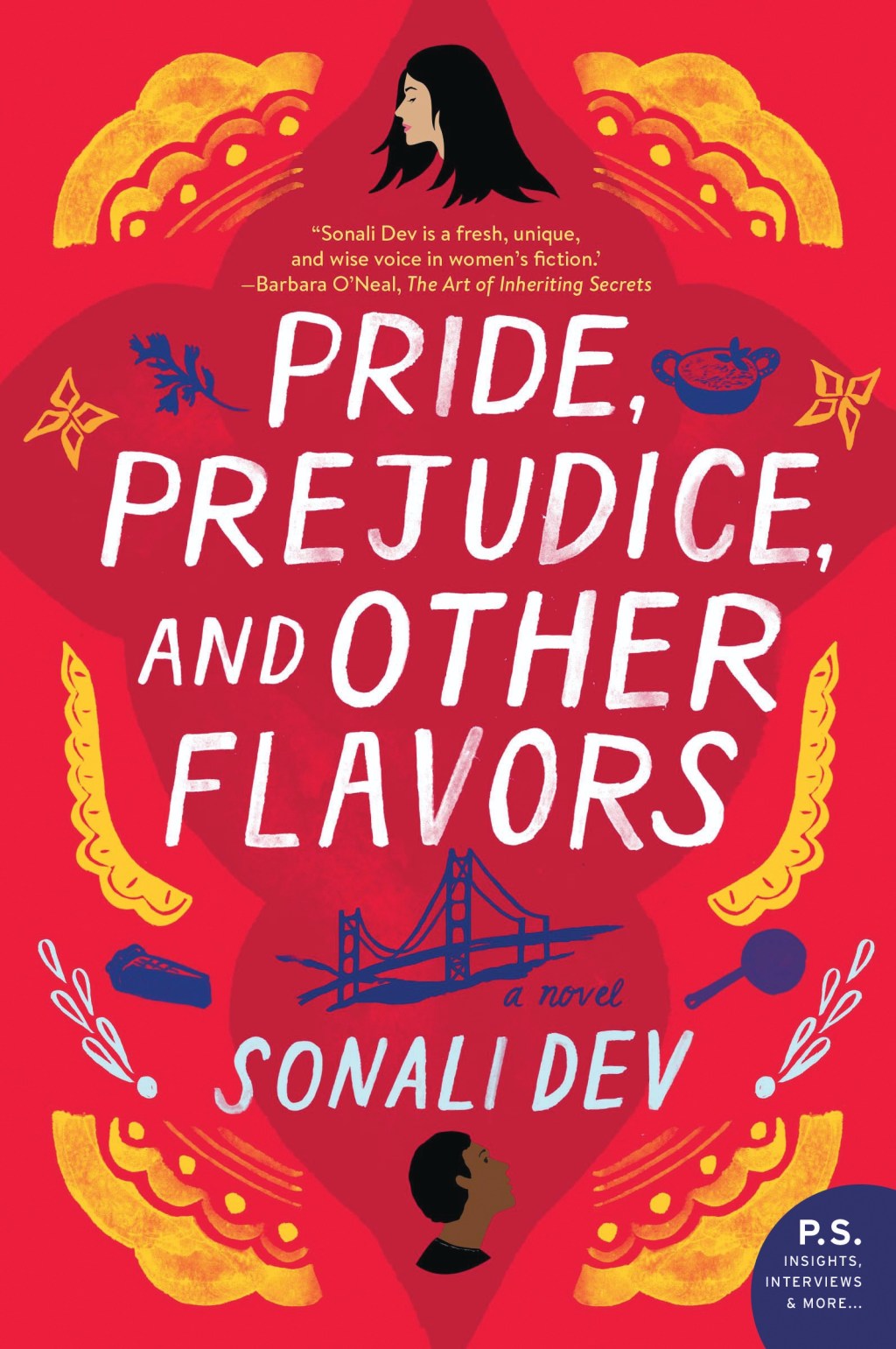
             In the 300-room Sagar Mahal, or the Ocean Palace built by her great times four grandfather on the Arabian Sea, 13-year-old Trisha Raje is coached by her father not to be overwhelmed by the sorrow she saw at a school of the blind that day but instead find a solution so she doesn’t feel badly. And so, she does. Before long Trisha had created a global charity that performed eye surgeries on the needy and then became San Francisco’s premiere neurosurgeon, a woman with immense skill but so lacking in social graces that many in her family are not talking to her as she once inadvertently jeopardized her older brother’s fast track political career.

             But that isn’t Trisha’s only difficulty in Sonali Dev’s newest book, Pride, Prejudice and Other Flavors (William Morrow 2019; $15.99), a Bollywood take on Jane Austen’s classic Pride and Prejudice. Dev switches up roles between Trisha and DJ Caine, a rising star chef whose cancer-stricken sister is a patient of Trisha’s. She a descendant of Indian Royalty is Mr. Darcy and Caine, a Rwandan/Anglo-Indian—meaning he belongs to a much lower social class, is Emma.

    To paraphrase Jane Austen, Dev writes “It is a truth universally acknowledged that only in an overachieving Indian American family can a genius daughter be considered a black sheep” and the book is classic Austen with its subtle ironic humor and the structured setting required in any well-to-do aristocratic English or Indian milieu. Trisha has broken the three ironclad rules of their family: Never trust an outsider, never do anything to jeopardize your brother’s political aspirations and never, ever, defy your family. Desperate to redeem herself in ways that her brilliancy and scoring a $10 million dollar grant for her medical department—their largest ever—is unable to do, Trisha must cope with falling in love with Caine, saving his sister and ensuring that she will not somehow disgrace her family again.

             Dev, who is married with two teenagers and lives in Naperville, says is Mr. Darcy/Trisha and that’s she’s been entranced with Jane Austen’s book since watching the Indian TV adaptation of “Pride and Prejudice” called “Trishna” in the 1980s when she was a middle schooler,

     “I went straight to the library and checked out Pride and Prejudice and read it over and over,” she says.

    As for writing, Dev says she wrote before she could even read, making up stories and characters,” she says, noting she wrote and acted in her first play when she was eight. “Writing has always been with me.”

    She grew up in Mumbai though the family traveled a lot as her father was in the military.

    “I was always the new kid on the block with a book,” she says.

    She continues to read and write at an amazing speed.

    “I am in fact waiting to get the edits back for my new book,” she says, noting that writing is an escape, a way of putting yourself in the shoes of someone not like you.

    What: Sonali Dev Book Launch Party

    When: Monday, May 6 at 7 p.m.

    Where: Andersons Bookshop, 123 W Jefferson Ave, Naperville, IL

    FYI: The event is free and open to the public. To join the signing line, please purchase the author’s latest book, Pride Prejudice and Other Flavors, from Anderson’s Bookshop. To purchase contact Anderson’s Bookshop Naperville, 630-355-2665; andersonsbookshop.com

  • Park Avenue Summer

    Park Avenue Summer

                  Chicago-based author Renee Rosen typically writes novels about historic periods and people in Chicago such as the age of jazz (Windy City Blues); mid-20th century journalism (White Collar Girl) and the Roaring Twenties (Dollface). But in Park Avenue Summer, her latest novel which she describes as “Mad Men the Devil Wears Prada,” she takes us to New York City during the era of Helen Gurley Brown, first female Editor-in-Chief of Cosmopolitan Magazine and the author of the scandalous best seller, Sex and the Single Girl.

                  Like many of us, Rosen read Cosmo (as it was known) when young.

                  Rosen remembers quickly flipping to “Bedside Astrologer” column.

                  “I was looking for guidance on my 16-year-old love life,” she says, noting that all the time she spent poring over the glossy pages of Cosmo essentially shaped my view of female sexuality and female empowerment, too. “She changed the face of women’s magazine.”

                  Park Avenue Summer tells the story of Alice (Ali), who moves to New York City after breaking up with her boyfriend and ends up getting her dream job, working for Cosmo.

                  Like she does for all her books, Rosen threw herself into full research mode, wanting to convey the story through Alice’s eyes.

                  “I even went down to the Port Authority to get the feel of what Alice would have seen and felt when she arrived,” says Rosen.  

                  Because Rosen had lived on the Upper West side in New York for a year she knew where Ali, as a single working girl would live—an area in the East 60s called “the girl’s ghetto.” She walked the streets until she found the exact apartment she had envisioned for Ali.

                  All in the name of research, she visited Tavern on the Green, 21 Club, St. Regis and the Russian Tearoom, all swank places still in business that were very popular back then. But best of all, a friend introduced her to Lois Cahall who had worked for Brown.

                  “Helen Gurley Brown was like a second mother to Lois,” says Rosen. “She and I became good friends and she vetted the book for me. It was like a gift from the gods, because she knew so much about Brown and Cosmo and that time.”

                  Rosen is very much an admirer of Brown and what she accomplished.

                  “She really wanted to help women be their best,” she says. “She wanted them to know that they could get what they want even in what was then a man’s world.”

    Ifyougo:

    What: Rene Rosen has several book signing events in the Chicago area.

    When & Where: Tuesday, April 30th at 7 p.m.  Launch party at The Book Cellar Launch Party, 4736 N Lincoln Ave, Chicago, IL.

    When & Where: Wednesday, May 1 at 11:30 a.m., Luncheon at The Deer Path Inn, 255 East Illinois St., Lake Forest, IL. $55 includes lunch and book. Seating is limited and reservations are required. Sponsored by Lake Forest Bookstore. 847-234-4420; lakeforestbookstore.com

    When & Where: Wednesday, May 1 at 6:30 p.m. The Book Stall, 811 Elm St, Winnetka, IL 847-446-8880; thebookstall.com.  In conversation with Susanna Calkins who is celebrating the release of Murder Knocks Twice, the start of a new mystery series set in the world of Chicago speakeasy in the 1920s.

    When & Where: Monday, May 13 at 7 p.m. The Book Table’s Authors on Tap series with author Jamie Freveletti. Beer Shop 1026 North Blvd., Chicago, IL. 847- 946-4164; beershophq.com

  • Save Me the Plums: Ruth Reichl’s Memoir

    Save Me the Plums: Ruth Reichl’s Memoir

                A decade ago, out of all the food magazines published, the most famous was Gourmet, which offered a sophisticated look at culinary trends and cookery. And Ruth Reichl, who formerly had been the food critic for the New York Times, a job that entailed wearing disguises because her photo was plastered on a large number of kitchen walls in the city’s restaurants, was the editor-in-chief of the magazine. It’s a story she recounts in her latest book, Save Me the Plumst (Random House; 2019 $27). You don’t need to be a serious foodie to enjoy her take on what she calls “the golden age of magazines.”

                Reichl didn’t want the job and though she had collected Gourmet magazines starting when she was eight, she saw it as old fashioned and stuffy and at first said no. But the publisher wanted to take the magazine in a different direction and saw Reichl as the person to be able to make that happened. So, she signed on to a job that included a limousine service, first class airfare and a lavish expense account. The selling point after turning it down the first time was that she would be home in the evenings with her son, not critiquing restaurants.

                “I never wanted to become that person,” says Reichl about the luxuries and perks. She recalls flying coach and seeing two of her colleagues boarding the same flight as they were going to the same place and they looked at her in wonderment as they headed to the first class section. She took the bus until a limo driver shamed her into using his service on a regular basis.

                 Despite being the food editor and restaurant critic at the Los Angeles Times, the experience of being Gourmet’s editor-in-chief made Reichl quickly learned how much she didn’t know. She recalls freaking her first day when the staff started talking about TOCs and she had to desperately call a friend and ask what that meant as she didn’t want to look ignorant in front of her employees.

                “Table of Contents,” she was told. How simple but it shows the type of learning curve Reichl was encountering in her new career.

                Being Reichl, multiple James Beard-winning and bestselling author, she also includes a few recipes in her book.

                “All of my books have recipes, so I had to have some,” she says. That includes the turkey chili she and her staff used when the gathered in the Gourmet test kitchen on 9/11 and cooked for the first responders.

     “I still love cooking and get an enormous amount of pleasure from it,” she says. “And I like to cook for other people. Every morning I ask my husband what he would like to eat.”

    Indeed, for Reichl, food is such a sensory experience that she often likes to eat alone so she can savor every mouthful, letting it take her back to the source of what she’s consuming.

                From the magazine folded and everyone went home, Reichl knew she’d write a book about her time at Gourmet and kept copious notes and saved emails. “But then my editor had to torture me into actually writing it.”

                She wants readers to come along for the ride when reading her book.

                “I want them to get the sense of what it was like,” says Reichl. “I want them to enjoy themselves as much as I did.”

    Ifyougo:

    What: Ruth Reichl in-conversation with Louisa Chu, a Chicago based food writer.

    When: Wednesday, April 24 at 6 pm

    Where: 210 Design House, 210 West Illinois, Chicago, IL

    Cost: The cost of on ticket is $56 ($58.95 w/service fee) and includes a copy of the book, wine, and tastes made from Ruth’s book My Kitchen Year. 2 tickets include one book, wine and tastes for $80 ($83.79 w/service fee). To purchase, visit brownpapertickets.com/event/4102551

    FYI: The event is sponsored by the Book Cellar. For more information, (773) 293-2665.

  • An American Agent: A Maisie Dobbs Novel
    An American Agent: A Maisie Dobbs Novel

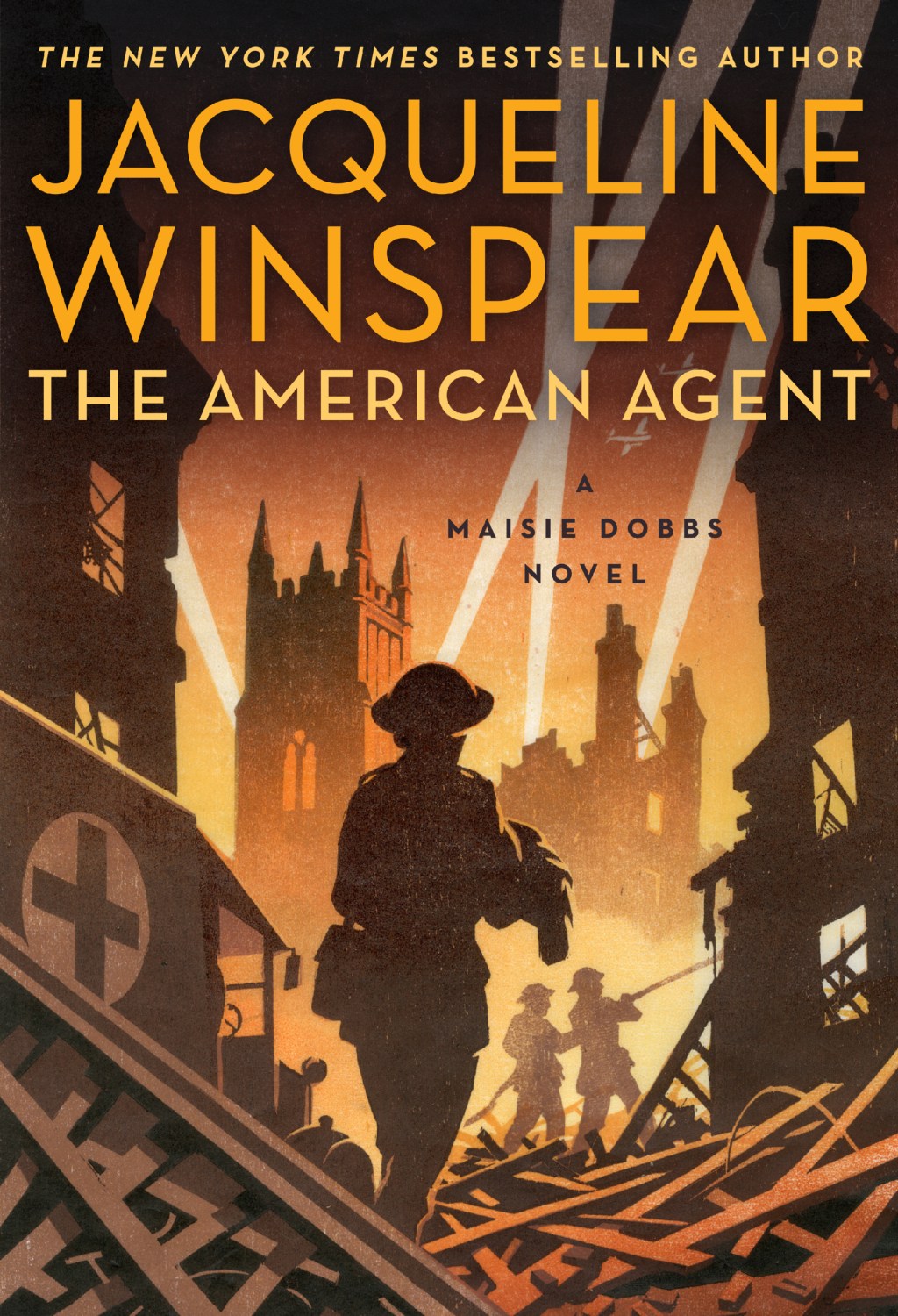
    Jacqueline Winspear, author of The American Agent, the 15th book in her Maisie Dobbs’ series, transports us to early September 1940, as Adolf Hitler unleashed his Blitzkrieg or lighting attack on London and other United Kingdom cities, an intensive attack already used successfully in Spain, the Netherlands, Poland, Belgium and France to enable an invasion to take place.  Day after day, night after night for months on end, hundreds of German bombers would fly across the Channel to wreak havoc.  Maisie and her friend, Priscilla are volunteer ambulance drivers, and on one run they are accompanied by an American war correspondent, Catherine Saxon.

    Following her late-night broadcast to the US, where she describes her experience of seeing the death and destruction that the bombings have wrought on the city, Saxon is found dead in her rooms. Maisie Dobbs is brought in to conduct an undercover investigation – her presence requested by a man from the US Department of Justice, Mark Scott, who had previously saved her life in Munich, in 1938.  The story is peppered with excerpts from real broadcasts and reporting at the time.

               On a multi-city tour, Winspear will be in Chicago for a book signing on April 4. Speaking to Jane Ammeson, she talks about An American Agent and how her own past was an impetus for her series.

    For readers who have never met Maisie, can you give us a brief summary?

    Readers first met Maisie Dobbs in the first novel in the series – entitled Maisie Dobbs.  From a working class background, Maisie is a young woman of intellect and a keen intuitive ability, which is recognized by a friend of her employer. Dr. Maurice Blanche – a psychologist and Doctor of Forensic Medicine who consults with the police –oversees her education and entry to university, which is sponsored by her employer – but WW1 intervenes, and Maisie volunteers for nursing service, and is later wounded at a Casualty Clearing Station in France – an experience that defines her.  Later, having recovered, she becomes Blanche’s assistant, and in the first novel in the series we see her striking out on her own upon his retirement – she is a “psychologist and investigator.” Maisie is very much a woman of her day – so many young women had to be incredibly self-sufficient as the men they might have married had been lost to war. I have written extensively on this subject as it’s always interested me.

    I am impressed by your vast knowledge and ability to bring us into this time period. I know your grandfather was severely injured in the Battle of the Somme and your family talked about the war. How did those experiences translate into you writing books and immersing yourself in this time period?

    Family stories always have an immediacy that reading books and immersing oneself in research sometimes lacks. My grandfather was very much of his generation of men who saw the most terrible death in the trenches of WW1 France and Belgium – he never talked about it, with the exception of a couple of stories shared with my father. But I could see the wounds – his poor shrapnel-filled legs (he was still removing shrapnel splinters when he died at age77), and I could hear the wheezing of his gas-damaged lungs. And I knew he had suffered shell-shock.  Added to this were my mother’s stories of the Second World War – her experiences of being evacuated, of having to return to London, then of being bombed out time and again. And yes, of seeing death on the streets following a bombing.  The experience of listening to family stories – even from a very young age – inspired my curiosity, which later became an adult inquiry, so you could say I’ve been researching my subject since childhood.

    This is your 15th book in the series.  How do you go about developing your stories? Are they mapped out or do you take an incident and place Maisie in there and let it all happen?

    I think creating a story is like lighting fire. First of all, you lay down the paper and kindling, then you need a match for the flame, and you follow that with your fuel.  Often the kindling for a story is laid down years before I begin to write – because I have been waiting for the spark to light the fire and then the fuel to build the flame.  For example, I had known the true story that inspired “Elegy for Eddie” since I was a teen – of a young girl not 16 years old, a cleaner in the local brewery stables who had given birth to a baby boy while at work, and while stopping him from crying had starved his brain of oxygen. That young boy – thereafter considered “slow” – was born and grew up around horses and had a gift.  As he grew up, he could settle the most uppity horse, simply by laying a hand upon the animal – that’s how he earned a living at a time when horses were vital for commerce and transportation.  As a boy, my father knew this young man, and he told me of his later “suspicious” demise.  After I began writing the series, I knew “Eddie” would form the basis of a story – the kindling, if you will.  Then I learned more about the pre-war machinations of various powerful men close to Churchill, and the secrecy surrounding their work, whether it was in creating soft propaganda or developing fighter aircraft.  That’s when I asked the question – what if an innocent, a young man of limited intellectual ability but deep empathy stumbled across crucial classified information? Then what might happen? The flame caught and I had a fire.  But when I begin writing any story, I only know the main landing points along the way, I do not know all the details – they come as the story is written. I like to have the basic map, but I also like to “dance with the moment” and be able to respond to new ideas or information as they emerge.

    Are there times you’re back in the England between the wars versus 2019?

    To some extent I have to be in the years I’m writing about – I cannot be distracted by today while I’m writing.  When I’m at work, I am completely with my characters – I walk their streets, I can see what they are wearing, what they buy, what they eat, and I can hear their use of language, which is different from today.

    For more information visit jacquelinewinspear.com

    Ifyougo:

    What: Jacqueline Winspear book signing

    When: April 4 at 7 pm

    Where: Anderson’s Bookshop, 123 W Jefferson Ave, Naperville, IL

    Cost: Free

    FYI: 630-355-2665; andersonsbookshop.com

  • Let’s Play Two: The Life and Times of Ernie Banks
    Let’s Play Two: The Life and Times of Ernie Banks

                  A college baseball player whose batting average was lower than his grade point average, Columbus, Indiana ophthalmologist Doug Wilson turned his passion for the sport to writing about the iconic players he admired in his youth.

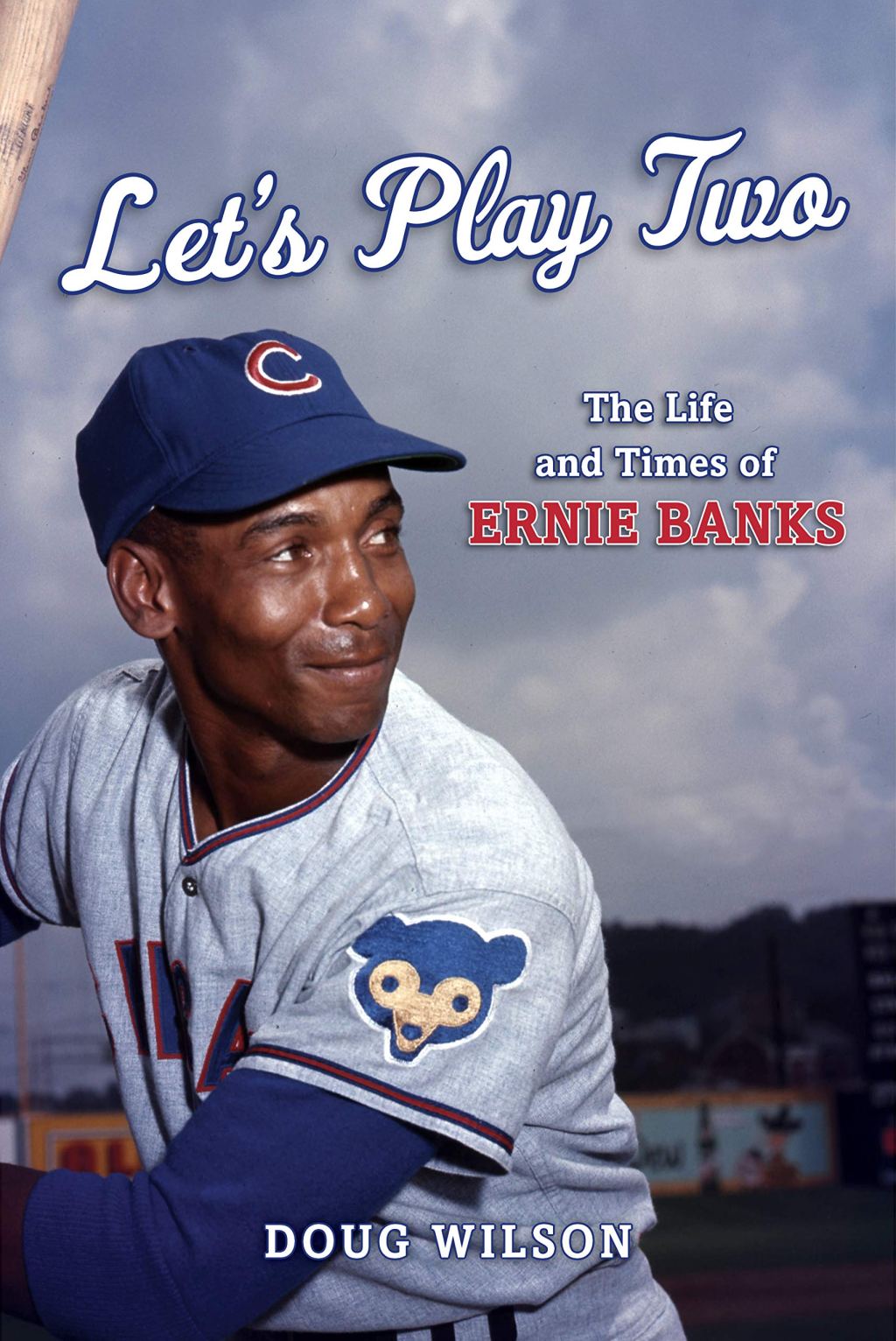
                  His latest, Let’s Play Two: The Life and Times of Ernie Banks (Rowman & Littlefield Publishers 2019; Amazon price $23.95), tells the story of the first African American to play for the Chicago Cubs. Recruited from the Kansas City Monarchs and raised in a segregated community in Texas, Banks was always positive and had a good word to say about everything. These characteristics often led to people underestimating the man who would become known as “Mr. Cub.”

                  “People couldn’t see beyond his optimistic outlook and took him to be naïve and have a simplistic outlook on life,” says Wilson. “But Banks was a very deep thinker, he’s someone who overcame a lot of obstacles but never said anything bad about people. If reporters asked him about someone who had said something negative about him, Banks would change things around so that he deflected the question without being rude.”

                  But in the end, it was Banks good natured spirits that won the day says Wilson, recounting the rocky relationship between Leo Durocher and Banks.

                  “You couldn’t have come up with two different kind of guys,” says Wilson. “Durocher, well…the title of his book Nice Guys Finish Last says it all and Banks was the ultimate nice guy. Durocher hated Banks’s guts and tried everything he could to run him out of town but there was no way PK Wrigley was going to let that happened. And all the time Durocher was trying to get rid of him, Banks just smiled. When Durocher would talk to reporters about how Banks was ruining the Cubs, they’d run to him and ask him about that, and Banks would just say “Leo Durocher is the best manager ever. He always took the high road.”

                  Wilson whose previous books include Fred Hutchinson and the 1964 Cincinnati Reds, The Bird: The Life and Legacy of Mark Fidrych which was selected by the Library of Michigan as a Michigan Notable book for 2014, Brooks: The Biography of Brooks Robinson (2014) and Pudge: The Biography of Carlton Fisk, not only read every interview he could find with Banks dating back to 1950 as well as endless newspaper accounts and books, says he also was able to located several friends from Banks’s youth including those who knew him when was seven years old and another who played bay with him in high school.

                  “I also found three guys who played with Ernie in the Negro League when he was with the Kansas City Monarchs,” says Wilson. “They said he was shy around people. But his persona changed after he became comfortable in Chicago.”

                  By interviewing friends from his boyhood, Wilson says it helped him see how overwhelming it must have been to be confined to segregated schools and neighborhoods and the challenges that Banks faced in becoming a player at a time when African Americans were just beginning to be allowed to play in the major league. Amazingly, Banks would be honored with the Presidential Medal of Freedom and a place in the Hall of Fame and he would always remain optimistic.

                  “Years later, Leo Durocher had a change of heart, perhaps surgically induced, in 1983 a very contrite 78-year-old Leo, recovering from a recent open heart procedure, perhaps seeing his own mortality at last, spoke at a Cubs reunion and tearfully apologized to the team in general and Ernie Banks specifically for how he had behaved,” writes Wilson.

                  In other words, says Wilson, “Ernie won.”

                  Ifyougo:

                  What: Doug Wilson has several book events in the Chicagoland area.

                  When & Where: Saturday, February 16 at 2 pm at Anderson’s Bookshop, 5112 Main St, Downers Grove, IL. This event is free and open to the public. To join the signing line, please purchase the author’s latest book, Let’s Play Two, from Anderson’s Bookshop. Call Anderson’s Bookshop Downers Grove (630) 963-2665.

                  When & Where: Saturday, March 2 at 6 pm at the Book Cellar, 4736-38 N Lincoln Ave Chicago, IL. Free.  (773) 293-2665.

                  For more information, visit dougwilsonbaseball.blogspot.com/

  • The page-turning book about how Rocky Wirtz turned the Blackhawks into winners

    The page-turning book about how Rocky Wirtz turned the Blackhawks into winners

    I’ve only been to a few hockey games — always under duress — but that didn’t keep me from reading “The Breakaway: The Inside Story of the Wirtz Family Business and the Chicago Blackhawks,” well into the night.

    Typically I don’t expect sports books to be page-turners, but Bryan Smith, a two-time winner and six-time finalist for the National City and Regional Magazine Association’s Writer of the Year award, never intended “The Breakaway” to only chronicle the rise of the Blackhawks from a team that couldn’t even fill one-sixth of the United Center, to a three-time Stanley Cup winner under the leadership of Rocky Wirtz.

    “I’m not a sportswriter, never was,” says Smith who chatted on the phone between book events — he was on his third in two days.

    “What really attracted me to the story was the almost-Shakespearean family dynamics of three generations. It started with Arthur Wirtz, founder of the family fortune, and then follows his son, Bill,who was famously or I should say notoriously famous for his management of the team and refusal to allow the games to be broadcast on television — to his oldest son, Rocky, who led the team to what Forbes magazine described as ‘the greatest turnaround in sports business history.’”

    Arthur Wirtz, the son of a Chicago cop, had the foresight to scoop up real estate during the Depression, buying buildings such as the Bismarck Hotel and the Chicago Stadium (where the Blackhawks, a team founded in the1920s, played) as well as other arenas and halls in Chicago and around the country.

    He next had to figure out how to fill his arenas. One of his creative ideas was forming the Hollywood Ice Revue to showcase Sonja Henie, a Norwegian figure skater who won three gold medals in three consecutive Olympic games.

    The shows were a success, Smith says, citing as an example one night in 1940 when a Henie performance in New York City raked in $80,000.

    Besides real estate and entertainment, Arthur Wirtz moved in to other areas, and currently the privately held Wirtz business portfolio consists of liquor distribution, insurance, banking, real estate, some smaller things and, of course, the Blackhawks.

    Why Bill Wirtz, who took over the business after his father’s death, didn’t try to take the Blackhawks to a higher level is difficult to understand, Smith says. Arthur’s first-born son had a pugnacious style in general and in particular even toward his own family, so that Arthur disinvited Rocky and his children from Thanksgiving and Christmas dinners and once came to blows with him.

    When Rocky took over after Bill’s death, like their father, the rest of the family weren’t interested in seeing the Blackhawks change direction and were instead content to let the team, which was losing $30 million a year, continue on in the same manner.

    “The team was hurting other parts of the Wirtz business,” Smith says.

    “It was a no-brainer, but in the last years of Bill’s life, it was an issue of stubbornness; he dug in, and it really alienated the fans. It was like he was sticking a fork in their eyes. It’s amazing that (Rocky) was able to turn it around and even more so, when you remember that it was 2007 when Rocky took over the team; at the time, the whole nation’s economy was cratering.”

    Smith says that Rocky doesn’t take the credit for the team’s success.

    “He credits John McDonough,” says Smith about the Blackhawk’s president and CEO, who Wirtz hired away from his position as president of the Chicago Cubs in 2007.

    Family feuds and dysfunction can run deep, and Rocky Wirtz is estranged from many family members, even though the Blackhawks are now revered by fans and not draining funds from other family businesses. Wirtz, it seems, lost his family while trying to save them.

    If you go

    What: Reading and book signing with Bryan Smith

    When: 7 p.m. Dec. 14

    Where: The Book Cellar, 4736-38 N. Lincoln Ave Chicago

    Cost: Free

    FYI: (773) 293-2665; bookcellarinc.com

  • Book review, signing: New book offers fresh take on Gary/Chicago resident, Nelson Algren
    Book review, signing: New book offers fresh take on Gary/Chicago resident, Nelson Algren

    Mary Wisniewski was a college student when she first discovered the writings of Chicago writer Nelson Algren.

    Author Mary Wisniewski

    “Many of his books were set in Wicker Park where my family was from which intrigued me,” says Wisniewski, noting that though Algren’s novels are about shady characters, drug addicts, grifters, drifters and those on the margins of society, she found his writing lyrical, beautiful and poetic.

    “It turned me into an Algren hag,” she says

    “I told all my friends to read his books, and I started reading everything he had written that I could find — I found it surprising that his writings weren’t part of the literature canon in colleges,” Wisniewski says.

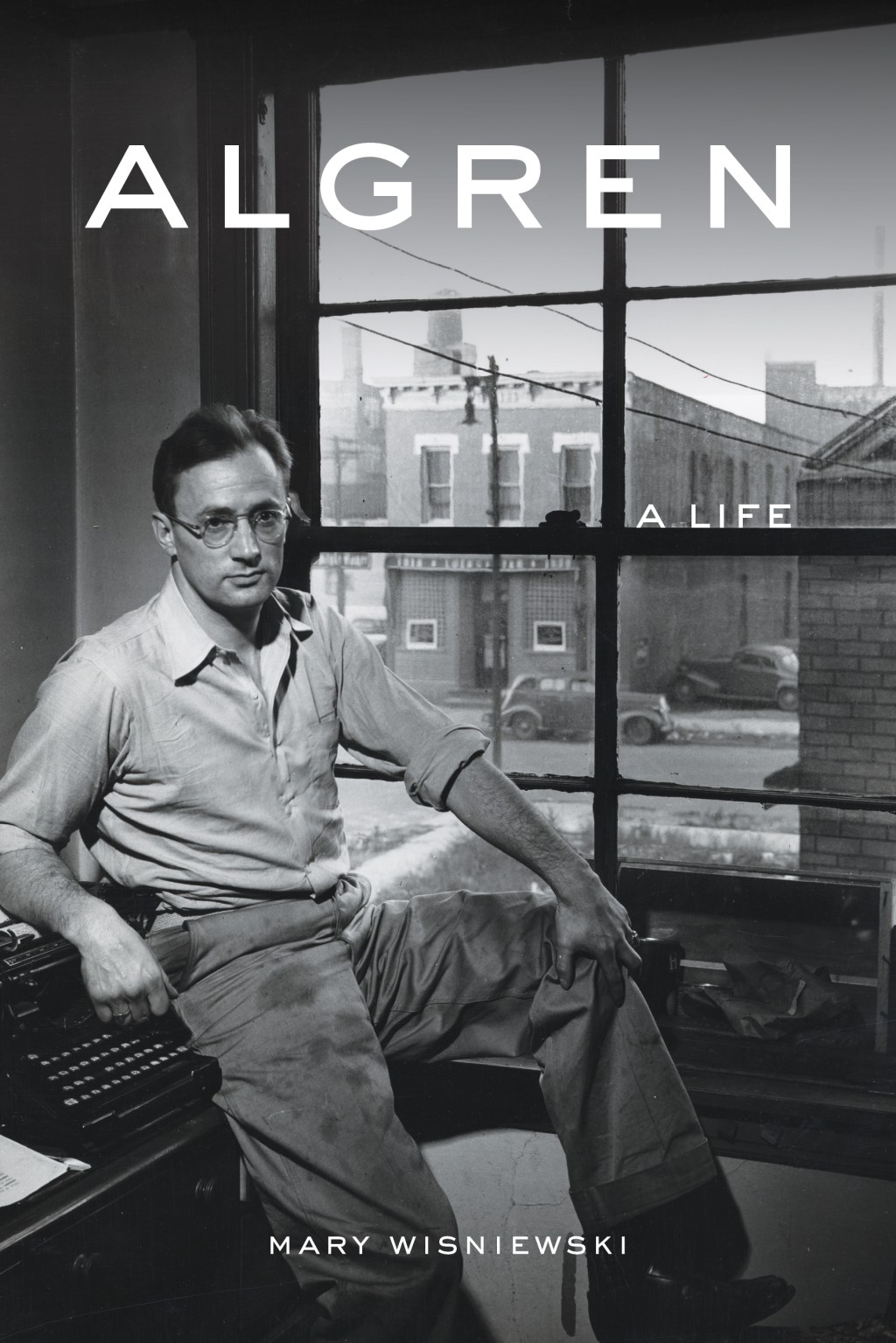
    From there it became a natural progression to writing “Algren: A Life,” winner of the 2017 Society of Midland Authors award for best biography and the Chicago Writers Association award for best non-fiction, and the first biography about Algren in more than a quarter-century.

    Delving more and more into his life, Wisniewski even read his FBI file, a mammoth collection of investigative reports because of his leftist leanings and, as Wisniewski says, “his belief that the crust of civilization in America is pretty thin.”

    Algren lived a chaotic life that included a long-term love affair with French writer, Simone de Beauvoir, who had another lover, the French philosopher, Paul Sartre. Besides sharing a woman, they were friends and liked to box.

    Algren often was short of funds — famed Chicago writer and broadcaster Studs Terkel, who was a friend, lent him money, which Algren always repaid. And he married and divorced three times. Having the FBI hounding him and taking away his passport didn’t help.

    He also became discouraged with his lack of commercial success, even though two of his novels were made into films with major stars — “The Man with the Golden Arm” starred Frank Sinatra and Kim Novak (another Chicagoan), and “Walk on the Wild Side” featured Lawrence Harvey and Jane Fonda. Through it all, he continued writing.

    Surprisingly for someone who wrote about the underside of life, he also expressed feminist sensitivities much earlier than most, Wisniewski says.

    “In the 1950s, he wrote an essay about how Playboy magazine objectified women and turned them into commodities,” she says.

    Algren, whose grandfather and father were from the Black Oak neighborhood of Gary, also had a Northwest Indiana connection, owned a home in Miller Beach.

    The Nelson Algren Museum of Miller Beach, located in the 1928 Telephone Building once owned by his friend, David Peltz, is now owned by the Indiana Landmarks Foundation.

    “I think Algren’s time has come again,” Wisniewski says.

    “I think he’s like Dickens in London; he’s given Chicago a way to see itself. I always tell people that once they get a Chicago address and CTA card, they need to buy his book, “Chicago: City on the Make.”

    If you go:

    What: Join Mary Wisniewski as she discusses Nelson Algren and his work. Book signing to follow.

    When: 6:30 p.m. Dec. 11

    Where: The Betty Barclay Community Room at the Edgewater Branch of the Chicago Public Library, 6000 N. Broadway, Chicago.

    FYI: (312) 742-1945; chipublib.org