Tag: Indiana

  • TOO GOOD A GIRL: REMEMBERING OLENE EMBERTON AND THE MYSTERY OF HER DEATH

    TOO GOOD A GIRL: REMEMBERING OLENE EMBERTON AND THE MYSTERY OF HER DEATH

    Olene Emberton, a 17-year-old Tipton, Indiana, high school senior, was last seen alive at 11:30 p.m., Saturday, October 16, 1965, when she dropped off a friend after a movie and drove away, headed for home. It was a journey of a mere six-blocks. But Olene never made it home.

    50 years later, the mystery that shocked the small Indiana community where she lived has never been solved. But author Janis Thornton, a former high school classmate of Olene was determined that Olene’s story would never be forgotten. Now more than-a-half century later, Thornton has written “Too Good a Girl: Remembering Olene Emberton and the Mystery of Her Death,” part memoir, part true crime, and part oral history. The book examines Olene’s life, her unexplained death, and how she affected the Tipton community and all who knew her.

    “I wrote the book because I didn’t want her to be forgotten,” says Thornton.

    Early Sunday morning, after Olene’s parents realized she hadn’t come home all night, they found her car parked two doors north of the four-way stop at Green and North streets, just three blocks from their house. None of the neighbors had seen her leave the car, and there was no sign of a struggle.

    The Embertons immediately called the police and reported their daughter missing. The next afternoon, a farmer discovered her lifeless, nude body discarded along a remote country road ten miles northeast of town. Her clothes were neatly folded and stacked beside her head. Her glasses lay in the weeds next to her feet.

    An autopsy was performed that evening, but no cause of death was determined. Thus, with no clues, no leads, no witnesses, no motive, and no confession, how Olene died and who dumped her body in the tall grass next to a cornfield was never determined. Law enforcement officials had no place to go, and heartbreakingly her family was denied the answers and the closure they needed and deserved.

    Throughout the nearly 58 intervening years, numerous Tipton County people have claimed they knew the answers. But only one individual truly knew, and that person still isn’t telling.

    Hopefully one day that will change.

    ABOUT THE AUTHOR

    Based in her hometown of Tipton, Indiana, Janis Thornton writes about history, mystery, and true crime.

    Her latest book, The 1965 Palm Sunday Tornadoes in Indiana, takes a look back at Indiana’s worst weather disaster and includes more than 100 horrific, heartbreaking stories about the tornadoes, told by the people who experienced them.

    Her previous release, No Place Like Murder, is a collection of 20 true crime stories that rocked Indiana between 1869 and 1950.

    Her most recent novel, Love, Lies, and Azure Eyes, is a suspenseful, paranormal romantic mystery about possibilities for second chances, righting old wrongs, and finding love that lasts forever. 

    Her mysteries include: “Dead Air and Double Dare” and “Dust Bunnies and Dead Bodies”, both in the “Elmwood Confidential” series; and “Love, Lies, and Azure Eyes,” a suspenseful, paranormal romantic mystery.

    Her history books are: “The 1965 Palm Sunday Tornadoes in Indiana,” which takes a look back at Indiana’s worst weather disaster, and pictorial-history books about the communities of Elwood, Frankfort and Tipton, all in Indiana.

    Janis also is the author of three Central Indiana history books — Images of America: Tipton CountyImages of America: Frankfort, and Images of America: Elwood — and she is a contributor to Undeniably Indiana, a bicentennial project from Indiana University Press.


    She is a member of the national mystery writer’s organization, Sisters in Crime, its Indianapolis chapter, Speed City Sisters in Crime, The Author’s Guild, Women Fiction Writers Association, the Indiana Writers Center, and the Tipton County Historical Society.

    Follow Janis at
    www.janis-thornton.com
    facebook.com/janisthorntonauthor

    @JanisThornton
  • No Place Like Murder: 20 Historic True Crimes in the Hoosier State

    No Place Like Murder: 20 Historic True Crimes in the Hoosier State

                   “True crime aficionados are fascinated by the havoc their fellow humans are capable of wreaking,” says author Janis Thornton who takes us beyond high profile crime into lesser known but equally fascinating tales. “For them, learning details of the victims’ worst nightmares is not only tantalizing; in a perverse way, it’s almost comforting because it happened to someone else. In a sense, true crime offers readers a “there but for the grace of God” revelation that allows them to vicariously experience unimaginable horrors behind a safety buffer of time and space.”

                   Using these buffers, “No Place Like Murder” Thornton examines the underbelly of Hoosier history through the retelling of twenty sensational murders that ripped apart numerous small, Indiana communities between 1950 and 1869. But because volumes have been written chronicling the likes of high-profile Hoosier serial killers Belle Gunness (includig “America’s Femme Fatale” by Jane Simon Ammeson) and H.H. Holmes, Thornton’s tales focus on 20 lesser known, but no less merciless, homegrown killers.

                   “No Place Like Murder” paints portraits of murderous women like Frankie Miller, who shot and killed her fiancé after he stood her up for another woman. Readers also will meet the plucky Isabelle Messmer, who ran away from her quiet farm-town life, and after nearly taking down two tough Pittsburgh policemen, she was dubbed “Gun Girl,” earning headlines across the country. And one of the more sensational crimes highlighted in the book is the shotgun slaughter of five members of the Agrue family on their Southern Indiana farm at the hand of Virginious “Dink” Carter, husband of one of the Agrue daughters.

                       According to the Publishers Weekly review of “No Place Like Murder,” true crime fans will be well satisfied. •

    ABOUT THE AUTHOR:

                   Janis Thornton is Tipton, Indiana’s home-grown author of true crime, mystery and history.

                   Her true crime books include: and “Too Good a Girl,” the story of Thornton’s high school classmate, Olene Emberton, whose tragic, unsolved death in 1965 shocked their community. Now, more than 50 years later, Janis wrote Olene’s story to ensure it is never forgotten.

                   Her mysteries include: “Dead Air and Double Dare” and “Dust Bunnies and Dead Bodies”, both in the “Elmwood Confidential” series; and “Love, Lies, and Azure Eyes,” a suspenseful, paranormal romantic mystery.

                   Her history books are: “The 1965 Palm Sunday Tornadoes in Indiana,” which takes a look back at Indiana’s worst weather disaster, and pictorial-history books about the communities of Elwood, Frankfort and Tipton, all in Indiana.

  • Lincoln Roadtrip: Following the backroads to find Abraham Lincoln
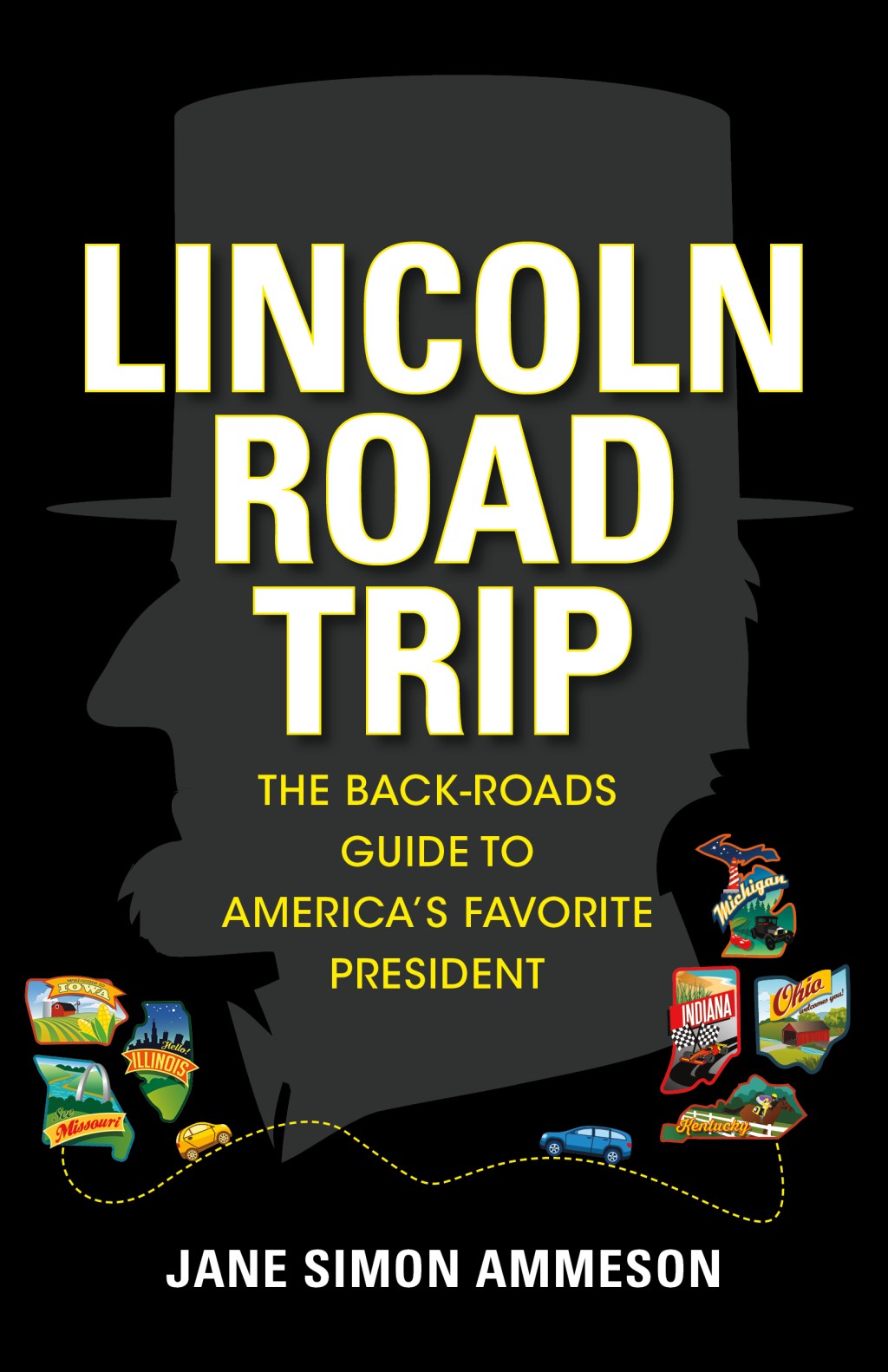
    Lincoln Roadtrip: Following the backroads to find Abraham Lincoln


    I am proud to announce that my book, Lincoln Roadtrip: The Backroads Guide to America’s Favorite President, published by Indiana University Press, is a winner in the 2019-20 Lowell Thomas Travel Journalism Competition, taking the bronze in the Travel Book category. The annual competition is sponsored by the Society of American Travel Writers Foundation.

    The Old Talbott Inn in Bardstown, Kentucky looks much like it did in Lincoln’s day.

    Winners of the awards, the most prestigious in the field of travel journalism, were announced October 16, 2020, at the annual conference of SATW, the premier professional organization of travel journalists and communicators. This year’s gathering was a virtual event.

    Buxton Inn in Granville, Ohio

    The competition drew 1,299 entries and was judged by faculty at the University of Missouri School of Journalism. This year, the SATW Foundation presented 99 awards in 26 categories and more than $21,000 in prize money to journalists. The awards are named for Lowell Thomas, acclaimed broadcast journalist, prolific author and world explorer during five decades in journalism.

    Lincoln Boyhood National Memorial replica of the Lincoln Homestead when the Lincoln family lived here in the early 1800s.

    In honoring my work, the judges said: The concept of this book is straightforward, “historical travel” with a focus on perhaps the most beloved President in the history of the United States of America. But a straightforward concept does not automatically signify a simple task. Author Ammeson completed massive research about Lincoln’s life before his ascension to fame. The photographs enhance the words nicely. Another attractive enhancement: offering current-day sites unrelated to Lincoln that provide entertainment along the route of the dedicated Lincoln traveler.”

    The Home of Colonel Jones who knew that young Lincoln would accomplish much in this world.

    I wanted to create a fun and entertaining travel book, one that includes the stories behind the quintessential Lincoln sites, while also taking readers off the beaten path to fascinating and lesser-known historical places. Visit the Log Inn in Warrenton, Indiana (now the oldest restaurant in the state), where Lincoln dined in 1844 while waiting for a stagecoach, stop by the old mill in Jasper, Indiana where Lincoln and his father took their grain to be milled (and learn of the salacious rumor about Lincoln’s birth–one of many) and spend the night at the Golden Lamb in Lebanon, Ohio, a gorgeous inn now over 200 years old.

    The Golden Lamb, Lebanon, Ohio

    Connect to places in Lincoln’s life that helped define the man he became, like the home of merchant Colonel Jones, who allowed a young Abe to read all his books, or Ashland, where Mary Todd Lincoln announced at age eight that she was going to marry a president someday and later, Lincoln most likely dined. Along with both famous and overlooked places with Lincoln connections, I also suggest nearby attractions to round out the trip, like Holiday World, a family-owned amusement park that goes well with a trip to the Lincoln Boyhood National Memorial and Lincoln State Park.

    The Kintner House, a bed and breakfast in charming Corydon, Indiana. Lincoln never stopped here but his brother Josiah who settled nearby did when it was a tavern and inn. Confederate General John Hunt Morgan took over the inn for a short period of time after crossing the Ohio River with his soldiers in what was the only Civil War battle fought in Indiana.

    Featuring new and exciting Lincoln tales from Springfield, Illinois; the Old Talbott Tavern in Bardstown, Kentucky; the Buxton Inn, Granville, Ohio; Alton, Illinois; and many more, I wrote Lincoln Road Trip  hoping that it will be a fun adventure through America’s heartland, one that will bring Lincoln’s incredible story to life.

    Ashland, the home of Henry Clay in Lexington, Kentucky.

    For more information about the awards, including a full list of winners and judges’ comments, and SATW, visit www.satwf.com and www.satw.org

    Graue Mill, a stop on the Underground Railroad. Lincoln stopped by here to meet with the owner on his way to nearby Chicago.

    To order a copy of Lincoln Road Trips, click here.

  • Merrill Markoe: Comedian turns childhood diaries into book

    Merrill Markoe: Comedian turns childhood diaries into book

    Merrill Markoe. Photo by John Dolan.

    The first time I met Merrill Markoe — the multi-Emmy award winning comedy writer who created such segments on the David Letterman show as “Stupid Pet Tricks,” “Stupid Human Tricks” and “Viewer Mail” — was in the living room of Barbara Stevens, who at the time was living in Hobart.

    Stevens, who has since passed away, was the mother of my friend Andy Prieboy; Merrill is his partner of almost two decades. The two live in Santa Monica, California with their two dogs. Andy, a musician, and I both grew up in the Indiana Harbor section of East Chicago.

    I know a lot about their romance, not from them, but by reading “The Psycho Ex Game” a darkly humorous and ultimately romantic book they wrote together about two friends competing to see whose ex is the craziest. How autobiographical it is, I don’t know for sure, but the basics are very factual. Merrill’s ex was David Letterman, though she changes his name slightly in the book. She not only was his original head writer but also his partner for 10 years. Google her name and up pops the description of her as “the key creative force behind” the Letterman show.

    Recently I learned more about Merrill by reading another of her books, the recently released “We Saw Scenery: The Early Diaries of Merrill Markoe.

    Andy set up a Zoom meeting so Merrill and I could talk about her book. But first he and I had to share a few stories about Indiana Harbor — we didn’t know each other growing up but we knew a lot of the same people. And Indiana Harbor being what it was, there are always stories. Merrill, as usual, was very polite about it all, but I don’t think she quite gets our enthusiasm for an old steel mill city.

    And since California is always on fire, we chatted about how they’d been without electricity for 24 hours when the electric company shut off everyone’s power to prevent further conflagrations during a raging thunderstorm. “Were there fires near you?” I asked, and Andy said there are always fires. I guess it’s the new normal.

    It turns out that Merrill kept diaries from her youth, and a few years ago she rediscovered them in a box she was sorting through. Many women around her age will remember these diaries — they often were protected by a tiny lock that supposedly could only be opened with a tiny key.

    “I wondered what did I do that was so secret I had to keep it under lock and key?” Merrill said. Nothing it turned out, which was a good thing because those locks are very flimsy.

    When she began reading the diaries, it was as if they belonged to a stranger.

    “I didn’t remember two-thirds of the stuff I’d written,” she said about the years covering elementary school to college, or as Merrill puts it — spelling bees to an acid test party put on by Ken Kesey.

    As she read, she drew. Merrill graduated from the University of California at Berkeley with a master’s in art with the goal of becoming an art professor. She segued into comedy writing out of necessity.

    “It was easier for me to get a job writing for TV than getting a job teaching art,” she said. “It hadn’t occurred to me before then that comedy was a career, that I could be doing stand-up. I had learned at that point I could write jokes, but I wasn’t someone who could write them while walking back and forth on stage in front of an audience. I’d stay home and write them.”

    Illustrating her diary excerpts was part of her search into her past.

    “I was looking for that spot when I turned into myself,” she said. “Where I wasn’t 12 or 13 years old observing stuff around me and making jokes. But that’s the core of myself — observing, stepping away from it and writing jokes. When I was hospitalized recently, the first thing I did was make a joke.”

    Since we’re on the subject of jokes, I ask who her favorite comedians are.

    “I can’t say because whoever I leave out will get mad at me,” she said.

    How about dead comedians? She’s got a list: Robert Benchley and Dorothy Parker who were famous in the 1920s in New York; Jack Benny, George Burns and Gracie Alley from the days of black and white television in the 1950s; W.C. Fields; Ernie Kovacs; and Lily Tomlin.

    I pointed out she was still alive.

    “I know, but I couldn’t do what she did with all those characters she played,” she said. And then we talked about how her drawings and diary passages turned into a book.

    “I showed it to Andy and some friends, and they said that’s a book,” she said. “I showed it to my agent, and he sold it.”

    So what does she, after all this time, think of her younger self?

    “I think she was kind of an idiot,” said Merrill. “At least until she moved to Northern California.”

    What: Merrill Markoe Virtual Book Event

    When: 7 p.m. Dec. 2

    What: Merrill Markoe online event

    For more information: http://www.bookyaya.com/

  • Indiana Landmarks Rescued and Restored

    Indiana Landmarks Rescued and Restored

    The Restored Fowler Theatre


    Once a glorious example of Streamline-Moderne architecture and one of only five theaters in the U.S. to premiere “Gone with the Wind,” in 2001 the future of the 81-year-old Fowler Theatre was bleak. No longer open, its owner planned to sell anything architecturally significant including the original marquee.  To prevent this, the non-profit Preservation Guild was formed to save the theater, purchasing the theater for $30,000 and obtained a $2000 grant and a $60,000 line of credit from Indiana Historic Landmarks Foundation.

    The Fowler Theatre before restoration.

    Today, the Fowler Theatre is a marvel, one of many buildings throughout the state that dedicated citizens and the Foundation have worked together in order to preserve Indiana’s heritage and also benefit communities. In the case of the Fowler Theatre, it was a way to keep low cost entertainment available and to help revitalize the downtown.

    Vurpillatt’s Opera House in Winamac Restored

    The theatre is one of 50 success stories highlighted in the recently released Indiana “Landmarks Rescued & Restored,” a lovely coffee table book with before and after photos showcasing what historic preservation can accomplish.

    Vurpillatt’s Opera House in Winamac

    “I want the book to be an acknowledgement of the wonderful people and partnerships that have made Landmarks as effective as it is,” says Indiana Landmarks’ President, Marsh Davis who wrote the forward to the book. “When we take the approach of working together, then we become part of the solution.”

    DeRhodes House West Washington Historic District South Bend Restored

    One of Landmarks most well-known projects was the restoration of two grand early 20th century resorts, French Lick Springs and West Baden Springs in Orange County. Returning them to their glory has made the entire area boom economically by bringing in an influx of tourism, creating local jobs and improving property values and instilling a sense of pride and vitality.

    DeRhodes House West Washington Historic District South Bend

    Landmarks, largest statewide preservation group in the country, saves, restores, and protects places of architectural and historical significance, including barns, historic neighborhoods such as Lockerbie Square in Indianapolis, churches and other sacred places, schools, bridges and even the Michigan City Lighthouse Catwalk.

    Old Republic in New Carlisle Restored

    Rescued and Restored also highlights other successes in Northern Indiana including partnership with the National Trust for Historic Preservation and the National Park Service in the restoration of the House of Tomorrow in the Indiana Dunes National Park, considered one of the most innovative and influential houses in modern architectural design.

    Old Republic Before Restoration

    The book, edited by Tina Connor, who worked at Landmarks for 42 years, retiring from her position as the non-profit’s executive vice president in 2018, 144 pages with more than 200 color photos. Hon. Randall T. Shepard, honorary chairman and long-time director of Indiana Landmarks, wrote the book’s foreward.

    Statewide, Marsh says that he feels privileged knowing that Landmarks worked with the Lyles Station Historic Preservation Corporation to save Lyles Station Community School. Now a museum and the last surviving building of what was a successful African-American farming community founded by former slaves in 1849.

    “These places are all about the people who made them,” says Davis, “and the people who worked at saving them.”

    For more information, visit indianalandmarks.org

    As published in The Times of Northwest Indiana