Tag: Fiction

  • The Marsh Queen

    The Marsh Queen

    Far from the marshland where her family grew up and that claimed her father’s life, Loni Mae Murrow has found a quiet niche where she creates intricate life-like drawings of birds for the Smithsonian. It’s a rare talent and a job that Murrow, who started drawing at an early age, loves. But there are undercurrents in her job and life starting with a new administrator talking of budget cuts and disdaining Murrow’s need to return home to deal with her aging mother. Making it all more complicated is that she also is confronted with her brother and his controlling, avaricious wife both of whom seem more intent on cashing in on what little money there is in their mother’s portfolio than in helping her. Murrow has just a short time to take care of family business and to sort out messy family entanglements. If she doesn’t return in time, she’ll no longer have a job.

    But the pull of her mother’s needs, a compelling job offer from a good friend, veiled hints at mysteries unsolved along with her realization that her father’s death may be less straightforward than it seemed at the time jarringly jeopardize the peace and tranquility that Murrow has achieved. She finds herself deeper and deeper into the place of her youth and the marshes, both of which she thought—hopefully–she had left behind for good.

    Author Virginia Hartman convincing portrays the beauty of the marshes, creating an atmosphere of serene beauty but also one full of surprises and ultimately danger in The Marsh Queen (Simon & Schuster). She also conveys how easily Murrow falls into the patterns of her father who knew the waterways so well he could navigate the countless channels and inlets without a map. Hartman’s love of this landscape, full of unexpected wonders, is inherent in her writing.

    Individual Portrait

    “Early morning steam rises from the water,” Hartman writes about one of Murrow’s forays into the marshland. “I paddle to a different part of the swamp today, where the Cypress trees grow, as my dad used to say, ‘keepin’ their feet in the water.’ The canopy is high, like a cathedral, and I glide through the landscape of light and shadow. Ferns cascade from the trunks and pink lichen like measle spots and the Cypress knees stick up from beneath the surface like the hats of submerged gnomes.”

    This enchantment of the waterways with all its many unexpected scenes of flora and fauna is something Murrow finds she shares with Adlai, the seemingly gruff proprietor of the canoe shop where she rents her canoe and paddles when she goes in search of such birds to draw as the purple gallinule. Her mother had married down so to speak when she chose Murrow’s father. It is a choice that Murrow ultimately must make as well—to leave a dream job of working at one of the most prestigious museums in the country and life in a bustling cosmopolitan city to return to the backwaters of home.

    But first she must follow, however unwillingly, all the clues that keep presenting themselves regarding the past. It’s a matter of connecting the dots to find out what really did happen to here father all those years ago. And if she doesn’t accomplish that soon enough, then there’s more at risk for Murrow than just losing her job. It may mean losing her life.

    The Marsh Queen is also available in hardcover, on Kindle, Audible and as an Audio CD.

    This review originally appeared in New York Journal of Books.

    About the Author

    Virginia Hartman has an MFA in creative writing from American University and is on the faculty at George Washington University. Her stories have been shortlisted for the New Letters Awards and the Dana Awards. The Marsh Queen is her first novel.

    Virginia Hartman Events

    At the Writer’s Center in Bethesda, Maryland, Virginia teaches Advanced Fiction Workshop (six weeks). For more information, please contact the Writer’s Center at 301-654-8664, www.writer.org.

    • SUNDAY, OCTOBER 23
    • THE BOOK GALLERY 12 noon
    • 7 N. Loudoun Street Winchester, VA 22601
    • FRIDAY, NOVEMBER 4
    • PALM BEACH BOOK STORE 6pm
    • 215 Royal Poinciana Way, Palm Beach, FL 33480
    • WEDNESDAY, NOVEMBER 9
    • BOOKSTORE ONE 2pm
    • 17 S Pineapple Ave, Sarasota, FL 34236
    • THURSDAY, NOVEMBER 10
    • MIDTOWN READER 7pm
    • 1123 Thomasville Rd, Tallahassee, FL, 32303
    • SATURDAY NOVEMBER 12
    • THE BOOKMARK 6pm
    • 220 First St, Neptune Beach, FL 32266
  • The Patron Saint of Second Chances

    The Patron Saint of Second Chances

    is village sadly slipping away, self-appointed mayor and radiator repairman Signor Speranza listens in horror as a water commission official tells him that the water pipes must be replaced or the commission will shut the village’s water supply off — making Prometto uninhabitable.

    The cost to fix it? Seventy thousand euros — an exorbitant sum for a village of 212 residents, most of whom are just barely getting by.

    But Speranza has a plan — not a good plan or even a mediocre one, but at least it’s something. He decides to start a rumor that famed movie star Dante Rinaldi is filming his next mega hit in Prometto. If tourists think that Rinaldi will be readily available, Speranza believes that tourists will descend upon Prometto. After all, when there was a rumor that George Clooney would be filming in a neighboring town, it was a madhouse. And it looks like it will be so once again.

    Soon tourists arrive with plenty of money to spend. But it isn’t just tourists. The locals go crazy with the idea of being in a film, almost any film. The butcher wants Speranza to find roles for all 15 of his overlarge sons, offering Speranza money if he makes it happen. Even Speranza’s daughter gets movie fever.

    “The plan works a little too well, however, and he soon finds that in order to keep up the ruse, he will have to make the movie for real,” said Christine Simon, the author of “The Patron Saint of Second Chances” (Atria 2022; $23.70 on Amazon).

    Simon says her plot was inspired by news articles she ran across that talked about how shrinking Italian villages were offering homes for a dollar.

    “These stories usually have at their core some enterprising mayor trying to drag their village back from the brink of extinction,” she said. “This flash of inspiration was, therefore, triply rewarding for me, because it gave me my setting, my main character, and my main character’s mission, all in one fell swoop. Everyone should be so lucky.”

    It also has origins in the Italian village where Simon’s grandparents grew up.

    “My grandparents came to the United States via Canada in the early 1950s, trading their tiny village of Ferruzzano for Cliffside Park, New Jersey,” she said. “I grew up going to parties in their backyard — sprawling gatherings with dozens of people, many of them also from the village, sitting at long tables in lawn chairs and eating, eating, eating. When I began working on this story, at first I felt intimidated because I’ve never been to Ferruzzano in real life, but as I was researching the setting, and looking at family photos and even Google map images of the village, I was startled to find that the two places — my grandparents’ backyard in Cliffside, and their mountain village of Ferruzzano — looked astonishingly similar. I don’t know how they did it, but they managed to bring their village with them when they came here, and that’s the flavor that I hope I’ve incorporated into the fictional village of Prometto.”

    Simon loved authoring this book, which she did just after the quarantine started.

    “It was wonderful escaping reality each day to see what Signor Speranza and his zany crew would get up to next,” she said.

    Now Simon says she’s devoted to comedy and small-town antics.

    “I guess you can say we know what to expect from my next book,” she said.

  • First Born by Will Dean

    First Born by Will Dean

    Two identical twins as different as can be. Molly, anxious and reserved, lives a quiet, contained life in London. Katie, gregarious and fun-loving, is now attending school in New York where she has a great apartment, lots of friends and a handsome, athletic boyfriend.

    Molly feels betrayed and jealous — until she gets a call from her parents who are visiting in New York. Katie is dead.

    And so, Molly, forced to leave the safe confines of the cocoon she has enveloped herself in, flies to New York to comfort her parents and to take on the task of discovering her sister’s killer. But this isn’t a simple story of a twin forced to grow beyond the safe confines of her life. In “First Born,” author Will Dean takes us on a twisting path of family secrets, dark deceits and the slow recognition that even those we love aren’t who we think they are.

    Katie, Molly discovers, has earned her admission to the prestigious school program not just because of her academic successes but also because of her relationship with a rich playboy philanthropist who jets around the world with an entourage of pretty young women.

    “Molly soon realizes she never knew her twin as well as she thought she did,” said Dean, who was born in England, studied law at the London School of Economics and now lives in a remote area of Sweden. “Molly grows in confidence in New York. She starts to piece together the puzzle of Katie’s life. She finds those who wronged her. And then she goes about seeking revenge.”

    Remember, we said it wasn’t simple, and as Molly attends Katie’s cremation ceremony with her parents, we learn of her own involvement in Katie’s death. And yet she still seeks vengeance for all those who wronged Katie.

    Dean says the inspiration for his book came to him one night a few years ago.

    “I imagined identical twins who had been treated differently from early childhood,” he said. “I was curious how being labeled ‘the fun one’ and ‘the serious one’ might manifest in later life. I’m also intrigued how we all think we know our partners, siblings, parents, children, etc well. But we never know them quite as well as we think we do.”

    This article originally appeared in the Northwest Indiana Times.

  • The Verifiers by Jane Pek

    The Verifiers by Jane Pek

    Her brother is on the fast track to a successful career in finance and has plans for his sister to follow along. But in Jane Pek’s debut novel, “The Verifiers,” Claudia Lin secretly drops out of the corporate rat race without telling her siblings or mother and takes a job at Veracity, a new start-up that uses algorithms along with good old detective techniques to determine whether online suitors are real or not.

    Claudia, a queer Asian American, really isn’t a computer geek. The reason she was chosen for the job by the company’s founder is her passion for reading, particularly the works about a fictitious crime solver named Detective Yuan.

    Once she is hired, the firm becomes a three-person endeavor, with Claudia spending her time cyberstalking (the modern way to dig up dirt) and real life stalking, like they do in the crime novels Claudia consumes.

    When Iris Lettriste comes in wanting them to investigate the men she’s met online, it at first seems like a simple case. But, of course, they never are. Lettriste is a no-show for her last appointment, and later is found dead of what looks like an accidental overdose of a prescription drug she’s taking.

    Claudia’s bosses want to move on from Iris, but she thinks there’s more, particularly after all the online accounts belonging to Iris disappear and the real Iris shows up, saying that her sister has been impersonating her.

    That’s enough for Claudia to start sleuthing on her own. Soon she’s fired from her job and almost involved in a fatal bicycle accident because someone has rigged her bike. On the home front, her gorgeous older sister is having relationship problems, and Claudia takes it upon herself to do some detecting to see what’s he’s up to.

    Her brother is appalled and disappointed in her when he finds out she has quit the stellar and potentially very lucrative job he arranged for her.

    Pek, who has an undergraduate degree from Yale, a law degree from New York University and an MFA in fiction from Brooklyn College and works as an attorney in New York for an international investment company, says she began the book by asking herself what if there was an online dating detective service, and from there began assembling the story line.

    “I liked that Claudia would actually draw her detective rules from this obviously silly murder mystery series,” said Pek who is working on a sequel, “but that every now and then it would actually work out for her.”

    The article originally appeared in the Northwest Indiana Times.

  • Breathless: A Mountaineering Thriller by Amy McCulloch
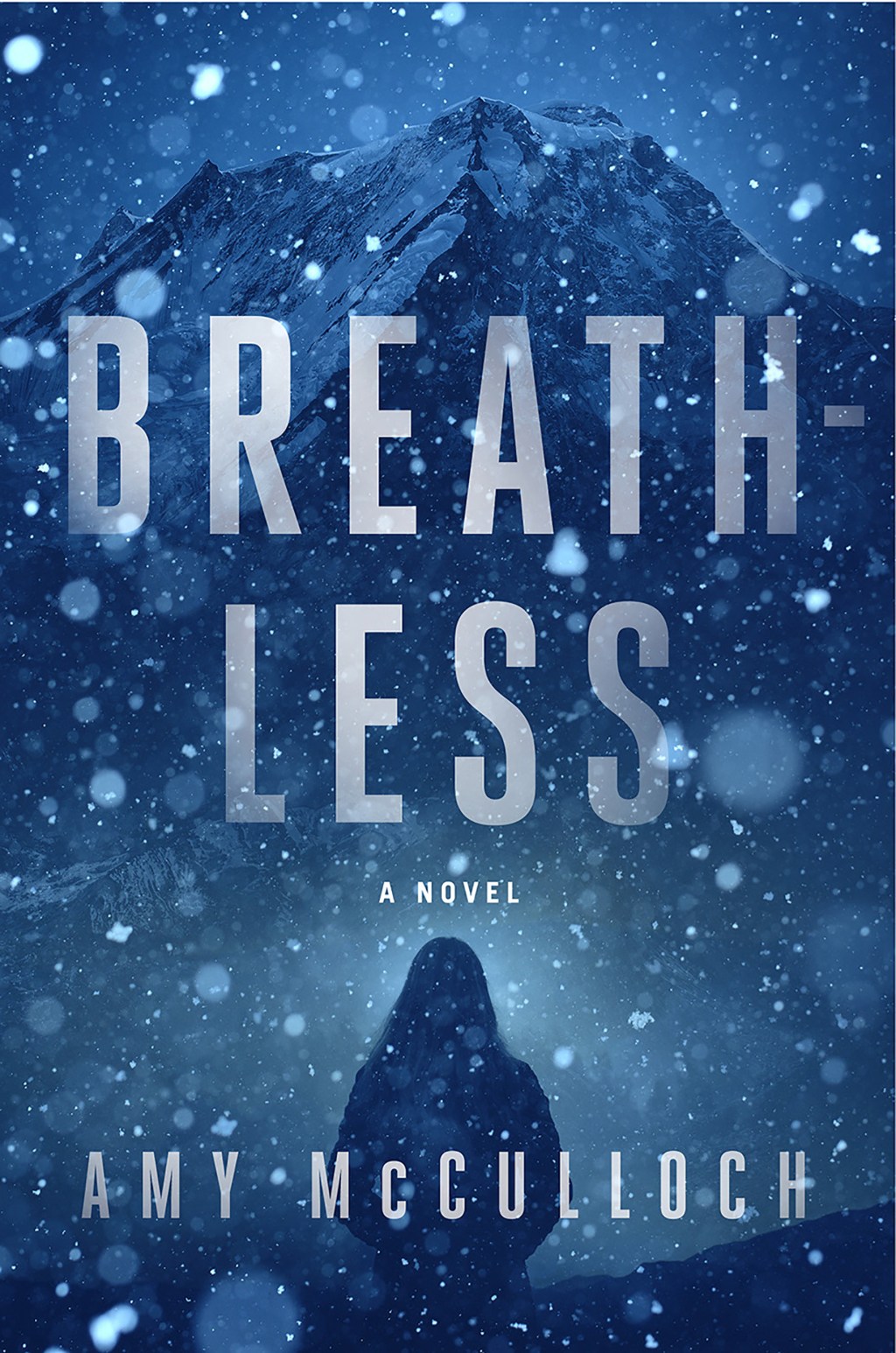
    Breathless: A Mountaineering Thriller by Amy McCulloch

    Breathless, Amy McCulloch’s debut adult thriller, is set on the world’s eighth highest mountain in Nepal. Cecily Wong, is a struggling journalist given the opportunity to interview legendary mountaineer Charles McVeigh but with one catch: she has to summit the mountain as part of his team first.

    I had a chance to ask McCulloch, a Chinese-White author, born in the UK, raised in Ottawa, Canada, now based in London, UK. questions about her book including how much she and Cecily are similar. But first a little more about McCulloch, the  youngest Canadian woman to climb Mt Manaslu in Nepal – the world’s eighth highest mountain at 26,781ft, is the co-author of the YA bestselling novel THE MAGPIE SOCIETY: One for Sorrow, and has written seven solo novels for children and young adults. She’s made bestseller lists in several countries around globe and her books have been published in fifteen different languages. 

    Now the interview.

    JA: Tell us how much the character Cecily is like and unlike you?

    AM: While Cecily and I share some similarities (we are both mixed race, Chinese and White, and both writers), I wanted Cecily to be more of a novice to the world of mountaineering than I was when I went to Manaslu, so she could be a window into the high altitude world for readers who might be unfamiliar with the sport. Yet I also drew on many of the challenges I faced to create her character: imposter syndrome – in the mountains and in my career, and a struggle to belong.

    You mention being, like Cecily, at a nadir in your career and life when you first embarked first on walking and then on climbing. Can you tell us about that? Has physical exertion always been restorative for you?

    Actually, turning to physical exertion as a means of healing was a surprise to me! Before my divorce, I was not a particularly active person, although I always loved travel and adventure. However, when my husband left, for the first time I felt truly lost – like my entire future was crumbling in front of me. I didn’t know what to do with myself, so while I processed these big emotions I decided to do something good for my body. I flew out to the Kerry Way – Ireland’s longest way-marked trail – and walked over 250km. I was amazed by what my body was capable of, so I ventured next to Nepal to trek the Annapurna Circuit. It was there that I fell in love with the big mountains, sparking a curiosity in me to see where my feet could take me.

    How did you go about preparing to climb an 8,000 high peak?

    When I said “yes” to climbing Manaslu with Nims Dai (as part of his 14 Peaks, Project Possible mission – later a Netflix series), I knew I was about to embark on the most difficult challenge of my life. I already knew I could handle high altitudes and difficult weather conditions, having successfully summited Aconcagua (the highest mountain the Americas) a few months before. But this was next level. I embarked on an intense training regime at home in London, tackling multiple ascents of the only hill in the area (London is a remarkably flat place!) and I headed up to North Wales several times to take 1:1 mountaineering lessons with British mountaineering guide Jon Gupta. It also took a while to get all the necessary gear together. I was particularly surprised how difficult it was to find extreme high altitude mountaineering gear designed for women.

    How did you come up with the concept of your book and the characters? You mention that you always intended to write a book about your climb but what inspired you to make it a mystery/thriller? And did that occur when you were actually climbing?

    I had been a full time author for a few years before I started on my mountaineering journey, writing science fiction and fantasy for young adults. The mountains are such an inspirational place that I knew that there would be a story in there somewhere, but I had no idea what shape that story would take. At first, I toyed with a scifi idea – maybe the first expedition to Olympus Mons, the highest mountain on Mars. It wasn’t until I was actually living at base camp in Manaslu that I realized the novel should be a thriller. It struck me that the mountain was the perfect setting: the isolation, the lack of authority figures, the risks of the environment like avalanches, crevasses and serac falls, but you’re also living amongst total strangers – people whose backstories and motivations are a mystery, and yet you need to trust them with your life. Fatal accidents are considered part of the accepted risk of climbing in these high places – what better place to get away with murder than somewhere already known as the death zone? I knew then that I could use my own personal experience as research, hoping create a unique, compelling, page-turning and yet authentic thriller in Breathless.

    Tell us about Manaslu. I know it is the eighth-highest peak but had never heard of it before. Yet it sounds both beautiful and daunting.

    Manaslu was the first eight thousand metre peak I’d ever laid eyes on, long before I ever believed I’d be able to climb it. It stands apart from a lot of the other 8,000m peaks, so it dominates the skyline – with a distinctive fishtail peak. It is stunningly beautiful and it is also considered one of the most ‘achievable’ of the 8000m peaks. Many people use it as a training ground for Everest, so it seemed like the right level of challenge as a next step for me in my mountaineering journey. Although ‘achievable’ is a funny word – it was also known as the ‘killer mountain’ for a long time as it had one of the highest death rates of any mountain in the world. There is no safe place to camp on the mountain – everywhere is prone to avalanche danger. It is definitely not to be underestimated.

    Cecily is one of just a few women mountaineers in the book. Was that similar to your real life climb? Do you think that it’s harder for women to be accepted into the climbing world?

    When I climbed Manaslu in September 2019, I held the record for the youngest Canadian woman, but even more surprising to me was that I was one of only eight Canadian women to have ever reached the summit in history, according to the Himalayan Database. That really showed me just how few women partake in this sport. For so long, I think there have been a lot of barriers to women being fully accepted into the climbing world – there’s the issue of equipment (as I mentioned above) not being designed with women’s bodies and needs in mind, and also the stigma that women in particular face when they participate in high risk sports while leaving their families at home. I think though the tide is changing – with more women than ever breaking ground in this sport, including my good friend and tentmate Stefi Trouget, who became the youngest woman to climb K2 without O2. I found the camaraderie I felt with other women on the mountain to be truly inspirational, and helped me find confidence on the mountain itself.

    I loved your description of the teas and the foods you ate both in the town and in the camps. Do you miss that? Or did you take recipes home with you? To me, it seems like a real immersion into the culture of the people who live on the mountain. I’d never run into that in other books about climbing.

    Thank you so much! I miss Nepal (and Nepali food) every day! It was important to me when I chose to climb in Nepal, that I used local operators and guides to support their economy as much as possible. What I didn’t realize is how those guides – Nims Dai, Mingma David and my Sherpa Tensing Kasang – would become more like family to me over the years. I have been invited back to their homes and even had the honour of being blessed by Nims’ mother during their Dashain festival. For me, it’s the people who make these climbing trips so memorable and impactful – and getting to immerse myself and learn more about Nepali culture is always the highlight.

    What are you working on now?

    I’m working on my next adventure thriller, set in Antarctica – a place I was lucky enough to visit back in 2016. I was intrigued to write about the “white night” – because when the sun never sets, there are very few places to hide. My hope is to continue to write books that transport readers to incredible places – with some page-turning thrills along the way.

    Is there anything we didn’t cover you’d like readers to know?

    I don’t think so!

    Follow Amy at:

    Twitter: @amymcculloch

    Facebook: http://www.facebook.com/amymccullochbooks/

    Instagram: @amymccullochbooks

  • NATIONAL BOOK FESTIVAL: ONCE AGAIN, BOOK TV IS LIVE, IN-PERSON

    NATIONAL BOOK FESTIVAL: ONCE AGAIN, BOOK TV IS LIVE, IN-PERSON

    22nd-STRAIGHT YEAR: EXCLUSIVE NON-FICTION BOOK COVERAGEON BOOK TV ON C-SPAN2

    C-SPAN’s Book TV has provided live, in-depth, uninterrupted coverage of the National Book Festival since it began.  Now, after several years of virtual coverage because of the pandemic, Book TV is back in person, once again providing signature LIVE gavel-to-gavel coverage of the Festival’s non-fiction authors.

    “As we celebrate this year’s National Book Festival with the theme ‘Books Bring Us Together,’ the Library of Congress’ partnership with C-SPAN’s Book TV will bring together readers across the country, allowing them to enjoy our exciting lineup of authors. We’re proud to join with C-SPAN to extend the reach of the Library of Congress National Book Festival once again so that book lovers from coast to coast can experience this celebration of reading,” said Librarian of Congress Carla Hayden.

    Among the guests and authors the nationwide Book TV audience will see and hear from on September 3, 2022, (9:30amET-5:30pmET):

    • Librarian of Congress Carla Hayden
    • David Maraniss, “Path Lit by Lightning: The Life of Jim Thorpe”
    • Conversation on women leaders of the civil rights movement with authors Tomiko Brown-Nagin (“Civil Rights Queen: Constance Baker Motley”) and Kate Clifford Larson (“Walk With Me: Fannie Lou Hamer”).  Moderated by Neda Ulaby.
    • Clint Smith, “How the Word is Passed: A Reckoning with the History of Slavery Across America”
    • Conversation on creating community in America with authors Gal Beckerman (“The Quiet Before) and Kathryn Judge (“Direct”). Moderated by Sewell Chan.
    • Conversation on conspiracies in America with authors Brendan McConville (“The Brethren”) and Elizabeth Williamson (“Sandy Hook”). Moderated by Roswell Encina. 
    • Jack Davis, “The Bald Eagle: The Improbably Journey of America’s Bird”
    • Conversation on climate change with authorsJuli Berwald (“Life on the Rocks”) and Edith Widder (“Below the Edge of Darkness”). Moderated by Liz Neeley. 
    • Conversation on the modern essay in the age of speed with Morten Høi Jensen (“The Fiction That Dare Not Speak Its Name”), Shawn McCreesh (“The Hatboro Blues”) and Becca Rothfeld (“Sanctimony Literature”) .Moderated by Celeste Marcus.
    • Will Bunch. “After the Ivory Tower Falls.”

    In partnership with the Library of Congress, C-SPAN has been part of the National Book Festival from the first one, September 8, 2001. Book TV’s LIVE coverage has taken the C-SPAN2 audience to the Festival’s various venues – U.S. Capitol grounds, a vast tent city on the National Mall (2002-2013), expo-style event in the Washington Convention Center (2014-2019), virtual (2020-2021), and now back to the Walter E. Washington Convention Center.

    Wherever the National Book Festival goes, Book TV is there. Over the past 21 years, Book TV has featured hundreds of non-fiction authors and guests, including Laura Bush, David McCullough, Buzz Aldrin, Salman Rushdie, Carla Hayden, Julie & David Eisenhower, Kinky Friedman, David Rubenstein, Joyce Carol Oates, Colson Whitehead, Doris Kearns Goodwin, and Madeleine Albright, to name a few.

    You can see all of Book TV’s coverage of the National Book Festival over the decades via this dedicated C-SPAN Video Library subpage:  https://www.c-span.org/liveEvent/?nationalbookfestival

    Book TV doesn’t limit itself to covering the National Book Festival. A partial list of other book festivals from around the country which Book TV covers includes: the Miami Book Fair, the Mississippi Book Festival, the Tucson Book Festival, the Southern Festival of Books, the Wisconsin Book Festival, the Texas Book Festival, the Brooklyn Book Festival, and many more.

    If non-fiction books are your thing, C-SPAN is your place.

    About Book TV:

    Book TV – Sundays on C-SPAN2 – is the only television service dedicated to nonfiction books. Book TV features programming on a rich variety of topics, such as history, biography, politics, current events, the media and more. Watch author interviews, readings and coverage of the nation’s largest book fairs. Every Sunday on C-SPAN2 starting 8am ET or online anytime at booktv.org  . Use that website as well to connect with Book TV via social media and email newsletter.

    About C-SPAN:

    C-SPAN, the public affairs network providing Americans with unfiltered access to congressional proceedings, was created in 1979 as a public service by the cable television industry and is now funded through fees paid by cable and satellite companies that provide C-SPAN programming. C-SPAN connects with millions of Americans through its three commercial-free TV networks, C-SPAN Radio, C-SPAN Podcasts, the C-SPAN Now appC-SPAN.org and various social media platforms. The network’s video-rich website contains over 270,000 hours of searchable and shareable content. Engage with C-SPAN on TwitterFacebookInstagram and YouTube, and stay connected through weekly and daily newsletters. 

  • Traveling Through Time and Around the Globe
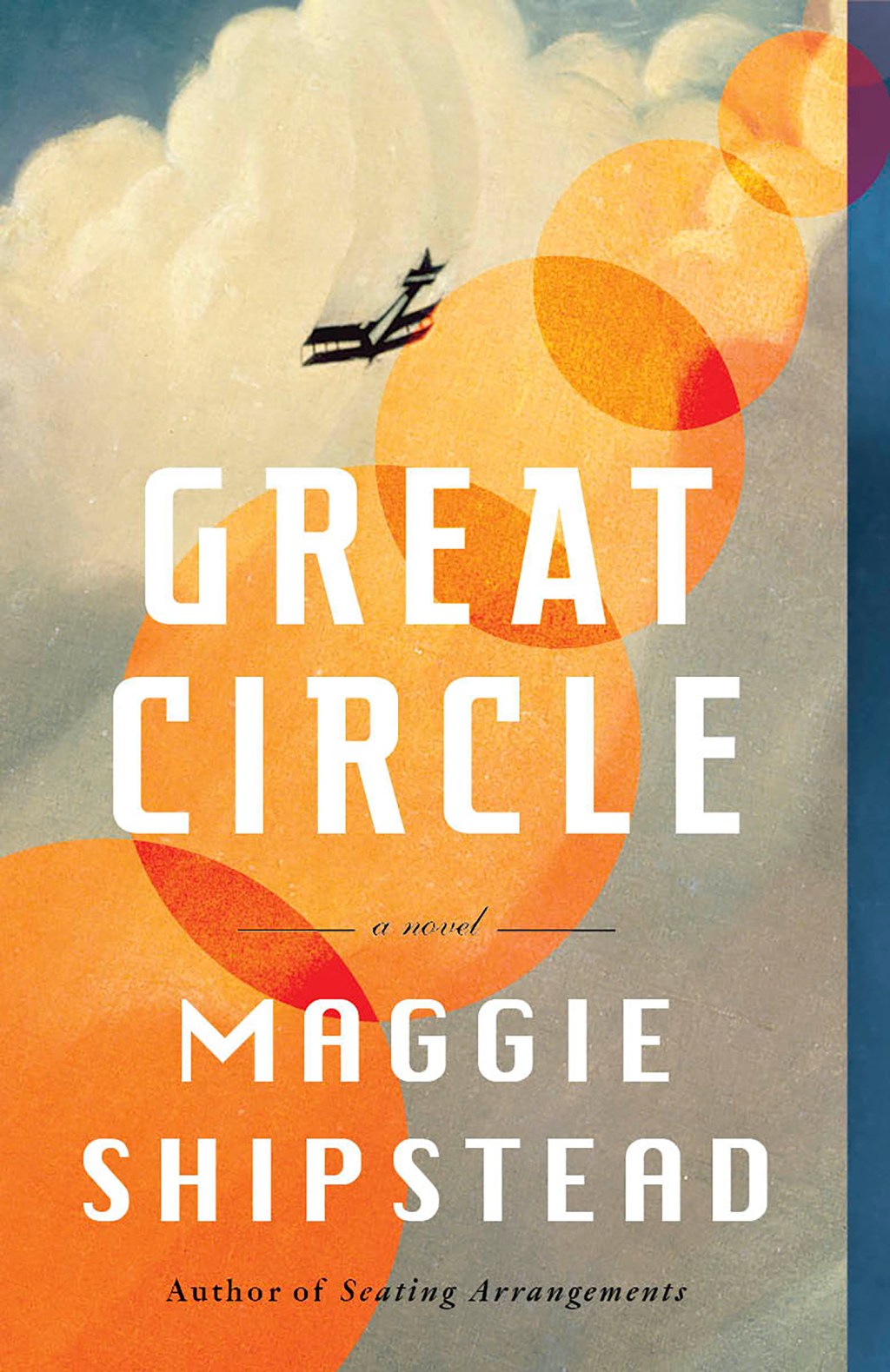
    Traveling Through Time and Around the Globe

    In 1914, Marian Graves and her twin brother, James, are among the last to be saved when the Josephina Eterna sinks in the North Atlantic. With their father in prison and their mother gone, the two babies are bundled off to live with their Uncle Wallace, an artist in Missoula, Montana. Wallace, preoccupied with his painting, lets the kids run wild, and while James is a sweet-natured child, Marian is a daredevil who revels in the freedom to do what she wants.

    That helps explain her attraction to the lifestyle of barnstorming aviators and her decision at 14 to drop out of school to learn to fly.

    Fast forward a century. Actress Hadley Baxter, whose Hollywood stardom is somewhat diminished, is starring in a movie about the disappearance of Marian Graves in Antarctica.

    The story of these two women takes us back and forth from past to present and around the globe in Maggie Shipstead’s “Great Circle” (Vintage Books 2021; $24).

    The disappearance of a woman aviator is familiar. After all, movies and articles are still being written about Amelia Earhart, whose plane vanished in the Pacific Ocean in 1937. But there are many other female pilots from the early and mid-1900s, though they’re exploits are mostly forgotten now. Writing “Great Circle” required Shipstead to research and travel to give the book its authenticity. She visited the Arctic five times and Antarctica twice.

    Why so many times, I asked Shipstead.

    “I’m drawn to those regions by some weird instinct,” she said. “I think a lot of people are. But I’ve also been lucky to keep getting opportunities to go. Polar travel has become a bit of my specialty, so I’ve been sent on assignment to Alaska, the New Zealand subantarctic, Antarctica, the Canadian high Arctic twice, Greenland twice. I did an artist residency on a ship in Svalbard. In a way, one thing kept leading to another, and I have no complaints.”

    The inspiration for “Great Circle” came to her in New Zealand. She was between books and a story line for her next novel that she had thought looked promising, wasn’t. In the airport, she saw the statue of early aviator Jean Batton, its base inscribed with her quote “I was destined to be a wanderer.”

    She knew she had her book.

    Given how much she has traveled, I wondered if Shipstead was destined to be a wanderer.

    “Destined is probably strong,” she said. “I’ve always been interested in travel, but my life could have taken lots of twists and turns that would have precluded traveling as much as I have. Really, this book turbocharged my traveling because, A, I was motivated to get to more and farther flung places in the name of research, and B, it took so long to write the book that I had the chance to start writing for travel magazines.”

    I next asked if she ever considered becoming a pilot given her interest in the subject.

    “Never,” was her response. “My brother used to fly C-130s in the Air Force and wanted to be a pilot from childhood, so that was always his territory.”

    This article originally appeared in the Northwest Indiana Times.

  • Karen White’s New Orleans Spooky Tale: The Shop on Royal Street
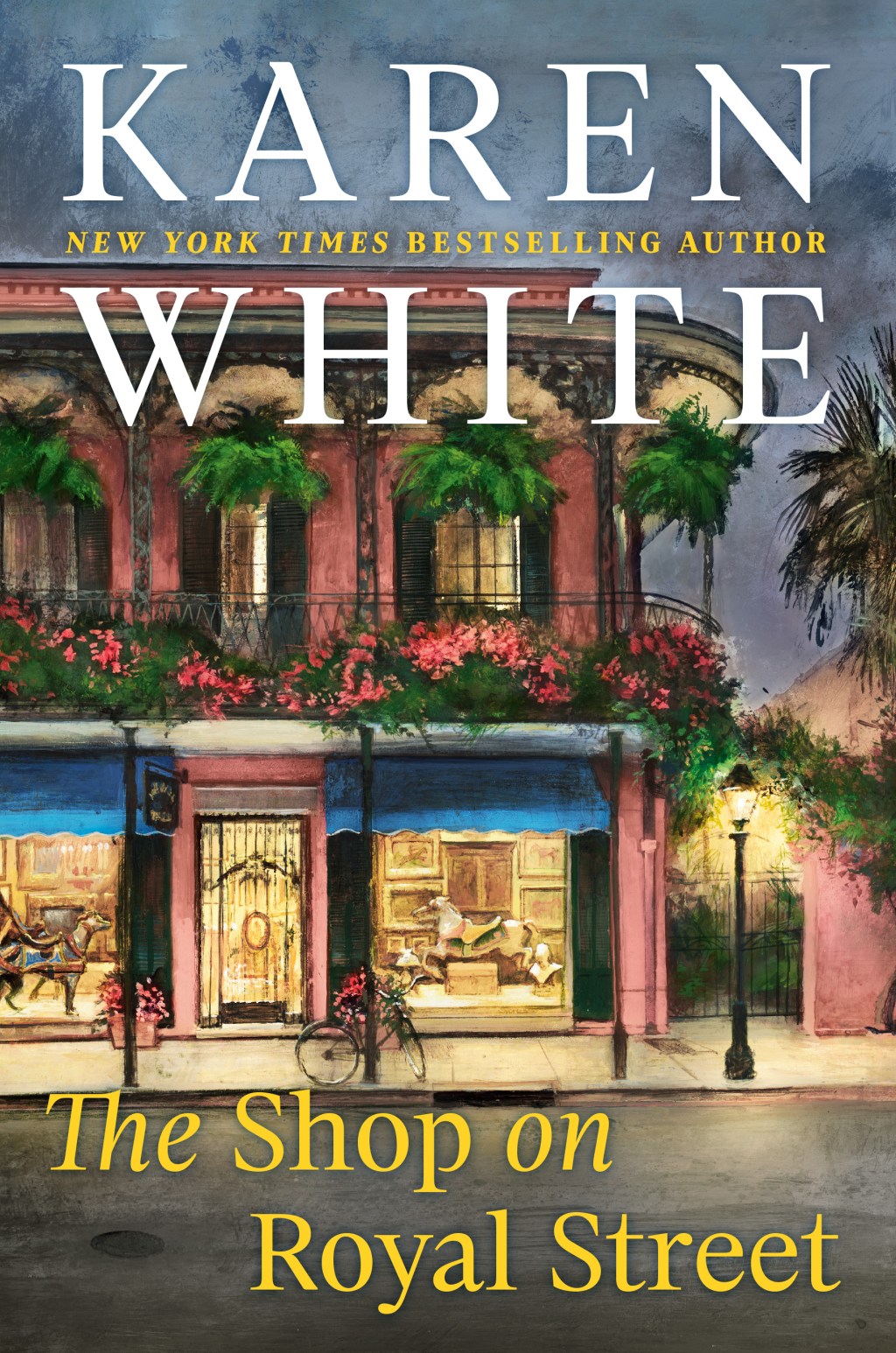
    Karen White’s New Orleans Spooky Tale: The Shop on Royal Street

    Author Karen White has added another page-turner to her repertoire of haunted houses and ghosts who won’t stay put in her latest book, “The Shop on Royal Street.”

    White, who has written more 30 books, including the very successful haunted home Tradd Street Series, now has moved her spooky action from Charleston to New Orleans as we follow Nola Trenholm, who buys a Creole cottage that needs extensive work only to discover that some of the previous occupants are still living there — if living is the right term to apply to people who are dead.

    But you can’t say Nola wasn’t warned. Her stepmother, who hears and sees ghosts like the rest of us see cars on the streets, tours the house with her before she signs the paperwork and suggests that it would be better to burn it down than then to move in.

    As if that wasn’t enough of a warning, while they’re looking around there’s a sudden scream and an explosion of antique blue bottles — a seemingly spontaneous event with no possible explanation as to why it happened.

    It turns out that the home was the scene of an unsolved murder, and to help her figure out what to do, Nola has to rely upon Beau Ryan, who can communicate with the spirits, something Nola unfortunately is unable to do. But Beau’s past is mysterious. His sister and parents disappeared during Hurricane Katrina and he is also connected to the murder that took place in Nola’s new home.

    Nola has her own issues as well. A recent college graduate, like her parents she has addiction issues. Her father, Jack Trenholm, a best-selling novelist, has been able to overcome his demons, but her mother, a drug addict, didn’t.

    White, who says she definitely believes in ghosts, has never seen one herself.

    “And I’ve definitely put myself in places that are haunted,” she said.

    Her grown son has and he is definitely not happy about it.

    Is it hard to write about ghosts if you’ve never seen one, I ask White when we chat on the phone?

    It turns out it is, since White never plans or plots her books, so what the characters say and do, whether they’re still alive or not, just flows as she writes.

    Her human characters can be difficult and so can the spirits.

    ”I don’t use the ghosts to be scary, I use them as characters — it’s like having a neighbor,” she said. “I love how they tie in the past and the present and I love how they can be useful. Don’t we all wish we could ask for help from the other side?”

    But, of course, she continues, ghosts can’t always express themselves any better than their human counterparts.

    This article originally appeared in the Northwest Indiana Times.

  • The Book of Cold Cases

    The Book of Cold Cases

    When she was nine, Shea Collins managed to outwit and escape a child predator, hiding as he searched for her before moving on to his next victim. Still traumatized two decades later, Shea keeps to herself, working as a medical receptionist during the day and at night holing up in her apartment, heating up single serve frozen lasagna in her microwave while researching unsolved true crimes for her blog, “The Book of Cold Cases.”

    This self-imposed isolation is about to change when Shea recognizes Beth Greer in the doctor’s office one day. Decades ago, the beautiful, beguiling and rich Greer went to trial, accused of killing two men. She was found innocent, but like Shea, she has locked herself away from the world, albeit in a mansion in the wealthiest section of Lake Clare where she lived with her parents before their deaths.

    Surprisingly, Greer agrees to let Shea interview her and invites her to the house. Located on a cliff overlooking the water, it should be a pleasant place, but instead, almost from the beginning, Shea can feel the odd vibes and happenings that are part of the home’s atmosphere. Looking out the window, she catches a glimpse of a young girl staring at the house. Who is she? And what about Greer? Is she a murderer? Or is she a woman somehow trapped in a supernatural nightmare?

    Author Simone St. James went from scheduling and spreadsheets — mostly for live sports, making sure that camera crews showed up on time and that everyone got paid — to writing supernatural thrillers, including her latest, “The Book of Cold Cases.”

    “I loved what I was doing, but as time went on I loved writing even more,” said St. James, who has written five novels, including bestseller “The Sun Down Motel.”

    St. James says the cases in her book are entirely imaginary.

    “But the germ of the idea came from the Zodiac case, in which a man killed random people in the San Francisco area in the late 60s and early 70s,” said St. James, noting that Stephen King was the first writer to influence her and that she read and re-read her copy of “Firestarter” so much that it fell apart.

    “The killer in the Zodiac case was never caught,” St. James said. “And I wondered, what if you had a Zodiac-type case, but the suspect was a woman? It changes everything about the story — who the suspect is, why they do what they do, how it’s investigated, how it’s written about in the media. Literally everything about it is different. So I made up a fictional case and went down that rabbit hole because I thought it was interesting.”

    Though her books have an eerie ambiance, St. James said she’s never encountered the supernatural herself.

    “But I believe it’s possible. I think most things are possible,” she said. “In my books I’m more interested in the human side of the supernatural, if that makes sense. Why one person would refuse to leave, and how the remaining people react. Haunting stories are all about grief and fear and trauma and letting go or refusing to. Those themes are fascinating to me and I always go back to them.”

    This story originally appeared in the Northwest Indiana Times.