Tag: Fiction

  • Everything We Didn’t Say by Nicole Baart

    Everything We Didn’t Say by Nicole Baart

    Nicole Baart, who lives in Iowa and is the mother of five children from four different countries, is the author of several bestselling mysteries. Taking time out from her busy schedule—she’s already working on her next novel–Baart chatted with Jane Ammeson about her latest, Everything We Didn’t Say, which was selected as the Book of the Month October’s Most Popular Pick.

    What initially drew you to writing mysteries?

    I started out writing contemporary fiction, but I have always loved reading mysteries. In the beginning of my career, I think penning a compelling whodunit simply felt too complicated. Plotting a good mystery is no easy feat—and I feared I wouldn’t be able to skillfully juggle all the important elements (red herrings, believable foreshadowing, a twist or two, authentic motive, etc.). Mystery readers have very high expectations! But I started almost unconsciously weaving puzzles into my books, and by the time Little Broken Things came out in 2017 I had gotten over my hesitation. I love writing novels that center around a good mystery, and I’m thrilled that Everything We Didn’t Say has resonated with so many readers.

    Can you give us a brief summary of Everything We Didn’t Say?

    It’s the story of Juniper Baker, a special archives librarian in Denver, Colorado who returns to her small, Iowa hometown ostensibly to help an old friend. Really, she’s there to solve a fifteen-year-old double homicide and win back the daughter she left behind.

    Was the book inspired by an actual event or events? If not, how did you come up with idea for the book?

    I’ve been working on this book for nearly three years and so many different things contributed to the final story! It’s truly a sort of book soup: a bit of this, a little of that. But at the center of it all is a cold case in Iowa that I stumbled across several years ago. My heart went out to the family and friends who are still looking for answers, and that quest for resolution and hope in the midst of such brokenness is littered across the pages of Everything We Didn’t Say

    Juniper has such a sense of longing and displacement as well as an ambiguousness about her hometown. Are these feelings you’ve experienced? Do you share characteristics with June?

    Absolutely. I love my small town (and the people in it) so very much, but I’m afraid sometimes that we think the line between good and evil runs around the outskirts of town. Us and them narratives are so simple and satisfying, but the truth is much more complicated. Small towns can be places of intimate community and belonging, but they are also filled with secrets, prejudices, and the same turmoil and tragedies that plague, well, everywhere. We aren’t perfect, we aren’t even always good, and I think we need to be honest about that. I want to have conversations about where we might be myopic and insular, and find ways to work through our own short-sightedness. I want to be candid about the ways that we fail, and try to be and do better instead of pretending we’ve got it all together.

    Tell us about One Body One Hope and what led you to co-founding the organization.

    It’s a long and complicated story, but the simple version is that my husband and I met a Liberian man who became a friend while we were in Ethiopia adopting our second son. That connection led to a deep relationship with a couple in Monrovia, and lasting ties to the children’s home that they opened after the Liberian civil war. We call it the accidental ministry because we never intended for it to happen! What started with one church and 35 orphaned and at-risk kids has grown into three children’s homes that serve over 150 kids (and often their extended families), 27 churches, 6 schools, a micro-finance program with a 92% repayment rate, numerous community redevelopment projects, and a 160-acre commercial farm. Our passion is empowering indigenous leaders and then getting out of their way. Everything good that has happened through One Body One Hope has been because of the Liberian people and their enduring love for their country!

    Is there anything else you’d like readers to know?

    I love interacting with readers on my Instagram page @nicolebaart, where I have worked hard to cultivate an uplifting, authentic community. We talk about much more than just books, and I seek to find ways to connect on a personal level as we discuss everything from parenthood to being a good neighbor to things that bring us joy. I’d love to see you there!

  • Where They Wait: A Scott Carson Supernatural Thriller
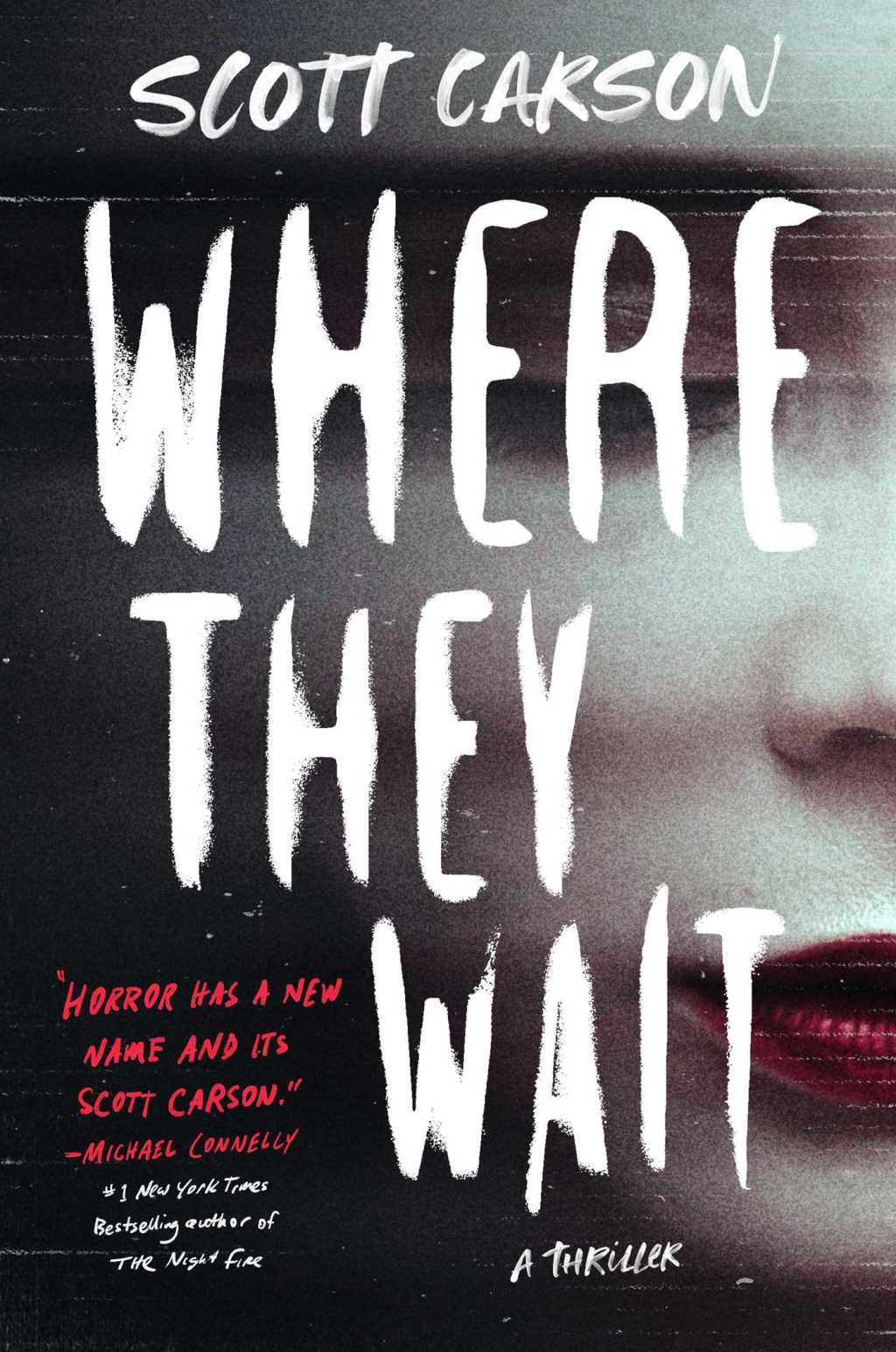
    Where They Wait: A Scott Carson Supernatural Thriller

              What could be easier than for an out-of-work journalist than an offer of a high paying gig writing a puff piece for an old friend? Well, if you’re the main character in a Scott Carson novel then take it from someone like me who has read every book Michael Koryta has written including those under the Carson pseudonym, things will get much worse before—and if—they get better.

              In time for a stupendously creepy Halloween scare we meet Nick Bishop in Where They Wait (Atria/Bestler, $27) as he arrives in Maine. His assignment is to write about Bryce Lermond for the Hammel College alumni magazine. $5000 is a whole lot of money for a profile of a successful college alum but Bishop, who has reported from Afghanistan, almost turns the job down. He’s proud of his reporter credentials and this job is beneath him. Unfortunately, he’s also broke and besides, a paid trip to Maine gives him a chance to see his mother, a once noted scientist, who now suffers from dementia.

              Oh, if only it were that easy. First entering Lermond’s headquarters, Bishop notes there’s something off kilter about the whole set-up. But he agrees to try Clarity, the app Lermond’s developed that promises to soothe and relax. And indeed, when Bishop first listens to the hauntingly beautiful song, he does fall into a sound sleep. But it’s a rest followed by horrific and seemingly real nightmares. Lermond’s top assistant—and Bishop’s childhood friend—warns him not to listen to Clarity but the melody and the voice of the woman singing is addictive. No, make that irresistible despite she committed suicide and yet shows up frequently and all too real in Bishop’s Clarity-induced dreams.

              Koryta, who grew up in Bloomington, Indiana, says that he was struck during the pandemic lockdown at how many relaxation apps were coming to market.

              “I thought this is good but then wondered what if it isn’t good for you,” says Koryta in a call from his home in Maine. “And writing the book during the backdrop of the constant question of how communication is being used to either save democracy or destroy it as well as the power and responsibility of communication soaked into my work. The power of song is really striking to me. Song has a staying power that most things do not, we remember songs and what they say.”

              As the song and the nightmares begin to overtake him, Bishop tries to delete Clarity but it reappears. He also begins to discover secrets about how his mother, who now only seems able to talk in riddles, worked at rewiring his memories. What he remembers about his past never happened.

              “You can peel a lot of things away from a person but as long as they have their own sense of the truth, they’re going to find their way but if you tell them what they know is a lie it changes all that,” says Koryta. “That’s part of the emotional experience I want to impart.”

              Typically, any of Koryta’s books can be read at distinct levels. If you want a great read that moves fast, he delivers. But you can go down to deeper levels, such as his intense research into memory when writing Where They Wait and into how the actions of the characters’ ancestors impact the choices they make now.

              Koryta says the fun part of writing is in the journey of discovering how it will end.

               “When I’m start a book, I don’t know where it’s going,” he says. “You have to personally embrace the unease. I can scare myself when writing and I perversely enjoy that.”

  • A Line to Kill

    A Line to Kill

    Anthony Horowitz is plotting a murder.

    That’s typical. After all, Horowitz has authored more than 40 mystery novels including several James Bond novels commissioned by the Ian Fleming Estate. Oh, and did we mention he’s also screenwriter, adapting mysteries such as Midsomer Murders into a long running English television series.

    That’s a lot of homicides and this week he’s adding a few more to the tally with the release of A Line to Kill, the third in his Hawthorne and Horowitz series–think former police detective Hawthorne as Sherlock Holmes with Horowitz writing himself into the role of the bumbling Watson.

    Little wonder he’s always thinking of murders particularly when taking his dog for long walks, something he does several times a day.

    Unfortunately, the murder under consideration right now is mine.

    “I start with a bullseye,” he says explaining how he produces his plots. “That’s the murder.”

    It turns out I’m the bullseye.

    “Think about it, you say you’re in the U.S. and I say I’m in England, but we really don’t know where either of us really is,” says Horowitz during a Zoom call.

    In other words, at any minute Horowitz could appear behind me while I’m thinking he’s an ocean away.

    “But why would you want to kill me or why would I want to kill you?” he muses noting that takes him to the next step in his writing process—motive. “The secret for me is the motive. It needs to be original, beautiful, striking, and something out of the usual.”

    “Maybe you think I’m going to write a critical review of your book,” I respond, foolishly offering a reason for the crime.

    Murder is definitely Horowitz’s business and obsession but when he was ten and living at a boarding school, it was a way to survive.  

    “Are those English boarding schools really as bad as everyone says?” I ask.

    “They were back then, now they’re stricter laws,” he says. “At the time it was a horrendously damaging place.”

    To escape the harshness Horowitz delved deep into reading and began to spin yarns to keep his school mates entertained—many of which were about heroic kids escaping from the school. From there, he says, it wasn’t a big jump to write his tales down.

    A Line to Kill takes place during a literary festival on Alderney, one of the Channel Islands off the coast of England. You probably won’t be surprised to learn that Horowitz discovered the island when he attended a literary gathering there.

    “It’s a beautiful small island with an awful past,” he says, noting that the Germans controlled it during World War II and built prisoner of war camps. For the fictional Horowitz, it’s a bloody place because of the many murders that occur while he and Hawthorne are staying there.

    As for me, not to worry. Horowitz was in England while we were Zooming and I definitely recommend reading his book.

  • Whose Life Am I Living: Author Explores Cutting Edge Technology in New Thriller

    Whose Life Am I Living: Author Explores Cutting Edge Technology in New Thriller

    Imagine walking through a door and into another life. That’s what happens to striving Chicago artist Kelly Holter on her 29th birthday. Suddenly she’s back in her hometown in Michigan, married to a man she barely knew in high school.

    She’s completely disoriented, because suddenly she has memories from both of her lives, and she needs to make sense of why this switch happened and whether it can be reversed.

    A speculative thriller exploring cutting-edge technology, “The Other Me” is the debut novel of Sarah Zachrich Jeng, a web developer originally from Michigan who now lives in Florida. The following is a Q&A with Jeng and Times correspondent Jane Ammeson.

    Can you tell our readers where the idea for your book came from?

    The idea came to me while I was thinking about wish fulfillment and the classic “guy meets girl, guy loses girl, guy moves mountains to get girl” narrative. These kinds of stories are often told from the man’s point of view, framed as romantic and wholly positive. I wanted to look at it through a slightly darker lens and from the woman’s perspective, so I used a sci-fi trope that completely takes away Kelly’s choice in the matter. Whatever happened to make her fall in love with Eric, her husband, it has already happened in this new life she finds herself living.

    What kind of research did you do for this book?

    I researched the art world and women artists through both the 20th and 21st centuries to get an idea of what qualifications and training they would need and what a woman artist just starting her career would be up against. Kelly is not from a privileged background, so I had to give her a scholarship to art school, which in real life probably wouldn’t come close to paying her way through. However, I wanted there to be some tension between her drive to create and the necessity of making a living, so I took a bit of creative license.

    I have some experience of startup culture, but things are always changing, so I read up on that. Much of what made it into the book is exaggerated, but some, unfortunately, is not. I also did research on the capabilities of artificial intelligence, as well as some armchair physics. The tech depicted in the book isn’t possible (at least not that we know of!) but I wanted to have enough background knowledge to let readers suspend disbelief. I was less interested in completely accurate science than exploring themes of identity, fate, and choice, and I hope any physicists or AI experts among my readers will forgive me!

    It must have been complex trying to keep straight what happened, what didn’t happen, the new life, the old life — how did you do that?

    Spreadsheets, lists, and an ugly hand-drawn diagram or two. I had timelines written out, as well as lists of small changes in Kelly’s life and the ripple effects they might cause. I really didn’t know what I was getting into when I started, and it’ll probably be a while before I write a book like this again! (Famous last words.)

  • Psychological thriller brings chills to the movie set

    Psychological thriller brings chills to the movie set

                Melissa Larsen and I are in total agreement. If a handsome movie director asks you to star in a reality-style movie set on an isolated island with just a crew and cast of five after an odd and awkward one-on-one screen test, there’s only one thing to do.  Just say no.

                Larsen is the author of “Shutter,” a psychological thriller whose central character is Betty Roux, a lost young beauty who has cast her previous life behind following her father’s suicide. She’s severed relationships with her boyfriend and mother, moved to New York with vague ambitions but no experience, of becoming an actress. Now she’s sleeping on the couch of her high school friend, someone she hasn’t seen in years. But in serendipitous connection, her friend’s husband works with Antony Marino whose first—and so far only—film has won accolades. Betty loves the movie, has watched it incessantly and soon finds herself auditioning for the starring role. That she gets it is a surprise as she has no acting experience at all.

                Of course, she doesn’t say no.

                “I don’t think I would have either at that age,” says Larsen.

                If this were a romance novel, then the entrance of Marino, would lead to the inevitable happy ending. But Larsen’s tale is much darker than that. If Betty wasn’t in such a funk of grief, she might see the warning signs which are more like flashing neon lights. The job entails filming on a remote island off the coast of Maine with a cast and crew consistently of a total of five.

    Really, what could possibly go wrong? Well, as it turns out, just about everything.

                “Somebody asked me what advice I would give Betty and I said I’d tell her to run,” says Larsen, who previously held high level, high stress jobs working for a talent agency in Los Angeles and then for a New York publisher. But she had started writing a novel in college and wanted to try writing again. “Shutter” is her first novel, and it has already garnered praise with the New York Times Book Review calling it a “chilling debut novel” and making Pop Sugar’s list of most anticipated novels.

                Developing the plot for “Shutter” was like a very fluid brain storm says Larsen detailing her creative process.

                “I’m a very image-based writer, and the first thing I saw was Betty covered in blood asking me for help,” she says recounting how she plotted the book. “So I decided to start writing with that in mind. It was like I was seeing a billboard in the distance,  and I kept walking towards it.”

  • VIRTUAL EVENT: Mary Adkins author of Palm Beach on Zoom

    VIRTUAL EVENT: Mary Adkins author of Palm Beach on Zoom

    This Tuesday, join Mary Adkins in a free Zoom event at 6 p.m. (CDT) as she is joined in conversation with Lucas Schaefer to discuss her latest book, Palm Beach (Harper 2021).

    As described by BookPeople, this thought-provoking page-turner from the author of When You Read This and Privilege is a powerful novel that uniquely captures the painful divide between the haves and have-nots and the seductive lure of the American dream, and is perfect for readers of Cynthia D’Aprix Sweeney and Emma Straub.

    Living in a tiny Queens apartment, Rebecca and her husband Mickey typify struggling, 30-something New Yorkers—he’s an actor, and she’s a freelance journalist. But after the arrival of their baby son, the couple decides to pack up and head for sunny, comfortable Palm Beach, where Mickey’s been offered a sweet deal managing the household of a multimillionaire Democratic donor.

    Once there, he quickly doubles his salary by going to work for a billionaire: venture capitalist Cecil Stone. Rebecca, a writer whose beat is economic inequality, is initially horrified: she pillories men like Stone, a ruthless businessman famous for crushing local newspapers. So no one is more surprised than her when she accepts a job working for Cecil’s wife as a ghostwriter, thinking of the excellent pay and the rare, inside look at this famous Forbes-list family. What she doesn’t expect is that she’ll grow close to the Stones, or become a regular at their high-powered dinners. And when a medical crisis hits, it’s the Stones who come to their rescue, using their power, influence, and wealth to avert catastrophe.

    As she and Mickey are both pulled deeper into this topsy-turvy household, they become increasingly dependent on their problematic benefactors. Then when she discovers a shocking secret about the Stones, Rebecca will have to decide: how many compromises can one couple make?

    EVENT GUIDELINES

    • Digital Doors Open at approx. 5:50PM CDT on August 10, 2021
    • Event Begins at 6:00PM CDT.
    • Cost: Free

    NOTE: Because this is a virtual event that will be hosted on Zoom, you will need access to a computer or other device that is capable of accessing and sufficient Internet access. If you have not used Zoom before, you may consider referencing Getting Started with Zoom.

    To register, click here.

    Reviews

    “Mary Adkins’ PALM BEACH is a rare page-turner that gives you all the fun and decadence of a beach read while exploring the relevant issues around wealth inequity. I opened it up and could not stop reading!”
    Jessica Anya Blau, author of Mary Jane

    “A look inside the world of the ultra-rich, PALM BEACH offers up moral complexity, page-turning plotting, and deep insight into motherhood and family. Delicious, addictive, whip-smart and full of heart.”
    Rufi Thorpe, author of The Knockout Queen

    “Delves into the world of Florida’s wealthy excess. . . . it’ll keep readers turning the pages.” -Publishers Weekly

    “A smart page-turner.” –
    Palm Beach Daily News


    ABOUT MARY ADKINS

    Mary Adkins is the author of When You Read This and Privilege. A native of the American South and a graduate of Duke University and Yale Law School, her writing has appeared in the New York Times and The Atlantic. She also teaches storytelling for The Moth. She lives in Nashville, Tennessee.

    ABOUT LUCAS SCHAEFER

    Lucas Schaefer’s work has appeared in The BafflerSlateOne StoryOff Assignment, and elsewhere. He has been a fellow at the Vermont Studio Center, and a writer-in-residence at the Corsicana Artist & Writer Residency, where he was the recipient of a GW Jackson Multicultural Society grant, given to artists invested in exploring race in their work. He lives with his husband in Austin, where he is at work on a novel. Find him on Twitter @LucasESchaefer.


    About BookPeople

    BookPeople has been the leading independent bookstore in Texas since 1970. Located in the heart of downtown, BookPeople has been voted best bookstore in Austin for over 20 years. BookPeople was voted Bookstore of the Year by Publisher’s Weekly in 2005. With visits from some of the most interesting and important authors of the past 50 years, as well as by Former Presidents Jimmy Carter and Bill Clinton, BookPeople is the destination bookstore in Texas.

    Location 

    BookPeople is located at the corner of 6th & Lamar. We’re right across the street from Waterloo Records and in the same complex as REI & Anthropologie.BookPeople
    603 N. Lamar
    Austin, TX 78703

    512-472-5050

    By purchasing a book from BookPeople, you are not only supporting a local, independent business, but you are also showing publishers that they should continue sending authors to BookPeople.

    Thank you for supporting Mary Adkins, Lucas Schaefer, and your local independent bookstore!

  • National Book Lovers Day: Celebrate By Learning to Download Books for Free
    National Book Lovers Day: Celebrate By Learning to Download Books for Free

    August 9 is National Book Lovers Day, a celebration for book worms everywhere. And lucky for us, our public library has its own collection of ebooks and audiobooks that we can download for free.
    Libby, the leading library reading app by OverDrive, lets users download ebooks, audiobooks, magazines, comics, and more at no cost. All you need to get started is a library card—and even if you don’t have one, an Instant Digital Card can be yours in 30 seconds with just a phone number. 

    Besides being able to borrow digital titles, OverDrive launched a new monthly blog series this July showing June’s top ten most popular books that had been borrowed digitally from the public library on Libby. Now in August, they’re sharing July’s top ten. On the list, you’ll find frequent New York Times bestsellers including Daniel Silva and Danielle Steel. Also among the Top Ten is T.J. Newman with their stunning instant bestselling debut title, Falling.

    As a reminder, Professional Book Nerds podcast always previews the upcoming month’s buzziest new books as well, and you can listen to their August episode right here. You can find July’s most popular new releases in the list below.

    The top ten new books from July

    The Paper Palace by Miranda Cowley Heller

    Falling by T.J. Newman


    The Cellist by Daniel Silva


    It’s Better This Way by Debbie Macomber

    Nine Lives by Danielle Steel

    While We Were Dating by Jasmine Guillory


    The Therapist by B. A. Paris

    The Forest of Vanishing Stars by Kristin Harmel

    The Bone Code by Kathy Reichs


    Fallen by Linda Castillo

  • The Other Passenger: A Mystery-Thriller by Louise Candlish

    The Other Passenger: A Mystery-Thriller by Louise Candlish

    After a spectacular burnout that caused him to lose his high-paying job, Jamie Buckby has found work as a coffee shop barista, a job that pays much less than his previous career.

    But money really isn’t an issue for him. He lives with his girlfriend, a wealthy, successful businesswoman, in her wonderful historic home in a tony London neighborhood. The two have had a long and compatible relationship, but in keeping with the saying there’s no fool like an old fool, Jamie risks it all when he falls for the beautiful, manipulative and much younger Melia.

    This being a mystery by bestselling British novelist Louise Candlish, there are plenty of other complications as well in “The Other Passenger.” We watch the story unfold through the eyes of Jamie, who commutes to work by riverboat with his neighbor Kit, who is married to Melia.

    Kit and Melia are living well beyond their means, wracking up credit card debts and obviously envious of Jamie’s lifestyle. Then, one day, Kit doesn’t turn up at the boat, and when Jamie arrives at his stop, the police are there waiting for him. Kit’s been reported missing, and another passenger saw Jamie arguing with him on the boat just before he disappeared.

    But it’s way too time consuming and difficult for Melia to wait and work hard to achieve her dreams. It’s much better to convince Jamie with promises of money and a life together to help her get rid of her husband. Jamie is foolish enough to believe that’s what Melia really wants. With the police closing in, he soon realizes that Melia has outwitted him and has much different plans in mind.

    “There were several inspirations, and that’s how my books are usually conceived — I’ll find a way to marry multiple obsessions,” Candlish said. “I wanted to do a commuter mystery, I wanted to create a ‘Double Indemnity‘ for the 2020s, I was eager to explore the generational warfare between Gen X and millennials. Finally, I felt the need to write a love letter to London life around the River Thames, to capture its dangerous allure.”

  • President Obama’s Annual List of Favorites

    “As 2020 comes to a close, I wanted to share my annual lists of favorites,” Barack Obama, the 42nd President of the United States, tweeted to his 127.5 million followers. “I’ll start by sharing my favorite books this year, deliberately omitting what I think is a pretty good book – A Promised Land – by a certain 44th president. I hope you enjoy reading these as much as I did.”

    Somehow, the President forgot to include adding one of my books to his list again. Well, there’s always next year.

    Jack by Marilynne Robinson

    Caste by Isabel Wilkerson

    Luster by Raven Leilani

    Sharks in the time of Saviors by Kawai Strong Washburn
    Twilight of Democracy by Anne Applebaum

    Homeland Elegies by Ayad Akhtar
    The Undocumented Americans by Karla Cornejo Villavicencio
    Long Bright River by Liz Moore
    Memorial Drive Natasha Trethewey
    Deacon King Kong by James McBride
    Missionaries by Phil Klay
    The Vanishing Half by Britt Bennett
    The Ministry for the Future by Kim Stanley Robinson
    The Glass House by Emily St. John Mandel
  • Thriller writer channels anger into her books

    Thriller writer channels anger into her books

    Layne Fargo

    Scarlet Clark, the lead character in Layne Fargo’s newest psychological thriller, “They Never Learn,” is not your typical English professor. While she takes her studies and students seriously, for 16 years she’s also been on a mission, to eliminate men at Gorman University she considers to be bad guys. By planning carefully and keeping the murder rate down to one a year, she’s managed to avoid discovery.

    That is until her last killing — the poisoning of a star football player accused of rape — doesn’t go so well. She posted a suicide note on the guy’s Instagram account, but it turns out you can’t kill a star athlete without some ramifications.

    Suddenly, the other suicide notes written by Scarlet are under review and her current project — dispatching a lewd department head who also is her competitor for a fellowship she desperately wants (not all of Scarlet’s killings are devoid of self interest). Trying to forestall discovery, Scarlet insinuates herself into the police investigation while under pressure to get away with this next kill.

    But it’s even more complex than this. After all, it is a Fargo book, and the Chicago author who wrote the well-received “Temper” likes the complexities and power struggles inherent in relationships.

    In this case, adding to the drama is the transformation of Carly Schiller, a freshman who has escaped an abusive home life and now immerses herself in studies as a way of avoiding life. But when Allison, her self-assured roommate, is sexually assaulted at a party, Carly dreams of revenge.

    Fargo, vice president of the Chicagoland chapter of Sisters in Crime and the cocreator of the podcast Unlikeable Female Characters, has a little bad girl in her too.

    “I love the sinister title of ‘They Never Learn,’” she said, adding that this, her second thriller, has everything she loves in a book — sexy women, Shakespeare references and the stabbing of men who “deserve” it.

    Fargo was enraged at what she saw as the injustice of the appointment of a man accused of rape into a high position.

    “I channeled that all-consuming anger into a story where men like that are stripped of their power, where they get exactly what they deserve,” she said.

    This are article also ran in the Books section of the Northwest Indiana Times.