Tag: Al Capone

  • Join me at the Classic Restaurants of Michiana Book Signing Wednesday, June 11th
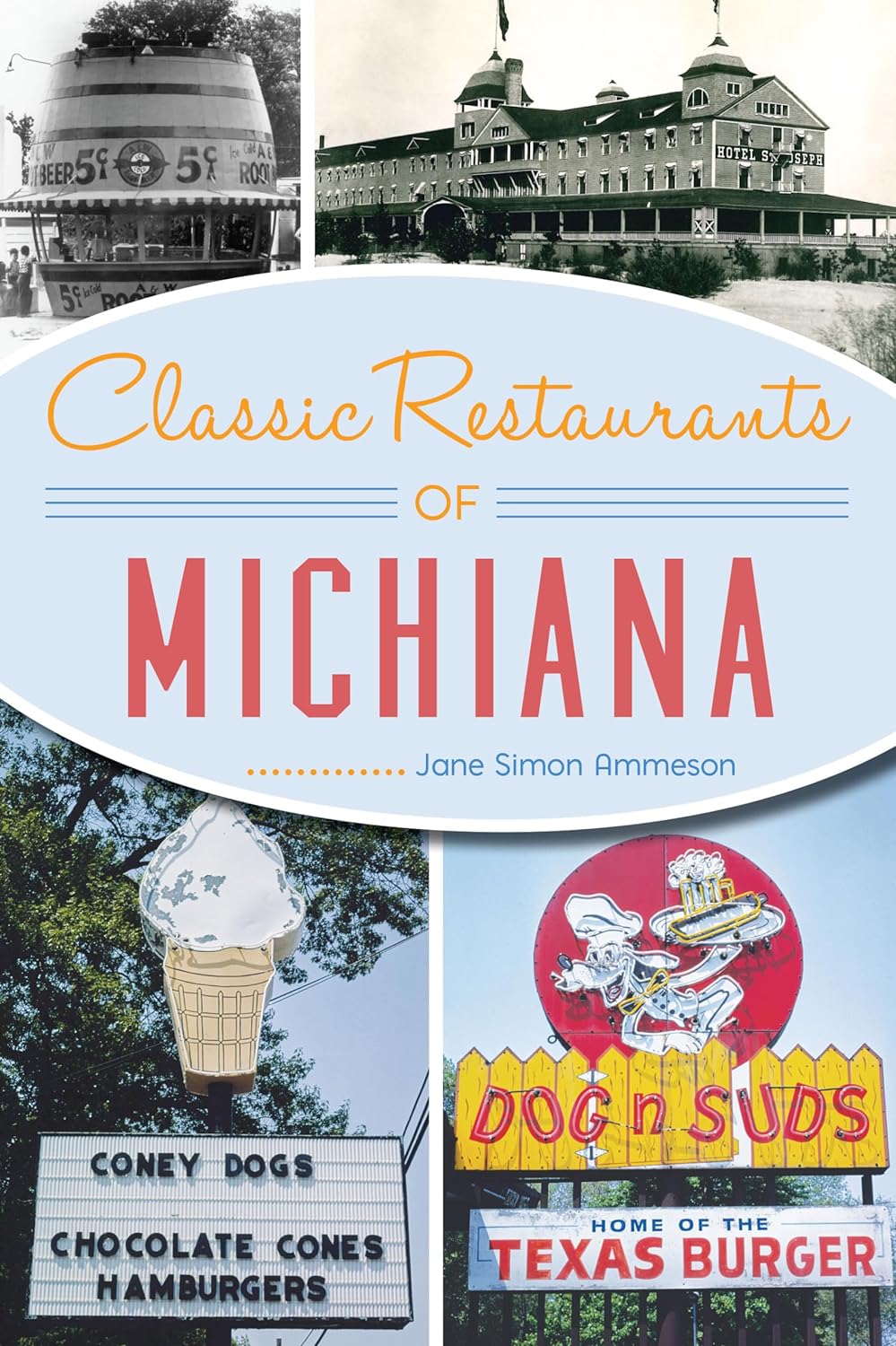
    Join me at the Classic Restaurants of Michiana Book Signing Wednesday, June 11th

    The members of the Sacred Heart of Mary Catholic Church Book/Movie Discussion Group have invited me to speak this Wednesday, June 11th at 6:30 p.m. If you have the time and are interested in the history of restaurants in Michiana, please come. The church is lovely, located in a beautiful country setting at  51841 Leach Rd, Dowagiac, Michigan. The event itself is next door in the Parish Hall.

    Mary’s City of David Vegetarian Cafe in Benton Harbor, which opened in 1931 and closed in 1975, specialized in farm-to-table meals.

    Here is the flyer that Terri Moore sent out:

    Over the centuries, residents of Michiana have never wanted for superb dining choices. Award-winning author Jane Simon Ammeson will lead us on a culinary road trip through Northern Indiana and Southwestern Michigan.

    A cigarette girl at the posh House of David motor lodge and restaurant/nightclub called the Vista Grande

    Once a stagecoach stop, The Old Tavern Inn has been open since the time of President Andrew Jackson. Tosi’s is known for its gorgeous starlit garden and gastronomic traditions stretching back almost a century, and The Volcano was amongst the first pizzerias in the country.

    One of the earliest hotels in St. Joseph, the Perkins house, built in 1840, stood on the corner of State and Ship Streets. Note the side entrance for the saloon which was, of course, given the times, for men only.

    These restaurants and other classic eateries remain part of the thriving local food scene. But the doors of others have long been closed. Some like Mead’s Chicken Nook and Robertson’s Tea Room linger in memories while The Owl Saloon, O. A. Clark’s Lunch Rooms, and Lobster Lounge are long lost to time.

    The restaurant is still open at the Barbee, it was a fav of Al Capone. However, when he arrived, all the other guests had to leave.

    Jane Simon Ammeson is a food and travel columnist who has authored seventeen books, including Classic Restaurants of Northwest Indiana. Always willing to travel for food, she blogs about her experiences at janeammeson.com.

    At one time, the lakeside towns of southwesterern Berrien County had a large Swedish population. The Swedish Coffee Pot was just one of several. Only the Swedish Bakery remains.

    Light refreshments will be served

    For more information contact:

    Terri Moore, 269-782-6925, t2sewmoore@outlook.com

  • Al Capone: His Life, Legacy, and Legend
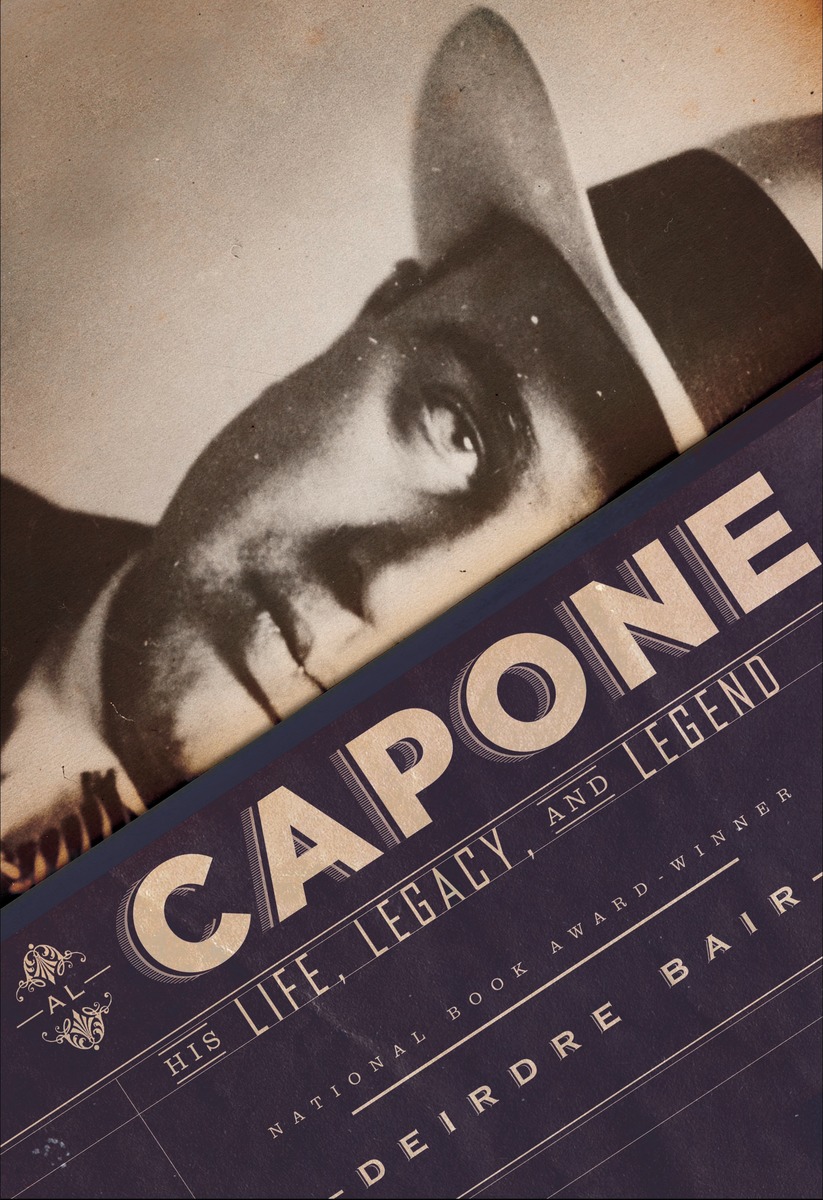
    Al Capone: His Life, Legacy, and Legend

    Deirdre Bair wasn’t that familiar with Al Capone. Beyond the St. Valentine’s Day Massacre, she’d been more focused on literary biographies, racking up numerous awards including the National Book Award. But when she was contacted by a friend who had a friend who knew someone (yes, it went like that) who wanted help in solving some family mysteries about Al Capone she was intrigued.

    “I asked what does he want, a private investigator or a ghost writer?”

    The man was a relative of the infamous gangster and after they talked, Bair received phone calls from other Capone relatives.

    “They called me and said we’re getting old, we want our story to be told,” recalls Bair.

    And so began years of interviews, extensive research and writing as Blair learned from Capone’s surviving family members about the Capone they knew—a devoted father, a loved husband, a kindly caretaker of his relatives.

    “There are so many legends about him,” says Blair, noting more than 100 books have been written about Capone. Her book, “Al Capone: His Life, Legacy, and Legend” (Nan A. Talese 2016; $30) is the first to have the cooperation of his family who provided her with exclusive access to personal testimony and archival documents.

    Of course there’s the Jazz Age, bootlegging Capone. But in his brief arc of fame and success—Bair points out that he took control of his gang at 25 and by 31 was ill, broke and in prison, he became a role model for, of all things, business management.

    “The Harvard Business School did a case study of how he ran his business,” says Bair. “Today the Bulgarian Mafia say they study Capone. So many people tell me a generation or two later, he could have been a CEO.”

    His family saw him as loving. His wife May, says Bair, said she knew every bad thing he’d done (and we know he did a whole lot of bad stuff) but she still loved him. His son remembered him as a great dad.

    “Every day was a revelation,” says Bair. “But I don’t think anyone will ever have the final answer as to who he really was. He’s a riddle, a conundrum and an enigma.”


  • Al Capone’s Beer Wars: A Complete History of Organized Crime in Chicago during Prohibition

    Prohibition in Chicago was the ultimate business opportunity for the violent men who made up the many gangs who fought to control alcohol as well as narcotics, gambling, labor and business racketeering and prostitution in the city. And while there were turf wars during Prohibition in many American cities, Chicago was the bloodiest of all.

    “The apex of the violence in Chicago was the St. Valentine’s Day Massacre where seven men were killed,” says John J. Binder, author of  (Prometheus Books 2017; $25). “That was a record. In any other city, there were never more than two or three gang murders at one time.”

    Chicago at that time was almost completely lawless and these mobsters thought they were untouchable says Binder, adding that gangsters like Al Capone even gave interviews which added to Chicago’s reputation as did the way they did business including machine guns, drive-by shootings.

    Binder, who has been writing about organized crime for more than 25 years, is an Associate Professor Emeritus of Finance in the College of Business at the University of Illinois at Chicago. His background in business and finance is perfect for writing what is the first complete history of organized crime in Chicago during Prohibition because after all it is a business.

    “The sole goal of organized crime is to enrich their members,” says Binder. “Sure, they’re violent and sure they kill each other, it’s useful in running the business. But the goal was to make money.”

    While legendary figures like Al Capone have taken on almost mythical status, Binder says that many books don’t even cover some of the other 12 gangs who were major bootleggers in Chicago at the start of Prohibition.

    “A lot of books about Prohibition in Chicago just cover the same thing,” he says, noting that five years of research went into his book.

    The Chicago mobs’ reach also extended into Northwest Indiana says Binder who will be conducting a tour of Prohibition sites.

    “The Canadian Whiskey Superhighway ran from Detroit through Gary to Chicago,” he says.

    Ifyougo:

    What: Talk and book signing

    When: Tuesday, Oct. 10; 6 p.m. reception, 7 p.m. program

    Where: Chicago History Museum, 1601 North Clark Street, Chicago, Illinois

    Cost: $25, $20 members; cash bar available

    FYI: 312-642-4600

    What: Author and historian John J. Binder leads an in-depth tour of Chicago’s Prohibition and related crime history.

    When: Saturday, October 14 at 1 p.m.

    Where: Tour begins at the Chicago History Museum, 1601 North Clark Street, Chicago, Illinois

    Cost: $55, $45 members; tour runs 3.5 to 4 hours

    FYI: 312-642-4600

  • White Collar Girl

    Even if you weren’t addicted to the black and white movies about newspaper gals such as Katherine Hepburn in “Woman of the Year” and Glenda Farrell in the Torchy Blane series like I was, Renee Rosen’s latest book, “9780451474971 (2)” about a Chicago reporter in the 1950s, is still a great read.

    Rosen, who plums Chicago’s history to write such books as “Dollface,” about flappers and gangers like Al Capone, and “What the Lady Wants” about the affair between department store magnate Marshall Field and his socialite neighbor, tells about a time not that long ago when women reporters were almost always relegated to covering soft news and society items.

    In her latest, Jordan Walsh wants to break out of her role as a society reporter and sees her chance when she finds a deeply connected source in the mayor’s office. But despite her source and ambition as well as family connections to such great Chicago writers as Mike Royko, Nelson Algren and Ernest Hemingway, Jordan must still contend with the attitude of it’s a man’s business.

    To research her book, Rosen spent a lot of time talking to reporters to find out what it was like back in the day.

    “I think what I found most surprising was how the female reporters back then were called ‘Sob Sisters’ because they were assigned the sentimental stories or stories intended to tug at the readers’ heartstrings,” Rosen says about what she found when she began her extensive research. ”Sexism in the newsroom was blatant back then. Also in terms of sexual harassment, back in the day that phrase wasn’t in anyone’s vocabulary. Of course career women didn’t like it, but there was no one to turn to, no one to complain to.”

    Rosen, who lives in Chicago, says she often will find herself walking down a street and thinking this is where Dion O’Banion worked (one of the gangsters featured in “Dollface”) or this is where Delia Caton and Bertha Palmer shopped (“What the Lady Wants”).

    “Or in the case of ‘White Collar Girl,’ I’ve been to some of the watering holes where a young Mike Royko or a Nelson Algren would have frequented,” says Rosen, noting that she’s watched “All the President’s Men” about “a million times.”

    “I can go to City Hall and walk the very hallways that Mayor Daley walked. Call me a history nerd, but for me that’s a thrill. Sometimes I do get so obsessed with a subject matter that I do find I have to pull myself back to the present time.”