Category: Uncategorized

  • CAPSIZED! The Forgotten Story of the SS Eastland Disaster

    CAPSIZED! The Forgotten Story of the SS Eastland Disaster

    The SS Eastland was still tied to the pier about to take 2500 passengers and 70 crew members on an excursion across the southern edge of Lake Michigan to Michigan City and the dancing in the ballroom had already begun. It was all part of the fun on that July 24, 1915 when the ship started swaying side to side and dancers slid back and forth along the floor.  But the last pitch didn’t stop at 35 degrees as it had earlier and instead, continued on past 40, then 45.  The Eastland’s captain shouted for the gangways to be reconnected but it was too late, the boat capsized in the Chicago River, trapping many of its passengers below the deck. Though 15 feet from shore and in 20 feet of water, by the end of the rescue mission 844 bodies were recovered and 70% of those who perished were under 25.

    “More people died on the Eastland than did on the Titantic,” says Patricia Sutton, author of CAPSIZED! The Forgotten Story of the SS Eastland Disaster (Chicago Review Press 2018; $17.99). “90% of those who died were women and children while on the Titanic, only 10% of the dead were women and children.”

    Sutton, a former Chicago public school teacher, vaguely knew about the sinking of the Eastland but mentioned the disaster to her mentor at a writer’s workshop in Pennsylvania when they were talking about possible topics for a book.

    “She said you need to write that and if you don’t, I will,” recalls Sutton, who interviewed relatives of those who were aboard and read news accounts from the time to take readers into the lives of those who survived and those who didn’t. The passengers, mostly first- and second-generation Polish and Czech immigrants were the employees of Western Electric Company’s Hawthorne Works and the excursion was supposed to be a wonderful outing for them. Instead, says Sutton, almost every block in the Hawthorn area lost at least one person; in one block, it was every house.

    Written for children ages 10-14, it’s a compelling book for even adults. Because she’s a teacher, Sutton wants Capsized not only to be an educational lesson about the times (women wore long dresses, corsets and laced up boots which made escaping from the water so much more difficult and most people didn’t swim back then) but also to stir critical thinking and questioning.

    “Children ask why do we remember the Titanic and not the Eastland,” she says. “So we discuss what the reasons could be—there were famous and wealthy people onboard the Titanic while those on the Eastland were poor working class mothers and children. Also, the Eastland happened when World War I was going on and though we hadn’t entered it yet, everyone’s attention was focused on that. I also tell them that it’s important know about the Eastland and those who were on the ship.”


  • The World Is Awake, A Celebration of Everyday Blessings by Linsey Davis

    The World Is Awake, A Celebration of Everyday Blessings by Linsey Davis

    Though she often reports on what’s worst in our world (the Las Vegas massacre, the Boston Marathon bombing and the sexual predator assertions against Harvey Weinstein), Linsey Davis, an Emmy award winning news correspondent for ABC News, wants us to look at the world in a more positive way, enjoying its delights with a sense of childlike wonderment and excitement.

    “As adults we put on our blinders and just go about our day,” says Davis, author of the recently released children’s book, The World Is Awake, A Celebration of Everyday Blessings: (Zonderkidz 2018; $17.99). “Children are able to remind us about the beauty and joy of so many little things we often overlook.”davis, linsey_portrait

    Her inspiration, says Davis, comes from watching her four-year-old son Ayden interact with nature, saying it gives her a buoyant and spiritual perspective.

    “My son’s excitement when he asks me who opens the flowers or laughs when he sees a butterfly is contagious,” says Davis, who files reports for shows such as “World News,” “Good Morning America,” “20/20” and “Nightline.” “He sees with a child’s heart. I think children are able to remind us of that.”

    With colorful and lively illustrations, Davis’s says she hopes the book stimulates parents to regain that childlike outlook. But even more so, Davis wanted to write a children’s book where the main character is a person of color.

    “The characters in children’s books are not in sync with where we are as a country,” says Davis, who is African American. “More than 90% of protagonists in books for children are white. We’re at a time in our country where we’re becoming more colorful at the same time we’re becoming more divisive. Children need to find themselves in books and to see children in books who look like them. I think that is essential particularly now.”

    Ifyougo:

    What: Linsey Davis will discuss and sign copies of her book and participate in a Q & A.  at

    When: Sunday, July 22 at 2:00 p.m.

    Where: Anderson’s Bookshop, 123 W. Jefferson Ave. Naperville, IL

    Cost: This event is free and open to the public. To join the book signing line, purchase the book at Anderson’s Bookshop.

    FYI: (630) 355-2665; andersonsbookshop.com.


  • Chicago’s Only Castle

    Chicago’s Only Castle


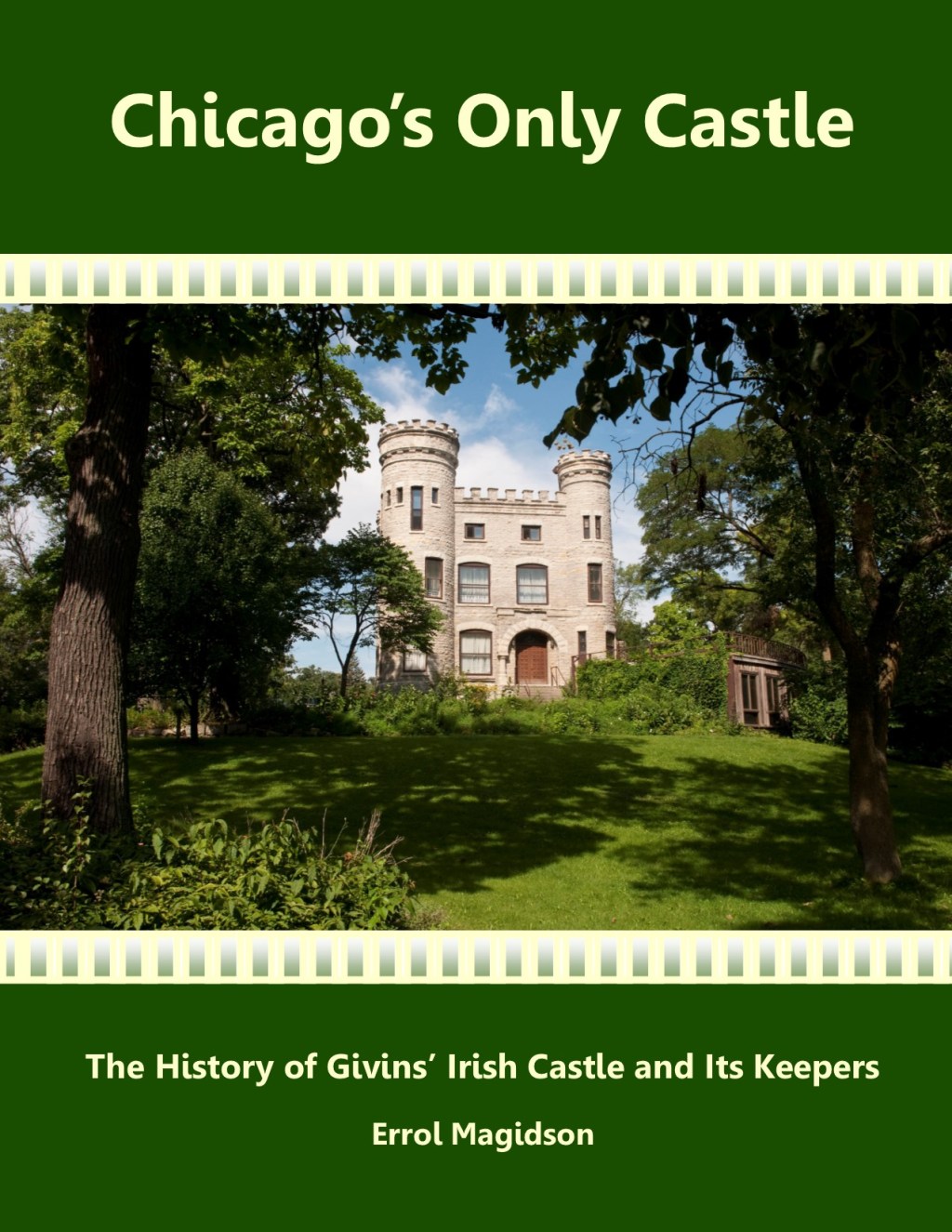
    It’s been more than 40 years since Errol Magidson first saw The Castle with its crenelated towers, stone walls, parapets and arched doorways and windows. Only this castle, rising on top of a hill with even, we’re not kidding here, slit-like windows perfect for archers to fire at marauders, wasn’t located in Europe but instead had been built by an Irishman named Robert Givens back in the 1880s in the Beverly neighborhood of Chicago.1551581_640122486049460_1036349268_n

    “My wife and I were looking for a place to live and a friend told us to come out to Beverly as it’s a great place,” recalls Magidson, author of Chicago’s Only Castle: The History of Givins’ Irish Castle and Its Keepers and its companion DVD. “So we did and we were driving down Longwood Avenue, looking at the homes including one that’s a Frank Lloyd Wright and were stopped at a light. We looked up and saw the castle.”

    Enchanted by what they saw, Magidson and his wife, since deceased, moved to Beverly.  It didn’t matter that she was Catholic and he was Jewish, he joined the Men of the Castle, a group dedicated to the preservation of Chicago’s only castle, which in 1942 had become a Unitarian Church.

    “We worked at raising money and when I retired and was looking for something to do, I volunteered to make a documentary about the castle,” says Magidson.

    Over the decades, Magidson read everything he could about The Castle’s origins, trying to get beyond repetitious material based on faulty sources.164347_142585029136544_4388143_n

    “One reporter would write it and everyone else would quote it as if it were true, but often it wasn’t,” he says.

    When he first started, old newspapers were on microfiche if available at all. But he was able to reach out to historians who helped him learn how to sift through information including how in 1909 the addresses in Chicago changed.

    “It wasn’t like you could open a book or get on line and there was all that history,” he says.

    Legend has it, says Magidson, that Givens, a real estate developer, popular novelist, purposed mayoral candidate, world traveler who wrote travel reviews for the Chicago Evening Post, built his castle in 1877-1878 after seeing one he liked on the River Dee in County Louth, Ireland and sketching it so he could return home and build it for his Irish fiancée.

    181559_142585012469879_5721985_n       “My children went to pre-school at the castle, so it felt almost like an extension of home when they were young,” says Mike Flannery, a political reporter for Fox 32 News in Chicago who lives near the castle on Longwood Drive. “Sitting stop the limestone ridge above Longwood Drive, it’s one of the neighborhood’s most prominent landmarks. Returning from a long trip, it’s always good to see the Givens Castle. Means we’re almost home!”

    After Givens, the Castle was home, from 1895 until 1897, to the Chicago Female College. From 1909 until 1921, the property was owned by the Burdett family.

    “J.B. Burdett was an inventor and manufacturer,  whose company still exists but under a different name,” says Magdison.  “He was also an early automobilists who won the first race to Chicago to Joliet in 1901.  Siemens bought it in 1921 and kept it until 1942. he was a medical doctor of Ukrainian descent and his wife was the founder of the Ukrainian National Museum.”579100_492735217454855_1525667273_n.jpg

    Despite all these changes, much of the original interior remains including the  ornate woodwork, a skylight on the third floor as well as a stained glass window with the Givens family coat of arms and fireplaces on each floor.

    “The Castle was built by stones quarried in Joliet that were taken by the railroad to 103rd and Vincennes,” says Magidson. “There a builder cut them to size and then they were shipped by horse and wagon to the house.”

    Things change as well. The property where it is located is only about the half size of the original lot. But still, it is a castle.

    Ifyougo:

    What: Presentation, Book Signing, and Tour at The Castle

    When: July 21 at 11 a.m.

    Where: 10244 South Longwood Avenue, Chicago, Illinois

    FYI: chicagosonlycastle.org or send a message on their Facebook page


  • Al Capone: His Life, Legacy, and Legend
    Al Capone: His Life, Legacy, and Legend

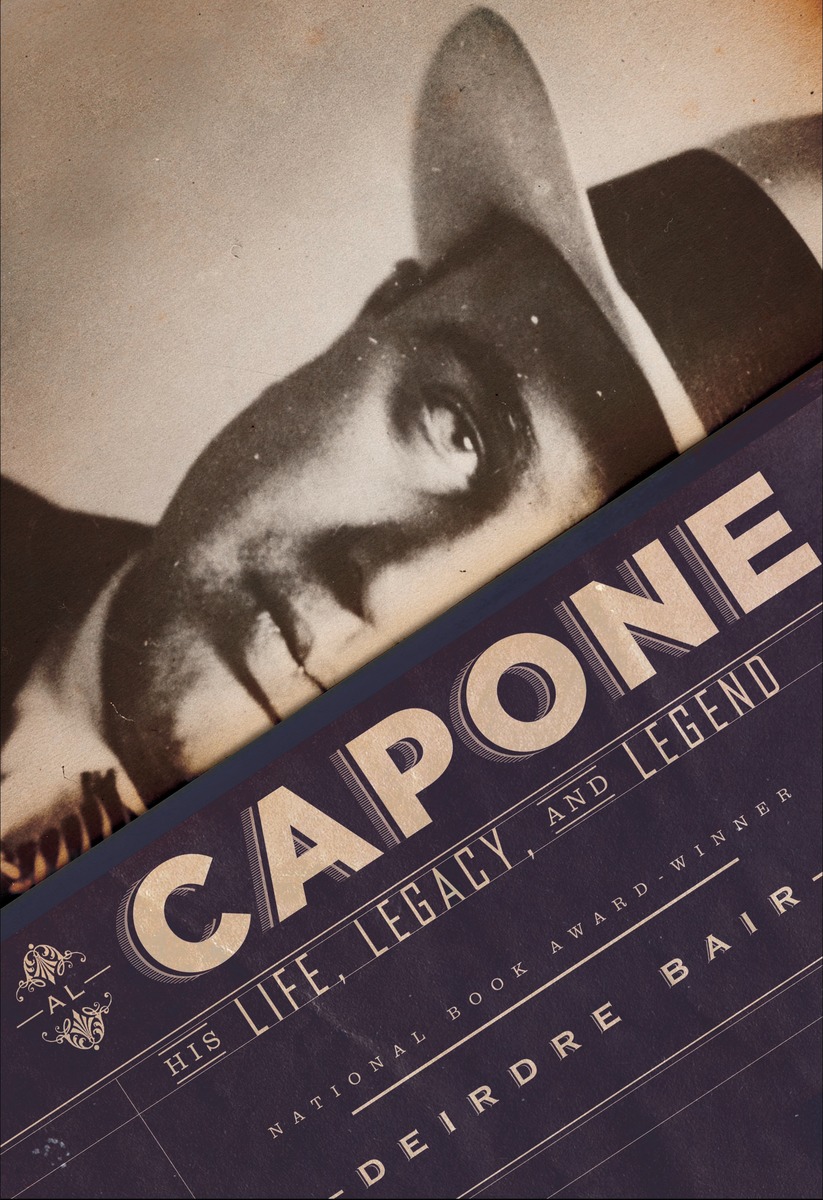
    Deirdre Bair wasn’t that familiar with Al Capone. Beyond the St. Valentine’s Day Massacre, she’d been more focused on literary biographies, racking up numerous awards including the National Book Award. But when she was contacted by a friend who had a friend who knew someone (yes, it went like that) who wanted help in solving some family mysteries about Al Capone she was intrigued.

    “I asked what does he want, a private investigator or a ghost writer?”

    The man was a relative of the infamous gangster and after they talked, Bair received phone calls from other Capone relatives.

    “They called me and said we’re getting old, we want our story to be told,” recalls Bair.

    And so began years of interviews, extensive research and writing as Blair learned from Capone’s surviving family members about the Capone they knew—a devoted father, a loved husband, a kindly caretaker of his relatives.

    “There are so many legends about him,” says Blair, noting more than 100 books have been written about Capone. Her book, “Al Capone: His Life, Legacy, and Legend” (Nan A. Talese 2016; $30) is the first to have the cooperation of his family who provided her with exclusive access to personal testimony and archival documents.

    Of course there’s the Jazz Age, bootlegging Capone. But in his brief arc of fame and success—Bair points out that he took control of his gang at 25 and by 31 was ill, broke and in prison, he became a role model for, of all things, business management.

    “The Harvard Business School did a case study of how he ran his business,” says Bair. “Today the Bulgarian Mafia say they study Capone. So many people tell me a generation or two later, he could have been a CEO.”

    His family saw him as loving. His wife May, says Bair, said she knew every bad thing he’d done (and we know he did a whole lot of bad stuff) but she still loved him. His son remembered him as a great dad.

    “Every day was a revelation,” says Bair. “But I don’t think anyone will ever have the final answer as to who he really was. He’s a riddle, a conundrum and an enigma.”


  • Lost Recipes of Prohibition: Notes from A Bootlegger’s Manual
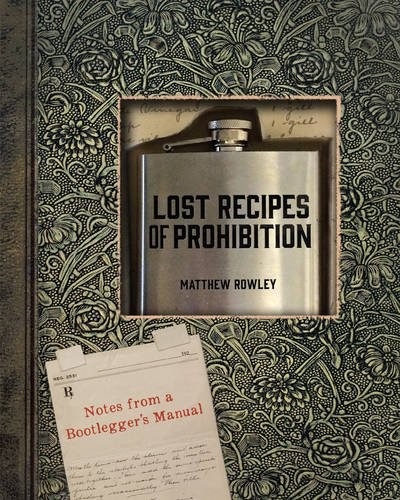
    Lost Recipes of Prohibition: Notes from A Bootlegger’s Manual

    When I was writing my book, A Jazz Age Murder in Northwest Indiana (History Press), about Nettie Diamond, a wealthy widow and pharmacist who was murdered by her fifth husband, a much younger bootlegger named Harry in Indiana Harbor on Valentine’s Day 1923, one of the things I learned was that it was relatively easy to get a permit during Prohibition to buy medicinal alcohol and distribute it.

    A Jazz Age MurderThat may be why I’m finding a new book, Lost Recipes of Prohibition: Notes from A Bootlegger’s Manual by Matthew Rowley (The Countryman Press 2015; $27.95) to b/dp/1626194785e a fascinating read.

    Nominated for a James Beard Award, it contains more than 100 secret and forgotten formulas for illicit booze

    Rowley, who describes himself as specializing in folk distilling and the manufacture and distribution of illicit spirits, was given an old book titled The Candle and The Flame, The Work of George Sylvester Viereck. The interior didn’t contain any poems by Viereck, a popular poet up until his pro-German sensibilities during World War I made him a pariah in the U.S. Instead, the book’s once blank pages contained a plethora of handwritten distilled spirit recipes procured and preserved by a New York pharmacist named Victor Alfred Lyon.

    As for Harry, he wasn’t supposed to sell alcohol for non-medicinal purposes like he did—by adding real spirit company labels to his own bottles…but that was Harry who also.  According to Rowley, many pharmacists made alcoholic concoctions to help ailing (or just plain thirsty) customers and many distilleries were allowed to continue to operate to provide product. Rowley points out that during Prohibition, the sale of sacramental wine went sky high as people suddenly became much more religious.

    Lyon’s recipes were collected from a variety of sources and at the time he was gathering them, some were a century or so old. Rowley organized the recipes in chapters such as Absinthe, Cordials, and Bitters and Gin; Compounding Spirits and Gin, Whiskey and Rum.

    A16Uu2qC24L._SL1500_

    Less a cookbook than a history and how-to of spirit making, Rowley does include many of Lyon’s recipes from a simple cocktail that silent screen movie star Mary Pickford enjoyed to the complex (and supersized) such as one for Rumessenz which calls for gallons of ingredients and was used by wholesalers, barkeepers, importers and exporters to make an essence of rum they could use for adding the aroma and tastes of rum to a batch of plain alcohol creating a higher profit margin.

    That’s similar to what Harry Diamond did as well and at his trial he told the court he made about $20,000 a month from bootlegging. And that was in 1923 dollars.

    Harry went to the electric chair so he didn’t have much time to enjoy his earnings. But in celebration of the newly found recipes of Prohibition, mix up a drink or two and enjoy!

    lost_recipes_prohibition_4

    Lanizet: Sour Mash Cajun Anisette

    • 3 quarts water
    • 25 ounces sugar
    • ½ teaspoon anise oil
    • ½ tablespoon vanilla extract
    • ½ teaspoon red food coloring
    • 3 cups bourbon or Tennessee whiskey
    • 5 to 7 pounds ice

    Pour 1 ½ quarts of the water in a medium stockpot. Note the depth of the liquid. Later, you will boil the syrup to this height. For now, pour in the remaining water and all the sugar. Bring to a boil, stirring until sugar is dissolved. Lower the heat and simmer until the liquid reduces to 1 ½ quarts, 50 or 60 minutes, stirring occasionally. Remove from the heat.

    While the syrup is simmering, sterilize five new or well-scrubbed 1-pint canning jars in a deep pot or canning pot. Leave the jars in the hot water until you’re ready to use them. Wash and boil the lids and rings according to the manufacturer’s directions.

    When the syrup reaches that 1.5-lquart mark, turn off the heat and remove the pot from heat. Stir in the anise oil, vanilla and food coloring until thoroughly mixed, then stir in the whiskey. Remove the jars from their hot water bath with tongs. Place the jars (don’t touch with your bare hands) on a wooden surface or folded towels and immediately pour the crimson liquid into the jars up to 1⁄2 inch from the tops. Wipe any dribbles or spills from the rims with a clean, damp cloth and place hot lids on top with sealing compound down; screw on the metal rings firmly but not too tightly.

    Line your sink with a damp dish towel; it will prevent the hot jars from breaking when they touch the cool surface. Immediately place the jars upright in the sink, then slowly fill it with cool tap water so it covers the jars. As the jars cool, you’ll hear a series of metallic pops and pings; that’s a vacuum forming in each jar. When the jars are cool to the touch, after 5 to 10 minutes, place them upright in a tub of ice, with ice to top off the jars, to cool the anisette as quickly as possible. Once contents of jars are well chilled, about 1 hour, remove the jars from the ice. Label and date the jars, then store upright in a cool, dark place.

    Yield: 5 pints

    From Lost Recipes of Prohibition.

  • The Death of Mrs. Westaway: A New Psychological Thriller by Ruth Ware

    The Death of Mrs. Westaway: A New Psychological Thriller by Ruth Ware

    Tarot cards, a threatening stranger and a mysterious will propel Hal, a young vulnerable orphan to spend her remaining cash for a railway ticket to the funeral of a woman who solicitors believe is her grandmother. Hal, who makes her precarious living reading Tarot cards, a skill she learned from her mother who was killed in a hit-and-run a few years earlier, thinks she knows better. But still, when she receives a letter indicating she is an heir to the moneyed estate, she decides to see if the same skills she uses to tell fortunes can help obtain part of her “inheritance.”

    Atmospheric and compelling, The Death of Mrs. Westaway (Gallery/Scout Press $26.99; 2018), is the fourth novel of English author Ruth Ware, author of the best- selling The Woman in Cabin 10 and The Lying Game.

    Ware, who is on a book tour throughout the  United States, took time out to answer the following questions.Author Photo - Ruth Ware c Gemma Day

    What inspired you to write The Death of Mrs. Westaway?

    I can’t put my finger on one single inspiration, but probably the key thing that defines the book for me is Hal. Having written three books about women who stumble into events more or less through no fault of their own, I wanted to write a very different kind of main character this time round – one who brings the events of the novel down upon themselves. Hal sets out to commit a crime – and in doing so sets of a nightmarish set of dominoes. That was a very conscious choice on my part!

    Were you familiar with Tarot cards before you wrote this book or did you have to learn about them? And why did you decide to make them part of the story? In that vein, have you always had an interest in fortune telling?

    I’m super skeptical and don’t really believe in any kind of supernatural forces so I had never had my cards read, though of course I was familiar with some of the images on tarot cards and found them very beautiful and inspiring as visual images. I had to research the meanings from scratch as I knew nothing about fortune telling, or the different kinds of tarot spreads. I really enjoyed the research though and found myself quite swept up in the different meanings. I suppose I made them part of the story because I wanted Hal to be someone who was practiced in reading people and telling them what they wanted to hear. So I tried to give her a job that fitted with that and was in some way a preparation. Making her a cynical tarot reader – one who doesn’t believe in the power of the cards but uses her skills to deceive – seemed fitting.

    Your books create such a sense of foreboding–do you ever get caught up in that and experience those feelings?

    Of course! Writing is like reading – you get just as caught up in the atmosphere you’re creating. But I find it’s quite hard to scare myself when I’m writing, because I know when the jump scares are going to come. I get immersed in the atmosphere, but the sense of terror I get sometimes reading other writers’ work just isn’t there, because I’m in control.

    Do you plot your novels and your characters or do they evolve?

    A mix of the two – I usually have a skeleton structure in my head, and I think about the characters for a long time before I start writing, so they are usually quite evolved by the time I put pen to paper. But I write very little down – they exist mainly in my head so they tend to be quite fluid and evolve as things develop on the page.

    What writers have influenced you?

    For this book, particularly Daphne du Maurier. I love her work.

    What’s next for you? 

    Another book of course! I’m writing it now, but it’s too early to tell you what it’s about…

    Ifyougo:

    What: Ruth Ware

    When: Monday, June 4th at 7 p.m.

    Where: Anderson’s Bookshop, 26 S La Grange Rd., La Grange, IL

    FYI: This event is free and open to the public. To join the signing line, please purchase the author’s latest book, The Death of Mrs. Westaway, from Anderson’s Bookshop. To purchase please stop into or call Anderson’s Bookshop La Grange (708) 582-6353.


  • Jon Meacham’s The Soul of America

    Jon Meacham’s The Soul of America

    For those who are worried that we have entered dark days as country and are uncertain what the future might hold, Pulitzer Prize–winning author and presidential historian Jon Meacham explores other eras in America’s history, pointing out that in the end, by following “our better angels” we became a stronger and better America.

    “Lincoln got it wrong before he got it right,” says Meacham whose most recent book, The Soul of America: The Battle for Our Better Angels (Random House 2018; $30). “Woodrow Wilson supported women’s suffrage but got a lot of other things wrong.”Meacham_author photo_(c) Heidi Ross

    Meacham points out that Lyndon Johnson had a very mixed record but when it came to Civil Rights he was the one who convinced Governor George Wallace, a virulent segregationist, to ask federal troops to come in to integrate the public schools by playing on how he wanted to be remembered. To do so, Johnson asked him, “George, when you’re gone, do you want there to be a scrawny pine saying ‘George, what do you want left behind? Do you want a great big marble monument that says ‘George Wallace: He Built’? Or do you want a little piece of scrawny pine lying there along that hot caliche soil that says ‘George Wallace: He Hated’?”

    “Johnson understood something that I hope our incumbent president comes to realize,” says Meacham, whose previous books include biographies of George H.W. Bush, Thomas Jefferson and Andrew Jackson. “What will people say when they look at my portrait?”

    Meacham’s hope is we tweet “hate” less and “like” more.

    Using history as a guide, Meacham is hopeful.

    “There are forces in our country like the press, the courts, the rule of law, Congress, the president and the people that control the outcome and if we can get three or so of the forces to come together, we’ll be okay,” he says. “Right now the press is doing a great job, I think we can take the presidency off the table and Congress is falling off the edge but the courts are doing a good job, the rule of law is holding and we need people to come together. We have to listen to the people we don’t agree with on the chance they might be 1% right about something that we can work on together. We have to resist tribalism. There’s room in the American soul for Martin Luther King and the KKK but  the question is which one do we celebrate.”

    Ifyougo

    What: Jon Meacham talk and book signing with former Assistant US Attorney Dan Purdom moderating.

    When: Sunday, May 27 at 2:30 p.m.

    Where: Ratio Hall (Wentz Science Center), 131 S. Loomis St. on the campus of North Central College, Naperville IL

    FYI: Event tickets are available at www.andersonsbookshop.com, at the store or by (630) 355-2665.


  • Cheers to the Publican, Repast and Present: Recipes and Ramblings from an American Beer Hall
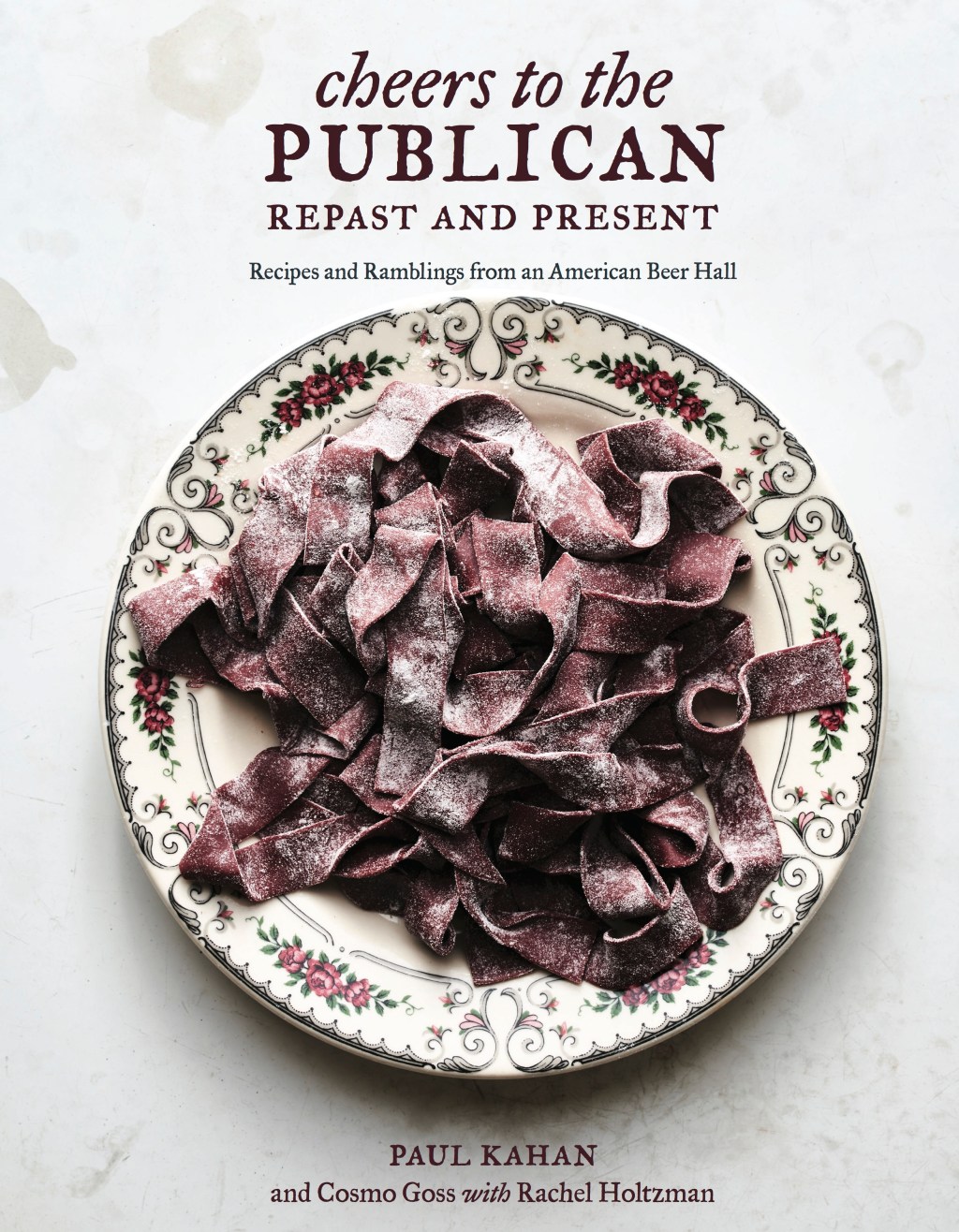
    Cheers to the Publican, Repast and Present: Recipes and Ramblings from an American Beer Hall

    Invited by a friend to dine at Blackbird, Paul Kahan’s first restaurant, when it first opened in 1997, I was somewhat taken about upon first entering about how totally different it was from many of the restaurants of the time. The menu was farm-to-table way before the term had become a cliché, the setting minimalist with long communal tables (like a high school cafeteria I remember thinking) and menu items including an endive salad with pancetta and a poached egg on top which when punctured dripped a wonderful ooze of yolk into the dressing. It was, in other words, unique. Other restaurants opened in Chicago that year and many of those are gone but Blackbird remains and chef/restauranteur Paul Kahan has expanded his restaurant empire with such additions as Avec, Big Star, the wonderfully named The Violet Hour and the Publican.

    With all this success, you’d think that during the last two decades Kahan would have come out with a cookbook or two or even more. Surprisingly though, his first, barbecued-carrots.jpg (Lorena Jones Books 2017; $40) was just released this fall. And in keeping with the eclectic concepts of his restaurants, which he describes as speaking to a place and not a time, it’s definitely different–an amalgam of recipes, insights, reminiscences, paeans to local food producers and autobiographical. It even contains poems.

    So, what took you so long, I ask?

    “I waited 20 yeas because I didn’t want it to be a half-assed,” was Kahan’s response. “We’re not run of the mill and I wanted the book to be unique, to follow the path of the Publican, include poetry.”

    Kahan’s mantra it that he’s just a small part of the business and its success.

    “We’ve all been here together since day one,” he says about his One Off Hospitality Group. “We’re all about the culture, the relevance and the continuity and the book is about that. I think our success has truly been about us, about trust, nurturing. We like to be innovative and approach things differently.”

    Indeed, Avec, he says, was inspired by his first trip to France with his wife.

    “She was in a real horrific motorcycle accident there and end up recuperating in Switzerland,” he says. “The culinary experience of Avec was built by the experience of going there.”

    If each restaurant has a story, so do the recipes.  Take the barbecued carrots.

    “I don’t think there’s ever been a dish at The Publican that people have freaked out about so much. Even chefs,” writes Kahan in the introduction. “We did a charity event last year and served these, and there was a table of 25 big-name chefs just losing their minds over them. We’ve tried new variations, adding different spices, experimenting with other preparations, but it always comes back to this recipe. We use a barbecue rub that I ‘borrowed’ from Chris Lilly, the owner of Big Bob Gibson’s in Georgia and a world champion of barbecued pork shoulder. He came in to eat once, and we got embarrassed about ripping him off, so we quickly changed the name of these to Chris Lilly Carrots. We like to serve them with pecans that we get from Blain Farms in California, which are creamier than any other pecan, and then we top it off with an herbed dressing.”

    Sourcing ingredients is, of course, super important as is forging relationships with farmers and food artisans. Finding them often takes Kahan to less exotic places than a trip to France.

    One out of the way journey lead Kahan to tiny Medora in Southern Indiana, best known for its 1910 round barn and covered bridge—built in 1875 and the longest historic covered bridge in the United States. It’s also the hometown of Burton’s Maplewood Farm, owned by Tim Burton, a producer of highly valued maple syrup which is much used by chefs in both Chicago and throughout the U.S.

    “I think I was the first guy Tim hooked up with at the Green Market,” says Kahan, a James Beard Award winner in the following categories Who’s Who of Food & Beverage in America, Best Chefs in America 2004 and Outstanding Chef 2013.

    Growing up in Chicago, Kahan was influenced by his father who owned both a Jewish deli as well as the Village Fishery and King Salmon, a small smoked fish business. He still remembers the slow cooked corned beef, the hanging sausages and the smoked chubs. Following in those footsteps might seem a given, but Kahan diverged at first, studying applied mathematics until the lure of cooking over took him.

    Will it take another 20 years before we see another cookbook, I ask?

    “I’m already working on a second cookbook,” Kahan says, noting that it’s already two years in the making. But then true to form, he goes from I to we, noting that Cheers to the Publican wasn’t just his work.

    “There are a lot of people who worked hard on that book,” he says.

    Barbecued Carrots

    Recipe courtesy of Cheers to the Publican, Repast and Present by Paul Kahan.

    Makes 4 servings

    1 gallon water

    1 cup plus

    1 tablespoon BBQ Rub (recipe follows)

    1⁄4 cup kosher salt

    1 pound carrots, cleaned and halved

    1 tablespoon extra-virgin olive oil

    1 teaspoon sea salt

    11⁄2 teaspoons freshly squeezed lemon juice

    1⁄4 cup pecans, coarsely chopped

    2 sprigs dill, torn

    1 batch Ranchovy Herb Dressing (recipe follows)

    In large pot, add 2 gallons of water, 1 cup of the BBQ rub, ¼ cup of salt.  Bring to a boil.

    Add the carrots and cook until ¾ done, about 5 minutes.

    Drain the carrots, reserve for the grill.

    To Finish:

    Preheat the grill to medium-high.

    In a bowl, toss the blanched carrots with 1 tablespoon of BBQ rub and extra virgin olive oil.

    Arrange on a grill screen, and grill over direct heat until finished.  Adjust seasoning as necessary.

    Arrange carrots on a plate, drizzle with lemon juice, garnish with crushed pecans and dill yogurt sauce.

    Dress the carrots with the Ranchovy Herb Dressing and serve.

    BBQ Rub

    Makes 1.5 cups

    ½ cup dark brown sugar

    ½ cup kosher salt

    4 tablespoons hot smoked paprika

    1 tablespoon ground black pepper

    1 tablespoon granulated garlic

    1 tablespoon onion granules or onion powder

    ½ tablespoon celery salt

    1 tablespoon cayenne pepper

    1 tablespoon ground cumin

    Combine all in bowl, mix well, store in an airtight container.

    2 cups mayonnaise (we like Hellman’s/Best Foods)

    1 cup buttermilk

    1 tablespoon garlic powder

    1 tablespoon onion powder

    1 tablespoon Worcestershire sauce

    1½ teaspoon white vinegar

    1½ teaspoon Tabasco sauce

    1 teaspoon Dijon mustard

    1½ teaspoon granulated sugar

    1½ teaspoons fish sauce

    1 tablespoon freshly squeezed lemon juice

    2 tablespoons chopped parsley

    1 tablespoon chopped chives

    1 ½ teaspoon chopped tarragon

    1½ teaspoon chopped oregano

    Sea salt

    Freshly ground black pepper

    Whisk all the ingredients in a bowl and season with the salt and pepper. Taste and add more salt and pepper. Transfer the dressing to a glass container with a lid and refrigerate. The dressing will keep in the fridge for up to 1 week. Give the jar a good shake before using.


  • The Faerie Handbook: An Enchanting Compendium of Literature Lore, Art, Recipes and Projects

    The Faerie Handbook: An Enchanting Compendium of Literature Lore, Art, Recipes and Projects

    To me, fairies have always been about the holiday season—think the Sugar Plum Fairy from the Nutcracker Suite ballet and Tinkerbelle, the blonde-haired imp who wore a green outfit with matching translucent green wings in the 1904 play Peter Pan and knew how to handle a wand and pixie dust—both a job requirement. Imagine then my delight when my friend Lily Lopate sent me a copy of The Faerie Handbook: An Enchanting Compendium of Literature Lore, Art, Recipes and Projects by Carol Turgeon with Grace Nuth and the Editors of Faerie Magazine (Harper Design 2017; $35). And yes, there is a Faerie Magazine.lavender-shortbread-cookies_smalll-credit-sara-ghedina-2.jpg

    This beautifully illustrated book containing all things faerie (the archaic literary spelling) is divided into chapter including Flora & Fauna with such headings as “A Select List of Fairy World Inhabitants” and their history, a “Fairy Herb and Flower Almanac,” as well as instructions on making such fairy necessities as houses, furniture, pressed flowers, and terrariums. In the section on Fashion & Beauty we learn about such style icons as Morgan Le Fay, Titania of the Fairy Realm and La Belle Dame Sans-Mercy—a woman with eyes that mesmerized helpless, handsome men (way to go, La Belle, we say).  The Fashion & Beauty chapter gives us the low down on fairy couture including fairy shoes which are totally inappropriate for walking particularly the ones with five-inch heels made of flowers. It also contains directions on how to make a fairy crown—a clothing item no one should be without.

    It isn’t easy being a fairy. You have to get up early to gather the right beauty ingredients. After all, according to Samuel Pepys, the great 17th century diarist, his wife was a big believer in maintaining her looks in a faerie manner by collecting early morning May dew. Another requirement is being able to make fairy dust. That’s what Tinkerbell used to get Peter Pan to fly. You wouldn’t want to be without it.

    Want to hang with the faeries? The authors tell about how to find fairy portals and pathways. You’ll need to read the chapter, but we can give some hints. Look for a strange circle of mushrooms (those are fairy rings), bridges (but be careful of the trolls, country crossroads are good places to run into fairies (but devils hang out there too) and natural portals like ocean cliffs and tangled branches with an open center in the middle.frosted-cranberries-1.jpg

    Of course, what interested me the most was fairy food. As one might expect, fairies love parties and the authors show us how to host a Midsummer Night’s Dream Garden Party. Fairies main ingredient when it comes to cooking seems to be edible flowers. Their menus consist of such goodies as Flower Lollipops, Honey Ricotta Tart with Lavender Scented Crust, Candied Violets and Lavender Shortbread Cookies.

    Faeries also love tea parties—ones with lots of flowers in pastel colors of pink, lavender, violet, pale blues and even moss. What to eat at such a party? Fairy Tea Cakes and flower teas.

    Candied Violets

    40 fresh violets, pesticide free, with stems intact

    1 egg white

    1 cup superfine sugar

    Special Equipment:

    Fine-tipped paintbrush, preferably new

    Small sharp scissors

    Place a wire rack over a parchment-lined baking sheet and set aside.

    In a small bowl, whisk the egg white until frothy.

    Holding a violet by the stem, dip the paintbrush in the egg white and carefully coat each petal, front and back.

    Sprinkle the superfine sugar over the violet and shake off any excess. Sprinkle again until the whole flower is lightly coated.

    Gently place the violet on the drying rack. Repeat with the remaining flowers.

    Allow the violets to dry for 24 hours, then use the scissors to cut off the stems. Candied violets may be stored in an airtight container for up to eight weeks.

    Lavender Shortbread Cookies

    ¾ cup granulated sugar

    1 teaspoon dried lavender, pesticide-free

    1 stick plus 4 tablespoons unsalted butter, softened

    ¼ teaspoon fine sea salt

    2¼ cups all-purpose flour

    3 tablespoons whole milk (optional)

    ½ cup sanding sugar (optional)

    Preheat the oven to 350° F.

    Line a baking sheet with parchment paper.

    Place the sugar and lavender in a food processor and pulse to achieve a fine texture.

    In a large bowl, combine the lavender sugar, butter, and salt. Use the electric hand mixer to cream the ingredients until light and fluffy.

    Gradually add the flour, mixing until the dough comes together. If it’s too crumbly, lightly wet your hands with water and knead the dough in the bowl until the flour is completely absorbed, and the dough is smooth.

    Transfer the dough to a lightly floured surface. With a rolling pin, roll out the dough to a ½-inch thickness.

    Use a cookie cutter to cut out the dough. Transfer the cookies to the parchment-lined baking sheet.

    If desired, use the pastry brush to lightly coat each cookie with milk, then sprinkle with sanding sugar.

    Transfer cookies to the oven and bake for approximately 25 minutes, rotating the pan once, until the cookies are golden brown.

    The cookies will be very soft when you remove them from the oven, but will set once cool. Allow them to cool completely on the baking sheet before transferring them to a plate.

    Frosted Cranberries

    1 ½ cups water

    1 ½ cups granulated sugar, plus 1 cup for dusting

    1 cinnamon stick

    4 whole cloves

    2 cups fresh cranberries

    In a small saucepan, combine the water, sugar, cinnamon, and cloves. Cook over low heat, stirring until sugar is dissolved.

    Remove from heat and cool for 15 minutes before stirring in the cranberries. Transfer to a bowl, cover, and refrigerate overnight.

    The next day, set a wire rack over a parchment-lined baking sheet. Use a slotted spoon to transfer the berries onto the rack and set aside for 1 hour. Meanwhile, line another baking sheet with parchment paper.

    Place the remaining 1 cup sugar in a shallow dish. Working in small batches, roll the cranberries in the sugar until they are completely coated, then transfer to the clean parchment-lined baking sheet. Make sure berries are in a single layer and not touching each other.

    Allow to stand at room temperature for about 1 hour or until dry. Frosted cranberries may be stored in an airtight container for several days.

    The above recipes are from the book: THE FAERIE HANDBOOK by Carolyn Turgeon and the editors of Faerie Magazine. Copyright © 2017 by Carolyn Turgeon. Reprinted courtesy of Harper Design, an imprint of HarperCollins Publishers.

  • Horseshoe Casino exec pens book about supportive women

    Horseshoe Casino exec pens book about supportive women

    Region resident Dawn Reynolds, drawing upon the early loss of her mother and the encouragement of others, has written “The Highmore Circle,” a novel chronicling six women who learn to navigate life together.

    Writing as Cricket (her nickname) Reynolds, she tells the story of Gracie Anderson, a single college professor in her 30s with a severely lacking personal life whose best friend signs her up for a support group at a local community center.

    “The group consists of women with diverse careers and personalities — one is a librarian, one a college professor, others include a fashion consultant, dominatrix, blue collar worker and housewife — who have very little in common except they are motherless,” Reynolds said.

    The book, while dealing with complex life issues, also has a lot of humor and a touch of romance in the story plot, she said.

    Reynolds, a Dyer resident and vice president of Human Resources at Horseshoe Casino in Hammond, started the book 20 years ago but struggled with numerous obstacles — twice her laptops crashed, erasing the entire manuscript. The third rewrite disappeared when a jump drive became corrupted.

    “Also in the meantime I got married, had two sons and got divorced,” said Reynolds, who graduated from Highland High School. “But I’ve always realized the importance of all the women in my life, including my sister, who helped me so much and died of cancer 10 years ago, and my friends. The core theme is the importance of having a circle — whatever the circle means to you whether it’s friends or family — that helps you get through difficult times and who are there for you.”

    Reynolds, who earned a master’s degree in organizational communications from Purdue University Northwest, is a recipient of Caesars Entertainment Excellence in Leadership Award and Northwest Indiana’s Most Influential Woman of The Year Award. She also is an active supporter in promoting women’s initiatives and is a Lean In Circle moderator within Caesars Entertainment as well as the Global Gaming Women organization.

    Describing herself as an avid reader, Michelle Ryba, director of casino marketing at Horseshoe Casino, said she was very eager to read Reynold’s book.

    “I absolutely adore Dawn,” Ryba said. “And I thought this is a book by someone I know, not just a big name author. From the first chapter, I was hooked, I stayed up reading it until 2:30 p.m. because I wanted to find out how it ended.”

    Ryba describes “The Highmore Circle” as touching and humorous.

    “I laughed when I read the book, but also I related to it emotionally. We’ve all loss someone in our lives, and so I understand the feelings you have. I’m impressed with Dawn’s writing. She’s just as good Janet Evanovich or J.D. Robb, two of my favorite writers.”

    Since her book has been published, Reynolds has been a New York Times and Publisher’s Weekly featured author, appeared on “Fox Good Day Chicago” to discuss her book and received starred reviews from BlueInk, Clarion and Kirkus as well as wining iUniverse’s Editor’s Choice and Rising Star awards.

    “The Highmore Circle” is available at Barnes & Noble and online book sellers. For more information, visit www.thehighmorecircle.com.