Category: Uncategorized

  • Persian Feasts: Recipes & Stories from a Family Table

    Persian Feasts: Recipes & Stories from a Family Table

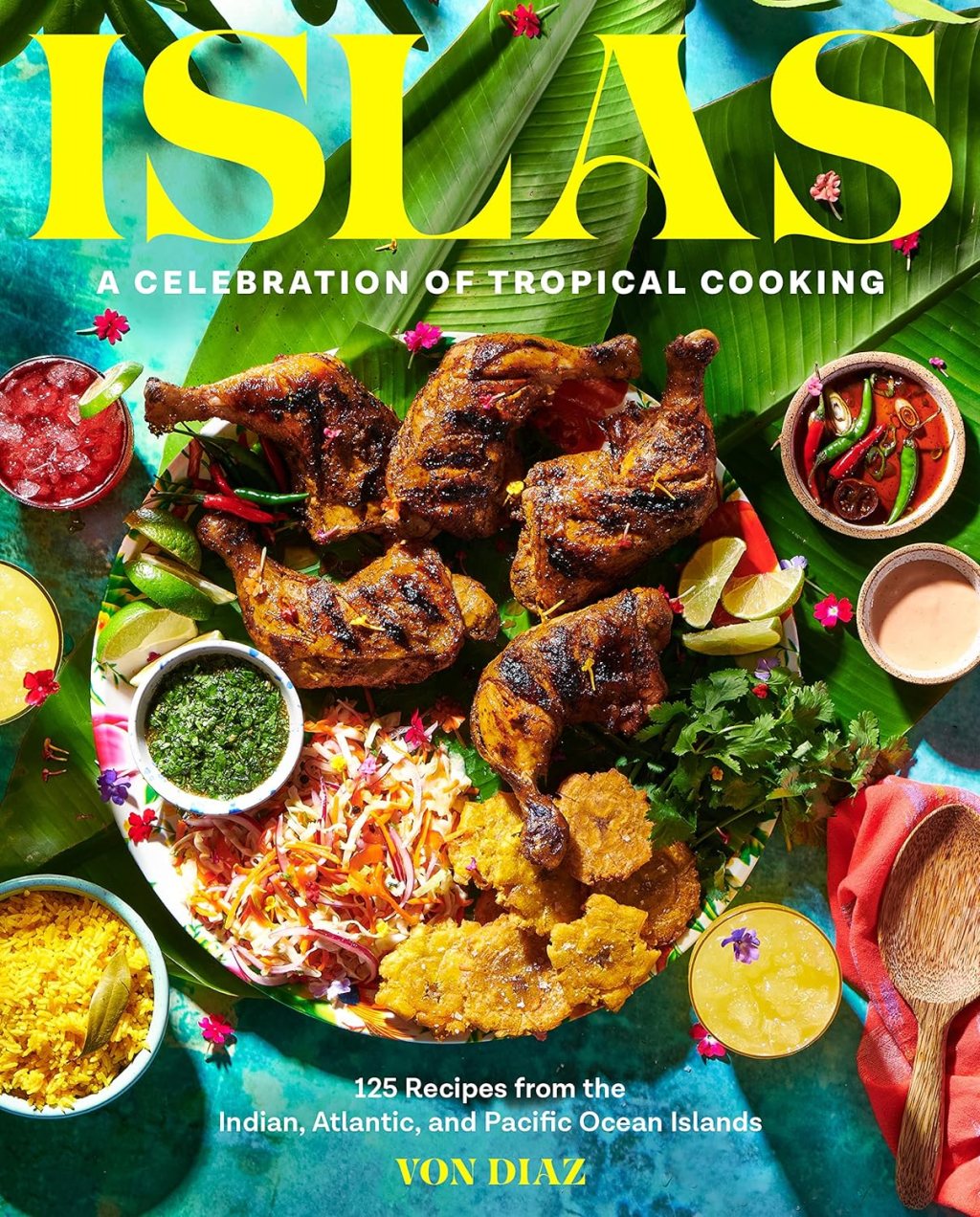
    The cuisine of Iran, with origins dating back centuries, is arguably one of the most sophisticated in the world, offering an incredible array of dishes. This cuisine hails from the lands of ancient Persia and has evolved through the ages to what comprises the myriad and distinct regional cuisines in present-day Iran. Also shaping this cuisine is the variety of climates in Iran, the country’s terrain, and geography, with rich soil and plentiful sunshine, as well as the ethnocultural diversity of the country. From Persian Feasts (Phaidon 2024 by Leila Heller).

    A beauty of a cookbook with its lush food photos set on backgrounds of Middle Eastern designs, Persian Feasts celebrates centuries of culinary and cultural history of a land that during the first Persian Empire stretched from the Balkans in Eastern Europe in the west to the Indus valley in the east. Now known as Iran, the cuisine is complex with each region having a distinct imprint upon the ingredients and how it is prepared.

    Drilling down even further, according to author Leila Heller, each Iranian household holds itself to a high standard and has strong beliefs when it comes to Persian food. That said, anyone first attempting to cook these dishes at home should be assured by Heller’s statement that there is no wrong way or right way of making Persian food,

    “The personal preferences do impact Persian recipes,” she writes. “For instance, some prefer sweetness over tartness, buttery over dry, and many will adjust seasoning spices and herbs accordingly.”

    Making it even more accessible, most of the recipes in her book can be recreated at home from ingredients readily available in both neighborhood supermarkets and gourmet food stores. The more unique items—sumac, dried barberries dried, Persian limes, and prunes—are available at Middle Eastern or Indian food stores as well as online.

    Heller, president of the Leila Heller Gallery, a contemporary art gallery in New York and Dubai. She holds a bachelor of art degree from Brown University, a master’s degree in art from Sotheby’s Institute in London, and a second master’s degree in art history and museum management from George Washington University. She lives in both New York and Dubai, bridging the gap between East and West through art, culture, and food. This book is another way for her to share her knowledge in these areas. Besides recipes, we learn about celebrations, festivities, and events and the foods involved in each.

    For those just beginning to experiment with Persian cuisine, several recipes stand out as a straightforward way to get acquainted with techniques and ingredients. For example, all the ingredients needed to make Chicken Saffron Frittata are familiar and the dish can be completed in seven steps. In her description of the dish, Heller helps acquaint us with the background of the frittata locally known as chegehertmeh and hails from the lush province of Gilan in northern Iran that borders on the Caspian Sea.

    Smoked Eggplant with Tomato is another dish originating from the Caspian Sea region. Again, the ingredients are readily available, and many are already probably in a home chef’s pantry. The dish has seven short steps but is slightly different in that the eggplant is smoked over an open flame to give it the distinct flavor that makes this dish a winner. A refreshing summer dessert that’s both easy to make and gluten-free, Cardamom & Rose Water Pudding takes only four steps to create a pretty presentation. Yogurt Drink with Mint is even easier—five ingredients mixed in a blender.

    Once a home chef has mastered these simple recipes, more complex dishes like Herb & Noodle Potage, Shirazi Rice with Cabbage and Meatballs, and Persian Noodle Rice will seem less daunting, making Persian cooking an easy undertaking.

    Lentil & Quinoa Salad with Herbs

    By Leila Heller, “Persian Feasts: Recipes & Stories from a Family Table

    2 tablespoons butter
    2 cups (8 oz/225 g) dried barberries, rinsed
    1 tablespoon sugar
    2 cups (1 lb/450 g) dried Puy lentils
    1 cup (8 fl oz/250 ml) and 2 tablespoons extra-virgin olive oil
    1 cup (6 1/2 oz/185 g) quinoa
    1 cup (3 1/2 oz/300 g) finely chopped scallions (spring onions)
    1/2 cup (1 oz/30 g) finely chopped cilantro (coriander), plus extra for garnish
    1/2 cup (2 oz/55 g) finely chopped chives
    1/2 cup (1 oz/30 g) finely chopped parsley
    4 tablespoons finely chopped dill
    3/4 cup (6 fl oz/175 ml) red wine vinegar or pomegranate molasses
    2 tablespoons cumin seeds
    1 tablespoon salt
    2 teaspoons black pepper
    1/2 teaspoon cayenne pepper
    1 1/2 cups (9 3/4 oz/275 g) pomegranate seeds, for garnish (optional)

    Melt the butter in a large skillet over medium heat. Reduce the heat to low, then add the barberries and sugar. Mix for 2-3 minutes, until the sugar has melted.Pick over the Puy lentils to remove any debris.

    Rinse the lentils under cold running water. In a medium saucepan, combine the lentils, 4 cups (32 fl oz/950 ml) of water, and 2 tablespoons of oil. Bring the water to a boil, then reduce the heat to a simmer and cook for 20-35 minutes, until the lentils are cooked through. Drain, then set aside.

    Rinse the quinoa under cold running water, then drain. In a medium saucepan, combine the quinoa and 1 1/2 cups (12 fl oz/350 ml) of water. Bring to a boil, then reduce the heat to medium-low. Cover and simmer for 15-20 minutes, until tender. Set aside to cool.

    In a large bowl, combine the quinoa, lentils, scallions (spring onions), herbs, and barberries.

    In a medium bowl, whisk 1 cup (8 fl oz/250 ml) of oil, vinegar, cumin, salt, pepper, and cayenne pepper. Pour over the salad and toss well. Season to taste, then garnish with pomegranate seeds, if using.

    This article originally appeared in the New York Journal of Books.

  • Castle Gormenghast: Revisiting Gothic Fantasy

    Castle Gormenghast: Revisiting Gothic Fantasy

    A crumbling castle, an eccentric and slightly mad family, and intricate plotting in a Medival fantasy series about a remote earldom is the perfect antidote to stressful holidays.

    Need to escape into a different world after talking politics over the Thanksgiving table–or even harder, avoiding talking politics across the Thanksgiving table? Then it’s time to visit Gormenghast, the ancestral home of the ancient Groan family who lived in a wild and isolated landscape. Written by author and artist Mervyn Peake, the books in the series are Titus Groan, published in 1947, Gormenghast (1950), and Titus Alone (1959). Peake died while writing Titus Awakes, the fourth book. His widow, artist Maeve Gilmore, completed the book sometime in the 1970s but the manuscript wasn’t discovered and published until 2011.

    According to its Wikipedia citation, “The series has been included in Fantasy: The 100 Best BooksModern Fantasy: The 100 Best Novels and 100 Must Read Fantasy Novels as one of the greatest fantasy works of the twentieth century. Literary critic Harold Bloom has praised the series as the best fantasy novels of the 20th century and one of the greatest sequences in modern world literature.”

    Available on Amazon, find a cozy corner to escape contemporary 21st post-election American angst and whisk yourself away to Castle Gormenghast.

    The books are also available on Kindle and Audible.

  • Food, Travel, & Recipes: A Day in Tokyo

    Food, Travel, & Recipes: A Day in Tokyo

    Serious foodies have always raved about Tokyo’s fabulous food finds in a city where no matter the time of the place, there’s always a treat ready to be had.

    Now, Brendan Liew and Caryn Ng, who established chotto, a pop-up Japanese café in Melbourne, Australia, where they introduced the art of traditional ryokan-style breakfasts, have written A Day in Tokyo (Smith Street Books), a cookbook highlighting the best of Tokyo’s round-the-clock cuisine and culture.

    Lew has worked at the three-Michelin-starred Nihonryori RyuGin in Roppongi, Tokyo, and Hong Kong, and also studied the art of ramen-making in Japan before delving into kappo and modern kaiseki cuisine. In Melbourne, he worked at Kappo, Supernormal, Golden Fields and Bistro Vue. Together, Brendan and Caryn have traveled extensively through Japan’s countryside and major cities to explore, learn, and live the country’s culture and gastronomy.

    As its name implies, the book is divided into chapters by the time of day starting with Early when the streets are silent. Recipes in this section include Kitsune Udon, a noodle dish made with deep-fried tofu, sea mustard, and sake and Funwari Hottokeki or Souffle Hotcakes.

    Mid is a time when people head to their favorite ramen shops, curry houses, and depechika, department store basements filled with grocers, fishmongers, specialty pickle sellers, furikake or places to buy rice seasonings, wines, patisseries, umeboshi or stores selling pickled plums, and food stalls where one can buy rice balls, tempera, bento box meals, and other lunch items.

    Late, when the sunsets behind Mt. Fuji and the neon lights of Tokyo flicker to life, is when Tokyo’s boisterous and lively night scene comes to life. Recipes include Chawanmushi, a savory egg custard and Kanikorokke or Crab Croquettes.

    The last chapter, Basics, shows how to cook rice, milk bread, and hot spring eggs as well as tempura flour and different types of dashi. This is followed by a glossary of common ingredients in Japanese cooking found in Asian and Japanese supermarkets or greengrocers.

    “It would be impossible to dine at every restaurant in Tokyo in a single lifetime. Layer upon layer of dining establishments exist here, stacked on top of each other in high-rise buildings, hidden down long narrow alleyways, and crammed tightly together in warrens. Their only signposts are noren, small-calligraphed signs accompanied by delicately arranged sprigs of flowers or traditional Japanese lanterns hung outside the door,” write the authors in the book’s introduction. “Tokyo is a city where centuries-old restaurants can be found in between modern ones, where third, fourth, and fifth generations of chefs’ neatly pressed white jackets live the life of shokunin, (a word commonly translated as artisan, but which encapsulates so much more) going through the processes their forefathers went through before them.”

    The 96 recipes are not necessarily difficult, indeed some are very easy. But for those unfamiliar with Japanese cooking, it may seem daunting. The best approach is to start with recipes like Bifu Shichu Hotto Sando (Beef Stew Jaffles), Tomato Salad with Lime Dressing, or Yakitori (skewers of marinated chicken) that don’t require a long list of unusual ingredients or a lot of steps. And then continue from there.

    YAKISOBA PAN

    YAKISOBA ROLLS

    SERVES 4

    Yakisoba pan is a quirky Japanese creation consisting of fried noodles stuffed in bread, specifically a hot dog roll or milk bun. The story goes that a customer of Nozawaya in Tokyo asked for the combination in the 1950s, and the invention has lined the shelves of Japanese bakeries and konbini (convenience stores) ever since.

    4 Milk bread rolls (page 216) [below] or store-bought mini hot dog rolls

    1 tablespoon unsalted butter or margarine, softened

    300 g (10½ oz) Fried noodles (page 99) [below]

    beni shōga (pickled ginger), sliced, to serve

    1.  Split the bread rolls in half and spread with the butter. Divide the fried noodles between the rolls and top with lots of beni shōga. Serve immediately (though it also tastes fine cold).

    SHOKUPAN

    MILK BREAD

    MAKES 1 X 2.8 LITRE (95 FL OZ) LIDDED LOAF TIN OR 12 ROLLS

    “Our Australian chef friend, who lives in Japan, once made sourdough bread for his Japanese wife and her family,” write the authors in the introduction to this recipe.

    “He couldn’t easily find the kind he ate back home, and missed the rustic, country-style loaves. He is a good baker, but we can’t say for certain that his wife and her family were charmed by his efforts. The Japanese are completely smitten with milk bread, you see, and it’s worlds apart from the chewy loaves and hard crusts typical of European breads.

    “Milk bread is soft, white, sweet and fluffy: the perfect foil for a multitude of fillings, from cream, custard and red bean to katsu (crumbed and fried cutlets; page 186), fried noodles (see page 121) and curry (see page 127). It is also delicious eaten on its own.

    • 220 g (11/2 cups) bread flour, plus extra for dusting
    • 165 ml (51/2 fl oz) milk
    • 50 g (13/4 oz) caster (superfine) sugar
    • 10 g (1/4 oz) salt
    • 4 g (1/8 oz) dried yeast
    • 60 g (2 oz) butter, at room temperature, diced
    • neutral oil, for greasing

    Preferment

    • 220 g (11/2 cups) strong flour
    • 165 ml (51/2 fl oz) water
    • 2.5 g (1/8 oz) dried yeast

    Egg Wash

    • 1 egg yolk
    • 2 tablespoons milk

    Start by making the preferment. Mix the ingredients together, then cover and leave for 24 hours at room temperature.

    The next day, put the preferment in the bowl of a stand mixer. Add all the remaining ingredients, except the butter and oil. Knead on low speed using a dough hook for 5 minutes. Scrape down the side, add the butter and knead for another 10 minutes, or until the dough is very elastic, scraping down the side of the bowl every 2 minutes.

    To make a loaf, when the dough is ready, scrape down the side of the bowl again, then cover and leave to rest in a warm place for 1 hour, or until doubled in size. (To make rolls, skip to step 12.)

    1.  Turn the dough out onto a clean work surface and divide into three even pieces. Form each piece into a smooth ball, then cover and leave to rest for 20 minutes.
    2.  Meanwhile, lightly grease a 2.8 litre (95 fl oz) lidded loaf tin with oil.
    3.  Lightly flour your work surface. Turn one rested dough ball over onto the work surface so the smooth side faces down. Using your hands or a rolling pin, stretch the dough to roughly the size of an A4 sheet of paper, or about 20 cm x 30 cm (8 in x 12 in). Fold the left side of the dough over two-thirds of the dough. Press down to remove any large air bubbles, then fold the right side all the way over to the left edge.
    4.  Take the top of the dough with both hands, then tightly roll from top to bottom to create a log. Seal the excess dough by pinching it together, then place, seal-side down, in the loaf tin. Repeat with the remaining two dough balls.
    5. Slide the lid on the loaf tin and leave in a warm place for 1 hour, or until the dough has doubled in size.
    6. When ready to cook, preheat the oven to 180°C (350°F). Bake the bread for 20 minutes, then turn the oven down to 165°C (330°F) and bake for another 15 minutes.
    7. Remove the loaf tin from the oven, carefully remove the lid and turn the loaf out onto a cooling rack. Allow to cool for 30 minutes before slicing.
    8. If using the bread for sando, use it within 2 days. It will be fine as toast for up to 5 days.
    9. To make rolls instead of a loaf, after step 2, punch the dough down and shape into 12 evenly sized rolls. Place on a baking paper-lined tray, leaving a 10 cm (4 in) space between each roll. Cover the tray with plastic wrap and let rest for 30 minutes to 1 hour or until doubled in size.
    10. Meanwhile, preheat the oven to 200°C (400°F).
    11. In a small bowl, beat 1 egg yolk with 2 tablespoons of milk to make an egg wash.
    12. Pour 250ml (1 cup) of water into a metal baking tin and place on the bottom of the oven. Brush the tops of the rolls with the egg wash and bake for 15 minutes, or until the rolls sound hollow when tapped. Transfer to a wire rack and allow to cool before using. The rolls will keep for up to 5 days.

    NAPORITAN PAN

    NAPOLETANA ROLLS

    SERVES 4

    “This is a twist on the Yakisoba roll (above), this time featuring spaghetti napoletana, a yōshoku (Western-style) favourite in Japan,” the authors write in the introduction to this recipe.

    • 4 Milk bread rolls (page 216) [see Yakisoba recipe] or store-bought mini hot dog rolls
    • 1 tablespoon unsalted butter or margarine, softened
    • 200 g (7 oz) dried spaghetti
    • 1 tablespoon olive oil
    • ½ onion, finely chopped
    • 1 garlic clove, finely sliced
    • 125 ml (½ cup) tomato ketchup
    • 125 ml (½ cup) tomato passata (pureed tomatoes)
    • chopped parsley, to garnish
    1.  Split the bread rolls in half and spread with the butter. Meanwhile, cook the pasta according to the instructions on the packet, then drain.
    2.  Heat the olive oil in a large frying pan over medium heat, then add the onion and garlic and cook until soft. Stir in the ketchup and passata. Add the cooked spaghetti to the frying pan and mix well. Divide the spaghetti napoletana between the rolls and top with parsley.

    Note:

    The napoletana rolls can be – and are usually – served cold.

    This article originally appeared in the New York Journal of Books.

  • Camino Ghosts by John Grisham

    Camino Ghosts by John Grisham

    “what could be better than a cursed island, some supernatural happenings, and the righting of centuries of social wrongs?”

    “It was a ship from Virginia, called Venus and it had around 400 slaves on board, packed like sardines,” bookstore owner Bruce Cable tells Mercer Mann, a writer who is looking for a new book subject. “Well, it left Africa with 400 but not all made it. Many died at sea. The conditions on board were unimaginable, to say the least. Venus finally went down about a mile to sea near Cumberland Island. Since the slaves were chained and shackled, almost all of them drowned. A few clung to the wreckage and washed ashore in the storm on Dark Island, as it became known. Or  Dark Isle. It was unnamed in 1760. They were taken in by runaways from Georgia, and together they built a little community. Two hundred years went by, everybody died or moved away and now it is deserted.”

    One of the many facets of John Grisham’s enthralling fiction is his ability to take complex social issues and weave them into the fabric of his novels so that they make for a compelling read.

    In Camino Ghosts, the third book in the Camino series, he does it again with his compelling story of Lovely Jackson, an 80-year-old Black woman who is determined to save Dark Isle, the now deserted island once settled by both shipwrecked Africans kidnapped into slavery and escaped slaves. Lovely is the last of those who settled on the island, and she stopped living there when she was 15, only returning to tend to the cemetery where her ancestors are buried.

    For years no one wanted the island, an inaccessible and unfriendly barrier island of impenetrable jungle, poisonous snakes, and prowling panthers. But Hurricane Leo has changed the island’s topography and rabid land developers with politicians in their pocket see Dark Isle as the place to build a sprawling casino and resort complex.

    But Lovely is determined, believing she is the sole owner of Dark Isle and the protector of her ancestors’ history and graves. She also happens to be the only one who can lift the curse of her great, great, great grandmother, Nalla, a woman who was kidnapped from her village in Africa, taken away from her husband and only child, chained in the hold of a ship as it crossed the Atlantic, and raped repeatedly by the crew members. No white man who has stepped on the island has survived.

    Camino Ghosts is the third in the series about bookstore owner Bruce Cable, who likes fine wine, good food, pretty women (he and his wife, an importer of French antiques, have an open marriage), and books. But he is more than a bon vivant and purveyor of tomes, he likes to intervene in the island’s business to produce the best outcomes and is extremely supportive of his writers. Good at pulling strings, he is the force uniting the factions fighting the development and is also helping his former lover, Mercer Mann, a bestselling author with writer’s block, find her next subject. And what could be better than a cursed island, some supernatural happenings, and the righting of centuries of social wrongs?

    This article originally appeared in the New York Journal of Books and the Northwest Indiana Times.

  • New Eco-Centered Middle-Grade Adventure Teaches Kids How to Make a Difference
    New Eco-Centered Middle-Grade Adventure Teaches Kids How to Make a Difference

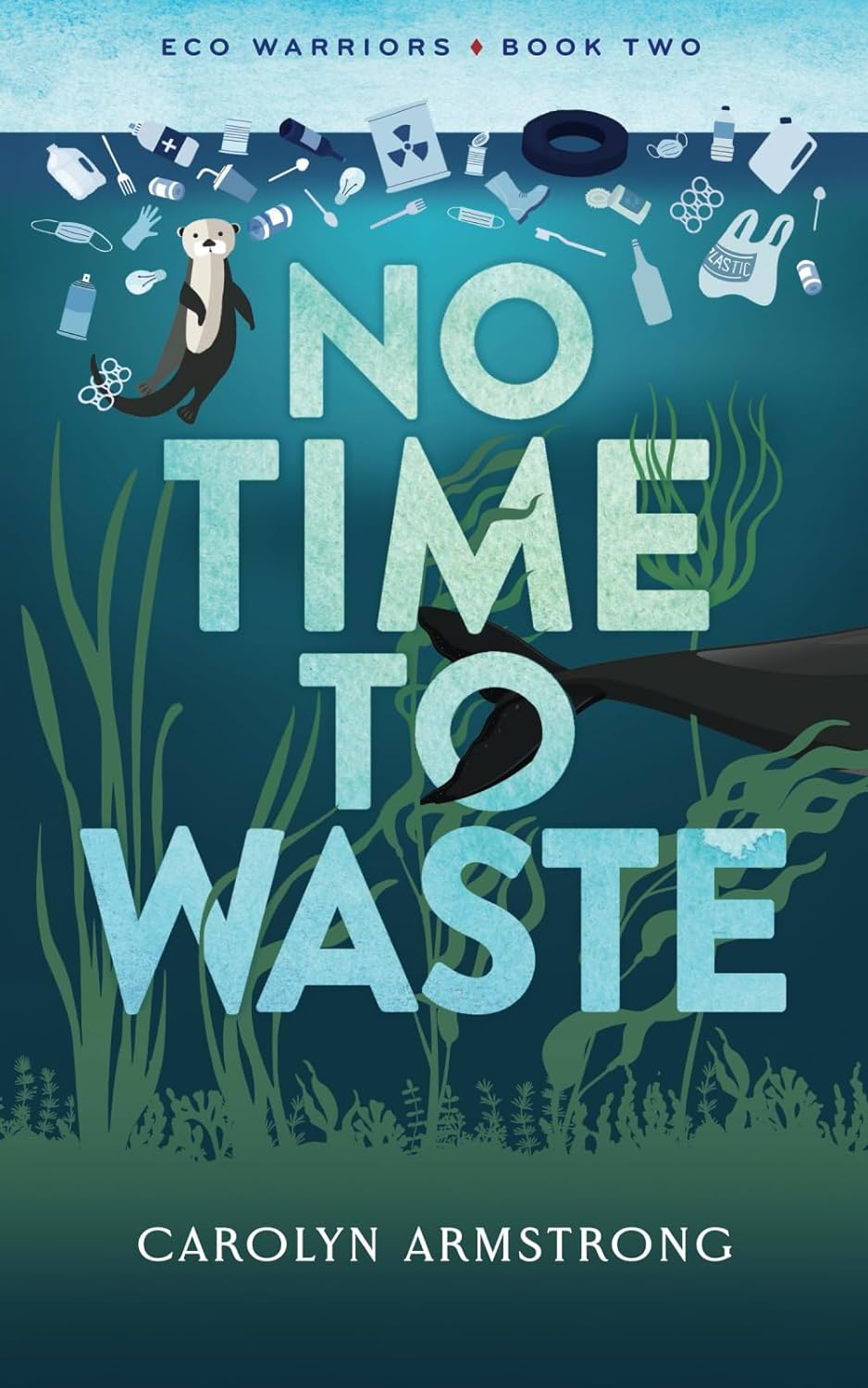
    The Book Stall (811 Elm Street in Winnetka) on Tuesday, July 16th at 4:30 PM is hosting a fun and informative afternoon program with middle-grade author Carolyn Armstrong. She will be discussing her new book, No Time to Waste, a heartfelt eco-adventure about youth activism and the complexities of climate change. The exciting second installment in the award-winning “Eco Warriors” series will transform readers’ eco-anxiety into eco-action, inspiring a new generation of youth activists. You can make a difference! This book is perfect for kids ages 9 to 12. 

    There will be a trivia contest, with prizes, and eco-friendly refreshments will be served!

    This event is free with registration. To register, please CLICK HERE.

    The series follows 11-year-old twins Sydney and Sierra — and their talking animal friends — on their missions to tackle the greatest threats to wild habitats. This time, the twins head to the coast for an adventure that highlights ocean plastic pollution, its effects on marine mammals, and the power small actions have in making a difference.

    Fresh from their Arctic adventure of saving polar bears, Sydney and Sierra visit a sea kelp habitat off the coast of California. While scuba diving, the girls are enlisted to rescue an animal in trouble. Sydney’s animal contact, a sea otter named Sunny, tells them that ocean plastic pollution has entangled another otter, and it needs immediate help.

    Even if the girls can release the otter from its plastic prison, there’s a much greater threat in the ocean. Together, they’ll have to use all of their wits, ingenuity and determination to somehow help their animal friends. But as they try — and fail again and again — Sydney has a sinking feeling that she’s in over her head. One thing is clear: there’s literally no time to waste.

    Author Carolyn Armstrong — environmentalist and former educator —blends her love of travel and animal well-being into the Eco Warriors series, encouraging readers of all ages to be advocates for planet Earth.

    NO TIME TO WASTE — as well as Armstrong’s previous book, AT THE EDGE OF THE ICE — will transform young readers’ eco-anxiety into eco-action, inspiring a new generation of youth activists.

    Praise is already rolling in for NO TIME TO WASTE!

    “The dynamics of twin sisters with contrasting personalities, nosy parents, new content-specific vocabulary, and imminent danger will keep readers on the edge of their seats and, by the end, convert them into allies of ocean conservation.”  —Bibi Belford, Christopher award-winning author of Crossing the LineCanned and Crushed, and Another D for DeeDee (Kirkus Star)

    “Armstrong hooks her audience with the novel’s conflict and leaves them with tangible ways to positively impact the planet.” — Meaghan H., a middle school teacher from Evanston, IL

    NO TIME TO WASTE is available on Amazon and other popular retail outlets where books are sold.

    AUTHOR BIO

    Carolyn Armstrong is the award-winning author of Earth-friendly middle-grade fiction. A former educator and now an imperfect environmentalist, she blends her love of travel and animal well-being into her stories. She encourages everyone to be advocates for planet Earth. It’s as easy as refusing a plastic drinking straw (and doing it every single time). 

    Carolyn has received multiple awards for excellence in independent publishing, including the National Indie Excellence Award and the Spark Award from the Society of Children’s Book Writers and Illustrators (SCBWI). At the Edge of the Ice made the 2024 Green Earth Book Awards’ Recommended Reading List for best environmental literature for children and young adults.

    Head to www.ckabooks.com to sign up for her monthly newsletter called The Earth-Friendly Edition for People Who Love the Planet. Also on the website: an educator guide, free downloads, blog posts, author visits, and more!

  •  Says Who?: A Kinder, Funner Usage Guide for Everyone Who Cares about Words

     Says Who?: A Kinder, Funner Usage Guide for Everyone Who Cares about Words

    The Book Stall is hosting linguist, local NPR host, and veteran English professor Anne Curzan on Wednesday, June 12 at 6:30 pm for a discussion featuring her new book, Says Who?: A Kinder, Funner Usage Guide for Everyone Who Cares about Words (PenguinRandom House). With lively humor and humanity, Says Who? reveals how our choices about language usage can be a powerful force for equity and personal expression. For proud grammar sticklers and self-conscious writers alike, Ms. Curzan makes nerding out about language fun. She will be happy to sign her work.

    This event is free with registration. To register, please visit their website or CLICK HERE

    More About the Book: Our use of language naturally evolves. It is a living, breathing thing that is a reflection of us, so we shouldn’t let our language peeves raise our blood pressure too high. Says Who? offers clear, nuanced guidance that goes beyond “right” and “wrong” to empower us to make informed language choices. Never snooty, scoldy (yes, that’s a “real” word!), or boring, this book pulls back the curtain to reveal where the grammar rules we learned in school actually come from and to unmask the forces that drive dictionary editors to label certain words as slang or unacceptable.

    Anne Curzan gives readers the guidance they need to adeptly manage formal and informal writing and speaking. Curzan gently explains, without judgment, how to connect local guidance with a bigger map for how to think about usage questions. Applying entertaining examples from literature, newspapers, television, and more, Curzan welcomes usage novices and encourages the language police to lower their pens, showing us how we can care about language precision, clarity, and inclusion all at the same time.

    Ben Zimmer, language columnist for The Wall Street Journal, says, “A delightful exploration of the quirks and controversies in the English language . . . Whether you embrace your inner ‘grammando’ or inner ‘wordie,’ Says Who? is sure to satisfy anyone curious about language’s ever-shifting landscape.”

    More About the Author: Anne Curzan is the Geneva Smitherman Collegiate Professor of English, Linguistics, and Education and an Arthur F. Thurnau Professor at the University of Michigan, where she also currently serves as the dean of the College of Literature, Science, and the Arts.

  • Western Mexico, A Traveler’s Treasury: Notes from the Road from the 16th Century On
    Western Mexico, A Traveler’s Treasury: Notes from the Road from the 16th Century On

    Once called Coatlan after the earthenware vessels that were coiled like a serpent and used for storing pulque, a white wine made from the Mexcal tree and used as an offering to a stone idol, Cuiseon was a small village on The Nine Rivers which flowed into Lake Chapala. 

    This and other food traditions, according to The Geographic Account of Poncitlán and Cuiseo del Río dated March 9, 1586, showed their typical fare as venison, fish, and rabbit, a thin kind of porridge to drink hot with powdered chile that was broken up and sprinkled on top, and Izquitl—corn toasted on a comal and seasoned with salt. The villagers harvested chia, huauhtli, and cocotl, the latter a mustard-like seed that is ground up and mixed with corn and water to drink both before and after eating.

    As it relates to the foods we eat today, we still consume corn and fish and season with salt and powdered chiles. We’re less likely to dine on venison or rabbit while cocotl is so obscure that even a Google search doesn’t come up with a hit. But both chia and huauhtli, a species of amaranth, an ancient grain, are recognized as beneficial to our health. And so, the foods of this village still play a part in our lives.

    This is an obscure slice of everyday life, a glimpse into the past that would be lost to time, confined to dusty archives, and/or shelved away to be forgotten in libraries or museums, if not for the work of Tony Burton, an award-winning writer whose books include “Lake Chapala: A Postcard History” (2022), “Foreign Footprints in Ajijic: Decades of Change in Mexican Village” (2022), “If Walls Could Talk: Chapala’s historic buildings and their former occupants” (2020), “Mexican Kaleidoscope: myths, mysteries and mystique” (2016), and “Western Mexico, A Traveler’s Treasury” (4th edition, 2013).

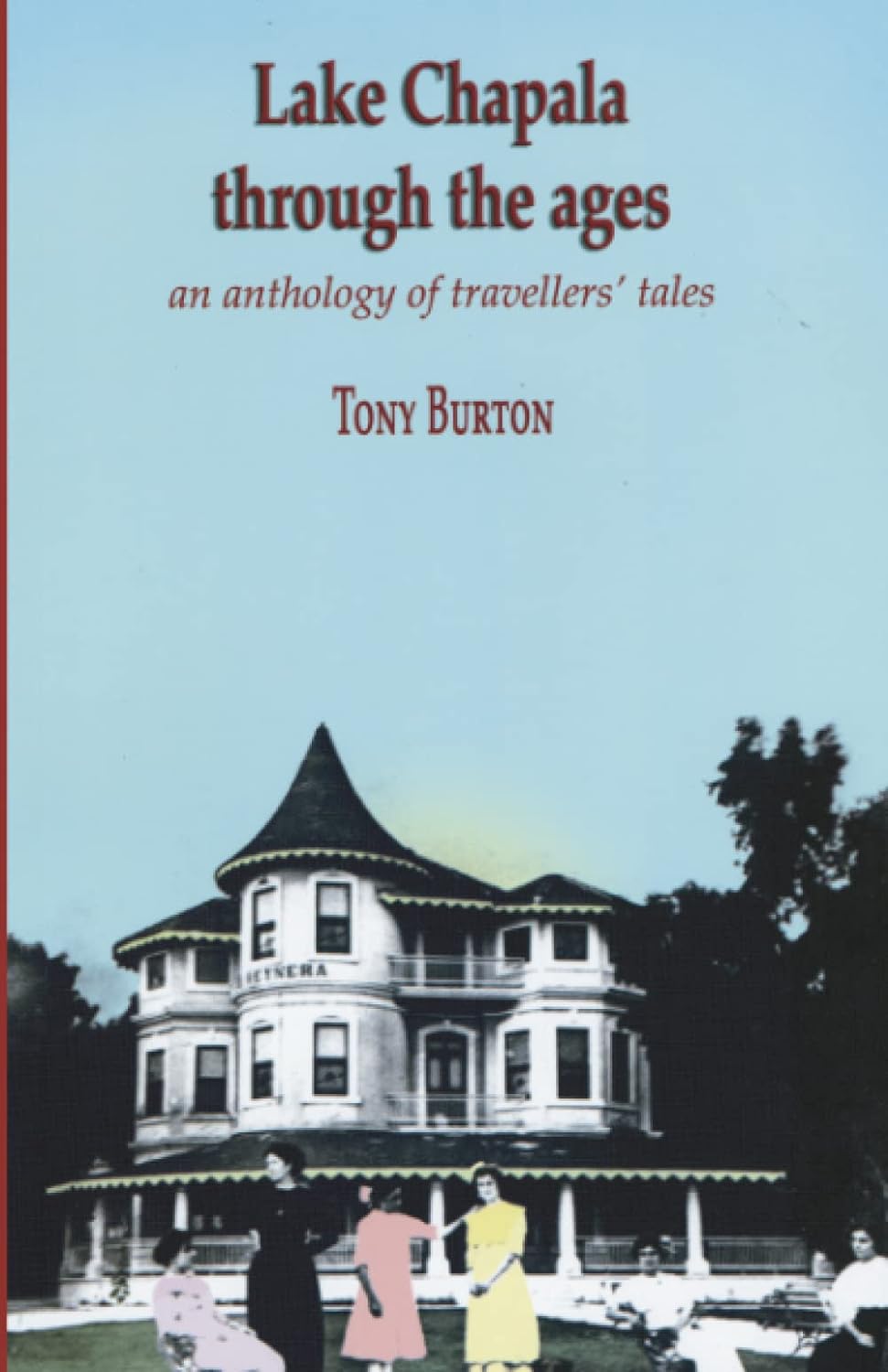
    Reading through a unique collection of extracts from more than fifty original sources, many never previously available in English, Burton’s book, “Lake Chapala Through the Ages; an anthology of travelers’ tales,” is a fascinating look at the region's formative years from the arrival of conquistadors in the early 1500s to the start of the Mexican Revolution in 1910, as told through the eyes of an assortment of travelers-- poets, friars, exiles, government officials, geographers, historians, explorers, and scientists.

    What they saw in their journeys is fascinating, as are the people who traveled and then shared their observations.

    "My inspiration was really curiosity about the documentary basis for things I’d heard about the history of the area, some of which struck me as highly imaginative," says Burton. "I began working on the book way before the development of online search engines or digitized books, so it took me almost a decade to track down originals of the 50+ published works, excerpts from which appear in the final book. It would have been impossible without the support of an excellent inter-library loan system, personal visits to libraries in the USA and England, and the generous contributions of a small army of people I thank in the book’s acknowledgments.

    "I still remember the shivers that ran down my spine when I first handled the leather-bound Belgian journal from the 1830s containing an article about Lake Chapala by Henri Galeotti. I knew that article existed because some parts had been translated into Spanish and published in Mexico. The challenge of finding the original proved to be well worth the effort—in my opinion, Galeotti’s masterful, illustrated, systematic, scientific coverage of the area's geology and natural history has no equal."

    Barrister and seasoned traveler William Henry Bullock Hall (1837–1904), who was born in Essex, England, and educated at Balliol College, Oxford visited Mexico taking a route that began in Veracruz and took in Mexico City, Tepic, San Blas, Guadalajara, Querétaro and Tampico."

    Looking for boiling water while staying at the hacienda of Buena Vista, he made the following observation:

    “In one of the recesses of the building, I discovered, over her earthenware pots, the old woman, upon whom you are sure to stumble, sooner or later, in Mexican houses, if you only persevere. As good luck would have it, this old crone was in the act of trying to blow into a sufficient glow to boil a jug of water, the bits of charcoal which, laid in a square receptacle sunk in the face of a solid brick counter, do the duty of a fire all over Mexico. From this old lady I obtained not only boiling water, but a couple of poached eggs, so that I fared sumptuously.”

    English women often were intrepid travelers, journeying to places remote and probably most uncomfortable. How joyous to meet Rose Georgina Kingsley (1845–1925), the oldest child of the Rev. Charles Kingsley, a celebrated English clergyman and novelist, who contributed the prologue to her book” South by west or winter in the Rocky Mountains and spring in Mexico,” published in 1874 and digitized by Harvard University in 2006.

    Rose crossed the Atlantic to Colorado Springs in November 1871 to join her brother, Maurice, who was assistant treasurer of the company developing Colorado Springs writes Burton, noting that, even by 1872, there were fewer than 800 residents, so both Kingsleys were pioneer settlers. Her writings and sketches were published by General William Jackson Palmer, the founder of Colorado Springs, a railway entrepreneur and owner of the newspaper Out West.

    When Palmer decided that same year to examine possible routes for a railway linking Texas to Manzanillo, Rose accepted the invitation to join him along with his wife, Queen, and General William Rosencrans on a trip that took them first to Manzanillo and then inland to Colima, Guadalajara, Guanajuato, Querétaro, and Mexico City. Her descriptions of the sights and interactions along the way are fascinating.

    “At San Pedro [Tlaquepaque] we stopped and got three men as escort, and at 9.30 came to San Antonio, a hacienda where we changed mules, and had breakfast in a hut by the roadside,” she writes. “The women in the hut, which was only made of sticks and thatch, gave us eggs, frijoles, tortillas, and carne seca, in chilli Colorado sauce, which for hotness almost beat the mole de guajalote at Atenquique. But besides these native viands we got capital chocolate, made from some cakes we had brought with us. So, on the whole, we fared well.”

    They arrived at La Barca, on the Rio Lerma, on market day and ate a very good meal in a dirty fonda (restaurant) where the walls were covered with broken bits of pottery in decorative patterns. There they learned they had barely missed being robbed the night before—all of which Rose, in her writings at least, takes in stride.

    Burton, the editor-in-chief of MexConnect, Mexico’s top English-language online magazine, spans time and place to take us into one of his favorite regions of Mexico where he lived for over a decade, bringing the past alive and introducing us to an interesting cast of characters.


  • Think Twice by Harlan Coben

    Think Twice by Harlan Coben

    “Secrets, lies, and a murderous conspiracy . . . churn at the heart of Harlan Coben’s blistering new novel.”

    Harlan Coben may be a New York Times bestselling author, his award-winning books translated into 46 different languages and many such as Fool Me Once, The Stranger, and Gone for Good, made into such Netflix series but even now, he doesn’t call it in when it comes to suspense novels. Think Twice is an absorbing, intricately plotted thriller about a man who is presumed
    dead and then suddenly wanted for murder. It’s the 12 th mystery featuring Myron Bolitar, the sardonic and witty sports agent who time and time again somehow finds himself in the middle of a crime.
     
    How can a man who is already dead be wanted for murder?
     
    Myron is on the phone with his 80-year-old father who is talking about how he and Myron’s mother have discovered the wonders of gummies laced with marijuana when two FBI agents arrive in his office with new information regarding the murders of Cecilia Callister, a 1990s semi-supermodel and her 30-year-old son Clay. At the time, it was assumed the two were murdered by Callister’s fourth husband after she agreed to testify against him on fraud charges after discovering he was having an affair.
     
    New evidence indicates that Greg Downing might be involved in the deaths. But Downing is dead.
     
    Or is he?
     
    Coben is a master of twists and turns, and Myron lives in a world where nothing is as it appears. And that includes Windsor Horne Lockwood III, known as Win, his best friend who often helps him solve crimes. A prep school trust funder with a pedigree stretching back generations, Win might be mistaken for a man who lives for nothing more than fine meals, sexual dalliances, and golfing (his handicap is a three) all part of the privileges extreme wealth confers upon him.
     
    But, despite his efforts to show just such a persona, Win is more than that. A sixth-degree black belt holder in Tae Kwon Do—the highest ranking in the United States—he dispenses his own brand of justice on miscreants the law has been unable to touch. He’s completely loyal to Myron despite their background and social status differences. And, it turns out, he had been
    romantically involved with the murdered woman.

     A complicated case, it quickly turns deadly.
     
    “Myron was tied to a chair in the center of the room,” writes Coben in a descriptive scene that
    takes place after Myro n is knocked cold.
     
    “His left shoe and sock were off.
     
    “Next to his barefoot was a set of pruning shears. There was also a protective sheet under the foot.
     
    “Oh this wasn’t good.
     
    “There were four men. One was Sal. Two were the men who jumped in from the sides. And there was a new one. Clearly the leader, who stood in front of him.

     “Saw the pin drop to your friend,” the leader said. “Sal stuck your phone in the back of a truck heading west. Your friend is probably tracking you to the California border by now.”
     
    “The leader’s appearance screamed old-school bad guy. He had the greasy two-day growth on his face. His hair was slicked back, and his shirt was unbuttoned. He had gold chains snared in his chest hairs and a toothpick clenched in his teeth.

    “I guess you were some hot shot basketball player back in the day,” the leader said. “But I never heard of you.”
     
    “Wow, Myron said. “Now you’ve hurt my feelings.”
     
    Three years ago, sports agent Myron Bolitar gave a eulogy at the funeral of his client, renowned basketball coach Greg Downing. Myron and Greg had history: initially as deeply personal rivals, and later as unexpected business associates. Myron made peace and moved on—until now, when two federal agents walked into his office, demanding to know where Greg Downing is.

    According to the agents, Greg is still alive—and has been placed at the scene of a double homicide, making him their main suspect. Shocked, Myron needs answers.
    Myron and Win, longtime friends and colleagues, set out to find the truth, but the more they homicide, making him their main suspect. Shocked, Myron needs answers.

    Myron and Win, longtime friends and colleagues, set out to find the truth, but the more they discover about Greg, the more dangerous their world becomes. Secrets, lies, and a murderous conspiracy that stretches back into the past churn at the heart of Harlan Coben’s blistering new novel.

    About the Author

    With over 80 million books in print worldwide, Harlan Coben is the New York Times author of thirty five novels including WINTHE BOY FROM THE WOODSRUN AWAYFOOL ME ONCETELL NO ONE and the renowned Myron Bolitar series. His books are published in 46 languages around the globe.

    Harlan is the creator and executive producer of several Netflix television dramas including STAY CLOSE, THE STRANGER, SAFE, THE FIVE, THE INNOCENT and THE WOODS. He is also the creator and executive producer of the Prime Video series Harlan Coben’s SHELTER, based on his young adult books featuring Mickey Bolitar. Harlan was the showrunner and executive producer for two French TV mini-series, UNE CHANCE DE TROP (NO SECOND CHANCE) and JUST UN REGARD (JUST ONE LOOK). KEINE ZWEIT CHANCE, also based on Harlan’s novel, aired in Germany on Sat1.

    This review originally appeared in the New York Journal of Books.

  • TOO GOOD A GIRL: REMEMBERING OLENE EMBERTON AND THE MYSTERY OF HER DEATH

    TOO GOOD A GIRL: REMEMBERING OLENE EMBERTON AND THE MYSTERY OF HER DEATH

    Olene Emberton, a 17-year-old Tipton, Indiana, high school senior, was last seen alive at 11:30 p.m., Saturday, October 16, 1965, when she dropped off a friend after a movie and drove away, headed for home. It was a journey of a mere six-blocks. But Olene never made it home.

    50 years later, the mystery that shocked the small Indiana community where she lived has never been solved. But author Janis Thornton, a former high school classmate of Olene was determined that Olene’s story would never be forgotten. Now more than-a-half century later, Thornton has written “Too Good a Girl: Remembering Olene Emberton and the Mystery of Her Death,” part memoir, part true crime, and part oral history. The book examines Olene’s life, her unexplained death, and how she affected the Tipton community and all who knew her.

    “I wrote the book because I didn’t want her to be forgotten,” says Thornton.

    Early Sunday morning, after Olene’s parents realized she hadn’t come home all night, they found her car parked two doors north of the four-way stop at Green and North streets, just three blocks from their house. None of the neighbors had seen her leave the car, and there was no sign of a struggle.

    The Embertons immediately called the police and reported their daughter missing. The next afternoon, a farmer discovered her lifeless, nude body discarded along a remote country road ten miles northeast of town. Her clothes were neatly folded and stacked beside her head. Her glasses lay in the weeds next to her feet.

    An autopsy was performed that evening, but no cause of death was determined. Thus, with no clues, no leads, no witnesses, no motive, and no confession, how Olene died and who dumped her body in the tall grass next to a cornfield was never determined. Law enforcement officials had no place to go, and heartbreakingly her family was denied the answers and the closure they needed and deserved.

    Throughout the nearly 58 intervening years, numerous Tipton County people have claimed they knew the answers. But only one individual truly knew, and that person still isn’t telling.

    Hopefully one day that will change.

    ABOUT THE AUTHOR

    Based in her hometown of Tipton, Indiana, Janis Thornton writes about history, mystery, and true crime.

    Her latest book, The 1965 Palm Sunday Tornadoes in Indiana, takes a look back at Indiana’s worst weather disaster and includes more than 100 horrific, heartbreaking stories about the tornadoes, told by the people who experienced them.

    Her previous release, No Place Like Murder, is a collection of 20 true crime stories that rocked Indiana between 1869 and 1950.

    Her most recent novel, Love, Lies, and Azure Eyes, is a suspenseful, paranormal romantic mystery about possibilities for second chances, righting old wrongs, and finding love that lasts forever. 

    Her mysteries include: “Dead Air and Double Dare” and “Dust Bunnies and Dead Bodies”, both in the “Elmwood Confidential” series; and “Love, Lies, and Azure Eyes,” a suspenseful, paranormal romantic mystery.

    Her history books are: “The 1965 Palm Sunday Tornadoes in Indiana,” which takes a look back at Indiana’s worst weather disaster, and pictorial-history books about the communities of Elwood, Frankfort and Tipton, all in Indiana.

    Janis also is the author of three Central Indiana history books — Images of America: Tipton CountyImages of America: Frankfort, and Images of America: Elwood — and she is a contributor to Undeniably Indiana, a bicentennial project from Indiana University Press.


    She is a member of the national mystery writer’s organization, Sisters in Crime, its Indianapolis chapter, Speed City Sisters in Crime, The Author’s Guild, Women Fiction Writers Association, the Indiana Writers Center, and the Tipton County Historical Society.

    Follow Janis at
    www.janis-thornton.com
    facebook.com/janisthorntonauthor

    @JanisThornton
  • Corner Office: Poetry by Susan Hahn

    Corner Office: Poetry by Susan Hahn

    The Book Stall (811 Elm Street in Winnetka) is is hosting award-winning author, playwright, and poet Susan Hahn to the store on Thursday, May 16 at 6:30 pm to discuss her new book of poetry, Corner Office. Multi-talented Hahn returns to poetry after two novels with a book-length poem in three voices, Man, Woman, and Earth, that reflects her experience as a playwright. Ms. Hahn will be happy to sign her work! This event is free with registration, to register, please visit book store’s website or CLICK HERE

    Edward Hirsch says, “There are three recurring speakers in Susan Hahn’s quirky, wistful fantasia, a book-length meditation on lost power, the story of man and woman, the earth as it once was, how it might have been, what we’ve done to it. Corner Office is a dramatic poem that manages to be both contemporary and archetypal.”

    In praise for her earlier works, David Kirby from the Chicago Tribune says, “Reviewers of Hahn’s earlier books have linked her work to that of the confessional poets of the ‘50s and ‘60s, with the lurid, tell-all poems of Robert Lowell, Anne Sexton, John Berryman and Plath.  The resemblance is there, but Hahn can’t be written off as a mere neo-confessional, because her poetry is much more deeply rooted in the American mindset than that.  For the Gothic viewpoint accounts for everything the founding fathers overlooked: terror, perversity, strangeness, a sense of not knowing where one is or how one got there.  It is a way of viewing the world that continues to affect American writing and that appears in works by such recent authors as William Faulkner, Flannery O’Connor, Ralph Ellison, Truman Capote and Joyce Carol Oates. And now we can add Susan Hahn’s name to that list.”

    Susan Hahn is the author of ten books of poetry, two produced plays, and two novels. Among her awards for writing are a Guggenheim Fellowship in poetry, Pushcart prizes, The Society of Midland Authors Award in Poetry, and numerous Illinois Arts Council Fellowships and Literary Awards. She was the inaugural writer-in-residence at the Hemingway Foundation, the editor of Triquarterly literary magazine for fourteen years, and the co-founder of Triquarterly Books. Learn more at www.susanhahnauthor.com.