Category: Psychological Suspense

  • The Other Mrs.

    The Other Mrs.

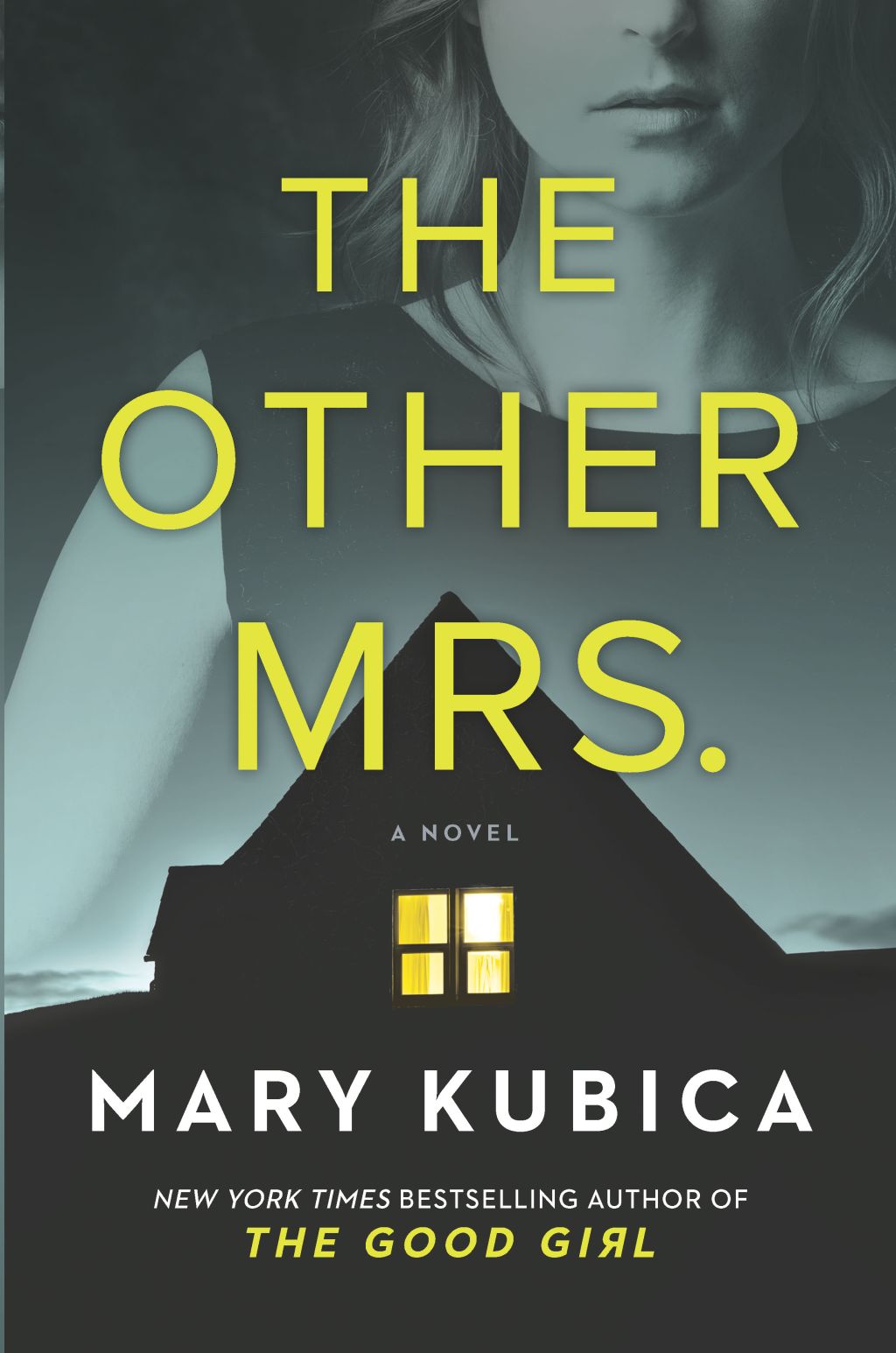
             After staying up late reading The Other Mrs. by Chicago author Mary Kubica, I have a word of advice for women out there. If you’re husband’s sister commits suicide and her home on a remote island off the coast of Maine is yours if you agree to live there and take care of her defiant teen-aged daughter, just say no.

    An isolated island, a frayed marriage and a spooky house where the last owner died in the attic--so what could possible go wrong? Everything in this new suspense-thriller from Mary Kubica.

             But unfortunately, Sadie, a Chicago physician didn’t do that. Instead, after a brief lapse in consciousness where she walked out of an operating room and was later found on the edge of a roof, she and her husband Will—a charming and handsome man with an eye for ladies—take the offer. Sadie was about to lose her job and her license and besides, she’s just found out that Will was having an affair. So the couple pack up their children and move into Alice’s home. It’s the kind of place where doors squeak at night, the wind howls outside and the frayed rope Alice used to hang herself still swings from the rafter in the attic. Then, things take even more sinister of a turn when Morgan, a nearby neighbor is found murdered in her home.

             Obviously, the move was a bad choice and to make it worse, Sadie, working as a doctor in a clinic, still finds herself losing track of time and what she is doing. Add to that, she also worries about Will, a stay-at-home dad for their two sons, and his friendships with pretty mothers whose children play with theirs. If he cheated once, will he do so again, she wonders. Even worse, though Sadie never met Morgan, an elderly couple claim they saw her tear out a chunk of her hair during a fight in the days before her murder.

             This is Kubica’s sixth novel and her last five have made the New York Times and USA Today best seller list.

             “I love to work under the surface with people—there really is so much we don’t know about people,” says Kubica, a former high school history teacher who starts with a premise for her plots and then let’s her writing—and her characters—take her along for a ride so to speak. “My characters really drive what I write. I can start off in one direction and then the book can go a different way.”

             Kubica seems to live a normal life. That is until after her teenaged children go to school, then spends her days in this dark, psychologically twisted world of sublevels and secrets. Two of her favorite authors are Megan Abbott and Paula Hawkins who also write about women in peril who are often unreliable narrators—causing readers to wonder if they can believe their stories. It all adds to the suspense. But readers should understand, Kubica is often just as surprised as they are.

             “I have no idea what to expect,” she says. “But it’s fun.”

  • The Girl Who Died Twice

    The Girl Who Died Twice

              Never one to hide her feelings, Lisbeth Salander is angry and back for vengeance in the sixth novel of the series that started with The Girl with the Dragon Tattoo. 

              Abused by both her mobster father as well as the psychiatrist treating her, Lisbeth is an avenging angel of sorts—determined to punish evil and the powerful people who prey on others. Her doppelganger is her own twin sister Camilla.

    © 2019 Fotograf Anna-Lena Ahlström

              “The sisters chose different sides,” says author David Lagercrantz, discussing the plot of The Girl Who Lived Twice in a phone call from Stockholm, Sweden where he lives. “Camilla chose the strength—her father and Lisbeth chose taking care of the weak—protecting her mother from her father’s violence. The sisters are bitter enemies, and this is their final battle.”

              Though social skills aren’t one of Salander’s strong suits—she likely falls on the autism spectrum, she does have the ability to hack through the fire walls of almost any computer system.  Add to that her martial arts abilities and photographic memory and she makes a worthy adversary of her equally brilliant but pathological sister.

              Lagercrantz, who is embarking on a two month worldwide tour, took over writing the Salander series after the death of Steig Larsson, author of the original three novels.

              “I was scared to death to death when they asked me to do this,” says Lagercrantz, noting he was smuggled into a side door of the publishing house to avoid speculation he was being selected to write the best selling thrillers. “It was a suicidal mission in many ways to agree to do it because people loved his books so much. But it’s been fantastic.”

              Like Larsson, Lagercrantz’s Salander novels are complex, leading Salander and Mikael Blomkvist, the crusading journalist who befriended her, into a dark world of scheming crooks, billionaires and corrupt politicians. The latter includes the Minister of Defense, the only survivor of a Mount Everest climbing expedition who may be involved in the murder of a homeless Nepalese Sherpa.

              Lagercrantz says The Girl Who Lived Twice will be his final book in the series.

              “They’d like me to write ten or more, but I want to move on to my own fiction,” he says. “It was a bittersweet decision.”

              In an intriguing aside, Lagercrantz lives in the same neighborhood as the fictional Blomkvist and Salander.

              “When I’m walking, I sometime wonder if I’ll run into them,” he says.

              What would he say if he did?

              “That would be interesting, wouldn’t it?” he says.

  • The Death of Mrs. Westaway: A New Psychological Thriller by Ruth Ware

    The Death of Mrs. Westaway: A New Psychological Thriller by Ruth Ware

    Tarot cards, a threatening stranger and a mysterious will propel Hal, a young vulnerable orphan to spend her remaining cash for a railway ticket to the funeral of a woman who solicitors believe is her grandmother. Hal, who makes her precarious living reading Tarot cards, a skill she learned from her mother who was killed in a hit-and-run a few years earlier, thinks she knows better. But still, when she receives a letter indicating she is an heir to the moneyed estate, she decides to see if the same skills she uses to tell fortunes can help obtain part of her “inheritance.”

    Atmospheric and compelling, The Death of Mrs. Westaway (Gallery/Scout Press $26.99; 2018), is the fourth novel of English author Ruth Ware, author of the best- selling The Woman in Cabin 10 and The Lying Game.

    Ware, who is on a book tour throughout the  United States, took time out to answer the following questions.Author Photo - Ruth Ware c Gemma Day

    What inspired you to write The Death of Mrs. Westaway?

    I can’t put my finger on one single inspiration, but probably the key thing that defines the book for me is Hal. Having written three books about women who stumble into events more or less through no fault of their own, I wanted to write a very different kind of main character this time round – one who brings the events of the novel down upon themselves. Hal sets out to commit a crime – and in doing so sets of a nightmarish set of dominoes. That was a very conscious choice on my part!

    Were you familiar with Tarot cards before you wrote this book or did you have to learn about them? And why did you decide to make them part of the story? In that vein, have you always had an interest in fortune telling?

    I’m super skeptical and don’t really believe in any kind of supernatural forces so I had never had my cards read, though of course I was familiar with some of the images on tarot cards and found them very beautiful and inspiring as visual images. I had to research the meanings from scratch as I knew nothing about fortune telling, or the different kinds of tarot spreads. I really enjoyed the research though and found myself quite swept up in the different meanings. I suppose I made them part of the story because I wanted Hal to be someone who was practiced in reading people and telling them what they wanted to hear. So I tried to give her a job that fitted with that and was in some way a preparation. Making her a cynical tarot reader – one who doesn’t believe in the power of the cards but uses her skills to deceive – seemed fitting.

    Your books create such a sense of foreboding–do you ever get caught up in that and experience those feelings?

    Of course! Writing is like reading – you get just as caught up in the atmosphere you’re creating. But I find it’s quite hard to scare myself when I’m writing, because I know when the jump scares are going to come. I get immersed in the atmosphere, but the sense of terror I get sometimes reading other writers’ work just isn’t there, because I’m in control.

    Do you plot your novels and your characters or do they evolve?

    A mix of the two – I usually have a skeleton structure in my head, and I think about the characters for a long time before I start writing, so they are usually quite evolved by the time I put pen to paper. But I write very little down – they exist mainly in my head so they tend to be quite fluid and evolve as things develop on the page.

    What writers have influenced you?

    For this book, particularly Daphne du Maurier. I love her work.

    What’s next for you? 

    Another book of course! I’m writing it now, but it’s too early to tell you what it’s about…

    Ifyougo:

    What: Ruth Ware

    When: Monday, June 4th at 7 p.m.

    Where: Anderson’s Bookshop, 26 S La Grange Rd., La Grange, IL

    FYI: This event is free and open to the public. To join the signing line, please purchase the author’s latest book, The Death of Mrs. Westaway, from Anderson’s Bookshop. To purchase please stop into or call Anderson’s Bookshop La Grange (708) 582-6353.