Category: mystery

  • THE CHRISTMAS SPIRITS ON TRADD STREET

    THE CHRISTMAS SPIRITS ON TRADD STREET

    New York Times bestselling author Karen White’s iconic series about a quirky psychic realtor (yes, you read that right!), set in historic Charleston, continues this winter. A long-anticipated gift to her fans, this holiday season White released her first ever Christmas novel.

    Jane Ammeson, who writes the Shelf Life column for The Times of Northwest Indiana and shelflife.blog, interviewed Karen about THE CHRISTMAS SPIRITS ON TRADD STREET, the sixth book in her Tradd Street Series,

    With each new release, Karen’s national platform grows. Her previous installment in the series, The Guests on South Battery (2017), was a New York Times hardcover bestseller. Her books have been featured on Southern LivingReese Witherspoon’s Draper James blogLate Night with Seth Meyers, and more. The author of over twenty books and 12 New York Times bestsellers, she has almost two million books in print in fifteen different languages.

     JA: Since you’re not a realtor and you’re not seeing ghosts (we don’t think so, anyway!), do you have much in common with Melanie—like are you super-organized with lots of charts and spread sheets, etc.?

    KW: Let’s just say that people who know me who have also read the Tradd Street series seem to think that Melanie _is_ me.  I’m going to neither confirm nor deny, but let’s just say that I do love to be organized and I also adore sweets (although Melanie’s metabolism is simply something I aspire to).  She and I are both ABBA fans and neither of us can text without many alarming typos.

    JA: You grew up all over the world but started off in the south and think of yourself as a Southern girl. Why did you choose historic Charleston for the setting of your series?

    KW: My parents (and extended family) are all from the South—mainly Mississippi—which is where I get my Southern roots.  I went to college in New Orleans (Tulane) and actually planned to set the series there.  However, the year I started writing the first book was 2005, the year Katrina wreaked so much havoc on the city and her citizens.  I knew that in the series I was planning to write that this sort of natural disaster and its repercussions wouldn’t fit.  I would return to New Orleans and the storm for The Beach Trees, but for the series I needed to find another Southern city that had gorgeous architecture, lots of history, and plenty of ghosts.  Charleston was an obvious choice.

    JA: Your Tradd Street series novels seem to require a lot of research into older homes, renovations and history, can you tell us about that?

    KW: Since I was a little girl I’ve been obsessed with old houses.  They didn’t need to be grand or even well-maintained to make me beg my mother to pull the car over to the curb so I could get a better look.  When we moved to London, we were fortunate to live in an Edwardian building on Regent’s Park.  It had leaded glass windows, thick mahogany doors, and ceiling medallions to make a wedding cake envious.  Living in that flat made me believe that I truly could hold a piece of history in my hands.  My obsession continues with my daughter who holds a master’s degree in historic preservation from the College of Charleston and currently works as an architectural historian.  She actually appears in the last two Tradd books (as well as Dreams of Falling) as graduate student Meghan Black.

    JA: Can you give readers who may not have read any of your other books about Melanie and Jack a description of The Christmas Spirits on Tradd Street?

    KW: In this penultimate installment (book #6) in the series, we find OCD Realtor (who also happens to be able to speak with dead people) Melanie Middleton and true crime mystery writer Jack Trenholm happily married and living with their toddler twins and teenage daughter, Nola, in their historic home on Tradd Street. Christmas is approaching and all seems to be going well for them—-except for a few money problems, Jack’s writing career taking a curveball, and an unpleasant specter seen haunting Nola’s bedroom that seems to be connected to the ancient cistern being excavated in their back yard.  Unwilling to burden Jack with one more problem and distract him from his writing despite promises that they wouldn’t hold secrets from each other, Melanie takes it upon herself to attempt to solve the mystery behind the ghostly presence—with unsettling results that Melanie may or may not be able to resolve.

    JA: Are your ghosts based upon real life (if you can call it that when it comes to ghosts) tales of hauntings in Charleston?

    KW: Growing up, my father loved to read true ghost stories to my brothers and me—usually right before bedtime.  I also had a grandmother who always spoke about conversations she’d had with dead relatives.  I suppose that’s the reason why I thought ghosts were like doilies on the backs of chairs—some people had them, some people didn’t.  I continue to enjoy ghost stories (I listen to several podcasts on the subject) and, even though I have never had an experience, my son has three times.  

    When visiting Charleston, I love going on haunted walking tours (especially the graveyard ones) and always pick up fascinating tidbits to be used later in my books.  I’ve never borrowed a ghost story for my books, but tend to pick and choose certain parts of favorites and mix them together to fit into my stories.

    JA: Do you live in an older home?

    KW: Sadly, no.  My husband isn’t a fan of old houses (and in my first book, the derogatory remarks Melanie makes about old houses came right from his litany of why he dislikes old houses—mostly having to do with the expense of heating them).  Every house I’ve lived in since the old Edwardian building in London has been brand new.  I’m hoping my daughter and I can get sway him to our side when it’s time to move again.  Hopefully to Charleston.

    JA: Besides a great story and enjoyable read, are there any other take-aways you’d like for readers to get from The Christmas Spirits on Tradd Street?

    KW: This installment can be read on its own.  However, I do think that readers might enjoy the series more if read in order starting with the first book.  The books each have their own mystery to be solved, but the growing cast of characters and Melanie’s growth through the series is an important element and best understood if readers meet her in book .

    JA: Anything else you’d like our readers to know?

    KW:  Yes, there are ghosts and some spooky scenes in all of the books.  But these are not paranormal or thriller type books.  These are character-driven stories centered around Melanie Middleton and her relationships with family and friends and set in the gorgeous and historical city of Charleston, South Carolina.  This is Southern Women’s Fiction—with the added bonus of a few spirits who need Melanie’s help to solve a mystery.  

  • The Girl Who Died Twice

    The Girl Who Died Twice

              Never one to hide her feelings, Lisbeth Salander is angry and back for vengeance in the sixth novel of the series that started with The Girl with the Dragon Tattoo. 

              Abused by both her mobster father as well as the psychiatrist treating her, Lisbeth is an avenging angel of sorts—determined to punish evil and the powerful people who prey on others. Her doppelganger is her own twin sister Camilla.

    © 2019 Fotograf Anna-Lena Ahlström

              “The sisters chose different sides,” says author David Lagercrantz, discussing the plot of The Girl Who Lived Twice in a phone call from Stockholm, Sweden where he lives. “Camilla chose the strength—her father and Lisbeth chose taking care of the weak—protecting her mother from her father’s violence. The sisters are bitter enemies, and this is their final battle.”

              Though social skills aren’t one of Salander’s strong suits—she likely falls on the autism spectrum, she does have the ability to hack through the fire walls of almost any computer system.  Add to that her martial arts abilities and photographic memory and she makes a worthy adversary of her equally brilliant but pathological sister.

              Lagercrantz, who is embarking on a two month worldwide tour, took over writing the Salander series after the death of Steig Larsson, author of the original three novels.

              “I was scared to death to death when they asked me to do this,” says Lagercrantz, noting he was smuggled into a side door of the publishing house to avoid speculation he was being selected to write the best selling thrillers. “It was a suicidal mission in many ways to agree to do it because people loved his books so much. But it’s been fantastic.”

              Like Larsson, Lagercrantz’s Salander novels are complex, leading Salander and Mikael Blomkvist, the crusading journalist who befriended her, into a dark world of scheming crooks, billionaires and corrupt politicians. The latter includes the Minister of Defense, the only survivor of a Mount Everest climbing expedition who may be involved in the murder of a homeless Nepalese Sherpa.

              Lagercrantz says The Girl Who Lived Twice will be his final book in the series.

              “They’d like me to write ten or more, but I want to move on to my own fiction,” he says. “It was a bittersweet decision.”

              In an intriguing aside, Lagercrantz lives in the same neighborhood as the fictional Blomkvist and Salander.

              “When I’m walking, I sometime wonder if I’ll run into them,” he says.

              What would he say if he did?

              “That would be interesting, wouldn’t it?” he says.

  • What Rose Forgot: Nevada Barr’s Latest Mystery
    What Rose Forgot: Nevada Barr’s Latest Mystery


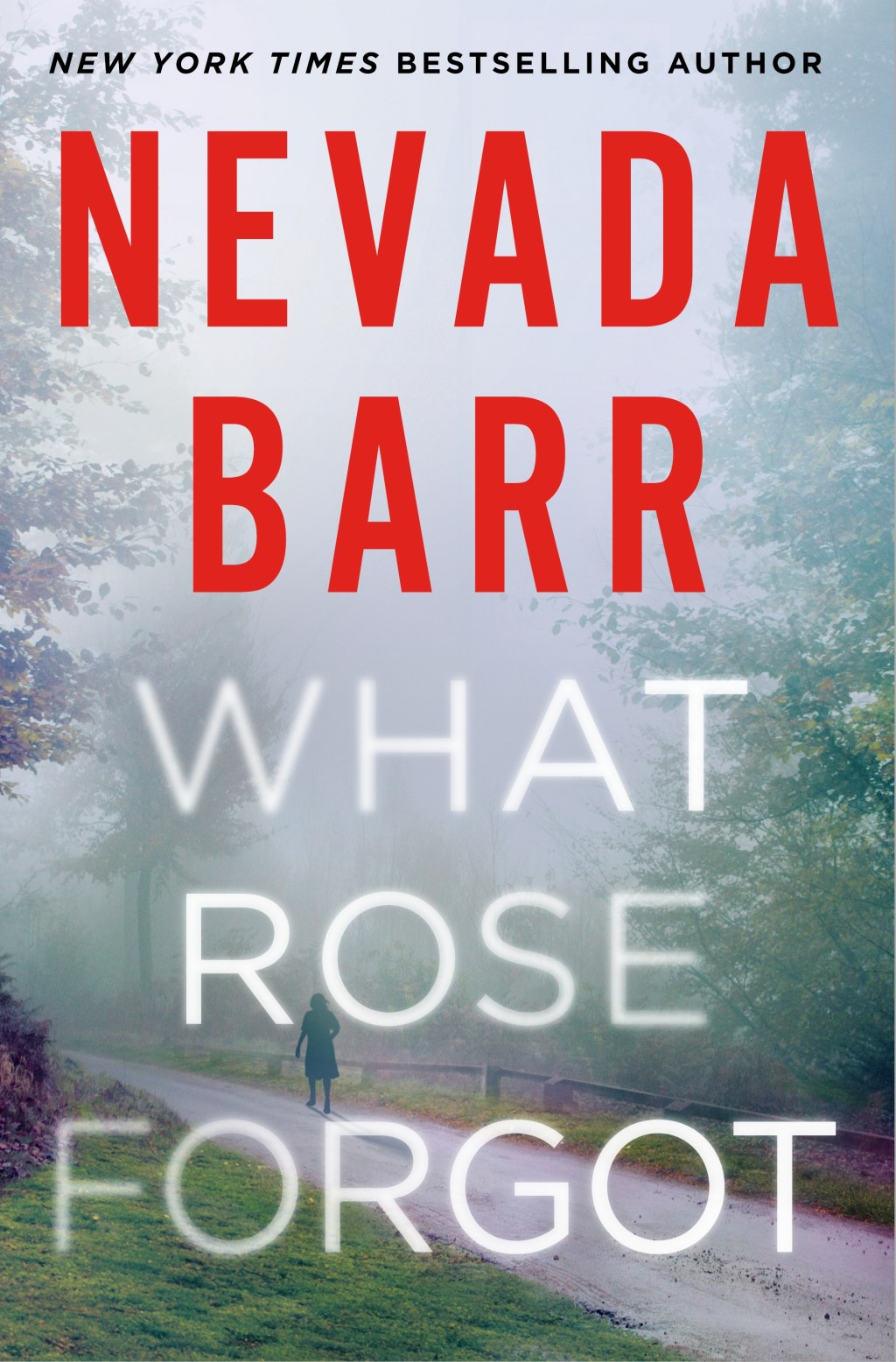
    Waking up in a hospital, her brain foggy, Rose Dennis finds herself in a nightmare situation. She’s been committed to an Alzheimer’s Unit in a nursing home and has no memory of how she how she ended up there. But one thing Rose does know. Overhearing one of the administrators says that she’s “not making it through the week,” she realizes her only chance of staying alive is to escape from the nursing home.

    Best selling author Nevada Barr, known for her award winning series about National Park Ranger Anna Pigeon, has created What Rose Forgot, a fascinating stand alone thriller in which we watch Rose try to outwit whoever is trying to kill her.

    She starts by not taking her medications and by outwitting the nursing home aides, is able to escape. But that’s just the beginning. She needs to convince people she isn’t demented. But it’s her relatives who had the legal papers drawn up and authorities side with the nursing home. At times, even Rose isn’t sure she’s completely sane–that is until a person intent on killing her arrives.

    Fortunately her sister Marion, a reclusive computer hacker as well as Rose’s thirteen-year old granddaughter Mel, and Mel’s friend Royal are on her side. Gathering her strength and her wits, Rose begins to fight back, intent on finding out who is after her. She’s going to have to be quick though and find out who wants her dead before they succeed.

  • A Better Man

    A Better Man

              Louise Penny’s latest mystery, A Better Man, finds Chief Inspector Armand Gamache, who previously had been demoted, back on the job at the Sûreté du Québec. But his first day isn’t going well at all.  As flood waters threaten to engulf the province where he lives and works and bridges are being shut down, he is approached by a grief-stricken father looking for his missing daughter. It is not a case Gamache should take on during this emergency, but he feels a sense of obligation and he agrees.  

              It’s a tough juggling act, made more so because of the fury of social media criticizing the decisions he’s made both past and present and the ever increasing dangers as the water rises. rise When thinks about calling off the search for the missing girl to focus on the crisis on hand, he finds he can’t. After all, he has a daughter too.

              This is the 15th book in the Gamache series and Penny, who lives in a small village outside of Montreal, says she created Gamache as her main character because she wanted to write about someone she could be married to.

              It’s a decision that made even more sense after the death of her husband several years ago. It was writing that helped her ease back into the world, returning to Gamache and the fictional Canadian village of Three Pines. Ironically, it was her husband, a pediatric hematologist, who helped her enter that world. A former journalist and then anchor for the Canadian Broadcasting Corporation, she struggled with an addiction to alcohol before joining AA and never having a drink again. Shortly after that she met her husband and he encouraged her to quit her job and try writing, saying he would support her while she did so.

              At first Penny struggled writing what she calls “the great historical novel.”

              “Then I looked at my bedside table, which was very well represented with crime novels,” she recalls. “Seeing those I had one of those moments where I thought, oh, maybe that’s what I should be writing.”       

    It was the right choice. Penny’s Gamache novels are often on the New York Times Best-Seller list and she’s earned numerous accolades including being a seven time winner of the Agatha. In 2017 received the Order of Canada for her contributions to Canadian culture.

  • Author Catherine O’Connell in Chicago to Discuss Her Latest Books

    Author Catherine O’Connell in Chicago to Discuss Her Latest Books

              Northbrook native, mystery writer Catherine O’Connell who divides her time between Chicago and Aspen will be home this week and back to her old haunts including a book signing for her newest mystery, First Tracks, at Pippin’s Tavern when she managed the bar there in the 1980s.

              First Tracks, described by Booklist as “a compelling, Scandinavian noir–style thriller” that should appeal to readers of both Ruth Ware and Arnaldur Indridason, introduces a new character, Aspen ski patroller Greta Westerlind.

    Caught in an avalanche, Westerlind wakes in the hospital with no memory of what happened. She’s even more surprised to discover that her close friend, Warren McGovern was with her when the avalanche swept them up. But McGovern didn’t make it. Not only doesn’t she know what happened, but Westerlind, who knows mountain safety, can’t understand why either of them were even in such a dangerous area.

              While trying to regain her memory of events, Westerlind begins to realize she’s in danger as more and more frightening incidents start happening to her. With her life in danger, Westerlind knows if she is to live, she needs to figure out who wants her dead.

              “It’s the first in the series about Greta,” says O’Connell, who when she isn’t writing mysteries sits on the board of Aspen Words, a literary center whose aim is to support writers and reach out to readers. It’s also the literary arm of the prestigious the Aspen Institute.

              O’Connell, who is a skier, says that when her new published asked if she could come up with a series not being done yet, she immediately suggested a ski patrol woman who was an amateur sleuth.

              “I chose ski patroller because they have more autonomy than instructors plus they have dynamite and morphine type drugs for injured skiers which gives me a couple of ideas for other books,” she says. “Aspen is the perfect setting for all kinds of stories with billionaires and locals, celebrities and developers, mountain climbers and ski racers, visiting politicians and world class musicians. All set in one of the most beautiful settings on the planet. So, this series is a gift to me that I’ll be able to write plots set in this world so familiar to me.”

              First Tracks isn’t the only book O’Connell will be talking about.

              Her mystery, The Last Night Out, begins with a bachelorette party that goes very wrong. Not only does Maggie Trueheart, who is the bride to be, wake up in bed with a really bad hangover, there’s a strange man in her bed. As if that wasn’t bad enough, she gets more bad news when she learns that her best friend was murdered. As her wedding day draws closer, so does the police investigation. Of the five friends left from the party, at least one of them is lying and many have secrets to hide.

              Besides her book signings, O’Connell also be discussing her books on After Hours with Rick Kogan on Sunday, September 15 from 9 to 11 a.m. on WGN Radio.

              “It’s always great to be back in the city,” says O’Connell, who is a member of Mystery Writers of America and Sisters in Crime and is already at work on her next mystery.

    For more about Catherine O’Connell

    Ifyougo:

    What: Catherine O’Connell has three Chicago area book events.

    When & Where:

    Sunday, September 15 at 2 p.m.

    The Book Stall, 811 Elm St., Winnetka, IL

    Page to Published: Piercing the Literary Firewall. Talk and signing of First Tracks 

    FYI: 847-446-8880; thebookstall.com

    Tuesday, September 12, 4:30 to 6:00

    Pippin’s Tavern, 806 N. Rush St., Chicago, IL

    Signing of The Last Night Out 

    FYI: 312-787-5435; pippinstavern.com/

    Friday, Sept 20, 7 p.m.

    Centuries and Sleuths Bookstore, 7419 Madison St. Forest Park, IL

    Discussion and signing of The Last Night Out

    FYI: 708-771-7243; centuriesandsleuths.com/

  • A Better Man: A Chief Inspector Armand Gamache Mystery

    A Better Man: A Chief Inspector Armand Gamache Mystery

              Louise Penny’s latest mystery, A Better Man, finds Chief Inspector Armand Gamache, who previously had been demoted, back on the job at the Sûreté du Québec. But his first day isn’t going well at all.  As flood waters threaten to engulf the province where he lives and works and bridges are being shut down, he is approached by a grief-stricken father looking for his missing daughter. It is not a case Gamache should take on during this emergency, but he feels a sense of obligation and he agrees.  

              It’s a tough juggling act, made more so because of the fury of social media criticizing the decisions he’s made both past and present and the ever increasing dangers as the water rises. rise When thinks about calling off the search for the missing girl to focus on the crisis on hand, he finds he can’t. After all, he has a daughter too.

              This is the 15th book in the Gamache series and Penny, who lives in a small village outside of Montreal, says she created Gamache as her main character because she wanted to write about someone she could be married to.

              It’s a decision that made even more sense after the death of her husband several years ago. It was writing that helped her ease back into the world, returning to Gamache and the fictional Canadian village of Three Pines. Ironically, it was her husband, a pediatric hematologist, who helped her enter that world. A former journalist and then anchor for the Canadian Broadcasting Corporation, she struggled with an addiction to alcohol before joining AA and never having a drink again. Shortly after that she met her husband and he encouraged her to quit her job and try writing, saying he would support her while she did so.

              At first Penny struggled writing what she calls “the great historical novel.”

              “Then I looked at my bedside table, which was very well represented with crime novels,” she recalls. “Seeing those I had one of those moments where I thought, oh, maybe that’s what I should be writing.”       

    It was the right choice. Penny’s Gamache novels are often on the New York Times Best-Seller list and she’s earned numerous accolades including being a seven time winner of the Agatha. In 2017 received the Order of Canada for her contributions to Canadian culture.

  • Hope Rides Again: An Obama Biden Murder
    Hope Rides Again: An Obama Biden Murder

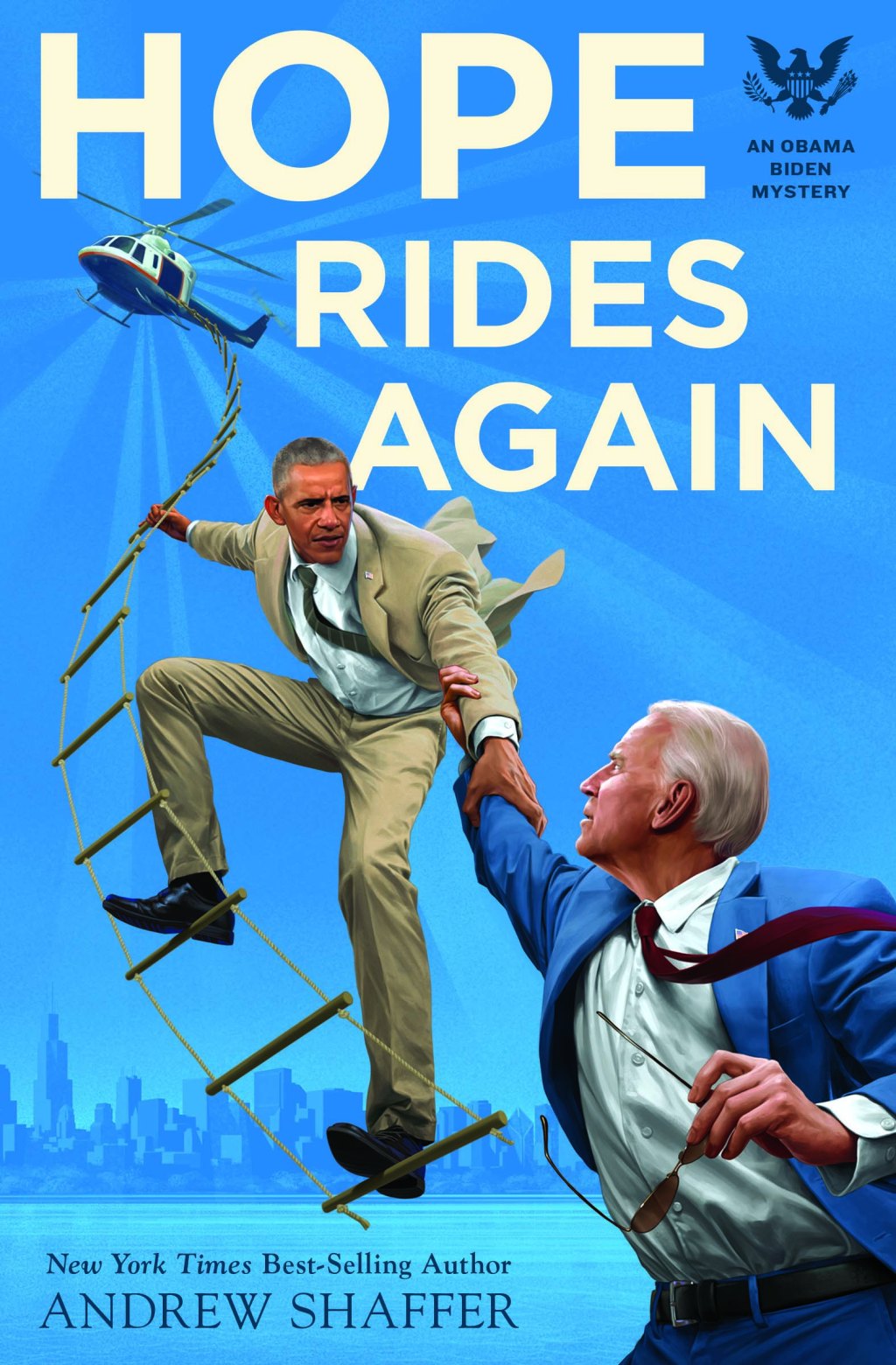
                  Barack Obama and Joe Biden return to solving crimes in Hope Rides Again: An Obama Biden Mystery, the second in the series written by Andrew Shaffer and starring the former president and vice president.

                  “It’s a totally separate mystery from the first book,” says Shaffer while sitting at a table where a long line had formed waiting for him to autograph copies of his novel at a two-day book fair in Lexington, Kentucky. “The first was set in Wilmington, Delaware and this one is set in Chicago on Obama’s turf and takes place in the spring around St. Patrick’s Day which is certainly a holiday they take seriously there.”

                  Indeed, Shaffer, who at one time lived in Chicago, says he revisited old haunts and new places for background as the two BFFs hunt for Obama’s Blackberry and the murderer of the their who originally stole it.

                  Though the premise of the two joining together as detectives is somewhat zany, Shaffer describes his book as dealing with serious topics as well.

    “But I try to do it in a lighthearted way,” he says. Also, fun are the covers for both books including the first in the series, Hope Never Dies. Harkening back to the vivid colors of 1960s, the first shows Biden driving a convertible while Obama stands in the front seat pointing out the way as they chase their quarry. In the latest, Obama leans down from a swaying rope ladder tethered to a helicopter, his arm outstretched to help Biden up.

    One person who thinks the mysteries are fun is the former vice president. When Biden was campaigning in Kentucky (Shaffer and his wife, a romance writer, live in Louisville), he was contacted by the campaign who set up a meeting.

                  “I didn’t know whether he liked the book or not or what he was going to say,” says Shaffer adding that the Biden hadn’t read either book but signed his copies. “It was really kind of different to have a character in your book sign your book. I found out later that people have been bringing my books to his campaign stops and asking him to sign them, so he was probably thinking who’s the guy who wrote this?”

                  It’s tricky writing about people we know publicly but not in person says Shaffer.

                  “I think in ways I know them too well because I know their history and what I think they would do and say, because I’ve written about them and I’ve seen and read about them for eight years,” he says. “When I heard Biden speak in Kentucky, I was like my Biden wouldn’t say that.”

                  Shaffer’s book might have garnered a few votes for the vice president.

                  “I met one person who said I can’t wait to vote for them again because now they’re detectives,” he says.

    Ifyougo:

    What: Andrew Shaffer book signing

    When: Tuesday, July 9 at 6 p.m.

    Where: The Seminary Co-op Bookstore, 5751 S Woodlawn Avenue, Chicago, IL

    Cost: Free but RSVP is suggested

    FYI: 773.752.4381; semcoop.com

    What: Andrew Shaffer book signing

    When: Wednesday, July 10 at 7 p.m.

    Where: Anderson’s Bookshop, 123 W Jefferson Ave., Naperville, IL

    Cost: This event is free and open to the public. To join the signing line, please purchase the author’s latest book, Hope Rides Again, from Anderson’s Bookshop. To purchase, stop in or call Anderson’s Bookshop Naperville.

    FYI: 630-355-2665; andersonsbookshop.com

  • The Body in the Castle Well

    The Body in the Castle Well

                  After reading Martin Walker’s The Body in the Castle Well, the 14th book in the series about Chief of Police Bruno Courrèges, I Googled real estate listings in the Périgord, known for its castles, caves, gastronomy and lush landscape of rolling hills, woods and vineyards. From Walker’s description, this region in southwestern France seems like an ideal place to live even if you have to deal with the type such skullduggery as truffle fraud, archaeological vandalism, arson, drugs and even terrorists Bruno encounters on a regular basis.

                  “There’ so much inspiration and history here,” says Walker who, with his wife, splits his time between Washington D.C. and Le Bugue, a small village in the Périgord where they own a home. The home came about, says Walker who talks like he writes, with many wonderful asides, when he was waiting in the Oval Office and received a phone call from his wife.

                  “She said I don’t care what you’re doing, get on the next plane and come here, I just found our house,” he says, noting he explained to her he was meeting with the president so it might have to wait just a while. Besides that, he didn’t even know they were buying a house.

                  Of course, they did and now live in an old farmhouse dating back to 1698 with several newer outbuildings, if you consider the 1700s new and in France they do.

                  Of course, there are always obstacles even in paradise.

                  “One of the challenges for anyone writing crime stories is finding places for bodies,” says Walker, who speaks French, Russian, English, Arabic, German and a just enough of other languages to get himself in trouble. “I drive around with an eagle eye looking for the perfect spot for a body. I was in Limeuil, a lovely village, and there it was, the castle well.”

                  So that’s where the body of Claudia, a young art student ends up, in what first looks like an accident and turns out to be much more ominous.

                  “She’s studying with Pierre de Bourdeille, one of the greatest art experts in the world, a hero of the French Resistance,” says Walker. “She told Bruno a little of her concerns about the attributions de Bourdeille made about his paintings which drove up prices and then she turns up dead.”

                  Another suspect is a falconer (so we get to learn about the ancient art of hunting with falcons) who met Claudia the day after her got out of prison. As compelling as the mystery is, so is Bruno’s life. He’s a gourmet chef, has his own blog and a cookbook, written by Walker’s wife, which is a best seller in Germany where it’s sold 100,000 copies. But unless you read the language, don’t bother as it’s not published in English though Walker encourages people to call his publisher and demand that it be.

                  The Bruno books are quite a segue for the Oxford educated Walker who served as bureau chief in Moscow and the U.S. and as European Editor for The Guardian, a British daily newspaper and wrote lengthy tomes (ponderous and boring he says, though noting they won awards) like The Iraq War and The Makers of the American Century

    “The 15th is already done,” he says. “And I’m thinking of the next. They’re fun to write.”

    Asked what his favorite is, he replies, “my favorite is always the latest or the one I’m working on right now.”

    Ifyougo:

    What: Martin Walker: The Body in the Castle Well

    When: Tuesday, June

    Where: The Book Stall, 811 Elm St., Winnetka, IL

    Cost: Free and open to the public, but The Book Stall asks that you buy your books from them if you intend on entering the book-signing queue.

    FYI: 847-446-8880; thebookstall.com

  • The Mykonos Mob

    The Mykonos Mob

                  In The Mykonos Mob, the tenth book of the Greece-based mystery-thriller series written by New York Times bestselling author Jeffrey Siger, Chief Inspector Andreas Kaldis finds himself face-to-face with the nation’s top crime bosses, all of whom are as perplexed as he is about who’s responsible for the murder of a corrupt former police colonel who ran the island’s protection rackets. In the meantime, Kaldis’ s wife, Lila, is trying to find an identity for herself beyond wife and mother and teams up with an ex-pat with a shady side. The two decide to mentor exploited young island girls, a charitable act that unknowingly negatively intersects with her husband’s investigation.

                  Siger, who left a lucrative career as a partner in a Wall Street law firm to write mysteries, says that Greece provides an inexhaustible source of material for the two central elements of his series–the serious, modern-day issues his characters need to confront and overcome, and a perspective on those issues found in the ancient past.

    “There is no place on earth more closely linked to the ancient world than Greece,” he says. “It is the birthplace of the gods, the cradle of European civilization, the bridge between East and West. Spartan courage, Athenian democracy, Olympic achievement, Trojan intrigue—all sprung from this wondrous land.”

    It’s also a place he knows very well.

    “Each year I live on Mykonos longer than any other place on earth, and have for about a dozen years,” says Siger, noting that he first visited the island 35 years ago at a friend’s suggestion who thought he’d love Greece. “She was right. From the moment I stepped onto the tarmac at the Mykonos airport, I felt as if I were home. That very first day I happened to pass by a jewelry shop on my way into town from my hotel, though I forget how the proprietor lured me inside. Unbeknownst to me, I’d stumbled upon the most loved man on Mykonos.  A consummate gentleman and fervent booster of the island, he had an extraordinary circle of local, national and international friends, all of whom made a point of regularly stopping by to say hello to him.”

    Becoming an insider almost immediately has helped him craft stories about the workings of the islands both from a political and social viewpoint.

    “My ideas come from the strangest sources, often unexpected,” says Siger. “More bizarre than where they come from is how often my fictional plots have an unnerving tendency to come true. For example, my second novel in the series, Assassins of Athens featured a character in the mold of Greece’s current Prime Minister Alexis Tsipras years before his rise to power; my third book, Prey on Patmos, anticipated by seven years the current turmoil involving Mt. Athos, the Russian government, and the Patriarch in Constantinople, and many of the details surrounding the fictional assassination serving as the backstory latest book, were just reported by the Greek press as key details of an actual assassination that occurred long after The Mykonos Mob was written.”

    For more about Jeff Siger and his books, visit jeffreysiger.com/

  • An American Agent: A Maisie Dobbs Novel

    An American Agent: A Maisie Dobbs Novel

    Jacqueline Winspear, author of The American Agent, the 15th book in her Maisie Dobbs’ series, transports us to early September 1940, as Adolf Hitler unleashed his Blitzkrieg or lighting attack on London and other United Kingdom cities, an intensive attack already used successfully in Spain, the Netherlands, Poland, Belgium and France to enable an invasion to take place.  Day after day, night after night for months on end, hundreds of German bombers would fly across the Channel to wreak havoc.  Maisie and her friend, Priscilla are volunteer ambulance drivers, and on one run they are accompanied by an American war correspondent, Catherine Saxon.

    Following her late-night broadcast to the US, where she describes her experience of seeing the death and destruction that the bombings have wrought on the city, Saxon is found dead in her rooms. Maisie Dobbs is brought in to conduct an undercover investigation – her presence requested by a man from the US Department of Justice, Mark Scott, who had previously saved her life in Munich, in 1938.  The story is peppered with excerpts from real broadcasts and reporting at the time.

               On a multi-city tour, Winspear will be in Chicago for a book signing on April 4. Speaking to Jane Ammeson, she talks about An American Agent and how her own past was an impetus for her series.

    For readers who have never met Maisie, can you give us a brief summary?

    Readers first met Maisie Dobbs in the first novel in the series – entitled Maisie Dobbs.  From a working class background, Maisie is a young woman of intellect and a keen intuitive ability, which is recognized by a friend of her employer. Dr. Maurice Blanche – a psychologist and Doctor of Forensic Medicine who consults with the police –oversees her education and entry to university, which is sponsored by her employer – but WW1 intervenes, and Maisie volunteers for nursing service, and is later wounded at a Casualty Clearing Station in France – an experience that defines her.  Later, having recovered, she becomes Blanche’s assistant, and in the first novel in the series we see her striking out on her own upon his retirement – she is a “psychologist and investigator.” Maisie is very much a woman of her day – so many young women had to be incredibly self-sufficient as the men they might have married had been lost to war. I have written extensively on this subject as it’s always interested me.

    I am impressed by your vast knowledge and ability to bring us into this time period. I know your grandfather was severely injured in the Battle of the Somme and your family talked about the war. How did those experiences translate into you writing books and immersing yourself in this time period?

    Family stories always have an immediacy that reading books and immersing oneself in research sometimes lacks. My grandfather was very much of his generation of men who saw the most terrible death in the trenches of WW1 France and Belgium – he never talked about it, with the exception of a couple of stories shared with my father. But I could see the wounds – his poor shrapnel-filled legs (he was still removing shrapnel splinters when he died at age77), and I could hear the wheezing of his gas-damaged lungs. And I knew he had suffered shell-shock.  Added to this were my mother’s stories of the Second World War – her experiences of being evacuated, of having to return to London, then of being bombed out time and again. And yes, of seeing death on the streets following a bombing.  The experience of listening to family stories – even from a very young age – inspired my curiosity, which later became an adult inquiry, so you could say I’ve been researching my subject since childhood.

    This is your 15th book in the series.  How do you go about developing your stories? Are they mapped out or do you take an incident and place Maisie in there and let it all happen?

    I think creating a story is like lighting fire. First of all, you lay down the paper and kindling, then you need a match for the flame, and you follow that with your fuel.  Often the kindling for a story is laid down years before I begin to write – because I have been waiting for the spark to light the fire and then the fuel to build the flame.  For example, I had known the true story that inspired “Elegy for Eddie” since I was a teen – of a young girl not 16 years old, a cleaner in the local brewery stables who had given birth to a baby boy while at work, and while stopping him from crying had starved his brain of oxygen. That young boy – thereafter considered “slow” – was born and grew up around horses and had a gift.  As he grew up, he could settle the most uppity horse, simply by laying a hand upon the animal – that’s how he earned a living at a time when horses were vital for commerce and transportation.  As a boy, my father knew this young man, and he told me of his later “suspicious” demise.  After I began writing the series, I knew “Eddie” would form the basis of a story – the kindling, if you will.  Then I learned more about the pre-war machinations of various powerful men close to Churchill, and the secrecy surrounding their work, whether it was in creating soft propaganda or developing fighter aircraft.  That’s when I asked the question – what if an innocent, a young man of limited intellectual ability but deep empathy stumbled across crucial classified information? Then what might happen? The flame caught and I had a fire.  But when I begin writing any story, I only know the main landing points along the way, I do not know all the details – they come as the story is written. I like to have the basic map, but I also like to “dance with the moment” and be able to respond to new ideas or information as they emerge.

    Are there times you’re back in the England between the wars versus 2019?

    To some extent I have to be in the years I’m writing about – I cannot be distracted by today while I’m writing.  When I’m at work, I am completely with my characters – I walk their streets, I can see what they are wearing, what they buy, what they eat, and I can hear their use of language, which is different from today.

    For more information visit jacquelinewinspear.com

    Ifyougo:

    What: Jacqueline Winspear book signing

    When: April 4 at 7 pm

    Where: Anderson’s Bookshop, 123 W Jefferson Ave, Naperville, IL

    Cost: Free

    FYI: 630-355-2665; andersonsbookshop.com