Category: Food History

  • A Blissful Feast: Celebrations of Family, Food, and History
    A Blissful Feast: Celebrations of Family, Food, and History

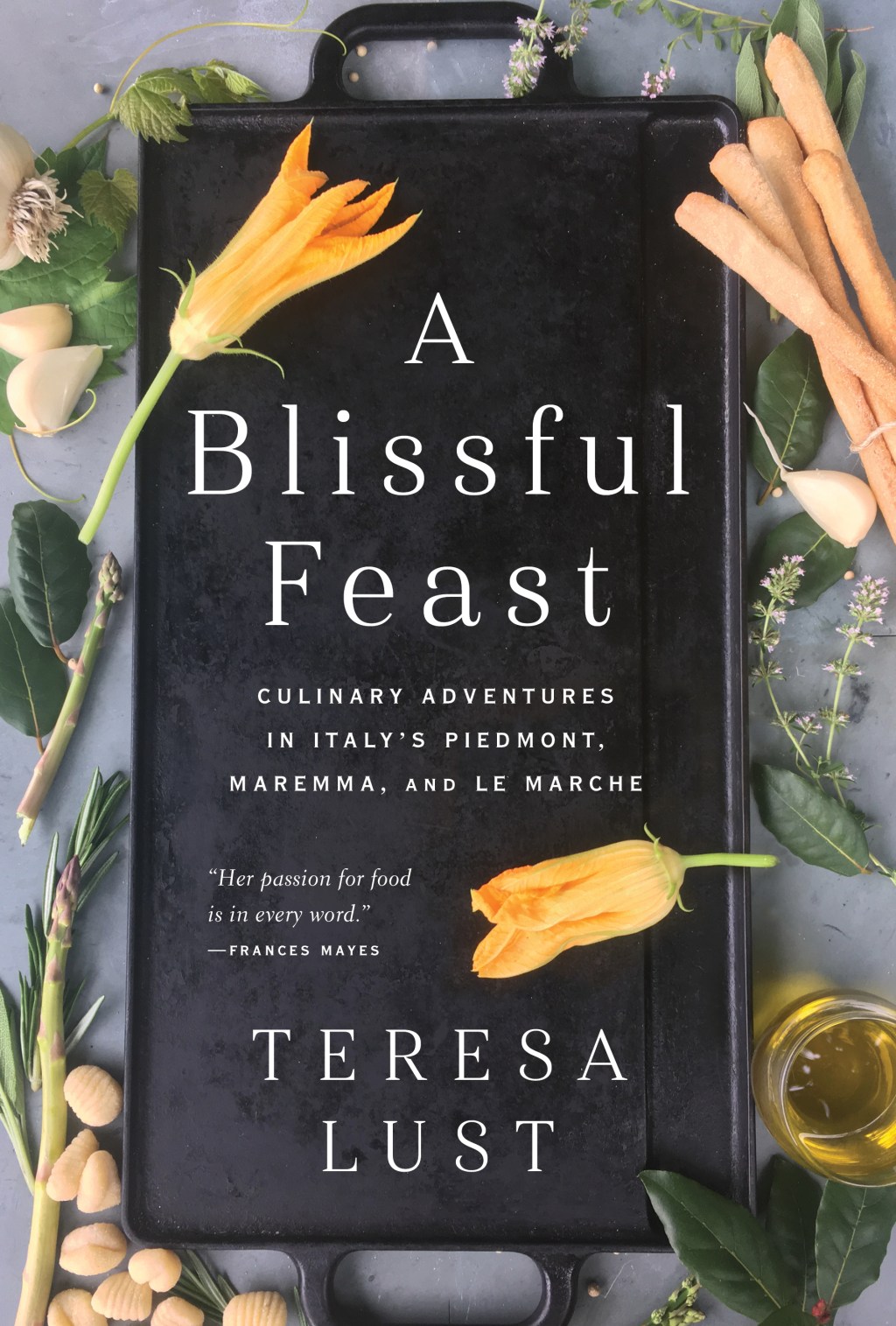
    “In our culture we have lost our connection to cooking,” says Teresa Lust, author of  A Blissful Feast, Culinary Adventures in Italy’s Piedmont, Maremma, and Le Marche ( Pegasus Books 2020; $19.19 Amazon hardcover price), The Readable Feast’s 2020 winner for Best Food Memoir.

    Teresa Lust

    Lust, who teaches Italian at Dartmouth University in New Hampshire and also cooking classes, grew up in an Italian-American family, learning to cook from her mother and grandmother whose recipes were written by hand on little notecards. Wanting to discover and delve into Italian cuisine because of its meaning to her, she learned to speak Italian and traveled through the country of her ancestors.

    “I wanted to see and feel the connections to the traditions and geography of the regions,” says Lust, whose previous book,  Pass the Polenta: and Other Writings from the Kitchen, was praised by Frances Mayes, author of Under the Tuscan Sun and Julia Child.

    Going deep, she visits relatives and meets the people of the regions’ small towns, going into their kitchens to watch as they prepare food. It’s a constant learning process about the intricacies not only of the broad regional cookery of Italy that many of us are familiar with—that of Florence, Naples, or Sicily but of such places as Maremma, an area in western central Italy bordering the Tyrrhenian Sea and Le Marche, a region sandwiched between the Adriatic Sea and the Apennine Mountains.

    “Italian food is very regional, and even in the regions its broken down by cities, and then gets smaller and smaller until each dish is an expression of oneself and it can be an affront and violation if others add ingredients or make changes,” she says. “There’s an integrity to the dish.”

    It’s not the way we think of food here. Indeed, to me a recipe is to be altered by ingredients I have on hand so the idea of not changing is a thoughtful concept, one that I will think about. But then again, I’m not making family recipes dating back centuries and besides, old habits die hard. 

    In Camerano, a town in Le Marche, an 80-year-old woman shows Lust how to hand-roll pasta with a three-foot rolling pin. In Manciano, she masters making Schiacciata  All’Uva, a grape flatbread with honey and rosemary that back home in New Hampshire takes her two days to complete.

    But, Lust says, you only spend a few minutes in active work as if it were as easy as popping a frozen dinner into a microwave.

    Intrigued by the food philosophy of the people she cooks with, she goes beyond recipe and its ingredients to their history and what they represent.

    Acquacotta—such a beautiful word and beautiful dish–but then you find  out what it really means–cooked water and that it was born out of poverty made by people who had nothing,” Lust tells me when we chat on the phone.

    In her description, acquacotta is a rustic soup that nourished generations of the area’s shepherds and cowhands. It’s her way of adding poetry to food and to people who take such pride in what they cook.

    Lust includes recipes in her book, but this is not a glossy cookbook, but rather a lovely and thoughtful journey of rediscovering roots and meaning.

    The two of us discuss growing up with ethnic relatives and how important the culture of the table was for us when young.  It does seem to be something that is missing from our daily lives and Lust is hoping to reconnect people to food and help them see the importance of  taking the time to bring friends and family to the table to enjoy a meal.

    In the cooking classes she teaches she demonstrates how to make Italian food  and encourages participants to talk to her in Italian. She feels that she is helping forge an important connection that way.

    “I have people contact me through the website who said they tried the gnocchi and though they never thought they could make it, they found it was easy for them,” she says with a touch of pride.

    For more, visit www.teresalust.com

  • Lincoln Roadtrip: Following the backroads to find Abraham Lincoln
    Lincoln Roadtrip: Following the backroads to find Abraham Lincoln


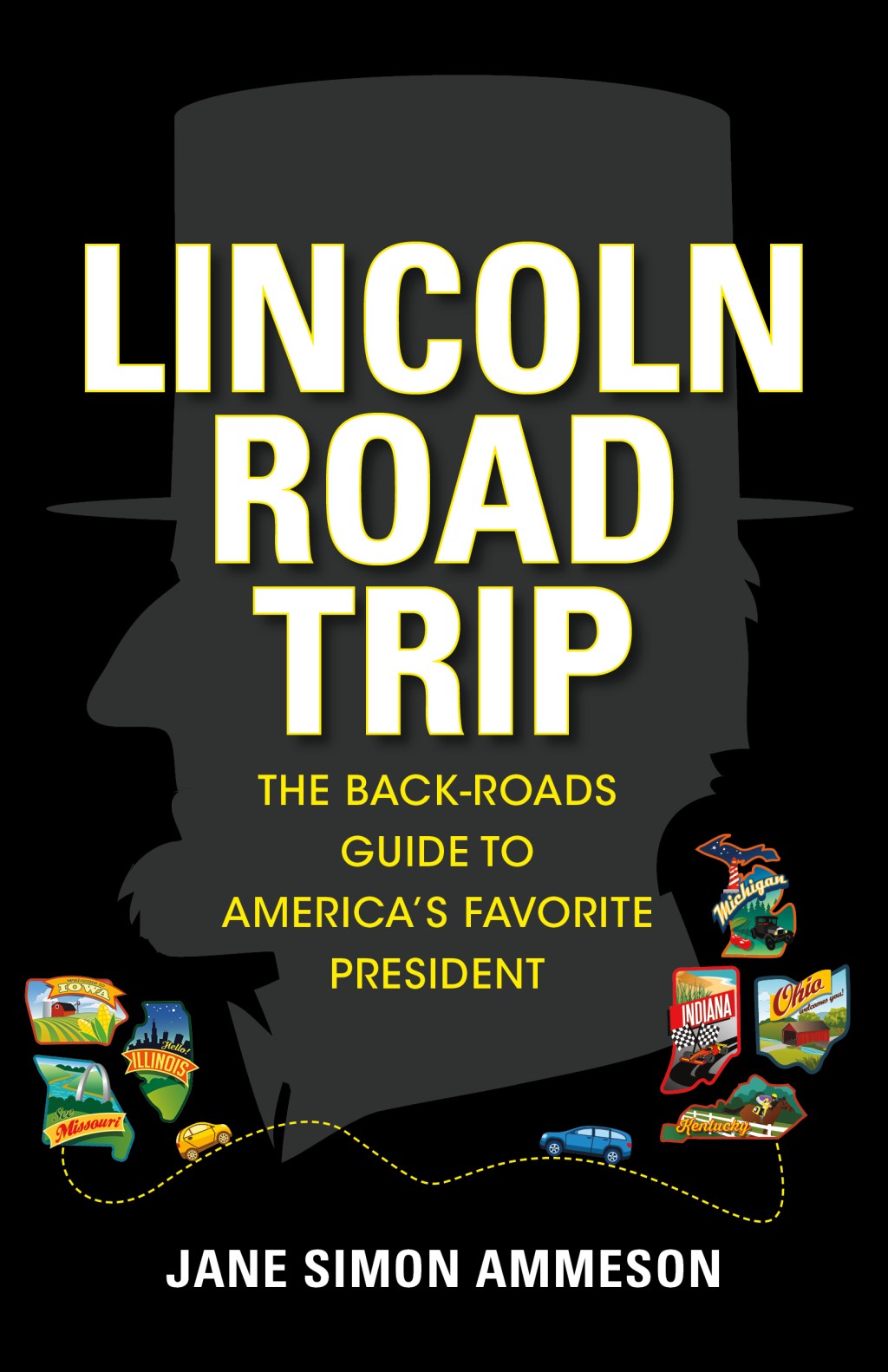
    I am proud to announce that my book, Lincoln Roadtrip: The Backroads Guide to America’s Favorite President, published by Indiana University Press, is a winner in the 2019-20 Lowell Thomas Travel Journalism Competition, taking the bronze in the Travel Book category. The annual competition is sponsored by the Society of American Travel Writers Foundation.

    The Old Talbott Inn in Bardstown, Kentucky looks much like it did in Lincoln’s day.

    Winners of the awards, the most prestigious in the field of travel journalism, were announced October 16, 2020, at the annual conference of SATW, the premier professional organization of travel journalists and communicators. This year’s gathering was a virtual event.

    Buxton Inn in Granville, Ohio

    The competition drew 1,299 entries and was judged by faculty at the University of Missouri School of Journalism. This year, the SATW Foundation presented 99 awards in 26 categories and more than $21,000 in prize money to journalists. The awards are named for Lowell Thomas, acclaimed broadcast journalist, prolific author and world explorer during five decades in journalism.

    Lincoln Boyhood National Memorial replica of the Lincoln Homestead when the Lincoln family lived here in the early 1800s.

    In honoring my work, the judges said: The concept of this book is straightforward, “historical travel” with a focus on perhaps the most beloved President in the history of the United States of America. But a straightforward concept does not automatically signify a simple task. Author Ammeson completed massive research about Lincoln’s life before his ascension to fame. The photographs enhance the words nicely. Another attractive enhancement: offering current-day sites unrelated to Lincoln that provide entertainment along the route of the dedicated Lincoln traveler.”

    The Home of Colonel Jones who knew that young Lincoln would accomplish much in this world.

    I wanted to create a fun and entertaining travel book, one that includes the stories behind the quintessential Lincoln sites, while also taking readers off the beaten path to fascinating and lesser-known historical places. Visit the Log Inn in Warrenton, Indiana (now the oldest restaurant in the state), where Lincoln dined in 1844 while waiting for a stagecoach, stop by the old mill in Jasper, Indiana where Lincoln and his father took their grain to be milled (and learn of the salacious rumor about Lincoln’s birth–one of many) and spend the night at the Golden Lamb in Lebanon, Ohio, a gorgeous inn now over 200 years old.

    The Golden Lamb, Lebanon, Ohio

    Connect to places in Lincoln’s life that helped define the man he became, like the home of merchant Colonel Jones, who allowed a young Abe to read all his books, or Ashland, where Mary Todd Lincoln announced at age eight that she was going to marry a president someday and later, Lincoln most likely dined. Along with both famous and overlooked places with Lincoln connections, I also suggest nearby attractions to round out the trip, like Holiday World, a family-owned amusement park that goes well with a trip to the Lincoln Boyhood National Memorial and Lincoln State Park.

    The Kintner House, a bed and breakfast in charming Corydon, Indiana. Lincoln never stopped here but his brother Josiah who settled nearby did when it was a tavern and inn. Confederate General John Hunt Morgan took over the inn for a short period of time after crossing the Ohio River with his soldiers in what was the only Civil War battle fought in Indiana.

    Featuring new and exciting Lincoln tales from Springfield, Illinois; the Old Talbott Tavern in Bardstown, Kentucky; the Buxton Inn, Granville, Ohio; Alton, Illinois; and many more, I wrote Lincoln Road Trip  hoping that it will be a fun adventure through America’s heartland, one that will bring Lincoln’s incredible story to life.

    Ashland, the home of Henry Clay in Lexington, Kentucky.

    For more information about the awards, including a full list of winners and judges’ comments, and SATW, visit www.satwf.com and www.satw.org

    Graue Mill, a stop on the Underground Railroad. Lincoln stopped by here to meet with the owner on his way to nearby Chicago.

    To order a copy of Lincoln Road Trips, click here.

  • Ten Restaurants That Changed America: Howard Johnson’s A Roadside Gem

    Ten Restaurants That Changed America: Howard Johnson’s A Roadside Gem

                I was going to write a column about New Year’s Eve celebration foods but got distracted by Ten Restaurants That Changed America by Paul Freedman (Liveright 2018; $23.95), a look at how food evolved in this country. I’m going to be interviewing the author after I finish the book but instead of reading it from front to cover as soon as I read the introduction I turned to the chapter on Howard Johnson’s because those orange roofed restaurants and lodges are part of my youth. I worked at HoJo’s when I was a teen and as a young girl, when we traveled to New York, Connecticut and along the eastern seaboard, we typically stayed at their lodges.

    I remember the sparkling pool, so inviting after a long day in the car, trying to read a book or do crossword puzzles while whizzing along—we only had an AM radio in the car and my mother didn’t like the noise of it when she was driving.  Dinner was typically fried clams, hamburgers or clam chowder and always one of their many flavors of ice cream. Probably most famous for their clam dishes, the chapter about Ho Jo’s in Freedman’s book is titled Howard Johnson’s: As American As Fried Clams. If you’re wondering about all the clam dishes, Johnson was from Massachusetts and the chain started off in New England. And maybe people ate more clams back then.

                At one time, according to the book, during the 1970s, Howard Johnson had 929 restaurants and 526 motor lodges stretching across the U.S. In the 1960s, the restaurants served more meals outside the home than any company or organization except for the U.S. Army. There actually was a Howard Johnson (his middle name was Deering) and he was born in 1897 and though he liked to present himself, even at the height of his company’s success, as a simple man, he married four times, owned a yacht, three houses and a substantial art collection. Oh, and he didn’t really eat at Howard Johnson’s much. Instead he liked high-end French dining like Le Pavillon and the Stork Club, both fancy and ultra-expensive New York restaurants.

                I’m not quite sure if there are any HoJo’s left. There were a handful less than a decade ago including on in Times Square and another in Bangor, Maine but those are gone. A Google search indicates that the last one, in Lake George, New York, was, as of earlier this year, was up for sale as a possible site for redevelopment. It had just re-opened the year before after being closed for four years. Unfortunately the person who had re-opened it had some legal issues. For more information, check out hojoland.com, a Website for all things Howard Johnson’s.

              Occasionally I see a building that looks like it was once a HoJo but has been converted to another use and the orange roof has usually been replaced. Because there are websites for almost anything, there are a few identifying converted HoJo’s as well.

              Though the restaurants are gone, many of the recipes remain and I looked up a few that I remember enjoying way back when and was fascinated to find out that the legendary French chef Jacque Pepin once worked at HoJo’s, a time he talks about in his memoir, The Apprentice: My Life in the Kitchen. Pepin, who would make their clam chowder in 3,000-gallon amounts, recreated the recipe for home cooks, saying he makes it  “when a bit of Howard Johnson’s nostalgia creeps in.” His contains pancetta which I’m guessing is a substitute for the bacon in the original recipe and he also uses Yukon Gold potatoes and I don’t think that variety was common back in 1929 when Johnson opened his first restaurant.

    Jacques Pepin Howard Johnson’s Clam Chowder

    5 quahog clams or 10 to 12 large cherrystone clams

    4 cups water

    4 ounces pancetta or lean, cured pork, cut into 1-inch pieces (about ¾ cup)

    1 tablespoon good olive oil

    1 large onion (about 8 ounces), peeled and cut into 1-inch pieces (1-1/2 cups)

     2 teaspoons chopped garlic

    1 tablespoon all-purpose flour

    2 sprigs fresh thyme

    1 pound Yukon Gold potatoes, peeled and cut into ½-inch dice (2-1/4 cups)

    1 cup light cream

    1 cup milk

    ¼ teaspoon freshly ground black pepper

    Wash the clams well under cold water, and put them in a saucepan with 2 cups of the water. Bring to a boil (this will take about 5 minutes), and boil gently for 10 minutes. Drain off and reserve the cooking liquid, remove the clams from their shells, and cut the clams into 1/2 –inch pieces (1-1/2 cups). Put the clam pieces in a bowl, then carefully pour the cooking liquid into another bowl, leaving behind any sediment or dirt. (You should have about 2-1/2 cups of stock.) Set aside the stock and the clams.

    Put the pancetta or pork pieces in a large saucepan, and cover with the remaining 2 cups water. Bring to a boil, and boil for 30 seconds. Drain the pancetta, and wash it in a sieve under cold water. Rinse the saucepan, and return the pancetta to the pan with the oil. Place over medium heat, and cook gently, stirring occasionally, for 7 to 8 minutes. Add the onion and garlic, and continue cooking, stirring, for 1 minute.  Add the flour, mix it in well, and cook for 10 seconds. Add the reserved stock and the thyme, and bring to a boil. Then add the potatoes and clams, bring to a boil, cover, reduce the heat to very low, and cook gently for 2 hours.

    At serving time, add the cream, milk, and pepper, bring to a boil, and serve. (Note: No salt should be needed because of the clam juice and pancetta, but taste and season to your liking.)

    Howard Johnson’s Fried Clams

    1 cup evaporated milk

    1 cup milk

    1 egg

    1/4 teaspoon vanilla

    Dash salt and pepper

    4 dozen freshly shucked clams

    1 cup cake flour

    1 cup yellow cornmeal

    Oil for frying

    Combine evaporated milk and whole milk, egg, vanilla, salt, and pepper. Soak clams in liquid and then dredge in combination of cake flour and cornmeal, fluffing them in the flour mixture for light but thorough coverage. Shake off excess flour and fry in oil. Serve with French-fried potatoes, tartar sauce, homemade rolls, and butter.

    Howard Johnson’s Chicken Croquettes

    6 tablespoons chicken fat (can use butter instead)

    1 ¼ cups flour

    2 1/4 quarts chicken stock. hot

    6 tablespoons chopped onions

    2 tablespoons chopped parsley

    3 cups bread crumbs

    3 eggs

    1 tablespoon salt

    1 teaspoon black pepper

    2 pounds boneless chicken, finely minced

    Sauté onions in chicken fat but do not brown.

    Make a roux (recipe below). Add hot chicken stock, and add seasonings. Stir constantly until mixture thickens and is well blended.

    Add minced chicken and chopped parsley. Cook 5 minutes more, then remove from fire and chill. Scoop and shape into croquettes. Dip in flour, egg wash and bread crumbs and fry in deep fat until lightly browned on all sides.

    These were served a cream sauce (see recipe below).

    Roux

    1/4 pound butter

    1 stalk celery, minced

    1 cup all-purpose flour

    Cream Sauce

    2 tablespoons butter

    3 tablespoons flour

    1/4 teaspoon salt

    Dash of cayenne pepper

    1 cup chicken broth

    1/2 cup milk

    Melt butter in pan; stir in flour and seasonings. Cook on low until smooth; stirring constantly, add broth and milk slowly; to maintain thickness, stir on medium heat until all milk and broth is added and sauce is thick.

    In a heavy pot, melt butter and then add the minced celery. Stir in the flour and cook for 3 minutes., stirring constantly. Fold in the chicken meat and allow to cool.

    Howard Johnson’s Boston Brown Bread

    1 cup unsifted whole wheat flour

    1 cup unsifted rye flour

    1 cup yellow corn meal

    11/2 teaspoon baking soda

    11/2 teaspoon salt

    3/4 cup molasses

    2 cups buttermilk

    Grease and flour a 2 quart mold. Combine flours, corn meal, soda ,salt. Stir in molasses, buttermilk.

    Turn into mold, cover tightly. Place on trivet in deep kettle. Add enough boiling water to kettle

    to come half way up sides of mold; cover. Steam 3 1/2 hr., or until done. Remove from mold to cake

    rack. Serve hot with baked beans.

    Makes 1 loaf

  • Food of the Italian South by Katie Parla

    Food of the Italian South by Katie Parla


    U Pan Cuott. Photo credit Ed Anderson.

    It’s personal for Katie Parla, award winning cookbook author, travel guide and food blogger who now has turned her passion for all things Italian to the off-the-beaten paths of Southern Italy, with its small villages, endless coastline, vast pastures and rolling hills.
    “Three of my grandmother’s four grandparents are from Spinoso, deep in a remote center of Basilicata,” says Parla, the author of the just released Food of the Italian South: Recipes for Classic, Disappearing Lost Dishes (Clarkson Potter 2019; $30).

    Katie Parla in Southern Italy. Photo credit Ed Anderson.


    Parla is a journalist but she’s also a culinary sleuth, eager to learn all about foodways as well as to chronicle and save dishes that are quickly disappearing from modern Italian tables. She’s lived in Rome since graduating with a degree from Yale in art history and her first cookbook was the IACP award winning Tasting Rome. She’s also so immersed herself in Italian cuisine that after moving to Rome, she earned a master’s degree in Italian Gastronomic Culture from the Università degli Studi di Roma “Tor Vergata”, a sommelier certificate from the Federazione Italiana Sommelier Albergatori Ristoratori, and an archeological speleology certification from the city of Rome.


    Matera. Photo credit Ed Anderson.


    In tiny Spinoso, Parla and her mother checked into one of the few available rooms for rent and went to office of vital statistics to find out more about family history.
    “We made the mistake of getting there before lunch,” she says. “You could tell they really want to go home and eat. They told us there were only four or five last names in the village and since ours wasn’t one of them, then we couldn’t be there.”


    Caiazzo. Photo credit Ed Anderson.


    But Parla found that sharing wine with the officers soon produced friendlier results (“wine and food always does that in Italy,” she says) and after leafing through dusty, oversized ledgers written in fading, neat cursive they were able to locate the tiny house where her grandfather had lived as well as other extensive family history.
    “Thank goodness for Napoleon, who was really into record keeping, no matter his other faults” says Parla.

    Katie Parla. Photo credit Ed Anderson.


    Many of her ancestors were sheepherders, tending sheep, staying with a flock for a week in exchange for a loaf of bread. This poverty was one reason so many Southern Italians left for America. But it also is the basis for their pasta and bread heavy cuisine says Parla.
    To capture the flavors of this pastoral area, Parla visited restaurants and kitchens, asking questions and writing down recipes which had evolved over the centuries from oral traditions.
    Describing Rome, Venice and Florence as “insanely packed,” Parla believes that those looking for a less traveled road will love Southern Italy, an ultra-authentic region to the extent that in Cilento, for example, there are more cars than people on the road.


    Spezzatino all Uva . Photo credit Ed Anderson.


    “There’s all this amazing food,” she says. “But also, there’s all this unspoiled beauty such as the interior of Basilicata. And the emptiness, because so many people are gone, creates this sense of haunted mystery. It’s so special, I want people to understand the food and to visit if they can.”
    For more information, visit katieparla.com


    ’U Pan’ Cuott’
    Baked Bread and Provolone Casserole

    Serves 4 to 6
    1 pound day-old durum wheat bread (I like Matera-style; see page 198), torn into bite-size pieces
    3 cups cherry tomatoes, halved
    7 ounces provolone cheese, cut into 1-inch cubes
    1 teaspoon peperoni cruschi powder or sweet paprika
    2 garlic cloves, smashed
    1 teaspoon dried oregano
    ½ teaspoon peperoncino or red pepper flakes
    ¼ cup plus 2 tablespoons extra-virgin olive oil
    Sea salt

    Overview:
    In Bernalda, a town in Basilicata best known as the ancestral village of Francis Ford Coppola, there are many ancient bread traditions. The town isn’t far from the durum wheat fields of the Murgia plateau and the famous bread towns Matera and Altamura. One of the town’s classic dishes is ’u pan’ cuott’ (Bernaldese dialect for pane cotto, “cooked bread”). Families would bake stale slices of Bernalda’s enormous 3-kilogram loaves with whatever food scraps they could find, resulting in a savory, delicious bread casserole bound by gooey bits of melted provolone. Use the crustiest durum bread you can find or bake.
    Method:
    Preheat the oven to 475°F with a rack in the center position.
    Place the bread in a colander, rinse with warm water, and set aside to soften. The bread should be moistened but not sopping wet.
    In a large bowl, combine the tomatoes, provolone, peperoni cruschi, garlic, oregano, peperoncino, and ¼ cup of the olive oil. Season with salt.
    When the bread crusts have softened, squeeze out any excess liquid and add the bread to the bowl with the tomato mixture. Stir to combine.
    Grease a baking dish with 1 tablespoon of the olive oil, pour in the tomato mixture, and drizzle the remaining 1 tablespoon olive oil on top. Bake until the top is heavily browned, and the provolone has melted, about 20 minutes. Serve warm.
    Spezzatino all’Uva
    Pork Cooked with Grapes

    Serves 6 to 8
    2 tablespoons extra-virgin olive oil
    2 pounds boneless pork shoulder, salted and cut into 2-inch cubes
    1 garlic clove, smashed
    1 cup dry red wine (I like Aglianico del Vulture)
    2 bay leaves
    4 cups pork stock or water
    1 bunch of red grapes (I like Tintilia grapes), halved and seeded

    Overview:
    The foothills east of the Apennines in Molise grow Tintilia, an indigenous red grape known for its low yield and pleasant notes of red fruit and spices. Each year, the majority of the harvested grapes are pressed to make wine, with the remainder reserved for jams and even savory dishes like this pork and grape stew, which is only made at harvest time. The slight sweetness of the grapes mingles beautifully with the savory pork and herbaceous notes of the bay leaves. Salt the pork 24 hours in advance.
    Method:
    Heat the olive oil in a large skillet over medium heat. When the oil begins to shimmer, add the pork, working in batches as needed, and cook, turning, until it is browned on all sides, 7 to 8 minutes. Remove the pork and set aside on a plate.
    Reduce the heat to low. Add the garlic and cook until just golden, about 5 minutes. Add the wine, increase the heat to medium, and scrape up any browned bits from the bottom of the pan. When the alcohol aroma dissipates and the liquid has nearly evaporated, about 2 minutes, add the bay leaves.
    Return the pork to the pan. Add enough stock so the meat is mostly submerged and season with salt. Cook, stirring occasionally, for 1½ hours more, until the pork is fork-tender. Add the grapes at the 1 ¼ hour mark and continue cooking until they are tender. If the sauce becomes too dry, add a bit more stock (you may not need all the stock). Serve immediately. 
    Ifyougo:
    What: Katie Parla has three events in Chicago
    When & Where: March 19 from 6:30 to 9pm. Katie will be celebrating the release of her cookbook with her friends at Monteverde, 1020 West Madison Street, Chicago, IL. The cost of the dinner is $150 including food, wine pairings, tax, gratuity and copy of the book. (312) 888-3041.
    When & Where: March 20 from 6 to 9pm. Katie will be hosting an aperitivo and signing at Lost Lake’s Stranger in Paradise, 3154 W Diversey Ave., Chicago, IL. No booking necessary, just come on down. Books will be sold on site by Book Cellar. (773) 293-6048.
    Menu of five cocktails from the book, $12.
    Three small plates (two pastas from Pastificio di Martino and olive oil poached tuna, endive and olives) from Chef Fred Noinaj, $12-15.
    When & Where: March 21 from 6 to 7:30pm. Katie will host an aperitivo and sign books, which will be available for purchase at Bonci Wicker Park, 1566 N Damen Ave., Chicago, IL. (872) 829-3144.

  • Book Signings: Lost Restaurants of Chicago by Greg Borzo

    Book Signings: Lost Restaurants of Chicago by Greg Borzo

    For those of us who grew up in and around Chicago, there are names of long gone restaurants that still tug at our heart, evoking memories of foods no longer served, surroundings replaced and aromas we many never smell again.

    Hoe Sai Gai

              For me, that’s the allure of Greg Borzo’s latest book, Lost Restaurants of Chicago with foreword by Dough Sohn, the owner of the now closed Hot Doug’s.

              Borzo, a Chicagoan historian who has written several books about the city’s bicycling, transportation and history including its fountains frequently gives tours and talks for organizations such as Forgotten Chicago, the Chicago History Museum and Chicago Cycling Club. The idea for his latest came about when he and his friends were chatting about the good times they’d had at restaurants over the years and how many were gone. His book goes further back though, starting over a century-and-a-half ago.

    Jacques

              “My list of restaurants to research from at least a hundred people,” he says, noting that he still gets some complaints about places he left out but then with seven out of eight restaurants closing within a few years of opening, the number of those gone are overwhelming.

              I ask Borzo what some of his favorite are “lost” restaurants. Some he had dined at, like The Great Gritzbe’s Flying Food Show, a Richard Melman restaurant that opened in 1974.

    Maxim’s

              “It had a dessert bar and you could get as many desserts as you wanted, like a salad bar,” he recalls about the restaurant that closed in 1883. “There’s also Trader Vic’s which was in the Palmer House. Its décor was completely over the top.”

              When Trader Vic’s, a Tiki bar extraordinaire first opened in 1957, bringing it up to its Polynesian zenith cost $500,000 which included a décor boasting huge Eastern Island carved wooden heads, totem poles, canoes and massive Maori beams. It was part of the Tiki rage that swept the U.S. and Trader Vic’s had its competitors include Don the Beachcomber which featured 85 types of run and 65 different cocktails.

              There are also places he wishes he ate at but didn’t such as Maxim’s de Paris, which was opened from 1963 to 1982.

              “It was a replica of the Maxim’s in Paris,” says Borzo. “I went to it when it later when the building was an event space.”

              Which is another phenomena of Chicago restaurants.

              “Many single locations have been many different restaurants,” says Borzo.

    Indeed, Bistro 110 at 110 East Pearson used to be the Blackhawk, then became Bar Toma Restaurant which is now closed.

    “This book is a history book too,” says Borzo. “It reflects the character of the city through the food and showing the different income levels. Some people were going to diners, others to the Pump Room.”

    The girl on the trapeze at Flo’s Restaurant and Cocktail Parlous

    Borzo and I both share a laugh about the now closed Flo’s Restaurant and Cocktail Parlor which was located at 17 West Randolph, near what is now Macy’s flagship store. I used to see it as a kid when my parents took me shopping in the Loop. It was notable because a woman in a form fitting Playboy-bunny like costume and spiked heels climbed out on a swing on the second floor balcony to advertise the place.         

    Greg Borzo

              “I’ve eaten at a lot of the places I write about,” says Borzo. “And those that were already closed I tried to find people who had eaten there, researched old newspaper stories and searched through vintage photos.”

    Ifyougo:

    What: Greg Borzo talk and book signing

    When, Where and Contact Information:

    Thursday, January 24 at 5 p.m.  

    Cindy Pritzker Auditorium, Harold Washington Library, 400 S. State St., 6-7 p.m. A free raffle will give away more than $1,000 of gifts: trips, tours, food, books and more.

    (312) 747-4300; slpl.bibliocommons.com/events

    Saturday, February 9 at 5 p.m.

    The Book Cellar, 4736-38 N Lincoln Ave., Chicago, IL

    (773) 293-2665; bookcellarinc.com

  • The Cookbook Library: Four Centuries of the Cooks, Writers, and Recipes That Made the Modern Cookbook

    The Cookbook Library: Four Centuries of the Cooks, Writers, and Recipes That Made the Modern Cookbook

    Still worried about that extra Halloween candy you gobbled down?  Imagine how many miles you’d have to spend on the treadmill after attending the 1450 banquet, held in England celebrating the enthronement of an archbishop where guests munched on 104 oxen, six ‘wylde bulles,’ 1,000 sheep, 400 swans and such game birds such as bustards (larger than a turkey), cranes, bitterns, curlews and herons?

    “Our ancestors had gastronomic guts,” Anne Willan tells me as we chat on the phone, she in Santa Monica, California where there’s sunshine and me in the cold Great Lakes region.  I find it fascinating to read old menus and descriptions of banquets and feasts and for that Willan, founder of famed French cooking school École de Cuisine la Varenne, recipient of the IACP Lifetime Achievement Award and author of 30 cookbooks, is the go to person.

    Even better, after collecting cookbooks for some 50 years and amassing a collection of over 5000 tomes, last year Willan and her husband, Mark Cherniavsky immersed themselves in their antiquarian cookbook library and came out with The Cookbook Library: Four Centuries of the Cooks, Writers, and Recipes That Made the Modern Cookbook (University of California Press $50).Anne Willan

    “Seals were eaten on fast days along with whale, dolphin, porpoise and thousands of other fish,” says Willan. Hmmm…that’s different than the macaroni and cheese and fish sticks I used to eat at the homes of my Catholic friends on Fridays.

    Here we peruse four centuries of gastronomy including the heavily spiced sauces of medieval times (sometimes employed because of the rankness of the meat), the massive roasts and ragoûts of Sun King Louis XIV’s court and the elegant eighteenth-century chilled desserts. One for the interesting detail, Willan also tells the story of cookbook writing and composition from the 1500s to the early 19th century. She highlights how each of the cookbooks reflects its time, ingredients and place, the  recipes adapted among the cuisines of Germany, England, France, Italy and Spain as well as tracing the history of the recipe.

    Historic cookbooks can be so much different than ours, ingredients unfamiliar and instructions rather vague. For example, Willan points out the phrase “cook until” was used due to the difficulty of judging the level of heat when cooking a dish over the burning embers in an open hearth. It wasn’t until the cast-iron closed stoves of the 19th century that recipes writers begin were finally able to give firm estimates for timing.

    For food historians and even those just appreciative of a good meal, the book is fascinating. For me as a food writer, I wonder about covering a dinner where birds flew out of towering pastries, seals were served and eels baked into pies and it was often wise to have a taster nearby in case someone was trying to poison you.

    Anne Willan 1

    The following recipe is from The Cookbook Library.

    Rich Seed Cake with Caraway and Cinnamon

    This recipe is based on a cake in The Compleat Housewife by Eliza Smith, published in London in the 1700s.  Willan, ever the purist, suggests mixing the batter by hand as it was done 300 plus year ago.

    “The direct contact with the batter as it develops from a soft cream to a smooth, fluffy batter is an experience not to be missed,” she says. “If you use an electric mixer, the batter is fluffier but the cake emerges from the oven less moist and with a darker crust.”

    At times, Willan needs to substitute ingredients. The original recipe listed ambergris as an option for flavoring the cake. “Ambergris,” writes Willan, “a waxy secretion from a sperm whale, was once used to perfume foods. As it is now a rare ingredient, I’ve opted for Mrs. Smith’s second suggestion, of cinnamon, which marries unexpectedly well with caraway.”

    1 pound or 31⁄2 cups) flour

    1 2⁄3 cups sugar

    6  tablespoons caraway seeds

    5 eggs

    4 egg yolks

    1 pound or 2 cups butter, more for the pan

    11⁄2 tablespoon rose water or orange-flower water

    2 teaspoon ground cinnamon

    Heat the oven to 325ºF. Butter a 9-inch springform pan. Sift together the flour and sugar into a medium bowl, and stir in the caraway seeds. Separate the whole eggs, putting all the yolks together and straining the whites into a small bowl to remove the threads.

    Cream the butter either by hand or with an electric mixer fitted with the paddle attachment. Add the yolks two at a time, beating well after each addition. Beat in the rose water. Whisk the egg whites just until frothy, then beat them, a little at a time, into the egg yolk mixture. Beat in the cinnamon. Finally, beat in the flour mixture, sprinkling it a little at a time over the batter. This should take at least 15 minutes by hand, 5 minutes with a mixer. The batter will lighten and become fluffier. Transfer the batter to the prepared pan.

    Bake until the cake starts to shrink from the sides of the pan and a skewer inserted in the center comes out clean when withdrawn, 11⁄4 to 11⁄2 hours. Let the cake cool in the pan on a rack until tepid, then unmold it and leave it to cool completely on the rack. When carefully wrapped, it keeps well at room temperature for several days and the flavor will mellow.


  • Chefs, Drugs and Rock & Roll: How Food Lovers, Free Spirits, Misfits and Wanderers Created a New Profession

    Chefs, Drugs and Rock & Roll: How Food Lovers, Free Spirits, Misfits and Wanderers Created a New Profession

    Author Photo. Andrew Friedman. Photo Credit Evan SungAndrew Friedman calls himself a chef writer because, as much as he loves food, he’s passionate about the stories chefs have to tell.

    “My point of view is writing not so much about the food but about the chefs, that’s why I say I’m a chefie not a foodie,” he says. “I think too many well-known chefs are almost portrayed as cartoon characters and in a broad stroke. I wanted to spend time with them and really get to know their stories, who they really are and their impact on how we eat now. Like Wolfgang Puck. He’s a tremendous cook but people call him the first celebrity chef. He’s so much more than that.”

    To accomplish this, Friedman interviewed over 200 chefs and food writers and others who were leading the food revolution against processed and packaged foods.

    “I’m such a geek I would spend three hours with someone just to get a nugget or two,” he says.

    The results? An accumulation of tens of thousands of transcript pages and his latest book,  Chefs, Drugs and Rock & Roll: How Food Lovers, Free Spirits, Misfits and Wanderers Created a New Profession (Ecco 2018; $27.99), where he recounts how dedicated and imaginative men and women in the 1970s and the 1980s, who were willing to challenge the rules, revolutionized America’s food scene.

    Now chefs are like rock stars, often known just by one name, commanding their own empires of cookbooks, TV shows, restaurants, cookware and food products. But Friedman points out that up until 1976, the United States Department of Labor categorized cooks as domestics. It took lobbying by the American Culinary Federation, at the urging of Louis Szarthmary, the late Hungarian American chef who owned The Bakery in Chicago and wrote The Chef’s Secret Cookbook, a New York Times bestseller, to change the classification into a profession.

    “I wanted to show how this became a viable profession,” he says. “I was talking to Jody Buvette, owner of Buvette in New York and she remembers sitting her father down and  saying ‘I have two bad things to tell you. I’m gay and I want to be a cook.’ It was like telling your upper middle-class parents that you wanted to be a coal miner.”

    Friedman, whose knowledge about restaurants, culinarians and food seems delightfully endless, chose three cities to focus on—San Francisco, Los Angeles and New York. What does he think of Chicago’s food scene?

    “It’s great,” he says. “I love dining in Chicago and you have some brilliant chefs but I think much of the beginnings started in those three cities.”

    Besides, he has those piles of transcripts. There’s surely more than a few Chicago stories in all those pages.  In the meantime, Friedman gives us a wonderfully written read about a defining time—one that in some ways separates frozen TV dinners and what many restaurants are serving today.

    Ifyougo:

    What:  5 course 80s-era dinner inspired by Chefs, Drugs and Rock & Roll with wines selected by Sommelier Rachael Lowe and conversation at Spiaggia Restaurant

    When: Tues. October 2, 7 pm

    Where: Spiaggia Restaurant, 980 North Michigan Ave., Chicago, IL

    Cost: $150 per person

    FYI: 312-280-2750; spiaggiarestaurant.com


    What: Talk with Andrew Friedman about Chefs, Drugs and Rock & Roll

    When: Wed, October 3, 6:30 to 8:30 pm

    Where: Read It & Eat, 2142 North Halsted St., Chicago, IL

    Cost: Purchase a ticket and book combo for $36.45 or 2 tickets and a book combo for $46.45

    FYI: 773-661-6158; readitandeatstore.com


  • The Mermaid Handbook: An Alluring Treasury of Literature, Lore, Art, Recipes, and Projects

    The Mermaid Handbook: An Alluring Treasury of Literature, Lore, Art, Recipes, and Projects


    OLYMPUS DIGITAL CAMERA
    Sea shell cookies perfect for Mermaids to nibble

    Life is busy for a lovely mermaid (and aren’t they all?). There’s riding seahorses through shimmering sea foam capped with frothy white waves, finding the perfect rock on which to display their fish-like tails sheathed in  iridescent spangles so they sparkle in the sunlight, combing their beautiful long locks and, of course, singing enticingly so that sailors forsake their duty and travel to their doom all to get a better look.

    For mermaids as well as mermaid wannabees or just those who love reading about these mythical creatures, folklore expert Carolyn Turgeon introduces us to their world in her recently released OLYMPUS DIGITAL CAMERA (Harper Design 2018; $35).

    Turgeon, the editor-in-chief of Faerie Magazine, a quarterly print publication and author of several books including The Faerie Handbook, showcases all things mermaid by dividing her handbook into four sections. In “Fashion and Beauty” we learn techniques on creating mermaid hair—face it, haven’t you always wanted a reason to sprinkle glitter throughout your locks. Of course, then you need a mermaid mirror to admire yourself. Not to worry Turgeon includes directions.  “Arts and Culture” tells the stories of sirens in classic mythology and contains luscious reproductions of mermaid art and recounts tales of mermaid from around the world. Fair warning—mermaids aren’t always nice.

    You don’t have to go down to the sea for the section on “Real Mermaids and Where to Find Them.” Here, Turgeon takes us to the advent of mermaids as entertainers starting with the story of Annette Kellerman who learned to swim like a fish in her native Australia to overcome rickets and bowed legs, eventually becoming strong enough to swim an average of 45 miles a week. So good at what she did, Kellerman began swimming for money at young age and by 1907 was performing as the Australian Mermaid throughout the United States in glass tanks and in 1916 starred in A Daughter of the Gods, the first movie to cost over a $1 million to make as well as the first one featuring a naked woman (don’t worry, her long mermaid hair covered the most private of parts).  Turgeon takes us into midcentury when there were a plethora of bars and restaurants with tanks for mermaids to perform in. Surprisingly, at least for me, not all of these have disappeared and some mermaid cocktail lounges are still in business including the Dive Bar in Sacramento, California, the Sip ‘N Dip Tiki Lounge in Great Falls, Montana and the Wreck Bar in Fort Lauderdale, Florida. We also learn the stories of women who have made their livings as mermaids.

    OLYMPUS DIGITAL CAMERA
    Mermaid libations

    Of course, even a mermaid has to eat and the last section of Turgeon’s delightful book “Food, Entertaining and Stories of the Sea” includes recipes for the types of edibles a mermaid might nibble such as Savory Sesame Seed and Seaweed Cookies, Salmon Poke with Wild Rice, Pineapple and Macadamia Nuts and an assortment of sea-themed shaped cookies covered with royal icing. And because what mermaid wouldn’t want to set the perfect table to indulge in such delights, there are crafts to create seashell fortune party favors and shell cocktail glasses to sip such libations as Blue Sea Cocktails and Seductive Siren Cocktails (recipes included).

    Those wanting to indulge their inner mermaids can try the recipes below.

    Honey Gingerbread Cookies with Royal Icing

    8 ounces of unsalted butter

    One and ½ granulated sugar

    2 cups good quality honey

    2 teaspoons baking powder

    4 teaspoons ginger

    4 teaspoon cinnamon

    1 teaspoon cloves

    1 teaspoon nutmeg

    ½ teaspoons salt

    ¼ cup cocoa powder, optional

    3 large eggs

    9 cups all-purpose flour

    1 large egg, lightly beaten and mixed with 1 teaspoon water

    Melt the butter in a medium sized saucepan over medium low heat. Add the sugar is still mostly dissolved, then pour in the honey and stir to combine. Cook until very hard and mixture is smooth, but did not boil. Remove from heat.

    Sift together baking powder, ginger, cinnamon, cloves, nutmeg and salt. Add up to 1/3 cup cocoa powder, depending on color desired. Add to the warm butter mixture and stir until well combined. Set aside to cool to room temperature.

    Transfer the mixture to the ball of an electric mixer and add three eggs, beating until combined. Gradually adding flour, beating all the while.

    When all the flour is absorbed, divided the dough in half and wrapped in several layers of plastic wrap.

    Store in a cool place for at least 24 hours, or up to a week in the refrigerator. If the Joe is refrigerated bring it to room temperature before proceeding.

    When you’re ready to bake, preheat the oven to 375°F. Unwrap the dough and place on a well-floured work surface. Knead flour into the dough until it is very smooth, pliable and not sticky. Roll up to ¼- inch thickness for small cookies, a little thicker for larger cookies.

    Use cookie cutters to cut cookies into mermaid friendly shapes such as seahorses, shells and starfish.

    Big six minutes, checking to see if any bubbles form. If they do, gently smooth with a spatula and continue to bake until done, about nine minutes total for medium cookies and up to 14 minutes for larger ones.  Remove to a wire rack and use a pastry brush to apply coat of the lightly beaten egg. Cool completely.

    Decorate with Royal Icing (see recipe below).

    Royal Icing

    2 pounds of powdered sugar

    ½ teaspoon cream of tartar

    1 to 2 teaspoons vanilla extract

    10 tablespoons liquid pasteurized egg whites

    Combine powdered sugar, cream of tartar, vanilla and pasteurized egg whites in the bowl of a stand mixer and beat high speed with a paddle attachment for 4 to 5 minutes.

    Store in an airtight container in the refrigerator.

    Blue Sea Cocktail

    1 ½ ounces white rum

    1 ounce Blue Curaçao

    ½ ounce Suze or any aperitif

    ½ ounce Luxardo Maraschino Liqueur

    ½ ounce simple syrup

    Dash fresh lemon juice

    Ice cubes

    Combine all the ingredients in the shaker.

    Shake until will chilled. Strain into a cocktail glass, on the rocks and serve immediately.

    From The Mermaid Handbook by Carolyn Turgeon.


  • Local Flavor: Restaurants That Shaped Chicago’s Neighborhoods

    Local Flavor: Restaurants That Shaped Chicago’s Neighborhoods

    Chicago is a city made of neighborhoods, each individual and diverse, reflective of its residents and also the restaurants anchoring them. In her latest book, Jean Iversen shares with us her impressions and interactions in eight local eateries and the people who made them what they are, chronicling their stories in her latest book, Iversen_photo2(preferred) (Northwestern University Press 2018).

    It started when Iversen, a Chicago writer whose work has appeared in Crain’s Chicago Business, Time Out Chicago, and the Daily Herald, was researching her first book, BYOB Chicago :Your Guide to Bring-Your-Own-Bottle Restaurants and Wine & Spirits Stores in Chicago.

                “Along the way there were a handful of restaurants that inspired me,” says Iversen. “The ones I chose for the book weren’t the oldest restaurants in Chicago, I just wanted them to be run by the ‘mayors’—restaurateurs who had become leaders of their small sections of Chicago over the years.”

    Included in her list are eateries in Pilsen, Chinatown, Little Italy, Avondale and on Devon Avenue to name a few. Some had long roots in the community such as Won Kow, a Chinatown restaurant that first opened 90 years but unfortunately closed this year.

    Iversen says she asked a baseline of questions such as how have you managed to stay in business. The answers she found, were often similar.

    “They were gracious, treated their customers well, offered quality food and had old school values,” she says. “They hadn’t gone out of style and were adaptable.”

    Each restaurant’s story opens a door and we get to see the personalities of not only the owners but their workers and customers. Iversen spent a lot of time showcasing not only Wow Kow but also Tufano’s Vernon Park Tap in Little Italy; Nuevo Leon/Canton Regio in Pilsen; The Parthenon in Greektown; Borinquen in Humboldt Park; Red Apple Buffet in Avondale; Hema’s Kitchen in West Rogers Park; and Noon O Kabab in Albany Park.

    She also collected recipes, a daunting task.

    “They weren’t intellectual property as far as the owners were concerned, many just hadn’t written them down,” she says. “I had to get them to sit down and get them to tell me more specific amounts than just “a little bit of this and that.”


    Ifyougo:

    What: Jean Iversen discusses Local Flavor: Restaurants That Shaped Chicago’s Neighborhoods. She will be joined in conversation by Jeffrey Ruby. A Q&A and signing will follow the discussion.

    When: Saturday, August 25, 3 pm

    Where: 57th Street Books, 1301 E. 57th St., Chicago, IL

    Cost: Free

    FYI: (773) 684-1300; semcoop.com