The 3 Best Thrillers Reese’s Book Club Has Ever Recommended https://flip.it/LDOAwy
Category: Fiction
-

The Year of the Locust by Terry Hayes
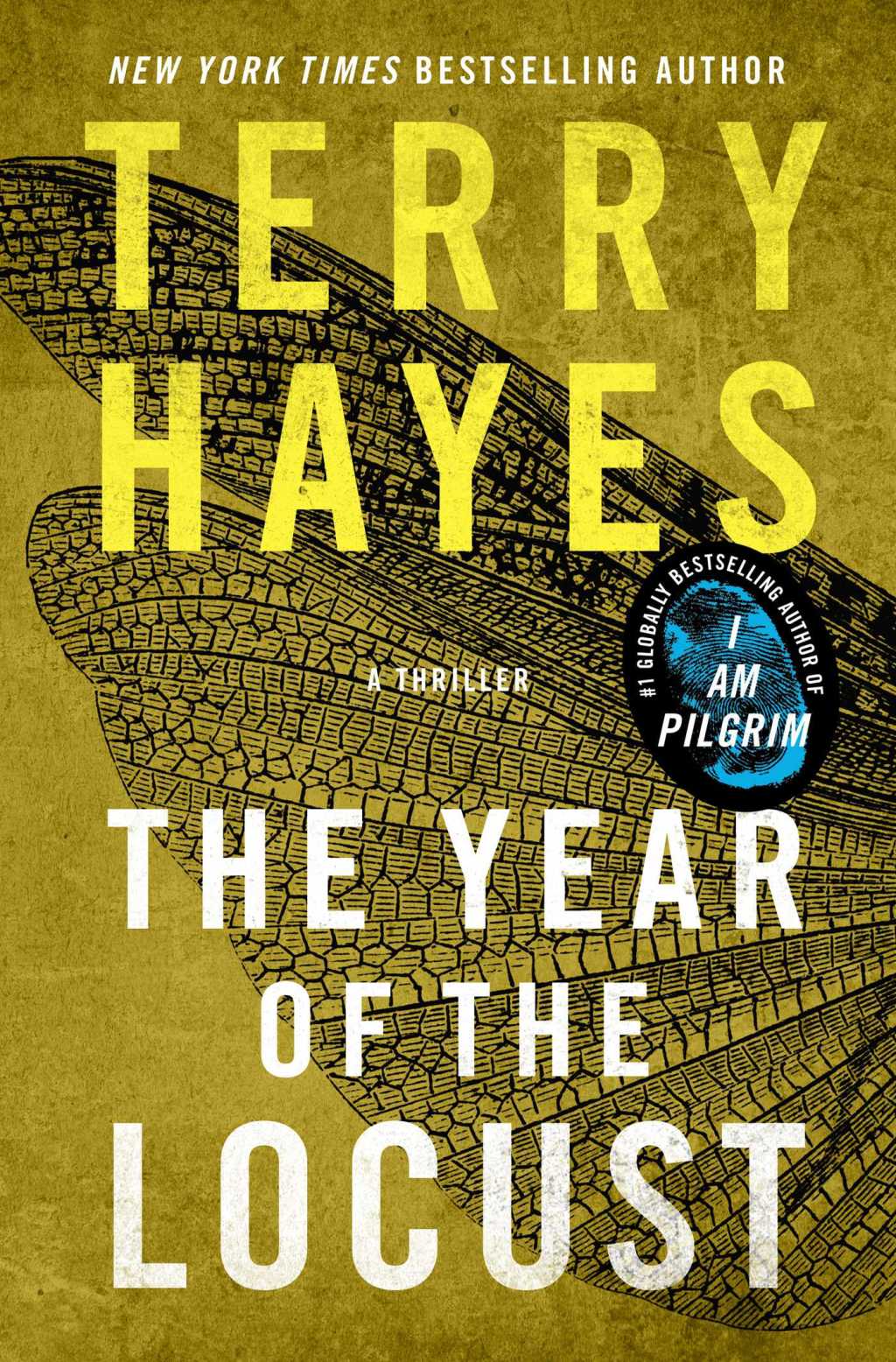
When my friend David Brown asked me to read “The Year of the Locust” and give him my opinion, I was less than excited. Written by Terry Hayes, a former journalist, and Emmy-nominated screenwriter who wrote the screenplays for, amongst others, Mad Max 2 – Road Warrior, Dead Calm, Mad Max Beyond Thunderdome, Payback, From Hell, and Vertical Limit, it definitely didn’t sound like my kind of book. I hadn’t seen any of the movies he’s written nor read his previous bestselling novel, “I Am Pilgrim,” published ten years ago to rave reviews.
But friendship is friendship and if David, a book publicist that I’ve known for years, wanted my input, I’d give it a go. Downloading the book on my Kindle, I sat down with a cup of coffee and started reading.
Two hours later my coffee was cold, but I was too entranced by Hayes’s book to make another cup as I followed CIA agent Ridley Kane, a Denied Access Area spy for the CIA meaning he can go wherever and do whatever needs to be done.
Kane is sent to the baddest of the badlands, the remote and geographically hostile 1600-mile border where Pakistan, Iran, and Afghanistan meet. Known as one of the most dangerous spots in the world, it’s a lawless place, the perfect place for robbers, murderers, and terrorists to hide in its many caves.
Kane’s job is to extricate an informant who has information about an upcoming Armageddon-like terrorist attack. He’s too late. The informant has been captured by The New Islamic Army of the Pure, and his family—a wife and two daughters staked out and left to die in the terrorist’s camp.
If Kane followed protocol, he would fade back into the desert but he can’t leave the mother and daughters to die and shoots their captors, setting them free. A noble act but one that makes it personal with Abu Muslim al-Tundra, known as the locust and formerly a chief with al-Qaeda and ISIS and an extremely deadly adversary. It’s al-Tundra’s brother that Kane has killed.
“The Year of the Locust” took Hayes ten years to write and it was when he was stuck in Portugal because of the COVID quarantine, away from his wife and three children, that he finally finished the 250,000 word novel.

“I couldn’t go anywhere for two years,” he says.
But Kane definitely goes places and among the many fascinating aspects of his book are his descriptions of locations I didn’t know existed.
I mean who knew about Baku, which is where one of the climactic scenes from the book occurs? A city on the Caspian Sea in what is now Azerbaijan, the Rothschilds, and the Nobels (of the Swedish family, founders of the Nobel prize) established a thriving oil industry there in the 1870s, building mansions as they sucked the oil out of the ground.
So why did it take ten years to write this novel which was due out in 2017?
“I don’t care how long it takes, or how hard it is, I just want it to be good,” says Hayes, who threw out the entire first manuscript for “The Year of the Locust” and began again.
Hayes says he always wanted to be the J.R.R. Tolkien of the spy genre and Locust has some aspects of Tolkien in its storyline. I found the spy technology of what the CIA can accomplish fascinating but was able to segue easily when it became more science fiction-like with its time-bending take. There is also a bit of romance between Kane and his wife Rebecca, a feisty emergency room doctor and the mother of his children.
Loquacious and full of anecdotes, my conversation with Hayes lasted for three hours and ended only because I had another appointment. We chatted about his life in Hollywood when a movie writer (he spent a long time talking to a couple who looked familiar and only later learned they were Ringo Starr and his wife, actress Barbara Bach), his children (“I wish I could get them to listen to me”), and his wife (“she’s rolling her eyes now at what I just said”).
I obviously owe David a big thanks.
-

Think Twice by Harlan Coben
“Secrets, lies, and a murderous conspiracy . . . churn at the heart of Harlan Coben’s blistering new novel.”
Harlan Coben may be a New York Times bestselling author, his award-winning books translated into 46 different languages and many such as Fool Me Once, The Stranger, and Gone for Good, made into such Netflix series but even now, he doesn’t call it in when it comes to suspense novels. Think Twice is an absorbing, intricately plotted thriller about a man who is presumed
dead and then suddenly wanted for murder. It’s the 12 th mystery featuring Myron Bolitar, the sardonic and witty sports agent who time and time again somehow finds himself in the middle of a crime.
How can a man who is already dead be wanted for murder?
Myron is on the phone with his 80-year-old father who is talking about how he and Myron’s mother have discovered the wonders of gummies laced with marijuana when two FBI agents arrive in his office with new information regarding the murders of Cecilia Callister, a 1990s semi-supermodel and her 30-year-old son Clay. At the time, it was assumed the two were murdered by Callister’s fourth husband after she agreed to testify against him on fraud charges after discovering he was having an affair.
New evidence indicates that Greg Downing might be involved in the deaths. But Downing is dead.
Or is he?
Coben is a master of twists and turns, and Myron lives in a world where nothing is as it appears. And that includes Windsor Horne Lockwood III, known as Win, his best friend who often helps him solve crimes. A prep school trust funder with a pedigree stretching back generations, Win might be mistaken for a man who lives for nothing more than fine meals, sexual dalliances, and golfing (his handicap is a three) all part of the privileges extreme wealth confers upon him.
But, despite his efforts to show just such a persona, Win is more than that. A sixth-degree black belt holder in Tae Kwon Do—the highest ranking in the United States—he dispenses his own brand of justice on miscreants the law has been unable to touch. He’s completely loyal to Myron despite their background and social status differences. And, it turns out, he had been
romantically involved with the murdered woman.A complicated case, it quickly turns deadly.
“Myron was tied to a chair in the center of the room,” writes Coben in a descriptive scene that
takes place after Myro n is knocked cold.
“His left shoe and sock were off.
“Next to his barefoot was a set of pruning shears. There was also a protective sheet under the foot.
“Oh this wasn’t good.
“There were four men. One was Sal. Two were the men who jumped in from the sides. And there was a new one. Clearly the leader, who stood in front of him.
“Saw the pin drop to your friend,” the leader said. “Sal stuck your phone in the back of a truck heading west. Your friend is probably tracking you to the California border by now.”
“The leader’s appearance screamed old-school bad guy. He had the greasy two-day growth on his face. His hair was slicked back, and his shirt was unbuttoned. He had gold chains snared in his chest hairs and a toothpick clenched in his teeth.
“I guess you were some hot shot basketball player back in the day,” the leader said. “But I never heard of you.”
“Wow, Myron said. “Now you’ve hurt my feelings.”
Three years ago, sports agent Myron Bolitar gave a eulogy at the funeral of his client, renowned basketball coach Greg Downing. Myron and Greg had history: initially as deeply personal rivals, and later as unexpected business associates. Myron made peace and moved on—until now, when two federal agents walked into his office, demanding to know where Greg Downing is.
According to the agents, Greg is still alive—and has been placed at the scene of a double homicide, making him their main suspect. Shocked, Myron needs answers.
Myron and Win, longtime friends and colleagues, set out to find the truth, but the more they homicide, making him their main suspect. Shocked, Myron needs answers.Myron and Win, longtime friends and colleagues, set out to find the truth, but the more they discover about Greg, the more dangerous their world becomes. Secrets, lies, and a murderous conspiracy that stretches back into the past churn at the heart of Harlan Coben’s blistering new novel.
About the Author
With over 80 million books in print worldwide, Harlan Coben is the #1 New York Times author of thirty five novels including WIN, THE BOY FROM THE WOODS, RUN AWAY, FOOL ME ONCE, TELL NO ONE and the renowned Myron Bolitar series. His books are published in 46 languages around the globe.
Harlan is the creator and executive producer of several Netflix television dramas including STAY CLOSE, THE STRANGER, SAFE, THE FIVE, THE INNOCENT and THE WOODS. He is also the creator and executive producer of the Prime Video series Harlan Coben’s SHELTER, based on his young adult books featuring Mickey Bolitar. Harlan was the showrunner and executive producer for two French TV mini-series, UNE CHANCE DE TROP (NO SECOND CHANCE) and JUST UN REGARD (JUST ONE LOOK). KEINE ZWEIT CHANCE, also based on Harlan’s novel, aired in Germany on Sat1.
This review originally appeared in the New York Journal of Books.
-

The Instruments of Darkness by John Connolly
“Moxie Castlin was easy to underestimate, but only on first impression. He was overweight by the equivalent of a small child, didn’t use one word in public when five others were loitering nearby with nothing better to do, and had a taste for the reminiscent of the markings of poisonous insects or the nightmares of LSD survivors. He subsisted largely on fried food, coffee, and the Maine soda that had given him a nickname, now long since passed into common usage: since he had been christened Oleg. Moxie sounded better to him. He lost cases, but not many, and his friends far outnumbered his enemies.”
And so, in the first chapter of The Instruments of Darkness (Atria/Emily Bestler Books), the 21st book in the Charlie Parker series by international and New York Times bestselling author, John Connolly, we meet Moxie who is defending Colleen Clark, a mother accused of abducting and possibly murdering her two-year-old son Henry. It’s a heinous case and everyone, the police and general public, and especially the politicians who have an election coming up, think Colleen is guilty. After all, she was home, supposedly asleep when Henry disappeared. Her husband, Henry’s father, had been away on a business trip.
But it doesn’t matter if the world is against you when you have Moxie and Charlie Parker, a private investigator
Everyone does seem to be against Colleen, including Henry’s father, Stephen Clark, who stirs the pot. Because of his outspoken concerns, the police search Colleen’s car and discover a blanket soaked in Henry’s blood in the wheel well of her car. Rumors about Colleen begin to circulate and as Parker, who narrates the story, wryly says they were unfounded, but that is no obstacle as unfounded rumors are the best kind.
The book lives up to its title, there is definitely darkness surrounding the case and the community. Others have disappeared without a trace. And there’s a touch of the supernatural to give the readers a few shivers as Parker tries to help Moxie take on a case where even before the trial a guilty verdict has been decided.
Connolly, who lives in Dublin, Ireland, has written more than 30 books, is the author of several series including the Samuel Johnson trilogy, the Lost Things stories, and (with @JennieRidyard), the Chronicles of the Invaders. He writes long, weaving a complex mystery-thriller full of twists and turns, and peopled with intriguing characters, some benign and eccentric, others scary including a gang of fascists who are readying for war; and a psychic who says that the dead, including a woman named Verona Walter, frequently appeal to help from Walter, who, it seems, is dead and buried but still in contact with the living.
But there’s more to deal with than fascists and a psychic that talks to the dead, there’s the house, seemingly in ruins, deep in the dark Maine woods and exerting an unnatural and dangerous force.
As Connolly describes an interaction between two people as they approach the isolated home.
“Pinnette tried to tear his gaze away from the house but found he could not. While it might have looked abandoned, he was not convinced it was quite empty. Certain structures, while appearing uninhabited, retained about them a sense of occupation, as though a latent presence had infused the very boards. As he and Unger observed the house, Pinette could not help but feel that the house was observing them in turn: not someone in the house but the house itself.”
It will take all of Parker’s detective skills to overcome the obstacles he faces to help Moxie with his client, all the while trying to stay safe.
This review first appeared in the New York Journal of Books.
-
NYTimes: 22 of the Funniest Novels Since ‘Catch-22’
22 of the Funniest Novels Since ‘Catch-22’ https://www.nytimes.com/2024/03/14/books/funny-novels-humor.html?smid=nytcore-android-share
-

Rabbit Hole by Kate Brody
Theodora “Teddy” Angstrom, a high school teacher dealing with the mysterious vanishing of her sister, Angie, ten years ago, is dealt another blow when her father drives his car off of a bridge on the anniversary of her disappearance.
She is, at this point, the last in a long line of the socially elite Angstrom family, only now irreparably tarnished by her father’s affair and desertion of his family to marry Teddy’s mother, a loss of money, and cratering social status.
This is how dire it is.
“I discover in my digging that Dad gave up around Christmas,” says Teddy in Rabbit Hole by Kate Brody (Soho Crime). “The bills have been past due for months. The cable company gives me a hard time clearing the balance because my name is not on the account. Mom’s name is not even on the account. They finally let up when I explain that the account holder can’t come to the phone because he launched himself to the bottom of a river. I use my own savings to take care of the remainder.”
. “The bills have been past due for months. The cable company gives me a hard time clearing the balance because my name is not on the account. Mom’s name is not even on the account. They finally let up when I explain that the account holder can’t come to the phone because he launched himself to the bottom of a river. I use my own savings to take care of the remainder.”
Teddy is left to take care of her mother, a spendthrift who refuses to deal with the fact they have no money except for her teacher’s salary and to unwind exactly what her father was up to before he died.
Besides that, she’s embarked on a love affair with the family’s former gardener, has to teach her students while she’s becoming emotionally undone, and finds herself being drawn into the Reddit discussions about what happened to her sister. She is, indeed, descending into a rabbit hole, one that has her chasing phantoms, making friends with people who are just as unstable as she is, and attempting to determine if her father was a bad guy or just someone so overcome with grief he couldn’t go on.
As if that isn’t enough to manage, Teddy’s dog, the one the family got as a puppy before Angie suddenly disappeared one night, is pitifully dying. It’s enough to drive anyone into a downward spiral, and that’s where Teddy finds herself as she learns that she can’t trust anyone to tell her the truth. And so, it’s left for Teddy to be strong enough to determine what happened to both her father and sister—and to live with the truth.
- Amazon Editors’ Pick
- Indie Next Pick
- Aardvark Book Club Selection
- Powell’s Pick
About the author:

Kate Brody lives in Los Angeles, California. Her work has appeared in The New York Times, The Guardian, Lit Hub, CrimeReads, Electric Lit, The Rumpus, and The Literary Review, among other publications. She holds an MFA from NYU. Rabbit Hole is her debut.
This review initially appeared in the New York Journal of Books.