Category: Fiction

  • Darling Rose Gold

    Darling Rose Gold

             Poor Patty Watts. She did everything she could for her daughter Rose Gold who was confined to a wheelchair, allergic to everything and struggled with an unbelievable number of health issues beginning at birth. Patty couldn’t work because she devoted herself to her daughter’s care. Luckily neighbors were kind, holding fundraisers and helping Patty anyway they could. She was described as a supermom.

             Only she wasn’t. Instead, she was constantly feeding Rose Gold ipecac, making her vomit and manipulating doctors like getting one to put the two-year-old girl on a feeding tube and then not giving her the amount of food she needed. All this was to ensure that Rose Gold would remain gravely ill. When she was discovered, Patty went from a hero to prison, where she spent five years for aggravated child abuse. Rose Gold, in the meantime, had a child and learned to live on her own. Then Patty was released from prison and needed a place to live. Would Rose take her in? And what would happen when she did?

             That’s the question Chicago native Stephanie Wrobel asks in her recently released book, “Darling Rose Gold,” a tense thriller that opens with Rose Gold picking her mother up from prison.

             Wrobel was intrigued by stories told by her best friend, a school psychologist, about Munchausen Syndrome by Proxy (MSBP).

             “The mother-daughter bond is supposed to be sacred,” says Wrobel, in a phone call from England where she has lived for the last few years. “But that’s not the case in MSBP, a mental health disorder where a caregiver fakes or induces illness in the person they’re taking care of. The more research I did on the subject, the more fascinated and appalled I became. In most cases, the perpetrators are mothers acting out of a need for attention or love from authority figures within the medical community.” 

             Wanting to get into the head of both the victim and the perpetrator, Wrobel tells the story of mother and daughter from both points of view. Patty, it seems, has developed such an impenetrable armor, she’s unable to see the evil she’s done. Rose Gold, tougher now, wants to pay back those who have done her harm. But, as they say, it’s complicated.

  • My Lovely Wife

    My Lovely Wife

             Sure, any marriage can—and probably will–hit a few lows here and there. Solutions to these hard times can vary—a romantic weekend away, couples therapy or long, long talks and walks. But for Millicent and her husband of 15 years who live in a posh Central Florida suburb with their two children, the spark comes from embarking upon a shared hobby—murder.

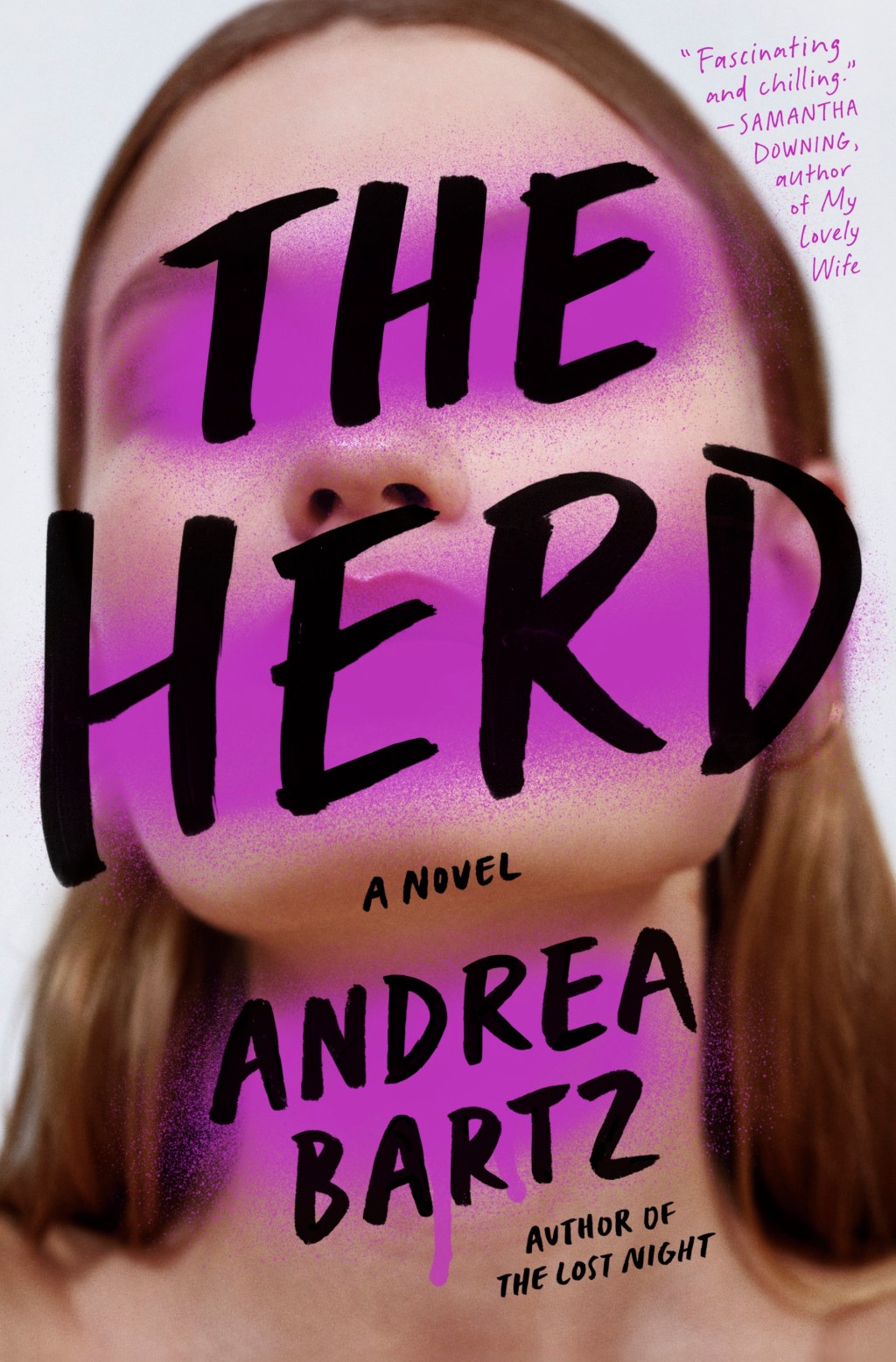
    Samantha Downing

             “It didn’t start off as a murder,” says Samantha Downing, whose bestselling first novel My Lovely Wife (Berkley Trade 2020, $16) was recently released in paperback. “The first death was accidental but not the second.”

             Downing’s inspiration came from a documentary about a couple who kidnapped a woman and held her captive for years.

              “Finally, the wife let her go and ended up testifying against her husband,” says Downing, who has been nominated for Best First Novel in the 2020 Edgar Awards.

    .        “I thought you never hear about women being the instigator in these kind of situations. It made me wonder if she was, what would she be like?”

             Her answer, she says, was an extreme version of the woman who has to be and do everything—a superwoman type.

             “Millicent is very controlled with a crazy outlet to relieve stress,” says Downing, who grew up reading psychological and legal thrillers.

             My Lovely Wife, as the title implies, is told in the voice of the unnamed husband.

             “Our love story is simple,” he says by way of introduction. “I met a gorgeous woman. We fell in love. We had kids. We moved to the suburbs. We told each other our biggest dreams, and our darkest secrets. And then we got bored.”

             It isn’t long before the husband longs for a return to boredom, but Millicent is on a roll and he’s along for the ride. But there are complications. When a second woman disappears, their community starts to wonder and worry. Their gilded suburb is on edge and suspicions arise. Maybe all these murders weren’t such a good idea after all.

             Though the subject is edgy, surprising the story isn’t bloody or  violent.

             “Though the subject matter is certainly dark, it’s not gory, there’s no sex, nothing graphic,” says Downing. “I didn’t want the book to be bleak, I like satire, I wanted this to be darkly comedic and for people to enjoy the story.”

             Downing seems to have her mark. Amazon Studios acquired the rights to the book and are partnering on the film version with Nicole Kidman’s Blossom Films.

  • The Girl in White Gloves: A Novel of Grace Kelly

    The Girl in White Gloves: A Novel of Grace Kelly

    The surprising–and unprecedented–news that Harry and Meghan have withdrawn from the Royal Family last month stunned the globe and spurred conversations about individual pursuits versus familial and sovereign duty. It makes one wonder what if Grace Kelly had been able to break away from royal life and pursue her own dreams once she became disillusioned with her life as a Princess? The comparison is apt. Both Meghan Markle and Grace Kelly, two American actresses who made headlines when they married international Princes and gave up their careers and financial independence to serve their royal subjects.

    That’s why the timing could not be more perfect for the release of THE GIRL IN WHITE GLOVES (Berkley 2020) by Kerri Maher). The novel is a vivid reimagining of the exhilarating and sensationalized life of Princess Grace of Monaco from the acclaimed best selling author of The Kennedy Debutante. Maher takes us into the inner life of an almost mythical female historical figure. Luminescent with golden hair and blue eyes, Golden Globe- and Oscar-winning actress, Princess—and fiction’s newest “it-girl”—Grace Kelly. was the favorite of many directors including Alfred Hitchcock. She was also the epitome of class.

    The picture of perfection on paper, in the history books and from the public’s perspective, Grace Kelly’s life appeared as pure fantasy. A spectacular beauty from a prominent Philadelphia family, her dreams of becoming an accomplished actress came true and she was a star in many mediums—stage, television, and film.

    But Kelly gave it all up when she assumed the role of a real life princess after marrying Prince Ranier of Monaco in a magnificent wedding ceremony. Becoming a Princess may be every young girl’s fantasy., but neither fame nor royalty (as Meghan Markle might have discovered) is as charming as it seems, and Kerri Maher takes a closer look at the woman behind the headlines in THE GIRL IN WHITE GLOVES.  This compelling novel provides insight into this real-life Cinderella story: the good, the bad, and the not-so-happily-ever-after.

    As for Grace, she knew what people saw. She was the Cinderella story. An icon of glamor and elegance frozen in dazzling Technicolor. The picture of perfection. The girl in white gloves.

    But behind the lens, beyond the panoramic views of glistening Mediterranean azure, she knows the truth. The sacrifices it takes for an unappreciated girl from Philadelphia to defy her family and become the reigning queen of the screen. The heartbreaking reasons she trades Hollywood for a crown. The loneliness of being a princess in a fairy tale kingdom that is all too real.

    Hardest of all for her adoring fans and loyal subjects to comprehend, is the harsh reality that to be the most envied woman in the world does not mean she is the happiest. Starved for affection and purpose, facing a labyrinth of romantic and social expectations with more twists and turns than Monaco’s infamous winding roads, Grace must find her own way to fulfillment. But what she risks—her art, her family, her marriage—she may never get back.

    Kerri Maher is the author of The Kennedy Debutante, which People magazine described as “a riveting reimagining of a true tale of forbidden love,” and This Is Not a Writing Manual: Notes for the Young Writer in the Real World under the name Kerri Majors. She holds an MFA from Columbia University and founded YARN, an award-winning literary journal of short-form YA writing. A writing professor for many years, she now writes full time and lives with her daughter and dog in a leafy suburb west of Boston, Massachusetts.

    Praise for THE GIRL IN WHITE GLOVES

    “The stunning and very human story of a beloved icon…. Full of nuance and poignancy—this novel is gorgeous.”— Allison Pataki, New York Times bestselling author of The Queen’s Fortune
     
    “[A] fascinating, deeply researched novel of the extraordinary Grace Kelly … establishes Maher as a true force in biographical fiction.”—Beatriz Williams, New York Times bestselling author of The Golden Hour

  • The Other Mrs.

    The Other Mrs.

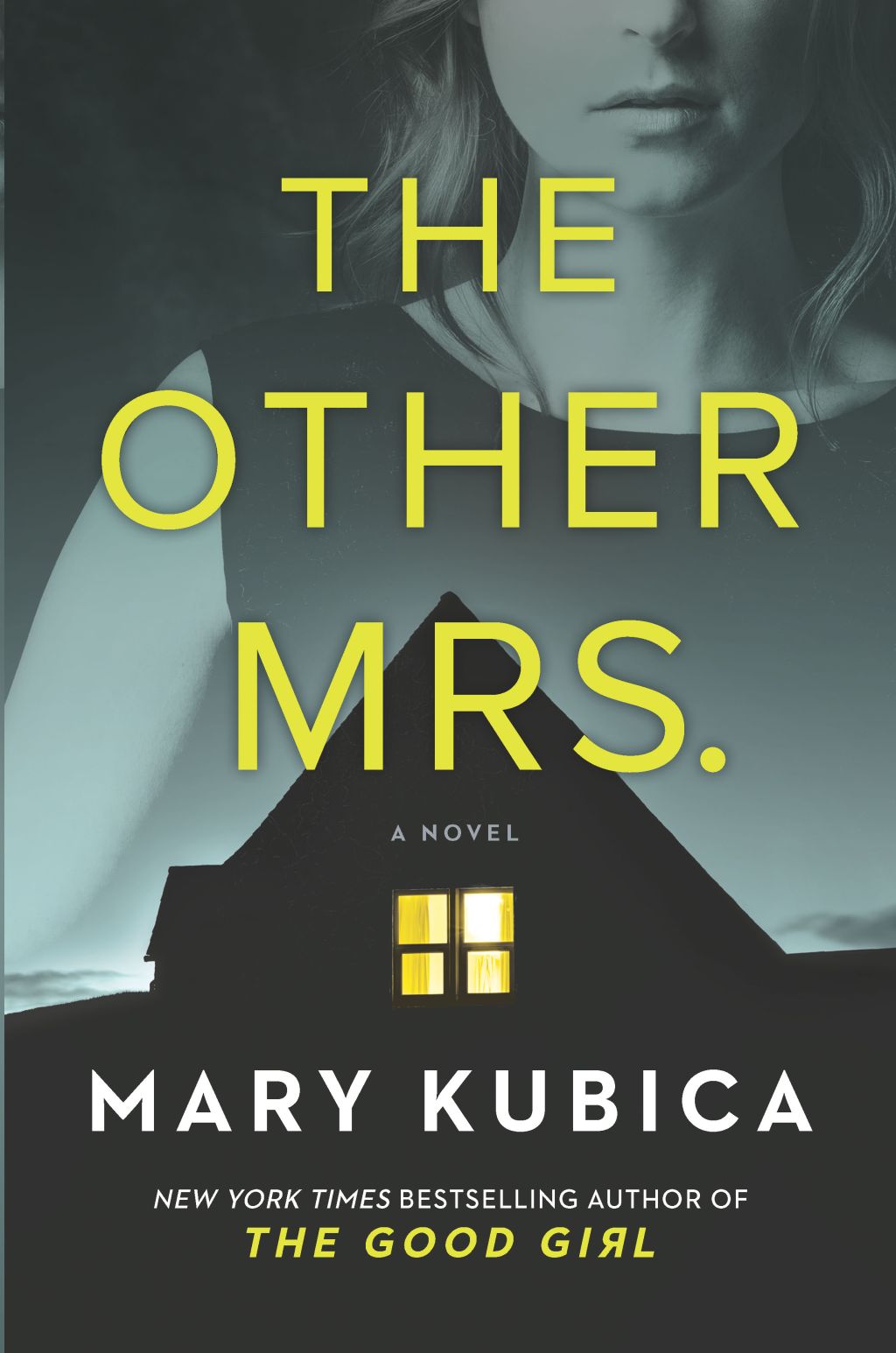
             After staying up late reading The Other Mrs. by Chicago author Mary Kubica, I have a word of advice for women out there. If you’re husband’s sister commits suicide and her home on a remote island off the coast of Maine is yours if you agree to live there and take care of her defiant teen-aged daughter, just say no.

    An isolated island, a frayed marriage and a spooky house where the last owner died in the attic--so what could possible go wrong? Everything in this new suspense-thriller from Mary Kubica.

             But unfortunately, Sadie, a Chicago physician didn’t do that. Instead, after a brief lapse in consciousness where she walked out of an operating room and was later found on the edge of a roof, she and her husband Will—a charming and handsome man with an eye for ladies—take the offer. Sadie was about to lose her job and her license and besides, she’s just found out that Will was having an affair. So the couple pack up their children and move into Alice’s home. It’s the kind of place where doors squeak at night, the wind howls outside and the frayed rope Alice used to hang herself still swings from the rafter in the attic. Then, things take even more sinister of a turn when Morgan, a nearby neighbor is found murdered in her home.

             Obviously, the move was a bad choice and to make it worse, Sadie, working as a doctor in a clinic, still finds herself losing track of time and what she is doing. Add to that, she also worries about Will, a stay-at-home dad for their two sons, and his friendships with pretty mothers whose children play with theirs. If he cheated once, will he do so again, she wonders. Even worse, though Sadie never met Morgan, an elderly couple claim they saw her tear out a chunk of her hair during a fight in the days before her murder.

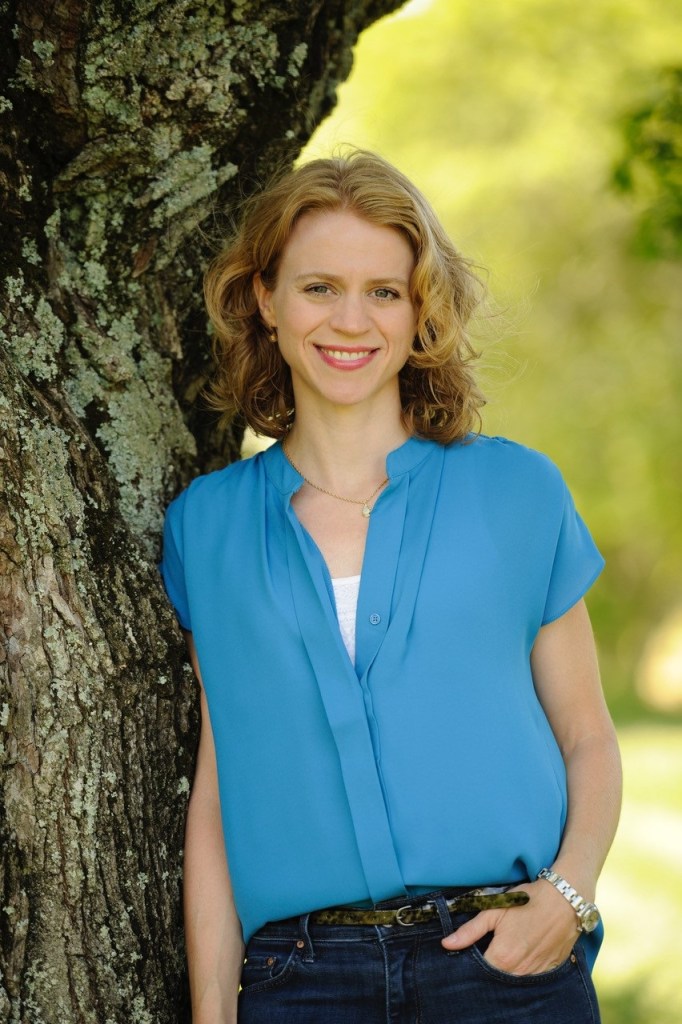
             This is Kubica’s sixth novel and her last five have made the New York Times and USA Today best seller list.

             “I love to work under the surface with people—there really is so much we don’t know about people,” says Kubica, a former high school history teacher who starts with a premise for her plots and then let’s her writing—and her characters—take her along for a ride so to speak. “My characters really drive what I write. I can start off in one direction and then the book can go a different way.”

             Kubica seems to live a normal life. That is until after her teenaged children go to school, then spends her days in this dark, psychologically twisted world of sublevels and secrets. Two of her favorite authors are Megan Abbott and Paula Hawkins who also write about women in peril who are often unreliable narrators—causing readers to wonder if they can believe their stories. It all adds to the suspense. But readers should understand, Kubica is often just as surprised as they are.

             “I have no idea what to expect,” she says. “But it’s fun.”

  • How Quickly She Disappears

    How Quickly She Disappears

                Intrigued by the tales his grandparents told of living in Tanacross, a small Alaskan village back in the late 1930s, Indiana author Raymond Fleischmann has woven a mystery set in that time frame and location.

                “I grew up hearing their stories about Alaska, the cold, the isolation, the long days and the long nights,” says Fleischmann, the author of the just released How Quickly She Disappears.  “So, the setting is very real though my characters are fictional and not based on my grandparents at all who were very much in love and married for over 60 years.”

                That part is probably good as Fleischmann’s novel is about Elisabeth Pfautz who is living in Alaska with her husband and young daughter. The marriage is joyless, but her daughter is her delight and, more forebodingly, a reminder and connection with her twin sister, Jacqueline, who when she was eleven, disappeared. No one has seen or knows what happened to her since then.

                  Haunted by her lost sister, experiencing reoccurring dreams of 1921 and the circumstances of the disappearance and saddened by the state of her marriage, Elisabeth is drawn to Alfred, a substitute mail pilot who lands in Tanacross. Elisabeth, who grew up a small German community in Pennsylvania, feels a kinship of sorts with Alfred, who is also of German heritage. But then things turn distinctly weird and terrifying. Albert murders another man, apparently in cold blood. But he also knows, he tells Elisabeth, what happened to her sister, something he will reveal to her at a cost.

                Fleischmann says he’s always been drawn to novels that are propelled by relatively simple, often violent acts, but do so in a way that’s careful, human, and deeply examined. From Alaska in 1941, Fleischmann takes us back to 1921 where we meet Jacqueline as well.

                “I thought it was important for people to know about her as well,” says Fleischmann, who earned an MFA from Ohio State University, “To me, at the time of her disappearance, Jacqueline is a lonely and somewhat stunted child who is having difficulty navigating the transition from adolescent to adult, just like many of us. So is Elisabeth and Jacqueline’s disappearance has left a big void in her life. As an adult she still feels very much alone without her sister and appears to suffer in many dysfunctional ways.”

                All this makes her vulnerable to Alfred’s cat and mouse game as does the voice she seems to hear, that of Jacqueline urging her to “come and find me.”

  • THE CHRISTMAS SPIRITS ON TRADD STREET

    THE CHRISTMAS SPIRITS ON TRADD STREET

    New York Times bestselling author Karen White’s iconic series about a quirky psychic realtor (yes, you read that right!), set in historic Charleston, continues this winter. A long-anticipated gift to her fans, this holiday season White released her first ever Christmas novel.

    Jane Ammeson, who writes the Shelf Life column for The Times of Northwest Indiana and shelflife.blog, interviewed Karen about THE CHRISTMAS SPIRITS ON TRADD STREET, the sixth book in her Tradd Street Series,

    With each new release, Karen’s national platform grows. Her previous installment in the series, The Guests on South Battery (2017), was a New York Times hardcover bestseller. Her books have been featured on Southern LivingReese Witherspoon’s Draper James blogLate Night with Seth Meyers, and more. The author of over twenty books and 12 New York Times bestsellers, she has almost two million books in print in fifteen different languages.

     JA: Since you’re not a realtor and you’re not seeing ghosts (we don’t think so, anyway!), do you have much in common with Melanie—like are you super-organized with lots of charts and spread sheets, etc.?

    KW: Let’s just say that people who know me who have also read the Tradd Street series seem to think that Melanie _is_ me.  I’m going to neither confirm nor deny, but let’s just say that I do love to be organized and I also adore sweets (although Melanie’s metabolism is simply something I aspire to).  She and I are both ABBA fans and neither of us can text without many alarming typos.

    JA: You grew up all over the world but started off in the south and think of yourself as a Southern girl. Why did you choose historic Charleston for the setting of your series?

    KW: My parents (and extended family) are all from the South—mainly Mississippi—which is where I get my Southern roots.  I went to college in New Orleans (Tulane) and actually planned to set the series there.  However, the year I started writing the first book was 2005, the year Katrina wreaked so much havoc on the city and her citizens.  I knew that in the series I was planning to write that this sort of natural disaster and its repercussions wouldn’t fit.  I would return to New Orleans and the storm for The Beach Trees, but for the series I needed to find another Southern city that had gorgeous architecture, lots of history, and plenty of ghosts.  Charleston was an obvious choice.

    JA: Your Tradd Street series novels seem to require a lot of research into older homes, renovations and history, can you tell us about that?

    KW: Since I was a little girl I’ve been obsessed with old houses.  They didn’t need to be grand or even well-maintained to make me beg my mother to pull the car over to the curb so I could get a better look.  When we moved to London, we were fortunate to live in an Edwardian building on Regent’s Park.  It had leaded glass windows, thick mahogany doors, and ceiling medallions to make a wedding cake envious.  Living in that flat made me believe that I truly could hold a piece of history in my hands.  My obsession continues with my daughter who holds a master’s degree in historic preservation from the College of Charleston and currently works as an architectural historian.  She actually appears in the last two Tradd books (as well as Dreams of Falling) as graduate student Meghan Black.

    JA: Can you give readers who may not have read any of your other books about Melanie and Jack a description of The Christmas Spirits on Tradd Street?

    KW: In this penultimate installment (book #6) in the series, we find OCD Realtor (who also happens to be able to speak with dead people) Melanie Middleton and true crime mystery writer Jack Trenholm happily married and living with their toddler twins and teenage daughter, Nola, in their historic home on Tradd Street. Christmas is approaching and all seems to be going well for them—-except for a few money problems, Jack’s writing career taking a curveball, and an unpleasant specter seen haunting Nola’s bedroom that seems to be connected to the ancient cistern being excavated in their back yard.  Unwilling to burden Jack with one more problem and distract him from his writing despite promises that they wouldn’t hold secrets from each other, Melanie takes it upon herself to attempt to solve the mystery behind the ghostly presence—with unsettling results that Melanie may or may not be able to resolve.

    JA: Are your ghosts based upon real life (if you can call it that when it comes to ghosts) tales of hauntings in Charleston?

    KW: Growing up, my father loved to read true ghost stories to my brothers and me—usually right before bedtime.  I also had a grandmother who always spoke about conversations she’d had with dead relatives.  I suppose that’s the reason why I thought ghosts were like doilies on the backs of chairs—some people had them, some people didn’t.  I continue to enjoy ghost stories (I listen to several podcasts on the subject) and, even though I have never had an experience, my son has three times.  

    When visiting Charleston, I love going on haunted walking tours (especially the graveyard ones) and always pick up fascinating tidbits to be used later in my books.  I’ve never borrowed a ghost story for my books, but tend to pick and choose certain parts of favorites and mix them together to fit into my stories.

    JA: Do you live in an older home?

    KW: Sadly, no.  My husband isn’t a fan of old houses (and in my first book, the derogatory remarks Melanie makes about old houses came right from his litany of why he dislikes old houses—mostly having to do with the expense of heating them).  Every house I’ve lived in since the old Edwardian building in London has been brand new.  I’m hoping my daughter and I can get sway him to our side when it’s time to move again.  Hopefully to Charleston.

    JA: Besides a great story and enjoyable read, are there any other take-aways you’d like for readers to get from The Christmas Spirits on Tradd Street?

    KW: This installment can be read on its own.  However, I do think that readers might enjoy the series more if read in order starting with the first book.  The books each have their own mystery to be solved, but the growing cast of characters and Melanie’s growth through the series is an important element and best understood if readers meet her in book .

    JA: Anything else you’d like our readers to know?

    KW:  Yes, there are ghosts and some spooky scenes in all of the books.  But these are not paranormal or thriller type books.  These are character-driven stories centered around Melanie Middleton and her relationships with family and friends and set in the gorgeous and historical city of Charleston, South Carolina.  This is Southern Women’s Fiction—with the added bonus of a few spirits who need Melanie’s help to solve a mystery.  

  • New novel tells story of Russian classic novel

    New novel tells story of Russian classic novel

    Lara Prescott, author of The Secrets We Kept

               The Secrets We Kept by Lara Prescott weaves the threads of fact and fiction as she tells the story of Boris Pasternak, Nobel Prize winning author of Dr. Zhivago and the real life intrigues and machinations first to get the book published against the will of a repressive Soviet regime and then its use by the CIA as a propaganda tool during the Cold War. The novel, about two lovers Yuri Zhivago and Lara Antipova and their ultimately doomed romance set against the chaotic backdrop of the decades spanning the Russian Revolution and World War II, would never have been published if Pasternack hadn’t been able to smuggle it out of Russia and into the hands of an Italian publisher.

              The Soviets, who didn’t want the book to be read, demanded the publisher return it.  He refused, the book was published and became an international bestseller which was turned into a mega-hit movie of the same name.

              Prescott’s mother so loved the movie, she named her daughter after the heroine, Lara Antipova.

              “As a child, I’d wind up her musical jewelry box again and again just to hear it play ‘Lara’s Theme,’” says Prescott about the haunting melody that also became a hit. “I, too, loved the movie, but it wasn’t until I actually read the novel that I felt such a strong connection with the material. It was as if the old master was reaching out to me across time and space—a candle in a window on a winter night.”

    But it was Prescott’s father who added another twist to the real life story of the Nobel Prize winning book by sending her an article from the Washington Post about how the CIA spy operation to distribute the book throughout the Soviet Union.

    Fascinated by the article, Prescott delved deep into research reading once classified CIA documents, biographies of Pasternack and his muse and inspiration Olga Ivinskaya and visiting his dacha in Peredelkino, now a museum, where he wrote the novel and his gravesite. She tells the story of Pasternack’s persecution (the Soviets made him turn down the Nobel Prize award) through Olga’s eyes as well as those of a woman involved with the CIA.

              “Also at the forefront was telling the story of all those women—many lost to history—who served the United States during WWII and the CIA’s early days,” says Prescott who at first wondered how a book could be the center of a CIA plot before realizing that made a lot of sense. “Of course books could be used in this way because they can change the hearts and minds of people.”

  • After the Flood

    After the Flood

    A dream of a tsunami sweeping across the plains of Nebraska helped form the plot of Kassandra Montag’s After the Flood, her novel about a time in the future when rising waters engulf the earth, leaving only small chunks of land suitable for living.

    Montag, who is from Nebraska, had just moved back from Amsterdam when she had not only a dream as well as a vision.

              “I was pregnant with my first child and I saw the image of a mother with her daughter sailing on a boat in a future flooded world but separated from her other daughter,” she says. “Then I re-discovered a line from a journal I had kept— ‘a group of people huddle around a campfire, struggling to survive and looking for a safe haven.’ Group dynamics has always been an interest of mine and these story lines—a mother separated from her daughter and people trying to survive in a post-apocalyptic world all came together and were part of the inspiration for writing the book.”

    After the Flood tells the story of Myra and her seven-year-old daughter Pearl who live on their small fishing boat and visit what’s left of dry land to trade for goods and gather information. When Myra learns her long missing daughter, Row, who was kidnapped by her father, has been seen near the Arctic Circle, she and Pearl make their way through the north treacherous  and frozen waters. Their hope is that Row will still be there when they arrive. During their voyage the two join up with others who are also struggling to survive.

              To create this alternate universe, Montag studied a variety of subjects including stories of the Bajau, a group of nomads in Southeast Asia who are sea dwellers, so used to spending time in the water they can hold their breath for up to 13 minutes.

              “I also researched ancient seafarers like the Vikings, read guidebooks on how to build fires, fish and other survival skills,” says Montag. “And I watched sailing videos while eating my lunch.”

              Montag, who is a published poet, says that she was surprised at the reaction to her book, which is scheduled to become a television series.

              “As a poet, you don’t get this type of interest,” she says.

    Ultimately, she says, the book is about what parts selfishness and selflessness play in the fight for survival.

    “It interested me how the survival instinct can be inherently selfish in a dangerous world without enough resources and others transcended those feelings,” she says. “I was also interested in the way that survival can be seen as selfless as well, as an act of love carrying on.”

    Ifyougo:

    What: Reading and Q & A with Kassandra Montag

    When: Thursday, October 17 at 7 p.m.

    Where: Anderson’s Bookshop La Grange, 26 S La Grange Rd, La Grange, IL

    FYI: (630) 355-2665; andersonsbookshop.com

  • Breathe In, Cash Out

    Breathe In, Cash Out

    “It’s The Devil Wears Prada of Wall Street, in that you get a glimpse into finance—if you’ve ever worked in investment banking you’ll find anecdotes that really resonate and for those that haven’t, it lets you know what the business is really like,” says Madeleine Henry, about her new book Breathe In, Cash Out, a humorous novel about a yoga-addicted investment banker just waiting for her super big yearly bonus so she can quit and open a yoga practice.

    Henry herself is very much like her heroine, Allegra Cobb. She’s a Yale graduate and a former Goldman Sachs banker who is totally into yoga.

    “The book shows the two worlds Allegra inhabits and how different they are, yoga versus fiancé, humility versus power and internal rewards versus external rewards,” says Henry, who recalls her own crazy schedule where days started at day 9 a.m. and ended at 10 p.m. when she was finally able to leave the office. Then it was drinks and complaints about how awful their jobs are with her colleague. Then to bed and repeat the entire scenario the next day.

    As a bottom rung investment banker, Allegra spends up to 24 hours a day changing the colors on stacked bar charts, “making my bosses feel better about themselves.”

    One of the reasons Allegra feel stuck in her job—besides the great pay, prestige and waiting for her bonus—is because he widowed father is so proud of her success and since he’s sacrificed so much for her since her mother died, she finds it hard to tell him she’s chucking it all to teach yoga.

    When Skylar Smith, a yogi guru with over two hundred thousand Instagram followers (making her one of the top InstaYogis,) offers to help her break into the business, Allegra sees herself getting close to her dream. Skylar, a beautiful blonde who models for expensive and trendy yoga clothing lines has the life Allegra wants.  At least that’s what she thinks at first.

    Henry, who always loved to write and was a comedy writer for the Yale Recorder, has had so much success with this her first novel that she was able to quit her job at Goldman and now teaches yoga and has written next novel.

    Asked if some of the anecdotes she uses in her book about her time at Goldman might upset people she worked with, she laughs, saying “they’ll think it’s funny because it’s so true.”

    Ifyougo:

    What: Madeleine Henry book signing

    When: Bookends & Beginnings, Thursday, July 18, 2019 – 6:00pm to 7:30pm

    Where: 1712 Sherman Avenue, Alley , Evanston, IL

    Cost: Free

    FYI: 224-999-7712; bookendsandbeginnings.com/

  • Park Avenue Summer

    Park Avenue Summer

    Chicago-based author Renee Rosen typically writes novels about historic periods and people in Chicago, such as Windy City Blues; White Collar Girl and Dollface.

                  But in Park Avenue Summer, her latest novel, which she describes as “Mad Men Meets The Devil Wears Prada,” she takes us to New York City during the era of Helen Gurley Brown, first female editor-in-chief of Cosmopolitan magazine and the author of the scandalous ’60s best-seller, Sex and the Single Girl.

    Like many of us, Rosen read Cosmo when she was young. Rosen remembers quickly flipping to the “Bedside Astrologer” column.

    Author Renee Rosen

    “I was looking for guidance on my 16-year-old love life,” she says, noting that all the time she spent poring over the glossy pages of Cosmo essentially shaped her view of female sexuality and female empowerment. “She changed the face of women’s magazines,” she said of Brown.

    “Park Avenue Summer” tells the story of Alice (Ali), who moves to New York City after breaking up with her boyfriend and ends up getting her dream job, working for Cosmo.

    Like she does for all her books, Rosen threw herself into full research mode, wanting to convey the story through Alice’s eyes.

    “I even went down to the Port Authority to get the feel of what Alice would have seen and felt when she arrived,” Rosen says.

    Because Rosen had lived on the Upper West side in New York for a year, she knew where Ali, as a single working girl, would live — an area in the East 60s called “the girl’s ghetto.” She walked the streets until she found the exact apartment she had envisioned for Ali.

    All in the name of research, she visited Tavern on the Green, 21 Club, St. Regis and the Russian Tearoom, all swank places still in business that were popular back then. But best of all, a friend introduced her to Lois Cahall who had worked for Brown.

    “Helen Gurley Brown was like a second mother to Lois,”  Rosen says.

    “She and I became good friends, and she vetted the book for me. It was like a gift from the gods, because she knew so much about Brown and Cosmo and that time.”

    Rosen is very much an admirer of Brown and what she accomplished.

    “She really wanted to help women be their best,” she says. “She wanted them to know that they could get what they want even in what was then a man’s world.”