Category: Culture

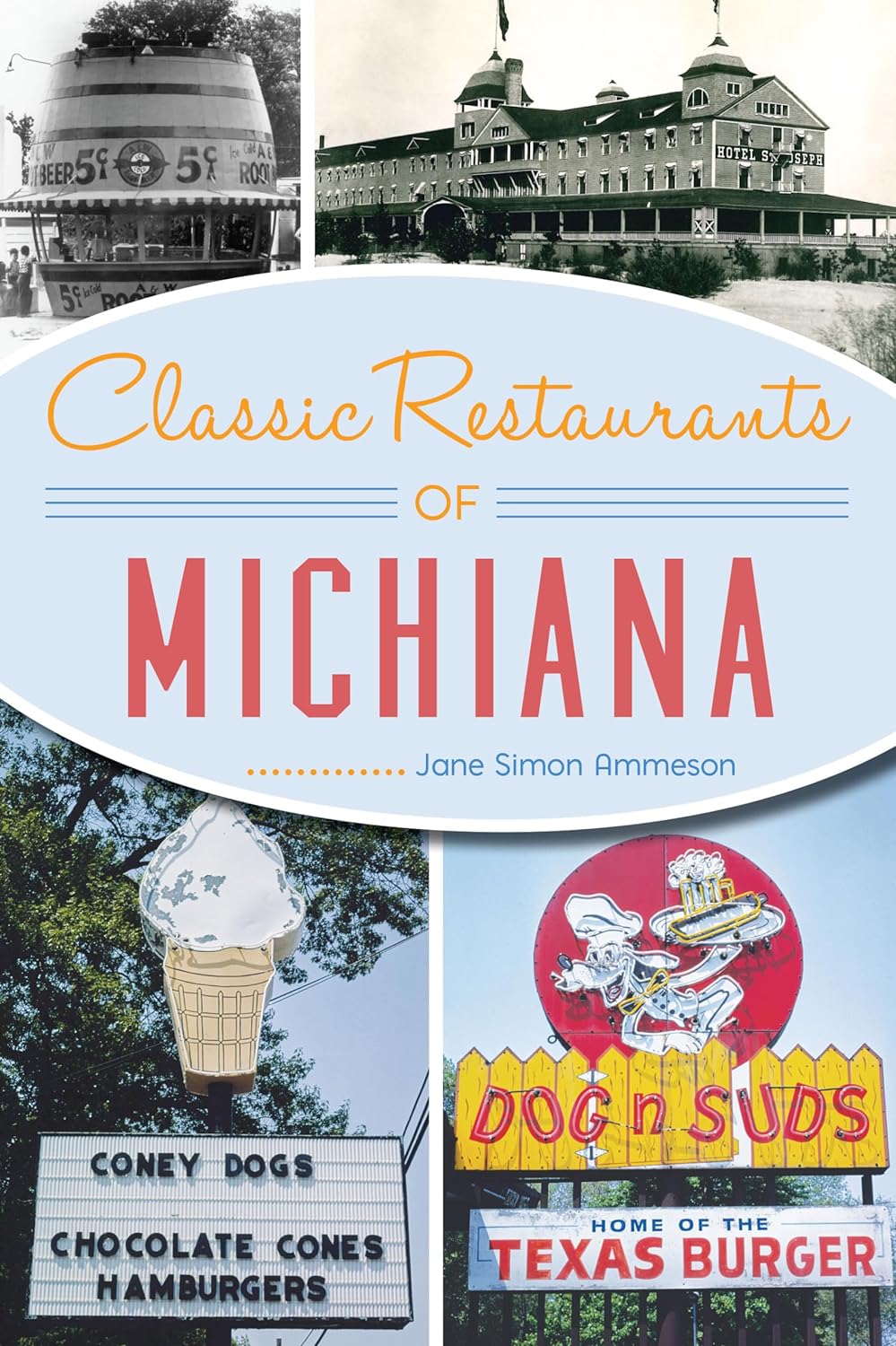
  • Join me at the Classic Restaurants of Michiana Book Signing Wednesday, June 11th
    Join me at the Classic Restaurants of Michiana Book Signing Wednesday, June 11th

    The members of the Sacred Heart of Mary Catholic Church Book/Movie Discussion Group have invited me to speak this Wednesday, June 11th at 6:30 p.m. If you have the time and are interested in the history of restaurants in Michiana, please come. The church is lovely, located in a beautiful country setting at  51841 Leach Rd, Dowagiac, Michigan. The event itself is next door in the Parish Hall.

    Mary’s City of David Vegetarian Cafe in Benton Harbor, which opened in 1931 and closed in 1975, specialized in farm-to-table meals.

    Here is the flyer that Terri Moore sent out:

    Over the centuries, residents of Michiana have never wanted for superb dining choices. Award-winning author Jane Simon Ammeson will lead us on a culinary road trip through Northern Indiana and Southwestern Michigan.

    A cigarette girl at the posh House of David motor lodge and restaurant/nightclub called the Vista Grande

    Once a stagecoach stop, The Old Tavern Inn has been open since the time of President Andrew Jackson. Tosi’s is known for its gorgeous starlit garden and gastronomic traditions stretching back almost a century, and The Volcano was amongst the first pizzerias in the country.

    One of the earliest hotels in St. Joseph, the Perkins house, built in 1840, stood on the corner of State and Ship Streets. Note the side entrance for the saloon which was, of course, given the times, for men only.

    These restaurants and other classic eateries remain part of the thriving local food scene. But the doors of others have long been closed. Some like Mead’s Chicken Nook and Robertson’s Tea Room linger in memories while The Owl Saloon, O. A. Clark’s Lunch Rooms, and Lobster Lounge are long lost to time.

    The restaurant is still open at the Barbee, it was a fav of Al Capone. However, when he arrived, all the other guests had to leave.

    Jane Simon Ammeson is a food and travel columnist who has authored seventeen books, including Classic Restaurants of Northwest Indiana. Always willing to travel for food, she blogs about her experiences at janeammeson.com.

    At one time, the lakeside towns of southwesterern Berrien County had a large Swedish population. The Swedish Coffee Pot was just one of several. Only the Swedish Bakery remains.

    Light refreshments will be served

    For more information contact:

    Terri Moore, 269-782-6925, t2sewmoore@outlook.com

  • Author Erik Larson offers compelling acount of the start of the Civil War
    Author Erik Larson offers compelling acount of the start of the Civil War

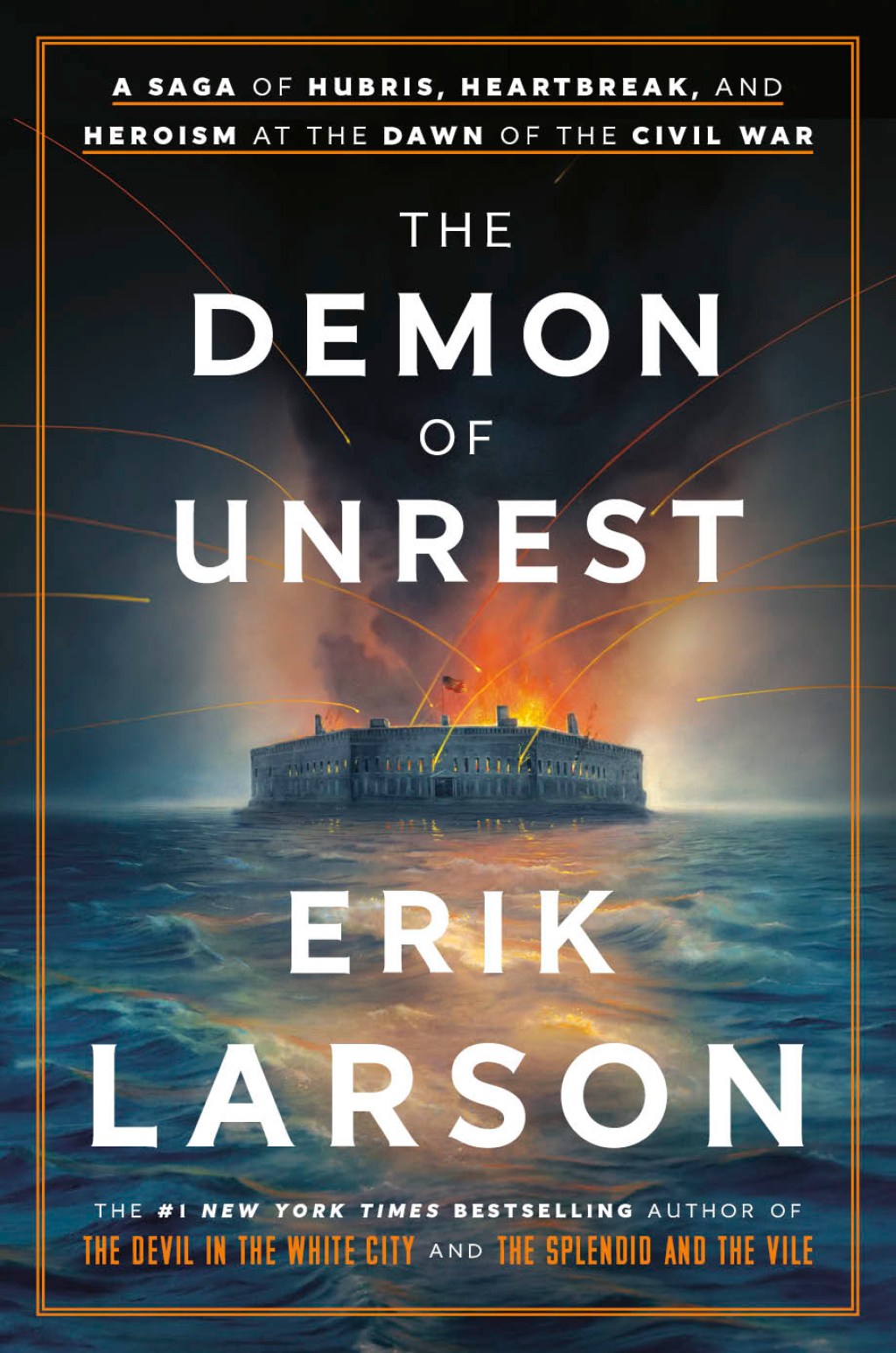
    Only a master storyteller like Erik Larson could turn the five tumultuous months leading up to the Civil War into “The Demon of Unrest: A Saga of Hubris, Heartbreak, and Heroes at the Dawn of the Civil War” (Crown), a compelling, page-turning read, chock full of anecdotes, psychological profiles and obscure but compelling tidbits of history all set against a relentless march towards a conflict that would kill over 620,000 soldiers and devastate a nation.

    Larson, the author of six New York Times bestsellers whose previous works include “The Devil in the White City: Murder, Magic, and Madness at the Fair That Changed America,” about a mass murderer and the 1893 Chicago’s World Fair, writes in a novelistic style that makes history come alive. He does so through his ability to weave together the familiar facts of history with information that can only be gleaned through relentless and extensive research.

    Yes, most of us know that the Civil War began with the firing on Fort Sumter, which was located in Charleston Harbor and under the command of U.S. Army Major Robert Anderson. But did you know that Anderson had owned enslaved people and was a defender of slavery? That Lincoln often misspelled Sumter as Sumpter? Or, more importantly, South Carolina did not have to succeed because of Lincoln’s election, as he had no intention of outlawing slavery in the Southern states?

    “When I started out doing this, one concern I had was that the Civil War has not exactly been underwritten,” Larson told me during a phone conversation earlier this week, noting that a quick Google indicated around 65,000. “I had vowed over the years never ever to write about the Civil War.”

    That changed when, as he was looking for the topic of his next book and watching the events of the Jan. 6, 2021 assault on the U.S. Capitol, he began to consider the deep divide and unrest of our own times.

    Faced with what he describes as an intimidating world of previous scholarship, Larson says “What I really wanted to do was to provide a rich sense, on an intimate level, of what the forces were and the motivations for the start of the Civil War.”

    The magic of his writing is that he accomplishes this by immersing the reader in details, descriptions, and personalities mostly unknown to many of us, including “eight typical characters” such as Charleston society doyenne Mary Boykin Chestnut, who kept a detailed diary, and James Henry Hammond, a Charleston planter who was a leader of the secessionist movement and who later became a U.S. senator despite public knowledge of his sexual relationships with four nieces ages 13 to 19.

    He also includes information about resolving issues regarding dueling, from “The Code of Honor or Rules for the Government Principals and Seconds in Dueling” and instructions for the “proper” way of whipping slaves as well as the going prices for selling human beings.

    The Southern mindset among the owners of enslaved people of the time is best summed up in a letter written to President James Buchanan, president before Lincoln, by Arthur Peronneau Hayne, a U.S. senator from Charleston. In it, he writes that without slavery “our every comfort would be taken from us. Our wives, our children, made unhappy — education, the light of knowledge — all lost and our people ruined forever. “

    “White southerners had persuaded themselves that slavery was a good thing for all concerned, especially for the enslaved blacks,” said Larson. He also notes that many of these same men were devoted readers of writers like Sir Walter Scott, author of “Ivanhoe,” and believed fervently in honor and the code of chivalry.

    As outrageous and hypocritical as that seems today, Larson says when writing about a different era it’s important to consider the point of view of those times to accurately reflect how events unfolded.

    “It gives a better sense of what the forces were that did lead to states like South Carolina succeeding from the Union and the Civil War,” he said, noting that understanding is not condoning, but historic context provides a lesson for the present and future as we struggle with political division today.

    This article previously appeared in the Northwest Indiana Times.

  • Islas: A Celebration of Tropical Cooking
    Islas: A Celebration of Tropical Cooking

    “Whatever you cook or don’t cook, this book is a trip to the islands or islas of the world.”

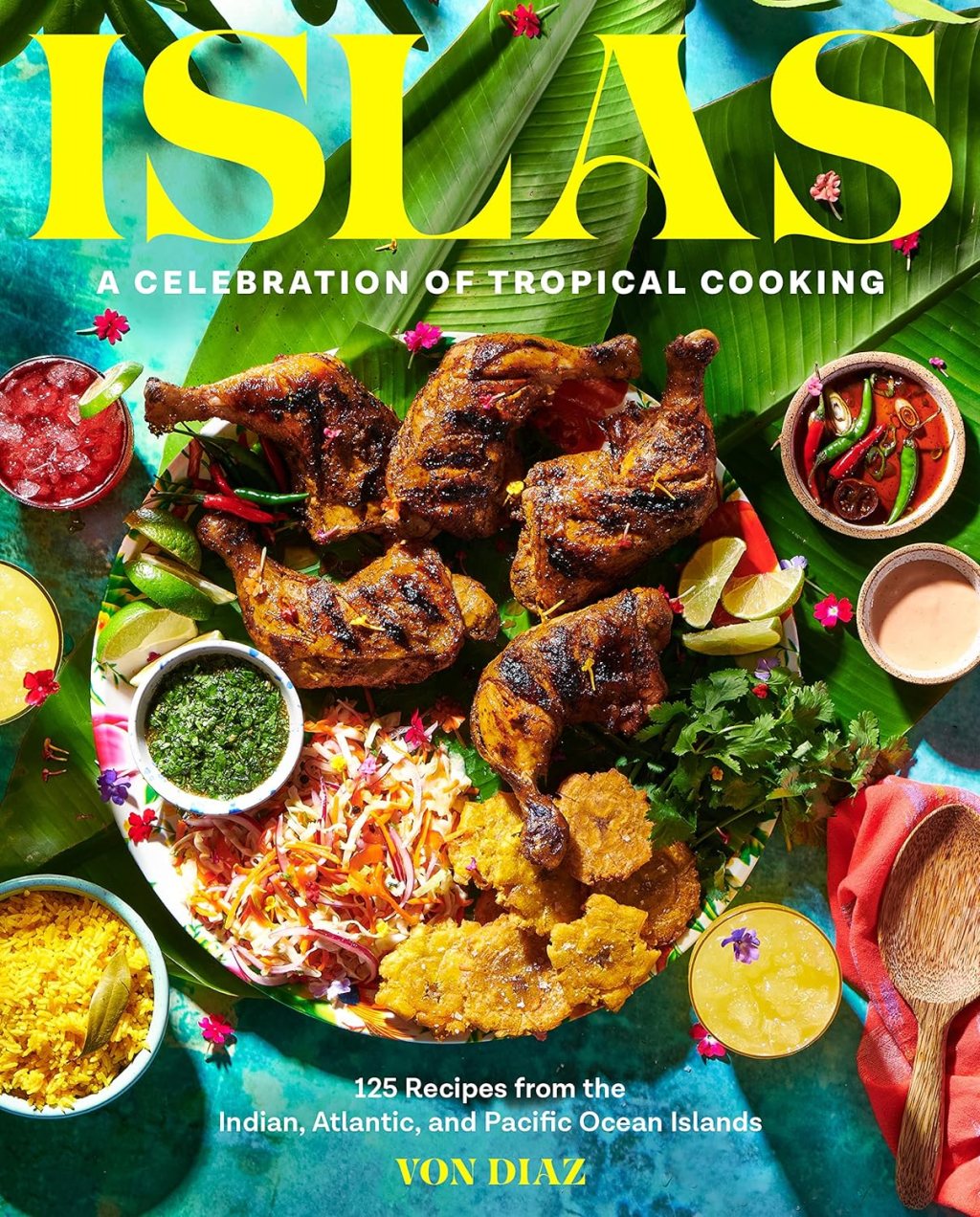
    A beauty of a book, all lively colors, and wonderful photos, Islas: A Celebration of Tropical Cooking (Chronicle Books) takes us from island to island through the Indian, Atlantic, and Pacific Oceans.

    “The people who live on tropical islands are among the toughest, scrappiest, most resilient people of the planet,” writes author Von Diaz, an Emmy Award-winning documentarian, food historian, and author of Coconuts to Collards: Recipes and Stories from Puerto Rico to the Deep South (University Press of Florida) . “Storms have always been unpredictable, and generations of islanders have cultivated ancestral knowledge around how to survive and, importantly, how to feed themselves despite it all. With limited ingredients, they cook in ways that are soul-nourishing and emphasize flavor. Making magic out of what’s available.”

    Her cookbook is about preserving the wisdom and values of island people who live in what Diaz describes as the most volatile and vulnerable places on the planet. She follows their histories and how the grapple with their new realities, combining legacy, adaptability, culture, and fortitude.

    She tells and shows us cooking techniques and recipes from faraway places such as Santo, Vanuatu’s largest island. Here we meet Primrose Siri who shares such recipes as Laplap, the national dish with its alternative layers of starch such as cassava or yam, seafood or chicken, herbs, spices, and fresh coconut milk cooked oven an earth oven heated with hot rock. Closer to home, there’s Pasteles de Masa, a Puerto Rican Christmas traditional dessert.

    Even those who may never cook Arroz Negro Con Pulpo y Calamares (Black Rice with Octopus and Squid) with its rice blackened with squid ink, will be intrigued by this Puerto Rican dish that is definitely eye-catching.

    Keshi Yena’s history dates back to the first Dutch colonial period in Curaçao, a bustling island some 30 miles off the coast of Venezuela. It is the food of enslaved people, as Curaçao was a slave port, who out of necessity took the rinds of cheeses such as Gouda that were discarded by their masters and stuffing it with meat scraps and other scavenged ingredients.

    Some recipes are simple and easy to make at home without a lot of extra ingredients such as Ensalada Talong (Grilled Eggplant and Vegetable Salad) from the Philippines. Others, such as Monfongo Con Guiso, a common dish of green plantains and chicharron or fried pork skins in Puerto Rico are more time consuming but within reach of any cook who wants to give it a try.

    The book is arranged by the chapters including the island’s cooking techniques: Marinating, Pickling + Fermentation, Braising + Stewing, Steaming + In-Ground Cooking, Frying, Grilling, Roasting + Smoking, as well as pantry staples, and sauces, spice blends, and condiments that can easily be made.

    Whatever you cook or don’t cook, this book is a trip to the islands or islas of the world.

    This review originally appeared in the New York Journal of Books.

  • “The Wildes” by Louis Bayard Book Signing

    “The Wildes” by Louis Bayard Book Signing

    On Thursday, Oct. 3rd at 6:30 PM,  Louis Bayardauthor of The Pale Blue Eye and Jackie and Me, will be in conversation with novelist Lori Rader-Day at The Book Stall. They will discuss Bayard’s new novel, The Wildes, a profoundly empathetic story about Oscar Wilde’s wife Constance and their two sons in the aftermath of the famous playwright’s imprisonment, told against Victorian England and World War I. 

    This program is free, but registration is required. CLICK HERE to reserve your spot.

    Benjamin Dyer, New York Times bestselling author of Dreyer’s English, says, “It requires a novelist of great audacity to dare to attempt to bring Oscar Wilde back to life, and it requires a novelist of great skill, to say nothing of wit, to manage the feat persuasively. Happily, Louis Bayard is both of those novelists.

    “As if that were not enough, The Wildes also presents us with a portrait of Oscar’s wife, Constance, that is little short of breathtaking in its vibrant depth, and a recounting of the heartbreaking tragedy of the Wildes that is eloquent and fully compassionate to all its characters, certainly to the Wildes’ sons, Cyril and Vyvyan, and even to (almost astonishingly) that feckless instrument of destruction Lord Alfred Douglas. I read The Wildes in an improbable state of breathless suspense, so wonderfully well has Bayard presented us with real people pressing, often excruciatingly, toward fateful decisions. This is an intoxicatingly gorgeous novel.” 

    Louis Bayard is the critically acclaimed bestselling author of nine historical novels, including Jackie & Me and The Pale Blue Eye, which was adapted into the global Netflix release starring Christian Bale. His articles, reviews, and recaps have appeared in the New York Times, the Washington PostSalon, and the Paris Review. His work has been translated into more than a dozen languages.

    Lori Rader-Day is the Edgar Award-nominated and Anthony, Agatha, and Mary Higgins Clark Award-winning author of Death at Greenway, The Lucky One, Under a Dark Sky, The Day I Died, Little Pretty Things, and The Black Hour. She lives in Chicago, where she is co-chair of the mystery readers’ conference Midwest Mystery Conference and teaches creative writing at Northwestern University. She served as the national president of Sisters in Crime in 2020.

  • Mexico Kaleidoscope: Myths, Mysteries and Mystique

    Oenophiles might be surprised to learn that the oldest winery anywhere in the Americas is Casa Madero, formally established as long ago as 1597, located in Parras de la Fuente, a small town in the northern state of Coahuila.

    “In 1549 the Spanish priests and soldiers who explored this region discovered native vines growing wild in a valley and chose the spot to found the Mission of Santa María de Las Parras (“Holy Mary of the Vines”),”writes Tony Burton, the editor of MexConnect, Mexico’s top English-language online magazine, in his book Mexico Kaleidoscope: Myths, Mysteries and Mystique. “The early Mission of Santa María soon began to make wine from the local grapes, and a few years later the wines and brandies of the Valley of Parras were being shipped to the rest of the Americas.”

    But Mexico’s sophisticated approach to agriculture goes even further back than that.

    “The Mexica/Aztecs solved the dilemma of how to supply food to their island capital by developing a sophisticated wetland farming system involving raised beds, or chinampas, built in the lake,” writes Burton about when the city of Tenochtitlan was built, fortress-like, on an island. Though good for defense, it made providing a food source more difficult but there was a solution to that. “Originally these chinampas were free-floating, but over time they became rooted to the lake floor. The chinampas were separated by narrow canals, barely wide enough for small boats or canoes. From an ecological perspective, chinampas represented an extraordinary achievement: a food production system which proved to be one of the most environmentally sustainable and high-yielding farming systems anywhere on the planet! Constructing and maintaining chinampas required a significant input of labor, but the yields per unit area could be very high indeed, especially since up to four harvests a year were possible.”

    Burton covers 10,000 years of Mexican culture and history. It’s a compilation of “Did You Know?” columns for MexConnect, which ranks in the top 3% of all Internet sites in the world, registering over half a million sessions a year.

    It was his way of presenting and preserving relatively little-known but fascinating information about Mexico to a large number of readers.

    “One of my main motivations was that—to the best of my knowledge—no similar book for the general reader had been published in the past forty years,” says Burton. “An incredible amount of interesting academic research had been done on Mexico over that time, leading to reevaluations and reinterpretations of many former ideas and beliefs. I wanted to make readers aware of some of these extraordinary developments, which continually refuel my passionate interest in Mexico.”

    This very readable and fascinating book can be read cover to cover, says Burton, noting that it is also designed to allow readers to ‘dip into’ and read in whatever order appeals to them. 

    “When writing the book, I was trying to engage readers by expanding on, or challenging, some commonly held or overly simplistic ideas, in the hope of offering some ‘food for thought’ about many things Mexican,” he says.“Each chapter has a list of sources and suggestions for those readers who want to explore more.”

    The title Mexican Kaleidoscope is a nod to Norman Pelham Wright, a British writer whose own collection of essays, with the same title, was published in 1948.

    “That book was an eye-opener for me when I first began to get intimately acquainted with Mexico more than forty years ago,” says Burton. “The subtitle Myths, Mysteries and Mystique came from a suggestion by one of my regular golfing partners—who had read an early draft of the book—as we played the 11th hole at Cottonwood Golf Course on Vancouver Island.”

    The book is illustrated by Mexican artist Enrique Velázquez, a long-time friend of Burton’s.

    “Enrique has a keen interest in the subject matter and an uncanny ability to portray ideas in just a few lines,” says Burton. “I originally envisioned using small, inline drawings to break up the text, much in the manner of old-time illustrators, but his final drawings were far too good for that, so we changed track and gave them the prominence and space they merit.”

    “Every chapter has come to mean far more to me than is expressed by mere words on a page,” says Burton about the 30 chapters. “I really hope some of my enthusiasm comes through to readers. At the very least I’d like the book to cause readers to stop and think, to be occasionally surprised, and perhaps question things that they may have previously thought or heard about Mexico. As I’ve written elsewhere, Mexico is not always an easy country to understand but any effort to do so always seems to bring rich reward!”

    About the Author

    Burton, a Fellow of the Royal Geographical Society who was born and educated in the United Kingdom, first visited Mexico in 1977. Returning, he lived for almost two decades in the country where he worked as a writer, educator, and ecotourism specialist. An award-winning author, his other books include If Walls Could Talk: Chapala’s Historic Buildings and Their Former Occupants; Foreign Footprints in Ajijic: Decades of Change in a Mexican Village; Western Mexico: A Traveler’s Treasury; and Lake Chapala Through The Ages: An Anthology of Travelers’ Tales.

     Mexico Kaleidoscope can be found in print and on Kindle through Amazon.


  • Girls and Their Horses by Eliza Jane Brazier

    Girls and Their Horses by Eliza Jane Brazier

    “Horses are healing,” says Eliza Jane Brazier, author of “Girls and Their Horses” (Penguin-Random House), as she walks her horse around the arena while we talk on the phone. Brazier, who first started riding when she was five and has worked as a horse trainer, riding instructor and a head wrangler at a dude ranch, reconnected with her sport and those feelings helped her cope with the death of her husband.

    “I have a horse in my backyard,” she says with a laugh about Tennessee, the draft horse she owns.

    But the love of horses and the pursuit of championships along with the status of the horse owners in the rarefied air of Rancho Santa Fe Equestrian in exclusive Rancho Santa Fe, California can be much more toxic than healthy. This isn’t a jeans and cowboy boots sort of group hanging out in a drafty old barn with straw-covered dirt floors. The equestrian center is all stone and wood beams and the “barn moms” who gather there like it’s a social club can sum the cost of clothes that a new arrival like Heather Parker is wearing just by one quick glance (lucky for Heather she’s wearing an $800 blouse) and how much she’s worth by learning her address.

    And Heather is worth a lot. Her husband stopped telling her how much he was making when it topped $150 million. But money doesn’t make Heather secure, it frightens her. She has other reasons to worry as well. She’s unable to stop her marriage from slipping away, her younger daughter Maple was brutally bullied when they lived in Texas and her older daughter Piper hates the move.

    Their new home is so large that it’s easy to get lost and Heather also carries the scars of her impoverished upbringing and the abandonment by her father.

    She’s determined to make life perfect for her children and she believes that joining the Rancho Santa Fe Equestrian will do just that, creating a bonding experience and also helping her relive and recreate her past. She still feels the pain of losing her barn family when her father left and they no longer had money. She lost friends and overnights and all the things that had made her happy. Now she has the money to give her kids what she missed and is still pining for after all these years.

    Oh, if only it were that easy.

    Her first day at the barn, Heather meets Pamela who takes her in hand. But Pamela has a hidden agenda. Her bank account is filled with nothing but fumes and she sees the rich Parkers as a way to help keep her in good graces with the barn’s owner so she can remain a member. And like Heather, she has a complicated back story as well.

    Add to that, Maple doesn’t like horses. And Piper is jealous because Maple gets a horse the costs seven figures. It’s all so complicated.

    And it becomes even more so when a mysterious death occurs in the barn.

    Brazier’s opening chapter sums up the atmosphere of the rich barn culture perfectly.

    “Oh, I can tell you exactly what happened,” replied the tiny young girl in an expensive riding habit told the police who had been waiting for her to finish her competition at an international horse show when asked if she knew of the murder and what had occurred in the first chapter of the book. “Do you have a mother?” Indeed, this is a wickedly fun murder mystery where the mothers are often more driven for their daughters to succeed than the girls are themselves. “Horses are like mirrors.

    They reflect all the good parts and the bad parts of ourselves back at us,” is a quote from the book.

    “It’s a mean girl kind of place,” says Brazier who is training in show jumping when she’s not writing mystery novels. “And things go deeper and deeper as time goes on.”

    This article originally appeared in the Northwest Indiana Times.

  • Western Mexico: A Traveler’s Treasury

    Western Mexico: A Traveler’s Treasury

    A travel guide for the intellectually curious, Tony Burton’s Western Mexico: A Traveler’s Treasury provides an insider’s entry to this extraordinary region of Mexico. The book, published by Sombrero Press and now in its fourth edition is less about logistics and instead focuses on the myriad of reasons–historical, ecological, cultural, and/or scenic–that make each place featured in this well-written and well-researched book both special and worth visiting.

    Burton, an award-winning travel writer, educator, and ecotourism specialist, who was born in the United Kingdom and has an M.A. in geography from the University of Cambridge and a teaching qualification from the University of London, moved to Mexico in 1979 and subsequently was granted Mexican citizenship, looks for the road less traveled.

    And in this book, he encourages us to explore the smaller, lesser known community with their many local customs, seasonal celebrations, sites, and events, places that, in his words, “offer a glimpse of the Mexico behind the mask; they are places where Mexico has retained her ancient culture and her ancient traditions.”

    Providing a mix of interests, Burton opens the doors, so to speak, to such historical sites as Zacatecas, Lagos de Moreno and San Blas; artistic colonies like Ajijic; and lakeside communities including Chapala and Pátzcuaro.

    Besides that there are ecological wonders, such as Manantlán, the monarch butterflies, the old mining towns of Angangueo and Bolaños, coastal communities like Barra de Navidad and Puerto Vallarta, Angahuan and other Indian villages, and a host of others. He delves into Pueblos Mágicos, designated as Magic Towns by the federal government in recognition of their cultural, historical, and/or ecological significance, their nearness to major cities, and the facilities they offer visitors.

    This is a travel guide but of the most intimate kind. We drive with Burton along the lovely road to Tamazula, settled from pre-Columbian times, conquered by the Spanish in 1524, and a vital silver mining town and hacienda center until the mines were worked out by the end of the 18th century. As for its name, well, interestingly enough, it translates to “place of frogs.”

    Where to stay when there? Burton recommends Hotel Real de la Loma with its spacious and comfortable rooms and pool and two person tubs in the room filled from a hot-water spring at the foot of a hill. The views from the hotel are of the Tamazula River and its valley made green with sugar-cane. A good time to go for many is during the two-week Our Lady of Sagrario festival.

    We learn that Mazamitla is “one of the prettiest towns in all Jalisco. It is a graceful, charming town of cobblestone streets, adobe walls, wooden balconies, old doorways and red-tile roofs, one of Mexico’s Magic Towns. Among its many attractions are the fresh air and scenic beauty of the surrounding countryside, some fine restaurants specializing in Mexican food, and the chance to shop for fresh cream, cheese, and home-made preserves. As befits a mountain town, its inhabitants also make lovely woolen sweaters and ponchos, for sale in the local shops.”

    Burton, who has lived in Mexico City, Guadalajara, and Jocotepec, has traveled widely, leading educational excursions and specialist ecological tourism groups to both well-known areas such as the Yucatán and Copper Canyon as well as little-known ones like Manantlán and Tingambato. At the former, at the Manantlán Biosphere Reserve visitors can experience the astonishing diversity of plant and animal life found in a cloud forest, one of the rarest types of vegetation anywhere in the world. In the latter, located near the major archaeological site of Tinganio, is one of the few sites in Western Mexico where there are genuine pyramids.

    Larger than the previous editions there are dozens of new destinations and each chapter contains new material, updated travel directions, and redrawn maps.

    Divided into parts, one and two are within three hours of driving time from either Guadalajara (Mexico’s second city) or nearby Lake Chapala, a popular retirement center for Americans and Canadians making them perfect for day trippers.

    Parts 4 to 9 are longer journeys such as the trip to Jungapeo, where director John Huston filmed scenes from The Treasure of the Sierra Madre starring Humphrey Bogart. Here, in this small village, you can stay at Agua Blanca Canyon Resort which dates back to the 1940s. According to Burton, it is a charming spa-hotel with just 20 rooms arranged in the Purépecha Indian style around three sides of the greenest lawn in Mexico. Its pools and lawns overlook the deeply carved valley of the River Tuxpan.

    “Many butterfly visitors, after the cool and dusty atmosphere in the fir forests want nothing more than a long soak in a warm tub and this is the ideal place,” he writes.

    And, of course, there are the Monarch butterflies. Every winter, some one hundred million monarch butterflies fly into Mexico from the U.S. and Canada. On arrival they congregate in a dozen localities high in the temperate pine and fir forests of the state of Michoacán.

    For me, a definite-not-to-be-missed is Zitácuaro, where my culinary hero Diana Kennedy lived. Famous for her cookbooks on Mexican cuisine, she made her home outside of Zitácuaro. And here again, is how deep Burton drills down into his destinations. Kennedy lived near the Rancho San Cayetano, a small, exclusive hotel on the road towards Huetamo and the Del Bosque reservoir.

    “The San Cayetano’s charm lies not only in its comfortable rooms but also in its first rate cuisine,” he writes, asking if there could be a better recommendation for the food served there than the fact that Diana Kennedy regularly brought friends to dine in the hotel?

    For aficionados of Mexican food, there are several outstanding restaurants to put on the list of where to go.

    “Neither of my two favorites is well known to tourists, hence their inclusion here,” writes Burton. “Next to the gas station in Pátzcuaro, where the highway from Morelia and Quiroga enters the town, is the Camino Real restaurant where the Tarascan soup, a local specialty which is a bean-based version of tortilla soup, has to be tasted to be believed. Whatever you choose in this unpretentious restaurant, you will not be disappointed,” he writes. “The Camino Real has a sister restaurant, the Real del Cobre, in Santa Clara del Cobre.

    My other favorite is an hour’s drive away, in the unpretentious town of Tacámbaro. Near the entrance to the town is the Hotel-Restaurant El Molino (The Mill), housed in a museum-piece nineteenth century flour mill, complete with grinding wheels. Simply and artistically decorated and furnished, this hotel-restaurant’s fixed-price comida features slightly finer cuisine than that of the Camino Real, with more subtle sauces and a more varied menu.”

    Whether your interests are in art, architecture and/or archaeology; fiestas and folklore; unusual sights and natural wonders, or in Indian villages and indigenous handicrafts, Burton’s book is your guide to Western Mexico’s many hidden treasures.

    Burton, author of many books about Mexico including If Walls Could Talk: Chapala’s historic buildings and their former occupants; Lake Chapala: A Postcard History; and Mexican Kaleidoscope: Myths, mysteries and mystique, is currently editor-in-chief of MexConnect, Mexico’s top English-language online magazine. He says the inspiration for writing this book came about with the “realization that it was impossible for me to personally introduce readers to many of the places and things I consider most rewarding to find and appreciate. Of the truly spectacular, I have yet to find anyone who ever forgets the magic of visiting the Monarch Butterflies in one of their overwintering sites. By sheer good fortune, I happened upon them the first time in 1980, several years before their locations became widely known or any organized tourist excursions to them had begun.”

    Burton encourages opening up to new places and experiences.

    “With an open mind ‘gems’ can be found everywhere in Western Mexico,” says Burton. “My greatest hope is that my book encourages readers to explore and find their own hidden gems.”

  • Driving the Green Book: A Road Trip Through the Living History of Black Resistance 

    Driving the Green Book: A Road Trip Through the Living History of Black Resistance 

    Buy on Amazon

    “The Green Book was more than just a road trip guide but a way of survival. Hall hopes that its history will live on.”

    The road, a symbol of freedom, was fraught with dangers for Black travelers in the time when Jim Crow laws still existed. Not much is known about Victor Hugo Green, the author of the “Green Book,” a series of tomes released annually listing places in cities and states that willingly accommodated Black travelers.

    What we do know is that Green at one point had worked as a postal worker and had an entrepreneurial spirit according to Alvin Hall, the author of Driving the Green Book: A Road Trip Through the Living History of Black Resistance who hypothesizes that Green authored the book in response to his own travels with his wife, Alma.

    “Back at the time the Green Book first appeared in the late 1930s, the automobile had seemed a likely safe haven for Black travelers—or at least safer,” writes Alvin Hall. “In a bus or on a train, a Black person ran the risks and humiliations of the laws and strictures around the use of public transportation due to segregation. That’s why a car road trip was particularly important: travelers needed more protection en route to their destinations—whether that was going home to Birmingham, Alabama; to visit Uncle Jerome in New York; or to gather with Alma Greens relatives in Richmond, Virginia.”

    Hall determined that he would revisit the places mentioned in Green’s books, accompanied by his friend Janée Woods Weber. Their journey took them from New York to New Orleans by way of Detroit. As they drove, they gathered in as much of the past as they could by visiting the clubs, restaurants, shops, and motels still in existence that Green said were safe. When possible, at each stop they tried to trace who were alive back then and capture their reminiscences.

    In Memphis, they visit the Lorraine Motel where Dr. Martin Luther King was assassinated. Besides the horrors of the murder of the Civil Rights leader, the monetary impact on the family that owned the hotel was profound as well as travelers shied away from staying there. But this is a story that has a sense of triumph as well. It is now a state-owned museum and on the National Register of Historic Places.

    The Green Book was more than just a road trip guide but a way of survival. Hall hopes that it’s history will live on.

    Jane Simon Ammeson’s most recent book is Lincoln Road Trip: The Back-Roads Guide to America’s Favorite President, a Bronze winner in the Travel Book category for the 2019–20 Lowell Thomas Travel Journalism Competition. Lincoln Roadtrip was also a finalist for a 2019 Foreword Indie Award for Travel. Her travel writing appears in various newspapers and magazines.

    Follow Jane Simon Ammeson at Travel/Food.

    This review previously was published by New York Journal of Books.