Category: Chicago

  • Chefs, Drugs and Rock & Roll: How Food Lovers, Free Spirits, Misfits and Wanderers Created a New Profession

    Chefs, Drugs and Rock & Roll: How Food Lovers, Free Spirits, Misfits and Wanderers Created a New Profession

    Author Photo. Andrew Friedman. Photo Credit Evan SungAndrew Friedman calls himself a chef writer because, as much as he loves food, he’s passionate about the stories chefs have to tell.

    “My point of view is writing not so much about the food but about the chefs, that’s why I say I’m a chefie not a foodie,” he says. “I think too many well-known chefs are almost portrayed as cartoon characters and in a broad stroke. I wanted to spend time with them and really get to know their stories, who they really are and their impact on how we eat now. Like Wolfgang Puck. He’s a tremendous cook but people call him the first celebrity chef. He’s so much more than that.”

    To accomplish this, Friedman interviewed over 200 chefs and food writers and others who were leading the food revolution against processed and packaged foods.

    “I’m such a geek I would spend three hours with someone just to get a nugget or two,” he says.

    The results? An accumulation of tens of thousands of transcript pages and his latest book,  Chefs, Drugs and Rock & Roll: How Food Lovers, Free Spirits, Misfits and Wanderers Created a New Profession (Ecco 2018; $27.99), where he recounts how dedicated and imaginative men and women in the 1970s and the 1980s, who were willing to challenge the rules, revolutionized America’s food scene.

    Now chefs are like rock stars, often known just by one name, commanding their own empires of cookbooks, TV shows, restaurants, cookware and food products. But Friedman points out that up until 1976, the United States Department of Labor categorized cooks as domestics. It took lobbying by the American Culinary Federation, at the urging of Louis Szarthmary, the late Hungarian American chef who owned The Bakery in Chicago and wrote The Chef’s Secret Cookbook, a New York Times bestseller, to change the classification into a profession.

    “I wanted to show how this became a viable profession,” he says. “I was talking to Jody Buvette, owner of Buvette in New York and she remembers sitting her father down and  saying ‘I have two bad things to tell you. I’m gay and I want to be a cook.’ It was like telling your upper middle-class parents that you wanted to be a coal miner.”

    Friedman, whose knowledge about restaurants, culinarians and food seems delightfully endless, chose three cities to focus on—San Francisco, Los Angeles and New York. What does he think of Chicago’s food scene?

    “It’s great,” he says. “I love dining in Chicago and you have some brilliant chefs but I think much of the beginnings started in those three cities.”

    Besides, he has those piles of transcripts. There’s surely more than a few Chicago stories in all those pages.  In the meantime, Friedman gives us a wonderfully written read about a defining time—one that in some ways separates frozen TV dinners and what many restaurants are serving today.

    Ifyougo:

    What:  5 course 80s-era dinner inspired by Chefs, Drugs and Rock & Roll with wines selected by Sommelier Rachael Lowe and conversation at Spiaggia Restaurant

    When: Tues. October 2, 7 pm

    Where: Spiaggia Restaurant, 980 North Michigan Ave., Chicago, IL

    Cost: $150 per person

    FYI: 312-280-2750; spiaggiarestaurant.com


    What: Talk with Andrew Friedman about Chefs, Drugs and Rock & Roll

    When: Wed, October 3, 6:30 to 8:30 pm

    Where: Read It & Eat, 2142 North Halsted St., Chicago, IL

    Cost: Purchase a ticket and book combo for $36.45 or 2 tickets and a book combo for $46.45

    FYI: 773-661-6158; readitandeatstore.com


  • Young Lincoln: Growing Up in Southern Indiana

    Young Lincoln: Growing Up in Southern Indiana

    Many people aren’t aware that Abraham Lincoln spent his formative years in Southern Indiana, moving there from Kentucky with his family at age seven, leaving with them when he was 21.Jan Jacobi head shot

    It’s these years that Jan Jacobi, an avid Lincoln enthusiast and an award-winning educator who currently is teaching at St. Michael School of Clayton in St. Louis, chronicles in Young Lincoln (Reedy Press $16.95), his recently released book for readers ages 12 to 16.

    Growing up in New York, Jacobi moved to St. Louis in 1992 to take a teaching job and says he quickly realized how close his new home was to areas where Lincoln had lived including Southern Indiana and Springfield, Illinois, inspiring him to read book after book about the president.

    “One of my students asked me if there was a book he could read about young Lincoln,” recalls Jacobi who because of his towering height is frequently asked to portray the president.  “I said there really wasn’t one for his age range. And he told me that I should write one then.”

    Jacobi’s publisher agreed but with one more stipulation. He should write it in first person, using the voice of Lincoln as a youngster.

    “I thought no one can do that,” says Jacobi. “But then gradually the voice came to me—I just had to marinate in it.”

    Spending time in Spencer County, Indiana where Lincoln grew up, Jacobi talked to some of the residents whose ancestors had been friends of the Lincoln family. They shared with him their views of the Lincolns that had been passed down generation after generation.

    Thomas Lincoln has always been somewhat of a cipher—the youngest and least successful of three brothers who all witnessed the death of their father, another Abraham Lincoln, who was shot and killed by a Native American . When the future president was a youngster, Thomas Lincoln was a harsh father but that wasn’t unusual in pioneer days. Thomas also thought his son was wasting his time reading and learning and tried to discourage it. Young Lincoln, in turn, was contemptuous of his father’s illiteracy and failures to get ahead in life and sought the mentorship of other men  in the community who were learned and successful. Southern Indiana at that time was a wilderness where cougars and bears were always a menace, food was often scarce and life was harsh and often deadly. Lincoln’s mother died after contracting milk sickness as did a friend she’d been nursing for the same disease; his sister died in childbirth.

    As an adult, when his father was on his deathbed, Lincoln, now a successful lawyer, refused to visit him despite the appeals of his step-mother with whom he was exceptionally close and his step-brother. When Thomas died, Lincoln didn’t attend his funeral.

    “People in Southern Indiana are kinder to his father,” says Jacobi. “I’m a little harder on him.”

    How did Lincoln develop the resiliency that would allow him to overcome his early adversity to lead the country during one of its most tumultuous periods is a question that Jacobi says he has longed tried to answer.

    “Lincoln is a remarkable human being,” he says. “There are so many dimensions to him. We have to be careful not to turn him into a saint; but his essential goodness speaks to me.”

    So much so, that Jacobi is planning his next book about Lincoln’s time in Springfield.

    “Lincoln is endlessly fascinating,” says Jacobi. “He is the quintessential American. The only other person I put in that category is Mark Twain.”

    Ifyougo:

    What: Jan Jacobi discusses Young Lincoln. He will be joined in conversation by syndicated columnist Steve Chapman. A Q&A and signing will follow the discussion.

    When: Saturday, September 22 at 3 p.m.

    Where: 57th Street Books, 1301 E 57th St, Chicago, IL

    Cost: Free

    FYI: 773-684-1300; semcoop.com


  • Lake Success

    Lake Success

    “I’ve always wanted to travel the country by Greyhound bus,” says Gary Shteyngart, the New York Times bestselling author about Lake Success, his latest book Gary Shteyngart © Brigitte Lacombe(PenguinRandom House 2018; $28) which tells the story of Barry Cohen, a hedge fund millionaire who, unable to deal with all the issues impacting his life, jumps on a bus to find his college girlfriend.

    “I know, I’m nuts. But I thought it would be a very visceral way to see the country at a difficult time in its history,” continues Shteyngart.  “And it sure was.  As for the hedge fund part, I guess I realized there were so few people left in New York who weren’t connected to finance one way or another. Everyone else had been priced out.”

    You might think that Cohen, a man worth millions who is married to a beautiful, exotic and intelligent wife, has, if not it all, at least a lot more than most of us. But beneath the surface, it’s all breaking into pieces for Cohen, a self-made man who overcame the intense insecurities he had as a boy. His only child is severely autistic, his wife is drifting away having fallen in love with a married neighbor and the Feds are opening an investigation into how his hedge fund lost a billion or so.

    Chucking it all including his Black Amex card, cell phone and access to his millions, Cohen has only a couple hundred dolalrs and his expensive watch collection which emotionally means more to him at the time he starts his journey than anything else in his life.

    Shteyngart was able to nail down the personalities of his characters by immersing himself in their world.

    “I spent three years hanging out with hedge fund people and their spouses and sometimes children,” he says. “A strange alternate reality began to take shape in my mind. I started jotting down the little tics and conversations, but mostly the fact that the real world of the 99.9 percent was no longer available to them. They had moated themselves in to an almost feudal level. In fact, large parts of Manhattan started to seem like a series of gated communities.”

    There’s a parallel to Shteyngart and Barry’s upbringing. Both grew up poor and saw Wall Street as a way to make up for the huge amounts of insecurity they felt.

    “In our country, being poor is almost considered a moral failing, though often to get rich requires a true moral failing,” he says.

    Unlike Barry, Shtenyngart, who immigrated with his parents from Leningrad at age seven, turned to writing dark comedic novels such as Super Sad True Love Story (winner of the Bollinger Everyman Wodehouse Prize) and The Russian Debutante’s Handbook (winner of the Stephen Crane Award for First Fiction and the National Jewish Book Award for Fiction). It’s humor, based in part upon his parents who he says have a very satirical approach to reality honed in the Soviet Union, where laughter was the only defense against a very stupid system.

    “Being an immigrant is also a nice way to observe a society because you have to learn it from scratch,” he adds.

    To learn how to become a hedge fund manager, watch this video by Shtenygart and Ben Stiller: http://bit.ly/2x084Iz

    Ifyougo:

    What: A conversation and book signing with Gary Shteyngart

    When: Friday, September 21 at 6:30 p.m.

    Where: KAM Isaiah Israel Congregational,1100 E Hyde Park Blvd, Chicago, IL

    Cost: $30 tickets include admission for one and one copy of Lake Success

    FYI: 773-684-1300; semcoop.com


  • Local Flavor: Restaurants That Shaped Chicago’s Neighborhoods

    Local Flavor: Restaurants That Shaped Chicago’s Neighborhoods

    Chicago is a city made of neighborhoods, each individual and diverse, reflective of its residents and also the restaurants anchoring them. In her latest book, Jean Iversen shares with us her impressions and interactions in eight local eateries and the people who made them what they are, chronicling their stories in her latest book, Iversen_photo2(preferred) (Northwestern University Press 2018).

    It started when Iversen, a Chicago writer whose work has appeared in Crain’s Chicago Business, Time Out Chicago, and the Daily Herald, was researching her first book, BYOB Chicago :Your Guide to Bring-Your-Own-Bottle Restaurants and Wine & Spirits Stores in Chicago.

                “Along the way there were a handful of restaurants that inspired me,” says Iversen. “The ones I chose for the book weren’t the oldest restaurants in Chicago, I just wanted them to be run by the ‘mayors’—restaurateurs who had become leaders of their small sections of Chicago over the years.”

    Included in her list are eateries in Pilsen, Chinatown, Little Italy, Avondale and on Devon Avenue to name a few. Some had long roots in the community such as Won Kow, a Chinatown restaurant that first opened 90 years but unfortunately closed this year.

    Iversen says she asked a baseline of questions such as how have you managed to stay in business. The answers she found, were often similar.

    “They were gracious, treated their customers well, offered quality food and had old school values,” she says. “They hadn’t gone out of style and were adaptable.”

    Each restaurant’s story opens a door and we get to see the personalities of not only the owners but their workers and customers. Iversen spent a lot of time showcasing not only Wow Kow but also Tufano’s Vernon Park Tap in Little Italy; Nuevo Leon/Canton Regio in Pilsen; The Parthenon in Greektown; Borinquen in Humboldt Park; Red Apple Buffet in Avondale; Hema’s Kitchen in West Rogers Park; and Noon O Kabab in Albany Park.

    She also collected recipes, a daunting task.

    “They weren’t intellectual property as far as the owners were concerned, many just hadn’t written them down,” she says. “I had to get them to sit down and get them to tell me more specific amounts than just “a little bit of this and that.”


    Ifyougo:

    What: Jean Iversen discusses Local Flavor: Restaurants That Shaped Chicago’s Neighborhoods. She will be joined in conversation by Jeffrey Ruby. A Q&A and signing will follow the discussion.

    When: Saturday, August 25, 3 pm

    Where: 57th Street Books, 1301 E. 57th St., Chicago, IL

    Cost: Free

    FYI: (773) 684-1300; semcoop.com


  • Ohio: A Novel

    Ohio: A Novel

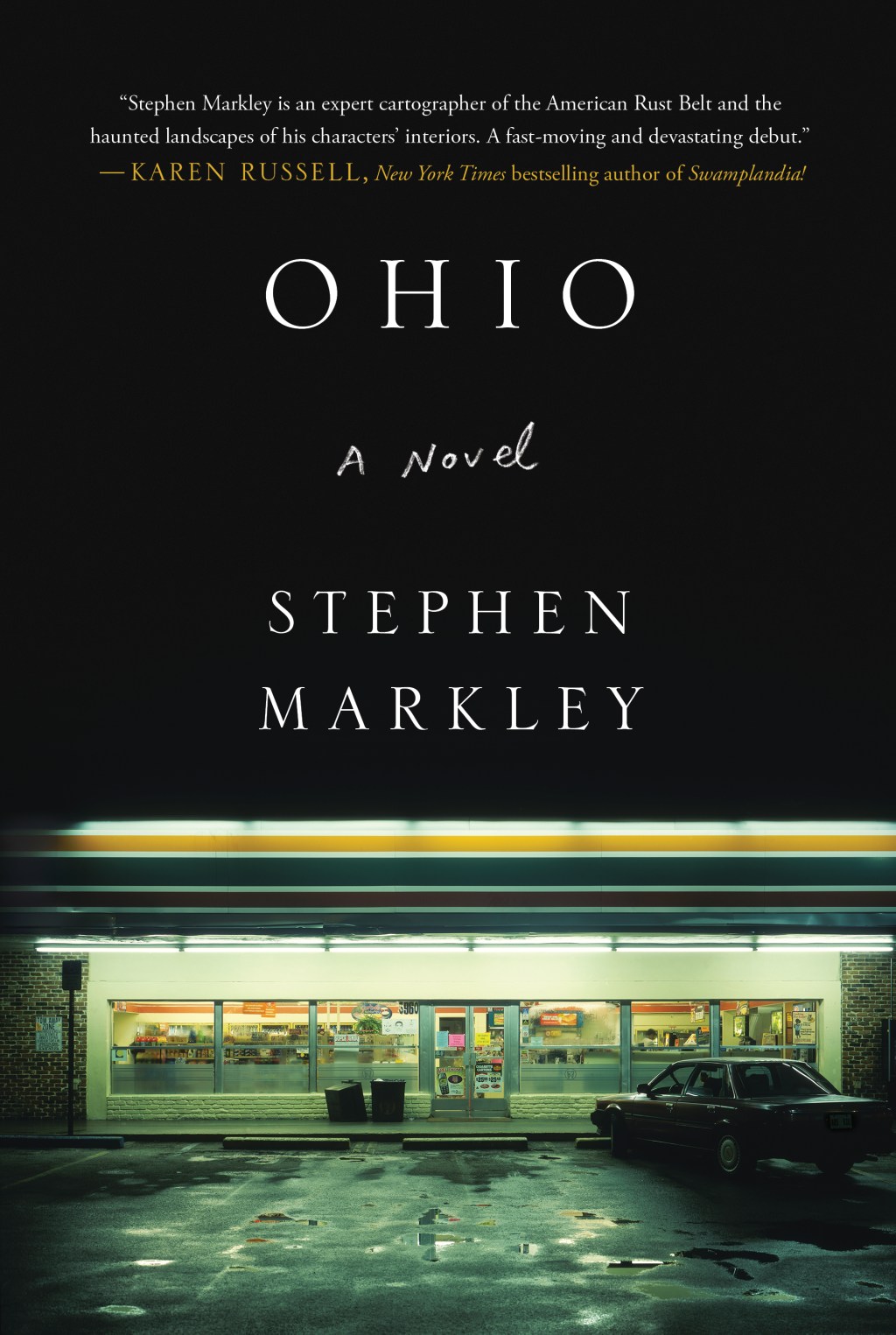
    He was a successful journalist, but Stephen Markley says the arc of his career was leading him in a different direction than his ultimate dream—to be a novelist. While many of us would have just continued with the flow of success, Markley instead signed up to attend the Iowa Writer’s Workshop at the University of Iowa, among the most prestigious of writing programs. But the next step was to write a novel and though it took almost five years for Markley to reach his goal the effort and time were well worth it as his recently published novel, Ohio: A Novel (Simon & Schuster 2018; $27), is garnering great reviews.Stephen Markley credit Michael Amico (smaller version)The The book tells the story of four friends who meet up years after graduating high school in an attempt to sort out issues from their past, mend relationships and come to an understanding about how and why they’ve changed in the intervening years.  Their lives also parallel the transformation of their home town, the fictional New Canaan based in part on Mt. Vernon, Ohio where Markley grew up.

    “New Canaan is not exactly Mt. Vernon though I certainly borrowed freely and shamelessly from there, particularly from my high school and it wasn’t difficult for me to access what it felt like to come from a town like New Canaan, to move away and return, to gossip about what’s been going on, to drink till the bars kick you out when you’re back home,” says Markley. “I wanted to explicate how I grew up and the monumental changes I’ve seen since 9/11 and how they impacted the place where I lived and the lives of those I knew.”

    Describing his book as both a murder and social mystery as well as a ghost story, Markley says the book is about “big things.” These includes the opiate crisis, the wars in Iraq and Afghanistan, the Great Recession, the loss of good paying union jobs which catapulted many workers out of the middle class and, ultimately, how dramatically New Canaan, like so many real places, morphed from prosperity into a rustbelt relic.

    Markley was a senior in high school when the terrorist attacks on September 11, 2001 occurred. Suddenly everything changed and life became totally different.

    “There were military recruiters everywhere and everyone was talking to them about enlisting and many people I know signed up,” says Markley. “My approach in creating characters was taking inspiration from those I knew but not taking people I knew—I didn’t want to copy people but to use stories to help form the people in my book. By doing so, they became real to me,  When choosing the fate of my characters, I struggled, going back and forth as to what happens to them. They’re part of the story I wanted to tell.”

    Ifyougo

    What: Talk, Q&A, Signing with Stephen Markley

    When: Thursday, August 23 at 6 p.m.

    Where: Barnes & Noble, 1130 North State St., Chicago, IL

    Cost: Free

    FYI: (312) 280-8155; stores.barnesandnoble.com/store/2922


  • The Joe Maddon Story: “Try Not to Suck”

    The Joe Maddon Story: “Try Not to Suck”

    In a Zen-like move that baffled many in the sports world, Joe Maddon, then the new manager of the Chicago Cubs, enacted a “less is more” philosophy by almost completely eliminating  batting practice. What went against a long time baseball tradition as well as causing intense angst among the Cub fans and head scratching from pundits, now is credited with being one of factors helping the wonderful losers win their first World Series in 108 years.

    “For over a century of baseball, the belief was if you’re struggling then the answer was to work harder,” says Jesse Rogers, who with Bill Chastain, authored Try Not to Suck: The Exceptional, Extraordinary Baseball Life of Joe Maddon (Triumph Books, March 2018) with a foreword by Ben Zobrist.

    Maddon’s beginnings in baseball weren’t promising. A Minor League catcher for Los Angeles, after four seasons, with only 180 times at bat and three home runs, he hadn’t advanced further than Class A. Obviously it was time for a change and so he segued into management, working in a variety of positions for the Angels including minor league manager, scout and roving minor league hitting instructor, bench coach and interim manager.

    “His 31 years in Anaheim were an apprenticeship,” says Rogers, a television, internet and radio reporter for ESPN since 2009 who was  an insider covering the Cubs in 2016 (Chastain, who covers the Tampa Bay Rays for MLB.com and knew Maddon from his days there). “He saw a lot of things there that he thought should be done differently, but he couldn’t challenge it. But he was able to take what he learned to Tampa Bay where he could put some of that in place. He very much believes in less. If you’re struggling, don’t work more instead cut back. ”

    One of the positives from that strategy is players retain more energy as the long season progresses—an advantage over other teams who hew to conventional wisdom.

    “Joe’s surprised that more people aren’t doing this after seeing how successful he’s been,” says Rogers.

    But though he upended some traditions, Maddon has his superstitions just like most of those in the business.

    When rain called a temporary halt during Game 7 of the Series  with Chicago and Cleveland tied at 7-7, Maddon headed to his office and, spotting his bag, recalled thinking “it was time for my dad.” Grabbing his dad’s hat which he kept in the bag, he stuffed it down the back of his pants.

    “I said to myself ‘Let’s go’,” he is quoted saying in the book. “I took him back there with me and during the course of the next inning I kept touching it back there.”

    The title of Chastain and Rogers’s book s from one of Maddon’s oft-quoted maxims. Others include “don’t let the pressure exceed the pressure” or “do simple better.”

    “Probably my favorite one in general is ‘Embrace the target,’” says Rogers. “Joe says he’s really a big believer of running towards the fire as opposed to running away. I think that’s a good lesson for all of us.”


  • CAPSIZED! The Forgotten Story of the SS Eastland Disaster

    CAPSIZED! The Forgotten Story of the SS Eastland Disaster

    The SS Eastland was still tied to the pier about to take 2500 passengers and 70 crew members on an excursion across the southern edge of Lake Michigan to Michigan City and the dancing in the ballroom had already begun. It was all part of the fun on that July 24, 1915 when the ship started swaying side to side and dancers slid back and forth along the floor.  But the last pitch didn’t stop at 35 degrees as it had earlier and instead, continued on past 40, then 45.  The Eastland’s captain shouted for the gangways to be reconnected but it was too late, the boat capsized in the Chicago River, trapping many of its passengers below the deck. Though 15 feet from shore and in 20 feet of water, by the end of the rescue mission 844 bodies were recovered and 70% of those who perished were under 25.

    “More people died on the Eastland than did on the Titantic,” says Patricia Sutton, author of CAPSIZED! The Forgotten Story of the SS Eastland Disaster (Chicago Review Press 2018; $17.99). “90% of those who died were women and children while on the Titanic, only 10% of the dead were women and children.”

    Sutton, a former Chicago public school teacher, vaguely knew about the sinking of the Eastland but mentioned the disaster to her mentor at a writer’s workshop in Pennsylvania when they were talking about possible topics for a book.

    “She said you need to write that and if you don’t, I will,” recalls Sutton, who interviewed relatives of those who were aboard and read news accounts from the time to take readers into the lives of those who survived and those who didn’t. The passengers, mostly first- and second-generation Polish and Czech immigrants were the employees of Western Electric Company’s Hawthorne Works and the excursion was supposed to be a wonderful outing for them. Instead, says Sutton, almost every block in the Hawthorn area lost at least one person; in one block, it was every house.

    Written for children ages 10-14, it’s a compelling book for even adults. Because she’s a teacher, Sutton wants Capsized not only to be an educational lesson about the times (women wore long dresses, corsets and laced up boots which made escaping from the water so much more difficult and most people didn’t swim back then) but also to stir critical thinking and questioning.

    “Children ask why do we remember the Titanic and not the Eastland,” she says. “So we discuss what the reasons could be—there were famous and wealthy people onboard the Titanic while those on the Eastland were poor working class mothers and children. Also, the Eastland happened when World War I was going on and though we hadn’t entered it yet, everyone’s attention was focused on that. I also tell them that it’s important know about the Eastland and those who were on the ship.”


  • Marcus Sakey “Afterlife”

    Marcus Sakey “Afterlife”

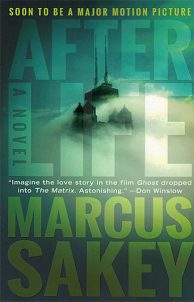
    In his dream, Marcus Sakey found himself walking the streets of Chicago, everything is much the same but also different—in the way that dreams often are.marcus

    “At first, I think that everyone is gone but then realize it’s me that’s gone–not anyone else– and that I was dead,” says Sakey, who seconds after this realization woke up in his own bed, next to his wife. But the import of the dream remained.

    “In the dream, I wasn’t scared but when I woke up, it seemed like a nightmare when I imagined being in those same circumstances of wandering around, being dead and not being able to speak to her,” says Sakey, whose bestselling Brilliance, the first in a trilogy, has sold over a million copies.

    This dream became what Sakey calls a “seed crystal,” the catalyst to write Afterlife (Thomas & Mercer 2017; $24.95) a supernatural thriller featuring Brody and Claire McCoy, FBI colleagues and lovers. Killed in the line of duty, both are reunited in an after world where they must battle an ancient satanic entity.

    It was a story Sakey felt compelled to write but one that was frightening as well.

    “This one scared me from the very beginning and it scared me every time I sat at the keyboard,” he says. “I never looked up and saw ghosts. Like any of my books, when I’m writing I’m working on it all the time not just when I’m at the keyboard. When I’m having dinner with my wife or playing with my daughter on the swing, I’m thinking about the characters and what they are doing. I was also afraid I might not be able to pull it off.”

    Fascinated by mythology since he was very young and striving to bring an almost mythical quality to his book, Sakey rewrote the first 100 pages nine times, each revision adding new layers, clarifications and bringing the characters into sharper focus.

    “It was my ninth book and by far the hardest I’ve written,” he says.

    But the rewards of all that hard work have been great. Imagine Entertainment, an American film and television production company founded by Ron Howard and Brian Grazer, won an auction for the screen rights to Afterlife.  Grazer and Howard are producing the movie with Sakey writing the screenplay.

    “To be perfectly honest, none of this has sunk in,” says Sakey when asked how he feels about all this heady success. “My job up until now has been to hang out with my daughter in the morning and then go into the basement and make stuff up.”

  • The World Is Awake, A Celebration of Everyday Blessings by Linsey Davis

    The World Is Awake, A Celebration of Everyday Blessings by Linsey Davis

    Though she often reports on what’s worst in our world (the Las Vegas massacre, the Boston Marathon bombing and the sexual predator assertions against Harvey Weinstein), Linsey Davis, an Emmy award winning news correspondent for ABC News, wants us to look at the world in a more positive way, enjoying its delights with a sense of childlike wonderment and excitement.

    “As adults we put on our blinders and just go about our day,” says Davis, author of the recently released children’s book, The World Is Awake, A Celebration of Everyday Blessings: (Zonderkidz 2018; $17.99). “Children are able to remind us about the beauty and joy of so many little things we often overlook.”davis, linsey_portrait

    Her inspiration, says Davis, comes from watching her four-year-old son Ayden interact with nature, saying it gives her a buoyant and spiritual perspective.

    “My son’s excitement when he asks me who opens the flowers or laughs when he sees a butterfly is contagious,” says Davis, who files reports for shows such as “World News,” “Good Morning America,” “20/20” and “Nightline.” “He sees with a child’s heart. I think children are able to remind us of that.”

    With colorful and lively illustrations, Davis’s says she hopes the book stimulates parents to regain that childlike outlook. But even more so, Davis wanted to write a children’s book where the main character is a person of color.

    “The characters in children’s books are not in sync with where we are as a country,” says Davis, who is African American. “More than 90% of protagonists in books for children are white. We’re at a time in our country where we’re becoming more colorful at the same time we’re becoming more divisive. Children need to find themselves in books and to see children in books who look like them. I think that is essential particularly now.”

    Ifyougo:

    What: Linsey Davis will discuss and sign copies of her book and participate in a Q & A.  at

    When: Sunday, July 22 at 2:00 p.m.

    Where: Anderson’s Bookshop, 123 W. Jefferson Ave. Naperville, IL

    Cost: This event is free and open to the public. To join the book signing line, purchase the book at Anderson’s Bookshop.

    FYI: (630) 355-2665; andersonsbookshop.com.


  • Michael Koryta in Chicago to Talk About His New Book

    Michael Koryta in Chicago to Talk About His New Book

    Michael Koryta, the New York Times-bestselling author of 12 suspense novels of including Those Who Wish Me Dead and Rise the Dark talks with writer Jane Simon Ammeson about his just released “How It Happened” (Little Brown 2018; $27).Michael Koryta

    “How It Happened” starts off with the so chilling confession and then suddenly we’re wondering okay, was it true? Is your book based on one specific case or did statistics from Project Innocence help shape the story for you or what shaped the story in your mind?

    The confession in the book was inspired by a false confession that was given during the investigation of the disappearance and murder of Jill Behrman, who was a 19-year-old Indiana University freshman when she vanished on a bike ride on a beautiful spring morning in a small college town. Her bike was found near my childhood home, and I was 17 when that happened, and then I was 19 when I began to write some police beat articles about the case for the local newspaper. There was a search going on at that time based on a confession. Those memories are profound and tragic to me.

    “How It Happened” is complex just like all your novels, do you plot everything in advance or does it more just flow? 

    I don’t know how to outline, but I do know how to rewrite! I do many, many drafts.

    And do you ever find yourself caught up in the feel of it all so that you’re where your characters are and experiencing what they’re experiencing rather than sitting at a desk writing about it? And do your characters take on a life of their own or are you in control of them?

    If you don’t feel caught up in it, then it won’t be any good. If the desk doesn’t vanish, and if you don’t disappear into the story to join your characters, then how will the reader be able to have that experience? I don’t want to have any control over my characters so much as I want them to explain the story to me, and for them to surprise me. That’s the joy of it.

    You’re books are so atmospheric, your characters haunted in many ways and there’s often a combination of the natural—caves, mountains, rivers, now Maine and the ghostly or the unknown. I’m familiar with Bloomington as that’s where I went to Indiana University and I love French Lick/West Baden, those marvelously restored early 20th century resorts in Southern Indiana. All this makes me  curious about how you look at these places and what makes them so haunting as if they’re characters themselves? And how/why did you choose Maine for this book?

    I respond to places that have a combination of visual and emotional impact. Sometimes, that might be in an eerie or creepy way — the surreal experience of walking into another time in the West Baden Springs Hotel, or riding a boat on an underground river. In other cases, it is found in the collision of beauty and danger. This would be the Maine coast to me. I love a place that can be astonishingly beautiful in one moment, and turn threatening in the next. It allows me to bring the setting to life like a character.

    Did you ever find  a book written by your female relative who was a published author back in the 1800s? What was her name?

    I still haven’t been able to track one down, sadly. Jane Parker was her name. She wrote novels in the late 1800s, and was apparently well-regarded in her era, which is even more special because she was a woman writing in an age when not many women had the chance, let alone earned that critical respect. I am afraid none of her books have survived, but I will remain on the hunt!   

    Will we ever get another novel set in French Lick and West Baden like “So Cold the River?

    I think you will! I finally got the film rights back on SO COLD THE RIVER after it went stagnant with the studio that optioned it originally, and I am exploring ways to get that done with an independent filmmaker, and as I work on that, I keep thinking of new ideas in that area, and with those characters. I am very drawn to that area, and to the stories that abound there. I am feeling the call down there again, louder and louder.

    Ifyougo:

    What: Michael Koryta book signing

    When: Tuesday, May 22 at 7 p.m.

    Where: Anderson’s Bookshop Naperville, 123 W Jefferson Ave., Naperville, IL

    Cost: This event is free and open to the public.

    FYI: To join the signing line, please purchase the author’s latest book, How It Happened, from Anderson’s Bookshop. To purchase please stop into or call Anderson’s Bookshop Naperville (630) 355-2665 or order online at andersonsbookshop.com/event/michael-koryta-0