Two fraternity brothers taking a drunken joyride after too much Captain Morgan Spiced Rum crash their Jeep in the mountains of New Mexico on a freezing winter night. With no cell service available, they manage to find a cave to spend the night. Unfortunately for them they discover several other things as well. Besides ancient petroglyphs and a body resting in a prehistoric burial site which needs to be returned to ancestral lands, there’s also the remains of two students who went missing 15 years ago in a case code named “Dead Mountain.”
The students were among a group of eight experienced mountaineers who for some reason became so afraid that they fled their tent half naked into a raging blizzard. The bodies of some had been found but now one remains missing.
What happened that night so long ago and where is the missing student? With the case reopened, the services of archaeologist Nora Kelly and FBI Agent Corrie Swanson are called into action in this fourth book (though it works as a standalone) series about Nora Kelly written by Douglas Preston and Lincoln Child, the New York Times bestselling authors. Solving a cold case from so long ago is never easy, but the investigation is confounded by other issues as well. The parents of the deceased students believe there’s a cover-up going on and are actively protesting and Nora’s brother, Skip, has gotten into a tussle with a bombastic and media-seeking sheriff who is up for re-election, and now Skip is charged with attempted murder.
As Nora and Corrie continue investigating, they realize there are many long-buried secrets tied to the disappearance of the students and outside forces working against them to keep those secrets well hidden and now that the case is reopened, their own lives may be in jeopardy as well.
“As Corrie moved farther and farther down the passage, she began to feel like a character from some dreadful Twilight Zone episode: trapped in an endless tunnel of concrete, destined to walk down it forever and ever. . . .“
“Why are we whispering?” Nora answered with a short laugh. “There’s no one here.”
Corrie snorted. “You’re right. Only the dead…”
Soon after they discover the body of the last missing student.
“It took a moment for Corrie to pull herself together and examine the scene. A man lay on the bed, hands folded across his breast, looking more like a corpse laid out for viewing.”
But the two women were wrong about only the dead being nearby. Isolated in the frigid landscape of the mountains where the tragic deaths had occurred all those years ago, their investigation has led Swanson and Kelly to the truth and directly into the path of a group of men desperate to keep them from revealing it.
Born in the United Kingdom, Tony Burton, a Cambridge University-educated geographer with a teaching certificate from University of London, first traveled to Mexico after spending three years as a VSO [Voluntary Service Overseas] volunteer teaching geography, and writing a local geography text, on the Caribbean island of St. Kitts. From there his travels took him to Mérida in summer 1977, where he spent several weeks backpacking around southern and central Mexico, returning two years later to teach at Greengates School in Mexico City.
Over the next seven years, Tony traveled extensively throughout Mexico, visiting every state at least once, and organizing numerous four-day earth science fieldwork courses for his students. He co-led the school’s extensive aid efforts following the massive 1985 earthquake.
From Mexico City, he moved to Guadalajara, where he continued to organize short, residential fieldwork courses for a number of different schools and colleges and began organizing and leading specialist eco-tours for adult groups to destinations such as Paricutín Volcano, the monarch butterfly sanctuaries, and Copper Canyon.
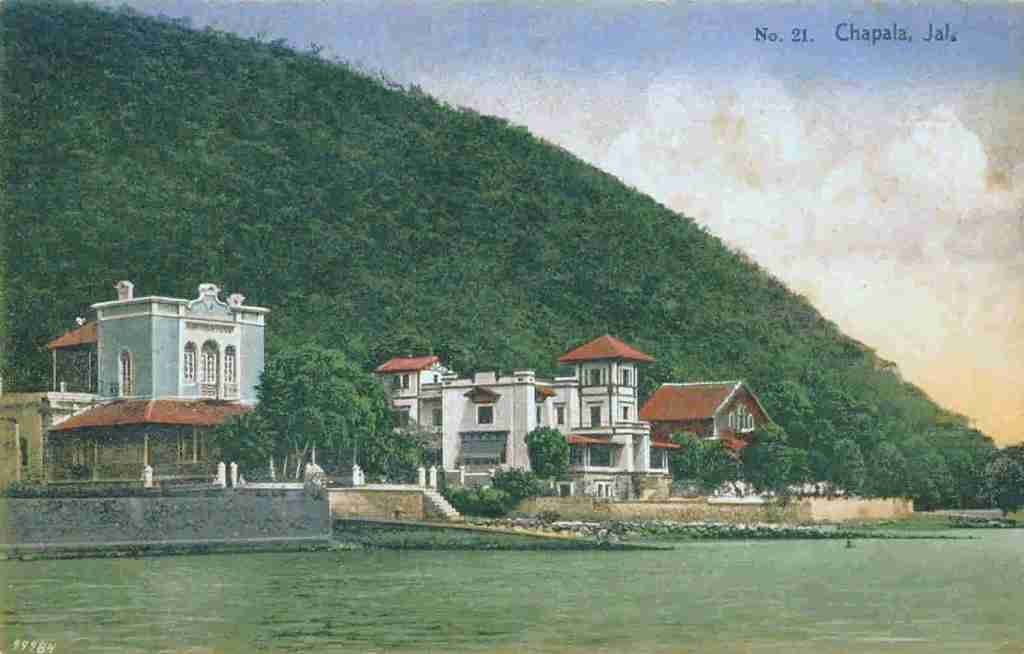
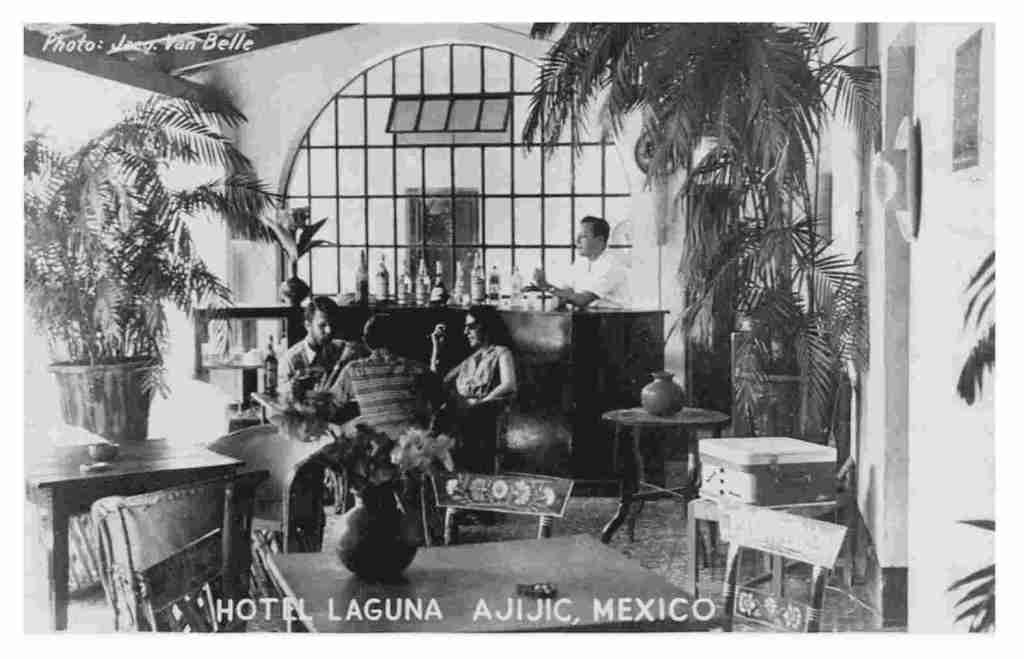
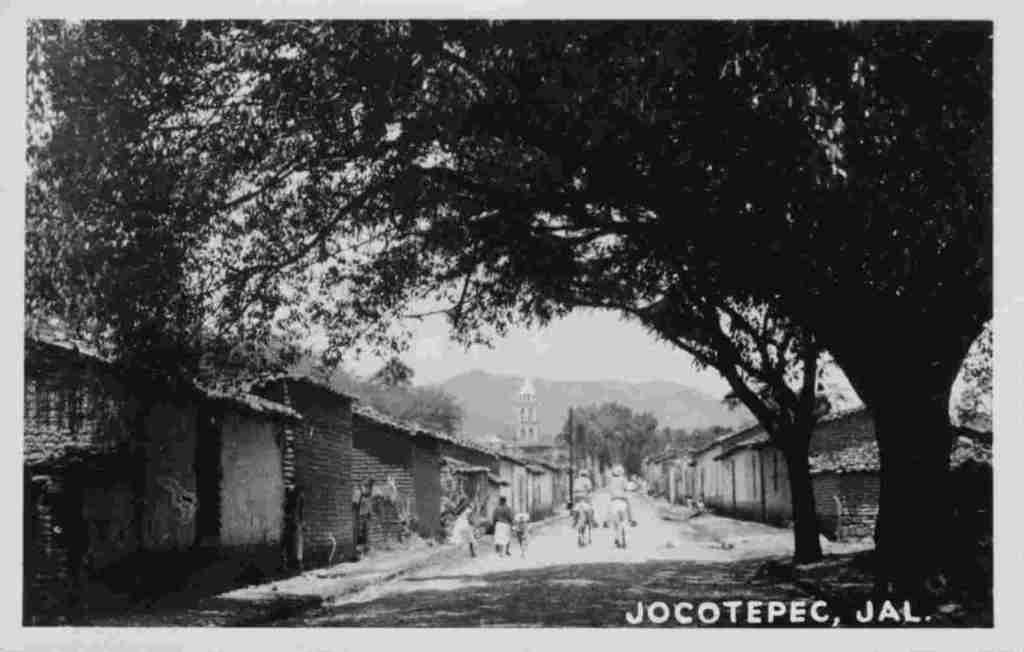
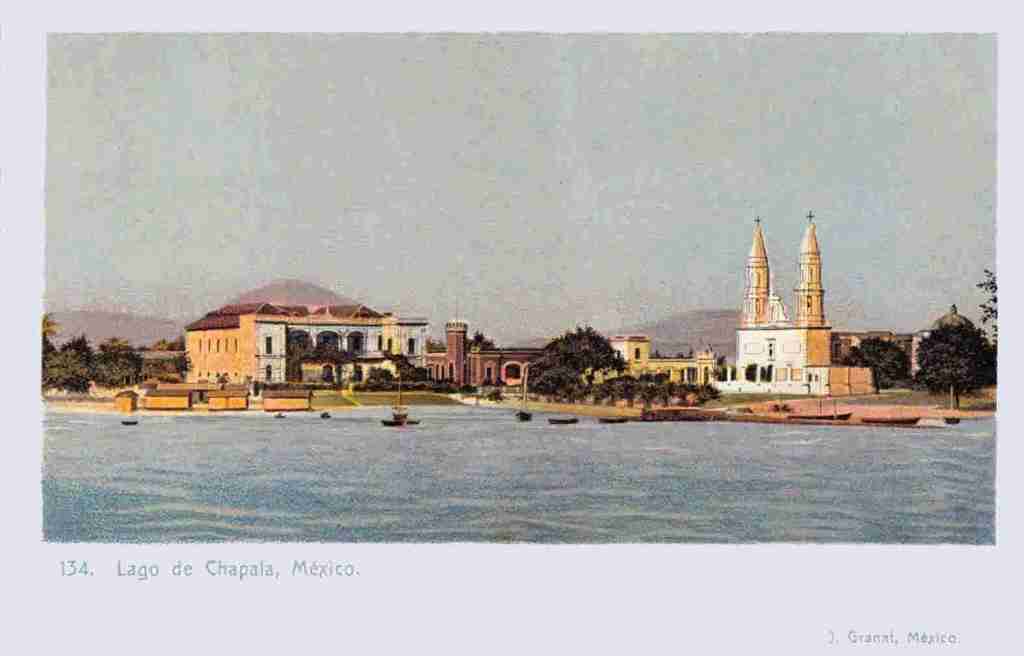
An award winning author, he’s written numerous books about Mexico including his latest Lake Chapala: A Postcard History(Sombrero Publishing). It’s part of a series he’s written on this region which is located about an hour south of Guadalajara. The 417-square-mile lake, Mexico’s largest, located in the states of Jalisco and Michoacán is situated at an elevation of 5,000ft in the middle of the Volcanic Axis of Mexico and is known for its wonderful climate, laid-back ambience, and is a popular destination for both travelers and ex-pats looking for a charming, low-key place to relocate. The three main towns along the lake are Chapala,Ajijic and Jocotepec. In an intriguing aside, Tony met his wife Gwen Chan Burton when she was working as at the director of the pioneering Lakeside School for the Deaf in Jocotepec. Gwen writes about the school and all that it has accomplished in her book, New Worlds for the Deaf, also published by Sombrero Books.
Because I’m always interested in foodways, Tony was kind enough to share a copy of an undated Spanish language project put together by students from the Instituto Politécnico Nacional School of Tourism titled “Gastronomy of Jalisco.” It includes numerous recipes from the region including one for the famous Caldo Michi of Chapala (the recipe is below).
I had the chance to ask Tony, who currently is the editor of MexConnect, Mexico’s leading independent on-line magazine, aboutLake Chapala: A Postcard History as well as the time he spent in this beautiful region of Mexico.
How did you first become familiar with Lake Chapala?
I first visited Lake Chapala in early 1980, on my way back to Mexico City from the Copper Canyon and Baja California Sur. Little did I imagine then that it would be where I would later fall in love, get married, and have two children!
What inspired you to write Lake Chapala: A Postcard History?
There is no single overwhelming inspiration. I realized, while living at Lake Chapala and writing my first books about Mexico, that a lot of what had been previously written was superficial and left many unanswered questions. In the hopes of finding answers, I decided to trawl through all the published works (any language) I could find, which resulted in Lake Chapala Through the Ages (2008), my attempt to document and provide context to the accounts of the area written between 1530 and 1910.
My next two books about Lake Chapala—If Walls Could Talk: Chapala’s Historic Buildings and Their Former Occupants, and Foreign Footprints in Ajijic: Decades of a Change in a Mexican Village—focused on the twentieth century history of the two main centers for the very numerous foreign community now living on ‘Lakeside.’ Part of my motivation was to dispel some of the myths that endlessly recirculate about the local history, as well as to bring back to life some of the many extraordinary pioneering individuals indirectly responsible for the area becoming such an important destination for visitors.
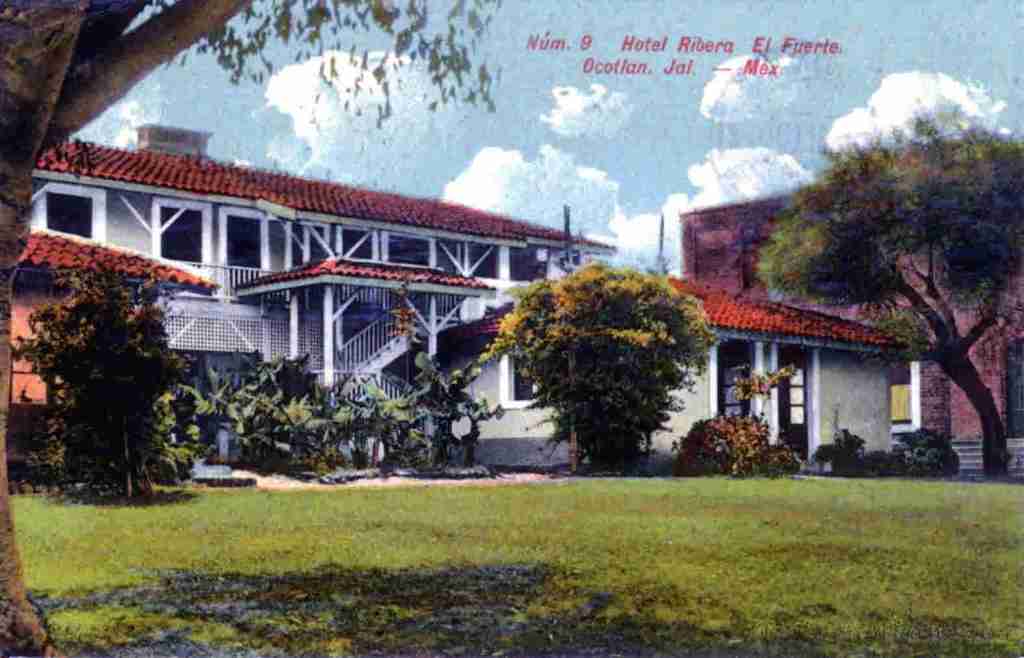
Lake Chapala: APostcard History is my attempt to widen the discussion and summarize the twentieth century history of the entire lake area. Its reliance on vintage postcards makes this a very visual story, one which I hope will appeal to a wide readership, including armchair travelers.
What were some of the challenges you encountered in writing this book? Was it difficulty finding the numerous postcards you included? And doing the extensive research that went into the book? Are there any intriguing stories about hunting down certain postcards and any “aha” moments of discovery when writing your book?
The main challenge was in deciding how best to structure the material. Because of the originality of what I’m doing, it is impractical to follow the advice that writers should start with a detailed plan and then write to that plan! In my case, after collecting the information and ideas that exist, the challenge is to select what can be teased and massaged into a coherent and interesting narrative.
Because the postcard book is the product of decades of research, I had ample time to build my personal collection of vintage postcards, through gifts, auctions and online purchases.
There were many significant “aha” moments in the process: some concerned the photographers and publishers responsible for the postcards and some the precise buildings or events depicted. While I’m saving some of these “aha” moments–because they are central to a future book–one was when it suddenly dawned on me that wealthy businessman Dwight Furness was the photographer of an entire series of cards (Figs 6.3, 6.4, 6.5, etc.) that relate to my next response.
If you could go back in time to visit one of the resorts that is no longer there that you featured in your book, is there one that stands out and why is that?
Ooohhh; I’d love to go back to about 1908 and stay at the Ribera Castellanos resort (Chapter 6) during its heyday. While staying there, perhaps I could interview owner Dwight Furness, his wife and a few guests? Apart from a few ruined walls, Furness’ postcards of the resort are pretty much the only remaining evidence of the hotel. And perhaps one night I could invite local resident and prolific professional photographer Winfield Scott and his wife to dinner to hear their stories?
How long did it take to write Lake Chapala?
The writing took less than a year; but only because of the many prior years of research.
Since I often talk about food and travel, are there any culinary specialties in the Lake Chapala region?
Long standing culinary specialties of the area include (a) Lake Chapala whitefish (b) charales (c) caldo michi. And, when it comes to drinks, there is a very specific link to postcards. The wife of photographer José Edmundo Sánchez, who sold postcards ( Figs 7.5, 7.6 and 7.7) in the 1920s from his lakefront bar in Chapala, is credited with inventing sangrita, still marketed today as a very popular chaser or co-sip for tequila. (Chapter 7, page 74).
Is there anything else you’d like readers to know about your book?
I hope readers find the book as fun and interesting to read as it was to write!
MICHI BROTH
Ingredients:
2 tablespoons corn oil
¾ kg of tomato seeded and in pieces
¼ onion in pieces
½ kg carrot, peeled and cut into diagonal slices
½ kg of sliced zucchini
4 or 6 chiles güeros
100 gr. chopped coriander
2 sprigs of fresh oregano
Salt to taste
2 ½ liters of water
1kg well washed catfish, yellow carp or red snapper
PREPARATION: Heat the oil and stew the vegetables in it, add water and salt to taste, let it simmer over low heat until the vegetables are well cooked, then add the fish and leave it for a few minutes more until it is soft.
Sangrita
I had the opportunity to stay at Tres Rios Nature Park, a 326-acre eco-resort north of Playa del Carmen and was first introduced to sangrita during my stay. I took several cooking lessons and learned to make a dish with crickets, but that is a different story. Chef Oscar also talked to us about the history of sangrita. The Spanish name is the less-than-appetizing “little blood” but hey, when you’re learning to grill crickets, you can deal with a name like that. The drink, as Tony writes in his postcards book, originated in Chapala in the 1920s.
Here is the excerpt:
”In the same year the Railroad Station opened, Guillermo de Alba had become a partner in Pavilion Monterrey, a lakefront bar in a prime location, only meters from the beach, between the Hotel Arzapalo and Casa Braniff,” he writes. “The co-owner of the bar was José Edmundo Sánchez. Regulars at the bar included American poet Witter Bynner, who first visited Chapala in 1923 in the company of D H Lawrence and his wife, Frieda. Bynner subsequently bought a house near the church. When de Alba left Chapala for Mexico City in 1926, Sánchez and his wife—María Guadalupe Nuño, credited with inventing sangrita as a chaser for tequila—ran the bar on their own. After her husband died in 1933, María continued to manage the bar, which then became known as the Cantina de la Viuda Sánchez (Widow Sánchez’s bar).”
Sangrita is typically used as accompaniment to tequila, highlighting its crisp acidity and helping to cleanse the palate between each peppery sip. According to Chef Oscar, the red-colored drink serves to compliment the flavor of 100% agave tequila. The two drinks, each poured into separate shot glasses, are alternately sipped, never chased and never mixed together.
Here is Chef Oscar’s recipe and below is one from Cholula hot sauce which originated in Chapala. Tony has a great story about that as well. More in my next post on his books.
For one liter of Sangrita:
400 ml. orange juice
400 ml. tomato juice
50 ml. lemon juice
30 ml. Grenadine syrup
20 ml. Worcestershire sauce
Maggi and Tabasco hot sauce (mixed up) to taste
Salt and pepper to taste
Mix together all the ingredients and serve cold. Suggested duration of chilling : 3 to 4 days.
Cholula’s Sangrita
1/4 cup (2 ounces) fresh orange juice
1/4 cup (2 ounces) fresh grapefruit juice
2 tablespoons fresh lime juice
20 pomegranate seeds
3 fresh sprigs of cilantro or to taste
1/2 stalk celery
3 teaspoons smoked coarse sea salt or sal de gusano, divided
1 tablespoon Cholula® Original Hot Sauce
Place all ingredients except salt in blender container, with about 1 cup ice cubes. Puree until smooth.Strain twice though a fine mesh sieve, discarding any solids.
Rim shot glasses with sea salt. Serve sangrita cold in rimmed shot glasses alongside your favorite tequila.
“This book is a compelling read as Angus is a clear, concise, and talented writer who makes even small facets of long ago lives fascinating.”
The irony of Henry VIII is acute. The once dashing heroic young man who succumbed to gluttony, cruelty, and, though it was done in a state-sanctioned manner, the murder of unwanted wives in hopes he could finally sire an heir, had at least one and most likely more illegitimate sons. But Edward, born of his third wife, Jane Seymour, who gained the throne with the beheading of his second wife, Anne Boleyn, was sickly and would die after a short stint as king.
And thus, first Henry’s legitimate daughter Mary, to be soon known as Bloody Mary because of her religious fanaticism, and then Elizabeth would come to rule. There is more irony here as well. Mary was the daughter of Henry and his first wife, Katharine of Aragon, who was cast aside so that he could marry Anne. Elizabeth 1 was born of that short-lived union. Both Mary and Elizabeth’s early childhoods were filled with rejections and loss of status. Things grew more precarious after her mother’s death. Her father was off with his next wife—there would be six all together and Mary, after Edward’s death, saw her half-sister, a Protestant to boot, as a rival for the throne. It was as dysfunctional of a family as any on a Jerry Springer show.
But what went on between these two siblings isn’t the only story regarding Henry’s children. And Caroline Angus, author of Henry VIII’s Children has written an immensely readable history of Henry’s other children, their mothers, and how they fit into Tudor society.
“The tales of King Henry VIII’s illegitimate children are stories made form precious few recorded clues, plus memory, slander, gossip, and conjecture,” writes Angus. “But within the dramatic lives of the Tudor dynasty, almost anything is possible.”
It was while Henry was married to his first wife, Katharine of Aragon, the widow of his brother Arthur, who was pregnant with his child, that he impregnated Bessie Blount. Still in her teens, Blount was in the third tier of Katharine’s ladies-in-waiting, not noble or wealthy enough to be in the first or second ranks but better than the fourth tier. Her job was to fetch and hold items for the queen and deliver messages. For that, she received her own room and servant and was granted permission to keep pets in the royal household.
Bessie wouldn’t be the first of the Queen’s ladies that Henry bedded. He had already had an affair with at least one and would embark relations with several others. Katharine’s lost her child, much to the chagrin of the kin who was tired of his wife’s inability to give him a son. Bessie did much better and Henry was delighted with their son who was called Henry Fitzroy. The term Fitzroy is French word meaning “son of a king” and was used by the English to denote an illegitimate child. Henry bestowed upon titles and lands upon little Henry while Katherine just had to smile and bear it. That’s what women had to put up with in those days.
Angus’ research is so extensive that readers even learn what Fitzroy ate for his afternoon meal. The first course was pottage, boiled beef, mutton, geese, capons, veal, and custard. If that sounds like a lot consider the second course consisted of lamb or kid, rabbits, pigeons, wildfowl, a tart or baked meat, fruits, and four gallons of ale and two pitchers of wine. Now, of course, some of that was probably for those who were dining with him. Fitzroy’s dinner meal was equally heavy and included 12 sweet desserts.
In another touch of irony, after Henry divorced Katharine, he could have made Fitzroy legitimate by marrying Bessie Blount whose husband had just died. But he was so entranced by Anne Boleyn that he married her instead, believing she would give him a son. She didn’t and lost her head.
There were other illegitimate children scattered around, probably more than history reveals. Anne’s sister Mary oldest son and daughter, Catherine and Henry Carey, were said to be Henry’s children. So was Ethelreda Malte, whose mother was a laundress. John Perrot claimed he was the son of Henry. And there were rumors Henry was the father of Thomas Stuckley, Richard Edwardes, and Henry Lee.
This book is a compelling read as Angus is a clear, concise, and talented writer who makes even small facets of long ago lives fascinating.
“The Green Book was more than just a road trip guide but a way of survival. Hall hopes that its history will live on.”
The road, a symbol of freedom, was fraught with dangers for Black travelers in the time when Jim Crow laws still existed. Not much is known about Victor Hugo Green, the author of the “Green Book,” a series of tomes released annually listing places in cities and states that willingly accommodated Black travelers.
“Back at the time the Green Book first appeared in the late 1930s, the automobile had seemed a likely safe haven for Black travelers—or at least safer,” writes Alvin Hall. “In a bus or on a train, a Black person ran the risks and humiliations of the laws and strictures around the use of public transportation due to segregation. That’s why a car road trip was particularly important: travelers needed more protection en route to their destinations—whether that was going home to Birmingham, Alabama; to visit Uncle Jerome in New York; or to gather with Alma Greens relatives in Richmond, Virginia.”
Hall determined that he would revisit the places mentioned in Green’s books, accompanied by his friend Janée Woods Weber. Their journey took them from New York to New Orleans by way of Detroit. As they drove, they gathered in as much of the past as they could by visiting the clubs, restaurants, shops, and motels still in existence that Green said were safe. When possible, at each stop they tried to trace who were alive back then and capture their reminiscences.
In Memphis, they visit the Lorraine Motel where Dr. Martin Luther King was assassinated. Besides the horrors of the murder of the Civil Rights leader, the monetary impact on the family that owned the hotel was profound as well as travelers shied away from staying there. But this is a story that has a sense of triumph as well. It is now a state-owned museum and on the National Register of Historic Places.
The Green Book was more than just a road trip guide but a way of survival. Hall hopes that it’s history will live on.
Jane Simon Ammeson’s most recent book is Lincoln Road Trip: The Back-Roads Guide to America’s Favorite President, a Bronze winner in the Travel Book category for the 2019–20 Lowell Thomas Travel Journalism Competition. Lincoln Roadtrip was also a finalist for a 2019 Foreword Indie Award for Travel. Her travel writing appears in various newspapers and magazines.
“The Vibrant Years” by Sonali Dev, the bestselling Indian American novelist, was the first book chosen by actress Mindy Kaling when she started her publishing imprint, Mindy’s Book Studio with the goal of bringing diversity to readers.
“Sonali Dev’s ‘The Vibrant Years’ captures the spirit of Mindy’s Book Studio,” Kaling said in the press release announcement. “It’s a joyful and empowering read following a group of unconventional women trying to find themselves.”
Dev, who lives in the Chicago area, found inspiration when she first began writing from all the Jane Austen novels she read while growing up. Though centuries and a continent separated the two, Dev liked the way Austen dissected British society with wit and flair.
“You both have a snarky well, I don’t mean snarky but…” I say fumbling with words. I obviously hadn’t had enough coffee that morning.
“I like that description because there’s so much in the world to be snarky about,” says Dev, who is always polite. “If we don’t laugh at the world around us, we’re just going to constantly believe all the lies they tell us, right? So I think snark is very healthy.”
Okay, so we’ll call it snark. I like that.
In “The Vibrant Life,” Dev writes about three generations of women. There’s 65-year-old Bindu Desai who has come into a fortune left to her by a man from her past—a past that she doesn’t want anyone to know about including her daughter-in-law who recently was divorced from her son and her granddaughter, Cullie. The latter is a technology whiz who created an app for coping with anxiety and she now has plenty of it, partly because she’s been betrayed by her boyfriend over the app’s future.
“I think of it as everything I’ve ever wanted to say about being a woman and the essentially feminine journey has been a central theme of all my books,” says Dev whose other books include “Pride, Prejudice, and Other Flavors” and “Incense and Sensibility,” both of which were bestsellers. “This book about three generations of Indian American women is a culmination of that.”
Working together, the three help Cullie in her attempts to regain control of her anxiety app while working on their own issues. Aly, the daughter-in-law, is struggling for recognition and advancement at the local news station where she works and where opportunities for Indian American women are limited. Bindu has used her legacy in part to purchase a condo in a posh Florida retirement community. But the members of her HOA board don’t like her attractiveness and vivaciousness. It’s like a replay of high school.
Dev says she was inspired in part to switch from her more romance-oriented novels to what she describes as women’s humorous fiction because of all the grandmother jokes she saw in fiction.
“Many older women characters in books are like cardboard, stereotypes,” she says. “They are either vinegary and outspoken or benevolent, wise and a font of affection kind of grandmother. But none of the women I know in their 60s and 70s are like that. I wanted to write characters that are like the older women in my life and the woman who I want to be when I am that age.”
Tapas—delicious tidbits served on tiny dishes that originally served as lids for glasses of wine or sherry—are meant to be just two mouthfuls and were until recently free for those ordering spirits. All that has changed with the increasing popularity of tapas, writes Elisabeth Luard, an award-winning food writer who spent 15 years living in Spain who brings this expertise and experience to her latest cookbook,Tapas: Classic Small Dishesfrom Spain (Grub Street). But that doesn’t change the enchantment of getting to try many bites of an assortment of delicious foods.
Courtyards of Córdoba
Describing tapas as embodying a way of life, Luard tells about her experiences of moving with her novelist husband and their four children to a remote Andalucian valley and learning to appreciate the pleasures of this thoroughly Spanish way of eating.
“Long before the fashion for open kitchens in Michelin-starred restaurants, the humble provider of tapas cooked to order and set everything out on display,” she writes in the introduction of her book.
There was a lack of entertainment at the time—they moved there in the 1960s—but there were tapas and wine to be found in the small towns of Andalucía with their Moorish influences and names like Pelayo, Valdepenas, and Puerto de Santa Maria, or the bigger cities such as Algeciras, a bustling seaport. Here, they could enjoy dishes of tapas, drink the local wine, and socialize.
“Since we did not live in a village, we would make our way to our chosen locale and do the rounds,” she continues. “If we turned east down the road towards the Atlantic, we could have spider-crabs and sea snails in a bar set into the Moorish battlements of Tarifa, and the go on further, to the chozo down by the beach at Punta Paloma, for deep-fried quail and the fattest crispiest chips in Spain.”
Flowers flowerpot on the walls on streets (Calle Velazquez Bosco). Cordoba, Andalusia, Spain
Saturday night was typically when Luard and her husband and their four children would plan where to go for tapas. Once they arrived it was typical for bartenders to be ready to recite the list of tapas when asked “Que hay para tapar?” or “What is there to pick on?” And the answer to that depended upon not only local ingredients but also the kitchen equipment as well. That might include a plancha—the flat metal griddle used to grill sardines, prawns, thin slices of tuna, swordfish, and pork fillets marinated with garlic and paprika, a cazuela—a shallow earthenware casserole, or a metal tin filled with white-hot charcoal that dates back to the days of Moors.
Luard provides a plethora of recipes that she hopes will encourage us to get the tapas habit and once that happens, she suggests we raise our glasses together in the traditional Spanish toast, “Salud, amor y pesetas!” Here’s to health, love and wealth!”
Flowers flowerpot on the walls on streets (Calle Velazquez Bosco). Cordoba, Andalusia, Spain
And with her recipes, all simple to make including such small plates as croquettas de atun (tuna croquettes), pinchitos morunos (Moorish kebabs), filetes con cabrales (steaks with blue cheese), and a variety of omelettes, the salutation will be a joy to make.
The following recipes are from Tapas by Elisabeth Luard.
Fried Baby Artichokes
(Alcachofitas fritas)
6 baby artichokes
Olive oil for shallow frying
Sea salt
1 lemon, quartered, to serve
Wipe the artichokes and trim the stalks off level with the base. With a sharp knife, peel off the rough outside of the stalks and cute them in half lengthwise. Halve the artichokes and nice out the hairy little choke.
In a frying pan heat enough oil to half-submerge the artichokes when placed cut-side down in the pan. When a faint blue haze rises from the surface of the oil, put in as many artichoke halves as the pan with accommodate in a single layer.
Fry until the leaves are prettily bronzed and the choke tender, turning them once. Continue until all are ready, leaving the stalks until the end.
Drain on kitchen paper, sprinkle with salt and serve with the quartered lemon.
Eat them with your fingers, from the choke towards the leaves as far as is tender.
Grilled (broiled) Mushrooms with Garlic and Rosemary
Champinones a la parrilla
8 ounces mushrooms
1 to 2 fat garlic cloves
2 tablespoons olive oil, finely chopped
Salt and pepper
Bread squares, to serve
Wipe the mushrooms and trim the stalks level with the caps. Discard the trimmings. Arrange the mushrooms stalk upwards on a grill or broiling pan or griddle.
Sprinkle the mushrooms caps with the chopped garlic, rosemary, olive oil, salt and pepper.
Grill (broil) the mushrooms fiercely until the juices run and the caps are spitting hot. Serve on squares of fresh bread, each speared with a cocktail stick.
A history major and bread aficionado, Ellen King became intrigued by the abundance of grains once available and commonly grown in the United States that had, since World War II, completely disappeared from the marketplace and which often didn’t seem to exist anymore.
“I spent some time in Norway and bread was about all I could afford to eat,” says King, who earned undergraduate and graduate degrees in history and then attended the Seattle Culinary Academy and worked in several Seattle restaurants before she moved to Evanston, Illinois. Shocked at finding that Chicago didn’t have the types of breads she yearned for, she began a search for heirloom grains and began making bread the old fashioned way—using natural wild yeasts as an ingredient, mixing and turning the dough by hand for several hours and then injecting steam for a crisp crust while it bakes in an imported European oven.
What good was opening a bakery if I couldn’t find good ingredients, King remembers thinking. Partnering with farmer Andrea Hazard who was interested in growing heirloom grains, the two finally connected with Stephen Jones, a wheat breeder and the Director of The Bread Lab at Washington state University. Jones, who earned a PhD in Genetics from the University of California at Davis, suggested she and, a farmer who was interesting in growing heritage wheat, read old farming journals to find out what varieties that were grown at the turn of the last century.
“There are literally over 10,000 varieties of wheat,” King says. “One person told me 100,000.” The names are romantic–Rouge de Bordeaux, Turkey Red and Marquis. But the seeds seemed ephemeral. Take Marquis, a hard red spring wheat first introduced in Canada in 1895. It was among the most widely grown wheat in the United States between the 1910s through the 1930s. During the 1920s, Marquis accounted for 59% of the wheat produced in Wisconsin. By the time King went looking for it, Marquis was no longer grown and she couldn’t find the seeds.
But her years during historical research paid off. Countless queries led to a college professor who had 2.2 pounds of Marquis wheat. Planting the seeds King and Hazard were able to produce 30 pounds the first year. Now they hope to have 3000 seeds which will yield enough to both make bread and save seeds.
“That way we can grow more and share with other farmers,” she says.
Selecting a loaf of bread from Hewn is like taking a step back into history. The menu of hand-forged breads made from organic, locally sourced re-discovered wheat varieties include those made with Turkey Red, a heritage variety of wheat grown in Wisconsin and Kansas Lower in gluten the bread has a nutty flavor and Red Fife–a heritage variety of wheat grown and milled in Wisconsin.
Why did these varieties disappear, I ask King.
“After World War II the cherished varieties fell out of favor,” she says. “And when we did that we lost the uniqueness of each region where the wheat grew and we lost the flavor. Along with the homogenization of our wheat, we added fertilizers and products like Round-Up and made bread less healthy.”
It was all about efficiency and mass production.
“General Mills flour is always exactly the same and large scale baking needs that consistency,” she says. “At Hewn, I invest in people, not machinery. For us, it’s about training the baker in how to treat and understand the flour.”
Just as wine connoisseurs can recognize the terroir of grapes, King can do the same with wheat. And though heirloom produce like tomatoes, squash and peppers has become a major player in farming, she says wheat varieties are still lagging.
But she enjoys the challenge of finding farmers who are growing them.
“There are more and more people doing it,” she says. “I met this guy who is growing Pedigree Number 2. At first I couldn’t find any one growing Red Kharkoff anywhere, but now I’m connecting with a farmer in Washington state who is growing it and all sorts of grains. It takes time, but it’s worth it—it’s better for the soil, for the environment and for our health. It tastes great. And also, it’s history.”
Heritage Corn and Berry Muffins
Excerpted with permission from Heritage Baker by Ellen King
Note: Most of the recipes in Heritage Baker require preparing a starter which is a process that takes several days. King recommended that beginners start with one of her muffin recipes as they are the simplest to make. She also notes that the flavor of flint corn is rich and pronounced but if you can’t find Floriani, any flint corn variety from your region will work well for this recipe. You can also, more easily, substitute regular or coarsely ground cornmeal which is found in supermarkets. Be sure to avoid finely ground cornmeal. Brands available in grocery stores like Bob’s Red Mill offer coarse ground coarse meal and a variety of flours. There are several places in Michigan where you can order specialty heirloom flours.
Country Life Natural Foods in Pullman, Michigan is a wholesaler but also sells in small amounts. They offer mail order and delivery. 641 52nd St., Pullman, MI 800-456-7694.
DeZwaan Windmill on Windmill Island in Holland, Michigan sells stone ground cornmeal and flour. Click here for more information about their products.
Ingredients for some of the grains in King’s book such as flint corn can be found online, at specialty stores or at farm markets.
13/4 cups sifted heritage flour, such as White Sonora or Richland
1/2 cup fine-milled Floriani Flint or other heritage cornmeal
1 1/2 teaspoons baking powder
1 1/2 teaspoons baking soda
1/2 teaspoons fine sea salt
1 cup strawberries, quartered, or blueberries
Streusel Topping:
1/4 cup lightly packed brown sugar
1/2 cup stone rolled heritage oats
1 tablespoon unsalted butter, at room temperature
Preheat the oven to 350°F. Butter a 12-cup muffin pan.
To make the batter, stir together the granulated sugar and eggs in a large bowl until combined. Stir in the heavy cream, sour cream, and vanilla, followed by the melted butter. In a medium bowl, stir together the flour, cornmeal, baking powder, baking soda, and salt. Add the flour mixture to the egg mixture and stir just until combined.
Using a wooden spoon, very gently fold in the berries. Do not overmix. Using an ice cream scoop, spoon the batter evenly among the prepared muffin cups; the cups should be three-quarters full.
To make the streusel topping, combine the brown sugar, oats, and butter in a small bowl. Using a spoon or your hands, stir until the mixture becomes crumbly. Sprinkle about 1 tablespoon of the topping over each muffin.
Bake for 25 minutes, or until a metal skewer or toothpick inserted into the center comes out clean. Let cool in the pan for 5 minutes. Serve warm or at room temperature, or freeze in a resealable plastic bag for up to 3 months. To reheat, set on the counter until thawed and warm in a 325°F oven for 10 minutes.
Hewn in the News: Food & Wine magazine featured Hewn as one of the Best Bakeries in America and in the article The Best Bread in Every State. Hewn was listed among the Best Bread Bakeries at the Food Network, and as one of the Best Bakeries in Chicago by Thrillist. Click here to listen to their recent interview on the WBBM Noon Business Hour. Click here to read Midwest Living Magazine’s “Best of the Midwest.” Click here to watch Steve Dolinsky’s recent segment on the bakery on NBC5 Chicago. To learn more about their expansion to Libertyville, click here.















 Shelf Life