Candace Chen’s life is so much about chaos and loss that she
finds solace and satisfaction in her job coordinating the sourcing of materials
and production of Bibles. It’s a job that entails such minutiae as making sure
there’s a supplier for the crushed gems which decorate a specific best-selling
Bible even though many of the Asian countries supplying the materials have had
to close because the crushed stones cause lung disease.
But
Candace, a millennial who immigrated from China when very young, works through
such hurdles with aplomb, simply moving on, over and around any impediment. That’s
one reason why she is chosen to stay at the company’s New York office as all
the other workers flee, are dying or being turned in zombies by a virulent and
unstoppable fungal infection called Shen Fever.
Candace’s
story—from her early losses to her unplanned but not unwanted pregnancy in a Manhattan
that is rapidly falling apart is told in Severance, the first novel by
Ling Ma.
Ma, who teaches creative writing at the University of Chicago, writes with a dry wit and keen sense of observation, shaping Severance into a darkly comic novel in a genre that might be best called Apocalypse Office and is unlike any other urban disaster books—or movies—I’ve ever come across. Ma, who has an MFA from Cornell University, was inspired in part by watching movies like those by George Romero, who was known for his satirical but grisly horror films such as “Night of the Living Dead” as well as TV series about Millennials like “Sex in the City.” But even more so her book was honed by working in an office and dealing with office politics which she describes as horrifying.
“The company I worked for was
downsizing, and I started writing this book in the last few months of getting
laid off—a kind of fun, apocalyptic short story,” she says about the novel’s
origination. “I wanted to be destructive in some ways, and fiction can realize
a lot of fantasies. I was kind of angry, but I also felt extremely liberated
and extremely gleeful at the same time; it was a strange combination of glee
and anger at once.”
Taking her severance and
unemployment compensation, she continued to work on the story—as a sort of
therapy. It was also an escape, just like Candace is first able to escape from
New York and then from the cultist gang of survivors, freeing herself and going
into the unknown.
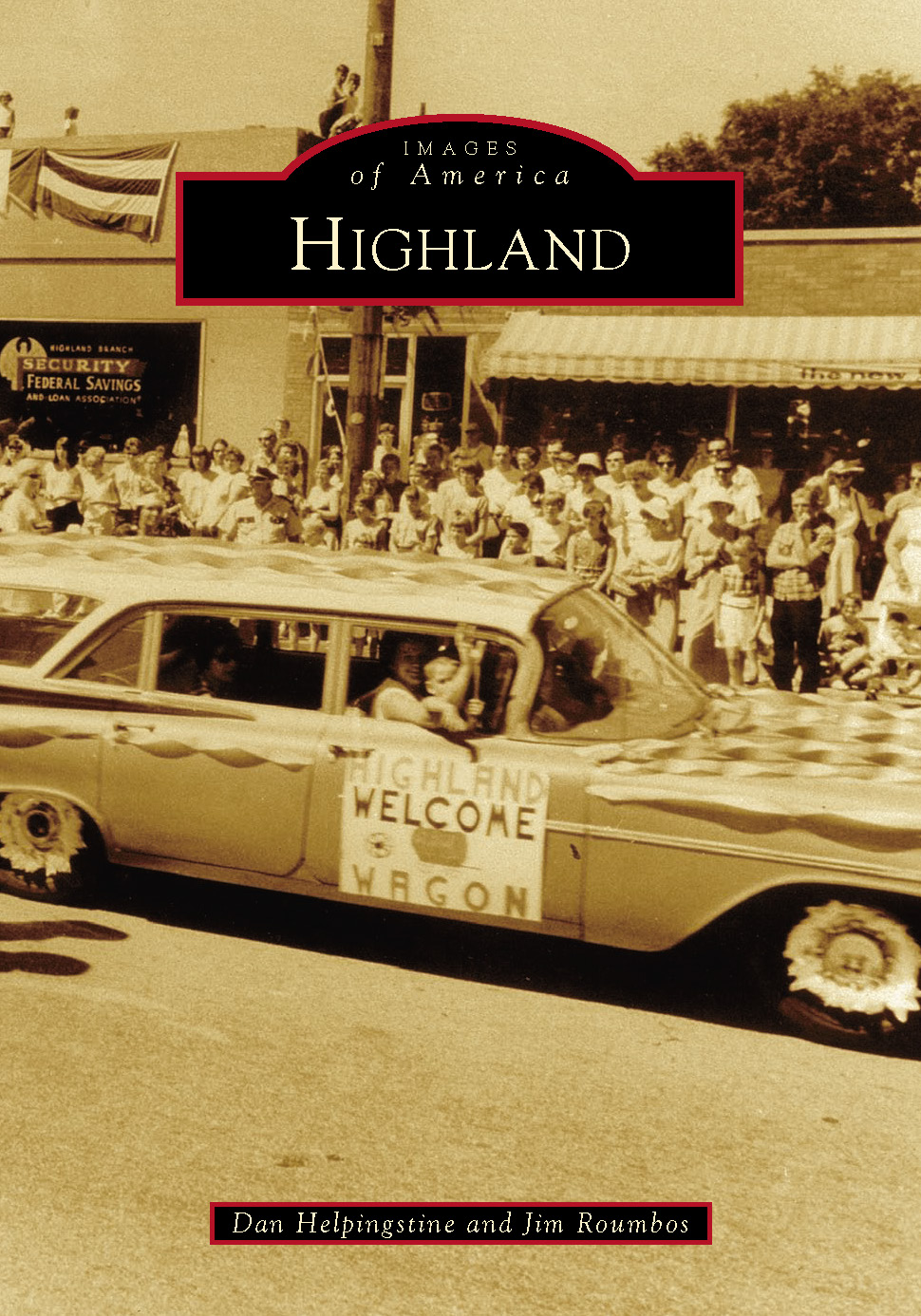
A Greek immigrant with a love of books and a degree in engineering, Jim Roumbos decided to open Miles Books in downtown Highland in 1986. Since then big chain stores like Borders went bankrupt and closed their doors, but Roumbos remains open.
“My dad, who at the time, couldn’t speak English and worked 70 hours in the mill, used to take me to the library so I could check out books,” says Roumbos who grew up in Gary but has called Highland his home for the last 40 years. “Being in the book business, I love talking to people and finding out their interests and hearing their stories.”
Over the years, he’s heard a lot of tales of Highland and so several years ago, he approached Dan Helpingstine, a frequent customer, about writing a book about the history of the town.
“Dan has written a number of books and we’ve had book signings for him here,” says Roumbos. “So I said hey, Dan, you should write about Highland. I have lots of people asking for books about the town.”
In turn, Helpingstine, author of such non-fiction books as South Side Hitmen: The Story of the 1977 Chicago White Sox, Chicago White Sox: 1959 and Beyond and The Cubs and the White Sox: A Baseball Rivalry, 1900 to the Present, suggested Roumbos write the book. Finally, they decided to co-author Highland (Arcadia Publishing $21.99) which was published last December.
Part of publisher’s Images of America series, the book chronicles Highland’s history through images and captions.
“Dan did the majority of the text and I did text and caption editing as well as the full editing and technical work for the photos,” says Roumbos.
The majority of the 181 photographs in the books were from the archives of the Highland Historical Society and the rest provided by individuals.
While many writers often fail in their attempts to find a publisher, that wasn’t the case with Highland.
“Because Dan had written other books for Arcadia and they knew his work, all we did was fill out the application and within 30 minutes had the okay to go ahead,” says Roumbos.
The process slowed considerably and it took them about four years to complete the book. But their shared background, was an immense help. Like Roumbos, Helpingstine grew up in another city—Hammond—but has lived in Highland for three decades.
“The book starts off in the late 1800s and we did a chronological pictorial, with captions, ending up with a chapter on memories throughout the years,” says Roumbos. “The last photo in the book shows the fireworks at Main Square Park for New Year’s Day at midnight. The photograph itself is from the early 1960s. The book embodies what Highland is, why people want to come to Highland and how welcoming it is. New residents come and they assimilate and Highland stays the same—a place offering a great town experience, one that is safe, friendly, charming with an emphasis on the arts. The police and fire department are wonderful and the elected officials are motivated to make Highland better but still keep it as a place that people love and want to maintain.”
When asked if he could choose a favorite photo and text, Roumbos pauses to think about it and then says it’s the photo of President Calvin Coolidge speaking in Wicker Park.
“It was a big deal,” says Roumbos. “We had another president who spoke at Wicker Park and that was Barack Obama. That says something about Highland.”
Roumbos, a story teller at heart, likes to emphasize how independent bookstores reflect the values of the town. He’s always one to share a cup of coffee and talk about whatever subject a person is interested in. And this summer, he was able to add one more tale to his repertoire.
“About two years ago a young Purdue student came into the store, she was studying to become a civil engineer and she met a guy here and they started dating and they’d often meet here on Friday nights,” he says. “Last December, he comes up to me and says he’s going to propose to her and I say that’s wonderful, when, and he said in about ten minutes when she comes to the store. Last summer they walked in, she was wearing her wedding dress they’d just gotten married in Lansing and were stopping by between the wedding and the reception to say hi.”
Ifyougo:
What: Book signing with Jim Roumbos and Dan Helpingstine authors of Highland.
When: Saturday, November 10, 11:30 a.m. to 2:30 p.m.
Northwest Indiana is famously known as a melting pot, a coming together of a vibrant amalgam of people from many countries and different cultures, making the area rich in diversity. But what may be surprising to those of us who grew up in the Region, the first non-English speaking people to move into the Indiana Dunes region and establish settlements were not from Eastern Europe, Germany or Mexico but were instead Swedish immigrants.
“Many came first to Chicago which at one time had more Swedes than any city on earth except Stockholm,” says noted historian Ken Schoon, author of the recently released Swedish Settlements on the South Shore (Donning Company Publishers $30), noting that the legacy of these early Swedish immigrants can still be found throughout the Region even today.
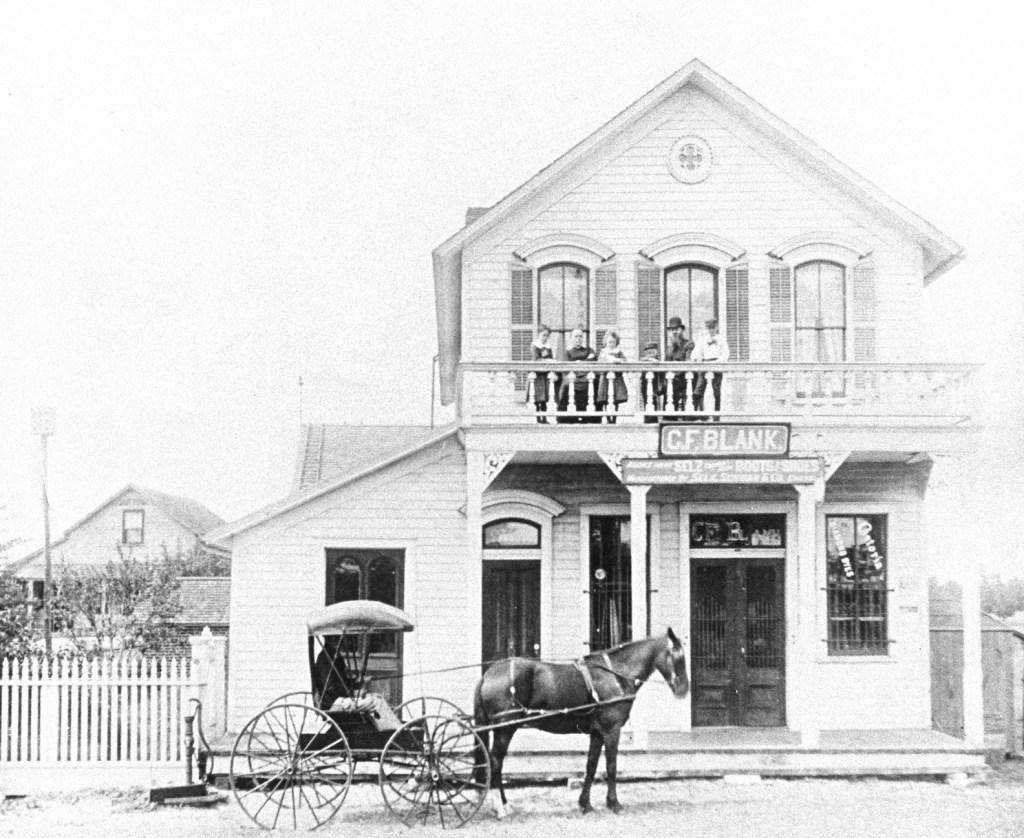
“Swedes established more than a dozen local churches, most of which are still active today,” he says “They built homes out of logs, lumber, and bricks, cleared and farmed the land, worked for the railroads and the brick factories, and established businesses, some of which are still in business today. Several of the early Swedes served in the Union army in the Civil War. Nearly all got American citizenship, and some were elected to political office.”
Swedish settlements included neighborhoods in Hobart, Baillytown, Portage Township, Porter, Chesterton, and LaPorte as well as Swedetown in Michigan City. According to Schoon, Miller Beach, where Swedish families like those of my sister-in-law span five decades, was described in 1900 by Lake County historian Timothy Ball as mainly Swedish Lutheran.
Other tie-ins with the Region’s Swedish past comprise Chellberg Farm, a historic farmstead, now part of Indiana Dunes National Lakeshore.
“The Chellbergs were one of hundreds of Swedish families that immigrated to the ‘south shore’ area of Northwest Indiana,” says Schoon. “They were the first non-English speaking immigrants to arrive in numbers large enough and lived close enough together to call the areas settlements.”
Close by to Chellberg Farm and further back in time, Joseph Bailly, a French fur trader who founded a trading post which is also now within the Indiana Dunes National Lakeshore. According to Schoon, Bailly’s son-in-law Joel Wicker hired recently-arrived Swedes to cut down trees and prepare them for the railroads to be used as rail ties and as fuel for the steam engines.
“Logs were also needed to build and heat their homes and for cooking,” says Schoon. “When enough trees were cut down, Wicker then sold the land to his Swedish employees who then cleared the land for farming. Other Swedes found employment as farm laborers, and working for sand and ice mining companies, and as blacksmiths and carpenters. As the immigrants had more money, many purchased their own farms or started businesses in town. The first licensed embalmer in Indiana was carpenter John Lundberg, a Chesterton Swede.”
Chellberg Farm Today Photo courtesy of the Indiana Dunes National Lakeshore
Many of the churches founded by Swedish immigrants still exist and for almost 70 years or so continued to offer Swedish-language services. Now services are in English and their congregations encompass more than those of Swedish ancestry.
“Bethany Lutheran Church in LaPorte is the oldest Swedish-founded church in Indiana,” says Schoon. “Until it closed last December, the Evangelical Covenant Church in Portage was the oldest Covenant Church in the state. The Michigan Avenue Methodist Church in Hobart still uses its original 1889 white frame building and Michigan Avenue used to be called Swede Avenue.”
Other churches are Bethany Lutheran and Grace Baptist in LaPorte, Zion Lutheran in Michigan City, Bethlehem in Chesterton, Augsburg (Baillytown/Porter), Hope (Crisman/Portage), Bethel (Miller), and Augustana (Hobart
Though Swedes, whose last names are similar to common “American names” such as Anderson and Carlson, quickly assimilated into American culture, descendants of Swedes still learn Swedish songs and dances and celebrate the traditions of their forbears says Schoon and we also have assimilated into their traditional ways.
“Even non-Swedes know about Vikings and may eat Swedish meatballs,” he says, noting that in 1952, 100 years after its founding, Chesterton still had more than 23 Swedish-owned businesses. “Smörgåsbord has become an American word—though to Swedes it has slightly different meaning. Swedes and their descendants helped build the Calumet Area.”
Swedes celebrate July 4th but also honor their own customs as well including Midsummer, the first day of summer and the longest day of the year, a holiday featuring a Maypole, singing, dancing, eating and drinking.
“At least in Sweden,” says Schoon about the drinking part, “but not at the Chellberg Farm where Midsummer is celebrated.”
But it isn’t all just history for Swedes and those of Swedish ancestry along the South Shore. The newest lodge in the Scandinavian Vasa Order of America was started in 2006 and sponsors “Nordikids” a very active organization for children and youth that teaches primarily Swedish songs, dances, and customs. The group performs every year at many venues including Chicago’s “Christmas Around the World.
Ken Schoon, the author, is not descended from Swedes, but he is married to the granddaughter of Swedish immigrants. His earlier works include Calumet Beginnings, Dreams of Duneland, and Shifting Sands, all published by Indiana University Press, and City Trees published by Stackpole Books.
Ifyougo:
Ken Schoon book presentations and book signings.
Sunday, November 11@ 3pm. Calumet City Historical Society, 760 Wentworth Ave, Calumet City, IL. 708-832-9390; calumetcityhistoricalsociety.org
Wednesday, November 14@ 6:30pm. Augsburg Church, Augsburg Evangelical Lutheran Church, 100 N Mineral Springs Rd, Porter, IN. 219-926-1658; augsburglutheran.org
Sunday, November 25 @ 10:30. Westminster Presbyterian Church, 8955 Columbia Ave, Munster, IN. 219-838-3131; wpcmunster.org
Saturday, December 8 @ 9:30. Brunch including Swedish pancakes and lingonberry syrup and book signing, Dunes Learning Center, 700 Howe Rd, Porter, IN. 219-395-9555; duneslearningcenter.org
Inside the purity culture, girls and women are not only responsible for their own sexual thoughts and actions but also those of the boys and men around them says Linda Kay Klein, author of Pure: Inside the Evangelical Movement that Shamed a Generation of Young Women and How I Broke Free (Touchstone 2018 $26).
“Because women are seen as the keepers of sexual purity which is a necessary part of their living out their faith, when men or boys have lustful thoughts about them, then it’s about what they were wearing, were they flirting,” says Klein, who grew up in the evangelical movement in the 1990s before breaking free. “It creates a tremendous amount of anxiety because your purity is assessed by others around you. It makes you worry about when you’re going to fall off the cliff and no longer be considered pure and no longer part of the community.”
But if being non-sexual before marriage is of utmost importance, afterwards the onus is on the woman to be extremely sexual, able to meet all their husband’s needs lest he cheat—which of course would be her fault.
“Zero to 100 is extremely difficult,” says Klein, noting it’s better to ease into sexual experience. “I interviewed women who didn’t know what sex was and suddenly they’re expected to be a sexual satisfier.”
As far as sexual abuse, well, if girls and women were just pure, that sort of thing wouldn’t happen.
Klein was in her 20s when she left the evangelical church. The impetus was in part when she learned her pastor had been convicted of child enticement with intent to have sexual contact with a 12-year-old girl who was under his pastoral care. She was a senior in high school and as awful as it was to learn that, it was even more devastating when she discovered the pastor had been let go from two other evangelical institutions after he confessed to committing the same acts. But her evangelical upbringing still bound her.
“I thought I would be free,” says Klein who during her teenage years was so obsessed with staying pure that she took pregnancy tests even though she was a virgin and resisted asking for help when dealing with what would later be diagnoses with Crohn’s Disease because she wanted to prove she was a woman of the spirit and not of the flesh. “But I wasn’t able to escape them, they were me.”
At least at first.
Writing her book, which took 12 years, was cathartic for Klein who interviewed many evangelical women and likening the fear and angst they experienced as similar to Post-Traumatic Stress Disorder.
Noting there’s a dominant gender teaching in the evangelical church—as well as many other churches, Klein says that patriarchy hurts both men and women except those at the top of the hierarchy. There is also something else off putting about the purity culture and that is the profit motive in the development of products.
“The people on the ground are believers,” she says.
Others make money off of purity rings which can range in price from around $10 to $600 or more, abstinence education, Christian purity parties, father-daughter purity balls and clothing including t-shirts reading “Modest is Hottest.”
“Over the course of time I did a lot of healing through my research for the book,” says Klein, who. “There have been phases in this journey. I’ve been angry, but keeping my focus on healing, knowing I’m not alone—I think there’s something powerful that happens.”
Ifyougo:
What: Author Conversation: Linda Kay Klein & Deborah Jian Lee
When: November 7 at 7 p.m.
Where: Women & Children First, 5233 N. Clark St., Chicago, IL
Intrigued by the passage of time, the choices we make and the constraints life forces upon us, Jean Thompson, a New York Times bestseller and National Book Award finalist author, let a swirl of happenings and thoughts combine to create her latest novel, A Cloud in The Shape of a Girl (Simon & Schuster 2018; $26.00).“The inspiration for the book came at me from different directions,” she says. “I was interested in how different generations pass on their memories, what the context of our day-to-day life is and how we choose to remember our past. At the time I was putting this all together, there were all these violent family episodes in the news and that played a part too. As a sidebar, so did the unearthing of my grandmother’s 1922 Rockford College yearbook and my grandfather’s from Lombard High School in 1912.”
Using one family in a time span from World War II to now, Thompson follows the changing American culture over the years as seen through the lives of three women—mother, daughter and granddaughter living in an unnamed Midwestern college town (note: Thompson lives in Urbana, Illinois), dealing with the cards they’ve been dealt and yearning for so much more.
“For some of these women, the choices are made for them,” says Thompson. “Evelyn, the grandmother can’t achieve what she wants and so settles. Laura, the mother, always wanted to be have a family, but as she says, ‘just not the family I have.’ And Grace has endless options, but still struggles.”
It’s a melancholic novel at times but exceptionally well-written, showing the ties and love binding three generations of women together and the need for all of us to avoid repeating the past by studying the history of those we love as well as ourselves and making decisions including what to leave behind and what we need to go forward to achieve what we desire.
Ifyougo:
What: Jean Thompson in conversation with award-winning author Beth Finke about Thompson’s new novel, A Cloud in the Shape of a Girl. This event will also include a reading and book-signing.
When: Thursday, October 11 at 7pm
Where: Women & Children First, 5233 North Clark St., Chicago, IL
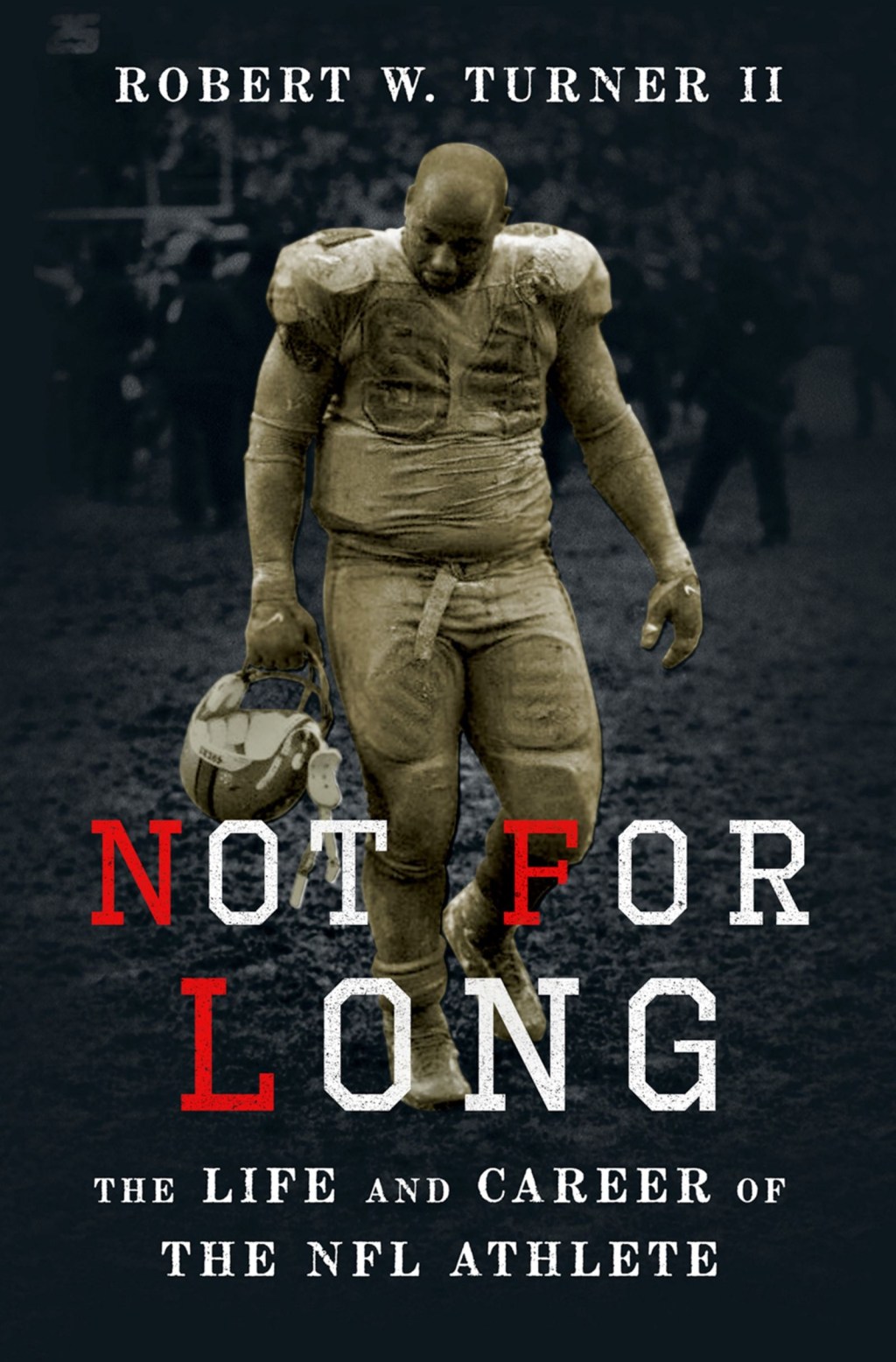
Robert Turner II was the first member of his family to go to college, attending James Madison University on an athletic scholarship. But he did so because of his love of football and a desire to play at a professional level.
“I majored in communications because that’s what the other players did,” says Turner who played football professionally in the now nonoperational United States Football League, the Canadian Football League, and briefly in the National Football League until his career abruptly ended.
Consider Turner one of the lucky ones. He went on to earn a Ph.D. in sociology at the Graduate Center, City University of New York and is an assistant professor in the Department of Clinical Research and Leadership at The George Washington University School of Medicine & Health Science and also holds a position as a Research Scientist in the Center for Biobehavioral Health Disparities Research at Duke University.
One of his areas of interest is what happens to athletes when their playing days are done and, after amassing more 140 interviews with current and former NFL players and extensively researching the subject, he’s written (Oxford University Press 2018; $24.95). It’s a look at what is the most popular professional sports league in the U.S., one where some athletes at the height of their physical prowess can boast stratospheric salaries in the multimillions but then, often in just a few years, are no longer working.
“The stories of many of these players is heartbreaking,” says Turner. “I love these men and they’ve gone through a lot of pain and sorrow and it hurts to hear that but what kept me going was the awesome gift of being able to tell their stories.”
Turner describes his book as being about what happens upstream, the path that players take from high school and sometimes ever earlier through college and into professional sports. As for what happens after that, Turner says that society turns a deaf ear to their lives after college and the pros.
“People say well, they got their college education, they got all that money,” says Turner, who serves on the board of directors for the Boys and Girls Club of Greater Washington, D.C.
But many players don’t make millions. Without guaranteed contracts, the majority of players are forced out of the league after a few seasons with few health and retirement benefits.
Statistics show that more than three-quarters of retirees experience bankruptcy or financial ruin, two-thirds live with chronic pain, and many find themselves on the wrong side of the law. Turner believes that’s no accident. The powerful the labor agreements between the NFL and players doesn’t provide much in the way of job security. And because players dedicated to their game and dream of becoming a professional have little time to prepare for what to do when their time on the field is over and have little in the way of marketable skills.
“It doesn’t just start at the NFL,” he says. “Universities and colleges should make sure all these players have the resources they need. Many of these kids come from environments where they haven’t learned many basics in terms of finances, planning ahead and all the other tools they need to be successful after sports. The League generates $15 billion a year and yet players are treated like disposable commodities. We need to help them learn how to transition effectively.”
Turner is currently a technical advisor and consultant and is making an on-screen appearance in Student Athlete, a documentary which looks at “the exploitative world of high-revenue college sports” and features four current and former college athletes, including Kentucky basketball player Nick Richards. Co-produced by NBA star LeBron James, Student Athlete debuts October 2 at 10 p.m. on HBO.
“The documentary is an important story about this subject,” he says. “We need to take care of all the players not just the 300 Hall of Famers.”
Ifyougo:
What: Robert W. Turner II discusses Not for Long: The Life and Career of the NFL Athlete. a Q&A and signing will follow the discussion.
When: Oct. 14TH from 3-4 p.m.
Where: The Seminary Co-Op Bookstore, 5751 S Woodlawn Ave., Chicago, Il
Many people aren’t aware that Abraham Lincoln spent his formative years in Southern Indiana, moving there from Kentucky with his family at age seven, leaving with them when he was 21.
It’s these years that Jan Jacobi, an avid Lincoln enthusiast and an award-winning educator who currently is teaching at St. Michael School of Clayton in St. Louis, chronicles in Young Lincoln (Reedy Press $16.95), his recently released book for readers ages 12 to 16.
Growing up in New York, Jacobi moved to St. Louis in 1992 to take a teaching job and says he quickly realized how close his new home was to areas where Lincoln had lived including Southern Indiana and Springfield, Illinois, inspiring him to read book after book about the president.
“One of my students asked me if there was a book he could read about young Lincoln,” recalls Jacobi who because of his towering height is frequently asked to portray the president. “I said there really wasn’t one for his age range. And he told me that I should write one then.”
Jacobi’s publisher agreed but with one more stipulation. He should write it in first person, using the voice of Lincoln as a youngster.
“I thought no one can do that,” says Jacobi. “But then gradually the voice came to me—I just had to marinate in it.”
Spending time in Spencer County, Indiana where Lincoln grew up, Jacobi talked to some of the residents whose ancestors had been friends of the Lincoln family. They shared with him their views of the Lincolns that had been passed down generation after generation.
Thomas Lincoln has always been somewhat of a cipher—the youngest and least successful of three brothers who all witnessed the death of their father, another Abraham Lincoln, who was shot and killed by a Native American . When the future president was a youngster, Thomas Lincoln was a harsh father but that wasn’t unusual in pioneer days. Thomas also thought his son was wasting his time reading and learning and tried to discourage it. Young Lincoln, in turn, was contemptuous of his father’s illiteracy and failures to get ahead in life and sought the mentorship of other men in the community who were learned and successful. Southern Indiana at that time was a wilderness where cougars and bears were always a menace, food was often scarce and life was harsh and often deadly. Lincoln’s mother died after contracting milk sickness as did a friend she’d been nursing for the same disease; his sister died in childbirth.
As an adult, when his father was on his deathbed, Lincoln, now a successful lawyer, refused to visit him despite the appeals of his step-mother with whom he was exceptionally close and his step-brother. When Thomas died, Lincoln didn’t attend his funeral.
“People in Southern Indiana are kinder to his father,” says Jacobi. “I’m a little harder on him.”
How did Lincoln develop the resiliency that would allow him to overcome his early adversity to lead the country during one of its most tumultuous periods is a question that Jacobi says he has longed tried to answer.
“Lincoln is a remarkable human being,” he says. “There are so many dimensions to him. We have to be careful not to turn him into a saint; but his essential goodness speaks to me.”
So much so, that Jacobi is planning his next book about Lincoln’s time in Springfield.
“Lincoln is endlessly fascinating,” says Jacobi. “He is the quintessential American. The only other person I put in that category is Mark Twain.”
Ifyougo:
What: Jan Jacobi discusses Young Lincoln. He will be joined in conversation by syndicated columnist Steve Chapman. A Q&A and signing will follow the discussion.
“I’ve always wanted to travel the country by Greyhound bus,” says Gary Shteyngart, the New York Times bestselling author about Lake Success, his latest book (PenguinRandom House 2018; $28) which tells the story of Barry Cohen, a hedge fund millionaire who, unable to deal with all the issues impacting his life, jumps on a bus to find his college girlfriend.
“I know, I’m nuts. But I thought it would be a very visceral way to see the country at a difficult time in its history,” continues Shteyngart. “And it sure was. As for the hedge fund part, I guess I realized there were so few people left in New York who weren’t connected to finance one way or another. Everyone else had been priced out.”
You might think that Cohen, a man worth millions who is married to a beautiful, exotic and intelligent wife, has, if not it all, at least a lot more than most of us. But beneath the surface, it’s all breaking into pieces for Cohen, a self-made man who overcame the intense insecurities he had as a boy. His only child is severely autistic, his wife is drifting away having fallen in love with a married neighbor and the Feds are opening an investigation into how his hedge fund lost a billion or so.
Chucking it all including his Black Amex card, cell phone and access to his millions, Cohen has only a couple hundred dolalrs and his expensive watch collection which emotionally means more to him at the time he starts his journey than anything else in his life.
Shteyngart was able to nail down the personalities of his characters by immersing himself in their world.
“I spent three years hanging out with hedge fund people and their spouses and sometimes children,” he says. “A strange alternate reality began to take shape in my mind. I started jotting down the little tics and conversations, but mostly the fact that the real world of the 99.9 percent was no longer available to them. They had moated themselves in to an almost feudal level. In fact, large parts of Manhattan started to seem like a series of gated communities.”
There’s a parallel to Shteyngart and Barry’s upbringing. Both grew up poor and saw Wall Street as a way to make up for the huge amounts of insecurity they felt.
“In our country, being poor is almost considered a moral failing, though often to get rich requires a true moral failing,” he says.
Unlike Barry, Shtenyngart, who immigrated with his parents from Leningrad at age seven, turned to writing dark comedic novels such as Super Sad True Love Story (winner of the Bollinger Everyman Wodehouse Prize) and The Russian Debutante’s Handbook (winner of the Stephen Crane Award for First Fiction and the National Jewish Book Award for Fiction). It’s humor, based in part upon his parents who he says have a very satirical approach to reality honed in the Soviet Union, where laughter was the only defense against a very stupid system.
“Being an immigrant is also a nice way to observe a society because you have to learn it from scratch,” he adds.
To learn how to become a hedge fund manager, watch this video by Shtenygart and Ben Stiller: http://bit.ly/2x084Iz
Ifyougo:
What: A conversation and book signing with Gary Shteyngart
When: Friday, September 21 at 6:30 p.m.
Where: KAM Isaiah Israel Congregational,1100 E Hyde Park Blvd, Chicago, IL
Cost: $30 tickets include admission for one and one copy of Lake Success
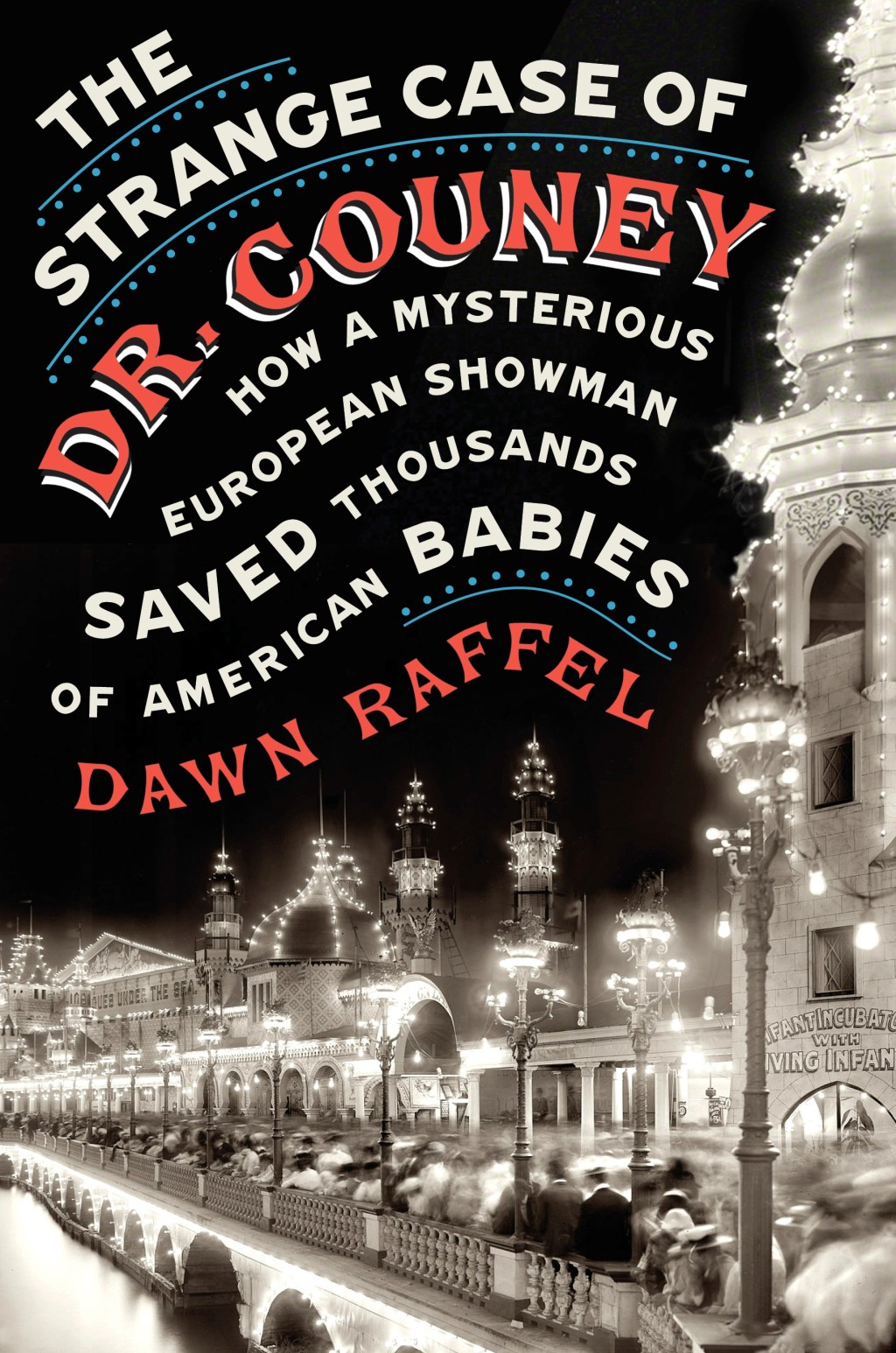
Told that his surviving newborn daughter would soon die just like her twin, William Conlin grabbed the premature child and, hailing a cab, fled. But he wasn’t going to the hospital, he was leaving it and heading to see Martin Couney who had no office but operated on the midways of carnivals and fairs such as New York’s Coney Island and Chicago’s 1933 Century of Progress.
A sideshow novelty along with bearded ladies and brothels (yes, many fairs had “female boarding houses” back then) attracting tens of thousands of people, Couney exhibited “weakling” babies that would typically be left to die in hospitals. Instead he saved them through the use of a new and unusual medical device called an incubator. He was often quoted as saying “If we have a child for seven days in our charge we never lose it.” It wasn’t a boast, it was mainly true. Couney operated his Infant Incubator Company at a time where eugenics, based upon the idea that only the strongest, healthiest, smartest and best looking should survive in order to create a perfect race.
“In literature these babies were called ‘weaklings’,” says Dawn Raffel, author of the recently released The Strange Case of Dr. Couney: How a Mysterious European Showman Saved Thousands of American Babies, by Dawn Raffel (Blue Rider Press $27), adding that Couney’s story was almost forgotten.
Indeed, Raffel, who grew up in Milwaukee, had only learned about Couney in passing when her father mentioned going to the Century of Progress and seeing the exhibit.
“I didn’t even know there was a World’s Fair in Chicago,” was Raffel’s first take away from their conversation. But she later became intrigued and after a visit to the Coney Island Museum embarked upon four years of research.
At first information was difficult to find even though Couney had been the main go to person for premature babies for 40 years. And even then, most premature American babies didn’t survive.
“If you weren’t a place where Couney had a show—and that was only in the summer—you were pretty much out of luck,” she says.
A positive turn in her research came about when Raffel learned about Lawrence Gartner, a highly regarded neonatologist and professor emeritus of pediatrics and obstetrics and gynecology at the University of Chicago who called himself a Couney buff. In an interesting connection to Northwest Indiana, Lawrence’s wife Carol Gartner, another Couney afficianado, retired as a professor of English and the dean of the College of Arts and Sciences at Purdue University Calumet.
Raffel also interviewed some of the babies, now grown up, who had been saved by Couney. Among them was Barbara Gerber, who was 80 years old at the time she spoke to Raffel and though living in California had grown up on Chicago’s South Side. Gerber and her twin sister, Joanie, were underweight when born. Joanie, at four pounds, was placed in an incubator at the University of Chicago’s Lying-in Hospital until she gained a pound and then was sent home. Barbara, at three pounds, was considered a goner and ended up with Councey where she spent three months. Health wise, Barbara prospered while Joanie suffered lifelong issues, dying at age 48.
A showman and possibly not a doctor at all, Couney made money by exhibiting premature babies in incubators to fair goes and used all sorts of marketing tricks to increase the crowds. One barker, hired to lure people in by yelling “Don’t forget to see the babies” would change his name from Archibald Leach and move to Hollywood where he became known as Cary Grant.
But Couney’s heart was in the right place.
Over the decades, before incubators, which were invented in Europe and widely used there, became commonplace in the U.S., Raffel says he probably saved between 6,500 and 7,000 lives. He also claimed that 85 percent of the babies in his care survived, with most deaths happening with 24 to 48 hours of their arrival.
“One doctor is quoted as saying he’d never seen a hospital as clean as Dr. Couney’s place on the Midway,” says Raffel.
Ifyougo:
What: Dawn Raffel talk, book signing and reading with award winning author Stuart Dybek.
When: 6 p.m., Wednesday, September 5
Where: Seminary Co-op Bookstore, 5751 S. Woodlawn Ave., Chicago, IL
FYI: (773) 752.4381; semcoop.com
What: Multimedia presentation and talk moderated by Donna Seaman
When: 6 p.m., Thursday, September 6
Where: Cindy Pritzker Auditorium, Harold Washington Public Library, 400 S. State St., Chicago, IL
Watching news clips of Barack Obama windsurfing off of Richard Branson’s private island, kayaking with Justin Trudeau and BASE jumping in Hong Kong with Bradley Cooper while he’s grouting tile in his master bathroom and playing darts on a board his daughter gave him years ago, Joe Biden, feeling left-out (he doesn’t even have Secret Service protection anymore), grumpily wonders why the 44th president hasn’t called him in the months since Donald Trump took office. Biden’s grousing changes quickly when Obama appears in the woods behind his house late one night, coolly smoking a cigarette and delivering the terrible news that Finn Donnelly, the Amtrak conductor that Biden befriended as he traveled back and forth between Delaware to Washington D.C. has been murdered. On his body, Barack says, was a printout map of Biden’s home. Is someone targeting the vice-president?
And so the bromance rekindles as the ex-president and ex-vice are back working as a team as they race to solve the crime in Andrew Shaffer’s Hope Never Dies (Quirk Books 2018; $14.99). The title is a parody of the James Bond movie “Tomorrow Never Dies” and the dime store detective novel-like-cover depicts Obama, the wind whipping his red tie behind him, standing in the passenger seat of a Thunderbird convertible pointing the way as a determined Biden drives but the story itself isn’t farce. Shaffer, who is a New York Times best seller author, says that though the action is over-the-top at times—Obama roughing up a biker; Biden head-butting a villain and getting thrown off a fast moving train to name a few—he resisted getting too campy.
“The book is more than a one-note joke,” says Shaffer.
Growing up in Iowa, Shaffer enrolled in the University of Iowa’s noted creative writing program.
“They teach serious fiction there and you’re reading a lot of serious authors like Phillip Roth,” he says. “So I’m writing like I’m in my 60s, divorced and living in the suburbs. I was only 21 and I thought what am I doing? I wanted to write the type of fiction I like to read such as authors like Elmore Leonard, Donald Westlake and Lawrence Block.”
Shaffer had been thinking about writing a mystery with Joe Biden as the main character for years.
“I thought about maybe making it a cozy type of mystery,” he says. “But I got the idea for this when they’d been out of office for a week or so. I wrote a note to my agent asking how about a Biden-Obama mystery and she said really? I said yes.”
Inspired by the 1980s buddy cop movies he liked such as “Tango & Cash,” Shaffer says that the mystery isn’t just about Biden’s love of ice cream but instead covers serious topics such as the opioid epidemic. Since the book’s recent release on July 18, it’s been selected as an Amazon Best Book of the Month: Thrillers July 2018 and an Official Summer Read of Publishers Weekly. He is already working on the next book in the series, Hope Rides Again.
“It’s a legacy in ways,” Shaffer says about the series. “”It’s for people, no matter what part of the political spectrum they’re on, need some kind of hope.”
Ifyougo:
What: Book signing with Andrew Shaffer.
When: Sunday, August 19 at 2:00 p.m.
Where: Anderson’s Bookshop, 123 W. Jefferson Ave., Naperville, IL.