“I didn’t come out of the womb craving Oreos,” says comedian and journalist Chloe Hilliard, who is launching her new book,F*ck Your Diet and Other Things My Thighs Tells Me, this Monday and Tuesday at Zanies Comedy Night Club in Chicago. “Our food choices and our image of ourselves are part of our culture.”
Hilliard, who writes about Hip Hop culture and has been featured on C-Span, CNN Headline News, ABC News and Our World with Black Enterprise, has long had an adversarial relationship with food. Over 6-foot tall at the age of 12, she also wore both a size 12 dress and shoe at that time. In other words, she was different and she knew it.
“Fitting in was never an option for me,” Hilliard said in a phone interview, noting that she was the loser of the fat trilogy—someone with a slow metabolism, baby weight that didn’t go away and big bones. “Growing up, it was unfair that people said just do this or that to lose weight. But now I understand it’s about acceptance, to be comfortable and to be healthy and okay with who you are.”
It was a truth that Hilliard came to only after a long time of trying to change her body with the help of fad diets, intense workouts, starving herself and consuming diet pills. Now she looks at her body image in a different way and understands how much our culture negatively impacts the way we perceive ourselves, how corporations including the diet industry also reinforces our image of ourselves. It was enlightening and freeing. But it wasn’t easy.
“I thought the book was going to be way more lighthearted,” says Hilliard. “I didn’t realize how difficult it would be to write. But it helped me understand where I was at different times in my life.”
But being Hilliard, who made her national TV debut on NBC’s “Last Comic Standing.” the book is not only informative but laugh out loud funny as well. Afterall, she has a message for readers—you’re okay.
“I use a lot of facts and figures,” she says. “I didn’t want the book to be voyeuristic, I wanted it to be about how culture effects our relationship with food and our waistline and teaches us that we are nothing without a perfect body. I want to help people get away from that. Be healthy, be fit. It’s a new year but you don’t need to be a new you, just yourself.”
Ifyougo:
What: Chloe Hilliard is launching her new book and performing at Zanies Comedy Night Club.
When: Monday, January 6 and Tuesday, January 7 at 8 p.m.
Sitting in the bar of a posh
hotel, Kit Manning-Strasser fumes that the Hawsers, the mega donors she flew
into town to wine, dine and hit up for a huge donation to the university where she
works, canceled at the last minute. Back at the offices of Aldrich University
Charitable Giving, her subordinate Lynn Godfrey is also angry. She’s the one
who spent hours and hours grooming the Hawsers for the big kill but it’s Kit who’ll
get the credit when the check arrives.
Sara Shepard
A text flashes on Lynn’s phone.
Get ready, it reads and as she’s pondering its meaning and who sent it, every
computer in the office goes dark. They’ve been hacked and their data stolen.
But as disastrous as that is, there’s opportunity as well. For one quick moment
a master list containing every file for every employee appears. Does Kit have
secrets she might be able to use, Lynn wonders, as she click to open her file.
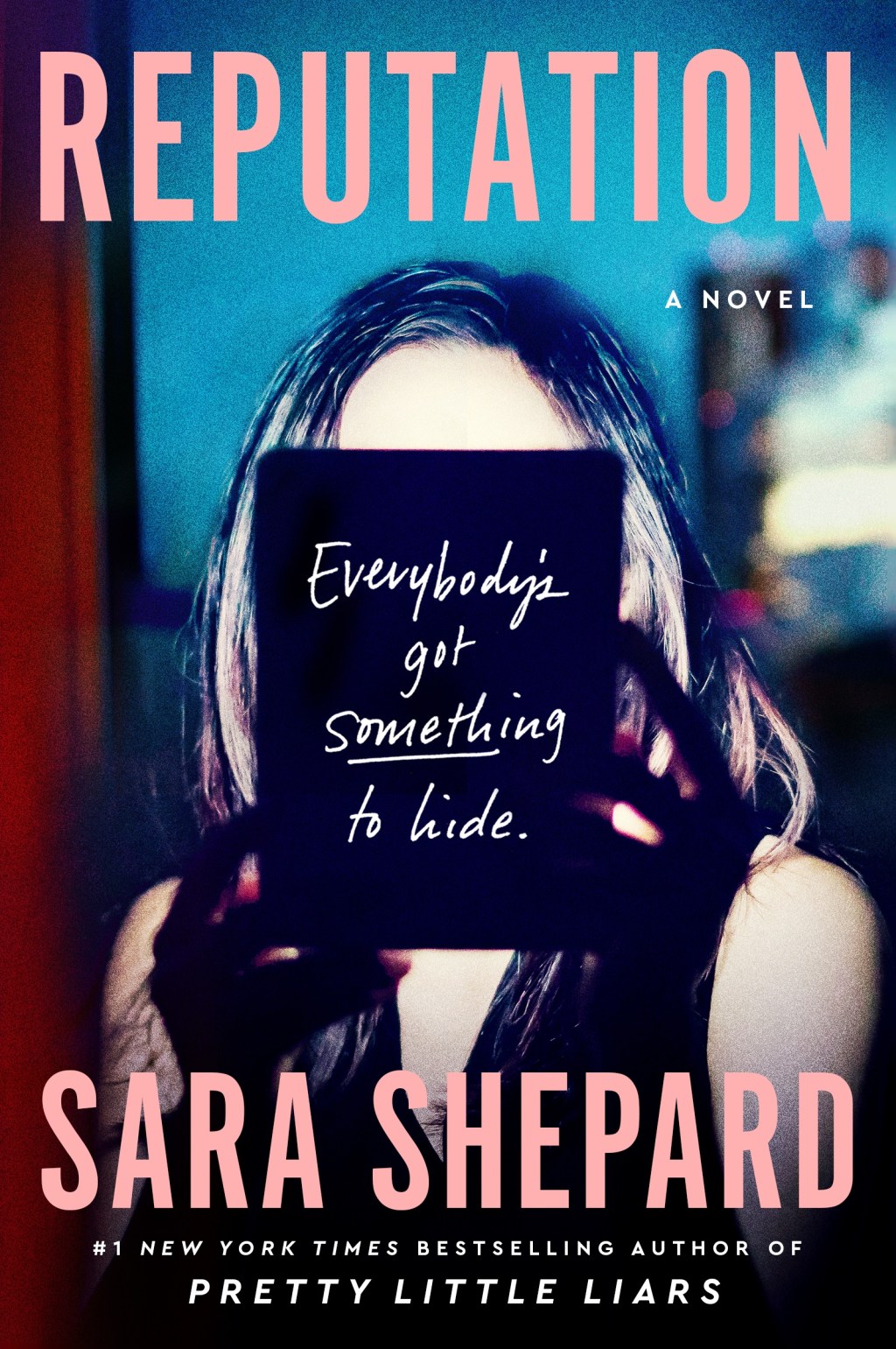
And so begins Sara Shepard’s latest novel, Reputation, a take on modern technology and the old fashioned premise that everybody’s got something to hide.
“Reputation is a book about different members of a university community and how they react to a school-wide email hack– and a subsequent murder,” says Shepard, author of the New York Times best seller, Pretty Little Liars. “There are a lot of different perspectives, a lot of scandals, and a lot of twists, but the crux of the novel deals with two estranged sisters, Willa and Kit, and how they come together again in a time of crisis. “
Willa is Kit’s younger sister,
who scarred by an incident in her hometown, took off for California when young.
Throughout the years, Willa has avoided returning to her college town or having
any semblance of a real relationship with her older sister, who followed the
more traditional path, remaining at home. Marrying, Kit had two daughters and
then became a widow. But from the outside, anyway, she appears to have upgraded
her life to a bigger house, great vacations and a cushy life, with her
remarriage to a wealthy doctor.
“But
maybe it’s not all that it’s cracked up to be,” says Shepard. “It’s Kit’s
husband who ends up being murdered because of rumors about him that come out in
the hack– and suddenly, all eyes are on Kit, wondering what she might have
done. But did Kit kill her husband? And maybe Willa is hiding a dark secret no
one in her family knows, too.”
Shepard conceived of this book at
the newspapers were filled with stories about the Sony hack.
“I couldn’t believe that people’s run-of-the-mill emails were suddenly
broadcast everywhere for everyone to read,” says Shepard. “It got me thinking
about what I’d do if my emails were on a similar server– or emails inboxes of
people I knew. We all have things we aren’t proud of, you know. As for setting
the novel in a college town, it seems like colleges are a big target for
hackers– and for scandals. Try Googling “college scandal.” You’ll
get so many varied results, your head will spin! And terribly, I remember
pitching an idea of an unethical coach before the whole Larry Nassar / USA
gymnastics scandal broke. It was eerie– and terrible– to see an imagined
scenario come true.”
Though she’s never had to deal with the intense scandals her characters
have endured, Shepard says she tries to relate to how they feel.
“We’ve all been betrayed,” she says. “We’ve all felt watched and judged.
We’ve all felt lost and small and scared. We’ve all felt the complications of
motherhood and marriage and, perhaps, being with a partner we don’t entirely
trust– or, at the very least, someone who turns out differently than what we
imagined.”
Ifyougo:
What: Sara
Shepard in conversation with New York Times
and USA Today Bestselling author Mary Kubica.
When:
Thursday, December 5 at 7 p.m.
Where:
Anderson’s Bookshop Naperville, 123 W Jefferson Ave, Naperville, IL
Cost: This event is free and open to the public. To join the signing line, please purchase the author’s latest book, Reputation, from Anderson’s Bookshop. To purchase please stop into or call Anderson’s Bookshop Naperville (630) 355-2665 or order online.
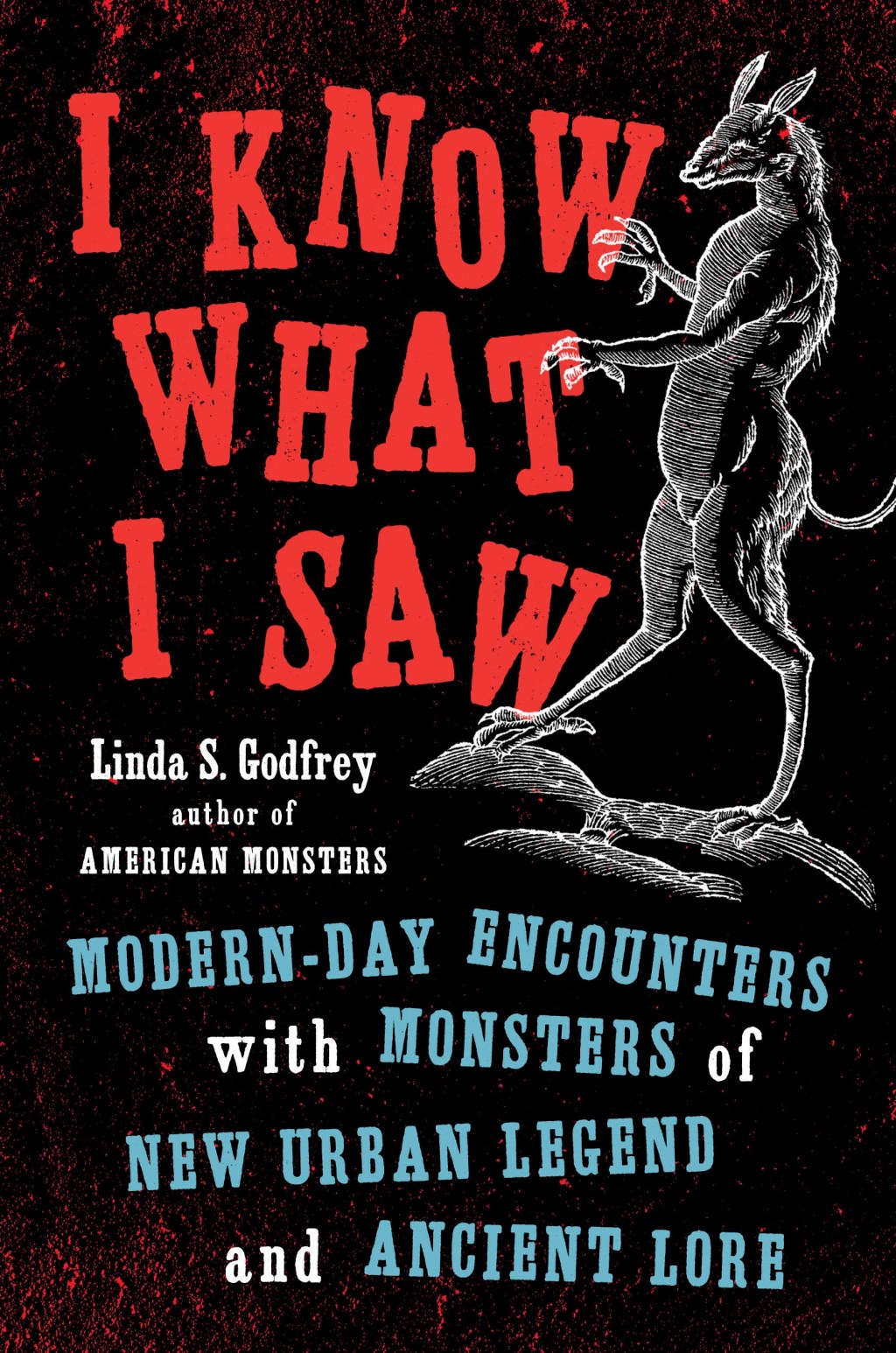
Linda Godfrey’s blog identifies her as an author and investigator of strange creatures and now in I Know What I Saw: Modern-Day Encounters with Monsters of New Urban Legend and Ancient Lore, her 18th book on such sightings as the Wernersville Dog Woman, Killer Clowns, The Red-Eyed Monster of Rusk County, Wisconsin, The Hillsboro Hairless Thing and the Goat Man of Roswell, New Mexico.
Linda Godfrey
Godfrey, a journalist, never intended to
become an expert on urban legends, ghostly tales and creatures half human and
half animal or whatever—there are so many different things that she categorizes
them in her book with chapter titles like “Haunts of the Werewolf,” “Phantom Quadrupeds,”
“Other Nonconformist Canines” and “I Saw
Bigfoot.”
It all began in 1991 when Godfrey, a local
interest reporter at The Week, a weekly county newspaper in Delavan, Wisconsin,
was listening to similar stories told by sober locals about the frequent
sightings of what they described as a large wolf walking—and sometimes running
on its hind legs, devouring large amounts of road kill on Bray Road.
“I was trying to keep an open mind,” says
Godfrey, who was seriously skeptical.
But when she kept hearing the same
story—or relatively the same story—repeatedly from everyday type of reliable
people, she began to reconsider, wondering what they really were seeing. Could
it be a wolf that could, like trained dogs, walk up right like humans? Her
first book, Beast of Bray Road, Godfrey shared results from her
investigation and gained her national attention.
“It’s easier to record encounters than
understand them,” says Godfrey who has become more open to believing that there
are other-worldly things as well as real. “There’s a good chance that what
we call monsters are actually unknown and unidentified natural creatures that
have learned to be very elusive. After all, the people who report monsters come
from all demographics. They are police officers, businesspeople, teachers,
housewives, doctors—they’re from all walks of life. Sometimes they are too
traumatized to talk about it or report it.”
Many of Godfrey’s stories reflect her
geographic location—she still lives in Wisconsin. But she travels all over the
country to follow up on sightings. They not only cross state lines but also timelines—many
of the creatures she hears about today have their beginnings in legends
hundreds of years ago.
If you have a sighting you’d like to
report, she’d like you to email her at lindagodfrey99@gmail.com says Godfrey, noting as a journalist, she’d like both
facts as well as the feelings and emotions engendered by encounter.
“Provide as much information as possible
including date, time of day, weather, lighting conditions,” she says, citing a
long list of what she’d like to know. These include physical characteristics as
well as any thoughts or emotions that occurred when a person made a sighting,
how they felt afterward, whether they observed the creature leave the scene,
any interactions with the creature, whether, after the sighting, the person returned
to check for evidence such as footprints or hair and such. And for those who can draw, a sketch would be
great. Those reporting sightings should know that Godfrey keeps all the
information she gathers confidential unless she has permission to reveal it.
“For those who do go looking for these
creatures or who have encounters, Godfrey is both reassuring and cautioning.
“We need to take care,” she says. “As we
would of any wild thing.”
Ifyougo:
What: Reading, Q&A and signing with Linda Godfrey
When: Thursday, July 25 at 7:00 PM
Where: The Book Cellar, 4736-38 N Lincoln Ave Chicago, IL
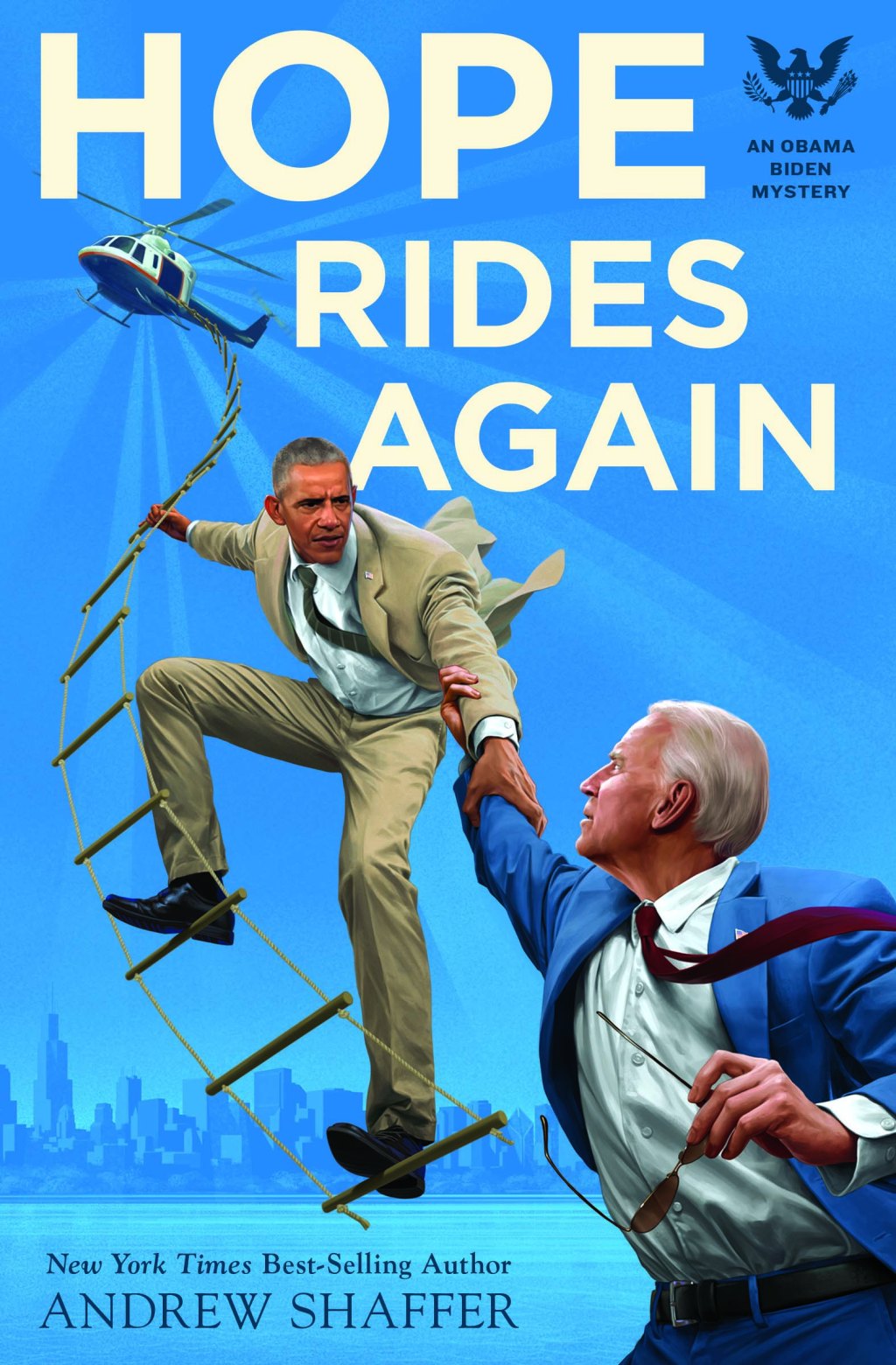
Barack Obama and Joe Biden return to solving crimes in Hope Rides Again: An Obama Biden Mystery, the second in the series written by Andrew Shaffer and starring the former president and vice president.
“It’s a totally separate mystery from the first book,” says Shaffer while sitting at a table where a long line had formed waiting for him to autograph copies of his novel at a two-day book fair in Lexington, Kentucky. “The first was set in Wilmington, Delaware and this one is set in Chicago on Obama’s turf and takes place in the spring around St. Patrick’s Day which is certainly a holiday they take seriously there.”
Indeed, Shaffer,
who at one time lived in Chicago, says he revisited old haunts and new places for
background as the two BFFs hunt for Obama’s Blackberry and the murderer of the their
who originally stole it.
Though
the premise of the two joining together as detectives is somewhat zany, Shaffer
describes his book as dealing with serious topics as well.
“But I try to do it in a lighthearted way,” he says. Also, fun are the covers for both books including the first in the series, Hope Never Dies. Harkening back to the vivid colors of 1960s, the first shows Biden driving a convertible while Obama stands in the front seat pointing out the way as they chase their quarry. In the latest, Obama leans down from a swaying rope ladder tethered to a helicopter, his arm outstretched to help Biden up.
One person who thinks the mysteries
are fun is the former vice president. When Biden was campaigning in Kentucky
(Shaffer and his wife, a romance writer, live in Louisville), he was contacted
by the campaign who set up a meeting.
“I didn’t
know whether he liked the book or not or what he was going to say,” says Shaffer
adding that the Biden hadn’t read either book but signed his copies. “It was really
kind of different to have a character in your book sign your book. I found out later
that people have been bringing my books to his campaign stops and asking him to
sign them, so he was probably thinking who’s the guy who wrote this?”
It’s
tricky writing about people we know publicly but not in person says Shaffer.
“I think
in ways I know them too well because I know their history and what I think they
would do and say, because I’ve written about them and I’ve seen and read about
them for eight years,” he says. “When I heard Biden speak in Kentucky, I was
like my Biden wouldn’t say that.”
Shaffer’s
book might have garnered a few votes for the vice president.
“I met
one person who said I can’t wait to vote for them again because now they’re
detectives,” he says.
Cost: This event is free and open to the public. To join the
signing line, please purchase the author’s latest book, Hope Rides Again,
from Anderson’s Bookshop. To purchase, stop in or call Anderson’s Bookshop
Naperville.
The end
of the world is coming again—just as it was before Y2K and the Mayan Doomsday Calendar
back to the calculations of Bishop Gregory of Tours, showing it would be all
over sometimes between 799 and 806 and Christopher Columbus (yes, that
Christopher Columbus) who it was ending in 1658.
“It’s something that people have believed all through history,” says Tea Krulos author of the just released Apocalypse Any Day Now: Deep Underground with America’s Doomsday Preppers. “There have been different takes on the end times throughout our culture. In 1844, people followed Father Miller and believed so very strongly that the world was going to end that they sold their property, gave away things in preparing for it.”
Curious
and somewhat amused about those who believe in end times and take steps to get
ready, Krulos decided to explore the subject,
“I have a
strong interest in Utopian fiction like such classics as 1984,” says
Krulos, a Milwaukee journalist. “And I’ve always wondered, if there was a huge
disaster, how long I’d be able to survive. Not very long, I think. I also wanted to get some answers about who
these people were and to find out what prepping was about as well as to get out
in the field, to experience some things and learn some things.”
But
Preppers, the term used for those who are preparing for the ultimate catastrophe,
were definitely not interested in talking to Krulos.
“I found
out almost immediately it was going to be a challenge,” he says. “It’s a secretive
group that distrusts media. So, I signed up for a prepper forum and attended a survival
camp where I learned to build a fire, filter water and other simple things that
might be helpful if something happens.”
Prepping,
in turns out, is a billion dollar industry and it’s not only isolated rural
dwellers who are buying into the need to prep. Krulos also talked to preppers
in New York City and says that Chicago has a chapter of the Zombie Squad.
“They
don’t really believe in a zombie apocalypse but think if you learn how to
prepare to survive on, then you can survive hurricanes, mass rioting and other
disasters,” he says.
What apocalyptic
scenario should we fear the most? Krulos says it’s climate change. And he also thinks we need to pay attention
to why the Doomsday Clock is now just three seconds before midnight.
“That’s
the closest it’s been since they invented the hydrogen bomb,” he says.
So, what
sorts of items does Krulos think are important when prepping for the apocalypse?
“A good
water filter is a very good thing to have,” he says. “Food, comfortable gear
for hiking, tools, a renewable food supply like extra seeds and books. I’ve
always wanted to read War and Peace, I just haven’t had time.”
Ifyougo:
What: Tea Krulos book signing
When: Friday, June 21 at 7 p.m.
Where: The Book Cellar, 4736-38 N. Lincoln Ave., Chicago, IL
“Domestic violence is not a large part of our conversation,” says Rachel Louise Snyder, author of the recently released
“Domestic
violence is not a large part of our conversation,” says Rachel Louise Snyder,
author of the recently released No
Visible Bruises, her exploration of this country’s domestic violence epidemic
and what it means regarding other types of violence as well as what to do about
it. “I want to bring these conversations
to the forefront.”
Snyder,
a journalist who won the J. Anthony Lukas Word-in-Progress Award for this
project, uses the individual stories of women to show how complicated and
overwhelming the subject is—and how pervasive. And while we might think of
domestic violence as being an issue, if not of the past, as one more under
control than when O.J. Simpson was tried for murdering his wife and women’s
safety more assured by the 1994 passage of the Violence Against Women Act. But
that isn’t true.
“Domestic
homicides are rising about 25%–it used to be about three women a day three women were killed
now it’s four, “says Snyder, who went to college in Naperville and lived all over
Chicago including Oak Park, has traveled to more than 50 countries and lived in
London for three year and in Phnom Penh, Cambodia for six. She also put herself through her first year of
college by booking Dimensions, a Highland, Indiana band, for their gigs.
“People
don’t always want to read a book like this,” says Snyder. “I wanted to write a
book that people couldn’t pull away from.”
And,
indeed, she did. As awful as the situations she describes—women trying to leave
abusers but unable or not able to get out in time, the toll it takes on their
families. Wanting her book to read like a
novel, Snyder includes true facts that would be hard to believe in a novel—one husband
keeps a pet rattlesnake and drops it in the shower when his wife is in there or
slips it under the covers when she’s sleeping.
“It
is an exploration of what it means to live under stress under every moment or
every day,” says Snyder, an associate professor in the Department of Literature
at American University in Washington D.C.
It’s
also an exploration of agencies and police as they try to step in and stop the
progression—sometimes with success and sometimes with heartbreak. Snyder lived
all this, visiting shelters, talking to police and talking to women.
“I think domestic terrorism is a closer
reality to what is going on than domestic abuse,” she says.
In
her two decades of reporting, both in the U.S. and oversees, Snyder has seen
many instances of domestic terrorism, sometimes central to her stories
sometimes on the edges. When she started researching and writing No Visible Bruises, which took her nine
years to finish–she even wrote her novel What
We’ve Lost Is Nothing which is set in Oak Park, Illinois during the process–she
never lost interest in telling the story.
“I
wanted to have the conversation about this that we have around poverty,
economics, other issues and to really understand it,” she says.
She
also wanted to show how violence can lead to more violence, noting that choking
a partner is a predictor of an homicide attempt amd there’s a link to mass
murders as we saw in the First Baptist Church
in Sutherland Spring where Devin Patrick Kelley, a convicted domestic terrorism
while serving in the Air Force killed his wife and 25 other worshippers.
Domestic terrorism also is the direct cause of over 50% of women who find
themselves in homeless shelters.
Is
there reason to hope? I ask her.
She
believes there is, but that it’s important to know that domestic abuse is still
happening, and we need to be empathetic and that it’s good women are getting
angry.
Ifyougo:
What: Rachel Snyder has two events in
Chicago.
When & Where: Wednesday, May 15 at
7 p.m. Women & Children First, 5233 N. Clark St. Chicago, IL; 773.769.9299;
womenandchildrenfirst.com
When & Where: Thursday, May 16 at
7 p.m. Anderson’s Bookshop, 123 W Jefferson Ave, Naperville, IL; 630-355-2665; andersonsbookshop.com
, her exploration of this country’s domestic violence epidemic and what it means regarding other types of violence as well as what to do about it. “I want to bring these conversations to the forefront.”
Snyder,
a journalist who won the J. Anthony Lukas Word-in-Progress Award for this
project, uses the individual stories of women to show how complicated and
overwhelming the subject is—and how pervasive. And while we might think of
domestic violence as being an issue, if not of the past, as one more under
control than when O.J. Simpson was tried for murdering his wife and women’s
safety more assured by the 1994 passage of the Violence Against Women Act. But
that isn’t true.
“Domestic
homicides are rising about 25%–it used to be about three women a day three women were killed
now it’s four, “says Snyder, who went to college in Naperville and lived all over
Chicago including Oak Park, has traveled to more than 50 countries and lived in
London for three year and in Phnom Penh, Cambodia for six. She also put herself through her first year of
college by booking Dimensions, a Highland, Indiana band, for their gigs.
“People
don’t always want to read a book like this,” says Snyder. “I wanted to write a
book that people couldn’t pull away from.”
And,
indeed, she did. As awful as the situations she describes—women trying to leave
abusers but unable or not able to get out in time, the toll it takes on their
families. Wanting her book to read like a
novel, Snyder includes true facts that would be hard to believe in a novel—one husband
keeps a pet rattlesnake and drops it in the shower when his wife is in there or
slips it under the covers when she’s sleeping.
“It
is an exploration of what it means to live under stress under every moment or
every day,” says Snyder, an associate professor in the Department of Literature
at American University in Washington D.C.
It’s
also an exploration of agencies and police as they try to step in and stop the
progression—sometimes with success and sometimes with heartbreak. Snyder lived
all this, visiting shelters, talking to police and talking to women.
“I think domestic terrorism is a closer
reality to what is going on than domestic abuse,” she says.
In
her two decades of reporting, both in the U.S. and oversees, Snyder has seen
many instances of domestic terrorism, sometimes central to her stories
sometimes on the edges. When she started researching and writing No Visible Bruises, which took her nine
years to finish–she even wrote her novel What
We’ve Lost Is Nothing which is set in Oak Park, Illinois during the process–she
never lost interest in telling the story.
“I
wanted to have the conversation about this that we have around poverty,
economics, other issues and to really understand it,” she says.
She
also wanted to show how violence can lead to more violence, noting that choking
a partner is a predictor of an homicide attempt amd there’s a link to mass
murders as we saw in the First Baptist Church
in Sutherland Spring where Devin Patrick Kelley, a convicted domestic terrorism
while serving in the Air Force killed his wife and 25 other worshippers.
Domestic terrorism also is the direct cause of over 50% of women who find
themselves in homeless shelters.
Is
there reason to hope? I ask her.
She
believes there is, but that it’s important to know that domestic abuse is still
happening, and we need to be empathetic and that it’s good women are getting
angry.
Ifyougo:
What: Rachel Snyder has two events in
Chicago.
When & Where: Wednesday, May 15 at
7 p.m. Women & Children First, 5233 N. Clark St. Chicago, IL; 773.769.9299;
womenandchildrenfirst.com
When & Where: Thursday, May 16 at
7 p.m. Anderson’s Bookshop, 123 W Jefferson Ave, Naperville, IL; 630-355-2665; andersonsbookshop.com
“I
didn’t decide to write this book, it was already written,” says Jessica
Hopper, a Chicago based music critic with a career encompassing over the last
two decades, a time when she not only wrote for New York Magazine, Rolling Stone, Buzz Feed and Bookforum, was
an editor at Pitchfork and Rookie and editorial director at MTV
News and still managed to keep extensive notes about those times.
“I
was a very prodigious chronicler of my life,” says Hopper, who started
writing when she was 15 and is the author of the recently released Night Moves, a book that curates scenes
from her career as a writer in the music business.
Though
she didn’t have formal training at that time, her parents were both journalists
and Hopper says her impetus was that you learn by doing.
“If
you wanted to be something, you just did it,” she says. “I didn’t
know anything about music but what I liked and didn’t like. I wanted to be
real. If it didn’t go to the heart, that wasn’t what I wanted for my writing. I
work really hard and I’ve always worked really hard, that’s how I work, I keep
my head down and just keep writing.”
Describing
Night Moves as being shots of
memories and feeling, Hopper drew from diaries and remembrances of those times
as well as her published works.
“Some
of the pieces in my book are ephemeral,” she says, adding that when she
started reviewing her past journaling and published pieces there were parts
that she didn’t remember at all. “There are definitely things that I was surprised
to re-encounter in my young life.”
For as
long as she’s been in the business, Hopper says she doesn’t think of the big
picture when she’s doing something.
“I
just do my best and put it out there.”
Ifyougo:
What: Jessica
Hopper has several Chicago book events.
When
& Where:
Thursday,
May 9 at 7 p.m., Wilmette Public Library, 1242 Wilmette Ave., Wilmette, IL.
Sponsored by The Book Stall, 847-446-8880; thebookstall.com
Friday, May 10 at 7 p.m. Author Conversation with singer-songwriter and social activist Ani DiFranco & Jessica Hopper. Wilson Abbey, 935 W. Wilson Ave., Chicago, IL. Sponsored by Women & Children First, 773-769-9299; womenandchildrenfirst.com
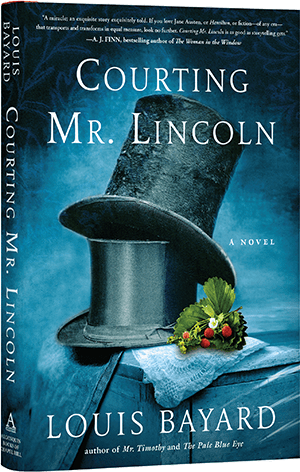
Bestselling novelist Louis Bayard, author of the literary historical novel Courting Mr. Lincoln, has written about a fascinating story about the relationships between the future President and the two people who knew him best: his handsome and charming confidant (and roommate) Joshua Speed , the rich scion of the a wealthy hemp growing family in Louisville and sassy Lexington belle Mary Todd.
Bayard, who will be appearing at the Book Stall, book is reviewed by staffer Kara Gagliardi’s in the bookstore’s May newsletter:
“Louis Bayard’s new novel transports us by wagon to the soul of our country and lays bare the man who would become our 16th president. It is, in fact, the personal history behind our country’s history. The story starts small. In 1839, Mary Todd arrives in Springfield looking for a husband. Her mother is deceased, her father is remarried. She relies on the kindness (and lodging) of her older sister to launch her into society. She is an intellectual with a sharp wit, pleasing-albeit a little too round-an excellent dancer and dinner companion, a lover of politics. She is running out of time.
“Abe Lincoln, on the other hand, is the definition of rough. Tall and gangly, he doesn’t know how to open doors for women, approach a carriage, make small talk, or accept invitations. In other words, society overwhelms him. He knows heartache from the loss of his mother and stepmother, and compares the work his father inflicted upon him to slavery. He’s also a damn good lawyer with a gift for oratory.
“Central to the book is the character of Joshua Speed, who enables the courtship between Lincoln and Mary Todd and feels betrayed by it. Speed owns the dry goods store in town and rents a room to Lincoln above it. Good-looking and a bit of a womanizer, he takes it upon himself to teach Lincoln how to dress, behave, and move in polite circles. The two become inseparable. When he learns that Lincoln has met with Mary Todd in secret, he feels an emptiness that he cannot identify. Who is he without his best friend? Where does he belong if not by Lincoln’s side? This book portrays a match of dependency and tenderness, intellect and laughter. It will also make you remember when you left your peers for a person you set your future upon. The stakes are high. Love wins.”
Bayard, the author of Roosevelt’s Beast, Lucky Strikes, The Pale Blue Eye and The Black Tower, was described by the New York Times, as an author who “reinvigorates historical fiction,” rendering the past “as if he’d witnessed it firsthand.”
Chicago-based author Renee Rosen typically writes novels about historic
periods and people in Chicago such as the age of jazz (Windy City Blues); mid-20th century journalism (White Collar Girl) and the Roaring
Twenties (Dollface). But in Park Avenue Summer, her latest novel
which she describes as “Mad Men the Devil Wears Prada,” she takes us to New
York City during the era of Helen Gurley Brown, first female Editor-in-Chief of
Cosmopolitan Magazine and the author of the scandalous best seller, Sex and the Single Girl.
Like many of us, Rosen read Cosmo
(as it was known) when young.
Rosen remembers quickly flipping
to “Bedside Astrologer” column.
“I was looking for guidance on my
16-year-old love life,” she says, noting that all the time she spent poring over the glossy pages of Cosmo
essentially shaped my view of female sexuality and female empowerment, too.
“She changed the face of women’s magazine.”
Park Avenue Summer tells the story of Alice
(Ali), who moves to New York City after breaking up with her boyfriend and ends
up getting her dream job, working for Cosmo.
Like
she does for all her books, Rosen threw herself into full research mode,
wanting to convey the story through Alice’s eyes.
“I
even went down to the Port Authority to get the feel of what Alice would have
seen and felt when she arrived,” says Rosen.
Because
Rosen had lived on the Upper West side in New York for a year she knew where
Ali, as a single working girl would live—an area in the East 60s called “the
girl’s ghetto.” She walked the streets until she found the exact apartment she
had envisioned for Ali.
All
in the name of research, she visited Tavern on the Green, 21 Club, St. Regis
and the Russian Tearoom, all swank places still in business that were very popular
back then. But best of all, a friend introduced her to Lois Cahall who had
worked for Brown.
“Helen
Gurley Brown was like a second mother to Lois,” says Rosen. “She and I became
good friends and she vetted the book for me. It was like a gift from the gods,
because she knew so much about Brown and Cosmo and that time.”
Rosen
is very much an admirer of Brown and what she accomplished.
“She
really wanted to help women be their best,” she says. “She wanted them to know
that they could get what they want even in what was then a man’s world.”
Ifyougo:
What: Rene Rosen has several book signing
events in the Chicago area.
When & Where:
Tuesday, April 30th
at 7 p.m. Launch party at The Book
Cellar Launch Party, 4736 N Lincoln Ave, Chicago, IL.
When & Where: Wednesday, May 1 at 11:30
a.m., Luncheon at The Deer Path
Inn, 255 East Illinois St., Lake Forest, IL. $55 includes lunch and book.
Seating is limited and reservations are required. Sponsored by Lake Forest
Bookstore. 847-234-4420; lakeforestbookstore.com
When &
Where: Wednesday, May 1 at 6:30 p.m.
The Book Stall, 811 Elm St, Winnetka, IL 847-446-8880; thebookstall.com. In conversation with Susanna Calkins who
is celebrating the release of Murder
Knocks Twice, the start of a new mystery series set in the world of Chicago
speakeasy in the 1920s.
When &
Where: Monday, May 13 at 7 p.m. The Book Table’s Authors on Tap series with
author Jamie Freveletti. Beer Shop 1026 North Blvd., Chicago, IL. 847- 946-4164;
beershophq.com
Take two cultural icons—William Shakespeare, the English
poet, playwright and actor who is considered one of the best writers in the
English language and the movie Mean Girls
which was released 15 years ago and stars Tina Fey, one of my favorite
comedians and you have tales of passion, toxic envy, back-stabbing (both
literal and figurative) and intense power struggles (for kingdoms or, in the
case of Mean Girls, to belong to the
most popular high school clique.
Doescher,
who earned a B.A. in Music from Yale University, a Master of Divinity from Yale
Divinity School, and a Ph.D. in Ethics from Union Theological Seminary, has
taken the Bard’s comedic play Much Ado
About Nothing (nothing signifying a great deal of fuss over something of
little importance) and Mean Girls
which tells the story of Cady Heron, a home-schooled child of anthropologists raised
in Africa who enrolls in an American high school.
Written
in iambic pentameter, the style of poetry favored by Shakespeare, the books are
in a play format. If you’re like me and forgot exactly what iambic pentameter
is, Doescher explains that it’s a line of poetry with a very specific syllabic
patter.
“The
iamb has two syllables and pentameter mean they are five iambs in a line,” he
says. “That means that iambic pentameter is a line of ten syllables.”
Think
da-Dum, da-Dum, da-Dum, da-Dum, da-Dum, da-Dum, he says. Or to make it easier, sing
the line from Simon and Garfunkel’s song that goes “I’d rather be a hammer than
a nail.”
At
first reading the books can be daunting but it only takes a short time to get
in the rhyme of the poetry and recognize scenarios and phrases from both Shakespeare
and Mean Girls and enjoy the humor.
A
natural to write these books which also includes William Shakespeare’s Star Wars, Doescher describes himself as having
been the high school nerd who memorized Shakespeare’s most famous soliloquys and
then felt compelled to repeat them for friends, family and even to perform them
while standing on his desk in English class. We have to agree with him about
the nerd thing, particularly after he says that he’s been practicing speaking in
iambic pentameter since high school.
FYI: To join the signing line, please
purchase one of the author’s latest books, William
Shakespeare’s Much Ado About Mean Girls and William Shakespeare’s Get Thee Back to the Future, from Anderson’s
Bookshop. To purchase please stop into or call Anderson’s Bookshop Naperville
(630) 355-2665 or order online at andersonsbookshop.com