Category: Authors

  • W. Bruce Cameron: A Dog’s Promise

    W. Bruce Cameron: A Dog’s Promise

                W. Bruce Cameron continues the story of Bailey, now an angel dog, in his latest book, A Dog’s Promise.

                “Bailey has been sent to a boy in a wheelchair whose family is really struggling with many issues and is being torn apart,” says Cameron, who’s other two books featuring Bailey are the bestsellers A Dog’s Purpose and A Dog’s Journey. “Bailey’s mission to fulfill a promise to help these people out.”

                Cameron’s last two books have been made into movies starring Dennis Quaid, the scripts of which he and his wife, author and comedian Cathryn Michon, co-authored with several other writers. There’s little doubt that A Dog’s Promise will be too. But these wonderful heartwarming stories about Bailey (who is joined by another special dog name Lacey in this book) might never have been written if Cameron’s first writing dream had come true.

                “I started off thinking I’d write thrillers for adults,” he says. “I’d turn out one once a year just like Michael Connelly.”

                Bailey as a cop, government agent or spy?

                Luckily it didn’t happen that way. Instead, hoping to convince Michon, who was heartbroken over her loss of a beloved dog, to let them adopt another dog, Cameron spun a canine tale to tell her. She was so taken that she insisted he should turn his story into a book. That morphed into his A Dog’s Purpose series (there’s also a puppy’s purpose series as well). The two married and now have adopted what Cameron describes as a “mixed DNA” dog they named Tucker.

                “He’s sitting here right now as we’re talking,” says Cameron who is currently working on a Christmas novella about a dog and a new series, Lily’s to The Rescue starting in 2020. “He may be expecting me to cook for him.”

                Ah, a dog’s life.

                If writing all these books, many of which are New York Times and USA Today best sellers, seems to indicate a well-organized mind, Cameron disagrees.

                “My brain has always been a cluttered attic full of stories,” he says. “I was the kid who instead of paying attention in class, was writing stories.”

                But just as Bailey has a purpose, so does Cameron. One of the take-aways he’d like readers to get from his books is this: if people would adopt canine values—respect, love, support and caring—the world would be a much better place.

                “I think A Dog’s Promise is a story that can help us come together,” he says. “We build up all these barriers. But if you just follow the path of this dog or any dog, you can overcome what keeps us apart.”

    Ifyougo:

    What: W. Bruce Cameron presentation and book signing

    When: Tuesday, October 15 at 7 p.m.

    Where: Stevenson Hall in the Wentz Science Center on the campus of North Central College, 131 S. Loomis St., Napier, IL

    Cost: A ticket for one person cost $32.00 ($34.59 w/service fee). Includes a copy of the new book with a personalized signing and photo. The ticket package for two is $42.00 ($45.09 w/service fee). Admits two people and includes one copy of the new book with a personalized signing and photo. To purchase tickets, brownpapertickets.com/event/4343095

    FYI: (630) 355-2665; andersonsbookshop.com

  • A Vanishing Man: Charles Finch’s Latest Victorian Mystery
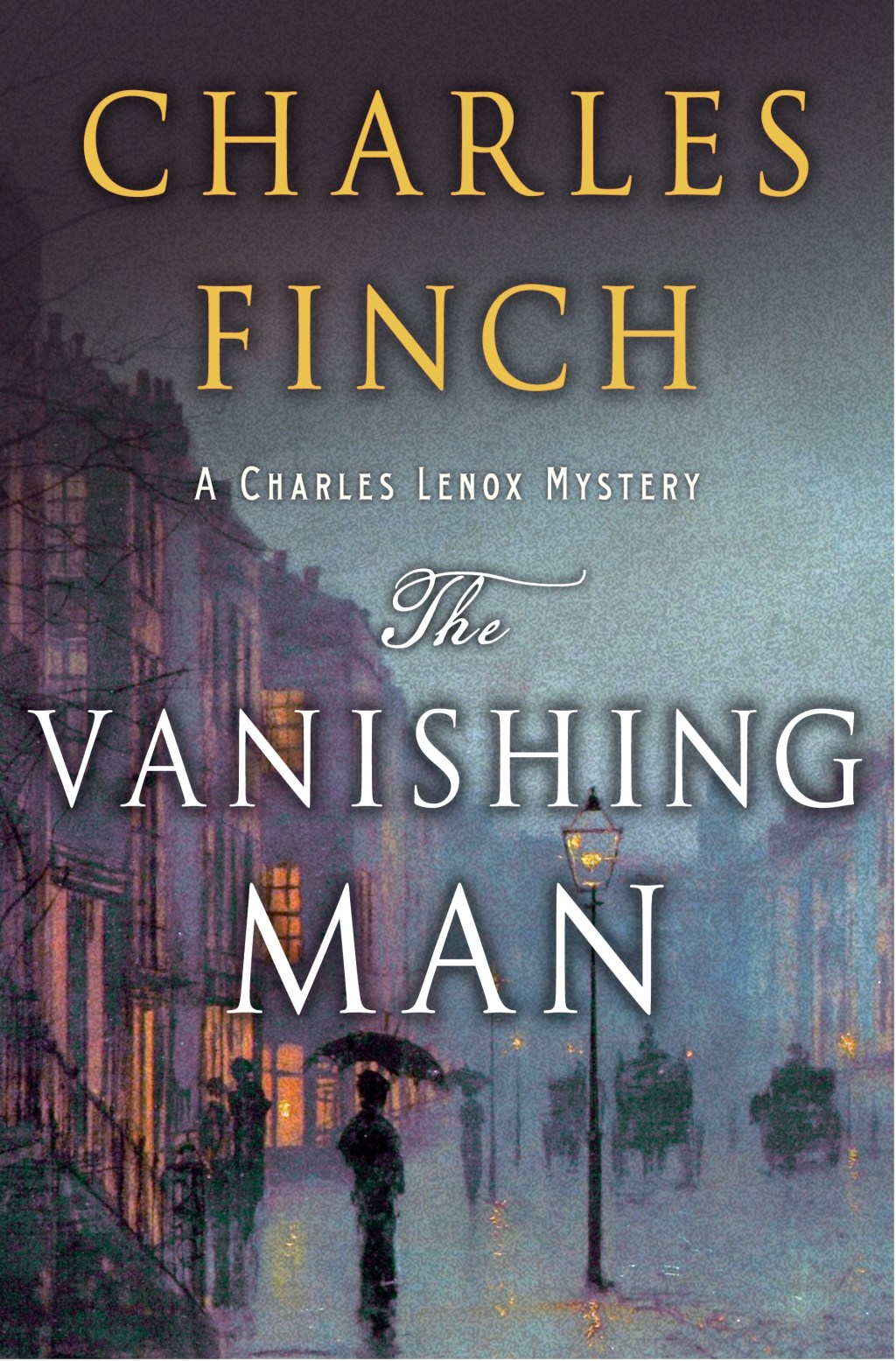
    A Vanishing Man: Charles Finch’s Latest Victorian Mystery

                  Charles Lenox is a well-educated, well-connected young man, but even he, when called to the Duke of Dorset’s home after a painting is found to have been stolen, knows his place. After all, even among the aristocracy, a Duke is way above Lenox, particularly now that he has taken to detecting (after all, what well-bred man works?). But status doesn’t deter Lenox from carrying out his investigation—even when it involves standing up to the Duke and pursuing the revelation of a long-held family secret that leads to murder.Finch, Charles_CREDIT Timothy Greenfield-Sanders

                  Lenox is the hero of a series of Victorian era mysteries involving Charles Lenox written by bestselling author Charles Finch who though he calls Chicago his home, seems mainly to live in London during the mid-to-late 1800s. His newest Lenox novel, The Vanishing Man (Minotaur 2019; $26.99) is the second in his three-series prequel showing the detective when he was young and just starting off. The prequels take place before the 11 other Lenox mysteries Finch has written.

                  Interestingly, Finch has been writing his novels for so long, he says he’s never had a real job. He also has a philosophy of writing that goes against what’s commonly recommended.

                  “I think you should write what you love,” he says. “Not what you know or see. And I love that period of history.”

                  He must as he spends a lot of time in a different country and different century. Though Finch says he’s a hypochondriac and would be afraid to really be a part of a time when even a simple infection could kill–penicillin after all is still over half a century from being discovered.

                  “But I would love to walk down the streets and get a feeling for what it was like at that time,” he says. “I’d like to really immerse myself.”

                  Instead Finch delves deep into research and history.

                  “This book was especially difficult to peel myself away from,” he says.

                   He’s also an avid reader of Victorian novels (Finch lists Anthony Trollope, Sherlock Holmes and George Elliott as among his favorites), Finch lived in England for almost four years so though he can’t go back to Victorian times, he at least is very familiar with the country. He says he chose his latest plot because he wanted to wade into Shakespeare and examine some of the mysteries and myths surrounding the great playwright.

                  “Writing about Shakespeare gave me a chance to look into every old apocryphal story about him and his times, and in the end– without giving too much away–I discovered one of the most plausible—and unproven–theories about his life,” he says. “It’s one which is directly connected to the crime Lenox is solving in 1851.”

  • BOOK REVIEW, SIGNING: New author Ma Ling hones ‘Apocalypse Office’ genre in dark comic novel

    BOOK REVIEW, SIGNING: New author Ma Ling hones ‘Apocalypse Office’ genre in dark comic novel

    Candace Chen’s life is so much about chaos and loss that she finds solace and satisfaction in her job coordinating the sourcing of materials and production of Bibles. It’s a job that entails such minutiae as making sure there’s a supplier for the crushed gems which decorate a specific best-selling Bible even though many of the Asian countries supplying the materials have had to close because the crushed stones cause lung disease.

                  But Candace, a millennial who immigrated from China when very young, works through such hurdles with aplomb, simply moving on, over and around any impediment. That’s one reason why she is chosen to stay at the company’s New York office as all the other workers flee, are dying or being turned in zombies by a virulent and unstoppable fungal infection called Shen Fever.

                  Candace’s story—from her early losses to her unplanned but not unwanted pregnancy in a Manhattan that is rapidly falling apart is told in Severance, the first novel by Ling Ma.  

                  Ma, who teaches creative writing at the University of Chicago, writes with a dry wit and keen sense of observation, shaping Severance into a darkly comic novel in a genre that might be best called Apocalypse Office and is unlike any other urban disaster books—or movies—I’ve ever come across. Ma, who has an MFA from Cornell University, was inspired in part by watching movies like those by George Romero, who was known for his satirical but grisly horror films such as “Night of the Living Dead” as well as TV series about Millennials like “Sex in the City.” But even more so her book was honed by working in an office and dealing with office politics which she describes as horrifying.

    “The company I worked for was downsizing, and I started writing this book in the last few months of getting laid off—a kind of fun, apocalyptic short story,” she says about the novel’s origination. “I wanted to be destructive in some ways, and fiction can realize a lot of fantasies. I was kind of angry, but I also felt extremely liberated and extremely gleeful at the same time; it was a strange combination of glee and anger at once.”

    Taking her severance and unemployment compensation, she continued to work on the story—as a sort of therapy. It was also an escape, just like Candace is first able to escape from New York and then from the cultist gang of survivors, freeing herself and going into the unknown.

    Ifyougo:

    What: Talk and signing

    When: January 17 @ 6pm

    Where: Seminary Co-op Bookstore, 5751 S Woodlawn Ave, Chicago, IL

    FYI: (773) 752-4381; semcoop.com

  • The Cookbook Library: Four Centuries of the Cooks, Writers, and Recipes That Made the Modern Cookbook

    The Cookbook Library: Four Centuries of the Cooks, Writers, and Recipes That Made the Modern Cookbook

    Still worried about that extra Halloween candy you gobbled down?  Imagine how many miles you’d have to spend on the treadmill after attending the 1450 banquet, held in England celebrating the enthronement of an archbishop where guests munched on 104 oxen, six ‘wylde bulles,’ 1,000 sheep, 400 swans and such game birds such as bustards (larger than a turkey), cranes, bitterns, curlews and herons?

    “Our ancestors had gastronomic guts,” Anne Willan tells me as we chat on the phone, she in Santa Monica, California where there’s sunshine and me in the cold Great Lakes region.  I find it fascinating to read old menus and descriptions of banquets and feasts and for that Willan, founder of famed French cooking school École de Cuisine la Varenne, recipient of the IACP Lifetime Achievement Award and author of 30 cookbooks, is the go to person.

    Even better, after collecting cookbooks for some 50 years and amassing a collection of over 5000 tomes, last year Willan and her husband, Mark Cherniavsky immersed themselves in their antiquarian cookbook library and came out with The Cookbook Library: Four Centuries of the Cooks, Writers, and Recipes That Made the Modern Cookbook (University of California Press $50).Anne Willan

    “Seals were eaten on fast days along with whale, dolphin, porpoise and thousands of other fish,” says Willan. Hmmm…that’s different than the macaroni and cheese and fish sticks I used to eat at the homes of my Catholic friends on Fridays.

    Here we peruse four centuries of gastronomy including the heavily spiced sauces of medieval times (sometimes employed because of the rankness of the meat), the massive roasts and ragoûts of Sun King Louis XIV’s court and the elegant eighteenth-century chilled desserts. One for the interesting detail, Willan also tells the story of cookbook writing and composition from the 1500s to the early 19th century. She highlights how each of the cookbooks reflects its time, ingredients and place, the  recipes adapted among the cuisines of Germany, England, France, Italy and Spain as well as tracing the history of the recipe.

    Historic cookbooks can be so much different than ours, ingredients unfamiliar and instructions rather vague. For example, Willan points out the phrase “cook until” was used due to the difficulty of judging the level of heat when cooking a dish over the burning embers in an open hearth. It wasn’t until the cast-iron closed stoves of the 19th century that recipes writers begin were finally able to give firm estimates for timing.

    For food historians and even those just appreciative of a good meal, the book is fascinating. For me as a food writer, I wonder about covering a dinner where birds flew out of towering pastries, seals were served and eels baked into pies and it was often wise to have a taster nearby in case someone was trying to poison you.

    Anne Willan 1

    The following recipe is from The Cookbook Library.

    Rich Seed Cake with Caraway and Cinnamon

    This recipe is based on a cake in The Compleat Housewife by Eliza Smith, published in London in the 1700s.  Willan, ever the purist, suggests mixing the batter by hand as it was done 300 plus year ago.

    “The direct contact with the batter as it develops from a soft cream to a smooth, fluffy batter is an experience not to be missed,” she says. “If you use an electric mixer, the batter is fluffier but the cake emerges from the oven less moist and with a darker crust.”

    At times, Willan needs to substitute ingredients. The original recipe listed ambergris as an option for flavoring the cake. “Ambergris,” writes Willan, “a waxy secretion from a sperm whale, was once used to perfume foods. As it is now a rare ingredient, I’ve opted for Mrs. Smith’s second suggestion, of cinnamon, which marries unexpectedly well with caraway.”

    1 pound or 31⁄2 cups) flour

    1 2⁄3 cups sugar

    6  tablespoons caraway seeds

    5 eggs

    4 egg yolks

    1 pound or 2 cups butter, more for the pan

    11⁄2 tablespoon rose water or orange-flower water

    2 teaspoon ground cinnamon

    Heat the oven to 325ºF. Butter a 9-inch springform pan. Sift together the flour and sugar into a medium bowl, and stir in the caraway seeds. Separate the whole eggs, putting all the yolks together and straining the whites into a small bowl to remove the threads.

    Cream the butter either by hand or with an electric mixer fitted with the paddle attachment. Add the yolks two at a time, beating well after each addition. Beat in the rose water. Whisk the egg whites just until frothy, then beat them, a little at a time, into the egg yolk mixture. Beat in the cinnamon. Finally, beat in the flour mixture, sprinkling it a little at a time over the batter. This should take at least 15 minutes by hand, 5 minutes with a mixer. The batter will lighten and become fluffier. Transfer the batter to the prepared pan.

    Bake until the cake starts to shrink from the sides of the pan and a skewer inserted in the center comes out clean when withdrawn, 11⁄4 to 11⁄2 hours. Let the cake cool in the pan on a rack until tepid, then unmold it and leave it to cool completely on the rack. When carefully wrapped, it keeps well at room temperature for several days and the flavor will mellow.


  • Pure: Inside the Evangelical Movement that Shamed a Generation of Young Women and How I Broke Free

    Pure: Inside the Evangelical Movement that Shamed a Generation of Young Women and How I Broke Free

    Inside the purity culture, girls and women are not only responsible for their own sexual thoughts and actions but also those of the boys and men around them says Linda Kay Klein, author of Pure: Inside the Evangelical Movement that Shamed a Generation of Young Women and How I Broke Free (Touchstone 2018 $26).

    Linda Kay Klein Author Photo by Jami Saunders Photography            “Because women are seen as the keepers of sexual purity which is a necessary part of their living out their faith, when men or boys have lustful thoughts about them, then it’s about what they were wearing, were they flirting,” says Klein, who grew up in the evangelical movement in the 1990s before breaking free. “It creates a tremendous amount of anxiety because your purity is assessed by others around you. It makes you worry about when you’re going to fall off the cliff and no longer be considered pure and no longer part of the community.”

    But if being non-sexual before marriage is of utmost importance, afterwards the onus is on the woman to be extremely sexual, able to meet all their husband’s needs lest he cheat—which of course would be her  fault.

    “Zero to 100 is extremely difficult,” says Klein, noting it’s better to ease into sexual experience. “I interviewed women who didn’t know what sex was and suddenly they’re expected to be a sexual satisfier.”

    As far as sexual abuse, well, if girls and women were just pure, that sort of thing wouldn’t happen.

    Klein was in her 20s when she left the evangelical church. The impetus was in part when she learned her pastor had been convicted of child enticement with intent to have sexual contact with a 12-year-old girl who was under his pastoral care. She was a senior in high school and as awful as it was to learn that, it was even more devastating when she discovered the pastor had been let go from two other evangelical institutions after he confessed to committing the same acts.  But her evangelical upbringing still bound her.

    “I thought I would be free,” says Klein who during her teenage years was so obsessed with staying pure that she took pregnancy tests even though she was a virgin and resisted asking for help when dealing with what would later be diagnoses with Crohn’s Disease because she wanted to prove she was a woman of the spirit and not of the flesh. “But I wasn’t able to escape them, they were me.”

    At least at first.

    Writing her book, which took 12 years, was cathartic for Klein who interviewed many evangelical women and likening the fear and angst they experienced as similar to Post-Traumatic Stress Disorder.

    Noting there’s a dominant gender teaching in the evangelical church—as well as many other churches, Klein says that patriarchy hurts both men and women except those at the top of the hierarchy.  There is also something else off putting about the purity culture and that is the profit motive in the development of products.

    “The people on the ground are believers,” she says.

    Others make money off of purity rings which can range in price from around $10 to $600 or more, abstinence education, Christian purity parties, father-daughter purity balls and clothing including t-shirts reading “Modest is Hottest.”

    “Over the course of time I did a lot of healing through my research for the book,” says Klein, who. “There have been phases in this journey. I’ve been angry, but keeping my focus on healing, knowing I’m not alone—I think there’s something powerful that happens.”

    Ifyougo:

    What: Author Conversation: Linda Kay Klein & Deborah Jian Lee

    When: November 7 at 7 p.m.

    Where: Women & Children First, 5233 N. Clark St., Chicago, IL

    Cost: Free

    FYI: 773.769.9299; womenandchildrenfirst.com


  • Good and Mad: The Revolutionary Power of Women’s Anger
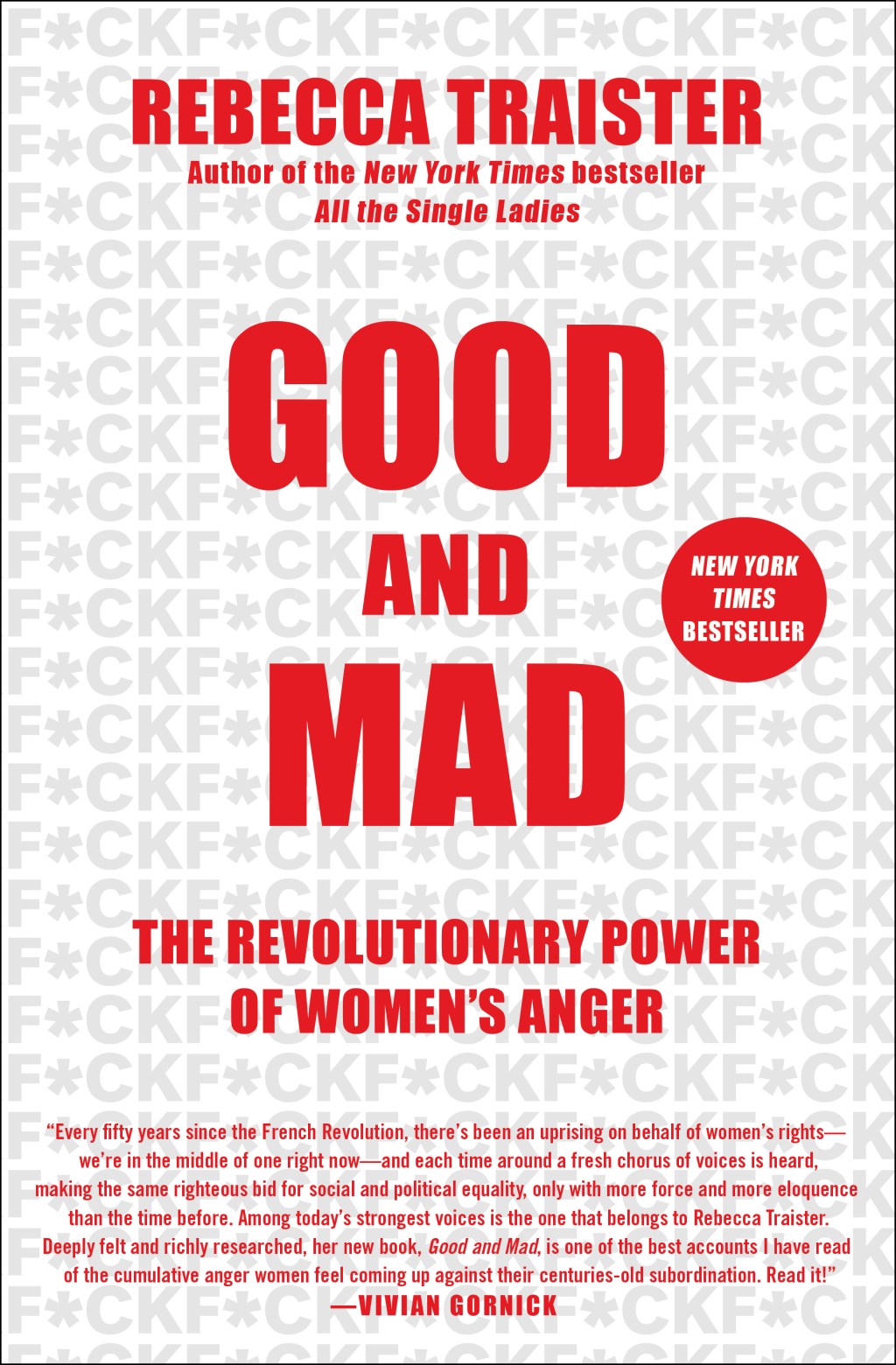
    Good and Mad: The Revolutionary Power of Women’s Anger

    Women’s anger is complicated, dating back to the days before they were allowed to vote and when all but a few careers were available to them. Even in the last generation or so, women have fought against discrimination in pay, employment—consider that former Supreme Court Justice Sandra Day O’Connor could at first only get a job as a deputy county attorney even though she graduated from the prestigious Stanford University and what they wore (up until the 1970s even pantsuits were considered inappropriate in the workplace) among many other things. On a personal level, when my father returned from serving overseas during World War II, at least one of the men on the East Chicago Public Library board demanded that my mother resign because she was taking a job away from a man. Fortunately, other board members disagreed and she worked there until she was in her 70s, retiring after 50 years. Other women weren’t as lucky—many were asked to leave or fired so that men could be re-employed.Rebecca Traister_credit_Victoria Stevens

    For New York Times bestselling author Rebecca Traister, a National Magazine Award winner for her coverage of the Harvey Weinstein scandals, writer at large for New York Magazine and contributing writer for Elle, the long-simmering anger women have felt is now brimming over. This is shown by the ever growing #MeToo movement and also what she sees as women’s reaction to Donald Trump and his policies that hurt women. In her newest book, Good and Mad: The Revolutionary Power of Women’s Anger (Simon & Schuster 2018; $27) Traister wants to let women know their anger is potent.

    “It’s consequential, it’s meaningful, valid and rational,” says Traister who discusses how women’s anger is often held against them and used to invalidate their feelings. “I think those are things that women are told are not true about their anger all the time. This book sort of serves as a guide and a reminder–to let women know that their anger is powerful, that it has historical precedence.”

    Indeed, Traister argues that anger, when used to make changes, is a potent force.

    “It’s the bottling up of anger, rather than the anger itself, that raises our blood pressure and makes us grind our teeth,” she says.

    Though her book was written before the recent confirmation of Supreme Court Justice Brett Kavanaugh, Traister says the  reaction to how the women who came forward were treated will also reverberate into the future—just as they did 26 years ago after the Anita Hill and Clarence Thomas confirmation hearings.

    “#MeToo was an examination of how often sexualized harm was actually a tool of inequality within workplaces and within power structures where women faced all kinds of economic, professional, public forms of discrimination,” she says noting the harm being done wasn’t just sexual—it was also economic and professional. “What was being exposed were fundamental inequalities.

    Ifyougo:

    What: Chicago Humanities Festival, in conversation with Dr. Brittney Cooper

    When: Sunday, October 28 at 3:30 p.m.

    Where: Pick-Staiger Concert Hall, Northwestern University, 50 Arts Circle Dr., Evanston, IL

    FYI: (847) 467-4000; chicagohumanities.org/events/207-rebecca-traister-good-and-mad


  • Who Murdered the Supreme Court Candidate: Mental State, a mystery novel by Law Professor M. Todd Henderson

    Who Murdered the Supreme Court Candidate: Mental State, a mystery novel by Law Professor M. Todd Henderson

    The murder of a good friend and fellow law professor inspired M. Todd Henderson to write Mental State (Down and Out Books 2018; $17.95), his first mystery novel.

    “He was a professor at Florida State University and had just dropped of his kids and was pulling out of the driveway when he was shot,” says Henderson who teaches at the University of Chicago’s law school. It turns out the friend, Dan Martel, was murdered by two hitmen hired by his ex-wife’s family to gain full custody of their children. Henderson considers himself a storyteller and using those skills he channeled his feelings into an immensely readable mystery involving the deadly political machinations put in place to hide the past of a sexual predator in order to secure a place on the  Supreme Court. It’s an interesting premise and certainly timely though this book was written well before the Brett Kavanaugh nomination and besides, Henderson’s judge is liberal.

    “My interest in law at a policy level is about power and what people are willing to do to achieve their ends,” says Henderson.

    photo-m-todd-henderson-1000x1400px-300dpi (1)

    In Mental State, Professor Alex Johnson, a professor at a renowned law school on Chicago’s southside (think University of Chicago) is murdered before he can reveal that the man being considered for the Supreme Court sexually abused him when they were both young. The death is first thought to be a suicide but FBI agent Royce Johnson, the victim’s brother, doesn’t believe his self-centered, narcissistic sibling would do such a thing. Once Royce proves it was murder, the next frame-up goes into place (the bad guys are good at backup plans) pinpointing the murder on one of the professor’s law students. But Johnson’s inability to quit trying to solve the crime soon puts himself on the wrong side of the law,  his comrades at the FBI and an array of federal officials determined to make sure the president’s pick for the highest court in the land goes through without a hitch. If that means a few murders and ruined lives to achieve this, well, it’s for the greater good.

    Ifyougo:

    What: M. Todd Henderson discusses “Mental State.” He will be joined in conversation by Jeff Ruby. A Q&A and signing will follow the discussion.

    When: Thursday, October 18, 2018 – 6:00pm – 7:00pm

    Where: 57th Street Books, 1301 E 57th St., Chicago, IL

    Cost: Free

    FYI: (773) 752-4381; events@semcoop.com

  • Lake Success

    Lake Success

    “I’ve always wanted to travel the country by Greyhound bus,” says Gary Shteyngart, the New York Times bestselling author about Lake Success, his latest book Gary Shteyngart © Brigitte Lacombe(PenguinRandom House 2018; $28) which tells the story of Barry Cohen, a hedge fund millionaire who, unable to deal with all the issues impacting his life, jumps on a bus to find his college girlfriend.

    “I know, I’m nuts. But I thought it would be a very visceral way to see the country at a difficult time in its history,” continues Shteyngart.  “And it sure was.  As for the hedge fund part, I guess I realized there were so few people left in New York who weren’t connected to finance one way or another. Everyone else had been priced out.”

    You might think that Cohen, a man worth millions who is married to a beautiful, exotic and intelligent wife, has, if not it all, at least a lot more than most of us. But beneath the surface, it’s all breaking into pieces for Cohen, a self-made man who overcame the intense insecurities he had as a boy. His only child is severely autistic, his wife is drifting away having fallen in love with a married neighbor and the Feds are opening an investigation into how his hedge fund lost a billion or so.

    Chucking it all including his Black Amex card, cell phone and access to his millions, Cohen has only a couple hundred dolalrs and his expensive watch collection which emotionally means more to him at the time he starts his journey than anything else in his life.

    Shteyngart was able to nail down the personalities of his characters by immersing himself in their world.

    “I spent three years hanging out with hedge fund people and their spouses and sometimes children,” he says. “A strange alternate reality began to take shape in my mind. I started jotting down the little tics and conversations, but mostly the fact that the real world of the 99.9 percent was no longer available to them. They had moated themselves in to an almost feudal level. In fact, large parts of Manhattan started to seem like a series of gated communities.”

    There’s a parallel to Shteyngart and Barry’s upbringing. Both grew up poor and saw Wall Street as a way to make up for the huge amounts of insecurity they felt.

    “In our country, being poor is almost considered a moral failing, though often to get rich requires a true moral failing,” he says.

    Unlike Barry, Shtenyngart, who immigrated with his parents from Leningrad at age seven, turned to writing dark comedic novels such as Super Sad True Love Story (winner of the Bollinger Everyman Wodehouse Prize) and The Russian Debutante’s Handbook (winner of the Stephen Crane Award for First Fiction and the National Jewish Book Award for Fiction). It’s humor, based in part upon his parents who he says have a very satirical approach to reality honed in the Soviet Union, where laughter was the only defense against a very stupid system.

    “Being an immigrant is also a nice way to observe a society because you have to learn it from scratch,” he adds.

    To learn how to become a hedge fund manager, watch this video by Shtenygart and Ben Stiller: http://bit.ly/2x084Iz

    Ifyougo:

    What: A conversation and book signing with Gary Shteyngart

    When: Friday, September 21 at 6:30 p.m.

    Where: KAM Isaiah Israel Congregational,1100 E Hyde Park Blvd, Chicago, IL

    Cost: $30 tickets include admission for one and one copy of Lake Success

    FYI: 773-684-1300; semcoop.com


  • Max’s Story: A Dog’s Purpose Puppy Tale

    Max’s Story: A Dog’s Purpose Puppy Tale

    Tucker and Bruce 2011 black - c. Ute Ville (1)

    Author W. Bruce Cameron wasn’t planning on writing a series of books about dogs. Instead, he was wooing his future wife into letting another dog into her life.

    Wondering if that was going to be a deal breaker, Cameron, whose had dogs since he was young, decided to tell her a story while they were driving.

    “I just made up a story about how her dog would want her to have another puppy and that I really believe we’ll see our true friends again,” says Cameron, author of the recently released Max’s Story: A Dog’s Purpose Puppy Tale (Tor Books 2018; $16.99), acknowledging that when we adopt a canine, we’re setting ourselves up for a very bad day sometime in the future. “She liked the story so  much she not only married me but told me I needed to make turn the story into a book.”

    The result was A Dog’s Purpose: A Novel for Humans which spent 52 weeks on the New York Times bestseller list, became the first in the Dog’s Purpose series and was made into a movie. Currently, Cameron’s A Dog’s Way Home, another best seller, is being filmed.

    Though Cameron writes other novels including a mystery series about a repo man who lives in Michigan (the novelist is from Petoskey, Michigan) which have been well-received, it’s the way he portrays animals that seems to win the most readers from young to old. Max’s Story  features a New York canine cutie, who “adopts” a naïve young woman and shows her how to handle big city life. The puppy purpose series are for young readers and though they’re written to be easily readable, writing them is the challenge says Cameron.

    “When I’m writing these puppy tales, I start off with a real challenge for myself—I need to think like a dog would think,” he says. “Dogs don’t think in words but they know the difference between a ball, chair or tree. I made a mistake in an earlier book when I mentioned a red light. A dog doesn’t see colors. But dogs are very in-tune with feelings—I’ve witnesses that—and for a story to advance you have to show it through what the dog knows and doesn’t know and how they see the world.”

  • Michael Koryta in Chicago to Talk About His New Book

    Michael Koryta in Chicago to Talk About His New Book

    Michael Koryta, the New York Times-bestselling author of 12 suspense novels of including Those Who Wish Me Dead and Rise the Dark talks with writer Jane Simon Ammeson about his just released “How It Happened” (Little Brown 2018; $27).Michael Koryta

    “How It Happened” starts off with the so chilling confession and then suddenly we’re wondering okay, was it true? Is your book based on one specific case or did statistics from Project Innocence help shape the story for you or what shaped the story in your mind?

    The confession in the book was inspired by a false confession that was given during the investigation of the disappearance and murder of Jill Behrman, who was a 19-year-old Indiana University freshman when she vanished on a bike ride on a beautiful spring morning in a small college town. Her bike was found near my childhood home, and I was 17 when that happened, and then I was 19 when I began to write some police beat articles about the case for the local newspaper. There was a search going on at that time based on a confession. Those memories are profound and tragic to me.

    “How It Happened” is complex just like all your novels, do you plot everything in advance or does it more just flow? 

    I don’t know how to outline, but I do know how to rewrite! I do many, many drafts.

    And do you ever find yourself caught up in the feel of it all so that you’re where your characters are and experiencing what they’re experiencing rather than sitting at a desk writing about it? And do your characters take on a life of their own or are you in control of them?

    If you don’t feel caught up in it, then it won’t be any good. If the desk doesn’t vanish, and if you don’t disappear into the story to join your characters, then how will the reader be able to have that experience? I don’t want to have any control over my characters so much as I want them to explain the story to me, and for them to surprise me. That’s the joy of it.

    You’re books are so atmospheric, your characters haunted in many ways and there’s often a combination of the natural—caves, mountains, rivers, now Maine and the ghostly or the unknown. I’m familiar with Bloomington as that’s where I went to Indiana University and I love French Lick/West Baden, those marvelously restored early 20th century resorts in Southern Indiana. All this makes me  curious about how you look at these places and what makes them so haunting as if they’re characters themselves? And how/why did you choose Maine for this book?

    I respond to places that have a combination of visual and emotional impact. Sometimes, that might be in an eerie or creepy way — the surreal experience of walking into another time in the West Baden Springs Hotel, or riding a boat on an underground river. In other cases, it is found in the collision of beauty and danger. This would be the Maine coast to me. I love a place that can be astonishingly beautiful in one moment, and turn threatening in the next. It allows me to bring the setting to life like a character.

    Did you ever find  a book written by your female relative who was a published author back in the 1800s? What was her name?

    I still haven’t been able to track one down, sadly. Jane Parker was her name. She wrote novels in the late 1800s, and was apparently well-regarded in her era, which is even more special because she was a woman writing in an age when not many women had the chance, let alone earned that critical respect. I am afraid none of her books have survived, but I will remain on the hunt!   

    Will we ever get another novel set in French Lick and West Baden like “So Cold the River?

    I think you will! I finally got the film rights back on SO COLD THE RIVER after it went stagnant with the studio that optioned it originally, and I am exploring ways to get that done with an independent filmmaker, and as I work on that, I keep thinking of new ideas in that area, and with those characters. I am very drawn to that area, and to the stories that abound there. I am feeling the call down there again, louder and louder.

    Ifyougo:

    What: Michael Koryta book signing

    When: Tuesday, May 22 at 7 p.m.

    Where: Anderson’s Bookshop Naperville, 123 W Jefferson Ave., Naperville, IL

    Cost: This event is free and open to the public.

    FYI: To join the signing line, please purchase the author’s latest book, How It Happened, from Anderson’s Bookshop. To purchase please stop into or call Anderson’s Bookshop Naperville (630) 355-2665 or order online at andersonsbookshop.com/event/michael-koryta-0