Category: Architecture

  • THE 17TH ANNUAL BEST BOOK AWARDS ANNOUNCE 2020 AWARD RECIPIENTS

    Mainstream & Independent Titles Score Top Honors in the 17th Annual Best Book Awards

     HarperCollins, Penguin/Random House, John Wiley and Sons, Routledge/Taylor and Francis, Forge, Sterling Publishing, Hay House, Sounds True, Llewellyn Worldwide, NYU Press, Oxford University Press, John Hopkins University Press, The White House Historical Association and hundreds of Independent Houses contribute to this year’s Outstanding Competition!

    Highlights Include the Following Winning Titles: (Full Results are Available Here.)

    Click on category headings to be taken directly to full book descriptions! Winners and Finalists are featured at the top of each page! 

    Animals/Pets: General
    The Balanced Pet Sitter: What You Wish you Knew Before Starting Your Pet Care Business by Renée Stilson
    Equilibre Press, LLC

    Animals/Pets: Narrative Non-Fiction
    The Chimpanzee Chronicles: Stories of Heartbreak and Hope from Behind the Bars by Debra Rosenman
    Wild Soul Press

    Anthologies: Non-Fiction
    This Moment Bold Voices from WriteGirl by Keren Taylor
    WriteGirl Publications

    Art
    C. Curry Bohm: Brown County and Beyond edited by Daniel Kraft & Jim Ross
    Indiana University Press

    Autobiography/Memoir
    Through My Eyes: CSI Memoirs That Haunt the Soul by Tamara Mickelson
    Self-Published

    Best Cover Design: Fiction
    The Last Lumenian by S.G. Blaise
    The Last Lumenian

    Best Cover Design: Non-Fiction
    When God Says NO – Revealing the YES When Adversity and Pain Are Present by Judith Briles
    Mile High Press

    Best Interior Design
    Beautiful Living: Cooking the Cal-a-Vie Health Spa Way by Terri Havens
    Cal-a-Vie Health Spa

    Best New Fiction
    In An Instant by Suzanne Redfearn
    Lake Union

    Best New Non-Fiction
    The Book of Help: A Memoir of Remedies by Megan Griswold
    Rodale Books/Penguin Random House

    Biography
    T.R.M. Howard: Doctor, Entrepreneur, Civil Rights Pioneer by David T. Beito and Linda Royster Beito
    Independent Institute

    Business: Careers
    TIP: A Simple Strategy to Inspire High Performance and Lasting Success by Dave Gordon
    John Wiley and Sons

    Business: Communications/Public Relations
    The Apology Impulse: How the Business World Ruined Sorry and Why We Can’t Stop Saying It by Cary Cooper & Sean O’Meara
    Kogan Page

    Business: Entrepreneurship & Small Business
    Burdens of a Dream: 33 Actionable Nuggets of Wisdom for the Creative Entrepreneur by Craig M. Chavis Jr.
    Author Academy Elite

    Business: General
    The Simplicity Principle: Six Steps Towards Clarity in a Complex World by Julia Hobsbawm
    Kogan Page

    Business: Management & Leadership
    The Future Leader: 9 Skills and Mindsets to Succeed in the Next Decade by Jacob Morgan
    Wiley

    Business: Marketing & Advertising
    The End of Marketing: Humanizing Your Brand in the Age of Social Media and AI by Carlos Gil
    Kogan Page

    Business: Motivational
    Unlock!: 7 Steps to Transform Your Career and Realize Your Leadership Potential by Abhijeet Khadikar
    Vicara Books

    Business: Personal Finance/Investing
    Enhancing Retirement Success Rates in the United States: Leveraging Reverse Mortgages, Delaying Social Security, and Exploring Continuous Work by Chia-Li Chien, PhD, CFP®, PMP®
    Palgrave Pivot

    Business: Real Estate
    Market Forces: Strategic Trends Impacting Senior Living Providers by Jill J. Johnson
    Johnson Consulting Services

    Business: Reference
    The Non-Obvious Guide to Virtual Meetings and Remote Work (Non-Obvious Guides) by Rohit Bhargava
    IdeaPress Publishing

    Business: Sales
    The Visual Sale: How to Use Video to Explode Sales, Drive Marketing, and Grow Your Business in a Virtual World by Marcus Sheridan
    IdeaPress Publishing

    Business: Technology
    Amazon Management System: The Ultimate Digital Business Engine That Creates Extraordinary Value for Both Customers and Shareholders by Ram Charan and Julia Yang
    IdeaPress Publishing

    Business: Writing/Publishing
    Great Stories Don’t Write Themselves: Criteria-Driven Strategies for More Effective Fiction by Larry Brooks
    Writer’s Digest Books (a division of Penguin Random House)

    Children’s Educational
    Galileo! Galileo! by Holly Trechter and Jane Donovan
    Sky Candle Press

    Children’s Fiction
    Nutmeg Street: Egyptian Secrets by Sherrill Joseph
    Acorn Publishing

    Children’s Mind/Body/Spirit
    The Tooth Fairy’s Tummy Ache by Lori Orlinsky
    Mascot Books

    Children’s Non-Fiction
    President’s Play! illustrated by John Hutton, text by Jonathan Pliska
    The White House Historical Association

    Children’s Novelty & Gift Book
    Bubble Kisses by Vanessa Williams, illustrated by Tara Nicole Whitaker
    Sterling Publishing

    Children’s Picture Book: Hardcover Fiction
    Bubble Kisses by Vanessa Williams, illustrated by Tara Nicole Whitaker
    Sterling Publishing

    Children’s Picture Book: Hardcover Non-Fiction
    A-B-Skis: An Alphabet Book About the Magical World of Skiing by Libby Ludlow, illustrated by Nathan Y. Jarvis
    Libby Ludlow LLC

    Children’s Picture Book: Softcover Fiction
    Frankie the Ferret by Kimberley Paterson
    FriesenPress

    Children’s Picture Book: Softcover Non-Fiction
    Fridays With Ms. Mélange: Haiti by Jenny Delacruz
    Cobbs Creek Publishing

    Children’s Religious
    That Grand Christmas Day! by Jill Roman Lord, illustrated by Alessia Trunfio
    Worthy Kids

    College Guides
    Diversity At College: Real Stories of Students Conquering Bias and Making Higher Education More Inclusive by James Stellar, Chrisel Martinez, Branden Eggan, Chloe Skye Weiser, Benny Poy, Rachel Eagar, Marc Cohen, and Agata Buras
    IdeaPress Publishing

    Cookbooks: General
    Recipes from the President’s Ranch: Food People Like to Eat by Matthew Wendel
    The White House Historical Association

    Cookbooks: International
    Cooking with Marika: Clean Cuisine from an Estonian Farm by Marika Blossfeldt
    Delicious Nutrition

    Cookbooks: Regional
    The Perfect Persimmon: History, Recipes, and More by Michelle Medlock Adams
    Red Lightning Books

    Current Events
    In All Fairness: Equality, Liberty, and the Quest for Human Dignity, edited by Robert M. Whaples, Michael C. Munger and Christopher J. Coyne
    Independent Institute

    Education/Academic
    The EQ Intervention: Shaping a Self-Aware Generation Through Social and Emotional Learning by Adam L. Saenz, PhD
    Greenleaf Book Group

    Fiction: African-American
    Once in a Blood Moon by Dorothea Hubble Bonneau
    Acorn Publishing

    Fiction: Anthologies
    Terror at 5280′ edited by Josh Schlossberg
    Denver Horror Collective

    Fiction: Cross-Genre
    Mourning Dove by Claire Fullerton
    Firefly Southern Fiction

    Fiction: Fantasy
    The Hollow Gods (The Chaos Cycle Series, ) by A.J. Vrana
    The Parliament House Press

    Fiction: General
    Bread Bags & Bullies: Surviving the ’80’s by Steven Manchester
    Luna Bella Press

    Fiction: Historical
    The Takeaway Men by Meryl Ain
    SparkPress

    Fiction: Horror
    The Vanishing by Arjay Lewis
    Mindbender Press

    Fiction: Inspirational
    The Menu by Steven Manchester
    Luna Bella Press

    Fiction: LGBTQ
    Even Weirder Than Before by Susie Taylor
    Breakwater Books

    Fiction: Literary
    How Fires End by Marco Rafalà
    Little A

    Fiction: Multicultural
    Subduction by Kristen Millares Young
    Red Hen Press

    Fiction: Mystery/Suspense
    Strong From The Heart by Jon Land
    Forge

    Fiction: New Age
    Catalyst by Tracy Richardson
    Brown Books Publishing

    Fiction: Novelette
    When Angels Paint: A Milford-Haven Holiday Novelette by Mara Purl
    Bellekeep Books

    Fiction: Novella
    When the Heart Listens: A Milford-Haven Novella by Mara Purl
    Bellekeep Books

    Fiction: Religious
    The Longest Day by Terry Toler
    BeHoldings Publishing

    Fiction: Romance
    What the Heart Wants by Audrey Carlan
    HQN

    Fiction: Science Fiction
    Killing Adam by Earik Beann
    Profoundly One Publishing

    Fiction: Short Story
    Oranges by Gary Eldon Peter
    New Rivers Press

    Fiction: Thriller/Adventure
    The President’s Dossier by James A. Scott
    Oceanview Publishing

    Fiction: Visionary
    Journey of a JuBu by Blaine Langberg
    Critical Eye

    Fiction: Western
    Moccasin Track by Reid Lance Rosenthal
    Rockin’ SR Publishing

    Fiction: Women’s Fiction
    Appearances by Sondra Helene
    She Writes Press

    Fiction: Young Adult
    The Return of the Dragon Queen by Farah Oomerbhoy
    Wise Ink Creative Publishing

    Health: Addiction & Recovery
    Stepping Stones: A Memoir of Addiction, Loss, and Transformation by Marilea C. Rabasa
    She Writes Press

    Health: Aging/50+
    EIGHTSOMETHINGS: A Practical Guide to Letting Go, Aging Well, and Finding Unexpected Happiness by Katharine Esty, PhD
    Skyhorse Publishing

    Health: Alternative Medicine
    Have a Peak at This: Synergize Your Body’s Clock Towards a Highly Productive You by Said Hasyim
    Self-Published

    Health: Cancer
    All Of Us Warriors: Cancer Stories of Survival and Loss by Rebecca Whitehead Munn
    She Writes Press

    Health: Death & Dying
    Aftermath: Picking Up the Pieces After a Suicide by Gary Roe
    Healing Resources Publishing

    Health: Diet & Exercise
    Whole Person Integrative Eating: A Breakthrough Dietary Lifestyle to Treat Root Causes of Overeating, Overweight and Obesity by Deborah Kesten, MPH and Larry Scherwitz, PhD
    White River Press

    Health: General
    True Wellness for Your Gut: Combine the best of Western and Eastern medicine for optimal digestive and metabolic health by Catherine Kurosu, MD, L.Ac. and Aihan Kuhn, CMD, OBT
    YMAA Publication Center

    Health: Medical Reference
    The Ultimate College Student Health Handbook: Your Guide for Everything from Hangovers to Homesickness by Jill Grimes, MD
    Skyhorse Publishing

    Health: Psychology/Mental Health
    The Big Bliss Blueprint: 100 Little Thoughts to Build Positive Life Changes by Shell Phelps
    Positive Streak Publishing, LLC

    Health: Women’s Health
    The Book of Help: A Memoir of Remedies by Megan Griswold
    Rodale Books/Penguin Random House

    History: General
    Gun Control in Nazi-Occupied France: Tyranny and Resistance by Stephen P. Halbrook
    Independent Institute

    History: Military
    40 Thieves on Saipan The Elite Marine Scout-Snipers in One of WWII’s Bloodiest Battles by Joseph Tachovsky with Cynthia Kraack
    Regnery History

    History: United States
    Liberty in Peril: Democracy and Power in American History by Randall G. Holcombe
    Independent Institute

    Home & Garden
    My Creative Space: How to Design Your Home to Stimulate Ideas and Spark Innovation by Donald M. Rattner
    Skyhorse Publishing

    Humor
    Struggle Bus: The Van. The Myth. The Legend. by Josh Wood
    Lucid Books

    Law
    Banned: Immigration Enforcement in the Time of Trump by Shoba Sivaprasad Wadhia
    NYU Press

    LGBTQ: Non-Fiction
    Our Gay History in 50 States by Zaylore Stout
    Wise Ink Creative Publishing

    Multicultural Non-Fiction
    Overcoming Ordinary Obstacles: Boldly Claiming the Facets of an Extraordinary Life by Nesha Pai
    SPARK Publications

    Narrative: Non-Fiction
    Sola: One Woman’s Journey Alone Across South America by Amy Field
    WanderWomyn Publishing

    New Age: Non-Fiction
    Embodying Soul: A Return to Wholeness by Keri Mangis
    Curiosa Publishing, LLC

    Novelty & Gift Book
    The Official White House Christmas Ornament: Collected Stories of a Holiday Tradition by Marcia Anderson and Kristen Hunter Mason
    The White House Historical Association

    Parenting & Family
    Why Will No One Play with Me? The Play Better Plan to Help Children of All Ages Make Friends and Thrive by Caroline Maguire, PCC, M.Ed. with Teresa Barker
    Grand Central Publishing

    Performing Arts: Film, Theater, Dance, Music
    THAT GUY: a stage play by Peter Anthony Fields
    Amazon

    Photography
    Beautiful Living: Cooking the Cal-a-Vie Health Spa Way by Terri Havens
    Cal-a-Vie Health Spa

    Poetry
    Five Oceans in a Teaspoon, poems by Dennis J. Bernstein, visuals by Warren Lehrer
    Paper Crown Press

    Religion: Christian Inspirational
    Extraordinary Hospitality for Ordinary Christians: A Radical Approach to Preparing Your Heart & Home for Gospel-Centered Community by Victoria Duerstock
    Good Books

    Religion: Christianity
    Come Fill This Place: A Journey of Prayer by Stacy Dietz
    KP Publishing Company

    Religion: Eastern
    Secrets of Divine Love: A Spiritual Journey into the Heart of Islam by A. Helwa
    Naulit Publishing House

    Religion: General
    Esoterism as Principle and as Way: A New Translation with Selected Letters by Frithjof Schuon
    World Wisdom

    Science
    Bliss Brain: The Neuroscience of Rewiring Your Brain for Resilience, Creativity and Joy by Dawson Church
    Hay House

    Self-Help: General
    Start Finishing: How to Go from Idea to Done by Charlie Gilkey
    Sounds True

    Self-Help: Motivational
    Edge: Turning Adversity into Advantage by Laura Huang
    Portfolio

    Self-Help: Relationships
    The Remarriage Manual: How to Make Everything Work Better the Second Time Around by Terry Gaspard
    Sounds True

    Social Change
    I Am Not Your Enemy: Stories to Transform a Divided World by Michael T. McRay
    Herald Press

    Spirituality: General
    The Universe Is Talking to You: Tap Into Signs and Synchronicity to Reveal Magical Moments Every Day by Tammy Mastroberte
    Llewellyn Worldwide

    Spirituality: Inspirational
    Spark Change: 108 Provocative Questions for Spiritual Evolution by Jennie Lee
    Sounds True

    Sports
    The Martial Arts of Vietnam: An Overview of History and Styles by Augustus John Roe
    YMAA Publication Center

    Travel: Guides & Essays
    Exploring Wine Regions — Bordeaux France: Discover Wine, Food, Castles, and The French Way of Life by Michael C. Higgins, PhD
    International Exploration Society

    True Crime: Non-Fiction
    Beast of New Castle by Larry Sells & Margie Porter
    WildBlue Press

    Women’s Issues
    Muslim Women Are Everything: Stereotype-Shattering Stories of Courage, Inspiration, and Adventure by Seema Yasmin, illustrated by Fahmida Azim
    Harper Design, an Imprint of HarperCollins Publishers

    Young Adult: Non-Fiction
    My Life, My Way: How To Make Exceptional Decisions About College, Career, and Life by Elyse Hudacsko
    Self-Published

  • Lincoln Roadtrip: Following the backroads to find Abraham Lincoln
    Lincoln Roadtrip: Following the backroads to find Abraham Lincoln


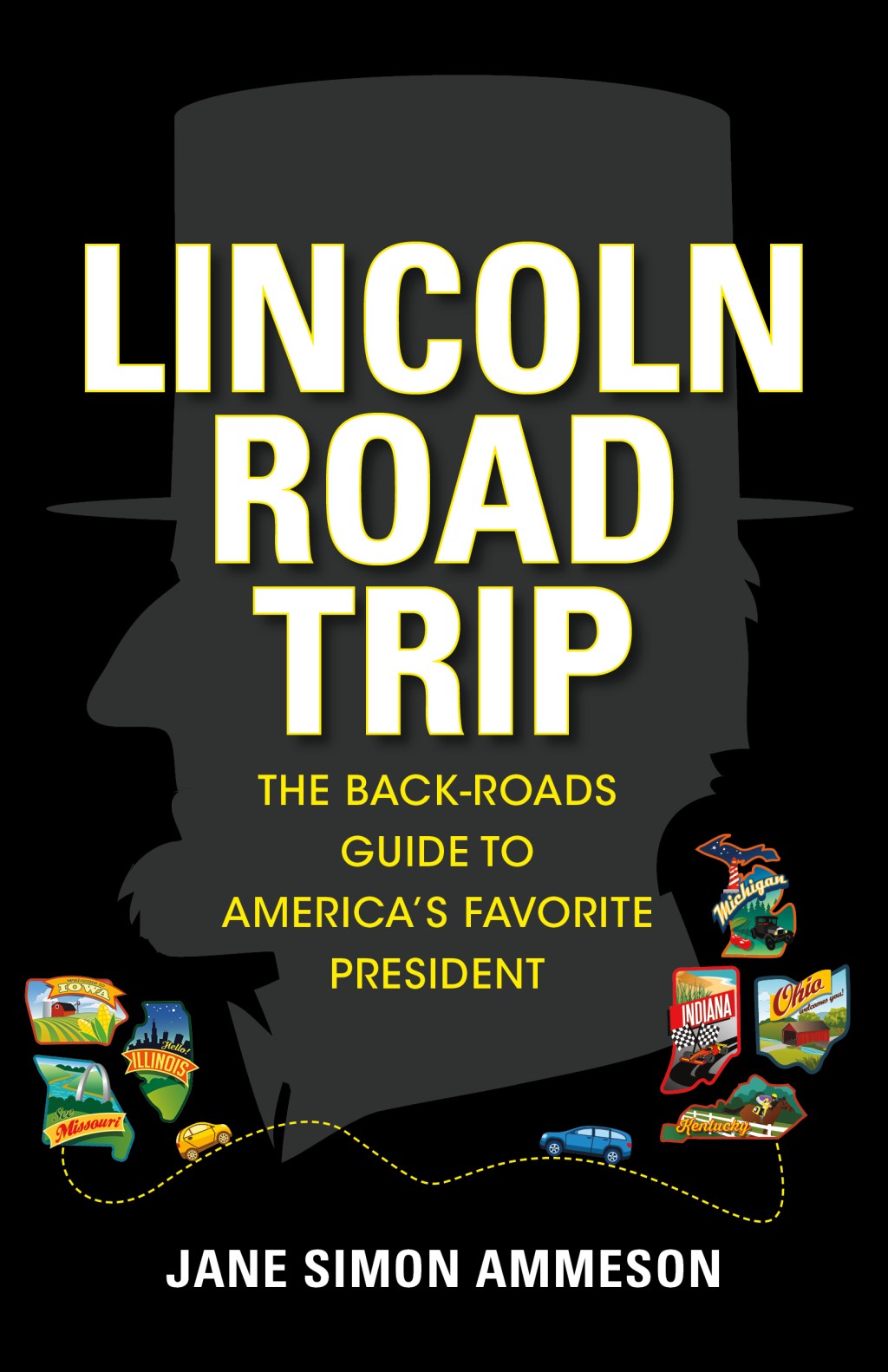
    I am proud to announce that my book, Lincoln Roadtrip: The Backroads Guide to America’s Favorite President, published by Indiana University Press, is a winner in the 2019-20 Lowell Thomas Travel Journalism Competition, taking the bronze in the Travel Book category. The annual competition is sponsored by the Society of American Travel Writers Foundation.

    The Old Talbott Inn in Bardstown, Kentucky looks much like it did in Lincoln’s day.

    Winners of the awards, the most prestigious in the field of travel journalism, were announced October 16, 2020, at the annual conference of SATW, the premier professional organization of travel journalists and communicators. This year’s gathering was a virtual event.

    Buxton Inn in Granville, Ohio

    The competition drew 1,299 entries and was judged by faculty at the University of Missouri School of Journalism. This year, the SATW Foundation presented 99 awards in 26 categories and more than $21,000 in prize money to journalists. The awards are named for Lowell Thomas, acclaimed broadcast journalist, prolific author and world explorer during five decades in journalism.

    Lincoln Boyhood National Memorial replica of the Lincoln Homestead when the Lincoln family lived here in the early 1800s.

    In honoring my work, the judges said: The concept of this book is straightforward, “historical travel” with a focus on perhaps the most beloved President in the history of the United States of America. But a straightforward concept does not automatically signify a simple task. Author Ammeson completed massive research about Lincoln’s life before his ascension to fame. The photographs enhance the words nicely. Another attractive enhancement: offering current-day sites unrelated to Lincoln that provide entertainment along the route of the dedicated Lincoln traveler.”

    The Home of Colonel Jones who knew that young Lincoln would accomplish much in this world.

    I wanted to create a fun and entertaining travel book, one that includes the stories behind the quintessential Lincoln sites, while also taking readers off the beaten path to fascinating and lesser-known historical places. Visit the Log Inn in Warrenton, Indiana (now the oldest restaurant in the state), where Lincoln dined in 1844 while waiting for a stagecoach, stop by the old mill in Jasper, Indiana where Lincoln and his father took their grain to be milled (and learn of the salacious rumor about Lincoln’s birth–one of many) and spend the night at the Golden Lamb in Lebanon, Ohio, a gorgeous inn now over 200 years old.

    The Golden Lamb, Lebanon, Ohio

    Connect to places in Lincoln’s life that helped define the man he became, like the home of merchant Colonel Jones, who allowed a young Abe to read all his books, or Ashland, where Mary Todd Lincoln announced at age eight that she was going to marry a president someday and later, Lincoln most likely dined. Along with both famous and overlooked places with Lincoln connections, I also suggest nearby attractions to round out the trip, like Holiday World, a family-owned amusement park that goes well with a trip to the Lincoln Boyhood National Memorial and Lincoln State Park.

    The Kintner House, a bed and breakfast in charming Corydon, Indiana. Lincoln never stopped here but his brother Josiah who settled nearby did when it was a tavern and inn. Confederate General John Hunt Morgan took over the inn for a short period of time after crossing the Ohio River with his soldiers in what was the only Civil War battle fought in Indiana.

    Featuring new and exciting Lincoln tales from Springfield, Illinois; the Old Talbott Tavern in Bardstown, Kentucky; the Buxton Inn, Granville, Ohio; Alton, Illinois; and many more, I wrote Lincoln Road Trip  hoping that it will be a fun adventure through America’s heartland, one that will bring Lincoln’s incredible story to life.

    Ashland, the home of Henry Clay in Lexington, Kentucky.

    For more information about the awards, including a full list of winners and judges’ comments, and SATW, visit www.satwf.com and www.satw.org

    Graue Mill, a stop on the Underground Railroad. Lincoln stopped by here to meet with the owner on his way to nearby Chicago.

    To order a copy of Lincoln Road Trips, click here.

  • The Nesting

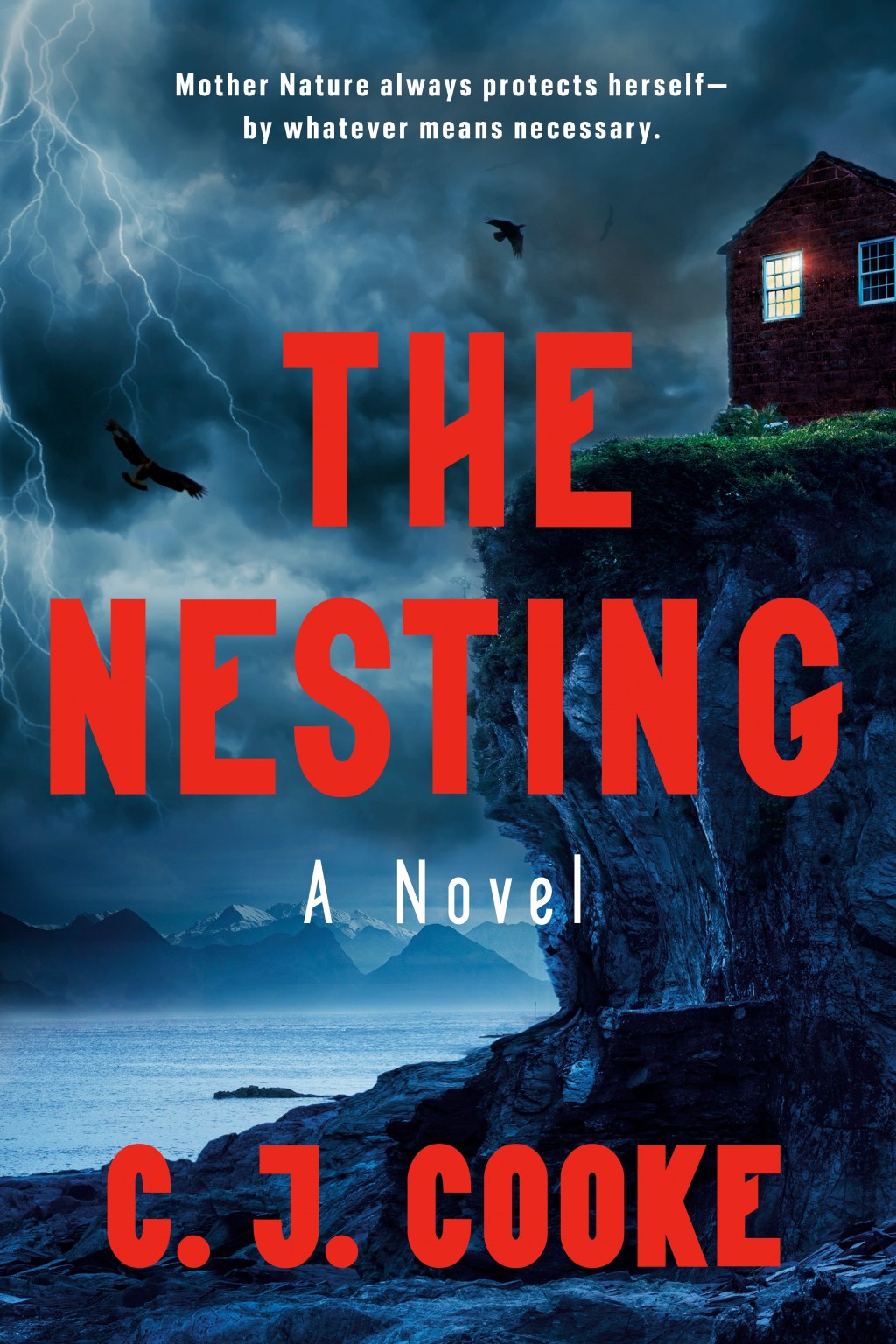
    The Nesting

    No one ever listens to me. When I tell the heroine of a spooky movie not to open the cellar door, or a character in a book to avoid the shortcut through the forest, they always do so anyway.

    And so it is in “The Nesting,” by C. J. Cooke, when Lexi Ellis, after losing her job, her boyfriend, and her home, applies for a position to nanny two young girls. Don’t take that job, I try to tell Lexi.

    Why not, you might ask? After all, a job is a good thing and her employer, a noted architect, is building the show-stopping, eco-sensitive home where they’ll be living.

    The negatives, it turns out, are numerous. Lexi is an emotional wreck, having just attempted suicide, the home is in a different country — Norway — so she is far away from those she knows, and even more, it’s totally isolated.

    Oh, and did I mention that Aurelia, the girls’ mother, committed suicide on the property not long ago and that Lexi is pretending to be Sophie Hallerton, the woman who initially applied for the job?

    It doesn’t get better. The young girls are overly energetic, leaving Sophie/Lexi exhausted by the end of the day, and the beauty of their location fades as a sense of eeriness seems to overtake the house as odd things begin happening.

    Cooke, an award-winning poet whose books have been published in 23 languages, also writes scholarly pieces on creative writing interventions for mental health. That fits Lexi, who before moving to Norway found that writing helped her cope with all her troubles.

  • Indiana Landmarks Rescued and Restored

    Indiana Landmarks Rescued and Restored

    The Restored Fowler Theatre


    Once a glorious example of Streamline-Moderne architecture and one of only five theaters in the U.S. to premiere “Gone with the Wind,” in 2001 the future of the 81-year-old Fowler Theatre was bleak. No longer open, its owner planned to sell anything architecturally significant including the original marquee.  To prevent this, the non-profit Preservation Guild was formed to save the theater, purchasing the theater for $30,000 and obtained a $2000 grant and a $60,000 line of credit from Indiana Historic Landmarks Foundation.

    The Fowler Theatre before restoration.

    Today, the Fowler Theatre is a marvel, one of many buildings throughout the state that dedicated citizens and the Foundation have worked together in order to preserve Indiana’s heritage and also benefit communities. In the case of the Fowler Theatre, it was a way to keep low cost entertainment available and to help revitalize the downtown.

    Vurpillatt’s Opera House in Winamac Restored

    The theatre is one of 50 success stories highlighted in the recently released Indiana “Landmarks Rescued & Restored,” a lovely coffee table book with before and after photos showcasing what historic preservation can accomplish.

    Vurpillatt’s Opera House in Winamac

    “I want the book to be an acknowledgement of the wonderful people and partnerships that have made Landmarks as effective as it is,” says Indiana Landmarks’ President, Marsh Davis who wrote the forward to the book. “When we take the approach of working together, then we become part of the solution.”

    DeRhodes House West Washington Historic District South Bend Restored

    One of Landmarks most well-known projects was the restoration of two grand early 20th century resorts, French Lick Springs and West Baden Springs in Orange County. Returning them to their glory has made the entire area boom economically by bringing in an influx of tourism, creating local jobs and improving property values and instilling a sense of pride and vitality.

    DeRhodes House West Washington Historic District South Bend

    Landmarks, largest statewide preservation group in the country, saves, restores, and protects places of architectural and historical significance, including barns, historic neighborhoods such as Lockerbie Square in Indianapolis, churches and other sacred places, schools, bridges and even the Michigan City Lighthouse Catwalk.

    Old Republic in New Carlisle Restored

    Rescued and Restored also highlights other successes in Northern Indiana including partnership with the National Trust for Historic Preservation and the National Park Service in the restoration of the House of Tomorrow in the Indiana Dunes National Park, considered one of the most innovative and influential houses in modern architectural design.

    Old Republic Before Restoration

    The book, edited by Tina Connor, who worked at Landmarks for 42 years, retiring from her position as the non-profit’s executive vice president in 2018, 144 pages with more than 200 color photos. Hon. Randall T. Shepard, honorary chairman and long-time director of Indiana Landmarks, wrote the book’s foreward.

    Statewide, Marsh says that he feels privileged knowing that Landmarks worked with the Lyles Station Historic Preservation Corporation to save Lyles Station Community School. Now a museum and the last surviving building of what was a successful African-American farming community founded by former slaves in 1849.

    “These places are all about the people who made them,” says Davis, “and the people who worked at saving them.”

    For more information, visit indianalandmarks.org

    As published in The Times of Northwest Indiana

  • Honoring Chicago’s South Side Architecture
    Honoring Chicago’s South Side Architecture

    Foster House & Stable home designed by Frank Lloyd Wright located in the West Pullman area.

    World famous for its architecture, Chicago boasts works by such greats ranging from the Frank Lloyd Wright to William LeBaron Jenney, designer of the world’s first skyscraper. No other city in the world has more Ludwig Mies van der Rohe buildings than Chicago. Yet for many, the largest landmass in the city is like an uncharted territory when it comes to outstanding architectural design.

     “60% of Chicago is the South Side,” says noted photographer and journalist Lee Bey. “It’s geographic area that is twice the size of Brooklyn and the size of Philadelphia. But over the years it’s been ignored by many Chicagoans as well as the architectural press, architectural tours and lecturers.”

    Chicago Vocational High School at 2100 E. 87th Street—the largest Art Deco building that’s not a skyscraper in Chicago

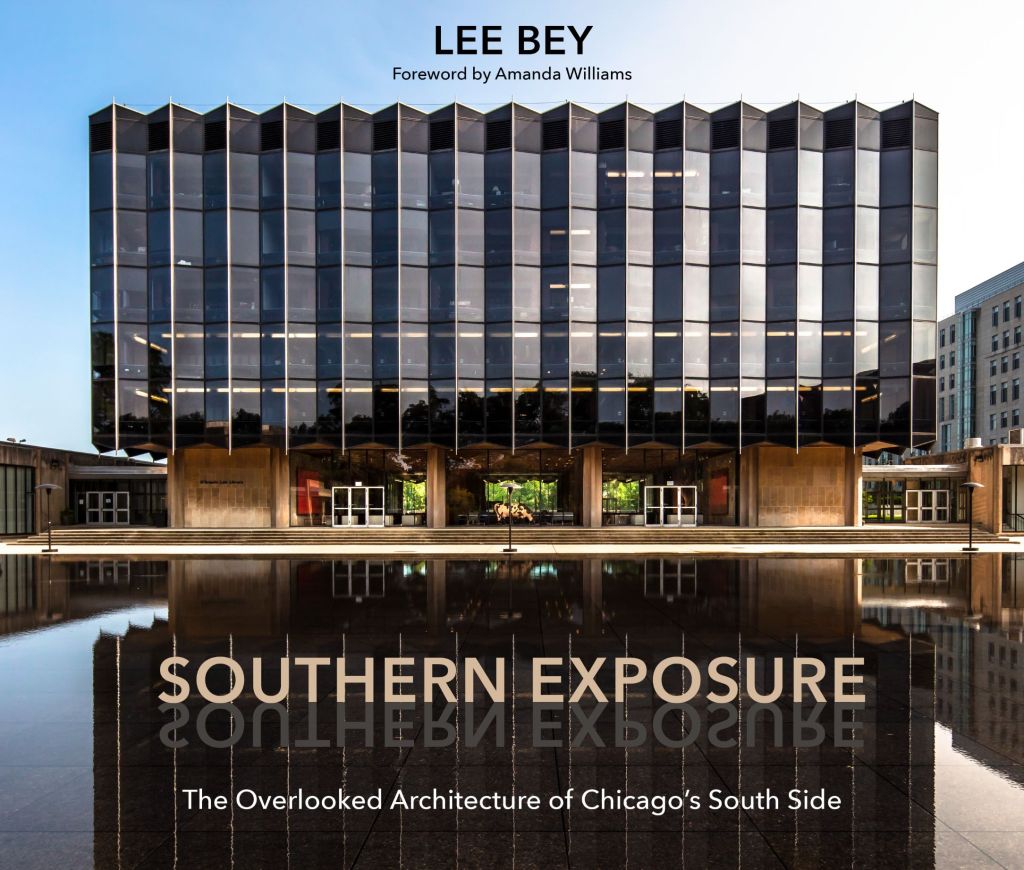
    Bey, who is considered an architectural expect, grew up on the South Side and has long appreciated the treasures found there.  He shares this passion in his recently releases book Southern Exposure: The Overlooked Architecture of Chicago’s South Side, which he describes as a wake-up call.

    Author and photographer Lee Bey

    “You can’t have anything that big and ignore it,” says Bey who is also a lecturer at the School of the Art Institute. “Chicago can’t be a world class city if they overlook the South Side and the West Side.”

    Because I grew up in Northwest Indiana, I am familiar with the South Side and some of its architectural marvels such as the sprawling Chicago Vocational High School at 2100 E. 87th Street—the largest Art Deco building that’s not a skyscraper in Chicago  and the Middle Eastern/Moorish/Persian-style building with a  towering minaret at 79th and Stony Island that’s on the right when turning on to Stony Island from the Chicago Skyway.

    But I didn’t know about The National Pythian Temple, The Overton Hygienic Building and The Chicago Bee Building or that there was a Frank Lloyd Wright home that was over a century old for sale in the West Pullman area. Known as the Foster House and Stable, it was designated a Chicago landmark in 1996 and can be had for around $200,000.

    “That house would sell for a lot more in other parts of Chicago,” says Bey, noting the home is in good condition.

    Even Bey sometimes comes across an unknown find.

    “I was caught by surprise when I saw Stony Island Church of Christ at1600 E. 84th,” he recalls. “It looked like it was designed by Ray Stuermer and I went home and looked it up and it was,” says Bey.

    While watching a documentary of Eero Saarinen and discovering they’d left out his buildings for the University of Chicago, Bey knew he had to rectify the neglect of architect on the South Side.

    “If they could leave out Eero, then something needed to be done,” he says, writing in his book that “for decades


    ” For decades, most of the buildings in that vast area have Bey writes.

    most of the buildings in that vast area have been flat-out ignored by the architectural press, architectural tours, and lectures — and many Chicagoans.”

    It’s a call to action, he says noting that Bowen High School would be a city landmark and on the National Register if it were located on the North Side. After all, the Carl Schurz High School on the Northside were built the same year and both were designed by the same architect, Dwight Perkins, chief architect of the Chicago Board of Education between 1906 and 1909. But Schurz has been a city landmark since 1978 and made the National Register of Historic Places in 2011. Bowen, located in a mostly black and Latino South Side community, has neither.

    “It’s astounding what’s there, he says. “There’s architecture on the South Side by architects that people would immediately recognize. People should care about them and get out and see them,”

    Ifyougo:

    What: Ley Bey talks and book signings.

    When & Where: Epstein Global is hosting Lee Bey on November 7th from 5:30 to 7:30 pm. Bey will be speaking in their offices, 600 West Fulton, Chicago, IL.

    Anyone interested in attending, please contact Noel Abbott at Epstein. (312) 429-8048; nabbott@epsteinglobal.com.

    When & Where: November 12 at 6:30 pm at the Evergreen Park Public Library, 9400 S. Troy, Evergreen Park, IL

    708-422-8522; evergreenparklibrary.librarymarket.com

  • 1000 Places to See Before You Die: The World As You’ve Never Seen It Before

    1000 Places to See Before You Die: The World As You’ve Never Seen It Before

    Patricia Schultz and I had only been on the phone together for five minutes before we decided to make the trip to New Zealand—neither of us had been and both of us wanted to go. And no, I haven’t bought my ticket yet but that’s how mesmerizing Schultz, who introduced the concept of bucket list travel when she wrote the first edition of her New York Times bestseller 1000 Places to See Before You Die in 2003. It was so popular that over the years more than 3.5 million copies have been sold.

    Now Schultz has updated her book with a new twist, her words accompanied by mesmerizing and amazing handpicked photos of some of the most beautiful places in world.  The book itself, weighing six pounds with 544 pages, is oversized eye candy—compelling us to pack our bags and head out to explore.

    1,000 Places to See Before You Die (Deluxe Edition): The World as You’ve Never Seen It Before was years in the making—after all Schultz had to travel to all those places.

    Calling her new book, a veritable scrapbook of her life, she says she became teary eyed when choosing the photos. In its pages she takes us to destinations so exotic many might have remained unknown to most of us if not for her writing. One such is Masai Mara, the world’s greatest animal migration that takes place each May when hundreds of thousands of wildebeests travel north from the Serengeti in Tanzania to the grasslands of Kenya’s Masai Mara. It’s a two to three month journey and the wildebeests are joining by other migrating herds including antelope, zebras and gazelles swelling the animal population to a million or so. There’s also ballooning over Cappadocia, a Byzantine wonderland encompassing a natural and seemingly endless landscape of caves and peaks of shaped by eons of weather with wonderfully colored striations of stone. Even better, Schultz points out, you can take a side trip to Kaymakli, an ancient underground city just 12 miles away.

    For those less inclined for such travels or whose pocketbooks don’t open that large, Schultz features closer to home destinations that are still special such as Mackinac Island where cars were banned in the mid-1890s, New York City (where Schultz resides when not on the road) and one of my favorites, Stowe, Vermont. And, of course, the majestic Grand Canyon.

    While Schultz’s parents weren’t world travelers, they encouraged her to find her way to what she loved. But for her, it’s not just the road, it’s the people she meets as well. When the first editor of her book proved so successful, she treated herself to a trip to Machu Picchu in the Urubamba Valley of the Cuzco Region of Peru often known as the Lost City of the Incas. Located 7800-feet above sea level, it’s isolated at the top of a mountain surrounded by jungles and other peaks. There she met a 90-year-old woman who had been inspired by her book to travel there.

    “She asked me if I had heard of the book,” says Schultz. “Peru was the first stamp in her first passport.”

    This venturesome woman who had traveled outside the U.S. for the first time in her ninth decade, offered the seasoned travel writer a pearl of wisdom that has remained with her for the last16 years.

     “She told me to make sure to see the difficult places first,” recalls Schultz. “You can see the easy ones when you’re not as active or energetic.”

              Is Schultz burned out by travel? Has she reached the point of been-there-done-that?

              Schultz answers with an emphatic no.

    “There are still so many places I want to visit,” she says, noting that her list remains long. “I doubt if I’ll get to do them all, but I will try to do as many as I can.”

    Ifyougo:

    What: Authors Group Presents Patricia Schultz, 1000 Places to See Before You Die; Luncheon

    When: Tue, Oct 29, 2019 from 11:30 a.m.-1:30 p.m.

    Where: Union League Club of Chicago, 65 W. Jackson Blvd., Chicago, IL

    Cost: $35 per ticket

    FYI: 312-427-7800; ulcc.org

    What: Cocktails with Patricia Schultz & Lake Forest Bookstore

    When:  Tue., Oct. 29. 6 p.m.

    Where: North Shore Distillery, 13990 Rockland Rd, Libertyville, IL

    Cost: $65 for individual or $75 per couple (includes 1 book, 1 drink and appetizers)

    FYI: RSVP required. Call 847-234-4420; lakeforestbookstore.com

    What:

    When’ Wed. Oct 30 at 7 p.m.

    Where: Anderson’s Bookshop La Grange, 26 S La Grange Rd, La Grange, IL

    Cost: This event is free and open to the public. To join the signing line, please purchase the author’s latest book, 1,000 Places to See Before You Die Deluxe Edition, from Anderson’s Bookshop. To purchase please stop into or call Anderson’s Bookshop La Grange (708) 582-6353 or order online andersonsbookshop.com

    FYI: 708-582-6353

  • Art Deco Chicago: Designing Modern America
    Art Deco Chicago: Designing Modern America


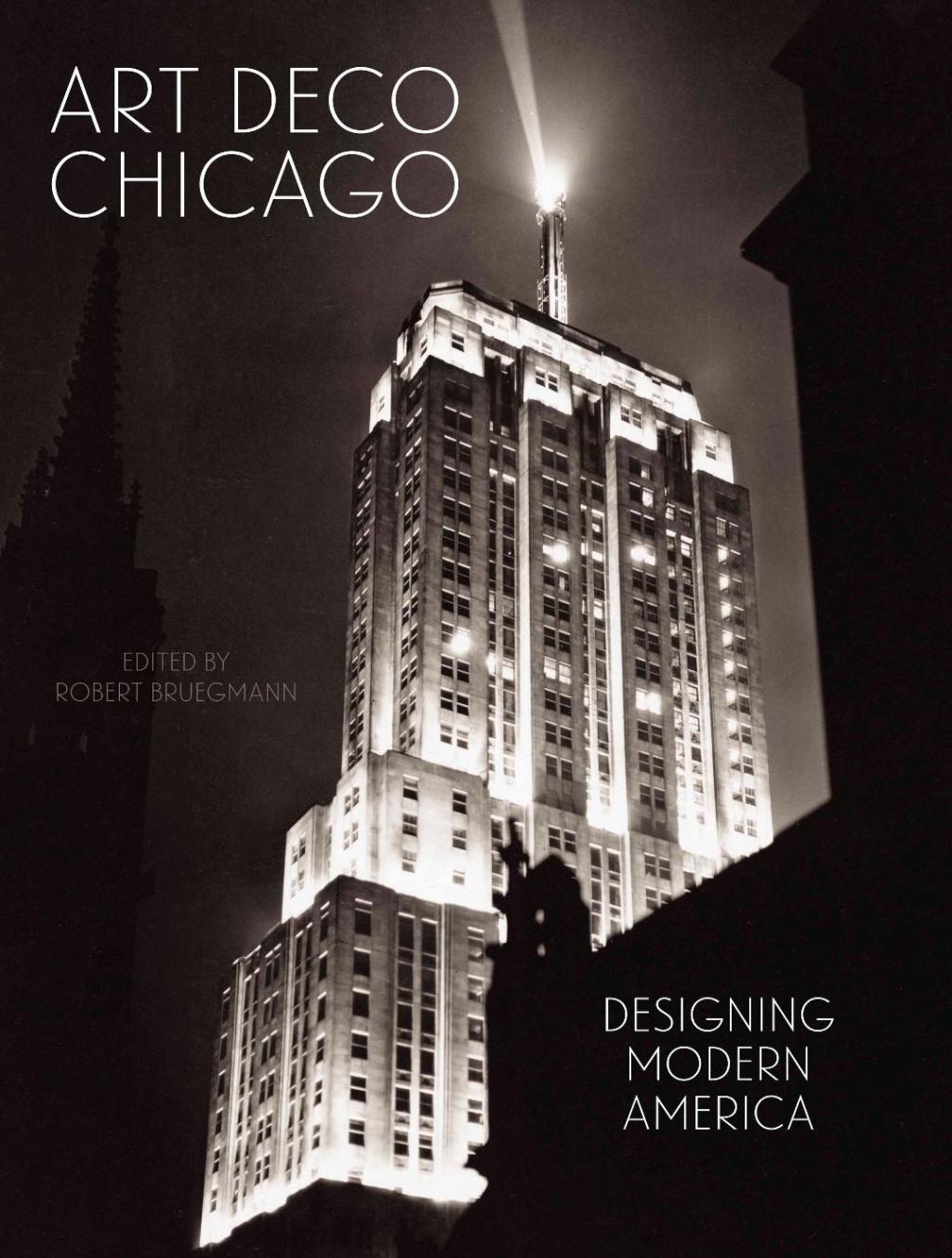
    sleek and glorious as any Art Deco masterpiece whether it be the grand Palmolive Building built in 1922 or the much lowlier but still spectacular Bell telephone Model 302 designed not by a noted artist or architect but instead by George Lum, a Bell Labs engineer in 1937,  Art Deco Chicago: Designing Modern America (Yale Press 2018; $47.75 on Amazon) showcases 101 key works coupled with more than 300 photos as well as critical essays and extensive research. Altogether, they comprise a wonderful, extensively curated and chronologically organized tome about the many facets–architecture, advertising, household objects, clothing, and food design–of a style that has fascinated so many of us for more than a century.

    Robert Bruegmann, a distinguished professor emeritus of architecture, art history, and urban planning at the University of Illinois at Chicago, was first asked to write the introduction to the book

    thought I’d knock it out in a week,” says Bruegmann, a historian of architecture, landscape and the built environment.

    That was back in 2011 and Bruegmann, author of several other books including The Architects and the City: Holabird & Roche of Chicago, 1880-1918 (Chicago Architecture and Urbanism), quickly realized that it would take much more than that. He ended up editing and shaping this complex book, a task which included overseeing 40 writers and researchers, helping to find and collect photos and defining Art Deco and its impact on the city through design. He would spend the next five years, working 50 to 60 hours a week to do so.

    One of the first questions we asked is how do we define Art Deco recalls Bruegmann.

    “Should it be narrowly like the French-inspired luxury goods, which is the narrowest to the big tent which we ended up doing,” he says noting that many products (think as blasé as refrigerators, bicycles, radios and mixmasters) created in Chicago by companies like Motorola, Sunbeam and Schwinn, changed the world in a way that other forms of Art Deco didn’t.

    It many come as a surprise that the term Art Deco wasn’t invented until the 1960s and came about because of its association with the Decorative Arts Fair Exposition of 1925 in Paris. But in Chicago, Art Deco, even before it was so named, was often about both beauty and usefulness.

    “If I had to pick a single object to suggest what we tried to do in Art Deco Chicago, I would probably choose the Craftsman brand portable air compressor sold by Sears starting in 1939,” says Bruegmann about the cast iron aluminum machine which used, as described in the book, “a series of cooling fins that functioned as a heat sink while adding a streamlined visual flair to the product…This product alluded to themes of speed, transportation, and movement while remaining stationary.”

    “It was related to the avant garde work of the Bauhaus who thought they were going to save the world through their designs,” says Bruegmann. “But they were too expensive. But Sears on the other hand made things affordable.”

    Indeed, Bruegmann says that companies like Sears and Montgomery Ward did change the world.

    “Up until the Sears catalogue, a lot of clothes outside of big cities, were handmade,” says Bruegmann. “Because Sears sold so many outfits through their catalogue, they could afford to send their designers to Paris to study the latest design and then come back and change them so they were less expensive, creating one of the most important social and political movements by making  designs for the masses. For a $1.99 a woman working in a packing plant or a farmer’s wife could wear a knockoff of a Paris dress.

    Art Deco Chicago serves as the companion publication to the exhibition “Modern by Design: Chicago Streamlines America” organized by the Chicago History Museum, which runs October 27, 2018–December 2, 2019. Proceeds from sales of and donations to Art Deco Chicago, which explores and celebrates Chicago’s pivotal role in the development of modern American design, will be used to support ongoing public education, research, and preservation advocacy of this critical period of modern American design.

    Ifyougo:

    What: Newberry Library presents Meet the Author: Robert Bruegmann, Art Deco Chicago

    When: Thursday, November 29 from  to 7:30 p.m.

    Where: Newberry Library, 60 West Walton Street, Chicago, IL

    Cost: Free and open to the public

    FYI: 312-943-9090; newberry.org

    8/18/06 University Scholar- Robert Bruegmann
  • Paris in Stride: An Insider’s Walking Guide
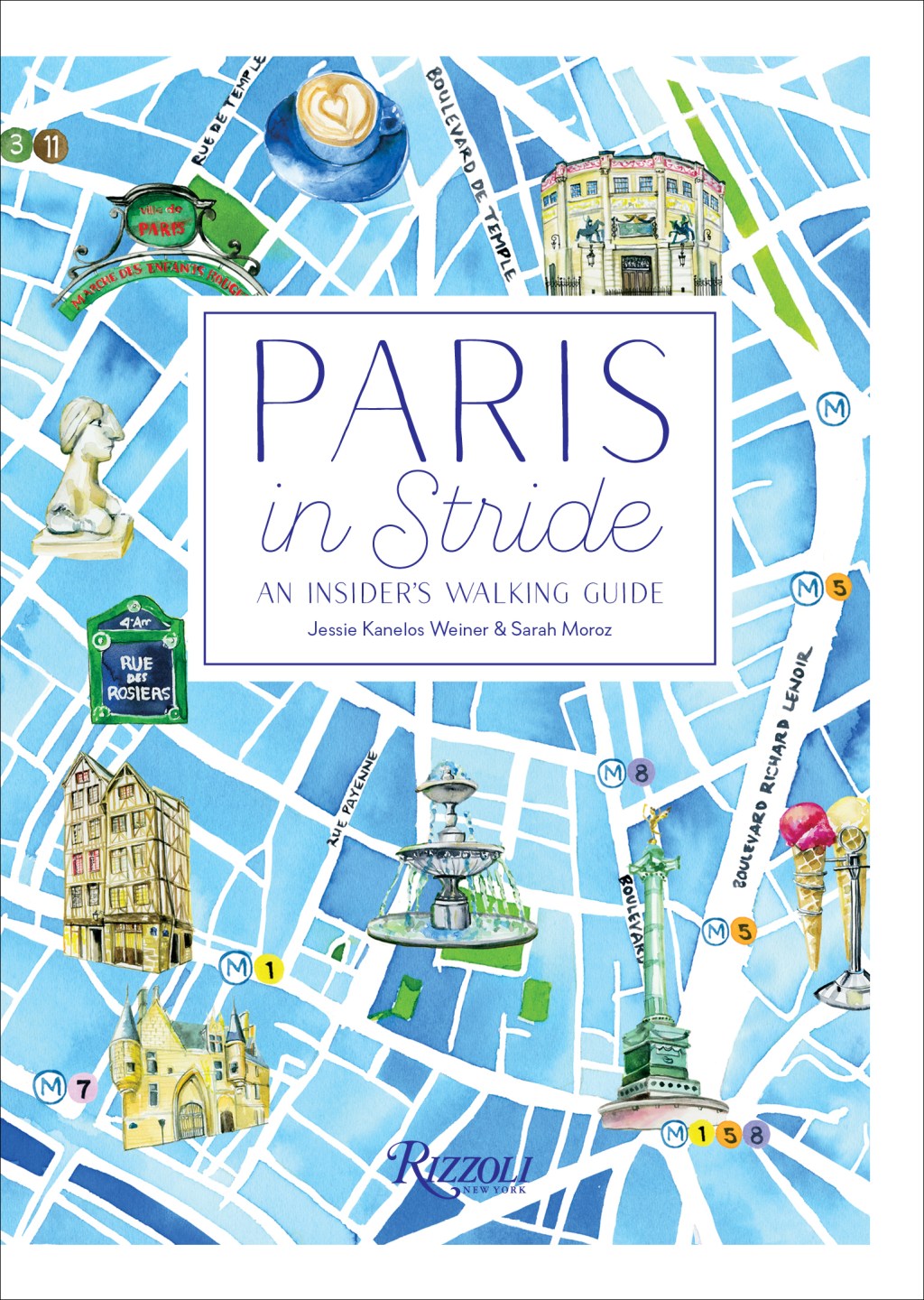
    Paris in Stride: An Insider’s Walking Guide


    ParisInStride_p67
    All illustrations © Jessie Kanelos Weiner

    Imagine strolling through Paris with a friend, one who knows the greatest little patisseries, cafes, outdoor markets and shops tucked along winding cobbled streets. Together the two of us try on amazingly chic designer dresses at La boutique Didier Ludot and amble through the courtyard gardens and gaze at the Swedish art work at Institut Suedois located in the Hôtel de Marle, a 16th century mansion in the heart of the central Marais district. We order small plates of fantastic food amidst 19th century murals of clowns at the appropriately named Clown Bar, considered one of the city’s finest restaurants. After stopping to admire the Eiffel Tower, we trek even more before stopping to reward ourselves with ice cream at Berthillon Glacier. We are, definitely, Parisian insiders.

    17. Clown bar

    Wait—don’t have a friend in Paris? Don’t even have tickets or plans to go sometime soon? Well, Rick of Casablanca told Else they’d always have Paris and for the rest of us, before we get there, we’ll have the recently released Paris in Stride: An Insider’s Walking Guide (Rizzoli 2018; $27.50), co-authored by Jessie Kanelos Weiner, a Chicago gal who grew up on the Northside and Sarah Moroz both of whom have lived in Paris for the last decade. Charmingly illustrated with over 150 of Weiner’s delicate watercolors, the book curates walking itineraries the authors put together to go beyond the typical guidebooks.

    “We wanted to put together walking tours of a timeless Paris, the type of Paris that will always be the same,” says Weiner who will be back in Chicago on April 6 & 7 for book events. “We wanted something that wasn’t too text heavy, a book that was a jumping off point to see what you want to see, one that wasn’t prescriptive but takes you down the side streets.”

    Paris is Weiner’s passion and wandering its streets is what she loves to do. ParisinStride_p134-135

    “It’s a city based on pleasure,” she says, “and one with many beguiling things along the way.”

    Ifyougo:

    What: Jessie Kanelos Weiner will talk about her book and teach a water color class during the conversation at Read It & Eat, 2142 North Halsted Street, Chicago, IL, Friday April 6 @ 6:30. Wine and a cheese will be available during the event, as well. (773) 661-6158; readitandeatstore.com

    On Saturday, April 7 from 3:00pm – 4:30pm, Weiner will be in conversation with photographer Rebecca Plotnick talking about Paris and her book at 57th Street Books, 1301 E 57th St., Chicago, IL.  (773) 684-1300; 57th.semcoop.com

    ParisInStride_p132-133

  • Chicago’s Fabulous Fountains by Greg Borzo with photos by Julia Thiel

    Hiding in plain sight, Chicago’s many fountains are gems of art, history, politics and culture, their stories often overlooked.

    Sure we all know Buckingham Fountain and the Crown Fountain in Millennial Park. But what about the Nelson Algren Fountain at Division Street and Ashland and Milwaukee avenues which was opposed by the Polish community and many residents near the Polonia Triangle because he wrote about life there with a brutal honesty? Or the Drexel Boulevard Fountain, originally named the Thomas Dorsey Fountain, after the South Side musician considered to be the father of gospel music which is bookend by the newly restored Drexel Fountain?

    I thought not. But then neither did I until I chatted with Greg Borzo about his newest book, Chicago’s Fabulous Fountains (Southern Illinois University Press 2017; $39.95) with photos by Julia Thiel.

    A news officer covering science at the University of Chicago, Borzo also volunteers to give tours of the “L” and often was asked about the fountains they passed on the route.

    “I realized that people knew about the Chicago Fire and World’s Columbian Exposition which was held in Chicago in 1893 but they didn’t know anything about Chicago’s fountains,” says Borzo.

    And so, because Borzo likes to chronicle the city’s intriguing icons and is the author of The Chicago “L,” and Chicago Cable Cars, he began extensively researching Chicago’s fountains, past and present. In the process he inspired his friends, who he dubbed “fountain finders,” to join in the search.

    “They got a fountain buzz going and they’d say there’s one at such and such” says Borzo. “As I found out about fountains, I began to realize it’s about the artists, the ethnic groups, the politics—it’s so much more than just a pretty fountain.”

    Immersed in fountain lore, Borzo connects the historic dots—or should we say splashes of water.

    “People are very interested in the 1893 Fair and what I found is there are four fountains directly related to the fair—which were built for the fair or part of the fair,” he says. “The Rosenberg Fountain on Michigan Avenue and 11th Street was built in time for the Fair but was built near the Illinois Central Station that used to stand at 11th and Roosevelt for people getting off the train could get a drink.”

    The fountain was a gift to the city by Joseph Rosenberg, a former paperboy who used to get thirsty while his rou

    te. To prevent that happening to others, the fountain had metal drinking cans attached by a chain–doesn’t sound very sanitary, does it?

    The Women’s Christian Temperance Union was also worried about thirsty people and wanted to provide water instead of stopping at a bar for a whiskey.

    “Fountain Girl was located at the fair and people could take one of the tin cups chained to the fountain to get a drink,” says Borzo. “After the Fair, they moved Fountain Girl to the Women’s Christian Temperance Union skyscraper in the downtown and when that got torn down the fountain was moved again to Lincoln Park. The city didn’t ban shared drinking cups until 1911. The Illinois Humane Society had about 60 fountains with shared cups, two still at Chicago and Michigan. Now they’re cute fountains but instead of the cups they have troughs for water for carriage horses.”

    Which brings up another point. While I always assumed that once it was built, a fountain stayed in one place. But that’s not necessarily so. According to Borzo, fountains were moved quite frequently.


    Researching the 125 existing outdoor fountains in the city wasn’t easy.

    “There’s no record of many of them,” he says, noting there are records of “lost” fountains that no longer exist. Others are slipping away.

    “Laredo Taft, great sculpture artist, made two of the greatest fountains—the Neo-classical bronze Fountain of the Great Lakes right next to the Art Institute which shows five maidens each holding a shell with the water pouring from one shell to the next—it’s elegant, beautiful and large,” says Borzo. “He had another one that was a failure called the Fountain of Time. It’s made out of


    Does he have a favorite fountain?

    thin concrete and is wearing away and there’s no way to prevent that.”

    “My favorite is the one I’m spending time with at the moment,” he says but then relents. “There are six fountains at the base at the AON Center. The nice thing is you don’t haveto pay admission and at night they’re lit. It’s fountain heaven.”

    Ifyougo

    What: Greg Borzo book signing

    When & Where: Wednesday, June 14 at 6pm; Harold Washington Library, 400 S. State Street, Chicago IL. 312-747-4300