Category: American History

  • President Obama’s Annual List of Favorites

    “As 2020 comes to a close, I wanted to share my annual lists of favorites,” Barack Obama, the 42nd President of the United States, tweeted to his 127.5 million followers. “I’ll start by sharing my favorite books this year, deliberately omitting what I think is a pretty good book – A Promised Land – by a certain 44th president. I hope you enjoy reading these as much as I did.”

    Somehow, the President forgot to include adding one of my books to his list again. Well, there’s always next year.

    Jack by Marilynne Robinson

    Caste by Isabel Wilkerson

    Luster by Raven Leilani

    Sharks in the time of Saviors by Kawai Strong Washburn
    Twilight of Democracy by Anne Applebaum

    Homeland Elegies by Ayad Akhtar
    The Undocumented Americans by Karla Cornejo Villavicencio
    Long Bright River by Liz Moore
    Memorial Drive Natasha Trethewey
    Deacon King Kong by James McBride
    Missionaries by Phil Klay
    The Vanishing Half by Britt Bennett
    The Ministry for the Future by Kim Stanley Robinson
    The Glass House by Emily St. John Mandel
  • Lincoln Roadtrip: Following the backroads to find Abraham Lincoln
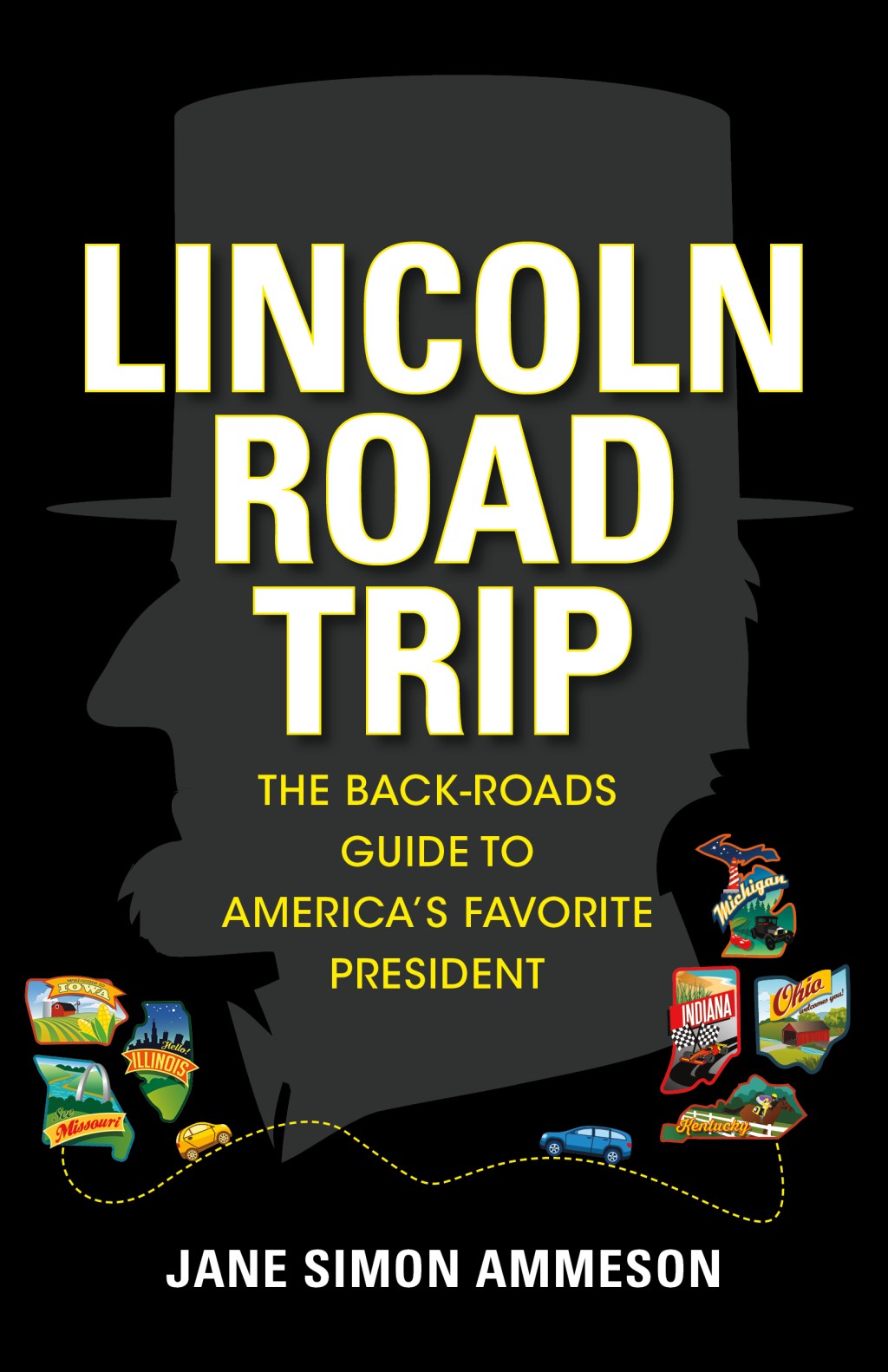
    Lincoln Roadtrip: Following the backroads to find Abraham Lincoln


    I am proud to announce that my book, Lincoln Roadtrip: The Backroads Guide to America’s Favorite President, published by Indiana University Press, is a winner in the 2019-20 Lowell Thomas Travel Journalism Competition, taking the bronze in the Travel Book category. The annual competition is sponsored by the Society of American Travel Writers Foundation.

    The Old Talbott Inn in Bardstown, Kentucky looks much like it did in Lincoln’s day.

    Winners of the awards, the most prestigious in the field of travel journalism, were announced October 16, 2020, at the annual conference of SATW, the premier professional organization of travel journalists and communicators. This year’s gathering was a virtual event.

    Buxton Inn in Granville, Ohio

    The competition drew 1,299 entries and was judged by faculty at the University of Missouri School of Journalism. This year, the SATW Foundation presented 99 awards in 26 categories and more than $21,000 in prize money to journalists. The awards are named for Lowell Thomas, acclaimed broadcast journalist, prolific author and world explorer during five decades in journalism.

    Lincoln Boyhood National Memorial replica of the Lincoln Homestead when the Lincoln family lived here in the early 1800s.

    In honoring my work, the judges said: The concept of this book is straightforward, “historical travel” with a focus on perhaps the most beloved President in the history of the United States of America. But a straightforward concept does not automatically signify a simple task. Author Ammeson completed massive research about Lincoln’s life before his ascension to fame. The photographs enhance the words nicely. Another attractive enhancement: offering current-day sites unrelated to Lincoln that provide entertainment along the route of the dedicated Lincoln traveler.”

    The Home of Colonel Jones who knew that young Lincoln would accomplish much in this world.

    I wanted to create a fun and entertaining travel book, one that includes the stories behind the quintessential Lincoln sites, while also taking readers off the beaten path to fascinating and lesser-known historical places. Visit the Log Inn in Warrenton, Indiana (now the oldest restaurant in the state), where Lincoln dined in 1844 while waiting for a stagecoach, stop by the old mill in Jasper, Indiana where Lincoln and his father took their grain to be milled (and learn of the salacious rumor about Lincoln’s birth–one of many) and spend the night at the Golden Lamb in Lebanon, Ohio, a gorgeous inn now over 200 years old.

    The Golden Lamb, Lebanon, Ohio

    Connect to places in Lincoln’s life that helped define the man he became, like the home of merchant Colonel Jones, who allowed a young Abe to read all his books, or Ashland, where Mary Todd Lincoln announced at age eight that she was going to marry a president someday and later, Lincoln most likely dined. Along with both famous and overlooked places with Lincoln connections, I also suggest nearby attractions to round out the trip, like Holiday World, a family-owned amusement park that goes well with a trip to the Lincoln Boyhood National Memorial and Lincoln State Park.

    The Kintner House, a bed and breakfast in charming Corydon, Indiana. Lincoln never stopped here but his brother Josiah who settled nearby did when it was a tavern and inn. Confederate General John Hunt Morgan took over the inn for a short period of time after crossing the Ohio River with his soldiers in what was the only Civil War battle fought in Indiana.

    Featuring new and exciting Lincoln tales from Springfield, Illinois; the Old Talbott Tavern in Bardstown, Kentucky; the Buxton Inn, Granville, Ohio; Alton, Illinois; and many more, I wrote Lincoln Road Trip  hoping that it will be a fun adventure through America’s heartland, one that will bring Lincoln’s incredible story to life.

    Ashland, the home of Henry Clay in Lexington, Kentucky.

    For more information about the awards, including a full list of winners and judges’ comments, and SATW, visit www.satwf.com and www.satw.org

    Graue Mill, a stop on the Underground Railroad. Lincoln stopped by here to meet with the owner on his way to nearby Chicago.

    To order a copy of Lincoln Road Trips, click here.

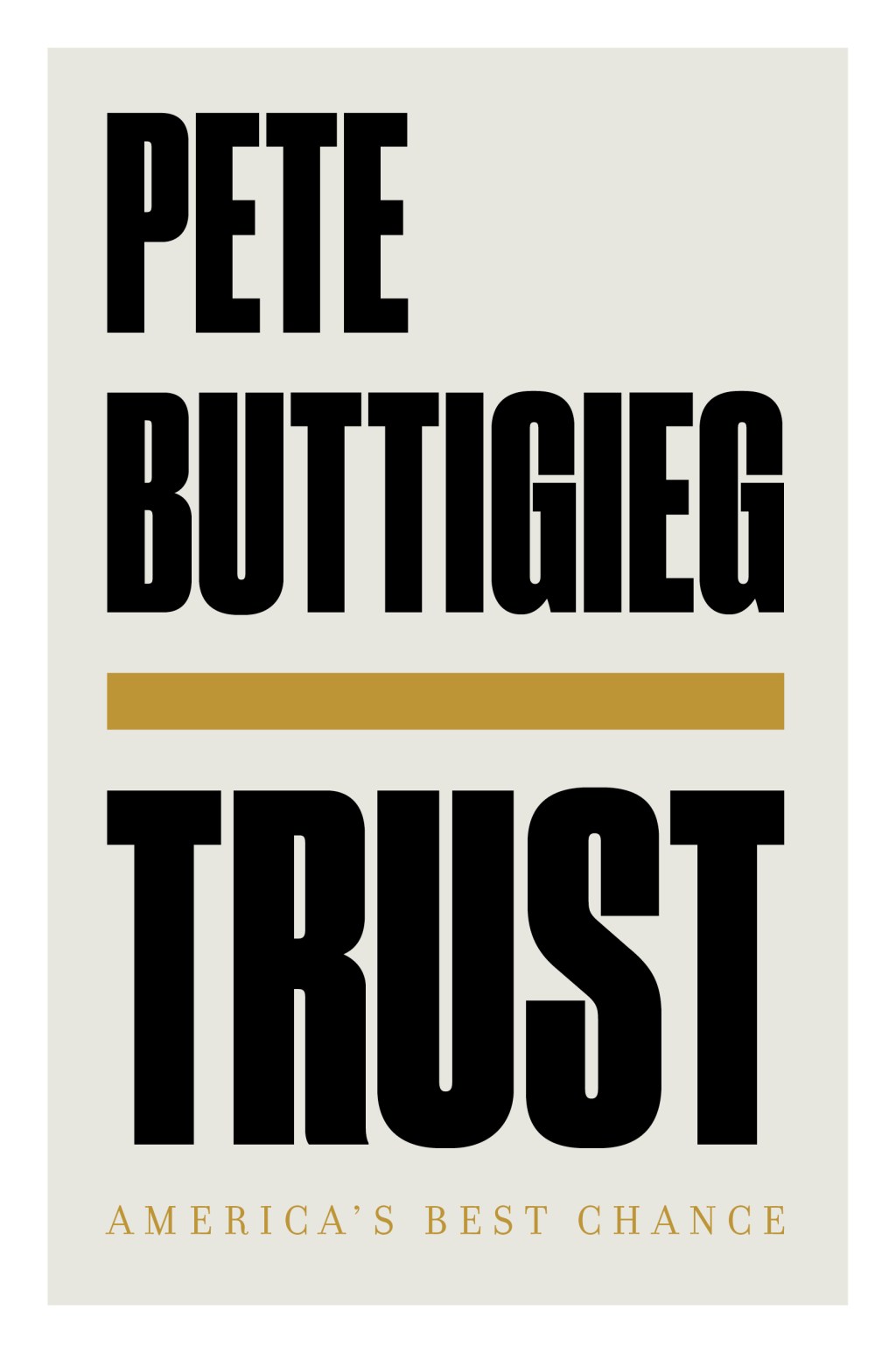
  • Trust: America’s Best Chance

    Trust: America’s Best Chance

    Pete Buttigieg

    If you’re wondering what Mayor Pete, aka Pete Buttigieg the former two term mayor of South Bend, Indiana has been doing since he dropped his bid for the 2020 Democratic presidential nomination in May, the answer is a lot. Since then, Buttigieg has accepted a position as a Faculty Fellow for the University of Notre Dame’s Institute for Advanced Studies (NDIAS) and launched “Win the Era,” a political action committee aimed at electing a new generation of leaders who bring new ideas and generational vision to down-ballot races.

    “We are calling out to a new generation,” he says.

    Buttigieg, who graduated magna cum laude from Harvard and then studied politics, philosophy, and economics at Oxford as a Rhodes Scholar, has also written his second book, the just released “Trust: America’s Best Chance “(Liveright 2020; $23.95).

    “I believe our country faces a three-fold crisis in trust,” says Buttigieg, listing those as the lack of trust in America’s institutions and in each other as well as trust in America around the world. His belief in the need for a global renewal in trust ties in with his work at NDAIS. Besides teaching an interdisciplinary undergraduate course on the importance of trust as understood through different fields, he is working on two research projects–exploring how to restore trust in political institutions and another focusing on the forces distinctively shaping the 2020s.

    The book is another way of starting a conversation about trust and how we can, as he says, “move on from this pandemic, to deliver racial and economic justice, and how trust can be earned and how it can  restore America’s leadership role in this world.”

    Buttigieg believes that America offers a type of leadership that the world needs.

    “Not just any kind of American leadership,” he says. “But America at its best.”

    This previous was published in The Times of Northwest Indiana.

  • Indiana Landmarks Rescued and Restored

    Indiana Landmarks Rescued and Restored

    The Restored Fowler Theatre


    Once a glorious example of Streamline-Moderne architecture and one of only five theaters in the U.S. to premiere “Gone with the Wind,” in 2001 the future of the 81-year-old Fowler Theatre was bleak. No longer open, its owner planned to sell anything architecturally significant including the original marquee.  To prevent this, the non-profit Preservation Guild was formed to save the theater, purchasing the theater for $30,000 and obtained a $2000 grant and a $60,000 line of credit from Indiana Historic Landmarks Foundation.

    The Fowler Theatre before restoration.

    Today, the Fowler Theatre is a marvel, one of many buildings throughout the state that dedicated citizens and the Foundation have worked together in order to preserve Indiana’s heritage and also benefit communities. In the case of the Fowler Theatre, it was a way to keep low cost entertainment available and to help revitalize the downtown.

    Vurpillatt’s Opera House in Winamac Restored

    The theatre is one of 50 success stories highlighted in the recently released Indiana “Landmarks Rescued & Restored,” a lovely coffee table book with before and after photos showcasing what historic preservation can accomplish.

    Vurpillatt’s Opera House in Winamac

    “I want the book to be an acknowledgement of the wonderful people and partnerships that have made Landmarks as effective as it is,” says Indiana Landmarks’ President, Marsh Davis who wrote the forward to the book. “When we take the approach of working together, then we become part of the solution.”

    DeRhodes House West Washington Historic District South Bend Restored

    One of Landmarks most well-known projects was the restoration of two grand early 20th century resorts, French Lick Springs and West Baden Springs in Orange County. Returning them to their glory has made the entire area boom economically by bringing in an influx of tourism, creating local jobs and improving property values and instilling a sense of pride and vitality.

    DeRhodes House West Washington Historic District South Bend

    Landmarks, largest statewide preservation group in the country, saves, restores, and protects places of architectural and historical significance, including barns, historic neighborhoods such as Lockerbie Square in Indianapolis, churches and other sacred places, schools, bridges and even the Michigan City Lighthouse Catwalk.

    Old Republic in New Carlisle Restored

    Rescued and Restored also highlights other successes in Northern Indiana including partnership with the National Trust for Historic Preservation and the National Park Service in the restoration of the House of Tomorrow in the Indiana Dunes National Park, considered one of the most innovative and influential houses in modern architectural design.

    Old Republic Before Restoration

    The book, edited by Tina Connor, who worked at Landmarks for 42 years, retiring from her position as the non-profit’s executive vice president in 2018, 144 pages with more than 200 color photos. Hon. Randall T. Shepard, honorary chairman and long-time director of Indiana Landmarks, wrote the book’s foreward.

    Statewide, Marsh says that he feels privileged knowing that Landmarks worked with the Lyles Station Historic Preservation Corporation to save Lyles Station Community School. Now a museum and the last surviving building of what was a successful African-American farming community founded by former slaves in 1849.

    “These places are all about the people who made them,” says Davis, “and the people who worked at saving them.”

    For more information, visit indianalandmarks.org

    As published in The Times of Northwest Indiana

  • Lady Romeo: The Radical and Revolutionary Life of Charlotte Cushman, America’s First Celebrity

    Lady Romeo: The Radical and Revolutionary Life of Charlotte Cushman, America’s First Celebrity

    A force of nature in her time, stage actress Charlotte Cushman who played both male and
    female roles, was friends with Abraham Lincoln who admired her work. Indeed, she acted along side both Edwin and John Wilkes Booth and was said to have left a scar on the assassin’s neck that was later used to identify him as the president’s murderer.

    Tana Wojczuk by Beowulf Sheehan

    Cushman was 58-years-old when on November 7, 1874 she gave her last performance in front of
    thousands of fans in New York City. There should have been much to remember her by. She is Angel of Waters on top of Central Park’s Bethesda Fountain designed by her lover Emma Stebbins. This is no ordinary sculpture, Cushman soars above what is, at twenty-six feet high by ninety-six feet wide, one of New York’s largest fountains. But that was the kind of woman she was. She acted for more than 30 years traveling the world to appear on stage and it was publicly well-known that her lovers were female. Yet for some reason she slips from sight, almost lost to history until now, almost 160 years later, her vibrant life is captured in Tana Wojczuk’s new biography, Lady Romeo: The Radical and Revolutionary Life of Charlotte Cushman, America’s First Celebrity.

    Angel of Waters (Wikimedia Commons)

    Wojczuk, a senior nonfiction editor at Guernica who teaches writing at New York University, first
    became aware of Cushman when she was an aspiring actress, a passion she pursued starting at age
    thirteen, and continued through college.

    “Women often played men in the 18th and 19th centuries,” says Wojczuk who came across
    Cushman’s name while researching women who had played Hamlet. “Most cross-dressing onstage was for comic effect or to titillate men who liked to ogle a woman’s legs. But Charlotte was a convincing man onstage. When I found out that she had also been one of the most famous women in the world I wanted to know why, and, like in a detective novel, to account for her disappearance.”

    Charlotte Cushman. Wikimedia Commons

    Cushman aimed for realism so much so that, according to Wojczuk, she was a pioneer of
    method acting, visiting prostitutes in Five Points and exchanging clothes with them to prepare to
    play a prostitute.

    Reading fascinating books like this makes you wonder how many fascinating women—and
    men—have vanished into the mists of time. Why, I wonder? ojczuk has a surprising answer.

    “When she was at her height, American culture was remarkably diverse and experimental, still
    figuring out what it would become,” she says. “There were successful all-black theatres in New York, for example, before well-connected white theatre owners had them shut down. Charlotte’s masculinity was acceptable on-stage, when viewed as a performance, and it helped argue for all gender as performance. But by the time she died in 1876, the American centennial, the postwar culture had clamped down, strictly policing public morality. Even though Charlotte helped create American culture, her role became inconvenient. She was a dangerous influence to young women now clamoring to go to college, to work, to vote. Even on the day she died Victorian critics tried to write her out of history. For a long time, they were successful.”

  • The Splendid and the Vile. A Saga of Churchill, Family, and Defiance During the Blitz

    The Splendid and the Vile. A Saga of Churchill, Family, and Defiance During the Blitz

              When New York Times bestselling author Erik Larson (Devil in the White City; Dead Wake: The Last Crossing of the Lusitania) moved to New York five years ago, he had what he describes as a revelation. He had watched, horrified, as 911 unfolded on CNN.

    Author Erik Larson

              “But I wondered what was it like for people living in New York to have their city invaded and all the fear they must have felt,” he says. “Then I started thinking about the bombing of London by the Germans during World War II. It was 57 nights of consecutive bombings. 911 shook us all but how did Londoners cope, knowing that every night their city would be bombed—that every night, hundreds of German bombers were flying over with high-explosive bombs?”

              At first Larson thought he’d tell his story about an ordinary family living in London at the time.

              “Then I thought why not a quintessential London family—the Churchills,” he says. “So much as been written about him, but this gave me the lens through which to tell the story.”

              The result is The Splendid and the Vile. A Saga of Churchill, Family, and Defiance During the Blitz (Crown Publishing), Larson’s saga about how Churchill, as prime minister, kept the country strong and together through his wit, his ability to speak to everyday people and by his own determination during the time of the Blitz from May of 1940 through May of 1941.

              ” I think the things that surprised me the most was the fact that Churchill was a lot of fun,” says Larson.  “Even though his staff was really overworked, even though they knew Churchill was inconsiderate, but he worked just as hard or harder than anyone. They loved working with him, he was able to do that.”

              He also had some intriguing habits—his drinking and his long soaks in the bathtub, smoking cigars and having his secretary take dictation, getting out, naked and wet to answer the phone and then getting back into the tub.

              Churchill was also fearless and without vanity says Larson.

              It drove the Nazis crazy.

              Joseph Goebbels, the Reich Minister of Propaganda, cursed him, writing in his diary, “When will that creature Churchill finally surrender? England cannot hold out forever!”

              His speeches were so effective with the British that Goebbels was alarmed when he learned that Germans were listening to them as well and ordered them to stop, saying it was treachery.

              “Churchill would visit a city that had been bombed, and people would flock to him,” says Larson. “I have no question that these visits were absolutely important to helping Britain get through this period. He was often filmed doing so for newsreels, and it was reported by newspapers and radio. This was leadership by demonstration, by showing the world that he cared, and he was fearless.”

  • The Ghosts of Eden Park: The Bootleg King, the Women Who Pursued Him, and the Murder that Shocked Jazz-Age America

    The Ghosts of Eden Park: The Bootleg King, the Women Who Pursued Him, and the Murder that Shocked Jazz-Age America

              George Remus came to America as an impoverished German immigrant who continually re-invented himself, until he rose to the top, becoming the most successful bootlegger in this country’s history, owning 35 percent of all the liquor in the United States and earning the title as “King of Bootleggers.” But his story, as told by Karen Abbott in her new book, The Ghosts of Eden Park: The Bootleg King, the Women Who Pursued Him, and the Murder that Shocked Jazz-Age America, isn’t about machine guns and Al Capone-style executions.

    Remus, a teetotaler who spoke of himself in the third person, didn’t believe in violence to enforce his business. Instead, he was an oddball intellect and pharmacy school dropout who at 19 was peddling his self- branded patent medicines like Remus’s Nerve Tonic which contained, among other less toxic ingredients, henbane, a hallucinogenic plant. By age 24 he was a defense attorney practicing in Chicago. Married, he fell in love with Imogene Holmes, the woman who cleaned his office, offered to handle her divorce and set her up in apartment in Evanston. His wife didn’t like that one bit and filed again for divorce; their divorce settlement in 1919 was a lump sum of $50,000, $25 a week in alimony and $30,000 in trust for their daughter at a time when an average US worker made between $200 and $400 per year, an accountant about $2,000 per year, a dentist $2,500 per year and a veterinarian between $1,500 and $4,000.

              Seeing all the money being made in selling bootlegged booze, Remus decided to go big time and, spotting a loophole in Title II, Section 6 of the Volstead Act allowing buying and using liquor for medicinal purposes, he developed a master plan that included using his pharmacy license to acquire wholesale drug companies, purchasing distilleries and organizing a transportation company as well as bribing officials to look the other way. It worked fantastically until it didn’t.

    He was brought down by Mabel Walker Willebrandt, a pioneer prosecutor at a time when there were few women in the field and his own gold digging wife who fell in love with Franklin Dodge and divulged many of her husband’s secrets. Dodge, it turned out was Willebrandt’s best investigator, assigned to dig up dirt on Remus and so he did. But that, in ways, was just the beginning of the story.

              Abbott, the New York Times bestselling author of Sin in The Second City, American Rose and Liar Temptress Soldier Spy, named one of the best books of 2014 by Library Journal, the Christian Science Monitor, and Amazon, says she typically gets her story ideas when researching. But she discovered Remus when watching the HBO series, Boardwalk Empire.

              “Remus was a very minor figure on the show, and I wondered if he was a real person,” says Abbott, who also serves on the National Advisory Board for the Chicago Brewseum, the country’s first non-profit museum dedicated to telling the story of beer. “His real story was so much more fascinating and dramatic than the show involving a love triangle, betrayal, murder and a sensational trial. He was a brilliant strategist and I loved the way he spoke in the third person. My favorite is ‘Remus’s brain exploded.’”

              Abbott was also very intrigued by Imogene (“a classic villain”) and Mabel (“Inhumanely tough”).

              “You have this woman who could was allowed to vote for nine months—along with every other adult female in the country–when President Harding put her in office to be the assistant attorney general of the U.S. and had hearing problems and spent an hour each day styling her hair to hide her hearing aids, going up a brilliant attorney like Remus,” says Abbott, noting that her appointment had less to do with an advancement for women as her as her bosses, many of whom were being bribed by Remus, thinking she was fail. “And, of course, she had her own betrayal when she discovered that Dodge and Imogene were plotting to ruin Remus and take over his business.”

              Abbott who spent four months in the Yale University Law Library, researching including reading the 5000 page transcript of the trial, had 85,000 pages of notes when she was done, described her endeavor as “the most fun researching I’ve ever had.”

              Among her many discoveries was that Imogene and George, who lived life very large, had a gold piano in their home.

              “So did the Everleigh sisters,” she says about the two Chicago madams who she chronicled in her book Sin in the Second City. “Who have thought that I’d end up researching two books where people owned gold pianos.”

  • The Last Voyageurs: Retracing La Salle’s Journey Across America: Sixteen Teenagers on an Adventure of a Lifetime
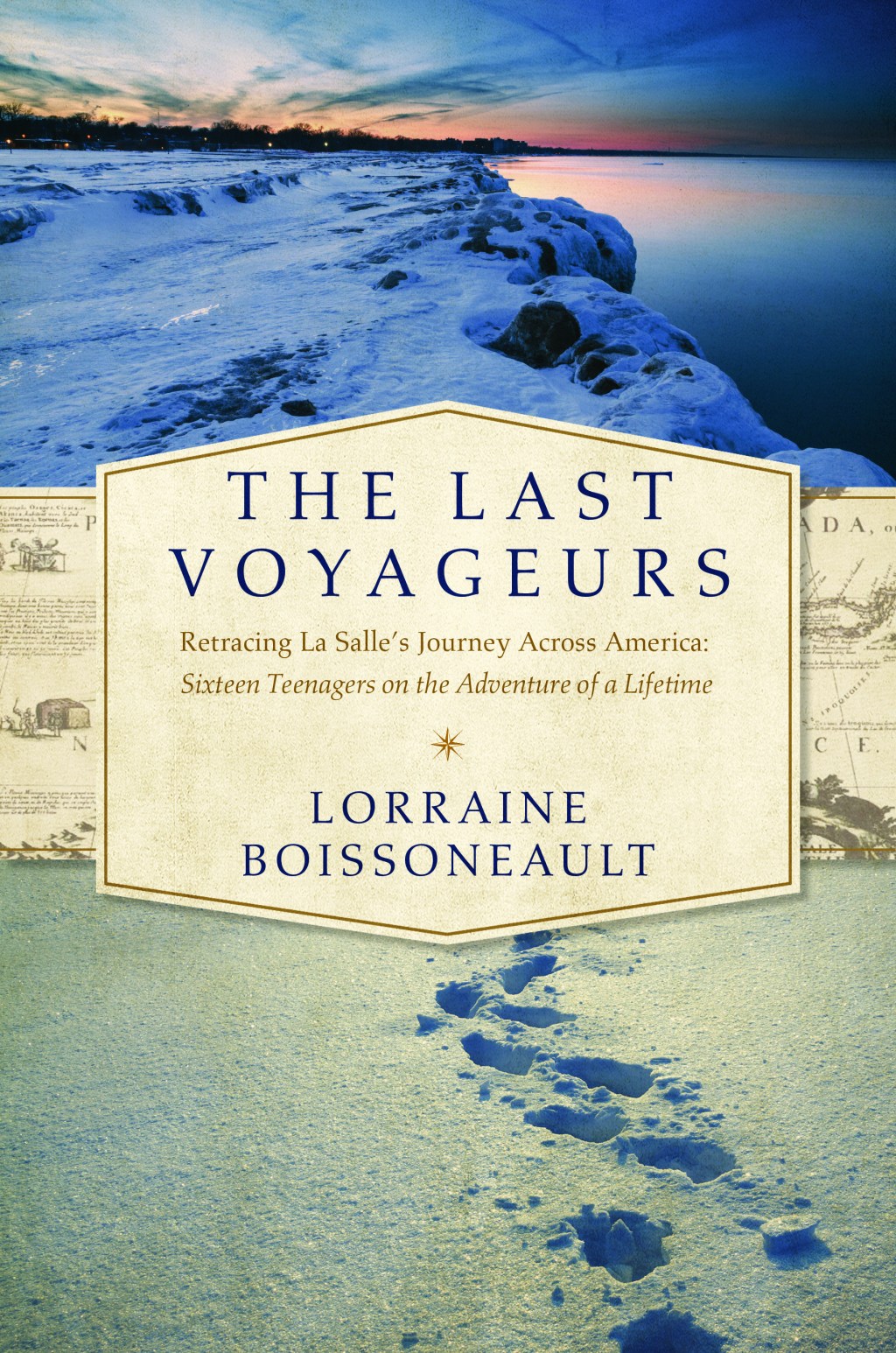
    The Last Voyageurs: Retracing La Salle’s Journey Across America: Sixteen Teenagers on an Adventure of a Lifetime

    In her last year of college, Lorraine Boissoneault, an avowed Francophile and writer who lives in Chicago, became interested in the French history of North America and the journey undertaken by René Robert Cavelier, Sieur de La Salle, the first European to travel from Montreal to the mouth of the Mississippi River.

    Her fascination with the great explorer led to a conversation with an underwater diver and thus to the story of La Salle’s Le Griffon (The Griffin), the first full-sized sailing ship on the upper Great Lakes which disappeared in 1679 with six crew members and a load of furs—also making it the first shipwreck in the Great Lakes. Luckily La Salle had disembarked before the ship made its final voyage. She also learned about a Reid Lewis, a French teacher who decided to re-enact La Salle’s trip, an eight-month, 3,300-mile expedition he undertook with 16 students and six teachers dressed in the period clothing from that time to celebrate the country’s Bicentennial.

    Interviewing the voyageurs as well as visiting places where La Salle had landed during the journey and reading original documents written in French (“nothing is ever quite the same in translation,” says Boissoneault), who wrote The Last Voyageurs: Retracing La Salle’s Journey Across America: Sixteen Teenagers on an Adventure of a Lifetime (Pegasus 2016; $27.95).

    “It’s amazing when you think of how much they could withstand,” she says, meaning both La Salle and Lewis’ crews.

    Indeed, Lewis and his group of students and educators had to trudge over 500 miles of Midwestern landscape during one of the coldest winters on record in the 20th century, paddle in Voyageur canoes across the storm tossed and freezing Great Lakes and, in keeping with their pledge to emulate La Salle, start their campfires with flint and wood.

    Of all the thousands of miles they retraced, Lewis’ voyageurs felt that Canada’s Georgian Bay on Lake Huron was most unchanged and therefore the closest they came to what La Salle would have experienced in terms of the water and landscape.     

    “We’re fascinated by history but you can’t go back no matter how hard you want to,” says Boissoneault noting she can’t imagine seeing Chicago without civilization as La Salle would have done. “The past is unobtainable. Most poignant for me is their walk across the Midwest. They were doing the same thing La Salle did and wearing the same clothes but nothing was like how it would have been in La Salle’s day.”

  • Brad Meltzer Book Signing: The First Conspiracy
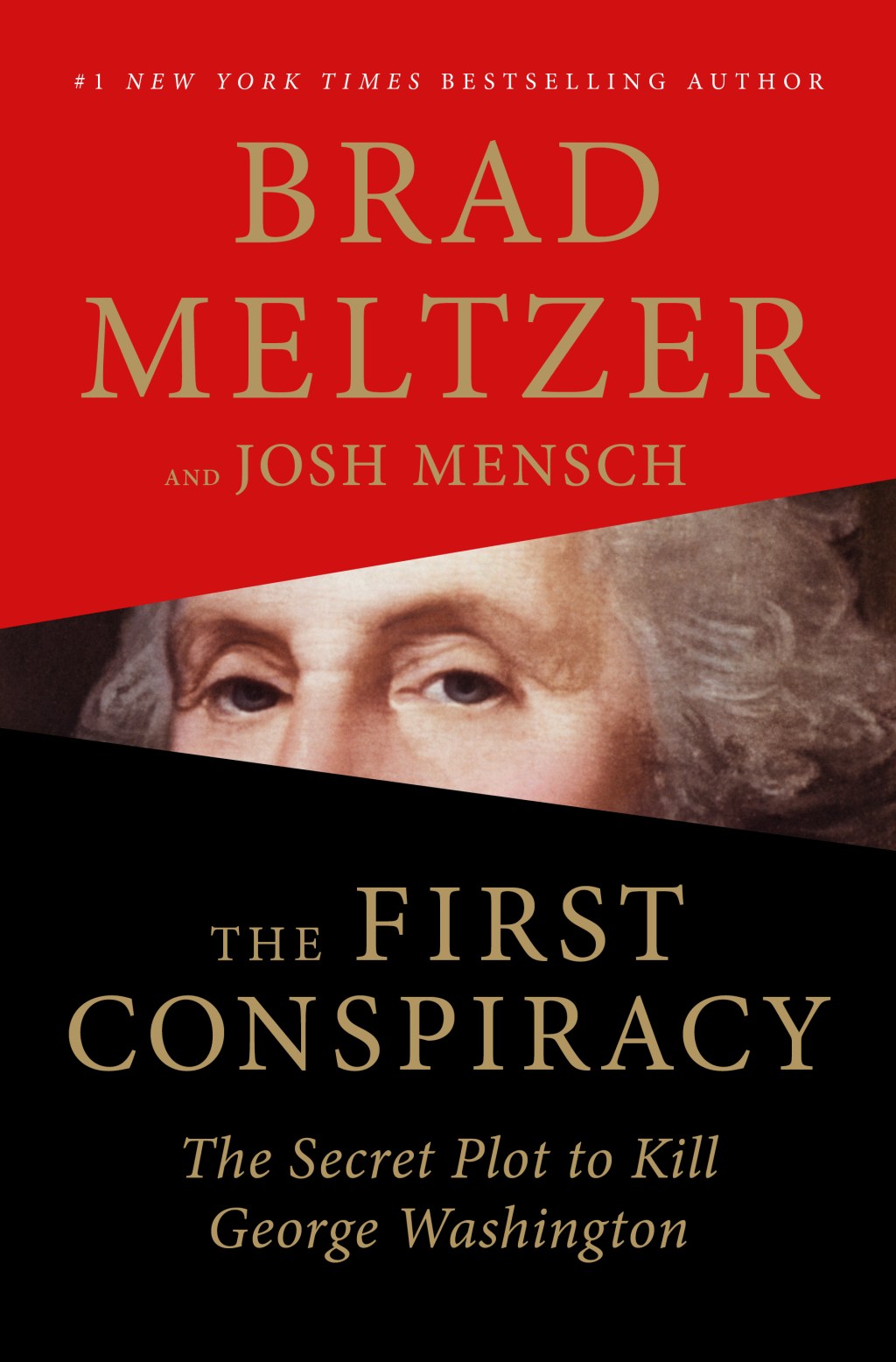
    Brad Meltzer Book Signing: The First Conspiracy

                  It wasn’t easy being George. He lost his father at age 11 and then his mentor and half-brother just seven years later. He was a veteran of the French and Indian War when in his 20’s and then returned home to tend to his estates. But he was a man of duty who put honor first and when the British butchered Colonists who complained about the high tax rate, he showed up at the Continental Congress, the only man wearing his military uniform. Tall and handsome, his posture erect, it was almost immediately decided that he would lead the newly formed Continental Army.

    Barbara Bush Houston Literacy Foundation Gala Writer’s Luncheon at the home of Terri and Jon Havens

                  Though army might be too kind of a word. The troops were masses of men from the colonies—ill-fed, raggedy, without training or even much in the way of weapons (unless you count pitchforks) and given to gambling, cussing, enjoying paid encounters and fighting amongst each other. Not exactly an army to give the well trained, well-armed and smartly uniformed British much pause.

                  Add to that, the former Colonel Washington didn’t have the knowledge or the experience of a general and since there was no You Tube at the time, he would have to learn on the job and by reading the several books he bought on the subject. But probably most problematic, several of his very own Life Guards, hand-selected men who were to personally protect Washington were actively betraying him as part of a conspiracy to preserve British rule.

                  This is the conundrum New York Times best-selling author Brad Meltzer presents us in the opening chapters of his first non-fiction book, The First Conspiracy: The Secret Plot Against George Washington with Josh Mensch.

                  “It’s one of my favorite details,” says Meltzer, who is so enthusiastic about the story says the same phrase more than once about other incidents as well. “Washington wanted the best of the best for his personal bodyguards, called lifeguards and they turned on him. That just totally hit me, this is the best of the best and they turned on him! You can’t write a book like this if you don’t ask yourself what would have happened if they got him.”

                  Fortunately, we don’t need to ask. Washington is more than the man on our dollar bills, wearer of a white powdered wig, said to be heck on cherry trees and wore wooden teeth—the latter turns out not to be true.

                  When two of his men were fighting, Washington rode right into the fray, jumped off his horse and seized each by the neck to break it up.

                  “At the Battle of Brooklyn, he gets his butt kicks, and he could have said let’s just go out in a blaze of glory, but he didn’t,” says Meltzer. “Instead, he commanders all the boats and gets his troops across the East River. The British are coming fast but, in that moment, he won’t get on a boat until all his men are onboard. He’s the last one on. He’s risked his life for them and that’s when the troops really all came together.”

                  He launched this secret society of spies that led to the modern CIA.

    That’s why Meltzer says some stories that are just so good they need to be told the way they are.

                  Anyone who has ever read one or more of Meltzer’s books (The Inner Circle, The Escape Artist) or watched his TV series Brad Meltzer’s Decoded and Brad Meltzer’s Lost History, needn’t worry that this will a long slog into boring history. The story of spy craft, war and the treachery surrounding the Washington reads as quickly as any of his novels or shows.

                  “It was an untold story,” he says. “I discovered it the way you usually discover important things, in a footnote.”

                  That footnote led to ten years of research which Meltzer says he couldn’t have done without the help of writer and documentary producer Josh Mensch.

                  Besides a great read of an almost lost part of America’s history, Meltzer says he hopes readers see this not just as a famous story but a call to the greatness Washington showed.

                  “We’re all capable of humility, heroism and generosity,” he says. “We have to stop creating this environment where everyone who disagrees with us is shallow or stupid, we have to work together and to do that we have to start with ourselves, the only way to change the world is to first change ourselves.”

    Ifyougo

    What: Brad Meltzer with Josh Mensch talk, audience Q & A and book signing

    When: Saturday, January 22 at 1 p.m.

    Where: Community Christian Church, 1635 Emerson Lane, Naperville, IL

    Cost: Ticket for one adult, $34.00 ($36.18 w/service fee). This ticket admits one person and includes one copy of the book. Ticket for two adults              $44.00 ($46.53 w/service fee). This ticket package admits two people and includes one copy of the new book. Ticket price also includes a photo with author. Kids under 13 are free. To order: brownpapertickets.com/event/3914505

    FYI: The presentation is hosted by Anderson’s Bookshops. For more information, 630-355-2665.

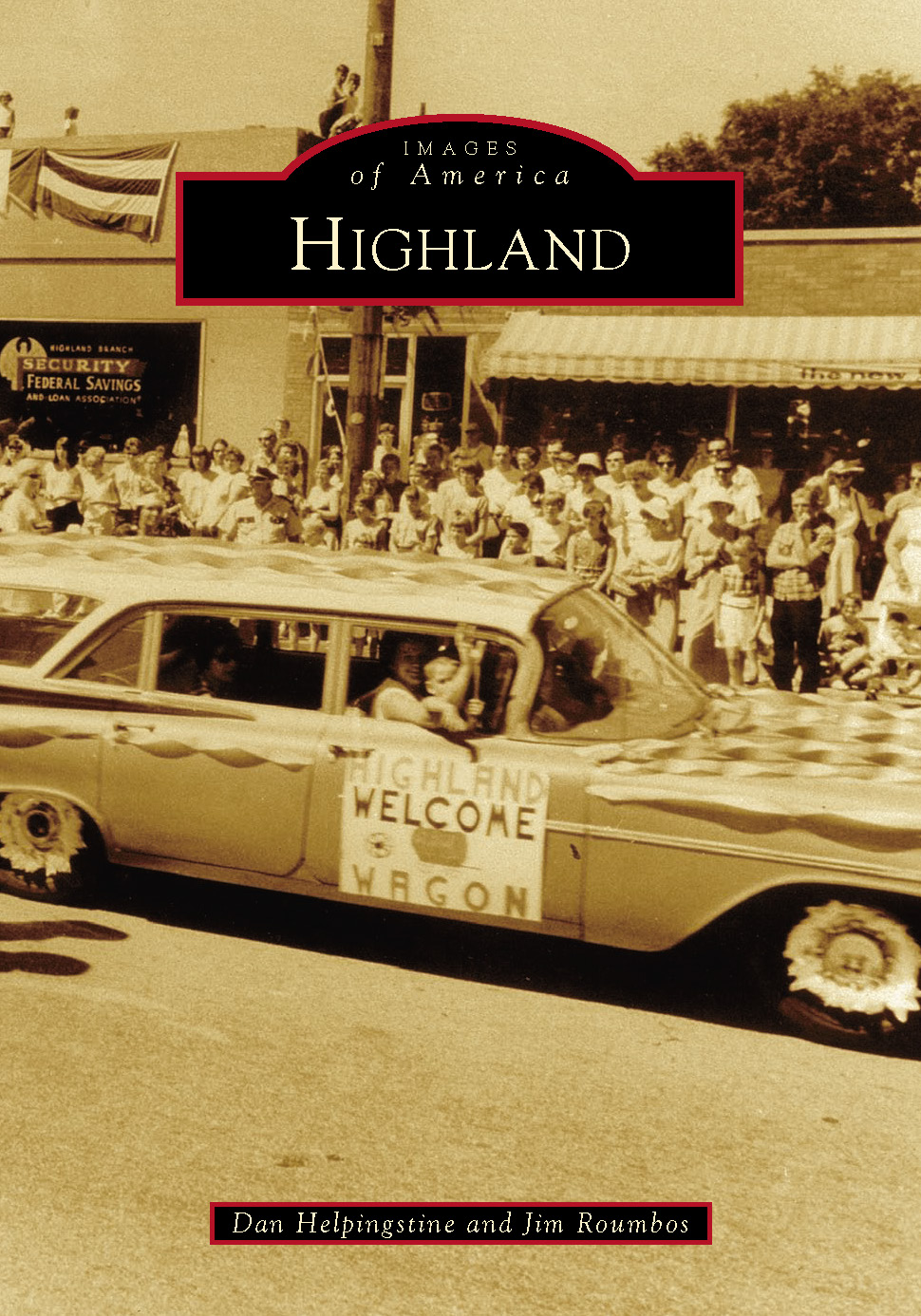
  • Highland

    Highland

    A Greek immigrant with a love of books and a degree in engineering, Jim Roumbos decided to open Miles Books in downtown Highland in 1986. Since then big chain stores like Borders went bankrupt and closed their doors, but Roumbos remains open.

    “My dad, who at the time, couldn’t speak English and worked 70 hours in the mill, used to take me to the library so I could check out books,” says Roumbos who grew up in Gary but has called Highland his home for the last 40 years. “Being in the book business, I love talking to people and finding out their interests and hearing their stories.”

    Over the years, he’s heard a lot of tales of Highland and so several years ago, he approached Dan Helpingstine, a frequent customer, about writing a book about the history of the town.

    “Dan has written a number of books and we’ve had book signings for him here,” says Roumbos. “So I said hey, Dan, you should write about Highland. I have lots of people asking for books about the town.”

    In turn, Helpingstine, author of such non-fiction books as South Side Hitmen: The Story of the 1977 Chicago White Sox, Chicago White Sox: 1959 and Beyond and The Cubs and the White Sox: A Baseball Rivalry, 1900 to the Present, suggested Roumbos write the book. Finally, they decided to co-author Highland (Arcadia Publishing $21.99) which was published last December.

    Part of publisher’s Images of America series, the book chronicles Highland’s history through images and captions.

    “Dan did the majority of the text and I did text and caption editing as well as the full editing and technical work for the photos,” says Roumbos.

    The majority of the 181 photographs in the books were from the archives of the Highland Historical Society and the rest provided by individuals.

    While many writers often fail in their attempts to find a publisher, that wasn’t the case with Highland.

    “Because Dan had written other books for Arcadia and they knew his work, all we did was fill out the application and within 30 minutes had the okay to go ahead,” says Roumbos.

    The process slowed considerably and it took them about four years to complete the book. But their shared background, was an immense help. Like Roumbos, Helpingstine grew up in another city—Hammond—but has lived in Highland for three decades.

    “The book starts off in the late 1800s and we did a chronological pictorial, with captions, ending up with a chapter on memories throughout the years,” says Roumbos. “The last photo in the book shows the fireworks at Main Square Park for New Year’s Day at midnight. The photograph itself is from the early 1960s.  The book embodies what Highland is, why people want to come to Highland and how welcoming it is. New residents come and they assimilate and Highland stays the same—a place offering a great town experience, one that is safe, friendly, charming with an emphasis on the arts.  The police and fire department are wonderful and the elected officials are motivated to make Highland better but still keep it as a place that people love and want to maintain.”

    When asked if he could choose a favorite photo and text, Roumbos pauses to think about it and then says it’s the photo of President Calvin Coolidge speaking in Wicker Park.

    “It was a big deal,” says Roumbos. “We had another president who spoke at Wicker Park and that was Barack Obama. That says something about Highland.”

    Roumbos, a story teller at heart, likes to emphasize how independent bookstores reflect the values of the town.  He’s always one to share a cup of coffee and talk about whatever subject a person is interested in. And this summer, he was able to add one more tale to his repertoire.

    “About two years ago a young Purdue student came into the store, she was studying to become a civil engineer and she met a guy here and they started dating and they’d often meet here on Friday nights,” he says.  “Last December, he comes up to me and says he’s going to propose to her and I say that’s wonderful, when, and he said in about ten minutes when she comes to the store. Last summer they walked in, she was wearing her wedding dress they’d just gotten married in Lansing and were stopping by between the wedding and the reception to say hi.”

    Ifyougo:

    What: Book signing with Jim Roumbos and Dan Helpingstine authors of Highland.

    When: Saturday, November 10, 11:30 a.m. to 2:30 p.m.

    Where: 2819 Jewett Ave., Highland, IN

    FYI: 219-828-8700; facebook.com/milesstore