Category: American History

  • America’s Femme Fatale: The Story of Serial Killer Belle Gunness

    America’s Femme Fatale: The Story of Serial Killer Belle Gunness

    A Norwegian farm girl, her family so poor, they often went hungry, is seduced by a rich landowner’s son. But despite her dreams, he has no plans to make her his wife. Abandoned, she sees only one path forward or she’ll sink into the black hole of her family’s poverty. But her first goal is revenge and after the landowner’s son dies a horrid death amidst whispers of poison, she boards a boat and sails to America. Norway’s gain is America’s loss.

    Her name changed through the years but after the mysterious deaths of two husbands, numerous men, women, and children, she goes down in his as Belle Gunness.  An entrepreneur whose business was murder, Gunness felt no qualms seducing men for their money and dispatching them with her axe—filling her farmland with her victims.

    As her crimes were about to be discovered, her solid brick home burnt to the ground and workers battling the smoke and flames discovered the bodies of her three children and a woman without a head.  Was it Belle  or did she get away with one more murder, absconding with close to a million dollars. It’s a question the world has been asking since 1908.

    America’s Femme Fatale: The Story of Serial Killer Belle Gunness (Indiana University Press/Red Lightning Oct. 4, 2021; $20).

    What people are saying about America’s Femme Fatale.

    Ammeson uses astute research and punchy prose to chronicle Belle’s transformation from destitute farm girl to one of history’s most egregious female serial killers. . . . Compact and captivating, this salacious tale of murderous greed during the early twentieth century will be devoured quickly by true-crime fans.– Michelle Ross ― BOOKLIST / Amer Library Assn

    It’s a mesmerizing cautionary tale I had to keep reading despite the late-night hour. . . . Ammeson writes narrative nonfiction with a sense of drama to propel us along the unbelievable.– Rita Kohn ― NUVO

    America’s Femme Fatale is the detailed story of Belle Gunness, one of the nation’s most prolific mass murderers. Ammeson recounts the horrific events with dry wit and corrects many errors found in previous accounts. Gunness stands out in an infamous crowd because she was a woman; she killed men, women and children rather than choosing from among one narrow section of victimology; and her murders seem to have been rooted in greed rather than lust, the serial killer’s usual motive.– Keven McQueen, author of Murderous Acts: 100 Years of Crime in the Midwest

    Jane Ammeson will be on Hoosier History Live talking to the show’s host Nelson Price about Belle Gunness. The show airs live from noon to 1 p.m. ET each Saturday on WICR 88.7 FM in Indianapolis. Or stream audio live from anywhere during the show. For those who miss the show, it’ll be available by podcast as well.

  • Capote’s Women: The Story of the Writers’ Swans
    Capote’s Women: The Story of the Writers’ Swans

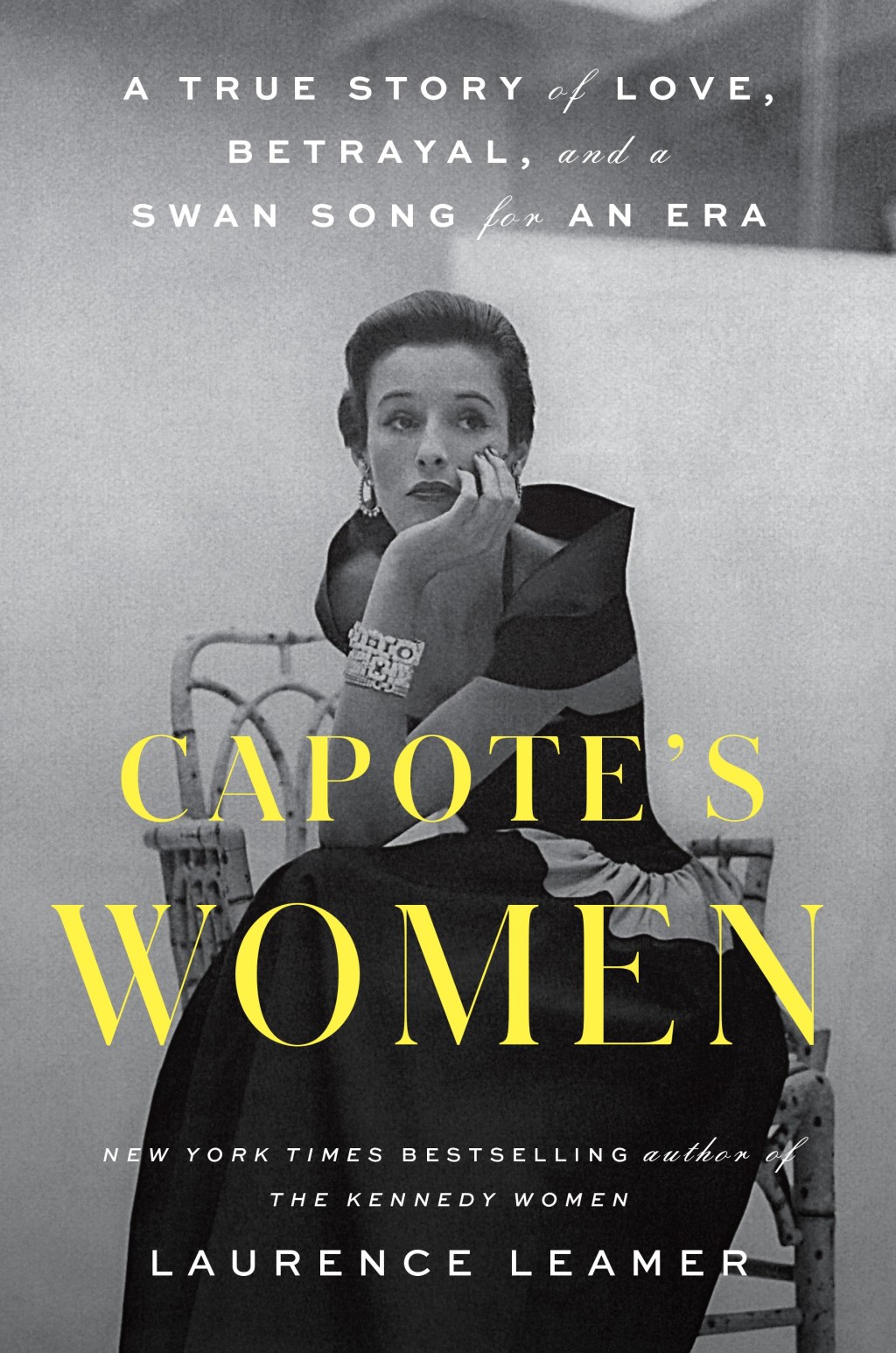
    “There are certain women who, though perhaps not born rich, are born to be rich,” author Truman Capote wrote about the beautiful, well-dressed, and style-setting women he called his “swans.”

    The ultimate arm candy for the wealthiest and most powerful of men, these women of the mid-20th century were trophy wives before the term existed. And they counted Capote, the author of Breakfast at Tiffany’s and creator of the true crime genre with In Cold Blood, his chilling recounting of the brutal murders of a Kansas family, as their best friend.

    In Capote’s Women: A True Story of Love, Betrayal, and a Swan Song for an Era, New York Times best-selling author Laurence Leamer takes us back to a time and a world where jet-setting, making the best-dressed list, attending and giving A-plus list parties, and dining at the most wonderful places whether in New York, Paris, London, or wherever your yacht happened to be moored were what these exalted women excelled at.

    Obtaining their lifestyles depended upon a confluence of beauty, wit, moxie, and marrying and knowing when to discard husbands as they worked their way up and up. At times, divorce papers were barely signed before the next wedding was held.

    “You have to enter into their lives,” says Leamer, explaining how he so succinctly captured the personalities of the swans: Gloria Guinness, Marella Agnelli, Slim Hayward, Pamela Churchill, C.Z. Guest and Lee Radziwill who constantly seethed because of the attention her older sister, Jackie Kennedy, always received.

    “Even though,” Leamer points out, “unlike Jackie she didn’t want to do the hard work that it takes to achieve something.”

    These women knew how to climb to higher heights. Gloria Guinness had transitioned from a childhood of constant motion in Mexico and marriage at age 20 to a man 27 years older to marrying a German aristocrat and a romantic involvement with a top Nazi during World War II. Her third marriage was to the grandson of an Egyptian King and her last, the biggest prize, was to a scion of the Guinness beer family who was also a member of Parliament. Other wins were modeling for big time designers and the best of the fashion magazines as well as being on the International Best Dressed List for several years.

    But ultimately, she wasn’t happy says Leamer who believes she committed suicide.

    There was also Barbara “Babe” Paley whose mother raised her   three daughters to marry money. Paley, who had been badly injured in an automobile accident when young, spent her life in considerable pain. Her husband expected perfection in all things and so she never slept in the same bedroom, so she could the loss of her front teeth.

    But being the best wasn’t always the answer to happy life. The swans may have had uber-wealthy husbands, but they didn’t have good husbands. Frequently husbands and wives were flagrantly promiscuous, and the swans often led separate lives not only from their spouses but also their children.

    “For them, to be a mom was to be hands-off,” says Leamer. “And the children often paid a price. They didn’t necessary learn to do anything because they were going to inherit a lot of money.”

    Ornamental to the max, these were women who did nothing but did it extremely well. And Capote, despite his great literary successes, spent a lot of time doing nothing with them. He listened to their secrets and ultimately decided to write a book revealing what he had heard. When an article he penned revealed some of those stories, the swans all turned against him, and he was exiled from the society he craved.

    “I went to a family wedding recently,” says Leamer noting the warmth and connectiveness that everyone had. “These women and Capote never had this.”

    It’s such a cliché to say money doesn’t buy happiness. But that doesn’t mean it isn’t true. And it certainly is delicious to read about the lives of women who many thought had it all even though they didn’t.

    Online Book Event


    Join Laurence Leamer in an online event hosted by the American Writer’s Museum in Chicago when he reads from and discusses his new book.”

    When: October 13 at 6:30 p.m.

    How to Join In: This program will be hosted online via Zoom. To register, visit americanwritersmuseum.org/program-calendar/laurence-leamer-capotes-women/

  • Pullman: The Man, the Company, the Historic Park by Kenneth Schoon
    Pullman: The Man, the Company, the Historic Park by Kenneth Schoon

                   Kenneth Schoon, professor emeritus at Indiana University Northwest, has immersed himself in the history of the Greater Chicago/Northwest Indiana area for decades, writing books starting from the area’s earliest beginnings such as “Calumet Beginnings: Ancient Shorelines and Settlements at the South End of Lake Michigan” and “Swedish Settlements on the South Shore of Lake Michigan.”

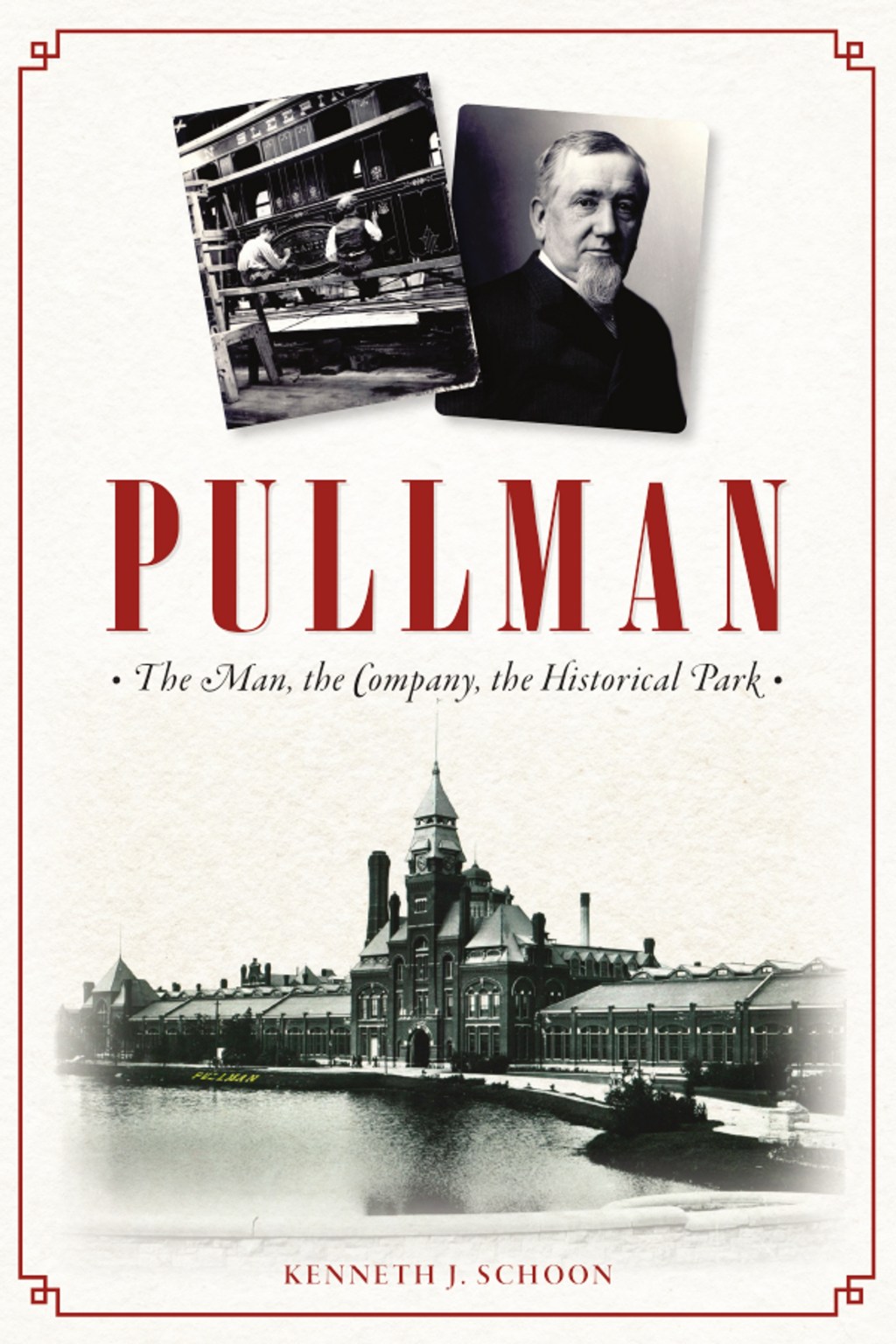
                   In his latest book, “Pullman: The Man, the Company, the Historical Park” (History Press 2021; $21.99), he showcases what once was among  the ultimate company town and is now a Chicago neighborhood. George Pullman, whose last name became synonymous with plush railroad sleeper cars, believed that happy workers were productive workers and so developed his town along the western shore of Lake Calumet in the late 1800s.

                   I thought I knew company towns having grown up in East Chicago, Indiana my friends whose parents worked at Inland Steel lived in Sunnyside in Indiana  Harbor. On the East Chicago side there was Marktown built in 1917 by Clayton Mark, for those employed at the company he owned, Mark Manufacturing.

                   But they’re different Schoon tells me. Both Marktown and Sunnyside were residential neighborhoods. But Pullman was an actual town with its own schools, library, churches, Masonic Hall, businesses, and even a band. Garbage and maintenance was paid for by the company.

    In 2015, then President Barack Obama proclaimed Chicago’s Pullman District as a National Monument, encompassing many of its surviving buildings such as the former Pullman Palace Car Works, the Greenstone Church, formerly the Greenstone United Methodist Church, the A. Philip Randolph Pullman Porter Museum, workers’ homes, the Pullman Administration Clock Tower Building, Arcade Park, and the Florence Hotel, named after Pullman’s oldest daughter.

                   Though I vaguely knew about the town of Pullman, it had never been on my radar as a place to visit even though it was less than eleven miles from where I lived.

                   “The same with me,” says Schoon who remembered going to the Florence Hotel, one of the fanciest structures in town, to eat when young never to return until hired by the Historic Pullman Foundation to write about the history of the town for their brochure.

                   Today we talk about experiences, but that’s what Pullman was all about back then. His sleeper cars were luxurious, but the brand also meant great service. After the Civil War, he hired recently emancipated African American men, to work as porters becoming the largest employer of Blacks in the U.S. Their jobs were to attend to passengers needs by serving food and drink, shining shoes, tidying up the train, making sure the temperature was just right and that lighting fixtures worked.  Black women were hired as maids to take care of women guests on the most expensive cars—babysitting children, helping with their baths, giving manicures, and fixing their hair.

                   Pullman was no dinky little town. The Arcade Theatre could accommodate 1000 people and Schoon says it was, for a time, the finest theater west of the Hudson River.

                   With the advent of automobiles and highways, the need for sleeper cars lessened. But luckily many of Pullman’s historic buildings remain including the Florence Hotel which is currently closed for renovations but expected to open within a few years.

                   “The old stable is now a store,” says Schoon. “The old fire station is still there and of the 600 residential buildings all but three are still standing.”

                   In an interesting tidbit, Schoon notes that Pullman was originally dry because George Pullman was a Prohibitionist. Luckily for those who  wanted to imbibe, Kensington, the town next door had 23 taverns at the time.

                   Kenneth Schoon will be signing copies of his book during the Labor Day Weekend at the Grand Opening of Pullman National Monument Visitor Center and Pullman State Historic Site Factory. For more information about times and other events, visit www.pullmanil.org

  • Untitled post 2419

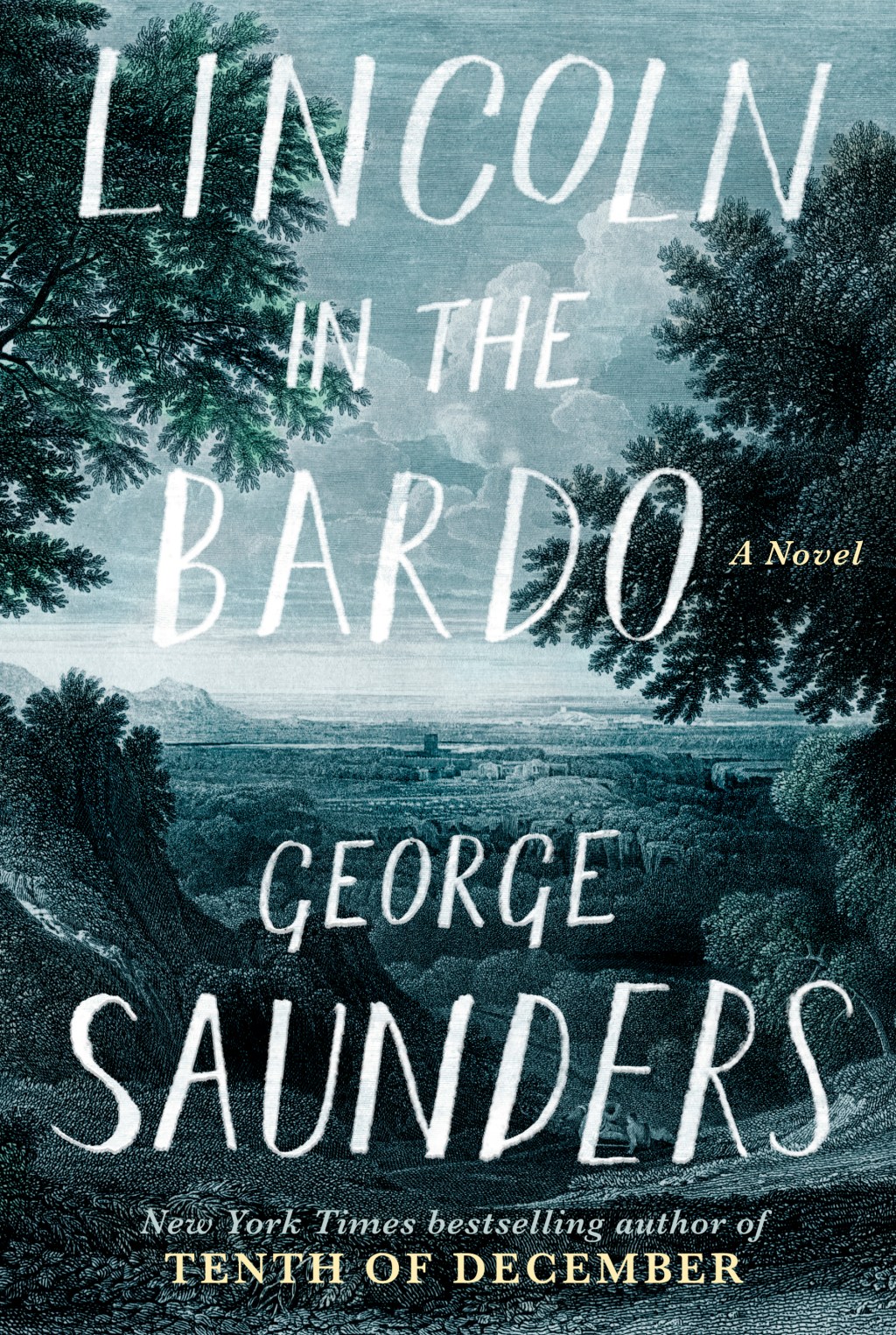
    Several decades ago, George Saunders and his wife were visiting Washington D.C. when their cousin mentioned that anecdotal evidence indicated President Abraham Lincoln had surreptitiously visited the tomb of his 11-year-old son, Willie.

    For years, the story of Lincoln, so overcome by grief, that he stole into the monument where his son was interred, nagged at the edges of Saunders’s mind. But Saunders, who teaches in the creative writing program at Syracuse University, had never written a novel and besides his writing was mostly satirical in nature.

    “But this material has been calling me all these years,” says Saunders, author of Lincoln in the Bardo (Random House 2017; $28). “It’s like their story was a stalker, it kept showing up at my window and it needed to get out.”

    Justifying his foray into a new literary form by telling himself he’d had a nice run regarding his career—Saunders is an acclaimed short story writer who is included in Time’s list of the 100 most influential people the world, he decided why not try “this Lincoln thing.”

    Saunders still had doubts about his ability to tell the story in the way the way it needed to be told. But having grown up in Chicago as part of a devout Catholic family and now having adapted some of the tenets of Buddhism in the Tibetan tradition, he has written a book that though just recently released is already garnering great reviews.

    Bardo is a Tibetan concept–a kind of transitional zone says Saunders.

    “We’re all in the bardo right now that goes from birth to death,” he says, noting that Buddhists would call these transition stages reincarnation and noting that the book takes place just after that, in the bardo that goes from death to whatever comes next. “Now is the time to live–knowing that death is coming—if we can accept ourselves as a mess.”

    With all his research, Saunders has come to see how Lincoln persevered despite the immense weight of the Civil War, the deaths of so many Americans and that of his son as well.

    “We had a president back then who bent,” he says, “when others would have broken.”

  • Hour of the Witch

    Hour of the Witch

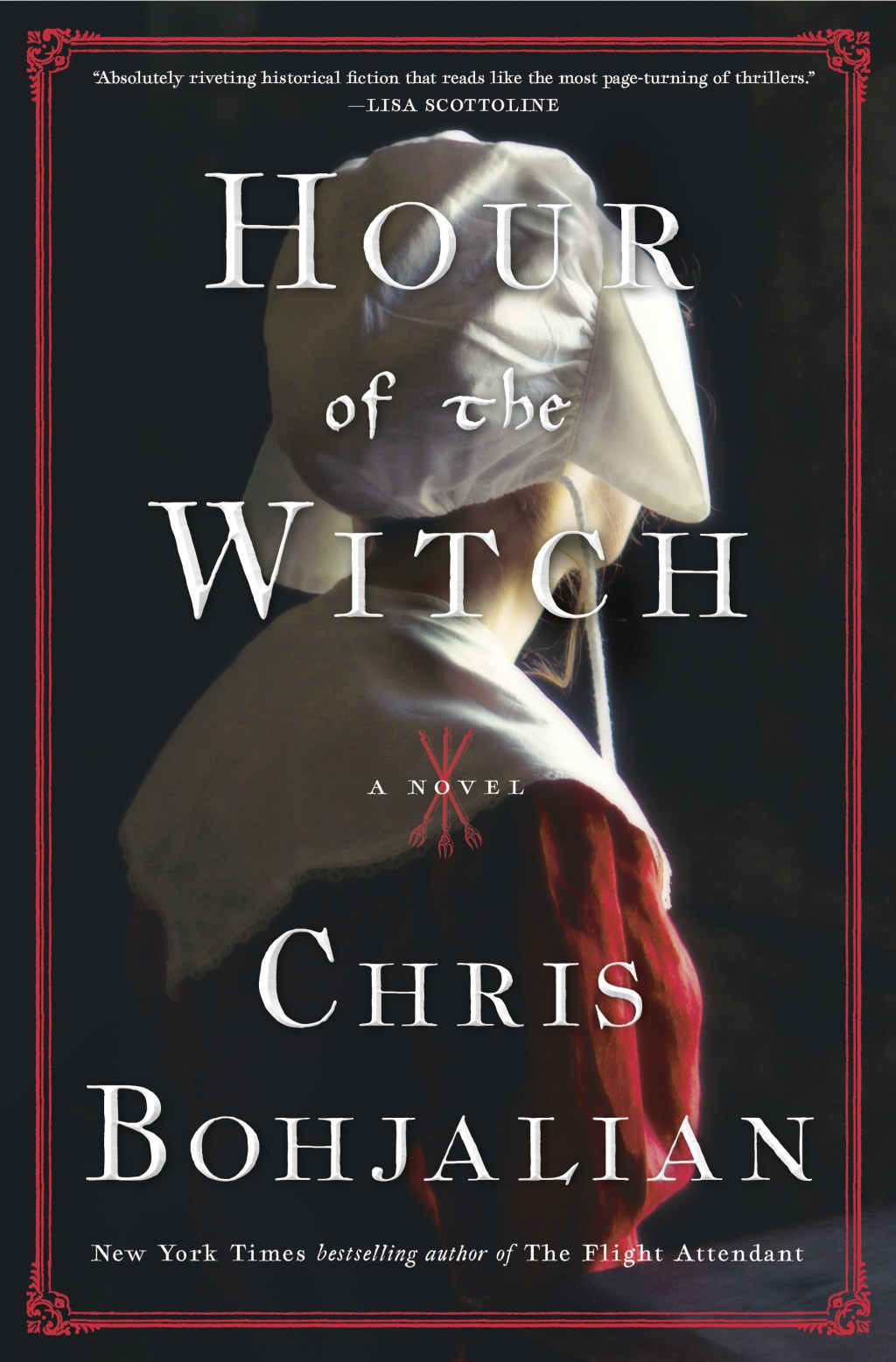
    Bewitchingly beautiful with delft blue eyes, porcelain skin and blonde hair, Mary Deerfield has a handsome, wealthy husband, a lovely house, and bruises on her face that she tries to hide under her linen cap. Thomas, her husband, is almost twice her age and given to drunken rages, particularly as time goes on and Mary does not become pregnant.

    Mary’s parents are respected and well-to-do but can’t protect their daughter. There are no organizations to help battered women, no social workers or psychologists to dispense advice, nor can Mary just leave her home, move to another city and get a job. After all, this is Boston in 1662, and women have few, if any, rights. Ironically, Massachusetts, one of the most liberal states in the 21st century, was back then the kind of place where they burned women as witches.

    Hour of the Witch,Chris Bohjalian’s well-researched and chilling new novel, takes us into a past where, just by trying to exercise her independence and desire to lead her own life, a woman could be castigated as a witch.

    “When we think of New England’s history of hanging people for witchcraft, we beeline straight to Salem in 1692,” said Bohjalian, a New York Times bestselling author of 22 books whose works have been translated into 35 languages and three times made into movies. “But in 1656, the governor of Massachusetts had his own sister-in-law hanged as a witch. And the first real witch hunt was Hartford in 1662 — three full decades before Salem. One thing many of the women executed as witches had in common was that they were smart, opinionated, and viewed as outsiders; sometimes, they saw through the patriarchal hypocrisy that marked a lot of New England Puritanism.”

    Mary puts up with a lot; after all, she has little choice. But when Thomas drives a three-tined fork into her hand, she’s had it and files for divorce. Bohjalian said he was looking for a way into writing a suspense novel about the 17th century and found it when he came across the records of a woman named Nanny Naylor in the 1600s who successfully sued for divorce and won.

    “I was off and running,” he said.

    Bohjalian enjoyed studying Puritan theology at Amherst College, where he graduated Phi Beta Kappa and summa cum laude.

    “Puritans lived with anxiety and dread — just like me,” he said. “Of course, for them, Satan was as real as your neighbor and they fretted constantly over whether they were saved or damned. My anxieties were more of the 1980s ‘Breakfast Club’ sort.

    “I think ‘Hour of the Witch’ is very timely for a novel set in 1662,” he said. “And that was by design. When a magistrate on Boston’s all-male Court of Assistants calls my heroine, Mary Deerfield, ‘a nasty woman,’ I knew the reference would not be lost on my readers. Now, I never want to write polemics, but yes, there is a political undercurrent to the novel that will resonate.”

    Bohjalian said it wasn’t difficult getting into the Puritan mindset.

    “If you’re the sort of person who always questions your motives and has a healthy dollop of self-loathing, it’s actually rather easy,” he said.

    What, of all the research he did, surprised him the most?

    “The fact the Puritans didn’t use forks and drank beer like they were at fraternity parties in 1978,” said Bohjalian. “Their table manners must have been atrocious.”

    This review previously ran in the Times of Northwest Indiana.

  • Chicago Writer Takes Us Back to the Gilded Age in New Novel

    Chicago Writer Takes Us Back to the Gilded Age in New Novel

    Renee Rosen. Photo by Charles Osgood.

             Chicago author Renee Rosen is again taking us on a trip to the past. In her previous novels, she’s explored the city’s jazz roots (Windy City Blues), the Chicago Fire and the founding of the city’s iconic department stores (What the Lady Wants: A Novel of Marshall Field and the Gilded Age), and Prohibition-era Chicago (Dollface). Now, in The Social Graces we meet two mega-wealthy women—Alva Vanderbilt and Caroline Astor who starting in the 1870s vied to become the leader of high society.

             If that meant spending $10 million in today’s money to stage a ball at the Waldorf Hotel, so be it.

             “Think the original ‘Real Housewives of New York City’ but in Worth gowns,” says Rosen about the competition which in many ways also sounds like middle school. “They had plenty of balls such as the circus ball with a live elephant. Entertaining was the only arena where women could exert some influence. After all they had few rights, they couldn’t even vote, so they literally created this high society where they made the rules and determined who belonged and who didn’t.”

             At first Caroline Astor ruled New York and Newport, Rhode Island society. She was old money while Vanderbilt was one of the nouveau riche and after all, no matter how much new money you had it wasn’t as good as the old.

             “Mrs. Astor was the gate keeper, the reigning queen, she decided who was invited to her annual ball,” says Rosen, noting that only 400, the number her ball room could hold, were invited to this ball and thus they were deemed to be the elitist of the elite. “If you weren’t invited, you either left town or turned off all your lights and pretended you were out of town.”

             Determined to replace Caroline, Alva hosted her famous Masquerade Ball at her Fifth Avenue mansion, inviting  1200  though not Caroline who finally was able to get an invitation. It was so excessive, it helped catapult her to the top.

              Rosen didn’t want to just write about these women, she wanted to know them.

             “I admired both Caroline and Alva for several reasons and I disliked them for several reasons,” she says. “Alva certainly wouldn’t have been mother of the year.”

      And yes, it is true. Alva locked her daughter Consuelo in her room so she couldn’t marry the man she loved and instead forced her to wed the impoverished Charles Spencer-Churchill, the 9th Duke of Marlborough. He in turned just wanted her vast fortune to restore his very outdated palace which didn’t even have central heating or hot water. The marriage, by the way, made Consuelo a relative of Winston Churchill and the yet-to-be-born Princess Diana.

             “Alva was such a trail blazer,” says Rosen. “This was a time when so many men had mistresses and women had to put up with it. But when Alva’s husband Willie K. started canoodling with other women, she put her foot down and divorced him. She became a suffragette. She wasn’t a licensed architect, but she knew all about building. There was something really vulnerable about Caroline. I  think she was very lonely. She was at the top of society but at some level she knew that none of it really mattered. There was a whole lot of wealth but very little substance.”

    Renee Rosen Virtual Events

    April 27 6PM CST / 7PM EST

    A virtual evening at the Newport Mansions & the Newport Preservation Society

    Hosted by An Unlikely Story. Register Here

    April 29 12PM CST / 1PM EST Hosted by Bookends and Beginnings

    Literary Lunch Break with Karen White. Register Here

    May 5 4PM CST / 6PM EST A Special Virtual Gilded Age Event

    Featuring Chanel Cleeton, Marie Benedict & Renee Rosen Hosted by InterContinental New York Barclay Hotel & Berkley Publishing. Signature cocktail recipe & special VIP raffle gift, courtesy of Pomp & Whimsy! General & VIP tickets Register Here

    May 10 7PM CST / 8PM EST Hosted by Blue Willow Bookshop

    In Conversation with Chanel Cleeton. Register Here

    June 22 7PM CST Literature Lovers’ Night Out

    Please check back for details & registration.

    This story previously appeared in the Northwest Indiana Times.

  • Disposing of Modernity: The Archaeology of Garbage and Consumerism during Chicago’s 1893 World’s Fair

    Disposing of Modernity: The Archaeology of Garbage and Consumerism during Chicago’s 1893 World’s Fair

                When Rebecca Graff, a PhD student at the University of Chicago in need of a dissertation, was told by a professor that the view before them from the school’s Ida Noyes Hall was “a hundred years ago the center of the world,” she didn’t see the bucolic splendor of Jackson Park hugging the Lake Michigan shoreline. Instead her sights went to what lay beneath and that was the 1893 World’s Columbian Exposition, an unexcavated but huge part of Chicago’s history. Held in celebration of the 400th anniversary of Christopher Columbus arrival in the New World, the exposition attracted 27 million people who paid 21.5 million for admission in a six-month period. Designed by noted landscape architect Frederick Olmsted, the 630-acre park had more than 65,000 exhibits from 46 countries and introduced to the public such new inventions as a 250-foot Ferris Wheel, Aunt Jemima’s Pancake syrup and Wrigley’s Juicy Fruit Gum. Electricity, still rare back then, was used to light up the expo at night.

    Rebecca Graff

                Graff managed to turn that casual remark into her dissertation, “The Vanishing City: Time, Tourism, and the Archaeology of Garbage and Consumerism at Chicago’s 1893 World’s Columbian Exposition” and then into a book,  “Disposing of Modernity: The Archaeology of Garbage and Consumerism during Chicago’s 1893 World’s Fair” (University Press of Florida co-published with The Society for Historical Archaeology).  Both were about the archaeological dig she undertook of a site in Jackson Park near the Museum of Science and Industry that seemed most promising for archaeological fair finds.

    Surprisingly what seemed an almost guaranteed bureaucratic nightmare in terms of permits and permissions all fell into place but then Graff was told she couldn’t start without a million dollars in liability insurance. Not likely for a graduate student.

                “I needed to turn the excavation into a job,” she says. And so she did, teaching a field class at the University of Chicago where she and her students excavated the site.


    View from the 1893 World’s Columbian Exposition’s South Canal looking northeast. The Machinery Building, the Columbian Fountain, and the Electricity Building are on the left, with the Agriculture and the Manufactures and Liberal Arts Buildings on the right. The Illinois State Building’s dome is in the center, and the flatter dome of the California State Building is to its left. Image is by an anonymous photographer, 1893. From the Smithsonian Institution Archives

                Expecting to find those things that archaeologists love—pottery shards, a coin here and a twisted spoon there—Graff and her team were stunned to unearth a section of the Ohio Building, a stately Beaux Arts-style edifice with an elaborate portico entranceway that served as a meeting place for Ohioans. It was among the best of all the other findings they uncovered such as a collar stud, religious medal, cruet tops indicating that food was made on site, and lots of pipes. Though to hear Graff describe them, they’re all treasures and keys to the past.

                As for the building, contemporary sources said it no longer existed.

                “Even the New York Times wrote it had been thrown into the lake,” says Graff, who instead found segments in a ditch where it might have been used as landfill.

                Coincidentally, Graff later discovered she wasn’t the only family member to dig at the site, so had her great grandfather, Morris Graff, a Russia immigrant who dug ditches at the fair.

                Graff would like to return to Jackson Park for further exploration but was denied a permit the second time around. She says it’s surprising that Chicago doesn’t have a city archaeologist as other big cities do. But she’s certainly doing her fair share of uncovering urban remains. She is currently excavating the Charnley-Persky House Museum, a National Historic Landmark located on Astor Street in the Gold Coast  designed Chicago  architect, Louis Sullivan and his young draftsman Frank Lloyd Wright.

    Cover image from Disposing of Modernity: The Archaeology of Garbage and Consumerism during Chicago’s 1893 World’s Fair by Rebecca S. Graff. Gainesville: University Press of Florida, 2020.

  • The Children’s Blizzard: A Historic Novel of the Nebraska Prairie
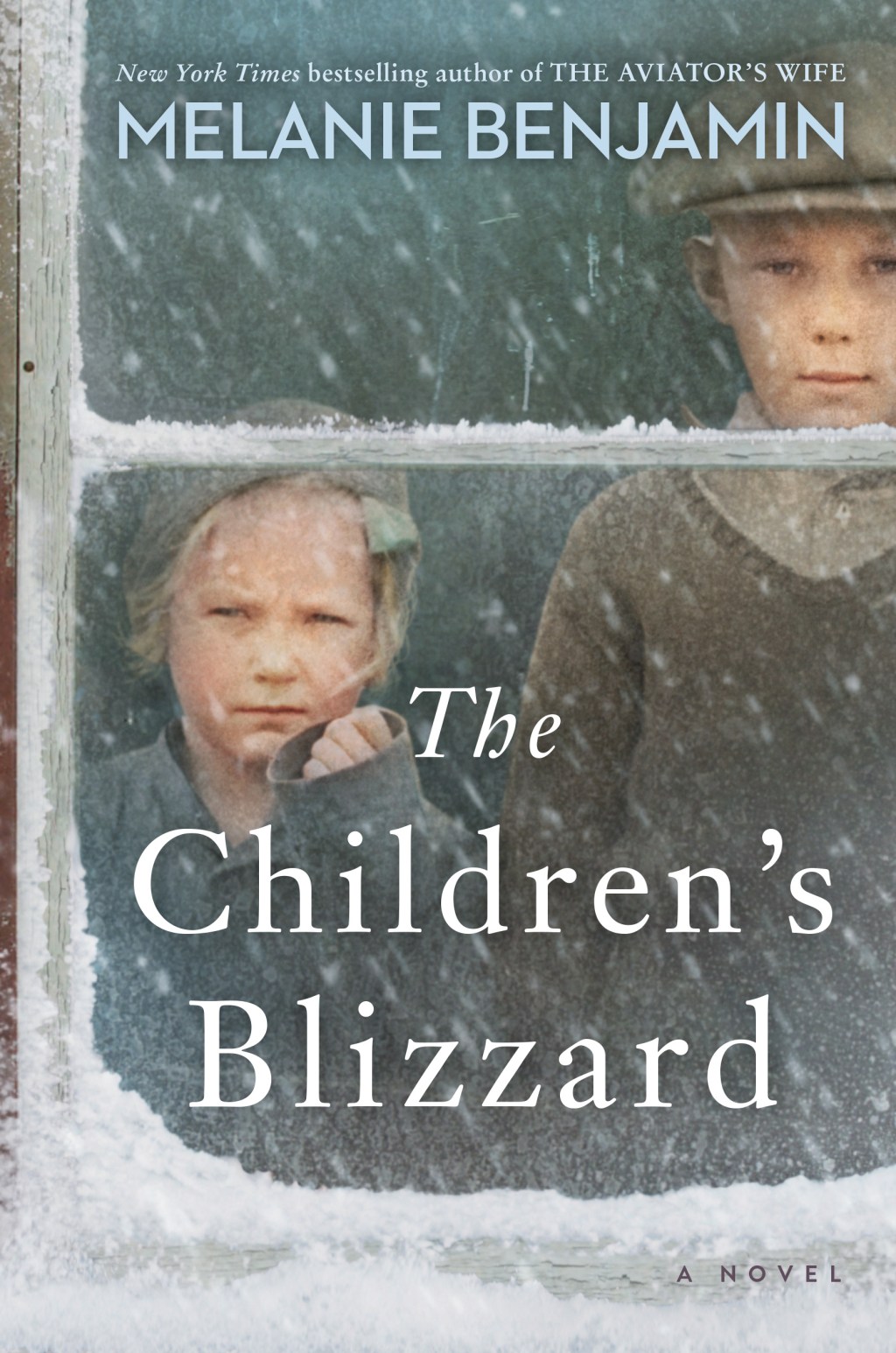
    The Children’s Blizzard: A Historic Novel of the Nebraska Prairie

    Melanie Benjamin

    The week before, they’d been isolated when a snowstorm and cold temperatures forced everyone to stay inside. But that morning Gerta, the young teacher who boarded at the Pedersen’s house, and her student Annette, a waif who had been dropped off at the home by her mother who hadn’t even hugged her goodbye, ran across the Nebraska prairie to the schoolhouse enjoying the sunny warm weather.

    It was like being free again, but it was only January, and the school children let out for recess because of the wonderful weather were suddenly confronted by a black wall of clouds that blocked the sun. Running back to the schoolhouse, they discovered there was little wood left to keep the big stove burning, and they all shivered as the temperature plummeted — oh, why had they only worn their shawls and not their heavy coats and boots? The sounds of the howling wind rushed through the schoolhouse, and through the windows they saw almost nothing but the occasional bright sparks of lightning, because the snow formed a curtain so thick it blocked everything else out.

    In history books, this sudden and deadly snowstorm would be known as “The Children’s Blizzard” because, of the 250 to 500 known fatalities, many were children trying to find their way home.

    Melanie Benjamin, New York Times bestselling author of “The Aviator’s Wife,” “The Girls in the Picture” and “The Swans of Fifth Avenue,” has taken the incident and turned it into the page-turning novel “The Children’s Blizzard: A Novel” (Delacorte, $28).

    It’s an obscure but fascinating aspect of America’s frontier history, but Benjamin, a voracious reader of history already, was somewhat familiar with the disaster when she and her editor decided that might be her next book. Benjamin, who grew up in Indianapolis with aspirations to become a New York actress, lived in Chicago until moving to Williamsburg, Virginia a few months ago. She began writing historical novels in 2010, and, amazingly, this is her seventh. She must, it seems after spending an hour chatting with her on the phone, write as fast as she talks.

    The gist of our conversation: she’s a history junkie; she investigates a subject relentlessly, but if she can’t conjure up characters that really come to life, she’ll move on to the next project, as she doesn’t want to write a book that doesn’t seem real. That means she’s written entire novels and then just abandoned them. Even when she loves the personalities she creates, once she’s done with her novel, there are no second glances as she moves on to the next book. Oh, and though she’s a history buff and dwells in different pasts when writing, she doesn’t live in a stately old mansion, just a historic town.

    Luckily, she discovered many captivating characters for “The Children’s Blizzard” and, though I know we’re talking Nebraska here, an equally compelling landscape and period of time.

    Hard working immigrants, mainly Norwegians, Swedes and Germans were lured to Nebraska by dreams of lush crop producing farmland. It was easy as just packing up your belongings, the advertisements read, as coming by wagon or boarding a train to take advantage of the wonderful opportunities.

    Only Nebraska really wasn’t all that. Don’t think “Little House in the Prairie” because it was so much more harsh, unyielding, and frustrating. There were blizzards, droughts where the soil cracked and the crops withered, prairie fires and vast hordes of insects devouring everything in their paths. We’re not talking fun here, not at all.

    “Nebraska wasn’t a state at the time, it was a territory,” says Benjamin. “They were trying to get enough people to settle there because that’s one of the ways you became a state.”

    Benjamin found that the story ignited her entire imagination, forming a connection to generations of her family.

    “There was a personal epic quality to it, my mother’s family immigrated from Germany to an Illinois farm,” said Benjamin. “So the story was kind of in my DNA.”

    Benjamin describes her imagination as her biggest strength, which is why she can put herself into the lives of people she’s created and who live in a time long before she was born.

    “I was a serious child,” she said. “I was always imagining people’s lives and what they were like. Most authors are observers, we’re on the outside looking at the party, not at the party.”

    This review was previously published in the Northwest Indiana Times.

  • THE 17TH ANNUAL BEST BOOK AWARDS ANNOUNCE 2020 AWARD RECIPIENTS

    Mainstream & Independent Titles Score Top Honors in the 17th Annual Best Book Awards

     HarperCollins, Penguin/Random House, John Wiley and Sons, Routledge/Taylor and Francis, Forge, Sterling Publishing, Hay House, Sounds True, Llewellyn Worldwide, NYU Press, Oxford University Press, John Hopkins University Press, The White House Historical Association and hundreds of Independent Houses contribute to this year’s Outstanding Competition!

    Highlights Include the Following Winning Titles: (Full Results are Available Here.)

    Click on category headings to be taken directly to full book descriptions! Winners and Finalists are featured at the top of each page! 

    Animals/Pets: General
    The Balanced Pet Sitter: What You Wish you Knew Before Starting Your Pet Care Business by Renée Stilson
    Equilibre Press, LLC

    Animals/Pets: Narrative Non-Fiction
    The Chimpanzee Chronicles: Stories of Heartbreak and Hope from Behind the Bars by Debra Rosenman
    Wild Soul Press

    Anthologies: Non-Fiction
    This Moment Bold Voices from WriteGirl by Keren Taylor
    WriteGirl Publications

    Art
    C. Curry Bohm: Brown County and Beyond edited by Daniel Kraft & Jim Ross
    Indiana University Press

    Autobiography/Memoir
    Through My Eyes: CSI Memoirs That Haunt the Soul by Tamara Mickelson
    Self-Published

    Best Cover Design: Fiction
    The Last Lumenian by S.G. Blaise
    The Last Lumenian

    Best Cover Design: Non-Fiction
    When God Says NO – Revealing the YES When Adversity and Pain Are Present by Judith Briles
    Mile High Press

    Best Interior Design
    Beautiful Living: Cooking the Cal-a-Vie Health Spa Way by Terri Havens
    Cal-a-Vie Health Spa

    Best New Fiction
    In An Instant by Suzanne Redfearn
    Lake Union

    Best New Non-Fiction
    The Book of Help: A Memoir of Remedies by Megan Griswold
    Rodale Books/Penguin Random House

    Biography
    T.R.M. Howard: Doctor, Entrepreneur, Civil Rights Pioneer by David T. Beito and Linda Royster Beito
    Independent Institute

    Business: Careers
    TIP: A Simple Strategy to Inspire High Performance and Lasting Success by Dave Gordon
    John Wiley and Sons

    Business: Communications/Public Relations
    The Apology Impulse: How the Business World Ruined Sorry and Why We Can’t Stop Saying It by Cary Cooper & Sean O’Meara
    Kogan Page

    Business: Entrepreneurship & Small Business
    Burdens of a Dream: 33 Actionable Nuggets of Wisdom for the Creative Entrepreneur by Craig M. Chavis Jr.
    Author Academy Elite

    Business: General
    The Simplicity Principle: Six Steps Towards Clarity in a Complex World by Julia Hobsbawm
    Kogan Page

    Business: Management & Leadership
    The Future Leader: 9 Skills and Mindsets to Succeed in the Next Decade by Jacob Morgan
    Wiley

    Business: Marketing & Advertising
    The End of Marketing: Humanizing Your Brand in the Age of Social Media and AI by Carlos Gil
    Kogan Page

    Business: Motivational
    Unlock!: 7 Steps to Transform Your Career and Realize Your Leadership Potential by Abhijeet Khadikar
    Vicara Books

    Business: Personal Finance/Investing
    Enhancing Retirement Success Rates in the United States: Leveraging Reverse Mortgages, Delaying Social Security, and Exploring Continuous Work by Chia-Li Chien, PhD, CFP®, PMP®
    Palgrave Pivot

    Business: Real Estate
    Market Forces: Strategic Trends Impacting Senior Living Providers by Jill J. Johnson
    Johnson Consulting Services

    Business: Reference
    The Non-Obvious Guide to Virtual Meetings and Remote Work (Non-Obvious Guides) by Rohit Bhargava
    IdeaPress Publishing

    Business: Sales
    The Visual Sale: How to Use Video to Explode Sales, Drive Marketing, and Grow Your Business in a Virtual World by Marcus Sheridan
    IdeaPress Publishing

    Business: Technology
    Amazon Management System: The Ultimate Digital Business Engine That Creates Extraordinary Value for Both Customers and Shareholders by Ram Charan and Julia Yang
    IdeaPress Publishing

    Business: Writing/Publishing
    Great Stories Don’t Write Themselves: Criteria-Driven Strategies for More Effective Fiction by Larry Brooks
    Writer’s Digest Books (a division of Penguin Random House)

    Children’s Educational
    Galileo! Galileo! by Holly Trechter and Jane Donovan
    Sky Candle Press

    Children’s Fiction
    Nutmeg Street: Egyptian Secrets by Sherrill Joseph
    Acorn Publishing

    Children’s Mind/Body/Spirit
    The Tooth Fairy’s Tummy Ache by Lori Orlinsky
    Mascot Books

    Children’s Non-Fiction
    President’s Play! illustrated by John Hutton, text by Jonathan Pliska
    The White House Historical Association

    Children’s Novelty & Gift Book
    Bubble Kisses by Vanessa Williams, illustrated by Tara Nicole Whitaker
    Sterling Publishing

    Children’s Picture Book: Hardcover Fiction
    Bubble Kisses by Vanessa Williams, illustrated by Tara Nicole Whitaker
    Sterling Publishing

    Children’s Picture Book: Hardcover Non-Fiction
    A-B-Skis: An Alphabet Book About the Magical World of Skiing by Libby Ludlow, illustrated by Nathan Y. Jarvis
    Libby Ludlow LLC

    Children’s Picture Book: Softcover Fiction
    Frankie the Ferret by Kimberley Paterson
    FriesenPress

    Children’s Picture Book: Softcover Non-Fiction
    Fridays With Ms. Mélange: Haiti by Jenny Delacruz
    Cobbs Creek Publishing

    Children’s Religious
    That Grand Christmas Day! by Jill Roman Lord, illustrated by Alessia Trunfio
    Worthy Kids

    College Guides
    Diversity At College: Real Stories of Students Conquering Bias and Making Higher Education More Inclusive by James Stellar, Chrisel Martinez, Branden Eggan, Chloe Skye Weiser, Benny Poy, Rachel Eagar, Marc Cohen, and Agata Buras
    IdeaPress Publishing

    Cookbooks: General
    Recipes from the President’s Ranch: Food People Like to Eat by Matthew Wendel
    The White House Historical Association

    Cookbooks: International
    Cooking with Marika: Clean Cuisine from an Estonian Farm by Marika Blossfeldt
    Delicious Nutrition

    Cookbooks: Regional
    The Perfect Persimmon: History, Recipes, and More by Michelle Medlock Adams
    Red Lightning Books

    Current Events
    In All Fairness: Equality, Liberty, and the Quest for Human Dignity, edited by Robert M. Whaples, Michael C. Munger and Christopher J. Coyne
    Independent Institute

    Education/Academic
    The EQ Intervention: Shaping a Self-Aware Generation Through Social and Emotional Learning by Adam L. Saenz, PhD
    Greenleaf Book Group

    Fiction: African-American
    Once in a Blood Moon by Dorothea Hubble Bonneau
    Acorn Publishing

    Fiction: Anthologies
    Terror at 5280′ edited by Josh Schlossberg
    Denver Horror Collective

    Fiction: Cross-Genre
    Mourning Dove by Claire Fullerton
    Firefly Southern Fiction

    Fiction: Fantasy
    The Hollow Gods (The Chaos Cycle Series, ) by A.J. Vrana
    The Parliament House Press

    Fiction: General
    Bread Bags & Bullies: Surviving the ’80’s by Steven Manchester
    Luna Bella Press

    Fiction: Historical
    The Takeaway Men by Meryl Ain
    SparkPress

    Fiction: Horror
    The Vanishing by Arjay Lewis
    Mindbender Press

    Fiction: Inspirational
    The Menu by Steven Manchester
    Luna Bella Press

    Fiction: LGBTQ
    Even Weirder Than Before by Susie Taylor
    Breakwater Books

    Fiction: Literary
    How Fires End by Marco Rafalà
    Little A

    Fiction: Multicultural
    Subduction by Kristen Millares Young
    Red Hen Press

    Fiction: Mystery/Suspense
    Strong From The Heart by Jon Land
    Forge

    Fiction: New Age
    Catalyst by Tracy Richardson
    Brown Books Publishing

    Fiction: Novelette
    When Angels Paint: A Milford-Haven Holiday Novelette by Mara Purl
    Bellekeep Books

    Fiction: Novella
    When the Heart Listens: A Milford-Haven Novella by Mara Purl
    Bellekeep Books

    Fiction: Religious
    The Longest Day by Terry Toler
    BeHoldings Publishing

    Fiction: Romance
    What the Heart Wants by Audrey Carlan
    HQN

    Fiction: Science Fiction
    Killing Adam by Earik Beann
    Profoundly One Publishing

    Fiction: Short Story
    Oranges by Gary Eldon Peter
    New Rivers Press

    Fiction: Thriller/Adventure
    The President’s Dossier by James A. Scott
    Oceanview Publishing

    Fiction: Visionary
    Journey of a JuBu by Blaine Langberg
    Critical Eye

    Fiction: Western
    Moccasin Track by Reid Lance Rosenthal
    Rockin’ SR Publishing

    Fiction: Women’s Fiction
    Appearances by Sondra Helene
    She Writes Press

    Fiction: Young Adult
    The Return of the Dragon Queen by Farah Oomerbhoy
    Wise Ink Creative Publishing

    Health: Addiction & Recovery
    Stepping Stones: A Memoir of Addiction, Loss, and Transformation by Marilea C. Rabasa
    She Writes Press

    Health: Aging/50+
    EIGHTSOMETHINGS: A Practical Guide to Letting Go, Aging Well, and Finding Unexpected Happiness by Katharine Esty, PhD
    Skyhorse Publishing

    Health: Alternative Medicine
    Have a Peak at This: Synergize Your Body’s Clock Towards a Highly Productive You by Said Hasyim
    Self-Published

    Health: Cancer
    All Of Us Warriors: Cancer Stories of Survival and Loss by Rebecca Whitehead Munn
    She Writes Press

    Health: Death & Dying
    Aftermath: Picking Up the Pieces After a Suicide by Gary Roe
    Healing Resources Publishing

    Health: Diet & Exercise
    Whole Person Integrative Eating: A Breakthrough Dietary Lifestyle to Treat Root Causes of Overeating, Overweight and Obesity by Deborah Kesten, MPH and Larry Scherwitz, PhD
    White River Press

    Health: General
    True Wellness for Your Gut: Combine the best of Western and Eastern medicine for optimal digestive and metabolic health by Catherine Kurosu, MD, L.Ac. and Aihan Kuhn, CMD, OBT
    YMAA Publication Center

    Health: Medical Reference
    The Ultimate College Student Health Handbook: Your Guide for Everything from Hangovers to Homesickness by Jill Grimes, MD
    Skyhorse Publishing

    Health: Psychology/Mental Health
    The Big Bliss Blueprint: 100 Little Thoughts to Build Positive Life Changes by Shell Phelps
    Positive Streak Publishing, LLC

    Health: Women’s Health
    The Book of Help: A Memoir of Remedies by Megan Griswold
    Rodale Books/Penguin Random House

    History: General
    Gun Control in Nazi-Occupied France: Tyranny and Resistance by Stephen P. Halbrook
    Independent Institute

    History: Military
    40 Thieves on Saipan The Elite Marine Scout-Snipers in One of WWII’s Bloodiest Battles by Joseph Tachovsky with Cynthia Kraack
    Regnery History

    History: United States
    Liberty in Peril: Democracy and Power in American History by Randall G. Holcombe
    Independent Institute

    Home & Garden
    My Creative Space: How to Design Your Home to Stimulate Ideas and Spark Innovation by Donald M. Rattner
    Skyhorse Publishing

    Humor
    Struggle Bus: The Van. The Myth. The Legend. by Josh Wood
    Lucid Books

    Law
    Banned: Immigration Enforcement in the Time of Trump by Shoba Sivaprasad Wadhia
    NYU Press

    LGBTQ: Non-Fiction
    Our Gay History in 50 States by Zaylore Stout
    Wise Ink Creative Publishing

    Multicultural Non-Fiction
    Overcoming Ordinary Obstacles: Boldly Claiming the Facets of an Extraordinary Life by Nesha Pai
    SPARK Publications

    Narrative: Non-Fiction
    Sola: One Woman’s Journey Alone Across South America by Amy Field
    WanderWomyn Publishing

    New Age: Non-Fiction
    Embodying Soul: A Return to Wholeness by Keri Mangis
    Curiosa Publishing, LLC

    Novelty & Gift Book
    The Official White House Christmas Ornament: Collected Stories of a Holiday Tradition by Marcia Anderson and Kristen Hunter Mason
    The White House Historical Association

    Parenting & Family
    Why Will No One Play with Me? The Play Better Plan to Help Children of All Ages Make Friends and Thrive by Caroline Maguire, PCC, M.Ed. with Teresa Barker
    Grand Central Publishing

    Performing Arts: Film, Theater, Dance, Music
    THAT GUY: a stage play by Peter Anthony Fields
    Amazon

    Photography
    Beautiful Living: Cooking the Cal-a-Vie Health Spa Way by Terri Havens
    Cal-a-Vie Health Spa

    Poetry
    Five Oceans in a Teaspoon, poems by Dennis J. Bernstein, visuals by Warren Lehrer
    Paper Crown Press

    Religion: Christian Inspirational
    Extraordinary Hospitality for Ordinary Christians: A Radical Approach to Preparing Your Heart & Home for Gospel-Centered Community by Victoria Duerstock
    Good Books

    Religion: Christianity
    Come Fill This Place: A Journey of Prayer by Stacy Dietz
    KP Publishing Company

    Religion: Eastern
    Secrets of Divine Love: A Spiritual Journey into the Heart of Islam by A. Helwa
    Naulit Publishing House

    Religion: General
    Esoterism as Principle and as Way: A New Translation with Selected Letters by Frithjof Schuon
    World Wisdom

    Science
    Bliss Brain: The Neuroscience of Rewiring Your Brain for Resilience, Creativity and Joy by Dawson Church
    Hay House

    Self-Help: General
    Start Finishing: How to Go from Idea to Done by Charlie Gilkey
    Sounds True

    Self-Help: Motivational
    Edge: Turning Adversity into Advantage by Laura Huang
    Portfolio

    Self-Help: Relationships
    The Remarriage Manual: How to Make Everything Work Better the Second Time Around by Terry Gaspard
    Sounds True

    Social Change
    I Am Not Your Enemy: Stories to Transform a Divided World by Michael T. McRay
    Herald Press

    Spirituality: General
    The Universe Is Talking to You: Tap Into Signs and Synchronicity to Reveal Magical Moments Every Day by Tammy Mastroberte
    Llewellyn Worldwide

    Spirituality: Inspirational
    Spark Change: 108 Provocative Questions for Spiritual Evolution by Jennie Lee
    Sounds True

    Sports
    The Martial Arts of Vietnam: An Overview of History and Styles by Augustus John Roe
    YMAA Publication Center

    Travel: Guides & Essays
    Exploring Wine Regions — Bordeaux France: Discover Wine, Food, Castles, and The French Way of Life by Michael C. Higgins, PhD
    International Exploration Society

    True Crime: Non-Fiction
    Beast of New Castle by Larry Sells & Margie Porter
    WildBlue Press

    Women’s Issues
    Muslim Women Are Everything: Stereotype-Shattering Stories of Courage, Inspiration, and Adventure by Seema Yasmin, illustrated by Fahmida Azim
    Harper Design, an Imprint of HarperCollins Publishers

    Young Adult: Non-Fiction
    My Life, My Way: How To Make Exceptional Decisions About College, Career, and Life by Elyse Hudacsko
    Self-Published

  • “The Belle of Bedford Avenue: The Sensational Brooks-Burns Murder in Turn-of-the-Century New York”
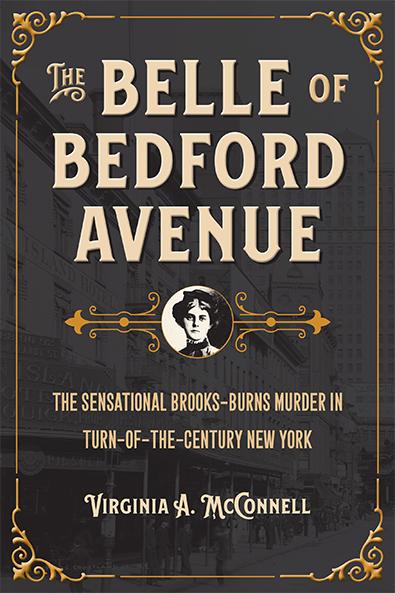
    “The Belle of Bedford Avenue: The Sensational Brooks-Burns Murder in Turn-of-the-Century New York”

    Virginia McConnell

                A rich young woman running wild, her boyfriend left for dead in a low-rent hotel room and lurid headlines such as “Brooklyn is a Modern Sodom”  might seem like a contemporary made-for-television movie. But it’s all straight out of history in Virginia McConnell’s latest historic true crime book, “The Belle of Bedford Avenue: The Sensational Brooks-Burns Murder in Turn-of-the-Century New York” (Kent State University Press).

                The year was 1902 when Florence Burns, who craved excitement frequented dance halls, drank in roadhouses, and even smoked in public—a truly decadent act, discarded the standards of her well-to-do family to hang with the  Bedford Avenue Gang.

                Society was changing with the advent of public transportation in big cities like New York and young women like Florence didn’t have to wait to be introduced by a chaperone to “suitable” young men. Instead she chose gang member Walter Brooks who was found with a bullet in his head and died the next day.

                Ironically, though Florence loved the freedoms of the new century, she escaped punishment for Walter’s death because of old norms of an “Unwritten Law” that was frequently used to justify murder. That, says McConnell, kicked in when Walter refused to marry Florence after they’d had sexual relations—hence it was, though unspoken, retribution for his dishonoring her. Taking this into consideration, the prosecutor didn’t even bring charges against her.

                If only Florence had learned from this brush with the law but alas, she didn’t. And reading about her exploits is a fascinating true crime story as well as insight into a world so much different than ours.

    McConnell, a college English instructor at Walla Walla Community College-Clarkston Campus in Washington, is the author of other historic true crime books including “The Adventuress: Murder, Blackmail, and Confidence Games in the Gilded Age” which was a 2011 Gold Medal-Independent Publisher Book Award/True Crime Category.

                Drawing upon scandalous but long forgotten crimes, McConnell says that at first she didn’t think there would be enough material to write “The Belle of Bedford Avenue.

    She had to go beyond what she could find in the New York Times to ferret out more about the case, reading through lots more newspapers, many that were only available on microfilm through Interlibrary Loan.

    “But when I dug into it, there were a lot of interesting items – such as, the hotel’s being at Ground Zero and the teenagers hanging out at Coney Island and then I found the reference to her subsequent incarcerations,” she says, adding that she had to order the microfilm of one of the trial transcripts from the John Jay College, because the topic was so racy that the newspapers wouldn’t print it.

    “There were times when I’ve expended a lot of energy on a case that interested me, only to have to abandon it because it simply didn’t have enough material for an entire book,” says McConnell, describing herself as lucky to have connected with the grand-nephews of Belle’s first husband, who had a lot of information on their great-uncle Tad. 

    It was also lucky for those of us who like a well-written, intriguing true crime story.