Category: Amazon

  •  Local author to appear at bookstore for book signing of new “Lost East Chicago and Indiana Harbor” history book

     Local author to appear at bookstore for book signing of new “Lost East Chicago and Indiana Harbor” history book

    Award-winning author and journalist Joseph S. Pete will appear at a Northwest Indiana bookstore to sign copies of his new history book, “Lost East Chicago and Indiana Harbor.”

    Pete, a Lisagor Award-winning reporter and columnist, will do a book signing from 11:30 a.m. to 3 p.m. Saturday, July 20 at Miles Books at 2819 Jewett Avenue in Highland.

    He will sign copies of his latest history book about East Chicago and copies of his other books “Lost Hammond, Indiana,” “Secret Northwest Indiana” and “100 Things to Do in Gary and Northwest Indiana Before You Die.” Pete also will sign copies of University of Arizona Professor and East Chicago native Gloria McMillan’s “Children of Steel” anthology about life in steel mill towns, which he contributed a short story to.

    “Lost East Chicago and Indiana Harbor” chronicles the Indiana steel town on the shore of Lake Michigan in north Lake County just outside of Chicago that was a melting pot, drawing immigrants from all over the world to work at its bustling steel mills. As the population boomed in the early 20th century, East Chicago was home to more than 100 nationalities who came for the opportunities in a highly industrialized city that earned nicknames like “The Workshop of America,” the “Arsenal of America” and the “Industrial Capital of the World” while forging the steel that built up 20th-century America.

    Home to one of the most storied basketball rivalries in the state, East Chicago was also known as “The City of Champions” as it produced several high school football and basketball championship teams, including the only two back-to-back undefeated basketball teams in state history and the only two athletes to compete in both the Final Four and World Series. East Chicago gave the world many greats like the NBA’s all-time winningest coach Gregg Popovich, the Milwaukee Bucks star and later corporate magnate Junior Bridgeman, the baseball speedster Kenny Lofton, the actress Betsy Palmer, the boxing legend Angel “El Diablo” Manfredy and the Academy Award-winning screenwriter Steve Tesich, who penned the classic sports film “Breaking Away.”

    Pete’s new book is based in large part on interviews, including with Bridgeman, the state champion who went on to lead the Louisville Cardinals to the Final Four, get his number retired by and Bucks, and build a business empire that made him one of the wealthiest former athletes of all time.

    “Lost East Chicago and Indiana Harbor” takes a fond look back at bygone landmarks like Washington and Roosevelt High Schools, Inland Steel Christmas parties, the Washington Park Zoo, Taco Joe’s, the Mademoiselle Shoppe, movie palaces like the Voge and the gym where Michael Jordan played his first Bulls game. It recounts planned worker communities like Sunnyside and Marktown, the English village designed by noted architect Howard Van Doren Shaw where people park on the sidewalks and walk in the street and that’s featured in Ripley’s Believe It or Not and enshrined on the National Register of Historic Places.

    Pete, who has covered East Chicago for a decade for The Times of Northwest Indiana, relates stories about the Katherine Home, St. Joseph’s Carmelite Home, Big House, bolita, the Wickey Mansion, the Tod Opera House, the Patrick machine and the Crazy Indiana Style Artists graffiti crew, which hung out with the acclaimed artist Keith Haring, appeared on network television, and went on to exhibit their artwork internationally. His book also explores industrial pollution, political corruption, and unsolved mysteries like the deaths of Jay Given and Henry Lopez and the disappearance of the soccer great William “Wee Willie” McLean.

    “Lost East Chicago and Indiana Harbor” looks back at fondly remembered East Chicago intuitions like Albert’s, Dominic’s, Puntillo’s, Shrimp Harbor, Los Burritos, and El Patio Restaurant, as well as curiosities like the East Chicago Hermit and a mummy a local funeral home used to let kids see for a nickel. It also examines the city’s impact, such as producing Indiana’s first Latino elected official, the Hoosier State’s first and longest-running Mexican Independence parade, and the Midwest’s longest-running Mexican American–owned business, as well as the steel that helped shape America and countless other products.

    Pete is an Indiana University graduate, a combat veteran and a board member of the Indiana Society of Professional Journalists and the Chicago Headline Club. He is a playwright and literary writer whose work has appeared in more than 100 literary journals, earning Pushcart Prize and Best of the Net nominations. He’s received many journalism awards, including from the Inland Press Association, the Hoosier State Press Association, the Chicago Journalists Association, Columbia University and the National Association of Real Estate Editors as well as local honors from the Indiana Small Business Development Center and the Duneland Chamber of Commerce.

    For more information or an interview, contact Joseph S. Pete at 219.841.1030 or jpete@alumni.iu.edu.

  • Book: “What Never Happened” by Award Winning Mystery Writer Rachel Howzell Hall
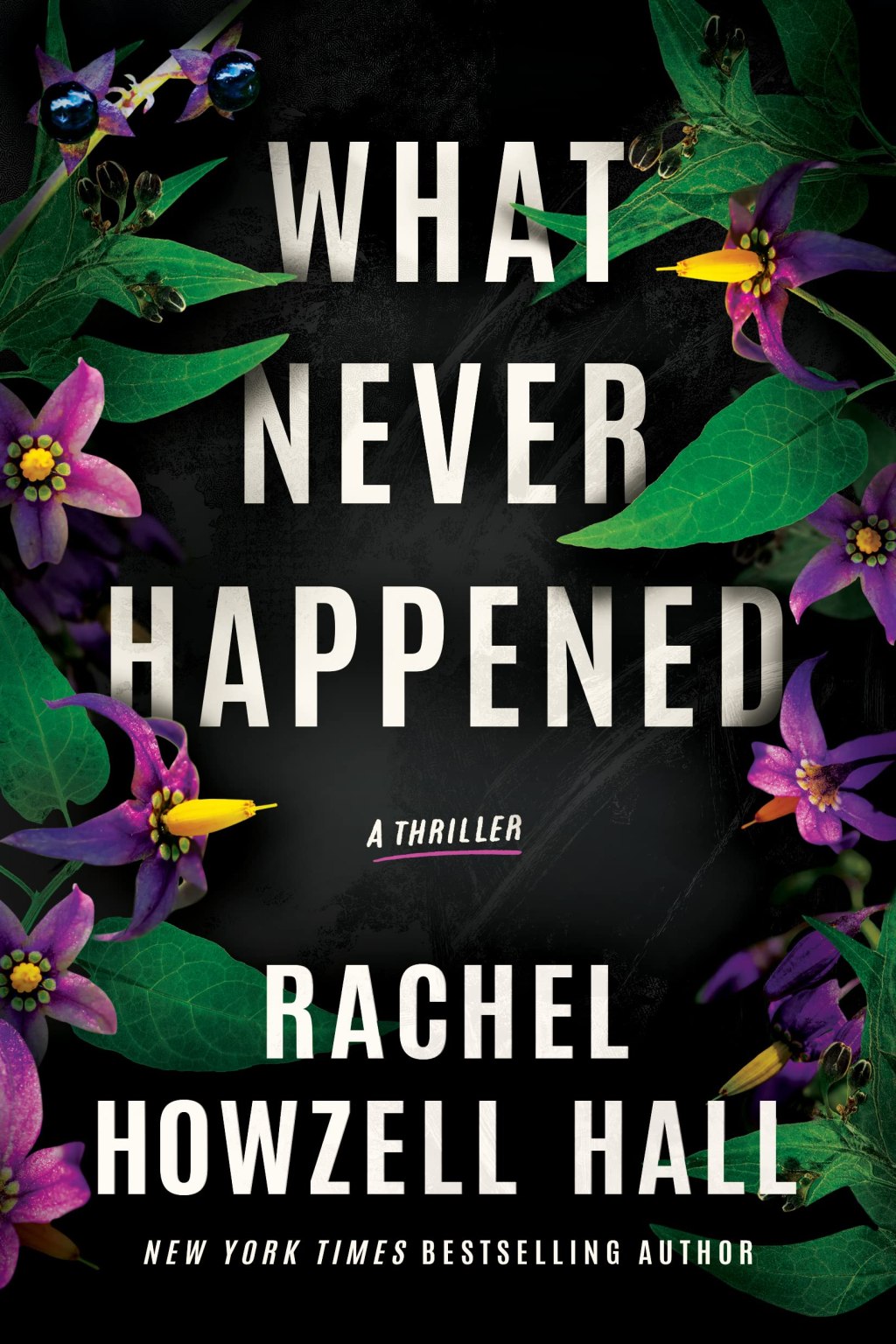
    Book: “What Never Happened” by Award Winning Mystery Writer Rachel Howzell Hall

    Twenty years ago, Colette “Coco” Weber survived the mass murder of her father, mother, and brother on idyllic Catalina Island off the coast of California. The man accused of the murder is now in prison and Coco, who moved away, married, and is now separated from her husband, has returned to the island hoping to jumpstart her life again.

    But Catalina, so pretty with its colorful homes and eclectic boutiques and restaurants, has undercurrents as well. Sure some things haven’t changed. Her Aunt Gwen, who became the caretaker of Coco after the murders, still resents her and is hiding secrets possibly about the ownership of the house where she lives. At first it seems lucky that Coco is still best friends with the owners of the family run island newspapers who hire her to write obituaries—a special skill that Coco excels in. But rampant Realtors are buying up the quaint cottages that line the hilly streets of the island, turning out owners and repricing them at astronomical fees. Catalina, it turns out, may not be the place soon for anyone but the very wealthy.

    That certainly includes Gwen, a former house and hotel cleaner with a penchant for stealing both baubles and expensive items from the places she cleans. It’s in a small part, a payback for all the scorn people in her position endure particularly those of color. But it’s also part of Gwen’s sneaky nature and her disdain for most people including her niece.

    Before long Coco is involved with a handsome rich guy who works at the paper as a lark. His parents make enough money that he really can just dabble in whatever interests him. Soon, though, Coco suspects him of lying to her about his whereabouts at certain times when he goes radio silence so to speak and doesn’t answer his cell phone. And why has he chosen Coco when there are all these luscious beauty queen types in his past.

    “As for her choice of jobs, her family’s obituaries were not special and didn’t capture who she knew they were. And now she has a chance to do for others what she wished had happened for her,” says Rachel Howzell Hall, an award-winning mystery writer about her latest standalone novel, “What Never Happened.” “This is also a story about a woman who’s trying to figure out where she belongs.”

    Determining where she belongs also means figuring out who to trust and as she becomes immersed into island life during the isolated time of Covid, she soon learns that’s not easy to do. One big question is who is sending her threatening obituaries—her own—outlining the day of her death. It turns out there are many secrets and as she writes obituaries, Coco notices a stunning similarity in the deaths of many elderly women. They have refused to sell their homes which now are worth small fortunes. But unfortunately, it’s hard to get someone to believe her.

    “Coco has been stunted in her growth and her ability to figure people out—she lost her parents during the time when they should have been guiding her and her aunt begrudges having to take care of her,” says Hall, who lives in Los Angeles and has visited the island on field trips with her daughter and also conducted extensive research that goes beyond the tourist brochures. “The way her family was taken away from her left her not knowing who she can trust and that becomes even more so with all that is happening on the island. And then she learns that this person she thought—and the law thought—killed her family, did not do it.”

    Determined to find answers, Coco takes chances in trying to solve the mysteries swirling around her. She knows that is the only way she can remain on the island and survive.

    Follow Rachel Howzell Hall at rachelhowzell.com

    This book review originally appeared in the Northwest Indiana Times.

  • Dead Mountain by Douglas Preston & Lincoln Child
    Dead Mountain by Douglas Preston & Lincoln Child

    Two fraternity brothers taking a drunken joyride after too much Captain Morgan Spiced Rum crash their Jeep in the mountains of New Mexico on a freezing winter night. With no cell service available, they manage to find a cave to spend the night. Unfortunately for them they discover several other things as well. Besides ancient petroglyphs and a body resting in a prehistoric burial site which needs to be returned to ancestral lands, there’s also the remains of two students who went missing 15 years ago in a case code named “Dead Mountain.”

    The students were among a group of eight experienced mountaineers who for some reason became so afraid that they fled their tent half naked into a raging blizzard. The bodies of some had been found but now one remains missing.

    What happened that night so long ago and where is the missing student? With the case reopened, the services of archaeologist Nora Kelly and FBI Agent Corrie Swanson are called into action in this fourth book (though it works as a standalone) series about Nora Kelly written by Douglas Preston and Lincoln Child, the New York Times bestselling authors. Solving a cold case from so long ago is never easy, but the investigation is confounded by other issues as well. The parents of the deceased students believe there’s a cover-up going on and are actively protesting and Nora’s brother, Skip, has gotten into a tussle with a bombastic and media-seeking sheriff who is up for re-election, and now Skip is charged with attempted murder. 

    As Nora and Corrie continue investigating, they realize there are many long-buried secrets tied to the disappearance of the students and outside forces working against them to keep those secrets well hidden and now that the case is reopened, their own lives may be in jeopardy as well. 

    “As Corrie moved farther and farther down the passage, she began to feel like a character from some dreadful Twilight Zone episode: trapped in an endless tunnel of concrete, destined to walk down it forever and ever. . . .“

    “Why are we whispering?” Nora answered with a short laugh. “There’s no one here.”

    Corrie snorted. “You’re right. Only the dead…” 

    Soon after they discover the body of the last missing student. 

    “It took a moment for Corrie to pull herself together and examine the scene. A man lay on the bed, hands folded across his breast, looking more like a corpse laid out for viewing.” 

    But the two women were wrong about only the dead being nearby. Isolated in the frigid landscape of the mountains where the tragic deaths had occurred all those years ago, their investigation has led Swanson and Kelly to the truth and directly into the path of a group of men desperate to keep them from revealing it. 

    This review originally appeared in the New York Journal of Books.

    For ebook and audiobook versions of “Dead Mountain” click here.

  • Driving the Green Book: A Road Trip Through the Living History of Black Resistance 

    Driving the Green Book: A Road Trip Through the Living History of Black Resistance 

    Buy on Amazon

    “The Green Book was more than just a road trip guide but a way of survival. Hall hopes that its history will live on.”

    The road, a symbol of freedom, was fraught with dangers for Black travelers in the time when Jim Crow laws still existed. Not much is known about Victor Hugo Green, the author of the “Green Book,” a series of tomes released annually listing places in cities and states that willingly accommodated Black travelers.

    What we do know is that Green at one point had worked as a postal worker and had an entrepreneurial spirit according to Alvin Hall, the author of Driving the Green Book: A Road Trip Through the Living History of Black Resistance who hypothesizes that Green authored the book in response to his own travels with his wife, Alma.

    “Back at the time the Green Book first appeared in the late 1930s, the automobile had seemed a likely safe haven for Black travelers—or at least safer,” writes Alvin Hall. “In a bus or on a train, a Black person ran the risks and humiliations of the laws and strictures around the use of public transportation due to segregation. That’s why a car road trip was particularly important: travelers needed more protection en route to their destinations—whether that was going home to Birmingham, Alabama; to visit Uncle Jerome in New York; or to gather with Alma Greens relatives in Richmond, Virginia.”

    Hall determined that he would revisit the places mentioned in Green’s books, accompanied by his friend Janée Woods Weber. Their journey took them from New York to New Orleans by way of Detroit. As they drove, they gathered in as much of the past as they could by visiting the clubs, restaurants, shops, and motels still in existence that Green said were safe. When possible, at each stop they tried to trace who were alive back then and capture their reminiscences.

    In Memphis, they visit the Lorraine Motel where Dr. Martin Luther King was assassinated. Besides the horrors of the murder of the Civil Rights leader, the monetary impact on the family that owned the hotel was profound as well as travelers shied away from staying there. But this is a story that has a sense of triumph as well. It is now a state-owned museum and on the National Register of Historic Places.

    The Green Book was more than just a road trip guide but a way of survival. Hall hopes that it’s history will live on.

    Jane Simon Ammeson’s most recent book is Lincoln Road Trip: The Back-Roads Guide to America’s Favorite President, a Bronze winner in the Travel Book category for the 2019–20 Lowell Thomas Travel Journalism Competition. Lincoln Roadtrip was also a finalist for a 2019 Foreword Indie Award for Travel. Her travel writing appears in various newspapers and magazines.

    Follow Jane Simon Ammeson at Travel/Food.

    This review previously was published by New York Journal of Books.

  • Sonali Dev writes about three generations of women in latest book

    Sonali Dev writes about three generations of women in latest book

    “The Vibrant Years” by Sonali Dev, the bestselling Indian American novelist, was the first book chosen by actress Mindy Kaling when she started her publishing imprint, Mindy’s Book Studio with the goal of bringing diversity to readers.

    “Sonali Dev’s ‘The Vibrant Years’ captures the spirit of Mindy’s Book Studio,” Kaling said in the press release announcement. “It’s a joyful and empowering read following a group of unconventional women trying to find themselves.”

    Dev, who lives in the Chicago area, found inspiration when she first began writing from all the Jane Austen novels she read while growing up. Though centuries and a continent separated the two, Dev liked the way Austen dissected British society with wit and flair.

    “You both have a snarky well, I don’t mean snarky but…” I say fumbling with words. I obviously hadn’t had enough coffee that morning.

    “I like that description because there’s so much in the world to be snarky about,” says Dev, who is always polite. “If we don’t laugh at the world around us, we’re just going to constantly believe all the lies they tell us, right? So I think snark is very healthy.”

    Okay, so we’ll call it snark. I like that.

    In “The Vibrant Life,” Dev writes about three generations of women. There’s 65-year-old Bindu Desai who has come into a fortune left to her by a man from her past—a past that she doesn’t want anyone to know about including her daughter-in-law who recently was divorced from her son and her granddaughter, Cullie. The latter is a technology whiz who created an app for coping with anxiety and she now has plenty of it, partly because she’s been betrayed by her boyfriend over the app’s future.

    “I think of it as everything I’ve ever wanted to say about being a woman and the essentially feminine journey has been a central theme of all my books,” says Dev whose other books include “Pride, Prejudice, and Other Flavors” and “Incense and Sensibility,” both of which were bestsellers. “This book about three generations of Indian American women is a culmination of that.”

    Working together, the three help Cullie in her attempts to regain control of her anxiety app while working on their own issues. Aly, the daughter-in-law, is struggling for recognition and advancement at the local news station where she works and where opportunities for Indian American women are limited. Bindu has used her legacy in part to purchase a condo in a posh Florida retirement community. But the members of her HOA board don’t like her attractiveness and vivaciousness. It’s like a replay of high school.

    Dev says she was inspired in part to switch from her more romance-oriented novels to what she describes as women’s humorous fiction because of all the grandmother jokes she saw in fiction.

    “Many older women characters in books are like cardboard, stereotypes,” she says. “They are either vinegary and outspoken or benevolent, wise and a font of affection kind of grandmother. But none of the women I know in their 60s and 70s are like that. I wanted to write characters that are like the older women in my life and the woman who I want to be when I am that age.”

  • Karen White’s New Orleans Spooky Tale: The Shop on Royal Street
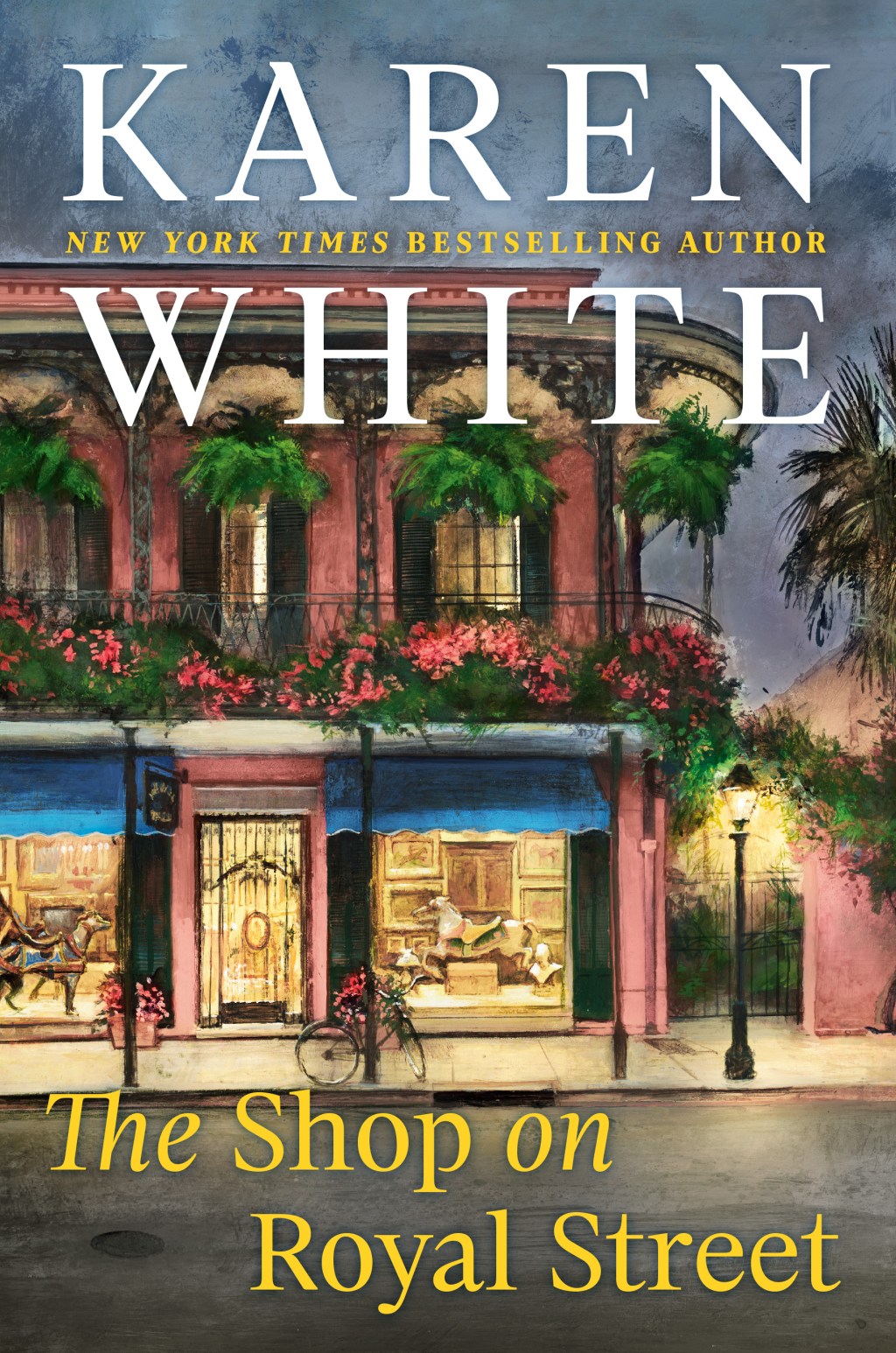
    Karen White’s New Orleans Spooky Tale: The Shop on Royal Street

    Author Karen White has added another page-turner to her repertoire of haunted houses and ghosts who won’t stay put in her latest book, “The Shop on Royal Street.”

    White, who has written more 30 books, including the very successful haunted home Tradd Street Series, now has moved her spooky action from Charleston to New Orleans as we follow Nola Trenholm, who buys a Creole cottage that needs extensive work only to discover that some of the previous occupants are still living there — if living is the right term to apply to people who are dead.

    But you can’t say Nola wasn’t warned. Her stepmother, who hears and sees ghosts like the rest of us see cars on the streets, tours the house with her before she signs the paperwork and suggests that it would be better to burn it down than then to move in.

    As if that wasn’t enough of a warning, while they’re looking around there’s a sudden scream and an explosion of antique blue bottles — a seemingly spontaneous event with no possible explanation as to why it happened.

    It turns out that the home was the scene of an unsolved murder, and to help her figure out what to do, Nola has to rely upon Beau Ryan, who can communicate with the spirits, something Nola unfortunately is unable to do. But Beau’s past is mysterious. His sister and parents disappeared during Hurricane Katrina and he is also connected to the murder that took place in Nola’s new home.

    Nola has her own issues as well. A recent college graduate, like her parents she has addiction issues. Her father, Jack Trenholm, a best-selling novelist, has been able to overcome his demons, but her mother, a drug addict, didn’t.

    White, who says she definitely believes in ghosts, has never seen one herself.

    “And I’ve definitely put myself in places that are haunted,” she said.

    Her grown son has and he is definitely not happy about it.

    Is it hard to write about ghosts if you’ve never seen one, I ask White when we chat on the phone?

    It turns out it is, since White never plans or plots her books, so what the characters say and do, whether they’re still alive or not, just flows as she writes.

    Her human characters can be difficult and so can the spirits.

    ”I don’t use the ghosts to be scary, I use them as characters — it’s like having a neighbor,” she said. “I love how they tie in the past and the present and I love how they can be useful. Don’t we all wish we could ask for help from the other side?”

    But, of course, she continues, ghosts can’t always express themselves any better than their human counterparts.

    This article originally appeared in the Northwest Indiana Times.

  • Mindy Kaling, Amazon Publishing, and Amazon Studios Announce Mindy’s Book Studio and First-Look Deal, a New Home for Dynamic Storytelling

    Mindy Kaling, Amazon Publishing, and Amazon Studios Announce Mindy’s Book Studio and First-Look Deal, a New Home for Dynamic Storytelling

    Mindy Kaling, Amazon Publishing, and Amazon Studios just announced the launch of Mindy’s Book Studio, a boutique story studio that will publish books selected by Kaling from emerging and established diverse voices.

    “I had the best time working on Nothing Like I Imagined, and I am so excited to continue my relationship with Amazon,” said Kaling, about her last book, a collection of essays in which she reflected upon her new role as single mom, the perks of not having a husband, and her struggle with social anxiety. While dealing with all this, Kaling gets Kanye West’d (or should we now say Ye’d) at her best friend’s birthday, thwarts an “only in LA” crime, and learns what it means to have it all.

    Starting later this year, Mindy’s Book Studio will be publishing books across genres, from fresh romantic comedies and poignant coming-of-age stories designed to make readers laugh—and cringe—to gripping dramas with unforgettable female protagonists.

    Kaling, a multi-talented actress, comedienne, writer, and Hollywood-bruncher, is known for her insightful and hilarious books including Why Not Me and the delightful and upfront personal Is Everyone Hanging Out Without Me (And Other Concerns). She currently has 11.6 million Twitter followers.

    The partnership between Amazon Studios and Kaling will adapt material published under Mindy’s Book Studio as feature motion pictures which will exclusively stream on Prime Video in more than 240 countries and territories worldwide.  Kaling holds first-producer option on adaptations. Kaling has also signed her debut novel and new essay collection for publication with Amazon Publishing.

    “I’m passionate about bringing unique stories to readers and viewers, and I can’t wait to help discover and support talented new voices through Mindy’s Book Studio,” she says.

    From best-selling memoirs to some of television’s most beloved shows and characters, Kaling has entertained readers, viewers, and listeners alike for nearly two decades. Building on her relatable and hilarious take on love and relationships—as seen in her Amazon Charts best-selling essay collection Nothing Like I Imagined (Except for Sometimes) and Amazon Studios’ hit film Late Night (which she co-wrote, produced, and starred in)—Mindy’s Book Studio will expand Kaling’s beloved storytelling sensibilities to a new slate of juicy, unforgettable books that readers can access through subscription programs such as Kindle Unlimited, and in print and audio.

    “We are delighted to work with Mindy and Amazon Studios on Amazon’s first-ever book studio,” said Julia Sommerfeld, publisher of Amazon Publishing. “Mindy is brilliant at bringing to life highly entertaining, funny, sharp, and bingeable stories, and we can’t wait to collaborate with her on discovering and championing must-read stories from new and diverse voices.”

    “With her visionary voice, trademark wit, and tremendous artistic acumen, Mindy Kaling remains a relentless innovator in the creative community,” said Jennifer Salke, head of Amazon Studios. “She is a pioneering artist, remarkable role model, and philanthropist who continues to tap into global and cultural zeitgeists as a source for her refreshingly authentic storytelling. We could not be more thrilled to expand our collaboration with her across Amazon to not only showcase her incredible talents but also introduce new, dynamic storytellers to our global customers.”

    Kaling is represented by 3 Arts Entertainment, CAA, The Lede Company, and PJ Shapiro. Sommerfeld, Lauren O’Connor, head of IP & literary acquisitions at Amazon Studios, and Carmen Johnson, editorial director of Mindy’s Book Studio, will work with Kaling to find unputdownable stories with the potential to come to life on the screen.

    In 2023, Amazon Publishing will also publish Kaling’s debut novel, a comedic and twisty page-turner under Mindy’s Book Studio. In 2024, Amazon Publishing will publish a new collection of personal essays in print, digital, and audio, offering Kaling’s latest reflections on life, motherhood, friendship, and being a boss. Amazon Studios has acquired first-look rights for Kaling’s forthcoming novel and essay collection.

  • Windy City Blues

    In her fun very readable Windy City Blues (Berkley 2017; $16), Chicago author Renee Rosen again takes another slice of the city’s history and turns it into a compelling read.

    Rosen, who plumbs Chicago’s history to write such books as Dollface, her novel about flappers and gangers like Al Capone, and What the Lady Wants which recounts the affair between department store magnate Marshall Field and his socialite neighbor, says she and her publisher were racking their brains for her next book which encompassed Chicago history.

    “She suggested the blues,” says Rosen, who didn’t have much interest in the subject.

    But Rosen was game and started her typical uber-intensive research.

    “When I discovered the Chess brothers, who founded Chess Records, I fell in love,” she says, noting that when researching she was surprised about how much she didn’t know about the subject despite her immersion in Chicago history for her previous books. “I thought this is a story.”

    “As part of my research, I drove the Blues Highway from New Orleans to Chicago,” she says. “I also met with Willie Dixon’s grandson and with Chess family members.”

    Combining fact and fiction, Rosen’s story follows heroine Leeba Groski, who struggling to fit in, has always found consolation in music. When her neighbor Leonard Chess offers her a job at his new Chicago Blues label, she sees this as an opportunity to finally fit in. Leeba starts by answering phones and filing but it soon becomes much more than that as she discovers her own talents as a song writer and also begins not only to fall in love with the music industry but also with Red Dupree, a black blues guitarist.

    Windy City Blues was recently selected for Chicago’s One Book project, a program designed to engage diverse groups of Chicagoans around common themes. Rosen says she is very honored to be a recipient.

    “I put my heart and soul into this book,” she says. “I think it’s a story with an important message. In it are lessons of the Civil Rights movement, what it was like for Jews and people of color along with the history of the blues and the role of Jews in bringing the blues to the world. After all, as the saying goes: Blacks + Jews = Blues.”