Category: 57th Street Books

  • Angela Medearis: The Ultimate Kitchen Diva

    Angela Medearis: The Ultimate Kitchen Diva

    Photograph by Penny De Los Santos-Diabetic cookbook, Author Amgela Medearis

    “People are eating African American food every day, but they don’t know it,” Angela Shelf Medearis says to me when we chat on the phone. In part, she’s talking about James Hemings who, in the complicated way of slavery, trained in the culinary arts in Paris and became a noted chef de cuisine and yet lived most of his life enslaved. Hemings either created or introduced a variety of the foods we eat now such as macaroni and cheese, ice cream, French fries, meringues, crème brulée, and French-style whipped cream.  Another dish he created that we don’t eat regularly if at all is his handwritten recipe for snow eggs–soft, poached meringue, set in puddles of crème anglaise.

              Hemings was the son of Sally Hemings, an enslaved woman and  John Wayles, the man who “owned” her. The two had six children together.  Wayles also had a more traditional family and his daughter Martha married a plantation owner named Thomas Jefferson. Thus, James was the half-brother of  Martha Jefferson who “inherited” James  (that’s so creepy I even hate writing it) when Wayles died. James was eight when they all came to live at Monticello. His youngest sister, Sally was just an infant. To make matters even more complex, after Martha died and Sally reached some type of maturity—she was probably in her mid-teens, she became Jefferson’s mistress and had six children by him, four of whom lived to adulthood.


    So, Sally Hemmings was Martha Jefferson’s half-sister, and her children were half-siblings to Martha and Thomas’s children. I only mention all this to show how intertwined Black and White families were and also how the foodways of both merged.

             But while Hemings introduced the Frenchified cookery to America,  

    Medearis, the founder of Diva Productions, Inc., the organization that produces her multicultural children’s books, cookbooks, videos, and audiocassettes, points out that people weren’t eating black-eyed peas before Africans arrive in this country.

              “Back then they even thought tomatoes were poisonous,” she says. “But when they shipped slaves, they also shipped  the foods they ate with them  because that was a cheap way to feed them,” she says. “The recipes for those foods traveled from one place to the other. If they stopped in the Caribbean or South America before coming here, then the recipes changed with the foods and spices available and the types of cooking techniques.”

              Medearis, a television chef known as the Kitchen Diva, has written 107 books. Many are children’s books, but she also is a cookbook author focusing on both the historic roots of African American cookery and healthy eating like The Kitchen Diva’s Diabetic Cookbook: 150 Healthy, Delicious Recipes for Diabetics and Those Who Dine with Them.

    But she didn’t start out to be a cook.

              “I only cooked enough that social services wouldn’t come and take away my children,” she says with a laugh. But her mother, after she retired, decided she wanted to market her raisin pie for some extra income.

    While her mother and sister did the cooking, Medearis who often wears feather boas during her TV appearances and on her PBS cooking show and isn’t shy about being in the limelight, did the marketing.

    But when her mother and sister decided to quit, Medearis knew she had to learn to cook if she wanted to keep her food business going.

    Now she’s so full force that celebrity chef and restauranteur Bobby Flay arrived for a Jerk Chicken Throwdown while she was marinating jerk chicken for a family get. It was for his Food Network show Throwdown with Bobby Flay. 

              Who won I ask?

    Medearis’s Jerk Chicken

              “My chicken had been marinating for hours,” Medearis replies. “He just arrived from Manhattan and threw some spices on his chicken. It burned. I beat Bobby.”

    Watch it here.

    Though she originally didn’t cook Medearis had written several loved historic research. Did I know that George Washington Carver drove a food wagon around to introduce people to healthy foods?

    No. I knew that Carver, who famously said, “There is probably no subject more important than the study of food,” was born a slave and became a botanist, author, educator and agriculturalist. He also collaborated with auto magnate Henry Ford on growing peanuts and soybeans.

    And don’t even get her started on Carver and black-eyed peas.

    “Black-eyed peas, okra, peanuts and sesame seeds, and the oil they produce, are documented contributions from Africa via the slave trade to our American cuisine,” she writes in her syndicated column. “I prepared black-eyed peas any number of ways while doing research for my first cookbook.”

    That would be The African-American Kitchen: Cooking from Our Heritage, a best seller that even now 30 years later is considered a standard on the foodways African Americans bought to this country.  The problem though was getting it published. Her award winning children’s books were published by Dutton and when she brought the idea for her cookbook, she found an editor there who loved the book. But the editor at the next level turned it down, saying he’d published an African American cookbook almost 30 years earlier and no one bought it. He didn’t think the country was ready for another.

    What’s a Kitchen Diva to do? Make a peach pie, of course, as it’s representative of both Black and Southern food history.

    “You could hardly get a peach pie anywhere back then in Manhattan,” says Medearis. Wrapping up both the peach pie and the manuscript, separately we presume, she sent both off to the publishing company.

    She got the contract.

    “That book sold so many copies it was crazy,”

    Overall, she’s written 107 books seven of which seven are cookbooks. Published in seven languages, she’s sold a total of 14 million books. But despite that, she’s not ready to stop.

    “People ask me when I’m going to retire,” says Medearis who lives in Austin, Texas. “Why should I? I’m having a lot of fun with it. I’m doing what I want to do.”

    Creole Chicken Stew

    Makes 8 Servings

    1½ tablespoons olive oil

    1 cup chopped yellow onions

    1 cup coarsely chopped carrots

    ¼ cup chopped celery

    4 cloves garlic, minced

    1 bay leaf

    2 teaspoons diced seeded jalapeño chile

    ¼ teaspoon salt

    1 teaspoon freshly ground black pepper

    ½ teaspoon dried thyme

    2 tablespoons whole-wheat flour

    3 cups reduced-sodium chicken broth

    1½ pounds boneless, skinless chicken breasts, cut into 1-inch-wide strips

    1 cup peeled cubed Yukon Gold potatoes or kohlrabi, or a combination

    1 cup diced zucchini

    1 cup halved okra or frozen cut okra

    4 cups cooked brown rice

    2 green onions, chopped, including green parts

    In a large pot, heat 1 tablespoon of the oil over medium-high heat. Add the yellow onions, carrots, celery, garlic, bay leaf, jalapeño, salt, pepper, and thyme and sauté until the onion is translucent, about 3 minutes.

    Using a slotted spoon, transfer the vegetables to a plate, leaving as much oil in the pot as possible. Add the remaining ½ tablespoon of oil. Stir in the flour. Cook, stirring constantly, until the flour begins to turn golden brown, about 3 minutes.

    Gradually whisk in the broth and cook for another 5 minutes, whisking until smooth. Bring the mixture to a boil, then reduce the heat to a simmer. Add the chicken, potatoes or kohlrabi, and zucchini. Return the sautéed vegetables to the pan. Partially cover and simmer, stirring occasionally, for 20 to 30 minutes.

    Add the okra and cook for 15 to 20 minutes. Remove the bay leaf. Serve over ½ cup of rice per person and sprinkle with the green onions.

    Kitchen Diva: Tap Your Inner Chef With DIY Recipes

    Angea Medearis, the Kitchen Diva, wrote one of her syndicated columns on creating Do-It-Yourself recipes.

    “Basically, a DIY dinner recipe is about finding a way to retain the flavors of the recipes you love while using the ingredients that you have on hand,” Medearis writes. “If you have always wanted to free yourself from the restraints of a recipe, now is the time to do it! Think of the current lack of ingredients as permission to tap into your inner chef.”

    To ease into creating your own DIY dinner recipes, Medearis suggests starting by making a pot of chowder.

    “No one really knows the origin of the term chowder,” she writes, “but whether it came from French, Caribbean, Portuguese or Brazilian cooks, the basic meaning is connected to the large pot that the meal is cooked in.”

    Medearis is a history buff paritcularly when it comes to food.

    “Chowders were introduced to North America by immigrants from France and England more than 250 years ago. Native Americans called the dish ‘chawder’.” she says noting the word interpreted as “chowder” by early settlers and fishermen in New England.

    “The original versions of the dish consisted of a pot filled with a mixture of fresh fish, salt pork, leftover hardened biscuits (which were used as a thickener), onions, water and whatever spices were available, writes Medearis. “A chowder is a delicious way to use the ingredients you have on hand to create a meal that does not require extensive prep or simmering for hours. My recipe for Seafood and Sweet Corn Chowder uses the basic techniques.”

    My recipe for Seafood and Sweet Corn Chowder uses the basic techniques for making a chowder, but is designed to accommodate the need to vary ingredients based upon what you have on hand or what you can purchase at the store.

    Whether you decide to make a seafood or vegetarian chowder, feel free to create your own version of this DIY dinner.

    SEAFOOD AND SWEET CORN CHOWDER

    If you don’t have all the vegetables, seafood or spices on hand, omit or substitute the ingredient with what you do have. This chowder will still be delicious without it!

    3 tablespoons butter or vegetable oil

    1/2 cup (about l large stalk) chopped celery

    1/2 medium onion, chopped

    1/2 green bell pepper, seeded and chopped

    2 garlic cloves, minced or 1/2 tablespoon granulated garlic powder

    1 1/2 teaspoons salt

    1 1/2 teaspoon ground black pepper

    3/4 teaspoon dried dill or tarragon, or 1 tablespoon dill pickle juice

    1/8 teaspoon cayenne pepper or red pepper flakes

    2 cups chicken broth, seafood stock, clam juice, bouillon fish base or water

    1 to 2 large Russet potatoes, or 3 red skin or Yukon Gold potatoes cut into 2-inch cubes, about 2 to 3 cups

    2 large carrots, chopped

    2 cups frozen corn, thawed, or 1 (15-ounce) can whole kernel or cream-style corn, or 6 ears sweet corn, husk and silk removed, or frozen corn on the cob, thawed with kernels cut from the cobb

    2 cups heavy cream, half and half

    Whole milk or 2 (14-ounce) cans evaporated milk

    1 3/4 to 2 cups fully cooked, skinless salmon chunks, or 1 can (14 3/4 ounces) salmon, drained, flaked, bones and skin removed, or 1 to 2 cups fresh or frozen peeled and deveined shrimp, cooked peeled and deveined shrimp, or cooked crab meat (checked for pieces of shell) or a combination of the seafood equaling 1 3/4 to 2 cups.

    1. Place the butter or oil into a large saucepan or Dutch oven placed over medium heat. Add in the celery, onion, green bell pepper, garlic or garlic powder, and 1/2 teaspoon of the salt and pepper, dill, tarragon or dill pickle juice, and the cayenne pepper or red pepper flakes. Saute, stirring occasionally until the vegetables are tender, about 4 to 5 minutes.

    2. Stir in the broth, stock, juice or water, potatoes, carrots and the remaining teaspoon of he salt and pepper. Cover and bring the chowder to a boil.

    3. Reduce heat to low; stir the mixture, cover and simmer for 40 minutes or until the vegetables are nearly tender. Stir in the corn, cream or milk, and the salmon, shrimp or cooked crab meat (or a combination of seafood). Simmer on low heat for 10 to 15 minutes or until heated through.

    4. Garnish with lemon wedges, chopped parsley or green onions. Serve with toasted French bread or crackers. Serves 6

    Here’s the Jerk Chicken recipe that won the Throwdown with Bobby Flay.

    Jamaican Jerk Chicken

    Yield: 6 to 8 servings

    1/3 cup olive oil

    1/3 cup distilled white vinegar

    1/2 cup orange juice

    1/2 cup lime juice

    1/2 cup molasses

    1/4 cup soy sauce

    1 bunch cilantro, leaves chopped

    4 green onions, chopped

    2 cloves garlic, chopped

    1 Scotch bonnet chili, serrano, or Thai bird

    chiles, seeded and minced

    3 bay leaves

    3 peppercorns

    1-inch piece cinnamon, crushed

    2 tablespoons ground sage

    1 tablespoon ground thyme

    1 tablespoon ground allspice

    1 teaspoon freshly ground black pepper

    1/2 teaspoon ground nutmeg

    5 pounds chicken pieces

    Combine the oil and vinegar in a medium glass bowl. Stir in the orange and lime juice, molasses, soy sauce, cilantro, green onions, garlic, chili, bay leaves, peppercorns, cinnamon stick, sage,thyme, allspice, pepper, and nutmeg.

    Place the chicken pieces in a large baking pan and pour the spice mixture over them, coating each piece well. Cover with plastic wrap and place the chicken in the refrigerator to marinate 12 hours or overnight, turning once.

    Allow the chicken pieces to come to room temperature before grilling. Heat the grill until the coals are somewhat white with ash; the flame should be low. Place the chicken on the grill and cover with the lid. Grill for 30 to 35 minutes, turning pieces to cook evenly. Baste pieces with remaining marinade.

    For more information including recipes, https://www.medearis.com/

  • Hope Rides Again: An Obama Biden Murder

    Hope Rides Again: An Obama Biden Murder

                  Barack Obama and Joe Biden return to solving crimes in Hope Rides Again: An Obama Biden Mystery, the second in the series written by Andrew Shaffer and starring the former president and vice president.

                  “It’s a totally separate mystery from the first book,” says Shaffer while sitting at a table where a long line had formed waiting for him to autograph copies of his novel at a two-day book fair in Lexington, Kentucky. “The first was set in Wilmington, Delaware and this one is set in Chicago on Obama’s turf and takes place in the spring around St. Patrick’s Day which is certainly a holiday they take seriously there.”

                  Indeed, Shaffer, who at one time lived in Chicago, says he revisited old haunts and new places for background as the two BFFs hunt for Obama’s Blackberry and the murderer of the their who originally stole it.

                  Though the premise of the two joining together as detectives is somewhat zany, Shaffer describes his book as dealing with serious topics as well.

    “But I try to do it in a lighthearted way,” he says. Also, fun are the covers for both books including the first in the series, Hope Never Dies. Harkening back to the vivid colors of 1960s, the first shows Biden driving a convertible while Obama stands in the front seat pointing out the way as they chase their quarry. In the latest, Obama leans down from a swaying rope ladder tethered to a helicopter, his arm outstretched to help Biden up.

    One person who thinks the mysteries are fun is the former vice president. When Biden was campaigning in Kentucky (Shaffer and his wife, a romance writer, live in Louisville), he was contacted by the campaign who set up a meeting.

                  “I didn’t know whether he liked the book or not or what he was going to say,” says Shaffer adding that the Biden hadn’t read either book but signed his copies. “It was really kind of different to have a character in your book sign your book. I found out later that people have been bringing my books to his campaign stops and asking him to sign them, so he was probably thinking who’s the guy who wrote this?”

                  It’s tricky writing about people we know publicly but not in person says Shaffer.

                  “I think in ways I know them too well because I know their history and what I think they would do and say, because I’ve written about them and I’ve seen and read about them for eight years,” he says. “When I heard Biden speak in Kentucky, I was like my Biden wouldn’t say that.”

                  Shaffer’s book might have garnered a few votes for the vice president.

                  “I met one person who said I can’t wait to vote for them again because now they’re detectives,” he says.

    Ifyougo:

    What: Andrew Shaffer book signing

    When: Tuesday, July 9 at 6 p.m.

    Where: The Seminary Co-op Bookstore, 5751 S Woodlawn Avenue, Chicago, IL

    Cost: Free but RSVP is suggested

    FYI: 773.752.4381; semcoop.com

    What: Andrew Shaffer book signing

    When: Wednesday, July 10 at 7 p.m.

    Where: Anderson’s Bookshop, 123 W Jefferson Ave., Naperville, IL

    Cost: This event is free and open to the public. To join the signing line, please purchase the author’s latest book, Hope Rides Again, from Anderson’s Bookshop. To purchase, stop in or call Anderson’s Bookshop Naperville.

    FYI: 630-355-2665; andersonsbookshop.com

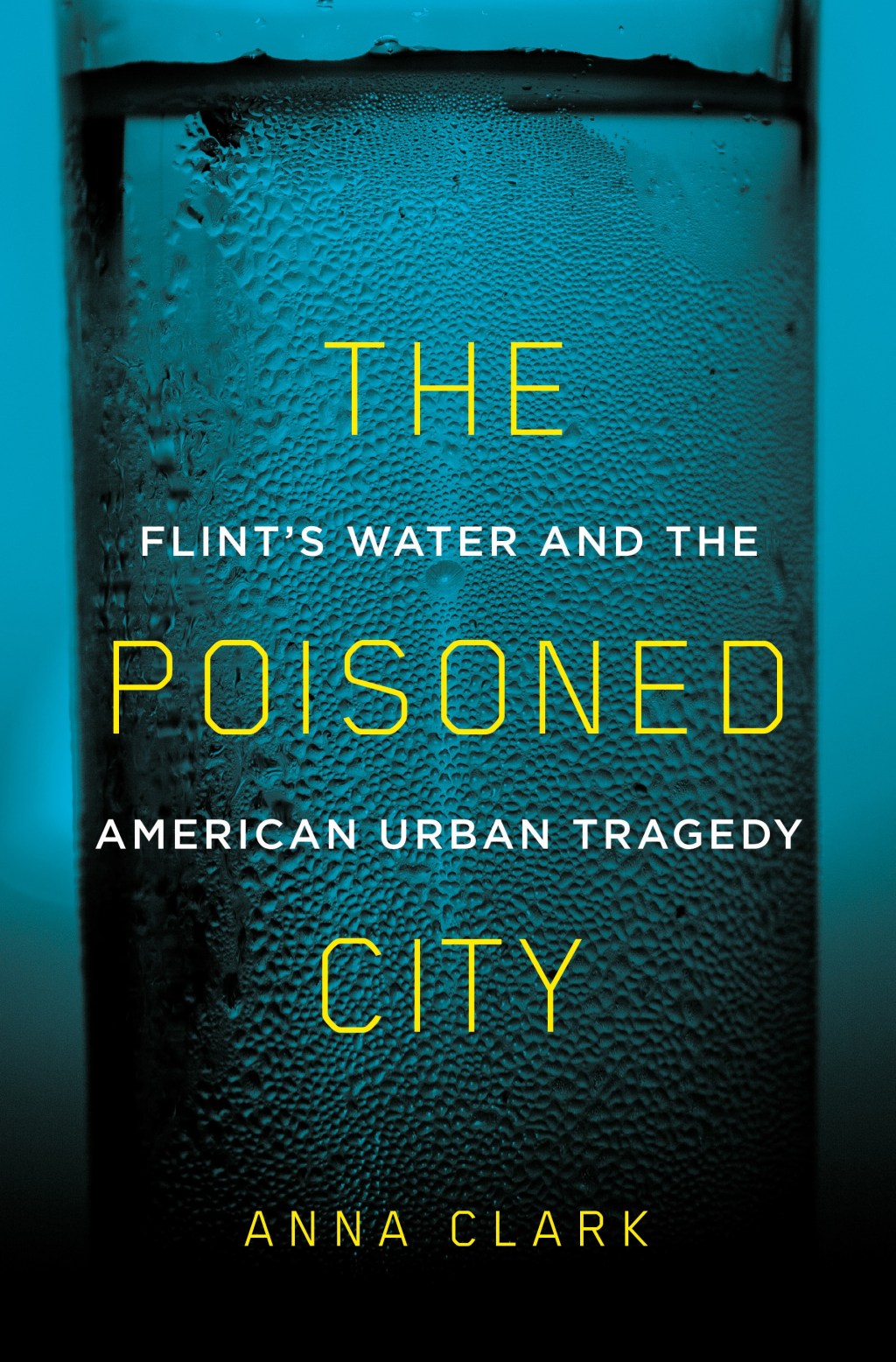
  • The Poisoned City by Anna Clark

    The Poisoned City by Anna Clark

    Like an accident in slow motion, Anna Clark, a Detroit-based journalist followed the crisis of toxic drinking water in Flint, Michigan.
    “I had my head in it for years and it’s still there, I talk about it and I can’t get my head about how it happened,” says Clark, who has written for The New York Times, the Washington Post and Politico.
    This obsession with the government’s failure to provide clean water in a once thriving manufacturing city whose population of about 99,000 is largely African American compelled Clark, who was a Fulbright fellow in Nairobi, Kenya and edited A Detroit Anthology, a Michigan Notable Book, compelled her to research and write The Poisoned City: Flint’s Water and the American Urban Tragedy (Metropolitan Books 2018; $30) which was an Amazon Best Book of 2018 . But she didn’t do so as a faraway observer. Clark, who graduated from the University of Michigan’s Residential College with highest honors, double majoring in History of Art and Creative Writing & Literature, and minoring in Crime and Justice and received an MFA from Warren Wilson College, has always been a doer.
    For almost two years, citizens of Flint complained about the water, showing up at meetings with jars of the putrid looking liquid that came out of the faucets and talked about how people were getting ill from drinking it. The GM plant in Flint actually changed their water system because the city water was corroding the auto parts they manufactured.
    “It wasn’t good enough for the machines, but it was good enough for the people?” Clark asks rhetorically. “I wanted to really dig deep. I loved the research and the long conversations with a lot of people. I traveled to Flint a lot, to attend events, meet people and just hang out. I audited classes at the University of Michigan on metropolitan structures, legal issues and water rights. There was so much information to connect. I really couldn’t stop until my publisher said I had to turn in my manuscript.”
    Clark says most of the credit for the crisis being covered by major media sources is due to the city’s residents.
    “They would go to Lansing to meet with legislators and attend meetings, the mapped where the symptoms were occurring,” she says, noting their work propelled the story to a national level which is when the state finally started took action. “I really think many people in positions of power didn’t think the people in the city mattered very much. The clear message is we don’t actually care to do anything sizable about it.”
    But what happened in Flint could happen anywhere. Clark also sees this as an urgent public health care issue and one that is even more important as the national conversation is about dismantling safety regulations.
    “Even people in less disadvantaged cities have lead in their popes,” she says. “At the base level of what a city should do for its citizens, I think safe drinking water is pretty basic.”


    Ifyougo:
    What: Anna Clark discusses The Poisoned City and then will be joined in conversation with Rick Perlstein, the author of several books. A Q&A will follow the discussion.
    When: Thursday, January 24 at 6 pm
    Where: The Seminary Co-op Bookstore, 5751 S. Woodlawn Ave., Chicago, IL
    Cost: Free
    FYI: 773-752-4381; 57th.semcoop.com

  • BOOK REVIEW, SIGNING: New author Ma Ling hones ‘Apocalypse Office’ genre in dark comic novel

    BOOK REVIEW, SIGNING: New author Ma Ling hones ‘Apocalypse Office’ genre in dark comic novel

    Candace Chen’s life is so much about chaos and loss that she finds solace and satisfaction in her job coordinating the sourcing of materials and production of Bibles. It’s a job that entails such minutiae as making sure there’s a supplier for the crushed gems which decorate a specific best-selling Bible even though many of the Asian countries supplying the materials have had to close because the crushed stones cause lung disease.

                  But Candace, a millennial who immigrated from China when very young, works through such hurdles with aplomb, simply moving on, over and around any impediment. That’s one reason why she is chosen to stay at the company’s New York office as all the other workers flee, are dying or being turned in zombies by a virulent and unstoppable fungal infection called Shen Fever.

                  Candace’s story—from her early losses to her unplanned but not unwanted pregnancy in a Manhattan that is rapidly falling apart is told in Severance, the first novel by Ling Ma.  

                  Ma, who teaches creative writing at the University of Chicago, writes with a dry wit and keen sense of observation, shaping Severance into a darkly comic novel in a genre that might be best called Apocalypse Office and is unlike any other urban disaster books—or movies—I’ve ever come across. Ma, who has an MFA from Cornell University, was inspired in part by watching movies like those by George Romero, who was known for his satirical but grisly horror films such as “Night of the Living Dead” as well as TV series about Millennials like “Sex in the City.” But even more so her book was honed by working in an office and dealing with office politics which she describes as horrifying.

    “The company I worked for was downsizing, and I started writing this book in the last few months of getting laid off—a kind of fun, apocalyptic short story,” she says about the novel’s origination. “I wanted to be destructive in some ways, and fiction can realize a lot of fantasies. I was kind of angry, but I also felt extremely liberated and extremely gleeful at the same time; it was a strange combination of glee and anger at once.”

    Taking her severance and unemployment compensation, she continued to work on the story—as a sort of therapy. It was also an escape, just like Candace is first able to escape from New York and then from the cultist gang of survivors, freeing herself and going into the unknown.

    Ifyougo:

    What: Talk and signing

    When: January 17 @ 6pm

    Where: Seminary Co-op Bookstore, 5751 S Woodlawn Ave, Chicago, IL

    FYI: (773) 752-4381; semcoop.com

  • Who Murdered the Supreme Court Candidate: Mental State, a mystery novel by Law Professor M. Todd Henderson

    Who Murdered the Supreme Court Candidate: Mental State, a mystery novel by Law Professor M. Todd Henderson

    The murder of a good friend and fellow law professor inspired M. Todd Henderson to write Mental State (Down and Out Books 2018; $17.95), his first mystery novel.

    “He was a professor at Florida State University and had just dropped of his kids and was pulling out of the driveway when he was shot,” says Henderson who teaches at the University of Chicago’s law school. It turns out the friend, Dan Martel, was murdered by two hitmen hired by his ex-wife’s family to gain full custody of their children. Henderson considers himself a storyteller and using those skills he channeled his feelings into an immensely readable mystery involving the deadly political machinations put in place to hide the past of a sexual predator in order to secure a place on the  Supreme Court. It’s an interesting premise and certainly timely though this book was written well before the Brett Kavanaugh nomination and besides, Henderson’s judge is liberal.

    “My interest in law at a policy level is about power and what people are willing to do to achieve their ends,” says Henderson.

    photo-m-todd-henderson-1000x1400px-300dpi (1)

    In Mental State, Professor Alex Johnson, a professor at a renowned law school on Chicago’s southside (think University of Chicago) is murdered before he can reveal that the man being considered for the Supreme Court sexually abused him when they were both young. The death is first thought to be a suicide but FBI agent Royce Johnson, the victim’s brother, doesn’t believe his self-centered, narcissistic sibling would do such a thing. Once Royce proves it was murder, the next frame-up goes into place (the bad guys are good at backup plans) pinpointing the murder on one of the professor’s law students. But Johnson’s inability to quit trying to solve the crime soon puts himself on the wrong side of the law,  his comrades at the FBI and an array of federal officials determined to make sure the president’s pick for the highest court in the land goes through without a hitch. If that means a few murders and ruined lives to achieve this, well, it’s for the greater good.

    Ifyougo:

    What: M. Todd Henderson discusses “Mental State.” He will be joined in conversation by Jeff Ruby. A Q&A and signing will follow the discussion.

    When: Thursday, October 18, 2018 – 6:00pm – 7:00pm

    Where: 57th Street Books, 1301 E 57th St., Chicago, IL

    Cost: Free

    FYI: (773) 752-4381; events@semcoop.com

  • Not for Long: The Life and Career of the NFL Athlete
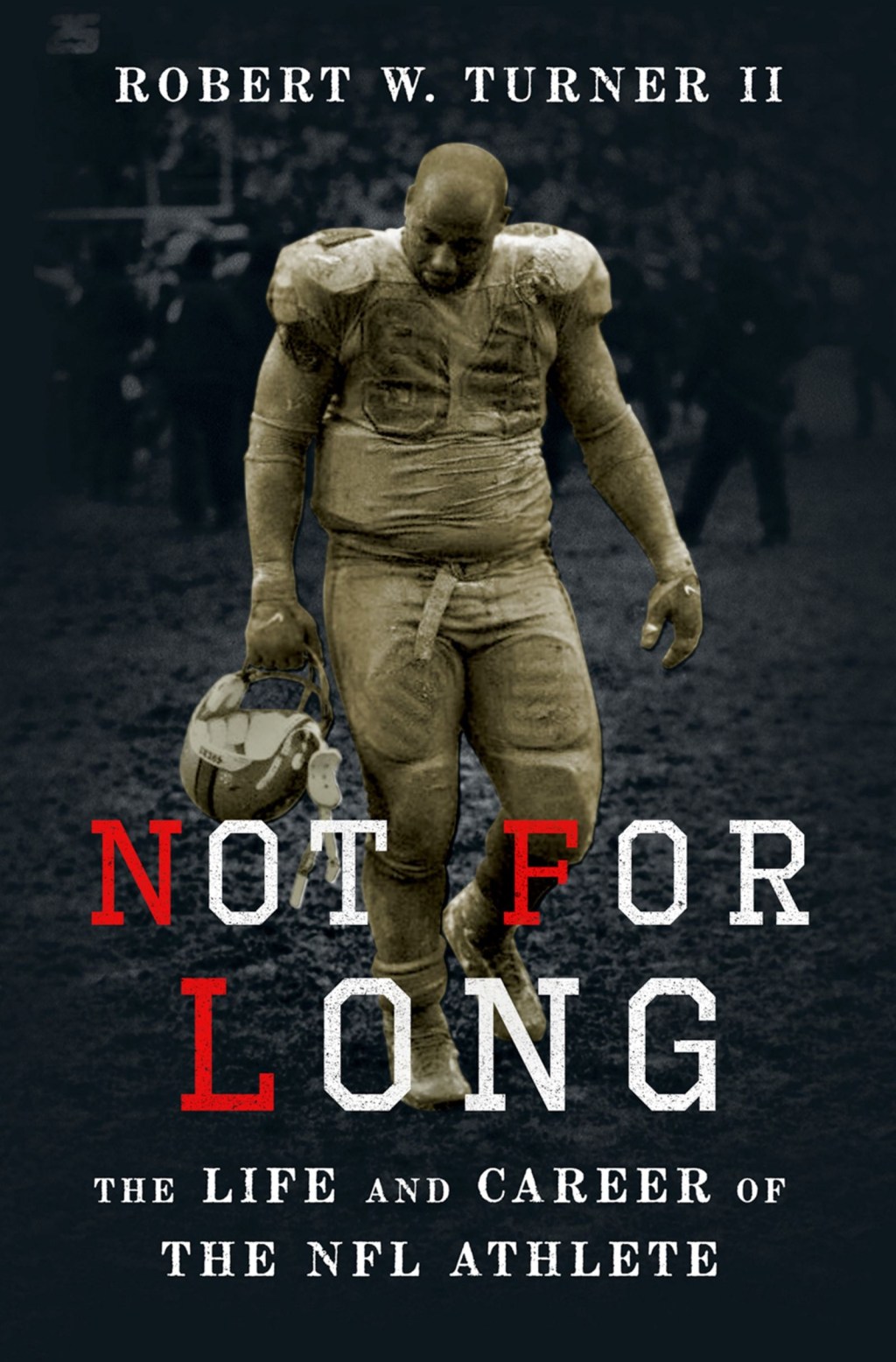
    Not for Long: The Life and Career of the NFL Athlete

    Robert Turner II was the first member of his family to go to college, attending James Madison University on an athletic scholarship.  But he did so because of his love of football and a desire to play at a professional level.

    “I majored in communications because that’s what the other players did,” says Turner who played football professionally in the now nonoperational United States Football League, the Canadian Football League, and briefly in the National Football League until his career abruptly ended.

    Consider Turner one of the lucky ones. He went on to earn a Ph.D. in sociology at the Graduate Center, City University of New York and is an assistant professor in the Department of Clinical Research and Leadership at The George Washington University School of Medicine & Health Science and also holds a position as a Research Scientist in the Center for Biobehavioral Health Disparities Research at Duke University.

    One of his areas of interest is what happens to athletes when their playing days are done and, after amassing more 140 interviews with current and former NFL players and extensively researching the subject, he’s written OLYMPUS DIGITAL CAMERA(Oxford University Press 2018; $24.95). It’s a look at what is the most popular professional sports league in the U.S., one where some athletes at the height of their physical prowess can boast stratospheric salaries in the multimillions  but then, often in just a few years, are no longer working.

    “The stories of many of these players is heartbreaking,” says Turner. “I love these men and they’ve gone through a lot of pain and sorrow and it hurts to hear that but what kept me going was the awesome gift of being able to tell their stories.”

    Turner describes his book as being about what happens upstream, the path that players take from high school and sometimes ever earlier through college and into professional sports. As for what happens after that, Turner says that society turns a deaf ear to their lives after college and the pros.

    “People say well, they got their college education, they got all that money,” says Turner, who serves on the board of directors for the Boys and Girls Club of Greater Washington, D.C.

    But many players don’t make millions.  Without guaranteed contracts, the majority of players are forced out of the league after a few seasons with few health and retirement benefits.

    Statistics show that more than three-quarters of retirees experience bankruptcy or financial ruin, two-thirds live with chronic pain, and many find themselves on the wrong side of the law. Turner believes that’s no accident. The powerful the labor agreements between the NFL and players doesn’t provide much in the way of job security. And because players dedicated to their game and dream of becoming a professional have little time to prepare for what to do when their time on the field is over and have little in the way of marketable skills.

    “It doesn’t just start at the NFL,” he says. “Universities and colleges should make sure all these players have the resources they need. Many of these kids come from environments where they haven’t learned many basics in terms of finances, planning ahead and all the other tools they need to be successful after sports. The League generates $15 billion a year and yet players are treated like disposable commodities. We need to help them learn how to transition effectively.”

    Turner is currently a technical advisor and consultant and is making an on-screen appearance in Student Athlete, a documentary which looks at “the exploitative world of high-revenue college sports” and features four current and former college athletes, including Kentucky basketball player Nick Richards. Co-produced by NBA star LeBron James, Student Athlete debuts October 2 at 10 p.m. on HBO.

    “The documentary is an important story about this subject,” he says. “We need to take care of all the players not just the 300 Hall of Famers.”

    Ifyougo:

    What: Robert W. Turner II discusses Not for Long: The Life and Career of the NFL Athlete. a Q&A and signing will follow the discussion.

    When: Oct. 14TH from 3-4 p.m.

    Where: The Seminary Co-Op Bookstore, 5751 S Woodlawn Ave., Chicago, Il

    Cost: Free

    FYI: 773-684-1300; semcoop.com


  • Young Lincoln: Growing Up in Southern Indiana

    Young Lincoln: Growing Up in Southern Indiana

    Many people aren’t aware that Abraham Lincoln spent his formative years in Southern Indiana, moving there from Kentucky with his family at age seven, leaving with them when he was 21.Jan Jacobi head shot

    It’s these years that Jan Jacobi, an avid Lincoln enthusiast and an award-winning educator who currently is teaching at St. Michael School of Clayton in St. Louis, chronicles in Young Lincoln (Reedy Press $16.95), his recently released book for readers ages 12 to 16.

    Growing up in New York, Jacobi moved to St. Louis in 1992 to take a teaching job and says he quickly realized how close his new home was to areas where Lincoln had lived including Southern Indiana and Springfield, Illinois, inspiring him to read book after book about the president.

    “One of my students asked me if there was a book he could read about young Lincoln,” recalls Jacobi who because of his towering height is frequently asked to portray the president.  “I said there really wasn’t one for his age range. And he told me that I should write one then.”

    Jacobi’s publisher agreed but with one more stipulation. He should write it in first person, using the voice of Lincoln as a youngster.

    “I thought no one can do that,” says Jacobi. “But then gradually the voice came to me—I just had to marinate in it.”

    Spending time in Spencer County, Indiana where Lincoln grew up, Jacobi talked to some of the residents whose ancestors had been friends of the Lincoln family. They shared with him their views of the Lincolns that had been passed down generation after generation.

    Thomas Lincoln has always been somewhat of a cipher—the youngest and least successful of three brothers who all witnessed the death of their father, another Abraham Lincoln, who was shot and killed by a Native American . When the future president was a youngster, Thomas Lincoln was a harsh father but that wasn’t unusual in pioneer days. Thomas also thought his son was wasting his time reading and learning and tried to discourage it. Young Lincoln, in turn, was contemptuous of his father’s illiteracy and failures to get ahead in life and sought the mentorship of other men  in the community who were learned and successful. Southern Indiana at that time was a wilderness where cougars and bears were always a menace, food was often scarce and life was harsh and often deadly. Lincoln’s mother died after contracting milk sickness as did a friend she’d been nursing for the same disease; his sister died in childbirth.

    As an adult, when his father was on his deathbed, Lincoln, now a successful lawyer, refused to visit him despite the appeals of his step-mother with whom he was exceptionally close and his step-brother. When Thomas died, Lincoln didn’t attend his funeral.

    “People in Southern Indiana are kinder to his father,” says Jacobi. “I’m a little harder on him.”

    How did Lincoln develop the resiliency that would allow him to overcome his early adversity to lead the country during one of its most tumultuous periods is a question that Jacobi says he has longed tried to answer.

    “Lincoln is a remarkable human being,” he says. “There are so many dimensions to him. We have to be careful not to turn him into a saint; but his essential goodness speaks to me.”

    So much so, that Jacobi is planning his next book about Lincoln’s time in Springfield.

    “Lincoln is endlessly fascinating,” says Jacobi. “He is the quintessential American. The only other person I put in that category is Mark Twain.”

    Ifyougo:

    What: Jan Jacobi discusses Young Lincoln. He will be joined in conversation by syndicated columnist Steve Chapman. A Q&A and signing will follow the discussion.

    When: Saturday, September 22 at 3 p.m.

    Where: 57th Street Books, 1301 E 57th St, Chicago, IL

    Cost: Free

    FYI: 773-684-1300; semcoop.com


  • Lake Success

    Lake Success

    “I’ve always wanted to travel the country by Greyhound bus,” says Gary Shteyngart, the New York Times bestselling author about Lake Success, his latest book Gary Shteyngart © Brigitte Lacombe(PenguinRandom House 2018; $28) which tells the story of Barry Cohen, a hedge fund millionaire who, unable to deal with all the issues impacting his life, jumps on a bus to find his college girlfriend.

    “I know, I’m nuts. But I thought it would be a very visceral way to see the country at a difficult time in its history,” continues Shteyngart.  “And it sure was.  As for the hedge fund part, I guess I realized there were so few people left in New York who weren’t connected to finance one way or another. Everyone else had been priced out.”

    You might think that Cohen, a man worth millions who is married to a beautiful, exotic and intelligent wife, has, if not it all, at least a lot more than most of us. But beneath the surface, it’s all breaking into pieces for Cohen, a self-made man who overcame the intense insecurities he had as a boy. His only child is severely autistic, his wife is drifting away having fallen in love with a married neighbor and the Feds are opening an investigation into how his hedge fund lost a billion or so.

    Chucking it all including his Black Amex card, cell phone and access to his millions, Cohen has only a couple hundred dolalrs and his expensive watch collection which emotionally means more to him at the time he starts his journey than anything else in his life.

    Shteyngart was able to nail down the personalities of his characters by immersing himself in their world.

    “I spent three years hanging out with hedge fund people and their spouses and sometimes children,” he says. “A strange alternate reality began to take shape in my mind. I started jotting down the little tics and conversations, but mostly the fact that the real world of the 99.9 percent was no longer available to them. They had moated themselves in to an almost feudal level. In fact, large parts of Manhattan started to seem like a series of gated communities.”

    There’s a parallel to Shteyngart and Barry’s upbringing. Both grew up poor and saw Wall Street as a way to make up for the huge amounts of insecurity they felt.

    “In our country, being poor is almost considered a moral failing, though often to get rich requires a true moral failing,” he says.

    Unlike Barry, Shtenyngart, who immigrated with his parents from Leningrad at age seven, turned to writing dark comedic novels such as Super Sad True Love Story (winner of the Bollinger Everyman Wodehouse Prize) and The Russian Debutante’s Handbook (winner of the Stephen Crane Award for First Fiction and the National Jewish Book Award for Fiction). It’s humor, based in part upon his parents who he says have a very satirical approach to reality honed in the Soviet Union, where laughter was the only defense against a very stupid system.

    “Being an immigrant is also a nice way to observe a society because you have to learn it from scratch,” he adds.

    To learn how to become a hedge fund manager, watch this video by Shtenygart and Ben Stiller: http://bit.ly/2x084Iz

    Ifyougo:

    What: A conversation and book signing with Gary Shteyngart

    When: Friday, September 21 at 6:30 p.m.

    Where: KAM Isaiah Israel Congregational,1100 E Hyde Park Blvd, Chicago, IL

    Cost: $30 tickets include admission for one and one copy of Lake Success

    FYI: 773-684-1300; semcoop.com


  • Local Flavor: Restaurants That Shaped Chicago’s Neighborhoods

    Local Flavor: Restaurants That Shaped Chicago’s Neighborhoods

    Chicago is a city made of neighborhoods, each individual and diverse, reflective of its residents and also the restaurants anchoring them. In her latest book, Jean Iversen shares with us her impressions and interactions in eight local eateries and the people who made them what they are, chronicling their stories in her latest book, Iversen_photo2(preferred) (Northwestern University Press 2018).

    It started when Iversen, a Chicago writer whose work has appeared in Crain’s Chicago Business, Time Out Chicago, and the Daily Herald, was researching her first book, BYOB Chicago :Your Guide to Bring-Your-Own-Bottle Restaurants and Wine & Spirits Stores in Chicago.

                “Along the way there were a handful of restaurants that inspired me,” says Iversen. “The ones I chose for the book weren’t the oldest restaurants in Chicago, I just wanted them to be run by the ‘mayors’—restaurateurs who had become leaders of their small sections of Chicago over the years.”

    Included in her list are eateries in Pilsen, Chinatown, Little Italy, Avondale and on Devon Avenue to name a few. Some had long roots in the community such as Won Kow, a Chinatown restaurant that first opened 90 years but unfortunately closed this year.

    Iversen says she asked a baseline of questions such as how have you managed to stay in business. The answers she found, were often similar.

    “They were gracious, treated their customers well, offered quality food and had old school values,” she says. “They hadn’t gone out of style and were adaptable.”

    Each restaurant’s story opens a door and we get to see the personalities of not only the owners but their workers and customers. Iversen spent a lot of time showcasing not only Wow Kow but also Tufano’s Vernon Park Tap in Little Italy; Nuevo Leon/Canton Regio in Pilsen; The Parthenon in Greektown; Borinquen in Humboldt Park; Red Apple Buffet in Avondale; Hema’s Kitchen in West Rogers Park; and Noon O Kabab in Albany Park.

    She also collected recipes, a daunting task.

    “They weren’t intellectual property as far as the owners were concerned, many just hadn’t written them down,” she says. “I had to get them to sit down and get them to tell me more specific amounts than just “a little bit of this and that.”


    Ifyougo:

    What: Jean Iversen discusses Local Flavor: Restaurants That Shaped Chicago’s Neighborhoods. She will be joined in conversation by Jeffrey Ruby. A Q&A and signing will follow the discussion.

    When: Saturday, August 25, 3 pm

    Where: 57th Street Books, 1301 E. 57th St., Chicago, IL

    Cost: Free

    FYI: (773) 684-1300; semcoop.com


  • Paris in Stride: An Insider’s Walking Guide

    Paris in Stride: An Insider’s Walking Guide


    ParisInStride_p67
    All illustrations © Jessie Kanelos Weiner

    Imagine strolling through Paris with a friend, one who knows the greatest little patisseries, cafes, outdoor markets and shops tucked along winding cobbled streets. Together the two of us try on amazingly chic designer dresses at La boutique Didier Ludot and amble through the courtyard gardens and gaze at the Swedish art work at Institut Suedois located in the Hôtel de Marle, a 16th century mansion in the heart of the central Marais district. We order small plates of fantastic food amidst 19th century murals of clowns at the appropriately named Clown Bar, considered one of the city’s finest restaurants. After stopping to admire the Eiffel Tower, we trek even more before stopping to reward ourselves with ice cream at Berthillon Glacier. We are, definitely, Parisian insiders.

    17. Clown bar

    Wait—don’t have a friend in Paris? Don’t even have tickets or plans to go sometime soon? Well, Rick of Casablanca told Else they’d always have Paris and for the rest of us, before we get there, we’ll have the recently released Paris in Stride: An Insider’s Walking Guide (Rizzoli 2018; $27.50), co-authored by Jessie Kanelos Weiner, a Chicago gal who grew up on the Northside and Sarah Moroz both of whom have lived in Paris for the last decade. Charmingly illustrated with over 150 of Weiner’s delicate watercolors, the book curates walking itineraries the authors put together to go beyond the typical guidebooks.

    “We wanted to put together walking tours of a timeless Paris, the type of Paris that will always be the same,” says Weiner who will be back in Chicago on April 6 & 7 for book events. “We wanted something that wasn’t too text heavy, a book that was a jumping off point to see what you want to see, one that wasn’t prescriptive but takes you down the side streets.”

    Paris is Weiner’s passion and wandering its streets is what she loves to do. ParisinStride_p134-135

    “It’s a city based on pleasure,” she says, “and one with many beguiling things along the way.”

    Ifyougo:

    What: Jessie Kanelos Weiner will talk about her book and teach a water color class during the conversation at Read It & Eat, 2142 North Halsted Street, Chicago, IL, Friday April 6 @ 6:30. Wine and a cheese will be available during the event, as well. (773) 661-6158; readitandeatstore.com

    On Saturday, April 7 from 3:00pm – 4:30pm, Weiner will be in conversation with photographer Rebecca Plotnick talking about Paris and her book at 57th Street Books, 1301 E 57th St., Chicago, IL.  (773) 684-1300; 57th.semcoop.com

    ParisInStride_p132-133