Tag: writing

  • The Gossip Columnist’s Daughter

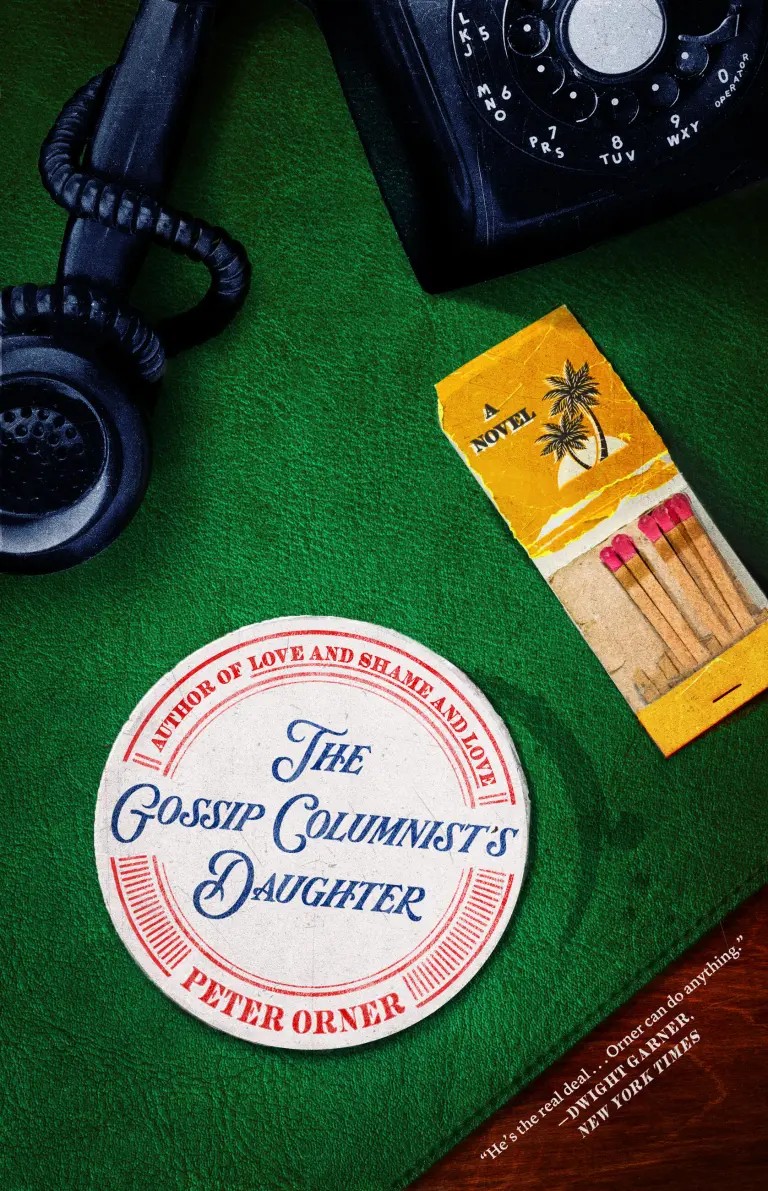
    The Gossip Columnist’s Daughter

    Jed Rosenthal is living a desultory life in a garden apartment with his cat, both having been exiled from the family home they shared with Jed’ s partner and their daughter who he can see only at approved times. Despite a job as a professor of writing at Loyola University in Chicago and receiving good reviews for his previous works, Jed is disconnected from his current reality and immersed in his family’s past and the death of the daughter of their once close friends, shortly after JFK’s assassination.

    The victim was Karyn Kupcinet, an aspiring actress and the only daughter of Irv and Essee Kupcinet, one of Chicago’s uber power couples who stayed in the limelight from 1934 to 2003. Kup or Mr. Chicago, as Irv was called, was a columnist for the Chicago Sun Times at a time that really mattered and if he didn’t know everybody, he knew almost everybody including Marilyn Monroe, Frank Sinatra, Muhammad Ali, Martin Luther King and Sidney Korshak.

    Wait, you’re thinking Sidney Korshak? Who is he? Well, for people like Kup who was at the top of his game when it came to collected celebrities, you could sip Champagne with Dean Martin or Shirley McClaine in the Pump Room or have them on your television talk show, but if you need something fixed—and we’re not talking patching up the roof—and were connected, you called Sidney. And, in “The Gossip Columnist’s Daughter,” a novel by award-winning author Peter Orner, that’s what Kup did when his daughter died.

    “Like Jed, I am somewhat obsessed with the case,” says Orner, the direc­tor of cre­ative writ­ing at Dart­mouth Col­lege, who has spent eons researching this book.

    But Orner isn’t the only one seeking answers about what happened to Karyn.

    “If you’re into conspiracy theories there are numerous ones,” says Orner and then dives deep into some of those theories.

    Was Karyn Kupcinet murdered? The autopsy performed in Los Angeles where she lived while working as an actress, said she had been. But there were doubts, could she have overdosed on pills? Either on purpose or accidentally? She was anxious, unsure of her looks, desperately trying to be slim, and extremely despondent about a recent break up with her actor boyfriend who had moved on to someone, no make that, numerous someones.

    There’s the JFK angle espoused by some, says Orner, pointing out Karyn was among several people who mysteriously died around the time of the president’s assassination. Was Karyn the woman who called authorities just before Kennedy was shot to say he was going to be murdered?  

    In the book, Jed’s grandfather accompanies Kup to Los Angeles to identify his daughter’s body while his grandmother consoles Essee who remained in Chicago. That’s real life as well. Sidney Korshak was also at Karyn’s apartment and Orner discovered a newspaper photo of him carrying several of her belongings out of her apartment.

    “They say unidentified man,” says Orner. “But everyone knew who Sidney Korshak was. I may have found a new clue.”

    But the book is more than just a true crime caper, it’s about relationships, those that flourish and those that fall apart, it’s also about Chicago in a different era, a time when a gossip columnist held sway over the city and men like Korshak could make big problems go away.

    “The relationship between the Kups and my family  is true,” says Orner. “The families had been very good friends and then suddenly they weren’t. I’ve always tried to understand why.”

    Korshak could fix many things but didn’t fix the rift that severed the Kupcinets from the Rosenthals, a cut so sharp and complete it’s as if someone took a cleaver to it.  Why this happened is difficult for an obsessive like Orner, who sometimes, when he returns to Chicago from his home in Vermont, revisits all the family homes (real) or walks from where Jed lives in the book to where he and his partner lived, counting the steps (unreal since Jed and Hanna don’t exist).

    You could spend a lot of time trying to figure out what’s true and what is fiction in this fascinating novel, or you can just go along for the ride so to speak, by enjoying a great read.

    This article orginally ran in the Northwest Times of Indiana.

  • Bearer of Bad News

    Bearer of Bad News

    Lucy Rey is having a very bad week. Besides finding out Julian, her fiancé—the one who convinced her to move to Las Vegas and rent, in her name, an expensive apartment and then decamped to Hollywood in order to find work as an actor—is cheating on her, her hairdressing business is in a slump, and she hates Vegas. Oh, and the diamond engagement ring Julian gave her is really cubic zirconia.

    And so when she sees an advertisement for an expense paid job with a $25,000 success fee just to find a missing sister and deliver unspecified bad news, what does she have to lose? Her flight to Europe is all paid, there’s a generous per diem, and Ortisei, the village in the Italian Dolomites where she is sent, is totally charming.

    But being a Bearer of Bad News (Gallery Books), which is the title of Lucy’s new job and this first novel by Elisabeth Dini, is not a slam dunk. First of all, Taffy, the woman who hired her, is totally flaky, the assignment murky, and, Lucy soon discovers, the village, though quaint and pretty has an unsavory past including Nazis and stolen jewels.

    Soon, the assignment gets even stranger as it becomes apparent that Taffy (real name Countess Tabitha Georgiana Wellington Ernst) crafted the ad to attract and hire Lucy, who is the estranged granddaughter of a once very famous movie actress.

    Taffy isn’t the only one searching for stolen jewels. There’s the Department of Lost Things, a quasi-government agency working to return valuables people lost during the war.

    “The Department of Lost Things was inspired by stories about the numerous ongoing lawsuits over art and other valuables that were stolen or sold during World War II,” says Dini. “I was shocked by how long the legal process takes–many cases are still ongoing even decades later, with some of those suing for the return of family heirlooms dying before the case could reach a resolution.”

    Dini always found stories about clandestine secret organizations fascinating and so inventing the Department of Lost Things, an organization working to return the diamonds to their rightful owner, was a natural solution.

     “As for the idea of a Bearer of Bad News, I was reading an article about a man who had outsourced various life tasks to a virtual personal assistant, from writing an apology email to his wife to calling companies to complain on his behalf, and I thought that if people would pay for that, then why not outsource delivering bad news?” she says.

    But being a bad news bearer doesn’t go smoothly for Lucy. Chased by an influencer whose photo shoot she accidentally interrupted, Lucy is hidden by a charming hotel clerk in rooms above the oldest tavern in town, which is also where much of the action happened in the past. For being hidden away, Lucy’s lodgings get a lot of action—including a handsome man she met on the tram and Coco, the missing sister, a human rights attorney who might have been fired under suspicious circumstances. In other words, who do you trust?

    Dini drew upon her work as a trial lawyer at the International Criminal Court when writing the book.

    “I knew from working with legal case files what types of things might end up there after years of investigating, and my background interviewing witnesses informed the interview files as well,” she says, noting that no matter how different the conflict or the country where it happens, certain things are always true: among the ugliness, there are always acts of extraordinary kindness and bravery. “As heavy as it felt at times, my time prosecuting war crimes left me hopeful about the ultimate nature of human beings, and I wanted to leave readers with this same feeling of hope, especially in a time when world events can feel very heavy.”

  • Nancy Chadwick-Burke, Michelle Cox, and Patti Eddington: Three Authors Discuss Their New Work at The Book Stall

    Nancy Chadwick-Burke, Michelle Cox, and Patti Eddington: Three Authors Discuss Their New Work at The Book Stall

    The Book Stall (811 Elm Street in Winnetka) will be welcoming authors Nancy Chadwick, Michelle Cox and Patti Eddington on Thursday, July 11th at 6:30 PM. In a discussion moderated by Michelle Cox, each author will talk about her writing process, and the origins of her book. Our guest authors work with similar themes, and they will be exploring these connections in their new works of historical fiction, connections with the natural world, and memoir. Whether you are a fan of writing by and about women or a writer looking for guidance on completing and publishing a book, this is the program for you!  We’ll leave plenty of time for audience Q&A. 

    This event is free with registration! Visit their website or CLICK HERE.

    Nancy Chadwick is the author of Under the Birch Tree: A Memoir of Discovering Connections and Finding Home. Her essays have appeared in The Magic of Memoir: Inspiration for the Writing JourneyAdelaide Literary Magazine, and Turning Points – The Art of Friction, as well as in blogs by Off Campus Writers’ Workshop, the Chicago Writers Association Write City, and Brevity. Her debut novel, The Wisdom of The Willow, has been included in the “Most Anticipated Books of 2024” by the Chicago Review of Books. She finds writing inspiration from her many meanderings through any forest.

    Michelle Cox is the award-winning author of the Henrietta and Inspector Howard series, a mystery/romance saga set in 1930s Chicago. She also pens the wildly popular, “Novel Notes of Local Lore,” a weekly blog chronicling the lives of Chicago’s forgotten residents. Her debut novel, The Fallen Woman’s Daughter, is her first foray into women’s historical fiction and is based on a story she heard working in a nursing home. She has spent years crafting it into a novel and is delighted to finally share it with the world.  

    Patti Eddington is a newspaper and magazine journalist whose favorite job ever was interviewing the famous authors who came through town on book tours. She never dreamed of writing about her life because she was too busy helping build her husband’s veterinary practice, caring for her animal obsessed daughter—whose favorite childhood toy was an inflatable tick—and learning to tap dance. Then fate, (and a DNA test) led her to a story she felt compelled to tell. Today, the mid-century modern design enthusiast and former dance teacher enjoys being dragged on walks by her ridiculous three-legged dog, David, and watching egrets and bald eagles from her deck on a beautiful bayou in Spring Lake, Michigan.

    The Book Stall is an independent bookstore and cultural institution on Chicago’s North Shore. We are known for our great selection of books, cards, and gifts, as well as our long-running author event series. Learn more at www.thebookstall.com.