Tag: Victorian mystery

  • A Sinister Revenge: A Victorian Mystery by Deanna Raybourn
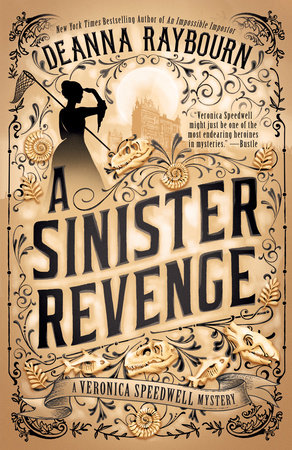
    A Sinister Revenge: A Victorian Mystery by Deanna Raybourn

    Deanna Raybourn takes us back to Victorian times in “A Sinister Revenge” (Penguin Random House), the latest novel in her Veronica Speedwell series. Speedwell, a scientist, lepidopterist or butterfly collector, and lady adventurer, has traveled to Bavaria in search of Revelstoke “Stoker” Templeton-Vane (called Stoker for short), her lover and scientific partner, who understandably is upset to learn that her husband who she presumed dead, is still very much alive. Upon finding out the news, he leaves the country and now seems to have completely disappeared. Traveling with Speedwell is Stoker’s brother, Viscount Tiberius Templeton-Vane, and the two, while dining at a Bavarian inn and hearing the landlord talk about a disagreeable encounter he had with a wolf-like man believe they may have found Stoker.

    But there’s more going on than just a missing lover and brother. Tiberius has received death threats tied to an incident that occurred years ago and he needs his brother’s help in unraveling the mystery in order to save his life.

    Raybourn, a New York Times bestselling author and sixth generation Texan, knew from an early age that she wanted to be a writer. Influenced by such women writers as Mary Stewart, Victoria Holt, Agatha Christie, and even Jane Austen, she describes her books as mysteries with enough romance to keep readers who like both genres happy.

    “There was never a time when I didn’t make up stories,” she says, adding that she remembers being thrilled when she finally learned how to print so she could get them out of her head. There was also the time where she missed out on entire school lesson because she was busy writing a story about Maria Antoinette.

    That might explain why she is a prolific author, having written not only eight Speedwell novels but also the Lady Julia Grey series, which are also historical fiction. Besides that she has stand alone novels including last year’s “Killers of a Certain Age” about a band of female assassins who are over 60.

    Her Speedwell character is like many of the resolute women found in the pages of history and is inspired in part by Margaret Fountaine, a Victorian era lepidopterist who Raybourn says traveled the world collecting both butterflies and lovers. Both Fountaine and Speedwell are nothing like what people expect Victorian to be like says Raybourn.

    “Fountaine was dynamic and intriguing,” she says.  “She was my inspiration for Veronica.”

    This article originally appeared in the Northwest Indiana Times.

  • The Girl Who Died Twice

    The Girl Who Died Twice

              Never one to hide her feelings, Lisbeth Salander is angry and back for vengeance in the sixth novel of the series that started with The Girl with the Dragon Tattoo. 

              Abused by both her mobster father as well as the psychiatrist treating her, Lisbeth is an avenging angel of sorts—determined to punish evil and the powerful people who prey on others. Her doppelganger is her own twin sister Camilla.

    © 2019 Fotograf Anna-Lena Ahlström

              “The sisters chose different sides,” says author David Lagercrantz, discussing the plot of The Girl Who Lived Twice in a phone call from Stockholm, Sweden where he lives. “Camilla chose the strength—her father and Lisbeth chose taking care of the weak—protecting her mother from her father’s violence. The sisters are bitter enemies, and this is their final battle.”

              Though social skills aren’t one of Salander’s strong suits—she likely falls on the autism spectrum, she does have the ability to hack through the fire walls of almost any computer system.  Add to that her martial arts abilities and photographic memory and she makes a worthy adversary of her equally brilliant but pathological sister.

              Lagercrantz, who is embarking on a two month worldwide tour, took over writing the Salander series after the death of Steig Larsson, author of the original three novels.

              “I was scared to death to death when they asked me to do this,” says Lagercrantz, noting he was smuggled into a side door of the publishing house to avoid speculation he was being selected to write the best selling thrillers. “It was a suicidal mission in many ways to agree to do it because people loved his books so much. But it’s been fantastic.”

              Like Larsson, Lagercrantz’s Salander novels are complex, leading Salander and Mikael Blomkvist, the crusading journalist who befriended her, into a dark world of scheming crooks, billionaires and corrupt politicians. The latter includes the Minister of Defense, the only survivor of a Mount Everest climbing expedition who may be involved in the murder of a homeless Nepalese Sherpa.

              Lagercrantz says The Girl Who Lived Twice will be his final book in the series.

              “They’d like me to write ten or more, but I want to move on to my own fiction,” he says. “It was a bittersweet decision.”

              In an intriguing aside, Lagercrantz lives in the same neighborhood as the fictional Blomkvist and Salander.

              “When I’m walking, I sometime wonder if I’ll run into them,” he says.

              What would he say if he did?

              “That would be interesting, wouldn’t it?” he says.

  • A Vanishing Man: Charles Finch’s Latest Victorian Mystery
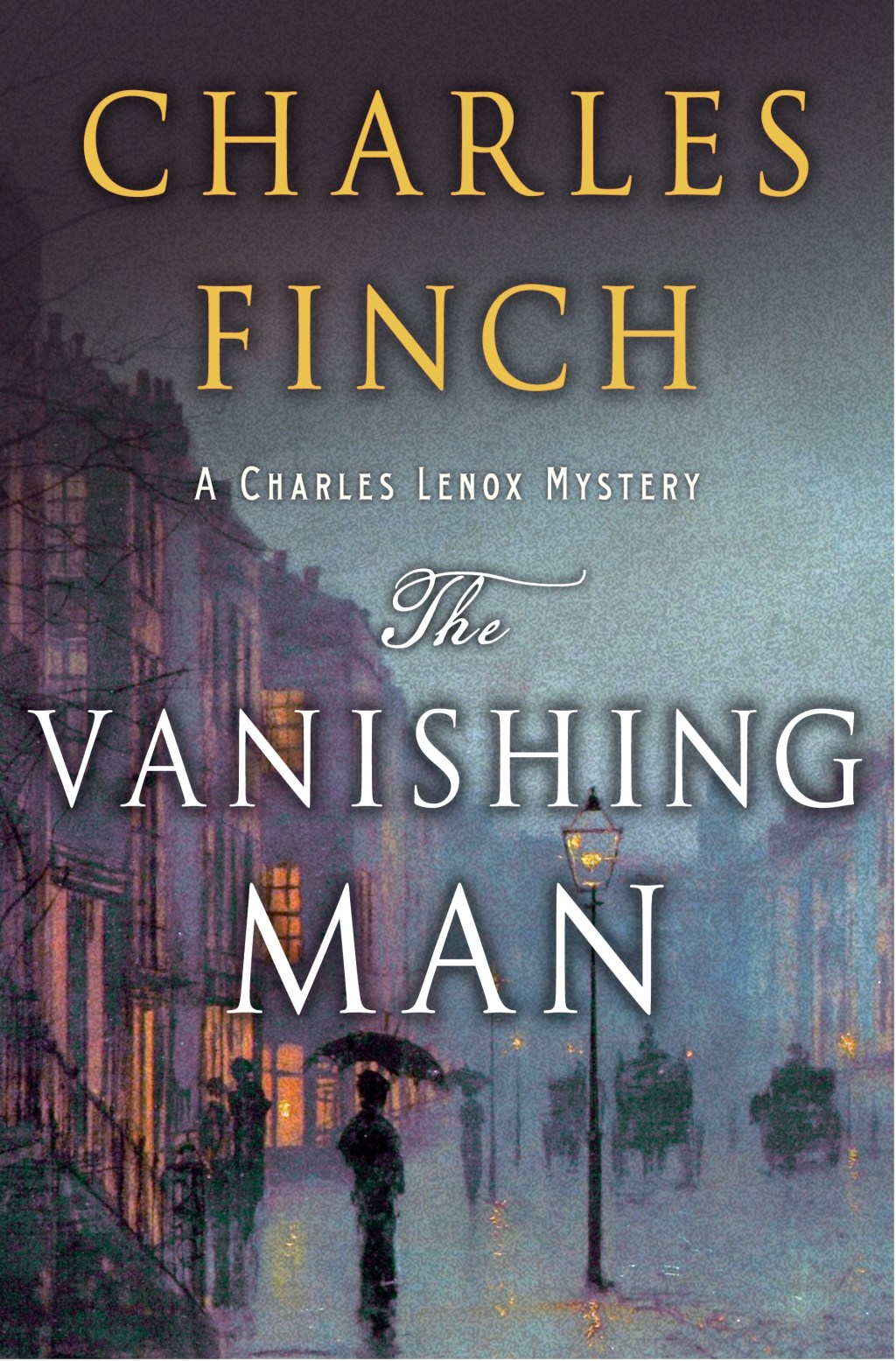
    A Vanishing Man: Charles Finch’s Latest Victorian Mystery

                  Charles Lenox is a well-educated, well-connected young man, but even he, when called to the Duke of Dorset’s home after a painting is found to have been stolen, knows his place. After all, even among the aristocracy, a Duke is way above Lenox, particularly now that he has taken to detecting (after all, what well-bred man works?). But status doesn’t deter Lenox from carrying out his investigation—even when it involves standing up to the Duke and pursuing the revelation of a long-held family secret that leads to murder.Finch, Charles_CREDIT Timothy Greenfield-Sanders

                  Lenox is the hero of a series of Victorian era mysteries involving Charles Lenox written by bestselling author Charles Finch who though he calls Chicago his home, seems mainly to live in London during the mid-to-late 1800s. His newest Lenox novel, The Vanishing Man (Minotaur 2019; $26.99) is the second in his three-series prequel showing the detective when he was young and just starting off. The prequels take place before the 11 other Lenox mysteries Finch has written.

                  Interestingly, Finch has been writing his novels for so long, he says he’s never had a real job. He also has a philosophy of writing that goes against what’s commonly recommended.

                  “I think you should write what you love,” he says. “Not what you know or see. And I love that period of history.”

                  He must as he spends a lot of time in a different country and different century. Though Finch says he’s a hypochondriac and would be afraid to really be a part of a time when even a simple infection could kill–penicillin after all is still over half a century from being discovered.

                  “But I would love to walk down the streets and get a feeling for what it was like at that time,” he says. “I’d like to really immerse myself.”

                  Instead Finch delves deep into research and history.

                  “This book was especially difficult to peel myself away from,” he says.

                   He’s also an avid reader of Victorian novels (Finch lists Anthony Trollope, Sherlock Holmes and George Elliott as among his favorites), Finch lived in England for almost four years so though he can’t go back to Victorian times, he at least is very familiar with the country. He says he chose his latest plot because he wanted to wade into Shakespeare and examine some of the mysteries and myths surrounding the great playwright.

                  “Writing about Shakespeare gave me a chance to look into every old apocryphal story about him and his times, and in the end– without giving too much away–I discovered one of the most plausible—and unproven–theories about his life,” he says. “It’s one which is directly connected to the crime Lenox is solving in 1851.”