Tag: True Crime

  • College Girl, Missing: The True Story of How a Young Woman Disappeared in Plain Sight
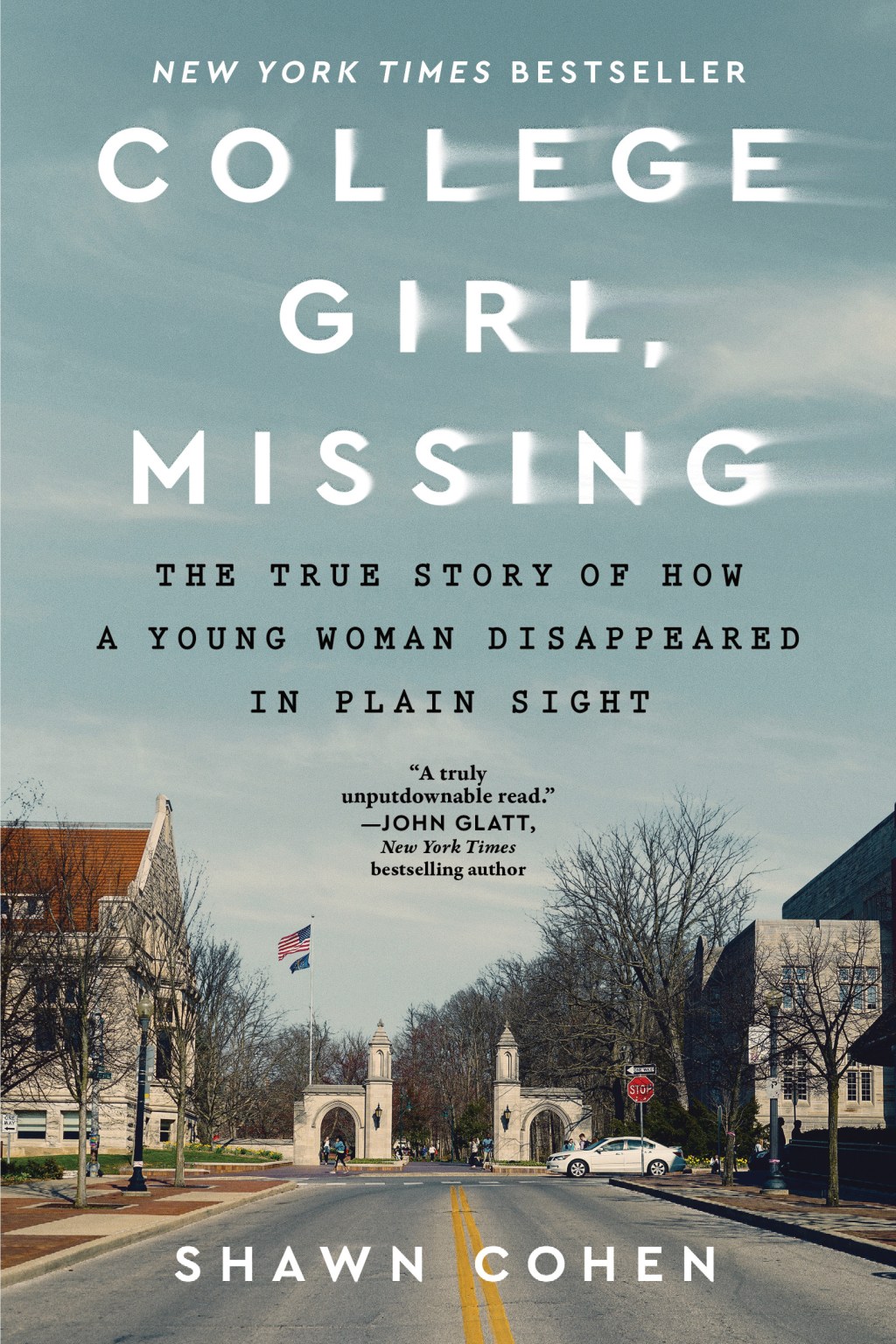
    College Girl, Missing: The True Story of How a Young Woman Disappeared in Plain Sight

    14 years ago, Lauren Spierer, an over-served 20 year-old student at Indiana University who had been indulging in recreational drugs, walked out of her friend’s apartment building at 4 in the morning and disappeared, never to be seen again. She was barefoot, having left her shoes and cell phone at a bar. Her purse and keys would later be found in the alley she and a male friend traversed on their way to his apartment. Video cameras caught sightings of her on that last night. But Lauren herself was gone.

    Shawn Cohen, an investigative reporter from New York, never planned on immersing himself into Lauren’s story beyond reporting on it after the she disappeared.  One of many reporters from news outlets that included People magazine, CNN, and USA Today, who arrived at this bucolic college town in Bloomington, Indiana, he segued from just reporting to becoming entrenched in trying to solve the question of what happened to Lauren Spierer. The result is “College Girl, Missing: The True Story of How a Young Woman Disappeared in Plain Sight.” (Sourcebooks 2024).

    He made connections with her family who lived in Scarsdale, New York, immersed himself in all the available records, spoked to the retired New York Police Department detectives turned private investigators that the Spierer family hired to find answers, and returned to Bloomington numerous times.

    But there were obstacles. By the time Lauren was reported missing, 14 hours had gone by before the police, who at first didn’t treat her disappearance as a missing person’s case, were called. The men she was with that night, long time friends of hers, all immediately lawyered up and wouldn’t talk, and the information gathered by the Bloomington Police Department hasn’t been released as the case is still considered open.

    “The family isn’t giving up trying to find out what happened,” Cohen said in a phone interview earlier this week.  Neither is he.

    “It’s something I think about all the time,” he says.

    It was thought that maybe she had been abducted by a stranger, supposedly a white truck had been seen in the vicinity that was later connected with the murder of another IU student. But that connection proved false and the truck in question was sighted well beyond when Lauren disappeared.

    Having attended Indiana University, I know the path that Lauren would have followed that last night. And though I was a student at IU before Lauren, I often visited the campus around the time of her disappearance and still remember the numerous posters showing her photo and asking, pleading really, for anyone with information to call. A pretty girl, with blonde hair and sweet smile, it’s hard to understand how friends who were with her that night decided to hire lawyers rather than talk to the reporters and police in hopes that the information they could provide would help the investigation.

    Cohen, too, is waiting for the call or text that will break the case open. Since the book was published he gets frequent tips but nothing that has ever solved Lauren’s disappearance. But he, like her family, is determined to never give up.

    He has retraced Lauren’s steps and finally was able to get into the apartment where her friend, instead of walking Spierer home, says he watched her through the window as she walked barefoot reaching the intersection of 11th Street and College Avenue.

    “I stood at the window to see if he could have seen her the way that he said he did,” says Cohen.

    Both Cohen and I each have two children, and we discuss how awful this would be for any parent but Cohen, who has made an emotional connection with the Spierers, has watched them go through hell. In other words, it’s become personal.

    When I ask him why he thinks Lauren’s long time friends wouldn’t be more helpful, he says, “self-preservation.”

    But maybe there’s someone out there who is willing to go beyond protecting themselves and doing what is right.

    “I want to keep this in the forefront, to keep the focus on Lauren and on the people who were involved,”  Cohen says. “I’m always hoping that someone will break, that their conscious will bother them enough, so they come forward or maybe somebody who knows something will leak it. I  want more and more people to learn about this, to talk about this until maybe someone opens up and tells what they know.”

    This article originally appeared in the Northwest Indiana Times.

  • TOO GOOD A GIRL: REMEMBERING OLENE EMBERTON AND THE MYSTERY OF HER DEATH

    TOO GOOD A GIRL: REMEMBERING OLENE EMBERTON AND THE MYSTERY OF HER DEATH

    Olene Emberton, a 17-year-old Tipton, Indiana, high school senior, was last seen alive at 11:30 p.m., Saturday, October 16, 1965, when she dropped off a friend after a movie and drove away, headed for home. It was a journey of a mere six-blocks. But Olene never made it home.

    50 years later, the mystery that shocked the small Indiana community where she lived has never been solved. But author Janis Thornton, a former high school classmate of Olene was determined that Olene’s story would never be forgotten. Now more than-a-half century later, Thornton has written “Too Good a Girl: Remembering Olene Emberton and the Mystery of Her Death,” part memoir, part true crime, and part oral history. The book examines Olene’s life, her unexplained death, and how she affected the Tipton community and all who knew her.

    “I wrote the book because I didn’t want her to be forgotten,” says Thornton.

    Early Sunday morning, after Olene’s parents realized she hadn’t come home all night, they found her car parked two doors north of the four-way stop at Green and North streets, just three blocks from their house. None of the neighbors had seen her leave the car, and there was no sign of a struggle.

    The Embertons immediately called the police and reported their daughter missing. The next afternoon, a farmer discovered her lifeless, nude body discarded along a remote country road ten miles northeast of town. Her clothes were neatly folded and stacked beside her head. Her glasses lay in the weeds next to her feet.

    An autopsy was performed that evening, but no cause of death was determined. Thus, with no clues, no leads, no witnesses, no motive, and no confession, how Olene died and who dumped her body in the tall grass next to a cornfield was never determined. Law enforcement officials had no place to go, and heartbreakingly her family was denied the answers and the closure they needed and deserved.

    Throughout the nearly 58 intervening years, numerous Tipton County people have claimed they knew the answers. But only one individual truly knew, and that person still isn’t telling.

    Hopefully one day that will change.

    ABOUT THE AUTHOR

    Based in her hometown of Tipton, Indiana, Janis Thornton writes about history, mystery, and true crime.

    Her latest book, The 1965 Palm Sunday Tornadoes in Indiana, takes a look back at Indiana’s worst weather disaster and includes more than 100 horrific, heartbreaking stories about the tornadoes, told by the people who experienced them.

    Her previous release, No Place Like Murder, is a collection of 20 true crime stories that rocked Indiana between 1869 and 1950.

    Her most recent novel, Love, Lies, and Azure Eyes, is a suspenseful, paranormal romantic mystery about possibilities for second chances, righting old wrongs, and finding love that lasts forever. 

    Her mysteries include: “Dead Air and Double Dare” and “Dust Bunnies and Dead Bodies”, both in the “Elmwood Confidential” series; and “Love, Lies, and Azure Eyes,” a suspenseful, paranormal romantic mystery.

    Her history books are: “The 1965 Palm Sunday Tornadoes in Indiana,” which takes a look back at Indiana’s worst weather disaster, and pictorial-history books about the communities of Elwood, Frankfort and Tipton, all in Indiana.

    Janis also is the author of three Central Indiana history books — Images of America: Tipton CountyImages of America: Frankfort, and Images of America: Elwood — and she is a contributor to Undeniably Indiana, a bicentennial project from Indiana University Press.


    She is a member of the national mystery writer’s organization, Sisters in Crime, its Indianapolis chapter, Speed City Sisters in Crime, The Author’s Guild, Women Fiction Writers Association, the Indiana Writers Center, and the Tipton County Historical Society.

    Follow Janis at
    www.janis-thornton.com
    facebook.com/janisthorntonauthor

    @JanisThornton
  • No Place Like Murder: 20 Historic True Crimes in the Hoosier State

    No Place Like Murder: 20 Historic True Crimes in the Hoosier State

                   “True crime aficionados are fascinated by the havoc their fellow humans are capable of wreaking,” says author Janis Thornton who takes us beyond high profile crime into lesser known but equally fascinating tales. “For them, learning details of the victims’ worst nightmares is not only tantalizing; in a perverse way, it’s almost comforting because it happened to someone else. In a sense, true crime offers readers a “there but for the grace of God” revelation that allows them to vicariously experience unimaginable horrors behind a safety buffer of time and space.”

                   Using these buffers, “No Place Like Murder” Thornton examines the underbelly of Hoosier history through the retelling of twenty sensational murders that ripped apart numerous small, Indiana communities between 1950 and 1869. But because volumes have been written chronicling the likes of high-profile Hoosier serial killers Belle Gunness (includig “America’s Femme Fatale” by Jane Simon Ammeson) and H.H. Holmes, Thornton’s tales focus on 20 lesser known, but no less merciless, homegrown killers.

                   “No Place Like Murder” paints portraits of murderous women like Frankie Miller, who shot and killed her fiancé after he stood her up for another woman. Readers also will meet the plucky Isabelle Messmer, who ran away from her quiet farm-town life, and after nearly taking down two tough Pittsburgh policemen, she was dubbed “Gun Girl,” earning headlines across the country. And one of the more sensational crimes highlighted in the book is the shotgun slaughter of five members of the Agrue family on their Southern Indiana farm at the hand of Virginious “Dink” Carter, husband of one of the Agrue daughters.

                       According to the Publishers Weekly review of “No Place Like Murder,” true crime fans will be well satisfied. •

    ABOUT THE AUTHOR:

                   Janis Thornton is Tipton, Indiana’s home-grown author of true crime, mystery and history.

                   Her true crime books include: and “Too Good a Girl,” the story of Thornton’s high school classmate, Olene Emberton, whose tragic, unsolved death in 1965 shocked their community. Now, more than 50 years later, Janis wrote Olene’s story to ensure it is never forgotten.

                   Her mysteries include: “Dead Air and Double Dare” and “Dust Bunnies and Dead Bodies”, both in the “Elmwood Confidential” series; and “Love, Lies, and Azure Eyes,” a suspenseful, paranormal romantic mystery.

                   Her history books are: “The 1965 Palm Sunday Tornadoes in Indiana,” which takes a look back at Indiana’s worst weather disaster, and pictorial-history books about the communities of Elwood, Frankfort and Tipton, all in Indiana.

  • Women Who Murder by Mitzi Szereto

    Women Who Murder by Mitzi Szereto

    “For the female of the species is more deadly than the male.”

    —Rudyard Kipling, from the poem “The Female of the Species.”

    “Why is that we’re always so shocked when women commit violent crimes, in particular, the crime of murder? Perhaps we’re more accustomed to seeing men as the aggressors when it comes to murder, not women. Yet some of history’s most notorious killers have been women. From Countess Erzsebet Bathory, Delphine LaLaurie, Amelia Dyer, Lizzie Borden, and Belle Gunness . . . it often seems impossible to keep up.”

    True crime writer Mitzi Szereto is the editor of Women Who Murder: An International Collection of Deadly True Tales (Mango Publishing), a compendium of murderous women written by internationally famous writers such as horror writer Anthony Ferguson, who lives in Australia; Tom Larson, an American mystery writer; and Cathy Pickens, an attorney who writes both true crime and the Blue Ridge Mountain Cozy Mysteries.

    The tales they tell, some well-known such as “Ruth Snyder: The Original Femme Fatale” by Claran Conliffe and “On the Courtroom Steps: The Trial of Susan Smith” by Picken and others much more obscure but no less fascinating like “Mona Fandey: The Malaysian Murderer” by Chang Shih Yen and “Anno Biesto, Anno Funesto” by Alish Holland about the brutal slaying of John Charles on Leap Year Day in 2000 in New South Wales, give lie to the saying that women are the gentler sex. Indeed, these women can kill just as violently and wantonly as any man.

    In her introduction, Szereto points out that men and women do kill differently and often for different reasons. Poison, at least in the past, often was the murder weapon of choice of women—easier to administer than creeping up and stabbing someone and so much tidier—no blood to clean up. They also kill less frequently and are typically not in it for the thrill of the kill like many male serial killers. Szereto says that many women, particularly those labeled as Black Widows, do so for the money, though that’s not the only reason. Sometimes it’s the only way to get rid of a threatening boyfriend or spouse or because of jealousy, love, and hate.

    But kill they do. And in this fascinating read, we learn about 14 women who did.

    This review originally appeared in the New York Journal of Books.

    .

  • Deliberate Cruelty: Truman Capote, The Millionaire’s Wife, and the Murder of the Century

    Deliberate Cruelty: Truman Capote, The Millionaire’s Wife, and the Murder of the Century

    With the grit and determination to overcome very similar hardscrabble backgrounds, Truman Capote and Ann Woodward both rose to pinnacles in New York’s glittering mid-century high society. But overcoming such comparable odds didn’t make them fast friends. Instead, Ann’s coarse description of Capote’s sexual orientation turned him into a virulent foe. Eventually, each would plummet, losing friends and their reputations.

    Their paralleled rise and fall is chronicled in Roseanne Montillo’s Deliberate Cruelty: Truman Capote, The Millionaire’s Wife, and the Murder of the Century, a juicy true crime tome that takes us into the lives of headliners of the time such as the Duke and Duchess of Windsor, Lee Radziwill, Claus von Bulow (who would later be accused of attempting to murder his wife), and Babe Paley.

    Ann and Billie. Photo source Wikipedia.

    For Ann Eden, her romance with Billie started so well. She worked the midnight to 3:00 a.m. shift at Felipe’s, a popular Manhattan night club, performing in a white bathing suit, black fishnet stockings, and high heels. Admirers would invite the dancers to their tables for a cocktail and, possibly, negotiations. There were rumors that Ann was available for more than just drinks and Billie, the handsome heir to a banking fortune, was an attentive beau, who showered her with gifts. There was one drawback: He was married, and she was just a showgirl with a bad pedigree for those who keep score of such things.

    But Ann’s beauty and moxie was such that she negotiated for more and ultimately landed one of the biggest matrimony catches when she and Billie wed. But this was no Cinderella marriage despite the expensive homes, extensive wardrobe of designer duds and fur coats, and invitations to soirees packed with a who’s who of upper crust New Yorkers. Ann often felt an overwhelming sadness which she treated with the use of tranquilizers. It wasn’t a good mix with the cocktails she and Billie also overly imbibed. The couple was known for their stupendous, alcohol-fueled rages.

    The night Ann shot Billie had proceeded along those lines. Returning from an exquisite party where the candles were soaked in Chanel Number 5 and the table set with silver and the finest China, the two returned to their 43-acre estate and retreated into separate bedrooms. Waking up an hour or so later to the sound of a crash, Ann reached for the shotgun she kept nearby. A burglar had been breaking into houses in their rich neighborhood and Ann, as she would tell police, thought they were being robbed. She fired twice—and only then realized she had killed her husband.

    Truman Capote in 1959

    Was it a deadly mistake? Or had Ann purposefully fired, knowing it was Billie? After all, if he divorced her, she might lose everything. As his widow, she could maintain the wealthy lifestyle she had struggled so hard to achieve. Billie’s family and friends thought they knew.

    As for Capote, he was still riding high on the success of In Cold Blood, which ironically is credited as being the first in the now burgeoning true crime genre. Ann was cleared of her husband’s murder, but Capote was on her trail now. It wasn’t going to be pretty.

    “Both were vulnerable and mean,” writes Montillo in the prologue to her book. “Both were familiar with violence and the violence that caused the death of Billy Woodward would, as recounted by Truman Capote 1975, incite fresh violence that would ultimately destroy them both. What began with insults in Saint Moritz would end in death for one and ignominy for the other.”

  • America’s Femme Fatale: The Story of Serial Killer Belle Gunness

    America’s Femme Fatale: The Story of Serial Killer Belle Gunness

    A Norwegian farm girl, her family so poor, they often went hungry, is seduced by a rich landowner’s son. But despite her dreams, he has no plans to make her his wife. Abandoned, she sees only one path forward or she’ll sink into the black hole of her family’s poverty. But her first goal is revenge and after the landowner’s son dies a horrid death amidst whispers of poison, she boards a boat and sails to America. Norway’s gain is America’s loss.

    Her name changed through the years but after the mysterious deaths of two husbands, numerous men, women, and children, she goes down in his as Belle Gunness.  An entrepreneur whose business was murder, Gunness felt no qualms seducing men for their money and dispatching them with her axe—filling her farmland with her victims.

    As her crimes were about to be discovered, her solid brick home burnt to the ground and workers battling the smoke and flames discovered the bodies of her three children and a woman without a head.  Was it Belle  or did she get away with one more murder, absconding with close to a million dollars. It’s a question the world has been asking since 1908.

    America’s Femme Fatale: The Story of Serial Killer Belle Gunness (Indiana University Press/Red Lightning Oct. 4, 2021; $20).

    What people are saying about America’s Femme Fatale.

    Ammeson uses astute research and punchy prose to chronicle Belle’s transformation from destitute farm girl to one of history’s most egregious female serial killers. . . . Compact and captivating, this salacious tale of murderous greed during the early twentieth century will be devoured quickly by true-crime fans.– Michelle Ross ― BOOKLIST / Amer Library Assn

    It’s a mesmerizing cautionary tale I had to keep reading despite the late-night hour. . . . Ammeson writes narrative nonfiction with a sense of drama to propel us along the unbelievable.– Rita Kohn ― NUVO

    America’s Femme Fatale is the detailed story of Belle Gunness, one of the nation’s most prolific mass murderers. Ammeson recounts the horrific events with dry wit and corrects many errors found in previous accounts. Gunness stands out in an infamous crowd because she was a woman; she killed men, women and children rather than choosing from among one narrow section of victimology; and her murders seem to have been rooted in greed rather than lust, the serial killer’s usual motive.– Keven McQueen, author of Murderous Acts: 100 Years of Crime in the Midwest

    Jane Ammeson will be on Hoosier History Live talking to the show’s host Nelson Price about Belle Gunness. The show airs live from noon to 1 p.m. ET each Saturday on WICR 88.7 FM in Indianapolis. Or stream audio live from anywhere during the show. For those who miss the show, it’ll be available by podcast as well.

  • ‘True crime’ inspires fiction thriller

    “I’m destined to disappear,” Rachael Bard tells the listeners of her true crime podcasts.

    Eliza Jane Brazier

    For Sera Fleece, whose life is tumbling down around her as she dwells upon each of her many perceived failures and seldom leaves her home, her time is totally focused on every episode — each one dedicated to a missing or murdered woman. She thinks in terms of the episodes and absorbs the details Rachel reveals about her personal life. Sera knows she lives on Fountain Creek Ranch in the yellow house somewhat distant from her parents’ home and the barns, stables and quarters for the campers who fill the ranch in the summer.

    And then, one day it happens. There are no more podcasts and no more social media posts. Rachel has disappeared.

    “I know, the first 48 hours are crucial,” Sera tells herself. (After all, she doesn’t talk to anyone else — not her ex-husband who still cares, or her parents, or even the clerks she interacts with when she finally is able to get herself out of the house to buy tea.) “And every hour you don’t update, I think, ‘Something is wrong.’ I think, ‘The case is going cold.’”

    So begins “If I Disappear” (Berkley Hardcover 2021) by Eliza Jane Brazier, which follows Sera as she drives to northern California in search of Fountain Creek Ranch.

    “I will use the things you told me,” she says to Rachel, promising to find her.

    But it doesn’t look promising. Somehow she missed the turn for the ranch, and stopping in the little town where Rachel went to school and where her best friend disappeared when they were high school students, she finds that no one will even mention its existence.

    Turning back, she finds the ranch’s entrance, noticeable because what is supposed to be a tourist attraction has signs reading “No Trespassing” and “Beware of Dog” posted on the drive.

    “The setting came from a job I took in northern California that got weird at an isolated dude ranch. I won’t go into details, but the truth is very nearly stranger than fiction,” Brazier said when I ask about the eerie setting she created. “The emotion came from finding myself single again after my husband died. And the hook came from my love of true crime.”

    Like Sera, Brazier says she was looking for answers but in a different way than most.

    “After my husband died, I found that the grieving process really replicated true crime podcasts: you are searching for answers,” she said. “I found a lot of comfort in them and still do to this day. For me it’s about facing your fears, making order out of chaos and also about control. In true crime, you know the bad thing is coming. It can be a way to address trauma and feel less alone in it.”

    Playing detective, Sera is hired by the Bards to work with the horses, a job that allows her to search for clues to Rachel’s disappearance. Her searching arouses suspicions but startlingly, she realizes that no one seems concerned about Rachel’s disappearance besides Sera. Rachel, she learns, has disappeared before and will do so again. At the ranch, Sera finds meaning not only in her investigation but in working with the horses and her developing romance with the ranch manager.

    Yet that doesn’t stop her search for Rachel, or the overwhelming feelings that there are many dangerous unknowns surrounding her. Was Rachel involved with the ranch manager and what happened to his wife? Did she really go back to Texas like he says. Is it possible he’s a murderer?

    Brazier, a screenwriter and journalist who lives in Los Angeles, is currently developing “If I Disappear” for television and writing another mystery.

    “It’s a brutally funny thriller about very bad rich people,” she said.

    Online events

    This story previously appeared in the Northwest Indiana Times:

    https://www.nwitimes.com/entertainment/books-and-literature/books-true-crime-inspires-fiction-thriller/article_acce7dc7-16c5-5e85-8824-7862f579cf62.html

  • “The Belle of Bedford Avenue: The Sensational Brooks-Burns Murder in Turn-of-the-Century New York”

    “The Belle of Bedford Avenue: The Sensational Brooks-Burns Murder in Turn-of-the-Century New York”

    Virginia McConnell

                A rich young woman running wild, her boyfriend left for dead in a low-rent hotel room and lurid headlines such as “Brooklyn is a Modern Sodom”  might seem like a contemporary made-for-television movie. But it’s all straight out of history in Virginia McConnell’s latest historic true crime book, “The Belle of Bedford Avenue: The Sensational Brooks-Burns Murder in Turn-of-the-Century New York” (Kent State University Press).

                The year was 1902 when Florence Burns, who craved excitement frequented dance halls, drank in roadhouses, and even smoked in public—a truly decadent act, discarded the standards of her well-to-do family to hang with the  Bedford Avenue Gang.

                Society was changing with the advent of public transportation in big cities like New York and young women like Florence didn’t have to wait to be introduced by a chaperone to “suitable” young men. Instead she chose gang member Walter Brooks who was found with a bullet in his head and died the next day.

                Ironically, though Florence loved the freedoms of the new century, she escaped punishment for Walter’s death because of old norms of an “Unwritten Law” that was frequently used to justify murder. That, says McConnell, kicked in when Walter refused to marry Florence after they’d had sexual relations—hence it was, though unspoken, retribution for his dishonoring her. Taking this into consideration, the prosecutor didn’t even bring charges against her.

                If only Florence had learned from this brush with the law but alas, she didn’t. And reading about her exploits is a fascinating true crime story as well as insight into a world so much different than ours.

    McConnell, a college English instructor at Walla Walla Community College-Clarkston Campus in Washington, is the author of other historic true crime books including “The Adventuress: Murder, Blackmail, and Confidence Games in the Gilded Age” which was a 2011 Gold Medal-Independent Publisher Book Award/True Crime Category.

                Drawing upon scandalous but long forgotten crimes, McConnell says that at first she didn’t think there would be enough material to write “The Belle of Bedford Avenue.

    She had to go beyond what she could find in the New York Times to ferret out more about the case, reading through lots more newspapers, many that were only available on microfilm through Interlibrary Loan.

    “But when I dug into it, there were a lot of interesting items – such as, the hotel’s being at Ground Zero and the teenagers hanging out at Coney Island and then I found the reference to her subsequent incarcerations,” she says, adding that she had to order the microfilm of one of the trial transcripts from the John Jay College, because the topic was so racy that the newspapers wouldn’t print it.

    “There were times when I’ve expended a lot of energy on a case that interested me, only to have to abandon it because it simply didn’t have enough material for an entire book,” says McConnell, describing herself as lucky to have connected with the grand-nephews of Belle’s first husband, who had a lot of information on their great-uncle Tad. 

    It was also lucky for those of us who like a well-written, intriguing true crime story.