Tag: Travel

  • Sidney Karger: Best Men

    Sidney Karger: Best Men

    The youngest of five children with a father who was jokester and a mother who did impressions, Sidney Karger learned early that being funny garnered attention from his parents.

    It also instilled in him a sense of comedic timing coupled with an obsession with both “Comedy Central” and “Saturday Night Live” as well as director John Hughes who directed several movies in Karger’s hometown of Highland Park, Illinois including “Ferris Bueller’s Day Off,” “Risky Business” and “Sixteen Candles.”

    “He was my god,” says Karger, who knowing that Hughes had been a copywriter for an advertising firm studied advertising at Michigan State University. He was successful as a copywriter but didn’t find the work fulfilling.

    “It didn’t fill my comedy writing needs,” says Karger, who around that time was offered a job writing for “Comedy Central ” and was unsure of what to do. “I remember standing on a street corner, talking to family, asking do I want to go with an advertising job or “Comedy Central.” It’s pretty amazing when you think of it.”

    Karger chose “Comedy Central” and also was a contributing writer to “Saturday Night Live.

    Working for “Comedy Central” was amazing, says Karger, describing the job as “great fun and like working with family.”

    With his success,Karger, an award-winning screenwriter for film and television, has now branched out with a romantic comedy (or rom-com as they’re known) titled “Best Men” (Penguin-Random House). The story is about Max, a gay guy struggling with his failing romance, and Paige, his best friend since childhood. Now engaged, Paige is having her usual second and third thoughts and Max, who is Paige’s man of honor and her soon-to-be husband’s younger brother and best man work together to keep the marriage on track. And, of course, fall in love.

    The novel, a New York-centric look at love, friendships, finding yourself and realizing your potential, is full of witty conversations and observations. It’s warm, inviting and laugh-out loud funny at times as well. It’s received lot of glowing reviews and was featured as “most anticipated” and made suggested reading lists from Goodreads, BuzzFeedBookRiot, and LGBTQ Reads.

    “Max and Paige’s friendship is ultimately the star of the show, and readers will find their banter reminiscent of fan favorites like Amy Poehler and Tina Fey or Dan Levy and Annie Murphy. A charming debut filled with cocktails, chocolate and comedy,” wrote Kirkus Review, while Anderson Cooper, New York Times bestselling author and journalist, describes the book as “Bursting with laughs and so much love, Sidney Karger’s debut novel delivers a truly refreshing spin on the romantic comedy. It’s full of funny, flawed and poignant characters, set in the dreamy, sharply-observed New York City that we love. ‘Best Men’ is a big-hearted, feel-good summer escape.”

    And though Karger recenlty released his second novel, “The Bump, ” he still is writing screenplays as well as doing rewrites of scripts. It’s a good balance.

    “I always wanted to be a screenwriter and comedian when I was in college,” says Karger about his career path. “So I decided to write smaller like about Highland Park.”

    His script made the coveted Black List, Hollywood’s shortlist of the most liked screenplays, and he started getting numerous writing assignments.

    Now, he’s able to write across several mediums and have fun doing it.

    This article originally appeared in the Northwest Indiana Times.

  • Kalamazoo County Characters by Dianna Higgs Stampfler

    Kalamazoo County Characters by Dianna Higgs Stampfler

    This fascinating book, featuring profiles of 50 notable figures in the Kalamazoo area history, will be released by The History Press in January 2025.

    Since its founding in the early 1800s, Kalamazoo has welcomed a variety of notable individuals who have shaped the community’s legacy in their own special way. From founding fathers to early innovators, groundbreakers to entrepreneurs, artists to authors and athletes to entertainers, author Dianna Higgs Stampfler celebrates 50 figures in her book Kalamazoo County Characters to be released from The History Press in January 2025 (ISBN: 9781467155922 | IMAGES: 53 | PAGES: 144 | DIMENSIONS: 6 (w) x 9 (h)).

    Dianna and her brother with Santa & Mrs. Claus, Darwin & Opal Brown.

    Individuals like Orville Gibson and Derek Jeter are nationally recognized, while others, such as Sue Hubbell or Donald Bonevich, may be less well known. Abraham Lincoln and Flora Temple briefly passed through town, and Mary Jackson and Gwen Frostic were among those who came here to attend college. Others, like Darwin and Opal Brown (aka Santa and Mrs. Claus) or Gene Rhodes (aka Gene the Pumpkin Man), were lifetime residents who have entertained families for generations.

     Stampfler is shown here with her father, stepmom, and kids with the Eagles backstage at Van Andel Arena in Grand Rapids in 2018. Her father helped launch the band to stardom – as a DJ playing a song that became their first hit. You can google Jim Higgs and Eagles for the full story.

    “Selecting the 50 individuals for Kalamazoo County Characters was a challenge as I had over 125 to choose from” notes Stampfler, who worked on the book with her father, Jim Higgs, a local genealogist, historian and notable Kalamazoo figure in his own right. The book is dedicated to her father, who passed away in May 2024 at the age of 79. “I was diligent in featuring people from different walks of life, with unique stories to share. Some I have personal connections to, as I spent a lot of time in Kalamazoo growing up in nearby Plainwell, but others I discovered through various other channels or by recommendation of fellow historians and authors.”

    This 1987 photo shows Dianna as  Miss Plainwell and Narada Michael Walden, who was the grand marshal of the Wine & Harvest Festival Parade in Kalamazoo.
     

    Beginning in January, Stampfler will present Notable Figures in Kalamazoo Area History(Kalamazoo County Characters) at libraries, bookstores, museums, conferences and events. The official book launch will be on Thursday, January 30, 2025 at 6:30pm at the Kalamazoo Public Library downtown branch.

    “I expect each presentation to be a little bit different, as I’ll be able to hand-pick the individuals to feature based on the venue,” Stampfler continued. “Plus, I am able to include some of those people who may not have made it in the book, but who also have compelling stories to share! Each profile in the book features just one photograph, and the presentations will also allow me to share more historical images and visual documents.”

    Upcoming presentations include:

    Additional events will be posted on the Promote Michigan Speaker’s Bureau online. Information about booking presentations for this and other themes can also be found on the Speaker’s Bureau page.

    Autographed copies of Kalamazoo County Characters are available for $24.99 (plus shipping/handling and tax) at PromoteMichigan.com. Shipping will take place by mid-January.

    Dianna Higgs Stampfler

    About the Author

    Dianna Higgs Stampfler has worked in Michigan’s tourism industry for nearly thirty years and is the founder of Promote Michigan, a public relations consulting company specializing in tourism and historical destinations of the Great Lakes region. Her articles have appeared in Michigan Blue MagazineLakeland BoatingMichigan Meetings + EventsWest Michigan Carefree Travel, and Lake Michigan Circle Tour & Lighthouse Guide, among others.

    She is the author of several best-selling books including Michigan’s Haunted Lighthouse, available through The History Press (March 2019), a fun and fascinating compendium of spirited stories about 13 historic lighthouses around the State of Michigan and Death & Lighthouses on the Great Lakes: A History of Murder and Misfortune.

    Stampfler holds a bachelor’s degree in English with an emphasis in Community Journalism and Communications with an emphasis in radio broadcasting from Western Michigan University (WMU) in Kalamazoo. She is a member of the Historical Society of Michigan, West Michigan Tourist Association, Michigan Hemingway Society, Great Lakes Lighthouse Keepers Association, and Great Lakes Shipwreck Historical Society among other historical organizations.

  • Islas: A Celebration of Tropical Cooking
    Islas: A Celebration of Tropical Cooking

    “Whatever you cook or don’t cook, this book is a trip to the islands or islas of the world.”

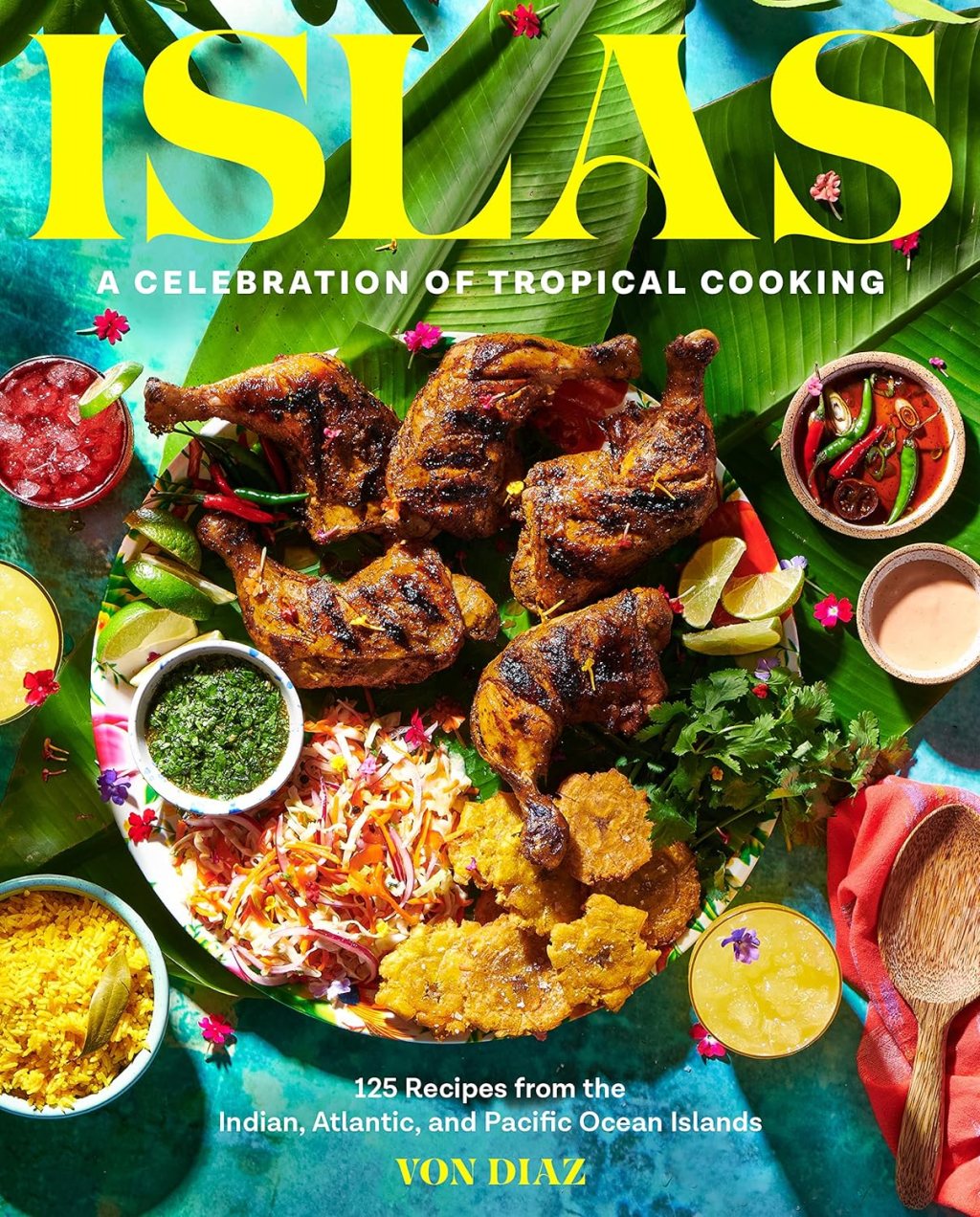
    A beauty of a book, all lively colors, and wonderful photos, Islas: A Celebration of Tropical Cooking (Chronicle Books) takes us from island to island through the Indian, Atlantic, and Pacific Oceans.

    “The people who live on tropical islands are among the toughest, scrappiest, most resilient people of the planet,” writes author Von Diaz, an Emmy Award-winning documentarian, food historian, and author of Coconuts to Collards: Recipes and Stories from Puerto Rico to the Deep South (University Press of Florida) . “Storms have always been unpredictable, and generations of islanders have cultivated ancestral knowledge around how to survive and, importantly, how to feed themselves despite it all. With limited ingredients, they cook in ways that are soul-nourishing and emphasize flavor. Making magic out of what’s available.”

    Her cookbook is about preserving the wisdom and values of island people who live in what Diaz describes as the most volatile and vulnerable places on the planet. She follows their histories and how the grapple with their new realities, combining legacy, adaptability, culture, and fortitude.

    She tells and shows us cooking techniques and recipes from faraway places such as Santo, Vanuatu’s largest island. Here we meet Primrose Siri who shares such recipes as Laplap, the national dish with its alternative layers of starch such as cassava or yam, seafood or chicken, herbs, spices, and fresh coconut milk cooked oven an earth oven heated with hot rock. Closer to home, there’s Pasteles de Masa, a Puerto Rican Christmas traditional dessert.

    Even those who may never cook Arroz Negro Con Pulpo y Calamares (Black Rice with Octopus and Squid) with its rice blackened with squid ink, will be intrigued by this Puerto Rican dish that is definitely eye-catching.

    Keshi Yena’s history dates back to the first Dutch colonial period in Curaçao, a bustling island some 30 miles off the coast of Venezuela. It is the food of enslaved people, as Curaçao was a slave port, who out of necessity took the rinds of cheeses such as Gouda that were discarded by their masters and stuffing it with meat scraps and other scavenged ingredients.

    Some recipes are simple and easy to make at home without a lot of extra ingredients such as Ensalada Talong (Grilled Eggplant and Vegetable Salad) from the Philippines. Others, such as Monfongo Con Guiso, a common dish of green plantains and chicharron or fried pork skins in Puerto Rico are more time consuming but within reach of any cook who wants to give it a try.

    The book is arranged by the chapters including the island’s cooking techniques: Marinating, Pickling + Fermentation, Braising + Stewing, Steaming + In-Ground Cooking, Frying, Grilling, Roasting + Smoking, as well as pantry staples, and sauces, spice blends, and condiments that can easily be made.

    Whatever you cook or don’t cook, this book is a trip to the islands or islas of the world.

    This review originally appeared in the New York Journal of Books.

  • “The Wildes” by Louis Bayard Book Signing

    “The Wildes” by Louis Bayard Book Signing

    On Thursday, Oct. 3rd at 6:30 PM,  Louis Bayardauthor of The Pale Blue Eye and Jackie and Me, will be in conversation with novelist Lori Rader-Day at The Book Stall. They will discuss Bayard’s new novel, The Wildes, a profoundly empathetic story about Oscar Wilde’s wife Constance and their two sons in the aftermath of the famous playwright’s imprisonment, told against Victorian England and World War I. 

    This program is free, but registration is required. CLICK HERE to reserve your spot.

    Benjamin Dyer, New York Times bestselling author of Dreyer’s English, says, “It requires a novelist of great audacity to dare to attempt to bring Oscar Wilde back to life, and it requires a novelist of great skill, to say nothing of wit, to manage the feat persuasively. Happily, Louis Bayard is both of those novelists.

    “As if that were not enough, The Wildes also presents us with a portrait of Oscar’s wife, Constance, that is little short of breathtaking in its vibrant depth, and a recounting of the heartbreaking tragedy of the Wildes that is eloquent and fully compassionate to all its characters, certainly to the Wildes’ sons, Cyril and Vyvyan, and even to (almost astonishingly) that feckless instrument of destruction Lord Alfred Douglas. I read The Wildes in an improbable state of breathless suspense, so wonderfully well has Bayard presented us with real people pressing, often excruciatingly, toward fateful decisions. This is an intoxicatingly gorgeous novel.” 

    Louis Bayard is the critically acclaimed bestselling author of nine historical novels, including Jackie & Me and The Pale Blue Eye, which was adapted into the global Netflix release starring Christian Bale. His articles, reviews, and recaps have appeared in the New York Times, the Washington PostSalon, and the Paris Review. His work has been translated into more than a dozen languages.

    Lori Rader-Day is the Edgar Award-nominated and Anthony, Agatha, and Mary Higgins Clark Award-winning author of Death at Greenway, The Lucky One, Under a Dark Sky, The Day I Died, Little Pretty Things, and The Black Hour. She lives in Chicago, where she is co-chair of the mystery readers’ conference Midwest Mystery Conference and teaches creative writing at Northwestern University. She served as the national president of Sisters in Crime in 2020.

  • Mexico Kaleidoscope: Myths, Mysteries and Mystique

    Oenophiles might be surprised to learn that the oldest winery anywhere in the Americas is Casa Madero, formally established as long ago as 1597, located in Parras de la Fuente, a small town in the northern state of Coahuila.

    “In 1549 the Spanish priests and soldiers who explored this region discovered native vines growing wild in a valley and chose the spot to found the Mission of Santa María de Las Parras (“Holy Mary of the Vines”),”writes Tony Burton, the editor of MexConnect, Mexico’s top English-language online magazine, in his book Mexico Kaleidoscope: Myths, Mysteries and Mystique. “The early Mission of Santa María soon began to make wine from the local grapes, and a few years later the wines and brandies of the Valley of Parras were being shipped to the rest of the Americas.”

    But Mexico’s sophisticated approach to agriculture goes even further back than that.

    “The Mexica/Aztecs solved the dilemma of how to supply food to their island capital by developing a sophisticated wetland farming system involving raised beds, or chinampas, built in the lake,” writes Burton about when the city of Tenochtitlan was built, fortress-like, on an island. Though good for defense, it made providing a food source more difficult but there was a solution to that. “Originally these chinampas were free-floating, but over time they became rooted to the lake floor. The chinampas were separated by narrow canals, barely wide enough for small boats or canoes. From an ecological perspective, chinampas represented an extraordinary achievement: a food production system which proved to be one of the most environmentally sustainable and high-yielding farming systems anywhere on the planet! Constructing and maintaining chinampas required a significant input of labor, but the yields per unit area could be very high indeed, especially since up to four harvests a year were possible.”

    Burton covers 10,000 years of Mexican culture and history. It’s a compilation of “Did You Know?” columns for MexConnect, which ranks in the top 3% of all Internet sites in the world, registering over half a million sessions a year.

    It was his way of presenting and preserving relatively little-known but fascinating information about Mexico to a large number of readers.

    “One of my main motivations was that—to the best of my knowledge—no similar book for the general reader had been published in the past forty years,” says Burton. “An incredible amount of interesting academic research had been done on Mexico over that time, leading to reevaluations and reinterpretations of many former ideas and beliefs. I wanted to make readers aware of some of these extraordinary developments, which continually refuel my passionate interest in Mexico.”

    This very readable and fascinating book can be read cover to cover, says Burton, noting that it is also designed to allow readers to ‘dip into’ and read in whatever order appeals to them. 

    “When writing the book, I was trying to engage readers by expanding on, or challenging, some commonly held or overly simplistic ideas, in the hope of offering some ‘food for thought’ about many things Mexican,” he says.“Each chapter has a list of sources and suggestions for those readers who want to explore more.”

    The title Mexican Kaleidoscope is a nod to Norman Pelham Wright, a British writer whose own collection of essays, with the same title, was published in 1948.

    “That book was an eye-opener for me when I first began to get intimately acquainted with Mexico more than forty years ago,” says Burton. “The subtitle Myths, Mysteries and Mystique came from a suggestion by one of my regular golfing partners—who had read an early draft of the book—as we played the 11th hole at Cottonwood Golf Course on Vancouver Island.”

    The book is illustrated by Mexican artist Enrique Velázquez, a long-time friend of Burton’s.

    “Enrique has a keen interest in the subject matter and an uncanny ability to portray ideas in just a few lines,” says Burton. “I originally envisioned using small, inline drawings to break up the text, much in the manner of old-time illustrators, but his final drawings were far too good for that, so we changed track and gave them the prominence and space they merit.”

    “Every chapter has come to mean far more to me than is expressed by mere words on a page,” says Burton about the 30 chapters. “I really hope some of my enthusiasm comes through to readers. At the very least I’d like the book to cause readers to stop and think, to be occasionally surprised, and perhaps question things that they may have previously thought or heard about Mexico. As I’ve written elsewhere, Mexico is not always an easy country to understand but any effort to do so always seems to bring rich reward!”

    About the Author

    Burton, a Fellow of the Royal Geographical Society who was born and educated in the United Kingdom, first visited Mexico in 1977. Returning, he lived for almost two decades in the country where he worked as a writer, educator, and ecotourism specialist. An award-winning author, his other books include If Walls Could Talk: Chapala’s Historic Buildings and Their Former Occupants; Foreign Footprints in Ajijic: Decades of Change in a Mexican Village; Western Mexico: A Traveler’s Treasury; and Lake Chapala Through The Ages: An Anthology of Travelers’ Tales.

     Mexico Kaleidoscope can be found in print and on Kindle through Amazon.


  • Western Mexico: A Traveler’s Treasury

    Western Mexico: A Traveler’s Treasury

    A travel guide for the intellectually curious, Tony Burton’s Western Mexico: A Traveler’s Treasury provides an insider’s entry to this extraordinary region of Mexico. The book, published by Sombrero Press and now in its fourth edition is less about logistics and instead focuses on the myriad of reasons–historical, ecological, cultural, and/or scenic–that make each place featured in this well-written and well-researched book both special and worth visiting.

    Burton, an award-winning travel writer, educator, and ecotourism specialist, who was born in the United Kingdom and has an M.A. in geography from the University of Cambridge and a teaching qualification from the University of London, moved to Mexico in 1979 and subsequently was granted Mexican citizenship, looks for the road less traveled.

    And in this book, he encourages us to explore the smaller, lesser known community with their many local customs, seasonal celebrations, sites, and events, places that, in his words, “offer a glimpse of the Mexico behind the mask; they are places where Mexico has retained her ancient culture and her ancient traditions.”

    Providing a mix of interests, Burton opens the doors, so to speak, to such historical sites as Zacatecas, Lagos de Moreno and San Blas; artistic colonies like Ajijic; and lakeside communities including Chapala and Pátzcuaro.

    Besides that there are ecological wonders, such as Manantlán, the monarch butterflies, the old mining towns of Angangueo and Bolaños, coastal communities like Barra de Navidad and Puerto Vallarta, Angahuan and other Indian villages, and a host of others. He delves into Pueblos Mágicos, designated as Magic Towns by the federal government in recognition of their cultural, historical, and/or ecological significance, their nearness to major cities, and the facilities they offer visitors.

    This is a travel guide but of the most intimate kind. We drive with Burton along the lovely road to Tamazula, settled from pre-Columbian times, conquered by the Spanish in 1524, and a vital silver mining town and hacienda center until the mines were worked out by the end of the 18th century. As for its name, well, interestingly enough, it translates to “place of frogs.”

    Where to stay when there? Burton recommends Hotel Real de la Loma with its spacious and comfortable rooms and pool and two person tubs in the room filled from a hot-water spring at the foot of a hill. The views from the hotel are of the Tamazula River and its valley made green with sugar-cane. A good time to go for many is during the two-week Our Lady of Sagrario festival.

    We learn that Mazamitla is “one of the prettiest towns in all Jalisco. It is a graceful, charming town of cobblestone streets, adobe walls, wooden balconies, old doorways and red-tile roofs, one of Mexico’s Magic Towns. Among its many attractions are the fresh air and scenic beauty of the surrounding countryside, some fine restaurants specializing in Mexican food, and the chance to shop for fresh cream, cheese, and home-made preserves. As befits a mountain town, its inhabitants also make lovely woolen sweaters and ponchos, for sale in the local shops.”

    Burton, who has lived in Mexico City, Guadalajara, and Jocotepec, has traveled widely, leading educational excursions and specialist ecological tourism groups to both well-known areas such as the Yucatán and Copper Canyon as well as little-known ones like Manantlán and Tingambato. At the former, at the Manantlán Biosphere Reserve visitors can experience the astonishing diversity of plant and animal life found in a cloud forest, one of the rarest types of vegetation anywhere in the world. In the latter, located near the major archaeological site of Tinganio, is one of the few sites in Western Mexico where there are genuine pyramids.

    Larger than the previous editions there are dozens of new destinations and each chapter contains new material, updated travel directions, and redrawn maps.

    Divided into parts, one and two are within three hours of driving time from either Guadalajara (Mexico’s second city) or nearby Lake Chapala, a popular retirement center for Americans and Canadians making them perfect for day trippers.

    Parts 4 to 9 are longer journeys such as the trip to Jungapeo, where director John Huston filmed scenes from The Treasure of the Sierra Madre starring Humphrey Bogart. Here, in this small village, you can stay at Agua Blanca Canyon Resort which dates back to the 1940s. According to Burton, it is a charming spa-hotel with just 20 rooms arranged in the Purépecha Indian style around three sides of the greenest lawn in Mexico. Its pools and lawns overlook the deeply carved valley of the River Tuxpan.

    “Many butterfly visitors, after the cool and dusty atmosphere in the fir forests want nothing more than a long soak in a warm tub and this is the ideal place,” he writes.

    And, of course, there are the Monarch butterflies. Every winter, some one hundred million monarch butterflies fly into Mexico from the U.S. and Canada. On arrival they congregate in a dozen localities high in the temperate pine and fir forests of the state of Michoacán.

    For me, a definite-not-to-be-missed is Zitácuaro, where my culinary hero Diana Kennedy lived. Famous for her cookbooks on Mexican cuisine, she made her home outside of Zitácuaro. And here again, is how deep Burton drills down into his destinations. Kennedy lived near the Rancho San Cayetano, a small, exclusive hotel on the road towards Huetamo and the Del Bosque reservoir.

    “The San Cayetano’s charm lies not only in its comfortable rooms but also in its first rate cuisine,” he writes, asking if there could be a better recommendation for the food served there than the fact that Diana Kennedy regularly brought friends to dine in the hotel?

    For aficionados of Mexican food, there are several outstanding restaurants to put on the list of where to go.

    “Neither of my two favorites is well known to tourists, hence their inclusion here,” writes Burton. “Next to the gas station in Pátzcuaro, where the highway from Morelia and Quiroga enters the town, is the Camino Real restaurant where the Tarascan soup, a local specialty which is a bean-based version of tortilla soup, has to be tasted to be believed. Whatever you choose in this unpretentious restaurant, you will not be disappointed,” he writes. “The Camino Real has a sister restaurant, the Real del Cobre, in Santa Clara del Cobre.

    My other favorite is an hour’s drive away, in the unpretentious town of Tacámbaro. Near the entrance to the town is the Hotel-Restaurant El Molino (The Mill), housed in a museum-piece nineteenth century flour mill, complete with grinding wheels. Simply and artistically decorated and furnished, this hotel-restaurant’s fixed-price comida features slightly finer cuisine than that of the Camino Real, with more subtle sauces and a more varied menu.”

    Whether your interests are in art, architecture and/or archaeology; fiestas and folklore; unusual sights and natural wonders, or in Indian villages and indigenous handicrafts, Burton’s book is your guide to Western Mexico’s many hidden treasures.

    Burton, author of many books about Mexico including If Walls Could Talk: Chapala’s historic buildings and their former occupants; Lake Chapala: A Postcard History; and Mexican Kaleidoscope: Myths, mysteries and mystique, is currently editor-in-chief of MexConnect, Mexico’s top English-language online magazine. He says the inspiration for writing this book came about with the “realization that it was impossible for me to personally introduce readers to many of the places and things I consider most rewarding to find and appreciate. Of the truly spectacular, I have yet to find anyone who ever forgets the magic of visiting the Monarch Butterflies in one of their overwintering sites. By sheer good fortune, I happened upon them the first time in 1980, several years before their locations became widely known or any organized tourist excursions to them had begun.”

    Burton encourages opening up to new places and experiences.

    “With an open mind ‘gems’ can be found everywhere in Western Mexico,” says Burton. “My greatest hope is that my book encourages readers to explore and find their own hidden gems.”

  • Enjoy a Lakeside Chat with the Grandson of Ernest Hemingway–Author John Patrick Hemingway
    Enjoy a Lakeside Chat with the Grandson of Ernest Hemingway–Author John Patrick Hemingway


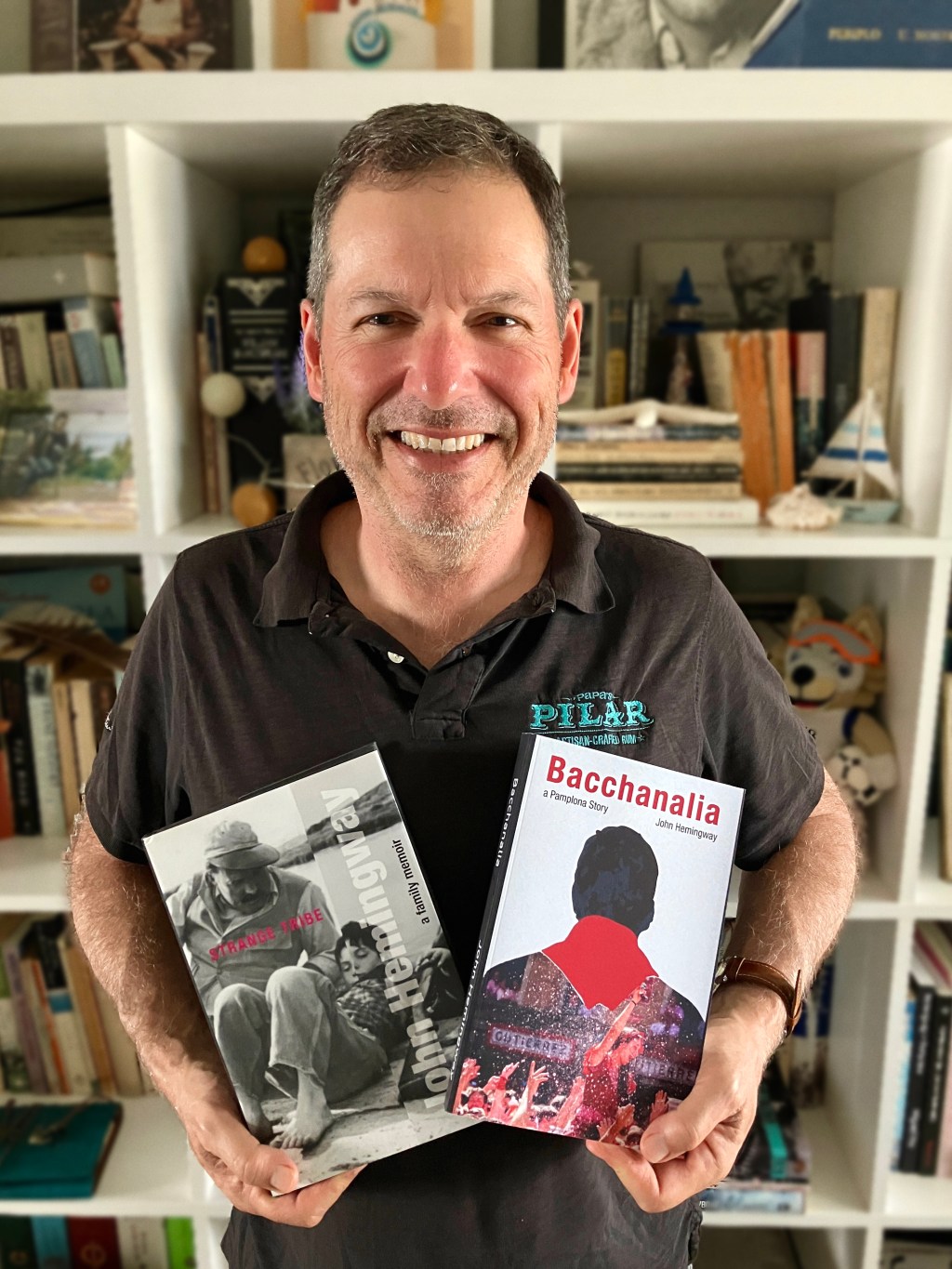
    Nobel and Pulitzer Prize winning author (and Walloon Lake’s most noted summer resident) Ernest Hemingway came from a family of creative types and has since left a legacy of writing that extends for generations. Among those is his grandson, John Patrick Hemingway, author of Strange Tribe (The Lyons Press, 2007) – a memoir that details the turbulent, love/hate relationship between his father, Dr. Gregory Hemingway, and his grandfather, the Nobel Laureate Ernest Hemingway.

    As part of a weekend-long Walloon Lake Writer’s Retreat Weekend at Hotel Walloon, the public is invited to a FREE event – A Lakeside Chat with Author John Patrick Hemingway – on Friday, April 14 at the Talcott Event Venue in downtown Walloon Lake. Doors will open at 7pm with a cash bar featuring a Pilar’s Rum Hemingway Daiquiri (see recipe below), along with select wine and beer; the discussion will begin at 7:30pm and a book signing will follow.

    Throughout the weekend, the Canadian/American writer and journalist will lead writers in a series of workshops, readings and other creative exercises meant to inspire personal storytelling. Last year’s inaugural Writer’s Retreat was led by Ernest’s great granddaughter (and John’s niece), Cristen Hemingway Jaynes, author of Ernest’s Way.

    In addition to his memoir, John Hemingway has published a number of short stories in magazines and literary reviews such at The Saturday Evening Post and Provincetown Arts and has also written for many fishing and hunting magazines such as Showboats International and Ducks Unlimited. His first novel, Bacchanalia: A Pamplona Story (2019), takes place in Spain during the Fiesta de San Fermín, a nine-day event that was made famous in the1920s by the publication of his grandfather’s work The Sun Also Rises.

    Ernest Hemingway was just three months old when he made his first trip from his hometown of Oak Park, IL to Walloon Lake where his parents – Clarence and Grace (Hall) – had purchased property along the North Shore. Ernest spent time every summer until 1921 at the family’s beloved Windemere cottage there, the simple cottage still owned by descendants today. The woods and waters in and around Walloon Lake shaped Hemingway’s life in many ways and it was a place he always held dear to his heart. It was here that his 1972 posthumously published book, The Nick Adams Stories, is primarily set.

    To inquire about availability for the “Walloon Lake Writer’s Retreat ” please contact Hotel Walloon at 231-535-5000.

    HEMINGWAY DAIQUIRI

    INGREDIENTS

    • 1.75 oz Papa’s Pilar® Blonde Rum
    • 0.75 oz fresh Lime juice
    • 0.5 oz Ruby Grapefruit juice
    • 1 tsp Maraschino liqueur
    • 1 tsp Sugar (Papa went without)
    • 1 peel of Grapefruit (as little white pith as possible)

    Shake all ingredients and pour into a Coupe glass.
    Garnish with a dehydrated Grapefruit slice.

    *If you want to make it how Papa drank it, double the rum and make it a Papa Doble!

    Recipe and photo courtesy of Papa’s Pilar

  • Destination Heartland: A Guide to Discovering the Midwest’s Remarkable Past

    Destination Heartland: A Guide to Discovering the Midwest’s Remarkable Past

              “I wanted to dispel the myth that the Midwest is boring,” Cynthia Clampitt tells me when I ask about the inspiration for writing Destination Heartland: A Guide to Discovering the Midwest’s Remarkable Past (University of Illinois Press), her book about the many fascinating places to visit in the stretch of our country from the Dakotas to Ohio.


    I’m happy to report that Clampitt’s goal was a success. Her book takes us to both well-known and out-of-the-way destinations that offer a historic perspective and—in some cases—a culinary delight. Think of it as an in-depth historical travel guide and choose from a plethora of places to read about and/or visit covered in her book. I certainly have a few I now want to explore. These include the Amana Colonies in Iowa which started off as a religious society that escaped religious persecution in Germany. But though it’s rooted in the past with many places to visit such as the High Amana General Store and Zuber’s Homestead Hotel which was built in 1862) it’s also one that embraced technology producing, writes Clampitt, “many high-end electronic products, including everything from microwave ovens to washing machines.”


    Strictly old-fashioned though is the recipe Clampitt shares for pickled ham that was given to her the Ronneberg Restaurant which opened more than 70 years ago in Amana. Pickled ham, one of the specialties of the area, can also be purchased in jars at the Amana Meat Shop & Smokehouse that dates back to 1855.

              Clampitt, a Chicago-based food historian and travel writer who has also authored other books including Midwest Maize: How Corn Shaped the U.S. Heartland, who says she also wants to keep these icons of the past from disappearing by creating an interest to visit them, learned to appreciate iconic Midwestern destinations when young and visiting places with her family. That developed a long-time fascination that endures to this day.

              This love of exploration isn’t confined to just the Midwest. Clampitt has visited thirty-seven countries on six continents.

              “When I’m not traveling, I’m thinking of traveling,” she says, adding that she does a lot of research in preparation as well.

              Indeed, since the publication of her book, she has racked up more destinations so here’s hope for  a sequel to her book. No matter what, Clampitt will keep traveling and she invites others to do so as well.

              “There are so many places in the Midwest to visit that are remarkable, I don’t want them to vanish,” says Clampitt. “I hope people get in their cars and go visit.”

  • If Walls Could Talk: Lake Chapala’s historic buildings and their former occupants

    If Walls Could Talk: Lake Chapala’s historic buildings and their former occupants

    Now one of the most popular retirement area for Americans and Canadians, the Lake Chapala Region, nestled in a valley almost a mile high in Mexico’s Volcanic Axis,  has long been a draw for ex-pats and vacationers, lured by its almost perfect climate and beauty.

    In his book If Walls Could Talk: Chapala’s historic buildings and their former occupants about Mexico‘s earliest international tourist destination (also available in Spanish), award-winning author Tony Burton shares his knowledge and interest in a region where he has spent more than two decades. Burton, a Fellow of the Royal Geographical Society who was born and educated in the United Kingdom, first visited Mexico in 1977. That visit was obviously a big success as he returned and for almost 18 years lived and worked full-time in Mexico as a writer, educator and ecotourism specialist.

    He met his wife, Gwen Chan Burton who was a teacher of the deaf and then director at the Lakeside School for the Deaf in Jocotepec, one of the three main towns lining the shores of Lake Chapala. Though they now reside on Vancouver Island, British Columbia, the Burtons continue to revisit Mexico regularly and he is currently editor-in-chief of MexConnect, Mexico’s top English-language online magazine.

    The other two towns, each with its own distinctive vibe, are Ajijic and Chapala, native villages resettled by the Spanish Conquistadors in the 1500s. “This book looks at how Chapala, a small nondescript fishing village in Jalisco, suddenly shot to international prominence at the end of the nineteenth century as one of North America’s earliest tourist resorts,” writes Burton. “Within twenty years, Chapala, tucked up against the hills embracing the northern shore of Mexico’s largest natural lake, was attracting the cream of Mexican and foreign society. Thus began Lake Chapala’s astonishing transformation into the vibrant international community it is now, so beloved of authors, artists and retirees.”

    The book, organized as a walking tour, covers not only existing buildings but also pinpoints the spots where significant early buildings no longer stand but their histories still weave a story of the town. It’s only a partial guide, explains Burton, noting that an inventory prepared by the National Institute of Anthropology and History identified more than eighty such buildings in Chapala including many not easily visible from the road but hidden behind high walls and better viewed from the lake.

    Among the famous people who lived in Chapala at some point in their careers was author D.H. Lawrence, probably best remembered for his risqué (at the time) novel, Lady Chatterley’s Lover.

    In 1923, Lawrence and his wife, Frieda, rented Casa de las Cuentas (House of Rosary Beads), a house that dates back to the 1800s. At the time, a one-story abode with a half-moon entrance and heavy wooden gates, it was located at 307 Calle Zaragoza, a street formerly known as Calle de la Pesquería (“Fishing street”) so named as it was where the local fishermen repaired their nets and hung them out to dry. It was while living on Calle Zaragoza that Lawrence wrote the first draft of The Plumed Serpent, published in 1926. The novel is described asthe story of a European woman’s self-annihilating plunge into the intrigues, passions, and pagan rituals of Mexico.”

    Over the decades, after the Lawrences moved out, subsequent changes were made to Casa de las Cuentas including  the addition of a swimming pool in the mid-1950s when artist Roy MacNicol and his wife, Mary, owned the home.

    While Lawrence’s writings were considered by some as scandalous, MacNicol’s life had its scandals as well. Burton describes him as “colorful” in that he was married multiple times and was involved in many escapades as well as lawsuits.

    Mary, embracing the local culinary traditions including the use of flowers in cooking, authored Flower Cookery: The Art of Cooking With Flowers.

    It wasn’t the work of a dilettante as reviews of her book such as this one on Amazon shows.

    “Flower Cookery is recipes, but far more than recipes,” writes one reviewer. “The book is organized by the popular name of the flower in question. Each section is introduced with quotations from literature, philosophy, and poetry that feature the blossom. This is followed by the recipes, interwoven with mythology, stories, and aphorisms about the flower, the plant from which it grows, its symbolism, and the culture or society in which humans discovered the value of the plant or blossom. The recipes include original favorites as well as recipes collected from historical sources and contemporary sources around the world. Here is just the tiniest sampling of the riches in the book.”

    Burton shares her Christmas Cheer recipe from when she lived at Casa de las Cuentas.

    Christmas Cheer

    10-12 squash blossoms with stems removed

    2 eggs, beaten

    2 to 3 tablespoons water

    Flour, enough to thicken mixture about one tablespoon

    Salt and pepper

    1 cup neutral oil such as grapeseed, canola, or safflower

    Wash and dry squash blossoms on paper towels, making sure to remove all the water. Mix remaining ingredients except oil to make a smooth batter. Place oil in a large, heavy skillet to 350-375°F. Dip blossoms in batter and fry in oil until golden brown. Drain on paper towels. Serve hot.

    As for the house, it was renovated again in the early 1980s and is now Quinta Quetzalcoatl, a lovely boutique hotel.

    If Walls Could Talk is one of four books that Burton has written on the Lake Chapala region. The other three are Foreign Footprints in Ajijic: decades of change in a Mexican Village; Lake Chapala Through the Ages: an anthology of travelers’ tales  (2008), and the recent Lake Chapala: A Postcard history. All are available as print and ebooks on Amazon.

    The above maps, both copyrighted, show Chapala 1915 [lower map] and 1951 [upper map].

    In all, he’s planning on adding several more to what he currently calls the Lake Chapala Quartet, these focusing on the writers and artists associated with the area.  I asked him  to describe the region so readers who have never been there can get an idea of what it is like, but it turns out the Burton is NOT a traveler who meticulously plots every moment of a trip before he arrives. Instead, he tells me that part of the fun when traveling is to not know in advance what places are like and instead to see and experience them for yourself.

    “That said,” he continues, “the various villages and towns on the shores of Lake Chapala are all quite different in character. The town of Chapala, specifically, is a pretty large and bustling town. It is growing quite rapidly and has added several small high end boutique hotels in recent years, as well as some fine dining options to complement the more traditional shoreline ‘fish’ restaurants. The many old–100 years plus–buildings in Chapala give the town a historic ‘air’ where it is relatively easy to conjure up images of what it was like decades ago. By comparison, Ajijic, now the center of the foreign community on Lake Chapala, has virtually no old buildings and more of a village and artsy feel to it, though it also has very high quality accommodations and more fine restaurants than you can count.”

    Other structures still standing include the Villa Tlalocan, completed in 1896 and described by a contemporary journalist as “the largest, costliest and most complete in Chapala… a happy minglement of the Swiss chalet, the Southern verandahed house of a prosperous planter and withal having an Italian suggestion. It is tastefully planned and is set amid grounds cultivated and adorned with flowers so easily grown in this paradisiacal climate where Frost touches not with his withering finger…”

    Also still part of the landscape is Villa Niza. One of many buildings designed by Guillermo de Alba, the house, according to Burton, was built in 1919 and looks more American than European in style. Located at Hidalgo 250, it takes advantage of its setting on Lake Chapala and has a mirador (look out) atop the central tower of the structure, which affords sweeping panoramic views over the gardens and lake. De Alba’s strong geometric design boasts only minimal exterior ornamentation.

    Burton, who specializes in non-fiction about Mexico, related to geography, history, travel, economics, ecology and natural history, has written several fascinating books about the history of the Lake Chapala region.

    In If Walls Could Talk, Burton invites you to walk with him through time as you explore the city.

  • Matchday Menu: Adam Richman’s New Show

    Matchday Menu: Adam Richman’s New Show

                   Adam Richman,TV personality, culinary traveler, cook and author, travels so much for his shows such as “Secret Eats with Adam Richman,” that I wondered if he ever woke up in the morning and wasn’t sure where he was.

                   “Yes I do,” Richman tells me. “In fact, one time, it was the strangest/saddest/weirdest sensation I’ve ever had. I woke up at home and didn’t know where I was. My first thought was, ‘This must be one of those old boutique hotels that they renovated an apartment to make.’ I honestly did not even recognize my own home. It’s a mixed bag of emotions, but I wouldn’t change up the opportunities I have and have been given for anything.”

                   Expect him, though, to know what he is demonstrating when he’s in front of a crowd because Richman is totally into making cooking accessible to everyone.  

    A while back I caught up with Richman at the KitchenAid Fairway Club where he was doing a cooking demo when Harbor Shores, a Signature Jack Nicklaus golf course on Lake Michigan in Benton Harbor, Michigan was the venue for the KitchenAid Senior PGA Championship.

                   “The recipes are simple but deeply delicious, and each dish can be used for multiple purposes: the salmon can be by itself, or served a top a salad,” Richman says about what has become almost his mantra and why his cookbooks and shows such as “Secret Eats with Adam Richman” and “Man vs. Food.” He now is starring in Matchday Menus, a brand new series on Facebook where he uses football stadium food to explore some of the coolest places in the world. It started three weeks ago and already has almost 3.5 million followers.

                   As for the golfing aspect of the tournament, I asked Richman if he played.

                   “I was actually on my high school team,” he says “I have not played in ages, and I cannot imagine how my game has suffered as a result of that. I still enjoy the driving range quite a bit, but most of all, my favorite thing about opportunities like this is to meet the people that watch my shows and enjoy the things I do. Because this way, I can give people more of what they want, and find out what else they are interested in that I have yet to explore.”

    From real, authentic poutine and Montreal bagels in Quebec, to unbelievable home cooked Latin meals in El Paso,  Matchday Food is the show for you.

                   Exploring—whether it’s the backroads and city streets in the United States or internationally—is what Richman’s shows are all about.  How did he decide where to go for shows such as “Secret Eats with Adam Richman?” 

                   “The locations for the international season were decided by the network–at least in terms of the cities,” he explains. “Because my shows have had a significant and very fortunate degree of international success, they wanted to film in cities where my shows already had a foothold. In terms of the establishments with in those cities, I am blessed to work alongside an amazing team of storied producers, and I have a great director and show runner. We all do research for a couple of months and then meet with the places we have for each city. It’s actually quite a bit of fun. Everybody is trying to out-secret each other. Everybody tries to find the coolest place, the coolest hidden dish and so on. Ultimately, we look over everything that everyone has brought in, and then try to figure out what makes the best four location episode that really represents the city.”

                   Richman says he’s flattered people call him a chef but says he thinks there’s something academic and studious to the word chef.

    “I think of myself—excuse the expression—as a badass cook,” he says.  “I may not be a chef, but I’ve worn clogs a few times and baggy checkered pants.”

                The latter clothing list is a nod to Mario Batali, the embattled restauranteur/TV food star/cookbook author who was known for his orange Crocs, hair pulled back into a ponytail and oversized shorts and patterned pants.

                “It used to be if you had a sheath of tattoos up and down your arm, you were a biker,” he continues. “Now it means you can cook a great pork belly.”

                His cooking demonstrations include a lot of digressions as well as action while he’s talking. Slicing a lemon with a mandolin, he tell us about how to avoid taking a slice out of your hand, sharing the story of an incident where he did just that and then lamenting it was too bad, he wasn’t making marinara sauce in order to cover up the accident.  There’s advice against cooking with wine we wouldn’t drink and adding oil to an unheated pan.

                 It’s a science thing about the latter, he says, adding it’s important to heat the pan first. That’s because the longer fats cook, the quicker they’ll break down and start to burn impacting both the taste and even releasing harmful toxins.

                How do you know when the pan is hot enough to add oil? Richman shows how but holding his pan close to the surface—really closed.  

                “My mother hates when I do that,” he says, noting that less perilously, splashing a drop or two of water in the pan and seeing if it sizzles also works.

                   There are so many cookbooks on the market, what do you tell me people about why they should buy yours.? I ask.

                   “That it is approachable, nonthreatening, and there is something in Straight Up Tasty for everyone, regardless of their level of experience in the kitchen,” he says. “I aim to introduce people to flavors, ingredients, and maybe even techniques that they have not used in their kitchens before. I want people to use my recipes as a point of departure for them to then tweak and customize to make them their own. Above all, I want people to have fun. It’s not just recipes – there are poems, essays, even lists of great restaurants to check out that I have discovered in my travels.”

    Miso-roasted veggies

    Ingredients

    ¼ cup olive oil

    ½ cup miso paste (yellow or mild works well with the vegetables here)

    3 sweet potatoes, peeled and cubed

    3 beets, peeled and cubed

    2 12-ounce bags of broccoli florets

    2 Spanish onions, cubed

    1 head of garlic, separated into cloves and peeled

    ¼ cup garlic powder (not granulated garlic) or more to taste

    Directions

    1. Preheat the oven to 375°F

    2. In a large bowl, combine the oil and the miso. Add the sweet potatoes, beets, broccoli, onions, and garlic cloves and toss to coat.

    3. Spray a 9 x 13-inch baking pan with nonstick cooking spray and add about ¼ inch of water. Add the vegetables to the pan. Dust everything with the garlic powder. Cover the whole dish with aluminum foil.

    4. Roast the vegetables for 50 minutes. Remove the foil, stir the veggies, and cook uncovered for an additional 10 minutes, or until the sweet potatoes and beets are fully covered. Serve hot or warm.

    Smoked paprika onion rings

    Ingredients

    3 Vidalia onions (or other sweet onion), peeled

    2 cups all-purpose flour

    2 large eggs, beaten

    2 cups panko breadcrumbs

    3 TBS sweet smoked paprika

    Vegetable or peanut oil, for deep frying

    Kosher salt to taste

    1. Using a mandolin or a very sharp knife, slice the onions into ¼-inch-thick rounds. Separate the rounds into rings.

    2. Place the flour, beaten eggs, and panko in three separate shallow bowls. Mix a tablespoon of paprika in each bowl.

    3. Dredge the onion rings first in the flour, then in the eggs, and finally in the panko. Place the dredged rings on a baking sheet and allow the coating to set for 10 minutes.

    4. In a large pot set over medium-high heat, bring about 4 inches of oil to 365 degrees (use a deep-frying or candy thermometer to check the temperature).

    5. Line a separate baking sheet with paper towels. Working in batches, fry the onion rings until golden brown, 2 to 3 minutes per side. When done, the rings should float to the surface of the oil. Transfer each batch of fried rings to the prepared baking sheet and season with salt.

    6. Keep the finished onion rings warm under layers of paper towels as you cook the remaining batches. Serve hot.

    Win-the-bake-sale chocolate cake

    Topping ingredients

    1 box of Betty Crocker SuperMoist Butter Recipe Chocolate Cake Mix

    3 large eggs

    ½ cup Hellmann’s Light Mayonnaise

    1 can of store-bought chocolate frosting

    1. Preheat the oven to 350 degrees Fahrenheit. Grease two 9-inch round cake pans with cooking spray.  

    2. In a large bowl, whisk together the cake mix, eggs, 1 cup of cold water, and the mayonnaise.

    3. Pour the mixture into the greased cake pans and spread with a spatula to smooth. Bake according to package instructions. When done, remove the pans from the oven and place them on wire racks to cool completely.  

    4. Invert one of the cake layers onto a plate. Using a rubber spatula, spread a thick layer of frosting over the top. Carefully invert the other cake layer on top and spread the top and sides with the remaining frosting. 

    Recipes courtesy of Adam Richman.