Now the part-owner of an internet security company, Salander still finds refuge in numbers, which to her are so much more trustworthy and manageable than people.
“Decoding the human factor is not like identifying a data breach,” writes Smirnoff in a description of Salander’s personality style. “It requires something different. The ability to read between the lines, perhaps. With very few exceptions, relationships with other people take too much energy. Most people who give want something in return.”
That’s why the choice of Salander to become guardian for Svala, her genius 13-year-old niece, is problematic to say the least. Add to that, Svala is dealing with a host of crises that would negatively impact even a stable adult let alone a young girl with a dead father and a missing mother whose drug-dealing stepfather is hunting for her to take advantage of her outstanding mathematical capabilities.
In other words, Svala has a host of complicated issues impacting her life. And it’s up to Salander, who can barely take care of herself, to keep Svala safe. Mikael Blomkvist, the journalist who has partnered with Salander to solve crimes in the past, is dealing with his own significant life changes. His daughter is about to marry a man whose grandiosity and desire to earn vast sums of money has led him into an alliance with shady characters. He’s also jobless as Millennium, the investigative newsmagazine where he’s worked for decades, has folded.
Carrying on a series after the death of the original author is difficult. But Smirnoff, whose previous novels have sold over seven hundred thousand copies, captures the essence of Larsson’s characters who are complex and flawed but real and likeable as well. The book, translated by Sarah Death, moves quickly, and though at times the substantial number of characters may be somewhat difficult to keep track of, there is a list at the beginning of the book to refer to if needed.
In all, Smirnoff, who lives in Sweden, has done an excellent job, one that should reassure Larsson’s fans that the series is in good hands.
Northwest Indiana is famously known as a melting pot, a coming together of a vibrant amalgam of people from many countries and different cultures, making the area rich in diversity. But what may be surprising to those of us who grew up in the Region, the first non-English speaking people to move into the Indiana Dunes region and establish settlements were not from Eastern Europe, Germany or Mexico but were instead Swedish immigrants.
“Many came first to Chicago which at one time had more Swedes than any city on earth except Stockholm,” says noted historian Ken Schoon, author of the recently released Swedish Settlements on the South Shore (Donning Company Publishers $30), noting that the legacy of these early Swedish immigrants can still be found throughout the Region even today.
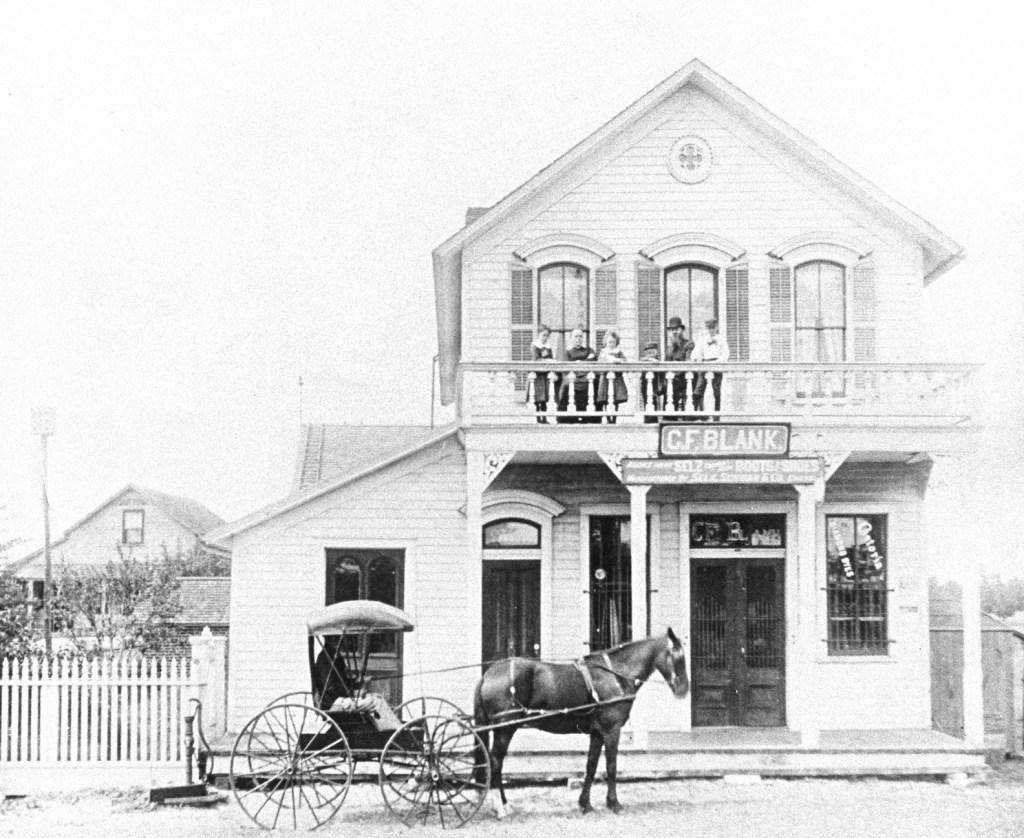
“Swedes established more than a dozen local churches, most of which are still active today,” he says “They built homes out of logs, lumber, and bricks, cleared and farmed the land, worked for the railroads and the brick factories, and established businesses, some of which are still in business today. Several of the early Swedes served in the Union army in the Civil War. Nearly all got American citizenship, and some were elected to political office.”
Swedish settlements included neighborhoods in Hobart, Baillytown, Portage Township, Porter, Chesterton, and LaPorte as well as Swedetown in Michigan City. According to Schoon, Miller Beach, where Swedish families like those of my sister-in-law span five decades, was described in 1900 by Lake County historian Timothy Ball as mainly Swedish Lutheran.
Other tie-ins with the Region’s Swedish past comprise Chellberg Farm, a historic farmstead, now part of Indiana Dunes National Lakeshore.
“The Chellbergs were one of hundreds of Swedish families that immigrated to the ‘south shore’ area of Northwest Indiana,” says Schoon. “They were the first non-English speaking immigrants to arrive in numbers large enough and lived close enough together to call the areas settlements.”
Close by to Chellberg Farm and further back in time, Joseph Bailly, a French fur trader who founded a trading post which is also now within the Indiana Dunes National Lakeshore. According to Schoon, Bailly’s son-in-law Joel Wicker hired recently-arrived Swedes to cut down trees and prepare them for the railroads to be used as rail ties and as fuel for the steam engines.
“Logs were also needed to build and heat their homes and for cooking,” says Schoon. “When enough trees were cut down, Wicker then sold the land to his Swedish employees who then cleared the land for farming. Other Swedes found employment as farm laborers, and working for sand and ice mining companies, and as blacksmiths and carpenters. As the immigrants had more money, many purchased their own farms or started businesses in town. The first licensed embalmer in Indiana was carpenter John Lundberg, a Chesterton Swede.”
Chellberg Farm Today Photo courtesy of the Indiana Dunes National Lakeshore
Many of the churches founded by Swedish immigrants still exist and for almost 70 years or so continued to offer Swedish-language services. Now services are in English and their congregations encompass more than those of Swedish ancestry.
“Bethany Lutheran Church in LaPorte is the oldest Swedish-founded church in Indiana,” says Schoon. “Until it closed last December, the Evangelical Covenant Church in Portage was the oldest Covenant Church in the state. The Michigan Avenue Methodist Church in Hobart still uses its original 1889 white frame building and Michigan Avenue used to be called Swede Avenue.”
Other churches are Bethany Lutheran and Grace Baptist in LaPorte, Zion Lutheran in Michigan City, Bethlehem in Chesterton, Augsburg (Baillytown/Porter), Hope (Crisman/Portage), Bethel (Miller), and Augustana (Hobart
Though Swedes, whose last names are similar to common “American names” such as Anderson and Carlson, quickly assimilated into American culture, descendants of Swedes still learn Swedish songs and dances and celebrate the traditions of their forbears says Schoon and we also have assimilated into their traditional ways.
“Even non-Swedes know about Vikings and may eat Swedish meatballs,” he says, noting that in 1952, 100 years after its founding, Chesterton still had more than 23 Swedish-owned businesses. “Smörgåsbord has become an American word—though to Swedes it has slightly different meaning. Swedes and their descendants helped build the Calumet Area.”
Swedes celebrate July 4th but also honor their own customs as well including Midsummer, the first day of summer and the longest day of the year, a holiday featuring a Maypole, singing, dancing, eating and drinking.
“At least in Sweden,” says Schoon about the drinking part, “but not at the Chellberg Farm where Midsummer is celebrated.”
But it isn’t all just history for Swedes and those of Swedish ancestry along the South Shore. The newest lodge in the Scandinavian Vasa Order of America was started in 2006 and sponsors “Nordikids” a very active organization for children and youth that teaches primarily Swedish songs, dances, and customs. The group performs every year at many venues including Chicago’s “Christmas Around the World.
Ken Schoon, the author, is not descended from Swedes, but he is married to the granddaughter of Swedish immigrants. His earlier works include Calumet Beginnings, Dreams of Duneland, and Shifting Sands, all published by Indiana University Press, and City Trees published by Stackpole Books.
Ifyougo:
Ken Schoon book presentations and book signings.
Sunday, November 11@ 3pm. Calumet City Historical Society, 760 Wentworth Ave, Calumet City, IL. 708-832-9390; calumetcityhistoricalsociety.org
Wednesday, November 14@ 6:30pm. Augsburg Church, Augsburg Evangelical Lutheran Church, 100 N Mineral Springs Rd, Porter, IN. 219-926-1658; augsburglutheran.org
Sunday, November 25 @ 10:30. Westminster Presbyterian Church, 8955 Columbia Ave, Munster, IN. 219-838-3131; wpcmunster.org
Saturday, December 8 @ 9:30. Brunch including Swedish pancakes and lingonberry syrup and book signing, Dunes Learning Center, 700 Howe Rd, Porter, IN. 219-395-9555; duneslearningcenter.org