Tag: Southern cuisine

  • Southern Lights: Easier, Lighter, and Better-for-Recipes From the South

    Southern Lights: Easier, Lighter, and Better-for-Recipes From the South

    “Throughout these pages, I’m going to (politely) refute the claim that Southern food is all bad for you and hopefully breathe new life into some tired, worn-out notions,” writes Lauren McDuffie in the first pages of her latest cookbook, Southern Lights: Easier, Lighter, and Better-for-You Recipes From the South (Gibbs Smith). McDuffie, an advocate of Southern cuisine, wants us all to know the entire truth of this regional way of cookery that many of us dismissively think of as fried and fat.

    Once you make your way through the stereotypes, past the overwrought, done-to-death, attention-seeking heavy hitters, the archives of Southern cookery shine with a special sort of brilliance,” continues McDuffie, noting that she is a home cook who has done the majority of her culinary learning in the South ranging from the foothills of central Appalachia to the sandy, abundant low country coastline.

    McDuffie, who lives in Portland, Oregon now, created the award winning food blog: My KItchen Little: Recipes, Ideas, and Inspiration for Busy Home Cooks but her love of Southern cuisine and her ability to bring it to the fore was also apparent in her first cookbook, Smoke, Roots, Mountain, Harvest: Recipes and Stories Inspired by My Appalachian Home. The same passion is conveyed” in this magnificent cookbook with its luscious photos–McDuffie is also a photographer and her luscious color photos are a perfect accompaniment to the recipes that show us how to enjoy the rich heritage of Southern cuisine without the guilt and calories.

    Southern Lights takes us into the world that McDuffie says she loves most– the people, places, things, and flavors that evoke feelings of home.

    To accomplish this, McDuffie, an advocate for fresh and healthy, took a hard look at her kitchen pantry and asked herself a series of questions such as why she was using a particular oil or cut of meat in her cooking and what substitutions would work just as well when using her favorite recipes. From there she re-created favorite dishes incorporating different ingredients but yielding the same delicious results.

    Her recipe for Frico Chicken in a Buttermilk Bath is a great example. Its origins are that perennial Southern classic—fried chicken brined in buttermilk and then deep fried in lard. A definite winner when it comes to taste. Not so in other respects. So what does McDuffie? She produces a healthier and low caloric alternative that really works.

    Calling it a remix and noting that frico translates to fried in Italian, she describes this dish as similar to a simple baked cheese crisp that tops a boneless, skinless, and flattened chicken thighs browned in a minimum of oil. A surprising easy-to-make but sophisticated dish, it offers the crunch and flavor of buttermilk heavily battered chicken with no grease or guilt.

    Like pulled pork sandwiches. McDuffie gives us a very creative take by substituting spaghetti squash (yes, you read that correctly) for the pork in her recipe for “Pulled” BBQ Spaghetti Squash Sandwiches.

    “This has got to be one of the most unusual sandwiches I’ve ever made, but man is it a hit in my house,” writes McDuffie in the introduction to this dish. “Tangled strands of roasted spaghetti squash mimic the fatty pork in a classic meaty version, making for a lighter, more nutritious way to get your fix.”

    The squash mixture is then topped with Halloumi cheese (smoked Gouda or cheddar can be used instead) along with coleslaw and barbecue sauce.

    Voila! A low cal, high flavor profile meal and just one of many in McDuffie’s latest cookbook.

    Honey-Caramelized Tomato Upside-Down Cornbread

    “People get very territorial about their cornbread in the South, a fact that I have always found completely charming,” says McDuffie. “Home cooks are devoted to their recipes and food traditions in a way that serves to sustain them, carrying them across generations. There is so much heart on the table, always. Cooks hold on tight to them, their family recipes, and it’s really the most beautiful thing. This recipe happens to be a favorite version of cornbread in my house. The jammy, juicy-sweet tomatoes suspended on top really do steal this show, and the olive oil makes it pretty special. Feel free to sub a different cooking oil, though, as olive oil ain’t cheap. I highly recommend serving this in thick slices, slathered with lots of Salty Butter–Whipped Honey.”

    Makes 6 to 8 servings

    • Natural nonstick cooking spray
    • 12 ounces cherry or
    • grape tomatoes
    • 6 tablespoons honey, divided
    • 1 1⁄2 teaspoons salt, plus
    • more as needed
    • 1 cup yellow cornmeal
    • 1 cup cake flour
    • 1 1⁄2 teaspoons baking powder
    • 1 teaspoon baking soda
    • 2⁄3 cup olive oil or canola
    • or vegetable oil
    • 2 large eggs, beaten
    • 1 1⁄4 cups buttermilk

    Preheat the oven to 350°F. Adjust the rack to the middle position. Spray an 8- or 9-inch round cake pan with cooking spray and line with parchment paper, allowing some overhang for easy removal (think of them as handles).

    Put the tomatoes, 3 tablespoons of the honey, and a good pinch of salt in a nonstick skillet set over medium heat and cook, stirring occasionally, until the tomatoes just burst and are tender, about 5 minutes. Transfer to the cake pan, juices included, and spread in an even layer.

    In a mixing bowl, whisk together the cornmeal, remaining 1 1⁄2 teaspoons salt, cake flour, baking powder, and baking soda.

    In the bowl of a stand mixer or in a mixing bowl with ahandheld m ixer, combine the oil, the remaining 3 tablespoons of honey, and the eggs. Add half of the dry mixture and mix until combined. Add half of the buttermilk and mix until just combined. Repeat with the remaining halves of each and gently pour the batter into the prepared pan over the tomatoes (it shouldn’t be more than three-fourths full).

    Bake until lightly golden and set, 35 to 45 minutes (use a knife or toothpick to test the doneness—it should come out clean). Cool in the pan for at least 15 minutes before inverting the cornbread onto a serving plate, tomatoes facing up now.

    Salty Butter-Whipped Honey

    Sounds sinful, right? I can assure you that this isn’t nearly as rich as it sounds. This drippy, sticky-sweet thing is my lighter take on a simple honey butter where, instead of infusing a lot of butter with a little honey, we’re going to infuse a lot of honey with a little butter. Just be sure to use a good-quality raw honey.

    Makes about 1 cup

    • 8 ounces honey
    • 2 tablespoons salted butter, at room temperature
    • Salt to taste

    In a blender, combine the honey, butter, and salt and blend until creamy and smooth. Transfer to a lidded storage jar or container. This buttery honey will keep in the refrigerator for up to 1 month.

    Frico Chicken in a Garlicky Buttermilk Bath

    “I’ve taken the things I love most about classic Southern fried chicken and remixed them into something that is just as satisfying, but much lighter—a true win-win,” writes McDuffie about this recipe. “A frico (which means “fried” in Italian) is simply a baked cheese crisp, and here we’ll use them to almost mimic the salty crunch of fried chicken skin. Rather than rich bone-in, skin-on cuts, we’ll use leaner boneless and skinless thighs—my favorite protein of them all. The garlicky buttermilk-fortified bath in which they cook mimics my go-to fried chicken brine, helping the chicken stay tender and juicy. It also happens to be an easy, one-pan, 30-minute meal. So there’s that.”

    Makes 4 to 6 servings

    • 1 1⁄2 cups grated Parmesan cheese
    • 4 teaspoons olive oil, divided
    • 6 boneless, skinless chicken thighs
    • Salt
    • Freshly ground black pepper
    • 1 heaping cup diced sweet onion
    • 10 ounces fresh baby spinach
    • 3 garlic cloves, minced or grated
    • 1⁄2 cup dry white wine (optional)
    • 1 (14.5-ounce) can crushed or diced tomatoes
    • 1⁄2 cup buttermilk

    Preheat the oven to 350°F. Adjust the oven rack to the middle position. Line a large baking sheet with parchment paper or a silicone baking mat.

    Equally space the Parmesan into 6 (1⁄4-cup) mounds on the baking sheet. Use your measuring cup to gently press down on the mounds and work them into round, circular disks (they don’t have to be perfect). Bake until flattened and just beginning to brown lightly around the edges, 3 to 4 minutes. Remove and set aside. They will firm up as they cool.

    Pour 2 teaspoons of the oil into a large pan over medium heat. Season the chicken with salt and pepper to taste. When the oil is hot, add the chicken and brown really well on the first side; this takes 5 to 6 minutes. Flip and cook for another 1 to 2 minutes (they will finish in the sauce). Transfer to a plate and set aside.

    Pour the remaining 2 teaspoons of oil into the pan. When it’s hot, add the onion and spinach and sauté for 3 to 5 minutes, until the spinach is fully wilted and the onion is soft. During the last minute, add the garlic.

    Stir in the wine (if using) and cook for about 1 minute to reduce it. Add the tomatoes and buttermilk and slide the chicken back into the pan. Simmer for about 10 minutes to reduce the sauce and to finish the chicken.

    Lay the Parmesan fricos over the chicken just before serving. They will melt and sort of adhere to the chicken, mimicking salty chicken skin in the best way.

    Recipes excerpted from Southern Lights: Easier, Lighter, and Better-for-You Recipes from the South by Lauren McDuffie. Photographs by Lauren McDuffie. Reprinted by permission of Gibbs Smith Books.

  • Healthier Southern Cooking: 60 Homestyle Recipes with Better Ingredients and All the Flavor
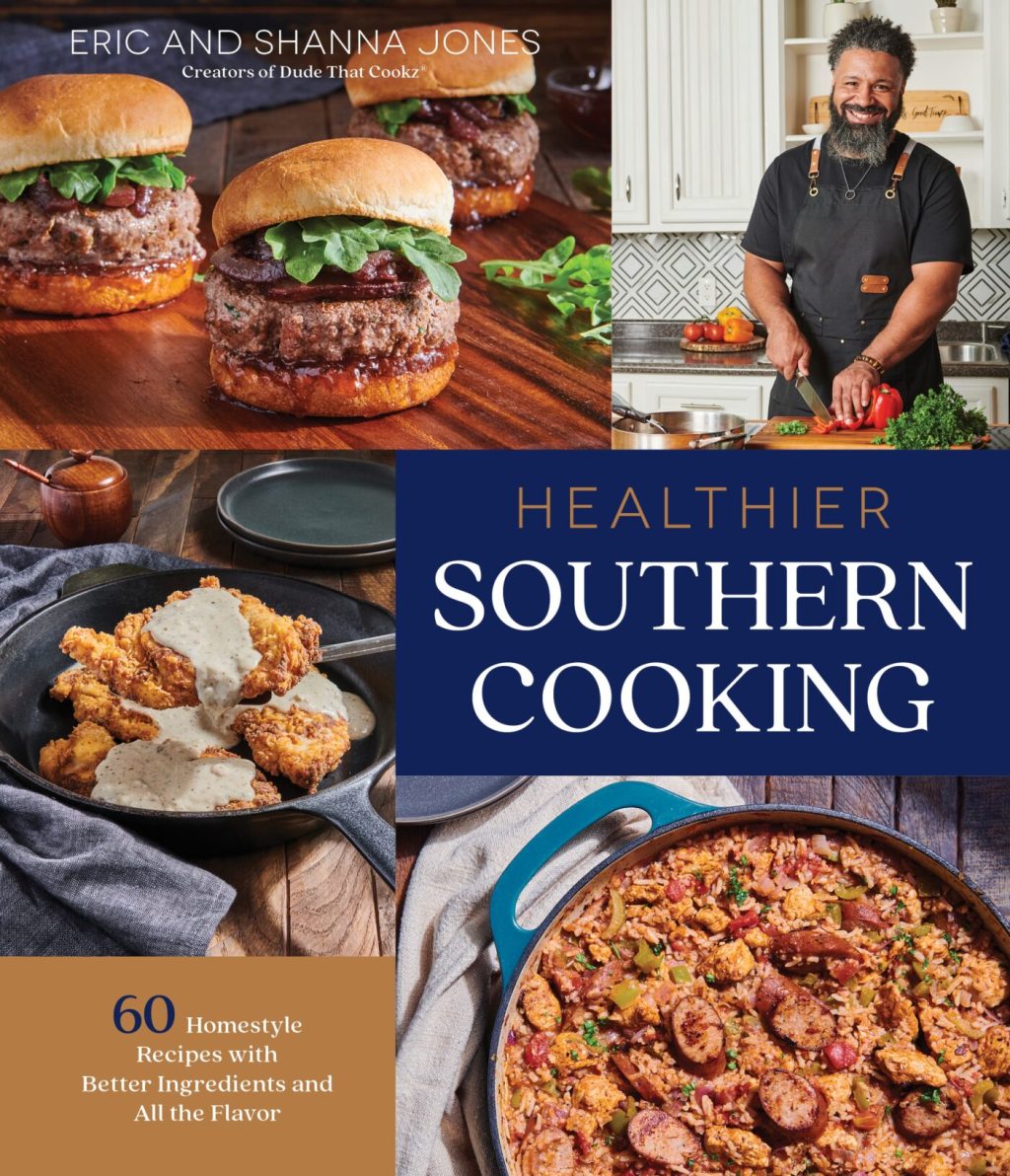
    Healthier Southern Cooking: 60 Homestyle Recipes with Better Ingredients and All the Flavor

    Can true Southern cuisine—think fried chicken, mashed potatoes and gravy, macaroni and cheese, and fried okra—be transformed into healthier fare without losing the flavors and tastes that make this type of cookery so satisfying?

    While most of us would say no way, Eric and Shanna Jones, authors of Healthier Southern Cooking: 60 Homestyle Recipes with Better Ingredients and All the Flavor, are out to show that healthy doesn’t mean boring. Their Southern credentials are impeccable. A husband and wife team, Eric is a native of Louisiana and Shanna hails from Houston, Texas, where she was born and raised. Together, they’re the founders of Dude That Cookz, a creative cooking blog with lots of great recipes and photos. Eric is the cook and Shanna a photographer who manages the brand, a role that also includes maintaining their blog and social media content and whatever else needs to be done so that Eric can focus on cooking. But Shanna also contributes to the kitchen as an avid baker. Married for more than a decade, the couple has two children.

    And a love of cooking.

    Eric, who describes himself as a country boy and country cook, learned his way around a kitchen early on from his grandparents. His grandmother made—and he learned—the type of Louisiana Southern cuisine that tastes oh so good but definitely doesn’t meet the criteria for low in calories or heart healthy. But his own need for what he terms as “dietary adjustments” as well as his parents’ early demise from health issues made him rethink the food he loved to cook and eat. The conundrum was how to make rich and soul-satisfying Southern food that’s healthy without losing the flavor.

    Well, it turns out that you can, often by substituting ingredients without losing the full mouth feel that fats provide. Cooking clean is the key. Clean is the term Eric and Shanna give to their recipes that have less salt, less fat, less sugar, and a lot fewer calories.

    Creamed corn, a staple of the Jones’ kitchen, is reimagined by substituting evaporated milk for heavy cream and using coconut milk and Parmesan cheese. Peach cobbler, that classic Southern dessert, eschews the usual thick sugary syrup, reducing the amount of sugar and instead adding maple syrup as an ingredient.

    Southern potato salad calls for lots of mayo and, of course, potatoes themselves are starches that convert to sugar in our system. The solution? Less mayonnaise, the use of red potatoes since they have less carbs and calories than russet potatoes, and adding hard boiled eggs—all of which, says Jones, make a dish that is full of flavor and texture.

    But what about that Southern staple: fried chicken with gravy? The answer again is coconut milk, this time replacing buttermilk. Then instead of deep frying, it’s pan-fried in a minimum amount of sunflower oil. As for the gravy, 2% works just as well as cream or whole milk.

    In the cookbook, the first by the couple but undoubtedly not the last, each recipe has a write-up by Jones as to how he’s reducing the caloric footprint of the dish as well as lowering the level of salt but maintaining the flavor profile with the addition of other herbs and spices.

    Of course, Jones admits, sometimes you just need a double-stacked burger. But the beauty of all this, by eating clean, once in a while you can eat dirty without a lot of guilt.

    This review originally appeared in The New York Journal of Books.