Tag: Northwest Indiana Times

  • Author Erik Larson offers compelling acount of the start of the Civil War
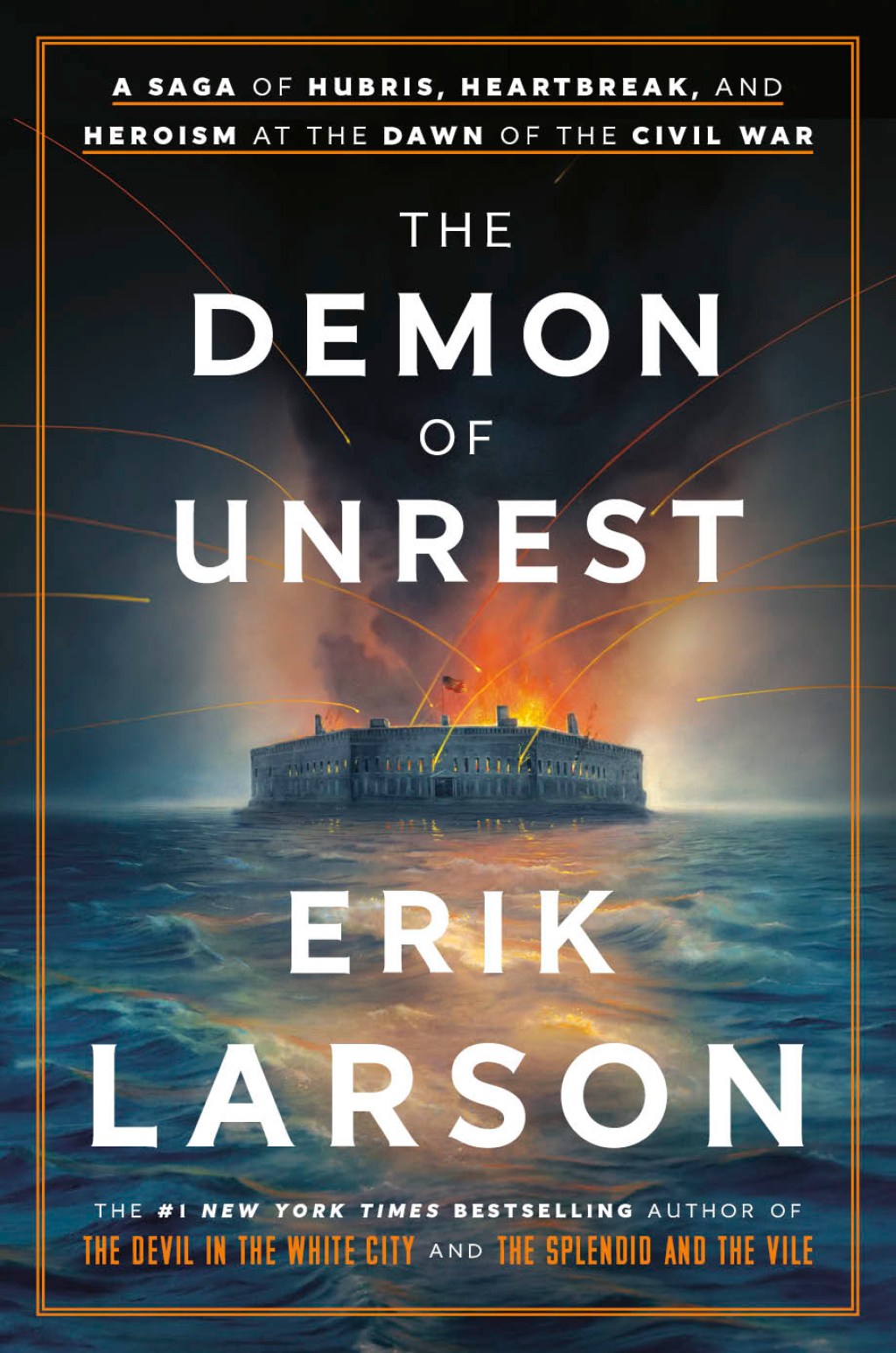
    Author Erik Larson offers compelling acount of the start of the Civil War

    Only a master storyteller like Erik Larson could turn the five tumultuous months leading up to the Civil War into “The Demon of Unrest: A Saga of Hubris, Heartbreak, and Heroes at the Dawn of the Civil War” (Crown), a compelling, page-turning read, chock full of anecdotes, psychological profiles and obscure but compelling tidbits of history all set against a relentless march towards a conflict that would kill over 620,000 soldiers and devastate a nation.

    Larson, the author of six New York Times bestsellers whose previous works include “The Devil in the White City: Murder, Magic, and Madness at the Fair That Changed America,” about a mass murderer and the 1893 Chicago’s World Fair, writes in a novelistic style that makes history come alive. He does so through his ability to weave together the familiar facts of history with information that can only be gleaned through relentless and extensive research.

    Yes, most of us know that the Civil War began with the firing on Fort Sumter, which was located in Charleston Harbor and under the command of U.S. Army Major Robert Anderson. But did you know that Anderson had owned enslaved people and was a defender of slavery? That Lincoln often misspelled Sumter as Sumpter? Or, more importantly, South Carolina did not have to succeed because of Lincoln’s election, as he had no intention of outlawing slavery in the Southern states?

    “When I started out doing this, one concern I had was that the Civil War has not exactly been underwritten,” Larson told me during a phone conversation earlier this week, noting that a quick Google indicated around 65,000. “I had vowed over the years never ever to write about the Civil War.”

    That changed when, as he was looking for the topic of his next book and watching the events of the Jan. 6, 2021 assault on the U.S. Capitol, he began to consider the deep divide and unrest of our own times.

    Faced with what he describes as an intimidating world of previous scholarship, Larson says “What I really wanted to do was to provide a rich sense, on an intimate level, of what the forces were and the motivations for the start of the Civil War.”

    The magic of his writing is that he accomplishes this by immersing the reader in details, descriptions, and personalities mostly unknown to many of us, including “eight typical characters” such as Charleston society doyenne Mary Boykin Chestnut, who kept a detailed diary, and James Henry Hammond, a Charleston planter who was a leader of the secessionist movement and who later became a U.S. senator despite public knowledge of his sexual relationships with four nieces ages 13 to 19.

    He also includes information about resolving issues regarding dueling, from “The Code of Honor or Rules for the Government Principals and Seconds in Dueling” and instructions for the “proper” way of whipping slaves as well as the going prices for selling human beings.

    The Southern mindset among the owners of enslaved people of the time is best summed up in a letter written to President James Buchanan, president before Lincoln, by Arthur Peronneau Hayne, a U.S. senator from Charleston. In it, he writes that without slavery “our every comfort would be taken from us. Our wives, our children, made unhappy — education, the light of knowledge — all lost and our people ruined forever. “

    “White southerners had persuaded themselves that slavery was a good thing for all concerned, especially for the enslaved blacks,” said Larson. He also notes that many of these same men were devoted readers of writers like Sir Walter Scott, author of “Ivanhoe,” and believed fervently in honor and the code of chivalry.

    As outrageous and hypocritical as that seems today, Larson says when writing about a different era it’s important to consider the point of view of those times to accurately reflect how events unfolded.

    “It gives a better sense of what the forces were that did lead to states like South Carolina succeeding from the Union and the Civil War,” he said, noting that understanding is not condoning, but historic context provides a lesson for the present and future as we struggle with political division today.

    This article previously appeared in the Northwest Indiana Times.

  • A Sinister Revenge: A Victorian Mystery by Deanna Raybourn
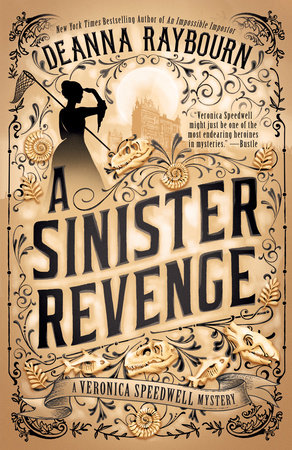
    A Sinister Revenge: A Victorian Mystery by Deanna Raybourn

    Deanna Raybourn takes us back to Victorian times in “A Sinister Revenge” (Penguin Random House), the latest novel in her Veronica Speedwell series. Speedwell, a scientist, lepidopterist or butterfly collector, and lady adventurer, has traveled to Bavaria in search of Revelstoke “Stoker” Templeton-Vane (called Stoker for short), her lover and scientific partner, who understandably is upset to learn that her husband who she presumed dead, is still very much alive. Upon finding out the news, he leaves the country and now seems to have completely disappeared. Traveling with Speedwell is Stoker’s brother, Viscount Tiberius Templeton-Vane, and the two, while dining at a Bavarian inn and hearing the landlord talk about a disagreeable encounter he had with a wolf-like man believe they may have found Stoker.

    But there’s more going on than just a missing lover and brother. Tiberius has received death threats tied to an incident that occurred years ago and he needs his brother’s help in unraveling the mystery in order to save his life.

    Raybourn, a New York Times bestselling author and sixth generation Texan, knew from an early age that she wanted to be a writer. Influenced by such women writers as Mary Stewart, Victoria Holt, Agatha Christie, and even Jane Austen, she describes her books as mysteries with enough romance to keep readers who like both genres happy.

    “There was never a time when I didn’t make up stories,” she says, adding that she remembers being thrilled when she finally learned how to print so she could get them out of her head. There was also the time where she missed out on entire school lesson because she was busy writing a story about Maria Antoinette.

    That might explain why she is a prolific author, having written not only eight Speedwell novels but also the Lady Julia Grey series, which are also historical fiction. Besides that she has stand alone novels including last year’s “Killers of a Certain Age” about a band of female assassins who are over 60.

    Her Speedwell character is like many of the resolute women found in the pages of history and is inspired in part by Margaret Fountaine, a Victorian era lepidopterist who Raybourn says traveled the world collecting both butterflies and lovers. Both Fountaine and Speedwell are nothing like what people expect Victorian to be like says Raybourn.

    “Fountaine was dynamic and intriguing,” she says.  “She was my inspiration for Veronica.”

    This article originally appeared in the Northwest Indiana Times.

  • Traveling Through Time and Around the Globe
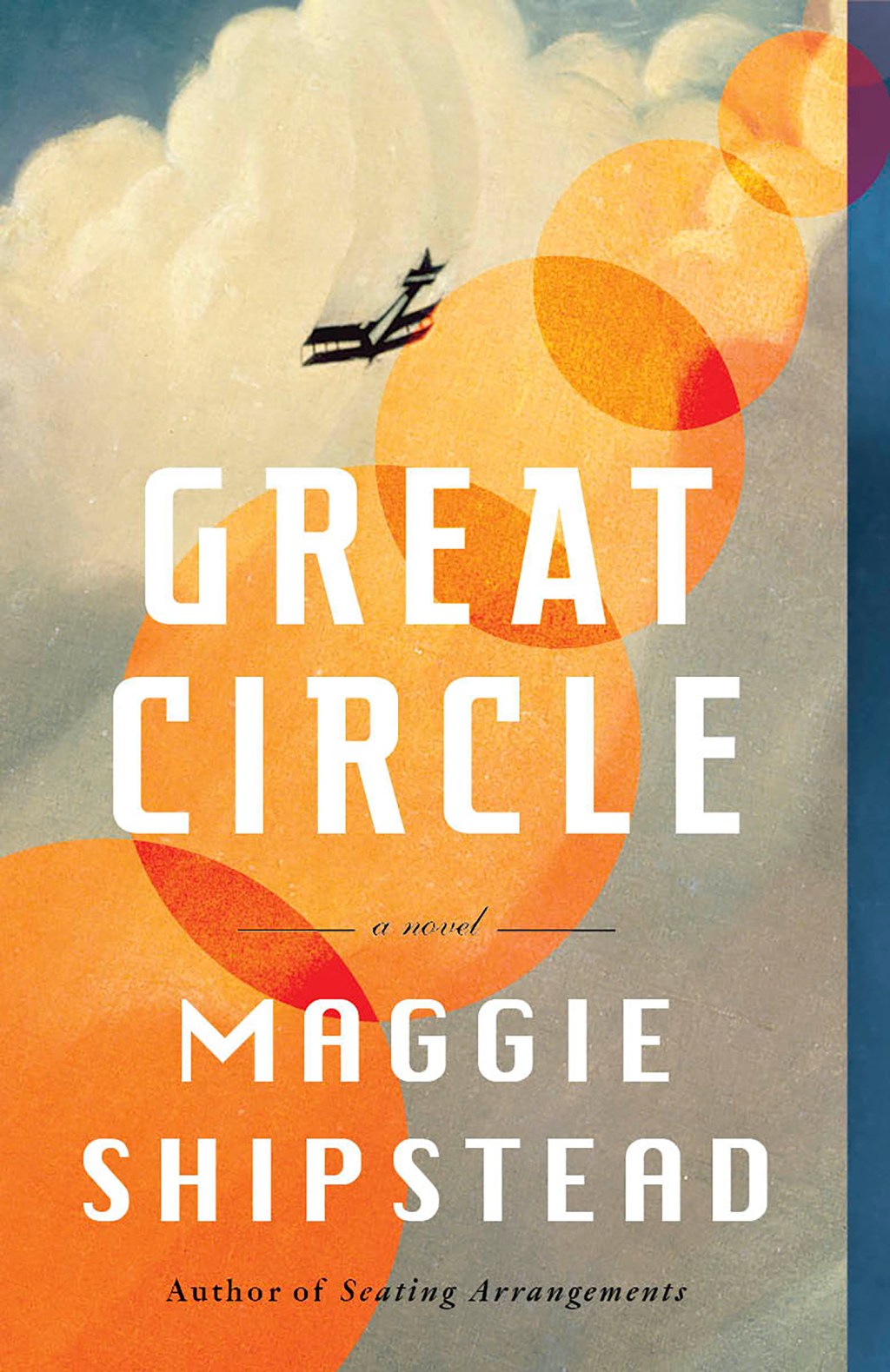
    Traveling Through Time and Around the Globe

    In 1914, Marian Graves and her twin brother, James, are among the last to be saved when the Josephina Eterna sinks in the North Atlantic. With their father in prison and their mother gone, the two babies are bundled off to live with their Uncle Wallace, an artist in Missoula, Montana. Wallace, preoccupied with his painting, lets the kids run wild, and while James is a sweet-natured child, Marian is a daredevil who revels in the freedom to do what she wants.

    That helps explain her attraction to the lifestyle of barnstorming aviators and her decision at 14 to drop out of school to learn to fly.

    Fast forward a century. Actress Hadley Baxter, whose Hollywood stardom is somewhat diminished, is starring in a movie about the disappearance of Marian Graves in Antarctica.

    The story of these two women takes us back and forth from past to present and around the globe in Maggie Shipstead’s “Great Circle” (Vintage Books 2021; $24).

    The disappearance of a woman aviator is familiar. After all, movies and articles are still being written about Amelia Earhart, whose plane vanished in the Pacific Ocean in 1937. But there are many other female pilots from the early and mid-1900s, though they’re exploits are mostly forgotten now. Writing “Great Circle” required Shipstead to research and travel to give the book its authenticity. She visited the Arctic five times and Antarctica twice.

    Why so many times, I asked Shipstead.

    “I’m drawn to those regions by some weird instinct,” she said. “I think a lot of people are. But I’ve also been lucky to keep getting opportunities to go. Polar travel has become a bit of my specialty, so I’ve been sent on assignment to Alaska, the New Zealand subantarctic, Antarctica, the Canadian high Arctic twice, Greenland twice. I did an artist residency on a ship in Svalbard. In a way, one thing kept leading to another, and I have no complaints.”

    The inspiration for “Great Circle” came to her in New Zealand. She was between books and a story line for her next novel that she had thought looked promising, wasn’t. In the airport, she saw the statue of early aviator Jean Batton, its base inscribed with her quote “I was destined to be a wanderer.”

    She knew she had her book.

    Given how much she has traveled, I wondered if Shipstead was destined to be a wanderer.

    “Destined is probably strong,” she said. “I’ve always been interested in travel, but my life could have taken lots of twists and turns that would have precluded traveling as much as I have. Really, this book turbocharged my traveling because, A, I was motivated to get to more and farther flung places in the name of research, and B, it took so long to write the book that I had the chance to start writing for travel magazines.”

    I next asked if she ever considered becoming a pilot given her interest in the subject.

    “Never,” was her response. “My brother used to fly C-130s in the Air Force and wanted to be a pilot from childhood, so that was always his territory.”

    This article originally appeared in the Northwest Indiana Times.