Tag: mystery

  • All the Other Mothers Hate Me

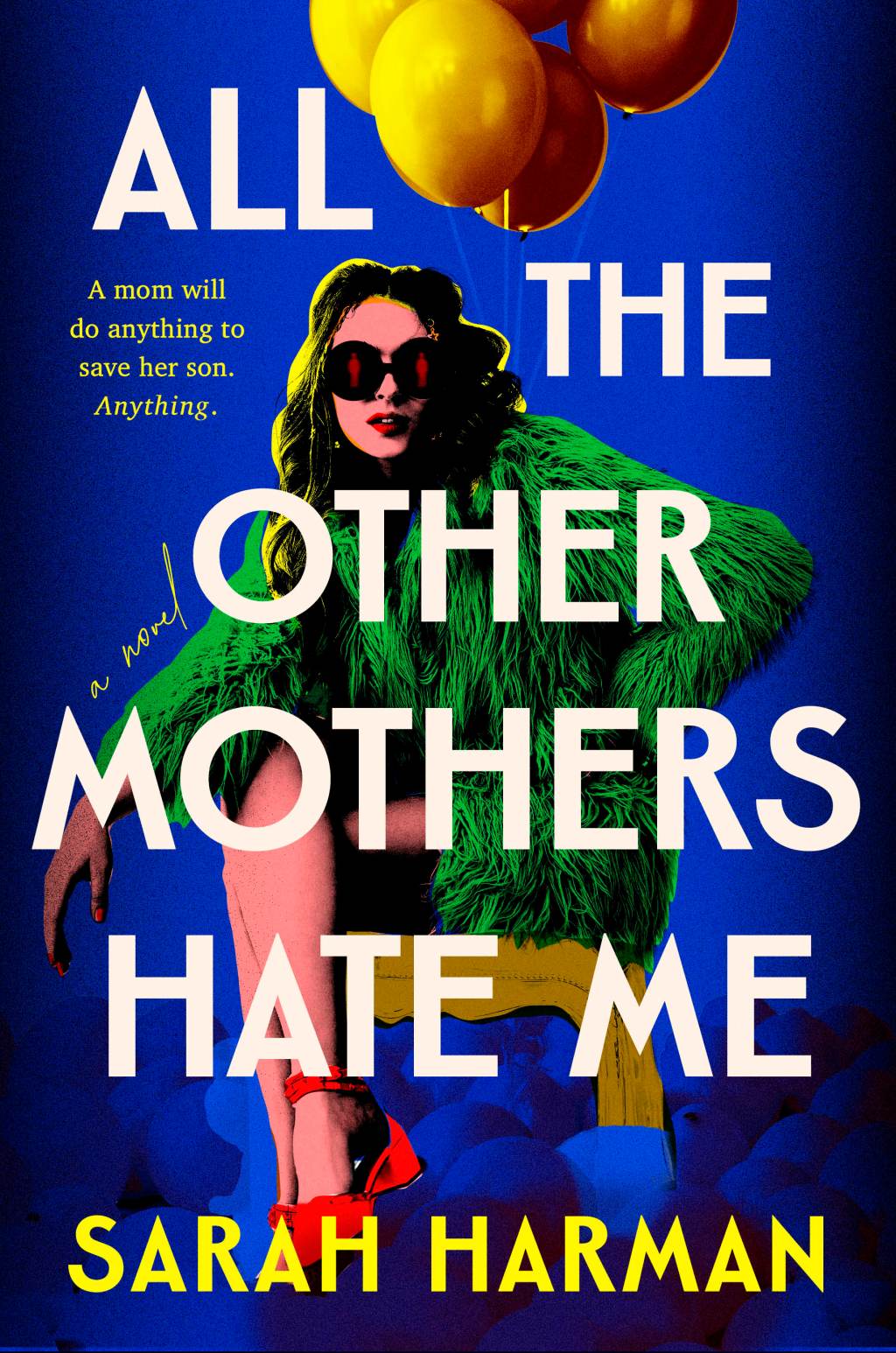
    All the Other Mothers Hate Me

    Florence Grimes is a mess. Once part of a popular girl rock band, after a brief interlude with the manager who is really in love with another of the women in the group, she’s cast out and left with a baby to raise courtesy of the man who fired her. Sure, he pays for their son to go to a posh private school, and she adores her child, but her royalty checks are dwindling and let’s face it—she shouldn’t be spending what little money she has left on fancy nail art and other unnecessary items.

    But then Flo isn’t someone who knows how to manage her life, She just doesn’t fit in with the other mothers, but then she doesn’t try that hard—her clothing and attitude impairing her ability to be accepted.

    Finally, there’s hope. She gets a call about meeting an old colleague and she dreams of returning to the stage, but, as always with Flo, bad stuff happens and this time it’s really bad. Her son’s class bully mysteriously vanishes on a field trip, and Florence’s quirky, misunderstood 10-year-old son becomes a suspect.

    “To save her son, Florence has to figure out what actually happened to the missing boy,” says Sarah Harman, author of All the Other Mother’s Hate Me (G. P. Putnam’ & Sons 2025). “But the more she uncovers, the more she realizes her son might not be as innocent as she’d like to believe,”

    Books about missing children and women on the rocks aren’t typically funny but Harman, who describes the subject as a “fine line to walk” uses humor in recounting Flo and her attempts not only to resuscitate her career—and her life—but find out what really happened. And Flo, despite all her faults and mishaps, is someone to root for.

    “Personally, as a parent, I have zero interest in fiction about bad things happening to children,” says Harman. “There’s enough of that in the real world; I do not want to consume that darkness in my limited free time. So, it was important to me to telegraph to the reader from the outset, that while this is a twisty mystery about a missing boy, this is not a book where children are going to suffer.”

    Harman was never in a girl band (that’s what they called them back then) but she was inspired to write the novel by thinking back to the early aughts and the way that female celebrities were treated by the media and society in general. She references Britney Spears as one example.

    “Or remember how the paparazzi took a horrible upskirt photo of Anne Hathaway and then Matt Lauer asked her on national television ‘what lesson she learned from the experience?’” she says. “That was in 2012. It really wasn’t very long ago. When I was writing Florence, I was thinking about how coming of age creatively in that sort of environment might shape a person’s worldview —and the rest of her life.”

    The book, which came out in March of this year, is so compelling that even before publication, foreign rights to it were sold at auction in 14 markets  and the TV rights bought by FX and The Bear creator Chris Storer, Not bad at all for any novel, but this is Harman’s first which makes it even more impressive.

    Like Flo, Harman is an American living in the West End of London, and she notes that navigating the class system is much different than here. But there are some things that are common worldwide and one of them, she says, the redemptive power of female friendship.

    “When we meet Florence, all the other mothers hate her—and for a good reason,” she says. “She’s kind of awful. Over the course of the novel, as Florence forges an unlikely alliance with another mom, Jenny, she discovers that she actually is capable of caring about something other than herself. It’s only by learning to be a friend that Florence is able to move on from her past and forgive herself for her failures. Ultimately, my hope is that this book makes readers feel it’s never too late for a comeback.”

    This article originally appeared in the Northwest Indiana Times.

  • Bearer of Bad News

    Bearer of Bad News

    Lucy Rey is having a very bad week. Besides finding out Julian, her fiancé—the one who convinced her to move to Las Vegas and rent, in her name, an expensive apartment and then decamped to Hollywood in order to find work as an actor—is cheating on her, her hairdressing business is in a slump, and she hates Vegas. Oh, and the diamond engagement ring Julian gave her is really cubic zirconia.

    And so when she sees an advertisement for an expense paid job with a $25,000 success fee just to find a missing sister and deliver unspecified bad news, what does she have to lose? Her flight to Europe is all paid, there’s a generous per diem, and Ortisei, the village in the Italian Dolomites where she is sent, is totally charming.

    But being a Bearer of Bad News (Gallery Books), which is the title of Lucy’s new job and this first novel by Elisabeth Dini, is not a slam dunk. First of all, Taffy, the woman who hired her, is totally flaky, the assignment murky, and, Lucy soon discovers, the village, though quaint and pretty has an unsavory past including Nazis and stolen jewels.

    Soon, the assignment gets even stranger as it becomes apparent that Taffy (real name Countess Tabitha Georgiana Wellington Ernst) crafted the ad to attract and hire Lucy, who is the estranged granddaughter of a once very famous movie actress.

    Taffy isn’t the only one searching for stolen jewels. There’s the Department of Lost Things, a quasi-government agency working to return valuables people lost during the war.

    “The Department of Lost Things was inspired by stories about the numerous ongoing lawsuits over art and other valuables that were stolen or sold during World War II,” says Dini. “I was shocked by how long the legal process takes–many cases are still ongoing even decades later, with some of those suing for the return of family heirlooms dying before the case could reach a resolution.”

    Dini always found stories about clandestine secret organizations fascinating and so inventing the Department of Lost Things, an organization working to return the diamonds to their rightful owner, was a natural solution.

     “As for the idea of a Bearer of Bad News, I was reading an article about a man who had outsourced various life tasks to a virtual personal assistant, from writing an apology email to his wife to calling companies to complain on his behalf, and I thought that if people would pay for that, then why not outsource delivering bad news?” she says.

    But being a bad news bearer doesn’t go smoothly for Lucy. Chased by an influencer whose photo shoot she accidentally interrupted, Lucy is hidden by a charming hotel clerk in rooms above the oldest tavern in town, which is also where much of the action happened in the past. For being hidden away, Lucy’s lodgings get a lot of action—including a handsome man she met on the tram and Coco, the missing sister, a human rights attorney who might have been fired under suspicious circumstances. In other words, who do you trust?

    Dini drew upon her work as a trial lawyer at the International Criminal Court when writing the book.

    “I knew from working with legal case files what types of things might end up there after years of investigating, and my background interviewing witnesses informed the interview files as well,” she says, noting that no matter how different the conflict or the country where it happens, certain things are always true: among the ugliness, there are always acts of extraordinary kindness and bravery. “As heavy as it felt at times, my time prosecuting war crimes left me hopeful about the ultimate nature of human beings, and I wanted to leave readers with this same feeling of hope, especially in a time when world events can feel very heavy.”

  • Trust Issues: A Mystery That Asks Who You Going to Trust?

    Trust Issues: A Mystery That Asks Who You Going to Trust?

    “a tense, well-plotted mystery with enough twists and turns to keep the reader engaged . . .”

    “Something strange happened when Hazel and Kagan showed up. Ava had begun hearing her father’s voice so clearly that it sounds like he’s crawled inside her head. This isn’t the first time in her life she’s been haunted by his negative commentary. It followed her on the bus when she first escaped and lingered for a few weeks after she settled into life with Sam again. When she was in prison she’d hear her father’s voice late into the night, chastising her for thinking she could outrun her destiny and for being stupid enough to get caught.”

    Spoiled and entitled, Hazel Bailey and her brother Kagan Bailey have gone through the millions their mother, Janice, gave them after the death of their abusive father and, resentful that she won’t give them more, have cut off all contact with her. Still, despite their treatment of her, they’re outraged when they learn of their mother’s death and that Perry, their smarmy stepfather has inherited all of Janice’s considerable fortune,

    When they learn that Janice was murdered, they’re sure that Perry is the culprit despite his unassailable alibi—he was on a plane at the time of her death. And so, the two, who don’t typically get along, team up together to discover all they can about Perry to prove he’s somehow responsible for her death. Surprisingly, Perry has no internet presence, except for a hazy half photo at a charity event he attended with Janice.

    Though the siblings are self-centered, combative, and often compete for the same romantic interest, they also are resourceful and before long discover that Perry is a conman who seduces rich, older women who then disappear or die. Taking it one step further, they trace his daughter, Ava, who long ago separated herself from her father and ask her to join them in their search and revenge mission.

    Like Kagan and Hazel, the seductive Ava has her own baggage. Trained from an early age by her father to con people, she’s spent time in prison and has been offered a straight-and-narrow lifestyle. But the idea of helping them regain their fortune and punish her father who murdered her mother and uncle is impossible to resist. And besides, as the siblings neglect to keep in mind, when you’re trained to be a conman or woman, old habits die hard— particularly when there’s a fortune to be had.

    As the three chase Perry down the Eastern seaboard, coming up with an elaborate plan to fleece Perry out of the money he conned their mother out of and to keep him from marrying—and killing another wealthy woman—they fail to keep in mind that Perry mayhave a fatal plan to stop them as well.

    Elizabeth Keenan and Greg Wands, authors of Trust Issues (Dutton 2025), have previously written three novels under the pen name E.G. Scott including The Woman Inside and The Rule of Three. Besides their books, which have been translated into a dozen languages, they created and co-host the podcast “Imposter House with Liz & Greg,” where they chat with authors and artists about creativity, self-doubt, and about featuring imposter characters in their stories.

    In Trust Issues, they’ve written a tense, well-plotted mystery with enough twists and turns to keep the reader engaged as well as hopeful that Perry finally is outsmarted and has to pay for his sins.

    This article originally appeared in the New York Journal of Books.

  • “City Under One Roof” by Iris Yamashita

    “City Under One Roof” by Iris Yamashita

    Point Mettier, Alaska is no one’s idea of paradise. Its inhabitants—all 205 of them—live in the same high-rise apartment building and the only access to town is by a tunnel or the sea.

    But Point Mettier is perfect for many of those who live there. It’s a chance to invent new names, identities, and lives. For some, it’s a safe harbor such as an escape from an abusive spouse. For others, the reasons for disappearing into the void of a place like Point Mettier are darker. And so when a severed hand and foot wash up on shore and Cara Kennedy, a police detective arrives from Anchorage, she finds the inhabitants to be aloof and evasive. Everyone, it seems, has something to hide.

    “City Under One Roof” (Berkley) is the first novel written by Iris Yamashita, a screenwriter nominated for an Academy Award for the movie “Letters from Iwo Jima.” The inspiration, she says, comes from a documentary about Whittier, Alaska she watched more than 20 years ago. At the time, Whittier only was accessible by boat or through a 2.5-mile long tunnel.

    “Jumping off point for me was the tunnel,” says Yamashita, who has been working in Hollywood for 15 years developing material for both film and streaming, “I had the feeling I was going down into the rabbit hole like Alice in Wonderland. Cara is like Alice, she too fell down the rabbit hole.”

    Listen now and subscribe: Apple Podcasts | Google Podcasts | Spotify | YouTube | RSS Feed | Omny Studio

    And there Cara meets a wide range of quirky characters including Lonnie, who has a moose she has rescued as a pet, and Amy, a teenager who delivers the Asian food her mother makes to the building’s residents.

    Cara has her own burdens, her family died in a tragic, terrifying way. And working with local policeman, Joe Barkowski, stirs feelings she has thought were gone forever.

    But even as their feelings for each other grow, the two have to contend with another crisis. A storm closes the tunnel and the residents of Point Mettier—and Cara—are trapped. But though help from the mainland is days away, mayhem is close by when a gang from further north arrives to terrorize the community and that’s when everyone’s secrets start to come out.

    Yamashita has always loved writing and for a while, it was a hobby. She has a degree in mechanical engineering and says her “Asian parents always told her ‘you can’t make a living as a writer.’”

    “And so I worked at my day job until I had a contract in my hand and then I quit,” she says. “Now I’m working on my next book.”

    This story originally appeared in the Northwest Indiana Times.

  • Where Are You, Echo Blue?

    Where Are You, Echo Blue?

    “In those years, the hardest of my childhood, Echo felt like a kindred spirit. I memorized her lines in Slugger 8. I practiced her stance on the field in the mirror. I cut out snapshots from Teen Beat magazine. I bought four copies of her cover issue of Sassy, the one where she wore a red cropped T-shirt with big lips smacked across her flat chest. I made a collage, carefully glued images of her together, draped it with a heart garland, and hung it over my bed. My favorite was a photo of Echo and her also-actor dad, Jamie Blue, leaving a restaurant, his arm slung over her shoulders, protecting her, the way I wished my father did.”

    From Where Are You, Echo Blue? by Haley Krischer (Penguin Random House).

    Goldie Klein, a writer for Manhattan Eye, has it bad when it comes to Echo Blue, the famous child actress. The obsession that worried her parents when she was growing up still has a hold on her even now. And when she learns that Echo, who was scheduled to appear on MTV’s New Year’s Eve Y2K special, one that will help her regain her foothold on stardom, hasn’t shown, Goldie knows it has to be more than just a relapse and stint in rehab. Echo has really disappeared.

    Currently, Goldie is writing the kind of stories she hates and that her father, an overly critical professor loves, including her most recent article on boxing. But Goldie’s aspirations are to cover subjects much hipper and more compelling. And she sees Echo’s vanishing as just the ticket. She manages to talk her editor into sending her to Los Angeles to track down the missing star. But it’s going to be difficult. Even those close to Echo have no idea where she is, and they’re upset that Goldie is looking for her.

    But in her adoration of the Echo, Goldie has spun a mythology in her own mind. She saw Echo as the only friend she had during her early teens. The boy-crazy girls in her class intimidated her with their talk about sex while Goldie was still playing with dolls. She tried to connect but it just didn’t happen despite the best efforts of her mother who planned slumber parties to help her make friends. And so, Goldie further immersed herself into Echo’s world—or the world she thought Echo inhabited.

    But Echo’s life was also difficult. Her mother, a washed-up television actress, is a depressive who has locked herself away in their house. To escape that environment, Echo opted to live with her movie star father who was always away on location hoping to become an Academy-award winning actor and never had time to talk on the phone, changed girlfriends monthly and really wasn’t that concerned with his daughter’s well-being. Echo had handlers that raised her and like Goldie she was terribly lonely with just one friend. Stardom couldn’t make up for not having the type of normal life most teenagers have.

    Goldie manipulates herself into the lives of people who know Goldie, including Jamie Blue. Accompanying an actor to his house, she eats a marijuana-laced cookie at the door and becomes completely stoned.

    “Don’t you know not to eat cookies at a stranger’s house without asking what’s in them?” her editor asks incredulously when Goldie calls to tell her as if that’s a basic fact everyone should know. And though Goldie wants to leave, her editor tells her that she’d better get in the hot tub with Jamie, even though he’s likely to be naked.

    Welcome to Hollywood.

    Goldie begins to get the idea of what Echo’s life was like as she continues to hunt for the missing star. The story cuts back and forth between 2000 and the 1990s, capturing the era precisely and what life was like for Echo as she became an Oscar-winning child star. In her pursuit of her story, Goldie realizes that it’s time to chart a new course in her own life.

    This article originally appeared in the New York Journal of Books.

    Book Club Kit.

  • Camino Ghosts by John Grisham

    Camino Ghosts by John Grisham

    “what could be better than a cursed island, some supernatural happenings, and the righting of centuries of social wrongs?”

    “It was a ship from Virginia, called Venus and it had around 400 slaves on board, packed like sardines,” bookstore owner Bruce Cable tells Mercer Mann, a writer who is looking for a new book subject. “Well, it left Africa with 400 but not all made it. Many died at sea. The conditions on board were unimaginable, to say the least. Venus finally went down about a mile to sea near Cumberland Island. Since the slaves were chained and shackled, almost all of them drowned. A few clung to the wreckage and washed ashore in the storm on Dark Island, as it became known. Or  Dark Isle. It was unnamed in 1760. They were taken in by runaways from Georgia, and together they built a little community. Two hundred years went by, everybody died or moved away and now it is deserted.”

    One of the many facets of John Grisham’s enthralling fiction is his ability to take complex social issues and weave them into the fabric of his novels so that they make for a compelling read.

    In Camino Ghosts, the third book in the Camino series, he does it again with his compelling story of Lovely Jackson, an 80-year-old Black woman who is determined to save Dark Isle, the now deserted island once settled by both shipwrecked Africans kidnapped into slavery and escaped slaves. Lovely is the last of those who settled on the island, and she stopped living there when she was 15, only returning to tend to the cemetery where her ancestors are buried.

    For years no one wanted the island, an inaccessible and unfriendly barrier island of impenetrable jungle, poisonous snakes, and prowling panthers. But Hurricane Leo has changed the island’s topography and rabid land developers with politicians in their pocket see Dark Isle as the place to build a sprawling casino and resort complex.

    But Lovely is determined, believing she is the sole owner of Dark Isle and the protector of her ancestors’ history and graves. She also happens to be the only one who can lift the curse of her great, great, great grandmother, Nalla, a woman who was kidnapped from her village in Africa, taken away from her husband and only child, chained in the hold of a ship as it crossed the Atlantic, and raped repeatedly by the crew members. No white man who has stepped on the island has survived.

    Camino Ghosts is the third in the series about bookstore owner Bruce Cable, who likes fine wine, good food, pretty women (he and his wife, an importer of French antiques, have an open marriage), and books. But he is more than a bon vivant and purveyor of tomes, he likes to intervene in the island’s business to produce the best outcomes and is extremely supportive of his writers. Good at pulling strings, he is the force uniting the factions fighting the development and is also helping his former lover, Mercer Mann, a bestselling author with writer’s block, find her next subject. And what could be better than a cursed island, some supernatural happenings, and the righting of centuries of social wrongs?

    This article originally appeared in the New York Journal of Books and the Northwest Indiana Times.

  • The Hunter’s Daughter: Is She As Evil As Her Father?
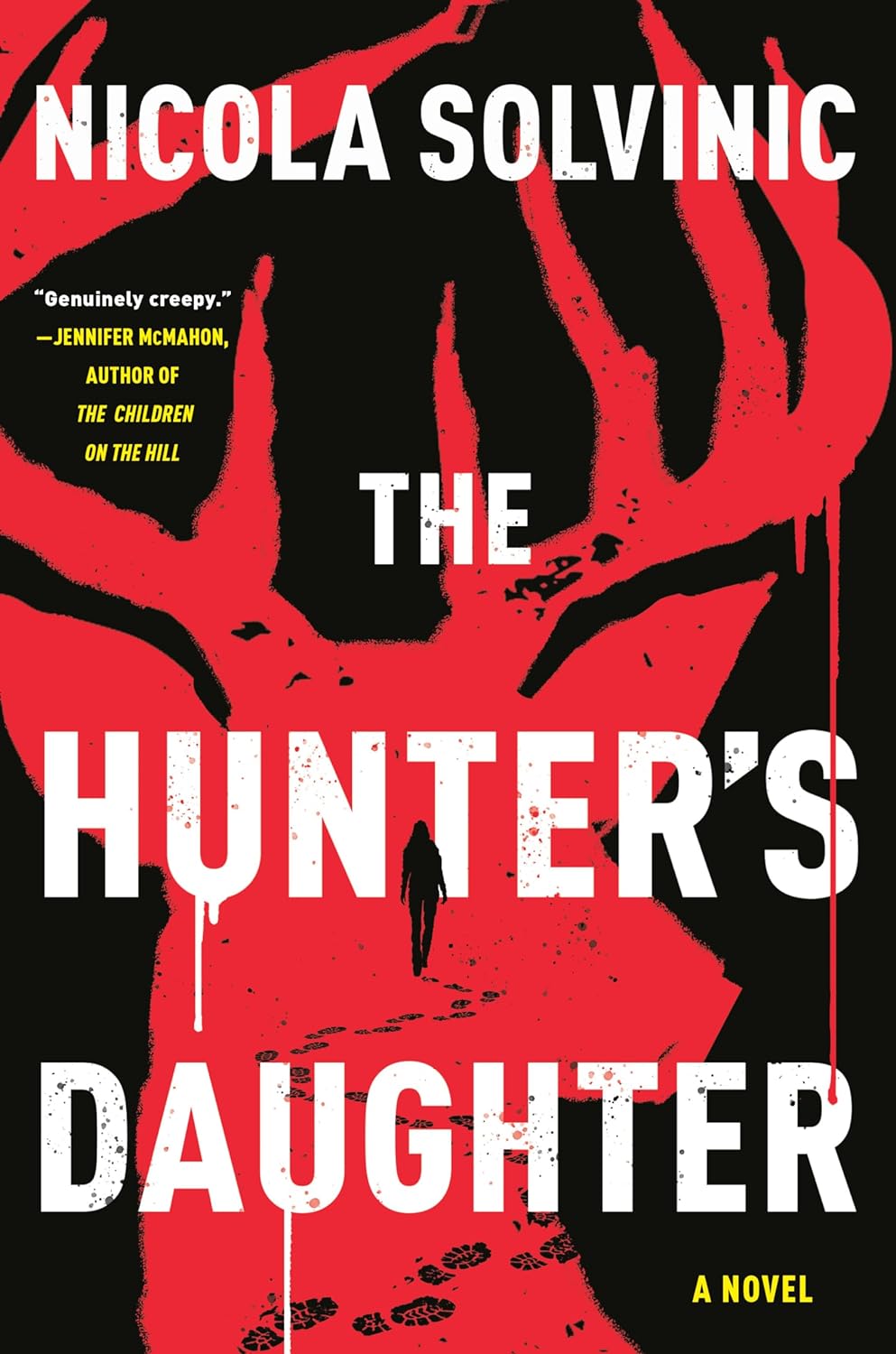
    The Hunter’s Daughter: Is She As Evil As Her Father?

    “And I didn’t ask any questions,” the narrator of Nicola Solvinic’s debut mystery-thriller The Hunter’s Daughter (Berkley ), says in her first-person account of what it’s like having been raised by a serial killer. “I truly didn’t want to know the answers. When the rifle went off, did I kill my dad? Or Agent Parkes? Did I miss them both, and did they fight it out? Did Dad get arrested, or did he kill Agent Parkes and run.”

    These obviously are not the typical questions most children have regarding interactions with their fathers. But police officer Anna Koray is the daughter of a notorious serial killer, a fact she keeps hidden with the use of a different name, a move far from home, and estrangement from her mother who did little to protect her.  

    It works for a while until a traumatic incident triggers long-repressed memories and Anna’s past, sealed off by her therapist in a controversial and experimental hypnosis treatment, begins to emerge. Her father, known as the Forest Strangler, murdered more than a dozen women, their bodies decorated and left as sacrifices to the god of the forest. But he also taught Anna to love the woods, to be one with the forest and nature. The dark dense woods with rustling trees that line the perimeter of her yard call out to her, beckoning her forward. In many ways, it’s where she feels most at home—the feel of dirt between her toes, the smell of the rotting leaves. But as much as it entices her, that forest also harbors secrets and possibly malignant forces that may harm or even destroy her.

    There are many questions confronting Anna as she deals with her surfacing memories. Can she trust her lover who may be hiding his own addictions? Is her father, who is supposedly dead, really alive? And is Anna herself a killer—someone who has her father’s propensity as well as his genetics to do evil? She has killed, supposedly in self-defense. But is that true? Or does she enjoy killing just as he did? And will she do it again?

    When her psychiatrist, the woman who hypnotized her into forgetting her past, is found murdered, Anna has to wonder if she played a part in the death. After all, she had broken into her office to steal her file folder before the police, who are closing in, can locate it and discover her true identity. Did she do more than take the file? Did she destroy the woman who can reveal her past?

    Desperate to keep people from realizing that she is the daughter of the Forest Strangler, Anna also has to try to determine that even though she became a police officer to help others, she may be as evil as her dad.

    A tense psychological thriller, terse plotting, and Anna’s own uncertainty about who she is, what acts she’s committed, and whether she can trust her own thoughts, feelings, and actions, keeps this book a page-turner.

    About the Author

    Nicola Solvinic has a master’s degree in criminology and has worked in and around criminal justice for more than a decade at local, state, and federal levels. She lives in the Midwest with her husband and cats, where she is surrounded by a secret garden full of beehives.

    This review originally appeared in the New York Journal of Books.

  • Poisoned Passover: Book 2 Torah Mystery Series
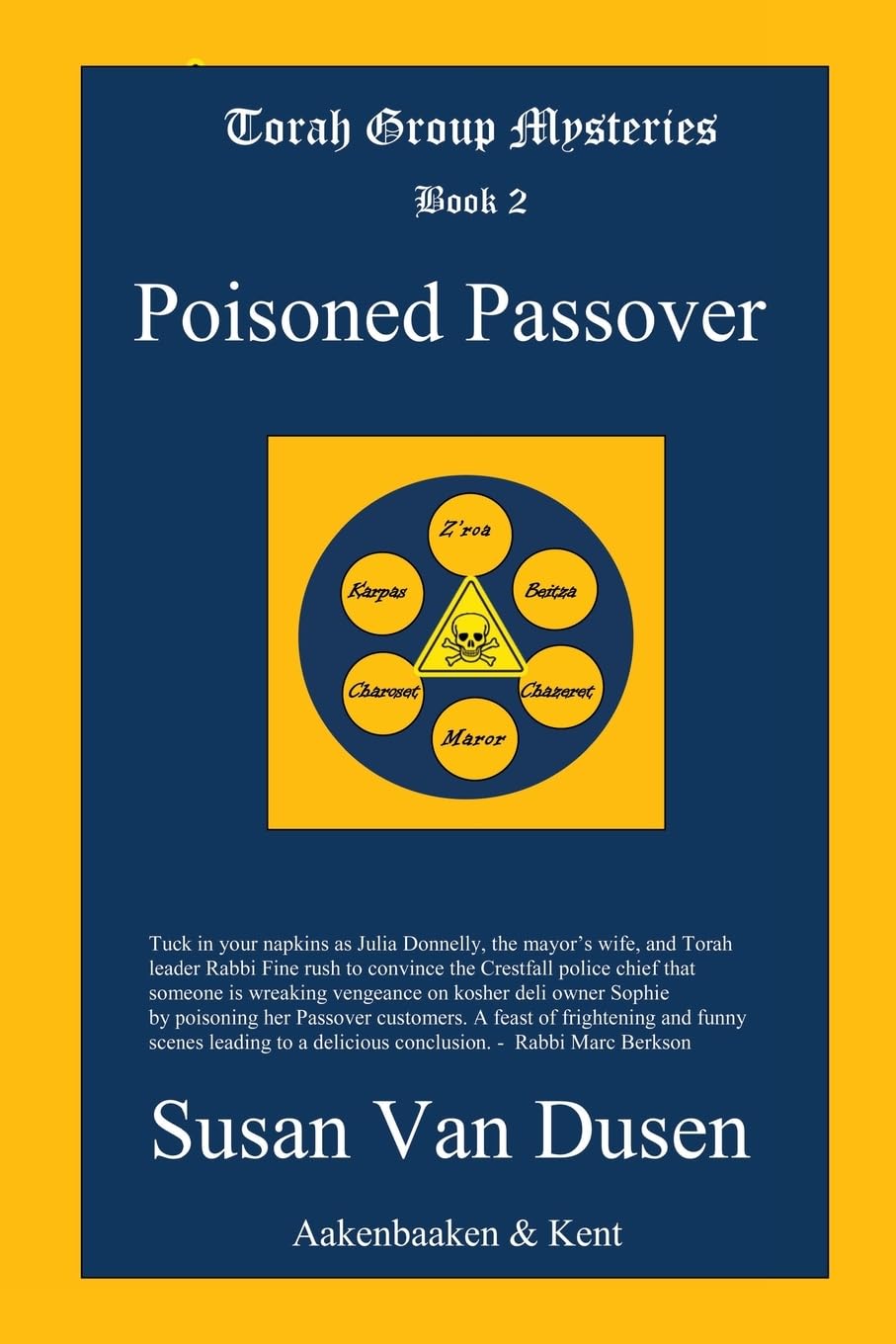
    Poisoned Passover: Book 2 Torah Mystery Series

    he Book Stall (811 Elm Street in Winnetka) is delighted to host mystery author Susan Van Dusen on Wednesday, April 17 at 6:30 pm for an in-store discussion featuring her new book, Poisoned Passover, the second book in the Torah Mystery Series. With no experience except watching TV detective shows, Julia Donnelly, the wife of the mayor, and her Torah group leader, Rabbi Avrum Fine, have been pressed into service to solve the town’s mysteries. 

    This event is free with registration. To register, please visit their website or CLICK HERE.

    More About the Book: Who’s poisoning Passover guests in Crestfall, Illinois? When Julia Donnelly brings chopped liver to her Torah group friend Devorah’s seder, she has no idea it will result in mass poisoning, murder, and a connection to past arson. Julia, wife of Crestfall’s mayor, and Rabbi Fine, Torah study group leader, become involved in a mystery surrounding Sophie’s Kosher Deli. Someone is trying to put her out of business. Is it Lester Pintner, a developer who wants to put up a building, her good-for-nothing son Milton who wants to transform the store into a pool parlor, Sweet Cheeks, a mysterious woman who has attached herself to Milton, or perhaps Nate, another deli owner who wants to buy Sophie’s store. 

    Meanwhile, Julia must also deal with challenges on the home front when her son Sammy refuses to go to school. She has a full plate! How does she cope with everything? By teaming up with the Rabbi, using powers of observation, and logic from Jewish tradition to solve a confusing puzzle of danger and greed!

    More About the Author: Susan Van Dusen is an international award-winning writer of books, editorials, magazine and newspaper articles. She was the Communications Director of the Institute of Government and Public Affairs and Associate Director of Public Affairs at the University of Illinois. Susan created “The Read In” project at the University of Illinois in Chicago and “Coming Together in Skokie and Niles Township,” acknowledging the diversity of those communities. In Israel and in Chicago’s Uptown area, while teaching English to non-English speakers, she wrote songs and plays to stimulate interest in language. Susan was the editor of a neighborhood weekly newspaper, then became the award-winning editorial director of WBBM-AM Newsradio as well as writing for newspapers and magazines. While studying with a Torah group for ten years, she realized it was the perfect vehicle for a series of books, with the first book in the series being The Missing Hand. Currently she is retired, a normal human being, a mayor’s wife, a mother and grandmother, and participant in several civic and writing groups.  

  • Reese’s Book Club Pick: “First Lie Wins”
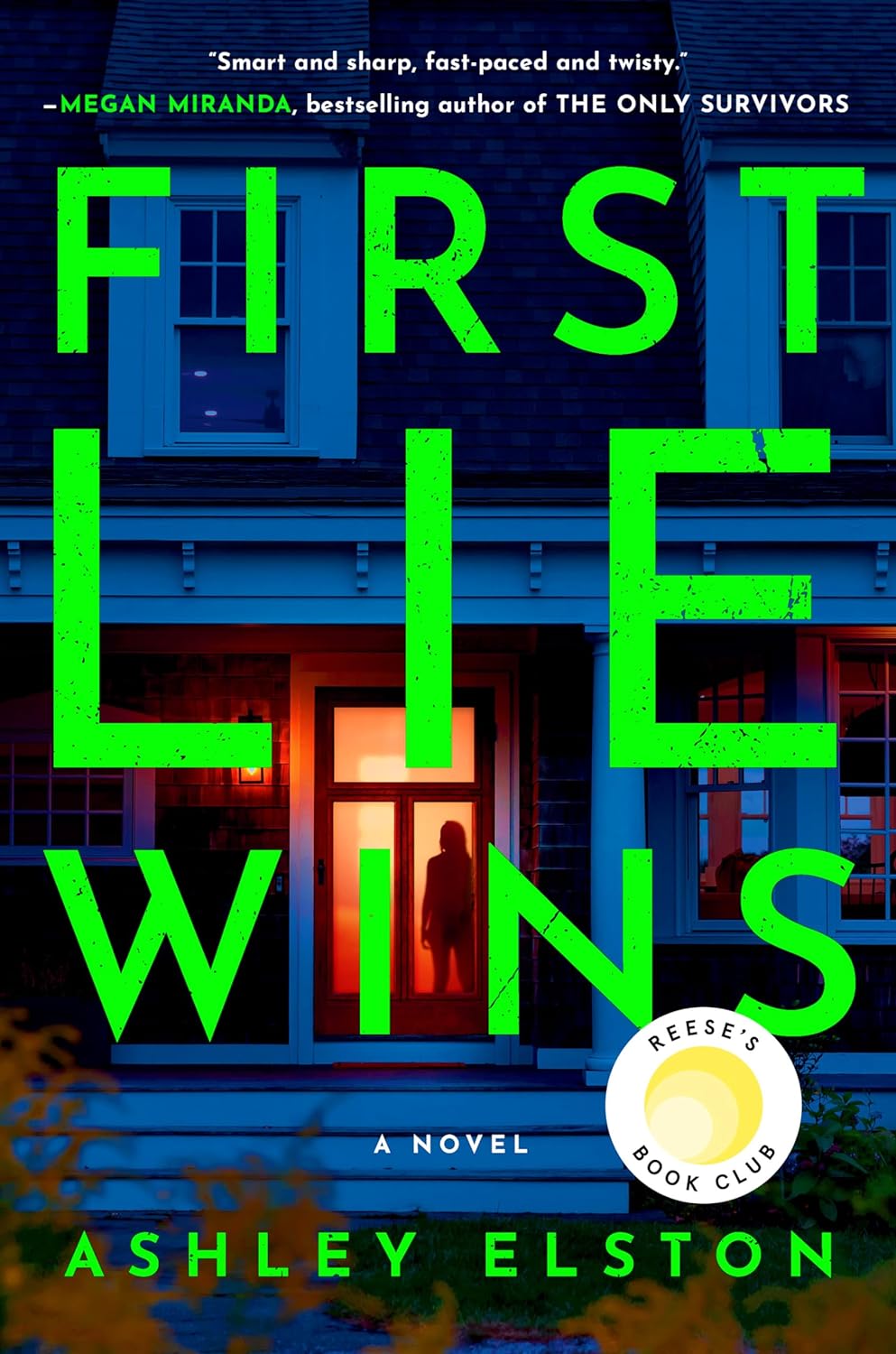
    Reese’s Book Club Pick: “First Lie Wins”

    “This is Ashley Elston’s debut adult novel and it’s a real page turner, so good you hate to turn the last page.”

    “My mind splits, showing two different paths; This is definitely a crossroads moment,” recalls Lucca Marino alias Wendy Wallace alias Mia Blanchard and a whole long list of other names. “Taking the job Matt offers moved me deeper into the world but comes with the support that would make the feel of these cuffs biting into my wrist a distant memory. The other path requires me to go straight. To get out before I’m in any real trouble because as Saturday night proved, it will only be a matter of time before something else goes wrong.”

    And, of course it does, in this complicated and entrancing novel, “First Lie Wins” (Pamela Dorman Books 2024).

    Lucca, known by the people in her life as Evie Porter when we meet her, chooses the darker path. She’s agreed to work with Matt and his boss, Mr. Smith. The latter is just a mechanically altered voice over the phone, a devious man who likes to play his operatives against each other, but the pay is very good, and Evie is an expert at her work. Her job? To take on another identity and infiltrate the mark’s life, securing the necessary information that Mr. Smith wants. Sometimes it’s so he can blackmail them, sometimes to take over their business, or steal some vital data.

    As Evie, she starts a romance with Ryan, her latest victim. She isn’t sure what Mr. Smith wants from him; her instructions are parceled out over time. But she soon learns that Ryan, who invites her to live with him and meet his family and friends, is more than just a successful small town businessman who has taken over the family business. He’s somewhat shady, just as she is, helping move stolen goods.

    But Evie has a heart, as she has proven in her other jobs, and now, she’s falling for Ryan and the nice life he has to offer. Unfortunately, no one easily leaves Mr. Smith’s business. It’s not exactly the kind of job you retire from as she finds out when several other operatives meet untimely deaths.

    Whom do you trust? Evie is discovering that she doesn’t really know. Even Ryan may be more than a unwitting dupe, he may be in the plot to destroy her that Mr. Smith has put in place, framing her for a murder she didn’t commit.

    First Lie Wins is the ultimate cat-and-mouse caper, leaving you guessing until all the loose ends are neatly tied up. This is Ashley Elston’s debut adult novel and it’s a real page turner, so good you hate to turn the last page.

    This article originally appeared in the New York Journal of Books.

  • Rabbit Hole by Kate Brody

    Rabbit Hole by Kate Brody

    Theodora “Teddy” Angstrom, a high school teacher dealing with the mysterious vanishing of her sister, Angie, ten years ago, is dealt another blow when her father drives his car off of a bridge on the anniversary of her disappearance.

    She is, at this point, the last in a long line of the socially elite Angstrom family, only now irreparably tarnished by her father’s affair and desertion of his family to marry Teddy’s mother, a loss of money, and cratering social status.

    This is how dire it is.

    “I discover in my digging that Dad gave up around Christmas,” says Teddy in Rabbit Hole by Kate Brody (Soho Crime). “The bills have been past due for months. The cable company gives me a hard time clearing the balance because my name is not on the account. Mom’s name is not even on the account. They finally let up when I explain that the account holder can’t come to the phone because he launched himself to the bottom of a river. I use my own savings to take care of the remainder.”

    . “The bills have been past due for months. The cable company gives me a hard time clearing the balance because my name is not on the account. Mom’s name is not even on the account. They finally let up when I explain that the account holder can’t come to the phone because he launched himself to the bottom of a river. I use my own savings to take care of the remainder.”

    Teddy is left to take care of her mother, a spendthrift who refuses to deal with the fact they have no money except for her teacher’s salary and to unwind exactly what her father was up to before he died.

    Besides that, she’s embarked on a love affair with the family’s former gardener, has to teach her students while she’s becoming emotionally undone, and finds herself being drawn into the Reddit discussions about what happened to her sister. She is, indeed, descending into a rabbit hole, one that has her chasing phantoms, making friends with people who are just as unstable as she is, and attempting to determine if her father was a bad guy or just someone so overcome with grief he couldn’t go on.

    As if that isn’t enough to manage, Teddy’s dog, the one the family got as a puppy before Angie suddenly disappeared one night, is pitifully dying. It’s enough to drive anyone into a downward spiral, and that’s where Teddy finds herself as she learns that she can’t trust anyone to tell her the truth. And so, it’s left for Teddy to be strong enough to determine what happened to both her father and sister—and to live with the truth.

    • Amazon Editors’ Pick
    • Indie Next Pick
    • Aardvark Book Club Selection
    • Powell’s Pick

    About the author:

    Kate Brody lives in Los Angeles, California. Her work has appeared in The New York Times, The Guardian, Lit Hub, CrimeReads, Electric Lit, The Rumpus, and The Literary Review, among other publications. She holds an MFA from NYU. Rabbit Hole is her debut.

    This review initially appeared in the New York Journal of Books.